AprilAire
AprilAire ARN05M
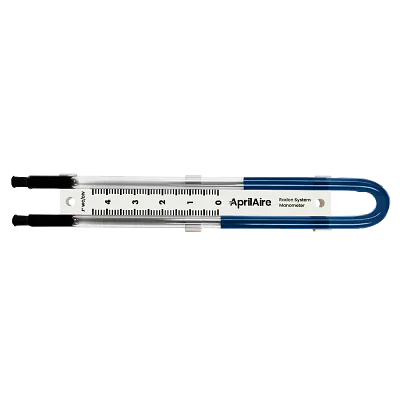
U-tube radon system manometer
- System indicator
- Passive U-tube manometer
Photos: AprilAire
 (opens in a new tab)Check price on Amazon (opens in a new tab)
As an Amazon Associate, Radon411 earns from qualifying purchases.
Amazon and the Amazon logo are trademarks of Amazon.com, Inc. or its affiliates.
See ratings and reviews on Amazon (opens in a new tab)- Made ofPassive U-tube manometer
- Every figure checked against the specifications AprilAire publishes
- The maker's own figures and limits, shown the same way for every part, unranked
About this item
As AprilAire states it
- What it reads: Vacuum pressure in the radon system's PVC pipe, in real time; mounts to the outside of the pipe
- Made of: Passive U-tube manometer: liquid levels in the tube show whether the fan is pulling a vacuum
- Package: A system label is provided with it; tubing, fasteners and fluid not stated
The ARN05M is AprilAire's manometer for a radon mitigation system: a U-tube gauge that mounts to the outside of the system's PVC pipe and shows the vacuum the fan is pulling, in real time. AprilAire lists it among its radon accessories and packs it in its radon mitigation kits. Like any U-tube gauge, it shows whether there is suction in the pipe, not how much radon is in the home.
What you get
AprilAire does not publish a package list for the ARN05M. Its fan manual says the system label is provided with the ARN05M manometer; the tubing, fasteners and fluid are not stated by the maker. AprilAire states no warranty for the ARN05M in the documents it publishes for it, and the 5-year warranty in its kit descriptions is listed among the fan's features.
In the box and running costsHow it works
What it does and how
What it is made of and the job it does in a system, then who has checked it
How it works
In our words, from the maker's documents
A U-tube manometer is colored fluid in a U-shaped tube. Minnesota's health department describes how it works on a radon system: a small tube connects to a hole in the radon pipe, and the suction from the fan pulls the fluid up, so the two sides stand at different heights. AprilAire's owner's folder for the ARN05M puts the rule in two lines: the fan is operating when the manometer liquid levels are uneven, and may not be operating when they are even. AprilAire adds that the levels vary with each installation and site.
AprilAire describes the ARN05M as mounting to the outside of the PVC pipe on a radon mitigation system and measuring vacuum pressure in real time, to help indicate potential issues with the fan. Its July 2026 All Products Guide lists it among the radon accessories as P/N ARN05M, and AprilAire's ARN25F fan manual names it as one example of the system monitor a radon system needs to notify the occupants of a fan malfunction, the other example being AprilAire's ARNALM alarm.
The gauge is the passive half of a pair. AprilAire's folder says a system should have a minimum of two monitors, a passive U-tube type and an active notification monitor that alerts you to low vacuum, and AprilAire pitches the ARN05M as the second check when that alert goes off: a way to confirm that vacuum pressure really has changed and that it is not a false alarm. Its alarm sheet makes the same point from the other side: without an active alarm, homeowners must rely on visual inspections of a manometer.
What the gauge cannot do is the point most worth keeping. Minnesota's guidance says a U-tube manometer does not show or measure radon levels; it shows there is suction in the pipe. A steady reading means the fan is pulling as it did when the system was set up, not that the radon level is low, which only a radon test can show.
What the manufacturer says
AprilAire's own statements, attributed
- AprilAire saysAprilAire states the ARN05M mounts to the outside of PVC pipe on a radon mitigation system and measures vacuum pressure in real time.
- AprilAire saysAprilAire says the manometer helps to indicate potential issues with the fan.
- AprilAire saysAprilAire says it can serve as a secondary indicator that vacuum pressure has changed when a system alarm goes off, helping to confirm that it is not a false alarm.
- AprilAire saysAprilAire lists the ARN05M Manometer in its ARN15K, ARN25K and ARNHPK radon mitigation kits, with a fan, an ARNALM alarm and couplings.
- AprilAire saysAprilAire states its operation, maintenance and monitoring folder meets the requirements of the ANSI/AARST Soil Gas Mitigation Standards for Existing Homes.
These are AprilAire's own statements, attributed to it. They are not our findings, and we have not tested this product ourselves.
Independent evidence
Who checks a device like this
C-NRPP's consumer evaluation covers electronic radon monitors, not the parts of a mitigation system, so it has no result for AprilAire ARN05M. The standards and results the maker states are under “What the manufacturer says”, and what shows whether radon in your home is lower is a radon test after the work is done.
Specifications
Specifications
Every figure as the maker states it
The maker's figures
- Type
- System indicator, U-tube manometer for a radon system's vent pipe
- What it reads
- Vacuum pressure in the radon system's PVC pipe, in real time; mounts to the outside of the pipe
- Range
- Not stated by the manufacturer
- Made of
- Passive U-tube manometer: liquid levels in the tube show whether the fan is pulling a vacuum
- Package
- A system label is provided with it; tubing, fasteners and fluid not stated
- Warranty
- Not stated by the manufacturer
What is in the box
AprilAire does not publish a package list for the ARN05M. Its fan manual says the system label is provided with the ARN05M manometer; the tubing, fasteners and fluid are not stated by the maker. AprilAire states no warranty for the ARN05M in the documents it publishes for it, and the 5-year warranty in its kit descriptions is listed among the fan's features.
The ARN05M's own document is a folder for the owner's records, with spaces for the mitigator's company and certification or license number, the installation date, the fan model, the U-tube reading and the radon levels before and after mitigation. AprilAire's instructions are to complete it and keep it, with the fan instructions, warranty and radon test data, in a water-resistant bag near the radon system.
What it costs to run
The gauge has no stated running cost: AprilAire's documents for it mention no batteries, power or service. What it asks for is attention. AprilAire's folder says the fan must run continuously for radon reduction, and the EPA says the fan should never be turned off and that fans may last for five years or more. The gauge is how you notice when that changes.
The ongoing cost is testing. The EPA says it is a good idea to retest your home at least every two years, and AprilAire's folder adds testing after home renovations, mitigation system repairs or changes to ventilation. Minnesota asks for both of a system's monitors to be checked monthly.
Fit and setup
Who it fits, and installation
The fit, then how it goes on and what the standards ask
Who it fits
Good fit if, and look elsewhere if
Good fit if
- Your system's U-tube gauge is cracked, faded or missing and you want a replacement from a maker of radon fans and kits.
- Your system already has an alarm and you want the passive second check AprilAire describes for confirming a low-vacuum alert.
- You have an AprilAire radon fan and want the gauge AprilAire names in its own fan manual.
- Your mitigator is fitting a system and wants a liquid gauge on the pipe, one of the warning devices the EPA's guide lists.
Look elsewhere if
- You need a gauge with a published range to match a high-suction system; AprilAire publishes none for the ARN05M.
- You want to be told when the fan stops without looking; a U-tube has to be read, which is why AprilAire pairs it with its ARNALM alarm.
- You want to know your radon level; the gauge shows suction in the pipe, and only a radon test shows radon.
- You are buying a whole system; AprilAire's ARN25K kit already includes this gauge with a fan, an alarm and couplings.
Installation
3 steps
- AprilAire's folder says to locate the passive U-tube manometer on your radon system pipe, often in the basement, and to check it periodically to monitor the operation of the fan, and its owner's form has a line for the U-tube reading. Minnesota's guidance explains why that reading matters: when a system is installed, the manometer reading is taken and written on a sticker next to the gauge, and a reading that is even, or significantly different from the one at installation, means the system may not be working properly.
- If the levels go even, AprilAire's checklist is short: check the hose connection on the gauge, check the electrical switch or breaker, and if neither is the cause, call the mitigator. Its fan manual adds that the system vacuum should be verified with a manometer and kept within the normal operating range and below the fan's maximum recommended operating pressure, and that the system label provided with the ARN05M goes where the occupants will see it.
- The EPA's rules for any system gauge point the same way. Its 1994 Radon Mitigation Standards say every active system needs a mechanism to monitor system performance and warn of failure, simple to read and placed where occupants can easily see or hear it, and that a manometer type gauge shall be clearly marked with the range or zone of readings that existed when the system was first activated. The EPA's consumer guide says to look at your warning device, usually a manometer, on a regular basis, and recommends a qualified radon mitigation contractor for the system itself.
For how the sealing, the gauge and the fan work together, see radon mitigation systems, and to find someone to design and install one, radon mitigation professionals.
Compare
Compare with similar items
The same three rows for each, and the one difference that matters
This page
AprilAire ARN05M
- What it is
- Passive U-tube manometer
- Power
- Not stated
- C-NRPP 2024/25
- Not applicable (system part)
This page: The ARN05M is AprilAire's manometer for a radon mitigation system: a U-tube gauge that mounts to the outside of the system's PVC pipe and shows the vacuum the fan is pulling, in real time.
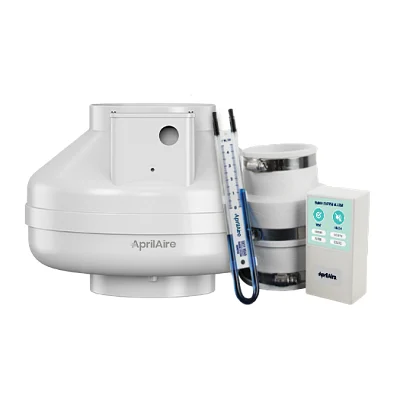
AprilAire
- What it is
- Moves up to 375 CFM
- Power
- Up to 139 W
- C-NRPP 2024/25
- Not applicable (mitigation fan)
The difference: A whole kit rather than the gauge alone: AprilAire says the ARN25K includes the ARN25F fan, an ARNALM alarm, an ARN05M manometer and coupling(s).
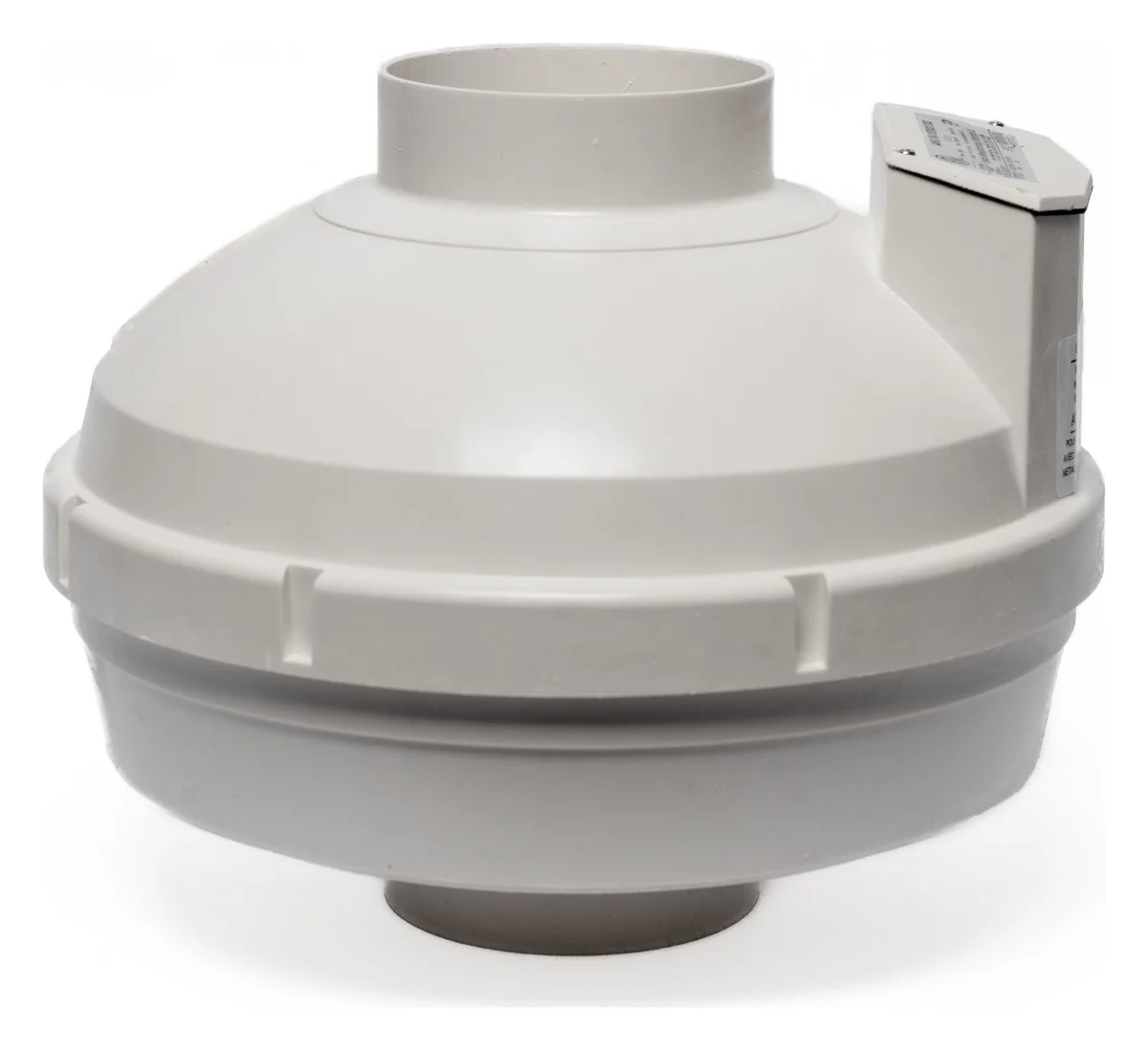
Festa
- What it is
- Moves up to 260 CFM
- Power
- Up to 66 W
- C-NRPP 2024/25
- Not applicable (mitigation fan)
The difference: A fan whose maker sells a kit with its own gauge: Festa lists the Maverick's installation kit with two couplers, a green 5.5 inch radon system manometer, a line cord and system labels.
Compared with similar products: 1 of 3
Questions
Questions people ask
6 questions about the AprilAire ARN05M, answered
Asked about the ARN05M
Does the AprilAire ARN05M measure radon?
No. It shows the vacuum the fan pulls in the pipe. Minnesota's health department says a U-tube manometer does not show or measure radon levels; it shows there is suction in the pipe. Only a radon test shows the level in the home, and the EPA says it is a good idea to retest at least every two years.
What range does the ARN05M read?
AprilAire does not state one. Neither its model data, its All Products Guide nor the ARN05M's owner's folder gives a range, a scale unit or a maximum system pressure, so this page prints none. The EPA's standards ask that a manometer be marked with the range of readings the system had when it was first activated, so the number that matters for your system is the one recorded at installation.
How do I read it?
Uneven liquid levels mean the fan is running, and even levels mean it may not be, in AprilAire's words; AprilAire notes that the levels vary with each installation. Compare the reading with the one recorded when the system was installed: Minnesota says a reading that is even, or significantly different from that one, means the system may not be working properly.
Do I need an alarm as well as the gauge?
AprilAire's folder says a system should have at least two monitors, a passive U-tube and an active notification monitor, and Minnesota requires both. The EPA's guide lists a liquid gauge, a sound alarm, a light indicator and a dial gauge as examples of warning devices, and says the device must be placed where it can be seen or heard easily.
What should I do if the levels go even?
AprilAire's checklist: check the hose connection on the gauge, then the electrical switch or breaker, then call the mitigator. Minnesota adds checking that the tubing is connected to the pipe and not kinked and that power is reaching the fan.
Is this the gauge in AprilAire's radon kits?
Yes, by AprilAire's own lists. AprilAire names an ARN05M Manometer in its ARN15K, ARN25K and ARNHPK radon mitigation kits, and its All Products Guide says its kits include a fan, a manometer, couplings and a radon system alarm.
What to do next
- See how a radon system fits togetherThe suction point, the pipe, the fan, the gauge and the sealing, and what each one does.
- Find a mitigation professionalMost systems are designed and installed by one; some states require a license.
- Read a radon manometerWhat even or uneven fluid means, and what the gauge cannot tell you.
- Test after the workA short-term test afterwards shows whether radon in the home is lower.
Updated October 9, 2026