MonitorAEGTEST
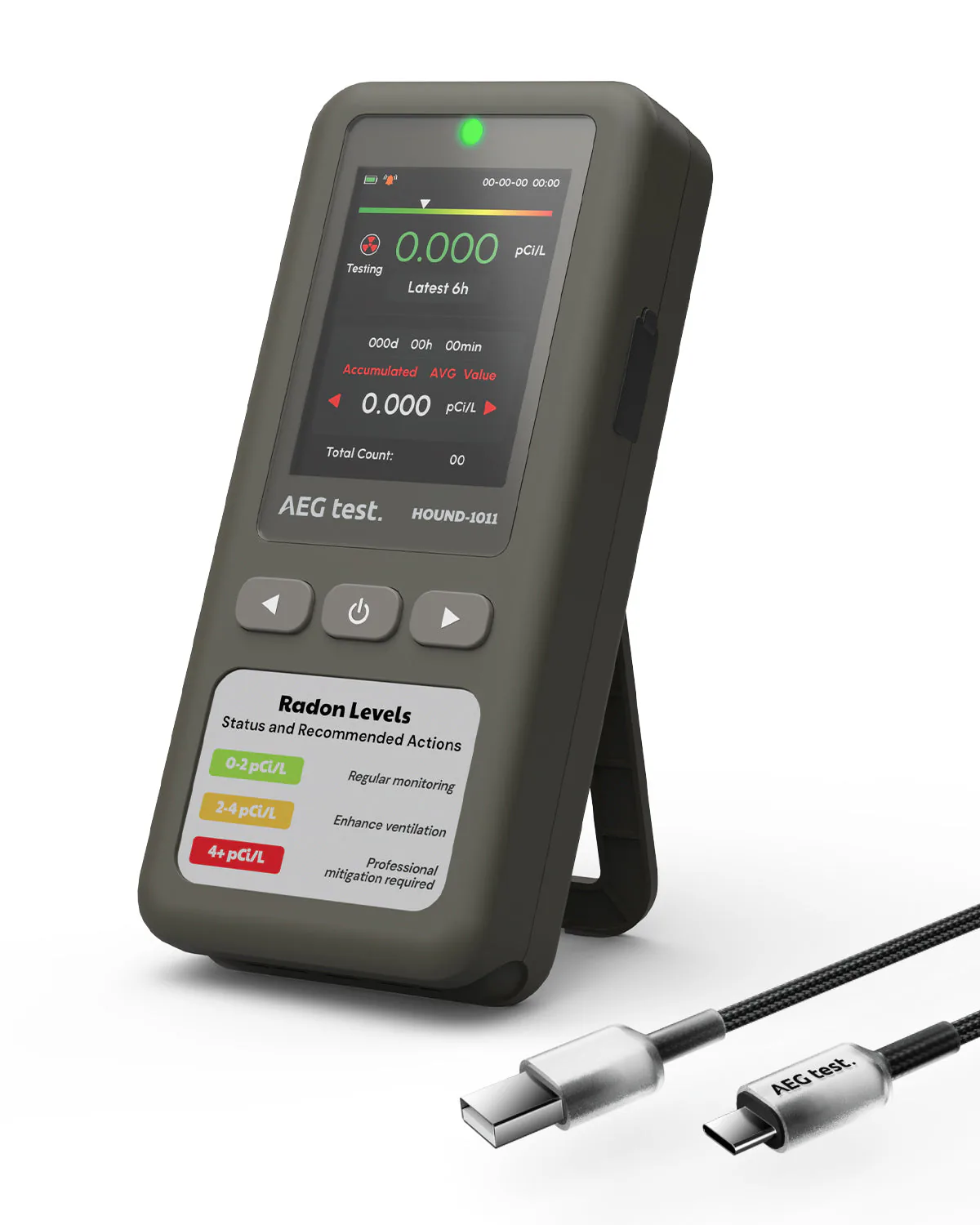
HOUND-1011 rechargeable radon detector with a screen
- C-NRPP 2024/25: Not included
- Battery
- Alarm
- Screen
Method: Semiconductor sensor
First reading: Within 6 hours
A continuous radon monitor measures radon at regular intervals and keeps a record, so you can see how the level changes rather than getting one average. Decide on its long-term average after at least 3 months, and remember that consumer monitors cannot be professionally calibrated.
MonitorAEGTEST
Method: Semiconductor sensor
First reading: Within 6 hours
MonitorAEGTEST
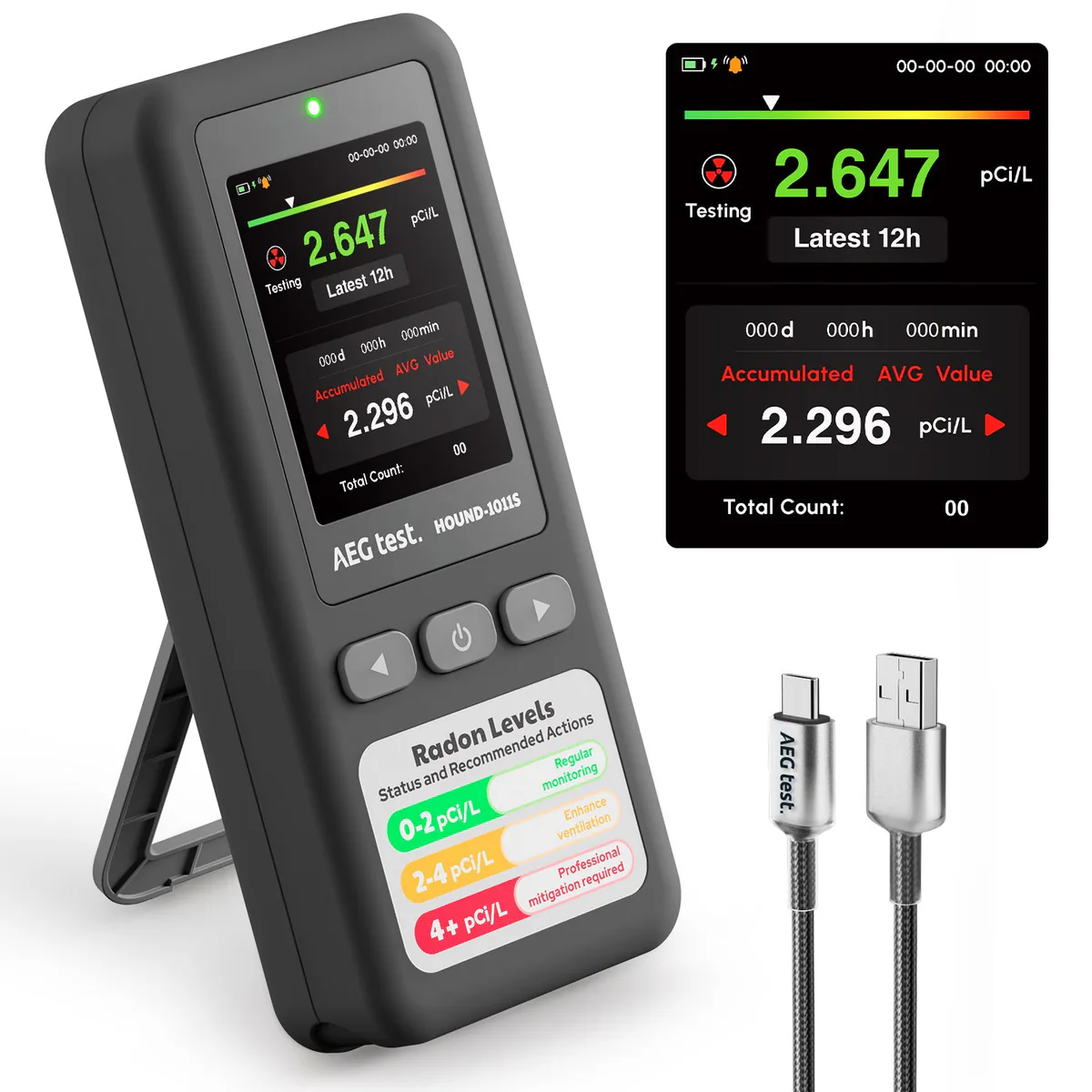
Method: Semiconductor sensor
First reading: Within 12 hours
MonitorAEGTEST
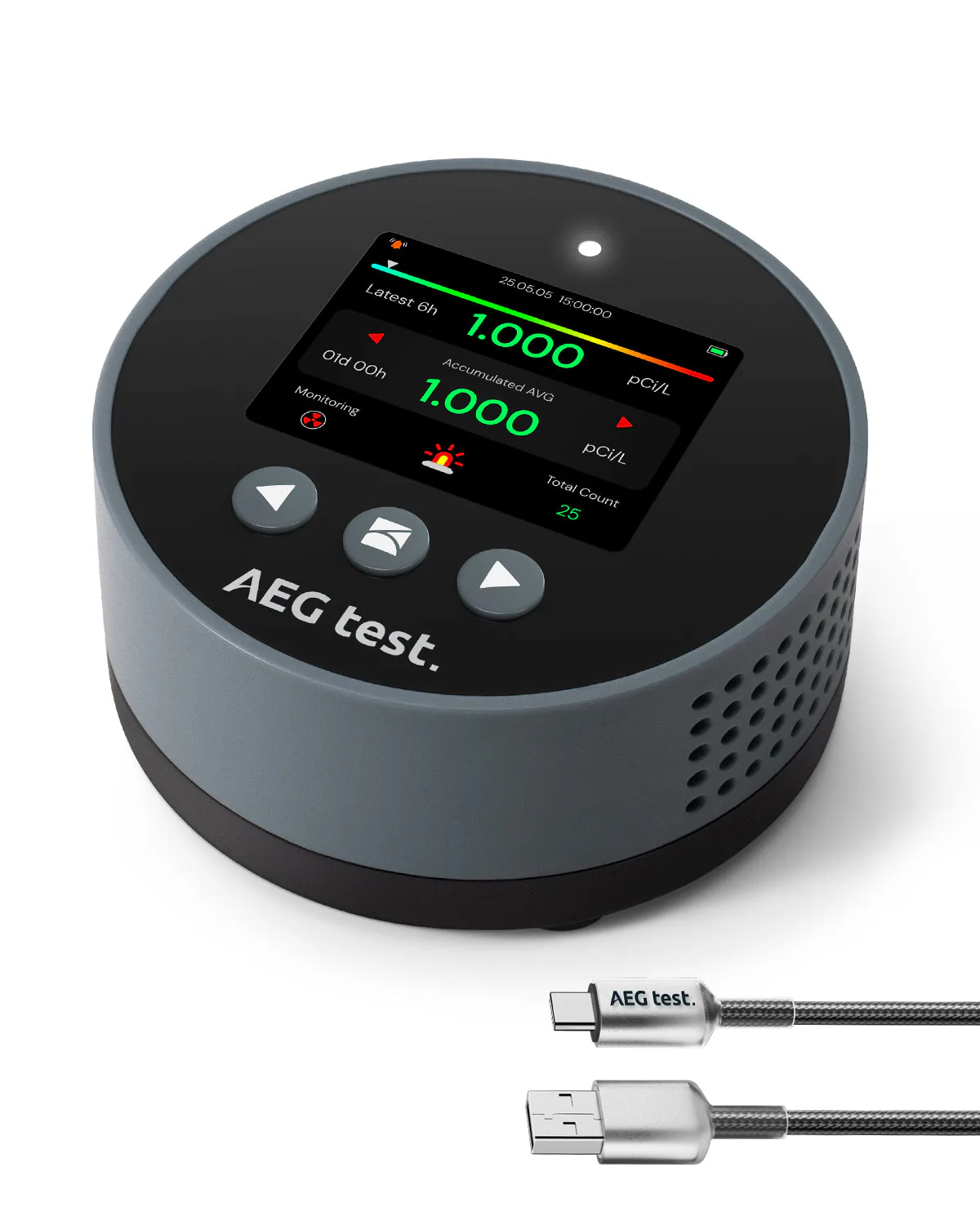
Method: Semiconductor sensor
First reading: Within 6 hours
MonitorAEGTEST
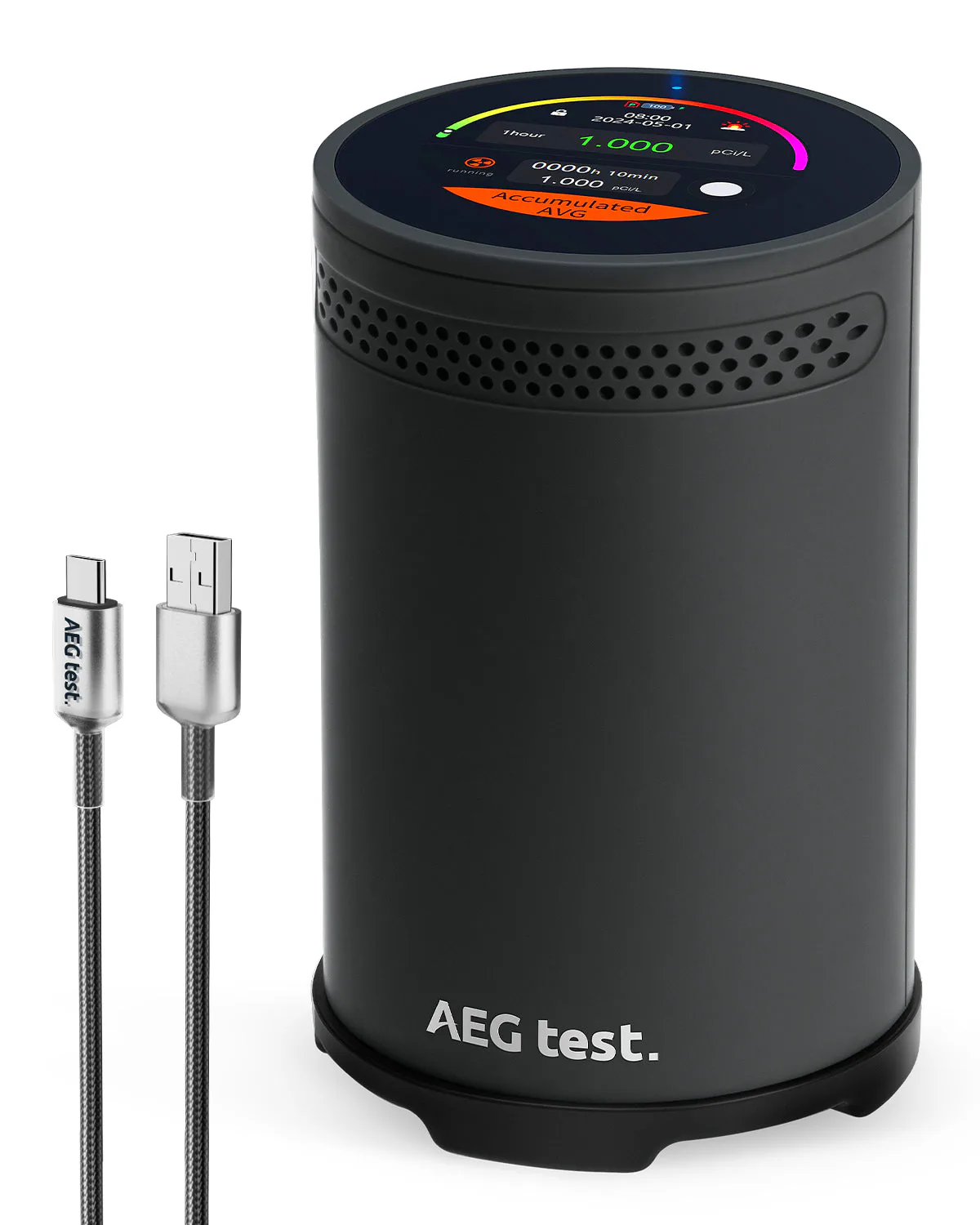
First reading: Within 1 hour
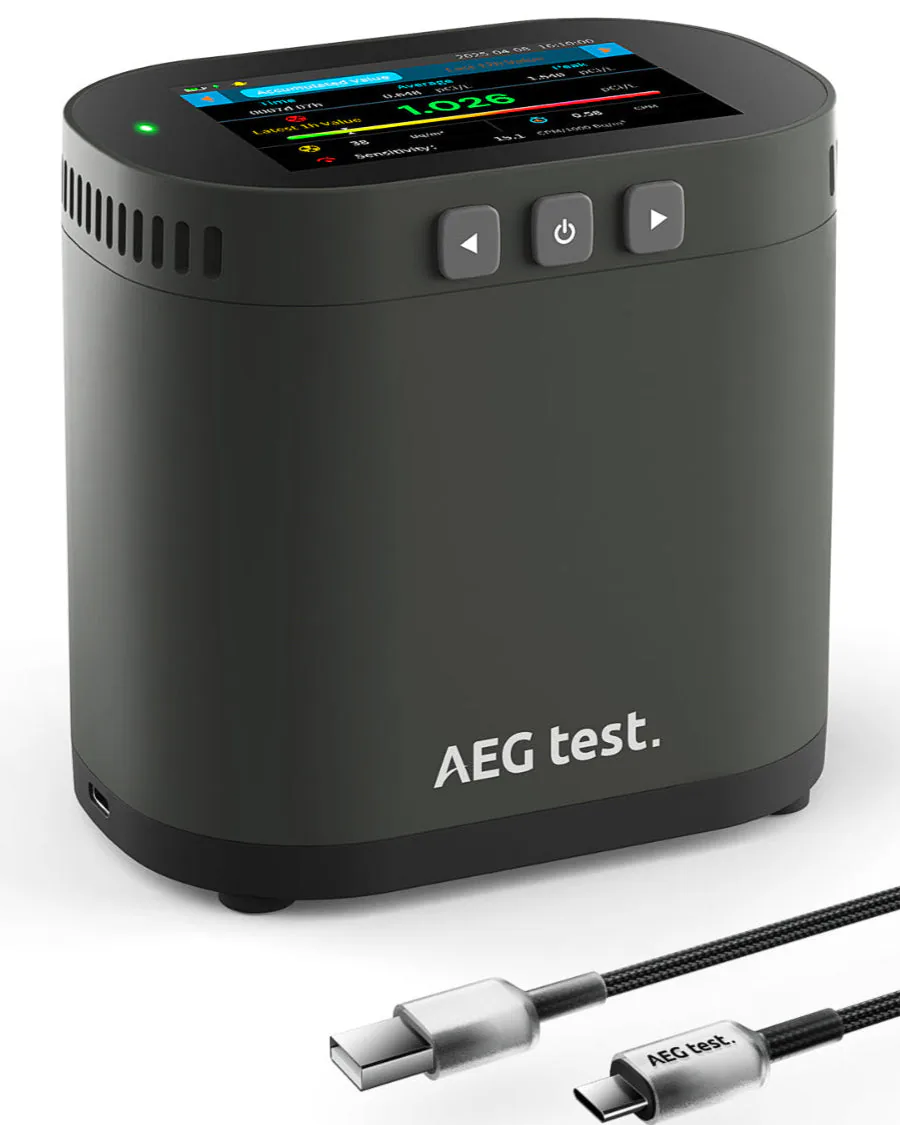
MonitorAEGTEST
Method: Ion chamber
First reading: Within 10 minutes
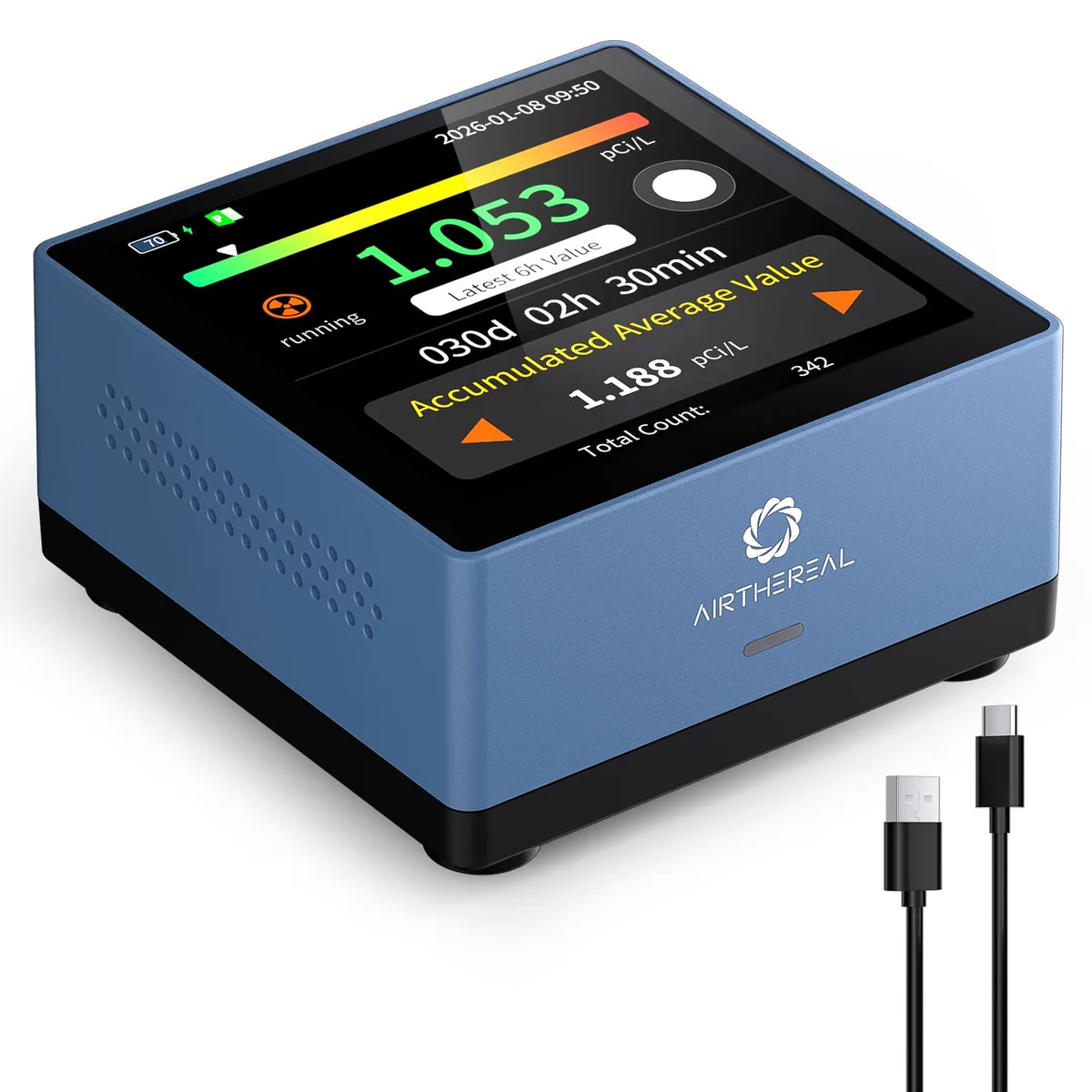
Monitor
Method: Semiconductor sensor
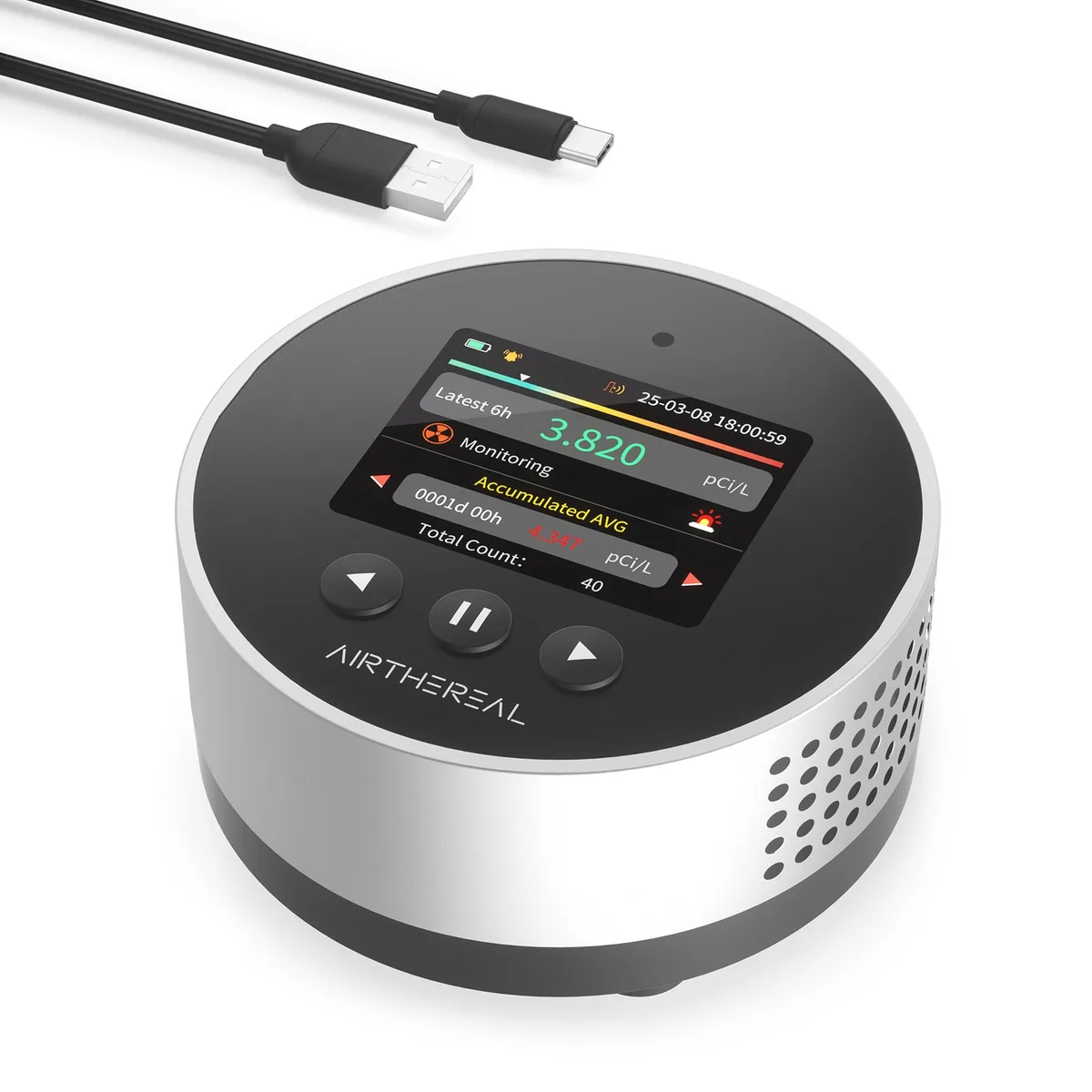
Monitor
Method: Semiconductor sensor
First reading: Within 6 hours
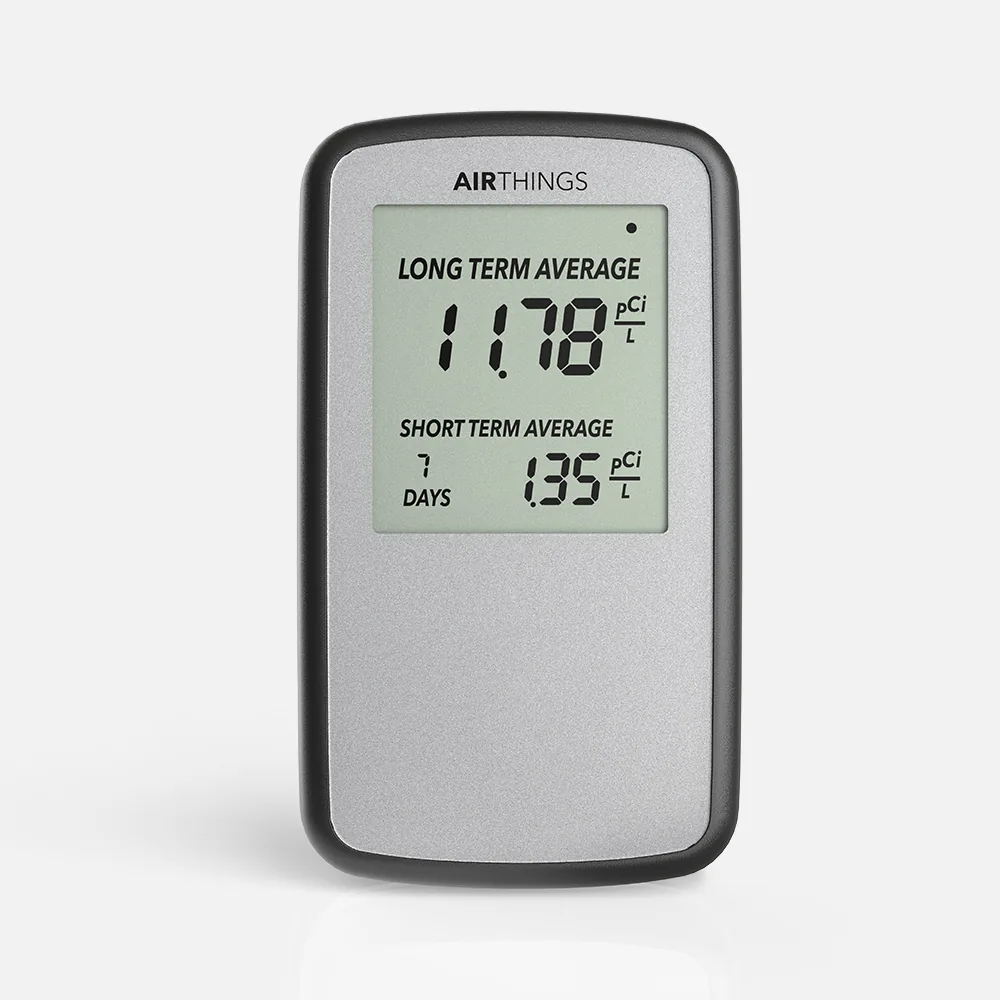
Monitor
Method: Alpha spectrometry
Monitor
Method: Alpha spectrometry
Readings: Every 60 minutes
Monitor
Method: Alpha spectrometry
Monitor
Method: Alpha spectrometry
Readings: Every 60 minutes
Monitor
Method: Alpha spectrometry
Monitor
Method: Alpha spectrometry
MonitorAranet
Method: Ion chamber
First reading: Within 10 minutes
MonitorAranet
Method: Ion chamber
First reading: Within 10 minutes
Monitor
Method: Ion chamber
First reading: Within 10 minutes
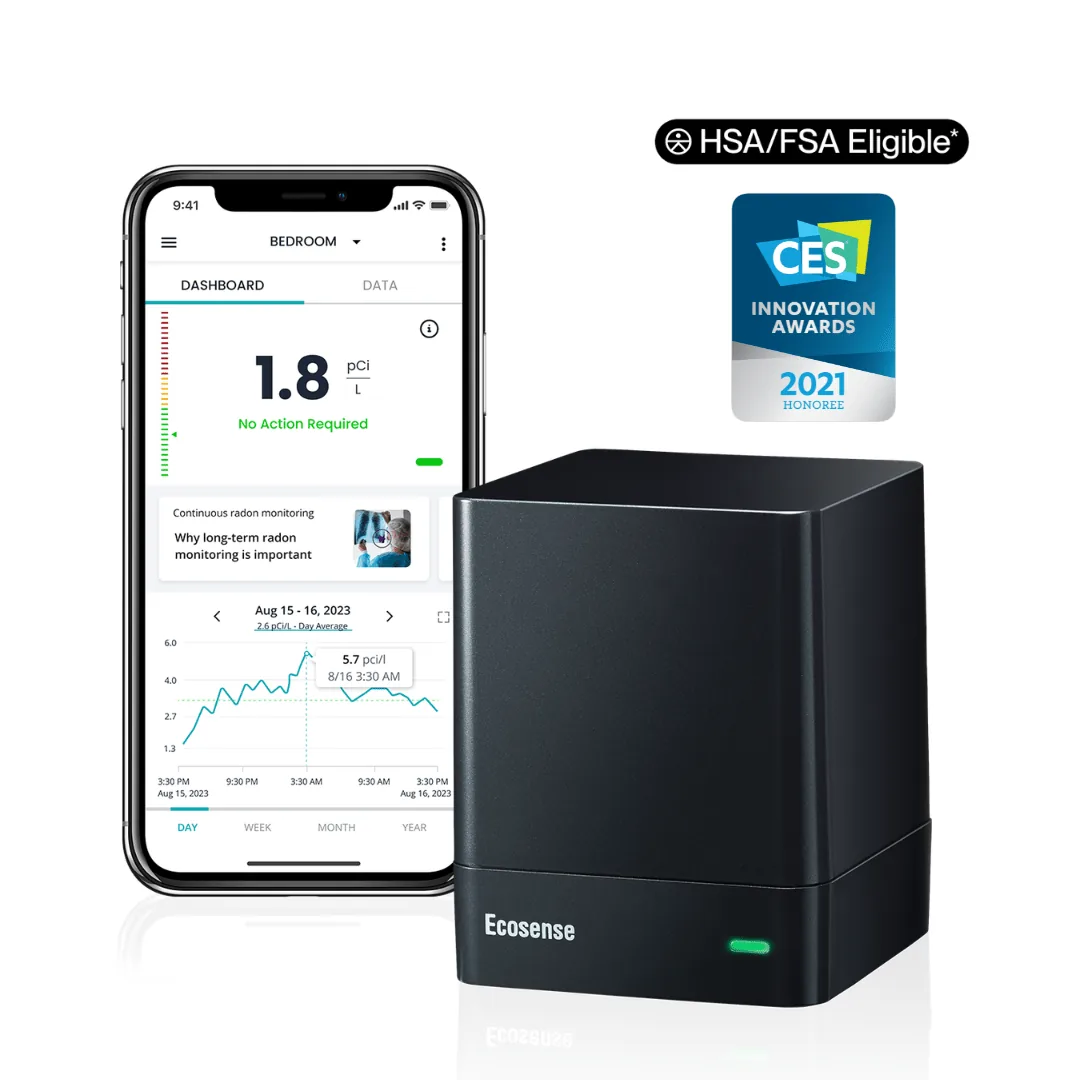
Monitor
Method: Ion chamber
First reading: Within 10 minutes
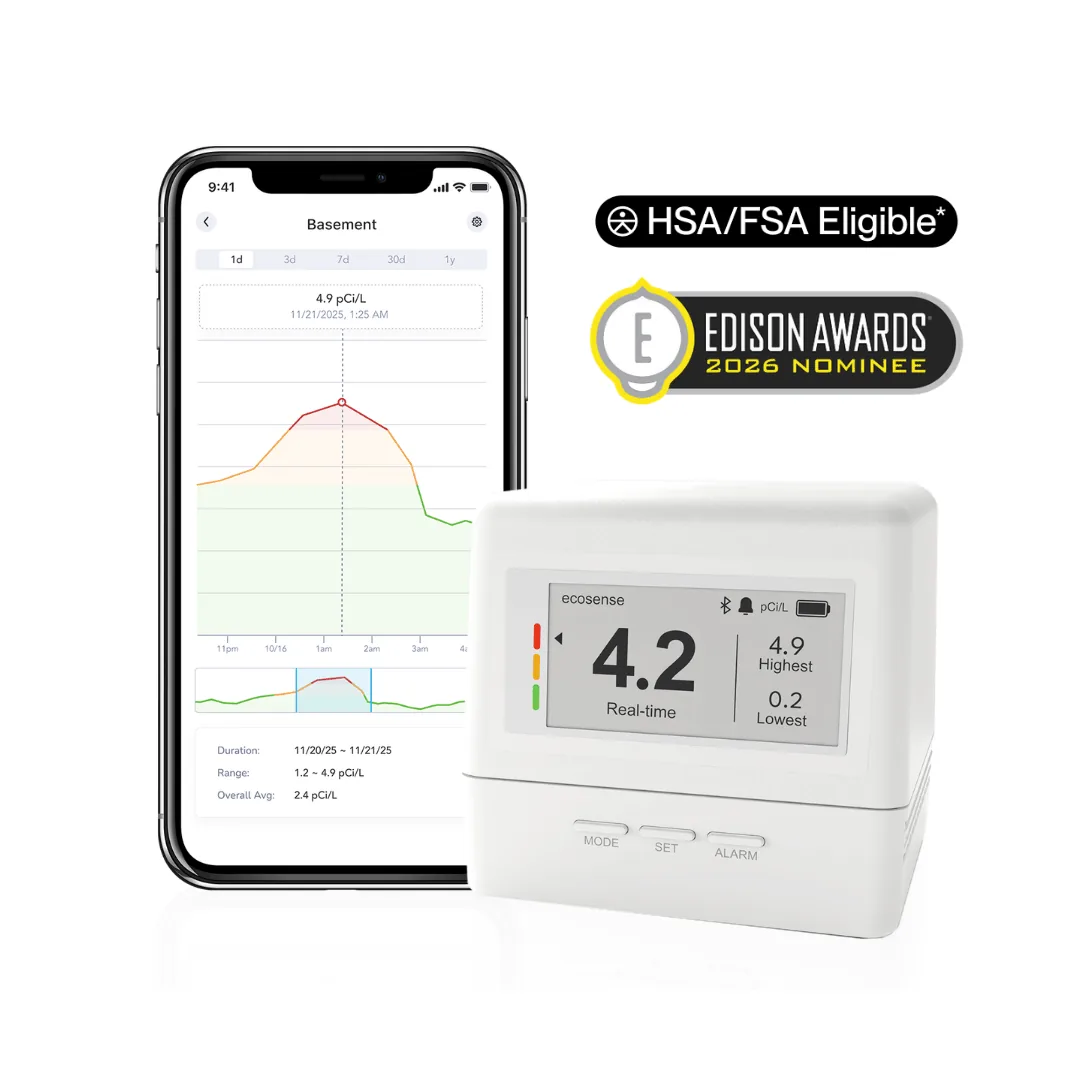
Monitor
Method: Ion chamber
First reading: Within 15 minutes
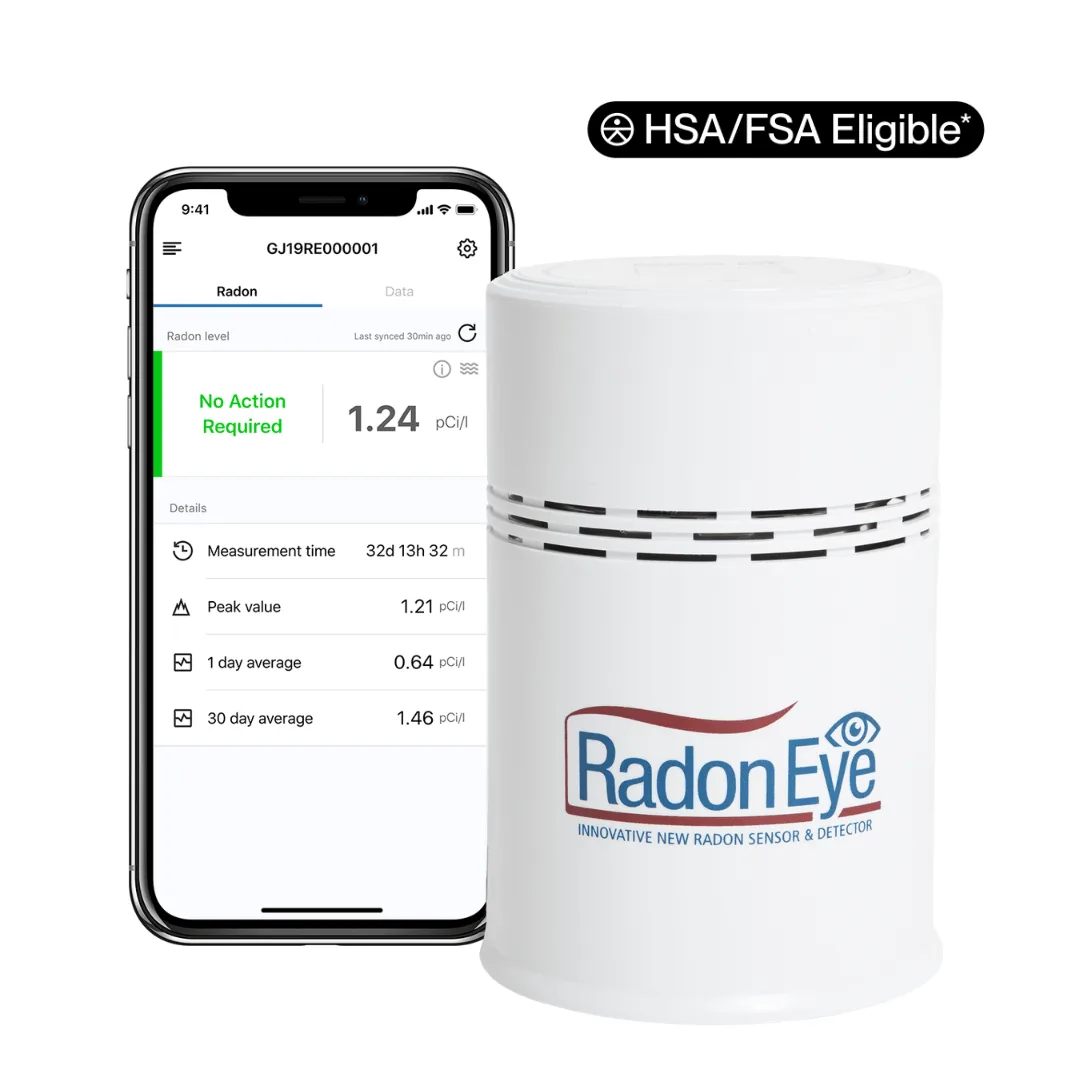
Monitor
Method: Ion chamber
First reading: Within 10 minutes
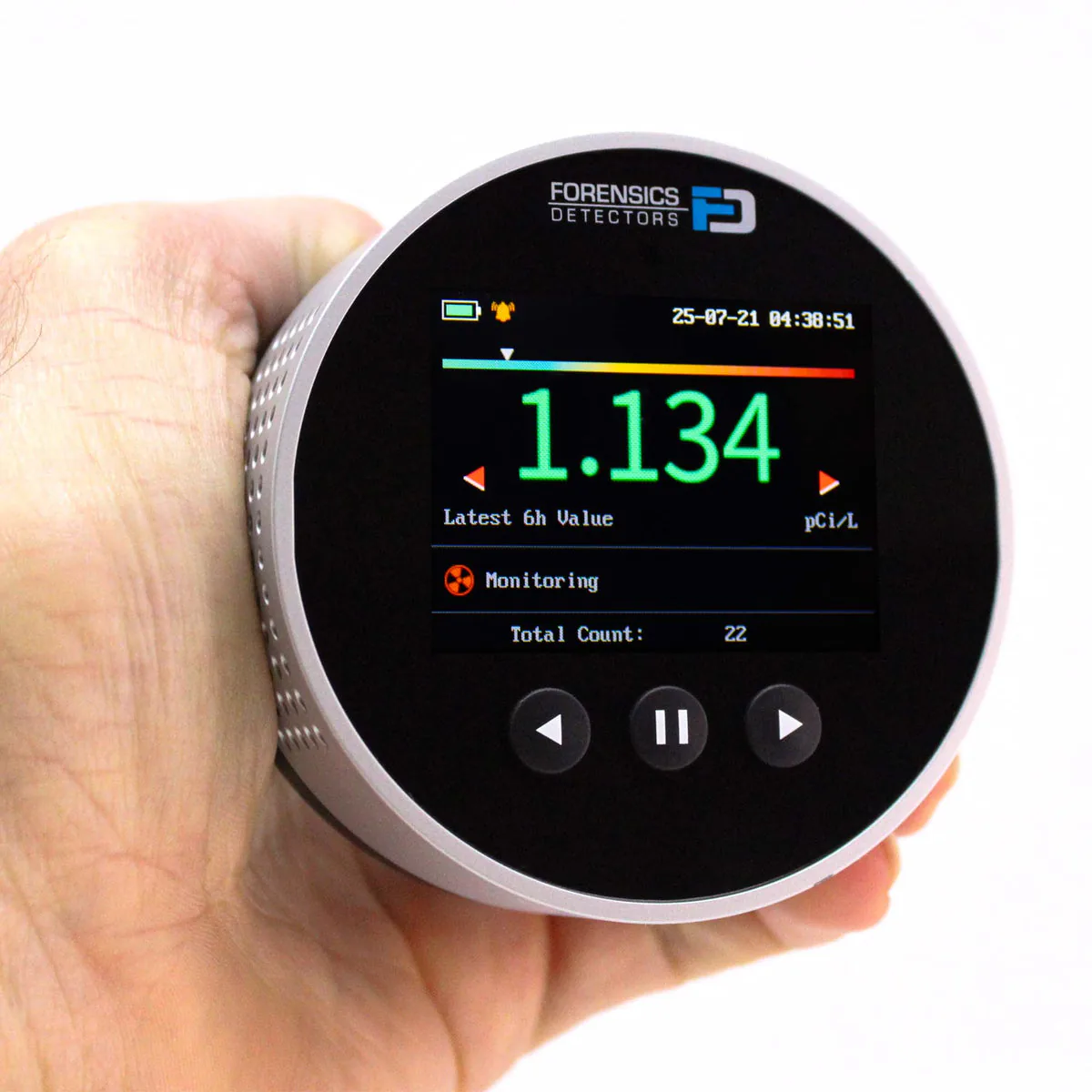
MonitorForensics Detectors
Method: Semiconductor sensor
First reading: Within 6 hours
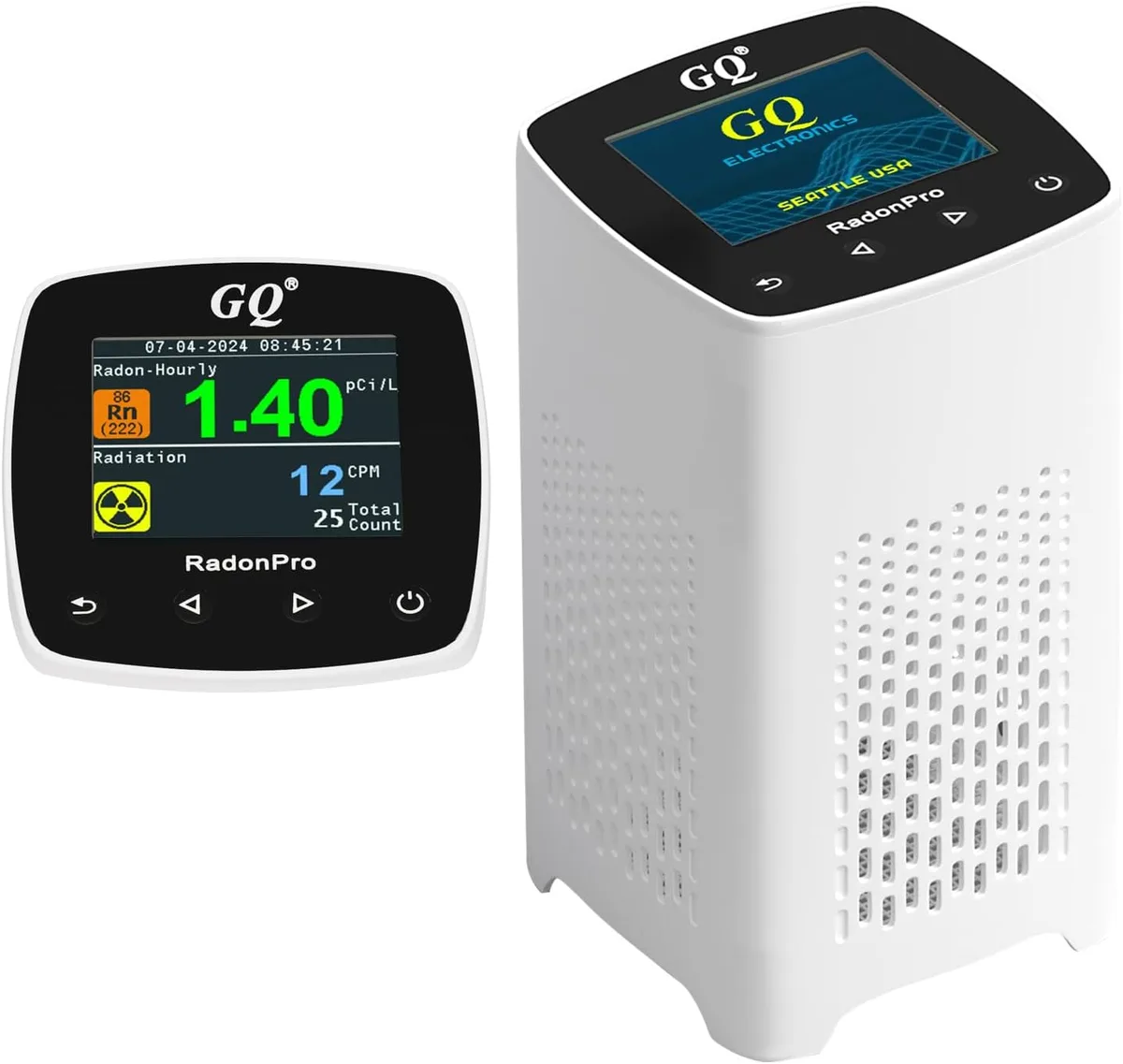
Monitor
First reading: Within 5 minutes
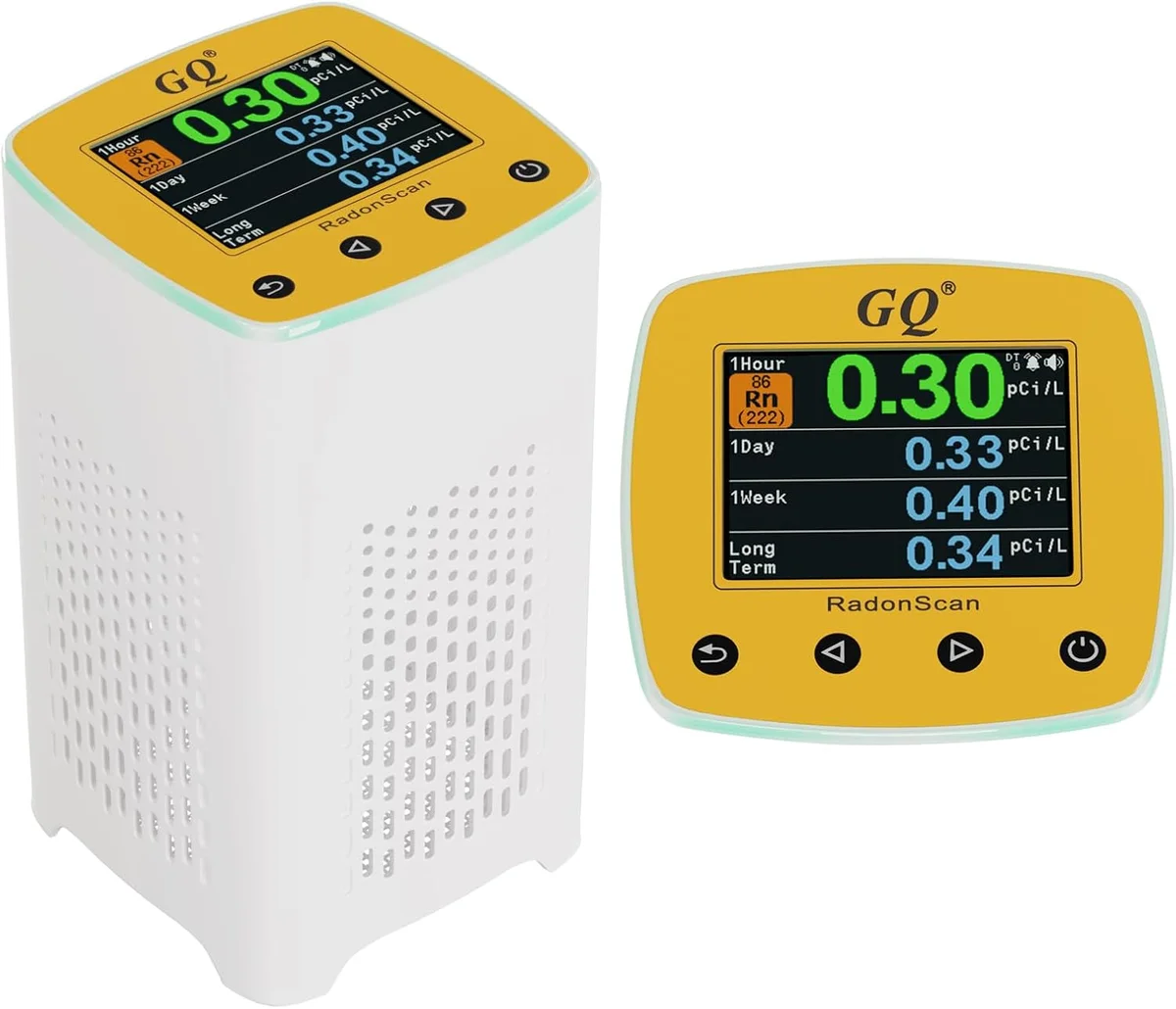
Monitor
First reading: Within 5 minutes
Monitor
First reading: Within 5 minutes
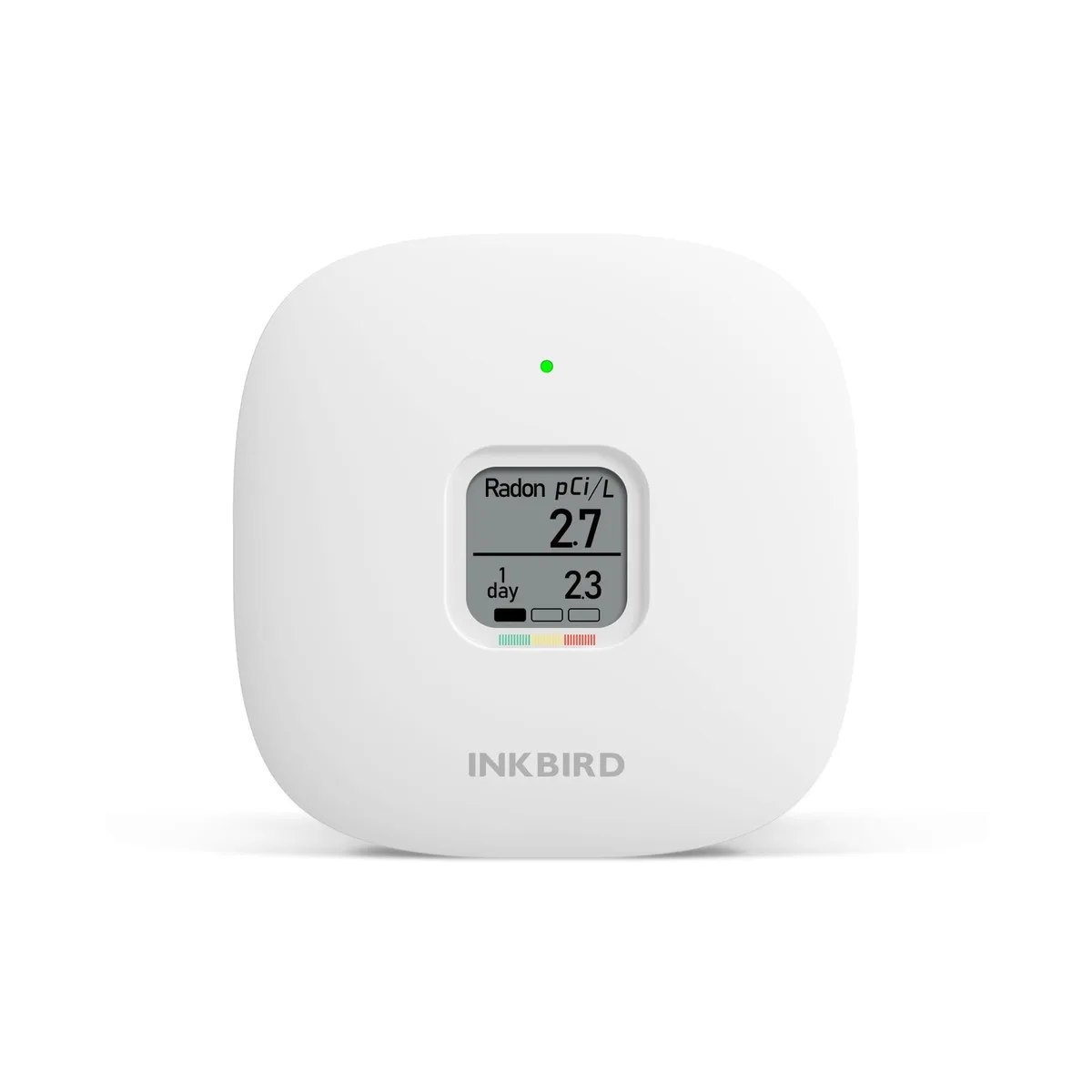
MonitorINKBIRD
First reading: Within 24 hours
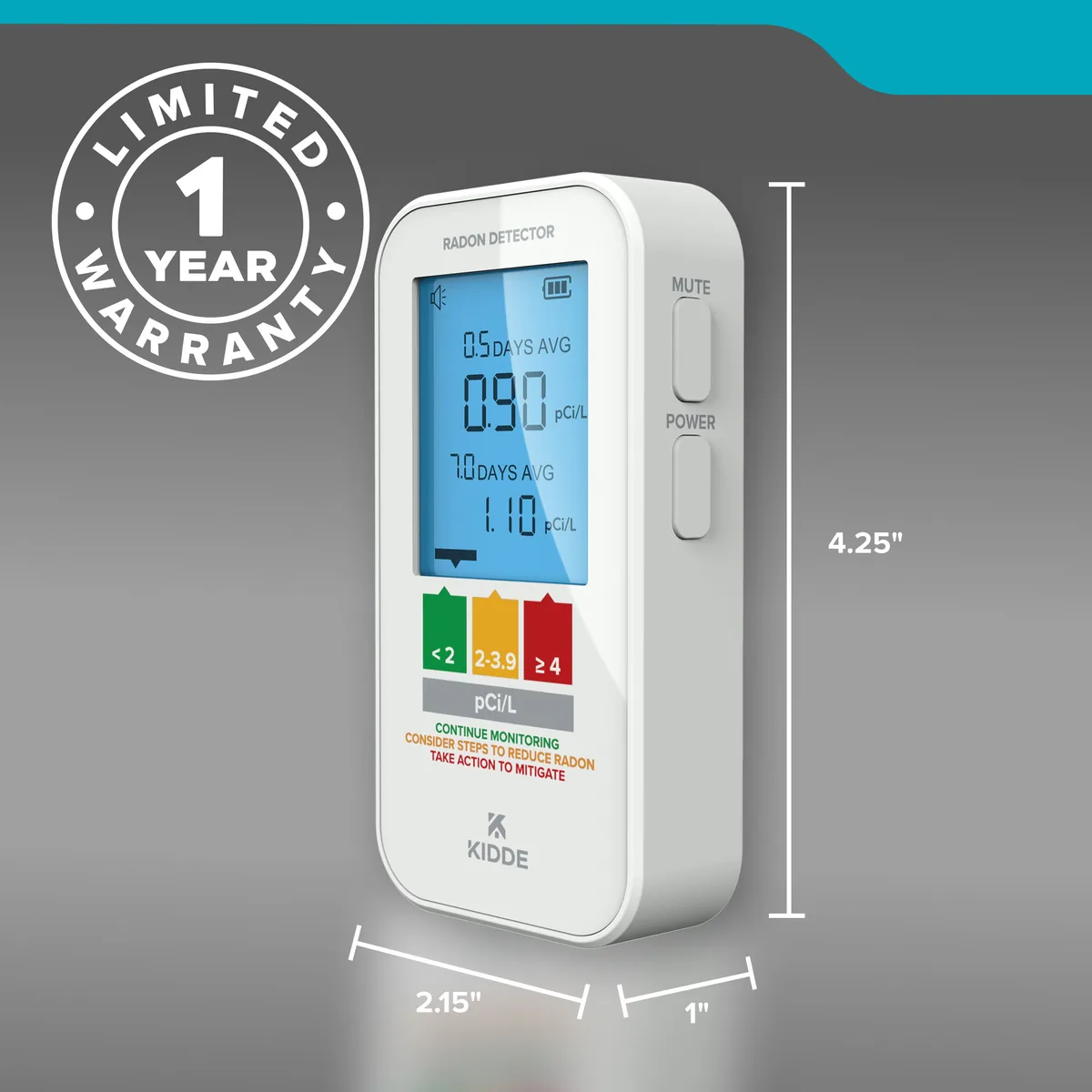
MonitorKidde
Method: Semiconductor sensor
First reading: Within 12 hours
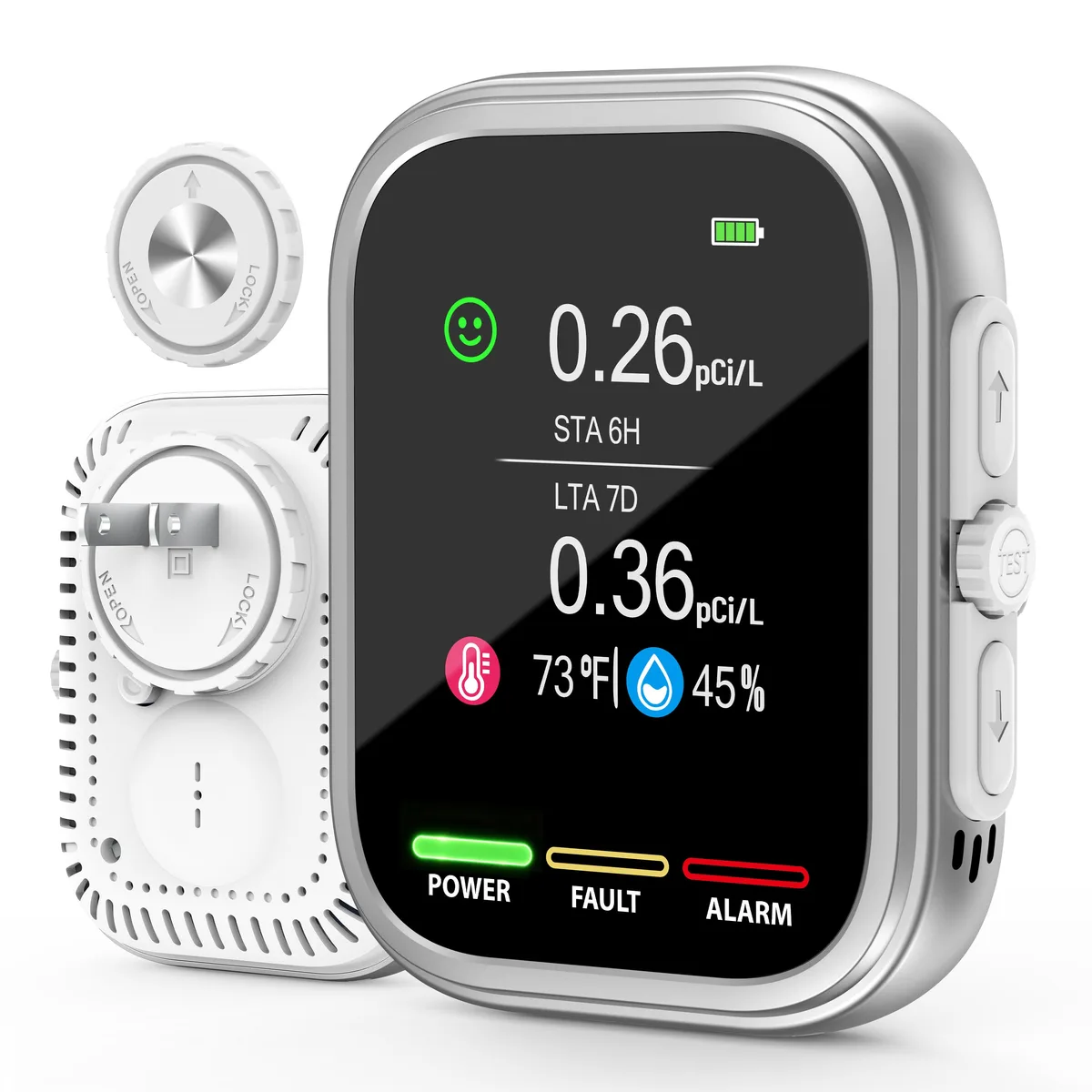
MonitorPYZYCKYH
Method: Semiconductor sensor
First reading: Within 6 hours
MonitorSafetySiren
First reading: Within 48 hours
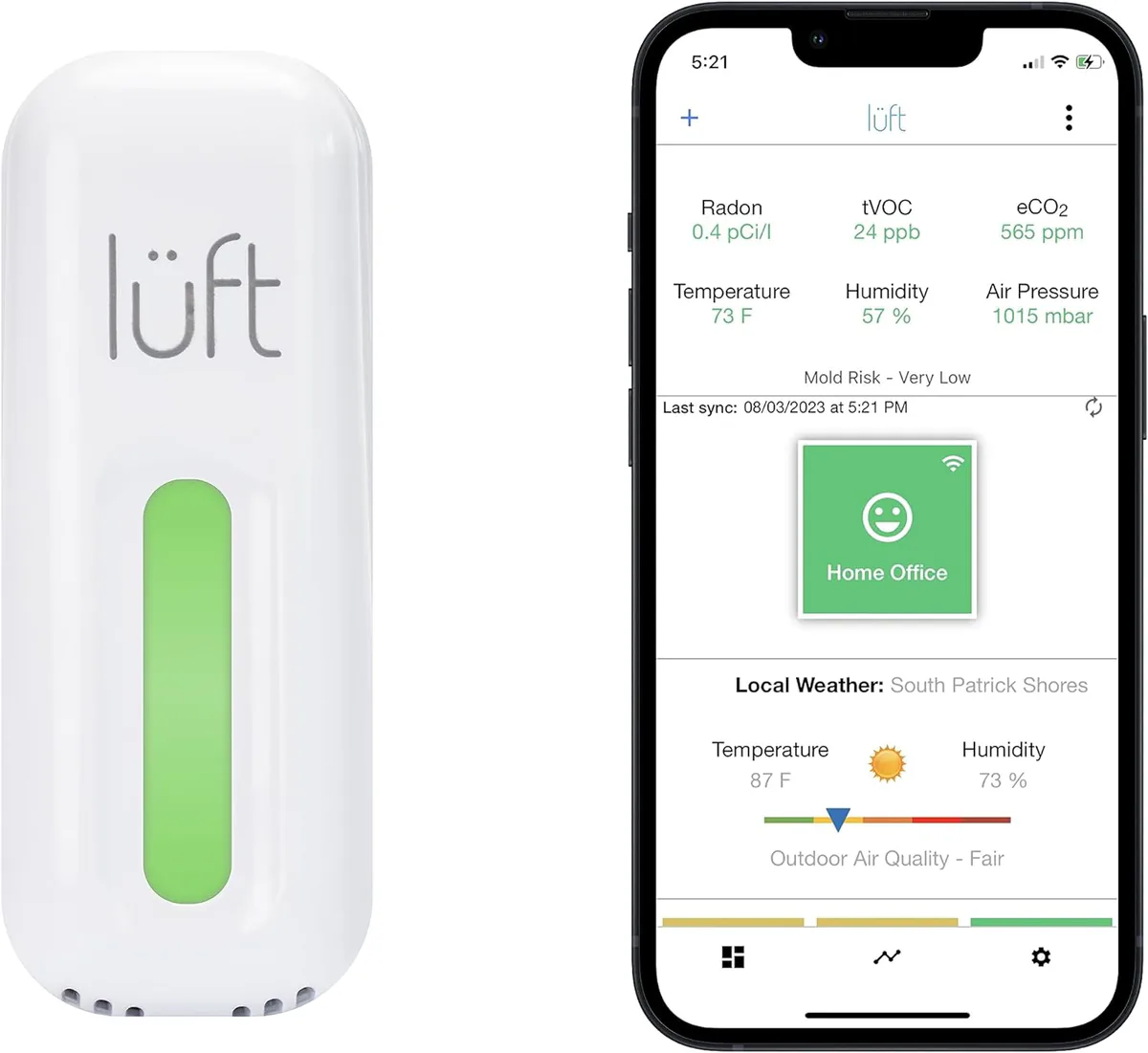
Monitor
First reading: Within 90 minutes
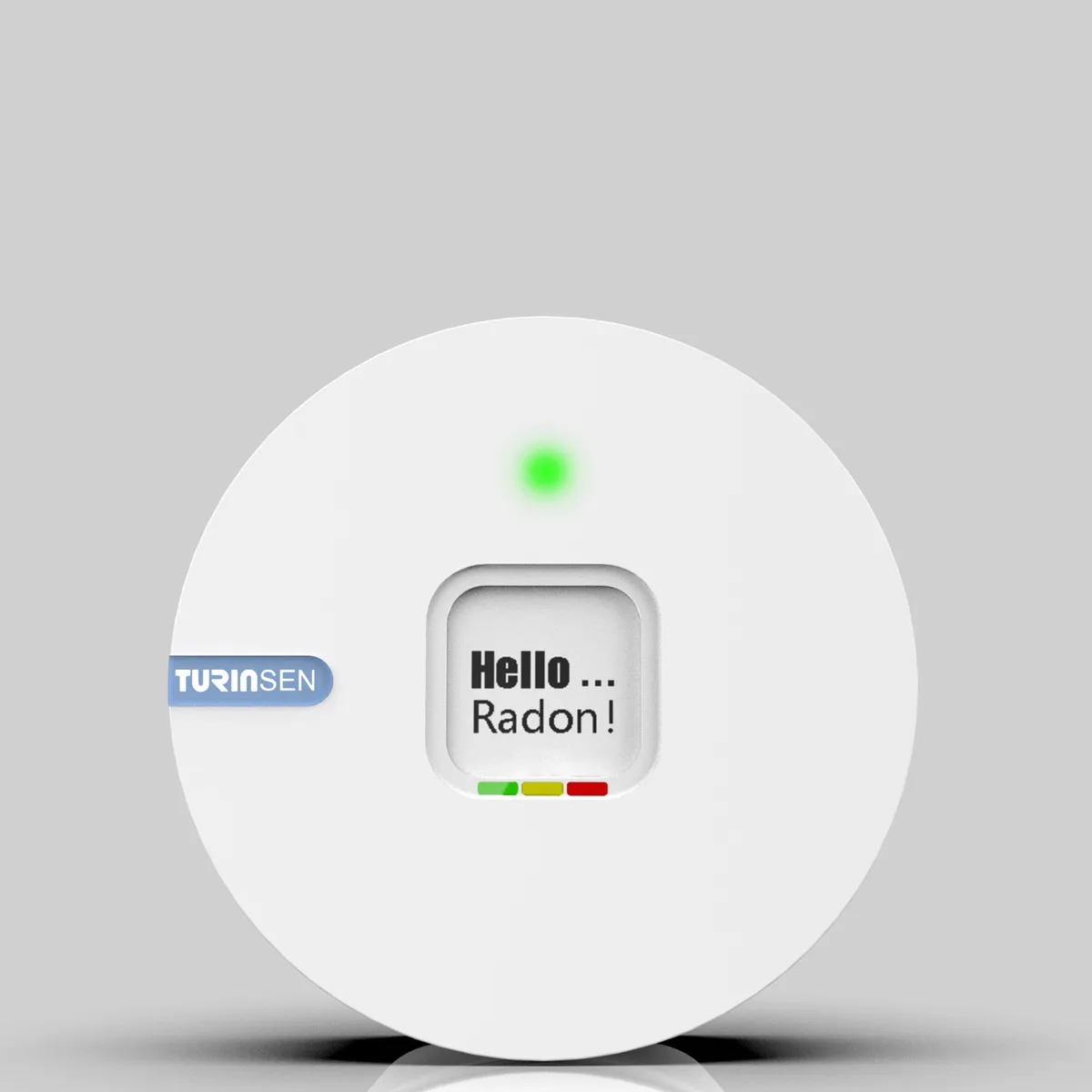
Monitor
Method: Alpha spectrometry
First reading: Within 24 hours
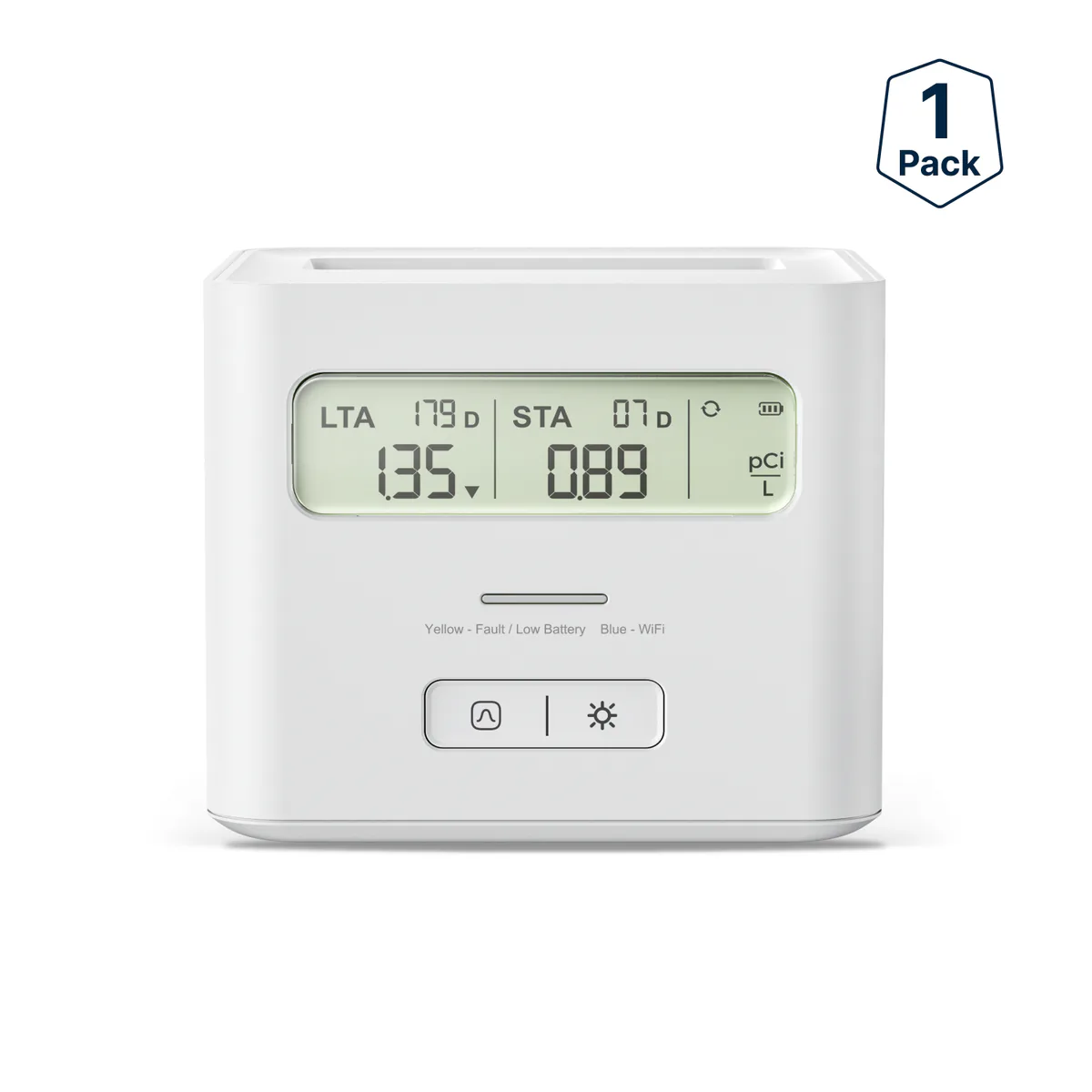
MonitorX-Sense
Method: Alpha spectrometry
First reading: Within 24 hours
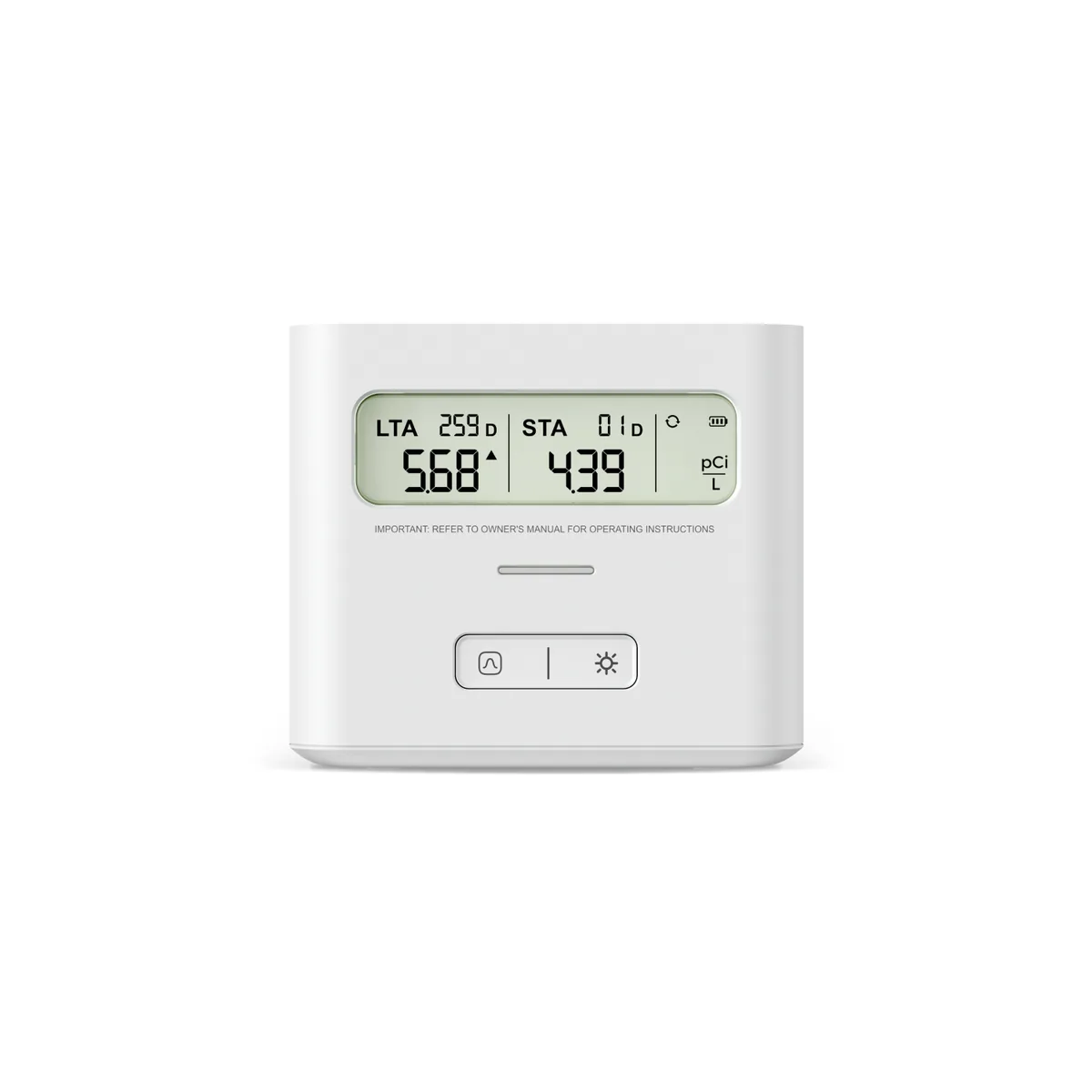
MonitorX-Sense
Method: Alpha spectrometry
First reading: Within 24 hours
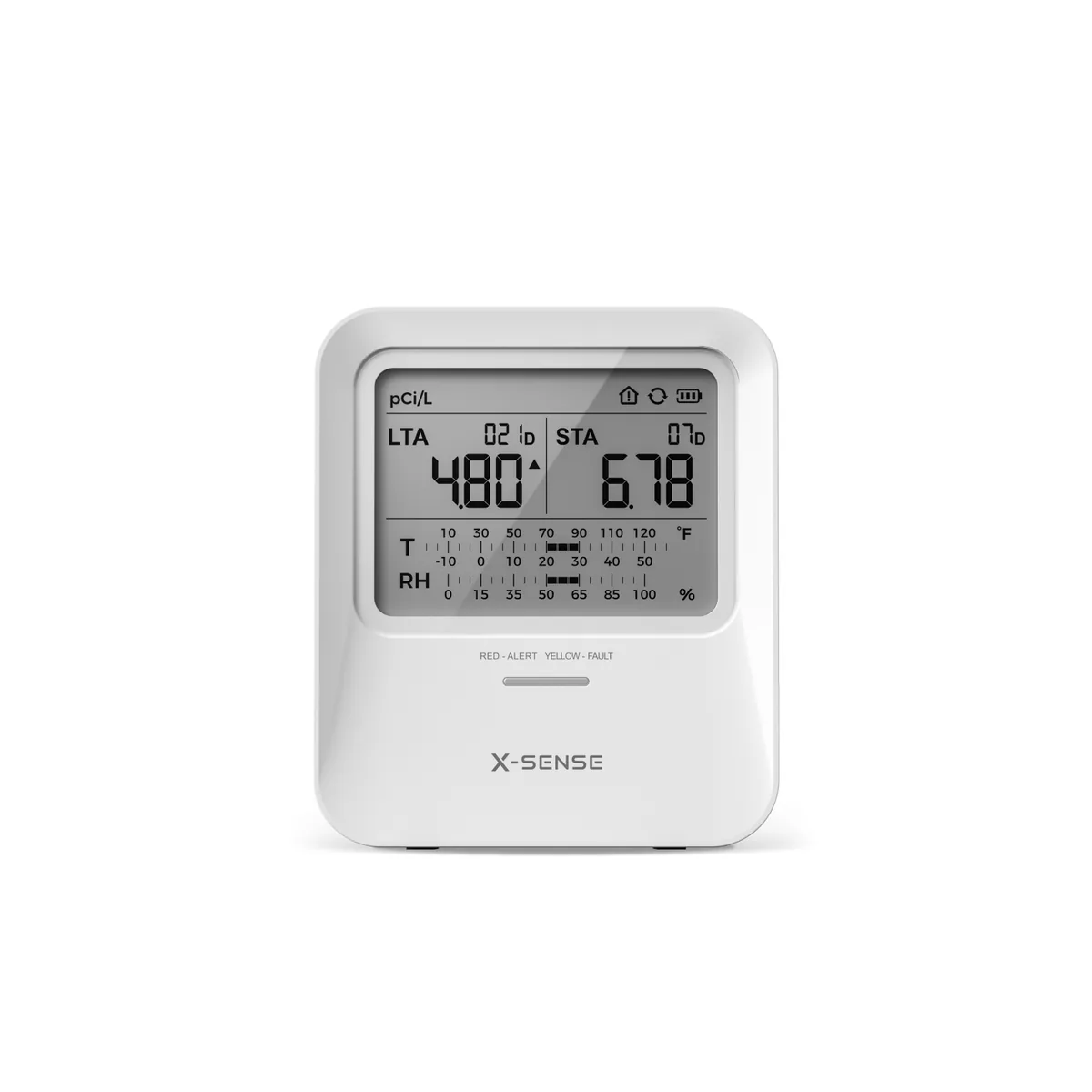
MonitorX-Sense
Method: Alpha spectrometry
First reading: Within 24 hours

Long-term kit
Method: Alpha track
In home: 90 days to 12 months

Long-term kit
Method: Alpha track
In home: 90 days to 12 months
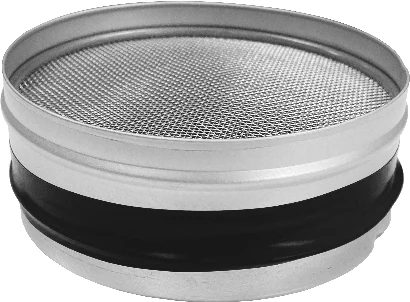
Short-term kit
Method: Charcoal
In home: 48 to 96 hours
No Amazon listing on file
See details of the AccuStar PicoCan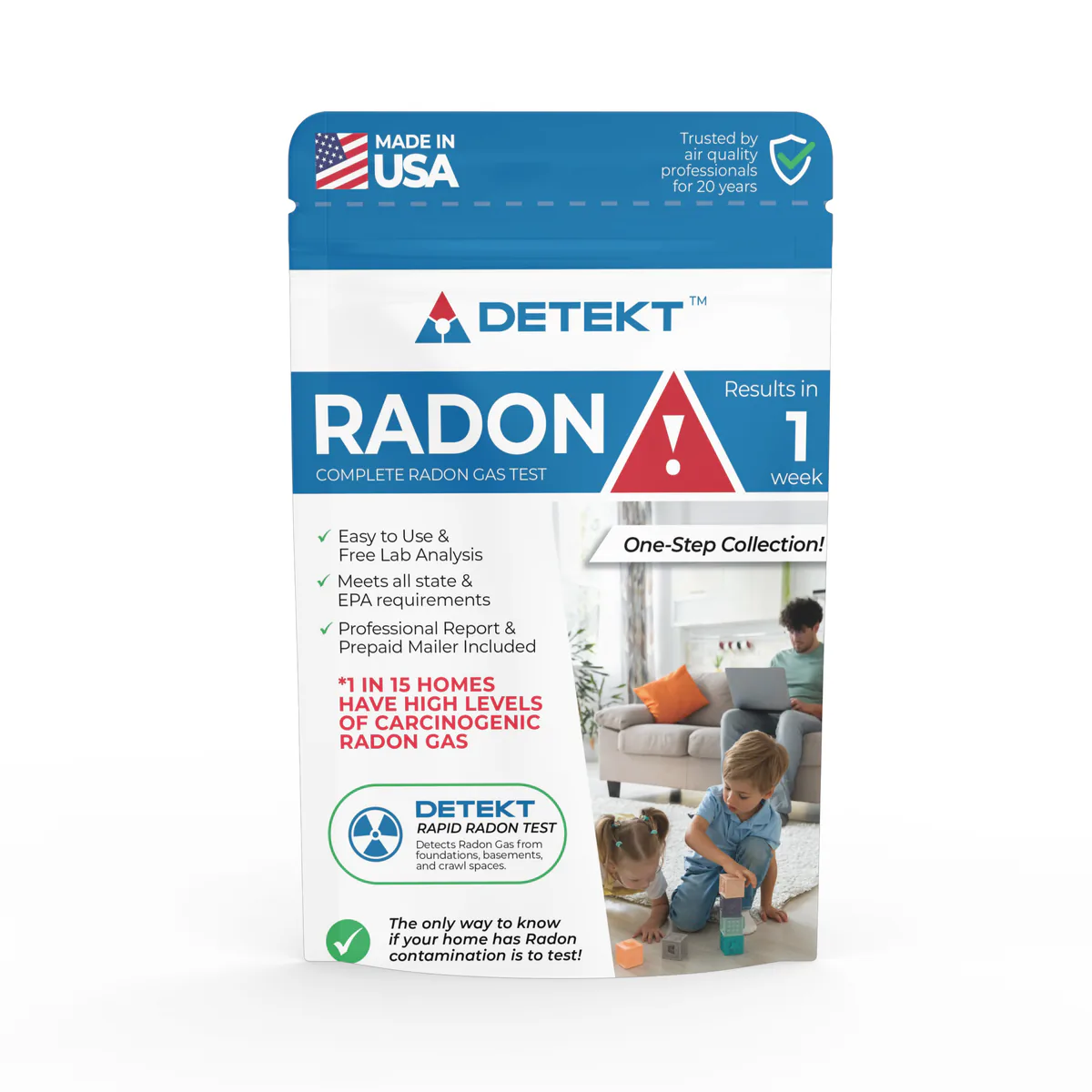
Short-term kit
Method: Charcoal
In home: 2 to 7 days

Short-term kitempowerDX
Method: Passive sampler
In home: 48 to 96 hours
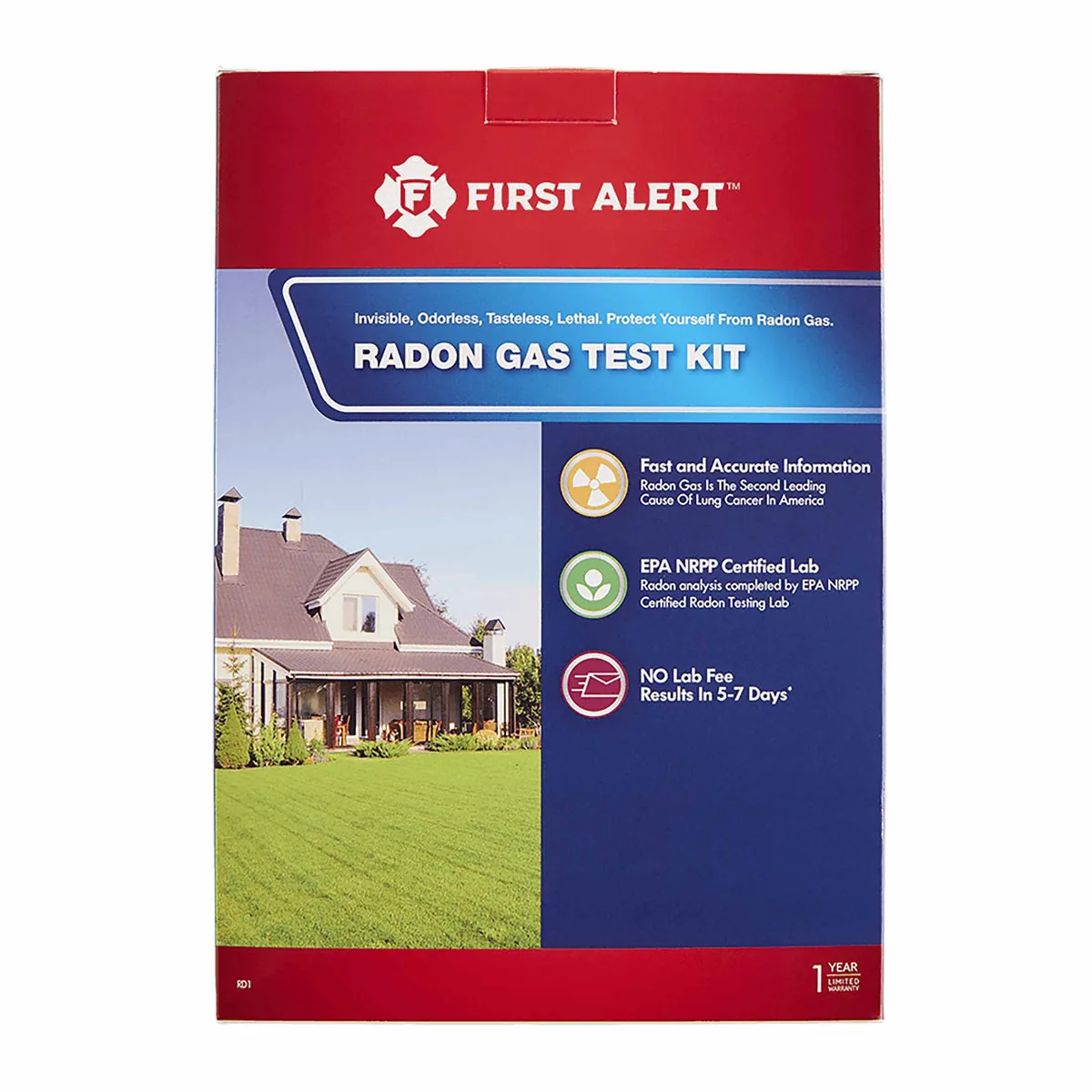
Short-term kitFirst Alert
Method: Charcoal
In home: 2 to 4 days
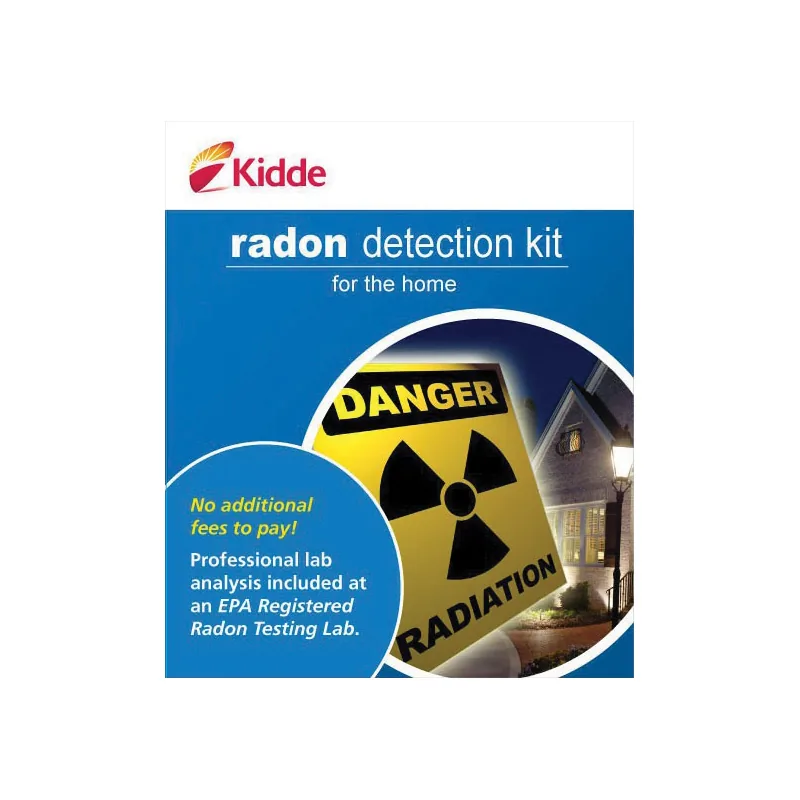
Short-term kitKidde
Method: Charcoal
In home: 3 days
No Amazon listing on file
See details of the Kidde 442020
Short-term kit
Method: Liquid scintillation
In home: 48 to 96 hours
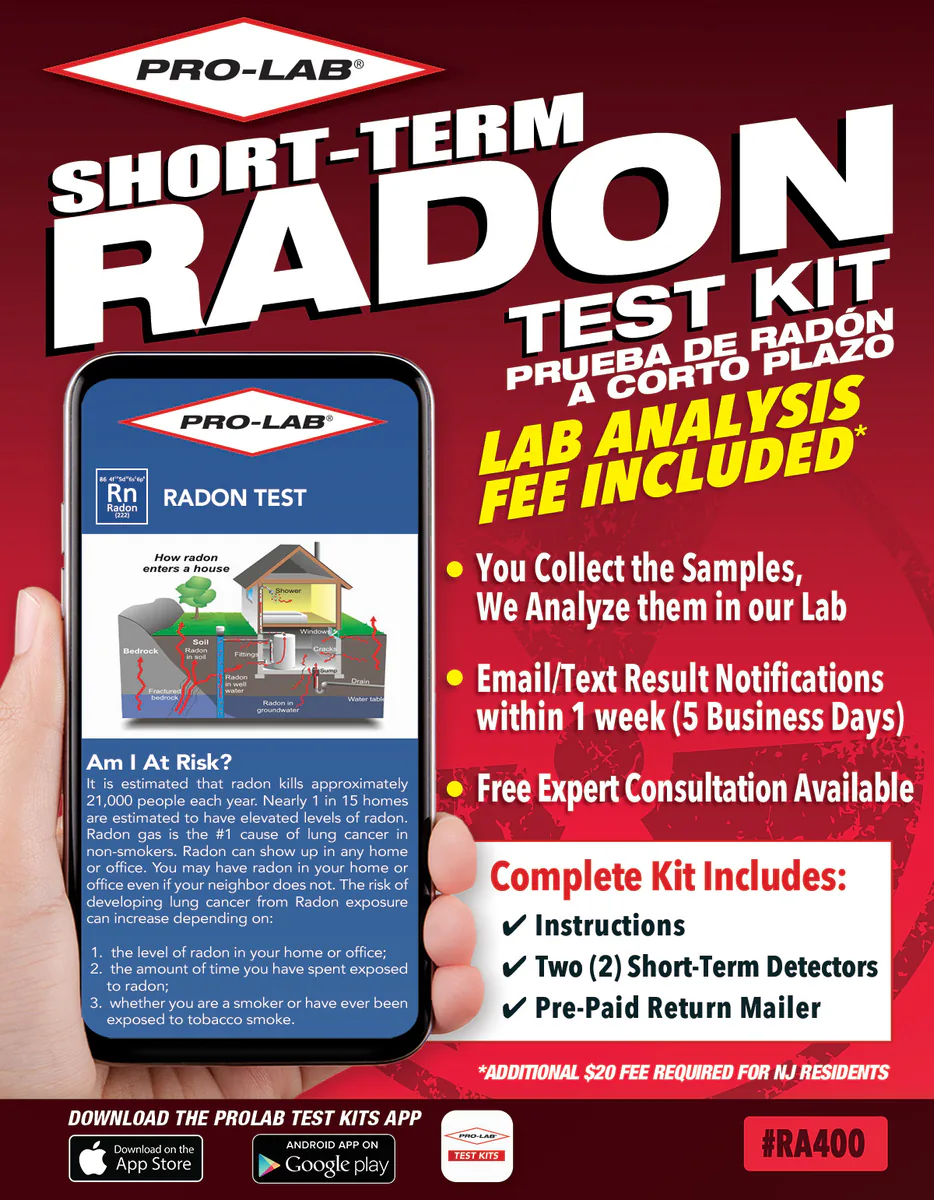
Short-term kit
Method: Liquid scintillation
In home: 48 to 96 hours
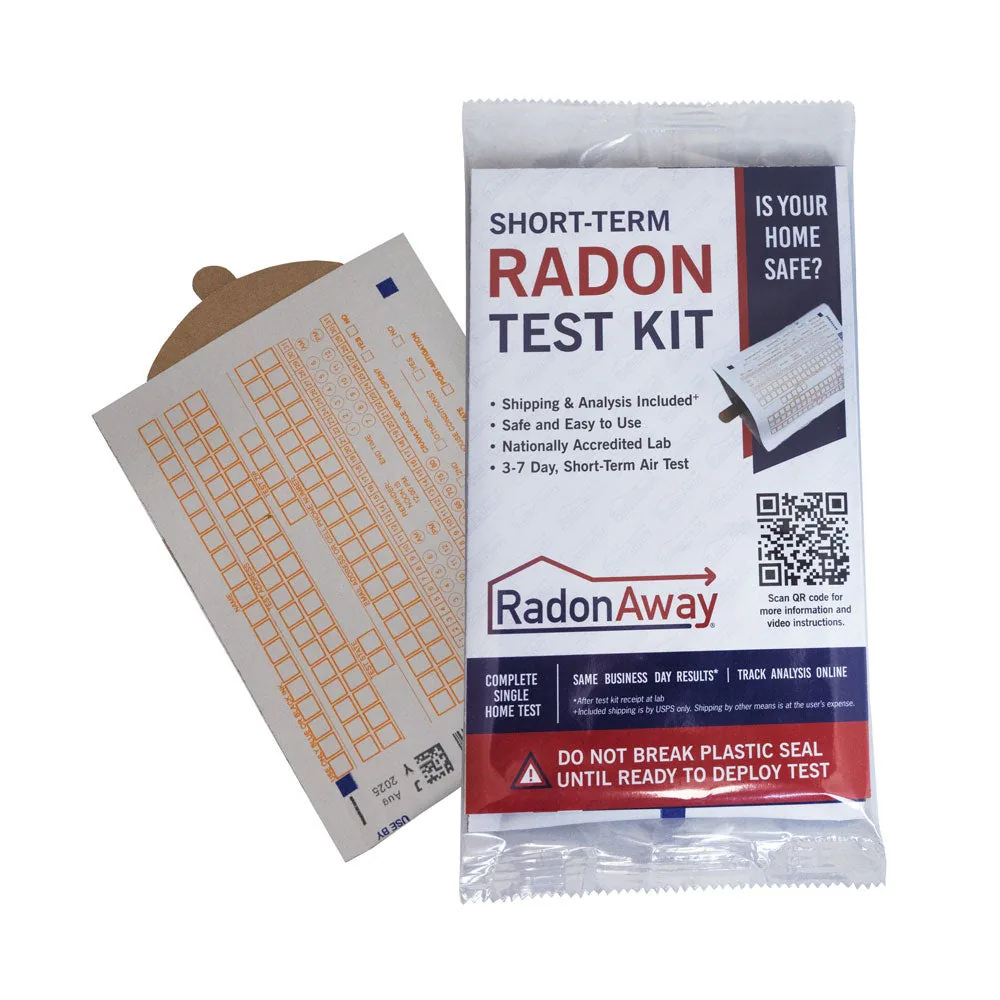
Short-term kit
In home: 72 to 168 hours
No Amazon listing on file
See details of the RadonAway Air Chek Short-TermRadon test kits: 1 of 10
Home radon monitors (32)
Compare side by sideThe guide
Short answer
A continuous radon monitor measures radon at regular intervals and keeps a record, so you can see how the level changes rather than getting one average. Decide on its long-term average after at least 3 months, and remember that consumer monitors cannot be professionally calibrated.
Active radon devices, which include continuous radon monitors, measure and record the radon or its decay products in the air without a break. Many of them produce a report of that record, which can reveal unusual swings in the radon level during the test. That record is what sets a continuous monitor apart from a test kit, which gives one average for its whole test period.
In stores, these devices are usually sold as radon detectors or radon monitors. Every consumer model we have verified, with its independent evidence status, is on radon detectors and monitors. This page explains the continuous record itself: how to read it, what grade of instrument produced it, and when it counts.
C-NRPP sorts electronic radon monitors into consumer-grade and professional-grade, which separates devices made for households from those made for professional use. The old term, continuous radon monitor (CRM), was renamed professional-grade ERM to stress the quality and use of the professional kind.
| Compared | Consumer-grade | Professional-grade |
|---|---|---|
| Who uses it | Homeowners and renters, for their own home | Radon measurement professionals |
| Calibration | Cannot be professionally calibrated | Calibrated; the professional monitor in a 2026 school field study was calibrated annually by its maker |
| Independent check | C-NRPP's consumer comparison, for models whose makers enter | C-NRPP lists approved professional-grade monitors separately |
| Interference features | Varies by model | Some advanced active devices offer anti-interference features and may cost more |
| Typical job | Watching a home for months | Tests others rely on, such as many home sales |
The trade-off fits in one sentence: some technically advanced active devices offer anti-interference features, and although they may cost more, they may give a more reliable result. If a result has to stand up for someone else, a certified professional with a professional monitor is the safer route; see radon professionals.
Every monitor reports averages over set periods, and each one does it differently. Read the maker's user guide to see how your monitor computes its long-term average, because each model averages its data in its own way. This is how the six consumer monitors C-NRPP approved in 2024/25 report their readings:
| Monitor | Reading periods | Where the averages appear |
|---|---|---|
| Airthings Corentium Home | 12 hours, 24 hours and 7 days; first reading after 24 hours | Short-term and long-term averages on the monitor display |
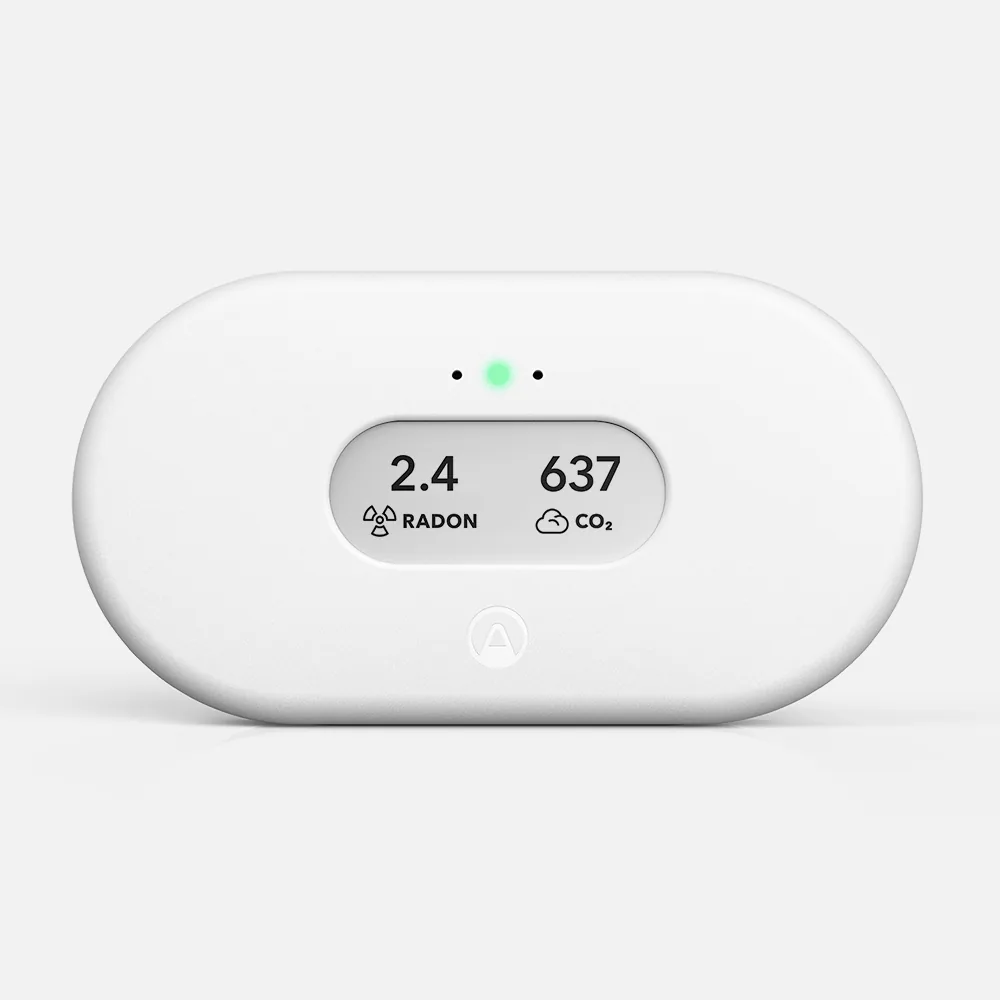
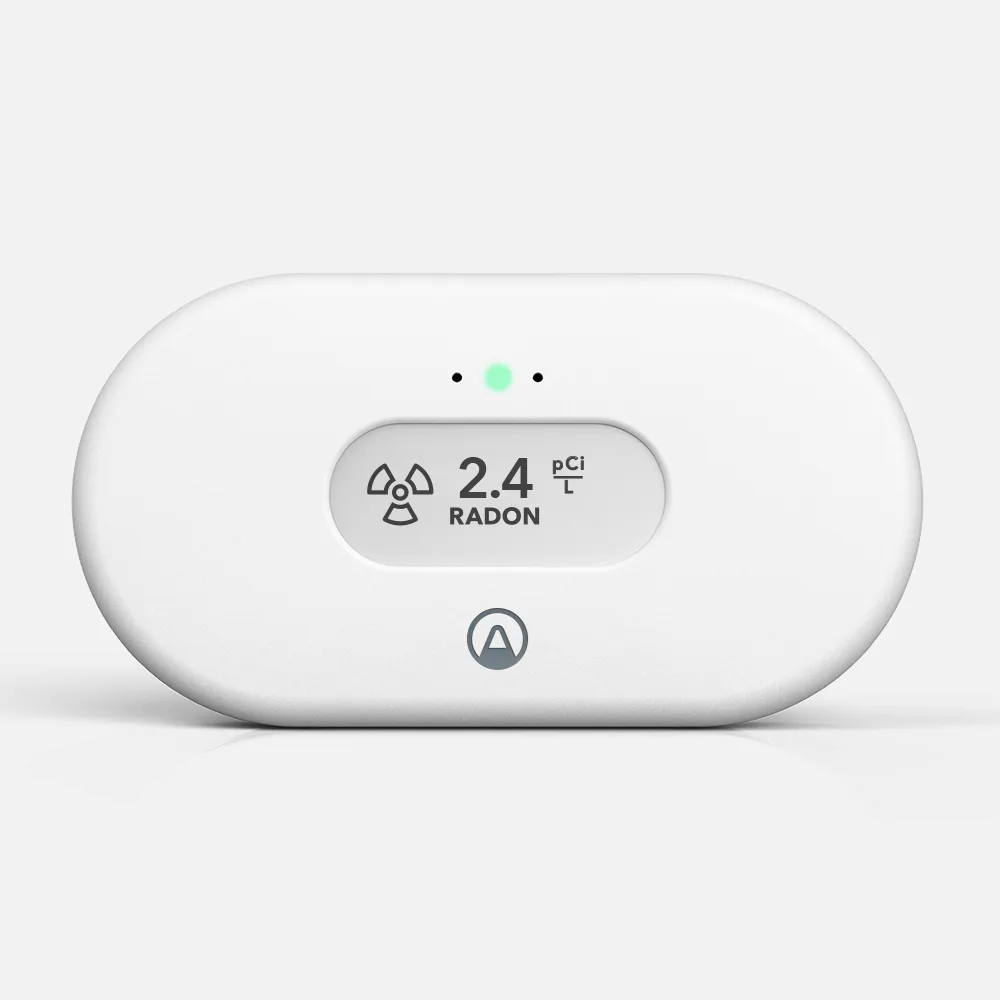
| Airthings View | Hourly | Short-term average on the display; long-term average in the app |
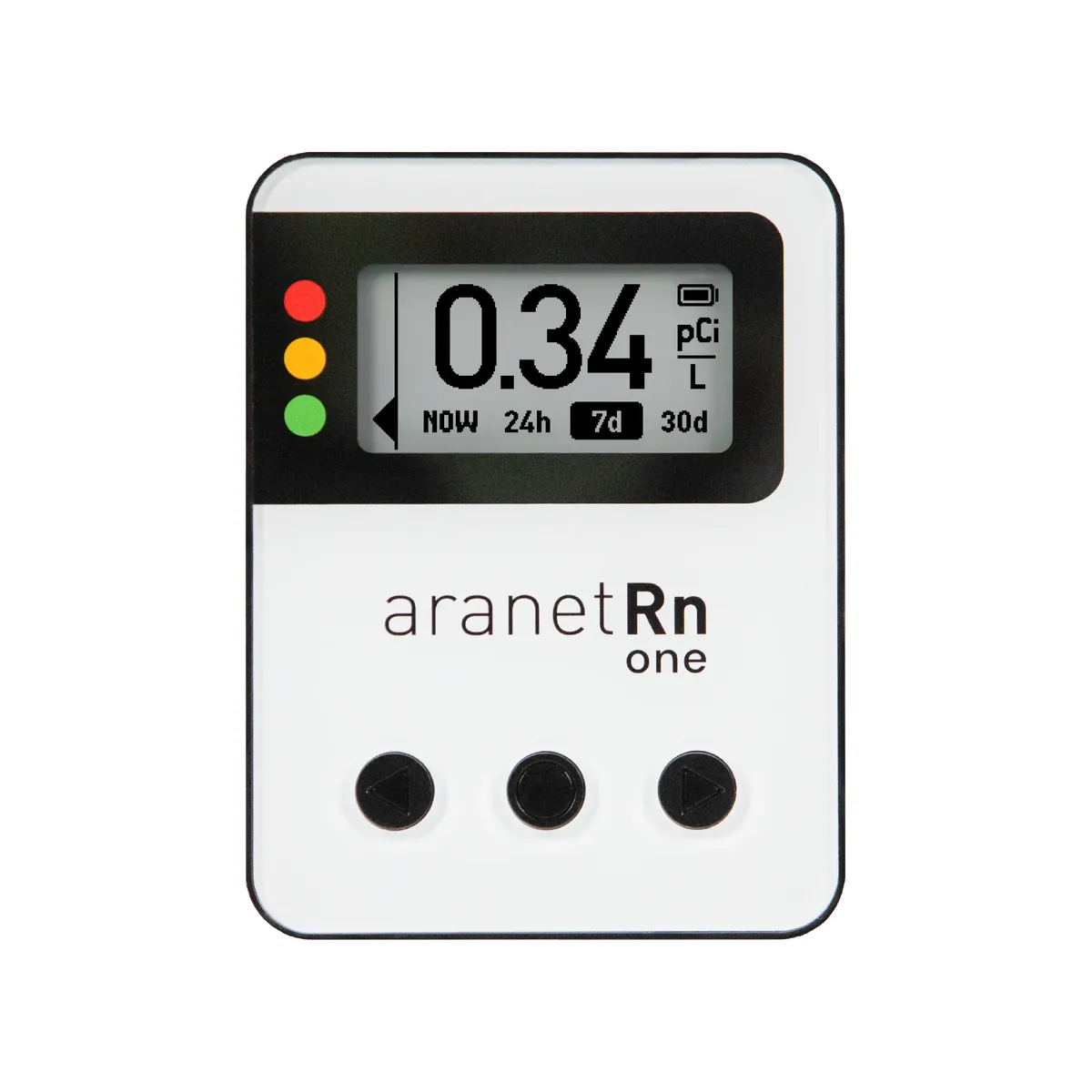
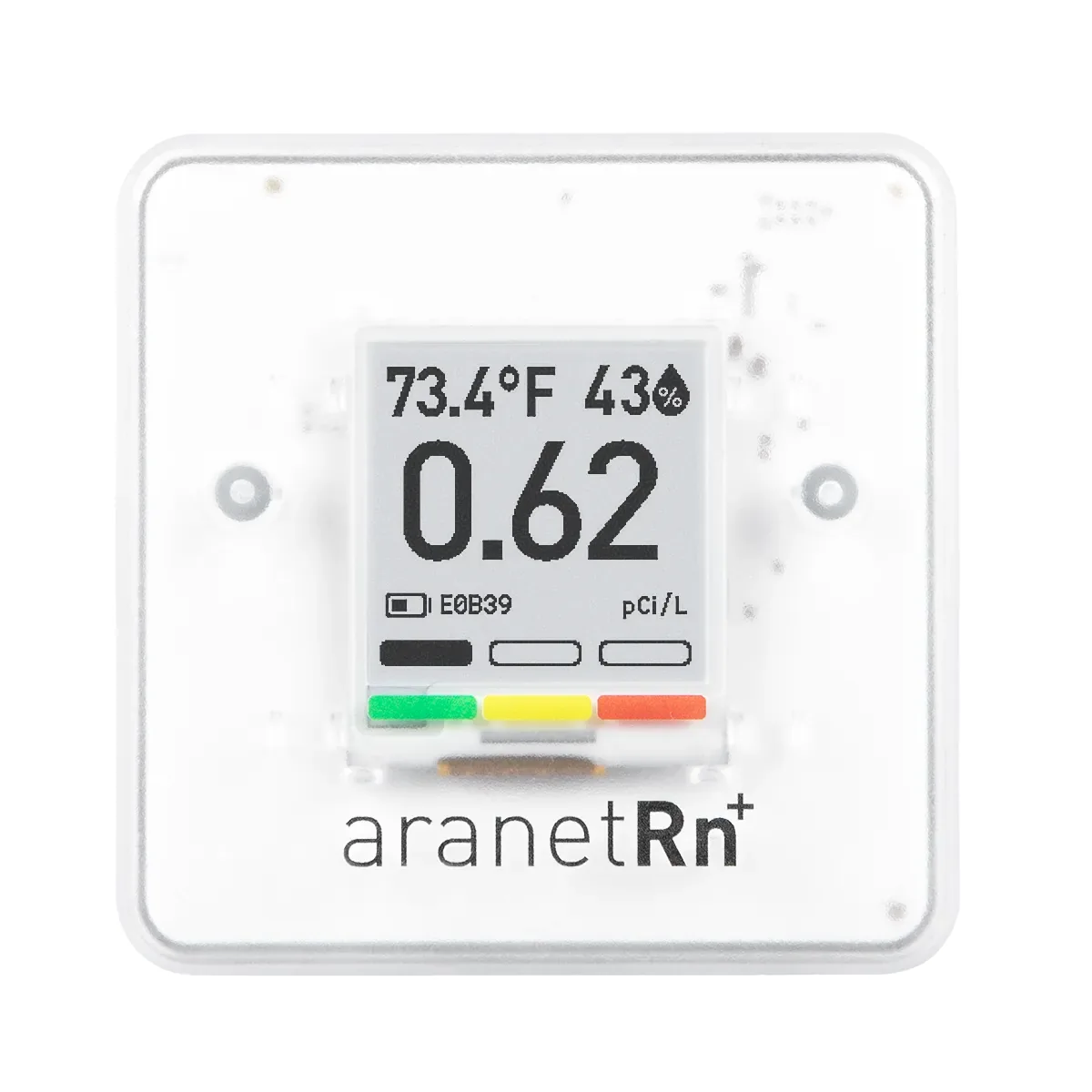
| Aranet RN+ | Settable to 10 min, 24 h, 7 d or 30 d | Short-term or long-term on the display, by setting; long-term in the app |
| Ecosense EcoQube | Measures every 10 minutes; hourly rolling average | Hourly levels on the LED display; averages and hourly data in the app |
| Ecosense RadonEye RD200 | Measures every 10 minutes; hourly rolling average | Hourly levels on the OLED display; averages in the app |
| SunRadon Luft | Hourly; first reading after 90 minutes | Averages in the app; color-coded levels on the device |
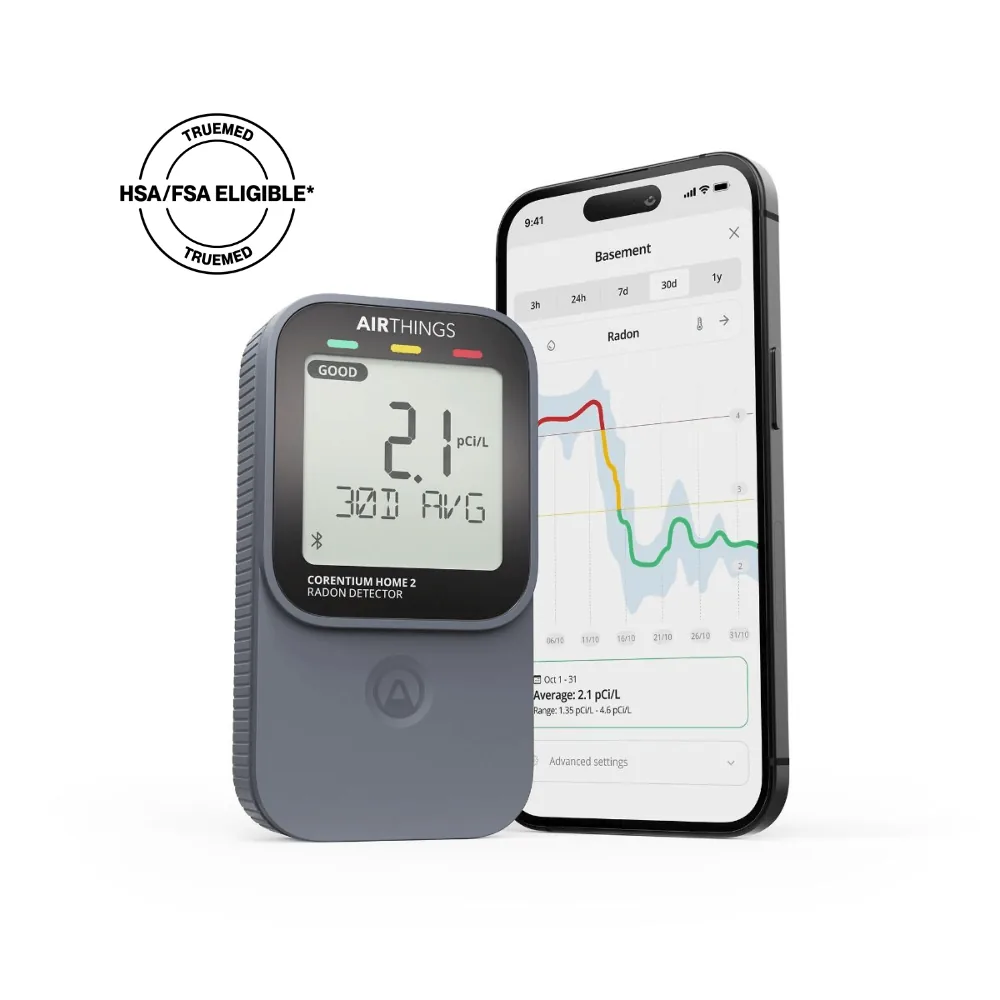
The Airthings Corentium Home in that list is the original model, which Airthings' US store still sells. Its newer sibling, the Corentium Home 2, adds Bluetooth and temperature and humidity readings, and was not included in the 2024/25 evaluation. Corentium Home vs Corentium Home 2 sets out what changed, and Airthings radon monitors compared puts every current Airthings model side by side.
Step 1 of 4:
Find the long-term average
On the screen or in the app. Only the long-term average should be compared with a guideline. Some monitors do not report one, and you can calculate it from the interval readings.
Step 2 of 4:
Give it time
At least 3 months, preferably in the heating season. With less than 91 days of data, follow up with a long-term test.
Step 3 of 4:
Treat hourly figures as weather
A few hours or days can read much lower or much higher than your real average.
Step 4 of 4:
Check the units
U.S. guidance is in pCi/L; some monitors default to Bq/m3. Our results interpreter reads either.
MonitorAEGTEST
Method: Semiconductor sensor
First reading: Within 6 hours
MonitorAEGTEST
Method: Semiconductor sensor
First reading: Within 12 hours
MonitorAEGTEST
Method: Semiconductor sensor
First reading: Within 6 hours
MonitorAEGTEST
First reading: Within 1 hour
MonitorAEGTEST
Method: Ion chamber
First reading: Within 10 minutes
Monitor
Method: Semiconductor sensor
Monitor
Method: Semiconductor sensor
First reading: Within 6 hours
Monitor
Method: Alpha spectrometry
Monitor
Method: Alpha spectrometry
Readings: Every 60 minutes
Monitor
Method: Alpha spectrometry
Monitor
Method: Alpha spectrometry
Readings: Every 60 minutes
Monitor
Method: Alpha spectrometry
Monitor
Method: Alpha spectrometry
MonitorAranet
Method: Ion chamber
First reading: Within 10 minutes
MonitorAranet
Method: Ion chamber
First reading: Within 10 minutes
Monitor
Method: Ion chamber
First reading: Within 10 minutes
Monitor
Method: Ion chamber
First reading: Within 10 minutes
Monitor
Method: Ion chamber
First reading: Within 15 minutes
Monitor
Method: Ion chamber
First reading: Within 10 minutes
MonitorForensics Detectors
Method: Semiconductor sensor
First reading: Within 6 hours
Monitor
First reading: Within 5 minutes
Monitor
First reading: Within 5 minutes
Monitor
First reading: Within 5 minutes
MonitorINKBIRD
First reading: Within 24 hours
MonitorKidde
Method: Semiconductor sensor
First reading: Within 12 hours
MonitorPYZYCKYH
Method: Semiconductor sensor
First reading: Within 6 hours
MonitorSafetySiren
First reading: Within 48 hours
Monitor
First reading: Within 90 minutes
Monitor
Method: Alpha spectrometry
First reading: Within 24 hours
MonitorX-Sense
Method: Alpha spectrometry
First reading: Within 24 hours
MonitorX-Sense
Method: Alpha spectrometry
First reading: Within 24 hours
MonitorX-Sense
Method: Alpha spectrometry
First reading: Within 24 hours
Every monitor we cover: 1 of 32
The value of a continuous record is the pattern. The report from an active device can reveal unusual swings in the radon level during the test, and in a home sale a device that records frequently is one way to spot swings that suggest interference. At home, the same record lets you see how the level moves with the seasons and how it responds to a change, such as a new

Day of installation
The system goes in
Keep the fan running at all times: it must run continuously for the system to work correctly.
No sooner than 24 hours
Earliest post-mitigation test
Test no sooner than 24 hours after your system is in operation with the fan on, if it has one.
Within 30 days
Post-mitigation test done
A two- to seven-day measurement is recommended, and EPA recommends an independent follow-up radon measurement as well as any test the contractor runs.
At least every two years
Retest
Retest your home at least every two years to be sure radon levels remain low.
Test conditions: Windows and doors must be closed 12 hours before and during the test, except for normal entry and exit. Not drawn to scale.
After a remodel. After you remodel, retest in the lowest lived-in area to make sure the construction did not reduce the effectiveness of the radon reduction system.
| Study | Set-up | Result |
|---|---|---|
| Field study, 2024 | Seven consumer monitors (EcoQube, RadonEye, RadonEye Plus2, Spirit, ViewPlus, ViewRadon, WavePlus) against a calibrated AlphaGUARD, 54 days in field conditions | Within 5% to 16% of the reference over the whole period; response times 1 to 15 hours; 1% to 19% of records missing |
| School field study, 2026 | A Lüft beside a calibrated Model 1028 XP in six school rooms for about 29 weeks | Mean difference in 24-hour average radon of -0.05 pCi/L; valid 24-hour radon averages, but not for CO2, humidity, temperature or VOCs |
The 2024 study's missing records are a practical point too: a monitor that drops readings, or runs out of storage, leaves gaps in the record. Some monitors store less than 3 months of data and need periodic downloads. For C-NRPP's chamber results and what its grades mean, see independent accuracy results explained.
Step 1 of 4:
Lowest lived-in level
A normal occupancy area: a room someone spends at least 4 hours in each day.
Step 2 of 4:
Off the floor, away from walls and drafts
Away from an exterior wall, sunlight, vents, doors, fans and windows, and away from electronic or network devices, which may affect measurements.
Step 3 of 4:
Keep power and storage going
A plug-in monitor needs an outlet in the room; a battery monitor needs batteries for the whole test. Download or sync before storage fills.
Step 4 of 4:
Leave it in place
Moving it mixes two rooms into one average. Run it for at least 3 months for a decision.

| Test | How long it runs | What it is for |
|---|---|---|
| Short-term test | Stays in the home from 2 to 90 days, depending on the device, and for a minimum of 48 hours. | A faster screening result. Because radon levels vary from day to day and season to season, it is less likely than a long-term test to tell you the year-round average. |
| Long-term test | Stays in the home for more than 90 days. | It is more likely than a short-term test to tell you the home's year-round average radon level. |
| Continuous monitor | Logs readings for the whole test, run as a short-term or a long-term test under the same durations in EPA guidance. | Logs a graph over time, so you can see trends and spot anomalies rather than a single number. |
In a sale, EPA accepts testing the home with a continuous monitor for at least 48 hours as one of three short-term options, and recommends fixing the home if the average radon level is at or above 4

If you are testing in a real estate transaction and you need results quickly, any of the following three options for short-term tests are acceptable in determining whether the home should be fixed.
Option 1. Two tests at the same time
PassiveTake two short-term tests at the same time in the same location for at least 48 hours.
What to do nextFix the home if the average of the two tests is 4 pCi/L or more.
Two tests taken at the same time (simultaneous) would improve the precision of this radon test.
Option 2. One test, then a second
PassiveTake an initial short-term test for at least 48 hours. Immediately upon completing the first test, do a second test using an identical device in the same location as the first test.
What to do nextFix the home if the average of the two tests is 4 pCi/L or more.
One test followed by another test (sequential) would most likely give a better representation of the seasonal average.
Option 3. A continuous monitor
ActiveTest the home with a continuous monitor for at least 48 hours.
What to do nextFix the home if the average radon level is 4 pCi/L or more.
Both active and passive devices may have features which help to prevent test interference.
Any real estate test for radon should include steps to prevent or detect interference with the test device. Your state radon office can help you decide which option is best.
Air reaches a detection chamber by diffusion or a small pump, a detector registers alpha particles from radon and its decay products, and the electronics record a level at regular intervals and average them.
Find its long-term average on the screen or in the app and decide on that. Each monitor averages differently, so check its manual; hourly and daily figures move a lot.
Tested ones came close in studies: within 5% to 16% of a calibrated reference over 54 days in one field study, and all consumer models C-NRPP approved in 2024/25 averaged a grade of B or better. See accuracy results explained.
In stores, little: both are electronic monitors. Professional continuous radon monitors are a separate, calibrated class used by measurement professionals.
In a room used more than 4 hours a day on the lowest lived-in level, off the floor, away from exterior walls, vents, windows, sunlight and electronics.
For a short-term test, including a 48-hour monitor test in a sale, yes. For a long-term measurement over months, live normally.
At least 3 months for a decision, preferably through the heating season. In a sale, the minimum for a continuous monitor is 48 hours.
No. Consumer monitors cannot be professionally calibrated. Professional monitors are calibrated; the one in a 2026 school field study was calibrated annually by its maker.
They measured different periods or averages. Compare the monitor's average over the same days the kit was out.
A continuous monitor for at least 48 hours is accepted, with steps against interference. That option assumes a qualified tester; check what your contract and state accept before using a consumer monitor.
Questions
Short answers. Each one links to the page with the full answer.
A radon test is a small device that samples a building's air for a set time, at least 48 hours, to measure its radon concentration in picocuries per liter. Passive tests, such as charcoal canisters, go to a lab for analysis afterward; active tests, continuous monitors, record radon themselves and report hourly readings and an average.
Place a radon test in the lowest lived-in level of the home, in a room used regularly such as a living room or bedroom, not the kitchen or bathroom. Set it at least 20 inches above the floor where it won't be disturbed, away from drafts, high heat, high humidity and exterior walls.
Yes, a radon test from a qualified laboratory gives a reliable reading when it is used as its instructions say. Most wrong results come from how the test was run, not the device: improper testing may give an inaccurate result, and one short test only captures a few days of a level that changes.
Read a radon result in picocuries per liter (pCi/L) against EPA's marks: 4 pCi/L is the action level for fixing a home, and 2 to 4 pCi/L is the range to consider a fix. First check the test was valid, and confirm a high short-term result with a followup test.
Yes: you can live in the house as usual during a radon test, coming and going through the doors, running heating and air conditioning, and sleeping in the room with the device. Keep windows and outside doors closed, and do not run fans that bring in outside air or disturb the device.