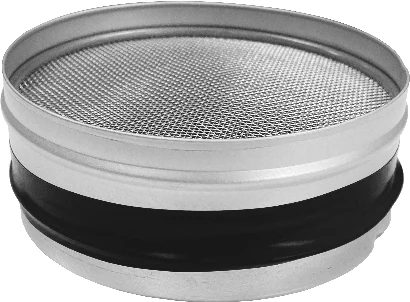
Short-term kit
PicoCan short-term charcoal canister radon test
- Lab fee included
Method: Charcoal
In home: 48 to 96 hours
No Amazon listing on file
See details of the AccuStar PicoCanProductsTest kits
Short answer
A short-term radon test stays in your home for 2 to 90 days, never less than 48 hours, under closed-house conditions, and gives a quick first answer. If the result is at or above 4 pCi/L, EPA recommends a follow-up test before you decide on a fix.
A short-term radon test measures the radon in your home over a few days. It is defined by time: it stays in the home for two to 90 days, depending on the device. There is also a floor. Whether you test yourself or hire a tester, every radon test should run for at least 48 hours, and some devices need longer, such as a 7-day charcoal canister.
Most
| Question | Answer |
|---|---|
| How long? | At least 48 hours; up to 90 days depending on the device. Most charcoal kits: 2 to 7 days |
| Which devices? | Charcoal canisters, charcoal liquid scintillation, alpha track, electret ion chambers and continuous monitors |
| House rules? | Closed-house conditions, from 12 hours before for tests under four days |
| What it tells you | The level during the test; less likely than a long-term test to reflect your year-round average |
| What comes next? | At or above 4 pCi/L: a follow-up test before deciding |
Short-term kit
Method: Charcoal
In home: 48 to 96 hours
No Amazon listing on file
See details of the AccuStar PicoCan
Short-term kit
Method: Charcoal
In home: 2 to 7 days
Short-term kitempowerDX
Method: Passive sampler
In home: 48 to 96 hours
Short-term kitFirst Alert
Method: Charcoal
In home: 2 to 4 days
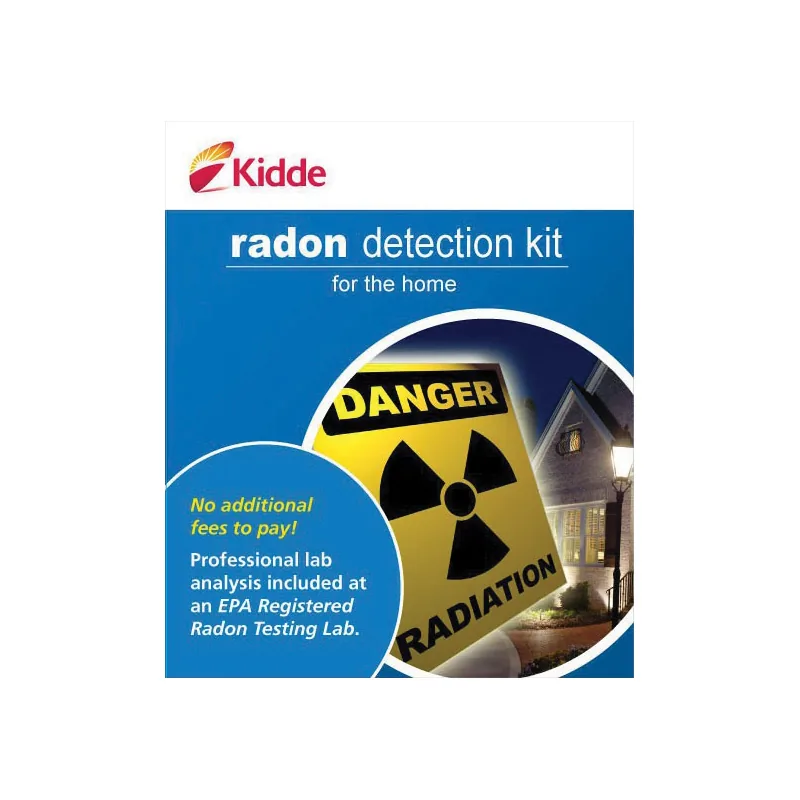
Short-term kitKidde
Method: Charcoal
In home: 3 days
No Amazon listing on file
See details of the Kidde 442020
Short-term kit
Method: Liquid scintillation
In home: 48 to 96 hours
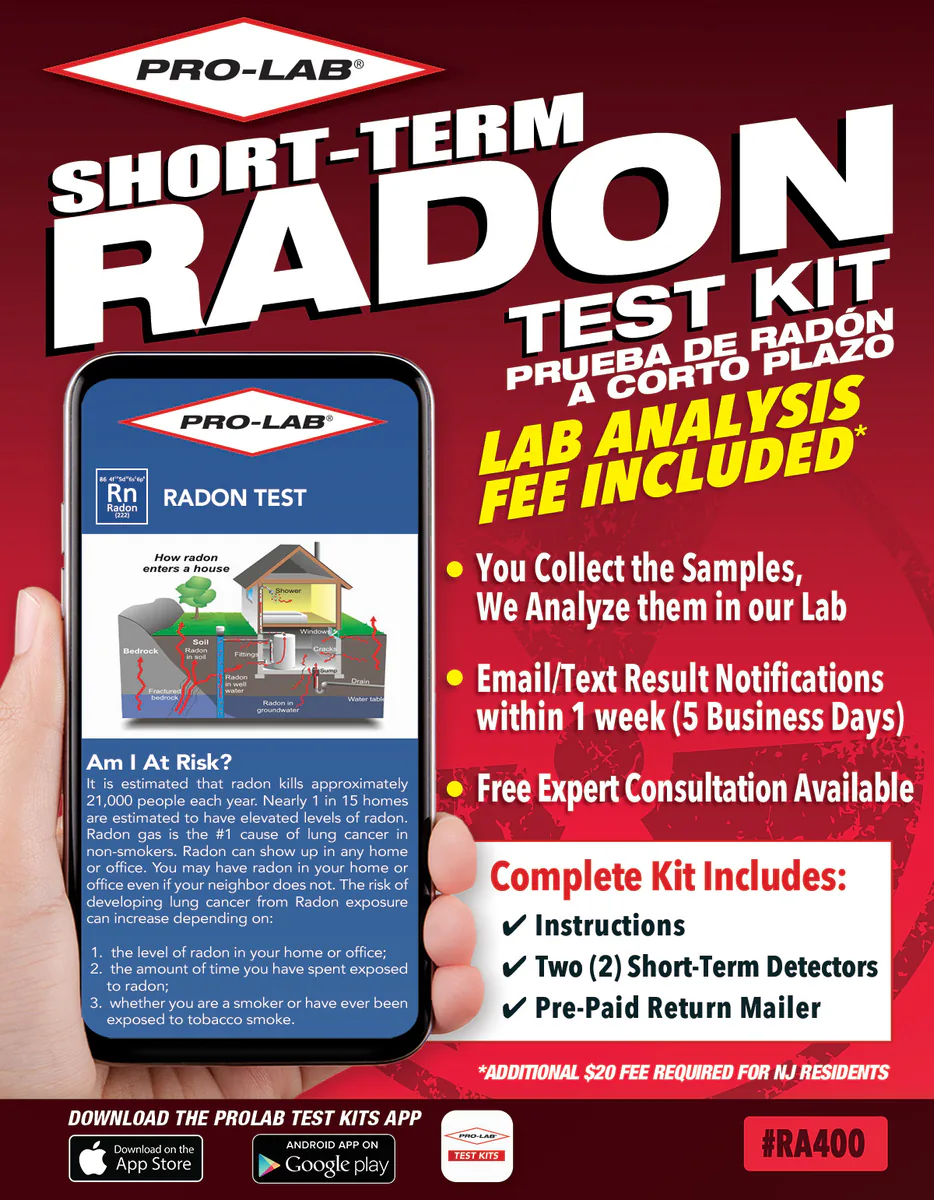
Short-term kit
Method: Liquid scintillation
In home: 48 to 96 hours
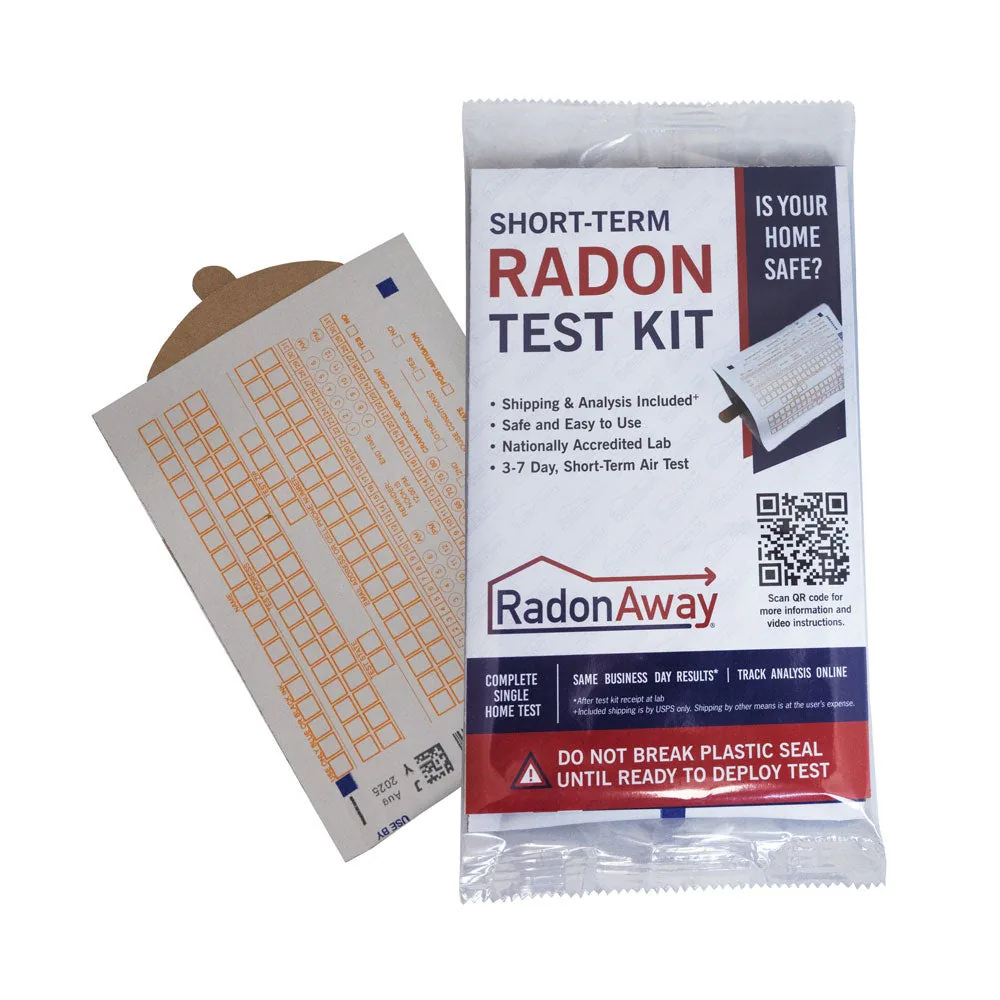
Short-term kit
In home: 72 to 168 hours
No Amazon listing on file
See details of the RadonAway Air Chek Short-TermEvery short-term kit we cover: 1 of 8
As an Amazon Associate, Radon411 earns from qualifying purchases.
A short-term test captures a few days, so anything that dilutes the air for part of those days can pull the result down. That is why a short-term test runs under closed-house conditions: all windows closed, doors closed except for normal coming and going, and no fans or other machines that bring in outside air.
| Allowed | Not allowed |
|---|---|
| Going in and out through doors normally | Leaving windows or outside doors open |
| Heating and air conditioning fans that recirculate indoor air | Fans or machines that bring in air from outside |
| Small exhaust fans run only briefly | Whole-house fans pulling outdoor air through the house |
| A radon-reduction system's own fan | Turning a radon-reduction system off during the test |
| For tests under one week: air-conditioning units that recirculate interior air | For tests under one week: units that bring in outdoor air |
Step 1 of 4:
Start the clock 12 hours early
For a test lasting less than four days, close windows and outside doors at least 12 hours before you open the kit.
Step 2 of 4:
Keep it up for the whole test
Keep closed-house conditions for the entire short-term test, especially one shorter than a week. They are recommended for a 4 to 7 day test too.
Step 3 of 4:
Run heating and cooling normally
Operate the home's heating and cooling systems as you usually would.
Step 4 of 4:
Watch the weather
Do not run a test of less than four days during severe storms or periods of high winds.
Step 1 of 6:
Pick the room
The lowest level of the home that could be used regularly, finished or not: a bedroom, play area, family room, den, exercise room or workshop. Not a closet, stairway, hallway, crawl space, kitchen, bathroom, laundry or furnace room.
Step 2 of 6:
Place the kit
At least 20 inches above the floor, where it will not be disturbed, away from drafts, high heat, high humidity and exterior walls.
Step 3 of 6:
Open it and note the start
Follow the kit's instructions and record the start time and date.
Step 4 of 6:
Leave it alone
Do not disturb the device at any time during the test, and leave it for as long as the instructions say.
Step 5 of 6:
Close it and note the stop
Record the stop time, the test location and any other details the form asks for, then reseal the package.
Step 6 of 6:
Mail it promptly
Send it to the lab right away. If you need results quickly, ask how long they take and request expedited service.

| Test | How long it runs | What it is for |
|---|---|---|
| Short-term test | Stays in the home from 2 to 90 days, depending on the device, and for a minimum of 48 hours. | A faster screening result. Because radon levels vary from day to day and season to season, it is less likely than a long-term test to tell you the year-round average. |
| Long-term test | Stays in the home for more than 90 days. | It is more likely than a short-term test to tell you the home's year-round average radon level. |
| Continuous monitor | Logs readings for the whole test, run as a short-term or a long-term test under the same durations in EPA guidance. | Logs a graph over time, so you can see trends and spot anomalies rather than a single number. |
For more on placement, see where to place a radon test.
A short-term test is a first answer, not the last word. EPA recommends that if the result is at or above 4

1Step 1: Take a short-term test.
2Step 2: Follow up with either a long-term test or a second short-term test.
3Step 3: Decide whether to fix your home.
| First result | Next step | Then |
|---|---|---|
| Below 4 pCi/L | No follow-up required; you may want to test again sometime in the future | Retest if you start using a lower level or renovate |
| At or above 4 pCi/L | A follow-up test: long-term for your year-round average, or a second short-term test for speed | Decide on the follow-up or the average of the two |
| Much higher than 4 pCi/L | The higher the result, the more certain a short-term follow-up is the right choice | Plan the fix while you confirm |
When you have the follow-up: EPA recommends fixing a home when the radon level is 4 pCi/L or higher. EPA recommends considering a fix when the level is between 2 and 4 pCi/L. The results interpreter explains any number.
The limit is time. Radon levels vary from day to day and season to season, so a short-term test is less likely than a long-term test to tell you your year-round average. Near the line the uncertainty is real: if the average of two short-term tests is 4.1 pCi/L, there is about a 50 percent chance that the year-round average is somewhat below, or above, 4 pCi/L.
Sales run on short deadlines, so short-term tests are the norm there. EPA accepts three short-term options when results are needed quickly: two tests at the same time in the same place for at least 48 hours, an initial 48-hour test followed immediately by a second with an identical device, or a continuous monitor for at least 48 hours. Any real estate test should include steps to prevent or detect interference with the device.

If you are testing in a real estate transaction and you need results quickly, any of the following three options for short-term tests are acceptable in determining whether the home should be fixed.
Option 1. Two tests at the same time
PassiveTake two short-term tests at the same time in the same location for at least 48 hours.
What to do nextFix the home if the average of the two tests is 4 pCi/L or more.
Two tests taken at the same time (simultaneous) would improve the precision of this radon test.
Option 2. One test, then a second
PassiveTake an initial short-term test for at least 48 hours. Immediately upon completing the first test, do a second test using an identical device in the same location as the first test.
What to do nextFix the home if the average of the two tests is 4 pCi/L or more.
One test followed by another test (sequential) would most likely give a better representation of the seasonal average.
Option 3. A continuous monitor
ActiveTest the home with a continuous monitor for at least 48 hours.
What to do nextFix the home if the average radon level is 4 pCi/L or more.
Both active and passive devices may have features which help to prevent test interference.
Any real estate test for radon should include steps to prevent or detect interference with the test device. Your state radon office can help you decide which option is best.
See buying a house with radon and selling a house with radon for the rest of the process.
At least 48 hours and up to 90 days, depending on the device. Most charcoal kits run 2 to 7 days.
It meets the minimum, and 48-hour tests are accepted in a sale when two are used or a continuous monitor is used. It is less likely than a long-term test to reflect your year-round average, so a high result calls for a follow-up.
No. Keep windows and outside doors closed except for normal entry and exit, and for tests under four days start at least 12 hours before.
Yes, if it recirculates indoor air. Run heating and cooling normally and, for tests under one week, use only air-conditioning units that recirculate interior air.
It can. Do not run a test of less than four days during severe storms or periods of high winds.
We do not rank kits. Any short-term kit read by a qualified laboratory and used as instructed can give a reliable first answer. Every kit we have verified is on radon test kits.
Take a follow-up test before deciding: a long-term test for your year-round average, or a second short-term test if you need results quickly.
Because radon varies from day to day and season to season, and a few days may catch a high or a low spell. A long-term test averages more of that variation.
No. Do not disturb the test device at any time during the test.
Disturbing the device, breaking closed-house conditions, testing in the wrong room, leaving the kit out longer than its instructions allow, or mailing it late. Improper testing can give an inaccurate result and mean testing again.
Yes. Continuous monitors count among short-term devices, and one run for at least 48 hours is accepted in a sale. See radon detectors and monitors.
Within a few days or weeks of the lab receiving the kit; you can ask for expedited service.
Questions
Short answers. Each one links to the page with the full answer.
A radon level is high, in EPA's terms, at the 4 pCi/L action level, and worth attention between 2 and 4 pCi/L; EPA asks you to confirm a first high short-term result with a follow-up test before deciding on a fix. Even very high levels can be lowered: some radon reduction systems reduce levels by up to 99%.
Place a radon test in the lowest lived-in level of the home, in a room used regularly such as a living room or bedroom, not the kitchen or bathroom. Set it at least 20 inches above the floor where it won't be disturbed, away from drafts, high heat, high humidity and exterior walls.
A radon test takes at least 48 hours. Short-term tests stay in the home from 2 to 90 days, depending on the device, and long-term tests more than 90 days; a lab result then comes back within a few days or weeks of mailing the device.
Yes, a radon test from a qualified laboratory gives a reliable reading when it is used as its instructions say. Most wrong results come from how the test was run, not the device: improper testing may give an inaccurate result, and one short test only captures a few days of a level that changes.