 PRO-LAB
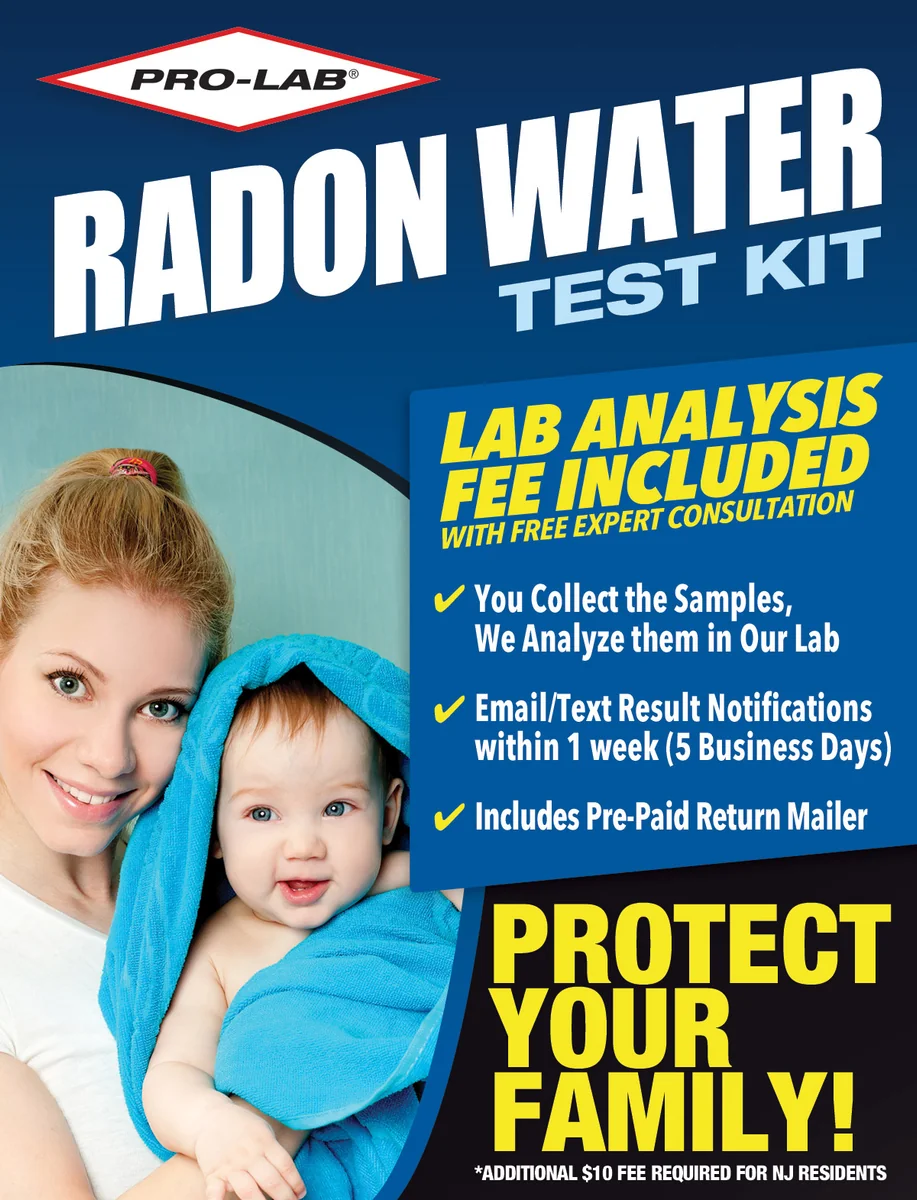
 Radon in Water Test Kit
Two-vial mail-in water radon test
- Water test
- Liquid scintillation
- Lab fee included
Best for, and skip if
Best for you if
- A well supplies the house and an air test has already shown radon, the point at which the EPA turns to the water.
- Two samples from one draw suit you, as a duplicate check or to average them the way Connecticut does.
Skip it if
- Lakes, rivers or a reservoir feed your tap; the EPA says such surface supplies seldom have a radon problem.
- No air test has been done yet; the EPA wants that first, and this box only samples water.
Photos: PRO-LAB
 (opens in a new tab)Check price on Amazon (opens in a new tab)

As an Amazon Associate, Radon411 earns from qualifying purchases.
Amazon and the Amazon logo are trademarks of Amazon.com, Inc. or its affiliates.
See ratings and reviews on Amazon (opens in a new tab)- MethodLiquid scintillation
- Lab feeIncluded
- Every figure checked against the specifications PRO-LAB publishes
- Independent test results shown the same way for every product, unranked
About this item
As PRO-LAB states it
- How it measures: Liquid scintillation analysis of water samples at PRO-LAB's laboratory (store: "patented liquid scintillation technology")
- Sample: Two glass sample vials for duplicate samplings
- Lab fee: Included in the kit
- Power: None needed
PRO-LAB's Radon in Water Test Kit puts two glass vials in one box, so a well owner can mail duplicate water samples to PRO-LAB's laboratory in Weston, Florida, where they are analyzed by liquid scintillation. PRO-LAB quotes 7 days for a standard radon-in-water result and 2 days for its expedited service, which costs extra, and its own store sells the kit with the laboratory fees included. Water is all it samples: the EPA wants the home's air tested for radon before the water.
What you get
PRO-LAB's store lists two glass sample vials in each kit. PRO-LAB says its test kits contain all the materials needed to detect contaminants in the home and are consumer friendly and non-toxic. PRO-LAB's own store sells the kit as SKU RW403, marked lab fees included, with UPC 683431991033.
In the box and running costsHow it works
What it measures and how
The sensor, the sampling and the readings, then who has checked it
How it works
In our words, from the maker's documents
PRO-LAB traces the path from rock to tap: groundwater that passes through uranium deposits picks up dissolved radon, which escapes into indoor air again during showering or cooking. In the EPA's account, where the water comes from decides the odds. Surface water supplies seldom carry a radon problem; ground water, as from a private well or a utility that pumps it, is where one is more likely.
The kit is a sampling kit; the measurement happens at the laboratory. PRO-LAB says the kit includes everything you need to collect a water sample and send it to its certified laboratory for professional analysis, and its store describes the method as patented liquid scintillation technology. PRO-LAB says all analyses are performed by PRO-LAB or by PRO-LAB recognized licensed, certified or accredited laboratories.
Two vials means two samples. PRO-LAB's store says each kit provides two glass sample vials so you can conduct duplicate samplings. Connecticut's health department sets its own action level on the average of two water samples drawn simultaneously from the same location, which is the use two vials are suited to.
Results come in picocuries per liter on a scale that dwarfs air readings, and no federal limit covers a private well. The EPA's proposed drinking water rule for community systems drawing on ground water named 300 pCi/L, with an alternative of 4,000 pCi/L, and would not apply to private wells, which the EPA does not regulate. Three states publish figures of their own: 4,000 for Vermont's advisory and for Maine's exposure guideline, and 5,000 for Connecticut's recommended action, all in pCi/L.
In the EPA's sequence the water test comes second: a well household whose air test turns up radon should test the water next, according to the Citizen's Guide, and the agency's consumer guide calls soil gas the much larger source of risk. PRO-LAB's water page itself sends readers to its long-term radon gas kit for an air average over 3 months to 1 year.
What the manufacturer says
PRO-LAB's own statements, attributed
- PRO-LAB saysPRO-LAB states that the kit includes everything you need to collect a water sample and send it to its certified laboratory for professional analysis.
- PRO-LAB saysPRO-LAB's store says each kit provides two glass sample vials for duplicate samplings, with laboratory results within 7 days and express service available for an additional fee.
- PRO-LAB saysPRO-LAB describes the kit as using patented liquid scintillation technology.
- PRO-LAB saysPRO-LAB states it is not owned by or beholden to any company selling pollution abatement services or air or water treatment devices.
- PRO-LAB saysPRO-LAB says its test kits are sold at over 40,000 home centers, hardware stores, pharmacy chains, supermarkets and specialty outlets.
These are PRO-LAB's own statements, attributed to it. They are not our findings, and we have not tested this product ourselves.
Independent evidence
Who checks a device like this
C-NRPP's consumer evaluation covers electronic monitors, not laboratory-analyzed test kits, so it has no result for PRO-LAB Radon in Water Test Kit. A kit's result comes from the laboratory that analyzes it. Where the maker names that laboratory, or the page cites the National Radon Safety Board's lists of approved devices and accredited laboratories for it, the “How it works” panel and “Questions people ask” say so.
PRO-LAB Radon in Water Test Kit
Check price on Amazon (opens in a new tab)Specifications
Specifications
Every figure as the maker states it
The maker's figures
- Type
- Water test, two glass sample vials, mail-in, liquid scintillation analysis at PRO-LAB's laboratory
- How it measures
- Liquid scintillation analysis of water samples at PRO-LAB's laboratory (store: "patented liquid scintillation technology")
- Sample
- Two glass sample vials for duplicate samplings
- Lab fee
- Included in the kit
- Power
- None needed
- Units
- Not stated by the manufacturer
What is in the box
PRO-LAB's store lists two glass sample vials in each kit. PRO-LAB says its test kits contain all the materials needed to detect contaminants in the home and are consumer friendly and non-toxic. PRO-LAB's own store sells the kit as SKU RW403, marked lab fees included, with UPC 683431991033.
Reports come by email or mail after the analysis. PRO-LAB's FAQ says all reports are emailed or mailed once the analysis is complete, whether or not the kit was registered, and that you can ask about a sample by phone or by email with your name, address and test type.
PRO-LAB states no warranty for the kit on its water page or FAQ. Its FAQ does say Professional Laboratories does not send replacements for lost prepaid mailers; a sample can still be sent to the address on the information form or to PRO-LAB's physical address.
What it costs to run
Whether the laboratory fee is in the box depends on the version. PRO-LAB sells some radon kits with the laboratory analysis included and some without, as with its long-term pair, the RL116 and the RL416 (Lab Analysis Included); its store lists the water kit with lab fees included. For a kit without the fee, PRO-LAB's radon instructions describe sending the samples with any required lab fee.
Speed and location add costs. PRO-LAB's store says express service is available for an additional fee, and its FAQ gives the expedited turnaround as 2 days against 7 standard. Overnight shipping is required from Connecticut and New York City, and PRO-LAB's FAQ says New Jersey residents pay an additional fee, which goes to the New Jersey Department of Environmental Protection, for all samples collected in the state.
If the number is high, treatment will cost far more than the test. PRO-LAB names two methods, aeration treatment and granular activated charcoal, and the EPA warns that a device on one faucet leaves untouched the radon that the rest of the household's water releases into the air.
Fit and setup
Who it fits, and how to use it
The fit, then setup and placement as the guidance asks
Who it fits
Good fit if, and look elsewhere if
Good fit if
- A well supplies the house and an air test has already shown radon, the point at which the EPA turns to the water.
- Two samples from one draw suit you, as a duplicate check or to average them the way Connecticut does.
- You can get the vials into the mail fast, by overnight courier from Connecticut or New York City.
- A 2-day expedited result, at extra cost, may matter to you; PRO-LAB offers one.
Look elsewhere if
- Lakes, rivers or a reservoir feed your tap; the EPA says such surface supplies seldom have a radon problem.
- No air test has been done yet; the EPA wants that first, and this box only samples water.
- You want to read the sampling steps before buying; PRO-LAB's site does not post them.
- The sale of the house calls for a state-registered or licensed tester, as Maine requires.
Setup and placement
4 steps
- The sampling steps travel inside the box; PRO-LAB does not post them on its site. Speed is the rule the published sources share. Vermont's own laboratory wants its well water samples back within 48 hours of collection, and PRO-LAB's store warns that a Connecticut or New York City sample only counts if it goes to the laboratory overnight.
- Use the right address for the courier. PRO-LAB's FAQ says samples sent by FedEx, UPS or another express service go to its physical address at 1675 North Commerce Parkway in Weston, Florida, not its PO Box, which is for regular mail. Its business hours are Monday through Friday, 8:15 am to 6:00 pm Eastern.
- Registering online is optional. PRO-LAB's FAQ says registration is a fast way to see results online but is not required for the analysis, and that reports are emailed or mailed once the analysis is complete either way. If you pre-register, you can check that your sample has arrived with your registration number, and an email confirms arrival when you give an address.
- Expect to test again later. Radon in a well shifts with the seasons, Vermont says, which makes a second test in another season worthwhile, and Maine's advice is that every home on a well should have its water checked for radon.
For where any radon test or monitor should sit in a home, see where to place a radon test.
Compare
Compare with similar items
The same three rows for each, and the one difference that matters
This page
PRO-LAB Radon in Water Test Kit
- How it measures
- Liquid scintillation
- Power
- None needed
- C-NRPP 2024/25
- Not applicable (lab-analyzed kit)
This page: PRO-LAB's Radon in Water Test Kit puts two glass vials in one box, so a well owner can mail duplicate water samples to PRO-LAB's laboratory in Weston, Florida, where they are analyzed by liquid scintillation.
AccuStar
- How it measures
- Liquid scintillation
- Power
- None needed
- C-NRPP 2024/25
- Not applicable (lab-analyzed kit)
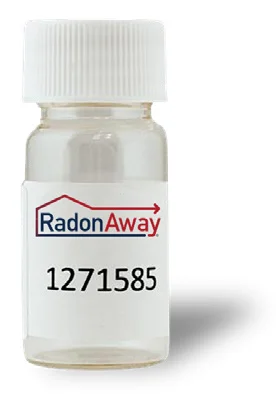
The difference: AccuStar's kit comes with one vial or two and is analyzed in AccuStar's own laboratory, which wants the sample within 4 days of sampling.
Tap Score
- How it measures
- Lab analysis
- Power
- None needed
- C-NRPP 2024/25
- Not applicable (lab-analyzed kit)
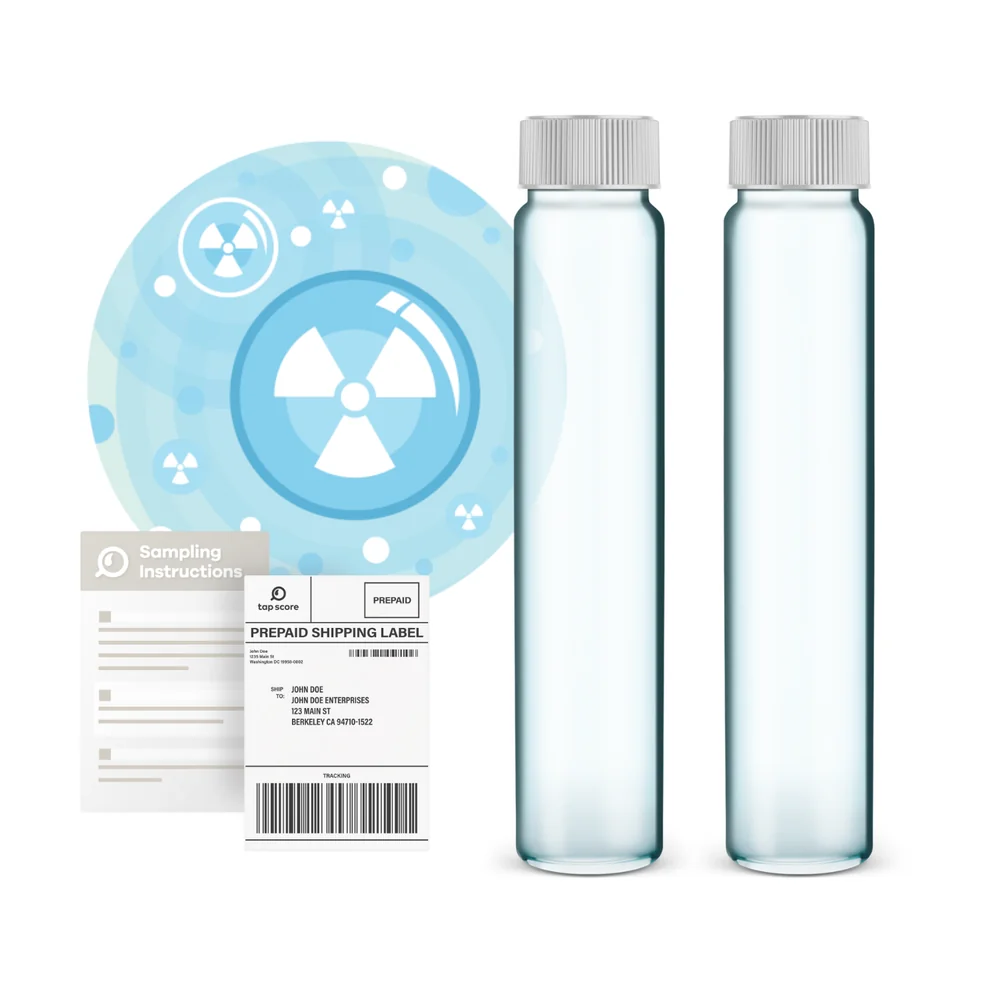
The difference: A radon-only water kit whose sample Tap Score routes to a certified partner laboratory, quoting 8 business days at the lab and including return shipping.
Compared with similar products: 1 of 3
Questions
Questions people ask
6 questions about the PRO-LAB Radon in Water Test Kit, answered
Asked about the Radon in Water Test Kit
Why does the kit have two vials?
For duplicate samples. PRO-LAB's store says the two glass vials let you conduct duplicate samplings, and Connecticut bases its action level on the average of two samples drawn at the same time from the same location.
How long does the result take?
PRO-LAB's FAQ gives 7 days as the standard turnaround for radon in water and 2 days expedited, and its store says laboratory results come within 7 days, with express service for an additional fee. Add the shipping time, and ship overnight from Connecticut or New York City.
Is the lab fee included?
It depends on the version you buy. PRO-LAB's own store sells the kit marked lab fees included; PRO-LAB also sells radon kits without the analysis included, which are mailed back with any required lab fee. Check the box or the listing before you sample.
Should I test my water before my air?
Air first. The EPA calls it important to check the home's air before anything else, and to move on to the water if radon turns up and the house draws on a well. Maine's health agency goes further and asks every home with a well to test its water.
Can I use the kit for a home sale?
State law may decide it. In Maine, a home on the market has to be tested by an independent registered radon tester, and neither the realtor nor the buyer may legally run a radon in water test. Across the country, the EPA notes, many states license, certify or register radon professionals.
What can be done about radon in water?
PRO-LAB lists two treatments, aeration and granular activated charcoal. A device at a single faucet does not deal with the radon released by the home's other water uses, the EPA cautions, and Vermont asks owners to retest the water once a treatment system is in.
What to do next
- Test your water for radonWho should test a well, how a sample is taken and how to read the result.
- Radon in well waterWhy private wells carry it, and what states advise.
- If the water is highAeration and carbon systems that take radon out of well water.
- Test the air firstThe EPA says to test the air in the home before the water.
Updated November 27, 2026