 AccuStar
 Radon in Water Test
Mail-in radon in water test kit
- Water test
- Liquid scintillation
- Lab fee included
Best for, and skip if
Best for you if
- Your home is on a private well and an air test has found radon, the case in which the EPA says to have the water tested.
- You can take the sample at a tap close to the well, ahead of any treatment equipment, and run the water for up to 15 minutes first.
Skip it if
- Your water comes from a river, lake or reservoir supply; the EPA says radon in water is not usually a problem from surface water, and a public supplier can tell you about its own testing.
- You have not tested the air yet; the EPA says to test the air first, and this kit measures water only.
Photos: AccuStar
 (opens in a new tab)Check price on Amazon (opens in a new tab)

As an Amazon Associate, Radon411 earns from qualifying purchases.
Amazon and the Amazon logo are trademarks of Amazon.com, Inc. or its affiliates.
See ratings and reviews on Amazon (opens in a new tab)- MethodLiquid scintillation
- Lab feeIncluded
- Every figure checked against the specifications AccuStar publishes
- Independent test results shown the same way for every product, unranked
About this item
As AccuStar states it
- How it measures: Liquid scintillation analysis of a water sample, taken under water in a sealed vial and analyzed at AccuStar's laboratory in Ward Hill, MA
- Sample: Single (P/N 28643): one water sample collection vial, instructions, laboratory analysis and a test report; double (P/N 28644): two vials
- Lab fee: Included in the kit
- Power: None needed
AccuStar's Radon in Water Test is a mail-in kit for radon dissolved in well water: you fill a small vial under water so no air bubble is left, cap it, and send it to AccuStar's laboratory in Ward Hill, Massachusetts, which says the sample must arrive within 4 days of the sample date and posts results the next business day after it arrives. RadonAway, a fellow brand of AccuStar's parent company, sells it as a liquid scintillation radon in water test in a single kit (P/N 28643) and a double kit with two vials (P/N 28644), with laboratory analysis and a test report included. It measures water only; the EPA says to test the air in the home first.
What you get
RadonAway lists the single kit (P/N 28643) as a specialized water sample collection vial, instructions, analysis by an accredited radon laboratory and a test report, and the double kit (P/N 28644) as the same with two vials; its 2023/2024 catalog lists the single as one water collection vial, instructions and analysis. AccuStar's guide says the vial goes back into the return box, and AccuStar's devices page says it offers two radon in water test kits, with one or two vials.
In the box and running costsHow it works
What it measures and how
The sensor, the sampling and the readings, then who has checked it
How it works
In our words, from the maker's documents
Radon in water is a well water question. The EPA says radon in a home's water is not usually a problem when its source is surface water, and is more likely when the source is ground water, such as a private well; AccuStar's FAQ says the same and adds that the only way to know if you have radon in your water is to test. The radon matters mostly as air: Maine's health department says it escapes easily when water is agitated or aspirated, in showers, faucets, dishwashers and washing machines, and the University of Georgia's extension service says 10,000 pCi per liter of radon in drinking water adds about 1 pCi per liter to a home's indoor air.
Because radon escapes from water and decays, a water test is all about the sample. AccuStar's guide says to purge the water line first, which may take up to 15 minutes, so that the sample represents the water in the well: if the water has been sitting in the pipes too long, the radon may have decayed away. Its online instructions add that water from a holding tank or the pipes does not contain as much radon as fresh well water. The sample is then taken under water, so it never meets the air: a bowl filled slowly with the spigot under water, the vial and its cap submerged open side up, the cap screwed on while both are still under water, and the vial lifted out and turned over to look for bubbles. Any bubble means emptying it and starting again.
The measurement is made at the laboratory, not in the kit. RadonAway calls the kit a liquid scintillation radon in water test with analysis by an accredited radon laboratory. AccuStar's guide gives the lab as the Radon Lab at 2 Saber Way in Ward Hill, Massachusetts, the address AccuStar lists for its Massachusetts laboratory, and AccuStar says that laboratory has held NELAP accreditation for more than a decade. AccuStar's water page says the sample must be received at the lab within 4 days of the sample date, that results are available the next business day after receipt, and that expedited results are available.
The double kit is two samples from the same spigot, one straight after the other. RadonAway's single kit has one specialized water sample collection vial and its double kit two, and AccuStar's guide says that for a duplicate test you immediately take the second sample from the same spigot. Connecticut's health department bases its own action level on the average radon level of two water samples drawn simultaneously from the same location.
Radon in water is measured in picocuries per liter, the unit the state guidance uses, and the numbers run far higher than air results. AccuStar's FAQ says there is currently no federally enforced drinking water standard for radon and that a few states have set levels at which you should take action. Vermont's advisory level for radon in water is 4,000 pCi/L, Maine's Maximum Exposure Guideline is 4,000 pCi/l, and Connecticut's recommended action level is 5,000 pCi/L. In 1999 the EPA proposed a limit of 300 pCi/L, with an alternative of 4,000 pCi/L, for community water systems that use ground water; the proposal would not apply to private wells, which the EPA does not regulate.
The EPA's order is air first. Its Citizen's Guide says that if you have tested the air in your home and found a radon problem, and your water comes from a well, you should have your water tested, and its consumer guide suggests that well owners concerned about radon consider testing for radon in both air and water. Maine goes further and recommends that all homes with wells test for water radon.
What the manufacturer says
AccuStar's own statements, attributed
- AccuStar saysAccuStar states that results are available the next business day after receipt at the lab, and that expedited results are available.
- AccuStar saysRadonAway says the single kit includes a specialized water sample collection vial, instructions, analysis by an accredited radon laboratory, and a test report.
- AccuStar saysRadon.com, RadonAway's homeowner store, states the test is recommended for use within the contiguous United States.
- AccuStar saysAccuStar states that the purchase of an AccuStar radon test device is all-inclusive, with analysis by its own technicians, instructions and a prepaid return mailer.
- AccuStar saysAccuStar says its products and laboratories are NELAP and NRSB certified, and licensed in all states that have such requirements.
These are AccuStar's own statements, attributed to it. They are not our findings, and we have not tested this product ourselves.
Independent evidence
Who checks a device like this
C-NRPP's consumer evaluation covers electronic monitors, not laboratory-analyzed test kits, so it has no result for AccuStar Radon in Water Test. A kit's result comes from the laboratory that analyzes it. Where the maker names that laboratory, or the page cites the National Radon Safety Board's lists of approved devices and accredited laboratories for it, the “How it works” panel and “Questions people ask” say so.
AccuStar Radon in Water Test
Check price on Amazon (opens in a new tab)Specifications
Specifications
Every figure as the maker states it
The maker's figures
- Type
- Water test, one or two water sample vials, mail-in, liquid scintillation analysis at AccuStar's laboratory
- How it measures
- Liquid scintillation analysis of a water sample, taken under water in a sealed vial and analyzed at AccuStar's laboratory in Ward Hill, MA
- Sample
- Single (P/N 28643): one water sample collection vial, instructions, laboratory analysis and a test report; double (P/N 28644): two vials
- Lab fee
- Included in the kit
- Power
- None needed
- Units
- Not stated by the manufacturer
What is in the box
RadonAway lists the single kit (P/N 28643) as a specialized water sample collection vial, instructions, analysis by an accredited radon laboratory and a test report, and the double kit (P/N 28644) as the same with two vials; its 2023/2024 catalog lists the single as one water collection vial, instructions and analysis. AccuStar's guide says the vial goes back into the return box, and AccuStar's devices page says it offers two radon in water test kits, with one or two vials.
Reports are issued Monday to Friday to the email address on the Data Form. AccuStar's guide says the report arrives by email the next business day after the device reaches the lab, and you can look it up at accustarlabs.com/water with the device number and the ZIP code of the property tested. A report missing information can be amended once you send the details in writing.
Who sells it depends on who you are. AccuStar's products page sends homeowners to Radon.com, where a business account is not required to buy a radon test, and Radon.com sells the single and double kits; RadonAway's trade store sells the single with a minimum order quantity of 10. RadonAway's trade page says all sales are final and no returns will be accepted for these items.
What it costs to run
The laboratory analysis and a test report come with the kit, by RadonAway's description. Return shipping is where the sources differ: AccuStar's devices page says its test kits include a prepaid return mailer, while RadonAway's trade page for this kit says return postage is not provided, and AccuStar's guide says the lab is not responsible for any costs associated with return shipping and offers return labels at reduced prices. Ask the seller whether a prepaid label is in your box before you take the sample.
Faster results cost extra. AccuStar's FAQ says its rush service for radon in water needs the vial at its Massachusetts lab by 8:30 AM Eastern time, that quantity is limited and that a fee applies per water vial, payable by credit card; when the laboratory is extremely busy, the rush service may be temporarily unavailable.
Plan for more than one test. Vermont says radon in well water can vary throughout the year, so it can be beneficial to test more than once at different times of the year; below its 4,000 pCi/L advisory level it says to test your water again in five years, and after any treatment system is installed it says to re-test to make sure levels are below the advisory level.
Fit and setup
Who it fits, and how to use it
The fit, then setup and placement as the guidance asks
Who it fits
Good fit if, and look elsewhere if
Good fit if
- Your home is on a private well and an air test has found radon, the case in which the EPA says to have the water tested.
- You can take the sample at a tap close to the well, ahead of any treatment equipment, and run the water for up to 15 minutes first.
- You can ship the vial by FedEx or UPS the day you take the sample, so it reaches the lab within 4 days.
- You want a second vial from the same spigot, as the double kit provides, for an average of two samples.
Look elsewhere if
- Your water comes from a river, lake or reservoir supply; the EPA says radon in water is not usually a problem from surface water, and a public supplier can tell you about its own testing.
- You have not tested the air yet; the EPA says to test the air first, and this kit measures water only.
- Your home sale needs a test by a registered or licensed tester under your state's rules; Maine, for one, requires an independent registered radon tester when a home is for sale.
- The sample could not reach Massachusetts within 4 days, over a holiday for example; AccuStar's lab accepts no deliveries on weekends or holidays.
Setup and placement
4 steps
- Start before the expiration date on the device, and register it: AccuStar's guide says to scan the QR code or visit accustarlabs.com/water to register the device and fill out the Data Form, and its online instructions say the result cannot be calculated without the sample collection date and time. Choose the tap with care. The guide says to take the sample as close to the well as possible, preferably from a location ahead of any water treatment equipment, and to remove any aeration devices or filters from the tap or spigot.
- Run the cold water until fresh water is flowing from the well; the guide says purging the line may take up to 15 minutes. Then slowly fill a bowl with the spigot under water, submerge the vial and its cap open side up until they fill, screw the cap on while both are still under water, lift the vial out and check it for bubbles. If there are any, empty it and repeat. AccuStar's online instructions add that a sample arriving with 1 mL or 1 g of water missing, about the size of a dime, will be invalid. For a double kit, take the second sample from the same spigot straight after the first.
- Put the vial back in the return box, complete the Data Form online and send it right away. AccuStar's guide asks for FedEx or UPS, with USPS not recommended, packed in a way that holds the water temperature, such as an insulated or Styrofoam-lined mailer; its online instructions suggest a cooler or insulated shipping box to prevent freezing or extreme heat. The lab accepts no deliveries on weekends or holidays.
- On timing, follow the shorter figure. AccuStar's current guide (IN138 Rev B) and its water page say the sample must reach the lab within 4 days of the sample date; its older online instructions say 7 days, with 4 days for samples from Connecticut and New York. A state laboratory can be stricter still: Vermont's asks for its own water samples back within 48 hours of collection.
For where any radon test or monitor should sit in a home, see where to place a radon test.
Compare
Compare with similar items
The same three rows for each, and the one difference that matters
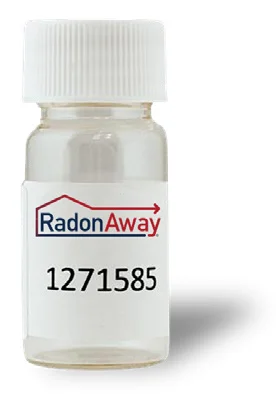
This page
AccuStar Radon in Water Test
- How it measures
- Liquid scintillation
- Power
- None needed
- C-NRPP 2024/25
- Not applicable (lab-analyzed kit)
This page: AccuStar's Radon in Water Test is a mail-in kit for radon dissolved in well water: you fill a small vial under water so no air bubble is left, cap it, and send it to AccuStar's laboratory in Ward Hill, Massachusetts, which says the sample must arrive within 4 days of the sample date and posts results the next business day after it arrives.
AccuStar
- How it measures
- Charcoal
- Power
- None needed
- C-NRPP 2024/25
- Not applicable (lab-analyzed kit)
The difference: An air test analyzed by the same company: a charcoal canister left open for 2 to 4 days, which must be received at the lab within 7 days of the end of the test.
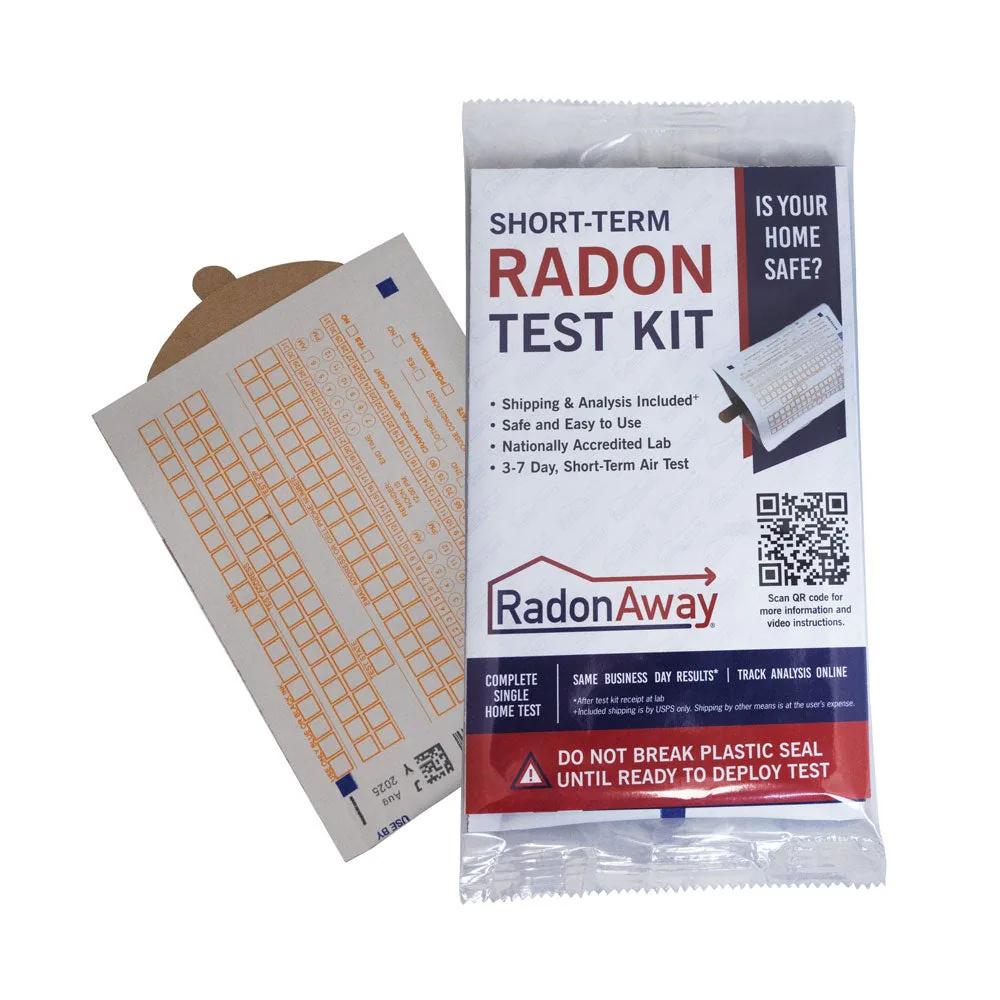
RadonAway
- How it measures
- Lab analysis
- Power
- None needed
- C-NRPP 2024/25
- Not applicable (lab-analyzed kit)
The difference: RadonAway's short-term air test, one device with instructions, analysis and a test report, and return USPS shipping included.
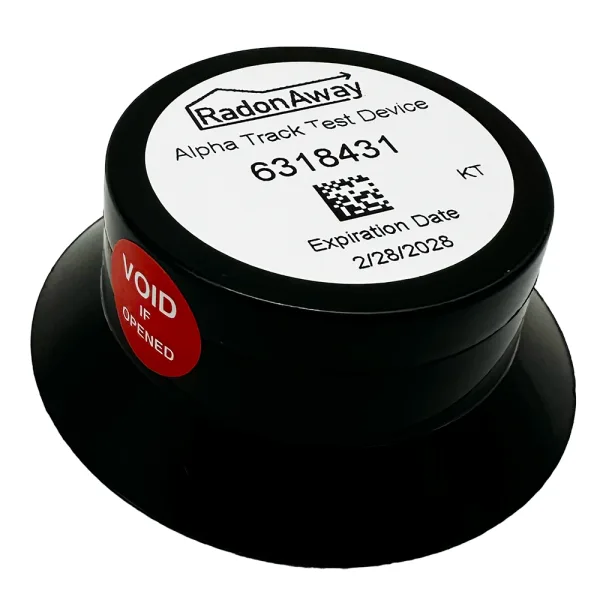
RadonAway
- How it measures
- Alpha track
- Power
- None needed
- C-NRPP 2024/25
- Not applicable (lab-analyzed kit)
The difference: RadonAway's long-term air test, a passive detector that measures the average radon level in the home over 91 to 365 days.
Compared with similar products: 1 of 4
Questions
Questions people ask
6 questions about the AccuStar Radon in Water Test, answered
Asked about the Radon in Water Test
Should I test my water or my air first?
The air. The EPA says it is important to first test the air in the home for radon, and that if you find a radon problem and your water comes from a well, you should have your water tested. It adds that radon entering a home through soil is usually a much larger risk than radon from the water supply. Maine recommends that all homes with wells test their water, whatever the air shows.
How long do I have to get the vial to the lab?
Four days from the sample date, by AccuStar's current guide and its water page; its older online instructions say 7 days, with 4 for Connecticut and New York. The guide asks for FedEx or UPS rather than USPS, and the lab takes no deliveries on weekends or holidays, so take the sample early in the week. The result is available the next business day after the vial arrives.
What counts as a high result?
There is no federal number. AccuStar's FAQ says there is currently no federally enforced drinking water standard for radon and that a few states have set levels at which to take action. Vermont's advisory level is 4,000 pCi/L, Maine adopted 4,000 pCi/l as its Maximum Exposure Guideline, and Connecticut recommends action at 5,000 pCi/L, measured as the average of two samples. To weigh the air effect, Maine says every 10,000 pCi/l in the water adds about 1 pCi/l to the home's air.
Can I use it for a home sale?
Check your state first. Maine's health department says that if a home is for sale, an independent registered radon tester is required to perform the test, and that it is illegal for a realtor or home buyer to do a radon in air or radon in water test. The EPA notes that many states require radon professionals to be licensed, certified or registered.
What if my water has radon?
It can be treated where the water enters the home. AccuStar's FAQ names two kinds of system, aeration, which bubbles air through the water and vents the radon outdoors with an exhaust fan, and granular activated carbon, which costs less but collects radioactivity on the filter, and it suggests a certified mitigator to install one. The EPA says point-of-use devices at a single tap do not reduce the risk from breathing radon released from all the water used in the home, and Vermont asks that the water be tested again after any treatment system is installed.
Can an air test kit measure my water?
No. The EPA says the devices and procedures for testing a home's water supply are different from those used for measuring radon in air. A water test needs a sealed sample taken under water, which is what this kit's vial is for.
What to do next
- Test your water for radonWho should test a well, how a sample is taken and how to read the result.
- Radon in well waterWhy private wells carry it, and what states advise.
- If the water is highAeration and carbon systems that take radon out of well water.
- Test the air firstThe EPA says to test the air in the home before the water.
Updated November 27, 2026