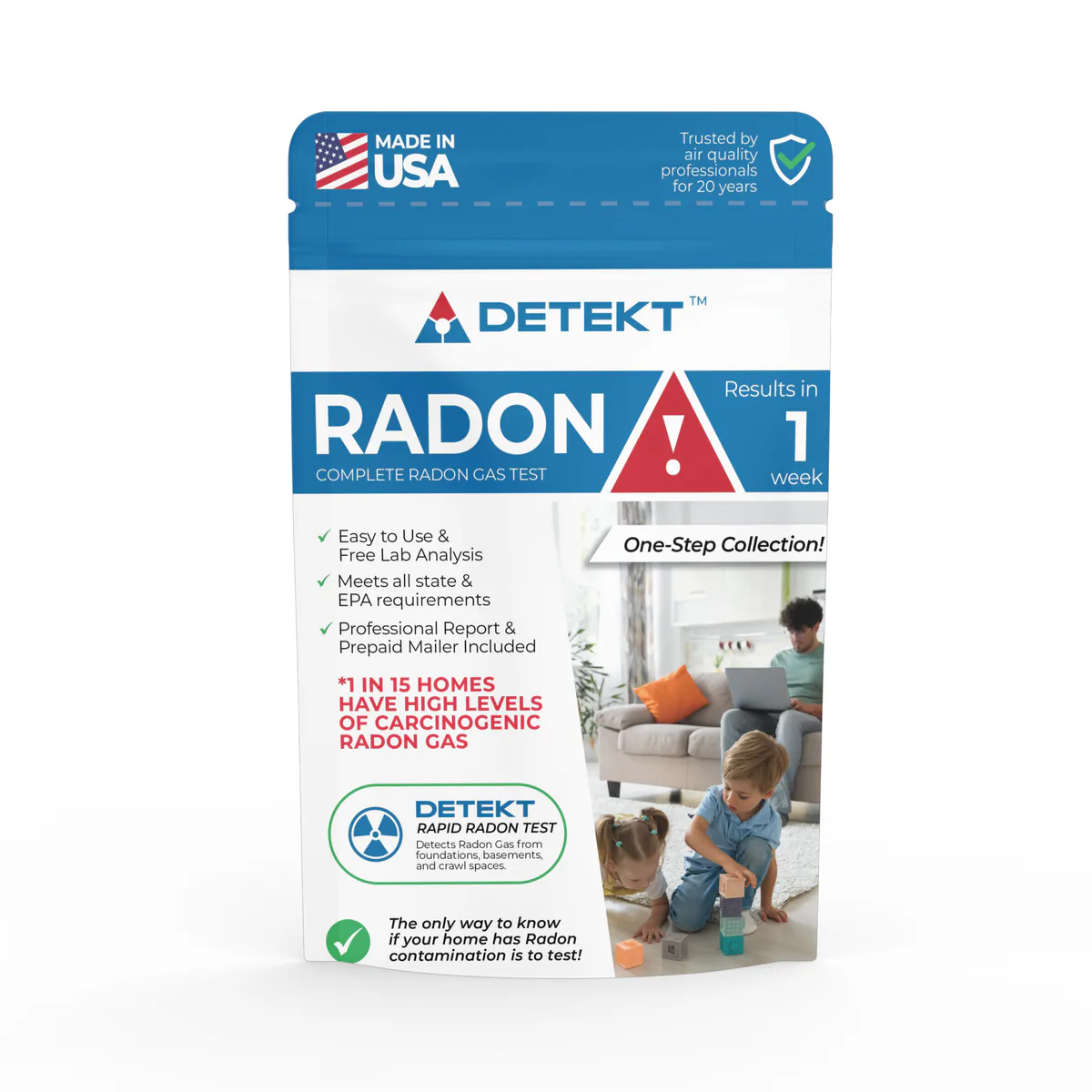
Short-term kit
Radon Short Term Test Kit short-term charcoal radon test kit, lab fee included
- Lab fee included
Method: Charcoal
In home: 2 to 7 days
Locations and reports
EPA puts Armstrong County in Zone 2, its middle radon zone. Homes with elevated levels occur in all three zones, so only a test measures yours.
Data checked By Radon411Methodology
Highest bordering
71.4%
Randall County
2 of 7 neighbours have 30+ tests, 2007 to 2016
Nearest county
71.4%
Randall County, 31 miles
Share at 4+ pCi/L, 84 tests, 2007 to 2016
Ground above low
59.4%
32.1 pts above Texas
Share of land USGS rates moderate or high potential
Tests reported
0
None published
A home here needs its own test
EPA radon zone
Zone 2
Moderate potential
1 highest, 3 lowest
EPA predicts 2 to 4 pCi/L indoors
Read a result for Armstrong County
EPA’s own thresholds; the figures are the area’s, never this home’s.
EPA’s reading of 4.0 pCi/L
At or above 4 pCi/L
This result is at or above 4 pCi/L. EPA recommends fixing a home when the radon level is 4 pCi/L or higher.
The data
Armstrong County, At a glance
Predicted: EPA radon zone
Armstrong County is a
USGS geologic potential: Moderate across 59% of the county's area
Predicted: EPA Map of Radon Zones
Measured: tests reported to CDC
CDC has published no radon test figures for Armstrong County. Of the counties bordering it, 2 have a figure over the 2007 to 2016 laboratory totals: Randall County reported the largest share at or above 4 pCi/L, 71.4%, and Potter County the smallest, 20.0%.
Armstrong County, Compared
Armstrong County has no radon test figure of its own from CDC, whose counts over the 2007 to 2016 laboratory totals name 140 other Texas counties and leave it out. Pooled across 140 Texas counties, 10.4% of reported tests reached that level; across every county in the country with a figure, 35.8%.
Of the counties bordering it, 2 have a figure over the 2007 to 2016 laboratory totals: Randall County reported the largest share at or above 4 pCi/L, 71.4%, and Potter County the smallest, 20.0%. Farther out, Lubbock County (97 miles away) at 57.8%, Midland County (217 miles away) at 1.0% and Denton County (272 miles away) at 7.2% have figures too. Statewide for the same period, Randall County reported the highest share (71.4%) and Nueces County the lowest (0.0%).
EPA's 1993 map puts Armstrong County in Zone 2, its middle label: a predicted county average between 2 and 4 pCi/L. USGS geology rates 59% of the county's land moderate radon potential.
Pooled shares: Radon411's sum of CDC's county counts for one period.
Armstrong County, Geology
USGS's geologic map splits Armstrong County: 59.4% of its land is moderate radon potential and 40.6% low. The map puts 59.4% of Armstrong County in the area it calls Northern High Plains and Plateaus and 40.6% in Central Texas. USGS gives the first a radon index of 10, in the moderate band (9 to 11), and the second 7, in the low band (5 to 8).
| Area | The rock, in USGS's words | Potential | Radon index | Share of land |
|---|---|---|---|---|
| Northern High Plains and Plateaus | Tertiary sandstone, siltstone, shale. | Moderate | 10 | 59.4% |
| Central Texas | Cretaceous through Quaternary marine sandstone, shale, chalk, limestone, siltstone, clay, and lignite. | Low | 7 | 40.6% |
Names, descriptions and indexes: U.S. Geological Survey, Geologic Radon Potential Map (2025). Shares: Radon411, from the map cut to the boundary.
Across Texas 0.5% of the land is rated high; none of Armstrong County's is. Of the 7 counties that border it, 5 have more moderate-potential ground, Carson County the most at 100%.
The map rates the ground, not the air in any home.
Local help
Armstrong County, Local resources
The Texas Radon Group offers free radon test kits for Texas individuals who qualify.
There are no radon certification requirements for the State of Texas at this time, but the National Radon Proficiency Program lists radon testers and mitigators within Texas that have passed a rigorous national certification program.
What it means
Armstrong County, Questions
No CDC testing statistics are published here for Armstrong County, Texas yet. Of the counties bordering it, 2 have a figure over the 2007 to 2016 laboratory totals: Randall County reported the largest share at or above 4 pCi/L, 71.4%, and Potter County the smallest, 20.0%.
Armstrong County borders 7 counties: Carson County, Randall County, Donley County, Briscoe County, Swisher County, Potter County and Gray County.
Products
Armstrong County, Products
No CDC figure names Armstrong County; the nearest county with one, Randall County (31 miles away), reported 71.4% of its tests at or above 4 pCi/L over the 2007 to 2016 laboratory totals, the only reading nearby until a test of this home. In Zone 2 a short-term kit (2 to 90 days) is the quick first check in Armstrong County; a long-term test tells the year-round average.
Short-term kit
Method: Charcoal
In home: 2 to 7 days

Long-term kit
Method: Alpha track
In home: 90 days to 12 months
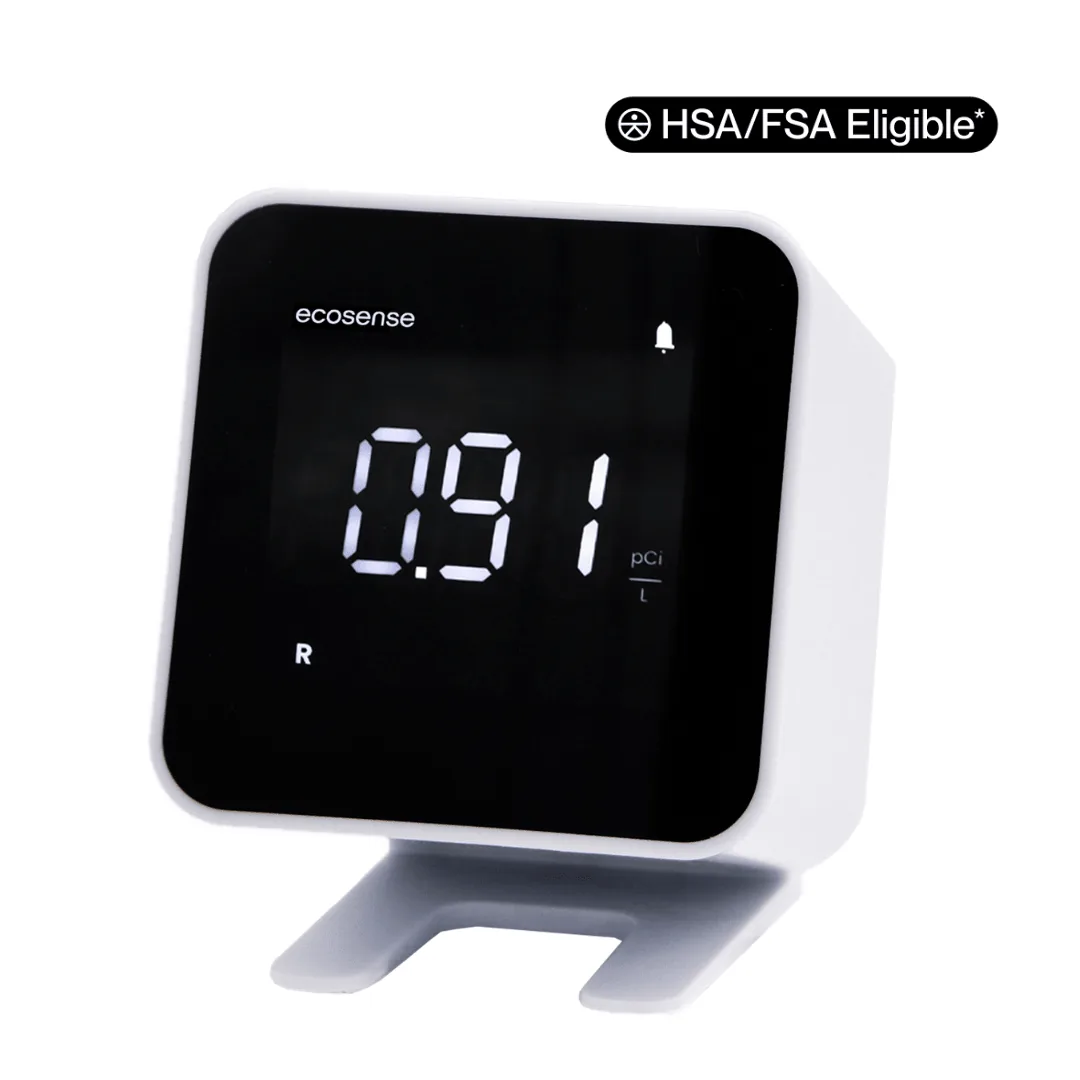
Monitor
Method: Ion chamber
First reading: Within 10 minutes
Test kits and monitors: 1 of 3
Explore
Armstrong County, Bordering counties
100.0%at or above 4 pCi/L
Median 36.2 pCi/L · 2 tests
100.0%at or above 4 pCi/L
Median 4.0 pCi/L · 1 test
100.0%at or above 4 pCi/L
Median 7.8 pCi/L · 6 tests
71.4%at or above 4 pCi/L
Median 6.2 pCi/L · 84 tests
20.0%at or above 4 pCi/L
Median 1.1 pCi/L · 70 tests
0.0%at or above 4 pCi/L
Median 1.9 pCi/L · 3 tests
No CDC figure for 2007 to 2016; its page reads it against its own neighbours.
Armstrong County, Cities and towns
Armstrong County's population has barely moved since 2020: 1,843 residents on July 1, 2025 against 1,851 then, by the Census Bureau's estimates. Spread over its land, that is 2.0 people to the square mile. Claude, its one incorporated place, has 1,190 residents, 64.6% of the total. CDC publishes no radon test count for Armstrong County; across Texas its counts for 2007 to 2016 come to 0.1 tests for every 1,000 residents (2025 estimate).
Claude is the one incorporated place here; CDC publishes no figure by town, so it reads Armstrong County's.
| Place | Residents | Since 2020 | Share of residents |
|---|---|---|---|
| Claude | 1,190 | +0.2% | 64.6% |
One incorporated place, as listed in the U.S. Census Bureau’s 2020 place reference files. Residents: U.S. Census Bureau population estimates for July 1, 2025 (Vintage 2025).
Armstrong County, Homes
Armstrong County is a place of houses on their own lots: 91% of its 888 homes are detached single-family houses, against 65% across Texas. The homes are older than Texas' as a whole: half were built before 1964 (1990 for Texas), and 44% date from before 1960. Owners live in 82% of the occupied homes (Texas: 63%), so for most households a test and a fix are their own to order.
| Homes | Armstrong County | Texas |
|---|---|---|
| Housing units | 888 | 11,890,808 |
| Detached houses | 91% | 65% |
| In buildings of 5 or more | 0% | 21% |
| Mobile homes | 8% | 7% |
| Built before 1960 | 44% | 13% |
| Built since 2000 | 7% | 37% |
| Middle year built | 1964 | 1990 |
| Owner-occupied | 82% | 63% |
Census Bureau, American Community Survey, 2019 to 2023: estimates from a sample of homes, looser for a small place. Shares by Radon411.