
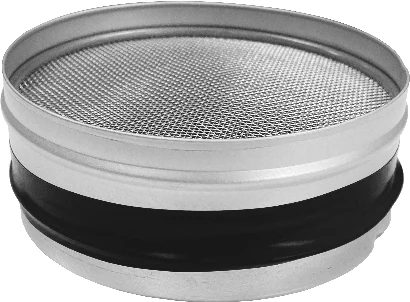
Short-term kit
PicoCan short-term charcoal canister radon test
- Lab fee included
Method: Charcoal
In home: 48 to 96 hours
No Amazon listing on file
See details of the AccuStar PicoCan Detekt
Short-term charcoal radon test kit, lab fee included
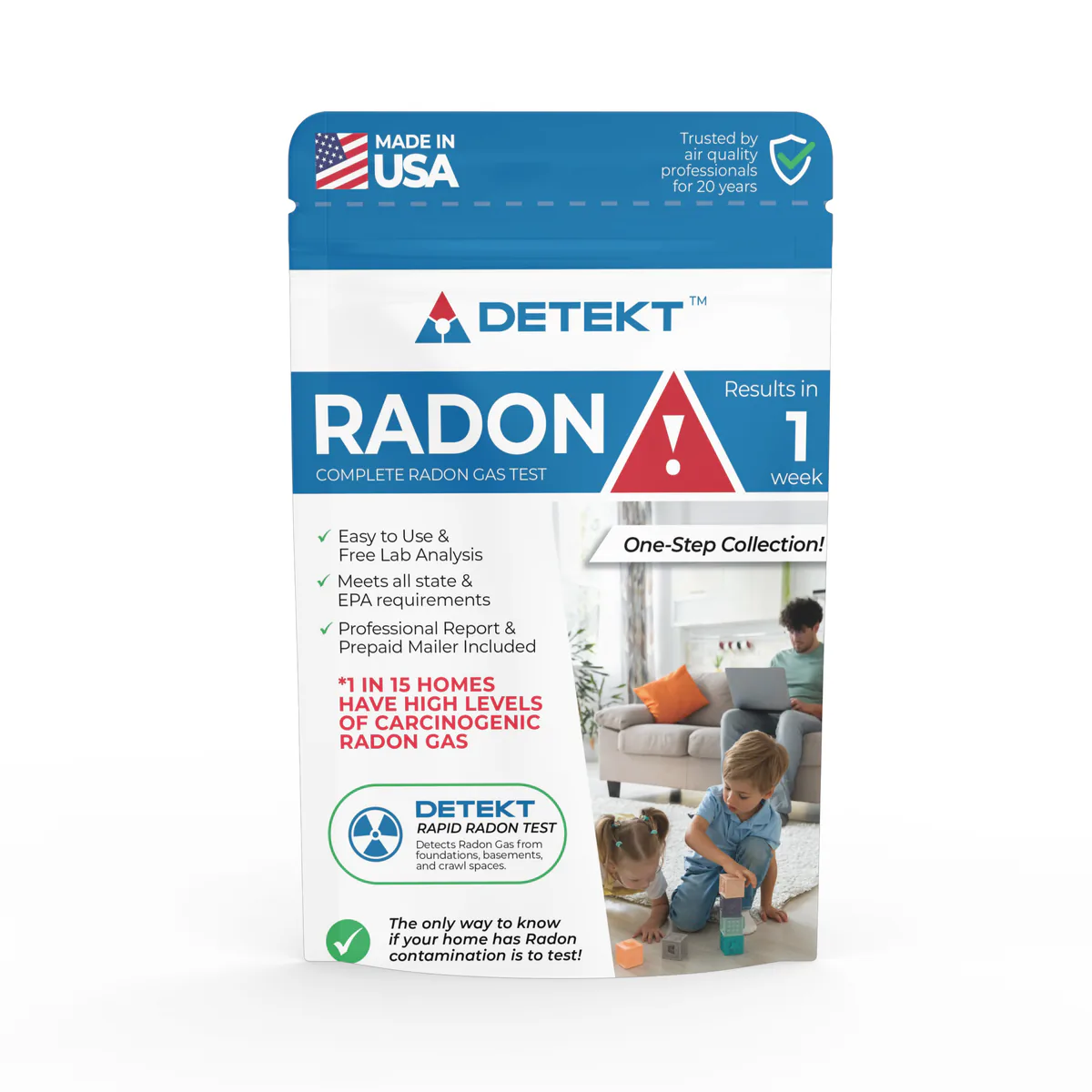
Photos: Detekt
 (opens in a new tab)Check price on Amazon (opens in a new tab)
As an Amazon Associate, Radon411 earns from qualifying purchases.
Amazon and the Amazon logo are trademarks of Amazon.com, Inc. or its affiliates.
See ratings and reviews on Amazon (opens in a new tab)As Detekt states it
Detekt's Radon Short Term Test Kit is a mail-in charcoal test from Detekt Rapid Tests of Austin, Texas: you leave the detector in your home for two to seven days, seal it and mail it to a laboratory in the prepaid envelope that comes with it. Detekt states that all professional lab analysis fees are covered, excluding New Jersey's state fees, and that a digital report arrives by email within 72 hours after the lab receives the kit. Detekt's text does not name the laboratory that analyzes the sample.
Detekt's text names the detector, which you seal when the test ends, and the prepaid envelope for mailing it to the laboratory; the product page calls it the included mailer. Detekt's store record lists the kit as a single product, SKU RD-PK-1, and the product page links to a guide page with instruction videos.
In the box and running costsHow it works
The sensor, the sampling and the readings, then who has checked it
In our words, from the maker's documents
Detekt says the kit uses a charcoal adsorption method to capture radon from the air. The detector sits open in the room for the test period; at the end you seal it and send it to a certified laboratory in the included mailer. Detekt's own article on radon testing explains the principle: radon gas diffuses into a container where it is adsorbed onto activated charcoal, and after the exposure period the device is sealed and analyzed. Detekt adds that the kit screens your home's air with no electronics or technical setup, so nothing in it runs on power or shows a number.
The National Radon Safety Board describes the same method, which it codes AC for activated charcoal adsorption: an airtight container with activated charcoal is opened in the area to be sampled and radon in the air adsorbs onto the charcoal granules; at the end of the sampling period the container is sealed and may be sent to a laboratory, where the gamma decay from the adsorbed radon is counted. The board adds that charcoal detectors, depending on design, are deployed from 2 to 7 days, and that because charcoal keeps adsorbing and releasing radon, the method does not give a true integrated measurement over the exposure time.
The EPA names charcoal canisters among the passive detectors most commonly used for short-term testing, and describes passive devices as needing no power: they are exposed to the air in the home for a specified period of time and then sent to a laboratory for analysis. Detekt says its kit reports radon in picocuries per liter (pCi/L) to show whether a home exceeds the EPA action level of 4 pCi/L.
The exposure window is two to seven days. Detekt's product page says the kit measures radon over a two to seven day period, and its answers to common questions say the test requires 2-7 days of exposure time in your home, followed by lab analysis. Detekt's text does not say what happens to a sample left out for less than two days or more than seven, so follow the instructions in the box. The EPA says all radon tests should be taken for a minimum of 48 hours.
Detekt gives its result timing four ways, each counted from a different point. Its answers say a digital report arrives by email within 72 hours after the lab receives the test kit; that after you mail the sealed detector you will typically receive certified results within 3-5 business days; and that the whole process takes approximately 1-2 weeks. The product description says results are available in 2-7 days after testing. Add the exposure and the mail to any of these.
The EPA counts any test from two to 90 days as short-term. Because radon levels tend to vary from day to day and season to season, it says a long-term test, more than 90 days, is more likely to tell you a home's year-round average. After a first short-term result at or above 4 pCi/L, the EPA says to follow up with either a long-term test or a second short-term test, and it suggests considering a fix between 2 and 4 pCi/L.
Detekt's own statements, attributed
These are Detekt's own statements, attributed to it. They are not our findings, and we have not tested this product ourselves.
Who checks a device like this
C-NRPP's consumer evaluation covers electronic monitors, not laboratory-analyzed test kits, so it has no result for Detekt Radon Short Term Test Kit. A kit's result comes from the laboratory that analyzes it. Where the maker names that laboratory, or the page cites the National Radon Safety Board's lists of approved devices and accredited laboratories for it, the “How it works” panel and “Questions people ask” say so.
Specifications
Every figure as the maker states it
Detekt's text names the detector, which you seal when the test ends, and the prepaid envelope for mailing it to the laboratory; the product page calls it the included mailer. Detekt's store record lists the kit as a single product, SKU RD-PK-1, and the product page links to a guide page with instruction videos.
Detekt's refund policy allows a return request within 30 days of receiving an item, if it is unused and in its original packaging. Its satisfaction guarantee page says two different things about where you bought the kit. It opens by offering the guarantee on purchases made on DetektHome.com or Amazon only, while its fine print says only products purchased from DetektHome.com are eligible and that purchases from Amazon or other third parties must be handled through them. If you bought the kit on Amazon, ask Detekt which statement applies before you count on the guarantee. Either way, the page says requests must be submitted within 30 days of delivery with proof of purchase, and it excludes consumable or single-use test materials that have already been used. Detekt's terms of service provide its products as is, except as Detekt expressly states.
The standard analysis is paid for with the kit: Detekt states that all professional lab analysis fees are covered, excluding New Jersey state fees, and the sealed detector goes back in the prepaid envelope. There is nothing to power and no subscription.
New Jersey adds a state fee that Detekt's text does not give an amount for; ask Detekt for the current figure before testing there. Detekt's text mentions no express or rush analysis.
If your result is at or above 4 pCi/L, the EPA's next step is a follow-up test, either a long-term test or a second short-term test, so plan for a second purchase in that case. Detekt's answers also say to retest after mitigation and periodically to ensure levels remain low.
Fit and setup
The fit, then setup and placement as the guidance asks
Good fit if, and look elsewhere if
Good fit if
Look elsewhere if
4 steps
For where any radon test or monitor should sit in a home, see where to place a radon test.
Compare
The same three rows for each, and the one difference that matters
This page
Detekt Radon Short Term Test Kit
This page: Detekt's Radon Short Term Test Kit is a mail-in charcoal test from Detekt Rapid Tests of Austin, Texas: you leave the detector in your home for two to seven days, seal it and mail it to a laboratory in the prepaid envelope that comes with it.
AccuStar
The difference: An open charcoal canister for 2 to 4 days, analyzed by AccuStar, which must receive it within 7 days of the end of the test.
No Amazon listing on file
See details of the AccuStar PicoCan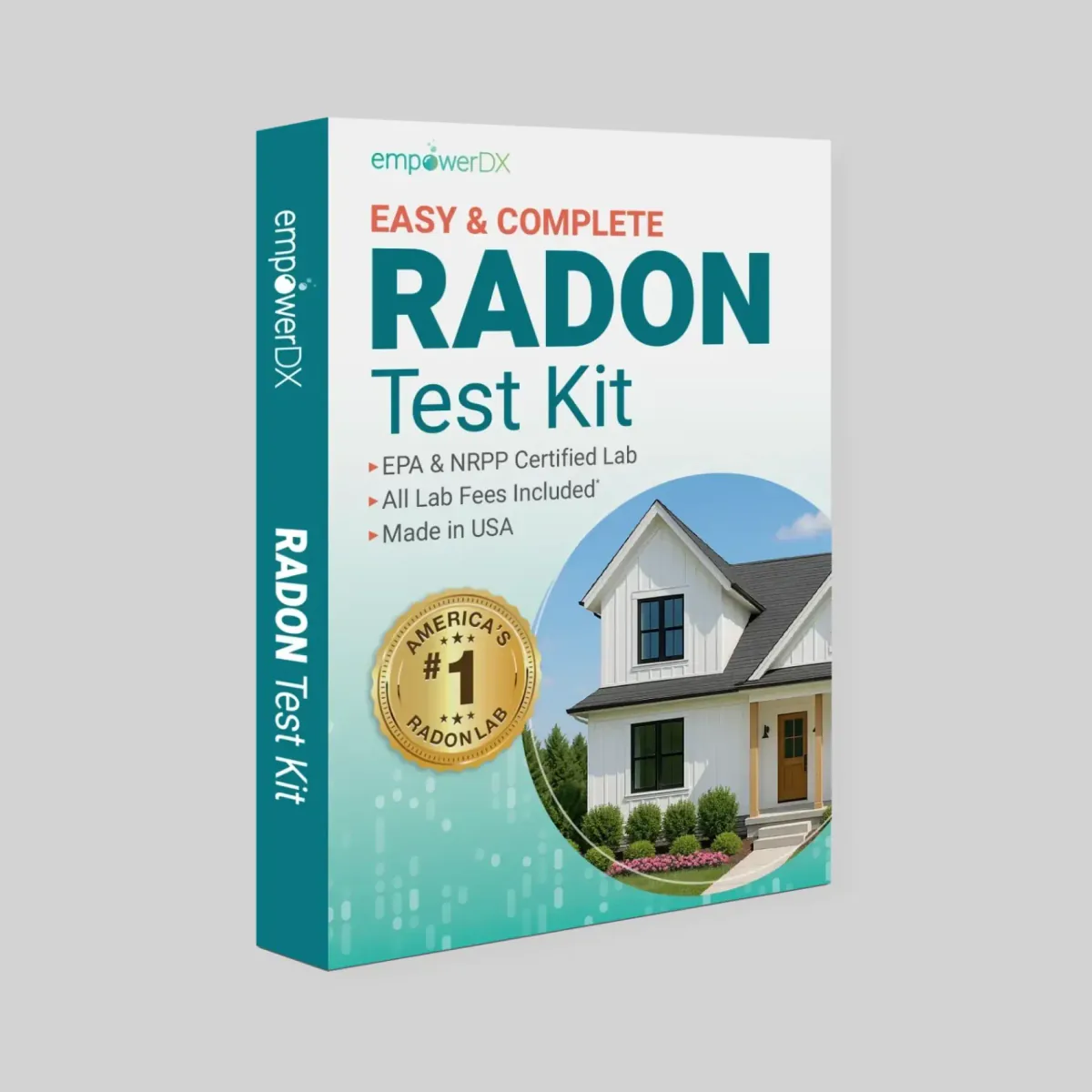
empowerDX
The difference: One passive sampler for 48 to 96 hours, with outbound shipping and the lab analysis included; return postage is not, and empowerDX says results come 3 to 5 business days after its lab receives the sample.
First Alert
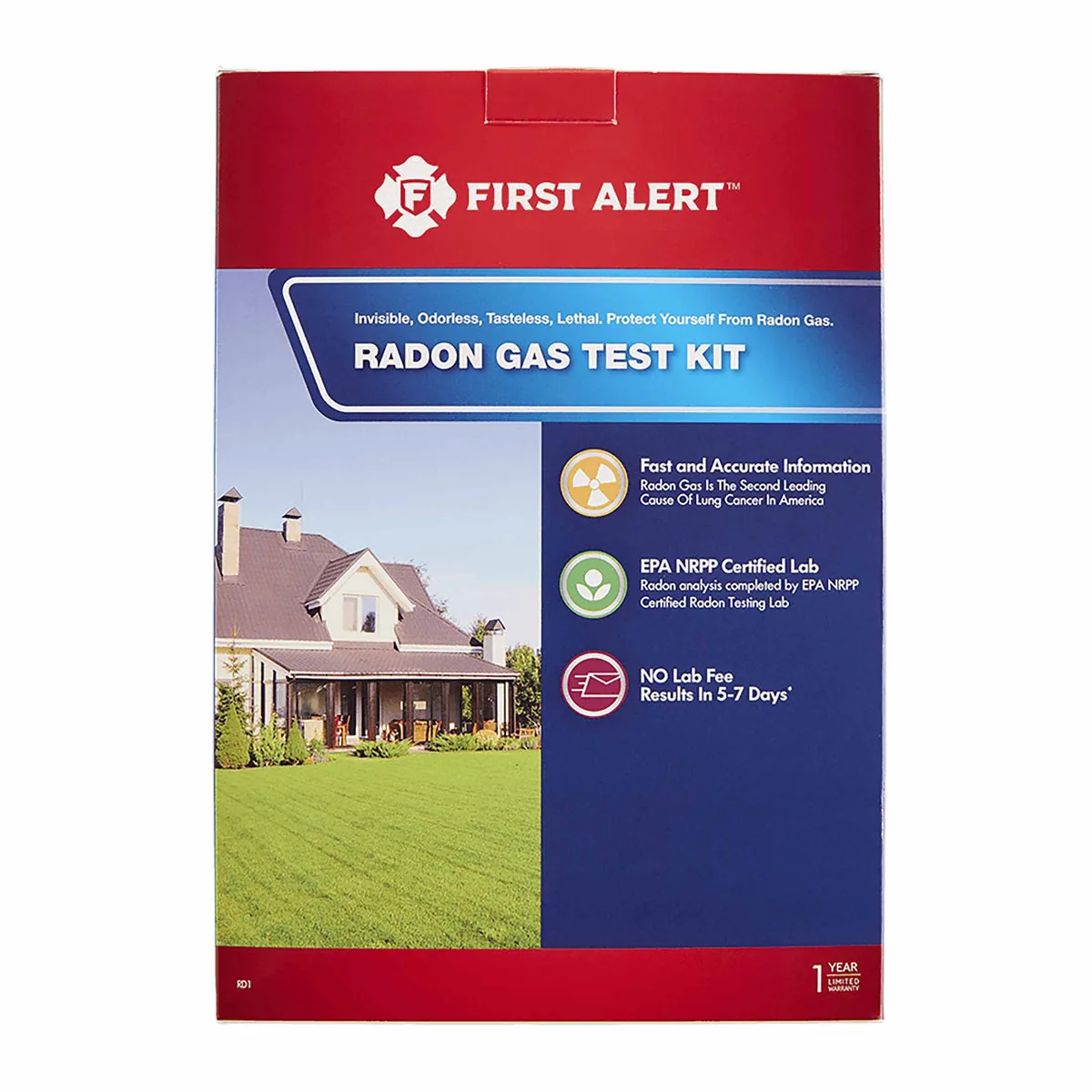
The difference: One charcoal sampler left out for two to four days, with the lab fee included except New Jersey's state fee.
Kidde
The difference: One activated charcoal sampler bag for three days; analysis included, return postage not.
No Amazon listing on file
See details of the Kidde 442020Compared with similar products: 1 of 5
Short-term kit
Method: Charcoal
In home: 48 to 96 hours
No Amazon listing on file
See details of the AccuStar PicoCanShort-term kitempowerDX
Method: Passive sampler
In home: 48 to 96 hours
Short-term kitFirst Alert
Method: Charcoal
In home: 2 to 4 days
Short-term kitKidde
Method: Charcoal
In home: 3 days
No Amazon listing on file
See details of the Kidde 442020
Short-term kit
Method: Liquid scintillation
In home: 48 to 96 hours
Short-term kit
Method: Liquid scintillation
In home: 48 to 96 hours
Short-term kit
In home: 72 to 168 hours
No Amazon listing on file
See details of the RadonAway Air Chek Short-TermMore short-term test kits: 1 of 7
Questions
6 questions about the Detekt Radon Short Term Test Kit, answered
The standard analysis is. Detekt states that all professional lab analysis fees are covered, excluding New Jersey state fees, and that you mail the sealed detector in the prepaid envelope. Detekt's text does not give the New Jersey amount.
Two to seven days. Detekt's product page says the kit measures radon over a two to seven day period, and its answers say the test requires 2-7 days of exposure time in your home. The EPA says all radon tests should be taken for a minimum of 48 hours. Keep closed-house conditions throughout, and follow the instructions in the box if they give a narrower window.
Detekt gives several figures. Its answers say a digital report arrives by email within 72 hours after the lab receives the test kit, and that you will typically receive certified results within 3-5 business days after mailing the sealed detector, with the whole process taking approximately 1-2 weeks. The product description says results are available in 2-7 days after testing.
Detekt's text does not say. It says the sealed detector goes to "a certified laboratory", which it also calls "our certified lab", without naming the laboratory or its accreditation.
The National Radon Safety Board publishes a list of laboratories currently accredited by the NRSB to analyze specific approved devices. Because Detekt names neither the laboratory nor the device, this page cannot match the kit to that list. If your state requires a certified laboratory, ask Detekt which laboratory analyzes its kits before you test.
Detekt describes the kit as useful for real estate checks. That is Detekt's statement; whether a do-it-yourself kit is accepted for a sale depends on your state and on the buyer and seller. Many states require radon professionals to be licensed, certified or registered. The EPA's guide recommends three short-term testing options for real estate transactions, among them two tests at the same time in the same location, and says any real estate test should include steps to prevent or detect interference with the test device.
Follow the EPA's steps: after a first short-term result at or above 4 pCi/L, take a follow-up test, either a long-term test or a second short-term test, and fix the home if the level is 4 pCi/L or more; the EPA suggests considering a fix between 2 and 4 pCi/L. Detekt's answers point to a radon mitigation system that vents the gas outside, and say to retest after mitigation and periodically to ensure levels remain low.
Updated October 9, 2026