

Long-term kit
RL116 long-term radon test kit
- Lab fee extra
Method: Alpha track
In home: 90 days to 12 months
RSSI
Mail-in alpha track radon test kit
Best for you if
Skip it if
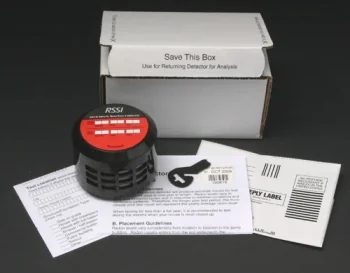
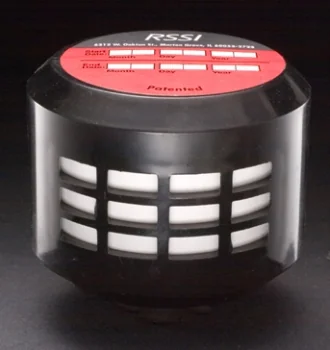
Photos: RSSI
 (opens in a new tab)Check price on Amazon (opens in a new tab)
As an Amazon Associate, Radon411 earns from qualifying purchases.
Amazon and the Amazon logo are trademarks of Amazon.com, Inc. or its affiliates.
See ratings and reviews on Amazon (opens in a new tab)As RSSI states it
The RSSI AT-101 is a mail-in alpha track radon detector for the air in a home: you open its pouch, leave it in a lived-in room for anywhere from 30 days to one year, and post it back to RSSI in Morton Grove, Illinois, which says it analyzes detectors within ten business days of arrival. The consumer kit holds one detector, a data card, a hook and, in the United States, a postage-paid return mailer, and RSSI says the price covers analysis and reporting. RSSI's own pages place the AT-101 on both sides of the line between short-term and long-term testing, so the number of days you leave it out decides which kind of result you get.
RSSI lists one Model AT-101 alpha track detector, a complete instructions data card and a hook, and, in the United States, a postage-paid return mailer; it says the price includes a return shipping label, analysis, reporting and full retail customer support. Orders shipping to Canada are taken by phone, not online.
In the box and running costsHow it works
The sensor, the sampling and the readings, then who has checked it
In our words, from the maker's documents
Alpha track is one of the two detector types the EPA names for long-term testing: its Citizen's Guide says alpha track and electret detectors are commonly used for tests that stay in the home for more than 90 days, and it lists alpha track among the passive devices used for short-term tests too. There is nothing to power or switch on. The test starts when the protective pouch is opened, and RSSI's instructions ask you to write the start date on the detector's top label and, at the end, the end date beside it.
RSSI is the maker and the laboratory. Its radon page says it manufactures and analyzes its alpha track detectors, and the instructions send the finished detector back to RSSI Radon Returns at 6312 Oakton Street in Morton Grove. RSSI was founded in 1975 by two Certified Health Physicists, Herman Cember and Eli Port, and its radon work sits beside radiation safety consulting, laboratory analysis and instrument calibration.
The test length is flexible, and RSSI describes it two ways. The consumer kit's store page and instructions say the detector can be used for testing periods from 30 days to one year, and the instructions note that the EPA defines a long-term test as 91 days to a year. RSSI's radon page lists the AT-101 as its short-term detector, designed for 1 to 3 months and usable for up to a year, and names a separate AT-102 as its long-term detector for 91 days to a year. In practice the same AT-101 gives a short-term result if you stop at 30 to 90 days and a long-term one if you leave it past 90.
Longer is what RSSI recommends when you can wait. Its instructions say radon levels vary day to day, season to season and with weather and ventilation, and that the longer you test, the more closely the result represents the true average at that spot; its radon page says the test should be as long as possible, up to a year. The EPA puts it the same way: a long-term test is more likely than a short-term one to tell you your home's year-round average radon level.
There is one exception. RSSI's instructions warn that where radon is several times the EPA's action level, a long test can overexpose the detector and produce an estimated reading; after an overexposed result, RSSI suggests retesting for a shorter period or contacting your state radon program. For a test shorter than 30 days, the instructions ask you to contact RSSI first, and the radon page says tests of 12 to 30 days are possible with expedited return shipping.
On the independent record, the National Radon Safety Board's July 2026 list of approved radon measurement devices includes the RSSI AT-101 Alpha Track Detector, device 12003, with a footnote that the device is not currently analyzed by an NRSB-accredited laboratory. RSSI's store page says it is licensed by the NRSB under license ARL0014; a buyer who needs an NRSB-accredited analysis can ask RSSI or the NRSB which record is current.
RSSI's own statements, attributed
These are RSSI's own statements, attributed to it. They are not our findings, and we have not tested this product ourselves.
Who checks a device like this
C-NRPP's consumer evaluation covers electronic monitors, not laboratory-analyzed test kits, so it has no result for RSSI AT-101. A kit's result comes from the laboratory that analyzes it. Where the maker names that laboratory, or the page cites the National Radon Safety Board's lists of approved devices and accredited laboratories for it, the “How it works” panel and “Questions people ask” say so.
RSSI AT-101
Check price on Amazon (opens in a new tab)Specifications
Every figure as the maker states it
RSSI lists one Model AT-101 alpha track detector, a complete instructions data card and a hook, and, in the United States, a postage-paid return mailer; it says the price includes a return shipping label, analysis, reporting and full retail customer support. Orders shipping to Canada are taken by phone, not online.
The detector carries a 30-month limited warranty from its date of manufacture against defective materials or workmanship, for the original consumer purchaser. RSSI replaces a defective detector with a comparable one when it is returned postage paid; the warranty is void if the detector was opened, damaged, misused or not returned before its expiration date.
Results come from RSSI's laboratory: detectors are analyzed within ten business days of arrival, results are posted at rssi.us/results.php, and a report is sent by email or mail as you choose on the data form. Keep the six-digit detector number for questions. RSSI's store page warns that an emailed report may land in a spam folder.
There is no separate laboratory fee to plan for: RSSI says the kit price covers the return label, analysis and reporting. Time is the cost that matters. Allow two weeks for delivery to RSSI with the prepaid label, which is not trackable; to track the package or speed it up, RSSI suggests shipping by express courier instead.
Lost parts need not end the test: RSSI's instructions link a printable data form and say a small sturdy box can carry the detector back to RSSI Radon Returns. A detector that proves defective under the warranty is replaced with no charge when the instructions are followed.
Where you live affects what happens to your data. RSSI's data disclosure says state regulations require it to report radon testing information to various state agencies, from city, ZIP code and result in Alaska to the street address, test dates and result in states such as California and Colorado, and that it does not disclose names, email addresses or phone numbers to third parties.
Fit and setup
The fit, then setup and placement as the guidance asks
Good fit if, and look elsewhere if
Good fit if
Look elsewhere if
4 steps
For where any radon test or monitor should sit in a home, see where to place a radon test.
Compare
The same three rows for each, and the one difference that matters
This page
RSSI AT-101
This page: The RSSI AT-101 is a mail-in alpha track radon detector for the air in a home: you open its pouch, leave it in a lived-in room for anywhere from 30 days to one year, and post it back to RSSI in Morton Grove, Illinois, which says it analyzes detectors within ten business days of arrival.
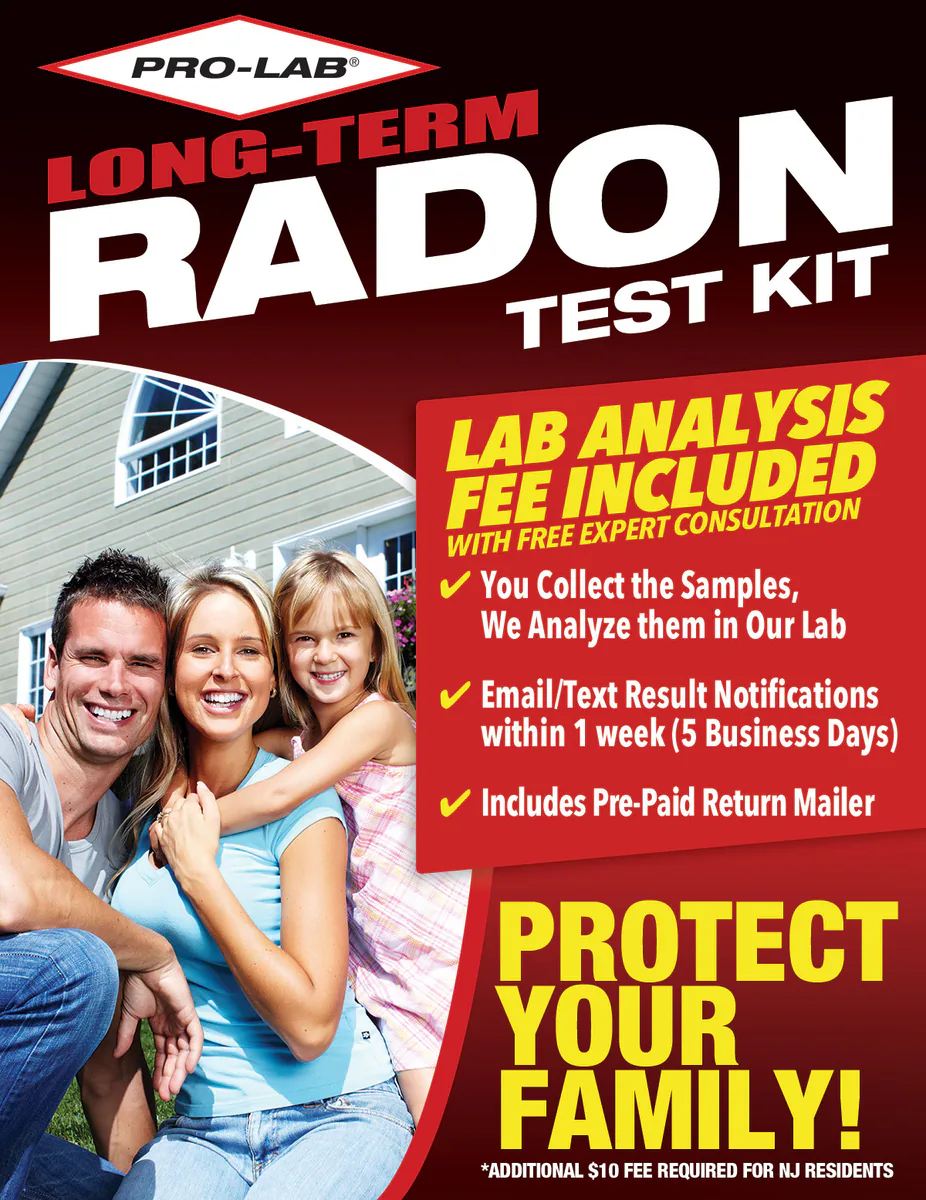
PRO-LAB
The difference: PRO-LAB's long-term kit with laboratory analysis included, designed for a minimum of 90 days and a maximum of twelve months.
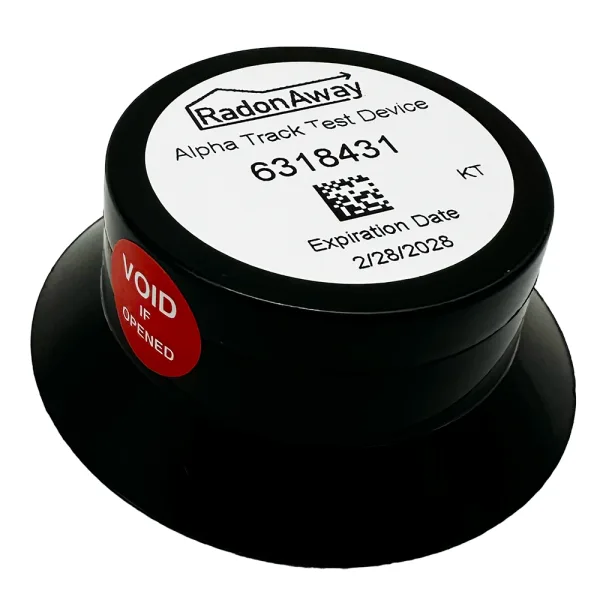
RadonAway
The difference: Another mail-in alpha track test, which Radon.com describes for an exposure of 91 to 365 days with return USPS shipping included.
Compared with similar products: 1 of 3
Long-term kit
Method: Alpha track
In home: 90 days to 12 months
Questions
6 questions about the RSSI AT-101, answered
It depends on how long you leave it out. The EPA calls a test short-term when it stays in the home for two to 90 days and long-term when it stays for more than 90. RSSI's consumer kit runs from 30 days to a year, so a test stopped before 91 days is a short-term result and one left longer is long-term. RSSI's radon page files the AT-101 under short-term (1 to 3 months, up to a year) and sells the AT-102 as its long-term model.
RSSI says no: its store and radon pages state that its alpha track detectors do not require closed-house conditions. Live in the house normally and leave the detector where it is; the instructions ask only that it not be disturbed during the test period.
Add the mail time to the lab time. RSSI asks you to allow two weeks for the prepaid, non-trackable return label to reach Morton Grove, and says detectors are analyzed within ten business days of arrival. The result is posted online and sent by email or mail.
RSSI's instructions explain that very high radon, several times the EPA's action level, can overexpose the detector over a long test and produce an estimated reading. RSSI recommends retesting for a shorter period or contacting your state's radon program.
The EPA recommends fixing the home when a long-term test result is 4 pCi/L or more, and it says to consider fixing between 2 and 4 pCi/L. Its home buyer's guide adds that alpha track and electret detectors are commonly used for long-term testing.
Not in New Jersey: RSSI says its radon detectors may not be used in that state. RSSI states it holds a C-NRPP laboratory license, but its store takes Canadian orders only by phone, and the postage-paid return mailer is for the United States.
Updated November 27, 2026