 RadonSeal
RadonSeal Plus Concrete Sealer
Penetrating concrete sealer
- Sealing material
- Penetrating concrete sealer
- 2.5 gal or 5 gal
Photos: RadonSeal
 (opens in a new tab)Check price on Amazon (opens in a new tab)
As an Amazon Associate, Radon411 earns from qualifying purchases.
Amazon and the Amazon logo are trademarks of Amazon.com, Inc. or its affiliates.
See ratings and reviews on Amazon (opens in a new tab)- Made ofPenetrating concrete sealer
- Package2.5 gal or 5 gal
- Every figure checked against the specifications RadonSeal publishes
- The maker's own figures and limits, shown the same way for every part, unranked
About this item
As RadonSeal states it
- Made of: Penetrating concrete sealer: water-based and zero-VOC; penetrates up to 4 in. into concrete and reacts inside it; not a surface coating
- Package: 2.5 gal or 5 gal (UPC 856255006034 for 2.5 gal, 0856255006027 for 5 gal)
- Coverage: Indoor poured concrete 200 to 225 sq. ft. per gallon; outdoor poured concrete 175 to 200; concrete blocks 100 to 125; coverage includes all recommended applications
- Application temperature: Above 40°F (4°C), air and surface, during application and for at least 48 hours after
- Working and cure time: Begins to appear dry within 1 to 4 hours; wait at least 10 days before paints, coatings, adhesives, levelers or patching compounds; optimal results after about 45 days
- Shelf life: One year from the date of purchase
- Warranty: Lifetime Money-Back Guarantee: if it does not perform as described when applied according to instructions, contact RadonSeal's technical support
RadonSeal Plus is a water-based, zero-VOC sealer that RadonSeal says penetrates up to 4 inches into concrete and reacts inside it to seal the pores and capillaries; it comes in 2.5 and 5 gallon sizes, and the listing is the 2.5 gallon. RadonSeal says it helps reduce radon and other soil gases from entering, used either as an alternative approach in certain situations or with a fan-based system. The EPA does not recommend sealing alone, because by itself sealing has not been shown to lower radon levels significantly or consistently.
What you get
The listing is the 2.5 gallon size (UPC 856255006034); RadonSeal also sells 5 gallons (UPC 0856255006027), and its data sheet lists 55 gallons. RadonSeal gives coverage per gallon as 200 to 225 square feet on indoor poured concrete, 175 to 200 on outdoor poured concrete and 100 to 125 on concrete blocks; its data sheet adds 175 to 225 on limestone, and its 2026 instructions give one figure for all poured concrete, 175 to 225.
In the box and running costsHow it works
What it does and how
What it is made of and the job it does in a system, then who has checked it
How it works
In our words, from the maker's documents
RadonSeal Plus is a penetrating sealer, not a coating. RadonSeal says it penetrates up to 4 inches below the surface of poured concrete or concrete block and reacts inside the concrete to seal the pores and capillaries that let water, moisture vapor and soil gases through, leaving a natural surface ready for paints, epoxy or flooring; its 2026 instructions say to wait at least 10 days after sealing before applying paints, coatings, water repellents, adhesives, levelers or patching compounds. Its data sheet describes a ready-to-use reactive sealer that works by reacting with Portland cement, is most effective on high-quality concrete at least 3 inches thick, and does not trap water vapor at the surface.
RadonSeal sells two versions. It recommends Plus for concrete blocks, cinder blocks, limestone, indoor poured concrete older than 20 years and outdoor concrete older than 2 years, and its Standard sealer for newer poured concrete. Its two documents differ on outdoor concrete for Standard: the product page says under 2 years old, while the 2026 instructions list Standard for outdoor poured concrete less than 20 years old and Plus for outdoor poured concrete over 2 years old. It excludes stamped, integrally colored or acid-stained and polished concrete, modified hydraulic cement, fiber-reinforced concrete, split-face or lightweight blocks, bricks and pavers, and says hard-troweled or steel-troweled surfaces may need etching before they will absorb it.
What it does not do matters for radon. RadonSeal's data sheet says the sealer is not a topical sealant or coating and does not seal water penetration due to structural defects, cracks, seams, corner joints, holes and similar openings, which may need caulking, patching or crack repair. Its FAQ says that sealing the porosity of concrete alone may not sufficiently reduce radon levels, because elevated radon is commonly attributed to openings such as cracks, holes, joints, sump pits, open-cell block walls, floor drains and pipe protrusions, which require additional sealing.
The EPA's position is firmer. It does not recommend the use of sealing alone to reduce radon, because by itself sealing has not been shown to lower radon levels significantly or consistently, though it says sealing limits the flow of radon and makes other radon reduction techniques more effective. Its guide for builders says field research has shown that trying to seal all of a foundation's openings is impractical and ineffective as a stand-alone technique. Where RadonSeal's page offers the sealer as an alternative approach in certain situations, the EPA's guidance treats sealing as one part of mitigation, not a substitute for it.
What the manufacturer says
RadonSeal's own statements, attributed
- RadonSeal saysRadonSeal says RadonSeal Plus helps reduce radon and other soil gases from entering homes, schools, and workplaces by restricting their movement through concrete floors and foundation walls.
- RadonSeal saysRadonSeal states the sealer can be used as part of a radon mitigation strategy, either as an alternative approach in certain situations or in conjunction with an existing fan-based radon reduction system.
- RadonSeal saysRadonSeal says to seal cracks, control joints and penetrations before application, and to test radon levels before and after mitigation.
- RadonSeal saysRadonSeal states the sealer forms a permanent seal within the concrete and that no reapplication is required.
- RadonSeal saysRadonSeal's data sheet lists its own performance data, including a 98% reduction in water absorption on poured concrete (ASTM C-642) and a 45% increase in compressive strength (ASTM C 39).
- RadonSeal saysRadonSeal states a Lifetime Money-Back Guarantee applies if it does not perform as described when applied according to instructions.
These are RadonSeal's own statements, attributed to it. They are not our findings, and we have not tested this product ourselves.
Independent evidence
Who checks a device like this
C-NRPP's consumer evaluation covers electronic radon monitors, not the parts of a mitigation system, so it has no result for RadonSeal Plus Concrete Sealer. The standards and results the maker states are under “What the manufacturer says”, and what shows whether radon in your home is lower is a radon test after the work is done.
Specifications
Specifications
Every figure as the maker states it
The maker's figures
- Type
- Sealing material, deep-penetrating concrete sealer for basement walls and floors
- Made of
- Penetrating concrete sealer: water-based and zero-VOC; penetrates up to 4 in. into concrete and reacts inside it; not a surface coating
- Package
- 2.5 gal or 5 gal (UPC 856255006034 for 2.5 gal, 0856255006027 for 5 gal)
- Coverage
- Indoor poured concrete 200 to 225 sq. ft. per gallon; outdoor poured concrete 175 to 200; concrete blocks 100 to 125; coverage includes all recommended applications
- Application temperature
- Above 40°F (4°C), air and surface, during application and for at least 48 hours after
- Working and cure time
- Begins to appear dry within 1 to 4 hours; wait at least 10 days before paints, coatings, adhesives, levelers or patching compounds; optimal results after about 45 days
- Shelf life
- One year from the date of purchase
- Warranty
- Lifetime Money-Back Guarantee: if it does not perform as described when applied according to instructions, contact RadonSeal's technical support
What is in the box
The listing is the 2.5 gallon size (UPC 856255006034); RadonSeal also sells 5 gallons (UPC 0856255006027), and its data sheet lists 55 gallons. RadonSeal gives coverage per gallon as 200 to 225 square feet on indoor poured concrete, 175 to 200 on outdoor poured concrete and 100 to 125 on concrete blocks; its data sheet adds 175 to 225 on limestone, and its 2026 instructions give one figure for all poured concrete, 175 to 225.
RadonSeal's guarantee is a Lifetime Money-Back Guarantee: if it does not perform as described when applied according to instructions, contact its technical support team. Shelf life is one year from the date of purchase, and the data sheet says to store it between 40 and 90°F and gives its freeze point as 32°F.
What it costs to run
There is no power and, in RadonSeal's words, no reapplication: it says protection stays in the concrete once treated, and its data sheet gives a drying time of 1 to 4 hours. Finishing waits longer: the 2026 instructions say to wait at least 10 days before paints, coatings, adhesives, levelers or patching compounds, and that optimal results come after approximately 45 days. On cinder block foundation walls, RadonSeal's FAQ recommends waiting 10 days or more and applying a second product, its Ion-Bond Armor elastomeric sealer, so a block basement may need both.
The cost that does not go away is testing. RadonSeal itself says to test radon levels before and after, and the EPA says a post-mitigation test should be done within 30 days of a system's installation and that it is a good idea to retest at least every two years.
Fit and setup
Who it fits, and installation
The fit, then how it goes on and what the standards ask
Who it fits
Good fit if, and look elsewhere if
Good fit if
- Your basement walls or floor are concrete block, cinder block, limestone or poured concrete older than 20 years, which RadonSeal recommends Plus for.
- Your basement's concrete walls or floor are damp and porous, and you want to seal them before finishing it, with no surface film.
- A radon system is in place or planned and you want to cut moisture and soil gas through the concrete alongside it.
- You want a water-based, zero-VOC product with no mixing, applied by sprayer, roller or brush.
Look elsewhere if
- You are counting on sealing in place of a radon system; the EPA does not recommend sealing alone.
- Water or soil gas comes through cracks, joints or the floor-wall joint; RadonSeal says the sealer does not seal those.
- The concrete is stamped, colored, polished or fiber-reinforced, which RadonSeal excludes, or newer poured concrete, which it points to its Standard sealer for.
- Your radon level is high; RadonSeal's own FAQ asks anyone above 10 pCi/L on a long-term test to call it for mitigation advice, and the EPA recommends a qualified mitigation contractor.
Application
4 steps
- RadonSeal says to apply it by brush, roller or low-pressure sprayer to clean, bare concrete, with no mixing and no special ventilation required. Its data sheet recommends a common plastic hand-pump sprayer with a fan tip nozzle, a heavy-nap roller or brush if spraying is not possible, and agitating the container thoroughly first. Coverage counts all the recommended applications: RadonSeal's example is 5 gallons for 1,000 square feet of poured concrete in two applications.
- RadonSeal's 2026 instructions set the conditions. The concrete must be dry before the job starts, and may need 2 to 3 days to dry after heavy rain or pressure washing; do not apply if rain is expected within 24 hours. Air and surface temperatures should be above 40°F (4°C) during application and for at least 48 hours after, and RadonSeal says to avoid hot surfaces in direct sunlight, strong winds or excessive humidity. New concrete must cure for at least 28 days first. On the day, the instructions say to lightly dampen the dry surface with clean water, then apply two wet-on-wet coats, or three on concrete blocks, after trying a small test area at least 24 hours ahead.
- RadonSeal's FAQ adds more. Try a small test area first. The concrete must be thoroughly dry, so any washing should be done at least 3 days before. Smooth, machine-troweled, burnished or polished floors may need chemical etching or mechanical abrasion, and RadonSeal gives a water-drop test (ASTM F 3191-16) for porosity. Cracks can be repaired before or after sealing, and it says penetrating sealers do not seal cove-joint leaks where the wall meets the floor.
- RadonSeal's safety data sheet says the sealer causes skin and eye irritation and may cause respiratory irritation; it says to wear protective gloves, clothing and eye protection, to avoid breathing mist or spray, and, in its precautionary statements, to use it only outdoors or in a well-ventilated area, where the product page says no special ventilation is required. For the radon problem itself, the EPA recommends a qualified radon mitigation contractor.
For how the sealing, the gauge and the fan work together, see radon mitigation systems, and to find someone to design and install one, radon mitigation professionals.
Compare
Compare with similar items
The same three rows for each, and the one difference that matters
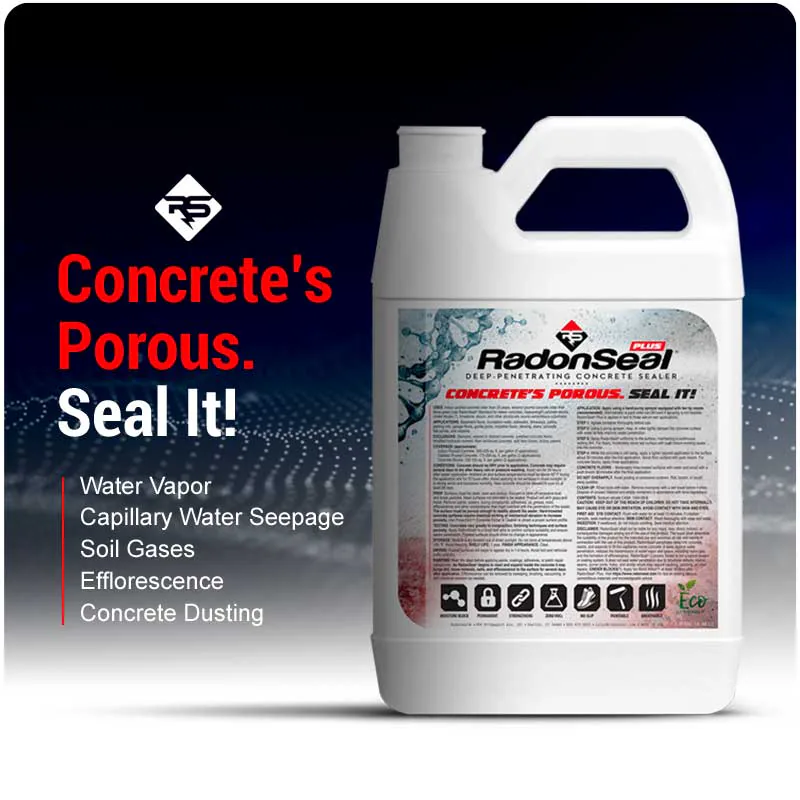
This page
RadonSeal Plus Concrete Sealer
- What it is
- Penetrating concrete sealer
- Power
- None needed
- C-NRPP 2024/25
- Not applicable (system part)
This page: RadonSeal Plus is a water-based, zero-VOC sealer that RadonSeal says penetrates up to 4 inches into concrete and reacts inside it to seal the pores and capillaries; it comes in 2.5 and 5 gallon sizes, and the listing is the 2.5 gallon.
- What it is
- Polyurethane injection foam
- Power
- None needed
- C-NRPP 2024/25
- Not applicable (system part)
The difference: From the same maker, for a wall crack: RadonSeal's kit injects polyurethane foam into poured concrete wall cracks up to 1/2 inch wide.
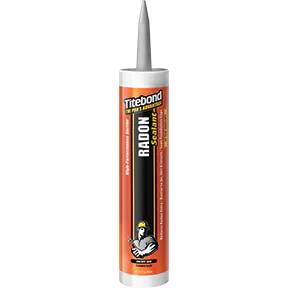
Titebond
- What it is
- Elastomeric acrylic
- Power
- None needed
- C-NRPP 2024/25
- Not applicable (system part)
The difference: Seals the openings this sealer does not: Titebond lists its acrylic sealant for foundation cracks, joints and penetrations, applied from a caulking gun.
Compared with similar products: 1 of 3
More sealants and sump covers3
All sealants and sump covers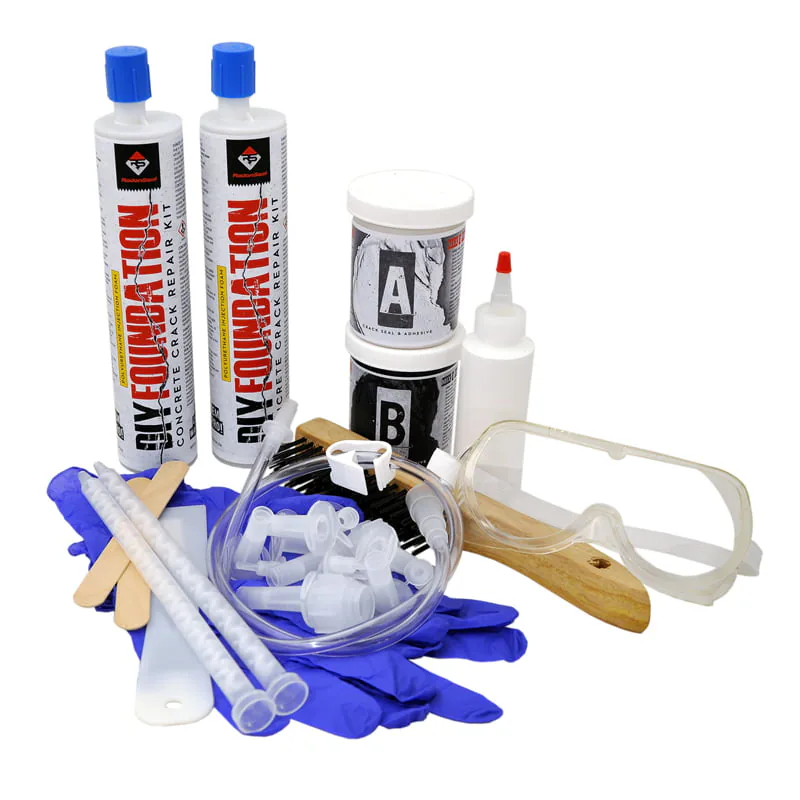
Sealing materialRadonSeal
DIY Foundation Crack Repair Kit, Urethane polyurethane foam crack injection kit
- 10 ft kit
Made of: Polyurethane injection foam
Sealing material

Radon Sealant (3251) acrylic sealant for foundation cracks and joints
- 10.1 oz. cartridge
Made of: Elastomeric acrylic
- All sealants and sump coversMore sealants and sump covers
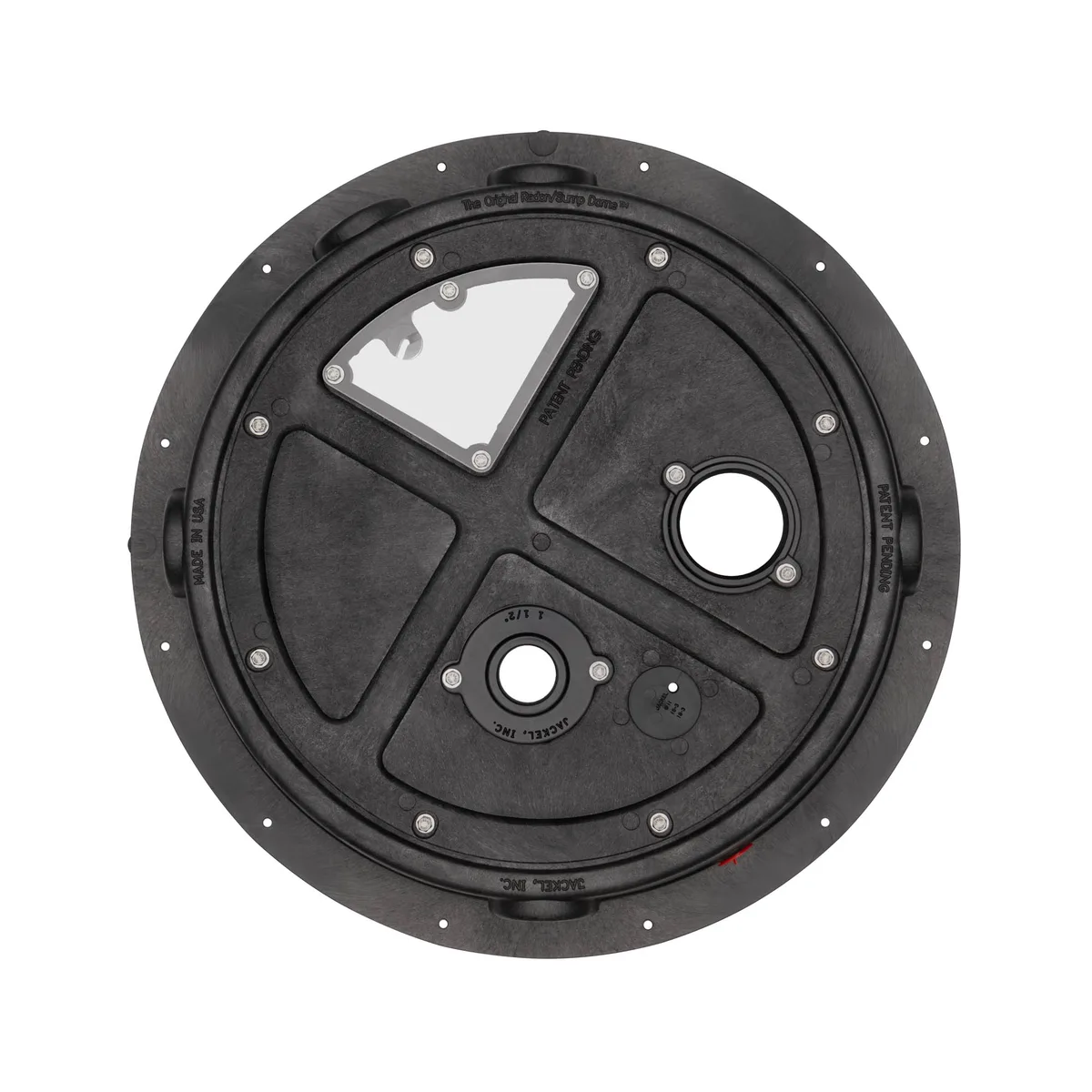

More sealants and sump covers: 1 of 3
Questions
Questions people ask
5 questions about the RadonSeal Plus Concrete Sealer, answered
Asked about the Plus Concrete Sealer
Can RadonSeal Plus replace a radon mitigation system?
RadonSeal's page says it can be used either as an alternative approach in certain situations or with a fan-based system. The EPA does not recommend the use of sealing alone to reduce radon, because by itself sealing has not been shown to lower radon levels significantly or consistently, and RadonSeal's own FAQ says sealing the porosity of concrete alone may not sufficiently reduce radon levels. On the EPA's guidance, sealing is part of mitigation, not a substitute for it, and the EPA recommends fixing a home whose long-term test, or the average of two short-term tests, shows 4 pCi/L or more.
Does it seal cracks?
No, by RadonSeal's own account. Its data sheet says it does not seal water penetration due to cracks, seams, corner joints, holes and similar openings, which may need caulking, patching or crack repair, and its FAQ says penetrating sealers do not seal cove-joint leaks. RadonSeal's page says to seal cracks, control joints and penetrations before applying it.
Plus or Standard: which is this, and which do I need?
This is Plus. RadonSeal recommends it for concrete blocks, cinder blocks, limestone, indoor poured concrete older than 20 years and outdoor concrete older than 2 years, and its Standard sealer for indoor poured concrete under 20 years old. For outdoor concrete between 2 and 20 years old its documents disagree: the product page puts Standard under 2 years and Plus over 2, while the 2026 instructions list Standard for outdoor poured concrete less than 20 years old and Plus over 2 years. The instructions add that Plus may also be used on newer concrete, and for any surface with a history of water seepage.
How much do I need?
RadonSeal's coverage figures already count every recommended application: 200 to 225 square feet per gallon on indoor poured concrete, 175 to 200 outdoors and 100 to 125 on concrete blocks. Its example is a 5 gallon container for 1,000 square feet of poured concrete in two applications.
Will it change how the concrete looks?
RadonSeal says that on adequately porous concrete the treated surface shows no significant change in appearance, and it advises trying a small test area first. Its FAQ also says efflorescence may be purged to the surface for a limited number of applications, especially on porous cinder block, and can be cleaned off.
What to do next
- See how a radon system fits togetherThe suction point, the pipe, the fan, the gauge and the sealing, and what each one does.
- Find a mitigation professionalMost systems are designed and installed by one; some states require a license.
- Seal cracks as part of a systemWhat sealing a basement floor can and cannot do for radon.
- Test after the workA short-term test afterwards shows whether radon in the home is lower.
Updated October 9, 2026