 Titebond
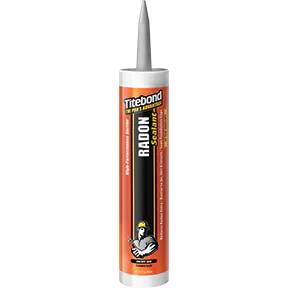
Titebond Radon Sealant (3251)
Acrylic sealant for foundation cracks and joints
- Sealing material
- Elastomeric acrylic
- 10.1 oz. cartridge
Photos: Titebond
 (opens in a new tab)Check price on Amazon (opens in a new tab)
As an Amazon Associate, Radon411 earns from qualifying purchases.
Amazon and the Amazon logo are trademarks of Amazon.com, Inc. or its affiliates.
See ratings and reviews on Amazon (opens in a new tab)- Made ofElastomeric acrylic
- Package10.1 oz. cartridge
- Every figure checked against the specifications Titebond publishes
- The maker's own figures and limits, shown the same way for every part, unranked
About this item
As Titebond states it
- Made of: Elastomeric acrylic, non-chemically curing; concrete gray; 80% solids, calculated VOC under 1.5%
- Package: 10.1 oz. cartridge, concrete gray; 12 units per package (part number 3251)
- Coverage: Per 10.1 oz. cartridge: 123 ft. at a 1/8 in. bead, 31 ft. at 1/4 in., 14 ft. at 3/8 in., 8 ft. at 1/2 in.
- Application temperature: Above 40°F (4°C), air, sealant and surface; service temperature 0°F to 160°F (-18°C to 71°C)
- Working and cure time: Tooling time 10 to 15 minutes for a 1/4 in. bead; tack-free in 20 minutes; paintable in 2 to 4 hours; full cure in 3 to 7 days
- Shelf life: 24 months in a dry location at or below 75°F
- Warranty: 50 Year Limited Warranty: if not satisfied when used as directed, return the container and proof of purchase for replacement; liability limited to product replacement
Titebond Radon Sealant (part 3251) is an elastomeric acrylic sealant in a 10.1 oz. cartridge, sold 12 to a package, for foundation cracks, joints and the gaps around pipes. Titebond says it helps prevent radon entry, and that a professionally installed radon mitigation or fan-based system is recommended with it. The EPA does not recommend sealing alone, because by itself sealing has not been shown to lower radon levels significantly or consistently.
What you get
Part 3251 is a 10.1 oz. cartridge in concrete gray, sold 12 units per package, so the 12-pack listing is one Titebond package. Titebond's method of application is a cartridge or caulking gun. It gives each cartridge's coverage as 123 feet at a 1/8 inch bead, 31 feet at 1/4 inch, 14 feet at 3/8 inch and 8 feet at 1/2 inch.
In the box and running costsHow it works
What it does and how
What it is made of and the job it does in a system, then who has checked it
How it works
In our words, from the maker's documents
Sealing cracks and other openings in the foundation is a basic part of most approaches to radon reduction, in the EPA's words: it limits the flow of radon into the home, which makes other radon reduction techniques more effective and cost-efficient, and it reduces the loss of conditioned air. But the EPA does not recommend the use of sealing alone to reduce radon, because by itself sealing has not been shown to lower radon levels significantly or consistently. It is difficult to find and permanently seal every place radon enters, and normal settling of a house opens new entry routes and reopens old ones.
The EPA's guide for builders says the same from the construction side. Field research, it says, has shown that trying to seal all of the openings in a foundation is impractical and ineffective as a stand-alone technique, because radon can enter through cracks and openings too small to find and seal. It calls sealing large cracks and openings one of the key components of radon-resistant construction, but not the only one, and asks for the control joints and other joints in walls and slabs to be caulked with an elastomeric sealant such as polyurethane caulk.
Titebond's product is an elastomeric acrylic that Titebond describes as a non-chemically curing sealant, combining flexibility and durability. It is concrete gray, cleans up with water while uncured, takes a water-based paint after 2 to 4 hours, and allows joint movement of plus or minus 25%. Titebond lists it for foundation cracks, joints and penetrations, around pipes, on the coatings used to damp-proof foundations and on the membranes around them, and says it seals concrete, galvanized steel, wood and most common building materials; its product sheet adds PVC, CPVC, metal, glass and aluminum.
Titebond states the sealant exceeds ASTM C920 Type S Grade NS Class 25, ASTM C834 Type OP Grade -18°C and Federal Specification TT-S-00230C Type II Class A, with 80% solids and a calculated VOC under 1.5%. Its documents give those standards and no radon test result. The radon benefit of any sealant, in the EPA's account, comes from what it adds to a working system.
What the manufacturer says
Titebond's own statements, attributed
- Titebond saysTitebond states Radon Sealant combines flexibility and durability to help prevent radon entry.
- Titebond saysTitebond says it is ideal for reducing the entry of radon through the foundation and is an effective barrier to air, dirt, insects and radon.
- Titebond saysTitebond states the sealant is permanent, allows plus or minus 25% joint movement, is easy to tool, and is UV, mold and mildew resistant.
- Titebond saysTitebond says a professionally installed radon mitigation or fan-based system should be used in conjunction with the sealant.
- Titebond saysTitebond describes the sealant as VOC-compliant in all 50 states.
- Titebond saysTitebond gives a 50 Year Limited Warranty, with liability limited to product replacement.
These are Titebond's own statements, attributed to it. They are not our findings, and we have not tested this product ourselves.
Independent evidence
Who checks a device like this
C-NRPP's consumer evaluation covers electronic radon monitors, not the parts of a mitigation system, so it has no result for Titebond Radon Sealant (3251). The standards and results the maker states are under “What the manufacturer says”, and what shows whether radon in your home is lower is a radon test after the work is done.
Specifications
Specifications
Every figure as the maker states it
The maker's figures
- Type
- Sealing material, acrylic sealant for foundation cracks, joints and pipe penetrations
- Made of
- Elastomeric acrylic, non-chemically curing; concrete gray; 80% solids, calculated VOC under 1.5%
- Package
- 10.1 oz. cartridge, concrete gray; 12 units per package (part number 3251)
- Coverage
- Per 10.1 oz. cartridge: 123 ft. at a 1/8 in. bead, 31 ft. at 1/4 in., 14 ft. at 3/8 in., 8 ft. at 1/2 in.
- Application temperature
- Above 40°F (4°C), air, sealant and surface; service temperature 0°F to 160°F (-18°C to 71°C)
- Working and cure time
- Tooling time 10 to 15 minutes for a 1/4 in. bead; tack-free in 20 minutes; paintable in 2 to 4 hours; full cure in 3 to 7 days
- Shelf life
- 24 months in a dry location at or below 75°F
- Warranty
- 50 Year Limited Warranty: if not satisfied when used as directed, return the container and proof of purchase for replacement; liability limited to product replacement
What is in the box
Part 3251 is a 10.1 oz. cartridge in concrete gray, sold 12 units per package, so the 12-pack listing is one Titebond package. Titebond's method of application is a cartridge or caulking gun. It gives each cartridge's coverage as 123 feet at a 1/8 inch bead, 31 feet at 1/4 inch, 14 feet at 3/8 inch and 8 feet at 1/2 inch.
The warranty is Titebond's 50 Year Limited Warranty: if you are not satisfied with its performance when used as directed, return the container and proof of purchase to Franklin International for replacement of the product, and liability is limited to product replacement. Franklin International publishes a safety data sheet for it, product code 3251A, revised February 16, 2026, which says the material is not considered hazardous under OSHA's Hazard Communication Standard.
What it costs to run
There is no power or service cost. Coverage sets how many cartridges a job takes: 31 feet of 1/4 inch bead per cartridge in Titebond's table. Titebond gives a storage life of 24 months in a dry place at or below 75°F, a tack-free time of 20 minutes and a full cure in 3 to 7 days, which joint size, configuration and conditions affect.
The larger cost is what sealing alone cannot do. The EPA notes that normal settling opens new entry routes and reopens old ones, so seals need checking, and the reduction table in its consumer guide gives sealing of radon entry routes no percentage of its own, only that it is normally used with other techniques and needs proper materials and installation. A radon test after the work, and a retest at least every two years, is how you see whether radon is lower.
Fit and setup
Who it fits, and installation
The fit, then how it goes on and what the standards ask
Who it fits
Good fit if, and look elsewhere if
Good fit if
- A mitigator, or the EPA's sealing guidance, calls for the foundation's cracks, joints and pipe gaps to be sealed as part of a system.
- You want a sealant that cleans up with water and takes a water-based paint after 2 to 4 hours.
- The joints to fill are no deeper than 1/2 inch, as Titebond's directions require.
- You are sealing concrete, galvanized steel, PVC, wood or the other common building materials Titebond lists.
Look elsewhere if
- You hope sealing alone will bring a high radon test down; the EPA does not recommend sealing alone.
- The crack is under water or below the waterline; Titebond says the sealant is not designed for continuous submersion.
- You are sealing to polyethylene or polypropylene faced membranes, which Titebond says it does not adhere to.
- Your mitigator works to the EPA's 1994 standards, which recommend urethane sealants for slab cracks because of their durability; Titebond's is an acrylic.
Application
3 steps
- Titebond's directions: surfaces clean and free of anything that may prevent adhesion; joints no deeper than 1/2 inch; the nozzle cut at 45 degrees for a 1/8 to 1/2 inch bead; the concrete dried and cured; the sealant applied into a clean joint and smoothed with a damp sponge if needed, with no tooling required. Air, sealant and surface should be above 40°F (its data sheet gives an application range of 40°F to 120°F), it should not go on if rain is expected within 12 hours, and Titebond highly recommends backing material. It also says the user must test any proposed use with all substrates.
- The EPA's 1994 Radon Mitigation Standards say what a radon contractor seals and how. Openings around the radon vent pipe where it passes through the slab or walls are cleaned, prepared and sealed in a permanent, air-tight manner with compatible caulks or other sealants; the floor-wall joint is sealed with urethane caulk or an equivalent, with a foam backer rod first in any channel wider than 1/2 inch; and caulks and sealants designed for the job are used, with urethane recommended because of its durability.
- For the system itself, the EPA recommends a qualified radon mitigation contractor, and many states require radon professionals to be licensed, certified or registered. A post-mitigation radon test should be done within 30 days of installation, but no sooner than 24 hours after the system is running.
For how the sealing, the gauge and the fan work together, see radon mitigation systems, and to find someone to design and install one, radon mitigation professionals.
Compare
Compare with similar items
The same three rows for each, and the one difference that matters
This page
Titebond Radon Sealant (3251)
- What it is
- Elastomeric acrylic
- Power
- None needed
- C-NRPP 2024/25
- Not applicable (system part)
This page: Titebond Radon Sealant (part 3251) is an elastomeric acrylic sealant in a 10.1 oz. cartridge, sold 12 to a package, for foundation cracks, joints and the gaps around pipes.
- What it is
- Polyurethane injection foam
- Power
- None needed
- C-NRPP 2024/25
- Not applicable (system part)
The difference: Fills a crack from inside rather than sealing over a joint: RadonSeal's kit injects a two-component polyurethane foam into poured concrete wall cracks up to 1/2 inch wide.
RadonSeal
- What it is
- Penetrating concrete sealer
- Power
- None needed
- C-NRPP 2024/25
- Not applicable (system part)
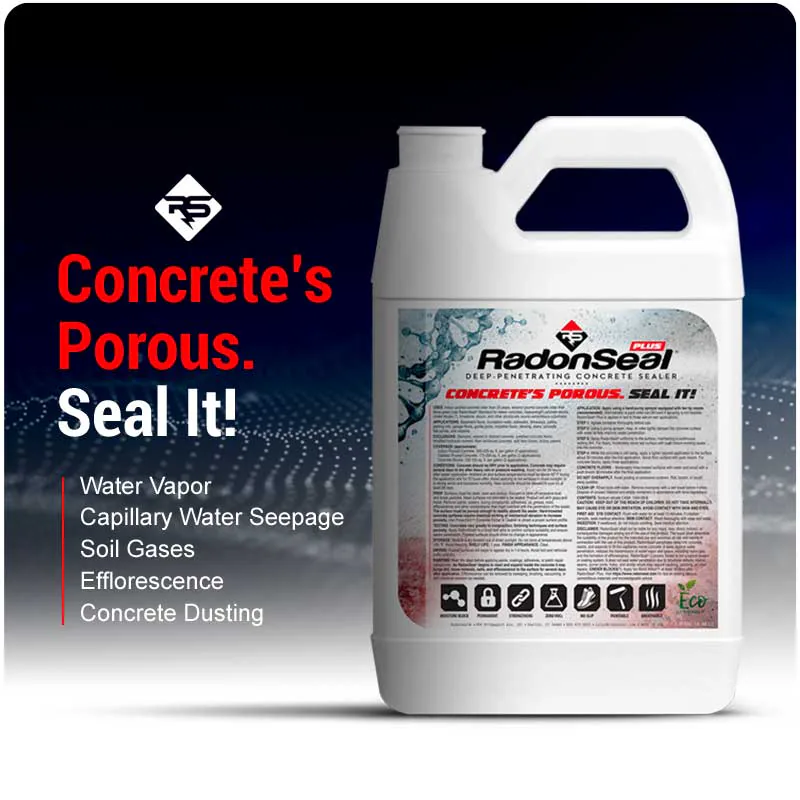
The difference: Treats the concrete rather than its cracks: RadonSeal says the Plus sealer penetrates up to 4 inches into concrete, and its data sheet says it does not seal water coming through cracks, seams or joints.
Compared with similar products: 1 of 3
More sealants and sump covers3
All sealants and sump covers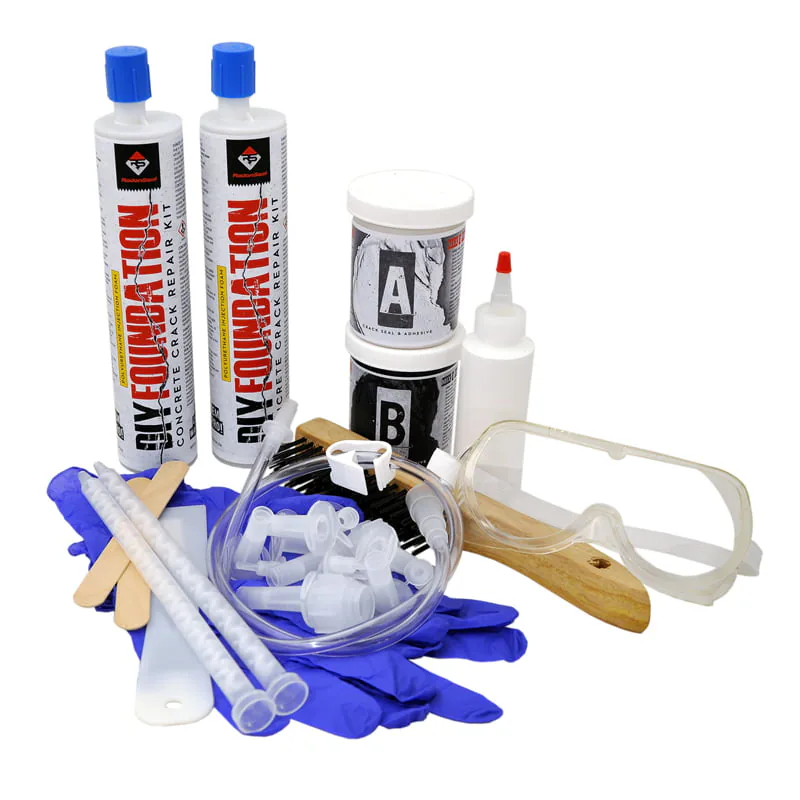
Sealing materialRadonSeal
DIY Foundation Crack Repair Kit, Urethane polyurethane foam crack injection kit
- 10 ft kit
Made of: Polyurethane injection foam
Sealing materialRadonSeal
Plus Concrete Sealer penetrating concrete sealer
- 2.5 gal or 5 gal
Made of: Penetrating concrete sealer
- All sealants and sump coversMore sealants and sump covers

More sealants and sump covers: 1 of 3
Questions
Questions people ask
5 questions about the Titebond Radon Sealant (3251), answered
Asked about the Radon Sealant (3251)
Will Titebond Radon Sealant lower my radon level by itself?
Not on the EPA's evidence. The EPA does not recommend the use of sealing alone to reduce radon, because by itself sealing has not been shown to lower radon levels significantly or consistently. Titebond's own note says a professionally installed radon mitigation or fan-based system should be used with the sealant. Sealing helps a system work; it is part of mitigation, not a substitute for it.
Where does it go?
Titebond lists foundation cracks, joints and penetrations, the gaps around pipes, the coatings used to damp-proof foundations and the membranes around a foundation. In a radon system, the EPA's standards name the openings around the vent pipe, other utility penetrations and the floor-wall joint among the places to seal.
How many cartridges do I need?
Measure the length of joint to fill and the bead it needs. Titebond's table gives each 10.1 oz. cartridge 123 feet at a 1/8 inch bead, 31 feet at 1/4 inch, 14 feet at 3/8 inch and 8 feet at 1/2 inch, and its directions keep joints to 1/2 inch deep.
Can I paint over it?
Yes, by Titebond's directions: it should be dry to the touch and ready to paint in 2 to 4 hours with a water-based (latex-based) paint, and for other paint types Titebond recommends a compatibility test.
Is it acrylic or urethane, and does that matter?
Titebond lists it as an elastomeric acrylic. The EPA's 1994 Radon Mitigation Standards say caulks and sealants designed for the job should be used for cracks in slabs and small openings around penetrations, and recommend urethane sealants because of their durability. If a mitigator is designing your system, ask which their work calls for.
What to do next
- See how a radon system fits togetherThe suction point, the pipe, the fan, the gauge and the sealing, and what each one does.
- Find a mitigation professionalMost systems are designed and installed by one; some states require a license.
- Seal cracks as part of a systemWhat sealing a basement floor can and cannot do for radon.
- Test after the workA short-term test afterwards shows whether radon in the home is lower.
Updated October 9, 2026