
Sealing materialRadonSeal
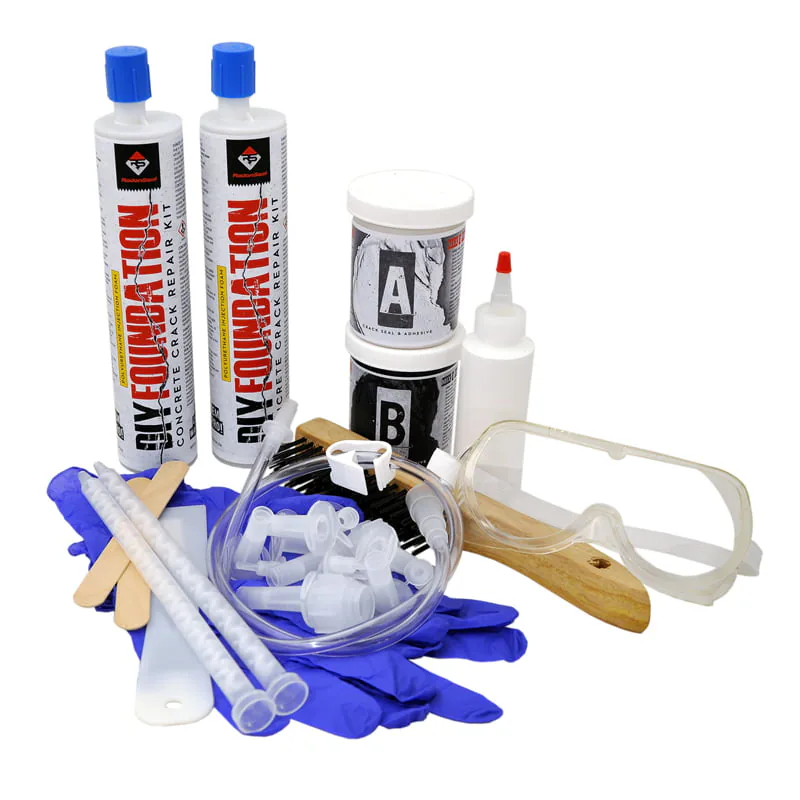
DIY Foundation Crack Repair Kit, Urethane polyurethane foam crack injection kit
- 10 ft kit
Made of: Polyurethane injection foam
 Jackel
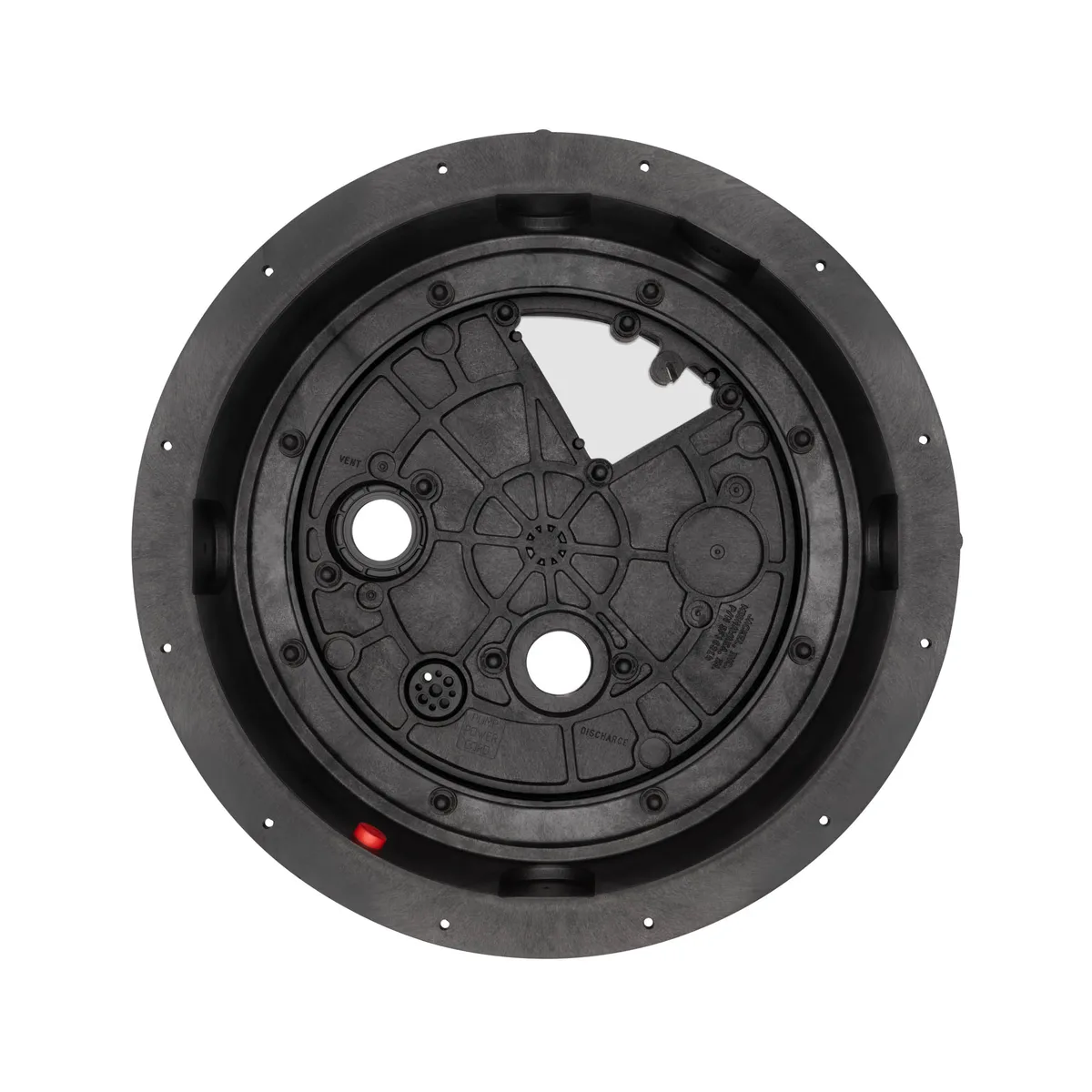
Sealed radon sump cover
Photos: Jackel
 (opens in a new tab)Check price on Amazon (opens in a new tab)
As an Amazon Associate, Radon411 earns from qualifying purchases.
Amazon and the Amazon logo are trademarks of Amazon.com, Inc. or its affiliates.
See ratings and reviews on Amazon (opens in a new tab)As Jackel states it
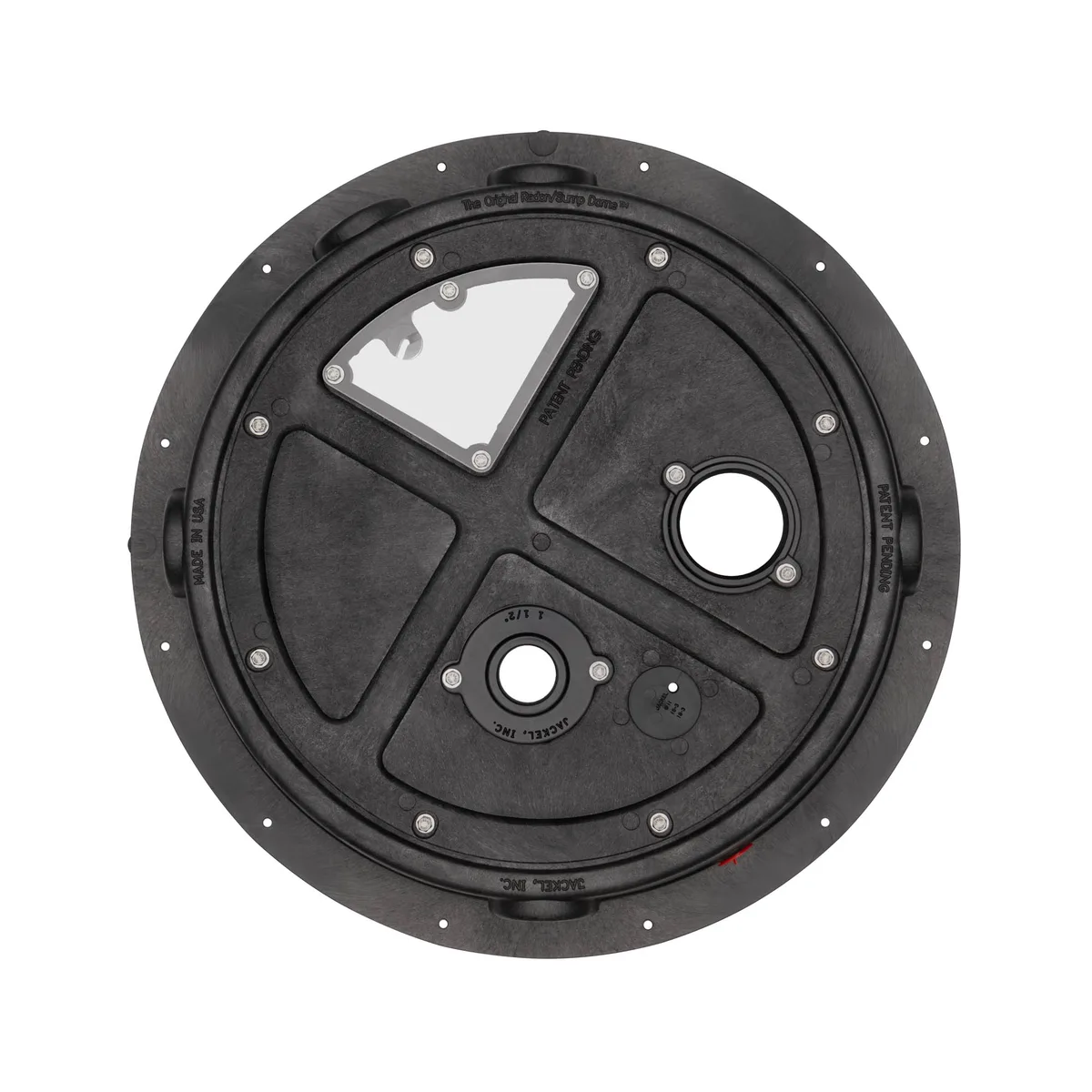
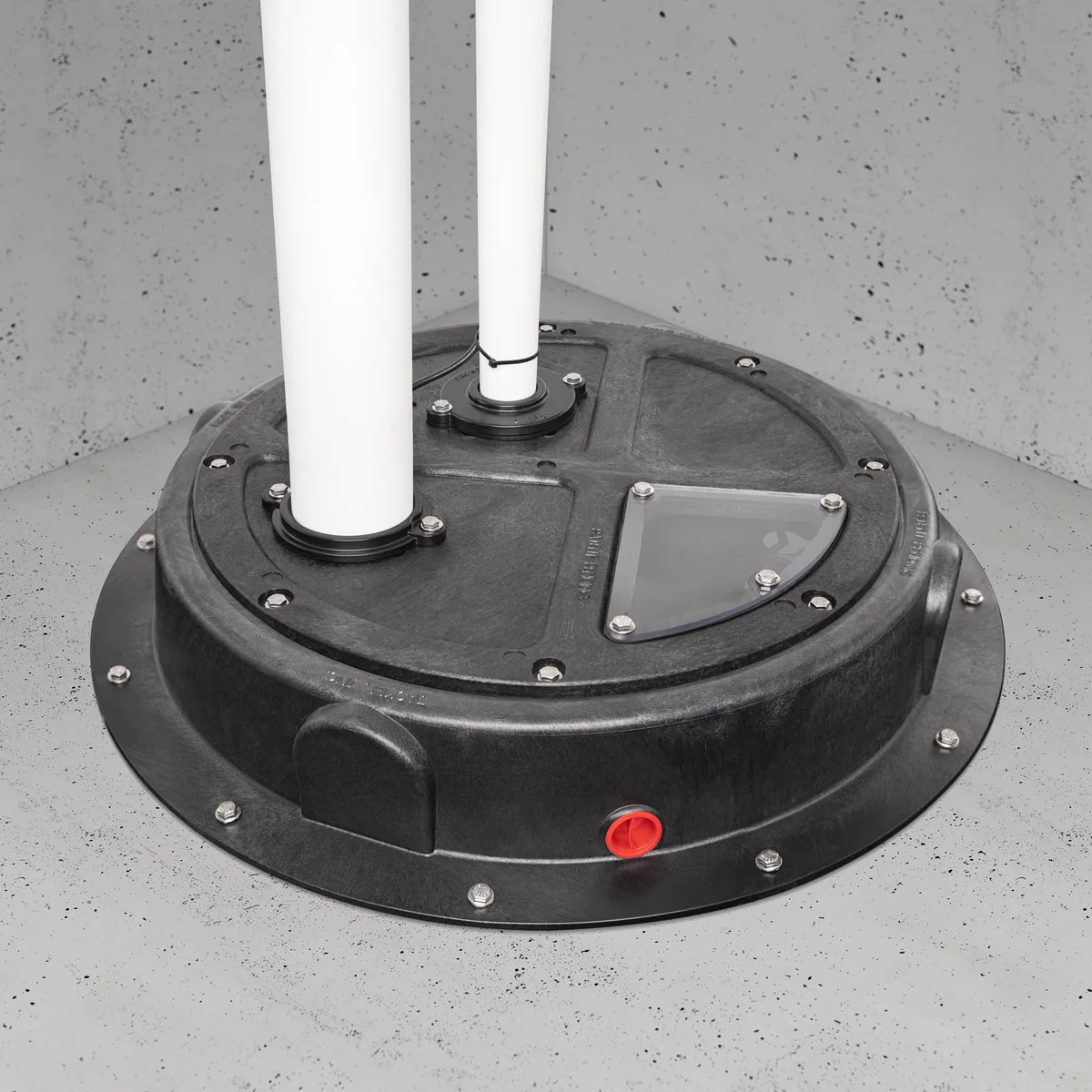
The SMR16101-CV is one of Jackel's Original Radon Sump Domes: a 28 inch outer diameter cover and riser in HDPE structural foam that attaches to the basement floor over an existing sump, with discharge and vent flanges, a cord grommet and an acrylic access cover. Jackel lists it for use in a passive radon mitigation system or to retro-fit an existing basement sump system. It is a part of a radon system, not a radon fix on its own.
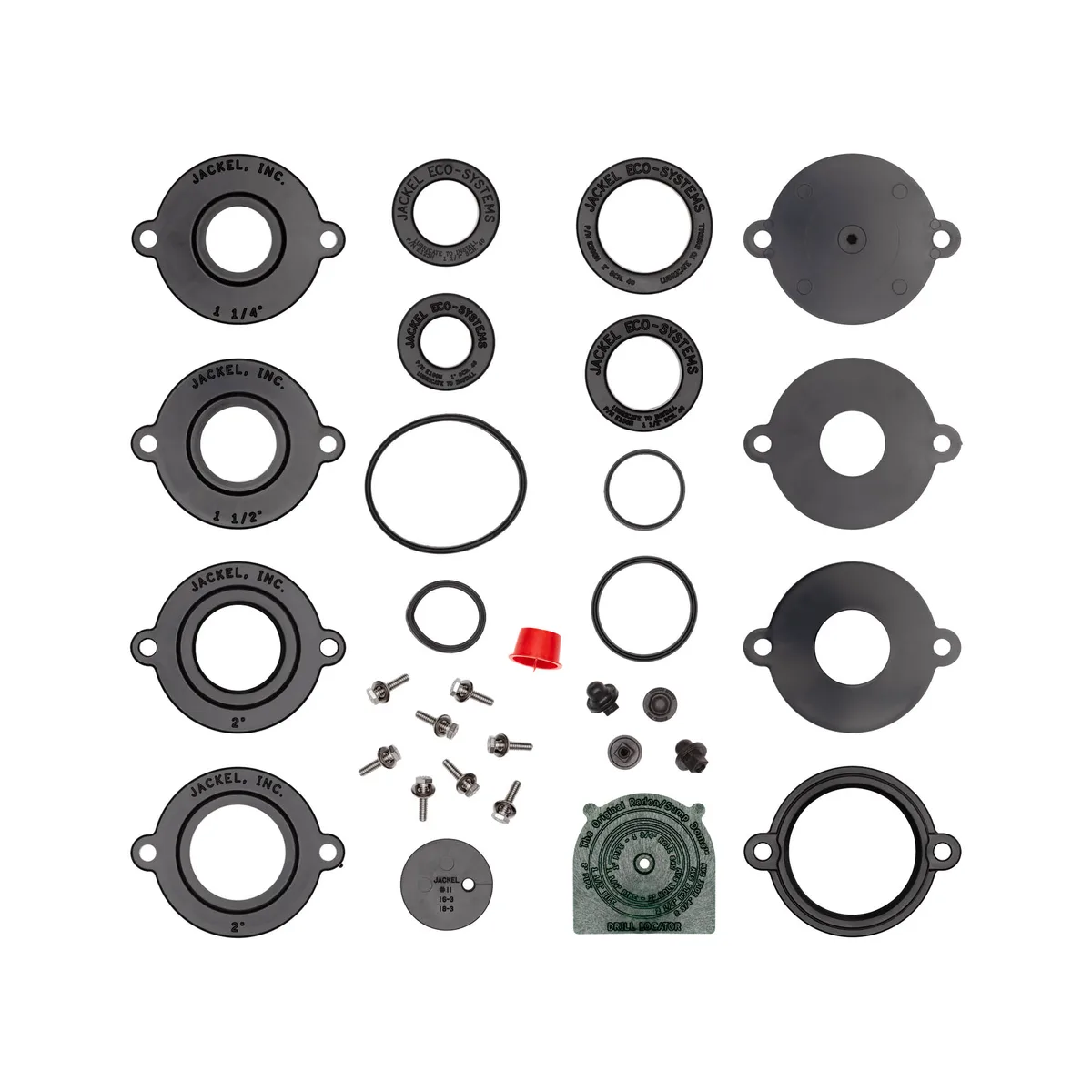
Jackel lists the cover and riser, discharge and vent flanges, an access cover, a cord grommet, a reusable seal, and stainless steel bolts and washers. The access cover is acrylic, the flanges ABS or PVC, and the grommet and seal PVC. The product page does not list the vent pipe or the fasteners into the floor; Jackel publishes a separate installation guide for this model.
In the box and running costsHow it works
What it is made of and the job it does in a system, then who has checked it
In our words, from the maker's documents
An open sump pit is a hole through the slab into the soil and gravel under the house. The EPA's Building Radon Out guide lists sumps among the pathways for radon to enter a basement and says an open sump may allow radon into the house from beneath the entire foundation, so its advice is to cover and seal the sump.
Jackel's dome does that job over a pit that is already there. Jackel says the riser attaches directly to the basement floor to create a radon tight seal over the sump system, and that the removable cover is molded as one single piece. The cover and riser are HDPE structural foam, the flanges are ABS or PVC, the grommet and the seal are PVC, and the bolts and washers are stainless steel. Jackel lists an outer diameter of 28 inches, an inner diameter of 24 inches, a bolt circle of 26-1/2 inches, a height of 4 inches and a weight of 12 pounds.
A sealed sump can play two parts in a radon system. In a passive system, the pipe from the sump relies on natural pressure differences rather than a fan; the EPA says passive subslab suction is generally not as effective in reducing high radon levels as active suction, and that a qualified mitigator can add a vent fan to a passive system if a test shows 4 pCi/L or more. In an active system, the EPA describes sump-hole suction: the sump is capped so that it can continue to drain water and serve as the location for a radon suction pipe. Jackel's product page names the passive use and the retrofit; it does not say whether the SMR16101-CV is rated for a pipe under fan suction, which is a question for Jackel and your mitigator.
The access cover is the model's distinguishing part within Jackel's range, and its material is acrylic. The EPA's Building Radon Out guide suggests a sump cover with a transparent door or see-through viewing window, because removing and resealing the whole cover is otherwise needed every time the pump is serviced.
Jackel's own statements, attributed
These are Jackel's own statements, attributed to it. They are not our findings, and we have not tested this product ourselves.
Who checks a device like this
C-NRPP's consumer evaluation covers electronic radon monitors, not the parts of a mitigation system, so it has no result for Jackel SMR16101-CV. The standards and results the maker states are under “What the manufacturer says”, and what shows whether radon in your home is lower is a radon test after the work is done.
Specifications
Every figure as the maker states it
Jackel lists the cover and riser, discharge and vent flanges, an access cover, a cord grommet, a reusable seal, and stainless steel bolts and washers. The access cover is acrylic, the flanges ABS or PVC, and the grommet and seal PVC. The product page does not list the vent pipe or the fasteners into the floor; Jackel publishes a separate installation guide for this model.
Jackel's warranty page covers its structural foam basins and lids, free from defects in material and workmanship, for as long as the original consumer owns the home, and all other Jackel products for one year. The page does not name the SMR16101-CV; its cover and riser are HDPE structural foam. Labor is excluded, and proof of purchase by the original consumer is required for a claim.
The dome itself has no motor and draws no power. What costs time is access: every full removal of the cover means resealing it, which is why the EPA suggests a cover with a viewing window or door. Jackel lists the seal as reusable and the access cover as acrylic, though its text does not give the access cover's size.
The larger running cost is testing. The EPA says a post-mitigation radon test should be done within 30 days of a system's installation, and that it is a good idea to retest at least every two years to be sure radon levels remain low. If a passive system is not enough, the EPA's next step is a vent fan added by a qualified mitigator, which brings electricity, and the EPA notes fans may last for five years or more.
Fit and setup
The fit, then how it goes on and what the standards ask
Good fit if, and look elsewhere if
Good fit if
Look elsewhere if
3 steps
For how the sealing, the gauge and the fan work together, see radon mitigation systems, and to find someone to design and install one, radon mitigation professionals.
Compare
The same three rows for each, and the one difference that matters
This page
Jackel SMR16101-CV
This page: The SMR16101-CV is one of Jackel's Original Radon Sump Domes: a 28 inch outer diameter cover and riser in HDPE structural foam that attaches to the basement floor over an existing sump, with discharge and vent flanges, a cord grommet and an acrylic access cover.
AprilAire
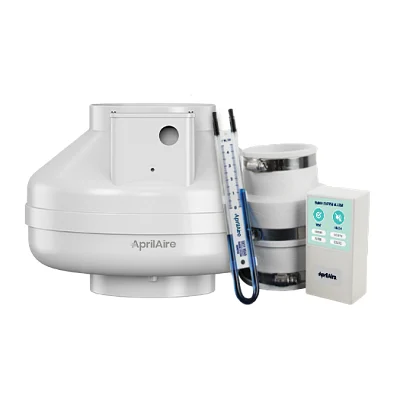
The difference: Not a sump cover but a fan kit: AprilAire calls its ARN25F fan ideal for most sub-slab radon mitigation systems with a basement or slab of 1500 to 2500 square feet.
Fantech
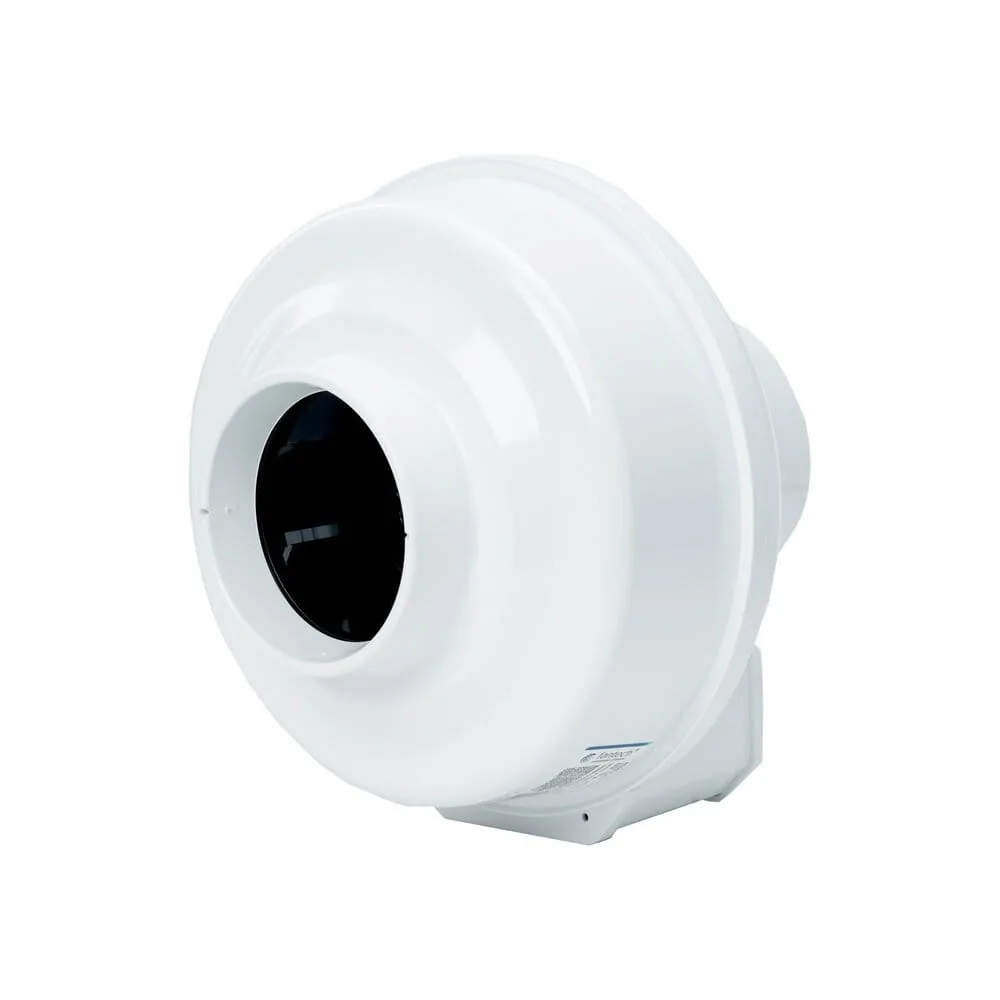
The difference: Not a sump cover but an inline fan: Fantech calls the Rn2 an excellent choice for systems with multiple suction points or a large sub-slab footprint.
Tjernlund
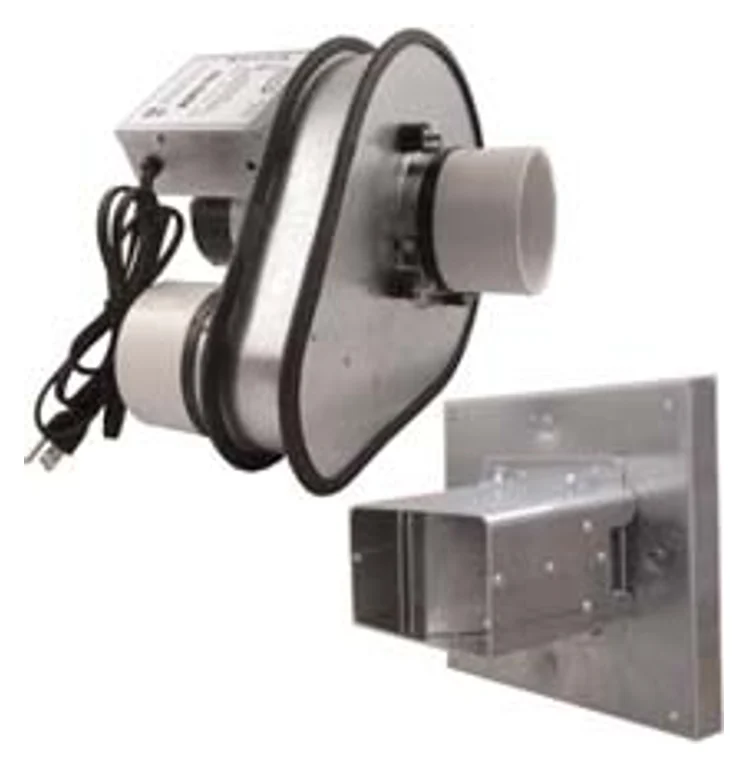
The difference: Not a sump cover but a side-wall fan system: Tjernlund says its hood's airflow adjusts for whether the radon is drawn from a sump pit or below the basement floor.
Compared with similar products: 1 of 4
Sealing materialRadonSeal
Made of: Polyurethane injection foam
Sealing materialRadonSeal
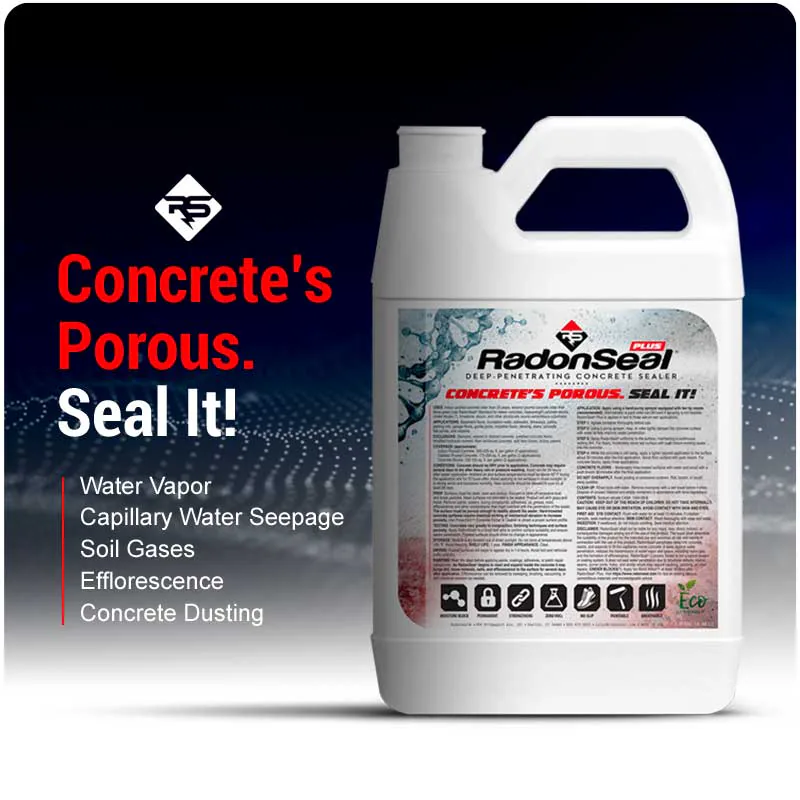
Made of: Penetrating concrete sealer
Sealing material
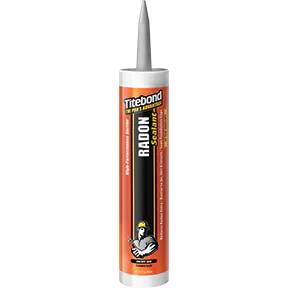
Made of: Elastomeric acrylic
More sealants and sump covers: 1 of 3
Questions
6 questions about the Jackel SMR16101-CV, answered
Not on the EPA's evidence. The EPA does not recommend the use of sealing alone to reduce radon, because by itself sealing has not been shown to lower radon levels significantly or consistently. It does say sealing limits the flow of radon into the home, making other radon reduction techniques more effective and cost-efficient. A sealed sump is one of those openings handled well, not a substitute for a tested system.
The EPA describes sump-hole suction as a variation of subslab and drain tile suction, with the sump capped so it can continue to drain water and serve as the location for a radon suction pipe, and lists it at 50 to 99 percent reduction, with the note that it depends on air moving easily to the sump from under the slab. Jackel's product page lists the SMR16101-CV for passive radon mitigation and retrofits and does not address fan suction, so ask Jackel and a certified mitigator before using it on an active system.
Jackel gives the dimensions rather than a list of basins: a 28 inch outer diameter, a 24 inch inner diameter, a 26-1/2 inch bolt circle and a 4 inch height. The riser sits on and attaches to the basement floor around the pit, so measure the opening and check the slab around it. Jackel also publishes a dimensional drawing for this model.
Jackel's 2025 catalog shows four Original Radon Sump Domes at 28 inches outer diameter: the SMR114-V, the SMR16101, the SMR16101-B and the SMR16101-CV. The SMR114-V has a split cover for easier access to the pump; the SMR16101 models have a one-piece cover. Only the SMR16101-CV lists an access cover, in acrylic.
Jackel's warranty page gives its structural foam basins and lids a warranty for as long as the original consumer owns the home, and other Jackel products one year, limited to repair or replacement. It excludes labor and installations that break plumbing, housing or building codes or Jackel's written instructions, and it says damage from cracking or settling of foundations, improper installation or freezing voids the warranty.
Yes. The EPA says a post-mitigation radon test should be done within 30 days of system installation, but no sooner than 24 hours after the system is in operation, and that it is a good idea to retest at least every two years.
Updated October 8, 2026