
Long-term kit
RL116 long-term radon test kit
- Lab fee extra
Method: Alpha track
In home: 90 days to 12 months
 RadonAway
Long-term radon test kit
Best for you if
Skip it if
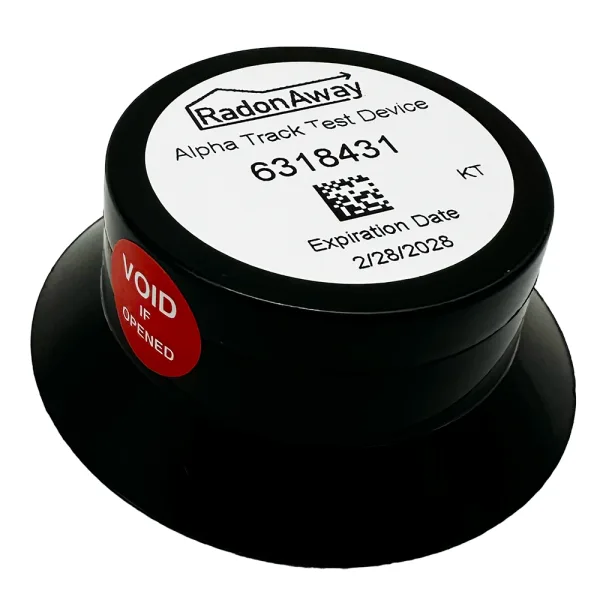
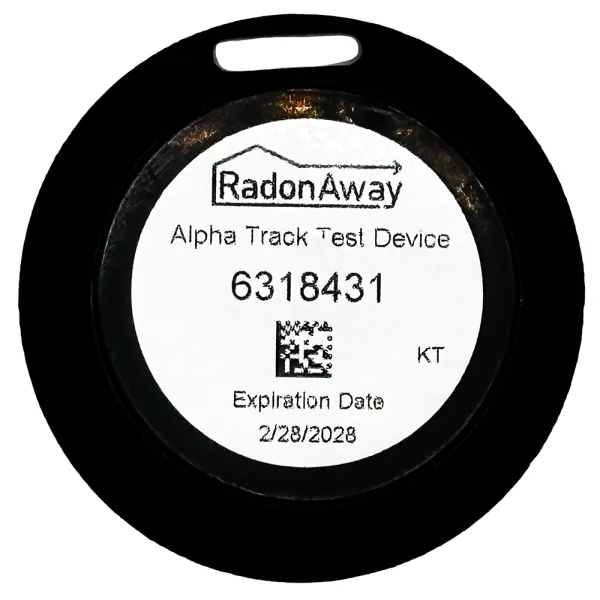
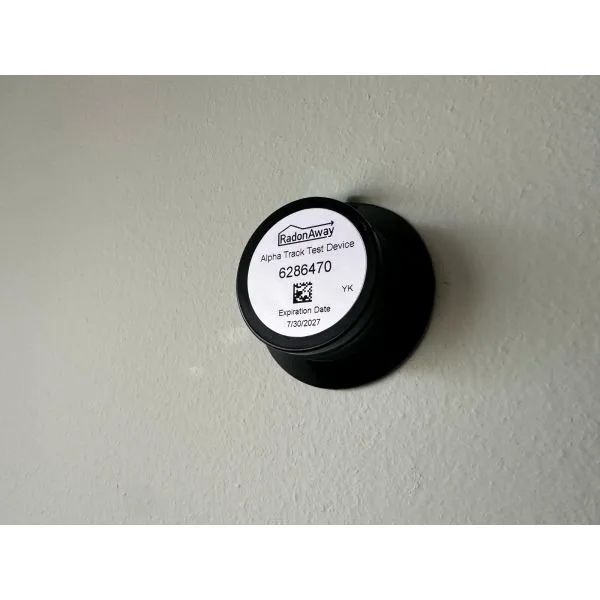
Photos: RadonAway
As RadonAway states it
RadonAway's Alpha Track Long-Term Radon in Air Test is a do-it-yourself long-term test: one passive alpha track device that stays in the home for 91 to 365 days and is then mailed to a laboratory, with the laboratory analysis and the USPS return shipping included. Its quick start guide is AccuStar Labs', and names the Radon Lab in Ward Hill, Massachusetts; the National Radon Safety Board accredits Accustar Labs in Ward Hill to analyze an alpha track detector, the REM AT-100. The report gives one number, the average over the whole test.
Radon.com lists a long-term test device, a quick user guide, easy-to-follow instructions, professional lab analysis, user-friendly test results and return USPS shipping to an accredited radon lab. The guide adds the prepaid USPS mailer and the device's sealed plastic bag, which stays closed until the test begins. RadonAway's trade listing of the same test, SKU 28621, names one alpha track test device, laboratory analysis and instructions.
In the box and running costsHow it works
The sensor, the sampling and the readings, then who has checked it
In our words, from the maker's documents
Radon.com describes the device as a passive radon detector that measures the average radon level in a home over 91 to 365 days, with a special film inside that records radon exposure over time. Nothing in it runs on power and nothing shows a number while it sits in the room. The film is read at the end: you mail the device back, and the laboratory analyzes it.
That makes it a long-term test in the EPA's sense. The EPA counts any test that stays in a home for more than 90 days as long-term, and says a long-term test is more likely than a short-term test to tell you a home's year-round average, because radon levels tend to vary from day to day and season to season. Radon.com makes the same point about seasons: a long-term test spans winter, summer and the months between.
The guide states the limit of that design plainly: the result is an average of the entire test, and the report will not include day-to-day measurements. A reader who wants to see radon rise and fall over a week needs a continuous monitor instead; this kit answers one question, the level over the months it was out.
The test starts when you open the sealed plastic bag. AccuStar's alpha track FAQ says the device is on as soon as the bag is open, and warns against removing the VOID sticker or opening the black plastic housing, which makes the result invalid. The device can sit face up or face down, or hang from a string through the cut-out in its housing.
The laboratory behind it: the guide is printed by AccuStar Labs and gives the Radon Lab's address as 2 Saber Way, Ward Hill, MA 01835. AccuStar's about page says AccuStar, along with RadonAway, is a brand of Spruce Environmental Technologies, and its licenses page says Spruce operates an AccuStar lab in Massachusetts that has held NELAP accreditation for more than a decade. Radon.com's own FAQ says the device goes to its NELAP-approved laboratory for full analysis.
The National Radon Safety Board's June 2026 list of accredited laboratories includes Accustar Labs - MA in Ward Hill, accreditation ARL0017, expiring March 30, 2027, for several devices including an alpha track detector, the REM AT-100 (device 12001 on NRSB's July 2026 list of approved devices). NRSB lists no RadonAway part numbers, so the tie between this kit and that entry is by laboratory and method, not by a printed model number.
RadonAway's own statements, attributed
These are RadonAway's own statements, attributed to it. They are not our findings, and we have not tested this product ourselves.
Who checks a device like this
C-NRPP's consumer evaluation covers electronic monitors, not laboratory-analyzed test kits, so it has no result for RadonAway Alpha Track Long-Term. A kit's result comes from the laboratory that analyzes it. Where the maker names that laboratory, or the page cites the National Radon Safety Board's lists of approved devices and accredited laboratories for it, the “How it works” panel and “Questions people ask” say so.
Specifications
Every figure as the maker states it
Radon.com lists a long-term test device, a quick user guide, easy-to-follow instructions, professional lab analysis, user-friendly test results and return USPS shipping to an accredited radon lab. The guide adds the prepaid USPS mailer and the device's sealed plastic bag, which stays closed until the test begins. RadonAway's trade listing of the same test, SKU 28621, names one alpha track test device, laboratory analysis and instructions.
Neither Radon.com's page nor the guide states a warranty for the test. The guide says the report comes 2 to 4 weeks after the lab receives the device, that you may also view it at accustarlabs.com/at, and that you can contact the lab to request printed reports.
The analysis and the USPS return postage come with the kit: Radon.com's feature list includes professional lab analysis and return USPS shipping, and RadonAway's trade listing of the same test says it includes laboratory analysis. There are no batteries, apps or subscriptions; one kit is one test, and it ties up the device for at least 91 days.
The extras are optional. The guide recommends UPS or FedEx over the included USPS mailer when you need guaranteed delivery, at your own cost, and AccuStar offers a rush result for a fee per device. A device out for less than 30 days cannot be read, and for one closed after its expiration date AccuStar's instructions say you would need to buy another device.
Fit and setup
The fit, then setup and placement as the guidance asks
Good fit if, and look elsewhere if
Good fit if
Look elsewhere if
5 steps
For where any radon test or monitor should sit in a home, see where to place a radon test.
Compare
The same three rows for each, and the one difference that matters
This page
RadonAway Alpha Track Long-Term
This page: RadonAway's Alpha Track Long-Term Radon in Air Test is a do-it-yourself long-term test: one passive alpha track device that stays in the home for 91 to 365 days and is then mailed to a laboratory, with the laboratory analysis and the USPS return shipping included.
AccuStar
The difference: AccuStar's short-term charcoal canister test, for a first answer in days rather than months.
PRO-LAB
The difference: PRO-LAB's long-term kit listed apart from its lab-analysis-included kit, for a minimum of 90 days and a maximum of 12 months.

PRO-LAB
The difference: PRO-LAB's long-term kit with the laboratory analysis included, for a minimum of 90 days and a maximum of 12 months.
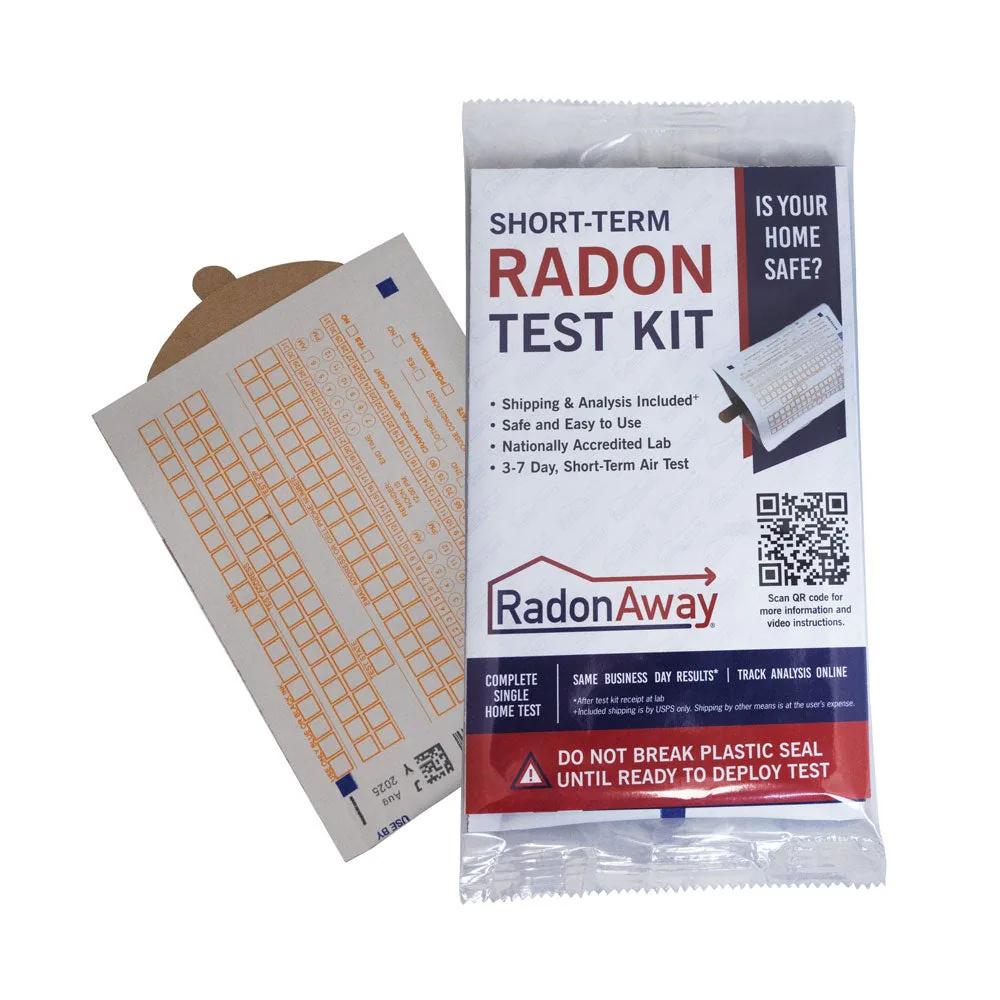
RadonAway
The difference: RadonAway's short-term Air Chek test, for 3 to 7 days, analyzed at its North Carolina laboratory, with USPS shipping and analysis included.
Compared with similar products: 1 of 5
Long-term kit
Method: Alpha track
In home: 90 days to 12 months
Long-term kit
Method: Alpha track
In home: 90 days to 12 months
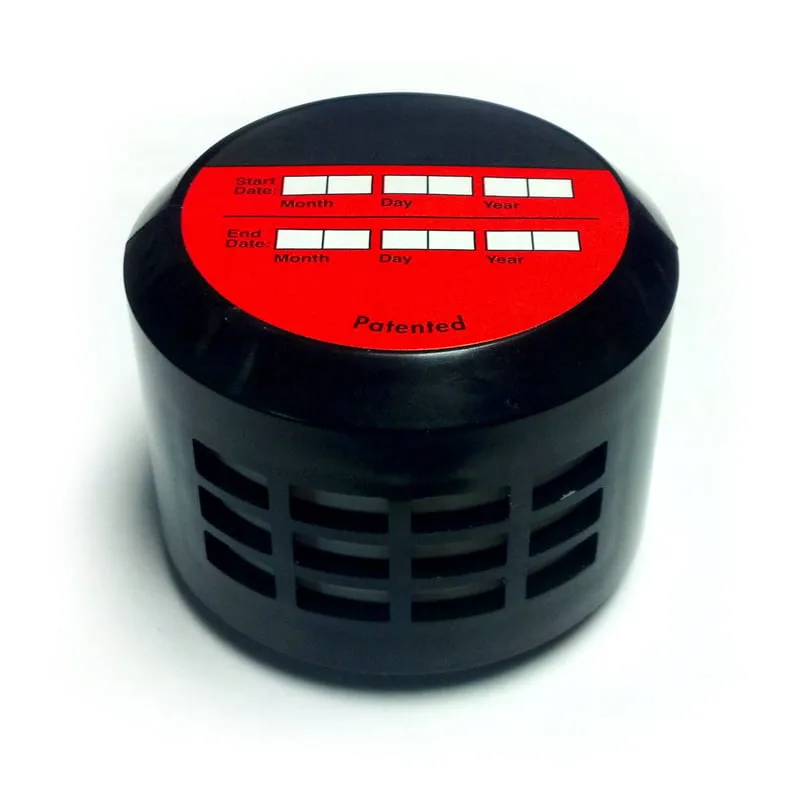
Long-term kitRadonSeal
In home: 3 to 12 months
More long-term test kits: 1 of 3
Questions
6 questions about the RadonAway Alpha Track Long-Term, answered
The device stays in place for 91 to 365 days, by Radon.com, the guide and AccuStar's alpha track page; AccuStar's homeowner page rounds it to 90 to 360 days. AccuStar's FAQ says a device out for less than 30 days, or more than 2 years, cannot be read. After the test, the lab must receive it within 30 days and before its expiration date.
Yes. Radon.com lists professional lab analysis among the kit's features and says return USPS shipping is included with purchase, and RadonAway's trade listing says the test includes laboratory analysis. Faster return shipping and AccuStar's rush result are optional extras at your own cost.
RadonAway's and AccuStar's pages give two answers. Radon.com's FAQ says within 1 to 2 business days, depending on shipping and lab volume. The guide in the box and AccuStar's alpha track page say 2 to 4 weeks after the lab receives the device, longer at busy times. Plan on the longer of the two.
The guide names the Radon Lab at 2 Saber Way, Ward Hill, Massachusetts, under AccuStar Labs, a brand of Spruce Environmental Technologies like RadonAway. The National Radon Safety Board accredits Accustar Labs - MA in Ward Hill, through March 30, 2027, to analyze an alpha track detector, the REM AT-100; NRSB does not list RadonAway's part numbers, so the match is by laboratory and method.
A long-term test takes at least 91 days, which rarely fits a sale. The guide describes a real estate setup of two devices side by side, 4 inches apart, notes that some states have regulations on radon testing, and sends readers to their State Radon Office with questions. The EPA's home buyer's guide says long-term tests can confirm initial short-term results when time permits.
A short-term test is the quickest way to screen a home. A long-term test, more than 90 days, is more likely to tell you the year-round average. The EPA suggests a follow-up when a first short-term result is at or above 4 pCi/L, with a long-term test as one of its two options, and suggests considering a fix between 2 and 4 pCi/L.
Updated November 27, 2026