Short-term kit
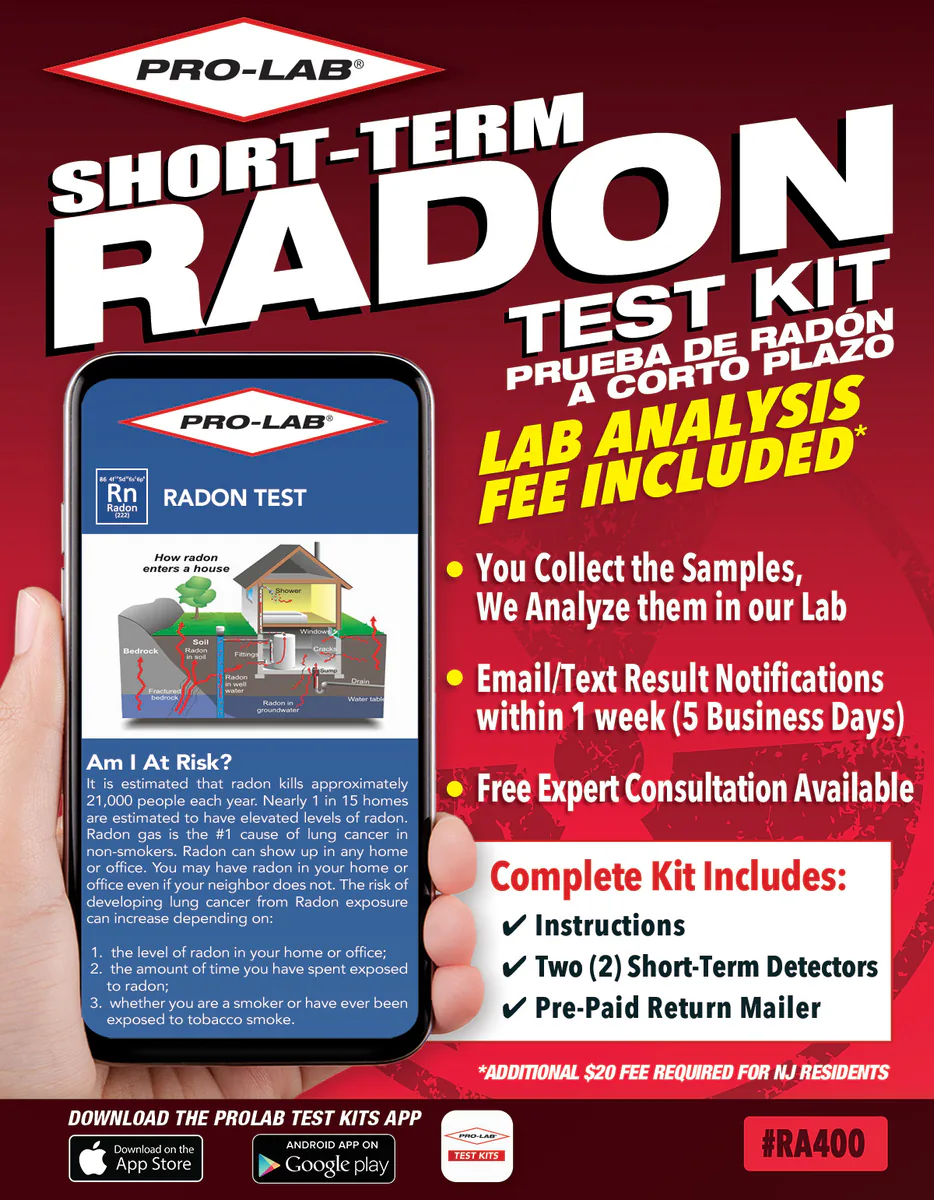
Radon Short Term Test Kit short-term charcoal radon test kit, lab fee included
- Lab fee included
Method: Charcoal
In home: 2 to 7 days
 AccuStar
Short-term charcoal canister radon test
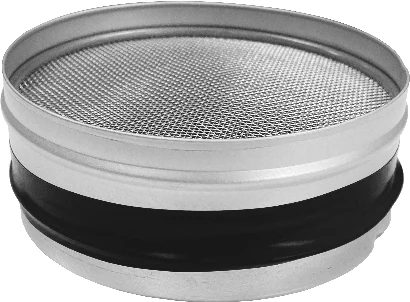
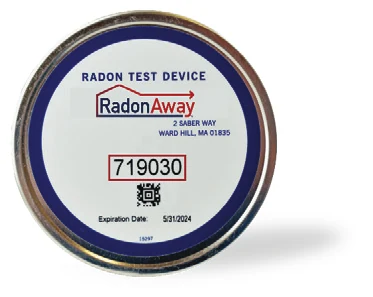
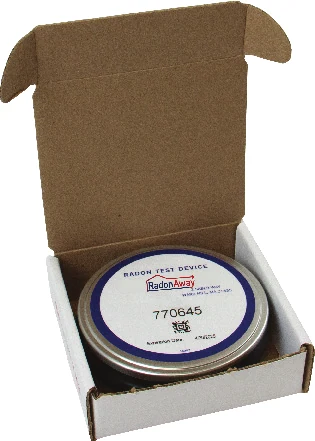
Photos: AccuStar
As AccuStar states it
The PicoCan is AccuStar Labs' open charcoal canister for short-term radon tests, made in a 4-inch size (PC400) and a 2.75-inch size (PC275). AccuStar's instructions give both a test of 2 to 4 days, 48 to 96 hours, under closed building conditions; you close the can, tape the seam and return it to AccuStar's laboratory, which must receive it within 7 days of the end of the test. AccuStar's quick start guide says same day results are available if the canister is received by noon, and its FAQ adds that turnaround depends upon daily laboratory capacity. The National Radon Safety Board's July 2026 list of approved devices includes the AccuStar PicoCan 275 and PicoCan 400.
RadonAway lists the PicoCan 275 single test as one 2.75-inch charcoal canister, instructions, analysis by an accredited radon laboratory and a test report, with the box used to return the can; AccuStar's quick start guide says to place the canister back into the return box, and that a double kit has two canisters. AccuStar's FAQ says the device number is the number on the white label on the lid, and that lids must not be swapped between cans, because each can's own weight is part of the calculation.
In the box and running costsHow it works
The sensor, the sampling and the readings, then who has checked it
In our words, from the maker's documents
A PicoCan is a charcoal canister with a lid. You start the test by removing the tape and lid and taping the lid to the bottom of the can, leave it untouched for the test period, then put the original lid back and tape around the outside seam. AccuStar's canister FAQ explains how the result is worked out: each can is weighed during manufacturing, and that original weight and the weight of the returned can are used to calculate the result; too much weight gain invalidates it. RadonAway, which AccuStar names as a fellow brand of Spruce Environmental Technologies, states that the analyses are conducted using gamma ray spectroscopy.
The National Radon Safety Board, which codes the method AC for activated charcoal adsorption, describes it this way: an airtight container with activated charcoal is opened in the area to be sampled and radon in the air adsorbs onto the charcoal granules; at the end of the sampling period the container is sealed and sent to a laboratory, where the gamma decay from the radon adsorbed to the charcoal is counted. The board adds that because charcoal allows continual adsorption and desorption of radon, the method does not give a true integrated measurement over the exposure time.
Humidity matters to a charcoal canister. AccuStar's FAQ says a result can be invalid because high humidity has affected the device: water molecules in the air attach to the charcoal and leave no room for the radon. Its instructions say short-term tests should not be placed in areas of high humidity, and that a test in a humid area that cannot be avoided should not be exposed for more than 72 hours.
AccuStar's instructions set the exposure by tape colour. The PC275 and PC400, with black tape, stay in place for at least 48 hours and no more than 96 hours; the PC400DB, with red tape, for at least 72 hours and no more than 168 hours. AccuStar's PC400 and PC275 pages give a test duration of 2-4 days, and the PicoCan 400 quick start guide says to leave the test in place for 2-4 days (48 - 96 hours). Exposing a can for longer than the recommended period may invalidate the result.
The EPA names charcoal canisters among the passive detectors most commonly used for short-term testing; passive devices need no power and are exposed to the air in the home for a specified period of time, then sent to a laboratory for analysis. The EPA counts any test from two to 90 days as short-term and says a long-term test, more than 90 days, is more likely to tell you a home's year-round average, because radon levels tend to vary from day to day and season to season.
After a first short-term result at or above 4 pCi/L, the EPA says to follow up with either a long-term test or a second short-term test, and it suggests considering a fix between 2 and 4 pCi/L.
AccuStar's own statements, attributed
These are AccuStar's own statements, attributed to it. They are not our findings, and we have not tested this product ourselves.
Who checks a device like this
C-NRPP's consumer evaluation covers electronic monitors, not laboratory-analyzed test kits, so it has no result for AccuStar PicoCan. A kit's result comes from the laboratory that analyzes it. Where the maker names that laboratory, or the page cites the National Radon Safety Board's lists of approved devices and accredited laboratories for it, the “How it works” panel and “Questions people ask” say so.
Specifications
Every figure as the maker states it
RadonAway lists the PicoCan 275 single test as one 2.75-inch charcoal canister, instructions, analysis by an accredited radon laboratory and a test report, with the box used to return the can; AccuStar's quick start guide says to place the canister back into the return box, and that a double kit has two canisters. AccuStar's FAQ says the device number is the number on the white label on the lid, and that lids must not be swapped between cans, because each can's own weight is part of the calculation.
RadonAway's PicoCan 275 page says all sales are final and no returns will be accepted for these items. The conditions of sale printed on the same page say that goods RadonAway manufactures and sells are warranted to be free from defects in material and workmanship, and that RadonAway will repair or replace, without charge, any goods proven defective; goods it distributes but does not make may be returned within thirty days of the sale. AccuStar's own canister pages and quick start guide give no separate warranty terms, so ask RadonAway which of these terms covers your canister.
Laboratory analysis is part of what RadonAway lists for the PicoCan. On return postage the sources differ. AccuStar's devices page says the purchase of an AccuStar radon test device is all-inclusive, and that instructions and a prepaid return mailer are included. RadonAway, which sells the PicoCan, says return postage is not included, and AccuStar's canister instructions say it is not responsible for any costs associated with return shipping and offer return labels at reduced prices; its home page says you can buy a UPS or USPS return label at AccuStar's discounted rates. Ask the seller whether a prepaid label comes with your canister. There is nothing to power and no subscription.
Expedited canister processing is available depending on laboratory capacity, and AccuStar's FAQ says additional charges may apply. A report missing information can be amended once you send the details in writing.
If your result is at or above 4 pCi/L, the EPA's next step is a follow-up test, either a long-term test or a second short-term test, so plan for a second canister or a long-term device in that case.
Fit and setup
The fit, then setup and placement as the guidance asks
Good fit if, and look elsewhere if
Good fit if
Look elsewhere if
4 steps
For where any radon test or monitor should sit in a home, see where to place a radon test.
Compare
The same three rows for each, and the one difference that matters
This page
AccuStar PicoCan
This page: The PicoCan is AccuStar Labs' open charcoal canister for short-term radon tests, made in a 4-inch size (PC400) and a 2.75-inch size (PC275).
No Amazon listing on file
See details of the AccuStar PicoCanThe difference: A charcoal detector left out for two to seven days, with lab analysis fees covered except New Jersey's state fees and a prepaid envelope for the return.
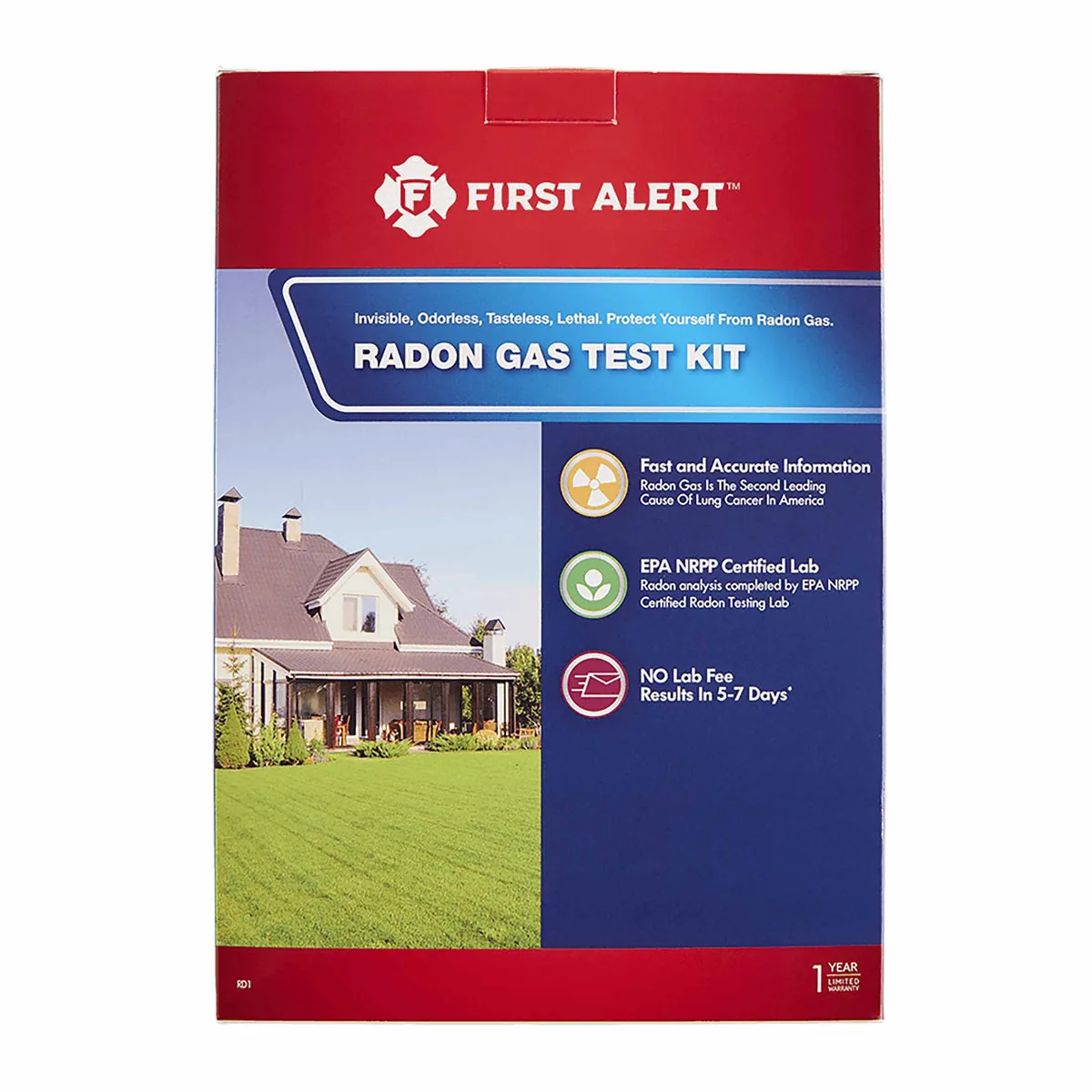
First Alert
The difference: One charcoal sampler left out for two to four days, with the lab fee included except New Jersey's state fee.
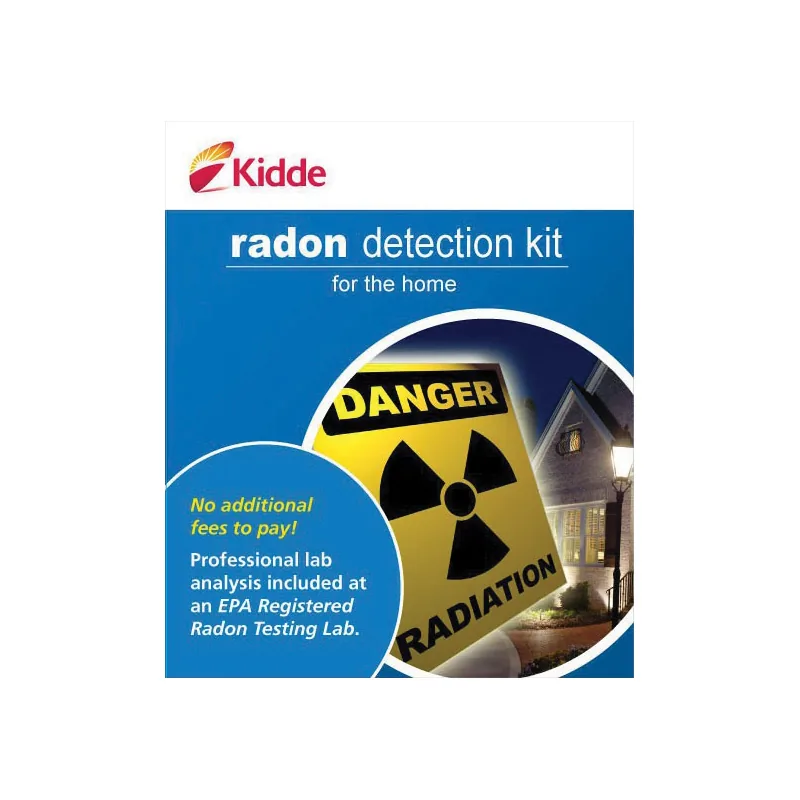
Kidde
The difference: One activated charcoal sampler bag for three days; analysis included, return postage not.
No Amazon listing on file
See details of the Kidde 442020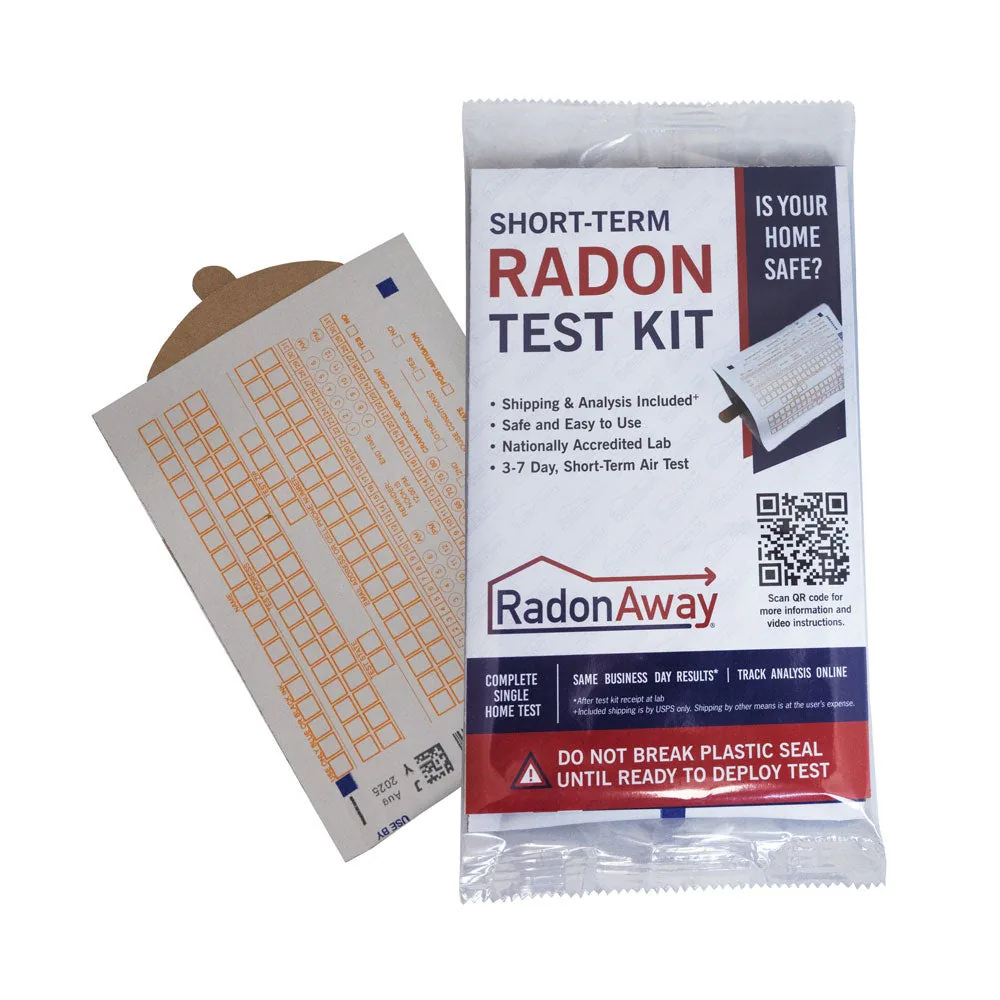
RadonAway
The difference: Air Chek, a RadonAway brand from the same parent company, makes a short-term test that hangs in the room for 3 to 7 days, with USPS return shipping and analysis included.
No Amazon listing on file
See details of the RadonAway Air Chek Short-TermCompared with similar products: 1 of 5
As an Amazon Associate, Radon411 earns from qualifying purchases.
Short-term kit
Method: Charcoal
In home: 2 to 7 days
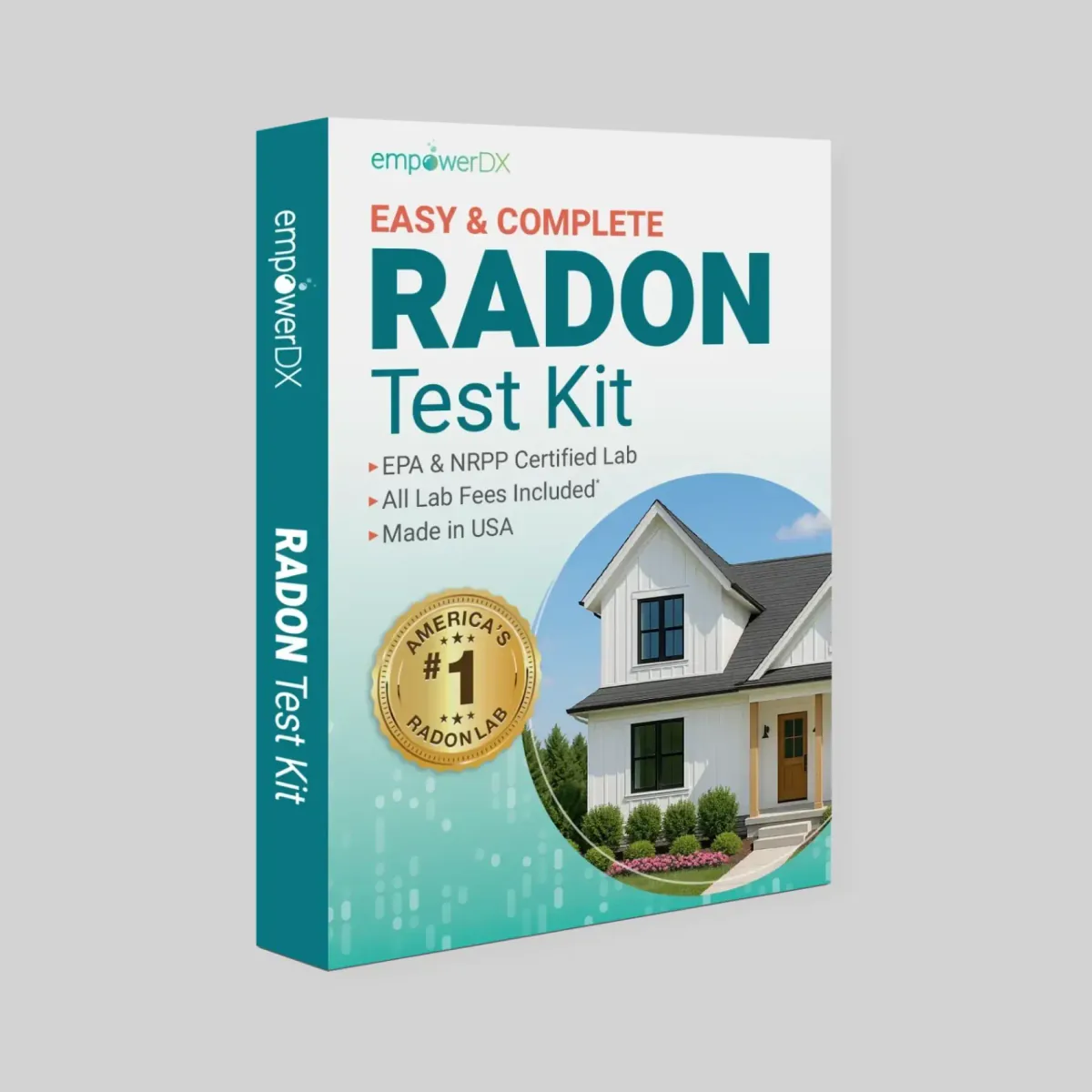
Short-term kitempowerDX
Method: Passive sampler
In home: 48 to 96 hours
Short-term kitFirst Alert
Method: Charcoal
In home: 2 to 4 days
Short-term kitKidde
Method: Charcoal
In home: 3 days
No Amazon listing on file
See details of the Kidde 442020
Short-term kit
Method: Liquid scintillation
In home: 48 to 96 hours
Short-term kit
Method: Liquid scintillation
In home: 48 to 96 hours
Short-term kit
In home: 72 to 168 hours
No Amazon listing on file
See details of the RadonAway Air Chek Short-TermMore short-term test kits: 1 of 7
Questions
6 questions about the AccuStar PicoCan, answered
Not directly. AccuStar's products page says professionals should go to radonaway.com for their testing products and that non-professionals and homeowners should go to radon.com, where a business account is not required to buy a radon test. AccuStar's homeowner page names liquid scintillation vials for short-term testing and alpha tracks for long-term testing as the two device types it suggests for homeowners.
The two stores sell different things. RadonAway sells the PicoCan itself: its PicoCan 275 page gives a minimum order quantity of 10 and says return postage is not included, while AccuStar's devices page says its test kits include a prepaid return mailer. Radon.com's home page features three tests: a short term radon in air test, a long term radon in air test and a radon in water test. The PicoCan is not among them.
AccuStar's canister instructions, which cover the PC275, PC400 and PC400DB, say AccuStar is not responsible for any costs associated with return shipping, and that its laboratory must receive the canister within 7 days of the end of the test. With AccuStar's devices page and RadonAway saying different things about return postage, check with the seller before you start the test.
The tape tells you the exposure. AccuStar's instructions give the PC275 and PC400, with black tape, at least 48 hours and no more than 96 hours, and the PC400DB, with red tape, at least 72 hours and no more than 168 hours. AccuStar's PC275 and PC400 pages give both sizes the same terms: a test duration of 2-4 days, receipt at the laboratory within 7 days of the end of the test, and results the same business day.
AccuStar's PC400 and PC275 pages say results are available the same business day the canister is received at the laboratory, and its quick start guide says same day results are available if the device is received by noon. Its canister FAQ puts it more narrowly: typical turnaround is the same business day for professional radon testers if the canister is received before noon, Eastern time, and turnaround depends upon daily laboratory capacity. Reports are issued Monday to Friday and emailed to the address on the data sheet; you can also look a result up online with the device number and the ZIP code of the property tested.
AccuStar's own laboratories analyze it. AccuStar lists a Massachusetts laboratory at 2 Saber Way, Ward Hill, and a Pennsylvania laboratory in Harrisburg, and says its Massachusetts lab has held NELAP accreditation for more than a decade.
The National Radon Safety Board's June 2026 list of accredited laboratories includes Accustar Labs - MA of Ward Hill, ARL0017, accredited for the AccuStar PicoCan 275 and PicoCan 400, with an accreditation expiry of March 30, 2027. The same list shows Accustar Labs - PA for the PicoCan 275 with an expiry of September 30, 2026, a date that has now passed, so of AccuStar's two laboratories on that list only the Massachusetts one, through March 30, 2027, is still within its listed accreditation.
AccuStar's instructions say that for a test tied to the purchase or sale of a home, the ANSI/AARST protocol recommends two devices side by side, 4 inches apart. Whether a test you run yourself is accepted depends on your state and on the buyer and seller: many states require radon professionals to be licensed, certified or registered, and the EPA says any real estate test should include steps to prevent or detect interference with the test device.
AccuStar names several causes: starting after the expiration date on the device, exposing it outside the 48 to 96 hours for a PC275 or PC400, the laboratory receiving it more than 7 days after the end of the test, too much weight gain from humidity, and swapping lids between cans. If you lose the tape, AccuStar's FAQ says black electrical tape can seal the canister.
Updated October 9, 2026