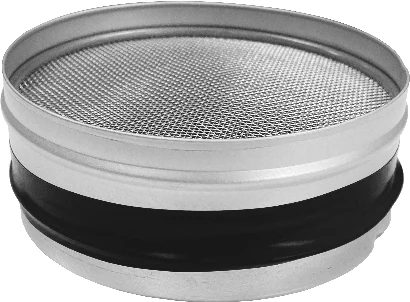
Short-term kit
PicoCan short-term charcoal canister radon test
- Lab fee included
Method: Charcoal
In home: 48 to 96 hours
No Amazon listing on file
See details of the AccuStar PicoCan RadonAway
Radon test kit you hang, lab fee included
Photos: RadonAway
As RadonAway states it
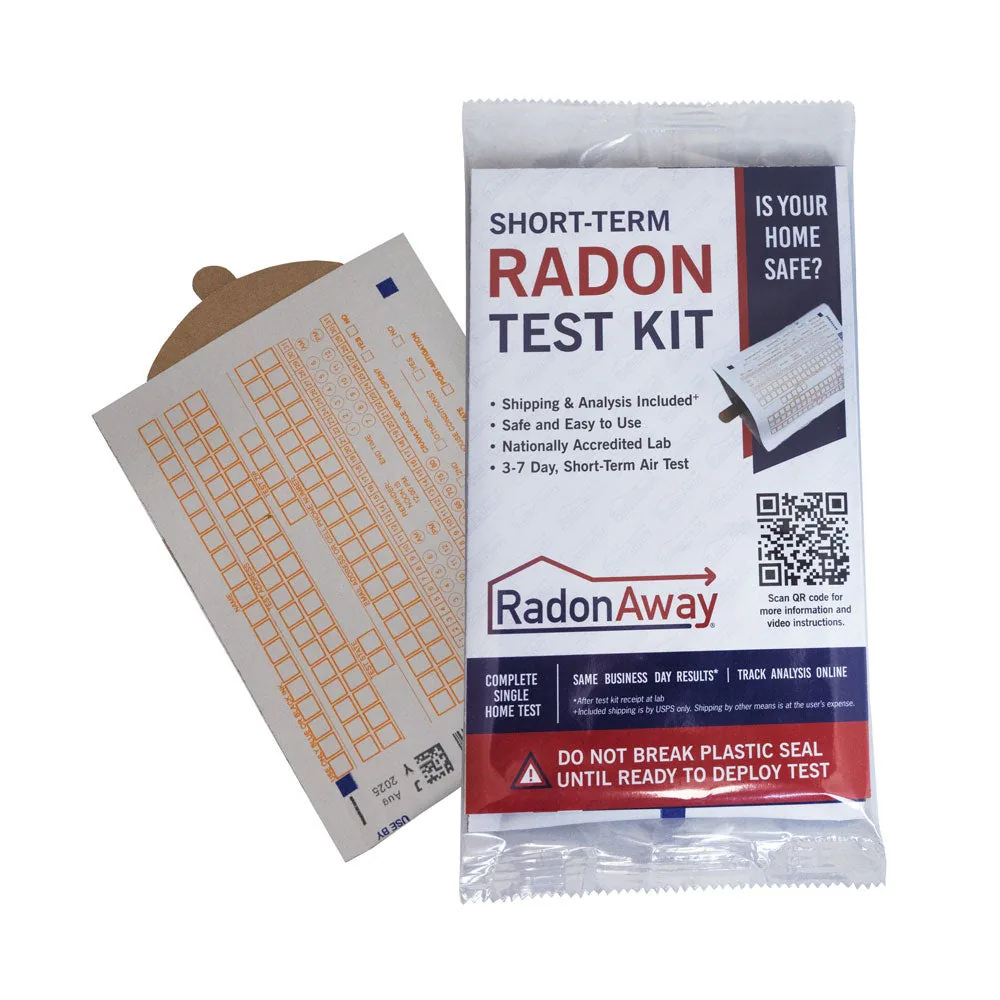
The Air Chek Short-Term Radon In Air Test, SKU 28658, is RadonAway's mail-in radon kit for one home: a single device you hang in the room for three to seven days, then seal and mail to Air Chek's laboratory in North Carolina, with the analysis and USPS return shipping included. RadonAway's own text does not name the material inside the device. The National Radon Safety Board's July 2026 device list includes the Air Chek Foil Bag Test Kit under activated charcoal adsorption, and its June 2026 laboratory list includes the Air Chek laboratory in Mills River, North Carolina, for that device.
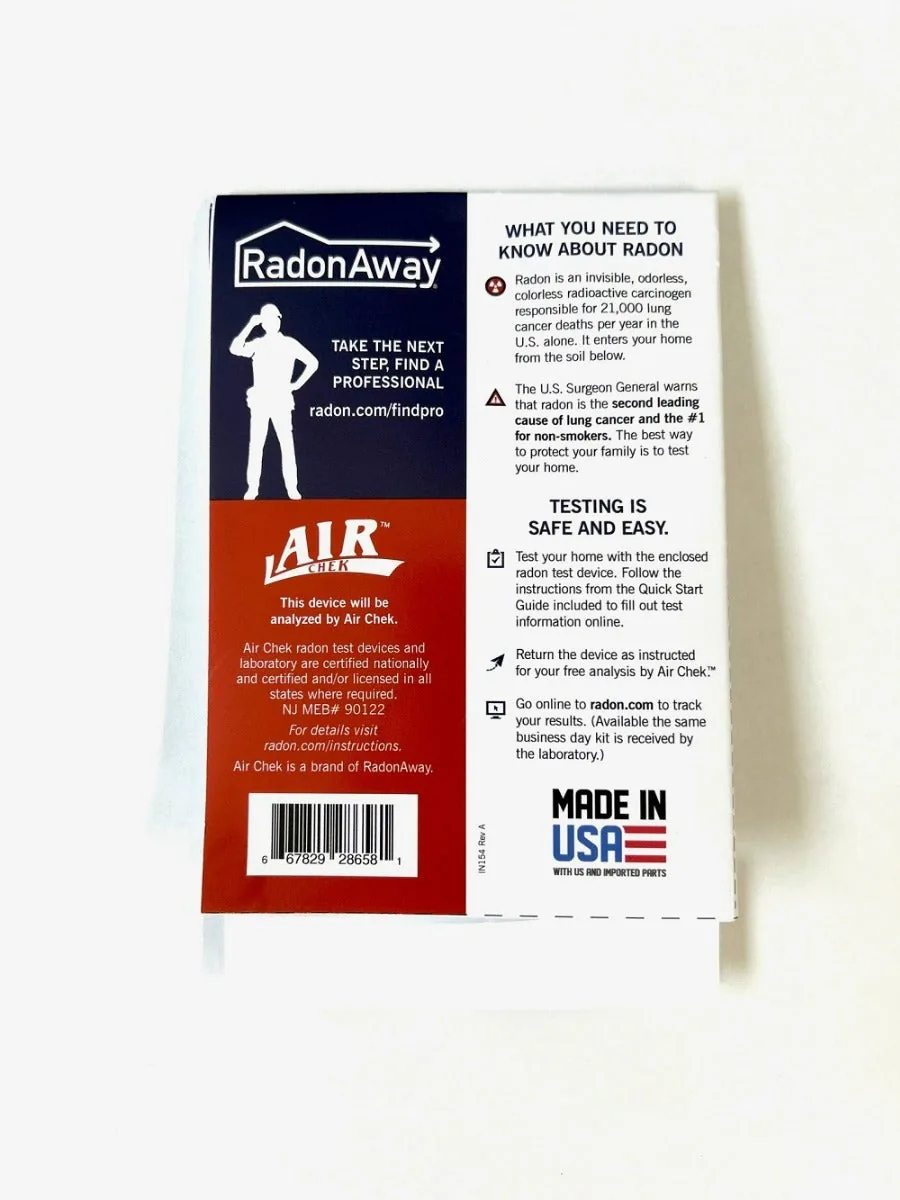
RadonAway lists 1 test device, instructions, analysis and a test report, and says return USPS shipping is included. The guide describes the parts you handle: a plastic sleeve or seal you open only when you are ready to test, a plastic hook to hang the kit, a cardboard insert to remove before sealing, an adhesive strip that closes the kit airtight, and a brown paper envelope inside that must not be torn. The guide calls the kit a complete single home test and prints the UPC 6 67829 28658 1.
In the box and running costsHow it works
The sensor, the sampling and the readings, then who has checked it
In our words, from the maker's documents
Radon.com, the homeowner store RadonAway's guide points buyers to, describes the test in two steps: the device absorbs airborne radon while it hangs in the room you choose, and once the exposure period is over you mail it to the certified laboratory for analysis. Nothing in the kit runs on power or shows a number. The EPA describes passive devices the same way: they need no power, sit exposed to the air in the home for a set time and then go to a laboratory.
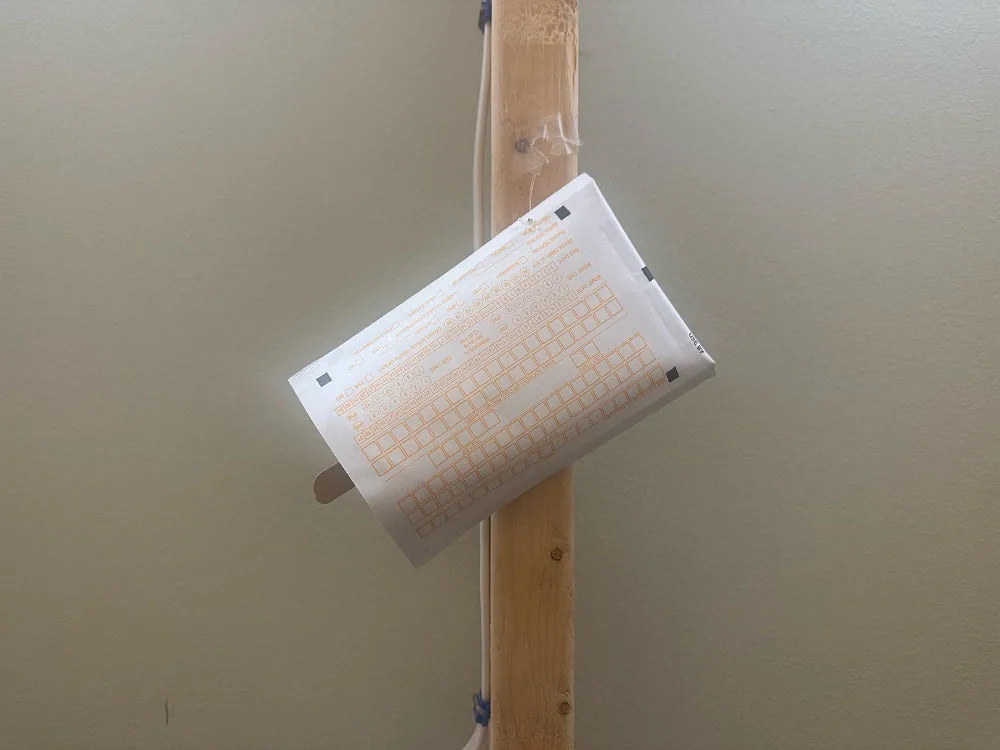
The quick start guide shows how the device is built to be used. To start, you take off the plastic sleeve, grip the kit, pinch it gently at the top until its cardboard folds at the perforation and push it into a snug shape; radon then passes in through a draft shield while the kit hangs from its plastic hook. When the test ends you take out the hook and the cardboard, peel the adhesive strip and press the sides together to form an airtight seal, so that no radon escapes before the laboratory counts it. The guide adds that radon decays quickly, that the kit has to reach the lab within 11 days after the test ends, and that the sooner the lab receives it, the more accurate the result.
Neither RadonAway's pages nor the guide name the material inside. The National Radon Safety Board's July 2026 list of approved measurement devices includes the Air Chek Foil Bag Test Kit as device 10333, method AC, and the Air Chek Pro Chek Foil Bag Test Kit as device 10334. NRSB's device definitions spell AC out as activated charcoal adsorption: an airtight container of activated charcoal is opened where the air is sampled, radon adsorbs onto the charcoal granules, and at the end the container is sealed and may be sent to a laboratory, which counts the gamma decay on a scintillation detector. NRSB adds that charcoal devices are deployed for 2 to 7 days depending on design, and that a diffusion barrier over the charcoal reduces the effects of drafts and high humidity. NRSB's lists give no part numbers, so the match between device 10333 and SKU 28658 rests on the name and on the laboratory named on the kit.
The result is one number in a laboratory report. Radon.com's FAQ says the report shows the radon level in picocuries per liter and that the number reflects the average amount of radon detected during the three to seven day test. NRSB's definition adds a caution about the method: because charcoal keeps adsorbing and releasing radon, activated charcoal adsorption does not give a true integrated measurement over the exposure time. The EPA names charcoal canisters and charcoal liquid scintillation detectors among the devices most commonly used for short-term testing.
The EPA counts any test from two to 90 days as short-term, says radon tests should run for at least 48 hours, and notes that because radon levels vary from day to day and season to season, a long-term test of more than 90 days is more likely to tell you a home's year-round average. After a first short-term result at or above 4 pCi/L, it says to follow up with either a long-term test or a second short-term test, and it suggests considering a fix between 2 and 4 pCi/L.
RadonAway's own statements, attributed
These are RadonAway's own statements, attributed to it. They are not our findings, and we have not tested this product ourselves.
Who checks a device like this
C-NRPP's consumer evaluation covers electronic monitors, not laboratory-analyzed test kits, so it has no result for RadonAway Air Chek Short-Term. A kit's result comes from the laboratory that analyzes it. Where the maker names that laboratory, or the page cites the National Radon Safety Board's lists of approved devices and accredited laboratories for it, the “How it works” panel and “Questions people ask” say so.
Specifications
Every figure as the maker states it
RadonAway lists 1 test device, instructions, analysis and a test report, and says return USPS shipping is included. The guide describes the parts you handle: a plastic sleeve or seal you open only when you are ready to test, a plastic hook to hang the kit, a cardboard insert to remove before sealing, an adhesive strip that closes the kit airtight, and a brown paper envelope inside that must not be torn. The guide calls the kit a complete single home test and prints the UPC 6 67829 28658 1.
On a warranty, RadonAway's documents differ. Air Chek's guide says it cannot provide a warranty of any kind, expressed or implied, for any item, information or service it provides, since it cannot control what users do with the devices outside its possession. The conditions of sale on RadonAway's own product page say goods RadonAway manufactures and sells are warranted to be free from defects in material and workmanship, and that it will repair or replace goods proven defective. Ask RadonAway which applies to a kit bought from a retailer.
The standard analysis and the return postage are paid with the kit. Radon.com says analysis by a NELAP Approved Radon Lab is included with the purchase, with no hidden fees, and that return USPS shipping to the lab is included too. There is nothing to power and no subscription. Neither the guide nor RadonAway's product pages mention an extra fee for New Jersey; the guide gives Air Chek's New Jersey number, NJ MEB# 90122.
The guide says the included shipping is by USPS only, and that any other shipping is at your expense. It warns that kits are sometimes lost or delayed past the 11-day limit in the USPS system, and that the lab then cannot give a result. To speed the return yourself, it lists FedEx or UPS 3-day, 2-day or next-day delivery, USPS Priority Mail Express and USPS Priority Mail, with a separate street address for FedEx and UPS. A kit that arrives too late means buying another.
Plan for more than one kit in two cases. The guide asks for two kits, 6 inches apart, for a real estate test. And if a first result is at or above 4 pCi/L, the EPA's next step is a follow-up test, a second short-term test or a long-term one.
Fit and setup
The fit, then setup and placement as the guidance asks
Good fit if, and look elsewhere if
Good fit if
Look elsewhere if
5 steps
For where any radon test or monitor should sit in a home, see where to place a radon test.
Compare
The same three rows for each, and the one difference that matters
This page
RadonAway Air Chek Short-Term
This page: The Air Chek Short-Term Radon In Air Test, SKU 28658, is RadonAway's mail-in radon kit for one home: a single device you hang in the room for three to seven days, then seal and mail to Air Chek's laboratory in North Carolina, with the analysis and USPS return shipping included.
No Amazon listing on file
See details of the RadonAway Air Chek Short-Term
First Alert
The difference: A charcoal-based sampler left out for two to four days; First Alert gives results 3 to 5 business days after the lab receives it, and its lab fee excludes New Jersey's state fee.
Kidde
The difference: An activated charcoal sampler bag placed for three days; the lab testing and report are included, the cost of mailing the bag is not.
No Amazon listing on file
See details of the Kidde 442020
PRO-LAB
The difference: Two liquid scintillation detectors side by side for 48 to 96 hours, mailed in a prepaid envelope with the lab fee paid separately.
PRO-LAB
The difference: PRO-LAB's short-term kit with the standard lab analysis included: two liquid scintillation detectors at the same time and location, results within 7 days, and express service for an additional fee.
Compared with similar products: 1 of 5
As an Amazon Associate, Radon411 earns from qualifying purchases.
Short-term kit
Method: Charcoal
In home: 48 to 96 hours
No Amazon listing on file
See details of the AccuStar PicoCan
Short-term kit
Method: Charcoal
In home: 2 to 7 days
Short-term kitempowerDX
Method: Passive sampler
In home: 48 to 96 hours
Short-term kitFirst Alert
Method: Charcoal
In home: 2 to 4 days
Short-term kitKidde
Method: Charcoal
In home: 3 days
No Amazon listing on file
See details of the Kidde 442020Short-term kit
Method: Liquid scintillation
In home: 48 to 96 hours
Short-term kit
Method: Liquid scintillation
In home: 48 to 96 hours
More short-term test kits: 1 of 7
Questions
6 questions about the RadonAway Air Chek Short-Term, answered
Both are included for the standard return. Radon.com says analysis by a NELAP Approved Radon Lab is included with no hidden fees, and that return USPS shipping is included; RadonAway's own page says USPS shipping and analysis are included. The guide adds that the included shipping is by USPS only, so FedEx, UPS or a faster USPS service is at your expense.
Three to seven days, 72 to 168 hours, by the guide and both product pages; the guide's reverse side says the kit should be exposed for more than 3 days but less than 7. In a humid spot you cannot avoid, such as a damp basement, the guide limits the test to 4 days. Write down the start and end day and hour, online or on the kit.
The EPA's own floor for any radon test is 48 hours, so Air Chek's three-day minimum sits above it.
RadonAway's pages put it three ways. The guide and both product pages say results come the same business day the laboratory receives the kit. Radon.com's description says results are provided the next day after the lab receives the device, and its FAQ says to expect results within 1 to 2 business days, depending on shipping and lab volume. Add mailing time to each. Once the lab has the kit, you can enter its serial number at radon.com/results to follow the analysis.
Timing matters more than speed: the guide says the kit must reach the lab within 11 days after the test ends, or the lab cannot give a result.
The guide says that for real estate transactions you should use two kits 6 inches apart, and points to EPA's real estate protocols. That is Air Chek's instruction, and whether a do-it-yourself kit is accepted for a sale depends on your state and on the buyer and seller. Many states require radon professionals to be licensed, certified or registered, so check your state's rules for sale tests before relying on any do-it-yourself kit.
The EPA's guide for buyers and sellers lists three short-term options for a sale, one of them two tests at the same time in the same location, and says any real estate test should include steps to prevent or detect interference with the test device.
RadonAway does not say what is inside. The National Radon Safety Board lists the Air Chek Foil Bag Test Kit, device 10333, under activated charcoal adsorption, and NRSB's June 2026 laboratory list includes AirChek/Spruce/Accustar of Mills River, North Carolina, laboratory ARL1402, for devices 10333 and 10334, with an accreditation that runs to July 30, 2027. NRSB notes that approving a device does not imply accreditation or certification of its maker or seller.
The guide says the device will be analyzed by Air Chek, a brand of RadonAway, and gives the lab's Mills River street address for FedEx and UPS. AccuStar Labs says the Air Chek laboratory has held NELAP accreditation for more than a decade.
The kit is returned to a set laboratory. SKU 28658 goes to RadonAway's North Carolina laboratory, and RadonAway's page aims it at customers in the southeast, pointing buyers elsewhere to versions returned to its Massachusetts lab, P/N 28669, and to Colorado, P/N 28670. The guide for 28658 is marked North Carolina lab and prints the UPC 6 67829 28658 1, so check the package and send the kit to the address printed on it.
RadonAway's own page for the kit sets a minimum order quantity of 10. Radon.com, RadonAway's homeowner store, sells the same kit and mentions savings on a quantity of three.
Updated October 8, 2026