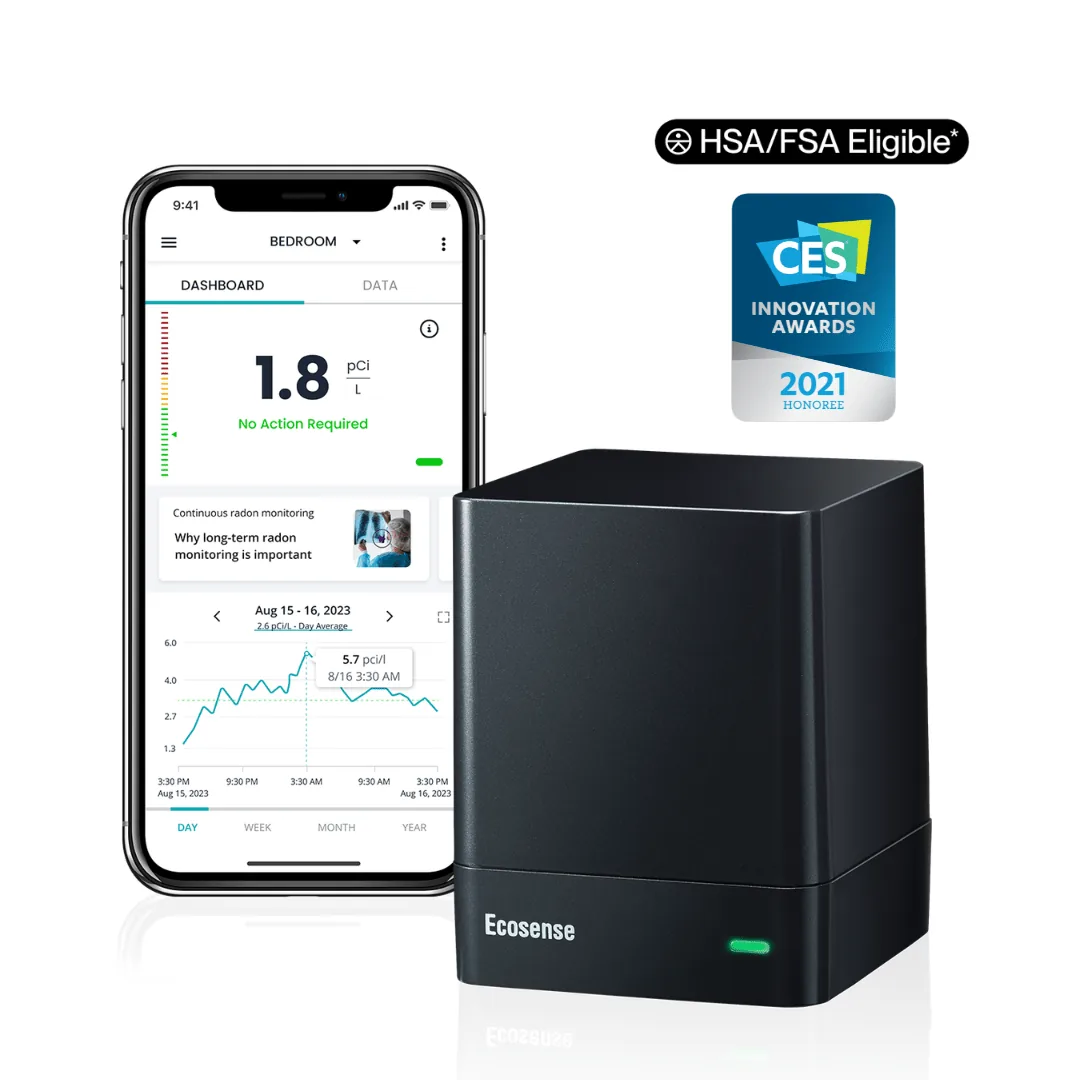
Monitor
EcoQube Wi-Fi continuous radon monitor
- C-NRPP 2024/25: Approved
- Plug-in
- Wi-Fi
- App only
Method: Ion chamber
First reading: Within 10 minutes
ProductsCompare
Short answer
The RadonEye RD200 and the EcoQube use the same Ecosense sensor and were both approved in C-NRPP's 2024/25 evaluation. The RadonEye shows readings on its own screen and uses Bluetooth, while the EcoQube has a light instead of a screen and needs 2.4 GHz Wi-Fi so you can check it from anywhere.
The RadonEye RD200 and the EcoQube are two consumer radon monitors from the same maker, and on paper they measure radon the same way. What separates them is how you see the result, how they connect, and a few practical details such as the alarm and the power supply. This page sets those differences out side by side, in the maker's own figures, with the independent results for each. It does not pick one: which suits you depends on your home and how you like to check a reading.
| Compared | RadonEye RD200 | EcoQube |
|---|---|---|
| Sensor | Pulsed ionization chamber | Pulsed ionization chamber |
| Where you read it | Built-in OLED screen, and a phone app | Three-color light on the front, and a phone app |
| Connection | Bluetooth | Wi-Fi, 2.4 GHz, required |
| First reading | After 10 minutes | After 10 minutes |
| Power | Plug-in adapter, 12 V | Plug-in adapter, 5 V |
| Alarm | Built-in audio alarm | Not stated |
| C-NRPP 2024/25 | Approved | Approved |
Under the case, the two are close to identical. Ecosense lists the same sensor, the same sensitivity, the same measurement range and the same accuracy claim for both. Each takes a measurement every 10 minutes and reports a 60-minute moving average, so a first reading appears about 10 minutes after you plug it in rather than after a day. Both are rated for rooms of up to 1,000 square feet, and both are meant to run from the wall rather than from batteries.
| Specification | Both models |
|---|---|
| Sensor | Pulsed ionization chamber |
| Sensitivity | 30 counts per hour per 1 pCi/L |
| Measurement range | 0.2 to 99.9 pCi/L (7 to 3,700 Bq/m3) |
| Maker's accuracy claim | Under ±10% at 10 pCi/L after 10 hours |
| How often it measures | Every 10 minutes, shown as a 60-minute moving average |
| Room size | Up to 1,000 square feet |
| Operating range | 32 to 104°F, relative humidity under 80% |
The RadonEye RD200 has a built-in OLED screen that shows the last measurement and scrolls through its averages, so you can read it by walking past. Its phone app connects over Bluetooth, which means you check the history when you are near the device, and Ecosense says you can track short-term and long-term trends there.
The EcoQube has no screen. A three-color light on the front shows the hourly level at a glance, and the detail lives in the app: short-term and long-term averages and the hourly data points. It needs a 2.4 GHz Wi-Fi network, and in return you can see your results from anywhere, swipe through weekly, monthly and yearly trend charts, and link it to other smart-home services through IFTTT. In the United States, its app can also run a 72-hour test analysis and email you when the analysis is complete.
| Compared | RadonEye RD200 | EcoQube |
|---|---|---|
| On the device | OLED screen: last measurement and scrolling averages | Three-color light showing the hourly level |
| In the app | Short-term and long-term trends, over Bluetooth | Averages, hourly data, weekly to yearly charts, over Wi-Fi |
| Away from home | Not stated | Remote access to results over Wi-Fi |
| Network needed | None for the screen; Bluetooth for the app | A 2.4 GHz Wi-Fi network, required |
| Extras | Built-in audio alarm | IFTTT links; a 72-hour test analysis for U.S. users |
Both monitors run from a plug-in adapter: 12 V for the RadonEye RD200 and 5 V for the EcoQube, and Ecosense sells a replacement for each. Both are listed as plug-in models, so each needs a socket in the room you want to measure. For the RadonEye RD200, Ecosense says the screen's real-time data and daily and weekly averages reset when it loses power and cannot be measured without it, while the stored data stays on the device unless you reset it through the app. It says the RadonEye RD200 saves data for up to a year and is expected to have a service life of 5 years.
The RadonEye RD200 has a built-in audio alarm. The EcoQube shows the hourly level on its light and the detail in its app. Both come with a 12-month limited warranty, and Ecosense adds a one-year extension to each when you register the device within 30 days.
Both models were approved in C-NRPP's 2024/25 consumer monitor evaluation. C-NRPP's list describes the RadonEye RD200 as taking measurements every 10 minutes and displaying an hourly rolling average, and the EcoQube as showing hourly levels on its light, with short-term and long-term averages and hourly data points in the app.
Both also took part in a 2024 field study that ran consumer monitors beside a calibrated reference instrument at a natural radiation laboratory in Salamanca, Spain, between 1 July and 23 August 2023. Over that period the RadonEye's average differed from the reference by -15.8%, and the EcoQube's by 5.4%. The study also counted the share of records each monitor lost: 2.2% for the RadonEye and 18.9% for the EcoQube.
| Evidence | RadonEye RD200 | EcoQube |
|---|---|---|
| C-NRPP 2024/25 evaluation | Approved | Approved |
| 2024 field study: difference from the reference over 54 days | -15.8% | 5.4% |
| 2024 field study: records lost | 2.2% | 18.9% |
Neither comes out ahead. Each list below has four points, drawn from the features each maker states, so the choice rests on how you will use it.
| Compared | The RadonEye RD200 fits if | The EcoQube fits if |
|---|---|---|
| Reading it | You want to read the level on the device itself | You want to check the level from your phone when you are away |
| Your network | Your home has no 2.4 GHz Wi-Fi, or you would rather not connect it | You already have a 2.4 GHz Wi-Fi network |
| Alerts and links | You want a built-in audio alarm | You want to link it to other smart-home services |
| History | You check the history when you are near the monitor | You want weekly, monthly and yearly charts in the app |
Both models, with their full specifications and evidence, are on their own pages: Ecosense RadonEye RD200 and Ecosense EcoQube. Ecosense also makes a battery model with an E-Ink screen, covered on the Ecosense EcoQube Flex page. Every monitor we cover is on radon detectors and monitors.
Monitor
Method: Ion chamber
First reading: Within 10 minutes
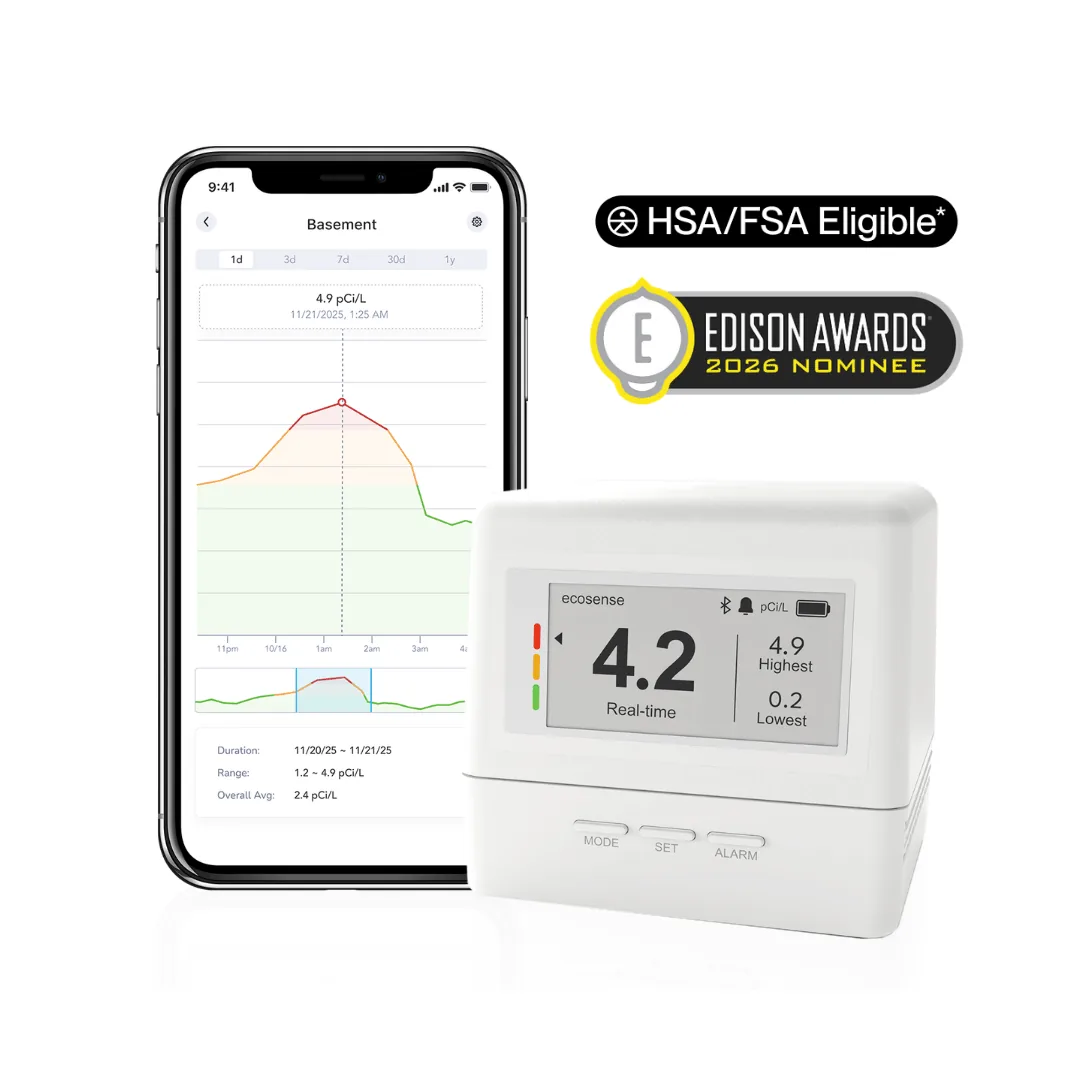
Monitor
Method: Ion chamber
First reading: Within 15 minutes
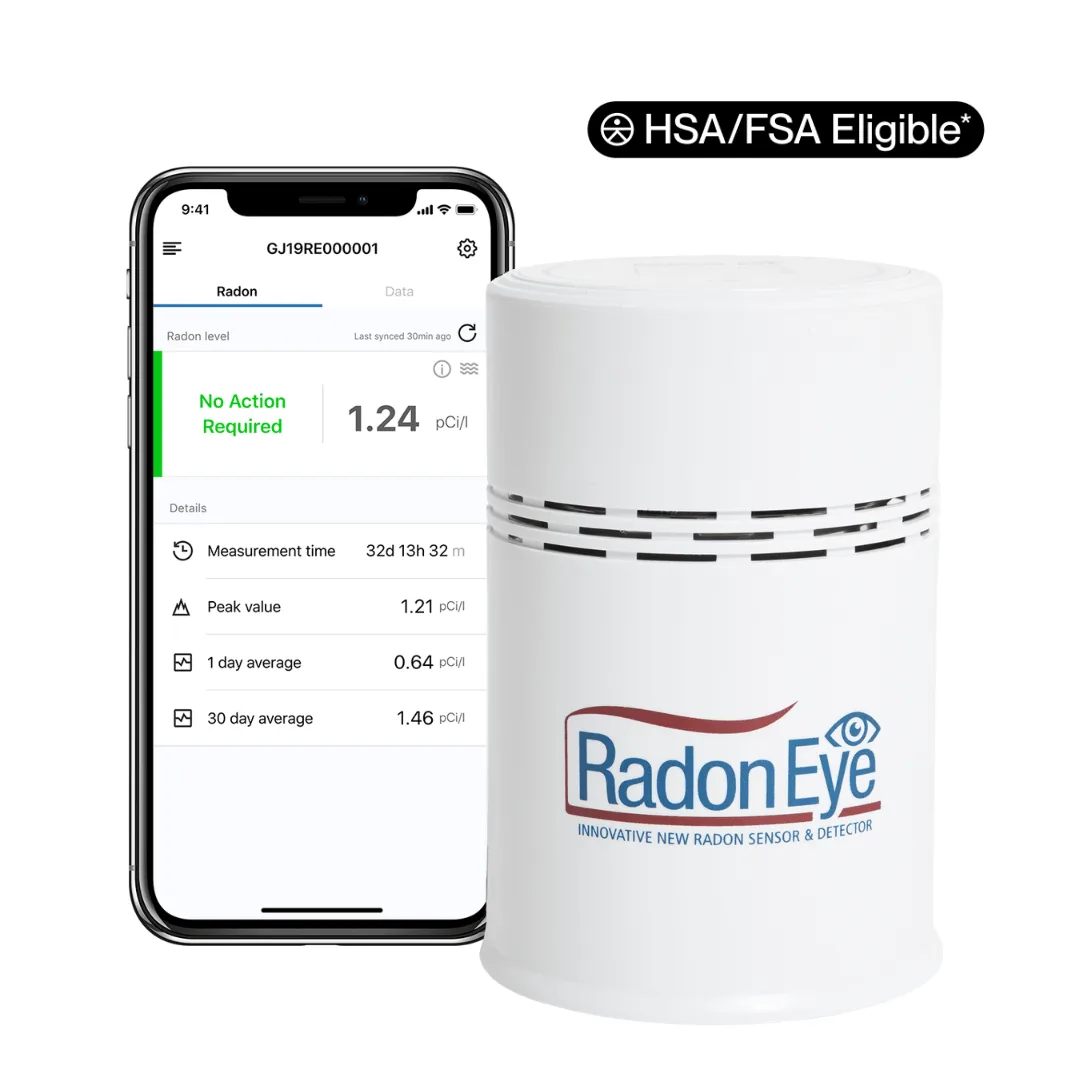
Monitor
Method: Ion chamber
First reading: Within 10 minutes
The monitors in this section: 1 of 3
As an Amazon Associate, Radon411 earns from qualifying purchases.
Step 1 of 5:
Pick the floor
The lowest lived-in level of the home, in a room used regularly, such as a living room, playroom, den or bedroom, not a kitchen or bathroom.
Step 2 of 5:
Pick a room people use
A room occupied for at least 4 hours each day.
Step 3 of 5:
Set the height
At least 20 inches above the floor and away from drafts, high heat, high humidity and exterior walls.
Step 4 of 5:
Mind the router (RadonEye)
Ecosense asks for at least 24 inches between the RadonEye and any Wi-Fi router or hotspot, and to keep it away from open windows and vents.
Step 5 of 5:
Give it time
Test for at least 3 months, preferably in the heating season, and decide on the long-term average.
More on placement is at where to place a radon test, and on reading the result at continuous radon monitors.
Yes. Ecosense lists a pulsed ionization chamber for both, with the same sensitivity of 30 counts per hour per 1 pCi/L and the same measurement range.
Neither is shown to be more accurate. Ecosense states the same accuracy claim for both, and both were approved in C-NRPP's 2024/25 evaluation. In a 2024 field study one unit of each differed from the reference by -15.8% and 5.4%; one unit in one summer is not a ranking.
No. It has a three-color light on the front that shows the hourly level, and the numbers are in its app.
No. It shows readings on its own screen and connects to its app over Bluetooth.
Ecosense lists a 2.4 GHz Wi-Fi network as required for the EcoQube.
Both give a first reading after about 10 minutes, then update every 10 minutes with a 60-minute moving average.
Ecosense lists both as plug-in models: the RadonEye with a 12 V adapter and the EcoQube with a 5 V adapter.
The RadonEye RD200 has a built-in audio alarm. The EcoQube shows the hourly level on its light and the detail in its app.
Consumer monitors cannot be professionally calibrated and are not approved by C-NRPP for use by radon measurement professionals. Check what the contract and your state accept; see radon detectors and monitors.
At least 3 months, preferably in the heating season, and decide on the long-term average rather than the hourly figure.