Monitor
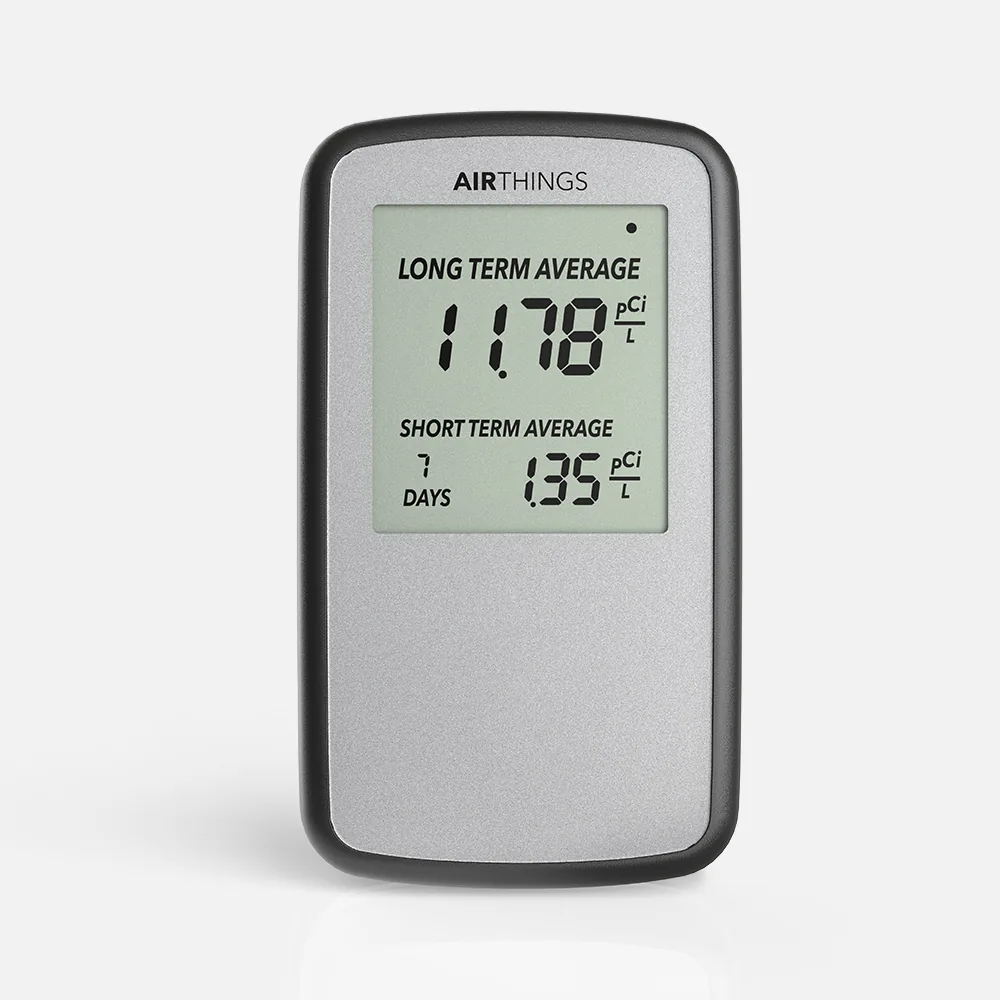
Corentium Home battery digital radon detector
- C-NRPP 2024/25: Approved
- Battery
- Screen
Method: Alpha spectrometry
ProductsEvidence
Short answer
The main public, independent test of consumer radon monitors is C-NRPP's annual comparison in Canada, which in 2024/25 exposed each model to known radon levels in a reference chamber for four 7-day rounds and graded it A to E by measurement error. Six models were approved with an average of B or better, but only models whose makers entered were tested, and the units were Canadian versions.
Every radon monitor box carries an accuracy claim. An independent accuracy result is different: someone with no stake in the sale exposes the device to a known radon level and reports how close it came. For consumer monitors, most of these results come from the Canadian National Radon Proficiency Program (C-NRPP), which runs a regular series of performance tests so that Canadians can compare monitors on performance alone. Health Canada runs its own testing alongside it and recalls devices that fail.
This page explains how that testing works, what the grades mean, which monitors were approved, what two peer-reviewed studies add, and the limits of all of it for a home in the United States. For every monitor we cover, with its evidence status beside it, see radon detectors and monitors. For devices that failed, see recalled and not-approved radon monitors.
| Kind of evidence | What it does | What it can tell you | What it cannot |
|---|---|---|---|
| C-NRPP's annual comparison | Four 7-day rounds in a reference radon chamber; a grade per round | How a model performed against a known level, in controlled conditions | How your unit performs in your house; anything about models not entered |
| Health Canada testing | Tests new models at its Ottawa lab; recalls those that fail | Which models measure radon inaccurately | How models that passed compare with each other |
| Published field studies | Run monitors beside a calibrated reference in real rooms for weeks or months | How close the averages come, and how fast monitors react | Results for models the study did not include |
| The maker's stated accuracy | A claim from the maker | What the maker promises, under what conditions | Anything independent |
C-NRPP's testing-process document (last revised 5 June 2025) describes the method. The work is done at the Radiation Safety Institute of Canada's National Radon Chamber in Saskatoon, a 12 cubic meter walk-in chamber that is certified as a secondary reference radon chamber under AARST's National Radon Proficiency Program (certificate SC 1005). The chamber's radon level is the yardstick each monitor's results are compared with.
Step 1 of 5:
The maker enters
Device manufacturers are invited to take part and send three of the same model. Entry is by registration, so a model is only tested if its maker signs it up.
Step 2 of 5:
The units arrive sealed
All monitors are shipped unopened to the chamber. Staff log the make, model and serial number, check for shipping damage, read the manual, install any app and confirm each unit works.
Step 3 of 5:
Four rounds of exposure
Each round lasts 7 days, in four different sets of conditions: two near Canada's guideline level (one at winter and one at summer temperature and humidity) and two at higher radon levels.
Step 4 of 5:
A measurement error for each device
C-NRPP compares each monitor's results with the chamber and calculates its Measurement Error, a single figure that combines precision and accuracy.
Step 5 of 5:
A grade for each round
Each monitor gets a letter grade, A to E, for each round. Those with an average grade of B or better are recommended.
| Round | Target (Bq/m3) | Actual radon | Temperature | Humidity | Length |
|---|---|---|---|---|---|
| Round 1 (winter indoor conditions) | 200 | 218 Bq/m3 (about 5.9 pCi/L, calculated) | 23° C | 28% RH | 7 days |
| Round 2 (summer, little or no air conditioning) | 200 | 210 Bq/m3 (about 5.7 pCi/L, calculated) | 29° C | 70% RH | 7 days |
| Round 3 (higher level) | 400 | 436 Bq/m3 (about 11.8 pCi/L, calculated) | 23° C | 36% RH | 7 days |
| Round 4 (high level) | 1,000 | 1201 Bq/m3 (about 32.5 pCi/L, calculated) | 23° C | 35% RH | 7 days |
C-NRPP sets two rounds at 200

C-NRPP grades each monitor in each round by its Measurement Error, a single percentage that reflects both how close the monitor's readings were to the chamber's level and how consistent they were. The bands come straight from C-NRPP's detailed results:
| Grade | Measurement error | What it means in practice |
|---|---|---|
| A | 10% or less | The closest band C-NRPP uses |
| B | More than 10%, up to 20% | An average of B or better across the rounds is C-NRPP's bar for recommending a monitor |
| C | More than 20%, up to 30% | A C in one round can still average out to a B |
| D | More than 30%, up to 40% | Well outside the recommended range |
| E | More than 40% | The lowest band |
A manufacturer's accuracy figure and a C-NRPP grade are not the same measure. The maker's figure is a promise under conditions the maker chooses, such as ±10% after 7 days at 200 Bq/m3. The grade is C-NRPP's own result, under conditions C-NRPP sets. Read the maker's figure for the conditions it names, and the grade for what an independent test found.
C-NRPP's consumer monitor page lists six models as approved in the 2024/25 round, published May 2025. The table repeats what C-NRPP prints for each, including the manufacturer's stated accuracy, which is the maker's claim and not C-NRPP's finding.
| Monitor, as C-NRPP names it | Manufacturer's stated accuracy, as C-NRPP prints it | Readings | Power |
|---|---|---|---|
| Airthings Corentium Home | ±10% (after 7 days at 200 Bq/m3), ±5% after 2 months of monitoring | 12 hours, 24 hours and 7 days; the first reading takes 24 hours | Battery |
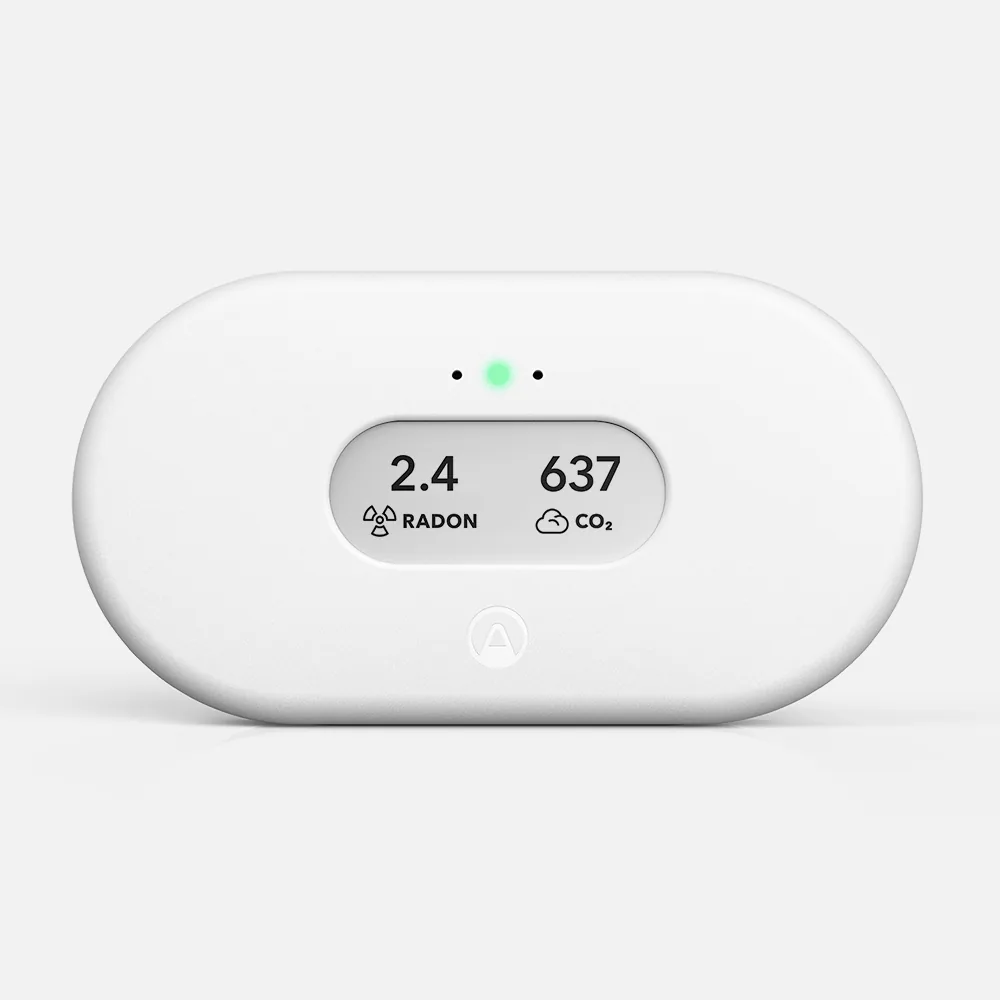
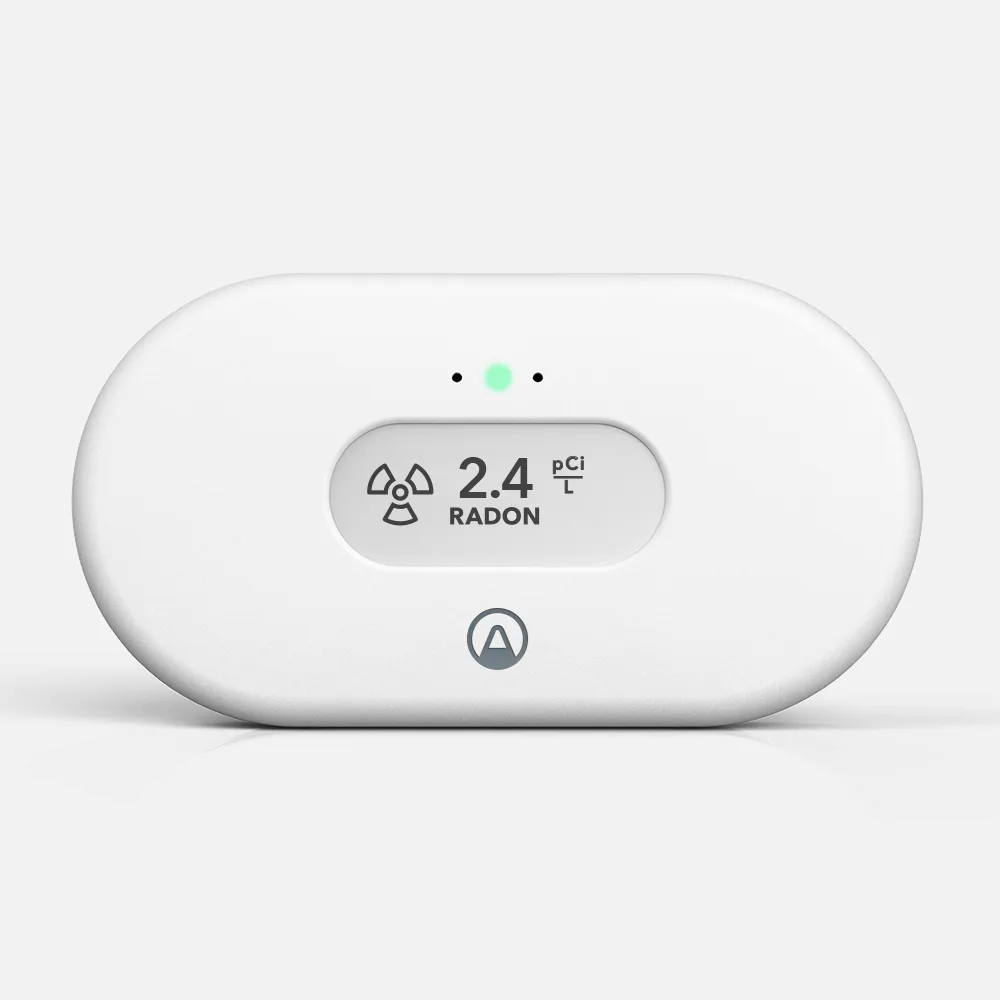
| Airthings View | After 30 days at 200 Bq/m3, ±10% on the 7 day average and +/- 5% on the 2 month average | Hourly | Battery or plug-in (USB-C) |
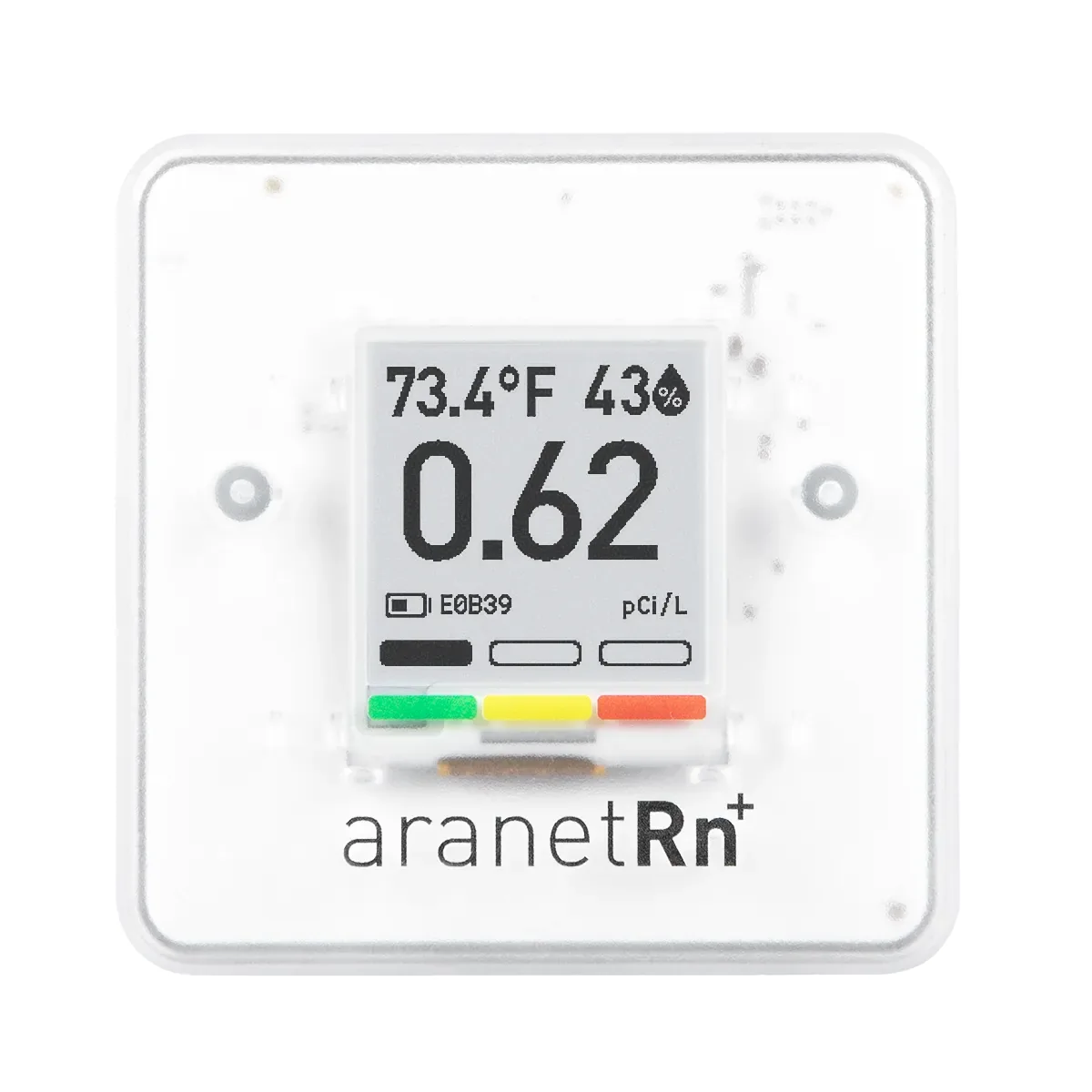
| Aranet RN+ | ±8% accuracy of 24 h, 7 d and 30 d averages | Can be set to show 10 min, 24 h, 7 d or 30 d | Battery |
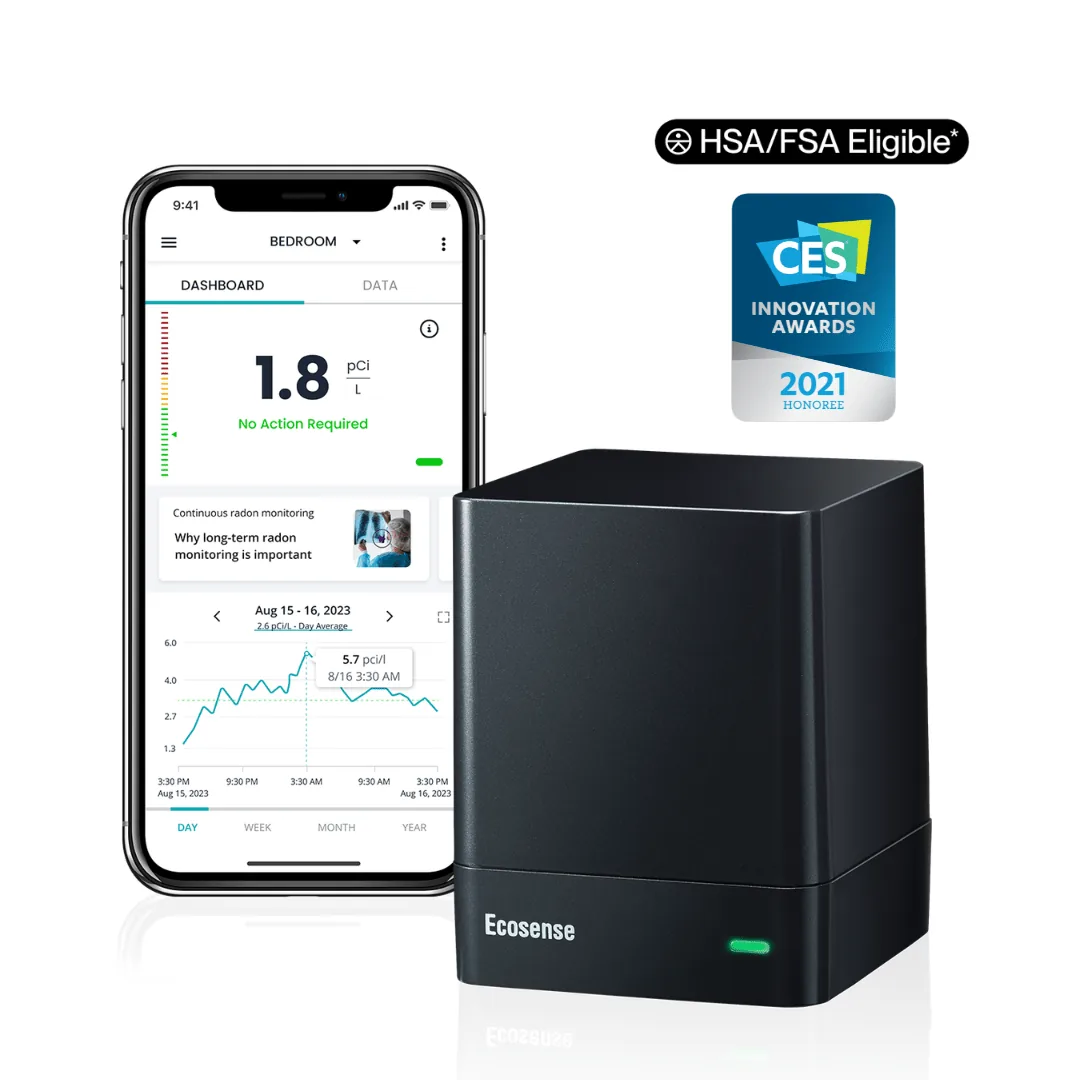
| Ecosense EcoQube | ±10% at 370 Bq/m³ after 10 hours of measurement | Measures every 10 minutes; shows an hourly rolling average | Plug-in |
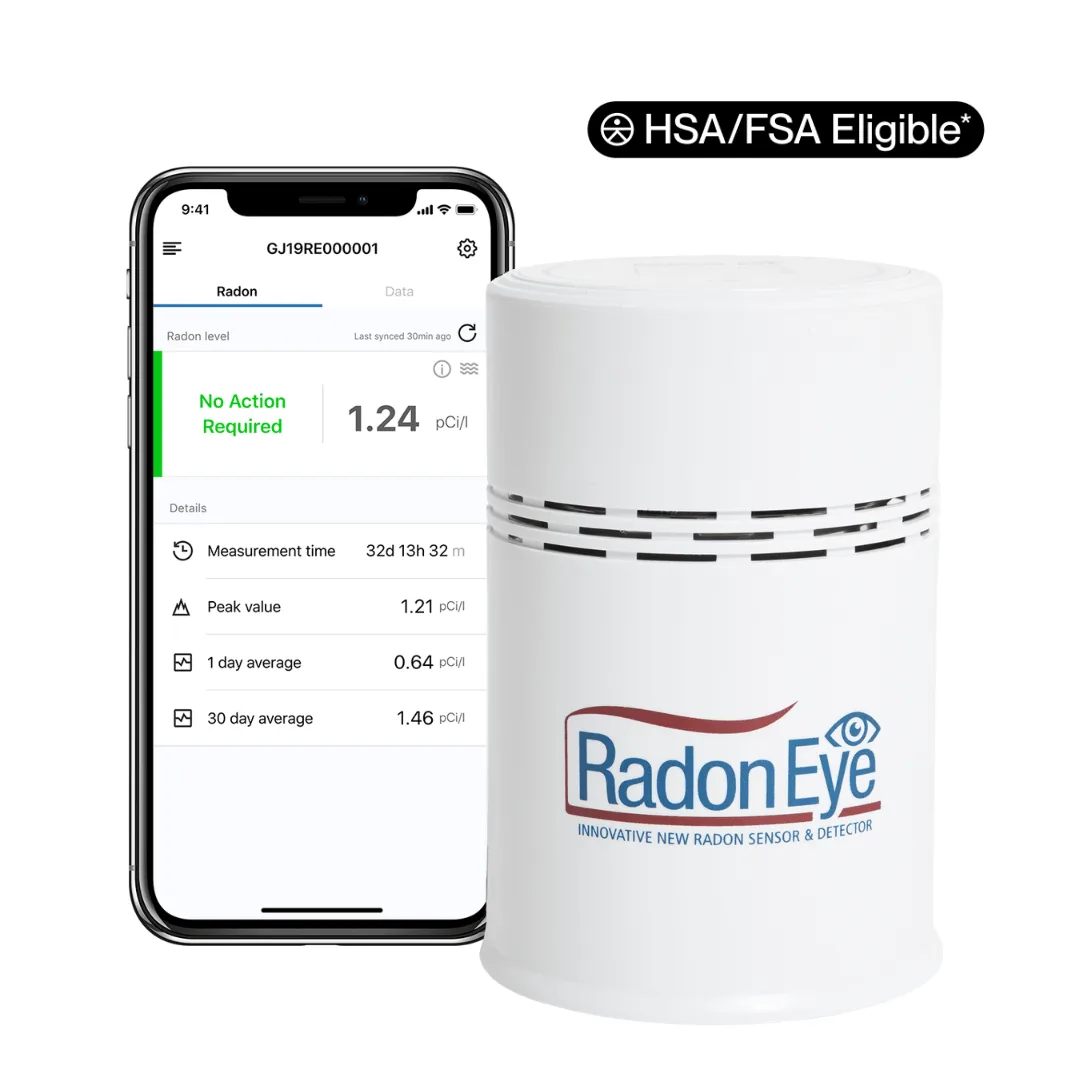
| Ecosense RadonEye RD200 | ±10% at 370 Bq/m³ after 10 hours of measurement | Measures every 10 minutes; shows an hourly rolling average | Plug-in |
| SunRadon Luft | ±10% (after 7 days at 200 Bq/m3) | Hourly; the first reading takes 90 minutes | Plug-in |
Monitor
Method: Alpha spectrometry
Monitor
Method: Alpha spectrometry
Monitor
Method: Alpha spectrometry
Readings: Every 60 minutes
MonitorAranet
Method: Ion chamber
First reading: Within 10 minutes
Monitor
Method: Ion chamber
First reading: Within 10 minutes
Monitor
Method: Ion chamber
First reading: Within 10 minutes
The monitors in this section: 1 of 6
As an Amazon Associate, Radon411 earns from qualifying purchases.
The 2024/25 round was the second year of C-NRPP's project. Its 2023 report listed seven consumer monitors in its table of devices tested, marking these as passing its performance test: the Airthings Corentium Home, Wave Plus and View Plus, the Ecosense EcoQube, EcoBlue and RadonEye RD200, and the SunRadon Luft. It listed two devices it did not recommend, the Air Steward and the Radon Guard.
| Monitor | 2023 report | 2024/25 round |
|---|---|---|
| Airthings Corentium Home | In the table of devices tested | Approved |
| Airthings View / View Plus | View Plus in the table of devices tested | "Airthings View" approved |
| Airthings Wave Plus | In the table of devices tested | Not included |
| Aranet RN+ | Not listed | Approved |
| Ecosense EcoBlue | In the table of devices tested | Not included |
| Ecosense EcoQube | In the table of devices tested | Approved |
| Ecosense RadonEye RD200 | In the table of devices tested | Approved |
| SunRadon Luft | In the table of devices tested | Approved |
A model that appears in 2023 but not in 2024/25 was not retested in the later round; nothing in C-NRPP's 2024/25 material says it failed. We show the most recent result for each model and say which round it came from.
Many monitors sold in the United States have no C-NRPP result at all. There are three ordinary reasons, and none of them is a failed test:
That is why every monitor on our hub carries one of three labels: approved in C-NRPP's 2024/25 evaluation, not included in C-NRPP's 2024/25 evaluation, or not approved. We never write "unverified" or "inaccurate" for a monitor that simply was not tested. Where a monitor has no independent result, we show the maker's own claims, attributed to the maker.
Chamber tests control the conditions. Field studies run monitors in real rooms beside a calibrated reference instrument, which shows how they behave when temperature, humidity and radon change on their own. We found two recent studies that name consumer models, each published in a peer-reviewed journal.
| Study | Monitors and reference | Setting and length | What it found |
|---|---|---|---|
| Field study, 2024 | EcoQube, RadonEye, RadonEye Plus2, Spirit, ViewPlus, ViewRadon and WavePlus, against an AlphaGUARD calibrated at a laboratory accredited to ISO/IEC 17025 | A natural radiation laboratory, field conditions, 1 July to 23 August 2023 (54 days) | Over the whole period each monitor was within 5% to 16% of the reference, and the difference was not statistically significant for all but one. Response times ranged from 1 to 15 hours; between 1 and 3 hours behind the reference for the EcoQube, RadonEye, RadonEye Plus2 and Spirit, and 5 to 15 hours for the ViewPlus, ViewRadon and WavePlus. Missing records ranged from 1% to 19% of the data. |
| School field study, 2026 | Consumer-grade Lüft against the annually and manufacturer calibrated, industrial-grade Model 1028 XP | Six rooms of a school in Utah, about 29 weeks in 2024 | The mean difference in 24-hour moving average radon was -0.05 pCi/L (95% confidence interval -0.24 to 0.14), with a concordance correlation coefficient of 0.92. The study concluded the Lüft gave valid 24-hour moving averages for radon, though not for carbon dioxide, humidity, temperature or VOCs. |
Two lessons carry over to a home. First, the averages of the monitors studied came reasonably close to a reference over weeks, which is the number that matters for a decision. Second, some monitors take many hours to react to a change, so an hourly figure on the screen can lag what is happening in the room. Neither study tested every model sold today, and neither is a rating of a brand.
An accurate monitor still gives a misleading answer if it runs for a few days in the wrong room. Radon levels vary from day to day and week to week, a few days can read much lower or much higher than your real average, and so a monitor should stay in place for at least 3 months.
Step 1 of 5:
Pick the right room
A room occupied for at least 4 hours each day, on the lowest lived-in level of the home. Not a kitchen, bathroom, laundry or storage room.
Step 2 of 5:
Place it well
Off the floor, away from an exterior wall, out of direct sunlight and away from air currents from heating and cooling vents, doors, fans and windows, and away from electronic or network devices. See where to place a radon test.
Step 3 of 5:
Run it through the heating season
At least 3 months, preferably in the heating season, when indoor levels are typically highest. Canada's guidance asks for at least 91 days of the test to fall in the heating season.
Step 4 of 5:
Live normally
Do not change how you live in the home during a long-term test.
Step 5 of 5:
Decide on the long-term average
Use the long-term average when deciding whether to mitigate. Each monitor averages differently, so read the maker's guide. If you have less than 91 days of data, follow up with a long-term radon test.

| Test | How long it runs | What it is for |
|---|---|---|
| Short-term test | Stays in the home from 2 to 90 days, depending on the device, and for a minimum of 48 hours. | A faster screening result. Because radon levels vary from day to day and season to season, it is less likely than a long-term test to tell you the year-round average. |
| Long-term test | Stays in the home for more than 90 days. | It is more likely than a short-term test to tell you the home's year-round average radon level. |
| Continuous monitor | Logs readings for the whole test, run as a short-term or a long-term test under the same durations in EPA guidance. | Logs a graph over time, so you can see trends and spot anomalies rather than a single number. |
C-NRPP's work answers a Canadian question against a Canadian guideline. U.S. guidance comes from EPA. EPA recommends fixing a home when the radon level is 4 pCi/L or higher. EPA recommends considering a fix when the level is between 2 and 4 pCi/L. In the United States, a
By those definitions, a consumer monitor that has run for more than 90 days has made a long-term measurement; before then, its average is a short-term one. If the result is for a home sale, check what the contract and your state accept before relying on a consumer monitor: C-NRPP does not approve these devices for use by radon measurement professionals. See radon testing and radon test kits.
Calculated by Radon411
5.4 pCi/L
Canada's guideline of 200 Bq/m3 in U.S. units, our conversion at 37 Bq/m3 per pCi/L
The ones that have been independently tested and passed can be. Every consumer monitor C-NRPP featured in its 2024/25 round averaged a grade of B or better, meaning a measurement error of 20% or less, and two field studies found monitors within 5% to 16% of a calibrated reference over weeks. Several cheap monitors, on the other hand, were recalled for reading radon inaccurately.
In C-NRPP's 2024/25 round: the Airthings Corentium Home and Airthings View, the Aranet RN+, the Ecosense EcoQube and RadonEye RD200, and the SunRadon Luft, all tested as Canadian versions.
A means the monitor's measurement error in that round was 10% or less; B means more than 10% and up to 20%. C-NRPP recommends monitors whose average grade across the four rounds is B or better.
Usually because its maker did not enter it, or it is newer than the latest round. Makers register each year. A monitor missing from the results has no independent result either way; it has not failed.
No. A figure such as ±10% after 7 days at 200 Bq/m3 is the maker's claim under conditions the maker names. C-NRPP prints those claims beside its own approval, but its grades come from its own chamber tests.
C-NRPP tested units for the Canadian market. We have not confirmed that the U.S. version of any model is identical to the unit C-NRPP tested.
At least 3 months, preferably in the heating season. With less than 91 days of data, follow up with a long-term radon test.
Radon itself varies from day to day and week to week, and some monitors react to a change hours after it happens. That is why the decision rests on the long-term average, not an hourly or daily figure.
C-NRPP does not approve consumer monitors for use by radon measurement professionals. Before relying on one for a sale, check what the contract and your state's rules accept, and see radon testing for home buyers and sellers.
No. These devices cannot be professionally calibrated. The field studies above compared them with professional instruments that are calibrated, such as an AlphaGUARD and a Model 1028 XP.
Mostly the name. The current Canadian term is electronic radon monitor (ERM), for what used to be called a digital detector. On this site we use "radon detector" and "radon monitor" for the same kind of device.
Both passive and active devices can measure accurately when used to protocol. A kit gives one average for its test period after a lab reads it; a monitor gives a running average you can watch. For a long-term answer, either works if it runs long enough. See radon test kits.