
MonitorAEGTEST
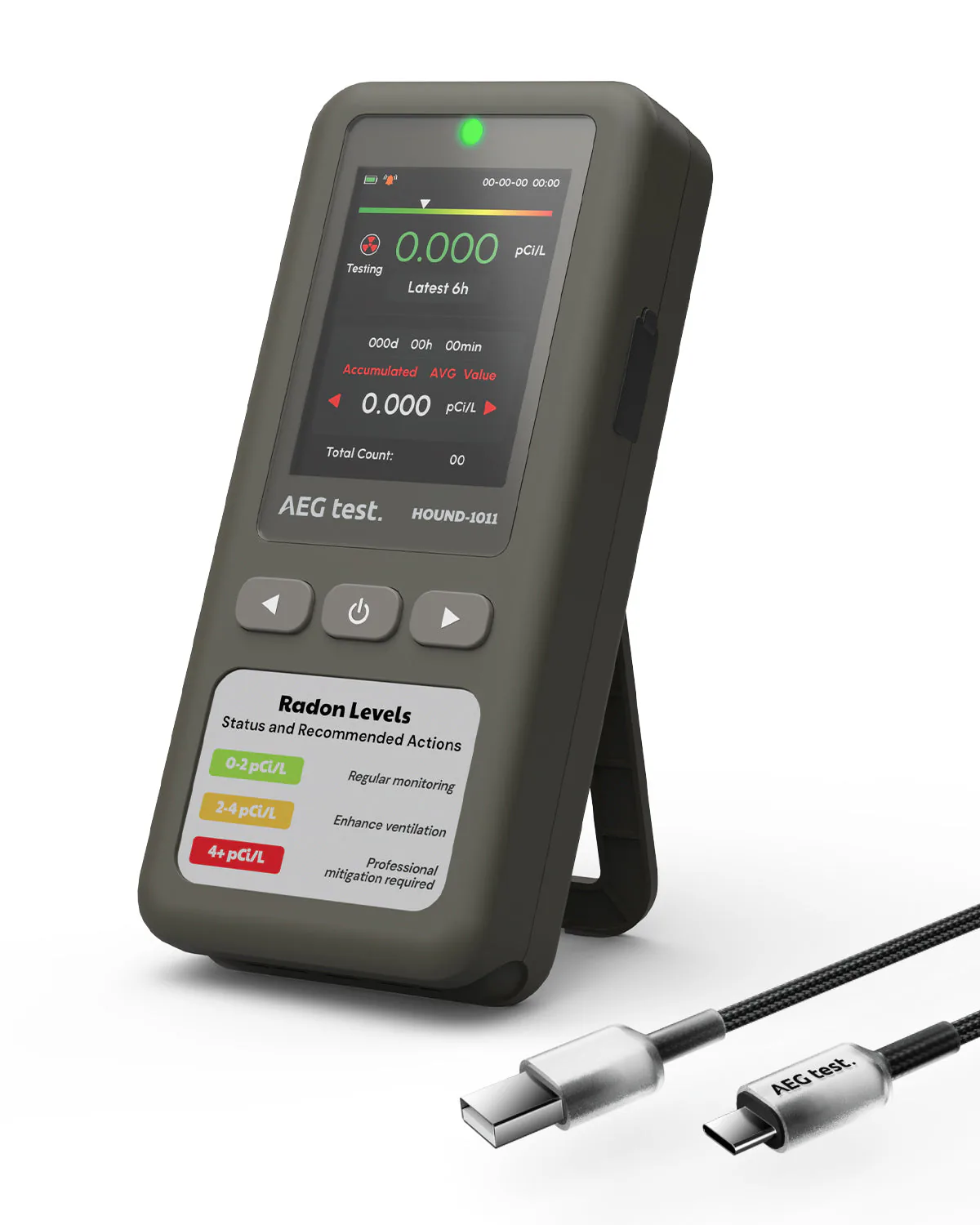
HOUND-1011 rechargeable radon detector with a screen
- C-NRPP 2024/25: Not included
- Battery
- Alarm
- Screen
Method: Semiconductor sensor
First reading: Within 6 hours
 Ecosense
Plug-in continuous radon monitor
Best for you if
Skip it if
Photos: Ecosense
 (opens in a new tab)Check price on Amazon (opens in a new tab)
As an Amazon Associate, Radon411 earns from qualifying purchases.
Amazon and the Amazon logo are trademarks of Amazon.com, Inc. or its affiliates.
See ratings and reviews on Amazon (opens in a new tab)As Ecosense states it
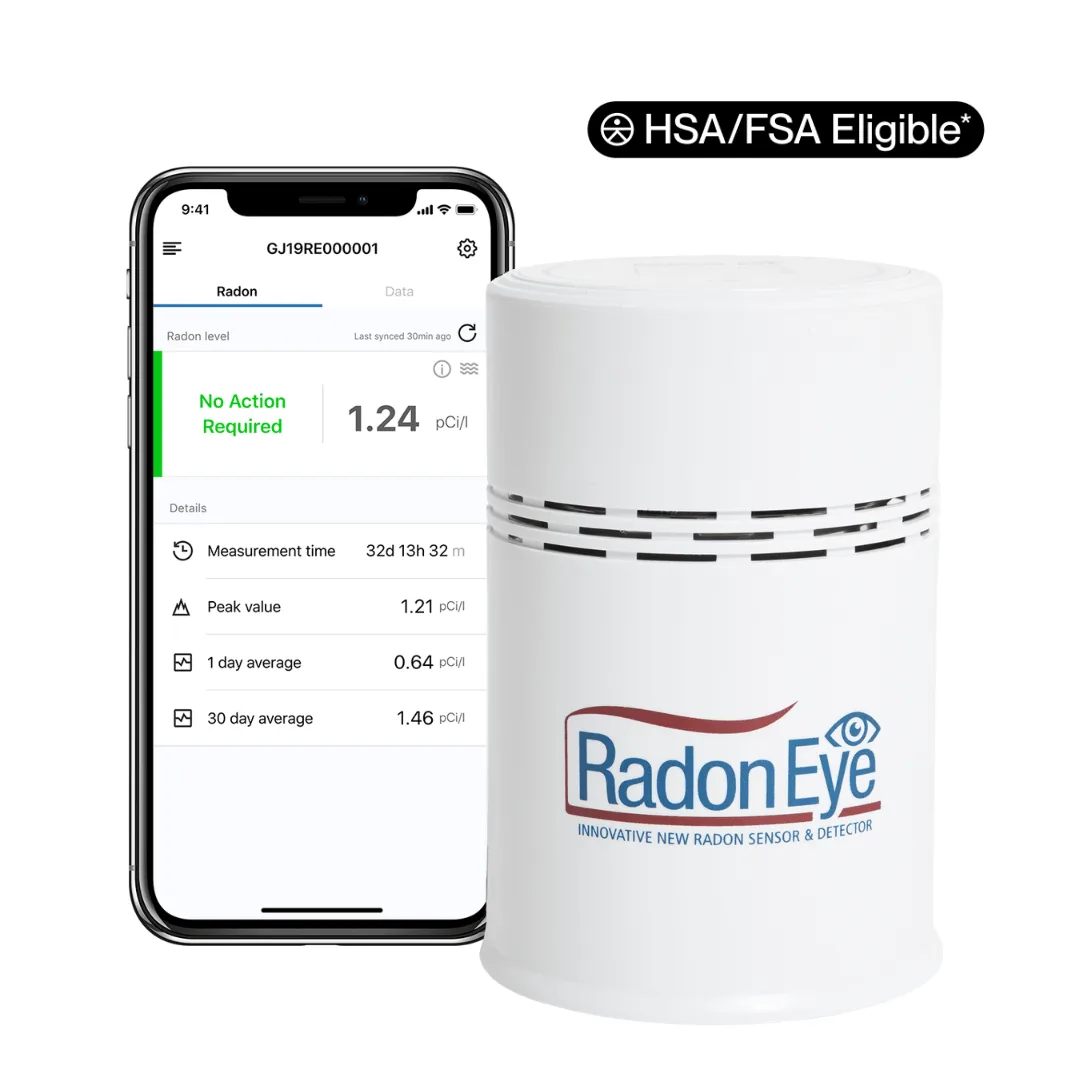
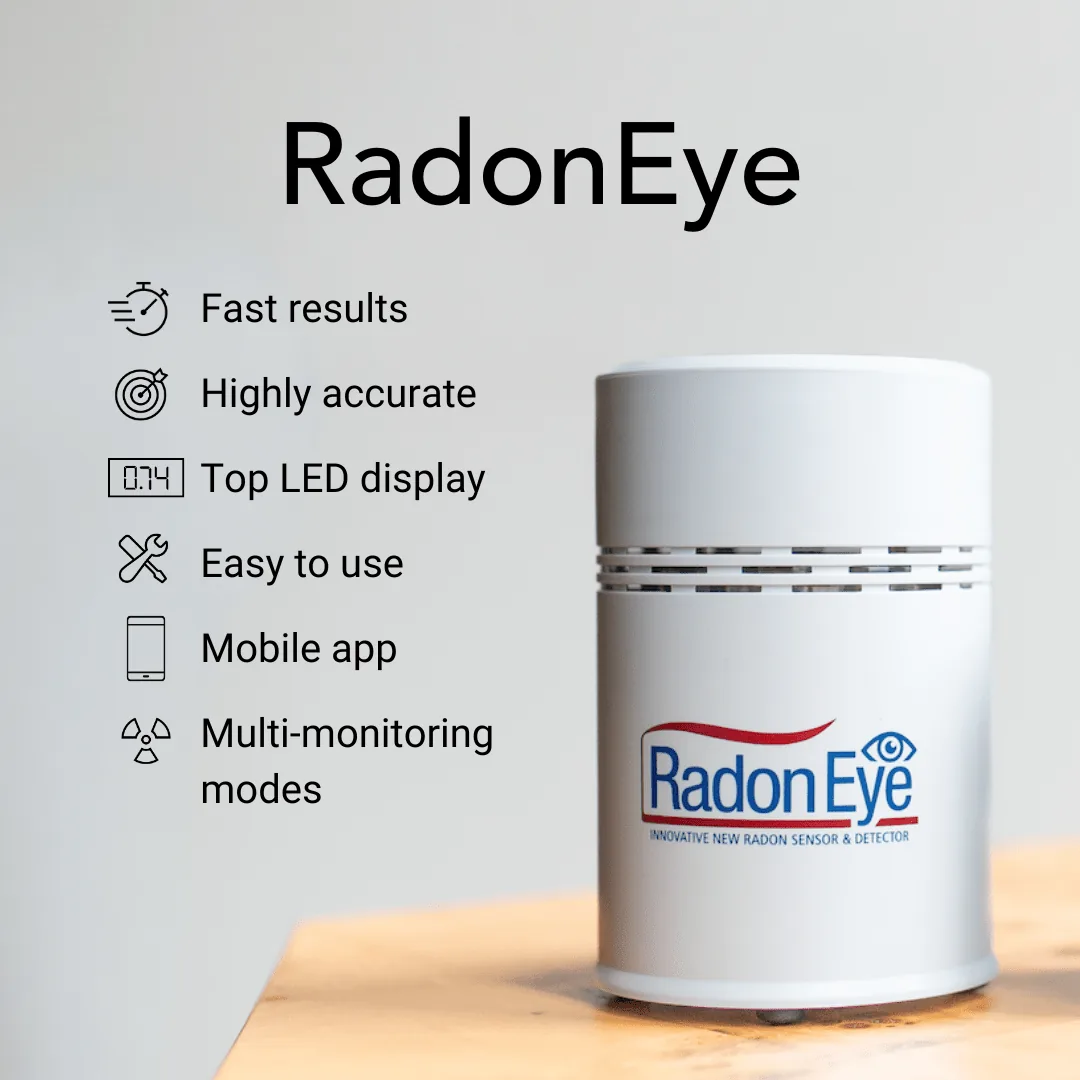
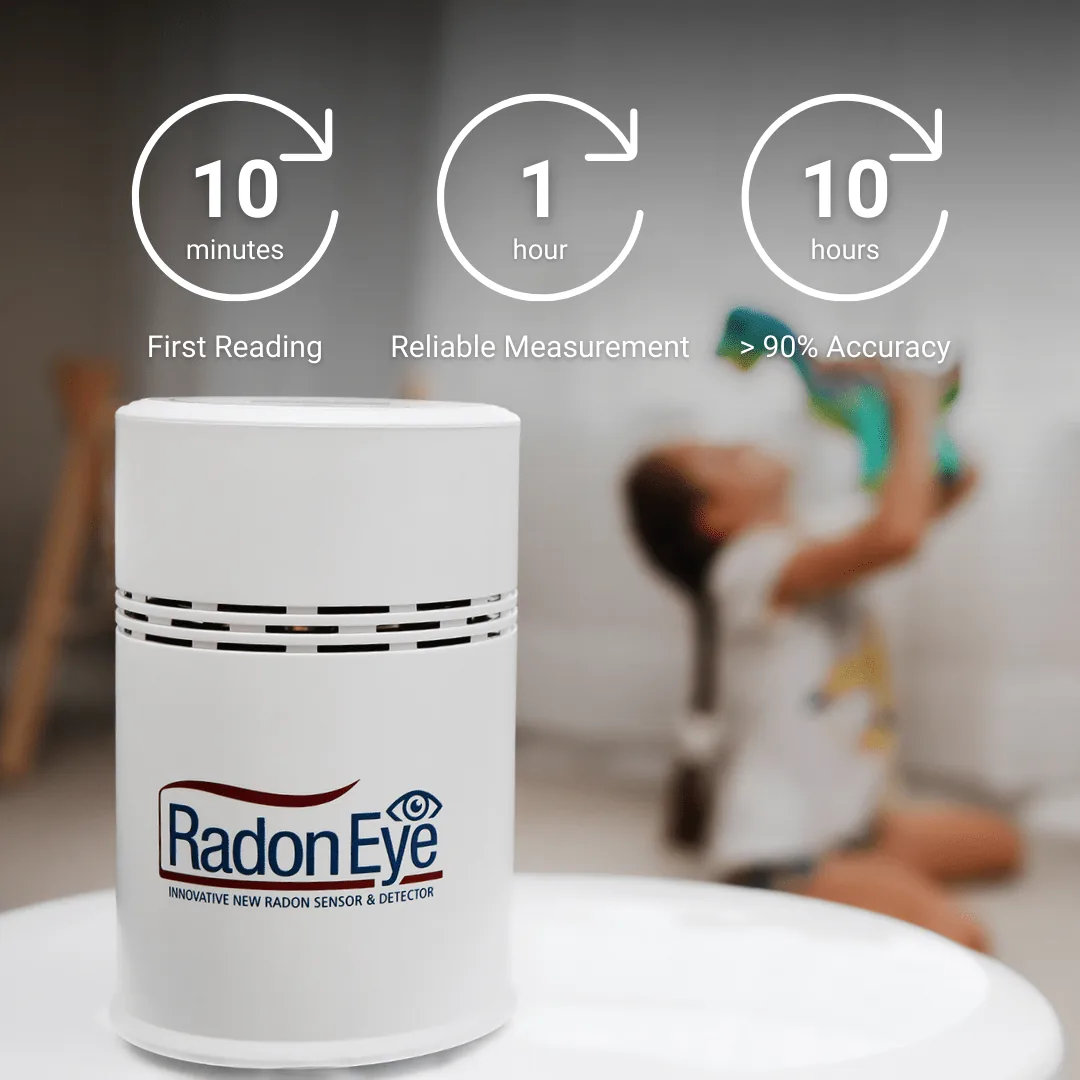
The RadonEye RD200 is a plug-in radon monitor from Ecosense that counts radon with a pulsed ionization chamber, shows a new number every 10 minutes and keeps its history on your phone over Bluetooth. C-NRPP approved it in its 2024/25 consumer monitor evaluation, with an A grade in all four test rounds.
The box holds the RadonEye, a user guide and a power adapter, with customer support by email and a 12-month limited warranty. Registering the device within 30 days adds a one-year extension, for two years of coverage in total.
In the box and running costsHow it works
The sensor, the sampling and the readings, then who has checked it
In our words, from the maker's documents
Inside the RadonEye is a pulsed ionization chamber. Ecosense's specification sheet names it as the radon sensor, and the 2024 comparison in the journal Sensors lists the same detection principle, a pulsed ion chamber, for the RadonEye and for the AlphaGUARD professional monitor it used as the reference. Air reaches the chamber on its own: the study notes that every monitor it tested works without a pump, so the air intake into the detection chamber is passive.
What sets the RadonEye apart on paper is how many counts it collects. Ecosense rates it at 30 counts per hour for each pCi/L of radon, and compares that with a minimum of 2 counts per hour per pCi/L that it attributes to ANSI/AARST. Ecosense ties that sensitivity to speed: it says the sensitivity lets users act quickly, and it promises a first reading in 10 minutes with no 24-hour wait.
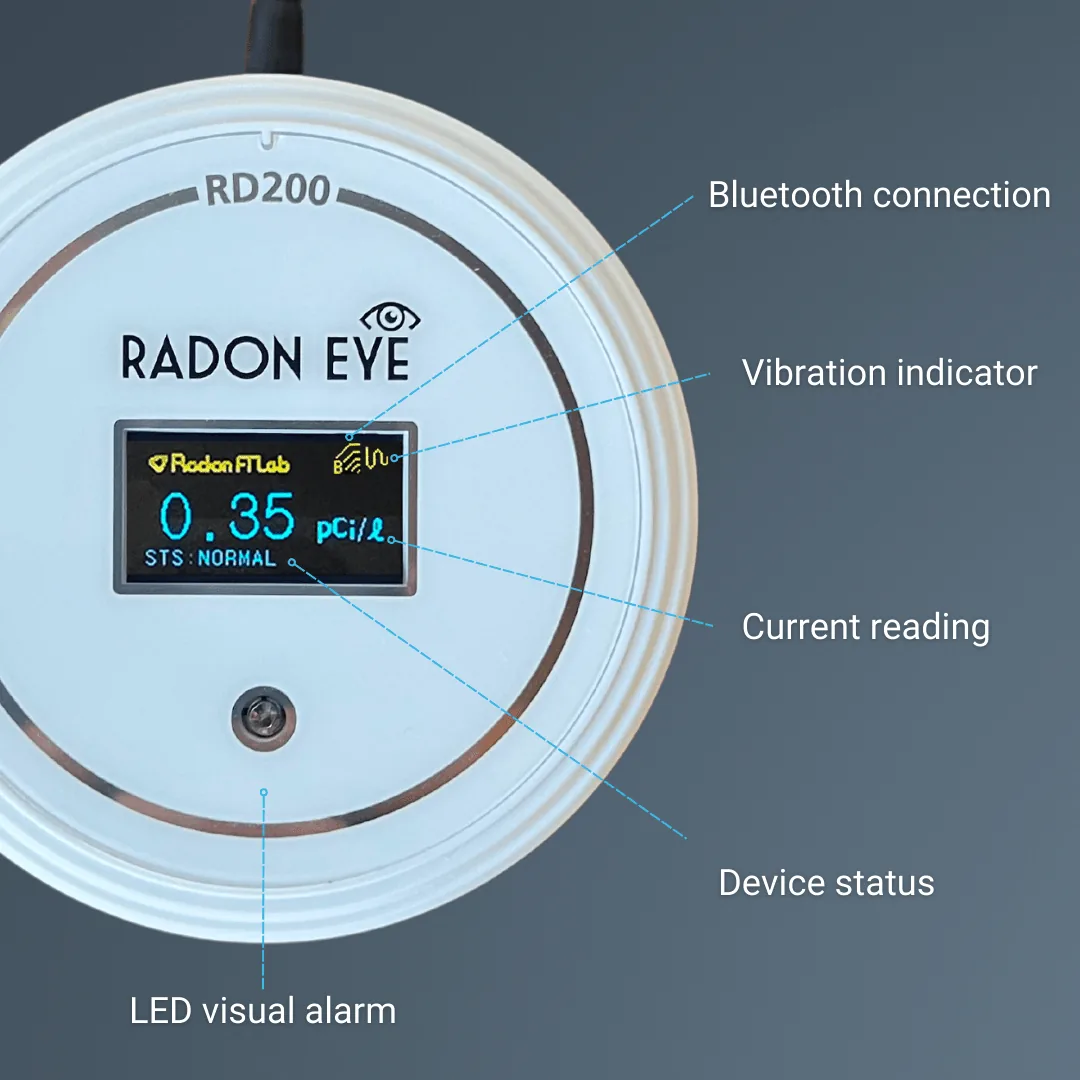
The device takes a measurement every 10 minutes, and the number it reports is a 60-minute moving average, so each number reflects roughly the last hour. The small OLED screen shows the latest result and scrolls through longer averages, and the Ecosense app collects hourly readings over Bluetooth and saves data for up to a year. There is no internal clock, so anything tied to a date, such as a weekly log, lives in the app rather than on the screen.
Ecosense publishes a measurement range of 0.2 to 99.9 pCi/L, which it also gives as 7 to 3,700 Bq/m³, and an operating range of 32 to 104°F with relative humidity under 80%. The monitor has an integrated audio alarm, and its specifications list a 12V, 1A power supply.
Ecosense's own statements, attributed
These are Ecosense's own statements, attributed to it. They are not our findings, and we have not tested this product ourselves.
C-NRPP 2024/25, recalls and studies
Listed by C-NRPP as "Ecosense RadonEye RD200" and "Ecosense RadonEye". Results published May 2025.
C-NRPP grades each round by measurement error: A is 10% or less, B more than 10% and up to 20%, C more than 20% and up to 30%. It recommends devices that average B or better.
C-NRPP's 2023 report listed “Ecosense RadonEye RD200” as having passed its performance test.
C-NRPP is the Canadian National Radon Proficiency Program. Its 2024/25 results were published in May 2025.
Ecosense RadonEye RD200
Check price on Amazon (opens in a new tab)Specifications
Every figure as the maker states it
The box holds the RadonEye, a user guide and a power adapter, with customer support by email and a 12-month limited warranty. Registering the device within 30 days adds a one-year extension, for two years of coverage in total.
There is no lab fee and no subscription: the app is free and the monitor needs only its 12V adapter, which Ecosense sells separately if it is lost. The running cost is the electricity for a small plug-in device. Ecosense gives an expected service life of 5 years, depending on conditions and wear, after which a replacement would be the next cost to plan for.
Fit and setup
The fit, then setup and placement as the guidance asks
Good fit if, and look elsewhere if
Good fit if
Look elsewhere if
3 steps
How C-NRPP says to use any consumer monitor
For where any radon test or monitor should sit in a home, see where to place a radon test.
Compare
The same three rows for each, and the one difference that matters
This page
Ecosense RadonEye RD200
This page: The RadonEye RD200 is a plug-in radon monitor from Ecosense that counts radon with a pulsed ionization chamber, shows a new number every 10 minutes and keeps its history on your phone over Bluetooth.
Airthings
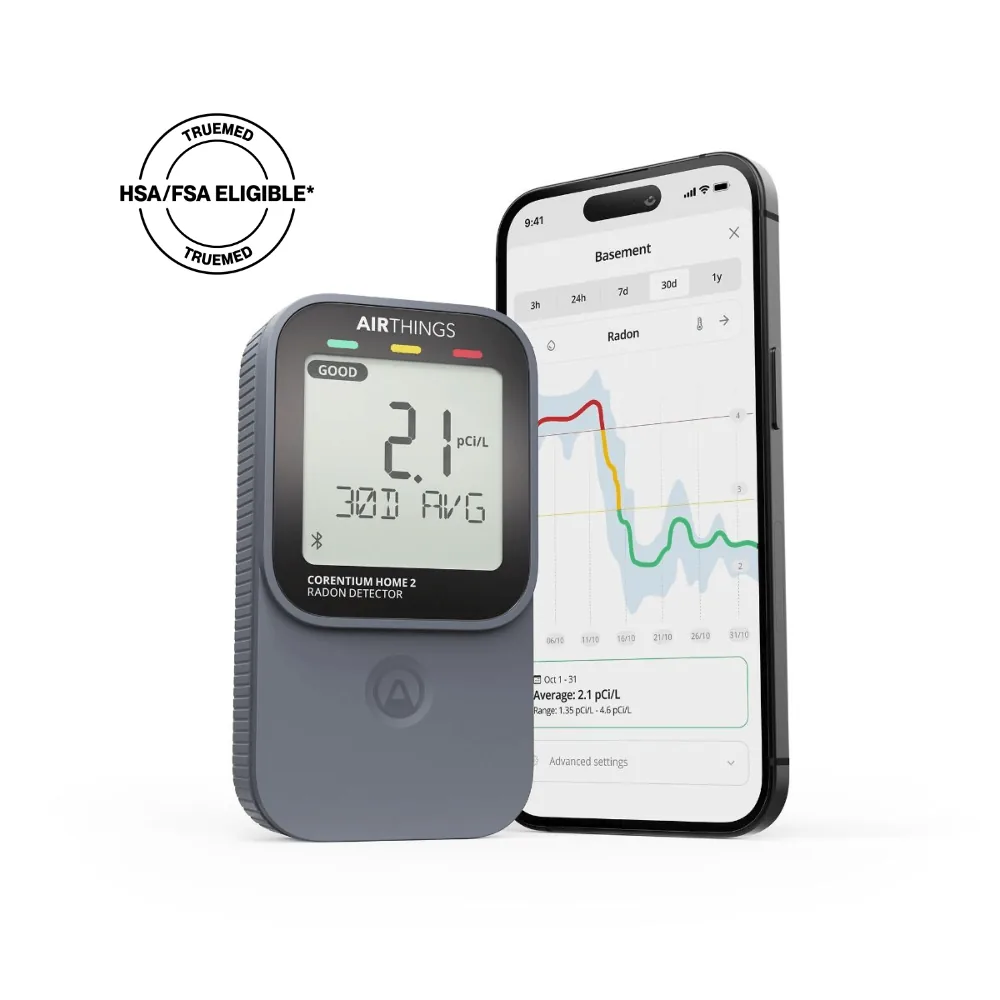
The difference: Runs on two AA batteries and measures by alpha spectrometry, sampling every 60 minutes; it was not part of C-NRPP's 2024/25 evaluation.
Ecosense
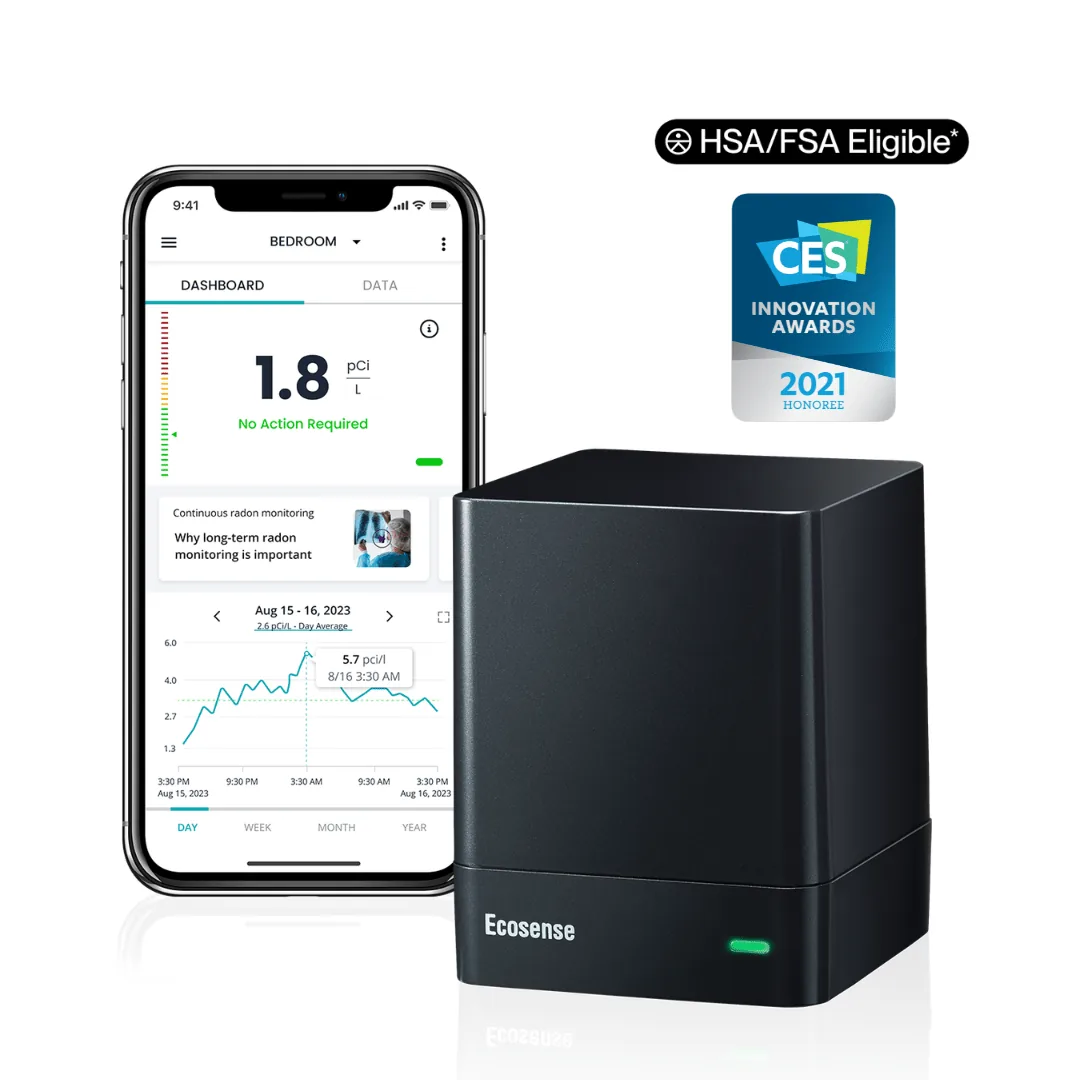
The difference: Same maker and the same stated accuracy at 370 Bq/m³; the EcoQube connects over Wi-Fi for remote viewing and shows a colored light instead of a number display.
GQ Electronics
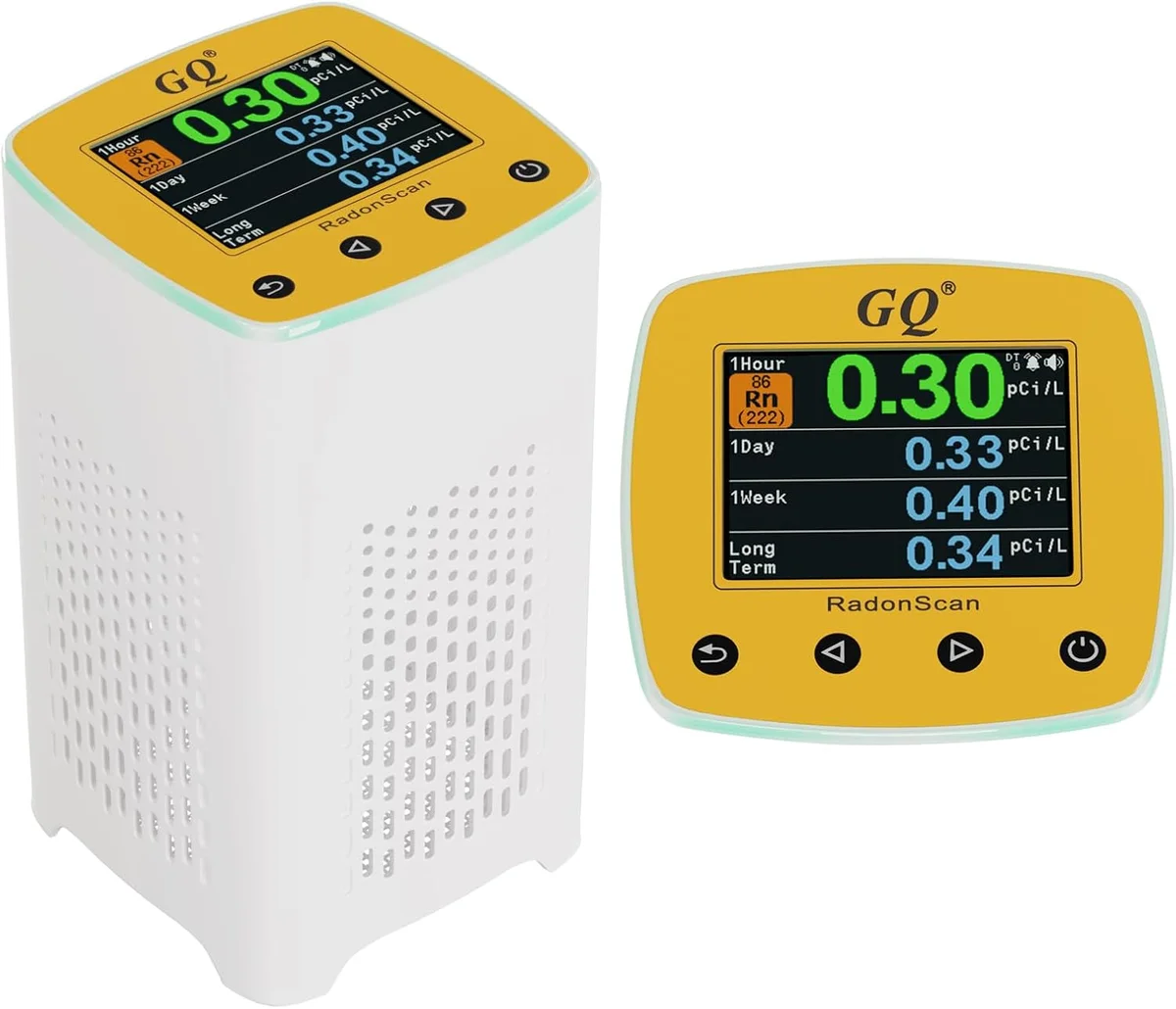
The difference: GQ's RadonScan also runs from the wall, through a USB adapter, with a color screen of 1-hour, 1-day, 1-week and long-term averages and an alarm, but has no Bluetooth or app; GQ does not name its sensor type and states no accuracy figure.
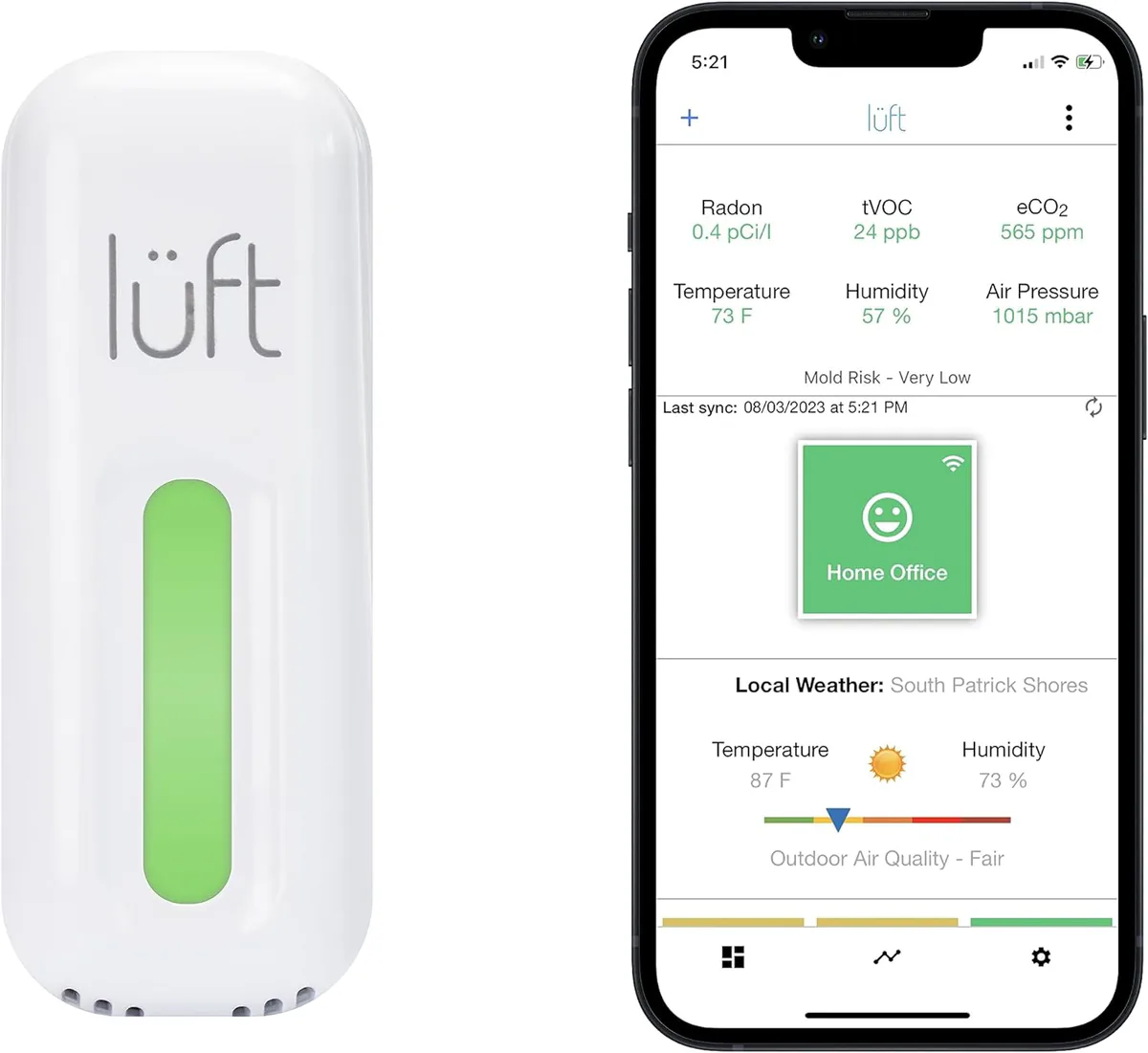
SunRADON
The difference: Also plug-in and approved in C-NRPP's 2024/25 evaluation, but with no number display: a green, yellow or red front light, readings in a Wi-Fi app, and five air-quality sensors besides radon.
Compared with similar products: 1 of 5
MonitorAEGTEST
Method: Semiconductor sensor
First reading: Within 6 hours
MonitorAEGTEST
Method: Semiconductor sensor
First reading: Within 12 hours
MonitorAEGTEST
Method: Semiconductor sensor
First reading: Within 6 hours
MonitorAEGTEST
First reading: Within 1 hour
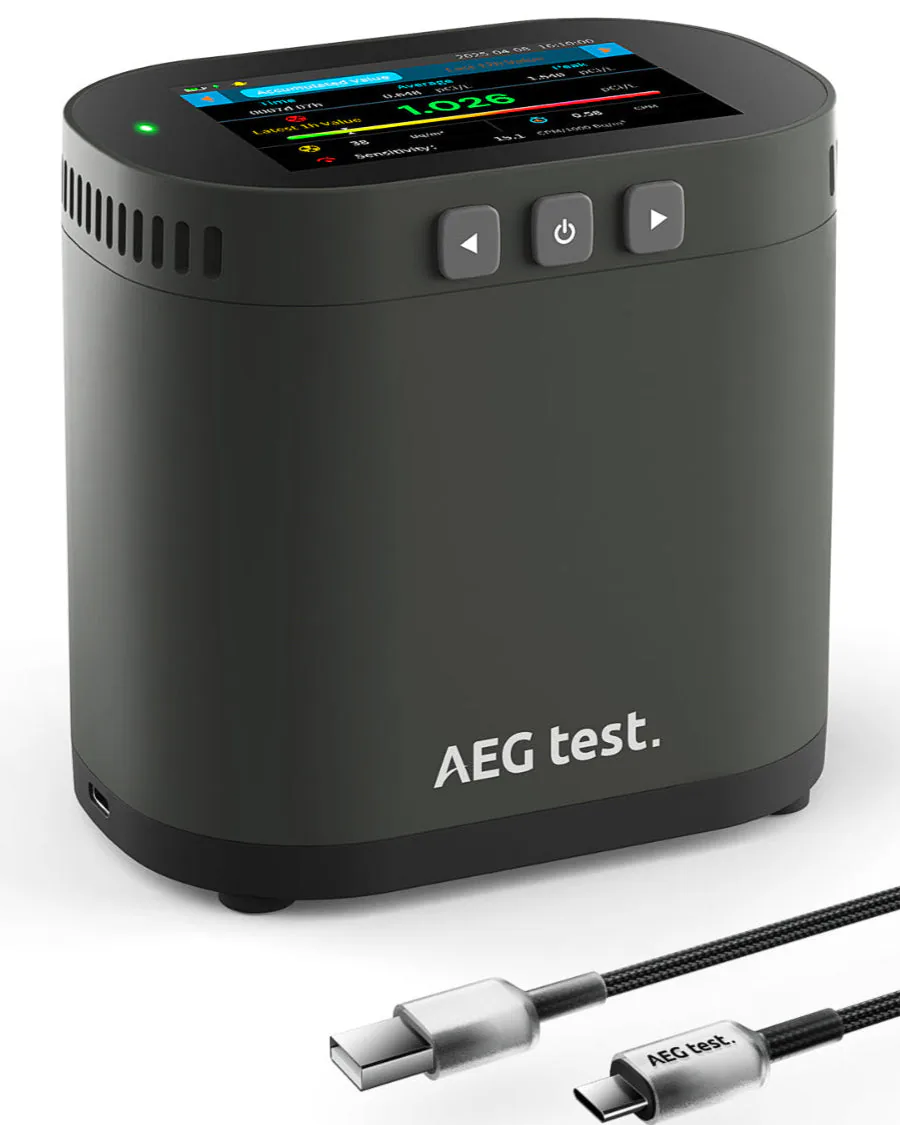
MonitorAEGTEST
Method: Ion chamber
First reading: Within 10 minutes
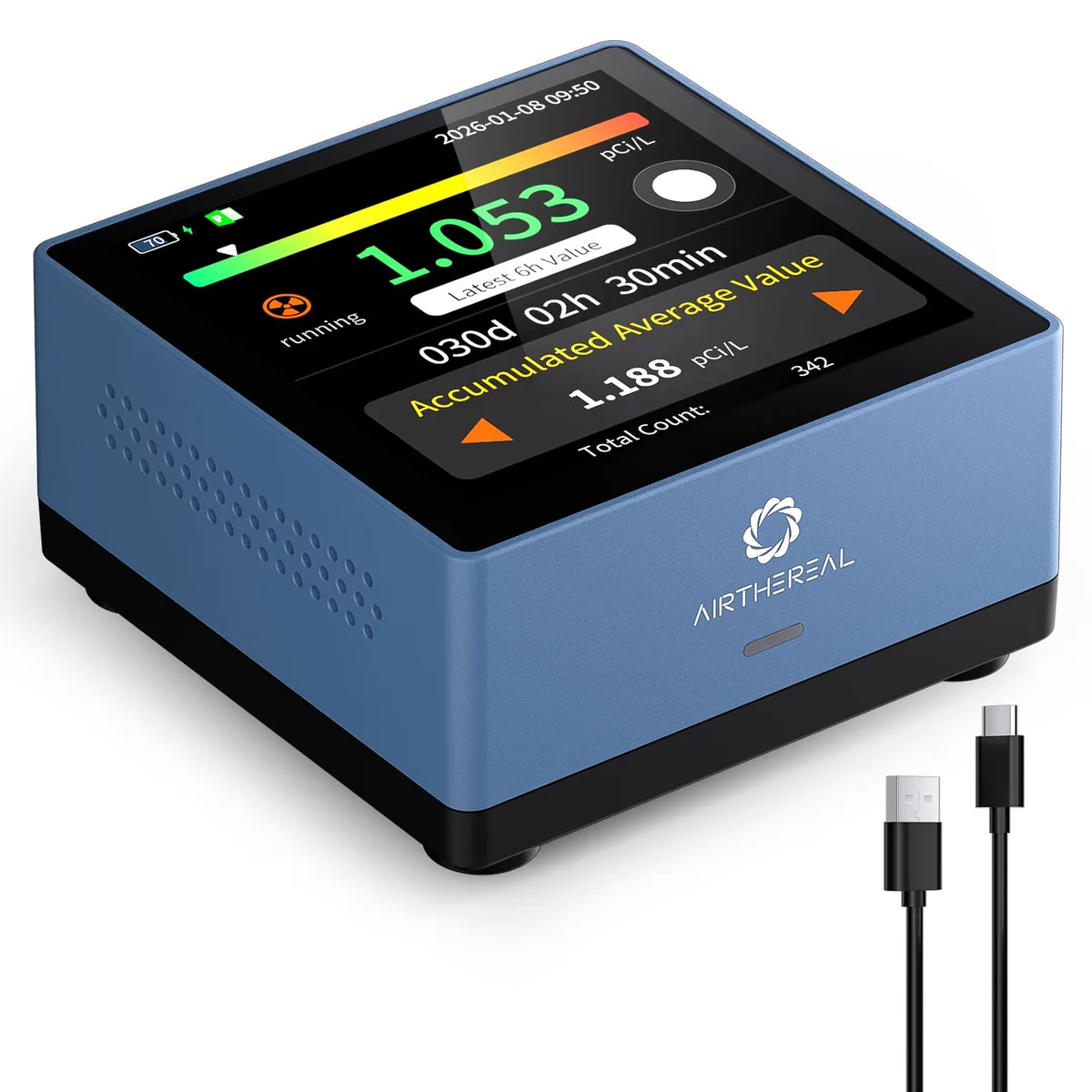
Monitor
Method: Semiconductor sensor
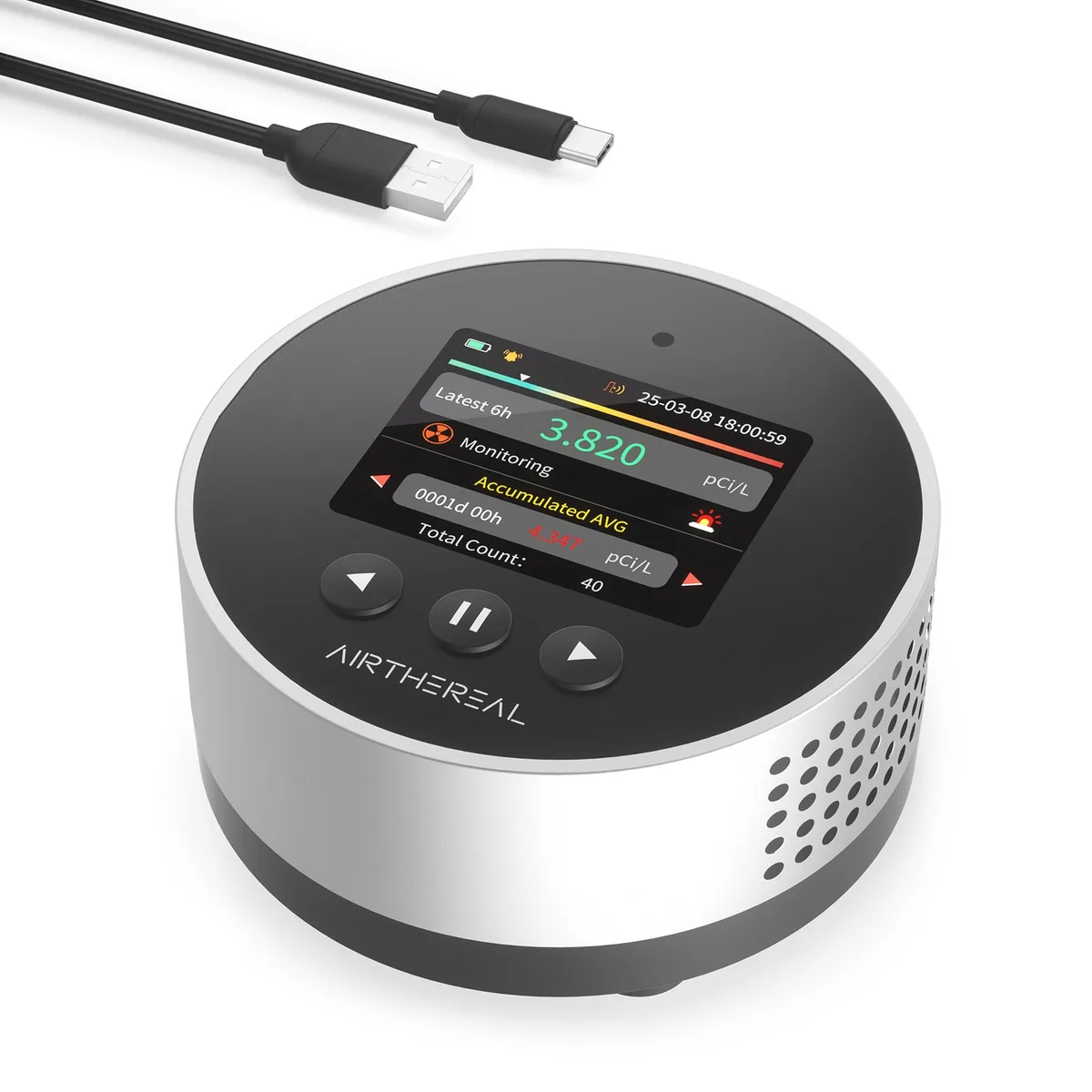
Monitor
Method: Semiconductor sensor
First reading: Within 6 hours
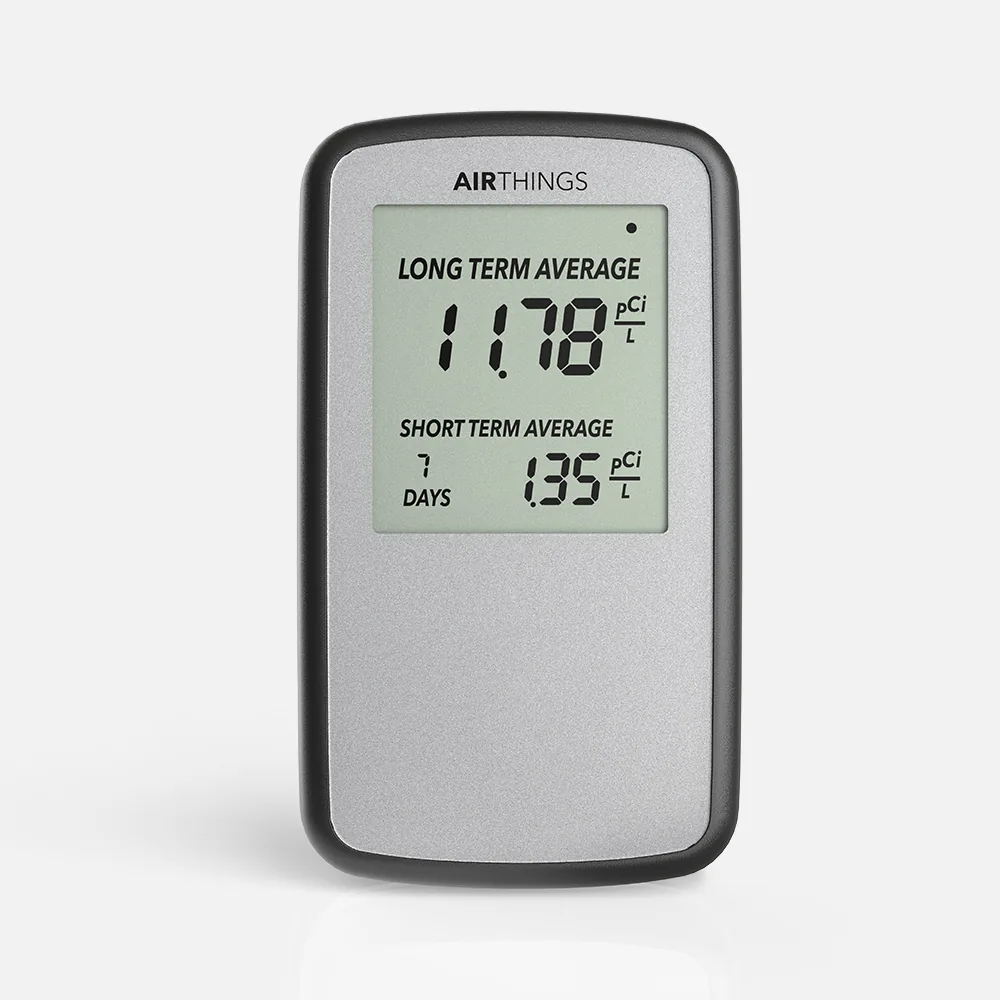
Monitor
Method: Alpha spectrometry
Monitor
Method: Alpha spectrometry
Readings: Every 60 minutes
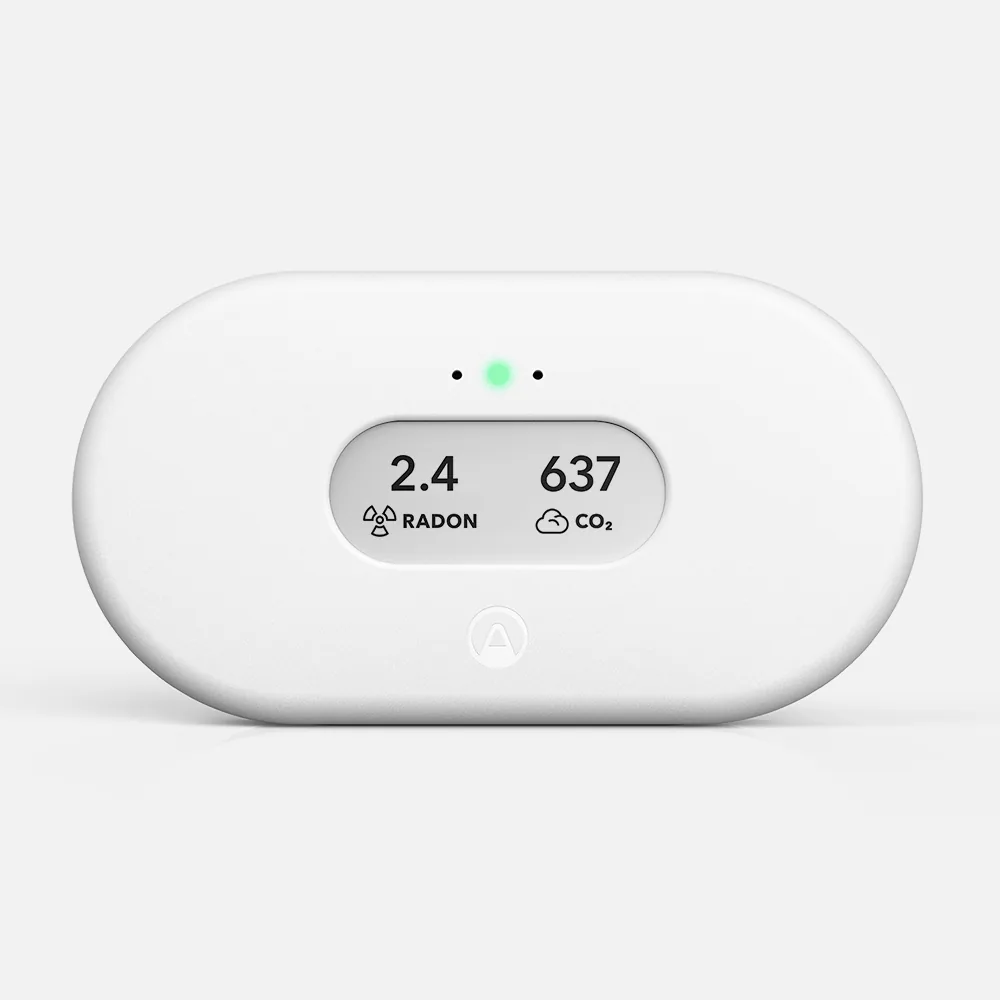
Monitor
Method: Alpha spectrometry
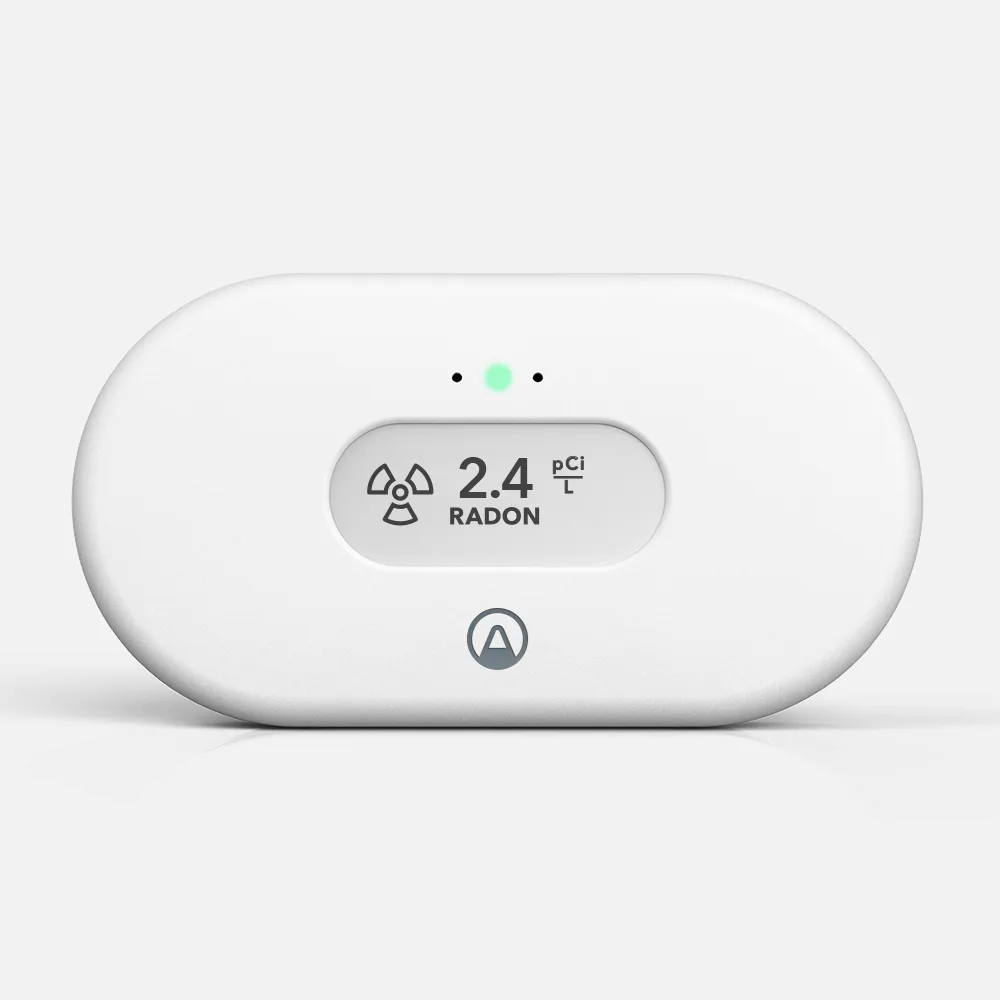
Monitor
Method: Alpha spectrometry
Readings: Every 60 minutes
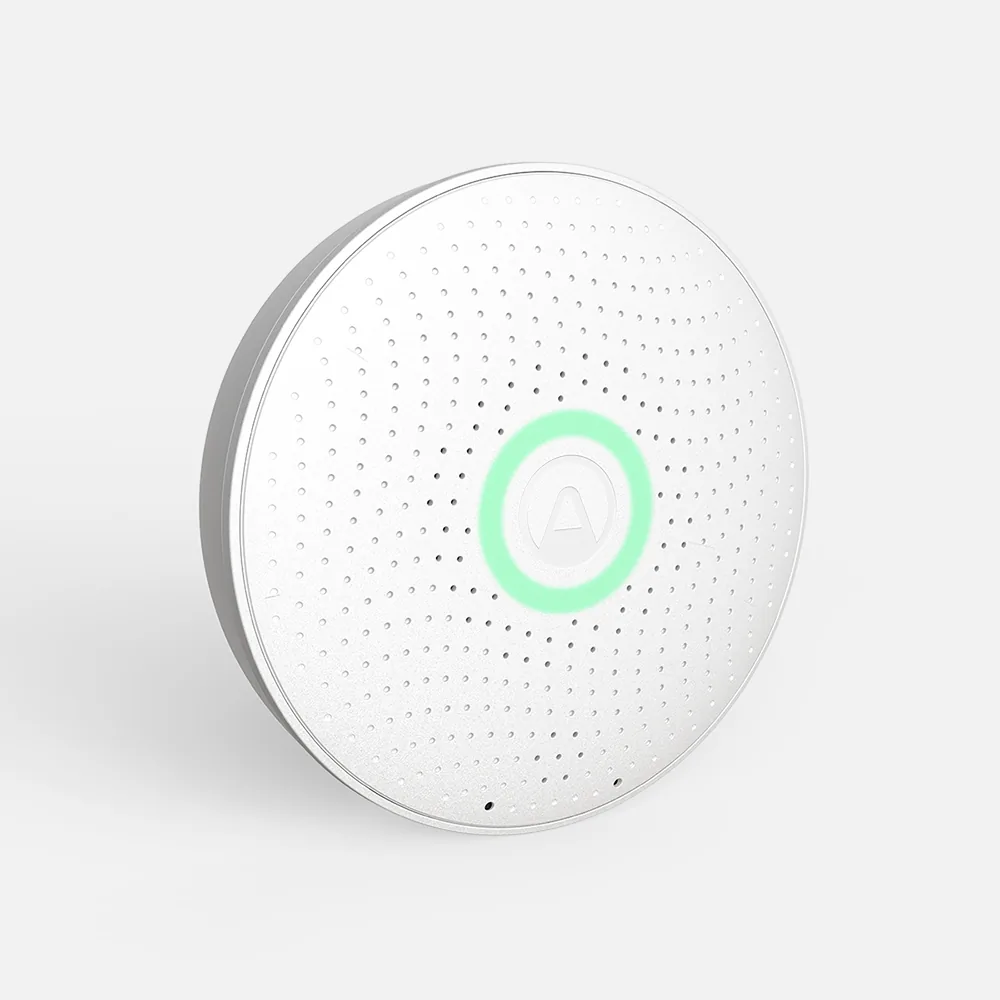
Monitor
Method: Alpha spectrometry
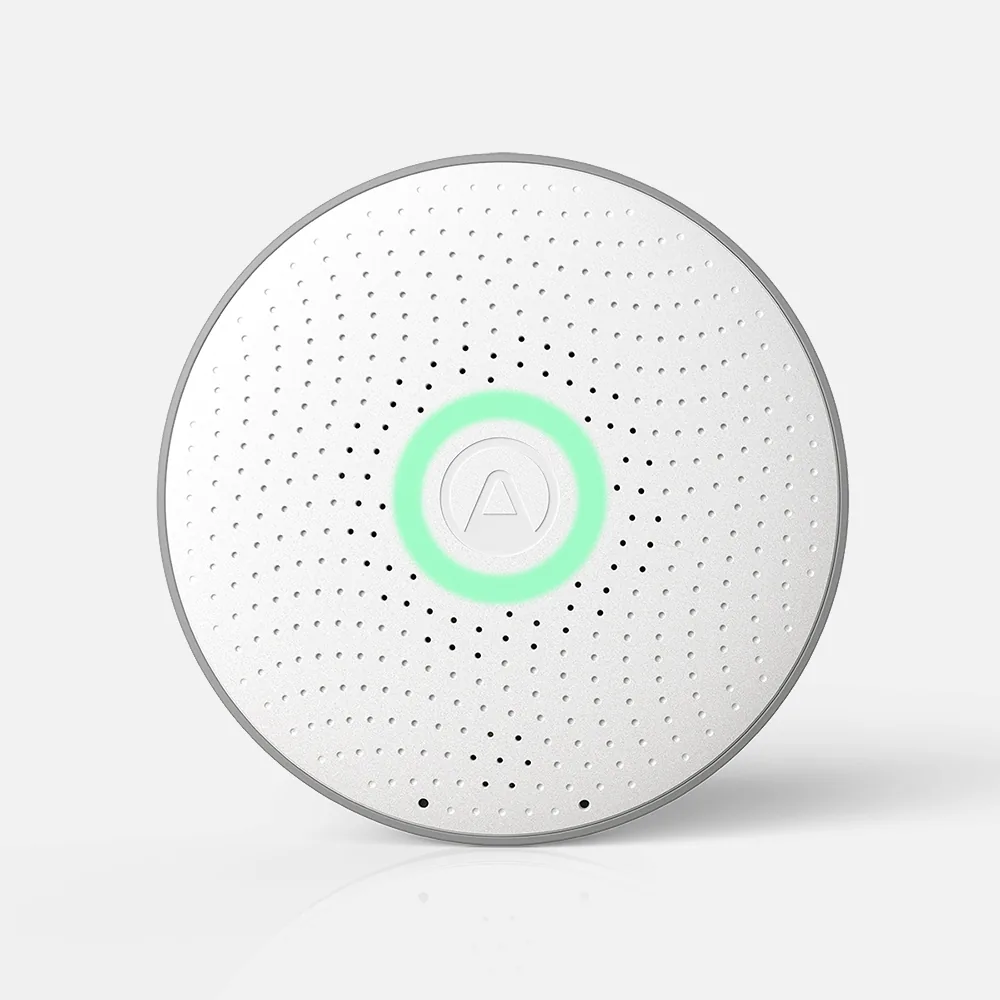
Monitor
Method: Alpha spectrometry
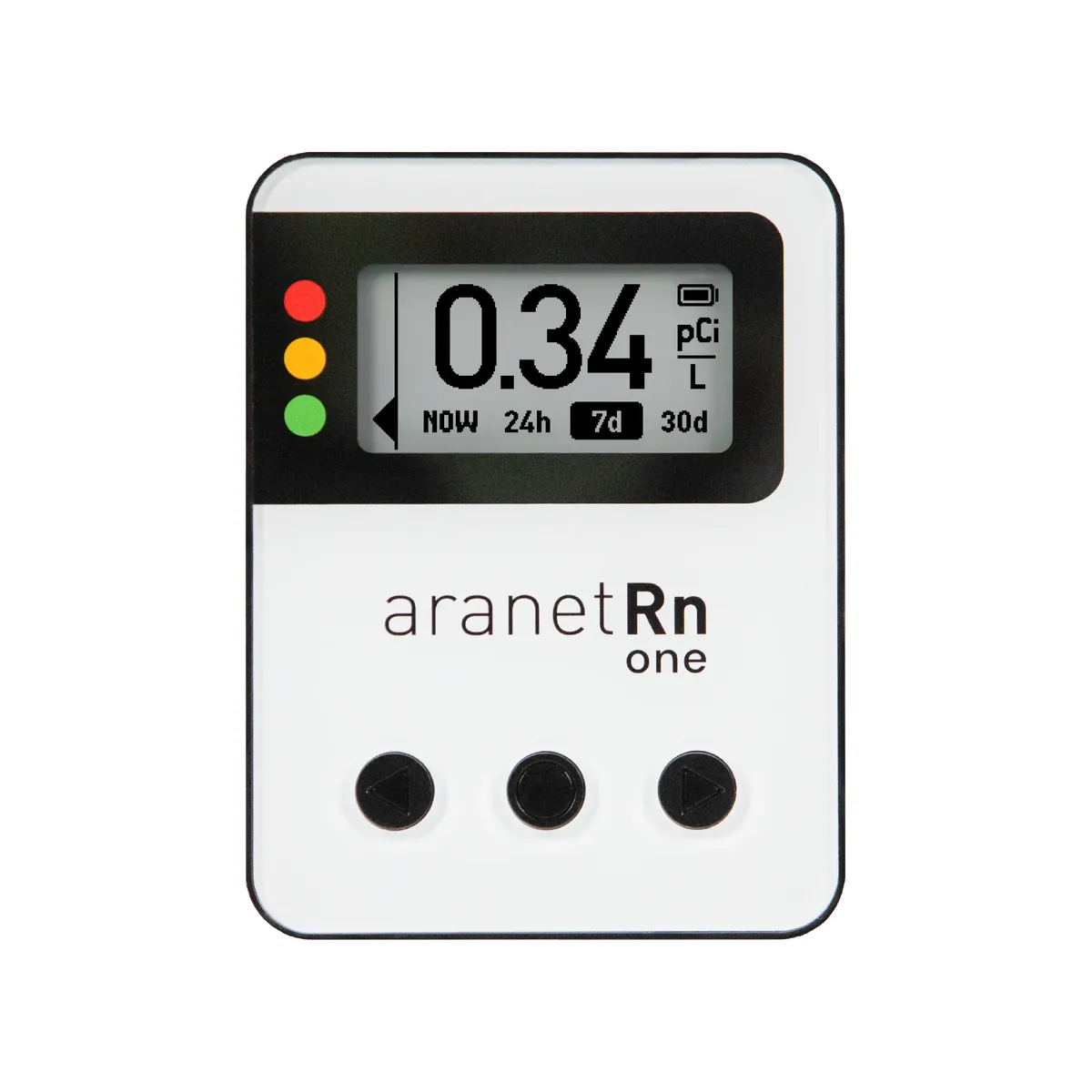
MonitorAranet
Method: Ion chamber
First reading: Within 10 minutes
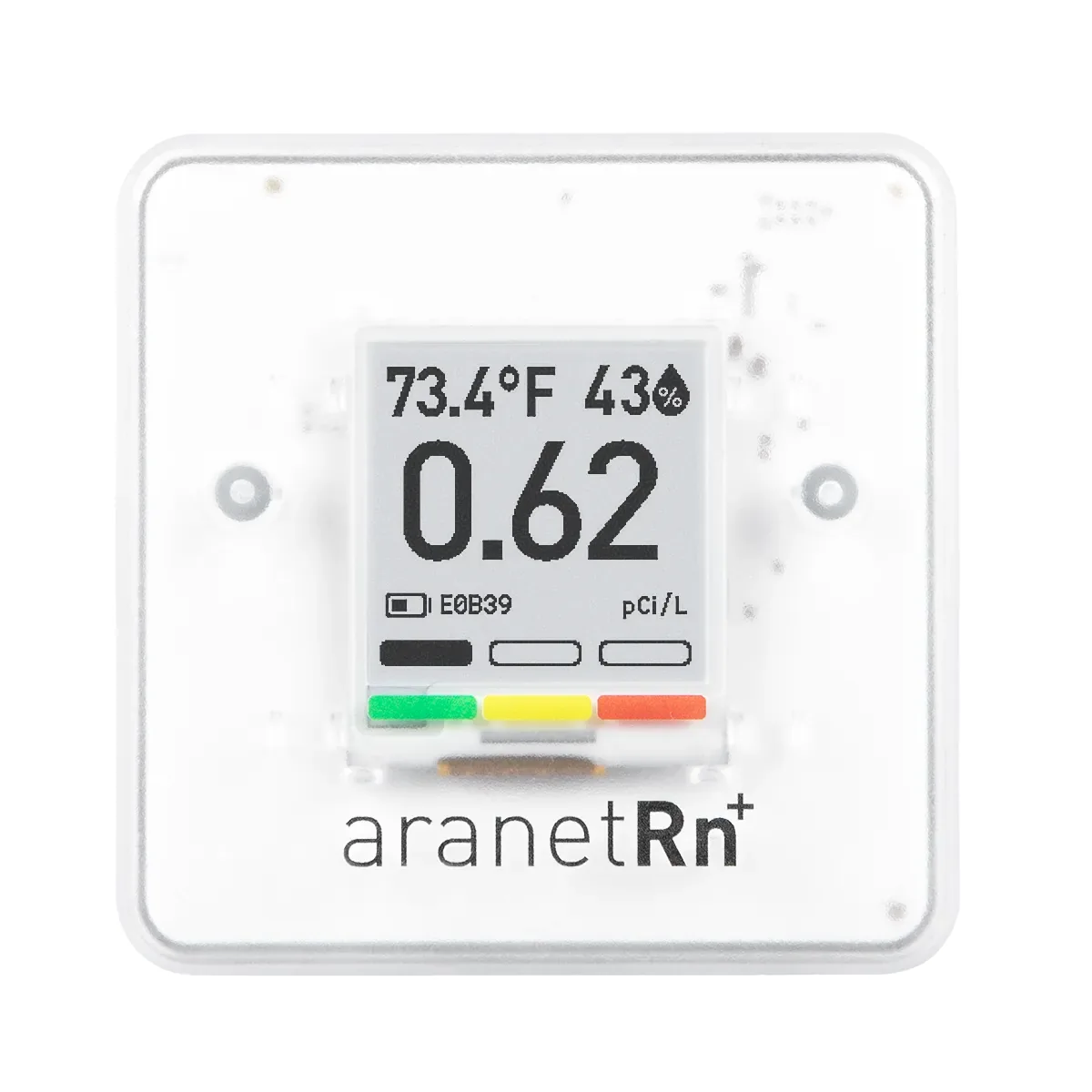
MonitorAranet
Method: Ion chamber
First reading: Within 10 minutes
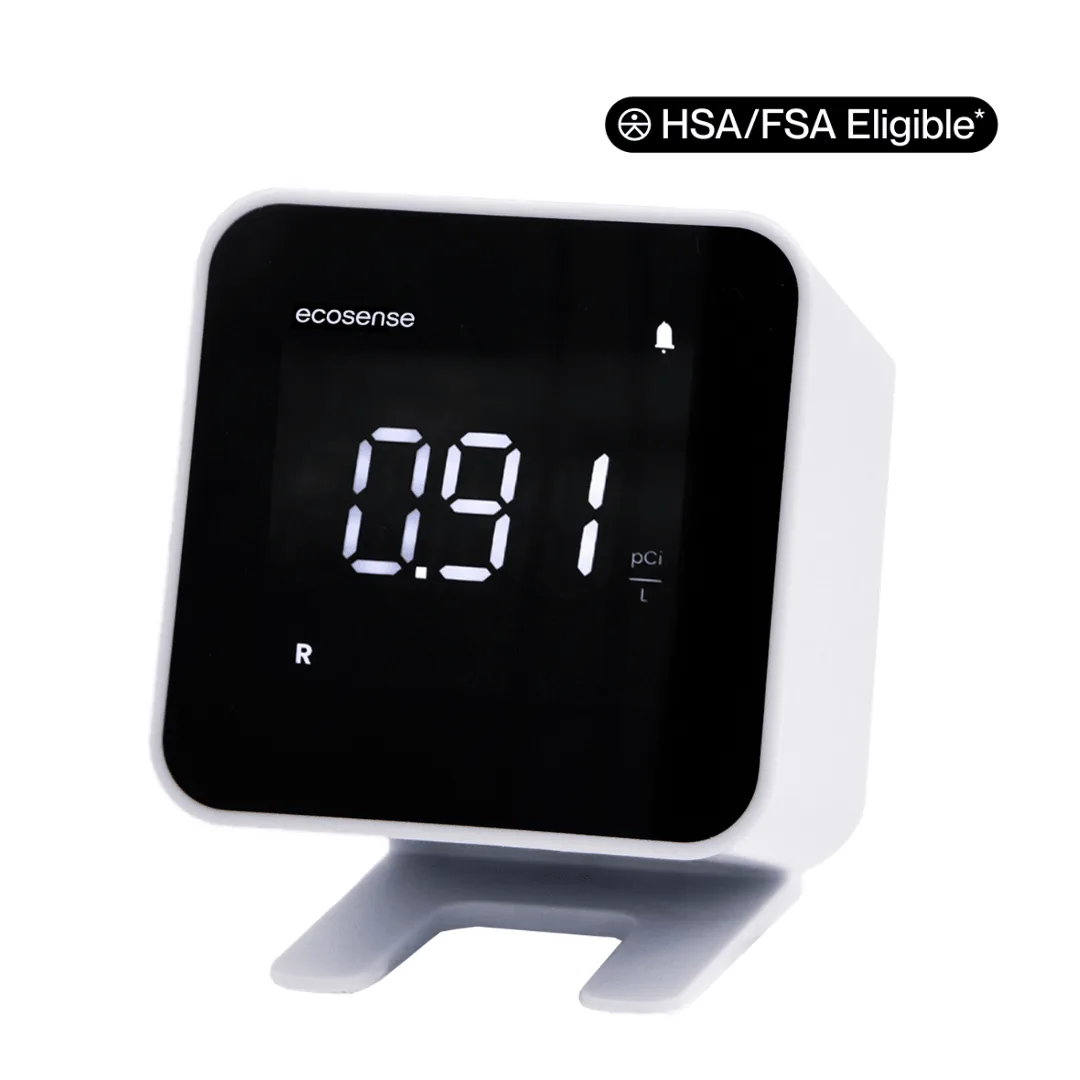
Monitor
Method: Ion chamber
First reading: Within 10 minutes
Monitor
Method: Ion chamber
First reading: Within 10 minutes
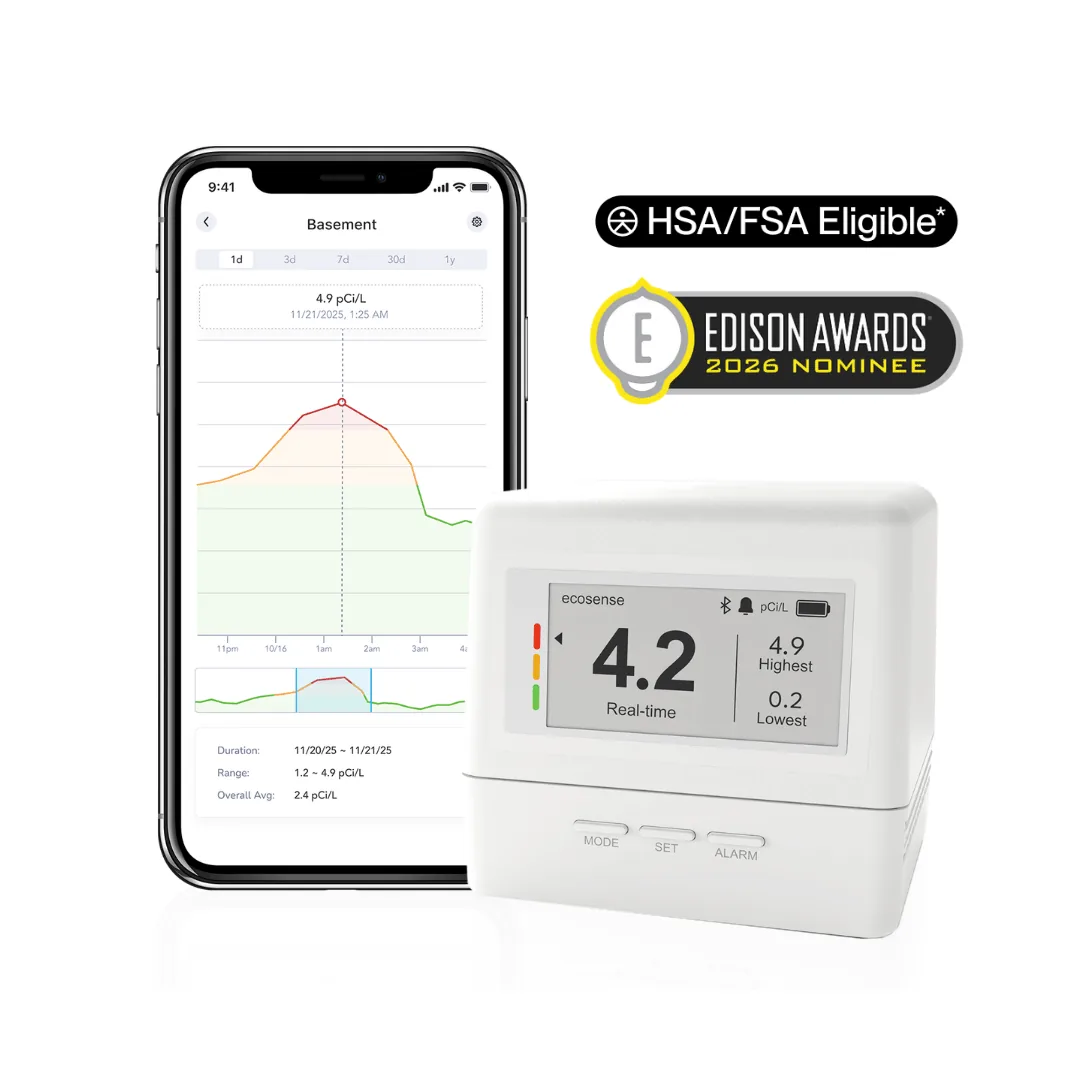
Monitor
Method: Ion chamber
First reading: Within 15 minutes
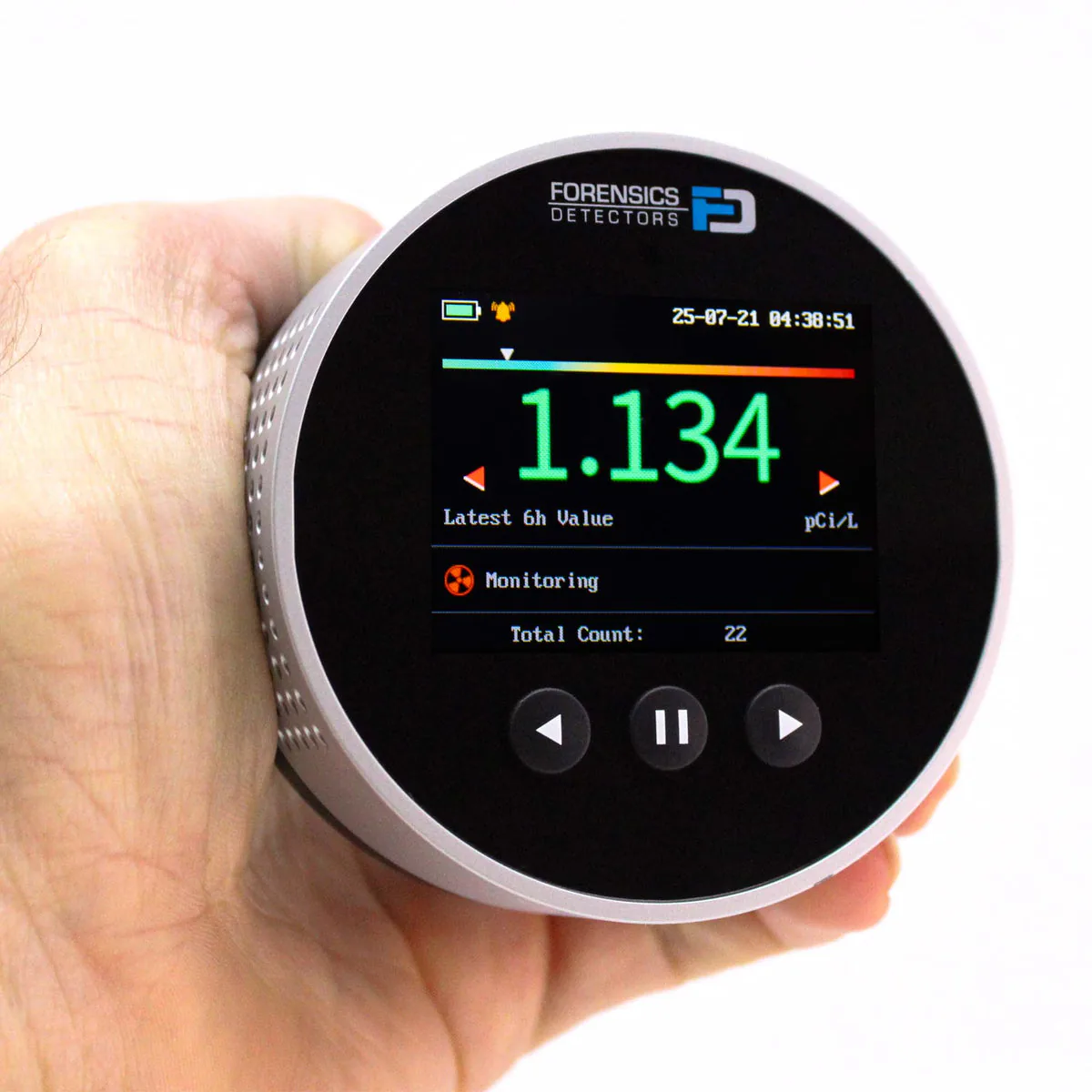
MonitorForensics Detectors
Method: Semiconductor sensor
First reading: Within 6 hours
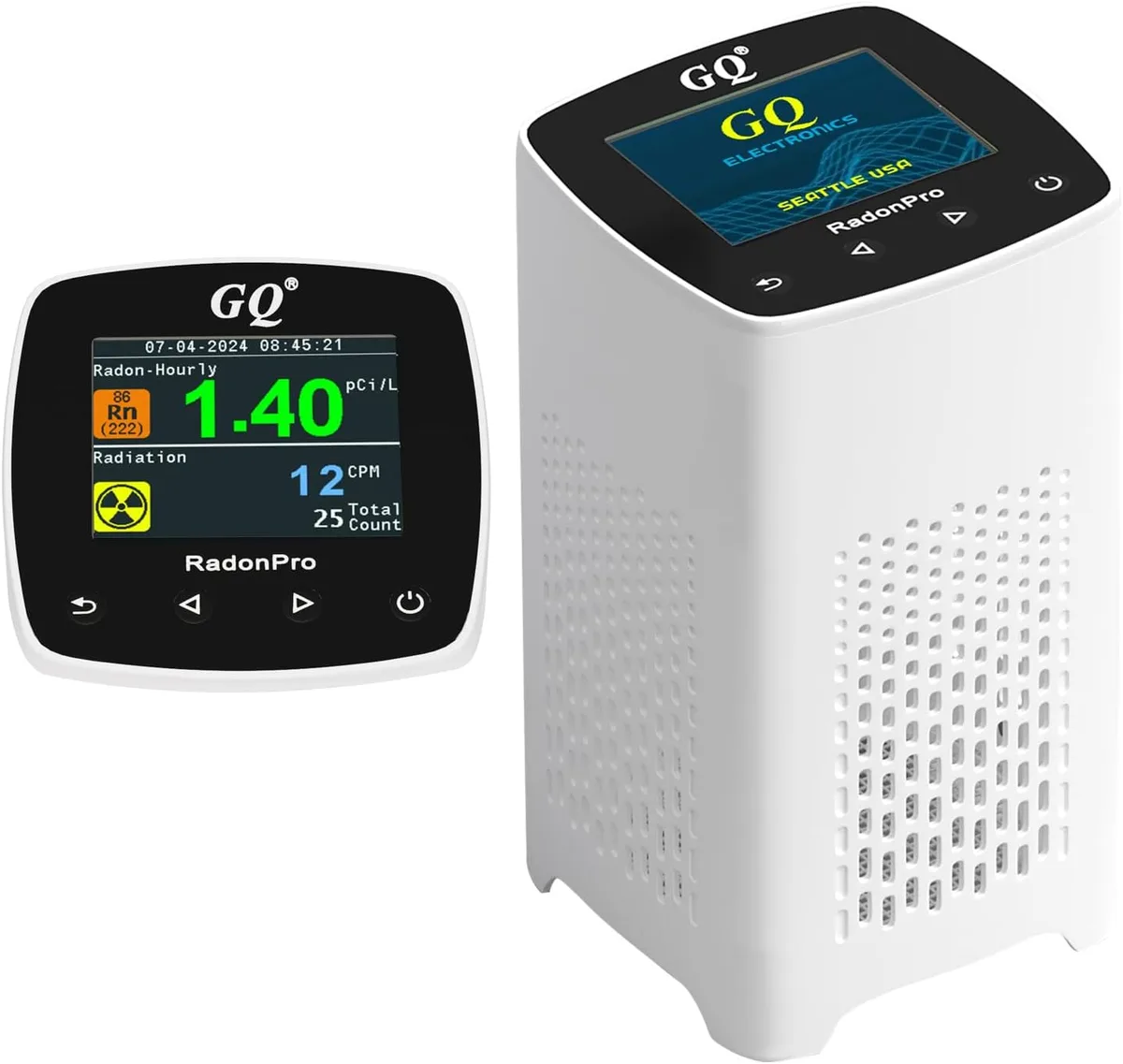
Monitor
First reading: Within 5 minutes
Monitor
First reading: Within 5 minutes
Monitor
First reading: Within 5 minutes
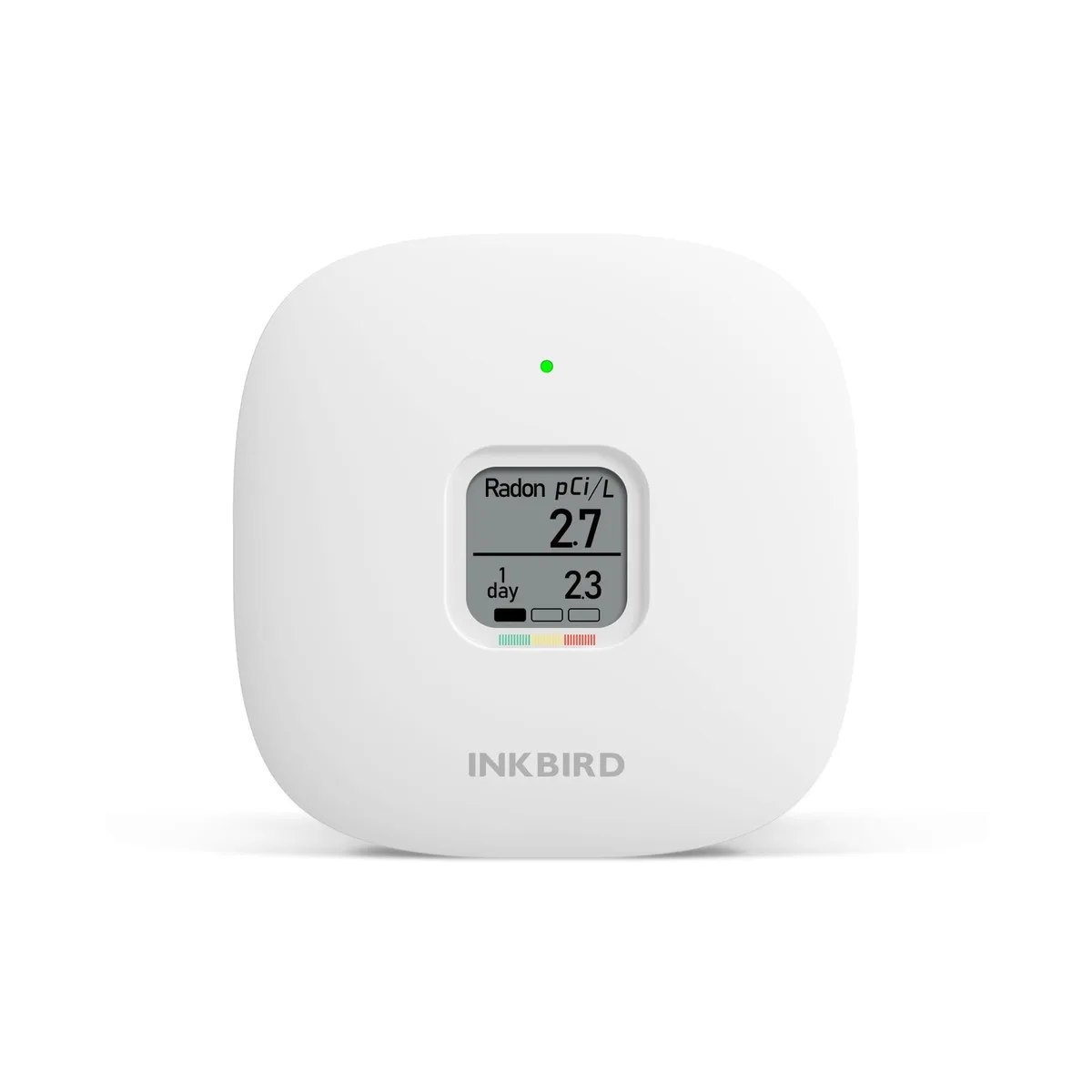
MonitorINKBIRD
First reading: Within 24 hours
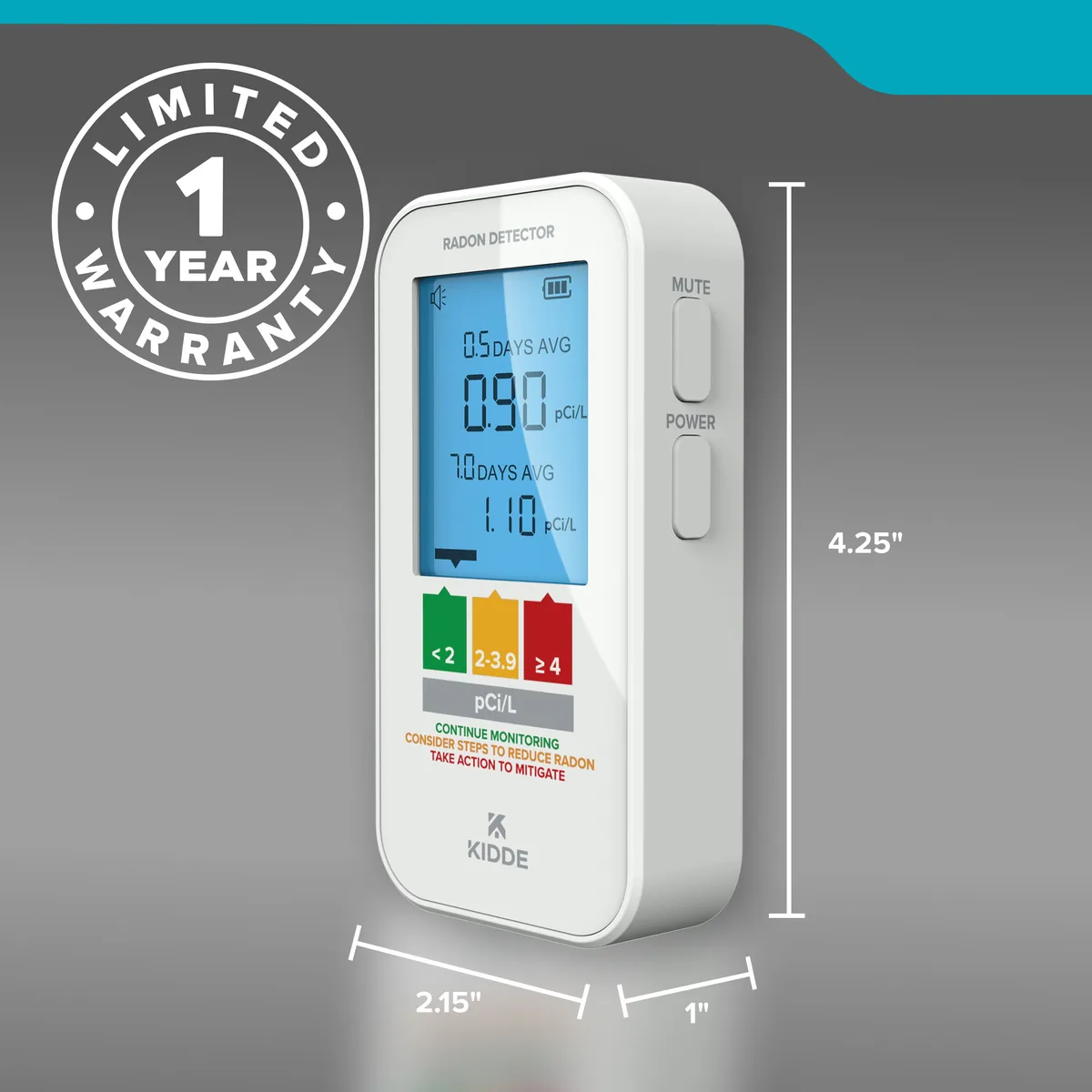
MonitorKidde
Method: Semiconductor sensor
First reading: Within 12 hours
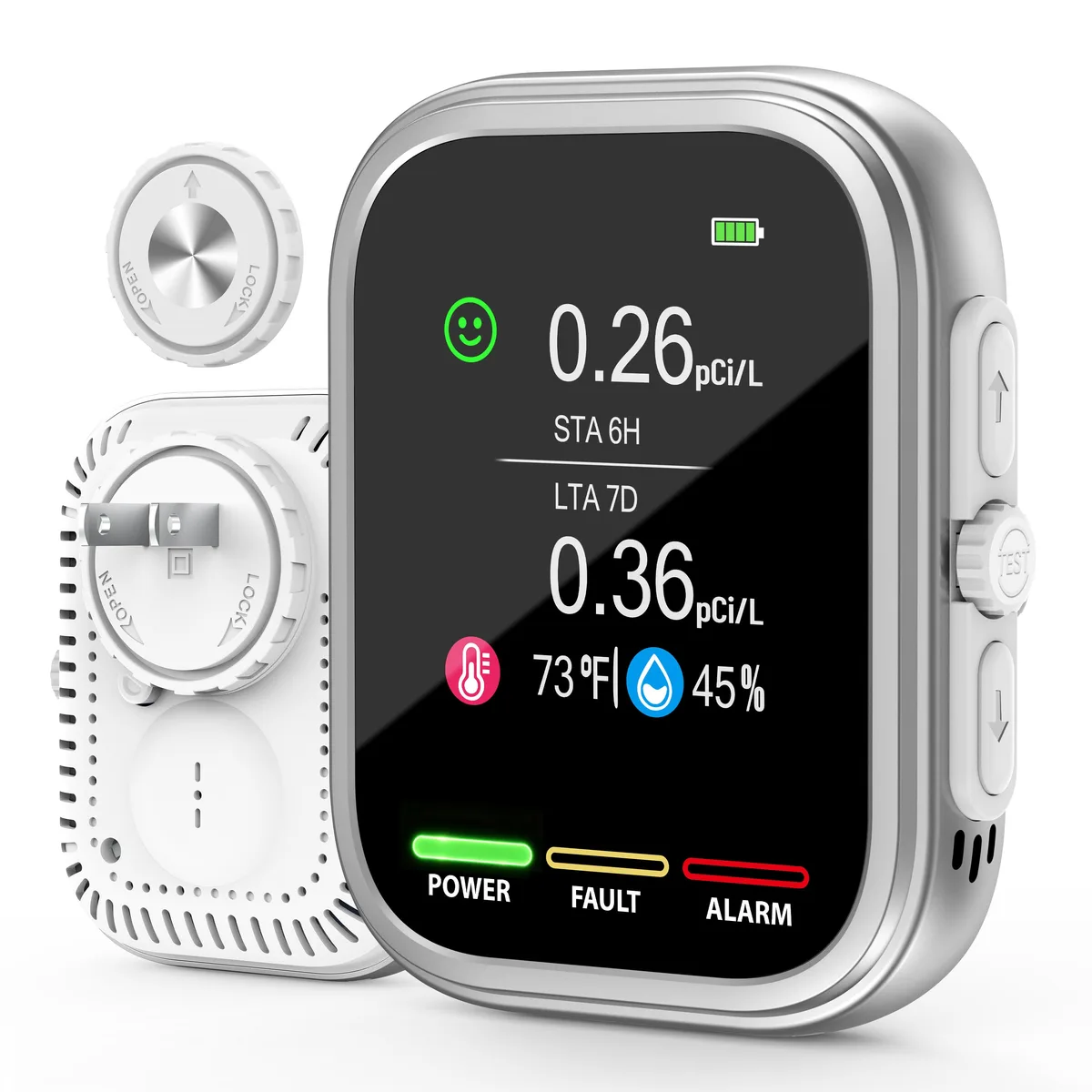
MonitorPYZYCKYH
Method: Semiconductor sensor
First reading: Within 6 hours
MonitorSafetySiren
First reading: Within 48 hours
Monitor
First reading: Within 90 minutes
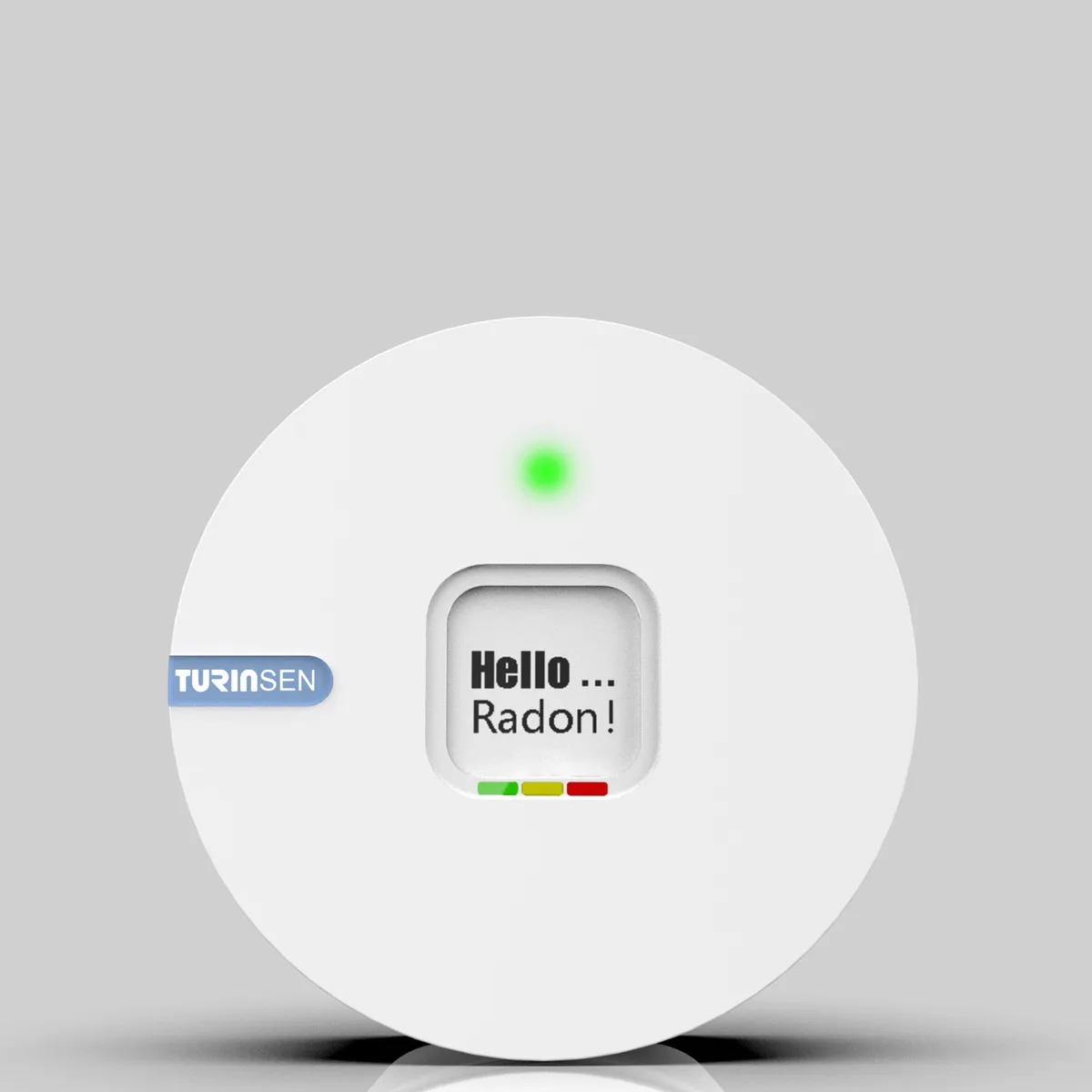
Monitor
Method: Alpha spectrometry
First reading: Within 24 hours
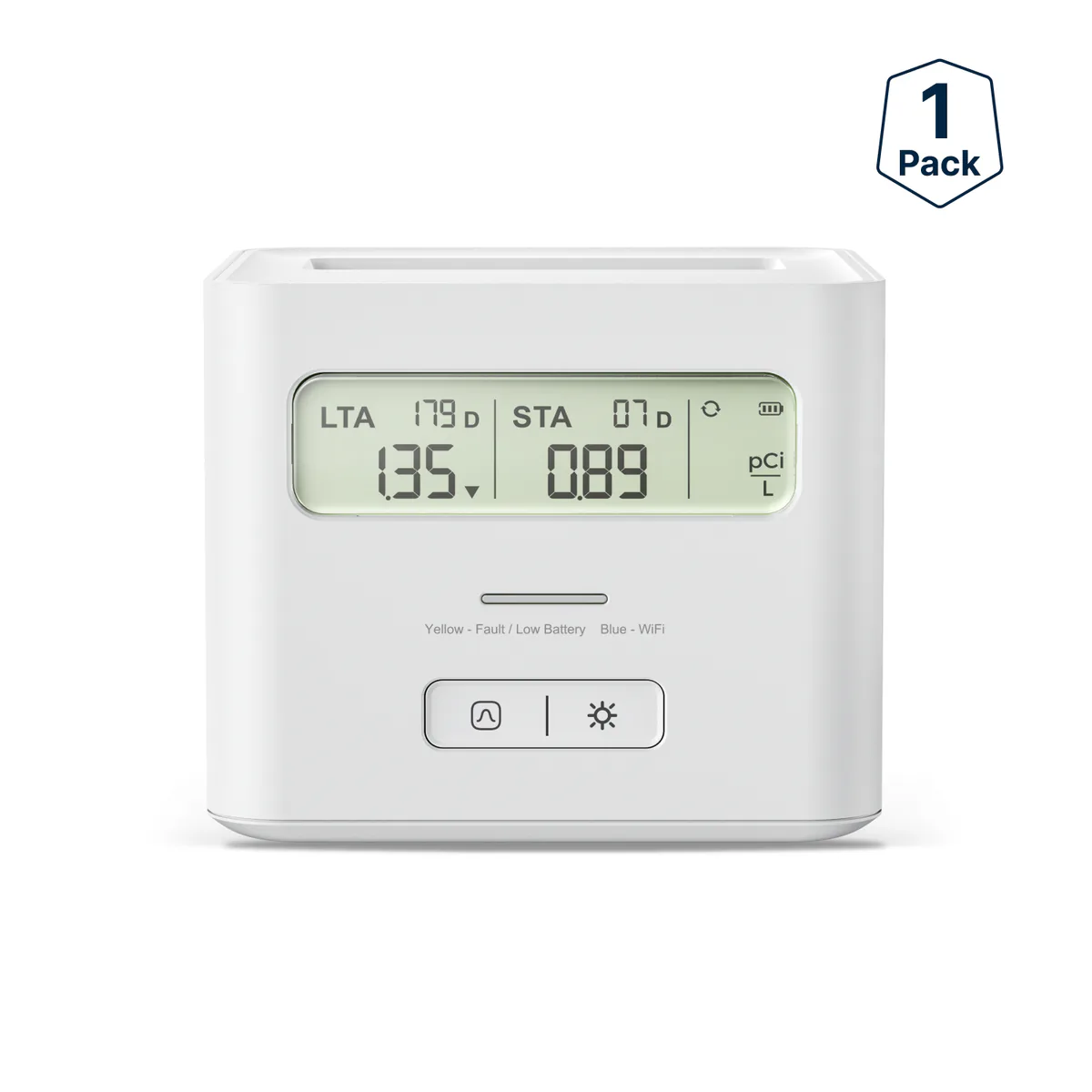
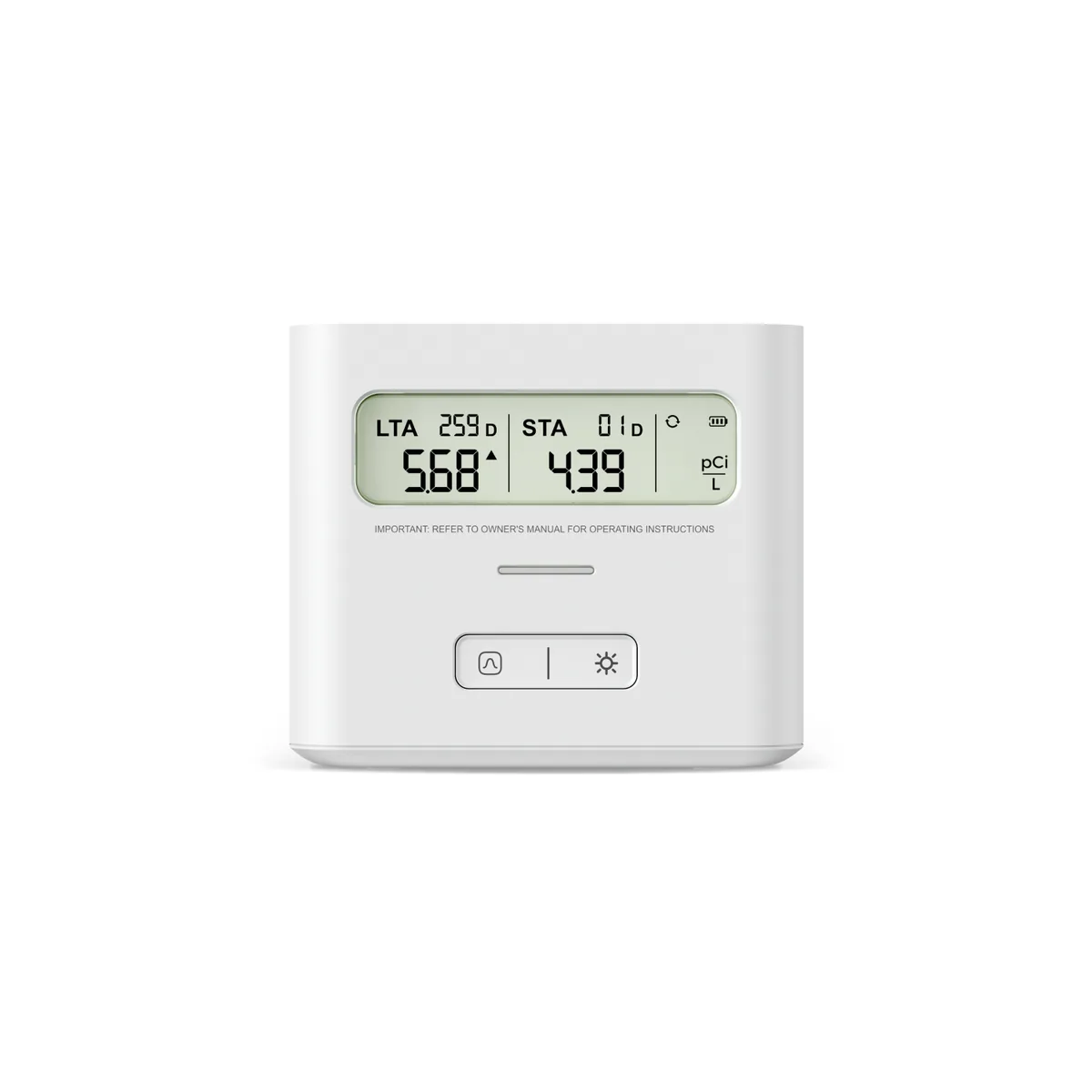
MonitorX-Sense
Method: Alpha spectrometry
First reading: Within 24 hours
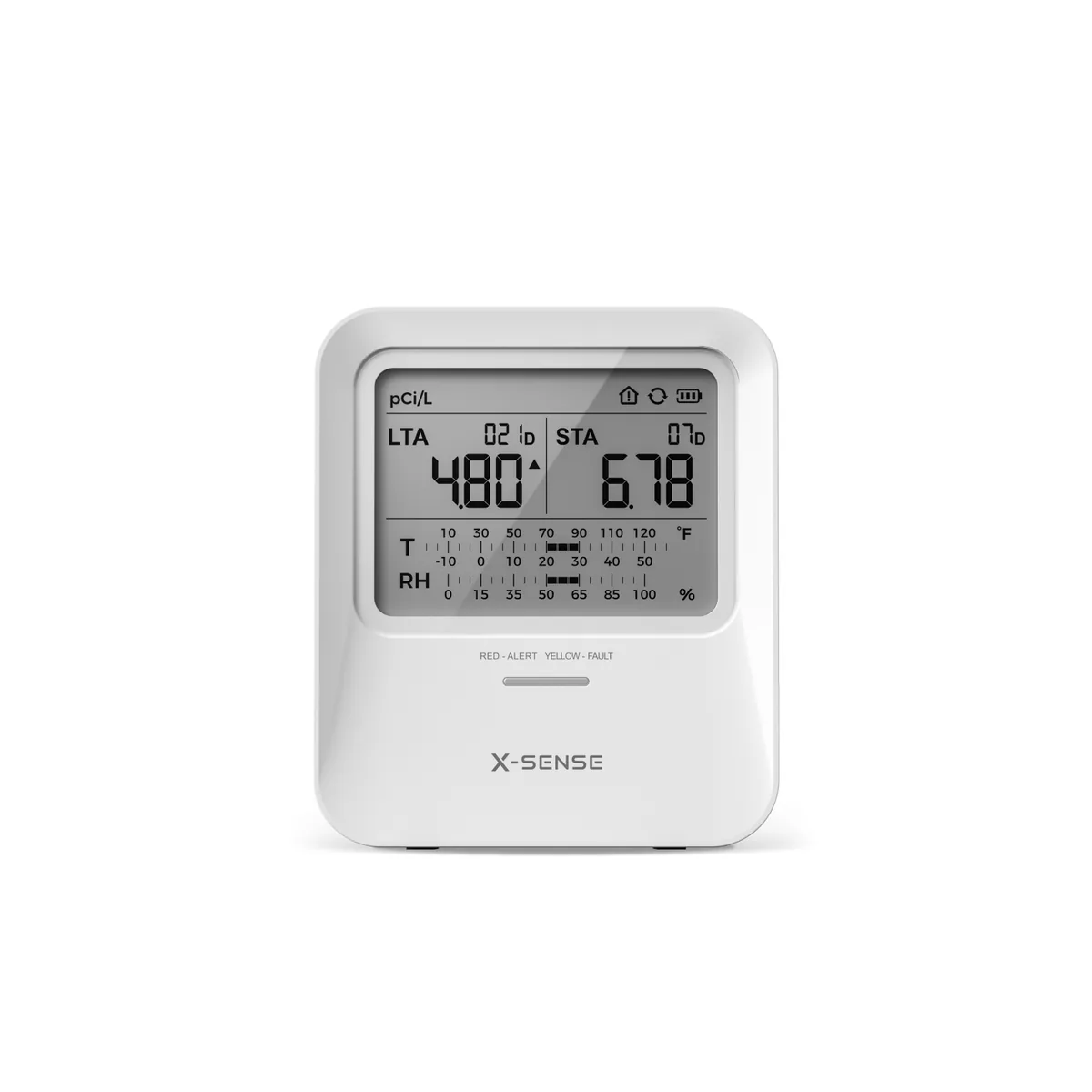
MonitorX-Sense
Method: Alpha spectrometry
First reading: Within 24 hours
MonitorX-Sense
Method: Alpha spectrometry
First reading: Within 24 hours
More home radon monitors: 1 of 31
Questions
5 questions about the Ecosense RadonEye RD200, answered
Ecosense says the first result appears after 10 minutes and that a reliable average follows within an hour, because the number it shows is a 60-minute moving average updated every 10 minutes. A first reading is not a basis for any decision: C-NRPP advises running a monitor for at least three months and deciding from the long-term average.
Yes. C-NRPP's 2024/25 evaluation of consumer monitors approved the Ecosense RadonEye, and its detailed results show an A in each of four seven-day chamber rounds. C-NRPP tested Canadian-market units, and we have not confirmed the US version is identical.
In a separate 54-day field comparison in Spain in 2023, published in Sensors in 2024, the RadonEye's average was 15.8 percent below that of a calibrated reference monitor.
Ecosense publishes its measurement range in both units: 0.2 to 99.9 pCi/L, or 7 to 3,700 Bq/m³. US guidance, including the EPA's action level, is written in pCi/L.
Check your state's rules before relying on any consumer monitor for a sale. C-NRPP notes that the consumer monitors it lists cannot be professionally calibrated and are not approved by C-NRPP for use by radon measurement professionals.
Ecosense says the RadonEye keeps its stored data through a power-off unless you reset it in the app, but the live readings and the daily and weekly averages on the display reset, and nothing is measured while it has no power.
Updated October 1, 2026