 Tjernlund
Tjernlund RMS160
Side-wall radon mitigation system
- Radon fan
- 3 in. schedule 40 PVC
- 50 W
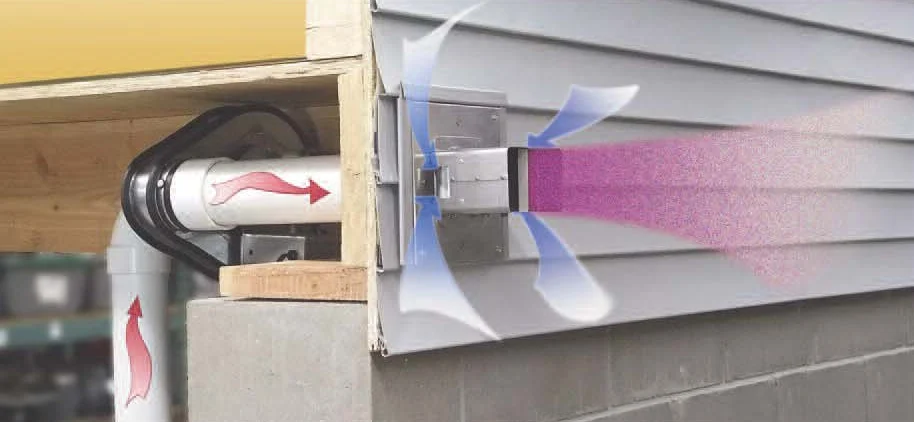
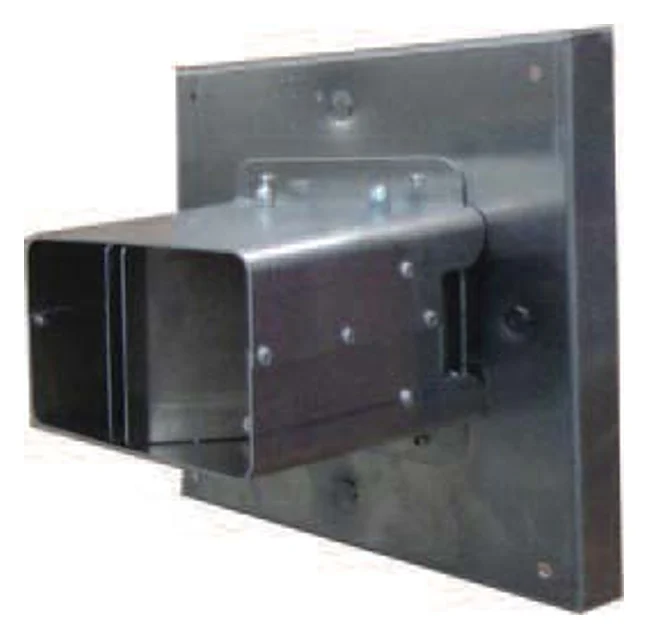
Photos: Tjernlund
 (opens in a new tab)Check price on Amazon (opens in a new tab)
As an Amazon Associate, Radon411 earns from qualifying purchases.
Amazon and the Amazon logo are trademarks of Amazon.com, Inc. or its affiliates.
See ratings and reviews on Amazon (opens in a new tab)- Pipe size3 in. schedule 40 PVC; fan inlet, outlet and hood connect directly, no rubber couplers; 4 in. hole through the rim joist for the hood
- Power draw50 W
- Every figure checked against the specifications Tjernlund publishes
- The maker's own performance table, point by point, unranked
About this item
As Tjernlund states it
- Motor: AC, PSC permanently lubricated ball bearing motor, outside the airstream
- Pipe size: 3 in. schedule 40 PVC; fan inlet, outlet and hood connect directly, no rubber couplers; 4 in. hole through the rim joist for the hood
- Max static pressure: 2.3 in w.c.
- Max airflow: 160 CFM
- Max power: 50 W
- Power supply: Plug-in, 6 ft cord. Tjernlund's documents differ: 115 V ~ 50/60 Hz, 50 W, 0.80 A maximum (owner's instructions P/N 8504183, 2011); 120 VAC, 50 W, 0.5 A (RMS160 literature P/N 8500722, 2011); 120 V, 23 to 53 W, 0.19 to 0.44 A (Radon Products literature P/N 8500724 Rev. B, 2019); 75 W (Full Line literature P/N 8500669 Rev L, 2020); the product page says 50 W
- Speed control: None
- Warranty: Tjernlund's documents differ: limited ten year warranty, repair or replace in the first 5 years, then credit, repair or replace at a 50% discount from list price to year 10 (owner's instructions P/N 8504183, 2011); "Warranty: 10 years" (RMS160 literature P/N 8500722, 2011); one year on components (general warranty policy P/N 8500115, October 2010, linked from Tjernlund's site, which does not name the RMS160)
The RMS160, which Tjernlund sells as the Radon VAC, is a side-wall radon mitigation system: a plug-in fan that is typically installed between the basement floor joists, joined to 3 inch PVC, and an adjustable exterior hood that sends the exhaust out through a 4 inch hole in the rim joist rather than up to the roof. Tjernlund's own documents give different power and warranty figures, and this page sets each one out with the document and year it comes from.
What you get
Tjernlund's 2019 literature says the system includes a sealed blower with 3 inch PVC connectors and a high velocity discharge hood. The manual's steps refer to provided 1/4 inch nuts for fixing the fan to its mounting bracket, an included PVC flange and nuts for the hood, provided hardware for the hood's four corner holes, and an included 55 gallon garbage bag for the inflation test; Tjernlund lists a 6 foot power cord on the fan. The PVC pipe is bought by the installer, as are the PVC glue and the exterior caulk the manual calls for.
In the box and running costsHow it works
What it does and how
The suction, the airflow and the housing, then who has checked it
How it works
In our words, from the maker's documents
An active soil depressurization system is built around a fan that runs all the time. The EPA's guide describes the vent fan drawing radon gas from below the home through the suction pipes and releasing it outdoors while creating a negative pressure beneath the slab, and says the fan must run continuously for the system to work. Tjernlund's manual puts it the same way: the lower pressure the fan creates forces radon gas into the system's piping and outside rather than letting it leak into the home.
What sets the RMS160 apart is where the air goes. Tjernlund describes the system as a plug-in fan, an exterior hood and installer-purchased PVC pipe. The fan is typically installed between floor joists, the pipe runs from the extraction point in the slab or sump pit to the fan, and the exhaust leaves through a four inch hole in the basement rim joist and exterior finish. Tjernlund says this avoids PVC pipe running vertically through living areas or up the outside of the house to the roof line.
The hood does the work a roof stack would. Tjernlund calls it a Variable Aspiration Control hood: it mixes outdoor air into the exhaust to dilute the radon and propels the mix away from the house. Inside it are two sets of blades; the manual says the outer blades adjust dilution and the inner blades adjust discharge velocity. The installer sets them by timing how long the running fan takes to fill the included 55 gallon garbage bag and reading the blade positions from Tjernlund's inflation chart.
Tjernlund describes the fan as a sealed, galvanized steel housing with custom-fitted gaskets throughout, a backward inclined steel impeller and a PSC permanently lubricated ball bearing motor that sits outside the damp airstream. Each edition of Tjernlund's literature (2011, 2019 and 2020) gives 160 CFM, and the 2019 Radon Products literature adds a maximum pressure of 2.3 inches of water column. Tjernlund publishes no table of airflow at each static pressure: the manual shows the RMS160's performance curve only as a graph, without printed values.
Tjernlund's documents disagree on the electrical figures. The owner's instructions (P/N 8504183, 2011) list 115 volts at 50/60 Hz, 50 watts and 0.80 amps maximum. The RMS160 literature (P/N 8500722, 2011) lists 120 VAC, 50 watts and 0.5 amps. The Radon Products literature (P/N 8500724 Rev. B, 2019) lists 120 volts, 23 to 53 watts and 0.19 to 0.44 amps. The Full Line literature (P/N 8500669 Rev L, 2020) gives 75 watts. The product page says the fan uses only 50 watts. Tjernlund does not say which figure is current. There is no speed control; the manual warns against using the fan with any solid-state speed control device.
What the manufacturer says
Tjernlund's own statements, attributed
- Tjernlund saysTjernlund describes the Radon VAC as the first engineered solution for side wall venting radon gas.
- Tjernlund saysTjernlund states that custom-fitted gaskets throughout the fan prevent radon gas leakage.
- Tjernlund saysTjernlund says that, unlike traditional radon fans, the RMS160's motor is not exposed to air stream moisture.
- Tjernlund saysTjernlund's 2019 literature says a Health Canada study found above ground discharge radon systems reduced radon by 91% (plus or minus 6%), with 57% less in labor costs and 14% less in material costs than roof vented systems.
- Tjernlund saysTjernlund states that each Radon VAC is factory line tested before shipment.
- Tjernlund saysTjernlund's Full Line literature says the system installs faster and safer because all work is at ground level.
- Tjernlund saysTjernlund lists the RMS160 as made in the USA in its 2011 literature.
These are Tjernlund's own statements, attributed to it. They are not our findings, and we have not tested this product ourselves.
Independent evidence
Who checks a device like this
C-NRPP's consumer evaluation covers electronic radon monitors, not mitigation fans, so it has no result for Tjernlund RMS160. The safety listing and performance certification the maker states are under “What the manufacturer says”, and what shows whether any fan is working in your home is a radon test after it is installed.
Specifications
Specifications
Every figure as the maker states it
The maker's figures
- Type
- Mitigation fan, side-wall system, fan and exterior hood
- Motor
- AC, PSC permanently lubricated ball bearing motor, outside the airstream
- Pipe size
- 3 in. schedule 40 PVC; fan inlet, outlet and hood connect directly, no rubber couplers; 4 in. hole through the rim joist for the hood
- Max static pressure
- 2.3 in w.c.
- Max airflow
- 160 CFM
- Max power
- 50 W
- Power supply
- Plug-in, 6 ft cord. Tjernlund's documents differ: 115 V ~ 50/60 Hz, 50 W, 0.80 A maximum (owner's instructions P/N 8504183, 2011); 120 VAC, 50 W, 0.5 A (RMS160 literature P/N 8500722, 2011); 120 V, 23 to 53 W, 0.19 to 0.44 A (Radon Products literature P/N 8500724 Rev. B, 2019); 75 W (Full Line literature P/N 8500669 Rev L, 2020); the product page says 50 W
- Speed control
- None
- Airflow at static pressure
- Not stated by the manufacturer
- Outdoor use
- Not stated by the manufacturer
- Warranty
- Tjernlund's documents differ: limited ten year warranty, repair or replace in the first 5 years, then credit, repair or replace at a 50% discount from list price to year 10 (owner's instructions P/N 8504183, 2011); "Warranty: 10 years" (RMS160 literature P/N 8500722, 2011); one year on components (general warranty policy P/N 8500115, October 2010, linked from Tjernlund's site, which does not name the RMS160)
What is in the box
Tjernlund's 2019 literature says the system includes a sealed blower with 3 inch PVC connectors and a high velocity discharge hood. The manual's steps refer to provided 1/4 inch nuts for fixing the fan to its mounting bracket, an included PVC flange and nuts for the hood, provided hardware for the hood's four corner holes, and an included 55 gallon garbage bag for the inflation test; Tjernlund lists a 6 foot power cord on the fan. The PVC pipe is bought by the installer, as are the PVC glue and the exterior caulk the manual calls for.
Tjernlund's warranty statements differ. The RMS160 owner's instructions (2011) give a limited ten year warranty: Tjernlund repairs or replaces within the first 5 years, and from year 5 to year 10 a claim is credited, repaired or replaced at a 50% discount from the current list price. The 2011 RMS160 literature says 10 years. The warranty and returned material policy the website footer links (P/N 8500115 Rev. B, October 2010) gives one year on components from installation and a one year limited warranty, with two-year exceptions for other product lines; it does not name the RMS160. Tjernlund does not say which statement governs today.
What it costs to run
The running cost is electricity for a fan that never switches off. Depending on which Tjernlund document you go by, the draw is somewhere between 23 and 75 watts, and your utility rate sets what that costs. Tjernlund's manual says no maintenance is required for the RMS160, but regular radon testing is recommended.
Plan on parts wearing out. Tjernlund lists the motor (part 950-9101) and the Radon VAC hood (part 950-8700) as replacement parts. The EPA's guide says fans may last five years or more and that manufacturer warranties tend not to exceed five years; a warning device and periodic retests are what show the system is still working.
Tjernlund's literature argues the installed cost is lower than a roof-vented system, listing what a side-wall installation avoids: an electrician, a roof terminus, couplings, a condensate drain, extra PVC, extra hardware and extra labor. Those savings are Tjernlund's own estimate, not a quote; a mitigator's price for your house is the number that counts.
Fit and setup
Who it fits, and installation
The fit, then how a system goes in
Who it fits
Good fit if, and look elsewhere if
Good fit if
- You are servicing an existing RMS160 system; Tjernlund lists the motor and the Radon VAC hood as replacement parts.
- Your mitigator has confirmed that side-wall discharge is accepted where you live and has planned the hood clearances Tjernlund lists.
- The suction point is a sealed sump pit or a hole through a basement slab, the two setups Tjernlund says the adjustable hood is built to handle.
- The system runs on 3 inch schedule 40 PVC, which the fan and hood take directly without rubber couplers.
Look elsewhere if
- Your state or your mitigator works to EPA's 1994 mitigation standards, which keep vent fans out of basements and put the discharge above the eave of the roof.
- The fan has to be mounted outdoors; Tjernlund states no outdoor rating for the RMS160 fan, which installs indoors with only the hood outside.
- You want printed airflow figures at a measured suction; Tjernlund gives only 160 CFM, a 2.3 inch maximum pressure and a graph.
- You are planning a first system yourself; the EPA recommends a qualified mitigation contractor, and Tjernlund says a qualified installer must fit it.
Installation
5 steps
- The EPA recommends that a qualified radon mitigation contractor fix a home, and notes that many states require radon professionals to be licensed, certified or registered. Tjernlund's manual says the RMS160 must be installed by a qualified installer in accordance with its instructions and all local codes, or in their absence the latest International Residential Code and International Electrical Code.
- Check the rules on side-wall discharge before anything else. EPA's 1994 Radon Mitigation Standards say radon vent fans shall not be installed below ground, in conditioned space, or in any basement, crawlspace or other interior location directly beneath conditioned spaces, and that the point of discharge shall be above the eave of the roof, ten feet or more above ground level and away from openings. The same standards limit a plugged power cord to 6 feet and say no plugged cord may penetrate a wall. The EPA's construction guide gives the reason for keeping the fan outside living space: a leak in the fan housing or a pipe joint would otherwise push radon into the home. Tjernlund's answer is its sealed, gasketed housing; whether a side-wall system is accepted where you live is a question for your state's radon program and your mitigator.
- Tjernlund's manual has the installer drill a 4 inch hole through to the exterior, mount the bracket at least 1 foot from the foundation wall so the fan can be serviced without taking it off the pipe, and connect 3 inch schedule 40 PVC from the slab or sump pit to the fan inlet. For a sub-slab point it says to clear out 5 to 10 gallons of dirt or clay and replace it with pea gravel; for a sump pit, the cover must be air tight. It adds that mitigation professionals generally drill sample holes in the slab to confirm suction across the whole area.
- Tjernlund bases its hood clearances on National Fire Protection Association requirements for other side-wall discharge devices and says to check local codes. The discharge should not be within 20 feet of another home, should be at least 7 feet above grade beside a public walkway, at least 3 feet above any air inlet within 10 feet, and at least 4 feet below or beside any door or window. The bottom of the hood should be at least 12 inches above grade, and Tjernlund suggests avoiding a wall that faces the prevailing wind.
- Test once it runs. Tjernlund recommends a radon test after installation and periodically after that. The EPA's guide says a post-mitigation test should be done within 30 days of installation, but no sooner than 24 hours after the system is running with the fan on, that an active system needs a warning device such as a manometer where it can be seen or heard, and that retesting at least every two years is a good idea. Tjernlund sells its own fan failure alarm, the RA1, which it says sounds when loss of exhaust flow is detected.
To find someone to design and install a system, see radon mitigation professionals, and for how a fan fits into one, how a radon fan works.
Compare
Compare with similar items
The same three rows for each, and the one difference that matters
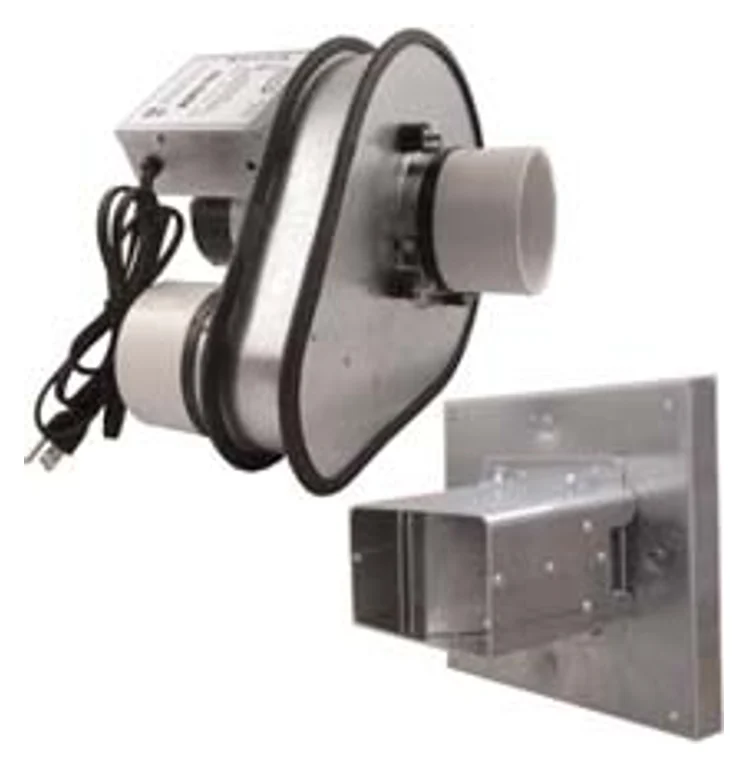
This page
Tjernlund RMS160
- What it does
- Moves up to 160 CFM
- Power
- Up to 50 W
- C-NRPP 2024/25
- Not applicable (mitigation fan)
This page: The RMS160, which Tjernlund sells as the Radon VAC, is a side-wall radon mitigation system: a plug-in fan that is typically installed between the basement floor joists, joined to 3 inch PVC, and an adjustable exterior hood that sends the exhaust out through a 4 inch hole in the rim joist rather than up to the roof.
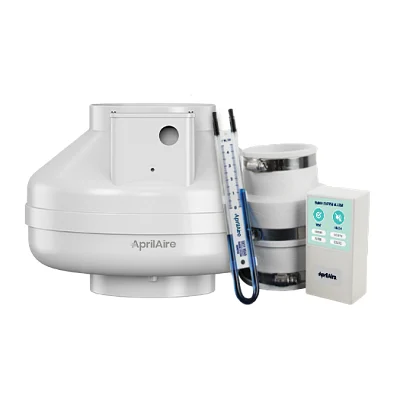
AprilAire
- What it does
- Moves up to 375 CFM
- Power
- Up to 139 W
- C-NRPP 2024/25
- Not applicable (mitigation fan)
The difference: An inline fan sold as a kit: AprilAire says the ARN25K includes its ARN25F fan, an ARNALM radon system alarm, an ARN05M manometer and couplings.
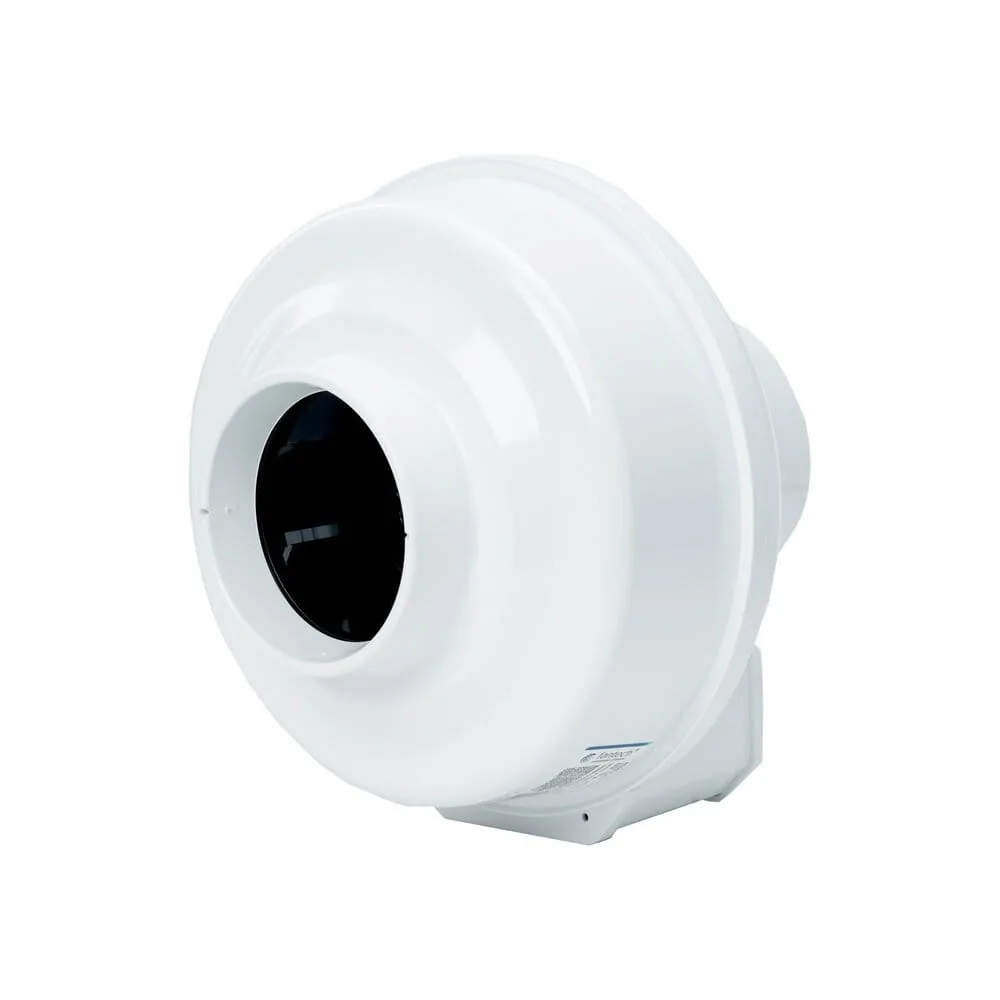
Fantech
- What it does
- Moves up to 174 CFM
- Power
- Up to 59 W
- C-NRPP 2024/25
- Not applicable (mitigation fan)
The difference: An inline fan in the vent pipe itself, which Fantech's manual says is to be installed vertically only.
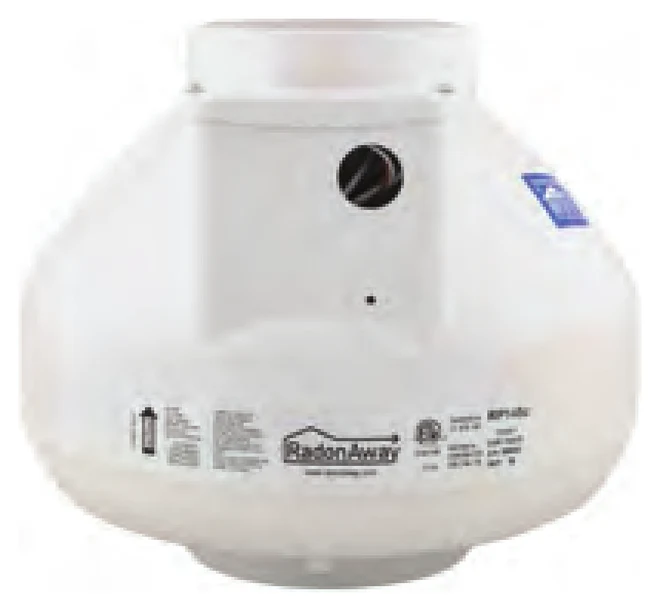
RadonAway
- What it does
- Moves up to 168 CFM
- Power
- Up to 72 W
- C-NRPP 2024/25
- Not applicable (mitigation fan)
The difference: An inline fan for the vent pipe: RadonAway says its Contractor Series fan can be mounted indoors or outdoors.
Compared with similar products: 1 of 4
More radon fan models10
All radon fan modelsRadon fan

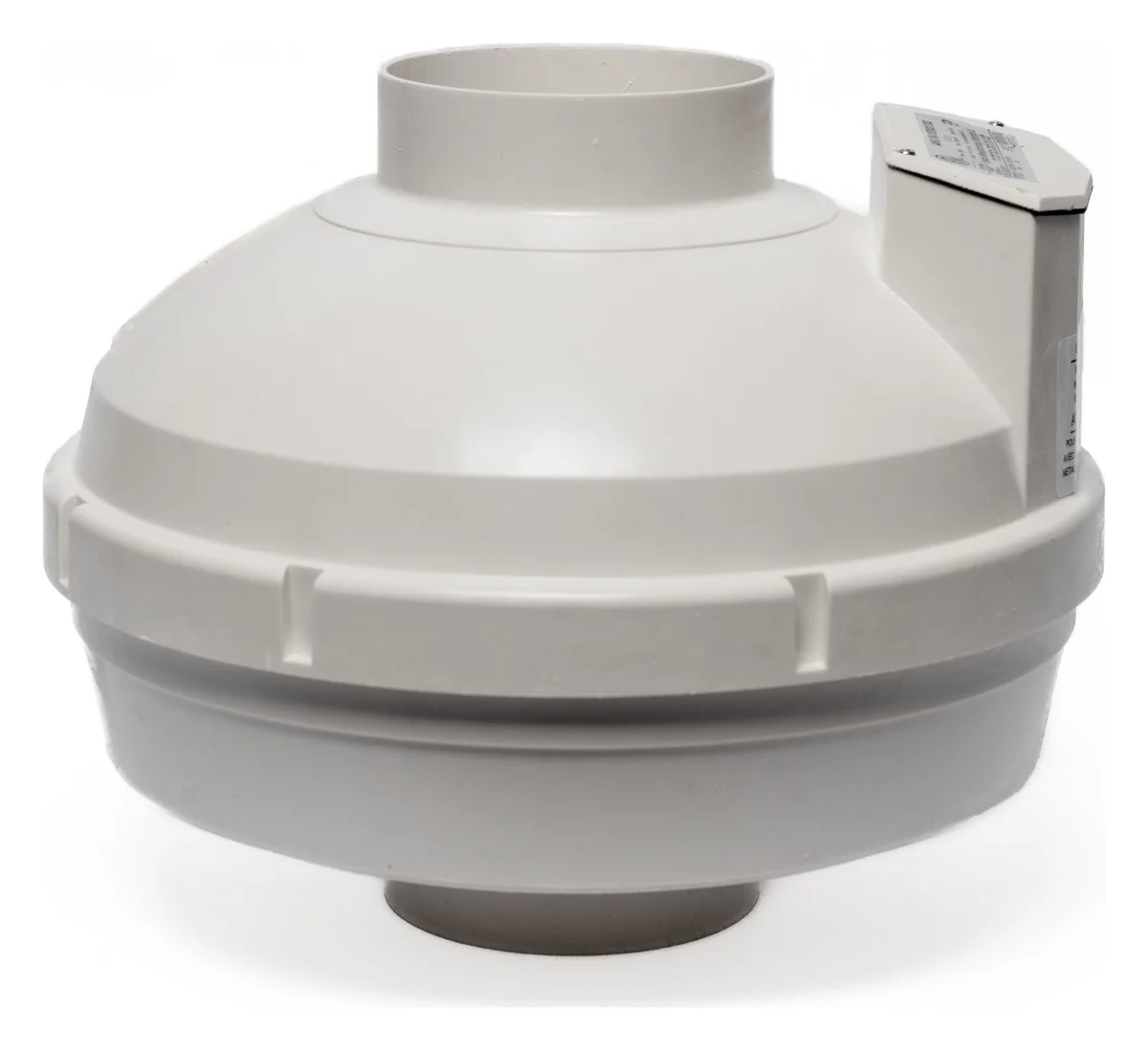
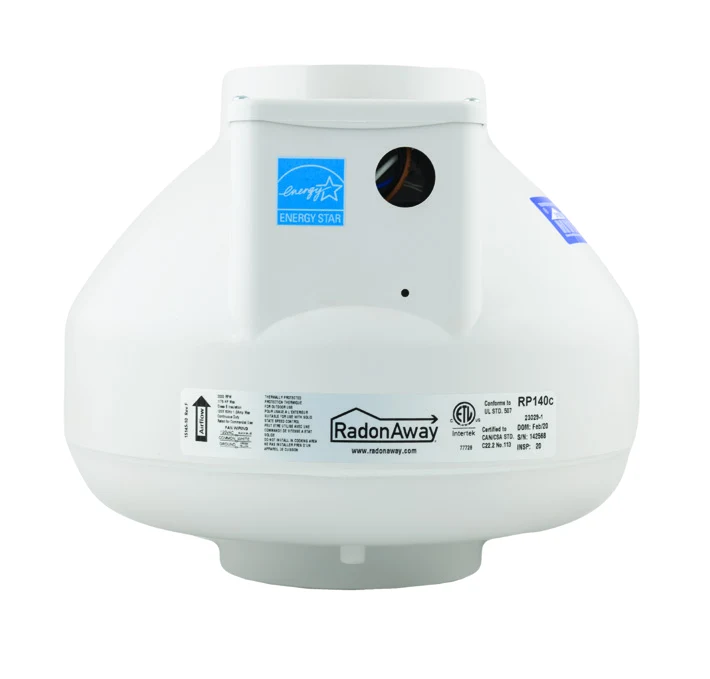
Rn2 inline radon mitigation fan
- 3 or 4 in. schedule 40 PVC
- 59 W
Max airflow: 174 CFM
Max pressure: 2.0 in w.c.
Radon fan

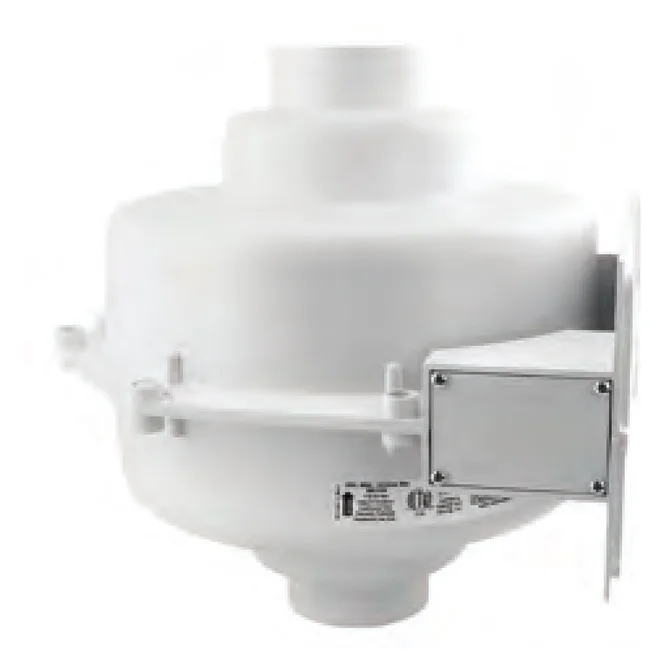
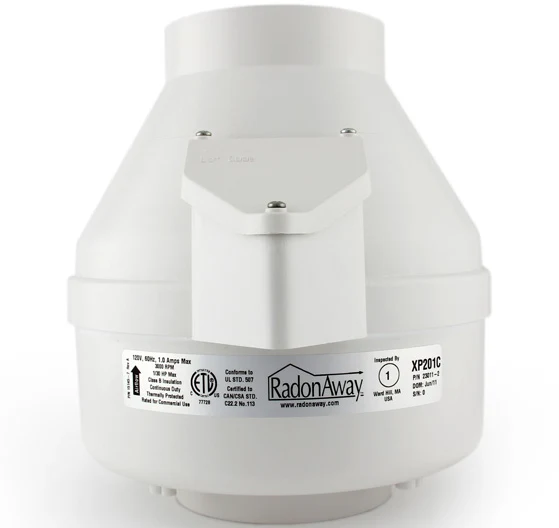
AMG Maverick inline radon mitigation fan
- 4 in. Fernco coupler size
- 66 W
Max airflow: 260 CFM
Max pressure: 2.21 in w.c.
- All radon fan modelsMore radon fan models

More radon fan models: 1 of 10
Questions
Questions people ask
6 questions about the Tjernlund RMS160, answered
Asked about the RMS160
How many watts does the Tjernlund RMS160 use?
Tjernlund gives several figures. The product page says 50 watts, as do the 2011 owner's instructions (115 volts, 0.80 amps maximum) and the 2011 RMS160 literature (120 VAC, 0.5 amps). The 2019 Radon Products literature lists 23 to 53 watts at 0.19 to 0.44 amps, and the 2020 Full Line literature lists 75 watts. Tjernlund does not say which applies to a unit sold today, so ask the seller or Tjernlund for the figure on the unit's label.
What warranty does Tjernlund give on the RMS160?
The RMS160's own documents (2011) give 10 years: full repair or replacement for the first five, then a 50% discount off the current list price for years five to ten. The general policy linked from Tjernlund's website (October 2010) gives one year on components and does not name the RMS160. Confirm the terms with Tjernlund before you rely on either.
Is a side-wall discharge allowed instead of a roof stack?
It depends on where you live and which standard your mitigator follows. EPA's 1994 Radon Mitigation Standards say the discharge shall be above the eave of the roof and ten feet or more above ground, and that vent fans shall not go in a basement. Tjernlund bases its side-wall hood clearances on fire protection rules for other side-wall devices, and its 2019 literature cites a Health Canada study of rim-joist systems discharging above ground level. Ask your state's radon program and a certified mitigator before choosing a side-wall system.
How much air does the RMS160 move?
Tjernlund's literature lists 160 CFM in its 2011, 2019 and 2020 editions, given in the 2019 edition as 160 CFM at 0 inches of water column, with a maximum pressure of 2.3 inches. The manual's RMS160 performance curve is a graph without printed values, so Tjernlund publishes no airflow figure at a given suction.
Can I use a speed control with the RMS160?
No. Tjernlund's manual warns, to reduce the risk of fire or electric shock, against using the fan with any solid-state speed control device. Airflow is tuned at the hood instead, by setting its blades from the bag inflation test.
Do I need a professional to install it?
The EPA recommends a qualified radon mitigation contractor, and many states require radon professionals to be licensed, certified or registered. Tjernlund's manual says the RMS160 must be installed by a qualified installer under local codes, and that improper installation can create a hazardous condition such as fire, electric shock or personal injury.
What to do next
- See every radon fan we coverEach maker's published pressure, airflow and power, side by side.
- Find a mitigation professionalMost systems are designed and installed by one; some states require a license.
- Understand the fanWhat the fan does in a system, and when one needs replacing.
- Test after it runsA short-term test after installation shows whether the system works.
Updated October 8, 2026