 Fantech
Fantech Rn2
Inline radon mitigation fan
- Radon fan
- 3 or 4 in. schedule 40 PVC
- 59 W
Best for, and skip if
Best for you if
- You or your mitigator need a replacement fan in the medium-suction, lower-flow class Fantech describes.
- Your system uses 3 or 4 inch schedule 40 PVC pipe.
Skip it if
- A diagnostic shows your slab needs more suction or airflow than the Rn2's curve reaches; Fantech's larger Rn models cover that.
- You want to turn the fan down with a dial; Fantech puts a speed control only on its EC models.
Photos: Fantech
 (opens in a new tab)Check price on Amazon (opens in a new tab)
As an Amazon Associate, Radon411 earns from qualifying purchases.
Amazon and the Amazon logo are trademarks of Amazon.com, Inc. or its affiliates.
See ratings and reviews on Amazon (opens in a new tab)- Pipe size3 or 4 in. schedule 40 PVC, with Fantech LDVI couplings (sold separately)
- Power draw59 W
- Every figure checked against the specifications Fantech publishes
- The maker's own performance table, point by point, unranked
About this item
As Fantech states it
- Motor: AC
- Pipe size: 3 or 4 in. schedule 40 PVC, with Fantech LDVI couplings (sold separately)
- Max static pressure: 2.0 in w.c.
- Max airflow: 174 CFM
- Max power: 59 W
- Power supply: 120 V, single phase, 60 Hz
- Speed control: None
- Airflow at static pressure: 160 CFM at 0.00 in w.c.; 150 at 0.20; 120 at 0.50; 80 at 1.00; 40 at 1.50
- Outdoor use: Rated for outdoor installation
- Warranty: Five (5) year factory limited warranty
The Rn2 is Fantech's mid-range inline fan for active soil depressurization: a sealed plastic housing with an external rotor motor, made for 3 or 4 inch PVC pipe and rated by Fantech for indoor, outdoor and wet locations. Fantech lists an application range of 0 to 1.8 inches of water column and a maximum of 59 W.
What you get
Fantech's manual lists one inline radon fan and one operation and installation manual in the box. The LDVI couplings that join the fan to the pipe are sold separately, in 4 by 3 and 4 by 4 inch pairs. The housing measures 10 inches across and 9 1/4 inches high, with a 4 15/32 inch connection.
In the box and running costsHow it works
What it does and how
The suction, the airflow and the housing, then who has checked it
How it works
In our words, from the maker's documents
A radon fan is the part of an active soil depressurization system that runs all the time. The EPA's guide describes the vent fan drawing radon gas from below the home through the suction pipes and releasing it to the outdoor air, while creating a negative pressure or vacuum under the slab. The fan has to keep running for the system to work.
Two numbers describe what a fan can do. Static pressure, in inches of water column, is how hard it can pull against the resistance of the soil and the pipe; airflow, in cubic feet per minute, is how much air it moves. Airflow falls as pressure rises, so a fan is described by a curve, not a single figure, and a mitigator picks the fan whose curve suits the suction a house needs.
Fantech's manual gives the Rn2's curve as a table: 160 CFM at 0.00 inches, 150 at 0.20, 120 at 0.50, 80 at 1.00 and 40 at 1.50, with a maximum of 1.97 inches, at 120 V, 0.48 A and 58.0 W. Its 2025 brochure rounds the figures differently, listing a maximum static pressure of 2.0 inches, a maximum of 59 W and a maximum of 174 CFM, and an application pressure range of 0.0 to 1.8 inches. The Rn2's sales sheet defines that range as where the fan moves about 20 CFM or more, and the maximum as where it runs but moves no air.
Fantech's brochure places the Rn2 in the middle of its Rn line: the Rn 1 for low suction and low flow with good sub-slab communication, the Rn2 for medium suction and low flow with moderate communication, and the Rn 2X and Rn 3 for medium suction and medium flow where radon levels are elevated or communication is poor. Its sales sheet calls the Rn2 the standard for radon mitigation, with a performance curve tailored to the majority of mitigations.
The housing is what keeps soil gas in the pipe. Fantech describes a fully sealed plastic housing joined by vibration welding into a single piece, with a seam it calls inherently air tight. The motor is an external rotor type, thermally protected with automatic reset, and the wiring enclosure is built into the housing. The fan has no built-in speed control: Fantech puts a built-in speed controller on its Rn 2EC and Rn 4EC, and its manual warns against using these fans with any solid state speed control device.
What the manufacturer says
Fantech's own statements, attributed
- Fantech saysFantech states the Rn2 can be mounted indoor, outdoor and in wet locations.
- Fantech saysFantech lists the Rn2 at 0.0 to 1.8 in. w.c. application range, 2.0 in. w.c. maximum static pressure, 59 W maximum power and 174 CFM maximum airflow.
- Fantech saysFantech states its radon fans are tested by Underwriter Laboratories and deemed suitable for outdoor use under UL 507.
- Fantech saysFantech gives the Rn series a five-year factory limited warranty.
- Fantech saysFantech describes the Rn2's housing as fused by vibration welding into a single piece with an air-tight seam.
These are Fantech's own statements, attributed to it. They are not our findings, and we have not tested this product ourselves.
Independent evidence
Who checks a device like this
C-NRPP's consumer evaluation covers electronic radon monitors, not mitigation fans, so it has no result for Fantech Rn2. The safety listing and performance certification the maker states are under “What the manufacturer says”, and what shows whether any fan is working in your home is a radon test after it is installed.
Fantech Rn2
Check price on Amazon (opens in a new tab)Specifications
Specifications
Every figure as the maker states it
The maker's figures
- Type
- Mitigation fan, inline
- Motor
- AC
- Pipe size
- 3 or 4 in. schedule 40 PVC, with Fantech LDVI couplings (sold separately)
- Max static pressure
- 2.0 in w.c.
- Max airflow
- 174 CFM
- Max power
- 59 W
- Power supply
- 120 V, single phase, 60 Hz
- Speed control
- None
- Airflow at static pressure
- 160 CFM at 0.00 in w.c.; 150 at 0.20; 120 at 0.50; 80 at 1.00; 40 at 1.50
- Outdoor use
- Rated for outdoor installation
- Warranty
- Five (5) year factory limited warranty
What is in the box
Fantech's manual lists one inline radon fan and one operation and installation manual in the box. The LDVI couplings that join the fan to the pipe are sold separately, in 4 by 3 and 4 by 4 inch pairs. The housing measures 10 inches across and 9 1/4 inches high, with a 4 15/32 inch connection.
The warranty is Fantech's five-year factory limited warranty. A factory return needs a Return Materials Authorization number from Fantech and a copy of the bill of sale.
What it costs to run
The running cost is electricity: the fan runs around the clock, and Fantech lists 58.0 W in its manual's table and a 59 W maximum in its brochure. Your utility rate sets what that costs. There is no filter or other consumable.
Plan on the fan wearing out eventually. The EPA's guide says fans may last five years or more and that manufacturer warranties tend not to exceed five years, which matches the five years Fantech gives. A warning device and periodic retests are what tell you it is still doing its job.
Airflow at each pressure
Fantech's performance table, point by point
| Static pressure | Airflow |
|---|---|
| 0.00 in w.c. | 160 CFM |
| 0.20 in w.c. | 150 CFM |
| 0.50 in w.c. | 120 CFM |
| 1.00 in w.c. | 80 CFM |
| 1.50 in w.c. | 40 CFM |
Airflow falls as the suction the system needs rises. A mitigator matches the fan to pressure measured under the slab.
Fit and setup
Who it fits, and installation
The fit, then how a system goes in
Who it fits
Good fit if, and look elsewhere if
Good fit if
- You or your mitigator need a replacement fan in the medium-suction, lower-flow class Fantech describes.
- Your system uses 3 or 4 inch schedule 40 PVC pipe.
- The fan will sit outdoors or in a damp location, which Fantech rates it for.
- You want the maker's published curve to compare against a system's measured suction.
Look elsewhere if
- A diagnostic shows your slab needs more suction or airflow than the Rn2's curve reaches; Fantech's larger Rn models cover that.
- You want to turn the fan down with a dial; Fantech puts a speed control only on its EC models.
- You are designing a first system yourself; the EPA recommends a qualified mitigation contractor.
- You need a fan listed by ENERGY STAR; Fantech names only the Rn1 and Rn2X as ENERGY STAR products in this line.
Installation
5 steps
- The EPA recommends that a qualified radon mitigation contractor fix a home, and notes that many states require radon professionals to be licensed, certified or registered. Fantech's manual says installation and wiring must be done by qualified persons in line with all applicable codes, and its warranty does not cover damage from improper wiring or installation.
- Fantech's manual says radon fans are to be installed vertically only, that the suction pipe should end at the exterior wall with a slight incline so water drains from the fan, and that the fan should not be connected directly to the building structure. It is made for 3 and 4 inch schedule 40 PVC pipe with the matching LDVI coupling.
- Where the fan goes matters as much as which one. The EPA's construction guide says the fan and every positively pressurized part of the vent pipe belong outside habitable space, so a leak at the housing or a joint cannot push radon into the home, and that the fan should go in a vertical run of the vent pipe.
- Fantech's manual also asks for guards wherever the fan is within reach or within seven feet of a working level, and says ducted fans must always vent to the outdoors. The EPA's guide says an active system needs a warning device, usually a manometer, placed where it can be seen or heard, and that the fan should never be turned off.
- Test once it runs. The EPA's guide says a post-mitigation radon test should be done within 30 days of installation, but no sooner than 24 hours after the system is running with the fan on, and suggests retesting at least every two years.
To find someone to design and install a system, see radon mitigation professionals, and for how a fan fits into one, how a radon fan works.
Compare
Compare with similar items
The same three rows for each, and the one difference that matters
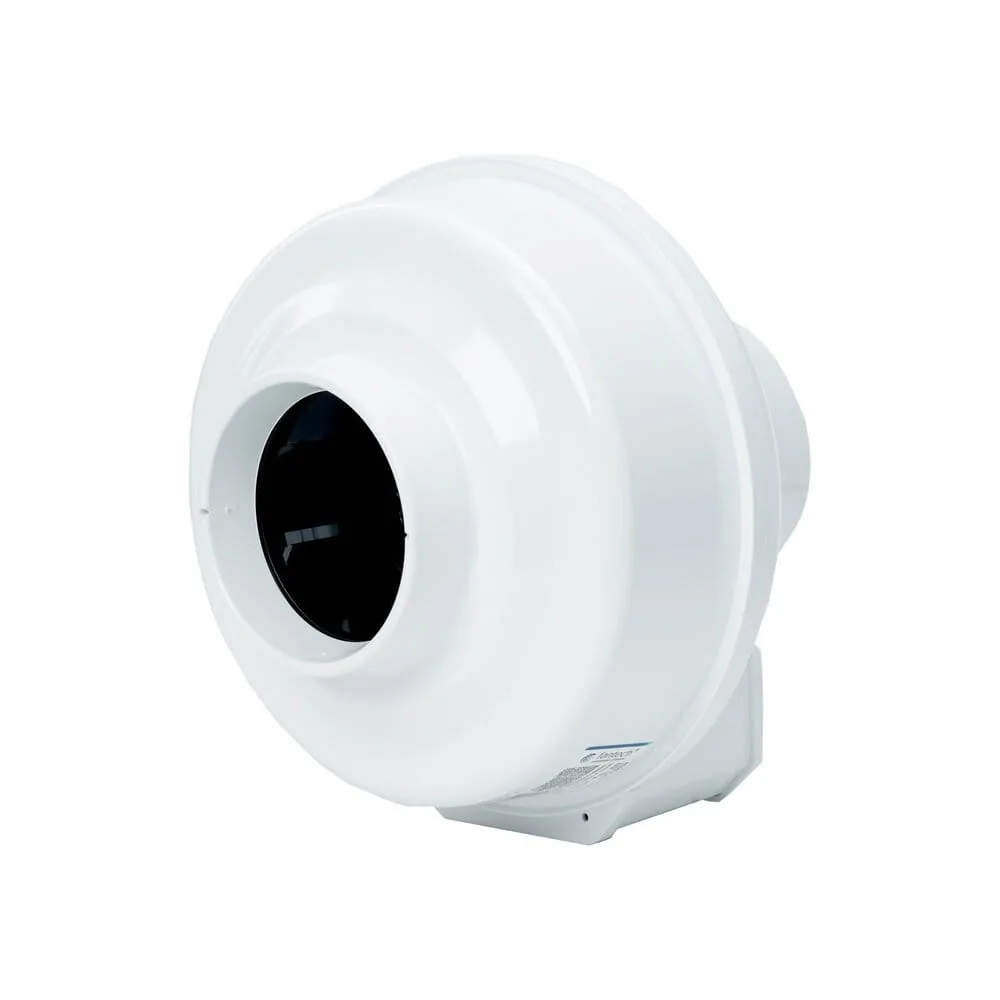
This page
Fantech Rn2
- What it does
- Moves up to 174 CFM
- Power
- Up to 59 W
- C-NRPP 2024/25
- Not applicable (mitigation fan)
This page: The Rn2 is Fantech's mid-range inline fan for active soil depressurization: a sealed plastic housing with an external rotor motor, made for 3 or 4 inch PVC pipe and rated by Fantech for indoor, outdoor and wet locations.
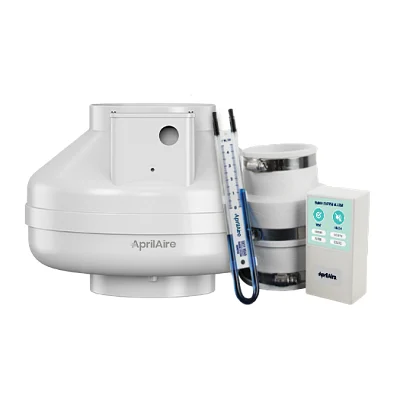
AprilAire
- What it does
- Moves up to 375 CFM
- Power
- Up to 139 W
- C-NRPP 2024/25
- Not applicable (mitigation fan)
The difference: Sold as a kit: AprilAire says the ARN25K includes its ARN25F fan, an ARNALM radon system alarm, an ARN05M manometer and couplings.
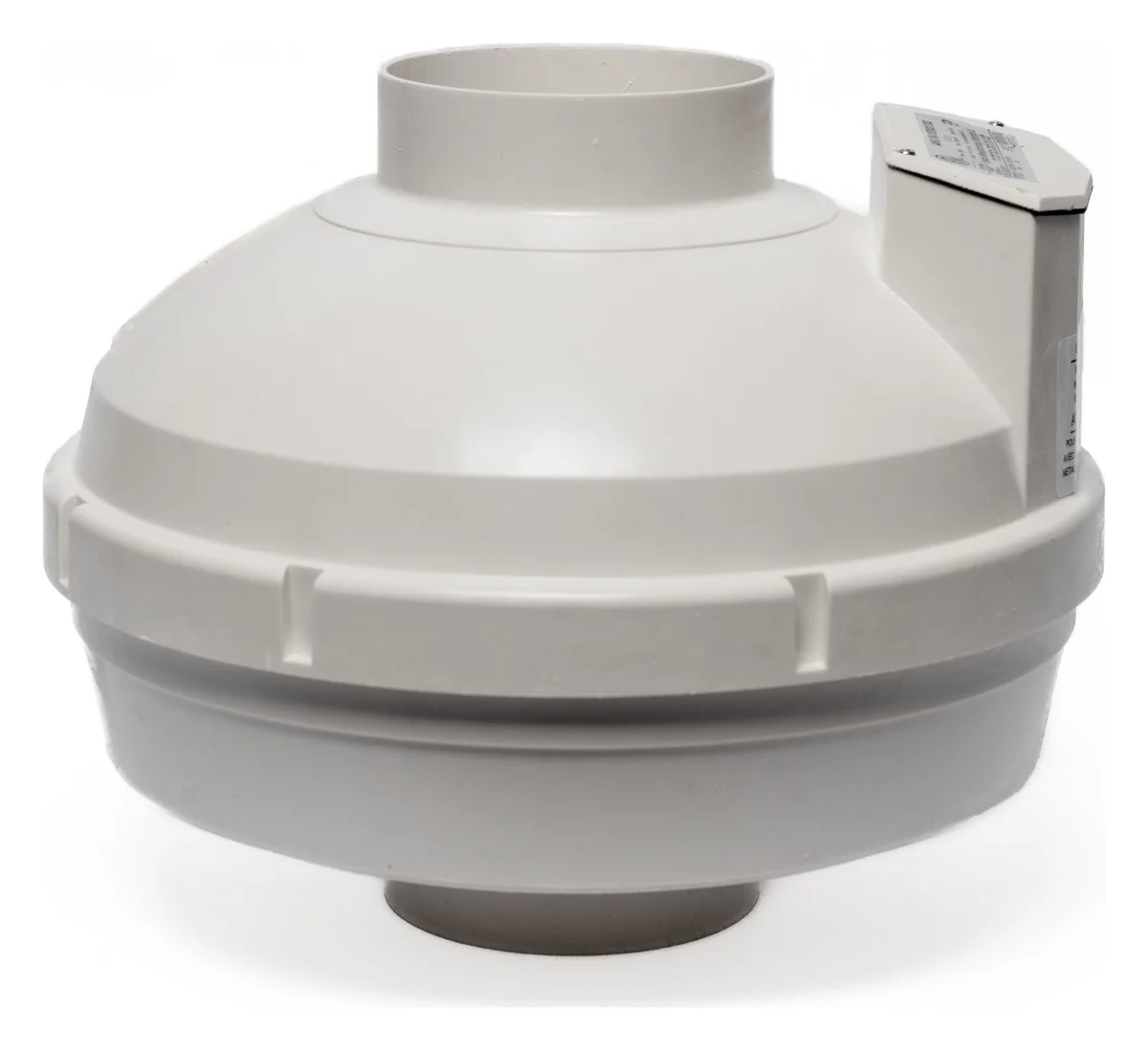
Festa
- What it does
- Moves up to 260 CFM
- Power
- Up to 66 W
- C-NRPP 2024/25
- Not applicable (mitigation fan)
The difference: Festa's AMG fan for a 4 inch Fernco coupling: Festa's 2022 catalog lists a maximum flow of 260 CFM and a maximum pressure of 2.21 inches.
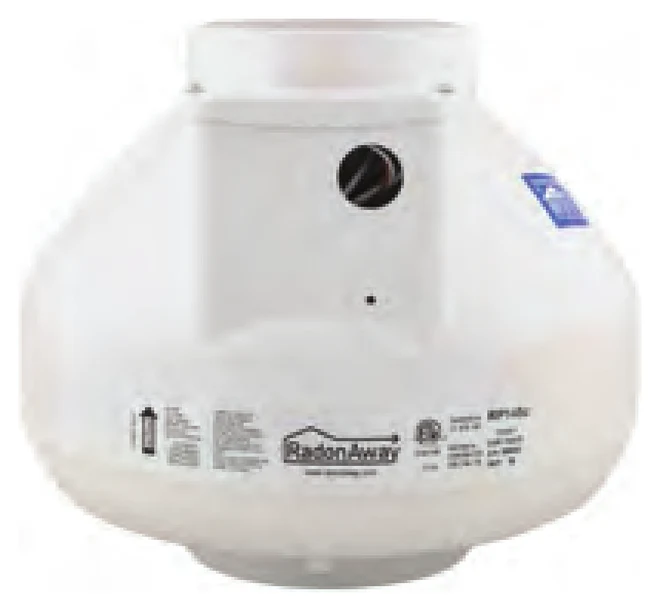
RadonAway
- What it does
- Moves up to 168 CFM
- Power
- Up to 72 W
- C-NRPP 2024/25
- Not applicable (mitigation fan)
The difference: RadonAway's 4 inch Contractor Series fan, which RadonAway lists at 46 to 72 W with a recommended maximum operating pressure of 1.7 inches.
RadonAway
- What it does
- Moves up to 112 CFM
- Power
- Up to 66 W
- C-NRPP 2024/25
- Not applicable (mitigation fan)
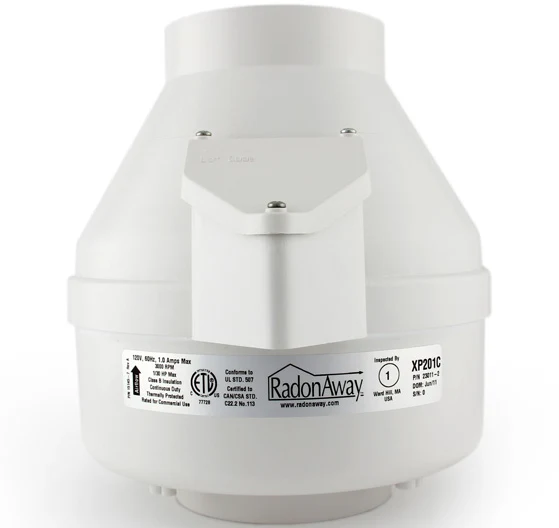
The difference: An older RadonAway 4 inch fan: RadonAway's 2017 sheet lists the XP201c (P/N 23011-1) at 112 CFM at 0 inches and a recommended maximum operating pressure of 1.7 inches.
Compared with similar products: 1 of 5
More radon fan models10
All radon fan modelsRadon fan

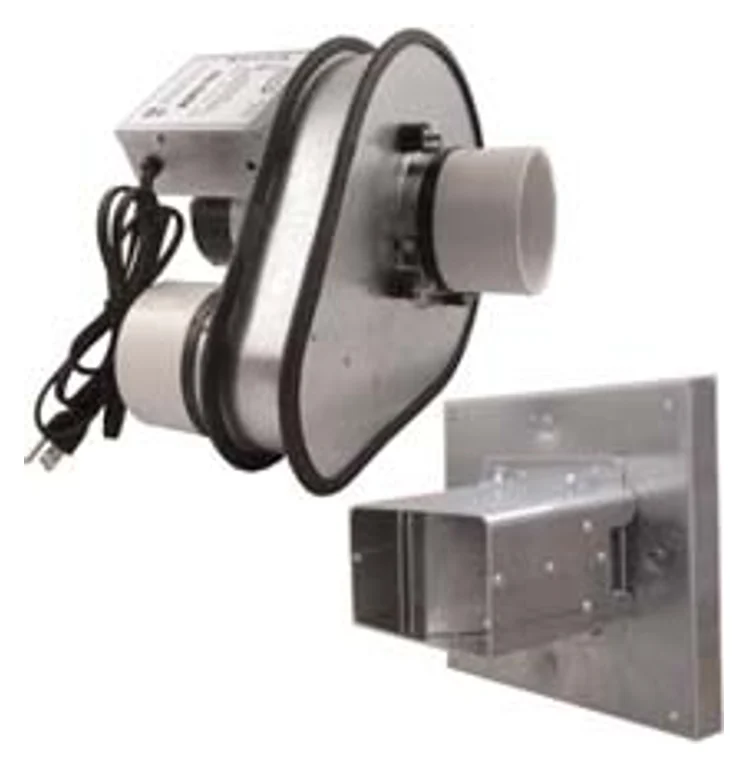
AMG Maverick inline radon mitigation fan
- 4 in. Fernco coupler size
- 66 W
Max airflow: 260 CFM
Max pressure: 2.21 in w.c.
Radon fan

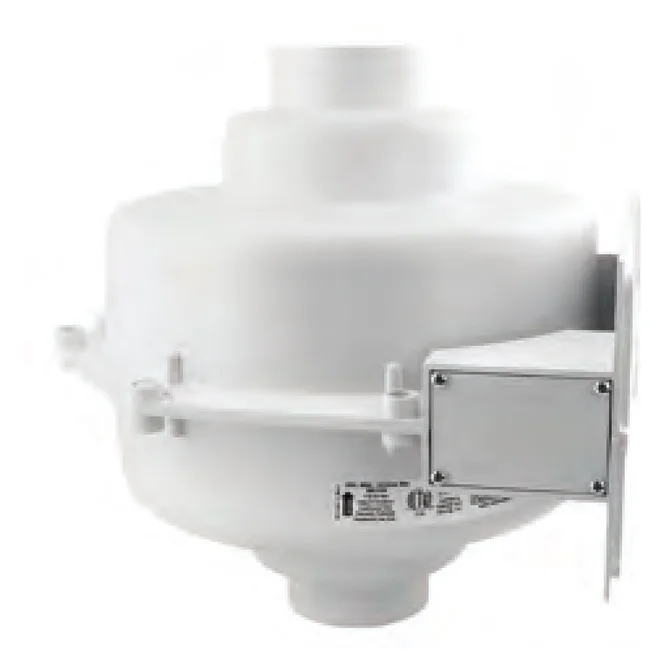
RMS160 side-wall radon mitigation system
- 3 in. schedule 40 PVC
- 50 W
Max airflow: 160 CFM
Max pressure: 2.3 in w.c.
- All radon fan modelsMore radon fan models

More radon fan models: 1 of 10
Questions
Questions people ask
6 questions about the Fantech Rn2, answered
Asked about the Rn2
How much air does the Fantech Rn2 move?
It depends on the suction. Fantech's manual lists 160 CFM with no resistance, 150 at 0.20 inches of water column, 120 at 0.50, 80 at 1.00 and 40 at 1.50, and a maximum pressure of 1.97 inches. Its brochure gives a maximum of 174 CFM and 2.0 inches.
What pipe does the Rn2 fit?
Fantech says the Rn2 is for 3 and 4 inch schedule 40 PVC pipe, joined with its LDVI couplings, which come in 4 by 3 and 4 by 4 inch versions and are sold separately. The fan's own connection is 4 15/32 inches across.
Can the Rn2 be installed outside?
Yes, by Fantech's account: its sales sheet says the Rn2 can be mounted indoor, outdoor and in wet locations, and its manual says its radon fans were reviewed by Underwriter Laboratories and found suitable for outdoor use. The EPA's construction guide adds that the fan belongs outside the home's living space.
Does the Rn2 have a speed control?
No. Fantech puts a built-in speed controller on its Rn 2EC and Rn 4EC, and its manual for the Rn series warns against using these fans with any solid state speed control device.
Which other fans does Fantech say the Rn2 replaces?
Fantech's 2025 brochure cross-references the Rn2 to RadonAway's RP145, RP260, XP151, XP201, XR261 and GP201 and to Festa's Maverick and Hawk, based on pressure capability. It notes that pipe and connection sizes vary and may need transition couplings, and that the next larger Fantech model may be needed where a fan works at the top of its range.
Do I need a professional to install it?
The EPA recommends a qualified radon mitigation contractor, and many states require radon professionals to be licensed, certified or registered. Fantech's manual says installation and wiring must be done by qualified persons, and its warranty excludes damage from improper installation.
What to do next
- See every radon fan we coverEach maker's published pressure, airflow and power, side by side.
- Find a mitigation professionalMost systems are designed and installed by one; some states require a license.
- Understand the fanWhat the fan does in a system, and when one needs replacing.
- Test after it runsA short-term test after installation shows whether the system works.
Updated October 6, 2026