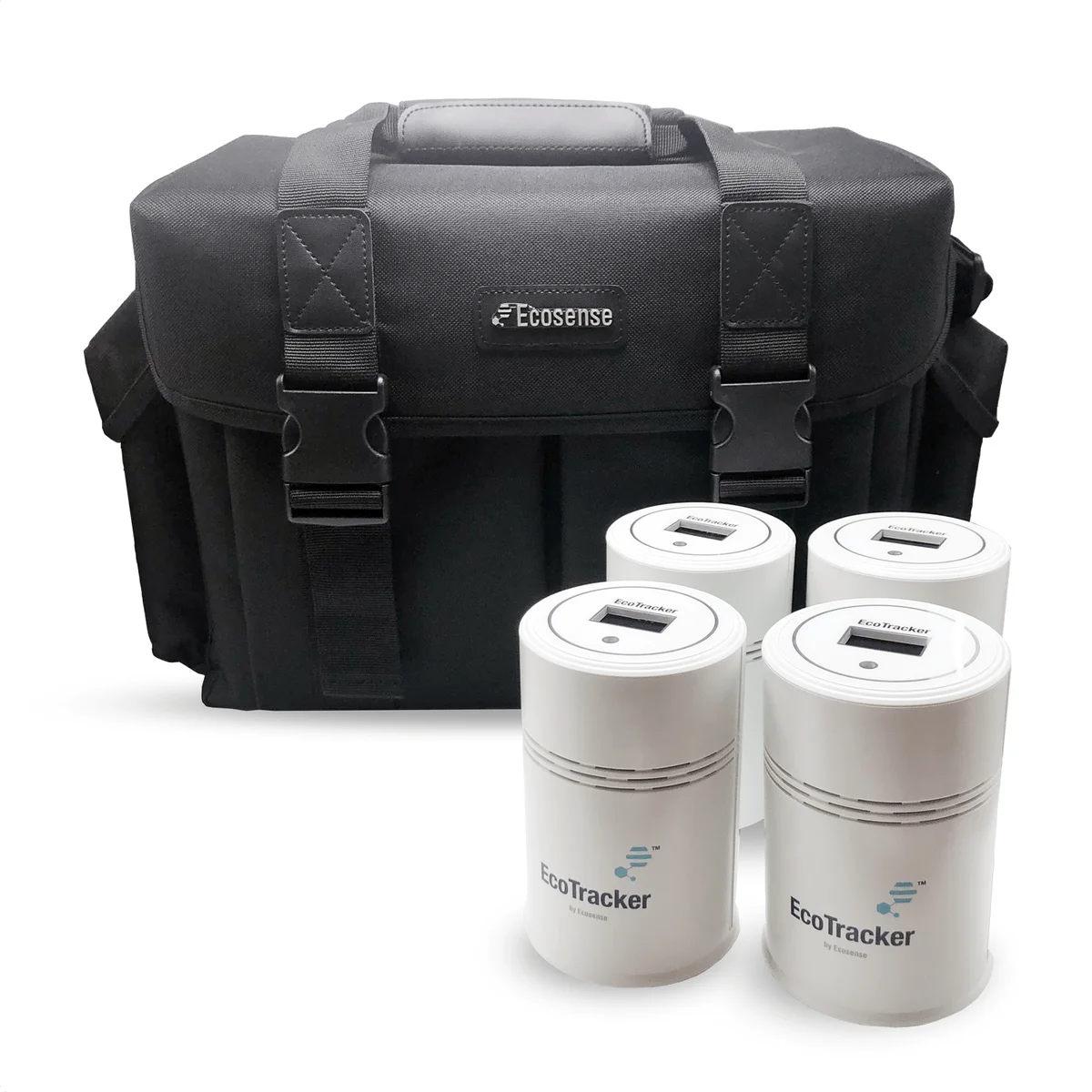
Pro monitor
EcoTracker four-monitor radon diagnostic set for mitigators
- Plug-in
- Bluetooth
- Alarm
- Screen, app
First reading: Within 5 minutes
 Airthings
Professional continuous radon monitor
Best for you if
Skip it if
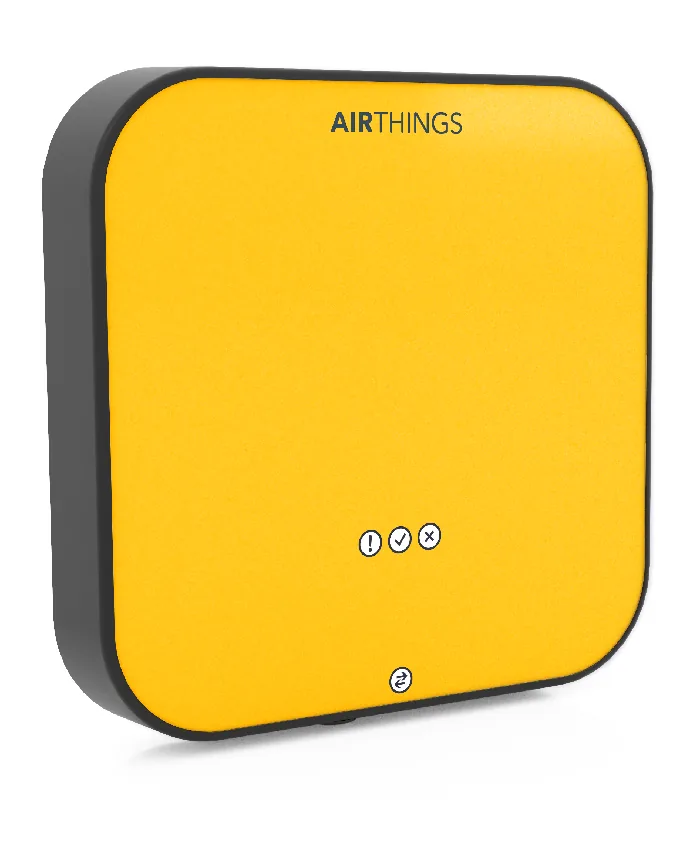
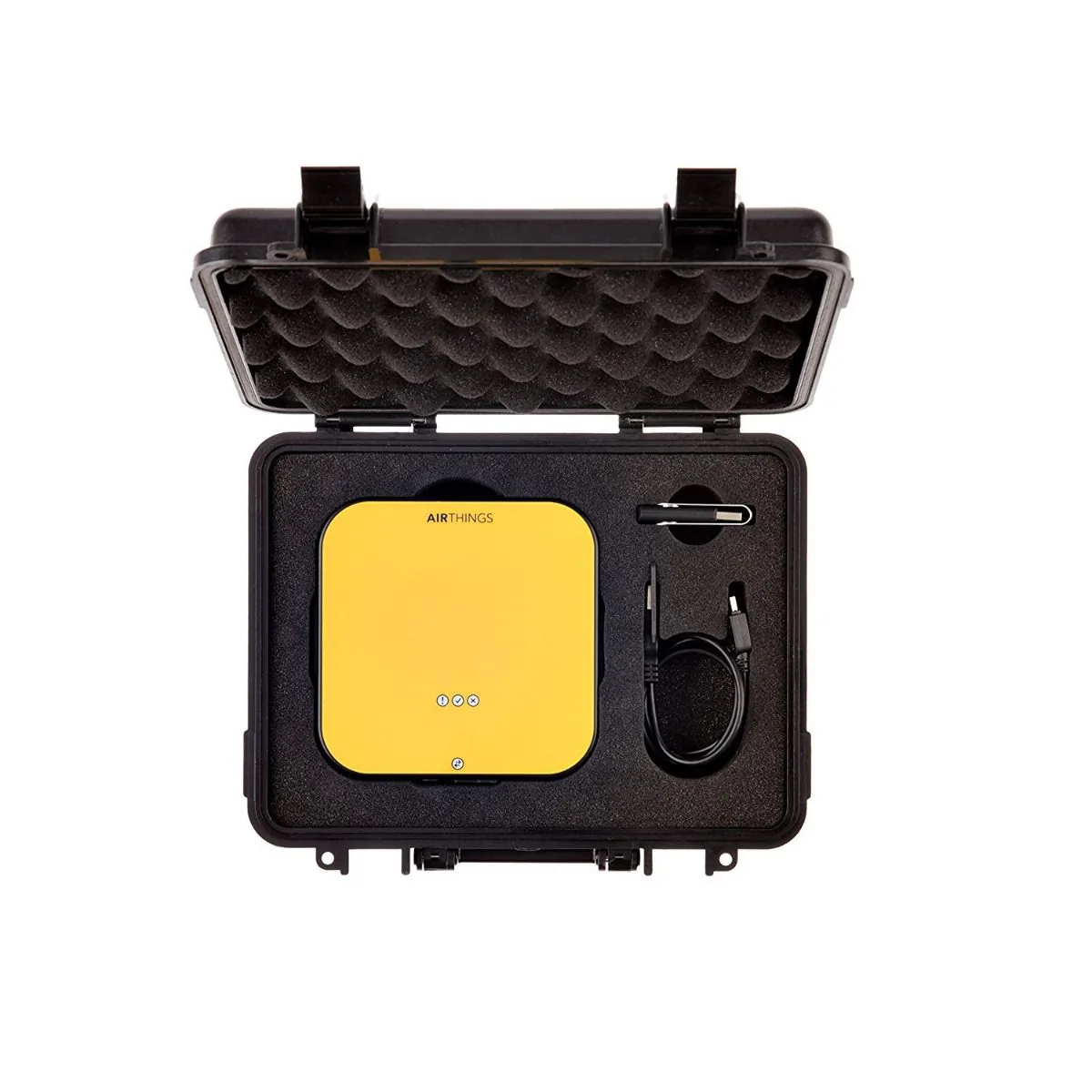
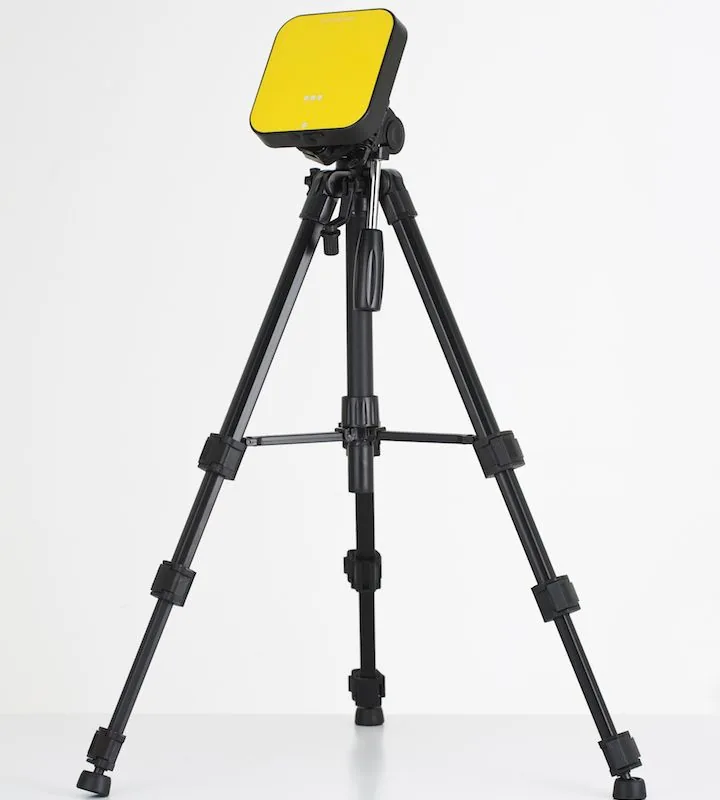
Photos: Airthings
 (opens in a new tab)Check price on Amazon (opens in a new tab)
As an Amazon Associate, Radon411 earns from qualifying purchases.
Amazon and the Amazon logo are trademarks of Amazon.com, Inc. or its affiliates.
See ratings and reviews on Amazon (opens in a new tab)As Airthings states it
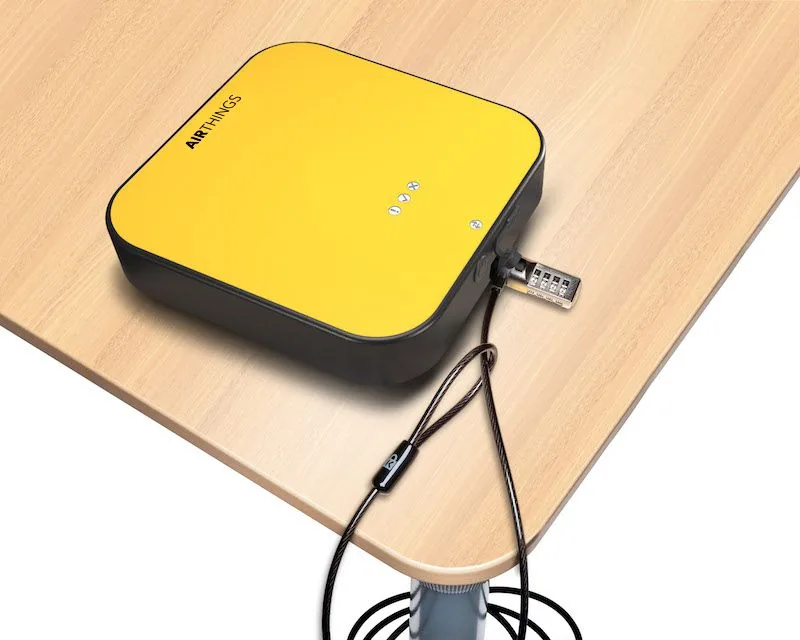
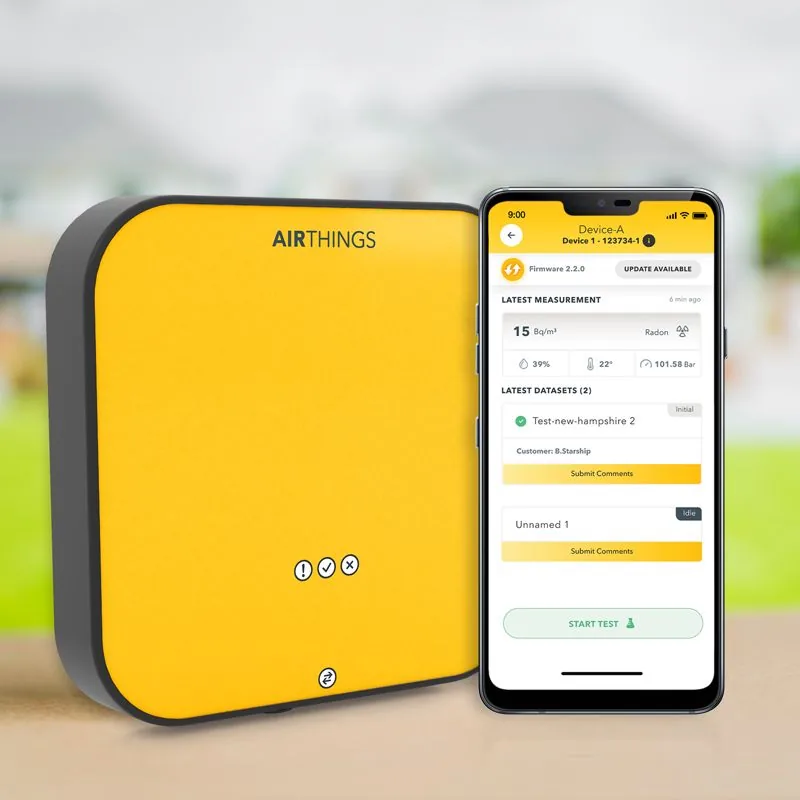
The Corentium Pro is Airthings' monitor for radon professionals: four radon chambers read by alpha spectrometry, with temperature, humidity and pressure logging, run from a phone app and an online dashboard that produces test reports. Airthings sells it as AARST-NRPP and NRSB certified, with a calibration certificate valid for one year. It is built for people who test homes for others, not as a household monitor.
Airthings' manual refers to a protective case for storing the monitor, a calibration label on the device and a calibration certificate. It measures 5.5 by 5.5 by 1.2 inches and weighs 10.6 ounces with batteries. Airthings' US store also offers a 1-year extended warranty for it, and lists calibration services and monthly and weekly rental packs for professionals.
In the box and running costsHow it works
The sensor, the sampling and the readings, then who has checked it
In our words, from the maker's documents
Airthings lists the sampling method as a passive radon diffusion chamber and the detection method as alpha spectrometry, using 4 silicon photodiodes in 4 distinct radon chambers. Airthings says the four chambers work in parallel. Air reaches them by diffusion, with no pump, and Airthings gives a diffusion time constant of 25 minutes, a measure of how quickly air inside the chambers follows the air in the room.
Its measurement range runs from 0 to 2,700 pCi/L (0 to 100,000 Bq/m³), far wider than a household monitor needs. Airthings states the measurement uncertainty as about 7% plus or minus 0.15 pCi/L after 24 hours, and about 5% plus or minus 0.06 pCi/L after 7 days. Alongside radon it logs temperature, humidity and barometric pressure, and it records motion events during a test, which a tester can include in a report.
The monitor has no screen and no on/off button. Status lights show what it is doing: green every 5 seconds while it records, green every second during a scheduled delay, yellow for a warning such as a clock that needs syncing, and red for an error. Everything else happens in software. Airthings describes two parts: the Corentium Pro mobile app, used to start and finish tests over Bluetooth, and the online Pro Dashboard, which Airthings calls the central hub for a radon testing company's operations.
That software is what makes it a professional tool. A company adds its monitors and staff to the dashboard, with managers and employees given different rights, keeps its certifications and licenses on file, and builds report templates. After a test, the technician finalizes the data set in the app, can add photos and notes on deviations from protocol or temporary conditions, and uploads it so a report can be generated in the field or by a specialist elsewhere. The app keeps cached data from monitors out of range, but Airthings notes this does not allow live, remote access to the monitor.
Memory is large: Airthings says the internal memory stores 5 years of hourly data points, about 1,900 days of measurements. It runs on 3 AA alkaline batteries, which Airthings rates at about 15 months, and has a tripod mount, a mini-USB connection and a slot for a Kensington cable lock, which the manual suggests for keeping the monitor from being moved or taken during a test.
Airthings's own statements, attributed
These are Airthings's own statements, attributed to it. They are not our findings, and we have not tested this product ourselves.
Who checks a device like this
C-NRPP's 2024/25 evaluation compared consumer monitors, not professional devices, so it has no result for Airthings Corentium Pro. A professional device is checked by calibration instead: the maker's certification and calibration statements are under “What the manufacturer says”, and a tester can show you the device's current calibration certificate.
Airthings Corentium Pro
Check price on Amazon (opens in a new tab)Specifications
Every figure as the maker states it
Airthings' manual refers to a protective case for storing the monitor, a calibration label on the device and a calibration certificate. It measures 5.5 by 5.5 by 1.2 inches and weighs 10.6 ounces with batteries. Airthings' US store also offers a 1-year extended warranty for it, and lists calibration services and monthly and weekly rental packs for professionals.
The recurring cost for a professional is calibration: Airthings says the certificate is valid for one year and that most jurisdictions require annual calibration for professional use, and its store lists calibration services. Beyond that, the monitor takes 3 AA alkaline batteries, which Airthings rates at about 15 months and says must be alkaline (LR06).
Fit and setup
The fit, then setup and placement as the guidance asks
Good fit if, and look elsewhere if
Good fit if
Look elsewhere if
4 steps
For where any radon test or monitor should sit in a home, see where to place a radon test.
Compare
The same three rows for each, and the one difference that matters
This page
Airthings Corentium Pro
This page: The Corentium Pro is Airthings' monitor for radon professionals: four radon chambers read by alpha spectrometry, with temperature, humidity and pressure logging, run from a phone app and an online dashboard that produces test reports.
Airthings
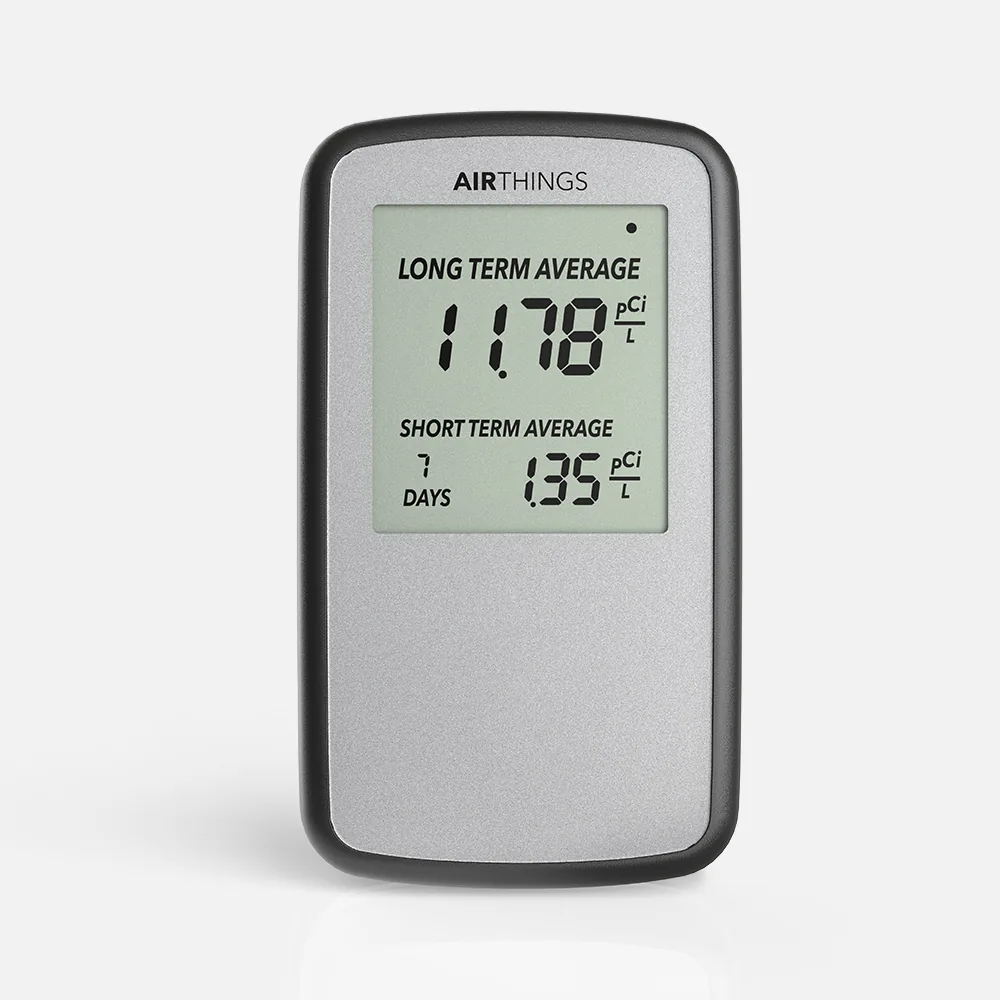
The difference: Airthings' household detector: an LCD screen with short-term and long-term averages on three AAA batteries, with no app, dashboard or calibration certificate; approved in C-NRPP's 2024/25 consumer evaluation.
Airthings
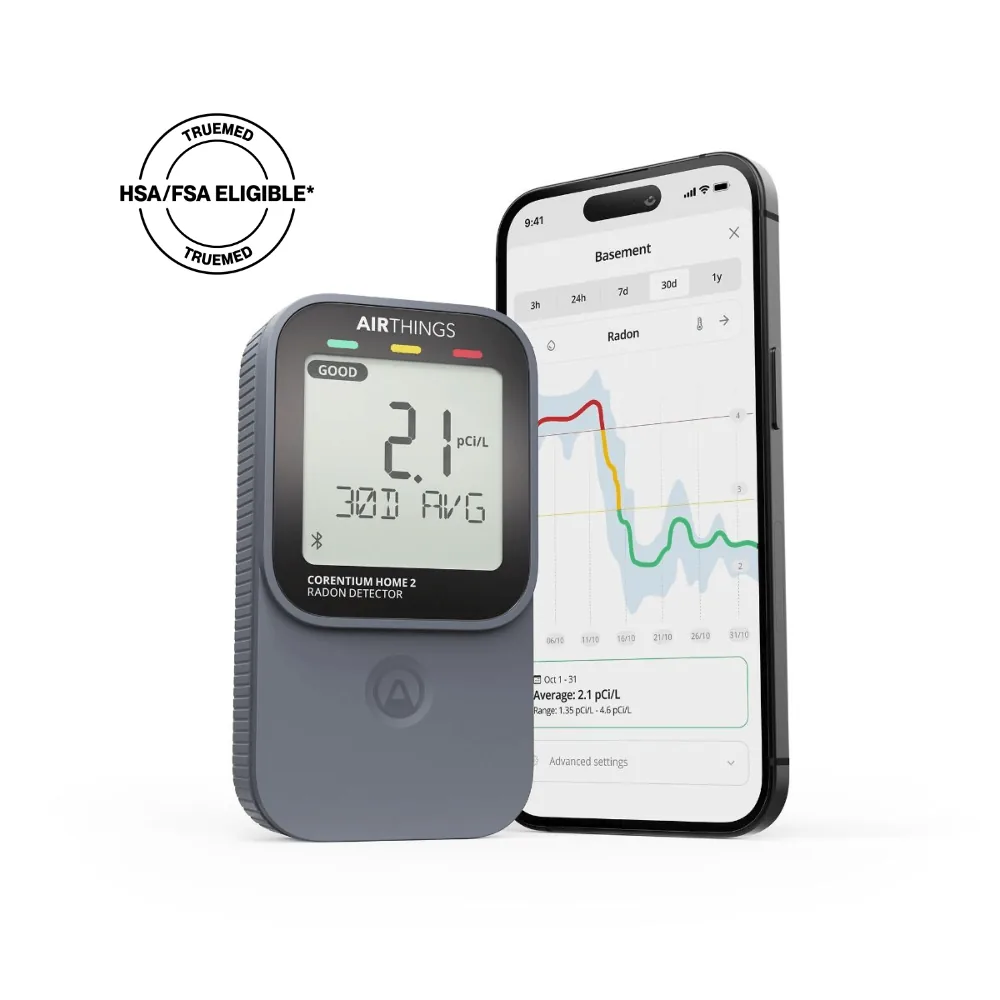
The difference: Airthings' current household detector: a screen with radon averages, Bluetooth to the Airthings app, and temperature and humidity, on two AA batteries.
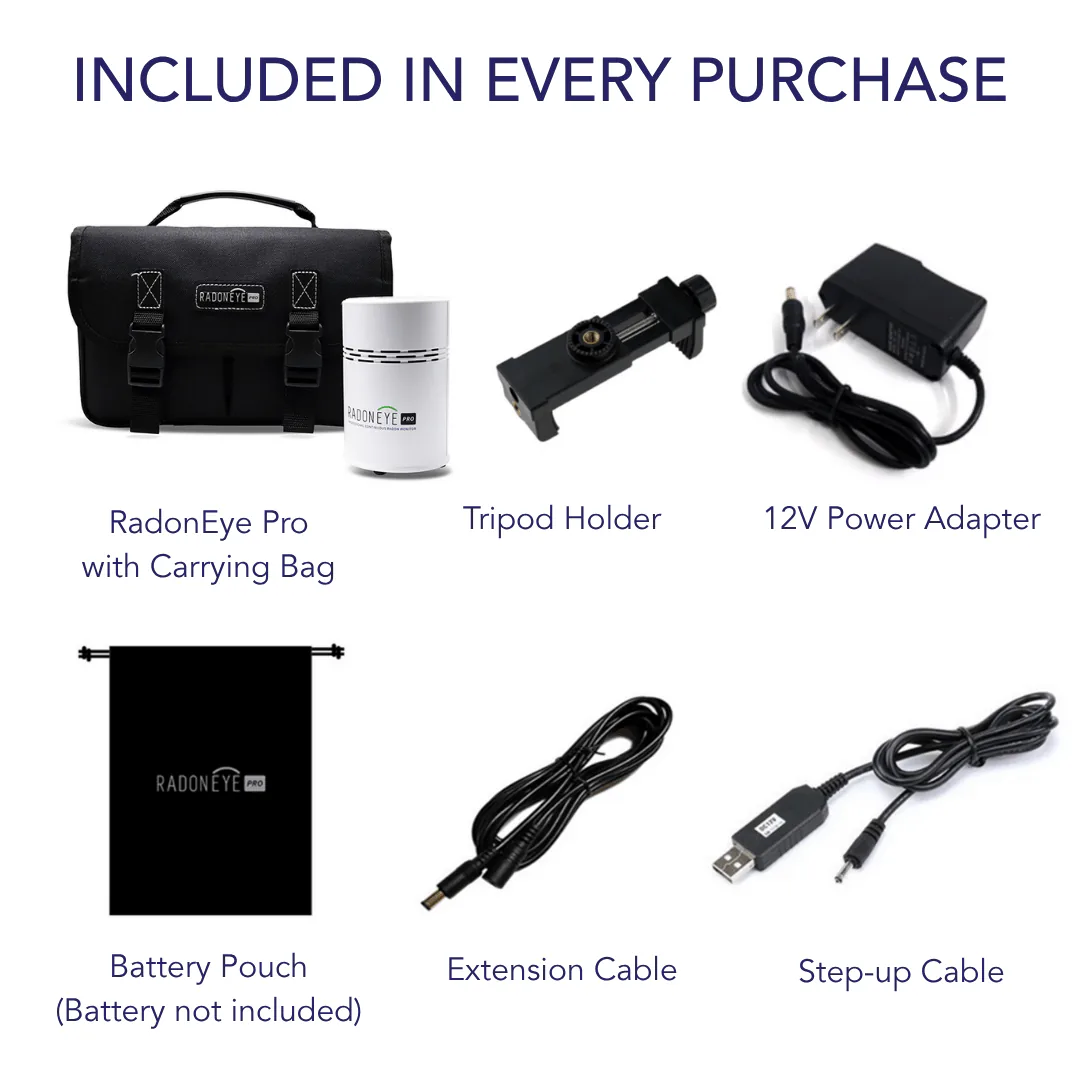
Ecosense
The difference: Ecosense's professional monitor: a pulsed ionization chamber with a 0.96-inch OLED display, run from a 12-volt adapter or an external battery pack, with Bluetooth on site, optional Wi-Fi, and reports from its app or web dashboard; Ecosense says it needs calibration every year.
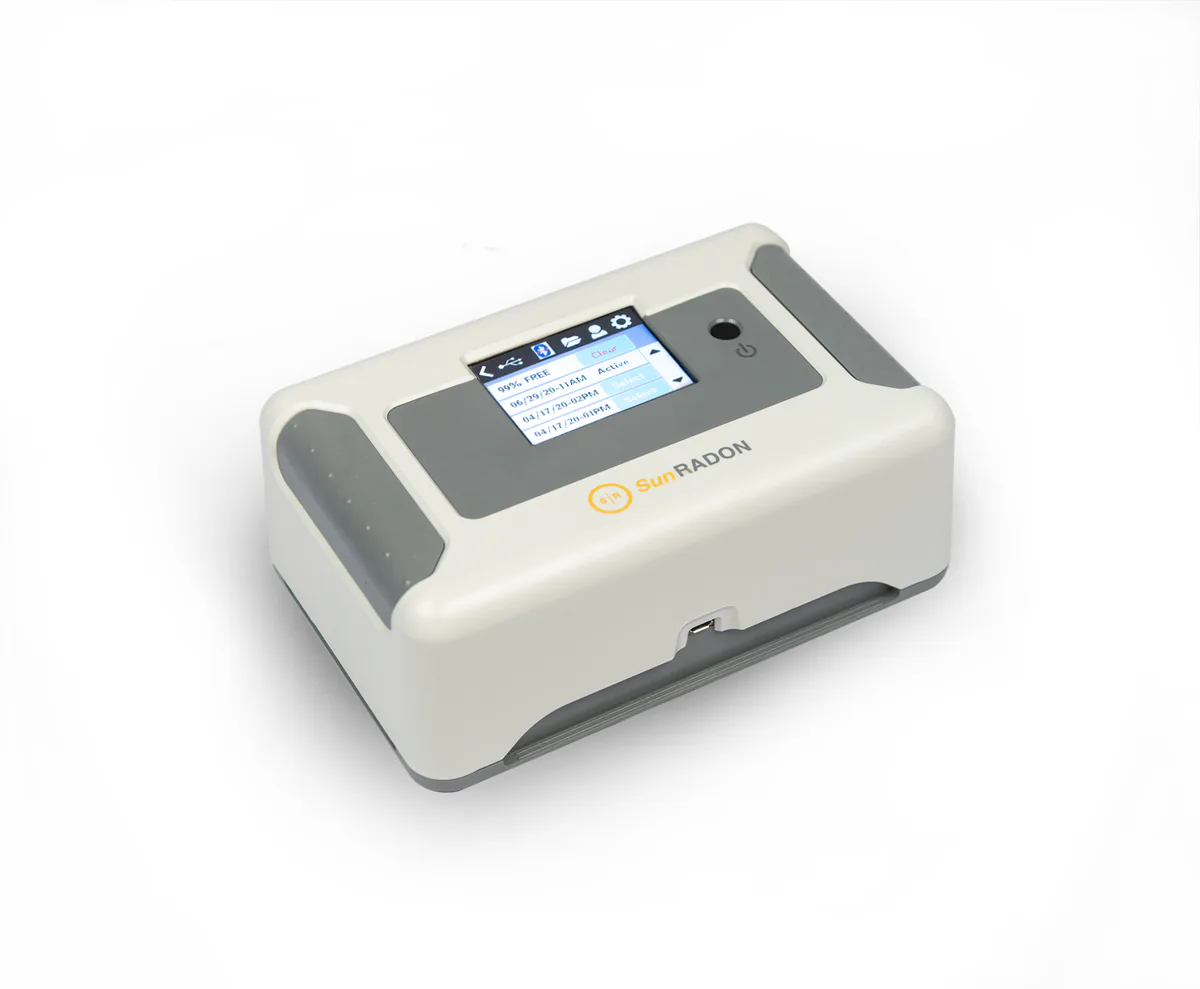
SunRADON
The difference: SunRADON's professional monitor, formerly the Model 1028 XP: one solid-state photodiode detector, a 2.8-inch color touchscreen, Bluetooth and USB-C to its OneRADON software, and four AA batteries for up to 300 hours.
Compared with similar products: 1 of 5
Pro monitor
First reading: Within 5 minutes
Pro monitor
Method: Ion chamber
First reading: Within 1 hour
More professional radon monitors: 1 of 3
Questions
6 questions about the Airthings Corentium Pro, answered
Radon professionals and home inspectors. Airthings sells it as AARST-NRPP and NRSB certified, with a calibration certificate valid for a year, and its software is built around companies, technicians and client reports. A homeowner watching their own radon level is the audience for Airthings' household monitors instead.
Yes, for professional use. Airthings says the calibration certificate is valid for one year and that most jurisdictions require annual calibration for professional use. The app shows the monitor's calibration expiration date.
Airthings recommends at least 48 hours with a 4-hour delay for short-term tests, ending in 24-hour increments, and says every test must follow the protocol required where it takes place.
No. It has status lights and no on/off button; readings, data sets and reports are in the Corentium Pro app and the online Pro Dashboard.
Owning the device does not make you a certified tester. Airthings says every test must follow the radon testing protocols required where it takes place, so check what your state and the contract accept before relying on a result you take yourself.
Airthings rates 3 AA alkaline batteries at about 15 months, and says to use only alkaline AA (LR06) cells and never let them run down in the monitor.
Updated October 4, 2026