 SunRADON
SunRADON XP
Professional continuous radon monitor
- Professional monitor
- Battery
- Screen and app
- Bluetooth
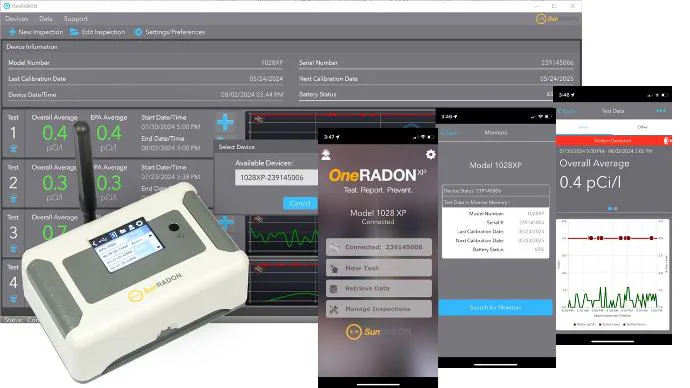
Photos: SunRADON
 (opens in a new tab)Check price on Amazon (opens in a new tab)
As an Amazon Associate, Radon411 earns from qualifying purchases.
Amazon and the Amazon logo are trademarks of Amazon.com, Inc. or its affiliates.
See ratings and reviews on Amazon (opens in a new tab)- PowerBattery
- ReadingsScreen and app
- Every figure checked against the specifications SunRADON publishes
- Independent test results shown the same way for every product, unranked
About this item
As SunRADON states it
- How it measures: Solid state photodiode detector, passive airflow diffusion, 1 detector
- Reading updates: Every 1, 4, 8 or 12 hours, set for each test
- Display and app: Built-in display, phone app, Bluetooth
- Power: Battery: 4 AA alkaline batteries, up to 300 hours; or USB-C power (AC-USB, 5 VDC, 100-240 V), with the batteries as backup
- Units: pCi/L or Bq/m³, set on the monitor
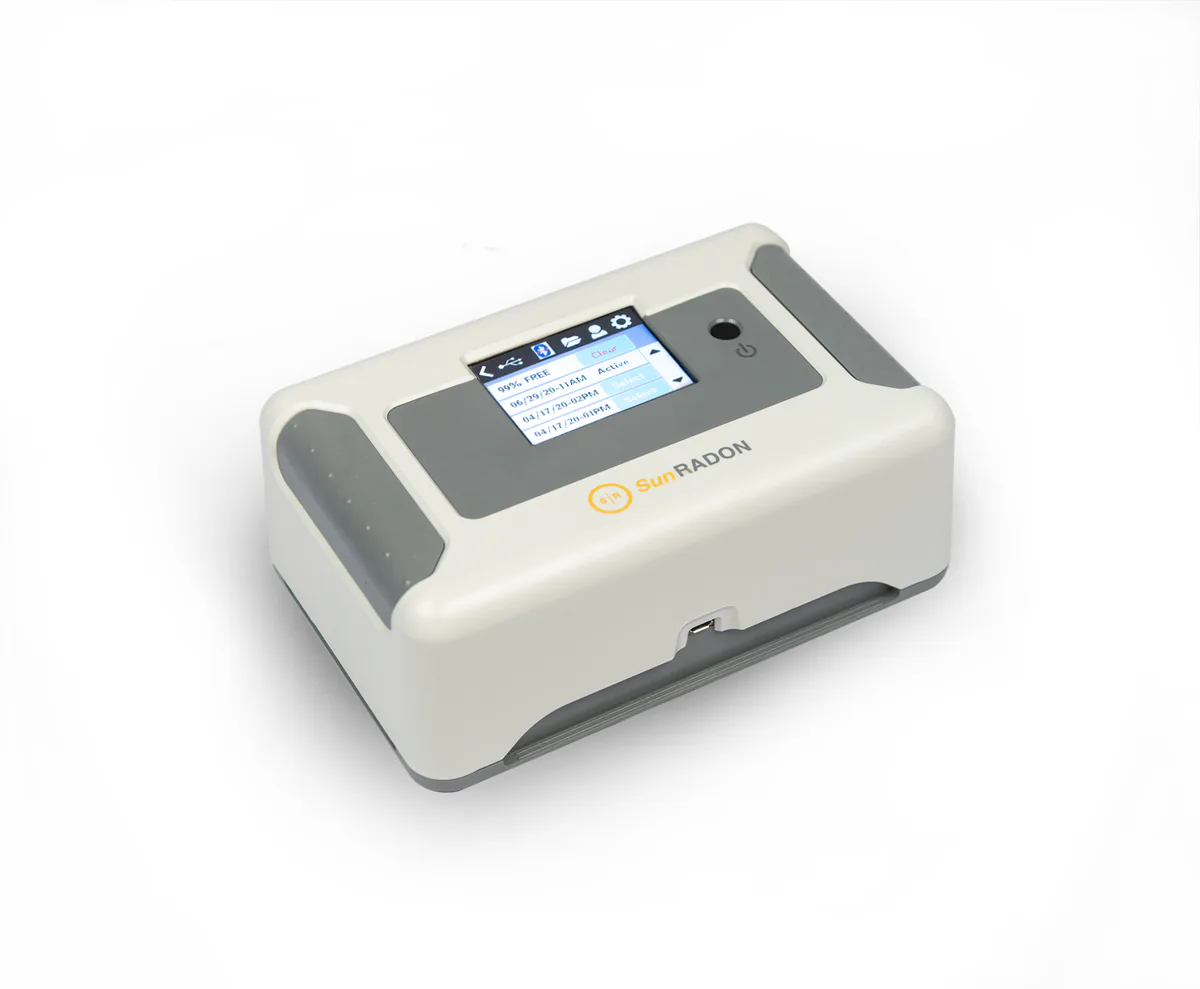
The SunRADON XP, sold until 2024 as the Model 1028 XP, is a continuous radon monitor for radon testers and home inspectors: one solid-state photodiode detector, a color touchscreen, Bluetooth and USB-C, and OneRADON software that turns a test into a client report. It runs on four AA batteries or USB power, and SunRADON says calibration of a professional monitor is recommended or required every year. It is outside C-NRPP's evaluation of consumer monitors; the National Radon Safety Board's July 2026 device list and C-NRPP's professional device list both include it under its former name, 1028-XP.
What you get
SunRADON does not state what comes in the box with the XP. Its data sheet lists a calibration certificate for the XP, and the Getting Started Guide points to that certificate for the factory-programmed calibration details. SunRADON sells a carrying case that fits the XP, XP+ and XP+ Cellular as a separate accessory. The monitor measures 7.5 by 4.8 by 2.9 inches and weighs 1.36 pounds.
In the box and running costsHow it works
What it measures and how
The sensor, the sampling and the readings, then who has checked it
How it works
In our words, from the maker's documents
SunRADON classifies the XP as an active continuous radon monitor with a single solid-state photodiode detector, and describes the detector design as passive airflow diffusion: room air reaches the detector on its own, with no pump. The data sheet gives a measurement range of 0.1 to 9,999 pCi/L, a nominal sensitivity of 2.7 counts per hour per pCi/L, a typical background of 0.2 pCi/L (0.5 pCi/L at most) and an uncertainty of 7% over one day. SunRADON's 2020 comparison chart ties that uncertainty figure to the ANSI-AARST MS-PC 2015 standard. Readings are shown in pCi/L or Bq/m³, chosen in the monitor's settings.
Each test is set up with a duration of 1 to 999 hours, a start delay of 0, 12, 24 or 48 hours, and a recording interval of 1, 4, 8 or 12 hours, and it can be started and stopped on the 2.8-inch color touchscreen or from the OneRADON app. While a test runs, the screen shows a progress bar and cycles through the current reading, the EPA and overall averages and a chart, and an icon marks a monitor that was moved during the test. SunRADON says these on-screen results are protected from client view. The memory holds 10,000 data points across 10 test slots, and a 4-digit PIN and a motion sensor guard against tampering.
The reporting side is SunRADON's OneRADON software, which the data sheet lists for Windows, macOS, iOS, Android and the cloud. A phone connects to the XP over Bluetooth from inside the app, with no adapter, and a Windows or Mac computer connects over USB only. In the app a technician syncs the monitor's date and time, starts a test, retrieves the data and builds an inspection report with the test times, a chart, site photos and a checklist of the testing protocols followed. A Specialist mode gives qualified inspectors full use of the software; with it off, a technician sends the data to a specialist for review and approval. SunRADON says report templates can carry a company's name and logo, and the data sheet lists an ANSI/AARST compliant QC module with comparison checks and duplicate test support.
Power comes from four AA alkaline batteries or a USB-C connection; the data sheet lists an AC-USB supply at 5 VDC, rated for 100 to 240 V. SunRADON's guide says four new alkaline batteries typically run the monitor for 280 to 300 hours of continuous measurement, depending on how much the touchscreen is used, that rechargeable batteries are not recommended, and that on USB power the batteries act as backup, so switching between the two does not interrupt a test. The data sheet's operating range is 45 to 95°F and 10 to 90% relative humidity, non-condensing.
The XP began as the 1028 XP Continuous Radon Monitor from Sun Nuclear, whose radon line is now SunRADON LLC. In 2024 SunRADON shortened the name to XP and turned the 1028-XP's optional modules into models of their own: the 1028-XP with the environmental (ENV) module is now the XP+, which adds humidity, temperature and pressure monitoring, and the one with the LTE module is now the XP+ Cellular, which adds a cellular link to connect, control and generate reports remotely. SunRADON's 2020 guide to that module says it used AT&T's network in North America and synchronized with the cloud hourly. This page covers the base XP. SunRADON's documents disagree on one detail: one row of the data sheet lists the humidity, temperature and pressure sensors for the XP and XP+ Cellular, while the same sheet's model table and the product page give them only to the XP+ and XP+ Cellular. This page follows the product page.
Two independent programs list the monitor under its former name. The National Radon Safety Board's list of approved radon measurement devices, dated July 2026, includes the SunRADON2 1028-XP continuous radon monitor as device 31826, with a note that SunRADON was formerly Sun Nuclear; NRSB adds that approving a device does not imply accreditation or certification of its maker. C-NRPP, the Canadian program, names the Sun Nuclear 1028-XP under SunRadon among the professional-grade electronic radon monitors on its professional device list, and says such devices need to be calibrated annually by the manufacturer and are different from consumer-grade monitors.
The monitor also appears in a peer-reviewed study, though not as the device under test. A 2026 paper in Sensors used Model 1028 XPs as the reference instruments for checking SunRADON's consumer lüft monitor in six rooms of a school in Utah, for about 29 weeks in 2024. The authors say they chose the 1028 XP because it is calibrated annually by its manufacturer and reports an hourly average every hour, and that SunRADON calibrated their units for radon, but not for the other air-quality readings, before the study. Over the study, the 1028 XPs' 24-hour average radon ranged from 0.44 to 22.49 pCi/L.
What the manufacturer says
SunRADON's own statements, attributed
- SunRADON saysSunRADON describes the XP as NRPP, C-NRPP and NRSB certified, and its FAQ says the approval of XP models applies for all of the US and Canada.
- SunRADON saysSunRADON states a nominal sensitivity of 2.7 counts per hour per pCi/L, a typical background of 0.2 pCi/L and an uncertainty of 7% (1 day, 1 sigma).
- SunRADON saysSunRADON says it has sold thousands of 1028-XP monitors and describes its XP monitors as trusted by thousands of radon testing professionals.
- SunRADON saysSunRADON says the results on the XP's screen are protected from client view, and that report templates can be customized with a company's name and logo.
- SunRADON saysSunRADON states that the XP is made in the USA.
These are SunRADON's own statements, attributed to it. They are not our findings, and we have not tested this product ourselves.
Independent evidence
Who checks a device like this
C-NRPP's 2024/25 evaluation compared consumer monitors, not professional devices, so it has no result for SunRADON XP. A professional device is checked by calibration instead: the maker's certification and calibration statements are under “What the manufacturer says”, and a tester can show you the device's current calibration certificate.
Specifications
Specifications
Every figure as the maker states it
The maker's figures
- Type
- Continuous monitor, professional, color touchscreen, solid-state photodiode, AA batteries or USB-C
- How it measures
- Solid state photodiode detector, passive airflow diffusion, 1 detector
- First reading
- Not stated by the manufacturer
- Reading updates
- Every 1, 4, 8 or 12 hours, set for each test
- Display and app
- Built-in display, phone app, Bluetooth
- Power
- Battery: 4 AA alkaline batteries, up to 300 hours; or USB-C power (AC-USB, 5 VDC, 100-240 V), with the batteries as backup
- Units
- pCi/L or Bq/m³, set on the monitor
What is in the box
SunRADON does not state what comes in the box with the XP. Its data sheet lists a calibration certificate for the XP, and the Getting Started Guide points to that certificate for the factory-programmed calibration details. SunRADON sells a carrying case that fits the XP, XP+ and XP+ Cellular as a separate accessory. The monitor measures 7.5 by 4.8 by 2.9 inches and weighs 1.36 pounds.
SunRADON's limited warranty runs 90 days from the date of shipment. It applies only to the original purchaser of a monitor bought directly from SunRADON or an authorized reseller, and is not transferable. For a monitor bought through Amazon or another third-party authorized reseller, SunRADON says to contact the point of sale about a warranty claim.
What it costs to run
The recurring cost for a professional is calibration. SunRADON says calibration is recommended or required annually for any professional radon monitor, and C-NRPP says professional-grade devices need to be calibrated annually by the manufacturer. SunRADON calibrates through a return (RMA) process: its support page says a standard calibration without additional repairs takes 7 to 10 business days and that every RMA includes calibration and any necessary repairs for no additional fees, while the product page says factory calibration includes most repairs for no additional charge.
Software and services come next. SunRADON says each new XP or XP+ comes with one year of free access to OneRADON Services, which stays free after that as long as the monitor is calibrated with SunRADON. Its SunLAB laboratory service and its cellular service, which applies to the XP+ Cellular, need monthly subscriptions. SunRADON also offers the monitor to rent as well as to buy.
Batteries are the smallest cost: four AA alkaline cells for about 280 to 300 hours of continuous measurement, or USB power with the batteries as backup. SunRADON does not recommend rechargeable batteries, and its warranty does not cover consumable parts such as batteries.
Fit and setup
Who it fits, and how to use it
The fit, then setup and placement as the guidance asks
Who it fits
Good fit if, and look elsewhere if
Good fit if
- You test homes for clients and need a monitor with a calibration certificate and software that produces the report.
- You want the averages and a chart on the monitor itself, kept from the client's view behind a PIN.
- You run tests of different lengths, from a few hours to several weeks, with a delayed start.
- You need to run on batteries where there is no outlet, for up to about 300 hours.
- You already use OneRADON with older SunRADON monitors, which the same software supports.
Look elsewhere if
- You want to watch radon in your own home; a consumer monitor is built for that, and C-NRPP evaluates those.
- You want temperature, humidity and pressure logged with each test; SunRADON puts those sensors in the XP+, not the base XP.
- You want to check a test from your office; remote access needs the XP+ Cellular and a cellular service subscription.
- You do not want to plan for yearly calibration, which SunRADON says is recommended or required for professional monitors.
- You need a result for a home sale but are not a certified tester; hire a radon measurement professional.
Setup and placement
4 steps
- The batteries go in under a cover on the bottom, or the monitor runs from USB power. A long press of 5 seconds on the power button turns it on or off, and a short press puts it to sleep, which SunRADON says does not affect a test in progress or Bluetooth. After powering up, SunRADON says to check the battery status, and to replace the batteries when the level shows 25% or less. The default PIN is 1111; SunRADON says to program a 4-digit PIN, not all zeros, to prevent tampering. Units, auto power-off (15, 30 or 60 minutes, or disabled) and screen timeout are set on the monitor, while the date and time come from the OneRADON app.
- A test is configured with its delay, interval and duration on the touchscreen or in the app. SunRADON's FAQ says the start can be delayed by up to 48 hours when leaving the test site, and that the report's start and end times can later be set to any range within the recorded data. The monitor has a tripod screw mount. SunRADON's guide says to use it indoors only and never where explosive gases could be present, and adds that the 1028 XP was tested with up to 3,000 particles per cubic centimeter of aerosol, though SunRADON cannot guarantee protection against every chemical exposure.
- SunRADON's guide covers the monitor's controls, not where to place it; a professional test follows the protocol required where it takes place. C-NRPP's professional device page defines a short-term radon test as one lasting at least 48 hours but less than 3 months, and a long-term test as one of 90 days or longer.
- For a homeowner, the EPA's general guidance for a home test is the lowest lived-in level of the home, at least 20 inches above the floor, away from drafts, high heat, high humidity and exterior walls. The EPA says to fix a home at 4 pCi/L or more and to consider fixing between 2 and 4 pCi/L. The questions worth asking a tester are which device they use, when it was last calibrated, and which protocol they follow.
For where any radon test or monitor should sit in a home, see where to place a radon test.
Compare
Compare with similar items
The same three rows for each, and the one difference that matters
This page
SunRADON XP
- How it measures
- Solid state photodiode detector
- Power
- Battery
- C-NRPP 2024/25
- Not evaluated (professional device)
This page: The SunRADON XP, sold until 2024 as the Model 1028 XP, is a continuous radon monitor for radon testers and home inspectors: one solid-state photodiode detector, a color touchscreen, Bluetooth and USB-C, and OneRADON software that turns a test into a client report.
Airthings
- How it measures
- Alpha spectrometry
- Power
- Battery
- C-NRPP 2024/25
- Approved
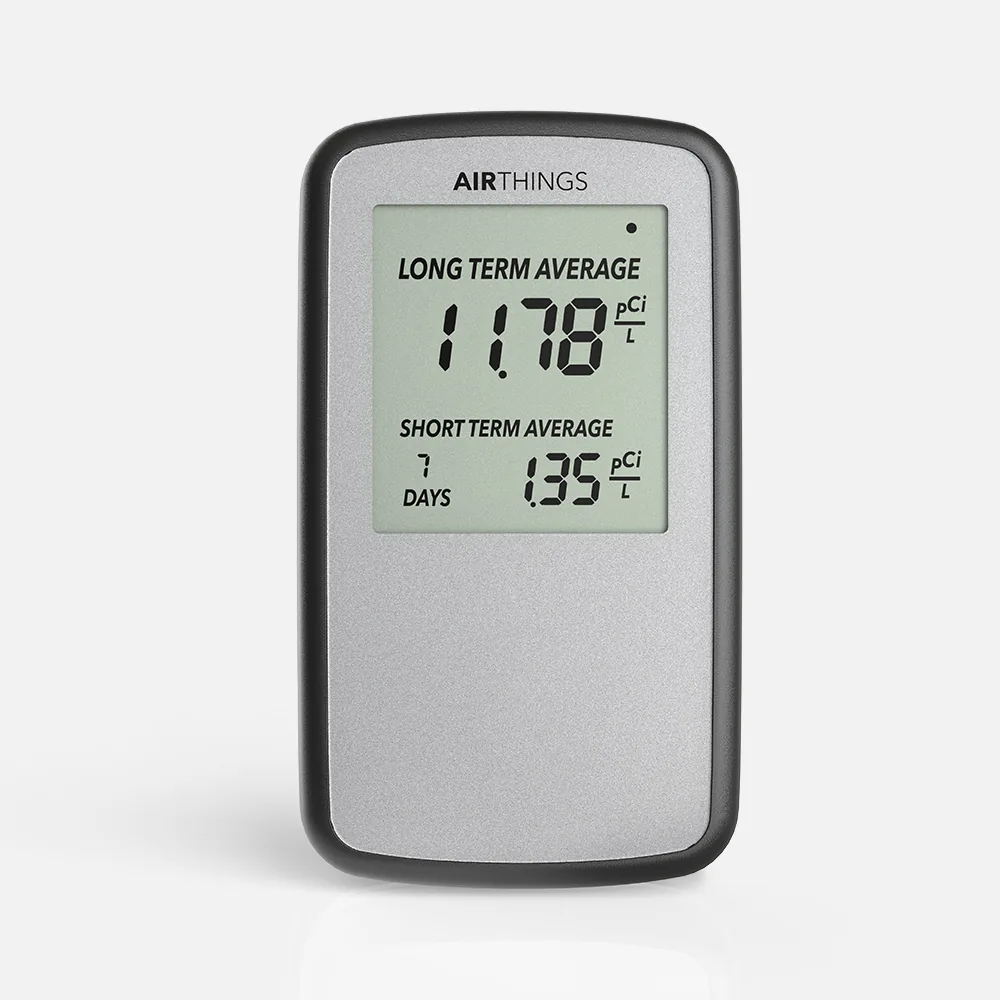
The difference: Airthings' household detector: an always-on LCD showing short- and long-term radon levels, on 3 AAA batteries, built to watch one home rather than run client tests; approved in C-NRPP's 2024/25 consumer evaluation.
Airthings
- How it measures
- Alpha spectrometry
- Power
- Battery
- C-NRPP 2024/25
- Not evaluated (professional device)
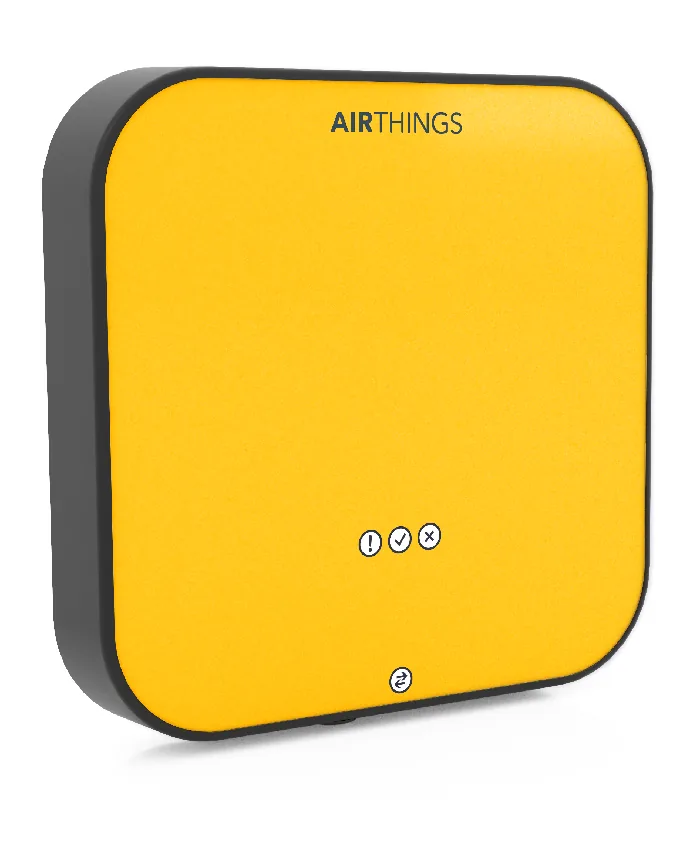
The difference: Airthings' professional monitor: 4 radon chambers read by alpha spectrometry, status lights instead of a screen, about 15 months on 3 AA alkaline batteries, and tests run from the Corentium Pro app and online Pro Dashboard.
Ecosense
- How it measures
- Ion chamber
- Power
- Plug-in
- C-NRPP 2024/25
- Not evaluated (professional device)
The difference: Ecosense's professional monitor: a pulsed ionization chamber with a 0.96-inch OLED display, run from a 12-volt adapter or an external battery pack, with Bluetooth on site, optional Wi-Fi, and reports from its app or web dashboard; Ecosense says it needs calibration every year.
Ecosense
- How it measures
- Ion chamber
- Power
- Plug-in
- C-NRPP 2024/25
- Approved
The difference: Ecosense's plug-in household monitor: a pulsed ionization chamber with an OLED display and a Bluetooth app, a first reading in 10 minutes and updates every 10 minutes; approved in C-NRPP's 2024/25 consumer evaluation.
Compared with similar products: 1 of 5
More professional radon monitors3
All professional radon monitors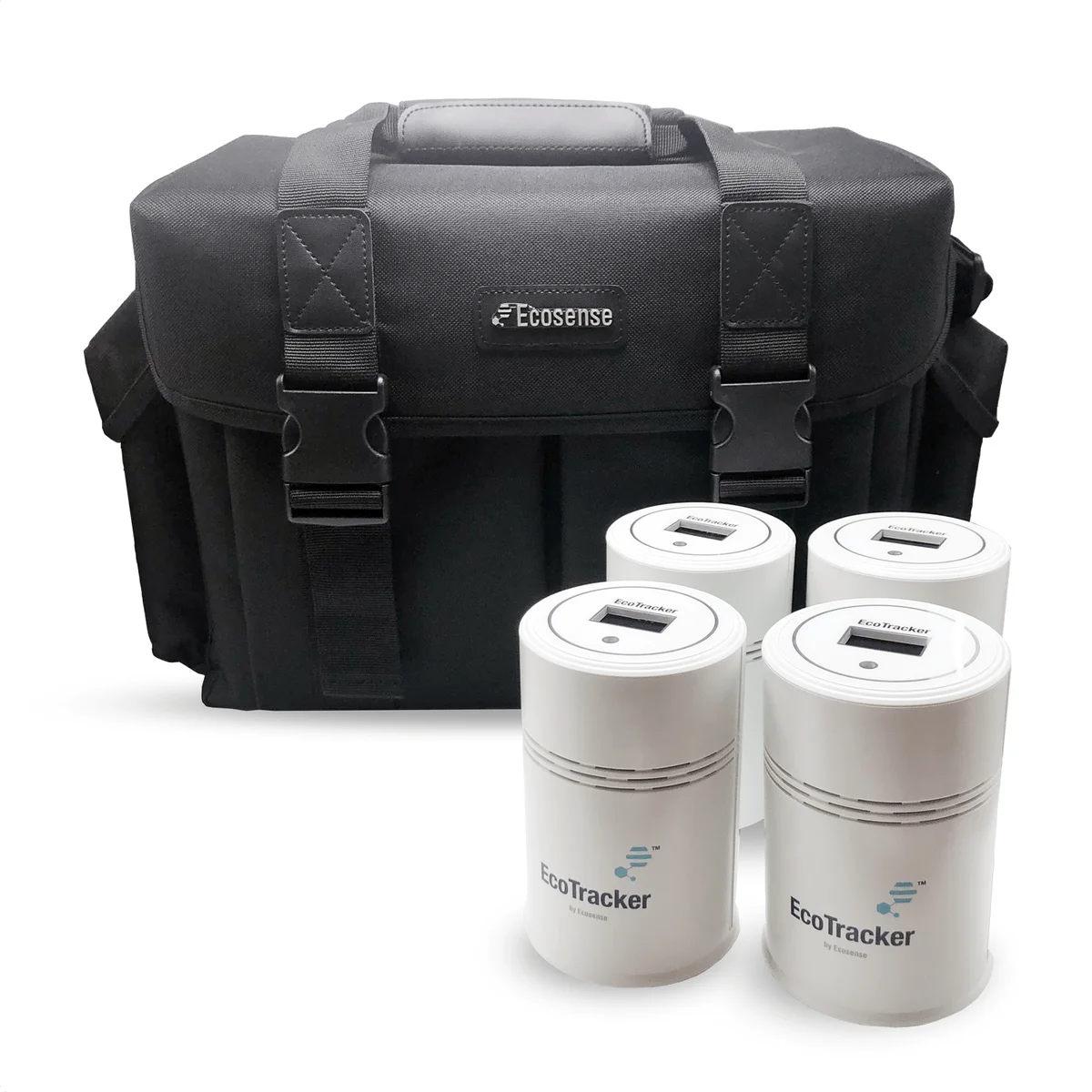
Pro monitor

EcoTracker four-monitor radon diagnostic set for mitigators
- Plug-in
- Bluetooth
- Alarm
- Screen, app
First reading: Within 5 minutes
Pro monitor
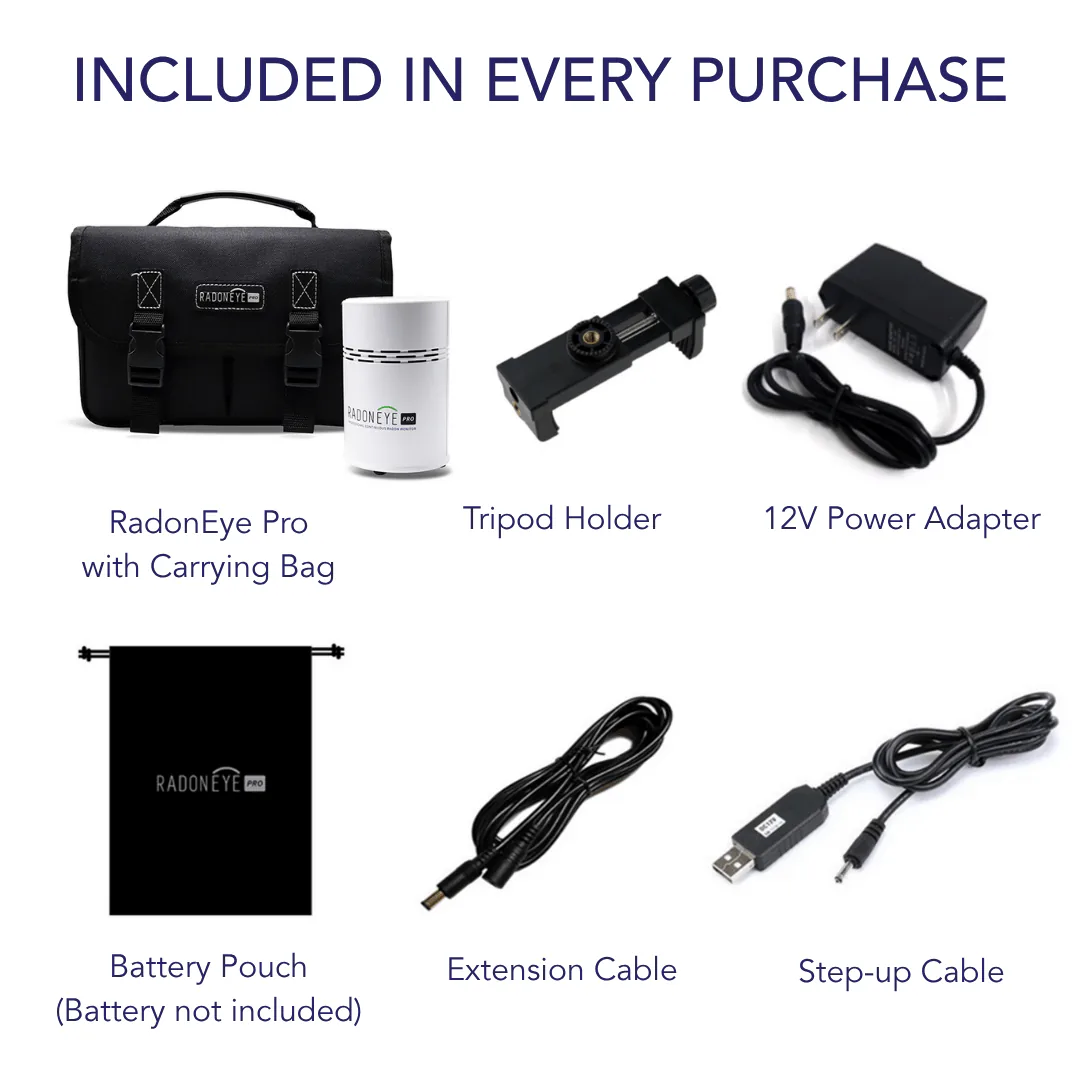
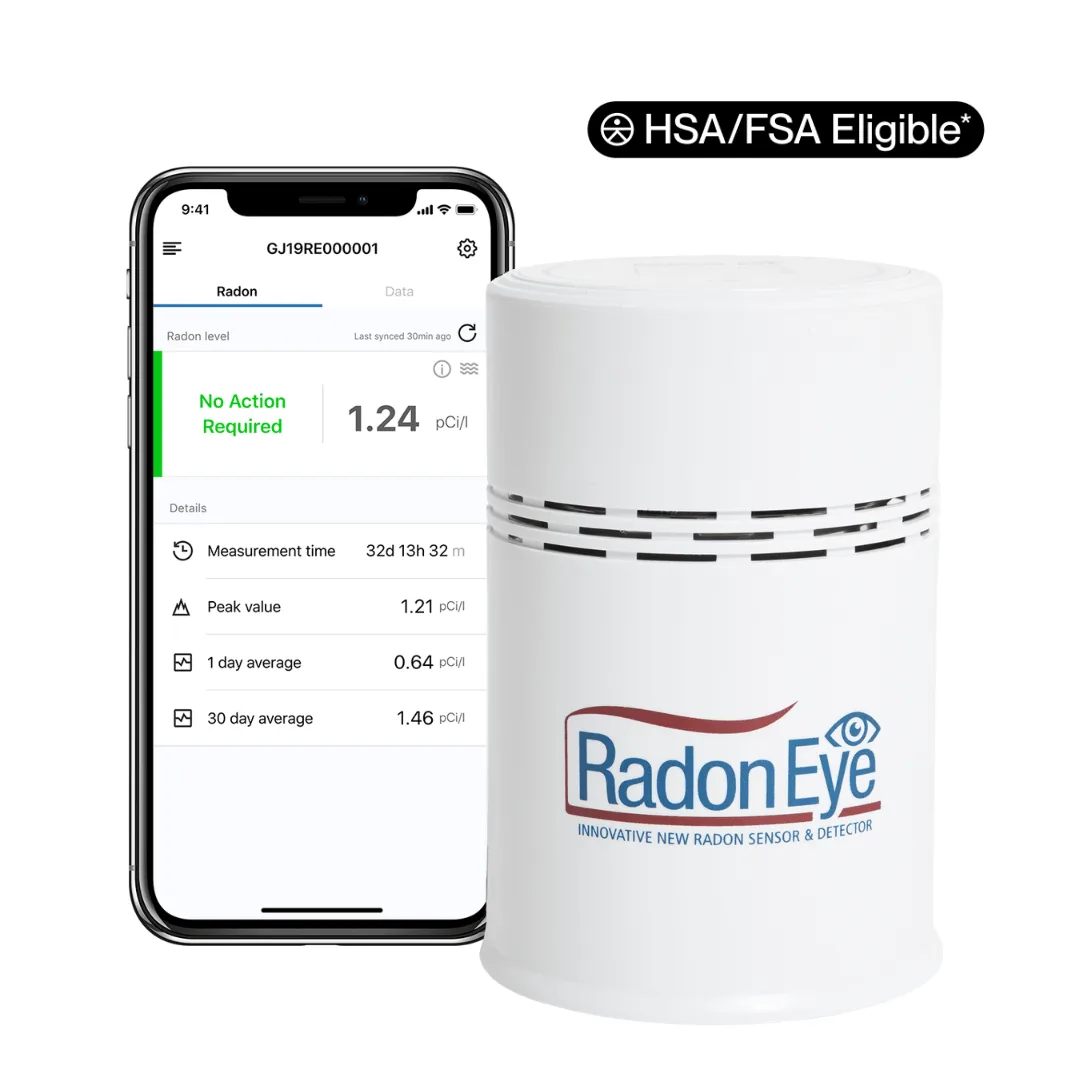
RadonEye Pro professional continuous radon monitor
- Plug-in
- Wi-Fi, Bluetooth
- Alarm
- Screen, app
Method: Ion chamber
First reading: Within 1 hour
- All professional radon monitorsMore professional radon monitors

More professional radon monitors: 1 of 3
Questions
Questions people ask
6 questions about the SunRADON XP, answered
Asked about the XP
Is the SunRADON XP the same as the Model 1028 XP?
Yes. SunRADON says it changed the 1028-XP's name to simply XP in 2024. The 1028-XP with the environmental module is now the XP+, and the 1028-XP with the LTE module is now the XP+ Cellular. The National Radon Safety Board and C-NRPP still list it under the 1028-XP name.
Who is the SunRADON XP for?
Radon testing professionals and home inspectors. SunRADON keeps its touchscreen results from the client's view, builds the report in its OneRADON software, and says yearly calibration is recommended or required. Owning one does not make a test official: a real-estate test depends on the tester's certification, the device's calibration and the protocol required where the test takes place.
How often does the XP need calibration?
Once a year. SunRADON says calibration is recommended or required annually for any professional radon monitor, and C-NRPP says professional-grade devices need to be calibrated annually by the manufacturer. The monitor's status screen shows when calibration is due, and SunRADON's support page says a standard calibration return takes 7 to 10 business days.
How long do the XP's batteries last?
SunRADON's guide says four new AA alkaline batteries typically run it for 280 to 300 hours of continuous measurement, depending on how much the touchscreen is used, and the data sheet says up to 300 hours. On USB power the batteries serve as backup.
Can the XP show results without a phone or computer?
Yes. SunRADON says the touchscreen shows the test results, including the overall and EPA averages and a chart of the data, and that these are protected from client view. The full test data and the report templates are in the OneRADON software, reached over Bluetooth or USB-C, or over cellular on the XP+ Cellular.
Is the warranty valid if I buy the XP on Amazon?
SunRADON's 90-day limited warranty covers monitors bought directly from SunRADON or from its authorized resellers, for the original purchaser. For a monitor bought through Amazon or another third-party authorized reseller, SunRADON says to contact the point of sale for instructions about a warranty claim.
What to do next
- See how professional monitors differCalibration, test protocols and reports, and the devices testers use.
- Hire a testerFind radon measurement professionals in our directory.
- Monitor your own homeConsumer monitors, each with its independent evidence.
- Read your resultWhat a number in pCi/L means and what the EPA says to do next.
Updated October 8, 2026