Sealing materialRadonSeal
Plus Concrete Sealer penetrating concrete sealer
- 2.5 gal or 5 gal
Made of: Penetrating concrete sealer
 RadonSeal
Peel-off polyurethane crack injection kit
Best for you if
Skip it if
Photos: RadonSeal
 (opens in a new tab)Check price on Amazon (opens in a new tab)
As an Amazon Associate, Radon411 earns from qualifying purchases.
Amazon and the Amazon logo are trademarks of Amazon.com, Inc. or its affiliates.
See ratings and reviews on Amazon (opens in a new tab)As RadonSeal states it
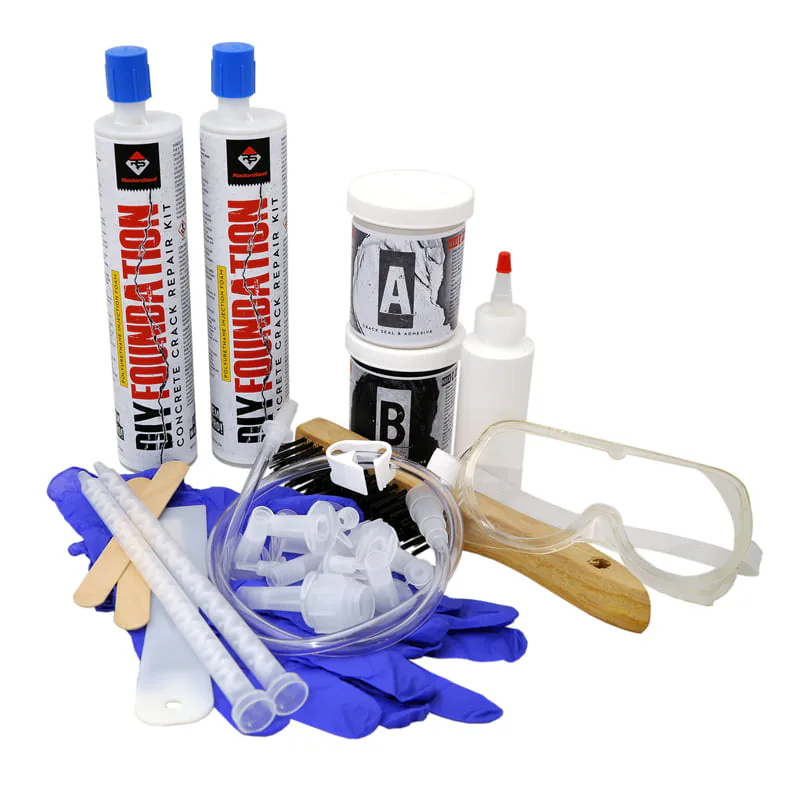
The Easy-Peel kit is RadonSeal's do-it-yourself injection repair for cracks in poured concrete walls: a two-component polyurethane foam pushed into the crack through surface ports with an ordinary caulking gun, sold in 10 and 20 foot sizes. What sets it apart is the paste that seals the crack face and holds the ports, which peels off the wall in one strip when the foam has cured. RadonSeal says the repair keeps out water vapor, soil gases and even radon; the EPA does not recommend sealing alone as a radon fix.
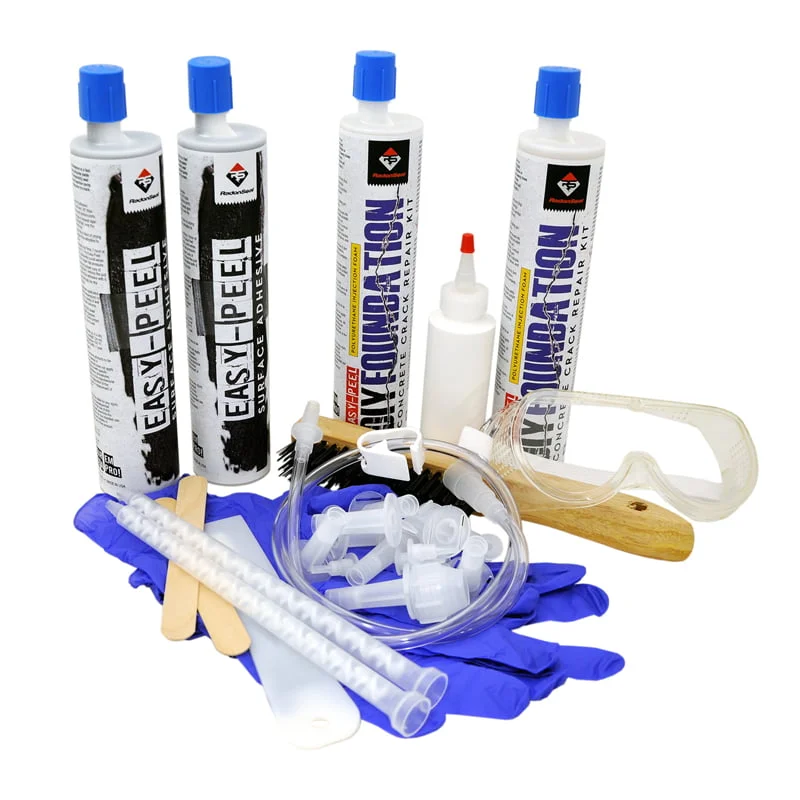
RadonSeal's page offers 10 and 20 foot kits, with flat ports, corner ports or a mix of 9 flat and 6 corner, and says the kit ships complete with only a caulking gun needed, which it offers to add. Its 2011 guide lists the Easy-Peel kit as 2 cartridges of injection polyurethane, 2 cartridges of Easy-Peel surface sealer, 12 injection ports with caps, 2 static mixing nozzles, 2 retaining nuts, a hose assembly with shut-off valve, safety goggles, 2 pairs of nitrile gloves, a plastic trowel, a wire brush, a drop cloth and instructions. You supply the gun, a paper plate or cardboard, a clean plastic bottle and duct tape.
In the box and running costsHow it works
What it is made of and the job it does in a system, then who has checked it
In our words, from the maker's documents
Crack injection fills a crack through the wall's thickness, not just at its face. Ports are fixed along the crack, the face of the crack between them is sealed so the resin cannot run out, and resin is pushed in at low pressure, port by port, until it shows at the next port up. RadonSeal's page says the kit's two-component polyurethane foam forcefully expands to 20 times its volume to fill the full depth and length of the crack, and adheres to wet or damp surfaces inside it, so there is no need to wait for the crack to dry out. Its low-viscosity resin, RadonSeal says, suits hairline cracks as well as wide ones up to 1/2 inch.
The surface paste is the Easy-Peel part. RadonSeal's data sheet describes a two-component (1:1), solvent-free paste adhesive that temporarily seals the crack and secures the injection ports, in an internally split 22 oz. cartridge, two to a DIY kit, dispensed from a standard caulking gun. After the foam's initial cure, the seal is pulled off using starter tabs of duct tape placed under it beyond the end of the crack, or pried off at its leading edge with a trowel. In RadonSeal's standard kit, by contrast, the guide says the ports are knocked off with a hammer and the surface sealer ground off or painted over.
RadonSeal's own documents name the paste two ways. Its kit page calls it Easy-Peel epoxy and its sealer cartridge page a fast curing epoxy paste; its data sheet calls it a polyurea paste adhesive. Either way it is the same cartridge, which RadonSeal also sells on its own, as part 301-5, for 5 linear feet of crack, and says suits both its urethane and epoxy DIY kits.
On radon, RadonSeal's page says the repair prevents water seepage permanently and stands up to water vapor, soil gases and even radon. The EPA's view of sealing is narrower: sealing cracks limits the flow of radon and makes other reduction techniques more effective, but the EPA does not recommend the use of sealing alone to reduce radon, because by itself sealing has not been shown to lower radon levels significantly or consistently. Its builders' guide adds that radon can enter through cracks and openings too small to locate and effectively seal.
RadonSeal's own statements, attributed
These are RadonSeal's own statements, attributed to it. They are not our findings, and we have not tested this product ourselves.
Who checks a device like this
C-NRPP's consumer evaluation covers electronic radon monitors, not the parts of a mitigation system, so it has no result for RadonSeal Easy-Peel DIY Crack Repair Kit, Urethane. The standards and results the maker states are under “What the manufacturer says”, and what shows whether radon in your home is lower is a radon test after the work is done.
RadonSeal Easy-Peel DIY Crack Repair Kit, Urethane
Check price on Amazon (opens in a new tab)Specifications
Every figure as the maker states it
RadonSeal's page offers 10 and 20 foot kits, with flat ports, corner ports or a mix of 9 flat and 6 corner, and says the kit ships complete with only a caulking gun needed, which it offers to add. Its 2011 guide lists the Easy-Peel kit as 2 cartridges of injection polyurethane, 2 cartridges of Easy-Peel surface sealer, 12 injection ports with caps, 2 static mixing nozzles, 2 retaining nuts, a hose assembly with shut-off valve, safety goggles, 2 pairs of nitrile gloves, a plastic trowel, a wire brush, a drop cloth and instructions. You supply the gun, a paper plate or cardboard, a clean plastic bottle and duct tape.
RadonSeal's figures for how far a kit goes differ by document: the kit page says a single kit seals up to 10 feet of crack, based on a 1/16 inch crack in a 10 inch thick wall; the data sheet says each DIY kit's sealer covers roughly 8 to 10 linear feet; and the 2011 guide says roughly 8 linear feet. The page adds that more material is available if a crack needs it.
There is no running cost once the crack is filled. The costs are in getting it right: extra foam or sealer for a crack longer or wider than the kit's figure, and shelf life for any left over. RadonSeal gives the kit a shelf life of 1 year from the date of purchase and the sealer one year in unopened containers stored dry at 60 to 90 ºF; its foam data sheet gives a typical shelf life of 6 months or more from manufacture.
Uncured paste cleans up with MEK, acetone or industrial detergents, by RadonSeal's data sheet, so mixed material should be wiped away before it hardens. For radon, the cost that remains is testing: the EPA says normal settling of a home opens new entry routes and reopens old ones, and that it is a good idea to retest your home at least every two years.
Fit and setup
The fit, then how it goes on and what the standards ask
Good fit if, and look elsewhere if
Good fit if
Look elsewhere if
3 steps
For how the sealing, the gauge and the fan work together, see radon mitigation systems, and to find someone to design and install one, radon mitigation professionals.
Compare
The same three rows for each, and the one difference that matters
This page
RadonSeal Easy-Peel DIY Crack Repair Kit, Urethane
This page: The Easy-Peel kit is RadonSeal's do-it-yourself injection repair for cracks in poured concrete walls: a two-component polyurethane foam pushed into the crack through surface ports with an ordinary caulking gun, sold in 10 and 20 foot sizes.
The difference: RadonSeal's standard urethane kit: the same injection foam, sold in 5, 10 and 20 foot kits, with a surface sealer that is not made to peel off.
RadonSeal
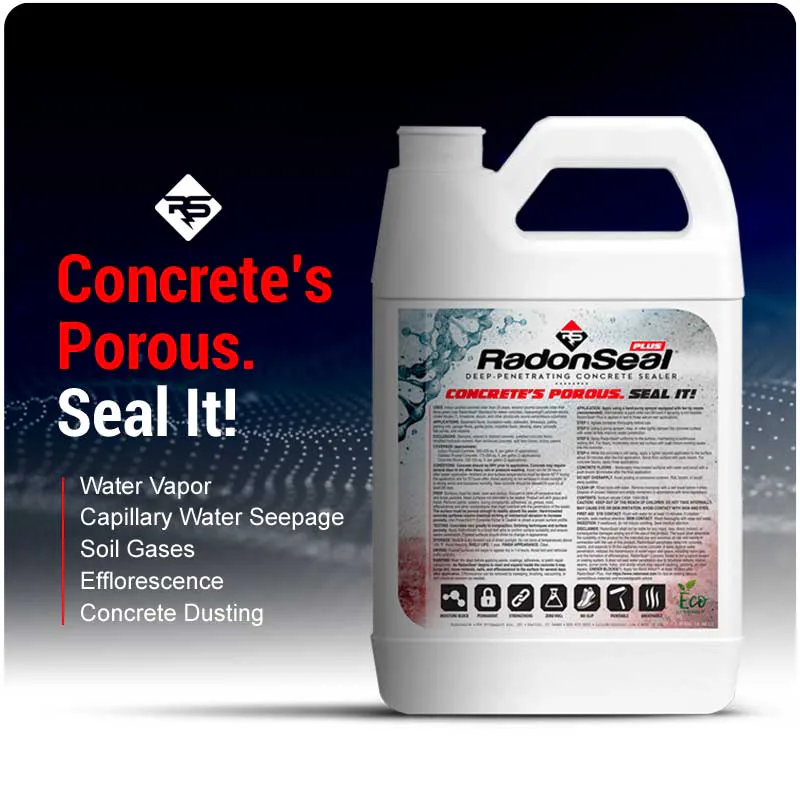
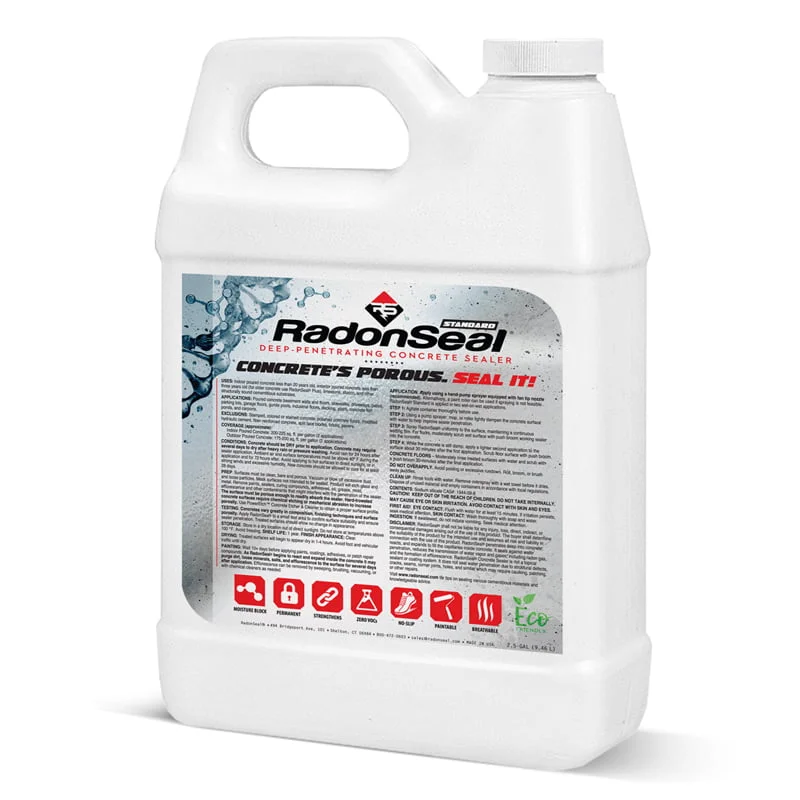
The difference: Treats the concrete rather than the crack: a penetrating sealer that RadonSeal's data sheet says does not seal cracks, seams or joints.
Titebond
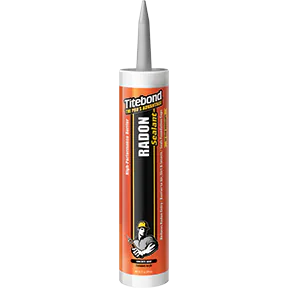
The difference: Seals over a crack or joint instead of filling it: an elastomeric acrylic in a cartridge for foundation cracks, joints and penetrations.
Compared with similar products: 1 of 4
Sealing materialRadonSeal
Made of: Penetrating concrete sealer
More sealants and sump covers: 1 of 3
Questions
5 questions about the RadonSeal Easy-Peel DIY Crack Repair Kit, Urethane, answered
The injection foam is the same; the surface sealer differs. RadonSeal's 2011 guide says the standard kit's sealer comes in two jars mixed by hand, its ports are struck off with a hammer and the sealer ground off or painted over, while the Easy-Peel sealer comes in cartridges and peels off with the ports in one pull.
Not by itself, on the EPA's evidence. The EPA does not recommend the use of sealing alone to reduce radon; sealing helps a system work by limiting the flow of radon into the home. Test before and after any work.
RadonSeal says the kit is for poured concrete walls and is not suitable for hollow concrete block walls, for which it sells its ElastiPoxy Joint and Crack Filler Kit. For the floor-wall joint the EPA's 1994 standards call for urethane caulk or an equivalent material.
Inside the crack, yes: RadonSeal says the foam adheres to wet or damp surfaces, and its guide flushes the crack with water before injecting. The wall face must be dry for the paste and ports, which the data sheet says must not go on wet or damp surfaces.
RadonSeal's kit page says up to 10 feet of crack per kit, based on a 1/16 inch crack in a 10 inch wall; its data sheet says the sealer covers roughly 8 to 10 feet, and its 2011 guide roughly 8 feet. RadonSeal sells additional material if a crack requires more than the kit holds.
Updated November 27, 2026