 RadonSeal
 Standard Concrete Sealer
Penetrating sealer for newer poured concrete
- Sealing material
- Penetrating concrete sealer
- 2.5 gal or 5 gal
Best for, and skip if
Best for you if
- Your basement floor and walls are poured concrete less than 20 years old, the case RadonSeal names for Standard.
- A mitigator has sealed the cracks and joints, and you want to treat the bare concrete between them too.
Skip it if
- The walls are concrete block, cinder block or limestone, or the concrete is older; RadonSeal points those to Plus.
- You hope a sealer alone will bring a high radon test down; the EPA does not recommend sealing alone.
Photos: RadonSeal
 (opens in a new tab)Check price on Amazon (opens in a new tab)

As an Amazon Associate, Radon411 earns from qualifying purchases.
Amazon and the Amazon logo are trademarks of Amazon.com, Inc. or its affiliates.
See ratings and reviews on Amazon (opens in a new tab)- Made ofPenetrating concrete sealer
- Package2.5 gal or 5 gal
- Every figure checked against the specifications RadonSeal publishes
- The maker's own figures and limits, shown the same way for every part, unranked
About this item
As RadonSeal states it
- Made of: Penetrating concrete sealer: water-based, clear, zero-VOC; penetrates up to 4 in. into porous concrete and reacts with Portland cement; no surface film
- Package: 2.5 gal or 5 gal, ready to use
- Coverage: Indoor poured concrete 200 to 225 sq. ft. per gallon, outdoor 175 to 200, counting two applications; 5 gallons treat about 1,000 sq. ft. of standard poured concrete
- Application temperature: Air and surface above 40°F (4°C) during application and for at least 48 hours after; concrete dry; no rain expected within 24 hours; new concrete cured at least 28 days
- Working and cure time: Two wet-on-wet applications; wait at least 10 days before paints, coatings, water repellents, adhesives, levelers or patching compounds
- Shelf life: 1 year from date of purchase; store at 40 to 90°F (freeze point 32°F)
RadonSeal Standard is a clear, water-based sealer that soaks up to 4 inches into poured concrete and reacts with the cement inside it, sold in 2.5 and 5 gallon sizes; RadonSeal recommends it for newer poured concrete and its Plus version for block and older concrete. RadonSeal says it restricts water vapor, seepage and soil gases, radon among them, through the concrete itself. The EPA does not recommend sealing alone to reduce radon, and RadonSeal's own data sheet says the sealer does not seal cracks, seams or joints.
What you get
Standard comes ready to use in two sizes, 2.5 gallons and 5 gallons, and the listing is the 5 gallon jug. RadonSeal gives its coverage as 200 to 225 square feet per gallon on indoor poured concrete and 175 to 200 outdoors, counting the two recommended applications, so 5 gallons treats about 1,000 square feet of standard poured concrete.
In the box and running costsHow it works
What it does and how
What it is made of and the job it does in a system, then who has checked it
How it works
In our words, from the maker's documents
Concrete is porous, and RadonSeal's FAQ explains why that matters: it carries water molecules and soil gases by concentration-driven diffusion. A penetrating sealer works inside those pores rather than on top of them. RadonSeal's page says Standard penetrates up to 4 inches into porous concrete, where it chemically reacts with Portland cement to seal pore spaces, fractures and capillaries while hardening the surface. It forms no film, so the concrete can still dry out naturally, and RadonSeal calls it breathable for that reason.
Because the reaction is with the cement, the result depends on the concrete. RadonSeal's data sheet says the sealer is most effective on high-quality concrete more than 3 inches thick, and the Standard page excludes stamped, integrally colored or acid-stained concrete, polished floors, modified hydraulic cement, fiber-reinforced concrete, exterior split-face or lightweight blocks, bricks and pavers. Hard-troweled or steel-troweled surfaces, it says, may need mechanical or chemical etching before they absorb it.
RadonSeal sells two strengths of the same sealer, and age decides between them. Its Plus page recommends Plus for concrete blocks, cinder blocks, limestone, indoor poured concrete older than 20 years and outdoor concrete older than 2 years, and Standard for indoor poured concrete under 20 years old or outdoor concrete under 2 years. Its 2026 instructions say Standard is recommended for newer concrete surfaces and list it for outdoor poured concrete less than 20 years old, so the two documents differ on outdoor slabs between 2 and 20 years; the instructions add that Plus may also be used on newer concrete.
The radon part needs the EPA beside it. Sealing cracks and other openings, in the EPA's words, is a basic part of most approaches to radon reduction, because it limits the flow of radon and makes other techniques more effective and cost-efficient. But the EPA does not recommend the use of sealing alone to reduce radon, because by itself sealing has not been shown to lower radon levels significantly or consistently. Its guide for builders adds that attempting to seal all of a foundation's openings is impractical and ineffective as a stand-alone technique. RadonSeal's own FAQ agrees that sealing the porosity of concrete alone may not sufficiently reduce radon levels, since radon also comes through cracks, joints, sump pits, floor drains and pipe protrusions.
What the manufacturer says
RadonSeal's own statements, attributed
- RadonSeal saysRadonSeal describes Standard as a water-based, penetrating concrete sealer that permanently seals, strengthens and protects concrete floors, walls and foundations.
- RadonSeal saysRadonSeal states it blocks water, water vapor, moisture and radon gas while hardening surfaces, reducing cracking and spalling, and preventing efflorescence.
- RadonSeal saysRadonSeal says it is solvent-free, non-toxic and zero-VOC, and safe for use indoors on basement walls, floors and foundation walls.
- RadonSeal saysRadonSeal states the sealer creates a permanent internal barrier without forming a surface film, and will not peel or fade.
- RadonSeal saysRadonSeal's data sheet gives a 98% reduction in water absorption for poured concrete by ASTM C-642, from its own performance data.
- RadonSeal saysRadonSeal says the sealer was first introduced to the building and construction industry, for strengthening concrete and protecting embedded rebar.
These are RadonSeal's own statements, attributed to it. They are not our findings, and we have not tested this product ourselves.
Independent evidence
Who checks a device like this
C-NRPP's consumer evaluation covers electronic radon monitors, not the parts of a mitigation system, so it has no result for RadonSeal Standard Concrete Sealer. The standards and results the maker states are under “What the manufacturer says”, and what shows whether radon in your home is lower is a radon test after the work is done.
RadonSeal Standard Concrete Sealer
Check price on Amazon (opens in a new tab)Specifications
Specifications
Every figure as the maker states it
The maker's figures
- Type
- Sealing material, deep-penetrating concrete sealer for newer poured concrete
- Made of
- Penetrating concrete sealer: water-based, clear, zero-VOC; penetrates up to 4 in. into porous concrete and reacts with Portland cement; no surface film
- Package
- 2.5 gal or 5 gal, ready to use
- Coverage
- Indoor poured concrete 200 to 225 sq. ft. per gallon, outdoor 175 to 200, counting two applications; 5 gallons treat about 1,000 sq. ft. of standard poured concrete
- Application temperature
- Air and surface above 40°F (4°C) during application and for at least 48 hours after; concrete dry; no rain expected within 24 hours; new concrete cured at least 28 days
- Working and cure time
- Two wet-on-wet applications; wait at least 10 days before paints, coatings, water repellents, adhesives, levelers or patching compounds
- Shelf life
- 1 year from date of purchase; store at 40 to 90°F (freeze point 32°F)
- Warranty
- Not stated by the manufacturer
What is in the box
Standard comes ready to use in two sizes, 2.5 gallons and 5 gallons, and the listing is the 5 gallon jug. RadonSeal gives its coverage as 200 to 225 square feet per gallon on indoor poured concrete and 175 to 200 outdoors, counting the two recommended applications, so 5 gallons treats about 1,000 square feet of standard poured concrete.
RadonSeal gives Standard a shelf life of 1 year from the date of purchase, and its data sheet says to store it at 40 to 90 °F and notes a freeze point of 32°F, so a jug left in a cold garage over winter is worth checking before use. The sealer is clear, and RadonSeal's page says it is odorless and non-flammable.
What it costs to run
RadonSeal describes the treatment as permanent: its data sheet says it is a one-time application with no reapplication required, cannot be pushed out by water pressure, and will not wear off, flake or peel. Its instructions say to wait at least 10 days before paints, coatings, water repellents, adhesives, levelers or patching compounds go on.
For harder cases RadonSeal sells more product. Its page says that over saturated soils, swamplands, underground springs or a high water table, pairing Standard with its Ion-Bond Armor Elastomeric Concrete Sealer gives the tightest barrier against water vapor and seepage. Cracks and joints need their own repair materials.
The ongoing radon cost is testing. The EPA says it is a good idea to retest your home at least every two years to be sure radon levels remain low, and normal settling of a house opens new entry routes and reopens old ones.
Fit and setup
Who it fits, and installation
The fit, then how it goes on and what the standards ask
Who it fits
Good fit if, and look elsewhere if
Good fit if
- Your basement floor and walls are poured concrete less than 20 years old, the case RadonSeal names for Standard.
- A mitigator has sealed the cracks and joints, and you want to treat the bare concrete between them too.
- You plan to paint, coat or lay flooring on the slab and want a sealer RadonSeal says leaves a surface those bond to.
- The concrete is bare, unpainted and absorbent, which a penetrating sealer needs.
Look elsewhere if
- The walls are concrete block, cinder block or limestone, or the concrete is older; RadonSeal points those to Plus.
- You hope a sealer alone will bring a high radon test down; the EPA does not recommend sealing alone.
- The water or soil gas comes through cracks, seams or the floor-wall joint, which RadonSeal's data sheet says the sealer does not seal.
- The surface is painted, stamped, polished or colored, which RadonSeal excludes.
Application
3 steps
- RadonSeal's application rules come from its 2026 instructions: the concrete must be dry, and may need 2 to 3 days to dry after heavy rain or pressure washing; do not apply if rain is expected within 24 hours; air and surface should be above 40°F (4°C) during application and for at least 48 hours after; and new concrete must cure for at least 28 days first. The sealer goes on in two wet-on-wet applications. Its data sheet recommends a common plastic hand-pump sprayer with a fan tip nozzle, with a heavy-nap roller or brush if spraying is not possible, and says to agitate the container thoroughly first.
- Two checks come before the jug is opened. RadonSeal's FAQ suggests a preliminary application on a small test area, and its ASTM F 3191-16 water drop test to see whether the surface will absorb. And the sealer does not replace crack work: its data sheet says it does not seal water penetration due to structural defects, cracks, seams, corner joints and holes, which may need caulking, patching or other crack repair, and its FAQ says penetrating sealers do not seal cove-joint leaks. RadonSeal's safety data sheet warns of skin, eye and respiratory irritation, and asks for protective gloves, clothing and eye protection.
- For radon, the order of work matters. The EPA recommends that you have a qualified radon mitigation contractor fix your home and that a post-mitigation radon test be done within 30 days of system installation. A sealer applied to a slab that a mitigator will later drill for a suction point is best planned with them.
For how the sealing, the gauge and the fan work together, see radon mitigation systems, and to find someone to design and install one, radon mitigation professionals.
Compare
Compare with similar items
The same three rows for each, and the one difference that matters
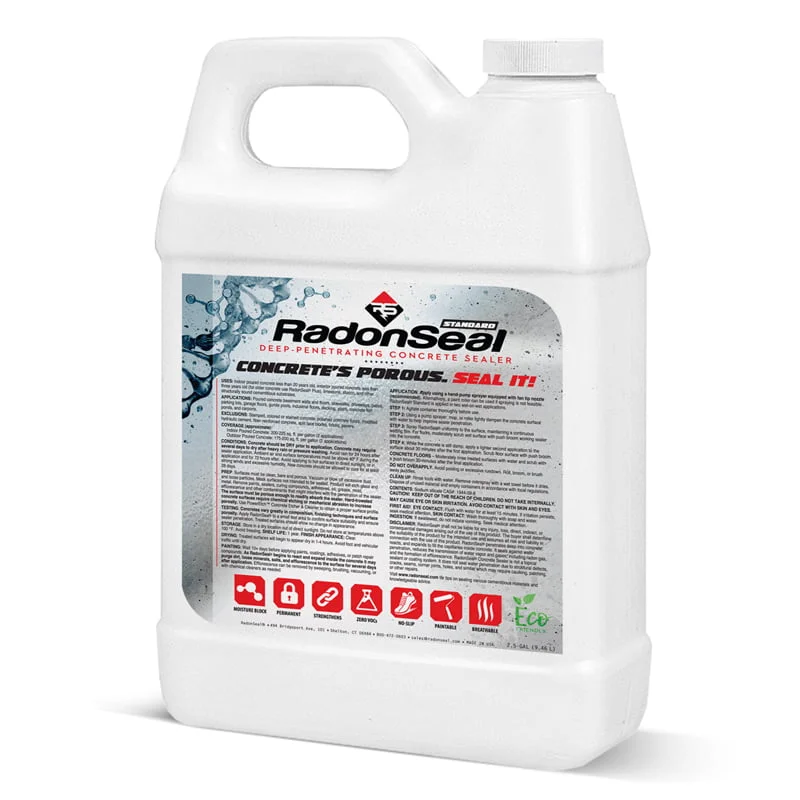
This page
RadonSeal Standard Concrete Sealer
- What it is
- Penetrating concrete sealer
- Power
- None needed
- C-NRPP 2024/25
- Not applicable (system part)
This page: RadonSeal Standard is a clear, water-based sealer that soaks up to 4 inches into poured concrete and reacts with the cement inside it, sold in 2.5 and 5 gallon sizes; RadonSeal recommends it for newer poured concrete and its Plus version for block and older concrete.
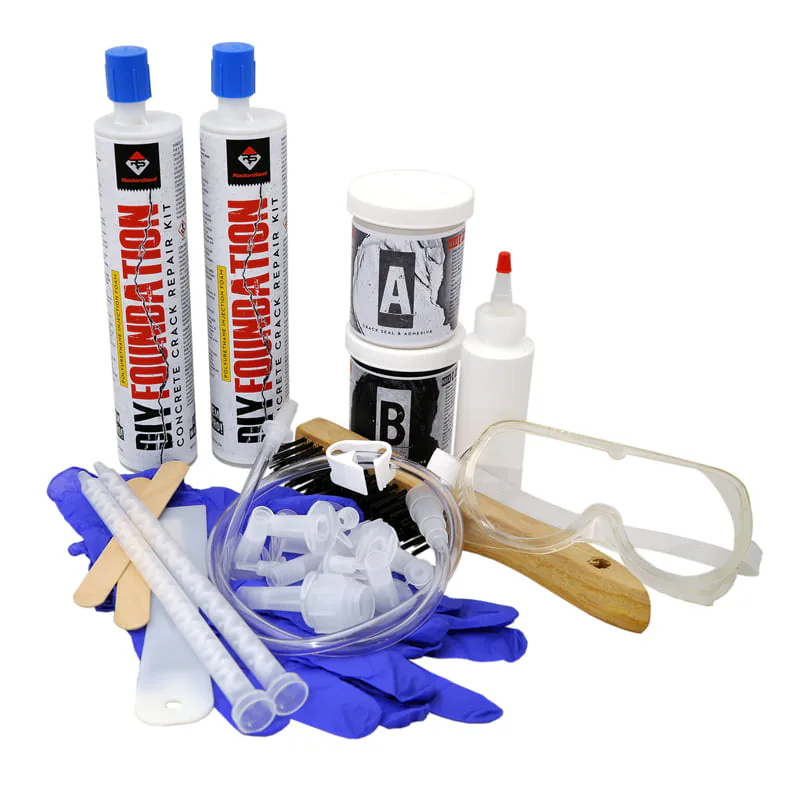
- What it is
- Polyurethane injection foam
- Power
- None needed
- C-NRPP 2024/25
- Not applicable (system part)
The difference: Fills a wall crack from inside: a two-component expanding polyurethane foam for cracks up to 1/2 inch wide in poured concrete walls.
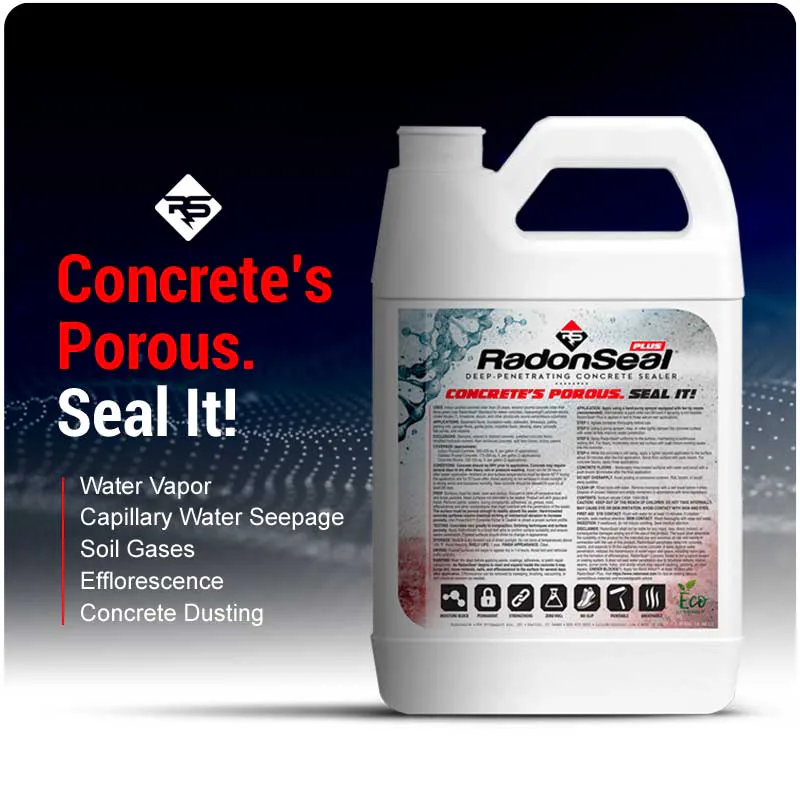
RadonSeal
- What it is
- Penetrating concrete sealer
- Power
- None needed
- C-NRPP 2024/25
- Not applicable (system part)
The difference: The stronger version of the same sealer, which RadonSeal recommends for concrete blocks, cinder blocks, limestone, indoor poured concrete older than 20 years and outdoor concrete older than 2 years.
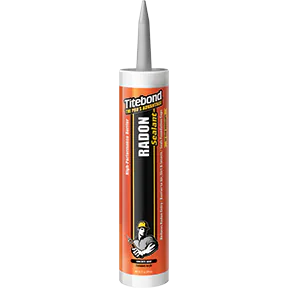
Titebond
- What it is
- Elastomeric acrylic
- Power
- None needed
- C-NRPP 2024/25
- Not applicable (system part)
The difference: Seals the joints a penetrating sealer leaves open: an elastomeric acrylic in a cartridge for foundation cracks, joints and penetrations.
Compared with similar products: 1 of 4
More sealants and sump covers3
All sealants and sump covers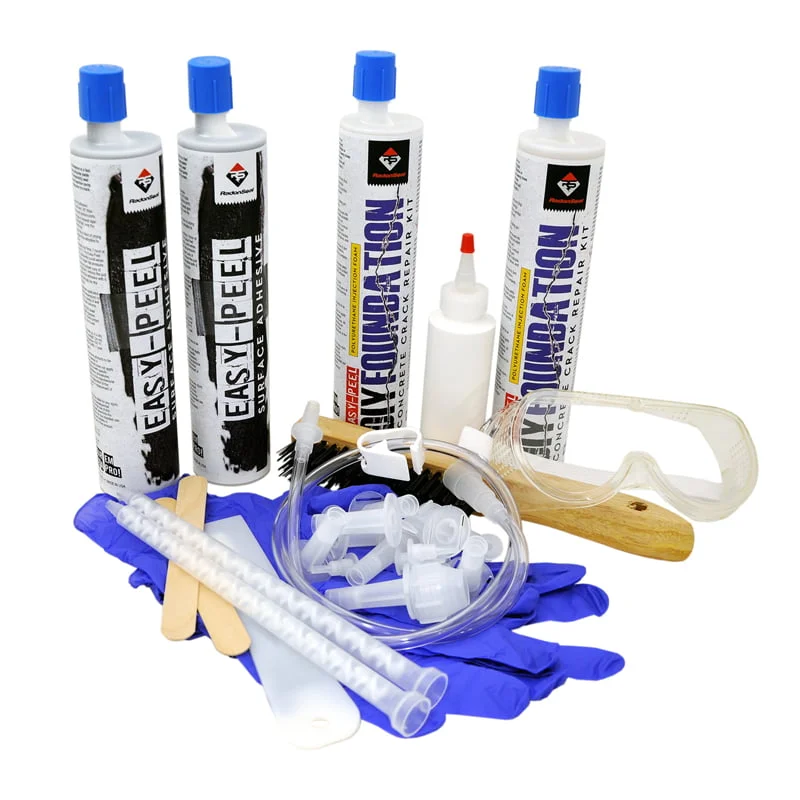
Sealing materialRadonSeal
Easy-Peel DIY Crack Repair Kit, Urethane peel-off polyurethane crack injection kit
- 10 ft or 20 ft kit with flat
- All sealants and sump covers More sealants and sump covers

More sealants and sump covers: 1 of 3
Questions
Questions people ask
5 questions about the RadonSeal Standard Concrete Sealer, answered
Asked about the Standard Concrete Sealer
Will RadonSeal Standard lower my radon level by itself?
Not on the EPA's evidence. The EPA does not recommend the use of sealing alone to reduce radon, because by itself sealing has not been shown to lower radon levels significantly or consistently, and RadonSeal's FAQ says sealing the concrete's porosity alone may not sufficiently reduce radon levels. Test before and after any work.
Standard or Plus?
RadonSeal recommends Standard for indoor poured concrete less than 20 years old and Plus for block, limestone and older concrete. For outdoor concrete its documents differ: the Plus page puts Standard under 2 years old, while the 2026 instructions list Standard for outdoor poured concrete less than 20 years old. The instructions also say Plus may be used on newer concrete.
How much do I need?
RadonSeal's coverage for Standard is 200 to 225 square feet per gallon on indoor poured concrete and 175 to 200 outdoors, both counting two applications. A 5 gallon jug treats about 1,000 square feet of standard poured concrete.
Does it seal cracks?
No. RadonSeal's data sheet says it is an impregnating sealer, not a topical sealant or coating, and does not seal water penetration through cracks, seams, corner joints and holes. Those need caulking, patching or crack repair first.
Can I paint or put flooring over it?
RadonSeal says yes: it penetrates without altering the surface texture, so paints, epoxy, levelers, tiles and adhesives can bond, and it calls the sealer a primer for coatings and overlays. Its instructions say to wait at least 10 days before applying them.
What to do next
- See how a radon system fits togetherThe suction point, the pipe, the fan, the gauge and the sealing, and what each one does.
- Find a mitigation professionalMost systems are designed and installed by one; some states require a license.
- Seal cracks as part of a systemWhat sealing a basement floor can and cannot do for radon.
- Test after the workA short-term test afterwards shows whether radon in the home is lower.
Updated November 27, 2026