
Sealing materialRadonSeal
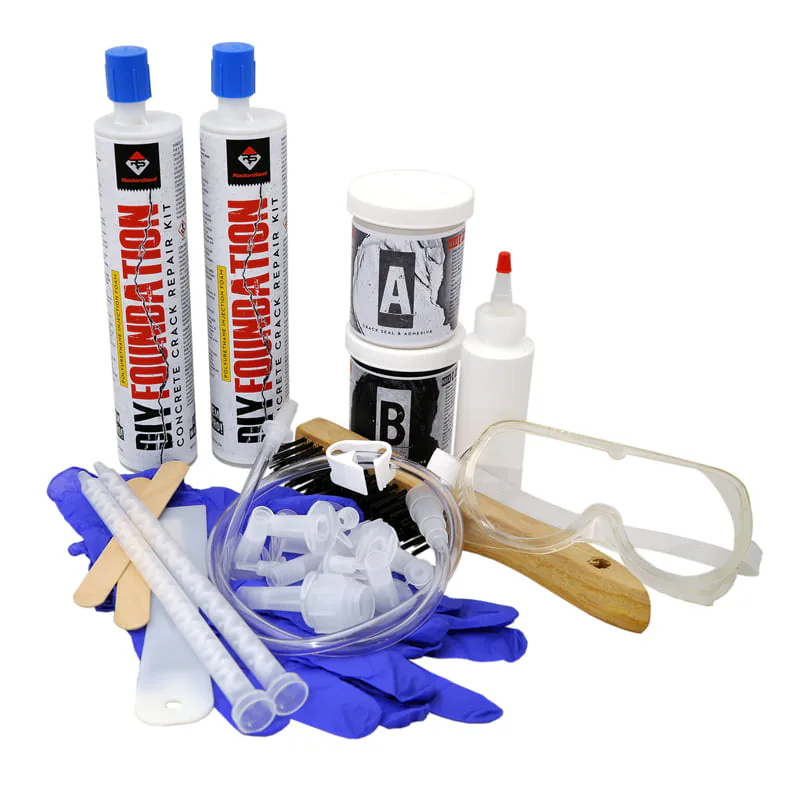
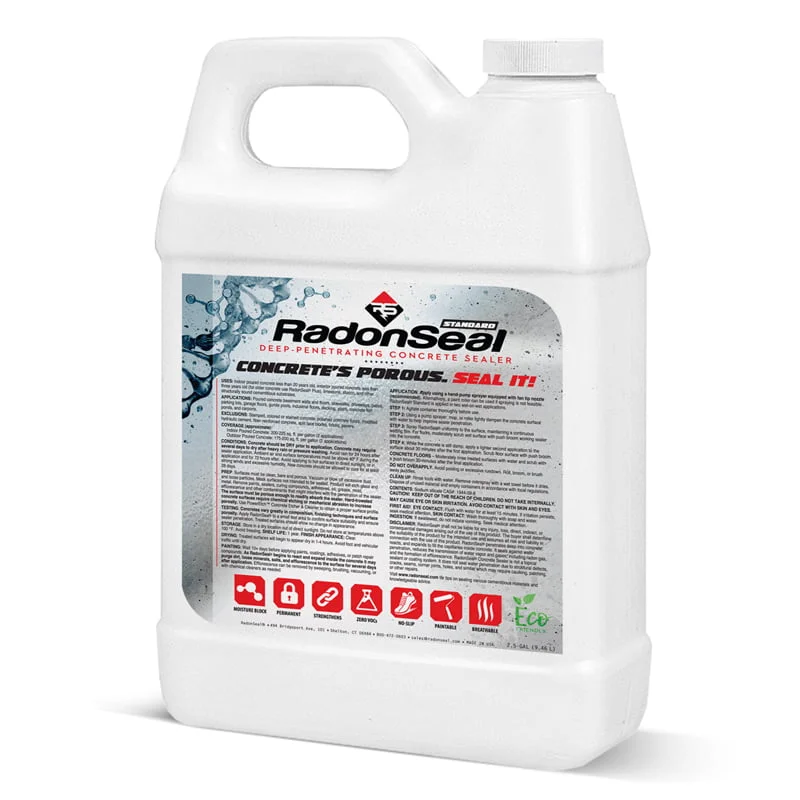
DIY Foundation Crack Repair Kit, Urethane polyurethane foam crack injection kit
- 10 ft kit
Made of: Polyurethane injection foam
 Jackel
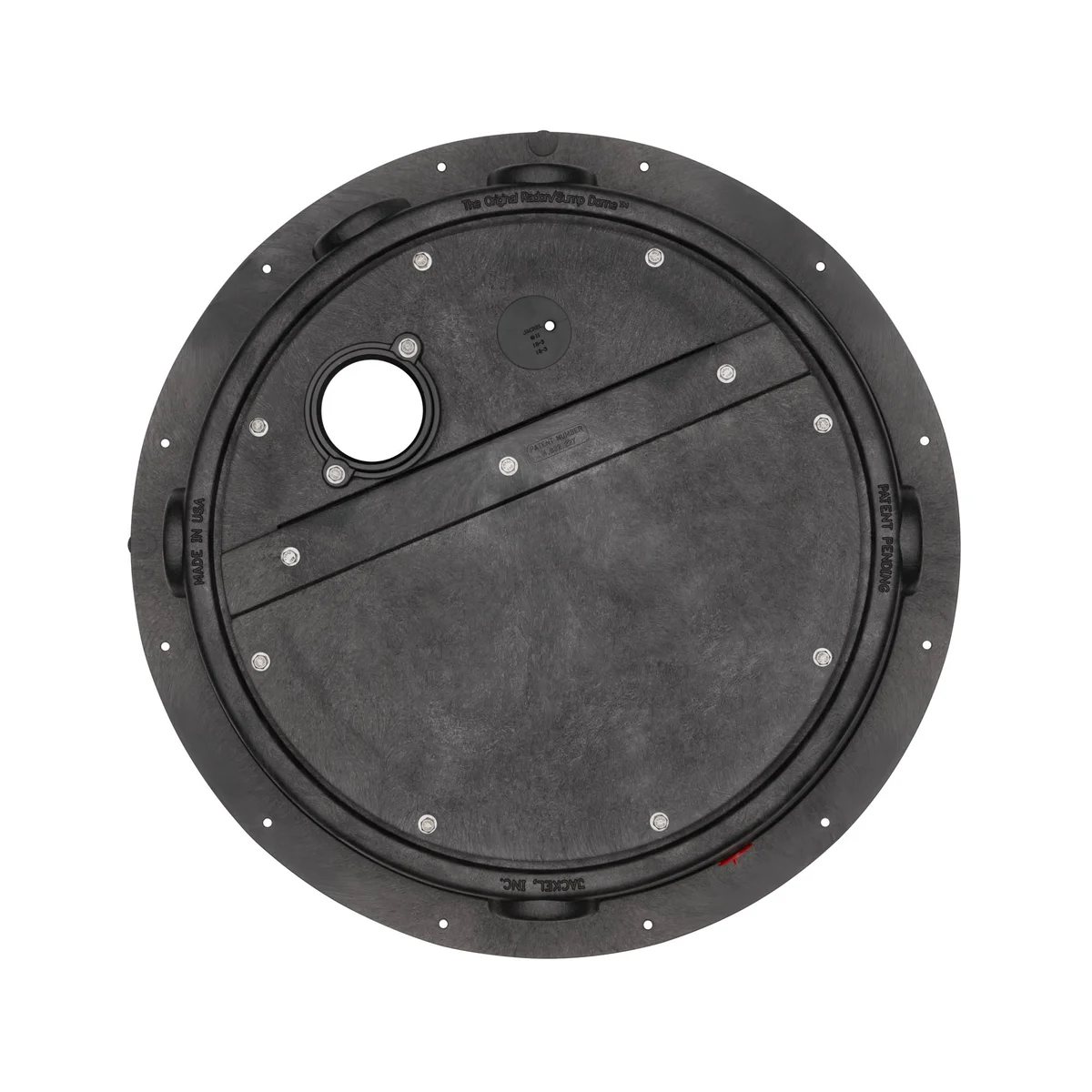
Sealed radon sump cover with a split lid
Best for you if
Skip it if
Photos: Jackel
 (opens in a new tab)Check price on Amazon (opens in a new tab)
As an Amazon Associate, Radon411 earns from qualifying purchases.
Amazon and the Amazon logo are trademarks of Amazon.com, Inc. or its affiliates.
See ratings and reviews on Amazon (opens in a new tab)As Jackel states it
The SMR114-V is the split-cover member of Jackel's Original Radon Sump Dome family: a 28 inch dome of HDPE structural foam, fixed to the slab around a sump that is already there to close it off, with flanges for the discharge and vent pipes and a grommet for the pump cord. Its removable cover is split, which Jackel says allows easier access to the pump. Jackel lists it for a passive radon mitigation system or a sump retrofit; a sealed sump is one part of a radon system, not a radon fix by itself.
Jackel's sheet lists the two-part removable cover and the riser, discharge and vent flanges, a cord grommet, the reusable seal, and stainless steel bolts and washers. The vent pipe, the caulk or gasket for the floor joint and the anchors into the slab are not on Jackel's list for this model.
In the box and running costsHow it works
What it is made of and the job it does in a system, then who has checked it
In our words, from the maker's documents
A sump pit is an opening through the basement floor into the gravel and soil beneath it. The EPA's builders' guide lists small holes, cracks, plumbing penetrations and sumps as routes radon takes into a basement, and its advice for a pit already in the floor is to cover it and seal it. Jackel's dome does that from above: the riser attaches directly to the basement floor to create a radon tight seal over the sump system, in Jackel's words, and the cover bolts to the riser with stainless steel bolts and washers over a reusable seal.
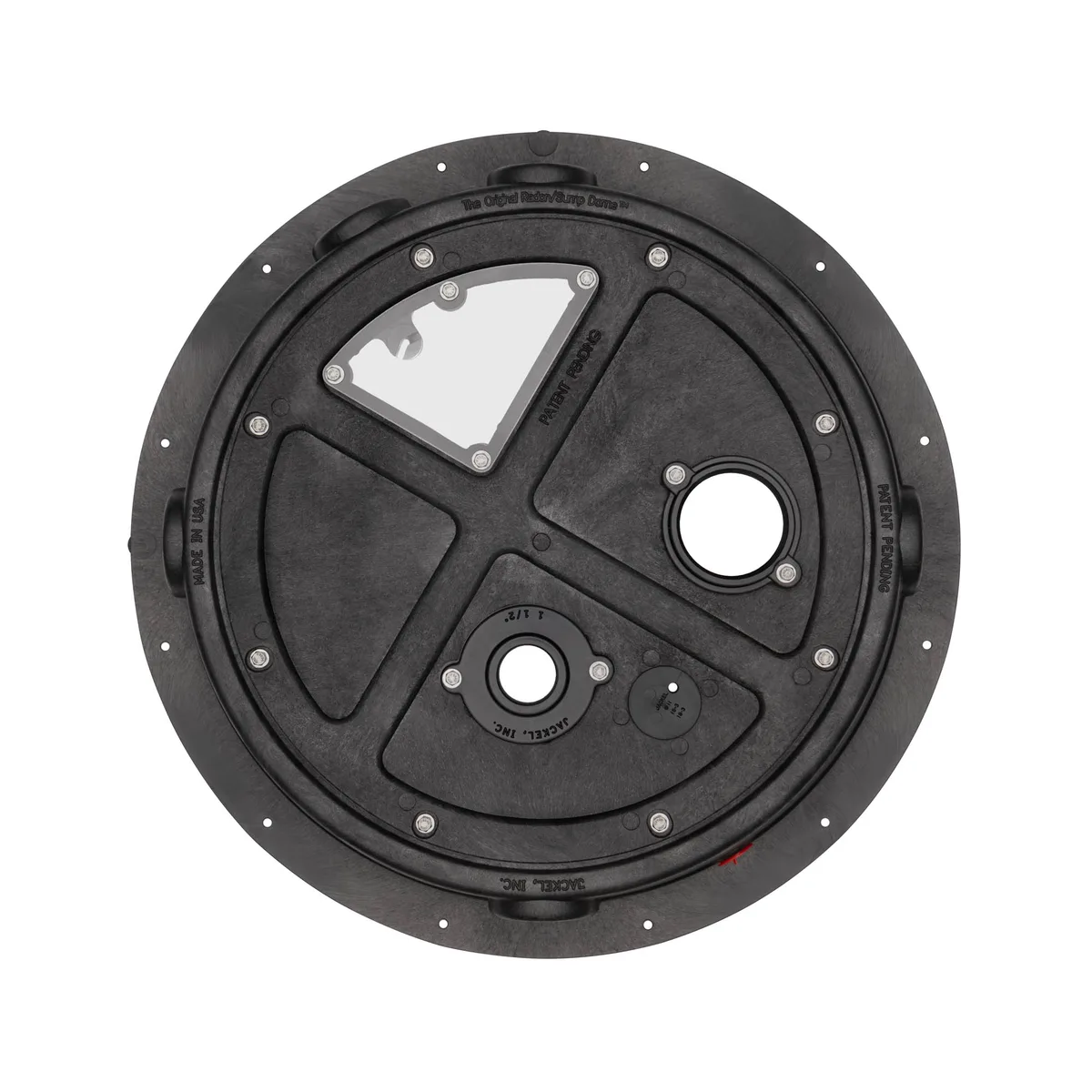
The split cover is what this model adds. A sealed sump still holds a pump that needs service, and the EPA notes that removing and resealing a whole cover is needed every time the pump is maintained. Jackel's answer on the SMR114-V is a removable cover in two parts, so the pump can be reached without lifting the whole lid off the riser. Its sister model, the SMR16101-CV, takes a different route: a one-piece cover with an acrylic access cover.
Jackel gives the dome's measurements on both its page and its sheet: 28 inches outer diameter, 24 inches inner diameter, a 26-1/2 inch bolt circle, 4 inches high and 12 pounds. The cover and riser are HDPE structural foam, the flanges ABS or PVC, the grommet and seal PVC, and the hardware stainless steel. The flanges carry the sump pump's discharge pipe and a vent, and the grommet the pump's cord, so the pit stays sealed around the things that pass through it.
Jackel's first named use is passive mitigation, where no fan runs: the pipe from below the slab depends on natural pressure differentials and air currents. By the EPA's account a passive pipe usually does less against high radon than a fan-driven one, and where a later test reads 4 pCi/L or more, a qualified mitigator can fit a vent fan to the passive system. With a fan, the EPA calls the method sump-hole suction: the capped sump keeps draining water while also serving as the place the suction pipe draws from. Jackel's page names passive systems and retrofits and says nothing about fan suction through the dome, a question for Jackel and your mitigator.
Jackel's own statements, attributed
These are Jackel's own statements, attributed to it. They are not our findings, and we have not tested this product ourselves.
Who checks a device like this
C-NRPP's consumer evaluation covers electronic radon monitors, not the parts of a mitigation system, so it has no result for Jackel SMR114-V. The standards and results the maker states are under “What the manufacturer says”, and what shows whether radon in your home is lower is a radon test after the work is done.
Jackel SMR114-V
Check price on Amazon (opens in a new tab)Specifications
Every figure as the maker states it
Jackel's sheet lists the two-part removable cover and the riser, discharge and vent flanges, a cord grommet, the reusable seal, and stainless steel bolts and washers. The vent pipe, the caulk or gasket for the floor joint and the anchors into the slab are not on Jackel's list for this model.
On warranty, Jackel promises its structural foam lids and basins free of defects in material and workmanship while the first buyer still owns the house, and everything else it makes for a year, with repair or replacement as the only remedy. Labor is not included, nor are jobs that break plumbing, housing or building codes or Jackel's written instructions, and a foundation that cracks or settles, a bad installation or freezing voids it. It covers installations in the United States and Canada. The domes are not named on that page; this one's lid and riser are HDPE structural foam.
The dome draws no power and has nothing that wears out on a schedule. Its cost is in access and resealing: the EPA notes that a sump cover has to be removed and resealed every time the pump is maintained, and suggests one with a transparent door or viewing window. Jackel's split cover answers the same problem differently, by opening part of the lid, and its seal is listed as reusable.
What a sealed sump does to radon only shows in a test. The EPA wants one within 30 days of a system going in, and not before it has run for 24 hours, then a retest at least every two years. A passive system that falls short gets a fan next, and with it an electricity bill and a part that wears out; the EPA puts a fan's life at five years or more.
Fit and setup
The fit, then how it goes on and what the standards ask
Good fit if, and look elsewhere if
Good fit if
Look elsewhere if
3 steps
For how the sealing, the gauge and the fan work together, see radon mitigation systems, and to find someone to design and install one, radon mitigation professionals.
Compare
The same three rows for each, and the one difference that matters
This page
Jackel SMR114-V
This page: The SMR114-V is the split-cover member of Jackel's Original Radon Sump Dome family: a 28 inch dome of HDPE structural foam, fixed to the slab around a sump that is already there to close it off, with flanges for the discharge and vent pipes and a grommet for the pump cord.
Jackel
The difference: Jackel's same-size dome with a different lid: a removable cover molded as one single piece, with an acrylic access cover instead of a split.
Titebond
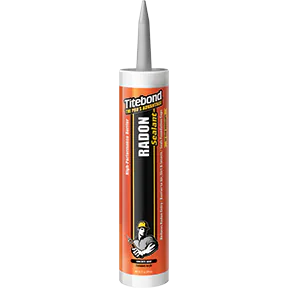
The difference: Seals the floor's other openings rather than the pit: an elastomeric acrylic for foundation cracks, joints and penetrations, in a 10.1 oz. cartridge.
Tjernlund
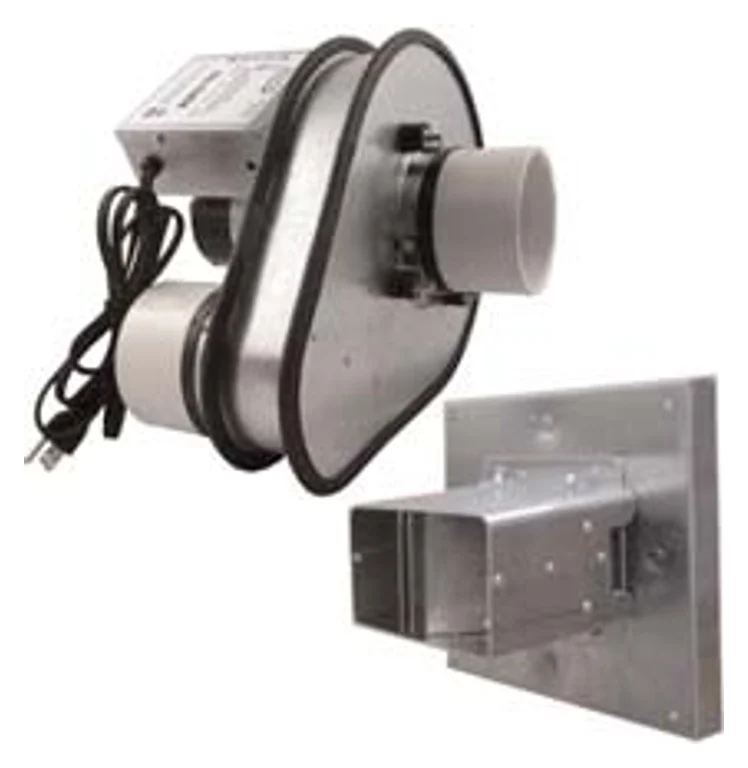
The difference: A side wall fan system that can draw from a sealed sump: Tjernlund says its hood lets the Radon VAC operate in sub-slab or sump pit installations.
Compared with similar products: 1 of 4
Sealing materialRadonSeal
Made of: Polyurethane injection foam
Sealing materialRadonSeal
Made of: Penetrating concrete sealer
Sealing materialRadonSeal
Sealing materialRadonSeal
Made of: Penetrating concrete sealer
More sealants and sump covers: 1 of 4
Questions
5 questions about the Jackel SMR114-V, answered
Jackel says the removable cover has a split design allowing for easier access to the pump. The EPA notes that removing and resealing a sump cover is needed every time the pump is maintained, so a cover that opens in part means less of the seal is disturbed each time.
Jackel lists the same 28 inch outer and 24 inch inner diameters, bolt circle, height, weight and materials for both. The SMR114-V's cover is split; the SMR16101-CV's cover is one piece with an acrylic access cover. Jackel's page also lists an SMR16101 and an SMR16101-B as other options.
It closes one entry route, and an important one: the EPA says an open sump can let radon in from beneath the whole foundation. Still, the EPA's evidence is that sealing on its own has not cut radon levels significantly or consistently, so it does not recommend relying on it. Only a test afterwards tells you the result.
The EPA's guide gives sump-hole suction a reduction range of 50 to 99 percent, best where air moves easily to the pit from under the slab, with the capped sump both draining water and holding the suction pipe. Jackel lists the SMR114-V for passive systems and retrofits and does not address fan suction, so ask Jackel and a mitigator before an active system draws through it.
Structural foam basins and lids, for as long as the original consumer owns the home; other products, one year. It is limited to repair or replacement, excludes labor, needs the original sales receipt, and applies to installations in the United States and Canada.
Updated November 27, 2026