
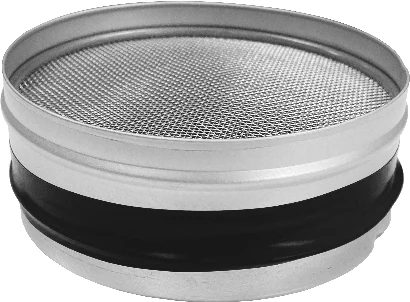
Short-term kit
PicoCan short-term charcoal canister radon test
- Lab fee included
Method: Charcoal
In home: 48 to 96 hours
No Amazon listing on file
See details of the AccuStar PicoCan PRO-LAB
Short-term liquid scintillation radon test kit, lab fee included
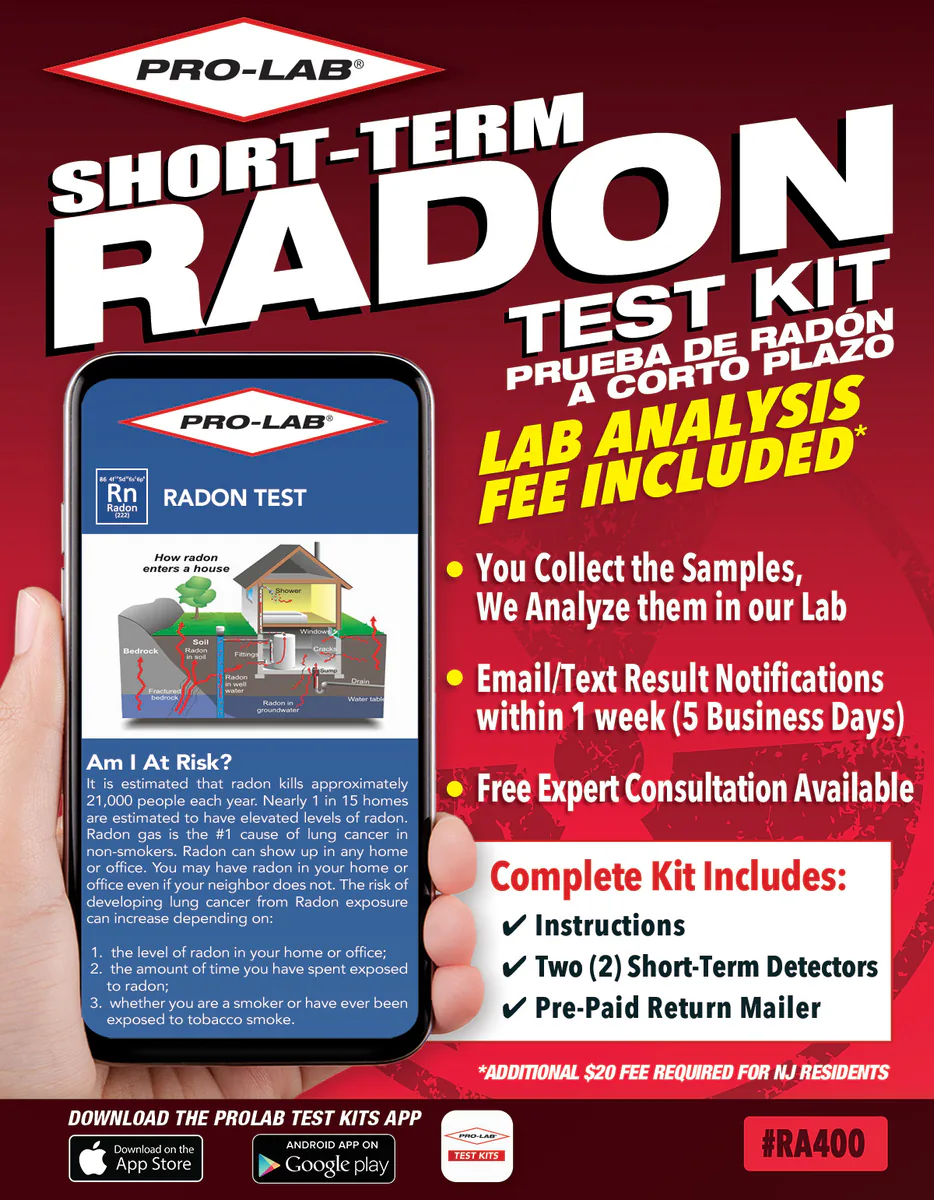
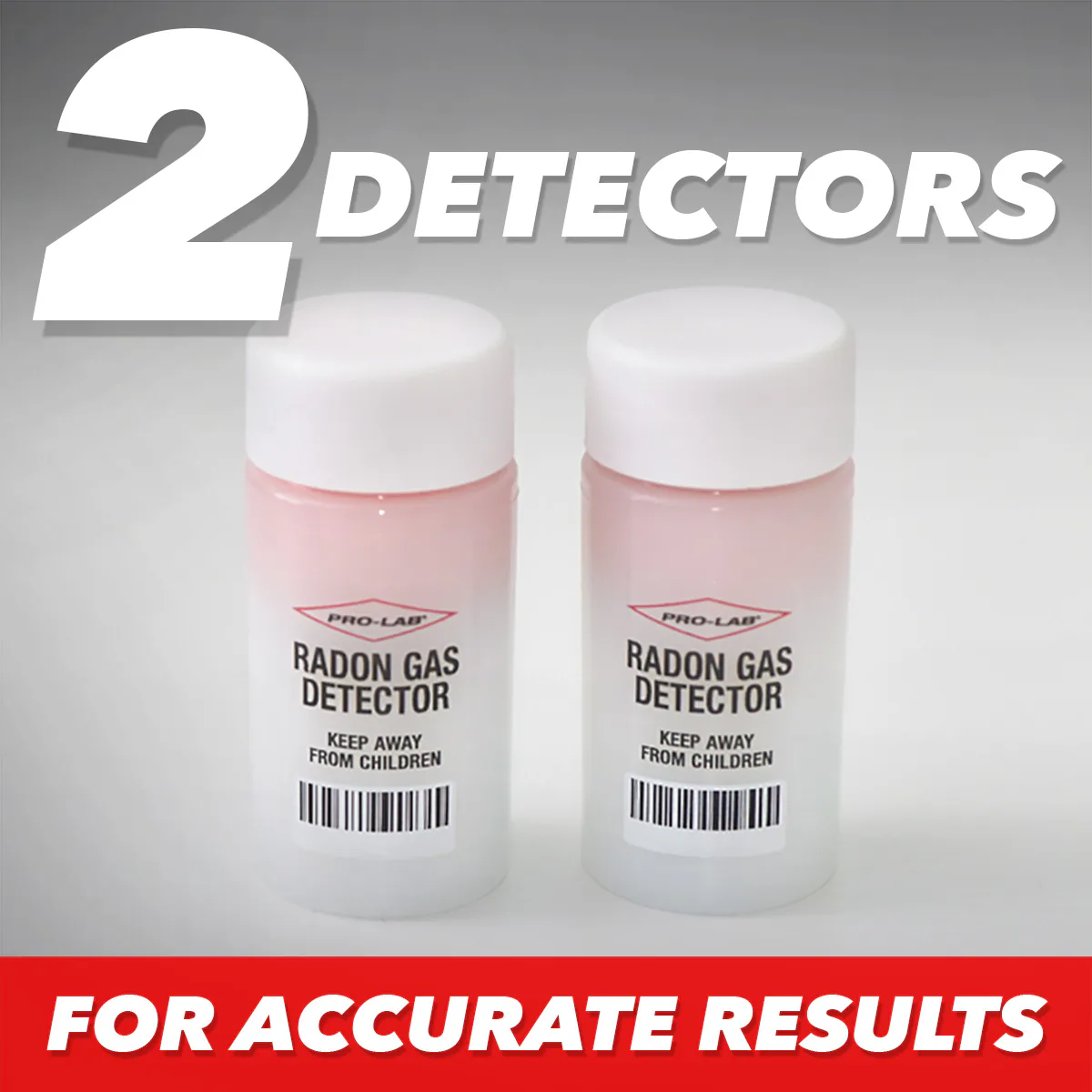

Photos: PRO-LAB
 (opens in a new tab)Check price on Amazon (opens in a new tab)
As an Amazon Associate, Radon411 earns from qualifying purchases.
Amazon and the Amazon logo are trademarks of Amazon.com, Inc. or its affiliates.
See ratings and reviews on Amazon (opens in a new tab)As PRO-LAB states it
The RA400 is PRO-LAB's short-term radon test kit with the laboratory analysis included: two liquid scintillation detectors that you uncap side by side, cap again when the test ends and mail to PRO-LAB, which says results come within 7 days. PRO-LAB's FAQ gives its short-term kit an exposure time of 48 to 96 hours; the RA400's own store page states none. The National Radon Safety Board's June 2026 list of accredited radon laboratories includes Pro-Lab Inc of Weston, Florida.
The RA400 box PRO-LAB pictures on its radon kits page lists the contents as instructions, two short-term detectors and a pre-paid return mailer, and carries the number RA400; PRO-LAB's store page describes the kit as two tests at the same time and location. PRO-LAB's FAQ refers to the information form that goes back with the sample, and its published instructions to a test location form.
In the box and running costsHow it works
The sensor, the sampling and the readings, then who has checked it
In our words, from the maker's documents
PRO-LAB's store page says the RA400 gives a professional radon analysis using patented liquid scintillation technology. The detectors are passive: nothing in them runs on power or shows a number, and the measurement is made at the laboratory after they come back. PRO-LAB's FAQ describes the routine for its short-term kit: take the caps off when you place the canisters, put them back when the exposure time is over, return the canisters for analysis, and do not remove what is inside. On its short-term kit page PRO-LAB adds that its liquid scintillation detectors contain a patented silica gel desiccant to remove moisture. The EPA names charcoal liquid scintillation devices among the detectors most commonly used for short-term testing, and describes passive devices as needing no power, exposed to the air in the home for a set time and then sent to a laboratory for analysis.
The kit holds two detectors. PRO-LAB's store page says it lets you take two tests at the same time and location in order to get precise results, and the guidance on PRO-LAB's short-term kit page works from the average of the two results, compared with 4.0 pCi/L. The EPA describes the same arrangement as one of its options for a home sale, two short-term tests at the same time in the same location for at least 48 hours, and says two simultaneous tests improve the precision of the measurement, while one test followed by another would more likely represent the seasonal average.
The RA400's store page gives no exposure time. PRO-LAB's FAQ says its short-term radon gas kit is designed for an exposure time of 48 to 96 hours and can be a single or double canister kit. The instructions PRO-LAB publishes on its short-term kit page give the same window for its two detectors: leave them uncapped and undisturbed in the same place for at least 48 hours and no more than 96, and the results are invalid if they stay open for less or more, so you would need another kit to repeat the test.
PRO-LAB's own pages leave one gap. The FAQ's answer on minimum and maximum exposure times goes model by model and does not list the RA400: it gives the RA100 a minimum of 48 hours and a maximum of 168 hours, seven full days, and the RA148 48 to 120 hours, and says a sample exposed for less than 48 hours gets a report without a radon level, marked underexposed. This page uses 48 to 96 hours, the figure PRO-LAB gives for its short-term kit as a whole. If the instructions printed in your RA400 box give a different window, follow them, or ask PRO-LAB before you start.
The EPA counts any test from two to 90 days as short-term and says radon tests should run for a minimum of 48 hours. Because radon levels vary from day to day and season to season, it says a long-term test, more than 90 days, is more likely to tell you a home's year-round average. Averaging two detectors does not change that: the EPA's guide for home buyers and sellers notes that if the average of two short-term tests is 4.1 pCi/L, there is about a 50 percent chance that the year-round average is somewhat below, or above, 4 pCi/L.
What to do with the result follows the EPA's steps rather than the kit's. After a first short-term result at or above 4 pCi/L, the EPA says to take a follow-up test, either a long-term test or a second short-term test, and it suggests considering a fix between 2 and 4 pCi/L.
PRO-LAB's own statements, attributed
These are PRO-LAB's own statements, attributed to it. They are not our findings, and we have not tested this product ourselves.
Who checks a device like this
C-NRPP's consumer evaluation covers electronic monitors, not laboratory-analyzed test kits, so it has no result for PRO-LAB RA400. A kit's result comes from the laboratory that analyzes it. Where the maker names that laboratory, or the page cites the National Radon Safety Board's lists of approved devices and accredited laboratories for it, the “How it works” panel and “Questions people ask” say so.
Specifications
Every figure as the maker states it
The RA400 box PRO-LAB pictures on its radon kits page lists the contents as instructions, two short-term detectors and a pre-paid return mailer, and carries the number RA400; PRO-LAB's store page describes the kit as two tests at the same time and location. PRO-LAB's FAQ refers to the information form that goes back with the sample, and its published instructions to a test location form.
PRO-LAB's FAQ says it does not send replacements for lost or misplaced prepaid mailers; if yours goes missing, you can send the kit to the address on the information form or to PRO-LAB's physical address. Registering the kit is optional, and reports are emailed or mailed either way. Neither the store page nor the FAQ states a warranty for the kit.
The standard analysis is paid for with the kit: PRO-LAB lists the RA400 as its short-term kit with lab analysis included, and its store page gives results within 7 days. The RA400 box PRO-LAB pictures lists a pre-paid return mailer. There is nothing to power and no subscription.
Two things cost extra. PRO-LAB's store page says express service is available for an additional fee, and PRO-LAB's short-term instructions say express samples must travel by an overnight carrier, a shipping cost of its own. New Jersey adds a fee: PRO-LAB's FAQ says residents pay an additional fee that goes to the New Jersey Department of Environmental Protection, an administrative fee required for all samples collected in the state. The two RA400 box pictures on PRO-LAB's sites print different amounts for it, so confirm the current figure with PRO-LAB.
PRO-LAB also sells its short-term kit without the analysis; on that kit's page the lab fee goes back with the detectors. If your result is at or above 4 pCi/L, the EPA's next step is a follow-up test, a second short-term kit or a long-term one, so plan for a second purchase in that case.
Fit and setup
The fit, then setup and placement as the guidance asks
Good fit if, and look elsewhere if
Good fit if
Look elsewhere if
4 steps
For where any radon test or monitor should sit in a home, see where to place a radon test.
Compare
The same three rows for each, and the one difference that matters
This page
PRO-LAB RA400
This page: The RA400 is PRO-LAB's short-term radon test kit with the laboratory analysis included: two liquid scintillation detectors that you uncap side by side, cap again when the test ends and mail to PRO-LAB, which says results come within 7 days.
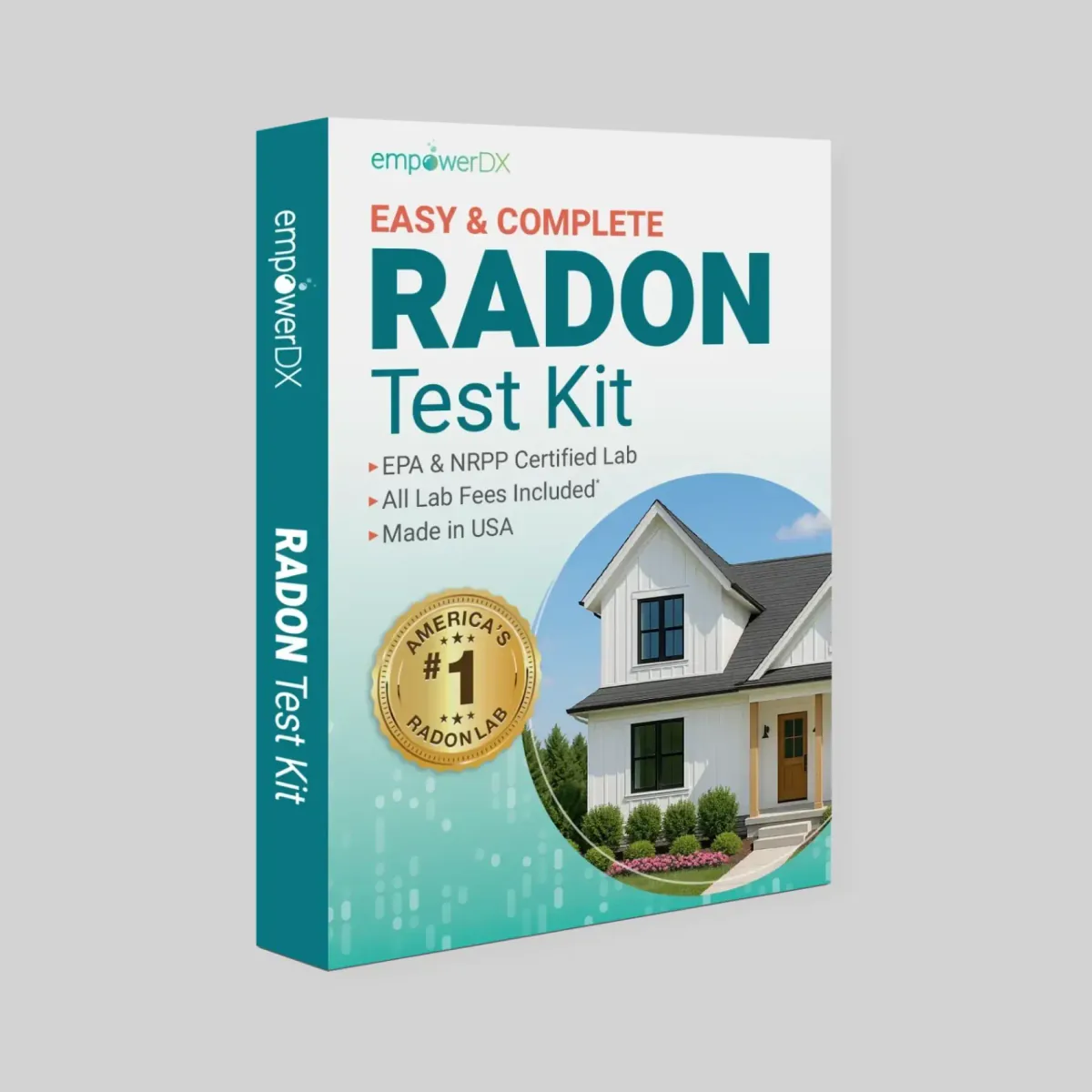
empowerDX
The difference: One passive sampler rather than two detectors, for 48 to 96 hours, with outbound shipping and the lab analysis included; return postage is not, and empowerDX says results come 3 to 5 business days after its lab receives the sample.
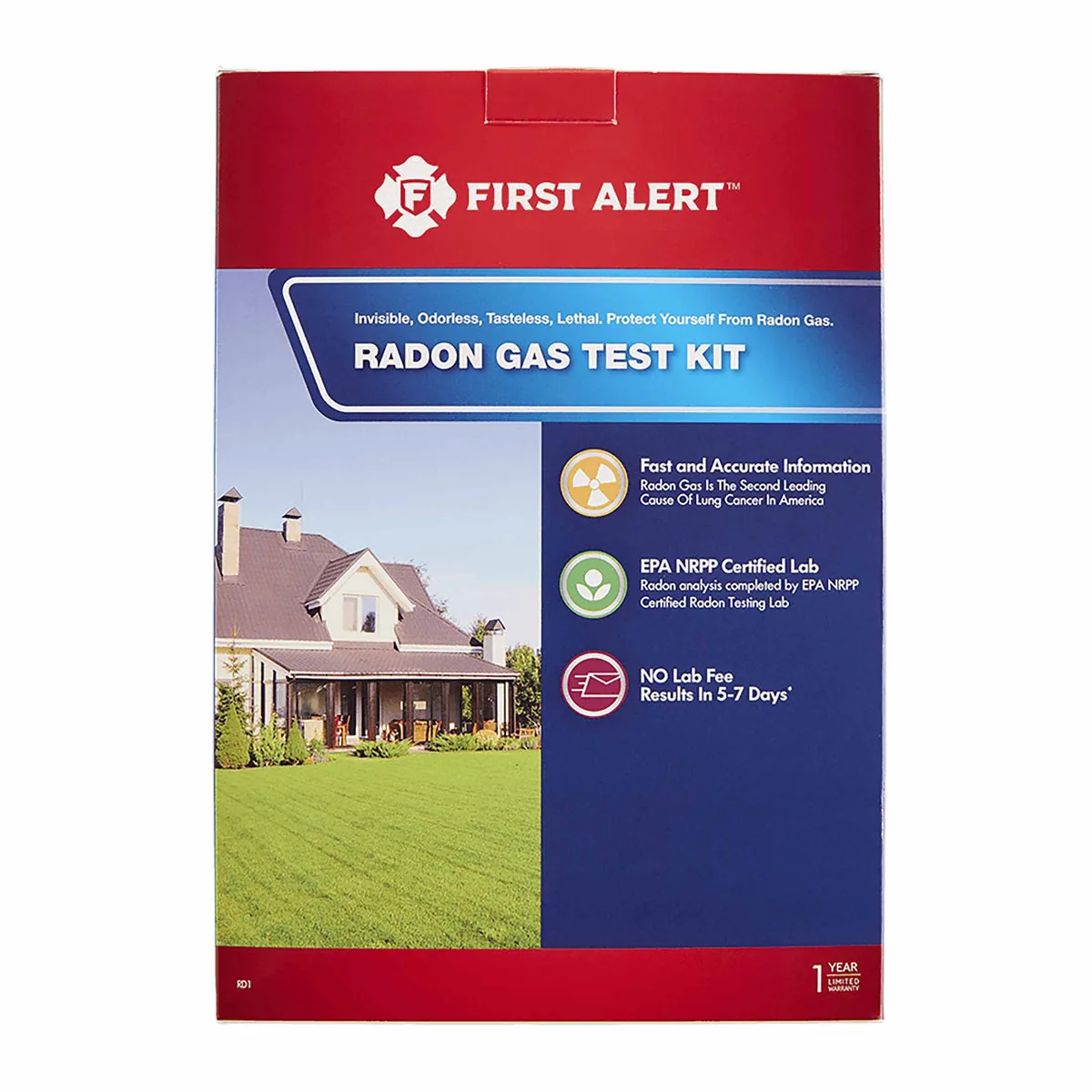
First Alert
The difference: One charcoal sampler for two to four days, with the lab fee included except New Jersey's state fee.
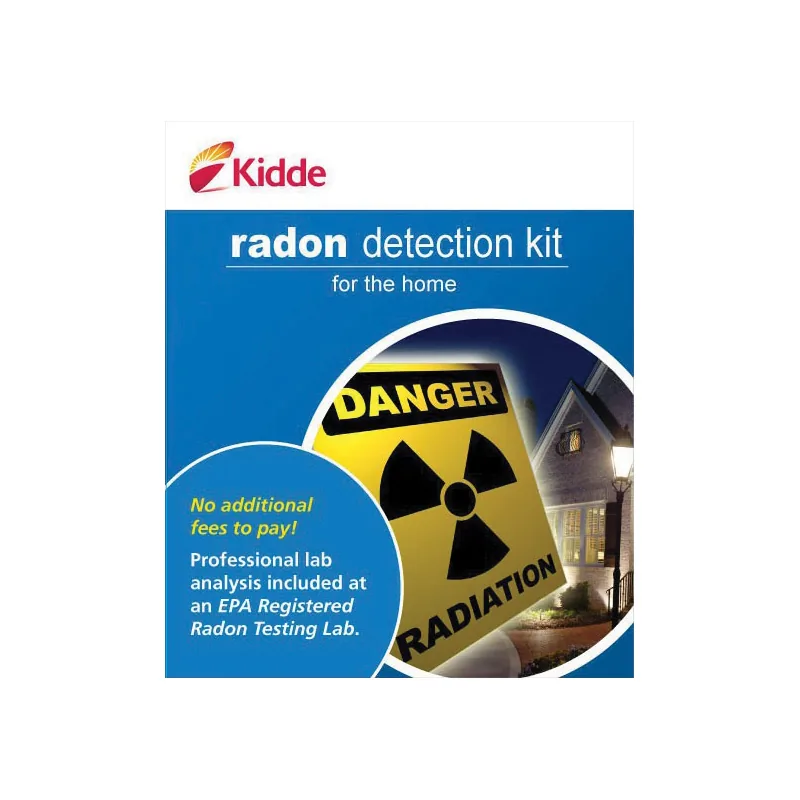
Kidde
The difference: One activated charcoal sampler bag for three days; analysis included, return postage not.
No Amazon listing on file
See details of the Kidde 442020
PRO-LAB
The difference: PRO-LAB's short-term kit without the analysis: two liquid scintillation detectors, with the lab fee sent back with them.
Compared with similar products: 1 of 5
Short-term kit
Method: Charcoal
In home: 48 to 96 hours
No Amazon listing on file
See details of the AccuStar PicoCan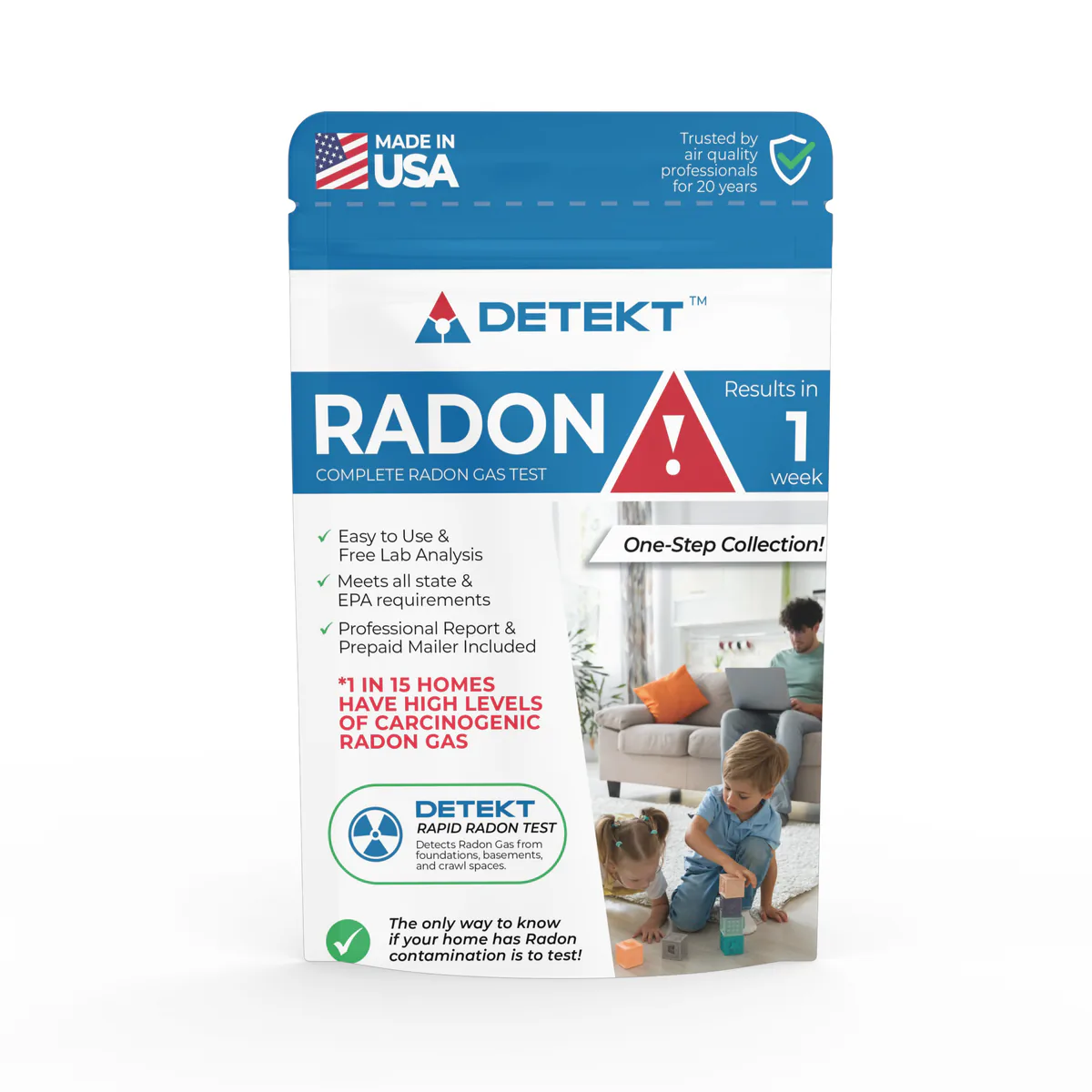
Short-term kit
Method: Charcoal
In home: 2 to 7 days
Short-term kitempowerDX
Method: Passive sampler
In home: 48 to 96 hours
Short-term kitFirst Alert
Method: Charcoal
In home: 2 to 4 days
Short-term kitKidde
Method: Charcoal
In home: 3 days
No Amazon listing on file
See details of the Kidde 442020Short-term kit
Method: Liquid scintillation
In home: 48 to 96 hours
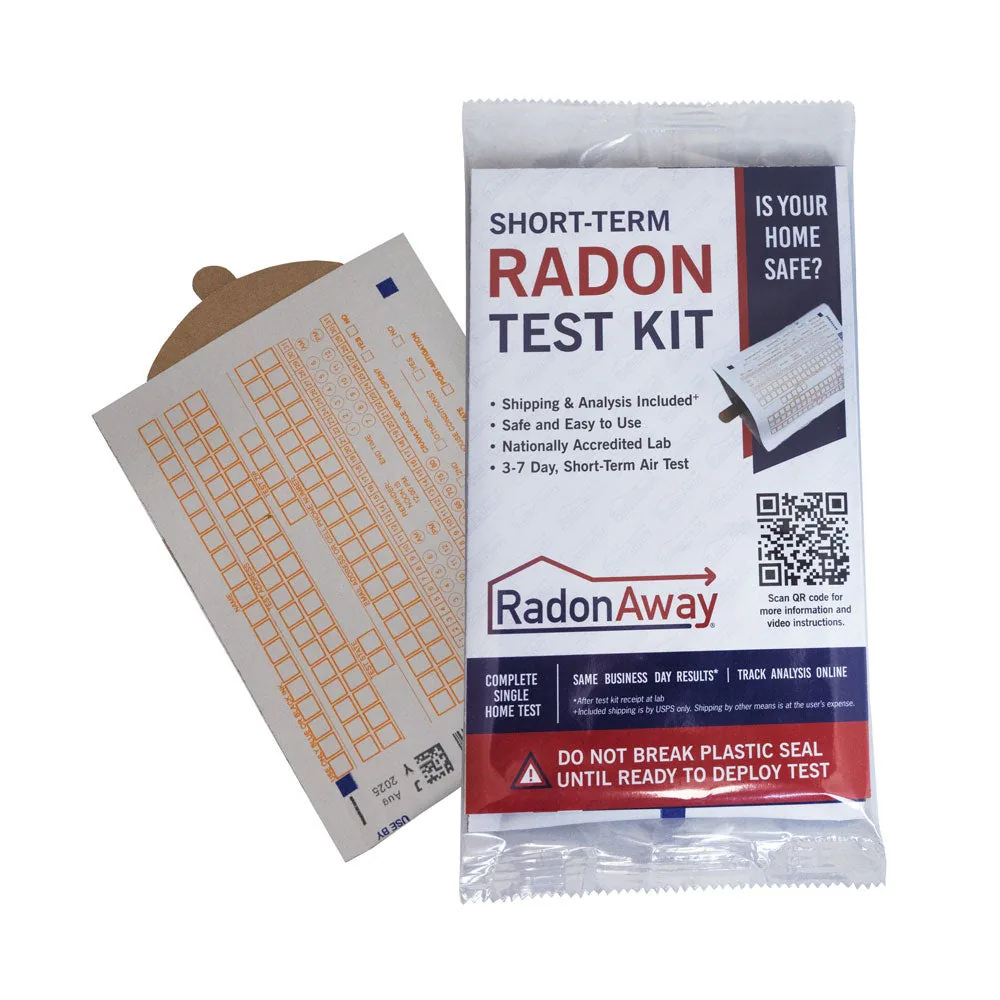
Short-term kit
In home: 72 to 168 hours
No Amazon listing on file
See details of the RadonAway Air Chek Short-TermMore short-term test kits: 1 of 7
Questions
6 questions about the PRO-LAB RA400, answered
The standard analysis is. PRO-LAB's radon kits page lists the RA400 as its short-term kit with lab analysis included, and its store page gives laboratory results within 7 days. Express service costs an additional fee, and New Jersey residents pay a state administrative fee on top, which PRO-LAB's FAQ says goes to the New Jersey Department of Environmental Protection.
PRO-LAB's FAQ says its short-term kit is designed for 48 to 96 hours, and the short-term instructions PRO-LAB publishes say at least 48 hours and no more than 96, with results invalid outside that window. Write down the start and end dates and times to the minute.
The RA400's store page gives no exposure time, and the FAQ's model-by-model answer on exposure lists the RA100 and the RA148 but not the RA400. Follow the instructions printed in your box if they differ, or call PRO-LAB first.
PRO-LAB describes it as valid for real estate transactions. That is PRO-LAB's statement, and whether a do-it-yourself kit is accepted for a sale depends on your state and on the buyer and seller. Many states require radon professionals to be licensed, certified or registered, so check your state's rules for sale tests before relying on any do-it-yourself kit.
The EPA's guide for buyers and sellers lists three short-term options for a sale, among them two tests at the same time in the same place, which is what this kit's two detectors do, and says any real estate test should include steps to prevent or detect interference with the test device.
PRO-LAB lists them as separate kits. The RA400 includes the standard analysis; with the kit sold on PRO-LAB's short-term kit page, the lab fee goes back with the detectors, and its instructions list a standard and an express fee. PRO-LAB's FAQ also gives the RA100 its own exposure range, 48 to 168 hours, which it does not give the RA400.
PRO-LAB says all analyses are performed by PRO-LAB or by laboratories it recognizes as licensed, certified or accredited. Overnight and express samples go to Professional Laboratories at its Weston, Florida street address, its FAQ says.
The National Radon Safety Board, which accredits laboratories to analyze specific approved devices, lists Pro-Lab Inc of Weston, Florida as ARL0028 in its June 2026 list, with an accreditation expiry of March 30, 2027. The devices listed for that laboratory are a Beckman Ready Rad liquid scintillation vial, NRSB device 12191, and a Pro Lab alpha track detector. PRO-LAB names liquid scintillation for the RA400 but not the vial, so the listing confirms the laboratory, not which device is in this kit.
PRO-LAB's FAQ says that if you put an email address on the information form or registration, a confirmation email reports the sample's arrival and the turnaround you asked for. You can also check with your registration number online, call, or email PRO-LAB with your name, address, test type and the radon serial numbers.
The store page gives standard results within 7 days, as does the FAQ. For express, the FAQ says 2 days and the short-term instructions say 3 business days. Add mailing time to any of these figures.
Updated October 8, 2026