
Radon fan
AMG Patriot slimline inline radon fan
- 4 in. Fernco coupler size
- 90 W
Max airflow: 195 CFM
Max pressure: 2.0 in w.c.
Festa
4 inch EC radon fan with speed control
Best for you if
Skip it if
Photos: Festa
 (opens in a new tab)Check price on Amazon (opens in a new tab)
As an Amazon Associate, Radon411 earns from qualifying purchases.
Amazon and the Amazon logo are trademarks of Amazon.com, Inc. or its affiliates.
See ratings and reviews on Amazon (opens in a new tab)As Festa states it
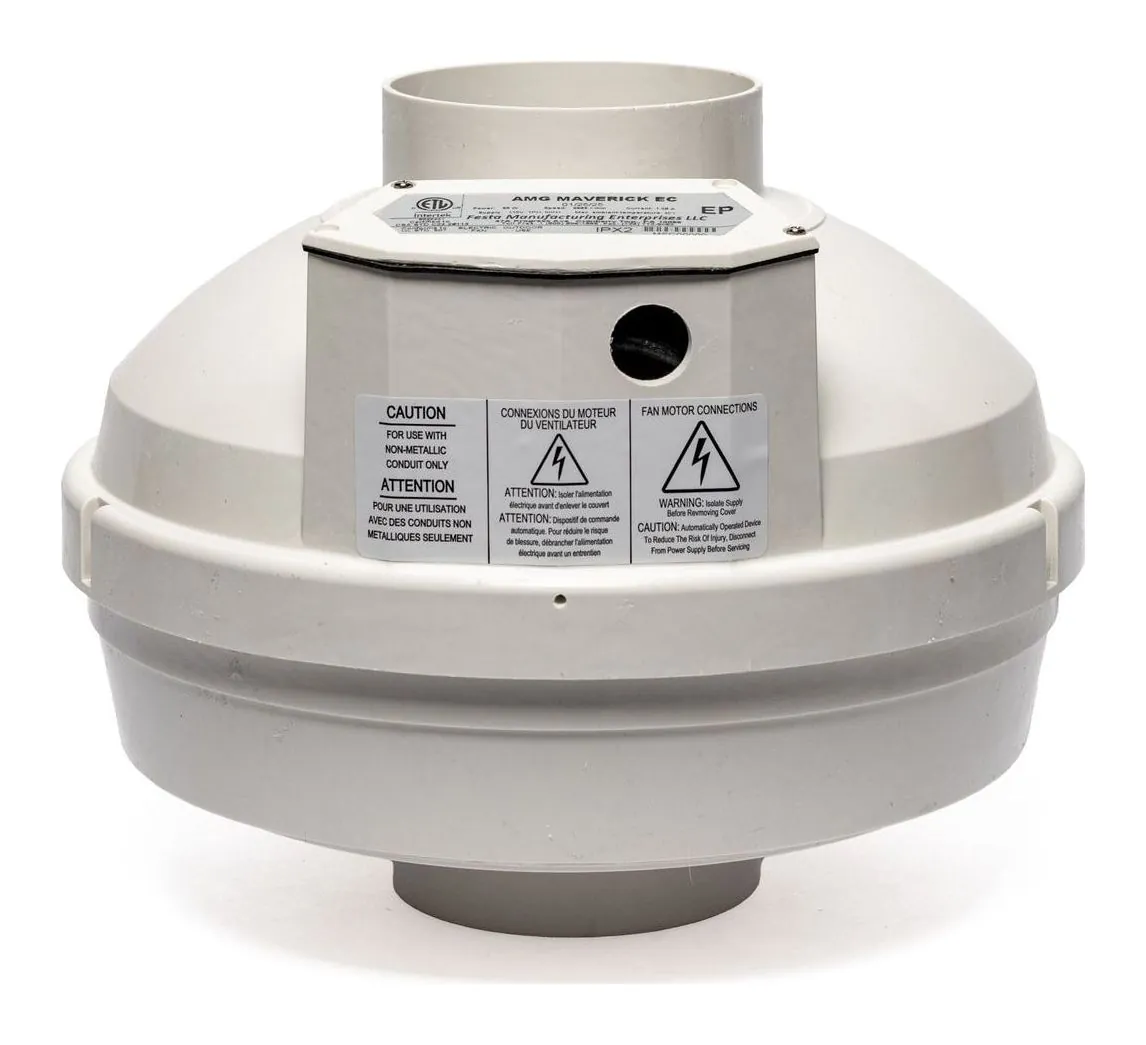
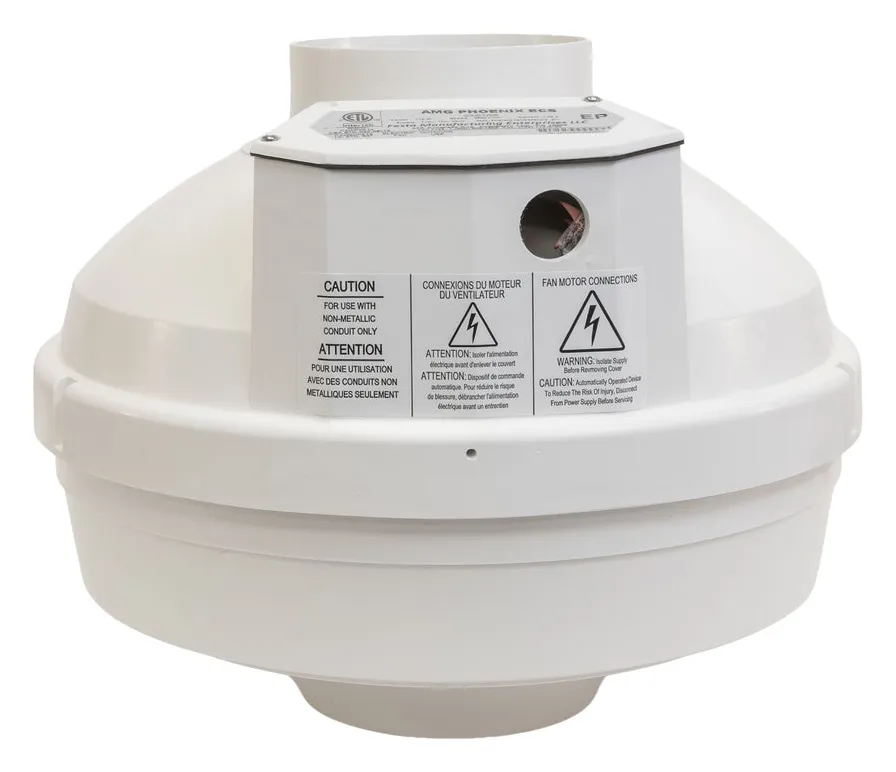
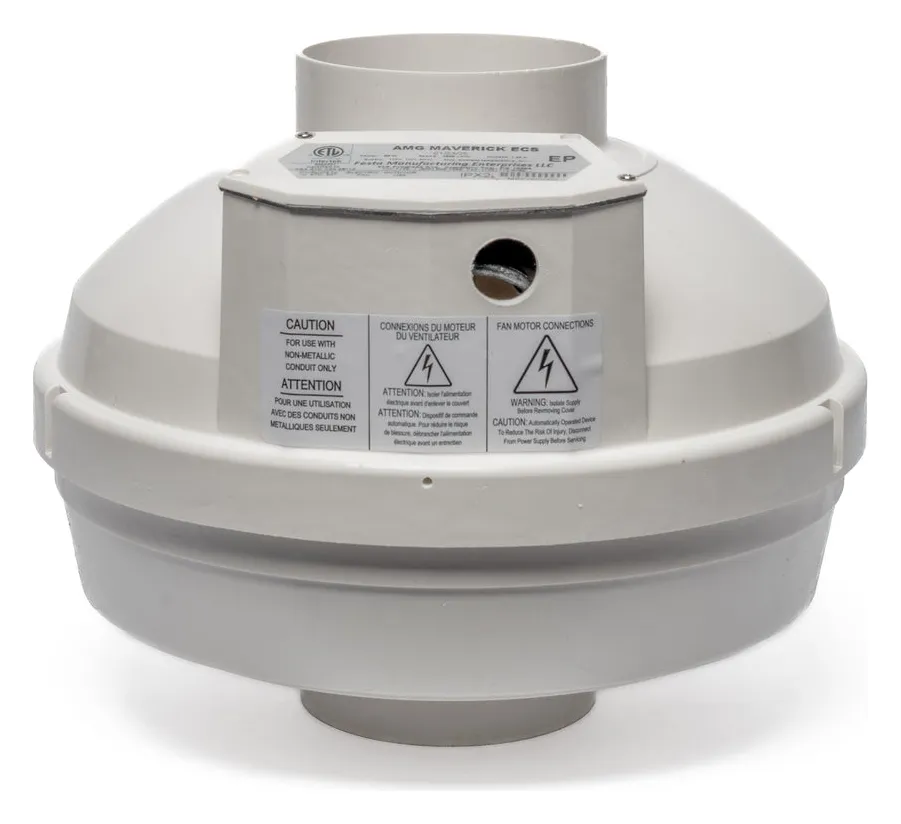
The AMG Maverick ECS is Festa's 4 inch EC radon fan with a speed control built in, sold so a radon professional can fine-tune airflow to the installation. Festa recommends it for moderate-sized, newer homes of 500 to 2,200 square feet on porous sub-slabs such as gravel, estimates 60 to 65 dB at maximum speed, and gives all its AMG EC fans a seven year warranty.
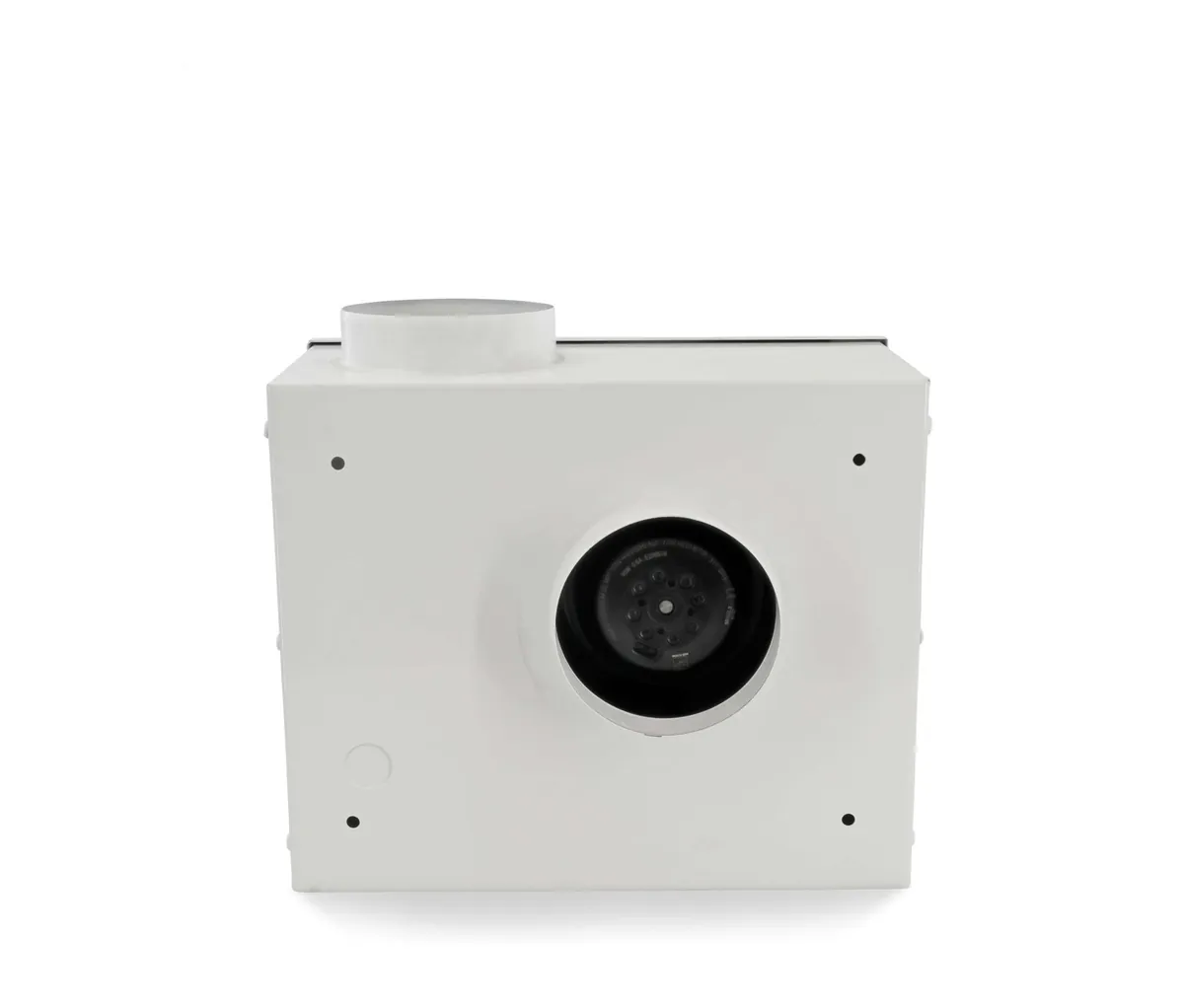
Festa's Maverick ECS page offers three styles: fan only, a 3 inch installation kit and a 4 inch installation kit. The fan is white and fits 4 inch flexible couplers, sold separately for the fan-only style. Each kit adds two white Fernco couplers that fit the fan to 3 inch or 4 inch PVC pipe, a green 5.5 inch radon system manometer, a line cord with connector and system labels.
In the box and running costsHow it works
The suction, the airflow and the housing, then who has checked it
In our words, from the maker's documents
Gravel under a slab is easy ground for a radon fan. Festa's article on static pressure says loose gravel usually gives air relatively open paths toward a suction point, that a system beneath open gravel may need more airflow but relatively modest suction, and that neither soil condition automatically calls for the largest motor. On that kind of ground a fixed-speed fan can end up moving more air than the slab needs, which is the gap Festa's ECS models are sold to close.
Festa's Maverick ECS page puts the case in its own terms: a radon fan with speed control lets you fine-tune airflow to match the demands of the installation, helping reduce unnecessary noise and energy use. The control is an integral potentiometer knob on the fan itself. Festa Manufacturing Enterprises' instructions for the AMG EC fans, whose model list includes the Maverick ECS, say that on ECS models only, turning the integral potentiometer clockwise raises the motor speed and counterclockwise lowers it, and that the white control wire is unused.
Festa prints no curve, wattage or maximum pressure for the Maverick ECS. The nearest published figures are for the Maverick EC, which Festa recommends, in the same words, for moderate-sized newer homes of 500 to 2,200 square feet on gravel: its RRNC fan types page lists 150 CFM at 0.5 inch of water column as its RF1 point and 117 CFM at 1.0 inch as its RF2 point, on a 4 inch Fernco. Those are full-speed numbers for the fixed-speed fan; Festa publishes none for reduced settings.
The same RRNC page frames Festa's fans for builders: kits with couplers, a manometer, system labels and a line cord turn a pre-piped passive system into an active one. The EPA's guide to radon-resistant construction describes that passive stack, with a junction box in the attic so an in-line fan can be added later, and says such homes can be upgraded to an active system by installing the fan. A 4 inch EC fan aimed at newer homes on gravel fits that job.
The EC instructions rate the Maverick EC(S) for surroundings from -13°F (-25°C) up to 140°F (60°C), protect the motor with an internal overheat device, and allow indoor or outdoor mounting. Festa's EC fan collection says the brushless design reduces wear, increasing longevity and minimizing maintenance needs, and the Maverick ECS page credits the EC line with energy efficiency, performance and reliability.
Festa's own statements, attributed
These are Festa's own statements, attributed to it. They are not our findings, and we have not tested this product ourselves.
Who checks a device like this
C-NRPP's consumer evaluation covers electronic radon monitors, not mitigation fans, so it has no result for Festa AMG Maverick ECS. The safety listing and performance certification the maker states are under “What the manufacturer says”, and what shows whether any fan is working in your home is a radon test after it is installed.
Festa AMG Maverick ECS
Check price on Amazon (opens in a new tab)Specifications
Every figure as the maker states it
Festa's Maverick ECS page offers three styles: fan only, a 3 inch installation kit and a 4 inch installation kit. The fan is white and fits 4 inch flexible couplers, sold separately for the fan-only style. Each kit adds two white Fernco couplers that fit the fan to 3 inch or 4 inch PVC pipe, a green 5.5 inch radon system manometer, a line cord with connector and system labels.
Festa states the warranty in two places. Its warranty document gives EC radon fans seven years of full replacement from the date of original purchase, for customers who bought directly from Festa, and names the Maverick EC in its EC list. The EC installation instructions print a seven year warranty from the date of manufacture, followed by a clause offering five full years from manufacture. Ask Festa which applies to a fan bought through a reseller.
Festa's page leaves fan selection to the buyer, charges a 15% restocking fee on unused returns, and ships in-stock orders the same day on weekdays before 4 pm Eastern, by FedEx Ground from Cranberry Township, Pennsylvania.
Festa gives no wattage for the Maverick ECS; the EC instructions put the electrical figures on the unit rating label. For a yearly estimate, multiply the label's watts by 8,760 hours, divide by 1,000 and multiply by your rate, then expect less when the knob is turned down, as Festa's claim of reduced energy use implies. For scale, Festa's 2022 catalog lists the AC Maverick at 66 W, which is about 578 kWh a year at full time running.
The EPA says the fan should never be turned off and must run continuously, that fans may last five years or more, that manufacturer warranties tend not to exceed five years, and that the home should be retested at least every two years.
Fit and setup
The fit, then how a system goes in
Good fit if, and look elsewhere if
Good fit if
Look elsewhere if
5 steps
To find someone to design and install a system, see radon mitigation professionals, and for how a fan fits into one, how a radon fan works.
Compare
The same three rows for each, and the one difference that matters
This page
Festa AMG Maverick ECS
This page: The AMG Maverick ECS is Festa's 4 inch EC radon fan with a speed control built in, sold so a radon professional can fine-tune airflow to the installation.
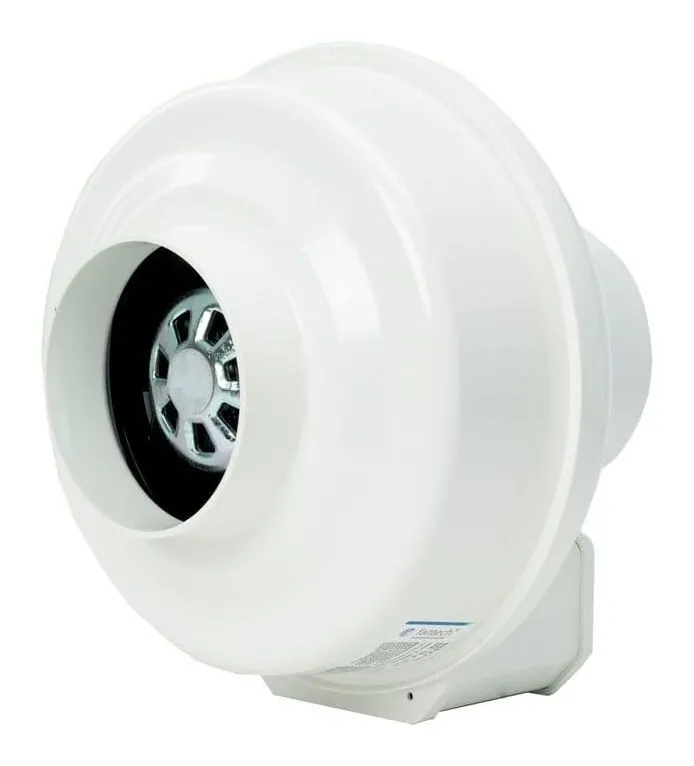
Fantech
The difference: Fantech's EC fan with a built-in dial: its 2025 brochure lists the Rn 2EC at a 2.0 inch maximum static pressure, 52 W and 173 CFM.
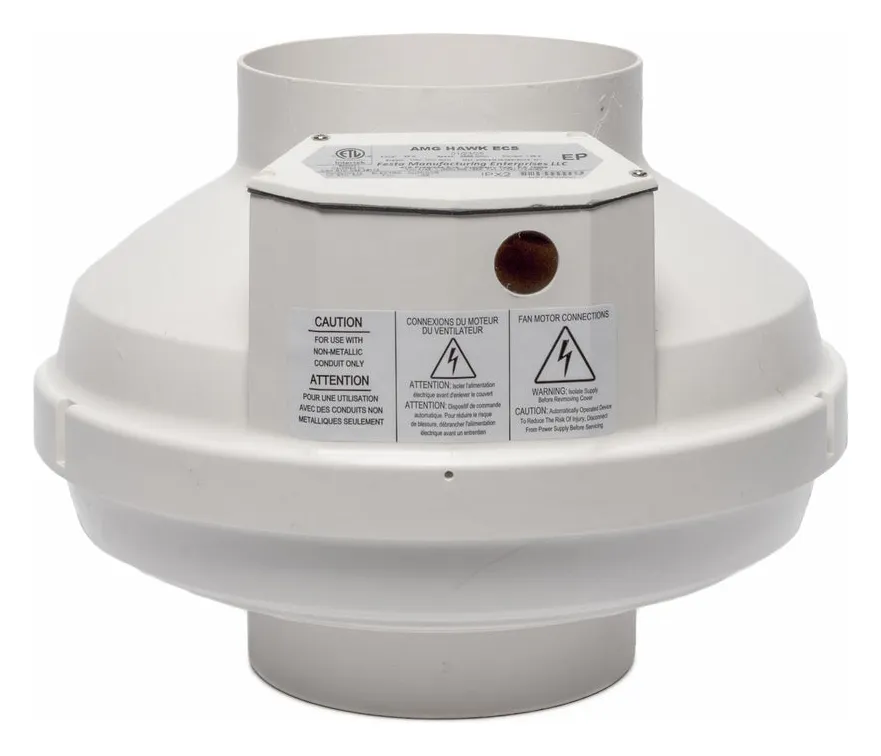
Festa
The difference: The 6 inch version of the idea: Festa recommends the Hawk ECS for 2,000 to 3,500 square feet on porous fill.
The difference: The same 4 inch fan at a fixed speed: Festa's Maverick EC page recommends it for the same 500 to 2,200 square foot homes and estimates 60 to 65 dB.
The difference: Festa's other 4 inch speed-controlled fan for newer homes on gravel: its page lists a 3.15 inch maximum pressure, 210 CFM and an estimated 50 to 55 dB.
Compared with similar products: 1 of 5
Radon fan
Max airflow: 195 CFM
Max pressure: 2.0 in w.c.
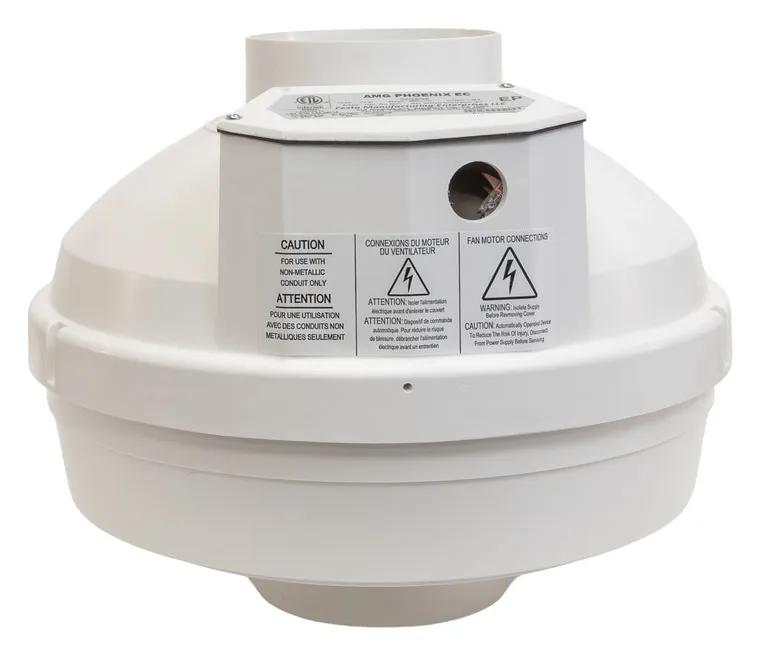
Radon fan
Max airflow: 210 CFM
Max pressure: 3.15 in w.c.
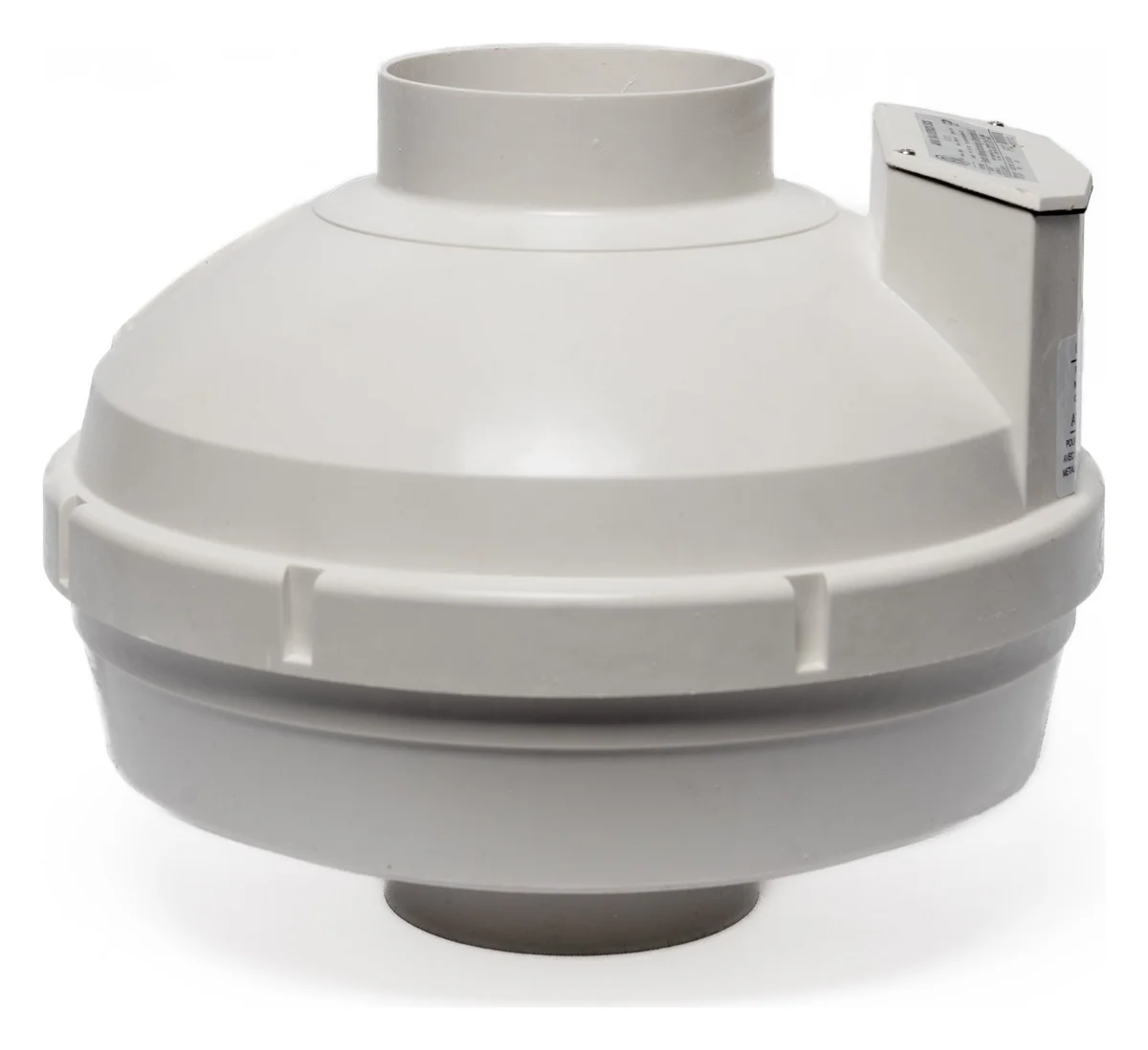
Radon fan
Max airflow: 260 CFM
Max pressure: 2.21 in w.c.
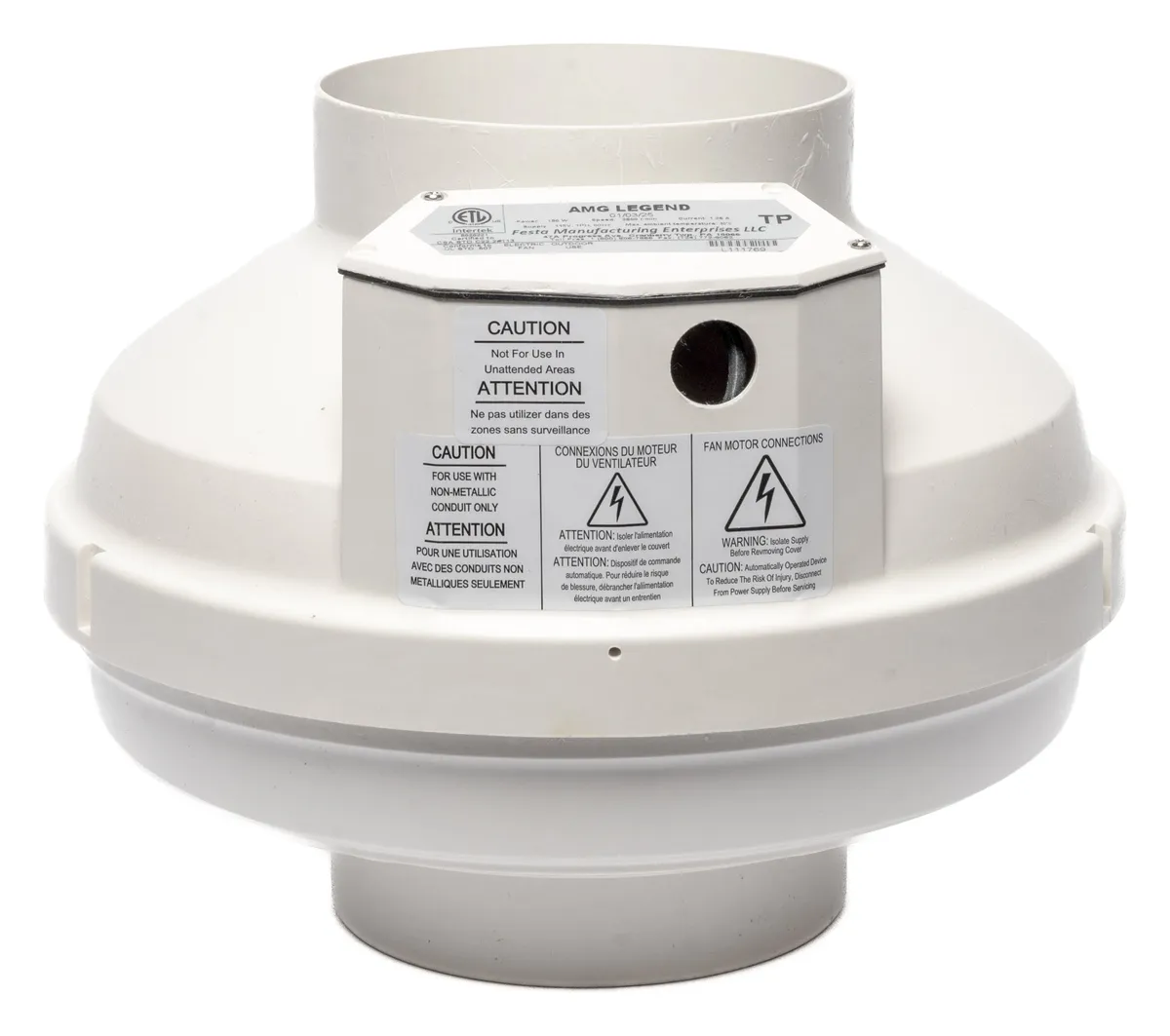
Radon fan
Max airflow: 345 CFM
Max pressure: 2.6 in w.c.
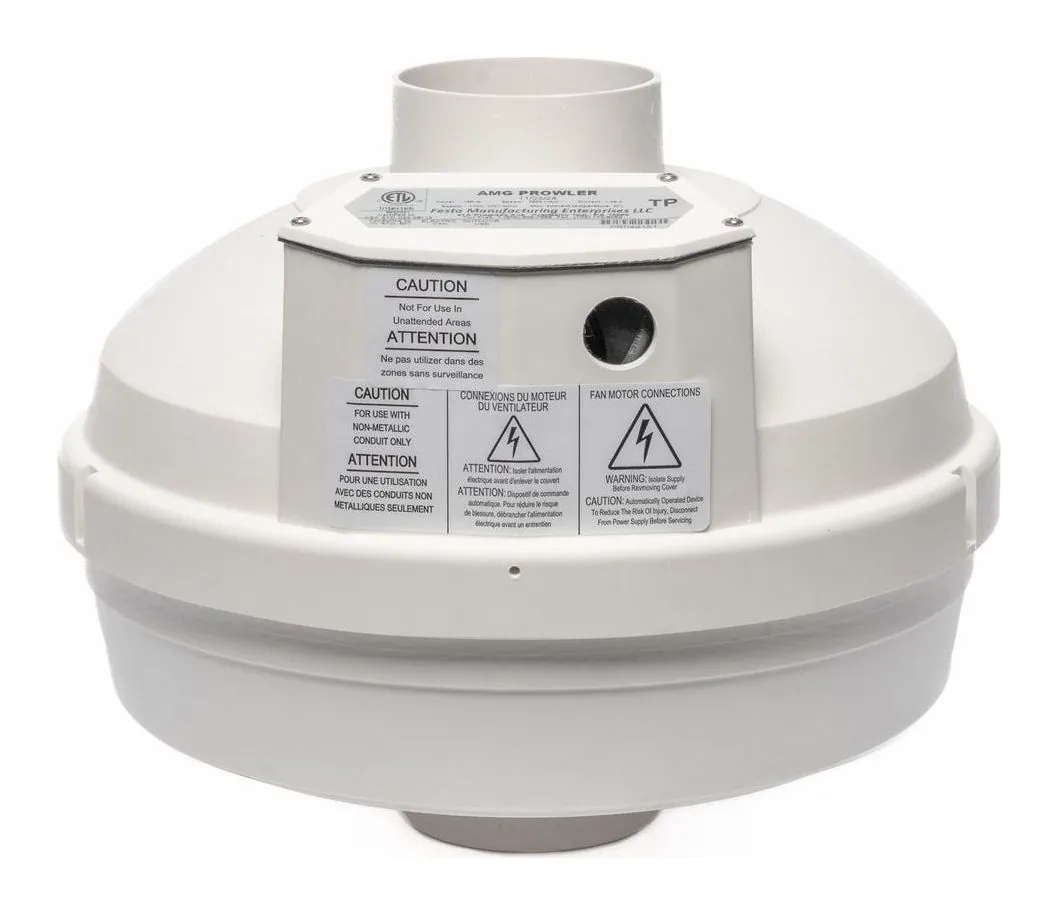
Radon fan
Max airflow: 221 CFM
Max pressure: 2.7 in w.c.
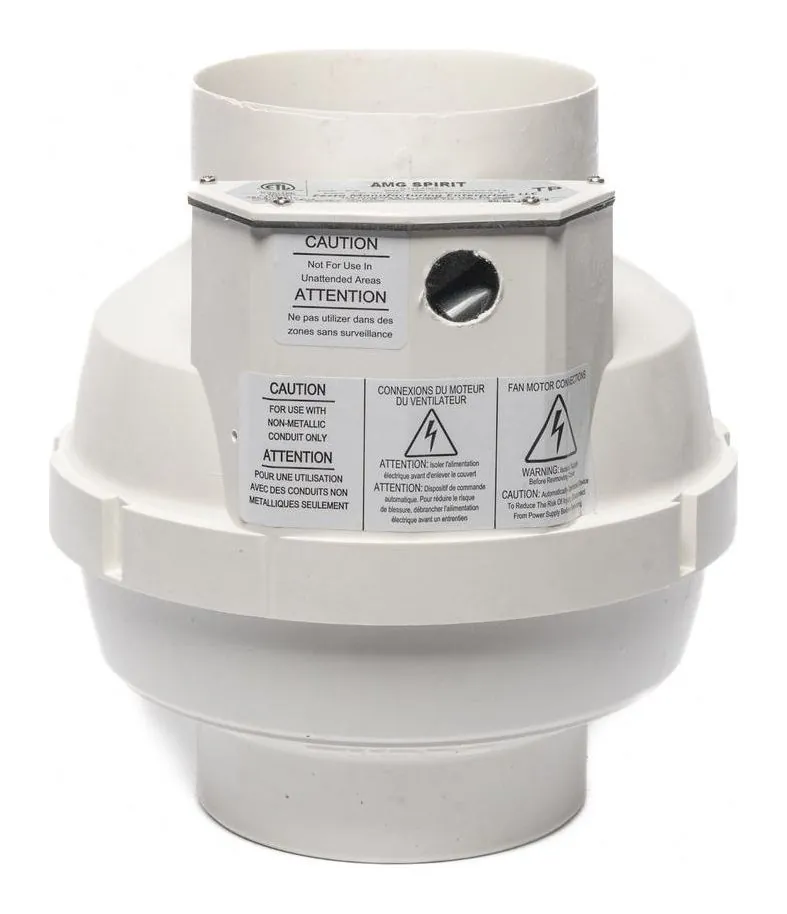
Radon fan
Max airflow: 121 CFM
Max pressure: 0.9 in w.c.
More radon fan models: 1 of 6
Questions
5 questions about the Festa AMG Maverick ECS, answered
With its integral potentiometer knob: Festa's EC instructions say clockwise raises the motor speed and counterclockwise lowers it, and that the white control wire is unused. Switch the power off at the service panel before opening the unit, as the same instructions require for servicing.
Festa recommends both for moderate-sized newer homes of 500 to 2,200 square feet over porous sub-slabs and estimates 60 to 65 dB for each, the ECS figure at maximum speed. The ECS adds the speed control; the EC runs at one speed.
Festa publishes no figures for the ECS. Its RRNC page gives the Maverick EC 150 CFM at 0.5 inch and 117 CFM at 1.0 inch at full speed; turned down, the ECS will move less, by an amount Festa does not state.
No. Festa's EC instructions warn against both external speed control devices and solid-state speed controllers with these fans.
No. The EPA says the fan should never be turned off and must run continuously for the system to work. Turning the knob down is the way to trim noise and power, and the manometer reading should be checked again afterward.
Updated November 27, 2026