Radon fan
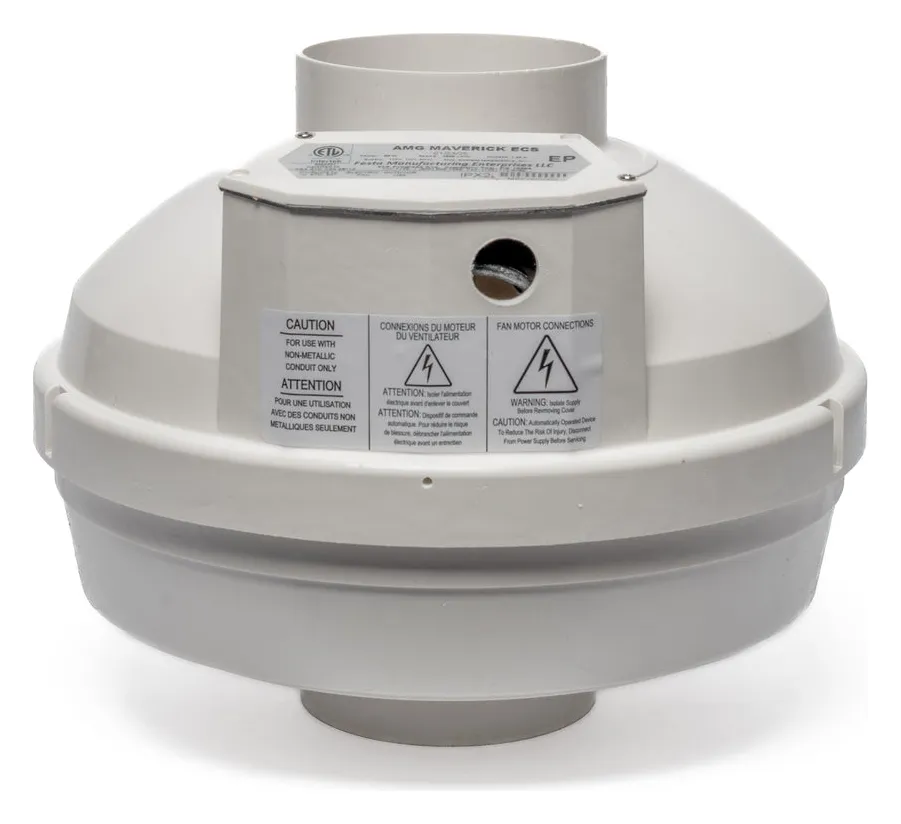
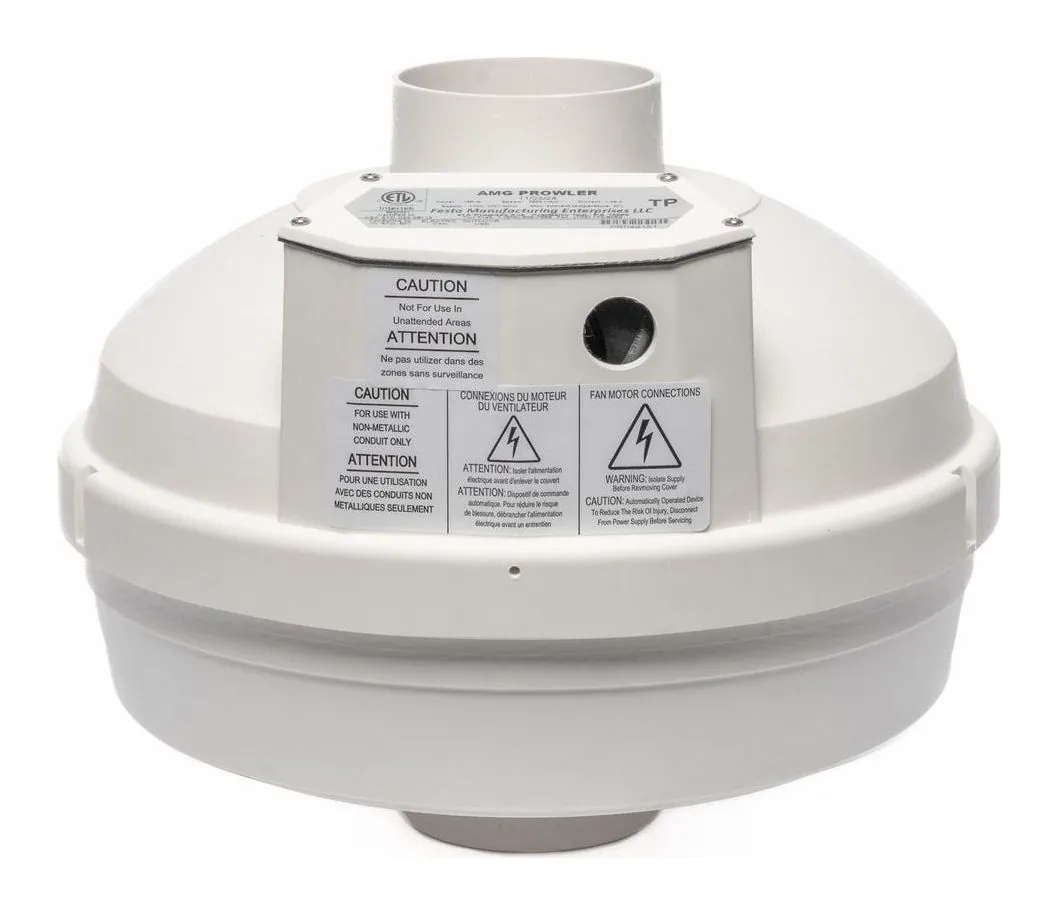
AMG Prowler inline radon mitigation fan
- 3 in. Fernco coupler size
- 140 W
Max airflow: 221 CFM
Max pressure: 2.7 in w.c.
Festa
Speed-controlled 4 inch EC radon fan
Best for you if
Skip it if
Photos: Festa
 (opens in a new tab)Check price on Amazon (opens in a new tab)
As an Amazon Associate, Radon411 earns from qualifying purchases.
Amazon and the Amazon logo are trademarks of Amazon.com, Inc. or its affiliates.
See ratings and reviews on Amazon (opens in a new tab)As Festa states it
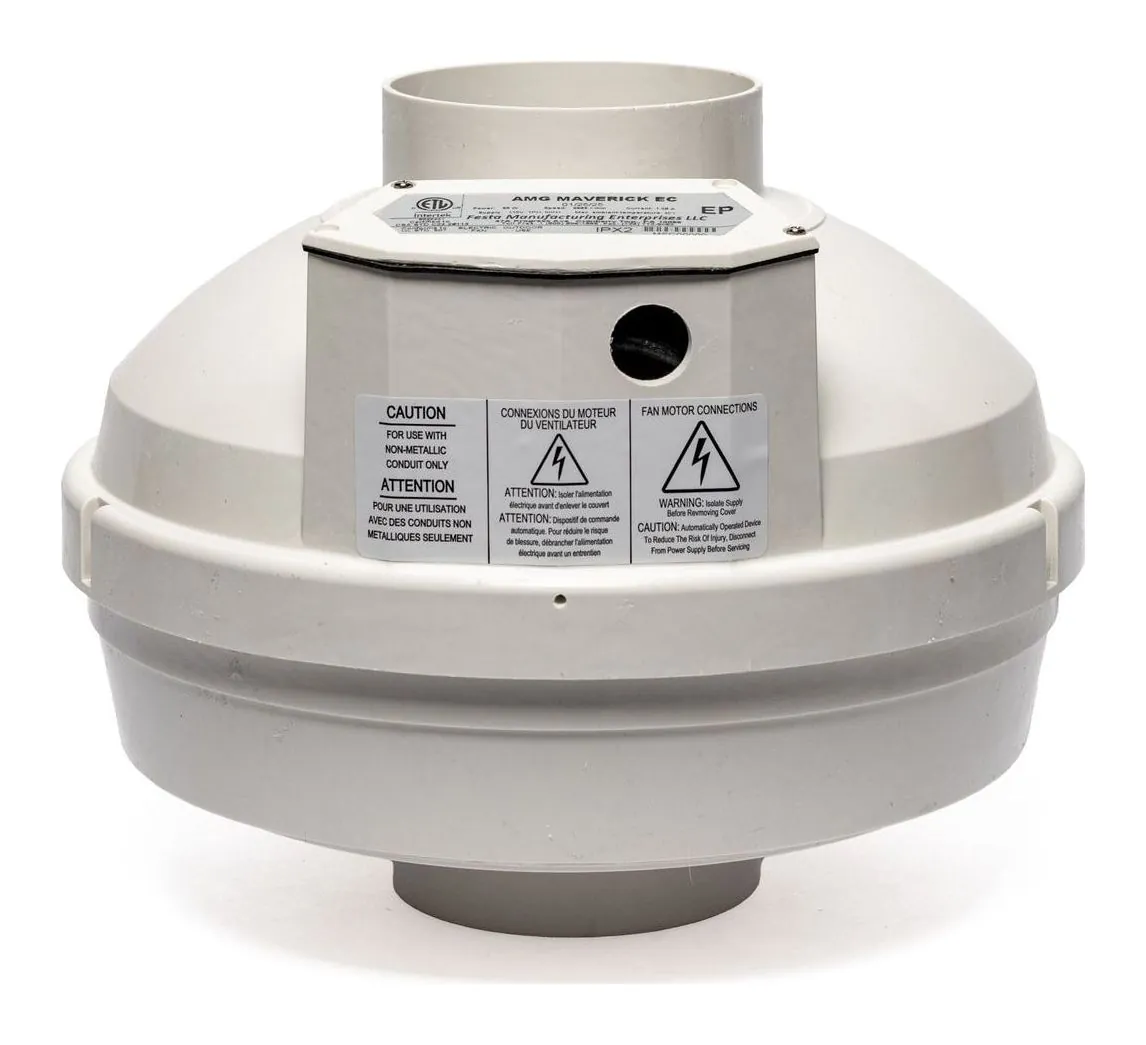
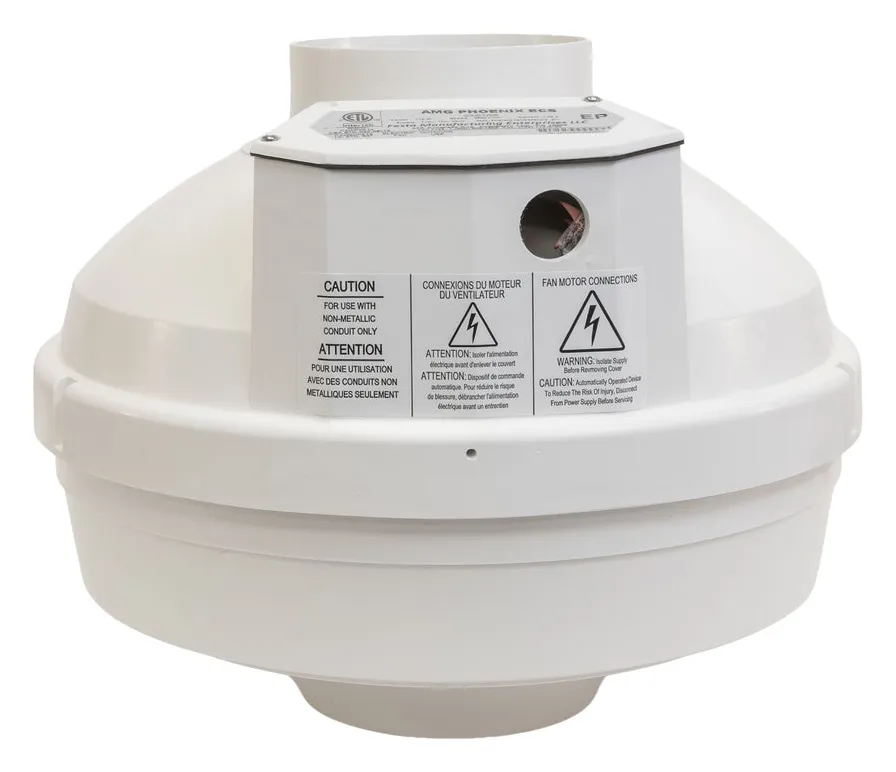
The AMG Phoenix ECS is Festa's 4 inch Phoenix EC fan with a built-in speed potentiometer, for newer homes of 500 to 2,200 square feet on porous sub-slabs such as gravel. Festa lists a 3.15 inch w.g. maximum pressure and 210 CFM maximum flow and estimates 50 to 55 dB, and its warranty document gives EC fans seven years.
Festa's Phoenix ECS page lists the fan alone or with a 3 inch or 4 inch installation kit. A kit adds two white Fernco couplers that fit the fan to 3 inch or 4 inch PVC pipe, a green 5.5 inch radon system manometer, a line cord with connector and system labels.
In the box and running costsHow it works
The suction, the airflow and the housing, then who has checked it
In our words, from the maker's documents
Festa describes the Phoenix ECS in one line: it takes the Phoenix EC 4 inch fan and adds a built-in speed potentiometer. That dial, Festa says, allows 100% controllability so the installer can dial in the exact vacuum pressure a slab needs, to cut noise or to fine-tune suction for seasonal changes.
Newer homes often need less than a fan's full output. The EPA's construction guide says passive radon systems reduce radon levels by an average of about 50%, and that an in-line fan can activate the system when further reduction is needed; on a porous gravel bed under a modest footprint, a fan that can be turned down lets the installer stop at the suction that gets the level below target.
Festa lists the same two maximums for the ECS as for the Phoenix EC: 3.15 inches w.g. of pressure and 210 CFM of flow. The ECS page prints no electrical figures, while the Phoenix EC page lists 110 W, 115 V at 60 Hz, 1.45 A at most, 3,602 RPM and a 4 inch Fernco.
Festa's ECS page says that with its EC motor technology the fan consumes a fraction of the power used by traditional fans. It does not say which fans it means, and its own published watts do not settle the point: the Phoenix EC page lists 110 W, while Festa's 2022 catalog lists its AC Maverick, a 4 inch fan for the same footprint, at 66 W. What a turned-down ECS draws on a given system is not published.
The motorized impeller is Swiss-engineered, in Festa's words, and designed for newer homes with porous sub-slabs; Festa calls the result consistent, whisper-quiet radon mitigation and estimates 50 to 55 dB, the same range it gives the fixed-speed Phoenix EC.
Festa's own statements, attributed
These are Festa's own statements, attributed to it. They are not our findings, and we have not tested this product ourselves.
Who checks a device like this
C-NRPP's consumer evaluation covers electronic radon monitors, not mitigation fans, so it has no result for Festa AMG Phoenix ECS. The safety listing and performance certification the maker states are under “What the manufacturer says”, and what shows whether any fan is working in your home is a radon test after it is installed.
Festa AMG Phoenix ECS
Check price on Amazon (opens in a new tab)Specifications
Every figure as the maker states it
Festa's Phoenix ECS page lists the fan alone or with a 3 inch or 4 inch installation kit. A kit adds two white Fernco couplers that fit the fan to 3 inch or 4 inch PVC pipe, a green 5.5 inch radon system manometer, a line cord with connector and system labels.
Festa's warranty document gives EC radon fans seven years of full replacement from the date of original purchase, for customers who bought directly from Festa; builders using Festa AMG fans in radon-resistant new construction can transfer that warranty to the home buyer.
Festa's page leaves fan selection to the customer and charges a 15% restocking fee on unused returns.
Electricity is the running cost. Taking the Phoenix EC's listed 110 W as the full-speed figure gives about 964 kWh a year of continuous running (110 x 8,760 / 1,000); the ECS at a lower setting would use less, by an amount Festa does not publish. Multiply by your rate per kWh.
The EPA's guide says fans may last five years or more, that the fan should never be turned off, and that the home should be retested at least every two years.
Fit and setup
The fit, then how a system goes in
Good fit if, and look elsewhere if
Good fit if
Look elsewhere if
4 steps
To find someone to design and install a system, see radon mitigation professionals, and for how a fan fits into one, how a radon fan works.
Compare
The same three rows for each, and the one difference that matters
This page
Festa AMG Phoenix ECS
This page: The AMG Phoenix ECS is Festa's 4 inch Phoenix EC fan with a built-in speed potentiometer, for newer homes of 500 to 2,200 square feet on porous sub-slabs such as gravel.
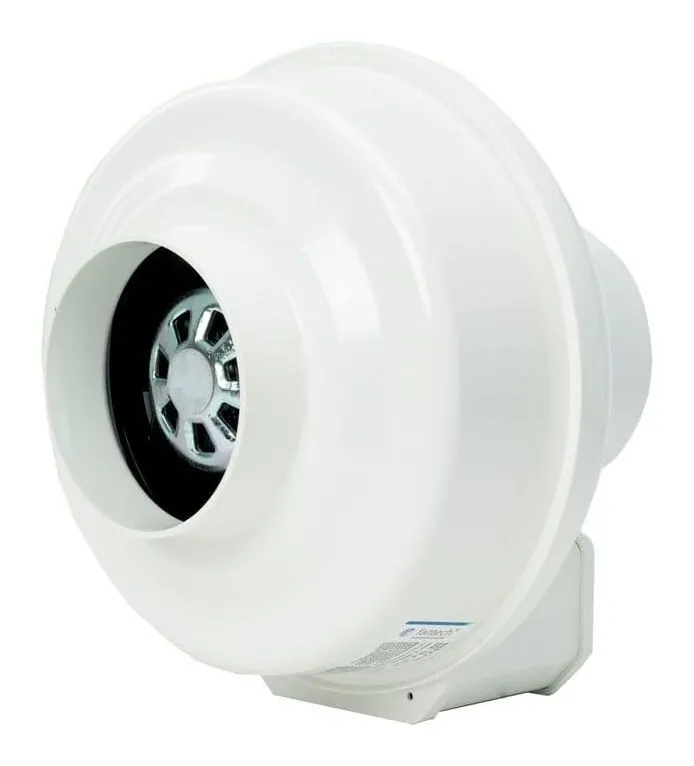
Fantech
The difference: Fantech's EC fan with a built-in dial: its 2025 brochure lists the Rn 2EC at a 2.0 inch maximum static pressure, 52 W and 173 CFM.
The difference: Festa's other 4 inch EC fan for newer homes of 500 to 2,200 square feet, without a dial; Festa estimates 60 to 65 dB for it.
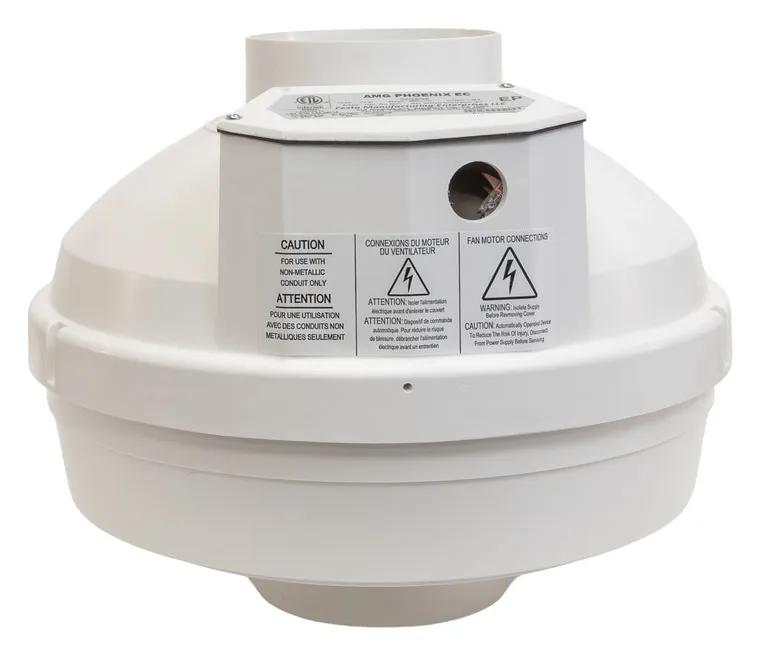
Festa
The difference: The fixed-speed Phoenix: Festa's page lists the same 3.15 inch and 210 CFM maximums, with 110 W.
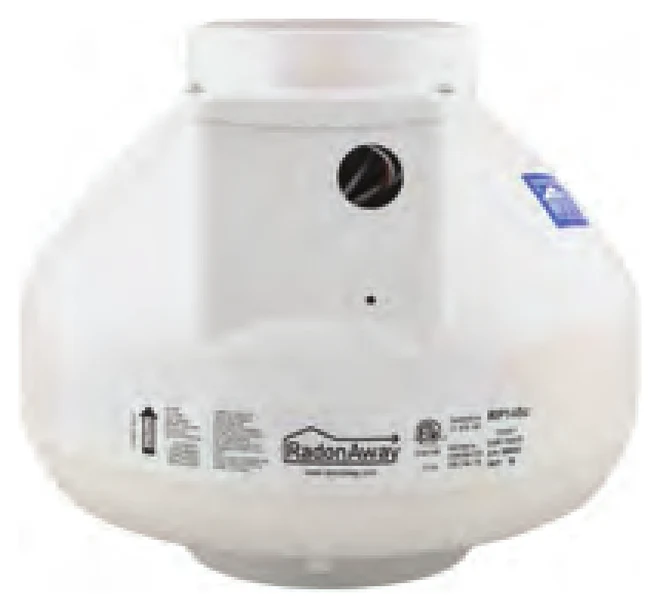
RadonAway
The difference: RadonAway's 4 inch Contractor Series fan: its performance page lists 46 to 72 W, a 1.7 inch recommended maximum operating pressure and 168 CFM at 0 inch.
Compared with similar products: 1 of 5
Radon fan
Max airflow: 221 CFM
Max pressure: 2.7 in w.c.
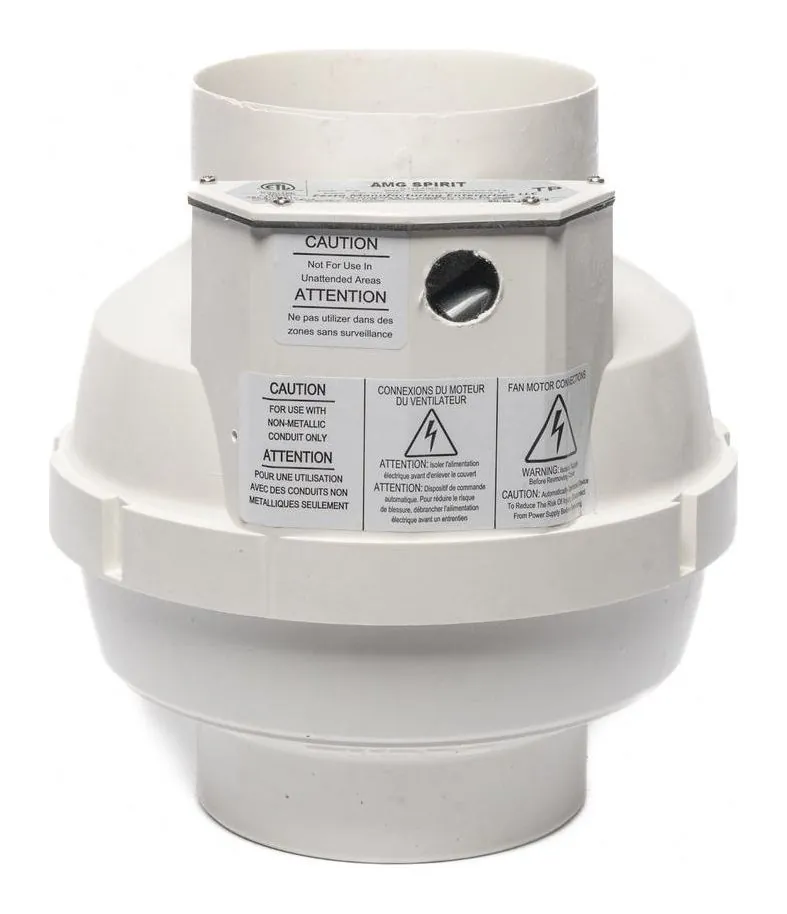
Radon fan
Max airflow: 121 CFM
Max pressure: 0.9 in w.c.
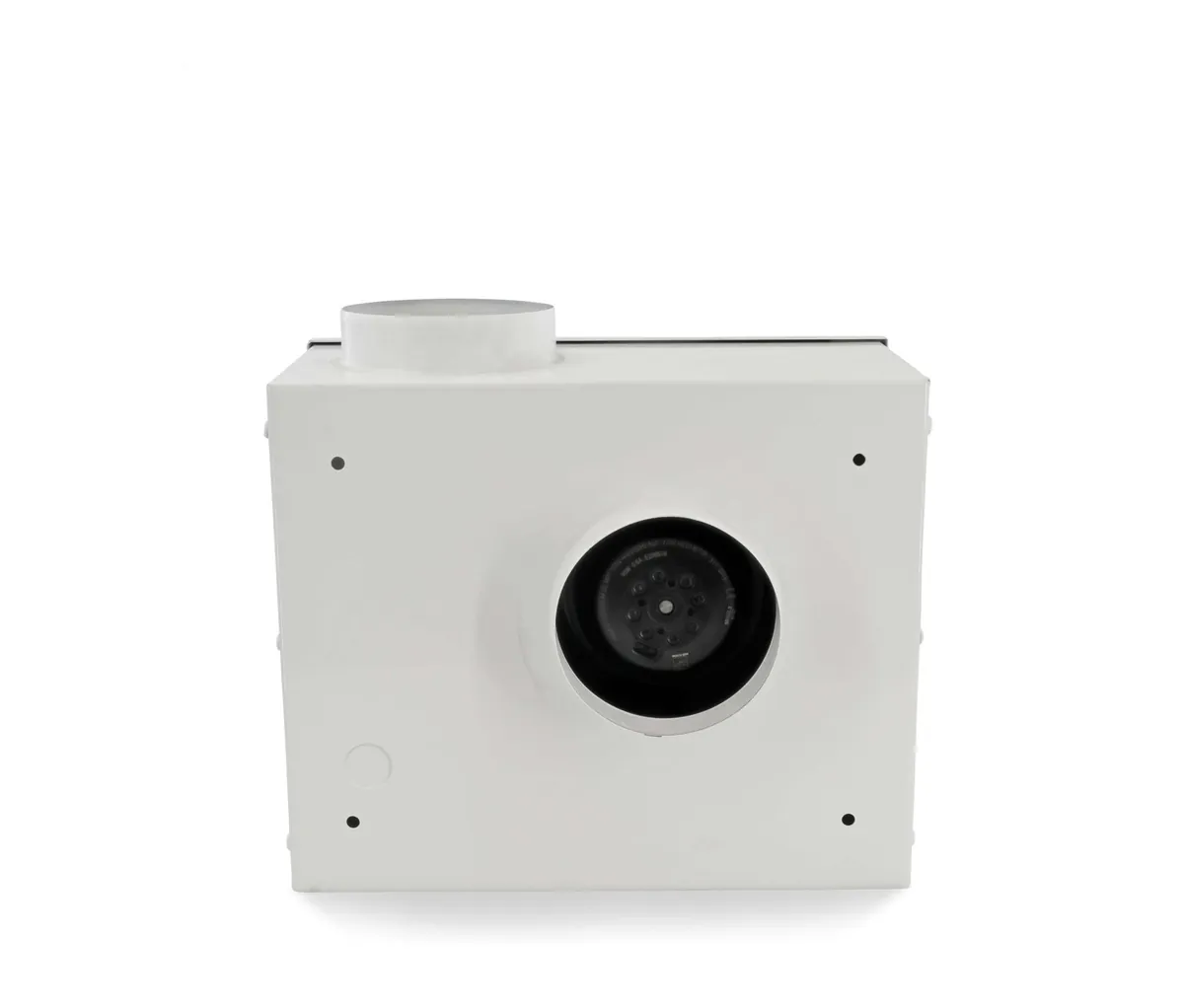
Radon fan
Max airflow: 195 CFM
Max pressure: 2.0 in w.c.
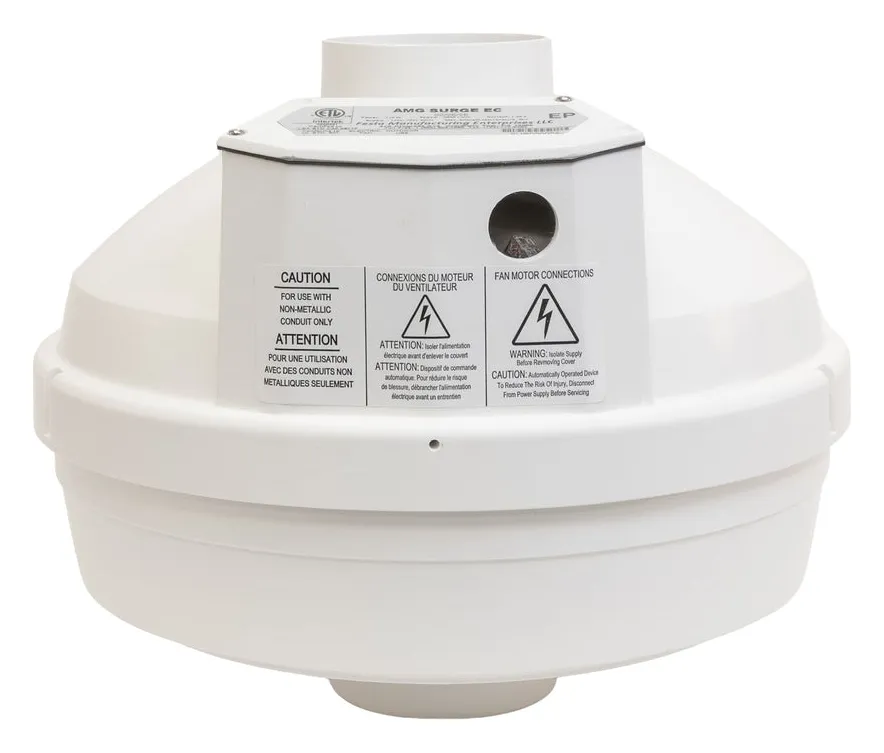
Radon fan
Max airflow: 185 CFM
Max pressure: 3.4 in w.c.
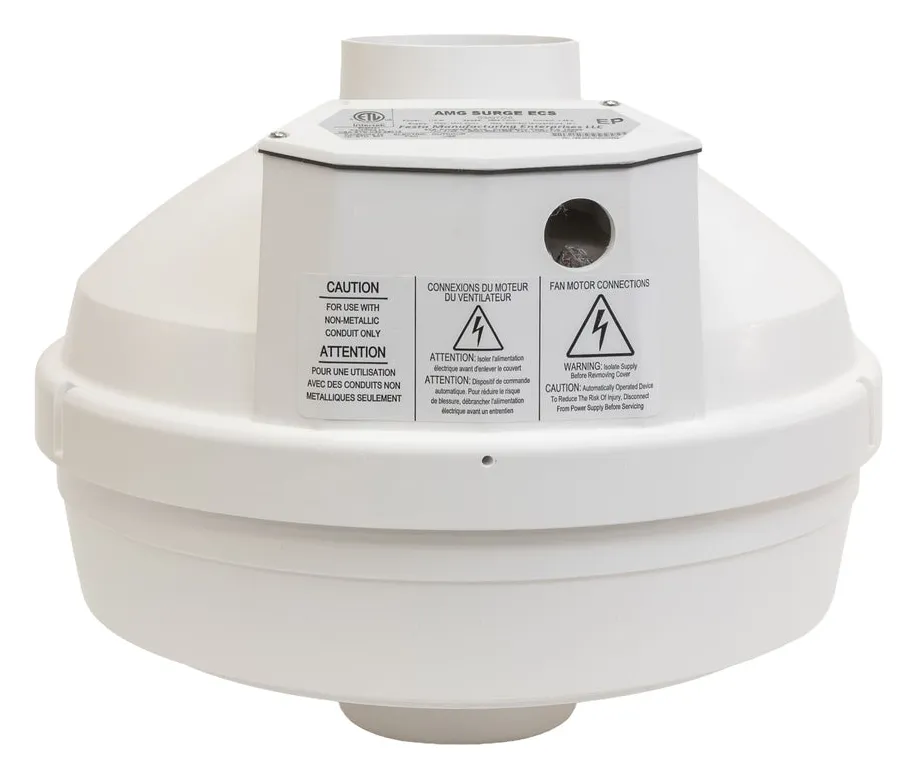
Radon fan
Max airflow: 185 CFM
Max pressure: 3.4 in w.c.
More radon fan models: 1 of 6
Questions
4 questions about the Festa AMG Phoenix ECS, answered
That is how Festa describes it: the Phoenix EC 4 inch fan with a built-in speed potentiometer added, with the same published maximum pressure, maximum flow and noise estimate.
Festa says its EC motor uses a fraction of the power of traditional fans but does not say which fans. Its own figures are 110 W for the Phoenix EC and 66 W for the AC Maverick; what the ECS draws depends on where the dial is set.
Yes, the potentiometer stays in the fan. Any change alters the system's suction, so a follow-up radon test shows whether the new setting still works; the EPA recommends a two- to seven-day measurement to test a system's effectiveness.
Festa calls it a 4 inch fan, and its installation kit couplers fit it to 3 inch or 4 inch PVC pipe.
Updated November 27, 2026