 Festa
Festa AMG Triumph ECS
Speed-controlled 6 inch EC radon fan
- Radon fan
- 6 in. duct connection
Best for, and skip if
Best for you if
- The home covers 2,000 to 3,500 square feet over gravel or another porous fill, the range Festa optimizes the Triumph for.
- The installer wants room to tune; Festa says the ECS potentiometer allows 100% controllability.
Skip it if
- You prefer a fan with no adjustable setting; the Triumph EC is the same fan without the dial.
- You need watts or an airflow curve in print for this model; Festa's ECS page lists neither.
Photos: Festa
 (opens in a new tab)Check price on Amazon (opens in a new tab)

As an Amazon Associate, Radon411 earns from qualifying purchases.
Amazon and the Amazon logo are trademarks of Amazon.com, Inc. or its affiliates.
See ratings and reviews on Amazon (opens in a new tab)- Pipe size6 in. duct connection (product page); Festa's installation kit couplers fit the fan to 3 in. or 4 in. PVC pipe
- Every figure checked against the specifications Festa publishes
- The maker's own performance table, point by point, unranked
About this item
As Festa states it
- Motor: EC
- Pipe size: 6 in. duct connection (product page); Festa's installation kit couplers fit the fan to 3 in. or 4 in. PVC pipe
- Max static pressure: 2.9 in w.c.
- Max airflow: 370 CFM
- Speed control: Built in
- Warranty: 7 year warranty for all Festa AMG EC radon fans (product page); Festa's warranty document gives EC radon fans a 7-year full-replacement warranty from the date of original purchase, for customers who bought directly from Festa
The AMG Triumph ECS is Festa's 6 inch high-flow Triumph fan with an onboard speed potentiometer, optimized for footprints of 2,000 to 3,500 square feet on porous sub-slabs. Festa lists a 2.9 inch w.g. maximum pressure and 370 CFM maximum flow, estimates 50 to 55 dB, and gives all its AMG EC fans a 7 year warranty.
What you get
Festa's Triumph ECS page lists three styles: fan only, a 3 inch installation kit and a 4 inch installation kit. A kit adds two white Fernco couplers that fit the fan to 3 inch or 4 inch PVC pipe, a green 5.5 inch radon system manometer, a line cord with connector and system labels.
In the box and running costsHow it works
What it does and how
The suction, the airflow and the housing, then who has checked it
How it works
In our words, from the maker's documents
Big footprints on gravel need air volume, and a fan sized for the largest homes in a range can be more than a smaller one needs. Festa pitches the Triumph ECS at that problem: its page says the fan combines high-volume airflow with the surgical precision of an onboard speed control, and that the potentiometer allows 100% controllability to dial in the exact vacuum pressure needed for the specific slab.
Its published maximums are the same as the fixed-speed Triumph EC's, 370 CFM of flow and 2.9 inches w.g. of pressure, with a 6 inch duct connection. The ECS page prints no electrical figures; the Triumph EC page lists 110 W, 115 V at 60 Hz, 1.45 A and 3,602 RPM, and Festa publishes airflow at set pressures for neither.
Festa's two Triumph pages give different noise estimates: 50 to 55 dB for the ECS and 55 to 65 dB for the EC, each with the note that the figure can vary with the system configuration. Festa does not say whether the ECS figure is at full speed, as it specifies for the Hawk ECS, so the difference is worth asking about before relying on it.
A maximum flow is measured with no resistance, and Festa's own static pressure article cautions that a high advertised CFM may not be what a foundation receives, because a typical fan moves less air as resistance rises. On the ECS, turning the dial down lowers the curve further. The working figure for any installed system is what the manometer and a radon test show.
Festa says the Triumph ECS's Swiss-engineered EC motor ensures high level performance, minimal energy consumption and quiet operation, and calls the fan energy efficient. It gives no efficiency or service-life figure behind those words.
What the manufacturer says
Festa's own statements, attributed
- Festa saysFesta states the Triumph ECS combines high-volume airflow with the surgical precision of an onboard speed control.
- Festa saysFesta says the built-in potentiometer allows 100% controllability to dial in the exact vacuum pressure needed for the specific slab.
- Festa saysFesta states the Triumph ECS is optimized for footprints ranging from 2,000 to 3,500 square feet on porous sub-slabs, with a 6 inch duct connection.
- Festa saysFesta lists the Triumph ECS at a 2.9 inch w.g. maximum pressure and 370 CFM maximum flow.
- Festa saysFesta gives the Triumph ECS an estimated noise range of 50 to 55 dB, which it says can vary with the system configuration.
- Festa saysFesta states all Festa AMG EC radon fans come with a 7 year warranty.
These are Festa's own statements, attributed to it. They are not our findings, and we have not tested this product ourselves.
Independent evidence
Who checks a device like this
C-NRPP's consumer evaluation covers electronic radon monitors, not mitigation fans, so it has no result for Festa AMG Triumph ECS. The safety listing and performance certification the maker states are under “What the manufacturer says”, and what shows whether any fan is working in your home is a radon test after it is installed.
Festa AMG Triumph ECS
Check price on Amazon (opens in a new tab)Specifications
Specifications
Every figure as the maker states it
The maker's figures
- Type
- Mitigation fan, inline
- Motor
- EC
- Pipe size
- 6 in. duct connection (product page); Festa's installation kit couplers fit the fan to 3 in. or 4 in. PVC pipe
- Max static pressure
- 2.9 in w.c.
- Max airflow
- 370 CFM
- Max power
- Not stated by the manufacturer
- Power supply
- Not stated by the manufacturer
- Speed control
- Built in
- Airflow at static pressure
- Not stated by the manufacturer
- Outdoor use
- Not stated by the manufacturer
- Warranty
- 7 year warranty for all Festa AMG EC radon fans (product page); Festa's warranty document gives EC radon fans a 7-year full-replacement warranty from the date of original purchase, for customers who bought directly from Festa
What is in the box
Festa's Triumph ECS page lists three styles: fan only, a 3 inch installation kit and a 4 inch installation kit. A kit adds two white Fernco couplers that fit the fan to 3 inch or 4 inch PVC pipe, a green 5.5 inch radon system manometer, a line cord with connector and system labels.
Festa's warranty document gives EC fans seven years of full replacement from the date of original purchase, for direct customers, and says Festa covers the return of a fan up to a year old, then asks only for the terminal box lid. The EPA's guide suggests asking whether hardware warranties transfer if the home is sold; Festa's document provides a transfer for homebuilders who use its fans.
Fan choice is the buyer's responsibility on Festa's page, with a 15% restocking fee on unused returns.
What it costs to run
The bill depends on the setting. Festa lists 110 W for the fixed-speed Triumph EC, about 964 kWh a year if run flat out continuously (110 x 8,760 / 1,000); a turned-down ECS draws less, but Festa publishes no figures for reduced speeds. Multiply by your rate per kWh.
The EPA's guide says fans may last five years or more and warranties tend not to exceed five years, and that the fan must never be turned off. It recommends retesting the home at least every two years.
Fit and setup
Who it fits, and installation
The fit, then how a system goes in
Who it fits
Good fit if, and look elsewhere if
Good fit if
- The home covers 2,000 to 3,500 square feet over gravel or another porous fill, the range Festa optimizes the Triumph for.
- The installer wants room to tune; Festa says the ECS potentiometer allows 100% controllability.
- The contract sets a target radon level the installer agrees to reach; a dial gives room to adjust toward it.
- The stack is 3 inch or 4 inch PVC; Festa's kit couplers fit the 6 inch fan to either.
Look elsewhere if
- You prefer a fan with no adjustable setting; the Triumph EC is the same fan without the dial.
- You need watts or an airflow curve in print for this model; Festa's ECS page lists neither.
- The slab is on clay or packed soil; Festa writes its Surge models for compacted sub-slabs.
- The footprint is under 2,000 square feet; Festa's Phoenix ECS covers 500 to 2,200.
Installation
4 steps
- The EPA recommends a qualified radon mitigation contractor and notes that many contractors guarantee to adjust or modify a system until it reaches a negotiated radon level, such as 2 pCi/L or less. With an ECS fan, the dial is one of the adjustments that guarantee can rely on, so the setting belongs in the written description of the system the EPA says the contract should give.
- The EPA's consumer guide names common fan locations: unconditioned home and garage spaces, including attics and the exterior of the home. Its construction guide adds that a flat roof or cathedral ceiling may force the fan onto the roof or into an exterior vent pipe, and that the fan and all positively pressurized pipe must stay outside habitable space.
- Festa's Triumph ECS page names no installation or wiring document. The unit rating label and Festa's phone line are the sources for supply, orientation and the potentiometer's direction of travel.
- To judge a setting, the EPA suggests an independent follow-up measurement after the contractor's own post-mitigation test, run by an independent tester or by the homeowner, to avoid any conflict of interest. Festa's article recommends noting the manometer's normal reading so later changes stand out.
To find someone to design and install a system, see radon mitigation professionals, and for how a fan fits into one, how a radon fan works.
Compare
Compare with similar items
The same three rows for each, and the one difference that matters
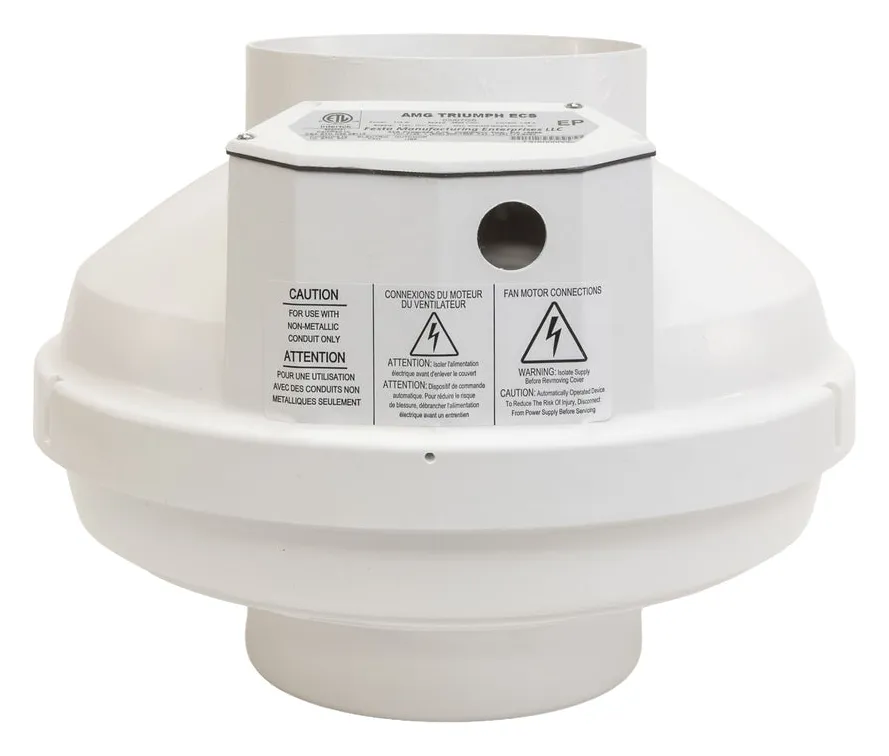
This page
Festa AMG Triumph ECS
- What it does
- Moves up to 370 CFM
- Power
- Not stated
- C-NRPP 2024/25
- Not applicable (mitigation fan)
This page: The AMG Triumph ECS is Festa's 6 inch high-flow Triumph fan with an onboard speed potentiometer, optimized for footprints of 2,000 to 3,500 square feet on porous sub-slabs.
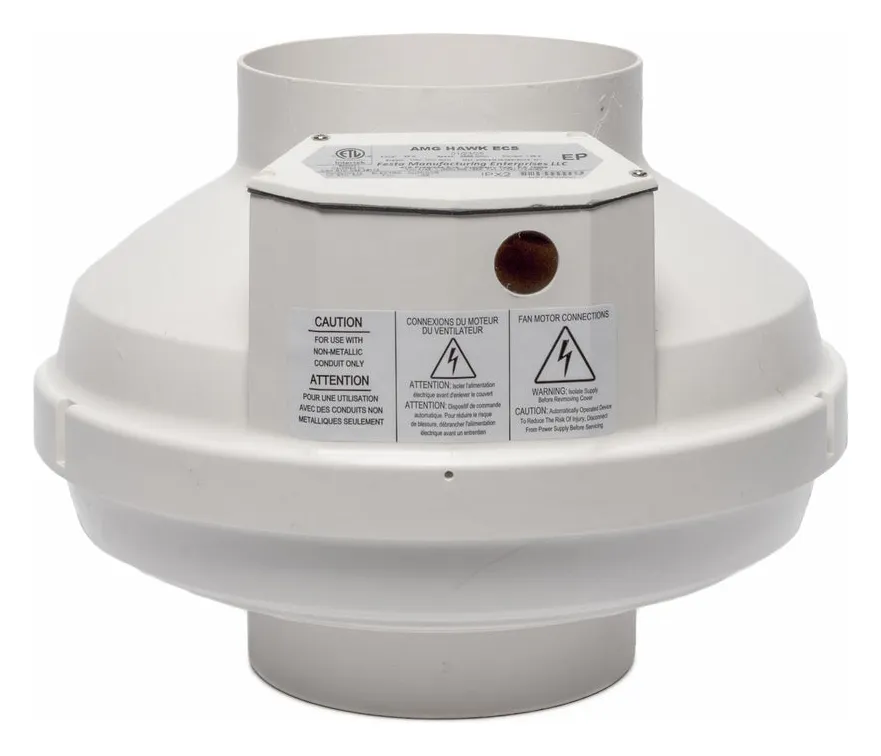
Festa
- What it does
- Not stated
- Power
- Not stated
- C-NRPP 2024/25
- Not applicable (mitigation fan)
The difference: Festa's other 6 inch speed-controlled fan for the same footprint: its page estimates 60 to 65 dB at maximum speed and publishes no maximum flow.
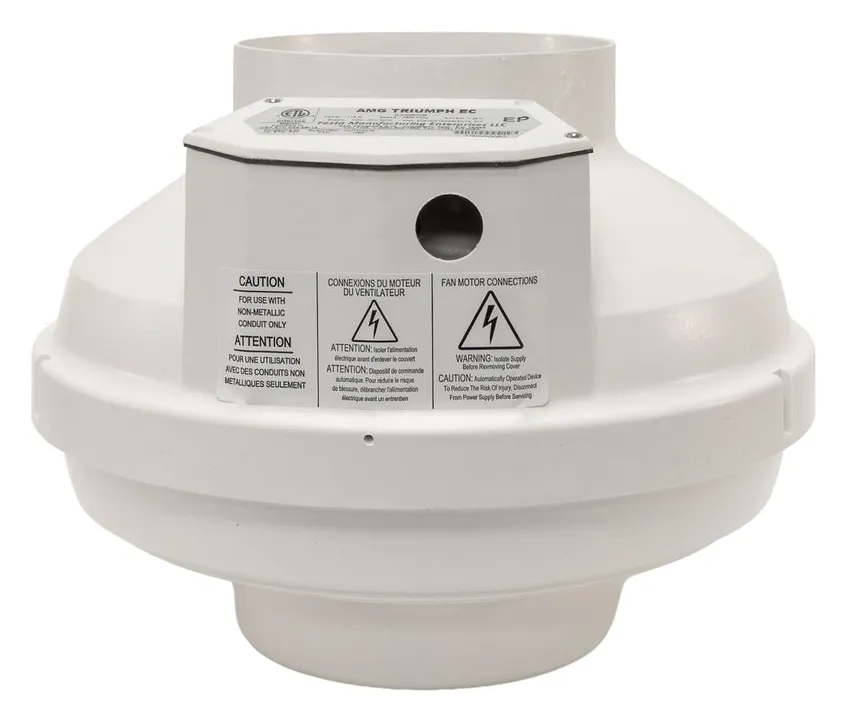
Festa
- What it does
- Moves up to 370 CFM
- Power
- Up to 110 W
- C-NRPP 2024/25
- Not applicable (mitigation fan)
The difference: The fixed-speed Triumph: Festa's page lists the same 370 CFM and 2.9 inch maximums, with 110 W and a 55 to 65 dB estimate.
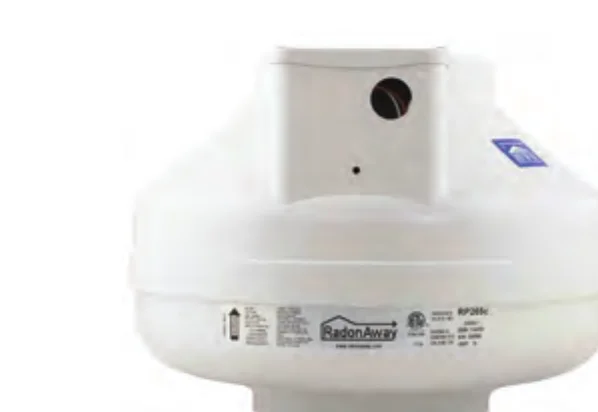
RadonAway
- What it does
- Moves up to 326 CFM
- Power
- Up to 122 W
- C-NRPP 2024/25
- Not applicable (mitigation fan)
The difference: RadonAway's 6 inch Contractor Series fan: its performance page lists 86 to 122 W, a 2.2 inch recommended maximum operating pressure and 326 CFM at 0 inch.
Compared with similar products: 1 of 4
More radon fan models6
All radon fan models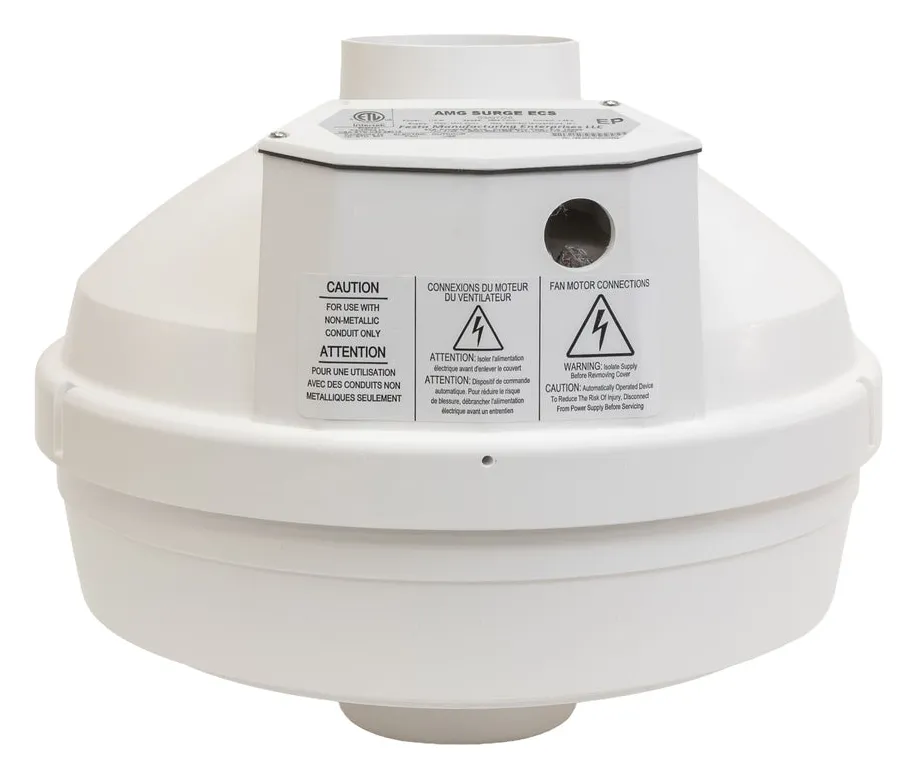
Radon fan
AMG Surge ECS speed-controlled high-suction EC radon fan
- 3 or 4 in. pipe
Max airflow: 185 CFM
Max pressure: 3.4 in w.c.
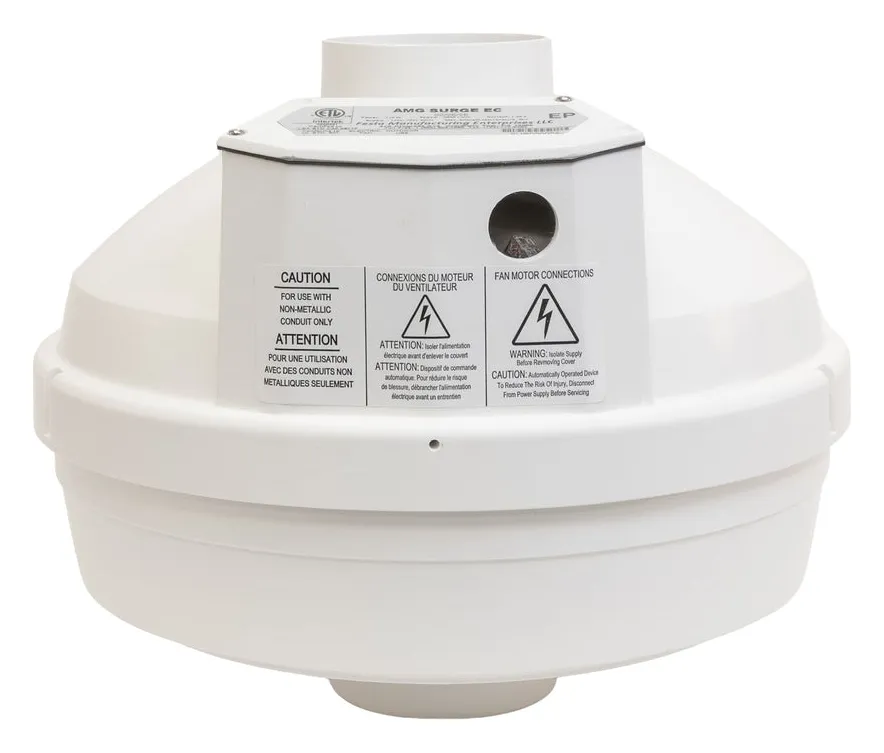
Radon fan
AMG Surge EC high-suction EC radon fan
- 3 or 4 in. pipe
- 110 W
Max airflow: 185 CFM
Max pressure: 3.4 in w.c.
- All radon fan models More radon fan models

More radon fan models: 1 of 6
Questions
Questions people ask
4 questions about the Festa AMG Triumph ECS, answered
Asked about the AMG Triumph ECS
What does the Triumph ECS add to the Triumph EC?
A built-in speed potentiometer. Festa lists the same maximum flow and pressure for both and describes the ECS as combining high-volume airflow with an onboard speed control.
Why turn a high-flow fan down?
Festa names noise reduction and seasonal fine-tuning. Its static pressure article adds that an oversized fan can increase noise and electricity use without improving suction coverage, so matching the speed to the slab avoids paying for air the system does not need.
Which noise figure is right, 50 to 55 dB or 55 to 65 dB?
Both are Festa's: the lower range is on the Triumph ECS page and the higher one on the Triumph EC page, and both say the figure varies with the system. Festa gives no measuring distance for either.
Who should set the dial?
The installer, as part of commissioning. The EPA recommends a qualified radon mitigation contractor and a post-mitigation test within 30 days of installation, no sooner than 24 hours after the fan starts.
What to do next
- See every radon fan we coverEach maker's published pressure, airflow and power, side by side.
- Find a mitigation professionalMost systems are designed and installed by one; some states require a license.
- Understand the fanWhat the fan does in a system, and when one needs replacing.
- Test after it runsA short-term test after installation shows whether the system works.
Updated November 27, 2026