MIDCVFRUN
MIDCVFRUN radon fan kit
Radon mitigation fan kit
- Radon fan
 (opens in a new tab)Check price on Amazon (opens in a new tab)
As an Amazon Associate, Radon411 earns from qualifying purchases.
Amazon and the Amazon logo are trademarks of Amazon.com, Inc. or its affiliates.
See ratings and reviews on Amazon (opens in a new tab)- MIDCVFRUN publishes no specification sheet, manual or website we could read; each field says so
- No maker performance table we could read; the EPA's installation rules instead
About this item
In our words; no MIDCVFRUN document we could read states its figures
The MIDCVFRUN radon fan kit is sold under a trademark the USPTO registered on November 11, 2025 to Shenzhen Dongcheng Environmental Technology Co., Ltd., a company in Guangming District, Shenzhen, China, for ventilating exhaust fans and other ventilation goods. MIDCVFRUN publishes no specification sheet, manual or website we could read, and its retail listing copy is not used as a source here, so the kit's model number, pipe size, performance table, power rating, safety listing and warranty are each not stated by the maker on this page.
What you get
MIDCVFRUN publishes no package contents for this kit in any document we could read, and its retail listing copy is not used as a source here, so what comes in the box is not stated by the maker on this page. Its registration covers fans and ventilation goods but describes no kit. Before installation, compare what arrives with the couplings and system gauge your installer expects; the EPA's 1994 standards called for removable couplings or flexible connections at the fan, and its consumer guide calls for a warning device on every active system.
In the box and running costsHow it works
What it does and how
The suction, the airflow and the housing, then who has checked it
How it works
In our words, from the public record and the EPA
The EPA calls radon the leading cause of lung cancer for non-smokers and the second leading cause of lung cancer for the general population, and it describes active subslab suction as the most common and usually the most reliable radon reduction method. In that system a radon vent fan connected to the suction pipes draws radon gas from below the home and releases it into the outdoor air, while creating a negative pressure, or vacuum, beneath the slab. The EPA adds that the fan should never be turned off: it must run continuously for the system to work correctly.
How much fan a house needs depends on what is under it. The EPA's guide to radon-resistant construction says the fan's size and air movement capacity should be enough to keep the pressure beneath the slab lower than the pressure above it. As a general figure for new homes, it says most contractors have found 90-watt in-line fans adequate for most home styles, locations and sizes, and that a fan moving 100 cubic feet of air per minute at one inch of water column should be sufficient for most applications. Those figures are why fan makers publish airflow at each static pressure: a mitigator matches the table to the suction a given house needs.
MIDCVFRUN is a registered US trademark, Reg. No. 8,022,051, owned by Shenzhen Dongcheng Environmental Technology Co., Ltd., a limited company organized in China, at an address on Matian Street in Guangming District, Shenzhen. The goods it covers include ventilating exhaust fans, bathroom exhaust fans, and air-conditioning, air cooling and ventilation apparatus, and the certificate gives first use in commerce on March 1, 2024. In the application, filed March 24, 2025, the owner described its specimen for ventilating exhaust fans as a screenshot of a radon fan at an online point of sale.
That record is all the maker publishes that we could read. MIDCVFRUN has no website, manual, data sheet or rating label we could find, and Radon411 does not use retail listing copy as a source, so the kit's model number, motor type, pipe size, maximum static pressure, airflow, power draw, supply voltage, speed control, outdoor rating and airflow at pressure are all not stated by the maker here. With no model name to go by, Radon411 calls this listing the MIDCVFRUN radon fan kit and covers a separate MIDCVFRUN listing, the MIDCVFRUN radon fan, on its own page. The EPA's 1994 Radon Mitigation Standards required a vent fan to be designed or otherwise sealed to reduce the potential for leakage of soil gas from the fan housing, and a fan mounted on the exterior of a building to be rated for outdoor use or installed in a water tight protective housing; no MIDCVFRUN document we could read states either for this kit.
What the manufacturer says
MIDCVFRUN's own statements, attributed
- MIDCVFRUN saysMIDCVFRUN's owner lists ventilating exhaust fans among the goods its registered US trademark covers.
- MIDCVFRUN saysIn its trademark application, MIDCVFRUN's owner describes the specimen for its ventilating exhaust fans as a screenshot of a radon fan at an online point of sale.
- MIDCVFRUN saysMIDCVFRUN's owner states a first use in commerce of March 1, 2024 for the goods its mark covers.
These are MIDCVFRUN's own statements, attributed to it. They are not our findings, and we have not tested this product ourselves.
Independent evidence
Who checks a device like this
C-NRPP's consumer evaluation covers electronic radon monitors, not mitigation fans, so it has no result for MIDCVFRUN radon fan kit. No document from its maker that we could read states a safety listing or performance certification, so none is shown here, and what shows whether any fan is working in your home is a radon test after it is installed.
Specifications
Specifications
No maker figures we could read; each field says so
The maker's figures
- Type
- Mitigation fan
- Motor
- Not stated by the manufacturer
- Pipe size
- Not stated by the manufacturer
- Max static pressure
- Not stated by the manufacturer
- Max airflow
- Not stated by the manufacturer
- Max power
- Not stated by the manufacturer
- Power supply
- Not stated by the manufacturer
- Speed control
- Not stated by the manufacturer
- Airflow at static pressure
- Not stated by the manufacturer
- Outdoor use
- Not stated by the manufacturer
- Warranty
- Not stated by the manufacturer
What is in the box
MIDCVFRUN publishes no package contents for this kit in any document we could read, and its retail listing copy is not used as a source here, so what comes in the box is not stated by the maker on this page. Its registration covers fans and ventilation goods but describes no kit. Before installation, compare what arrives with the couplings and system gauge your installer expects; the EPA's 1994 standards called for removable couplings or flexible connections at the fan, and its consumer guide calls for a warning device on every active system.
No warranty is stated in any MIDCVFRUN document we could read. The EPA notes that fans may last five years or more and that manufacturer warranties tend not to exceed five years, and it suggests asking your contractor for written operating and maintenance instructions and copies of any warranties when the system is installed.
What it costs to run
The running cost is electricity, around the clock. The EPA says systems that use fans are more effective in reducing radon levels but will slightly increase your electric bill, and that the fan must run continuously. No MIDCVFRUN document we could read states the kit's power draw, so your utility rate and the watts on the fan's own rating label set the yearly figure.
Plan for upkeep and, in time, a replacement. The EPA compares a radon reduction system to a furnace or chimney that needs occasional maintenance, says to look at the warning device on a regular basis, and notes that fans may last five years or more before they need to be repaired or replaced. It also suggests retesting your home at least every two years to be sure radon levels remain low.
Fit and setup
Who it fits, and installation
The fit, then how a system goes in
Who it fits
Good fit if, and look elsewhere if
Good fit if
- Your mitigator has picked this kit and has read its pipe size and its airflow, pressure and electrical ratings from the fan itself or from documents the seller supplied.
- You are replacing a MIDCVFRUN fan like for like and can match the old fan's rating label.
- Your mitigator will judge the fan by the system's own suction reading and a radon test after installation, not by a published table.
- You want the EPA's installation rules beside the kit: outside the living space, in a vertical pipe run, wired to local code, with a warning device and a label.
Look elsewhere if
- You need published airflow at pressure figures to size a fan before you buy; no MIDCVFRUN document we could read gives them for this kit.
- You or your state want a UL or ETL listed fan; no MIDCVFRUN document we could read states a safety listing for this kit.
- You want a written warranty from the maker before you buy; no MIDCVFRUN document we could read states one.
- You are designing a first system yourself; the EPA recommends a qualified radon mitigation contractor, and some states require one for fan installation.
Installation
4 steps
- The EPA recommends that a qualified radon mitigation contractor fix a home, because lowering high radon levels requires specific technical knowledge and special skills, and it warns that without them you could actually increase your radon level or create other potential hazards. Many states require radon professionals to be licensed, certified or registered. MIDCVFRUN publishes no installation instructions for this kit that we could read, so the EPA's rules are the guide.
- Where the fan goes matters as much as which fan it is. The EPA's construction guide says the fan and all positively pressurized portions of the vent pipe should be located outside habitable space, because placement in a non-conditioned space prevents the accidental pumping of radon directly into a home should a leak occur in the fan housing or at the vent-pipe joints. It says a fan cannot be inside the living space or in the crawlspace beneath the home, that fans need a 30-inch vertical run of pipe and an unswitched electrical junction box, and that the fan should go in a vertical run of the vent pipe. The EPA's consumer guide adds that the exhaust fan must not be located in or below a livable area, and that a fan installed outside must meet local building codes for exterior use.
- The EPA's consumer guide says electrical connections of all active radon reduction systems must be installed according to local electrical codes. Its 1994 standards went further: a radon vent fan on the exterior of a building had to be hard-wired into an electrical circuit, plugged fans could not be used outdoors, and any plugged cord supplying a fan could be no more than 6 feet long. Because no MIDCVFRUN document we could read states the kit's voltage, current or power, the rating label on the fan itself is where an electrician or mitigator reads them.
- The same standards said radon vent fans should be installed using removable couplings or flexible connections that can be tightly secured to both the fan and the vent pipe, and mounted in a way that minimizes transfer of vibration to the building's framing. Once the system runs, the EPA says a warning device must be installed to alert you if an active system stops working properly, such as a liquid gauge, a sound alarm, a light indicator or a dial gauge, placed where it can be seen or heard easily, and that radon reduction systems must be clearly labeled. A post-mitigation radon test should be done within 30 days of installation, but no sooner than 24 hours after the system is running with the fan on.
To find someone to design and install a system, see radon mitigation professionals, and for how a fan fits into one, how a radon fan works.
Compare
Compare with similar items
The same three rows for each, and the one difference that matters
This page
MIDCVFRUN radon fan kit
- What it does
- Not stated
- Power
- Not stated
- C-NRPP 2024/25
- Not applicable (mitigation fan)
This page: The MIDCVFRUN radon fan kit is sold under a trademark the USPTO registered on November 11, 2025 to Shenzhen Dongcheng Environmental Technology Co., Ltd., a company in Guangming District, Shenzhen, China, for ventilating exhaust fans and other ventilation goods.
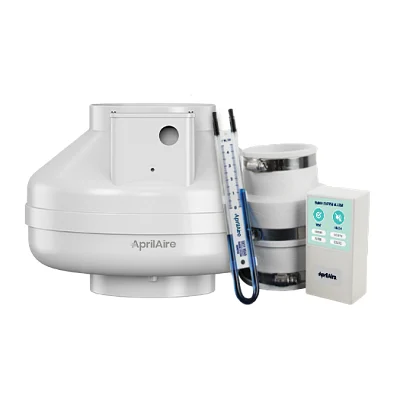
AprilAire
- What it does
- Moves up to 375 CFM
- Power
- Up to 139 W
- C-NRPP 2024/25
- Not applicable (mitigation fan)
The difference: A kit whose maker lists its contents and ratings: AprilAire says it includes a 6x4 coupling, a manometer and its ARNALM radon system alarm, rates the fan at 95 to 139 W and calls it ETL listed for indoor or outdoor use.
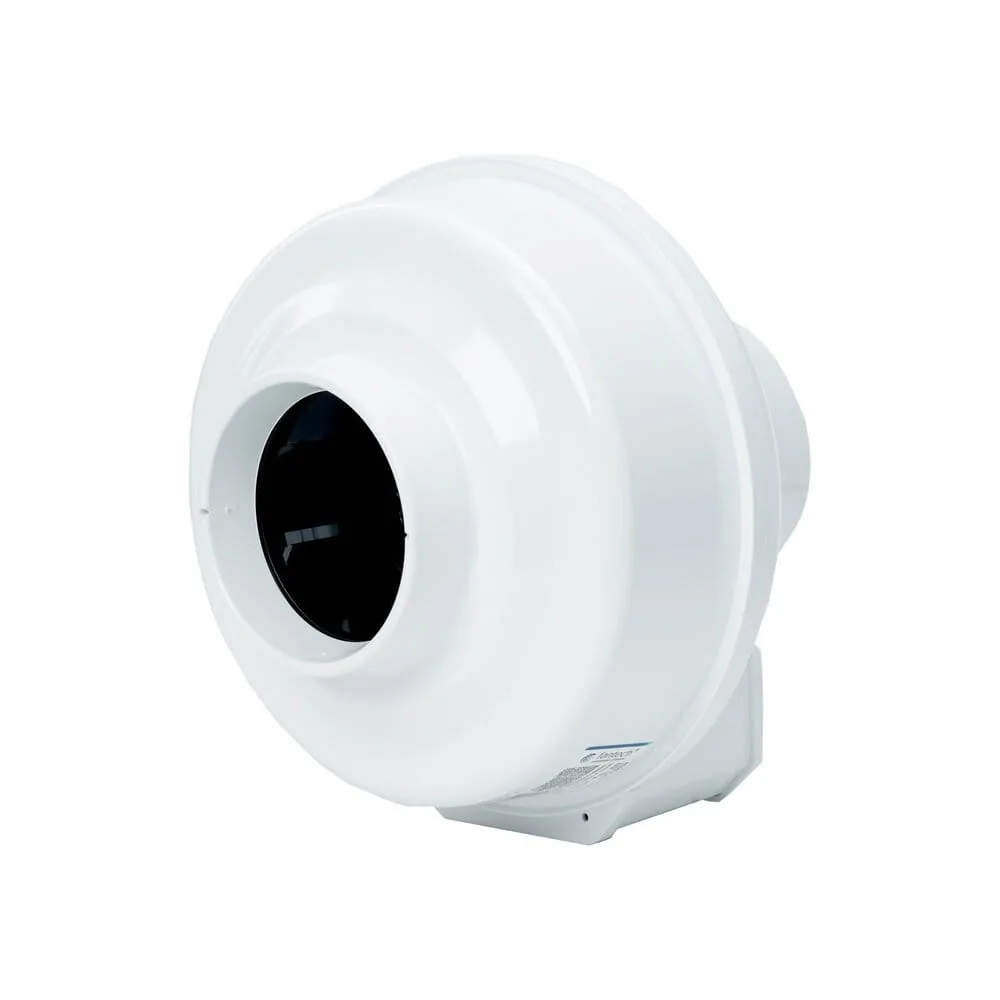
Fantech
- What it does
- Moves up to 174 CFM
- Power
- Up to 59 W
- C-NRPP 2024/25
- Not applicable (mitigation fan)
The difference: Fantech states its Rn fans are UL listed for safety and outdoor use and carry a 5-year factory warranty; no MIDCVFRUN document we could read states either for this kit.
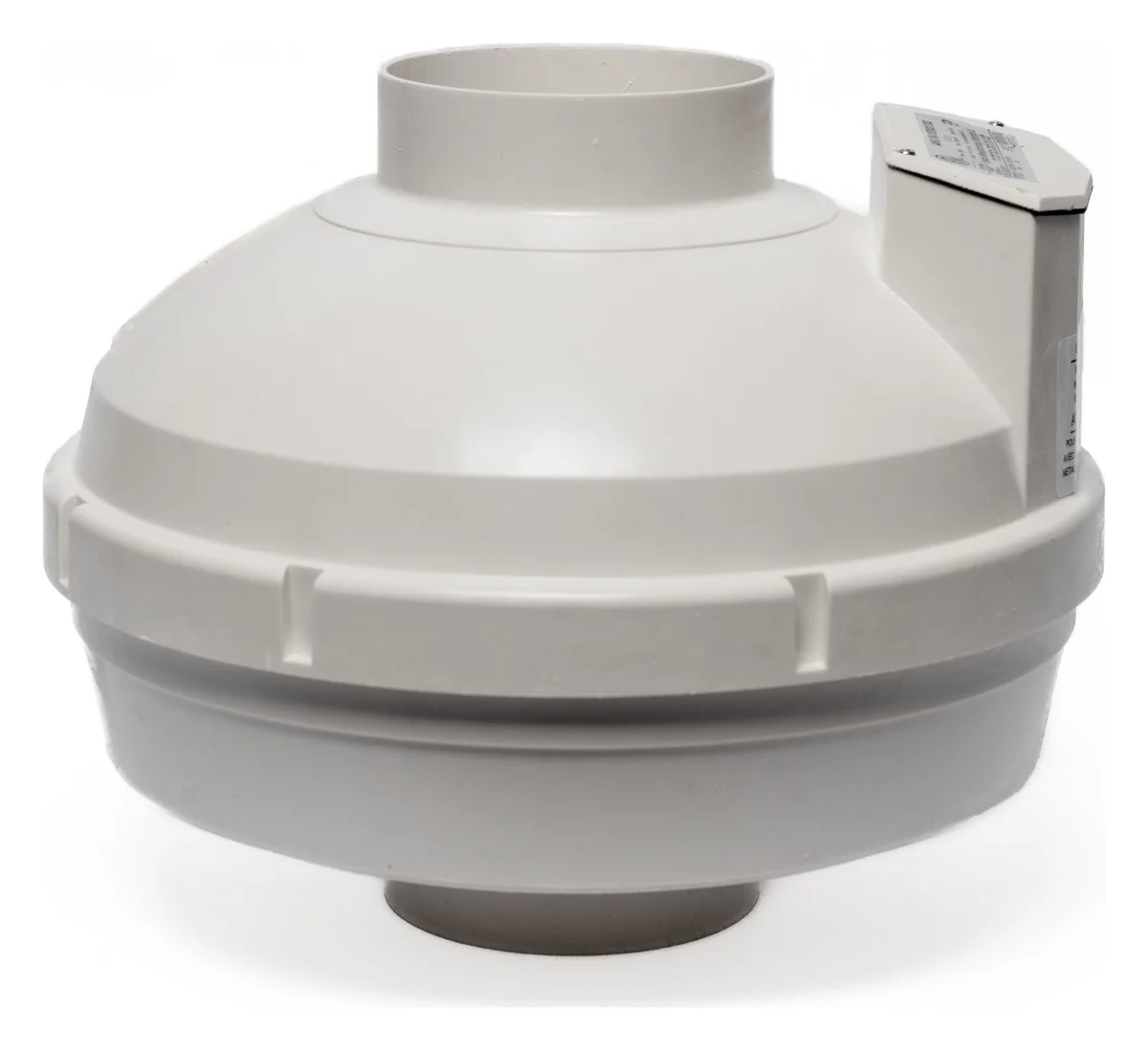
Festa
- What it does
- Moves up to 260 CFM
- Power
- Up to 66 W
- C-NRPP 2024/25
- Not applicable (mitigation fan)
The difference: A 4 inch fan Festa also sells as an installation kit, with a published table from 260 CFM at 0 inches to 0 at 2.21 inches of water column.
MIDCVFRUN
- What it does
- Not stated
- Power
- Not stated
- C-NRPP 2024/25
- Not applicable (mitigation fan)
The difference: A separate MIDCVFRUN listing on its own page, under the same registered trademark; no MIDCVFRUN document we could read gives its model name or figures either.
Compared with similar products: 1 of 5
More radon fan models10
All radon fan modelsRadon fan

Rn2 inline radon mitigation fan
- 3 or 4 in. schedule 40 PVC
- 59 W
Max airflow: 174 CFM
Max pressure: 2.0 in w.c.
Radon fan
AMG Maverick inline radon mitigation fan
- 4 in. Fernco coupler size
- 66 W
Max airflow: 260 CFM
Max pressure: 2.21 in w.c.
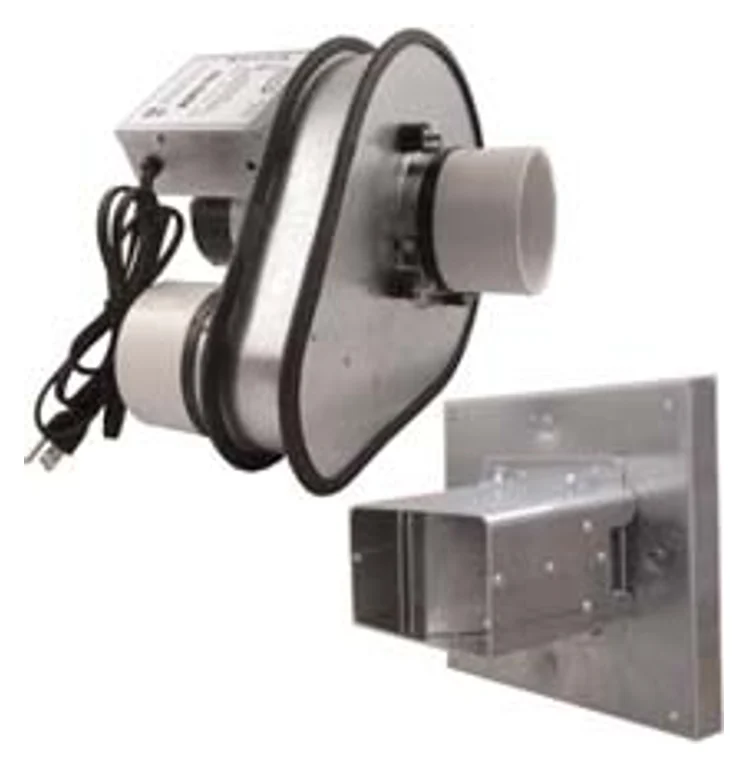
Radon fan

RMS160 side-wall radon mitigation system
- 3 in. schedule 40 PVC
- 50 W
Max airflow: 160 CFM
Max pressure: 2.3 in w.c.
- All radon fan modelsMore radon fan models

More radon fan models: 1 of 10
Questions
Questions people ask
6 questions about the MIDCVFRUN radon fan kit, answered
Asked about the radon fan kit
Who makes the MIDCVFRUN radon fan kit?
The MIDCVFRUN trademark is registered to Shenzhen Dongcheng Environmental Technology Co., Ltd., a limited company in Guangming District, Shenzhen, China, under US Reg. No. 8,022,051 of November 11, 2025. Its application describes the specimen for its ventilating exhaust fans as a screenshot of a radon fan at an online point of sale. We found no MIDCVFRUN website or other document, so the record does not say whether the company builds the fan or has it built.
What pipe size is it, and how much air does it move?
Not stated by the maker. No MIDCVFRUN document we could read gives the kit's pipe size, maximum static pressure, airflow or table of airflow at pressure, and its retail listing copy is not used as a source here. For scale, the EPA's construction guide refers to a fan moving 100 cubic feet of air per minute at one inch of water column as sufficient for most applications in new homes, but a mitigator sizes a fan from what is under your slab, not from a general figure.
Is it UL or ETL listed, and can it be mounted outdoors?
Neither is stated by the maker in any document we could read. The EPA's consumer guide says a fan installed outside must meet local building codes for exterior use, and its 1994 standards required an exterior fan to be rated for outdoor use or installed in a water tight protective housing. Look for a listing mark and an outdoor rating on the fan's own label before it goes outside.
Can I install it myself?
The EPA recommends a qualified radon mitigation contractor and notes that many states require radon professionals to be licensed, certified or registered. Its construction guide adds that some states require in-line fans for radon reduction to be installed by a certified radon mitigation contractor, and the wiring must meet local electrical codes.
How will I know the fan is working?
By the warning device and by a test. The EPA says every active system needs a warning device that alerts you if it stops working properly, usually a manometer, which you should look at on a regular basis. It also calls for a post-mitigation test within 30 days of installation, and a retest at least every two years.
What warranty does it have?
Not stated by the maker in any document we could read. The EPA notes that fans may last five years or more and that manufacturer warranties tend not to exceed five years; ask the seller for the warranty in writing and keep it with the system's operating instructions.
What to do next
- See every radon fan we coverEach maker's published pressure, airflow and power, side by side.
- Find a mitigation professionalMost systems are designed and installed by one; some states require a license.
- Understand the fanWhat the fan does in a system, and when one needs replacing.
- Test after it runsA short-term test after installation shows whether the system works.
Updated October 9, 2026