
Radon fan
AMG Triumph EC 6 inch high-flow EC radon fan
- 6 in. Fernco
- 110 W
Max airflow: 370 CFM
Max pressure: 2.9 in w.c.
Festa
Speed-controlled high-suction EC radon fan
Best for you if
Skip it if
Photos: Festa
 (opens in a new tab)Check price on Amazon (opens in a new tab)
As an Amazon Associate, Radon411 earns from qualifying purchases.
Amazon and the Amazon logo are trademarks of Amazon.com, Inc. or its affiliates.
See ratings and reviews on Amazon (opens in a new tab)As Festa states it
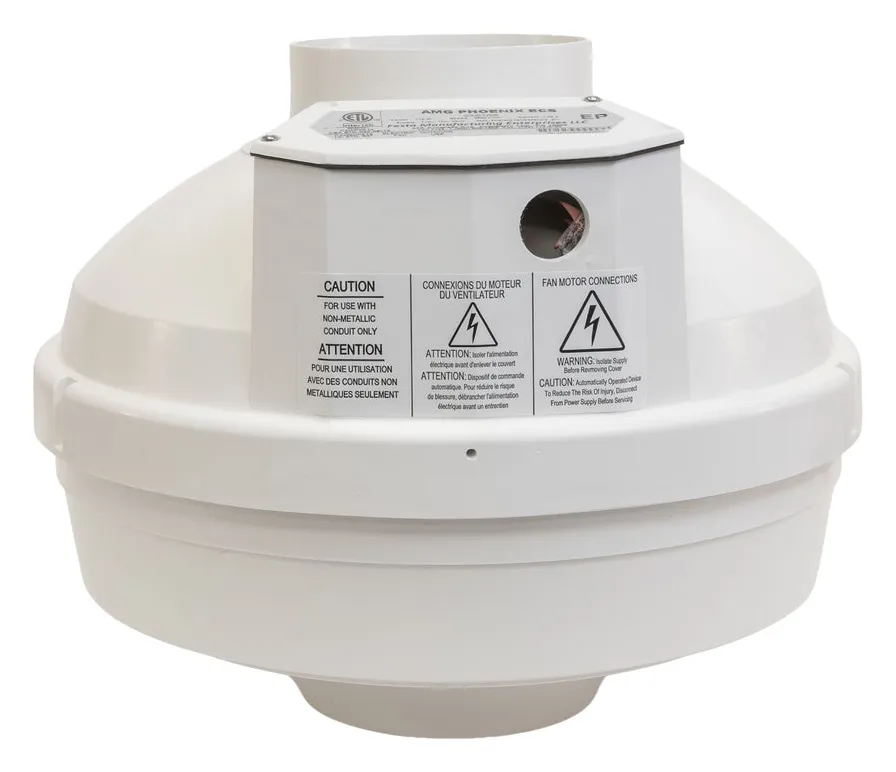
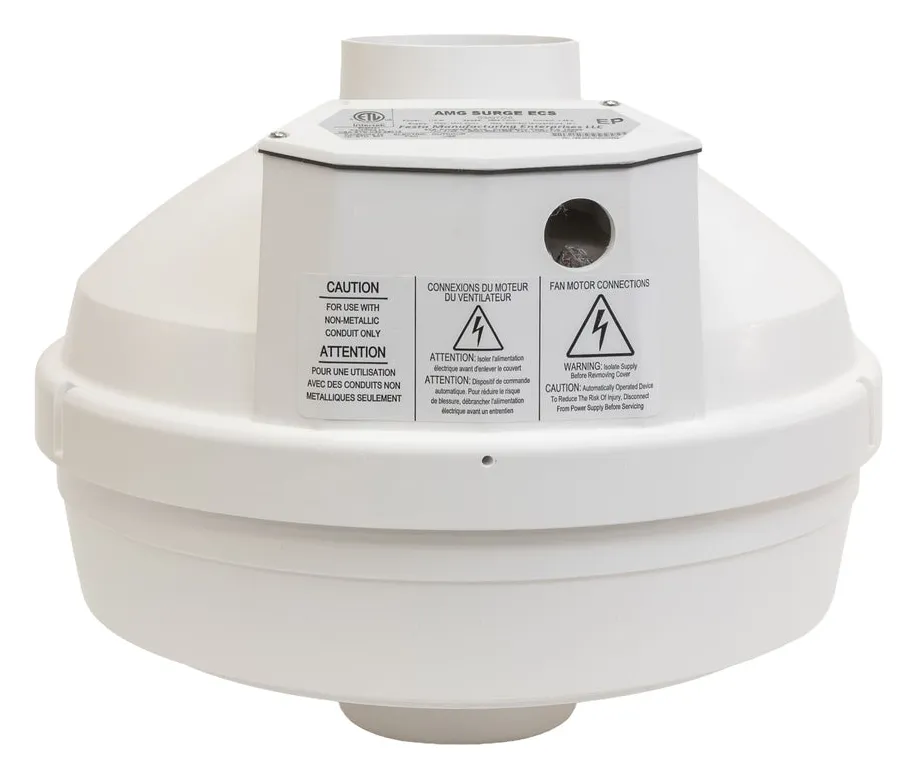
The AMG Surge ECS is Festa's high-suction Surge fan with a built-in speed potentiometer, for structures of 500 to 2,500 square feet on tightly packed sub-slabs such as soil and clay. Festa's page lists a 3.4 inch w.g. maximum pressure and 185 CFM maximum flow, estimates 50 to 60 dB, and states a 7 year warranty for all its AMG EC fans.
Festa's Surge ECS page lists the fan alone or with a 3 inch or 4 inch installation kit. A kit adds two white Fernco couplers that fit the fan to 3 inch or 4 inch PVC pipe, a green 5.5 inch radon system manometer, a line cord with connector and system labels.
In the box and running costsHow it works
The suction, the airflow and the housing, then who has checked it
In our words, from the maker's documents
Clay and packed soil let little air through, so a fan for that ground is built to pull hard rather than to move a lot of air. Festa's ECS page says the Surge ECS creates the high-static pressure needed to pull radon through compact materials, and its static pressure article explains why: dense soil resists air movement, so a contractor may need a fan that develops greater suction at lower airflow.
What the ECS adds is a dial. Festa states it offers the high-suction capabilities of the Surge EC with the added benefit of 100% speed controllability, through a built-in potentiometer that lets the installer dial in the exact vacuum pressure needed for the specific slab. Festa frames the uses as reducing noise and fine-tuning suction for seasonal changes, and calls the result a set it and forget it experience.
Festa's ECS page lists the same two maximums as the Surge EC page: 3.4 inches w.g. and 185 CFM. It prints no watts, amps or speed; the Surge EC page gives 110 W, 1.45 A and 3,602 RPM for the fixed-speed version, and nothing Festa publishes gives airflow at set pressures for either.
Seasons do move radon. Festa's own FAQ says levels are most concentrated in winter, when closed-up houses keep air circulating indoors, pressure differences pull soil gas into the home and frozen ground can trap it below. A fan that can be turned up for a hard winter, or down where noise matters, is the case Festa makes for the ECS.
Festa describes the Surge ECS's motorized impeller as Swiss-engineered and designed specifically for tightly packed sub-slabs, and calls the fan the compact powerhouse of the AMG lineup. It does not name the motor's maker or publish a service life.
Festa's own statements, attributed
These are Festa's own statements, attributed to it. They are not our findings, and we have not tested this product ourselves.
Who checks a device like this
C-NRPP's consumer evaluation covers electronic radon monitors, not mitigation fans, so it has no result for Festa AMG Surge ECS. The safety listing and performance certification the maker states are under “What the manufacturer says”, and what shows whether any fan is working in your home is a radon test after it is installed.
Festa AMG Surge ECS
Check price on Amazon (opens in a new tab)Specifications
Every figure as the maker states it
Festa's Surge ECS page lists the fan alone or with a 3 inch or 4 inch installation kit. A kit adds two white Fernco couplers that fit the fan to 3 inch or 4 inch PVC pipe, a green 5.5 inch radon system manometer, a line cord with connector and system labels.
Festa's warranty document sets seven years of full replacement for EC radon fans from the date of original purchase, for direct customers; fans bought through an installer fall under the installer's warranty, and Festa runs an evaluation program for indirect customers who ship a unit back. Festa asks that warranty replacements not be bought from indirect online retailers.
Choosing the right fan is the customer's responsibility on Festa's page, and unused returns carry a 15% restocking fee.
Electricity is the only running cost, and the dial changes it. Festa lists 110 W for the fixed-speed Surge EC, about 964 kWh a year at full rating (110 x 8,760 / 1,000); a lower setting draws less, though Festa publishes no figures for reduced speeds. Multiply by your rate per kWh.
The EPA's guide says fans may last five years or more and that the fan should never be turned off. Keep an eye on the warning device and retest at least every two years.
Fit and setup
The fit, then how a system goes in
Good fit if, and look elsewhere if
Good fit if
Look elsewhere if
4 steps
To find someone to design and install a system, see radon mitigation professionals, and for how a fan fits into one, how a radon fan works.
Compare
The same three rows for each, and the one difference that matters
This page
Festa AMG Surge ECS
This page: The AMG Surge ECS is Festa's high-suction Surge fan with a built-in speed potentiometer, for structures of 500 to 2,500 square feet on tightly packed sub-slabs such as soil and clay.
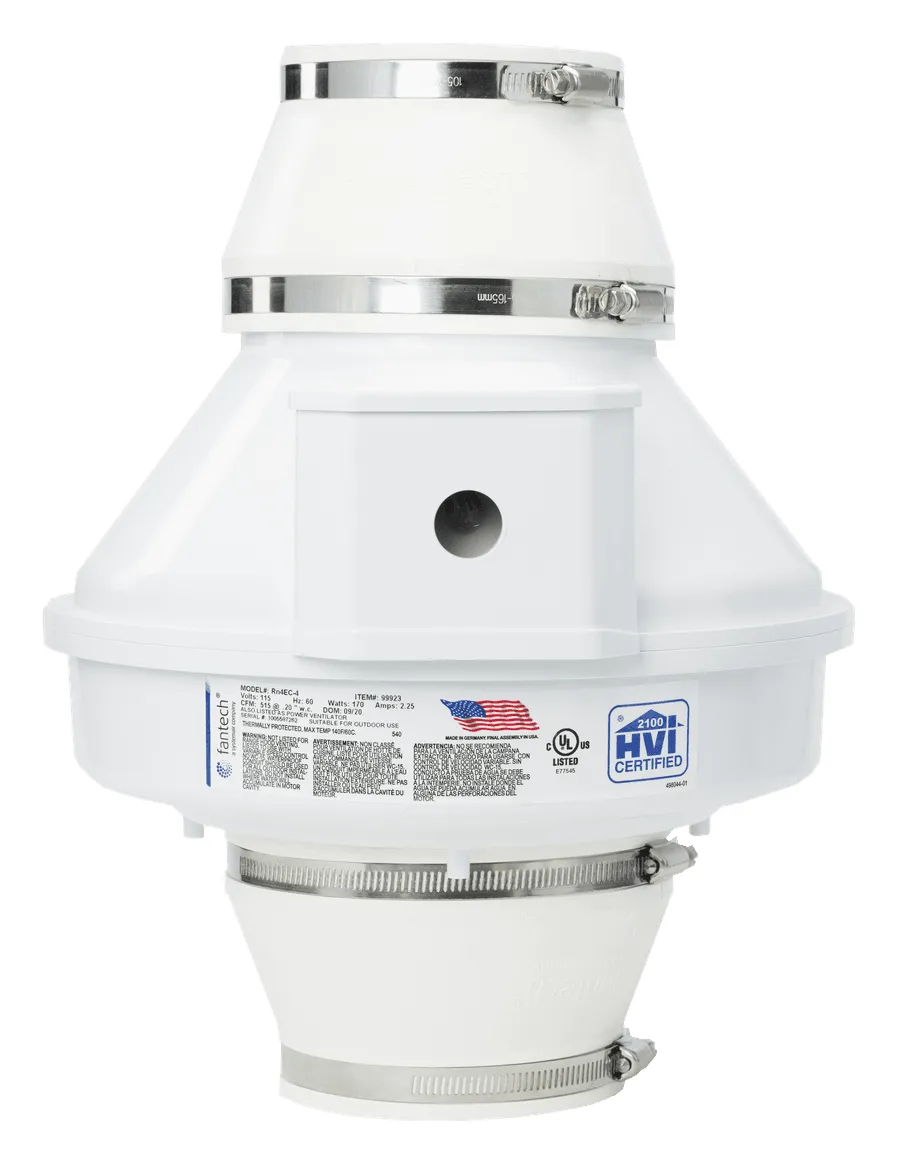
Fantech
The difference: Fantech's high-suction EC fan with a built-in dial: its 2025 brochure lists the Rn 4EC-4 at a 4.75 inch maximum static pressure, 174 W and 330 CFM.
The difference: Festa's speed-controlled fan for porous ground: its page lists a 3.15 inch maximum and 210 CFM for 500 to 2,200 square feet.
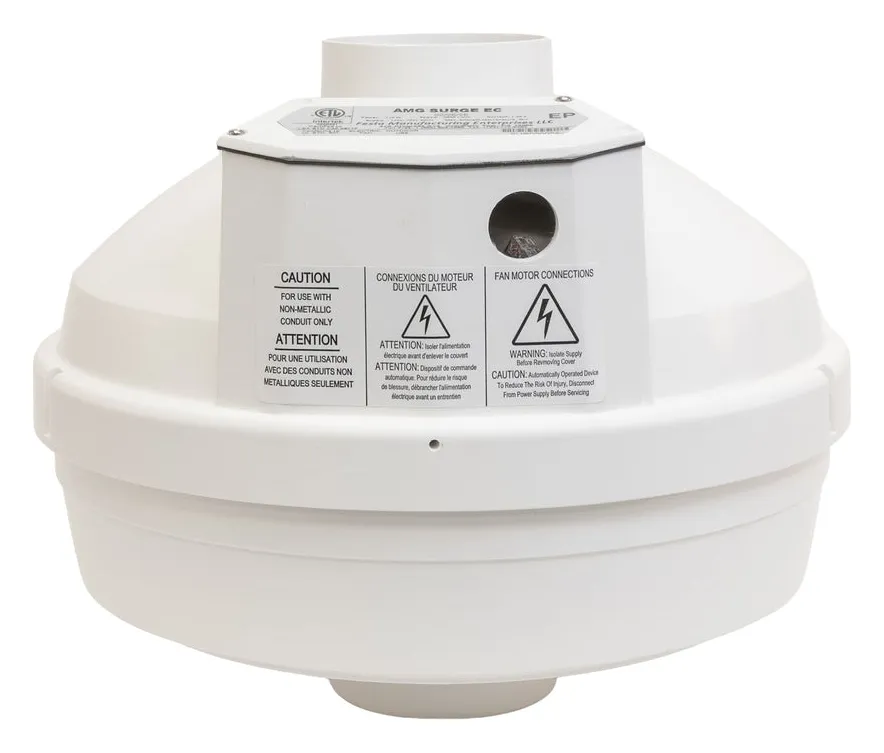
Festa
The difference: The fixed-speed Surge: Festa's page lists the same 3.4 inch and 185 CFM maximums, with 110 W.
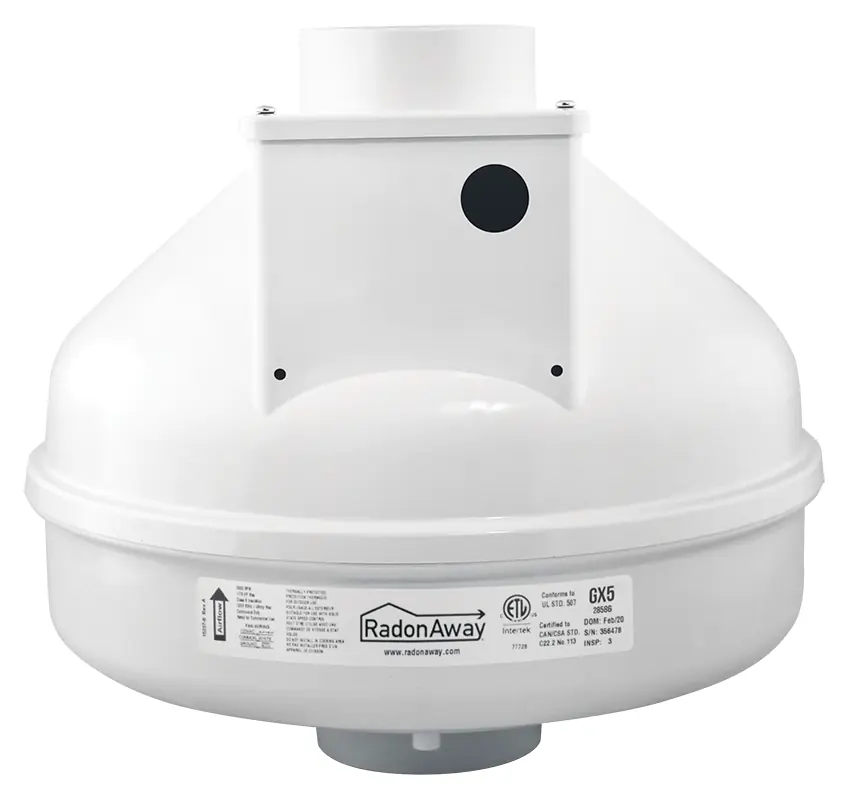
RadonAway
The difference: RadonAway's high-suction 3 inch fan: its GX Pro Series instructions list the GX5 at 75 to 180 W and a 5.2 inch recommended maximum operating pressure.
Compared with similar products: 1 of 5
Radon fan
Max airflow: 370 CFM
Max pressure: 2.9 in w.c.
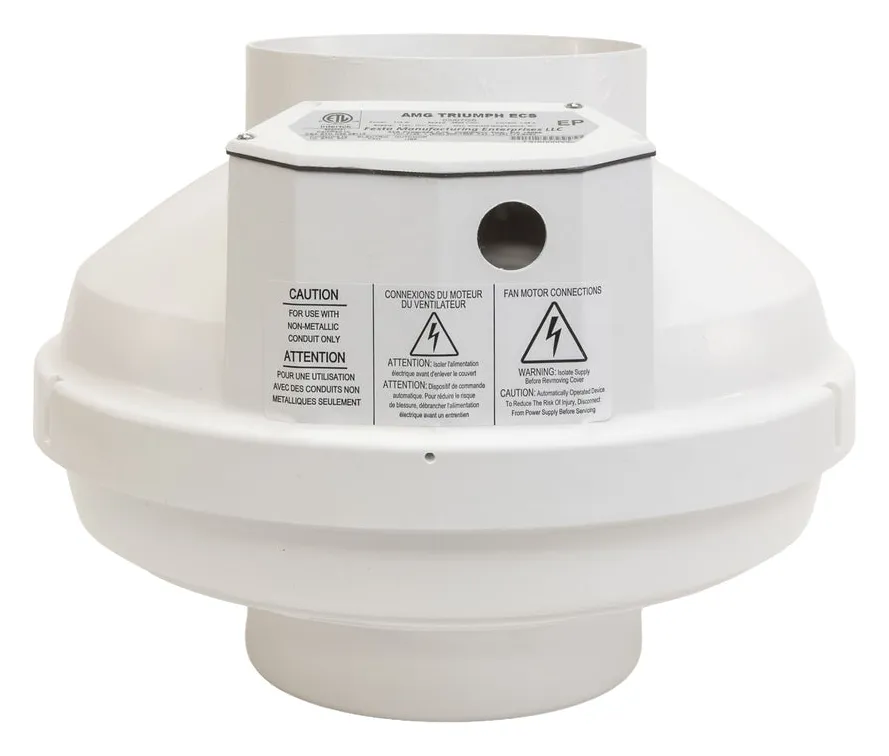
Radon fan
Max airflow: 370 CFM
Max pressure: 2.9 in w.c.
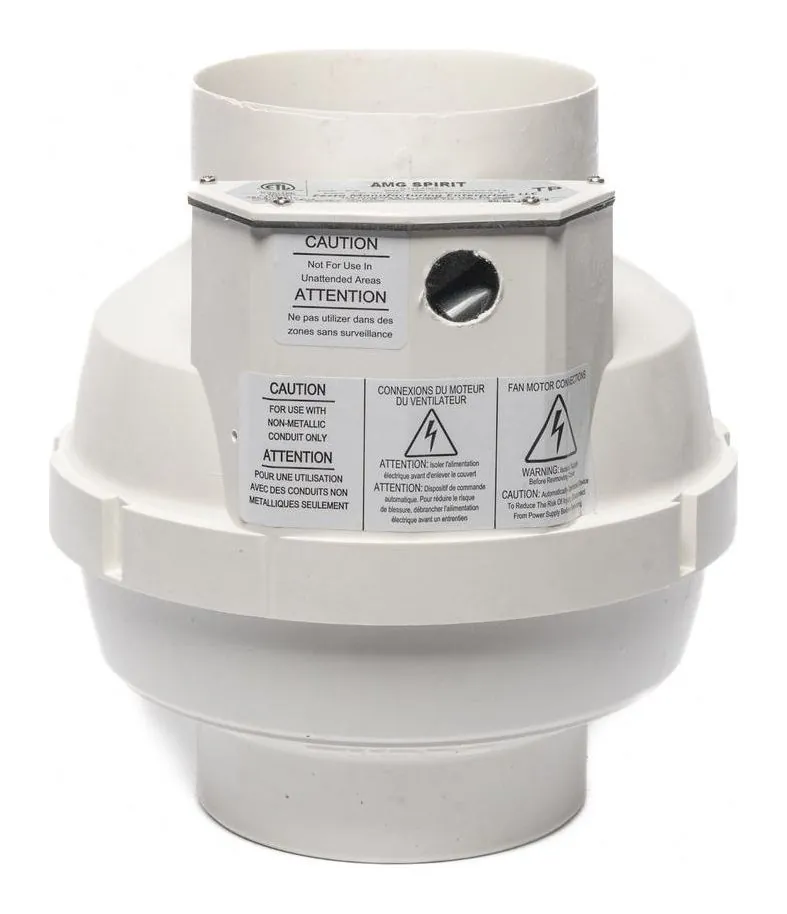
Radon fan
Max airflow: 121 CFM
Max pressure: 0.9 in w.c.
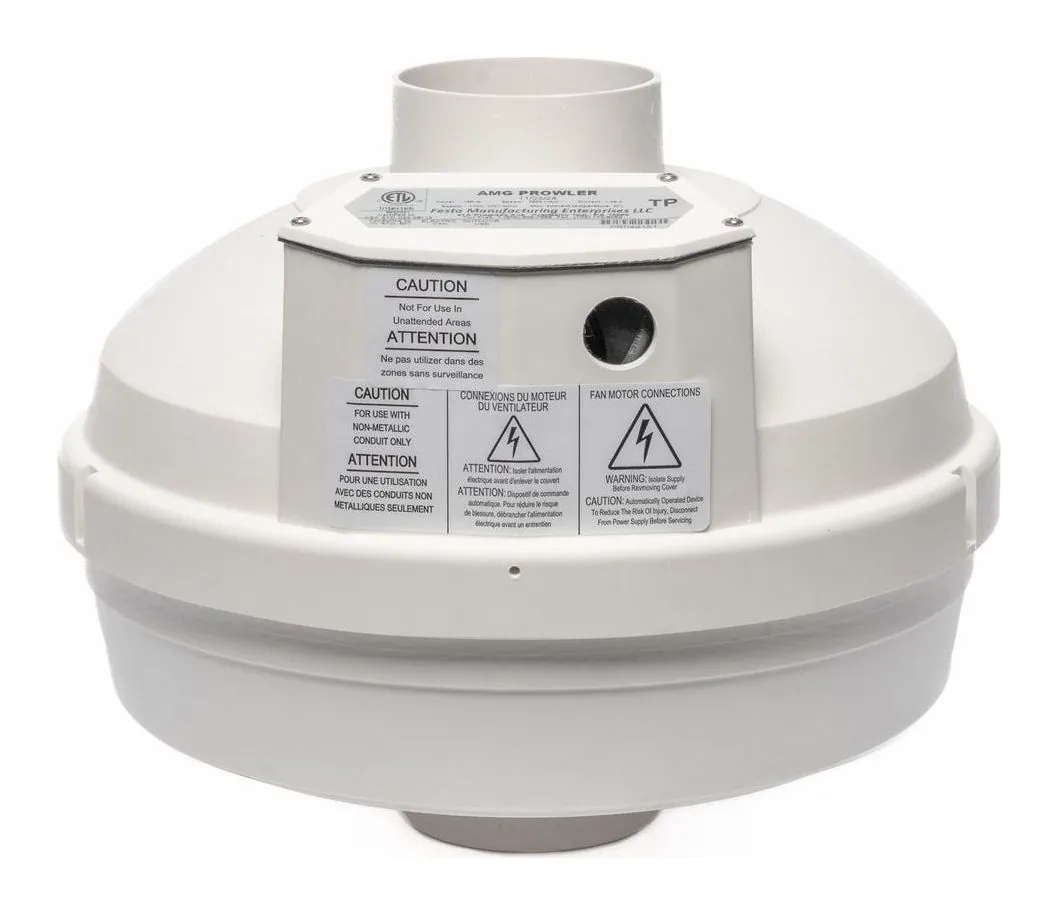
Radon fan
Max airflow: 221 CFM
Max pressure: 2.7 in w.c.
More radon fan models: 1 of 6
Questions
4 questions about the Festa AMG Surge ECS, answered
The fan's speed, and with it the vacuum in the pipe. Festa says the built-in potentiometer allows 100% controllability so the installer can dial in the exact vacuum pressure a slab needs.
Festa suggests seasonal fine-tuning as one use of the dial, and its FAQ says radon is most concentrated in homes in winter. Whether your system needs it is a question for your installer and a radon test, not a fixed rule.
Festa estimates 50 to 60 dB for both at the figures it publishes. The ECS can be turned down, and Festa names noise reduction as a reason to do so.
Festa's ECS page does not say. The fixed-speed Surge EC is listed at 110 W, and Festa describes the ECS as the Surge EC with speed control added; check the rating label for the ECS's own figure.
Updated November 27, 2026