 RadonAway
 RP265c
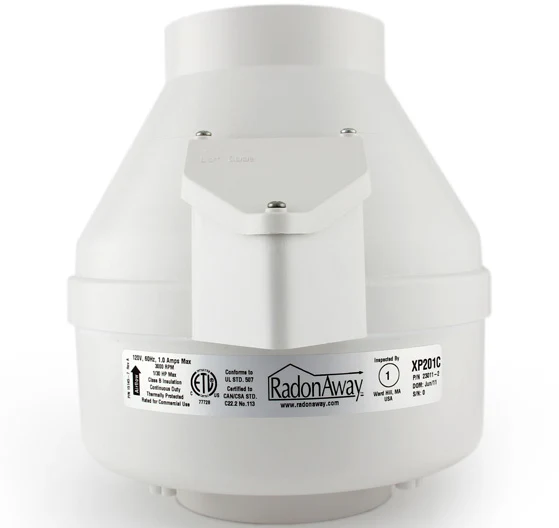
6 inch inline radon mitigation fan
- Radon fan
- 6 in. fan duct diameter
- 122 W
Best for, and skip if
Best for you if
- You or your mitigator are replacing an RP265c, or an RP265 sold under part number 23033-1, with the same fan.
- The slab is large or the material under it is open, so the system needs more airflow than a 4 inch fan gives.
Skip it if
- Your slab needs more suction than 2.2 inches of water column; RadonAway lists its GP501c to 3.8 inches.
- Your system needs little airflow and you want a lower power draw; RadonAway lists the RP145c at 46 to 72 W and the RP140c at 17 to 21 W.
Photos: RadonAway
 (opens in a new tab)Check price on Amazon (opens in a new tab)

As an Amazon Associate, Radon411 earns from qualifying purchases.
Amazon and the Amazon logo are trademarks of Amazon.com, Inc. or its affiliates.
See ratings and reviews on Amazon (opens in a new tab)- Pipe size6 in. fan duct diameter (performance table); 6.0 in. outside-diameter inlet and outlet (IN096); joined to the system pipe with flexible couplings
- Power draw122 W
- Every figure checked against the specifications RadonAway publishes
- The maker's own performance table, point by point, unranked
About this item
As RadonAway states it
- Pipe size: 6 in. fan duct diameter (performance table); 6.0 in. outside-diameter inlet and outlet (IN096); joined to the system pipe with flexible couplings
- Max airflow: 326 CFM
- Max power: 122 W
- Power supply: Standard 120 V, 60 Hz AC; 86 to 122 W
- Airflow at static pressure: 326 CFM at 0.00 in w.c.; 290 at 0.20; 241 at 0.50; 174 at 1.00; 118 at 1.50; 60 at 2.00
- Outdoor use: Rated for outdoor installation
- Warranty: 12 months from purchase or 18 months from manufacture, whichever is sooner; extended to 60 months from purchase or 66 months from manufacture when installed by a professional radon mitigation contractor (IN096; RadonAway's 2023/2024 catalog states 5 years with a radon professional, 1 year otherwise)
The RP265c is the larger of the two 6 inch fans in RadonAway's Contractor Series, also called the C Series, under part number 23033-1. RadonAway lists it at 86 to 122 W, with a recommended maximum operating pressure of 2.2 inches of water column and 326 CFM against no resistance, and writes that it is best suited for large slab, high airflow applications.
What you get
RadonAway does not publish a package list for the RP265c, so the full box contents are not stated by the maker. Its instructions refer to the wire nuts provided for the electrical connection and treat the mounting bracket and a vent muffler as optional extras. Its 2023/2024 catalog gives the RP265c's dimensions as a 6.0 inch duct diameter, 11.75 inches deep and 8.6 inches high. The instructions say there are no user serviceable parts inside and ask that the fan be checked for shipping damage within 15 days of receipt.
In the box and running costsHow it works
What it does and how
The suction, the airflow and the housing, then who has checked it
How it works
In our words, from the maker's documents
A radon fan is the part of an active soil depressurization system that runs all the time. The EPA's guide describes the vent fan drawing radon gas from below the home through the suction pipes and releasing it to the outdoor air, while creating a negative pressure or vacuum under the slab. The fan has to keep running for the system to work.
Two numbers describe what a fan can do. Static pressure, in inches of water column, is how hard it pulls against the resistance of the soil and the pipe; airflow, in cubic feet per minute, is how much air it moves. Airflow falls as pressure rises, so RadonAway publishes typical airflow at a row of pressures rather than one figure, and a mitigator matches that row to the suction a house needs.
RadonAway's Contractor Series performance page gives the RP265c's typical airflow as 326 CFM at 0 inches, 290 at 0.2, 241 at 0.5, 174 at 1.0, 118 at 1.5 and 60 at 2.0 inches of water column, at 86 to 122 W, and marks the 0.2, 0.5 and 1.0 inch figures as HVI certified values. Its IN096 instructions fill in the steps between: 207 CFM at 0.75 inches, 143 at 1.25 and 89 at 1.75. The 2.2 inch figure is what RadonAway calls the maximum recommended operating pressure at sea level.
The same table places the RP265c among RadonAway's other C Series fans. The RP260c, part number 23032-1, is the other 6 inch model, at 47 to 65 W with a recommended maximum of 1.3 inches and 251 CFM at 0 inches. The RP140c and RP145c are 4 inch fans, and the GP301c and GP501c are 3 inch fans for higher suction. RadonAway's instructions say the RP140c and RP145c are best suited for general purpose use, the RP260c where additional airflow is required, and the RP265c for large slab, high airflow applications.
RadonAway's IN096 instructions say its RPc fans are factory sealed, with no caulk needed to inhibit air leakage, and designed to perform year-round in all but the harshest climates. They give the RP265c's size as 8.6 inches high by 11.75 inches in diameter, 6.5 pounds, with a 6.0 inch outside-diameter inlet and outlet, running on 120 V, 60 Hz AC, continuous duty and thermally protected. Its 2023/2024 catalog says the Contractor Series fans have sealed seams, run ultra-quiet and are ETL Listed and HVI certified.
An RP265 sold under the same part number goes back years. RadonAway's 2015 RP Series instructions (IN020 Rev R) list the RP265 under part number 23033-1 at 91 to 129 W, with the same 2.2 inch maximum recommended operating pressure, so a fan labelled RP265 under part number 23033-1 carries the number RadonAway's current table gives the RP265c. The RP265 Pro Series fan in the 2023/2024 catalog is a different fan, under part number 28463.
What the manufacturer says
RadonAway's own statements, attributed
- RadonAway saysRadonAway lists the RP265c, P/N 23033-1, at a 6 inch fan duct diameter, 86 to 122 W, a 2.2 in. WC recommended maximum operating pressure and 326 CFM at 0 in. WC.
- RadonAway saysRadonAway states the RP265c is best suited for large slab, high airflow applications.
- RadonAway saysRadonAway states the RPc, GPc, XPc and XR Series radon fans can be mounted indoors or outdoors and are not suitable for underground burial.
- RadonAway saysRadonAway states its Contractor Series fans are ETL Listed and HVI certified and rated for commercial and residential use.
- RadonAway saysRadonAway's catalog states its Contractor Series fans are made in the USA with U.S. and imported parts.
- RadonAway saysRadonAway states it extends the fan's warranty to five years when the fan is installed by a professional radon mitigation contractor.
These are RadonAway's own statements, attributed to it. They are not our findings, and we have not tested this product ourselves.
Independent evidence
Who checks a device like this
C-NRPP's consumer evaluation covers electronic radon monitors, not mitigation fans, so it has no result for RadonAway RP265c. The safety listing and performance certification the maker states are under “What the manufacturer says”, and what shows whether any fan is working in your home is a radon test after it is installed.
RadonAway RP265c
Check price on Amazon (opens in a new tab)Specifications
Specifications
Every figure as the maker states it
The maker's figures
- Type
- Mitigation fan, inline
- Motor
- Not stated by the manufacturer
- Pipe size
- 6 in. fan duct diameter (performance table); 6.0 in. outside-diameter inlet and outlet (IN096); joined to the system pipe with flexible couplings
- Max static pressure
- Not stated by the manufacturer
- Max airflow
- 326 CFM
- Max power
- 122 W
- Power supply
- Standard 120 V, 60 Hz AC; 86 to 122 W
- Speed control
- Not stated by the manufacturer
- Airflow at static pressure
- 326 CFM at 0.00 in w.c.; 290 at 0.20; 241 at 0.50; 174 at 1.00; 118 at 1.50; 60 at 2.00
- Outdoor use
- Rated for outdoor installation
- Warranty
- 12 months from purchase or 18 months from manufacture, whichever is sooner; extended to 60 months from purchase or 66 months from manufacture when installed by a professional radon mitigation contractor (IN096; RadonAway's 2023/2024 catalog states 5 years with a radon professional, 1 year otherwise)
What is in the box
RadonAway does not publish a package list for the RP265c, so the full box contents are not stated by the maker. Its instructions refer to the wire nuts provided for the electrical connection and treat the mounting bracket and a vent muffler as optional extras. Its 2023/2024 catalog gives the RP265c's dimensions as a 6.0 inch duct diameter, 11.75 inches deep and 8.6 inches high. The instructions say there are no user serviceable parts inside and ask that the fan be checked for shipping damage within 15 days of receipt.
RadonAway's IN096 instructions give 12 months from purchase or 18 months from manufacture, whichever is sooner, extended to 60 months from purchase or 66 months from manufacture when a professional radon mitigation contractor installs the fan, with no extension outside the continental United States and Canada. Its 2023/2024 catalog gives a 5-year warranty when a radon professional installs the fan and a 1-year limited warranty for non-radon professionals. For a claim, RadonAway asks for a Return Material Authorization number, and the fan goes back to its factory at the owner's cost.
What it costs to run
The running cost is electricity: the fan runs around the clock, and RadonAway lists the RP265c at 86 to 122 W. At 122 W, a year of continuous running is about 1,069 kWh, and your utility rate sets what that costs. RadonAway's C Series documents list no filter or other part to replace.
Plan on the fan wearing out eventually. The EPA's guide says fans may last five years or more and that manufacturer warranties tend not to exceed five years. RadonAway's own five-year term applies only with professional installation. RadonAway's annual checklist asks you to confirm the connections are tight, the fan and ducting are secure and vibration free, the manometer reads within the normal range, and radon levels are tested to EPA protocol.
Airflow at each pressure
RadonAway's performance table, point by point
| Static pressure | Airflow |
|---|---|
| 0.00 in w.c. | 326 CFM |
| 0.20 in w.c. | 290 CFM |
| 0.50 in w.c. | 241 CFM |
| 1.00 in w.c. | 174 CFM |
| 1.50 in w.c. | 118 CFM |
| 2.00 in w.c. | 60 CFM |
Airflow falls as the suction the system needs rises. A mitigator matches the fan to pressure measured under the slab.
Fit and setup
Who it fits, and installation
The fit, then how a system goes in
Who it fits
Good fit if, and look elsewhere if
Good fit if
- You or your mitigator are replacing an RP265c, or an RP265 sold under part number 23033-1, with the same fan.
- The slab is large or the material under it is open, so the system needs more airflow than a 4 inch fan gives.
- Your system's measured suction sits within RadonAway's recommended 2.2 inches of water column for this fan.
- The piping takes the 6.0 inch outside-diameter inlet and outlet RadonAway gives for the RP265c, with couplings to suit.
Look elsewhere if
- Your slab needs more suction than 2.2 inches of water column; RadonAway lists its GP501c to 3.8 inches.
- Your system needs little airflow and you want a lower power draw; RadonAway lists the RP145c at 46 to 72 W and the RP140c at 17 to 21 W.
- You want a fan with a built-in speed control; RadonAway's catalog describes one on its EC6 Pro Series fan and none on the RP265c.
- You are designing a first system yourself; the EPA recommends a qualified mitigation contractor, and RadonAway's five-year term needs professional installation.
Installation
5 steps
- The EPA recommends that a qualified radon mitigation contractor fix a home, and notes that many states require radon professionals to be licensed, certified or registered. RadonAway's IN096 instructions say its RPc fans are intended for use by trained, professional, certified or licensed radon mitigators, and its retail page says non-professional installation is not intended to take the place of installation by a qualified radon professional.
- RadonAway's instructions say to mount the fan vertically with the outlet up, plumb and level, so condensation drains through the fan, and to keep it from touching any building surface to avoid vibration noise. The system has to let water drain back to a slab hole. Flexible couplings complete the piping run as a disconnect for servicing and for vibration isolation, an optional RadonAway mounting bracket (P/N 25007) can secure the fan, and the fan is not suitable for underground burial.
- The fan runs on standard 120 V, 60 Hz AC. RadonAway's instructions say all wiring must be done by a qualified and licensed electrician to the National Electrical Code, that outdoor installations need a UL Listed watertight conduit, and that exterior electrical boxes should be outdoor rated and sealed, with a weep hole recommended to drain the box. The fan is not meant for rigid metal conduit, and RadonAway warns not to leave it on the piping without power for more than 48 hours.
- Where the fan goes matters as much as which one. The EPA's construction guide says the fan and every positively pressurized part of the vent pipe belong outside habitable space, so a leak at the housing or a joint cannot push radon into the home, and that the fan should go in a vertical run of the vent pipe.
- A monitor is part of the system. RadonAway's IN096 instructions require a system monitor, such as its manometer (P/N 50017) or an audible alarm, and a system label, and say to keep the vacuum under the maximum recommended operating pressure, reduced by about 4% per 1,000 feet of altitude. The EPA's guide says a post-mitigation radon test should be done within 30 days of installation, but no sooner than 24 hours after the system is running with the fan on, and suggests retesting at least every two years.
To find someone to design and install a system, see radon mitigation professionals, and for how a fan fits into one, how a radon fan works.
Compare
Compare with similar items
The same three rows for each, and the one difference that matters
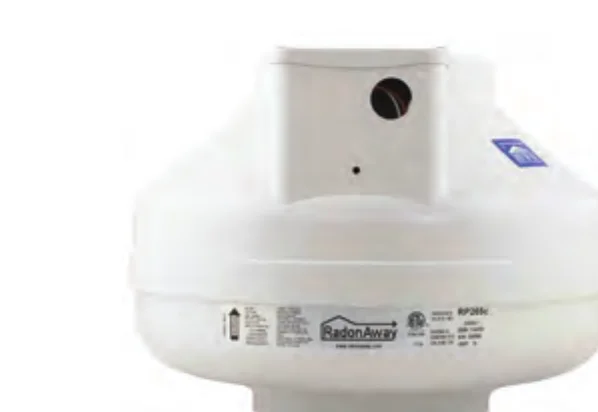
This page
RadonAway RP265c
- What it does
- Moves up to 326 CFM
- Power
- Up to 122 W
- C-NRPP 2024/25
- Not applicable (mitigation fan)
This page: The RP265c is the larger of the two 6 inch fans in RadonAway's Contractor Series, also called the C Series, under part number 23033-1.
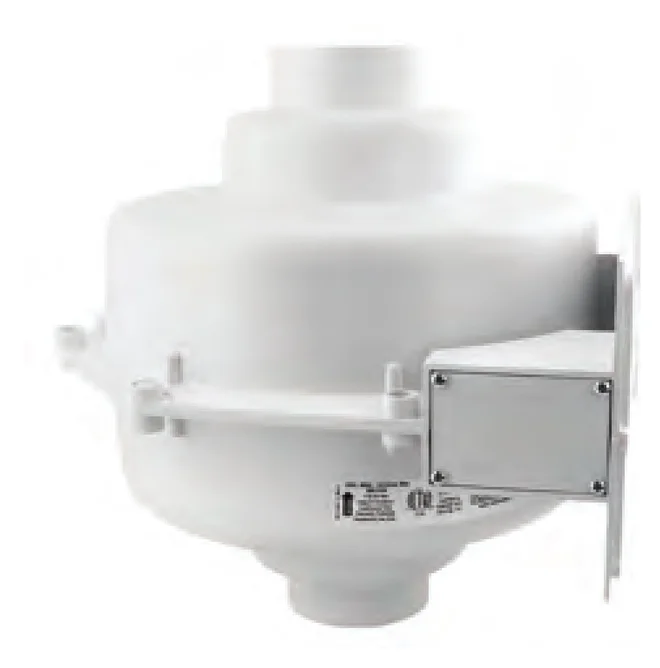
RadonAway
- What it does
- Not stated
- Power
- Up to 146 W
- C-NRPP 2024/25
- Not applicable (mitigation fan)
The difference: RadonAway's 3 inch C Series fan for high suction: RadonAway lists it at 68 to 146 W with a recommended maximum operating pressure of 3.8 inches.
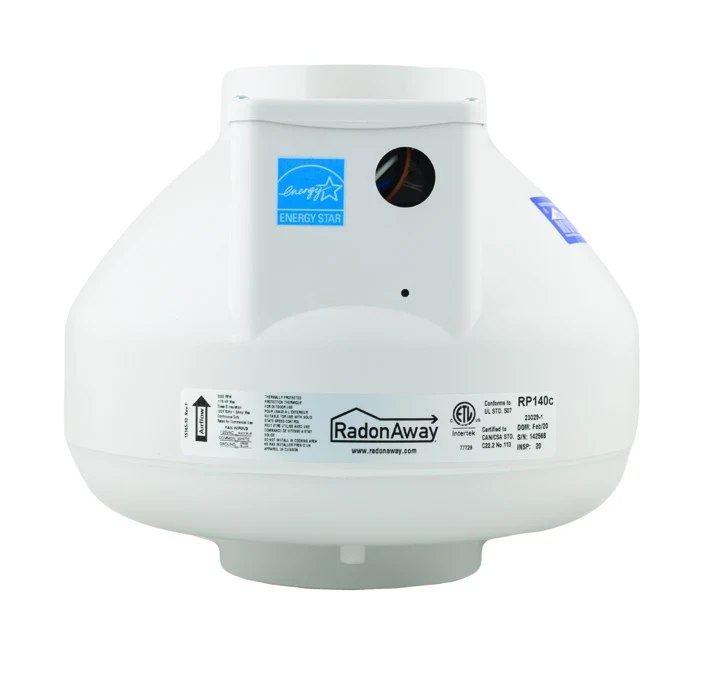
RadonAway
- What it does
- Moves up to 138 CFM
- Power
- Up to 21 W
- C-NRPP 2024/25
- Not applicable (mitigation fan)
The difference: RadonAway's lowest-power 4 inch fan: RadonAway lists it at 17 to 21 W with a recommended maximum operating pressure of 0.7 inches.
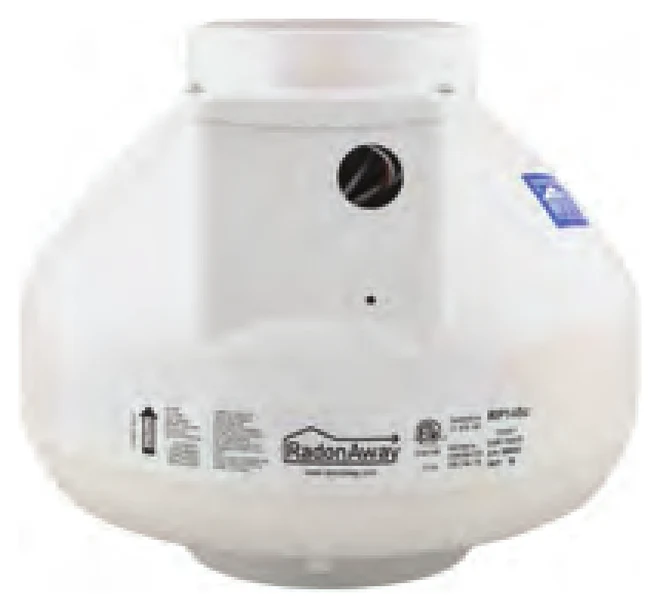
RadonAway
- What it does
- Moves up to 168 CFM
- Power
- Up to 72 W
- C-NRPP 2024/25
- Not applicable (mitigation fan)
The difference: RadonAway's 4 inch C Series fan for general use: RadonAway lists it at 46 to 72 W, with a recommended maximum operating pressure of 1.7 inches and 168 CFM at 0 inches.
Compared with similar products: 1 of 4
More radon fan models15
All radon fan models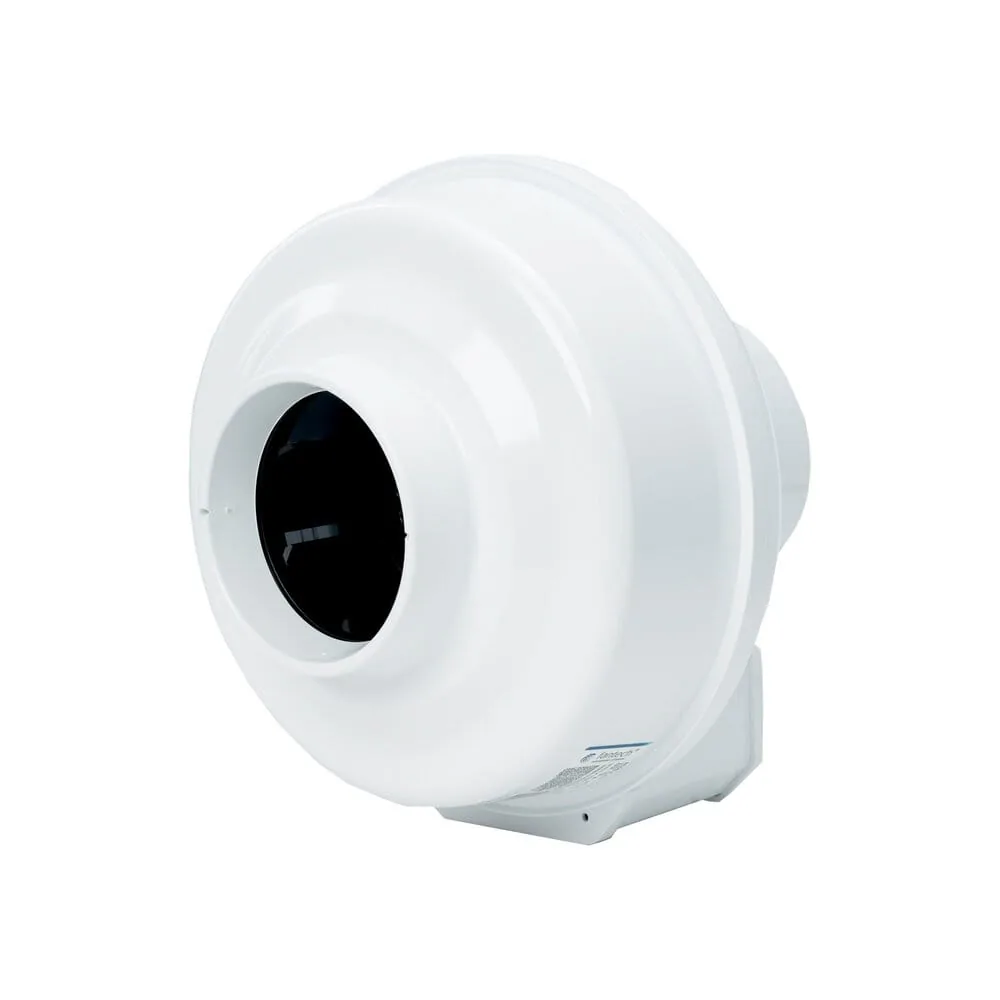
Radon fan

Rn2 inline radon mitigation fan
- 3 or 4 in. schedule 40 PVC
- 59 W
Max airflow: 174 CFM
Max pressure: 2.0 in w.c.
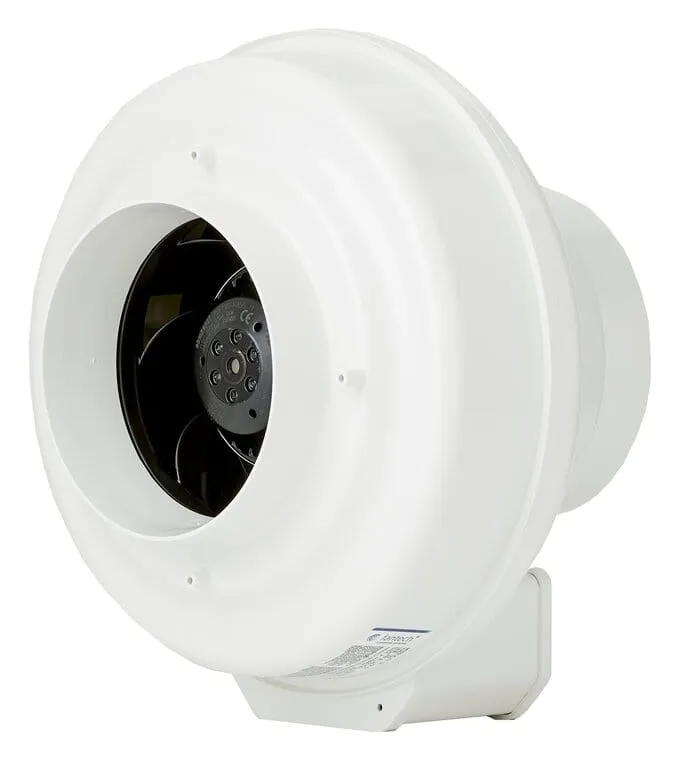
Radon fan
Rn3 inline radon mitigation fan
- 5 7/8 in. fan connection
- 125 W
Max airflow: 337 CFM
Max pressure: 2.6 in w.c.
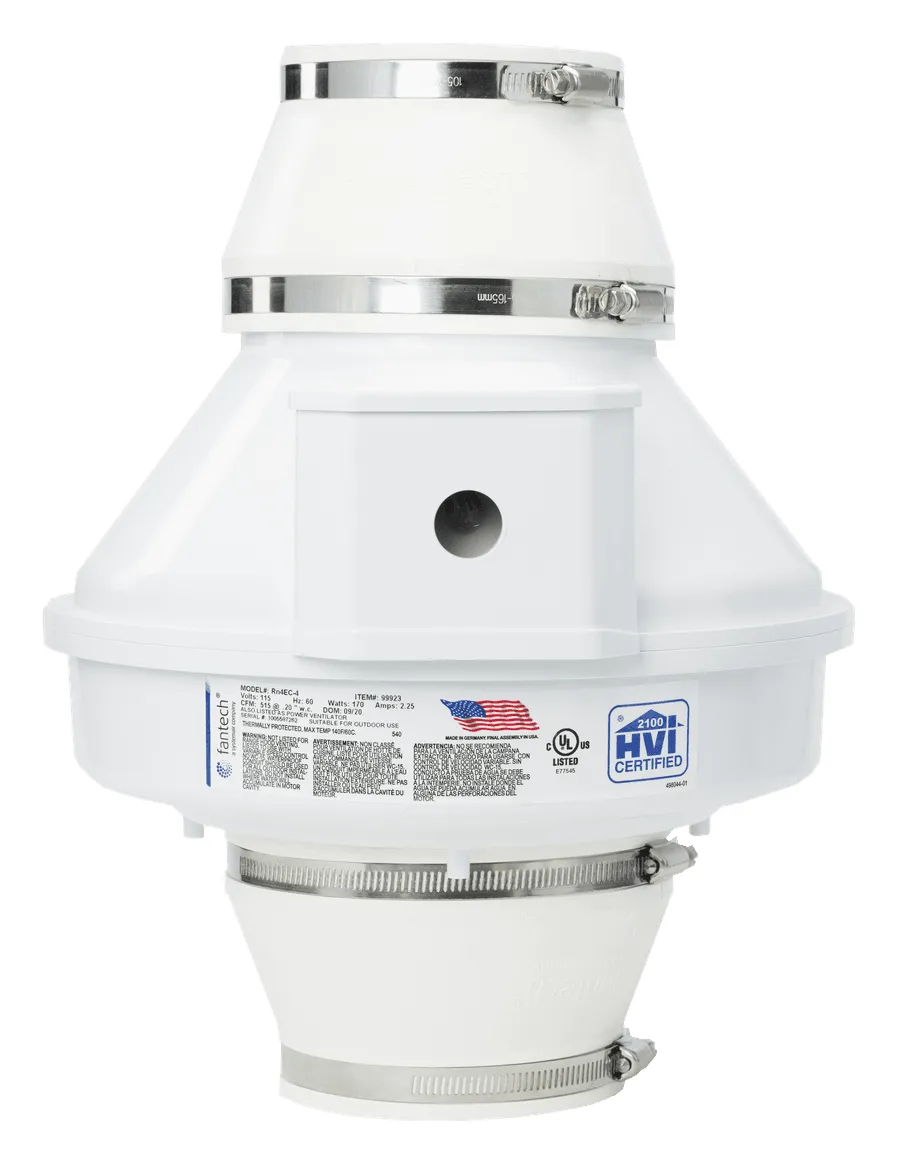
Radon fan
Rn4EC-4 inline radon mitigation fan
- 4 in. schedule 40 PVC
- 174 W
Max airflow: 330 CFM
Max pressure: 4.75 in w.c.
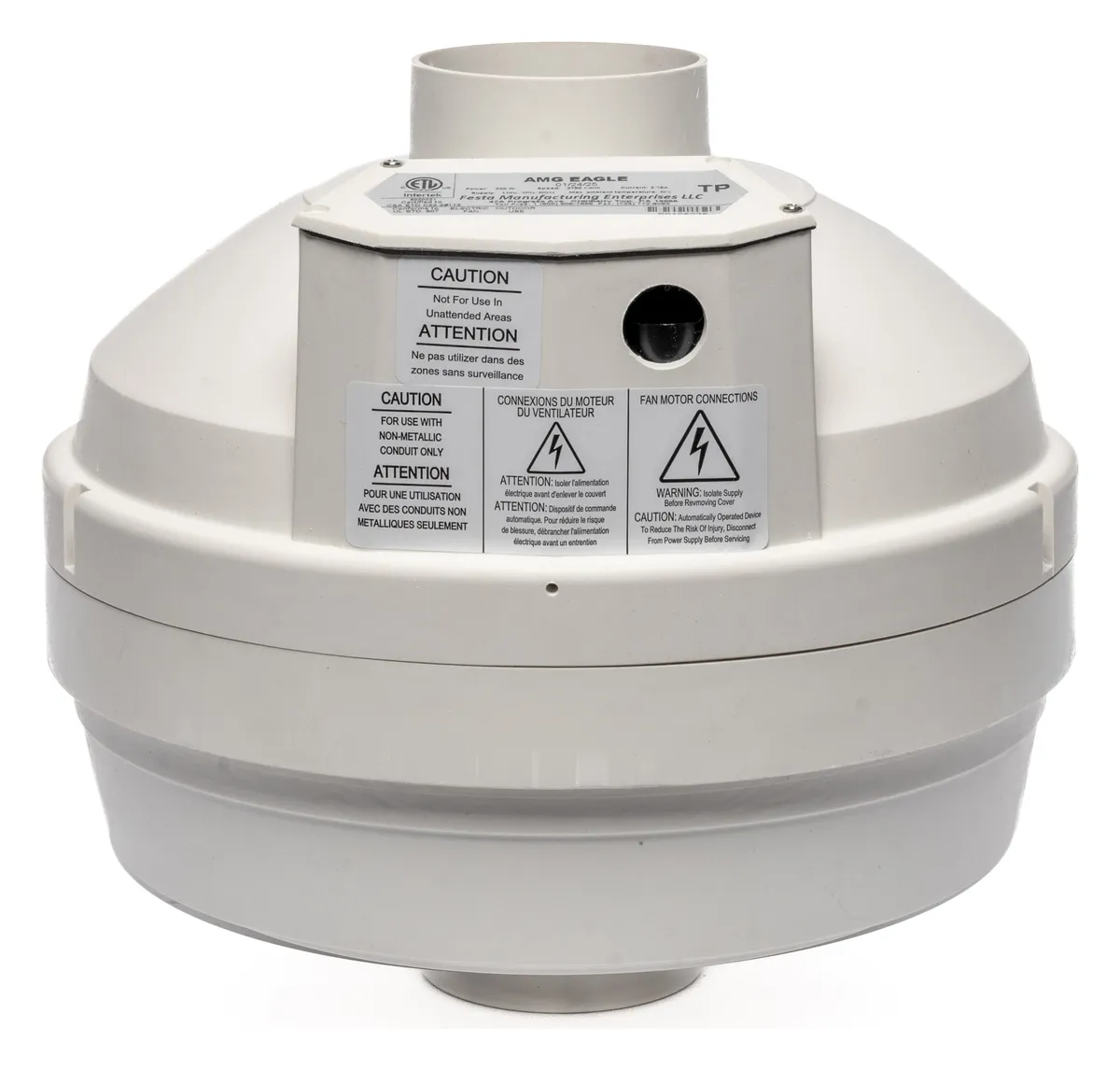
Radon fan

AMG Eagle inline radon mitigation fan
- 3 in. Fernco coupler size
- 310 W
Max airflow: 241 CFM
Max pressure: 4.2 in w.c.
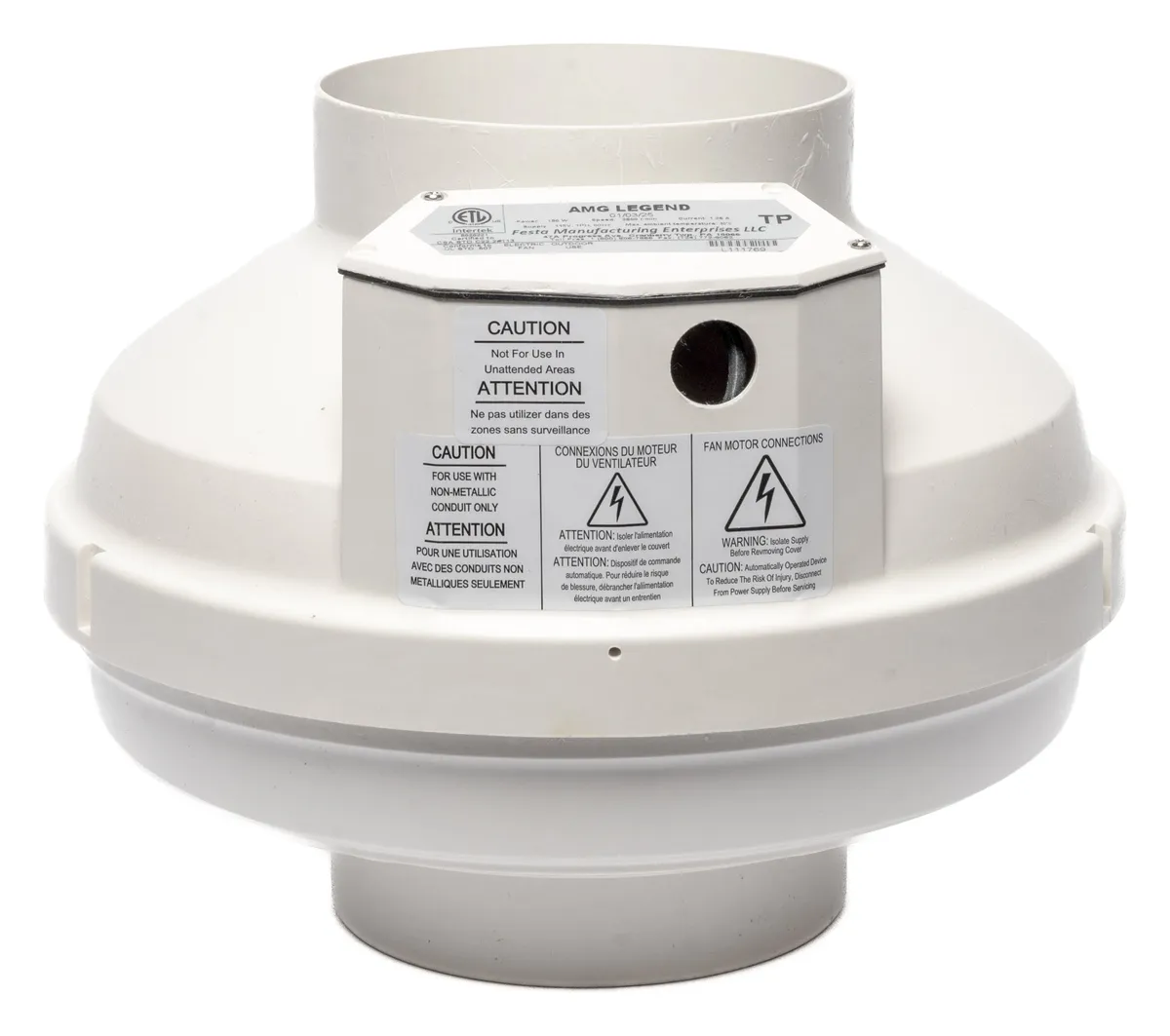
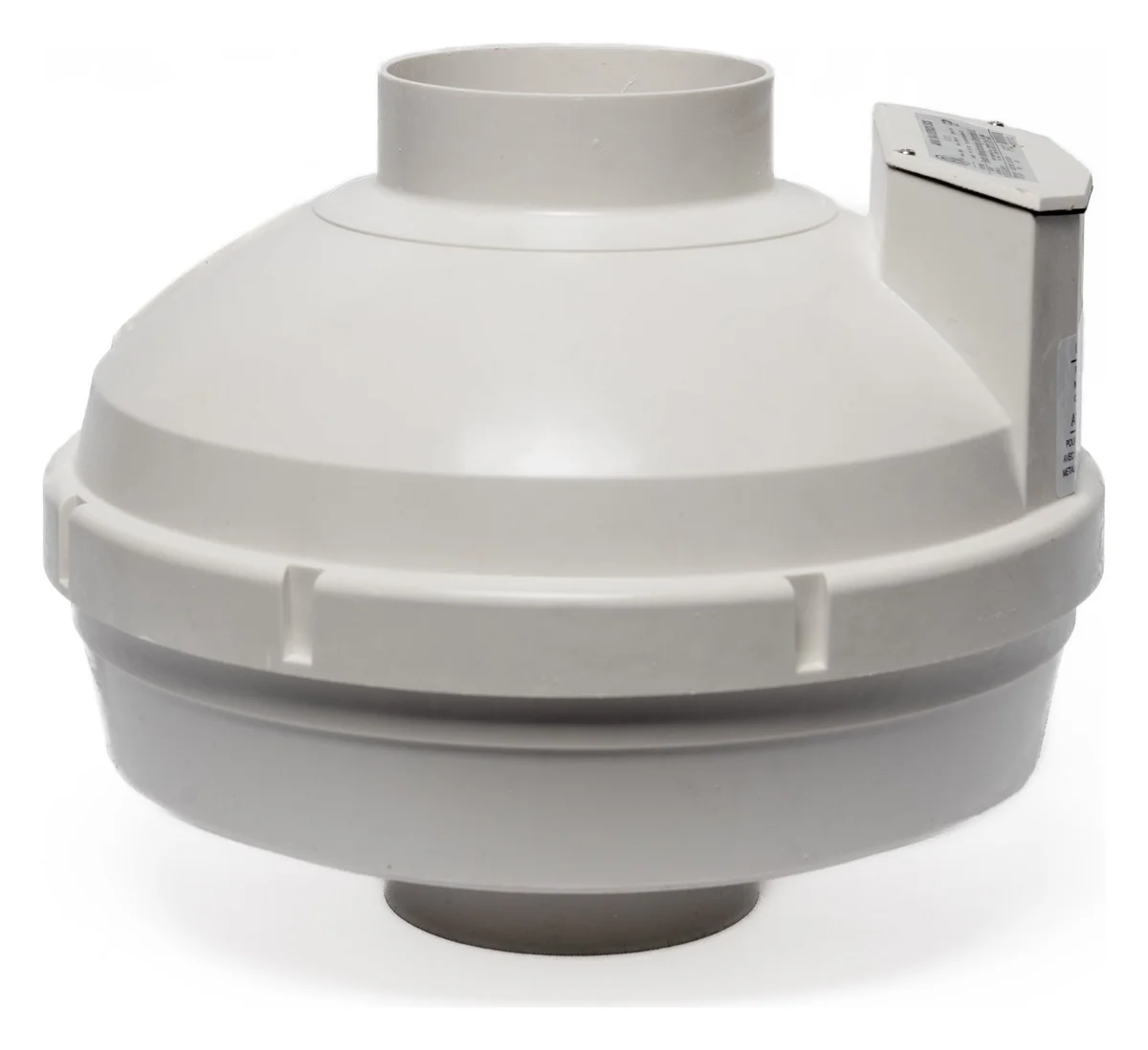
Radon fan
AMG Legend inline radon mitigation fan
- 6 in. Fernco coupler size
- 140 W
Max airflow: 345 CFM
Max pressure: 2.6 in w.c.
Radon fan
AMG Maverick inline radon mitigation fan
- 4 in. Fernco coupler size
- 66 W
Max airflow: 260 CFM
Max pressure: 2.21 in w.c.
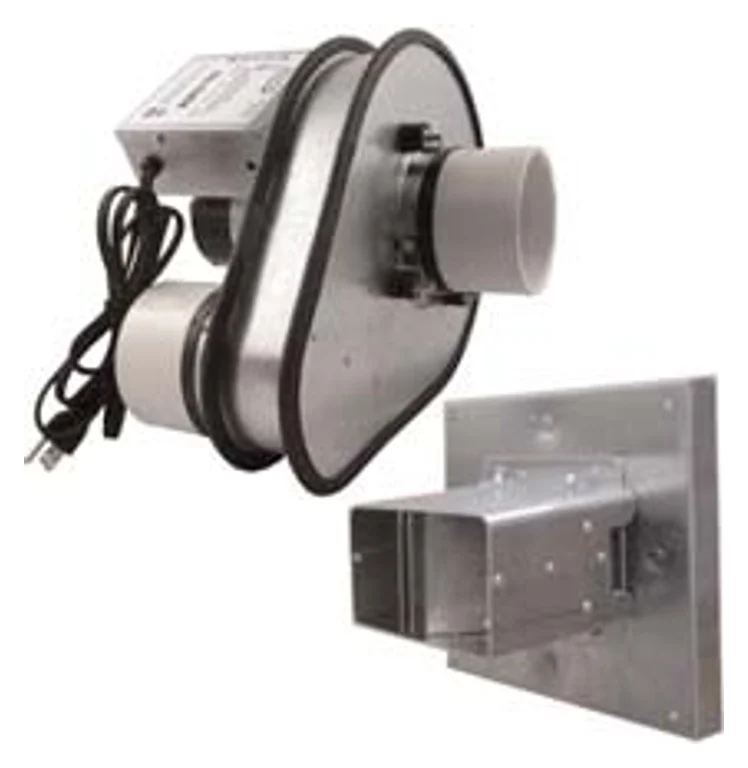
Radon fan

RMS160 side-wall radon mitigation system
- 3 in. schedule 40 PVC
- 50 W
Max airflow: 160 CFM
Max pressure: 2.3 in w.c.
- All radon fan models More radon fan models
More radon fan models: 1 of 15
Questions
Questions people ask
6 questions about the RadonAway RP265c, answered
Asked about the RP265c
How much air does the RP265c move?
It depends on the suction. RadonAway's C Series table lists 326 CFM with no resistance, 290 at 0.2 inches of water column, 241 at 0.5, 174 at 1.0, 118 at 1.5 and 60 at 2.0, with a recommended maximum operating pressure of 2.2 inches.
Is a fan sold as RP265 the same as the RP265c?
Go by the part number. RadonAway's Contractor Series table ties the RP265c to part number 23033-1, and its 2015 instructions list the RP265 under the same number. The RP265 Pro Series fan, part number 28463, is a different fan: RadonAway's 2023/2024 catalog lists it at 96 to 136 W with a different airflow row.
How is it different from the RP260c?
Both are 6 inch C Series fans. RadonAway lists the RP260c at 47 to 65 W with a recommended maximum of 1.3 inches and 251 CFM at 0 inches, and the RP265c at 86 to 122 W with 2.2 inches and 326 CFM, so the RP265c pulls harder and moves more air for more power.
Can the RP265c be installed outside?
Yes, by RadonAway's account: its instructions say the fan can be mounted indoors or outdoors, with a UL Listed watertight conduit for outdoor wiring, and not buried underground. The EPA's construction guide adds that the fan belongs outside the home's living space.
What warranty does the RP265c have?
It depends on who installs it. RadonAway's instructions give 12 months from purchase or 18 from manufacture, and five years when a professional radon mitigation contractor installs it. Its 2023/2024 catalog says five years with a radon professional and one year otherwise.
Do I need a professional to install it?
The EPA recommends a qualified radon mitigation contractor, and many states require radon professionals to be licensed, certified or registered. RadonAway says these fans are intended for trained, certified or licensed radon mitigators, wants the wiring done by a licensed electrician, and ties its longer warranty to professional installation.
What to do next
- See every radon fan we coverEach maker's published pressure, airflow and power, side by side.
- Find a mitigation professionalMost systems are designed and installed by one; some states require a license.
- Understand the fanWhat the fan does in a system, and when one needs replacing.
- Test after it runsA short-term test after installation shows whether the system works.
Updated November 27, 2026