 RadonAway
 GP500
Wall-mounted box radon fan
- Radon fan
- 3 in. fan duct diameter
- 153 W
Best for, and skip if
Best for you if
- The system will exit through a band joist or sidewall and you want the fan flat on the outside wall rather than on a pipe.
- You are replacing a GP500 whose label reads part number 23003-1.
Skip it if
- The fan will sit in an attic or garage on the vent pipe; RadonAway's round in-line fans are built for that.
- You want five years of cover; RadonAway gives the GP500 two years, against five with professional installation on its in-line fans.
Photos: RadonAway
 (opens in a new tab)Check price on Amazon (opens in a new tab)

As an Amazon Associate, Radon411 earns from qualifying purchases.
Amazon and the Amazon logo are trademarks of Amazon.com, Inc. or its affiliates.
See ratings and reviews on Amazon (opens in a new tab)- Pipe size3 in. fan duct diameter (product page); 3 in. PVC inlet and outlet, recommended ducting 3 in. Schedule 20/40 PVC or thin walled 3 in. O.D. PVC downspout; inlet duct passes through a 5.25 or 5.50 in. hole in the band joist or sidewall (IN006)
- Power draw153 W
- Every figure checked against the specifications RadonAway publishes
- The maker's own performance table, point by point, unranked
About this item
As RadonAway states it
- Pipe size: 3 in. fan duct diameter (product page); 3 in. PVC inlet and outlet, recommended ducting 3 in. Schedule 20/40 PVC or thin walled 3 in. O.D. PVC downspout; inlet duct passes through a 5.25 or 5.50 in. hole in the band joist or sidewall (IN006)
- Max power: 153 W
- Power supply: Plugs into a standard 115 VAC outlet (18 gauge, 3 wire SJ cord, p/n 27003 or equivalent; GFI required outdoors); 85 to 153 W (2023/2024 catalog); 70 to 130 W (IN006)
- Airflow at static pressure: 51 CFM at 2.00 in w.c.; 45 at 2.50; 35 at 3.00; 18 at 3.50
- Outdoor use: Rated for outdoor installation
- Warranty: Two years from the date of manufacture; one year outside the Continental United States and Canada (IN006 Rev I; the 2023/2024 catalog: GP500 covered by a 2-year warranty)
The GP500 is RadonAway's box-shaped radon fan, part number 23003-1, which hangs flat on the outside of a band joist or sidewall instead of sitting in the vent pipe. RadonAway's 2023/2024 catalog lists it with a 3 inch duct at 85 to 153 W and a 3.8 inch recommended maximum operating pressure; its older IN006 instructions give 70 to 130 W and the same 3.8 inch limit, with 88 CFM at 1.0 inch of water column falling to 14 CFM at 4.0 inches.
What you get
IN006 names what comes with the GP500 for mounting and wiring: a cable clamp and wire nuts for the power connection, and four #6 by 2.0 inch drywall screws with nylon washers for the wall. The power cord itself (p/n 27003 or equivalent), the flexible pipe coupling, a vent muffler and a manometer are separate. RadonAway's GP500 page lists a pipe connection kit for the GP500 as a related product.
In the box and running costsHow it works
What it does and how
The suction, the airflow and the housing, then who has checked it
How it works
In our words, from the maker's documents
The EPA's construction guide notes that the most commonly used radon fans are in-line centrifugal fans, set in the vent pipe. The GP500 is a flat box instead: IN006 says it mounts flush to the wall, projecting only 4 inches, with its inlet duct passing through the sidewall or band joist and its power cord on the inside, so the suction pipe leaves the house through the wall straight into the fan. RadonAway's product page calls it an attractive alternative to an inline fan.
IN006's performance chart for the GP500 reads 88 CFM at 1.0 inch of static suction, 80 at 1.5, 74 at 2.0, 65 at 2.5, 54 at 3.0, 28 at 3.5 and 14 at 4.0, at 70 to 130 W from a 115 V supply, and it puts typical GP500 operating flow at 25 to 90 CFM. The operation checks cap system vacuum below 3.8 inches of water column at sea level, less about 4% per 1,000 feet of altitude.
RadonAway's newer 2023/2024 catalog lists the GP500 alongside its Contractor Series fans with different numbers: 85 to 153 W, a 3.8 inch recommended maximum operating pressure, and 51, 45, 35 and 18 CFM at 2.0, 2.5, 3.0 and 3.5 inches. That is well under IN006's 74, 65, 54 and 28 CFM at the same pressures. RadonAway does not explain the change; this page gives both sets with their dates, and the catalogue keeps the newer one.
Water is handled inside the box. IN006 says the GP500 incorporates a condensation drain system that actively pumps water back to the inlet piping, to drain to a slab hole, and RadonAway's product page lists an internal condensate bypass. IN006 requires the pipe to drop off immediately at the fan's inlet so condensate is not drawn back in; where that is not possible, 5/16 inch tubing can extend the drain tube to the drop. A 3/8 inch NPT fitting on the bottom offers an alternative drain, but it is under positive pressure and must not leak radon.
IN006 gives the GP500 as 17 by 12 by 4 inches plus a 7 inch inlet duct, 20 pounds, with a 3 inch PVC inlet and outlet, brackets for vertical mounting on 16 inch centers, thermal protection, and a recommended duct of 3 inch Schedule 20/40 PVC or thin walled 3 inch O.D. PVC downspout. The 2023/2024 catalog's dimension table lists a 3.5 inch duct diameter, 11.5 inches deep and 12 inches high. RadonAway's product page states a 3 inch fan duct diameter and that the fan is made in the USA with US and imported parts.
IN006 calls the GP500 part of the DynaVac General Series and says one GP500 can cover up to 1,000+ square feet per slab penetration, depending on the sub-slab material and the diagnostic results, with a 5 to 10 gallon pit dug below each suction hole. More suction points can be added where one does not reach.
What the manufacturer says
RadonAway's own statements, attributed
- RadonAway saysRadonAway describes the GP500 as a proven favorite by professionals when the mitigation job calls for an effective, attractive and high performance solution.
- RadonAway saysRadonAway lists the GP500, P/N 23003-1, with a 3 inch fan duct at 85 to 153 W and a 3.8 in. WC recommended maximum operating pressure.
- RadonAway saysRadonAway states the GP500 can provide coverage up to 1000+ sq. ft. per slab penetration.
- RadonAway saysRadonAway states the GP500's condensation drain system actively pumps water back to the inlet piping for drainage to a slab hole.
- RadonAway saysRadonAway's 2023/2024 catalog states the GP500 is covered by a 2-year warranty.
These are RadonAway's own statements, attributed to it. They are not our findings, and we have not tested this product ourselves.
Independent evidence
Who checks a device like this
C-NRPP's consumer evaluation covers electronic radon monitors, not mitigation fans, so it has no result for RadonAway GP500. The safety listing and performance certification the maker states are under “What the manufacturer says”, and what shows whether any fan is working in your home is a radon test after it is installed.
RadonAway GP500
Check price on Amazon (opens in a new tab)Specifications
Specifications
Every figure as the maker states it
The maker's figures
- Type
- Mitigation fan, wall-mounted box fan
- Motor
- Not stated by the manufacturer
- Pipe size
- 3 in. fan duct diameter (product page); 3 in. PVC inlet and outlet, recommended ducting 3 in. Schedule 20/40 PVC or thin walled 3 in. O.D. PVC downspout; inlet duct passes through a 5.25 or 5.50 in. hole in the band joist or sidewall (IN006)
- Max static pressure
- Not stated by the manufacturer
- Max airflow
- Not stated by the manufacturer
- Max power
- 153 W
- Power supply
- Plugs into a standard 115 VAC outlet (18 gauge, 3 wire SJ cord, p/n 27003 or equivalent; GFI required outdoors); 85 to 153 W (2023/2024 catalog); 70 to 130 W (IN006)
- Speed control
- Not stated by the manufacturer
- Airflow at static pressure
- 51 CFM at 2.00 in w.c.; 45 at 2.50; 35 at 3.00; 18 at 3.50
- Outdoor use
- Rated for outdoor installation
- Warranty
- Two years from the date of manufacture; one year outside the Continental United States and Canada (IN006 Rev I; the 2023/2024 catalog: GP500 covered by a 2-year warranty)
What is in the box
IN006 names what comes with the GP500 for mounting and wiring: a cable clamp and wire nuts for the power connection, and four #6 by 2.0 inch drywall screws with nylon washers for the wall. The power cord itself (p/n 27003 or equivalent), the flexible pipe coupling, a vent muffler and a manometer are separate. RadonAway's GP500 page lists a pipe connection kit for the GP500 as a related product.
IN006 gives two years from the date of manufacture, one year outside the continental United States and Canada, and RadonAway's 2023/2024 catalog says the GP500 is covered by a 2-year warranty, where its other Contractor Series fans get five years with professional installation. RadonAway's store pages carry a general line about a five year manufacturer's warranty on RadonAway fans; the GP500's own documents give two. Claims need a Return Material Authorization number, and shipping is the owner's cost.
What it costs to run
Running it costs electricity, every hour. At the catalog's 153 W ceiling a year is about 1,340 kWh, and at IN006's 130 W about 1,139 kWh; at the low ends of 85 W and 70 W it is about 745 and 613 kWh. IN006 notes that the draw varies with actual load conditions, and the EPA says systems with fans slightly increase the electric bill.
If the fan is switched off for a long spell, IN006 says to remove the drain plug from the bottom of the unit, and never to tighten that plug beyond finger tight. Its operation checks are tight, leak-free connections, a secure unit and ducting, a vacuum reading under 3.8 inches, and radon testing to EPA protocol. The EPA's guide expects fans to last five years or more and suggests retesting the home every two years.
Airflow at each pressure
RadonAway's performance table, point by point
| Static pressure | Airflow |
|---|---|
| 2.00 in w.c. | 51 CFM |
| 2.50 in w.c. | 45 CFM |
| 3.00 in w.c. | 35 CFM |
| 3.50 in w.c. | 18 CFM |
Airflow falls as the suction the system needs rises. A mitigator matches the fan to pressure measured under the slab.
Fit and setup
Who it fits, and installation
The fit, then how a system goes in
Who it fits
Good fit if, and look elsewhere if
Good fit if
- The system will exit through a band joist or sidewall and you want the fan flat on the outside wall rather than on a pipe.
- You are replacing a GP500 whose label reads part number 23003-1.
- Your mitigator measured suction under the 3.8 inch limit RadonAway gives in both its catalog and its instructions.
- There is an outlet on a GFI circuit inside, near the wall penetration, since the GP500's cord runs indoors and plugs in.
Look elsewhere if
- The fan will sit in an attic or garage on the vent pipe; RadonAway's round in-line fans are built for that.
- You want five years of cover; RadonAway gives the GP500 two years, against five with professional installation on its in-line fans.
- The slab is large and open and needs high airflow; IN006 puts the GP500's typical flow at 25 to 90 CFM.
- You are designing a first system yourself; the EPA recommends a qualified radon mitigation contractor.
Installation
5 steps
- The EPA recommends that a qualified radon mitigation contractor fix a home, and many states require radon professionals to be licensed, certified or registered. IN006 says the GP500 is intended for use by trained, professional radon mitigators, and RadonAway's retail page says non-professional installation is not intended to take the place of a qualified radon professional.
- IN006's outdoor mounting runs in steps: locate the inlet hole from RadonAway's diagram, drill a 5.25 or 5.50 inch hole through the band joist or sidewall, run a liberal bead of silicone caulk on the sealing ring, feed the power cord through, set the unit level and plumb with its inlet clear of the building, and fix it with the four #6 by 2.0 inch drywall screws and nylon washers provided. A RadonAway flexible pipe coupling, p/n 79019-1, can ease gable-side installations.
- Unlike the hard-wired in-line fans, the GP500 plugs into a standard 115 VAC outlet. IN006 recommends a ground fault interrupter circuit for all installations and requires one outdoors or in wet locations, specifies an 18 gauge, 3 wire SJ power cord (RadonAway p/n 27003 or equivalent) about 5/16 inch across for a proper seal, and says electronic speed controls are not recommended. Wiring still falls to a qualified and licensed electrician, to the National Electrical Code.
- The EPA's construction guide says the fan and all positively pressurized portions of the vent pipe should be outside habitable space, so a leak at the housing or a joint cannot pump radon into the home. A GP500 on the outside wall meets that by design, and IN006 adds that a solid mounting keeps structure-borne vibration and noise down.
- IN006 recommends a U-tube manometer or a vacuum alarm as a system on indicator. The EPA's guide says a warning device must be installed to alert you if an active system stops working properly, placed where it can be seen or heard easily, and that a post-mitigation radon test should come within 30 days of installation but no sooner than 24 hours after the fan starts.
To find someone to design and install a system, see radon mitigation professionals, and for how a fan fits into one, how a radon fan works.
Compare
Compare with similar items
The same three rows for each, and the one difference that matters
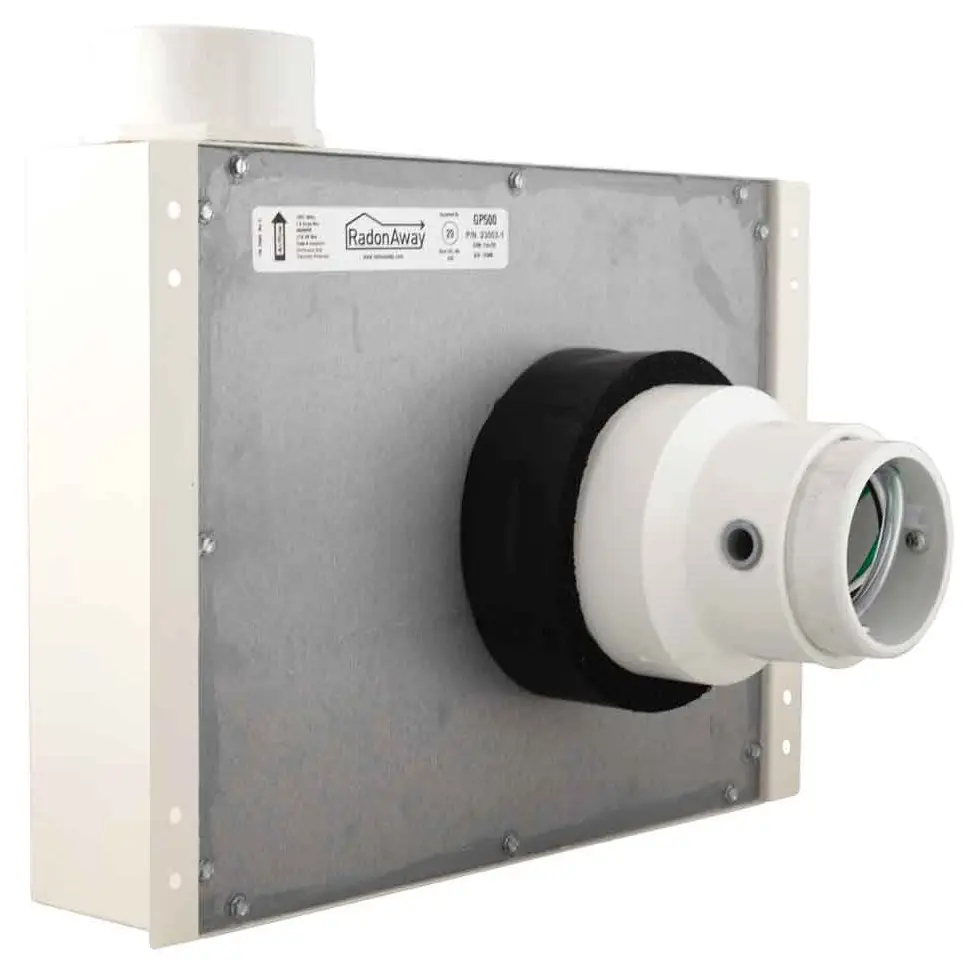
This page
RadonAway GP500
- What it does
- Not stated
- Power
- Up to 153 W
- C-NRPP 2024/25
- Not applicable (mitigation fan)
This page: The GP500 is RadonAway's box-shaped radon fan, part number 23003-1, which hangs flat on the outside of a band joist or sidewall instead of sitting in the vent pipe.
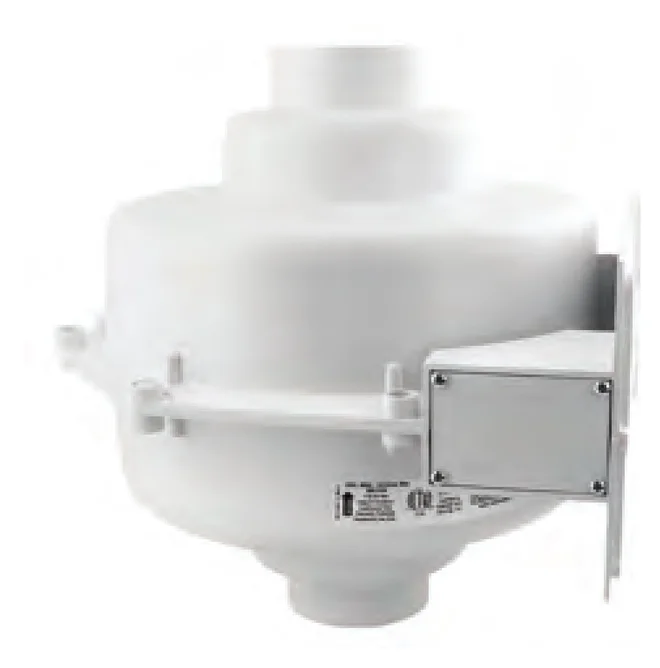
RadonAway
- What it does
- Not stated
- Power
- Up to 146 W
- C-NRPP 2024/25
- Not applicable (mitigation fan)
The difference: RadonAway's in-line 3 inch fan with the same 3.8 inch limit: its Contractor Series table lists the GP501c at 68 to 146 W, mounted in the pipe rather than on the wall.
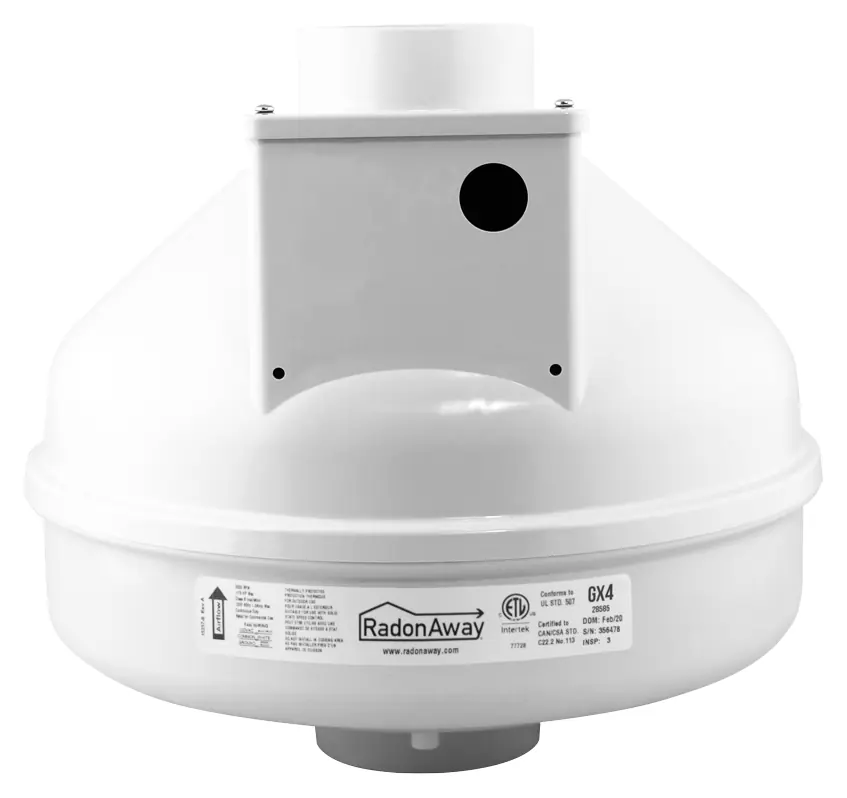
RadonAway
- What it does
- Not stated
- Power
- Up to 158 W
- C-NRPP 2024/25
- Not applicable (mitigation fan)
The difference: A round in-line RadonAway fan for higher suction: IN167 lists the GX4c at 74 to 158 W with a 4.8 inch recommended maximum.
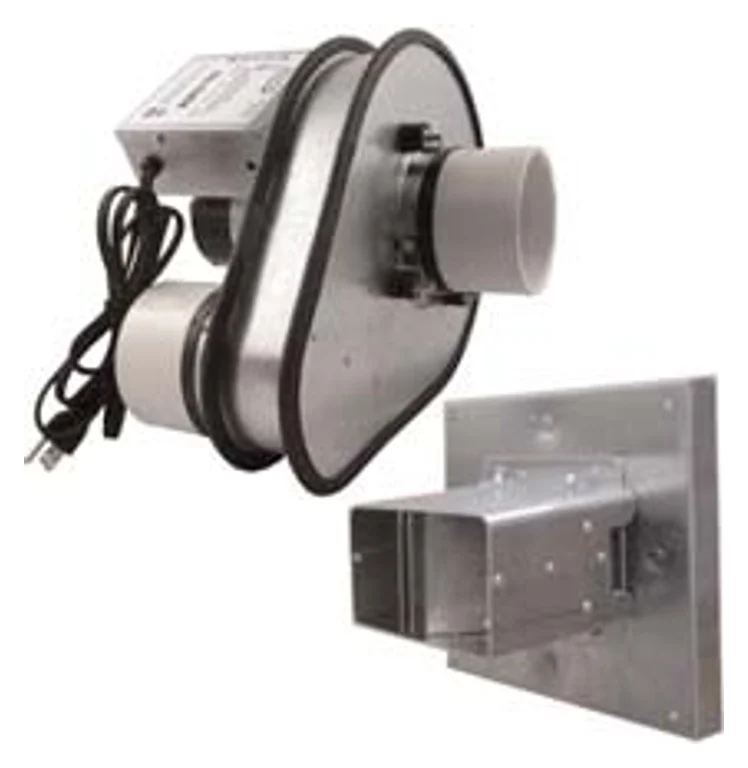
Tjernlund
- What it does
- Moves up to 160 CFM
- Power
- Up to 50 W
- C-NRPP 2024/25
- Not applicable (mitigation fan)
The difference: Another maker's side-wall system: Tjernlund's literature says side wall venting with its Radon VAC needs only a 4 inch hole through the basement rim joist, and lists the RMS160 at 50 W and 160 CFM.
Compared with similar products: 1 of 4
More radon fan models6
All radon fan models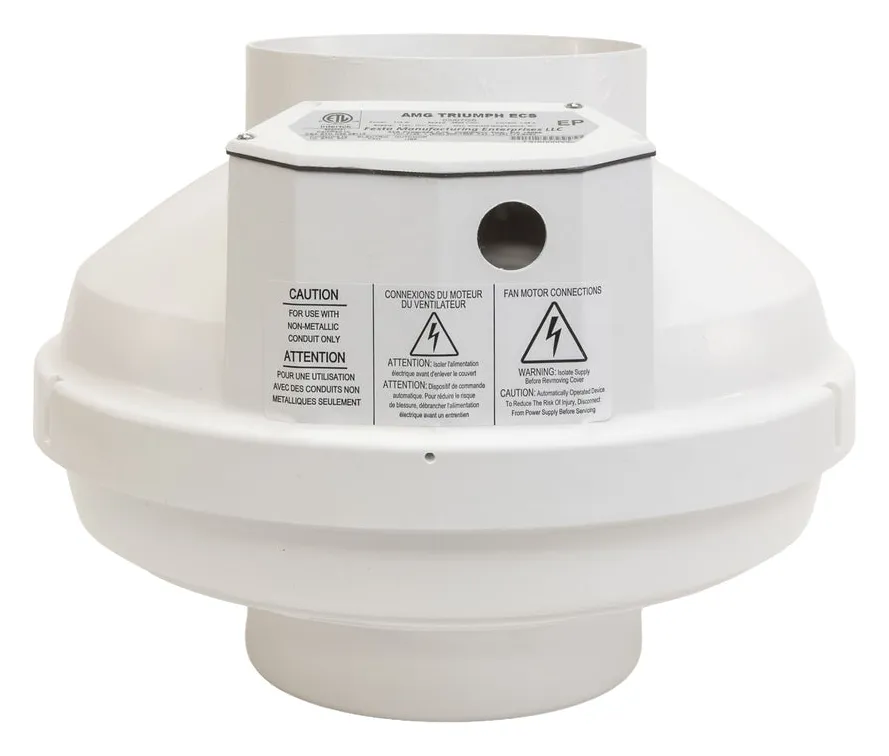
Radon fan

AMG Triumph ECS speed-controlled 6 inch EC radon fan
- 6 in. duct connection
Max airflow: 370 CFM
Max pressure: 2.9 in w.c.
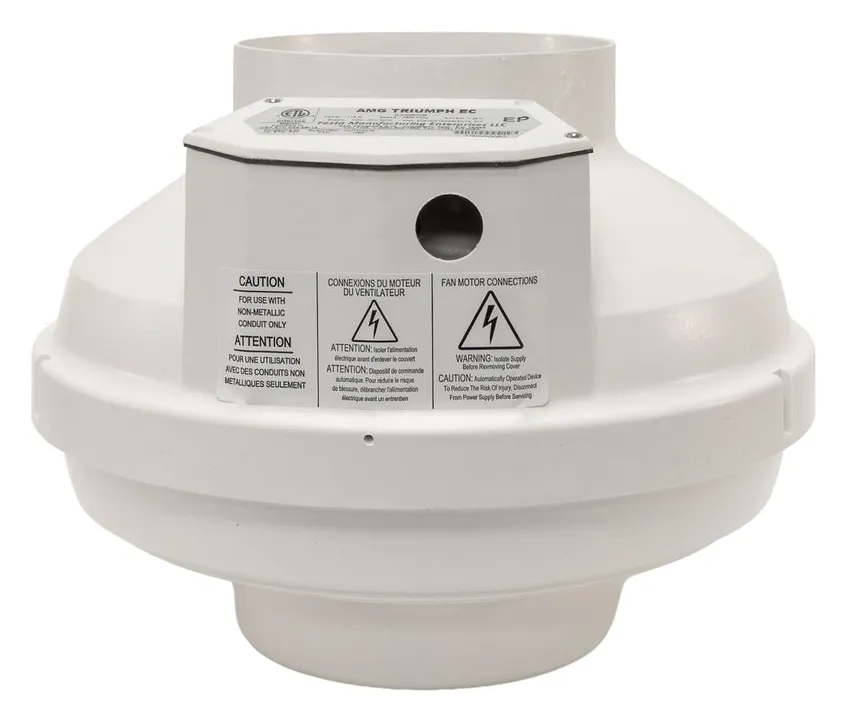
Radon fan
AMG Triumph EC 6 inch high-flow EC radon fan
- 6 in. Fernco
- 110 W
Max airflow: 370 CFM
Max pressure: 2.9 in w.c.
- All radon fan models More radon fan models
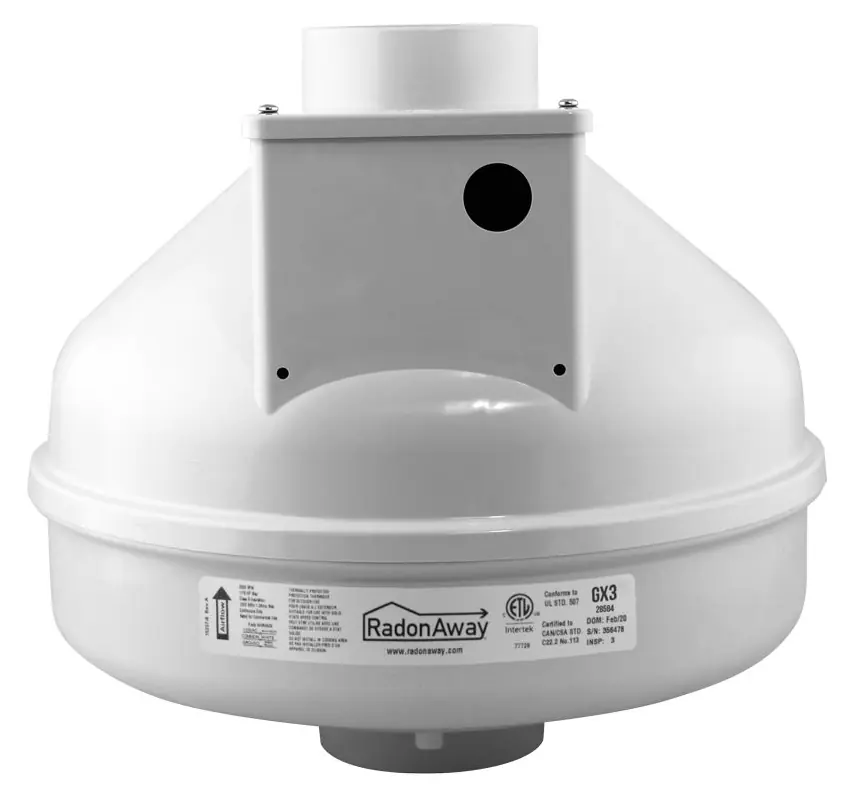
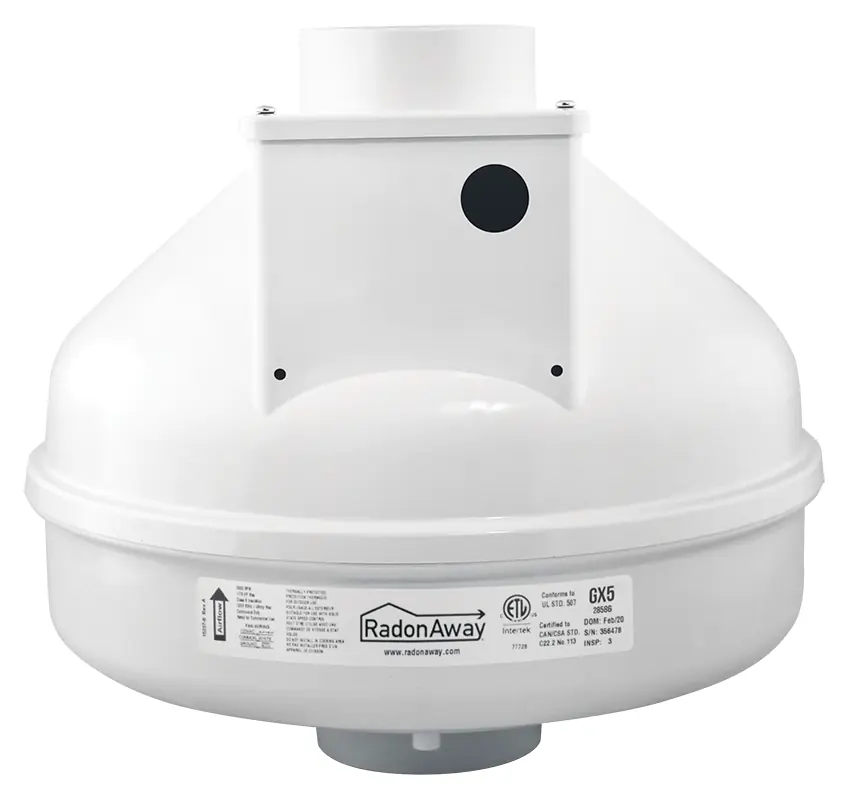
More radon fan models: 1 of 6
Questions
Questions people ask
6 questions about the RadonAway GP500, answered
Asked about the GP500
How is the GP500 different from an in-line radon fan?
It is a box that hangs on the outside wall. IN006 says it mounts flush, projecting only 4 inches, with the inlet duct passing through the band joist or sidewall and the power cord on the inside, and it pumps its own condensate back to the inlet pipe. An in-line fan sits in the vent pipe itself.
How much air does the GP500 move?
RadonAway's two documents differ. IN006 gives 88 CFM at 1.0 inch of water column and 74 at 2.0; the 2023/2024 catalog gives 51 CFM at 2.0 inches and 18 at 3.5. Both set 3.8 inches as the limit.
Does the GP500 need an electrician?
It plugs into a standard 115 VAC outlet through an 18 gauge, 3 wire SJ cord fitted to the fan, and IN006 recommends a GFI circuit for every installation and requires one outdoors or in wet locations. IN006 still says all wiring must be done by a qualified and licensed electrician.
What warranty does the GP500 carry?
Two years from the date of manufacture in IN006 and two years in RadonAway's 2023/2024 catalog, one year outside the continental United States and Canada. That is shorter than the five years RadonAway gives its in-line Contractor Series fans with professional installation.
What happens to condensation in winter?
IN006 says the GP500's drain system pumps water back to the inlet pipe to drain to a slab hole, and asks for a pipe drop right at the inlet. If power is off for long periods, it says to remove the drain plug so the unit can drain.
Can I install it myself?
The EPA recommends a qualified radon mitigation contractor, and many states require radon professionals to be licensed, certified or registered. RadonAway's IN006 is written for trained, professional radon mitigators.
What to do next
- See every radon fan we coverEach maker's published pressure, airflow and power, side by side.
- Find a mitigation professionalMost systems are designed and installed by one; some states require a license.
- Understand the fanWhat the fan does in a system, and when one needs replacing.
- Test after it runsA short-term test after installation shows whether the system works.
Updated November 27, 2026