 RadonAway
RadonAway RP145c
Inline radon mitigation fan
- Radon fan
- 4 in. fan duct diameter
- 72 W
Photos: RadonAway
 (opens in a new tab)Check price on Amazon (opens in a new tab)
As an Amazon Associate, Radon411 earns from qualifying purchases.
Amazon and the Amazon logo are trademarks of Amazon.com, Inc. or its affiliates.
See ratings and reviews on Amazon (opens in a new tab)- Pipe size4 in. fan duct diameter (performance table); 4.5 in. duct diameter in the catalog's dimensions table; joined to the system pipe with flexible couplings
- Power draw72 W
- Every figure checked against the specifications RadonAway publishes
- The maker's own performance table, point by point, unranked
About this item
As RadonAway states it
- Pipe size: 4 in. fan duct diameter (performance table); 4.5 in. duct diameter in the catalog's dimensions table; joined to the system pipe with flexible couplings
- Max airflow: 168 CFM
- Max power: 72 W
- Power supply: Standard 120 V, 60 Hz AC; 46 to 72 W
- Airflow at static pressure: 168 CFM at 0.00 in w.c.; 150 at 0.20; 123 at 0.50; 84 at 1.00; 44 at 1.50; 3 at 2.00
- Outdoor use: Rated for outdoor installation
- Warranty: 12 months from purchase or 18 months from manufacture, whichever is sooner; extended to 60 months from purchase or 66 months from manufacture when installed by a professional radon mitigation contractor (C Series instructions page; RadonAway's 2023/2024 catalog and 2015 instructions state other terms)
The RP145c is the 4 inch fan in RadonAway's Contractor Series, also called the C Series, under part number 23030-1. RadonAway lists it at 46 to 72 W, with a recommended maximum operating pressure of 1.7 inches of water column and 168 CFM against no resistance, and says the C Series fan can be mounted indoors or outdoors.
What you get
RadonAway's C Series pages do not list the package contents, so what ships with the fan is not stated by the maker. Its 2023/2024 catalog gives the RP145c's dimensions as a 4.5 inch duct diameter, 9.7 inches deep and 8.5 inches high, while its performance table gives a 4 inch fan duct diameter. The instructions say there are no user serviceable parts inside and the housing should not be opened, and ask that the fan be checked for shipping damage within 15 days of receipt.
In the box and running costsHow it works
What it does and how
The suction, the airflow and the housing, then who has checked it
How it works
In our words, from the maker's documents
A radon fan is the part of an active soil depressurization system that runs all the time. The EPA's guide describes the vent fan drawing radon gas from below the home through the suction pipes and releasing it to the outdoor air, while creating a negative pressure or vacuum under the slab. The fan has to keep running for the system to work.
Two numbers describe what a fan can do. Static pressure, in inches of water column, is how hard it pulls against the resistance of the soil and the pipe; airflow, in cubic feet per minute, is how much air it moves. Airflow falls as pressure rises, so RadonAway publishes typical airflow at a row of pressures rather than one figure, and a mitigator matches that row to the suction a house needs.
RadonAway's Contractor Series performance page gives the RP145c's typical airflow as 168 CFM at 0 inches, 150 at 0.2, 123 at 0.5, 84 at 1.0, 44 at 1.5 and 3 at 2.0 inches of water column, at 46 to 72 W, and marks the 0.2, 0.5 and 1.0 inch figures as HVI certified values. Its 2023/2024 catalog prints the same row. The 1.7 inch figure is what RadonAway calls the recommended maximum operating pressure; a maximum static pressure for the RP145c is not stated by the maker.
The same table places the RP145c among RadonAway's other C Series fans. The RP140c, part number 23029-1, is the other 4 inch model, at 17 to 21 W with a recommended maximum of 0.7 inches. The RP260c and RP265c are 6 inch fans. The GP301c and GP501c are 3 inch fans whose airflow is listed from 1.0 inch upward, with recommended maximums of 2.3 and 3.8 inches.
RadonAway's 2023/2024 catalog says its Contractor Series fans have sealed seams and are energy efficient, with thermally protected motors it describes as running ultra-quiet, rated for commercial and residential use, ETL Listed and HVI certified. Its 2015 RP Series instructions (IN020 Rev R), which list the RP145 under the same part number 23030-1, say the RP fans are factory sealed, so no extra caulk is needed to inhibit air leakage, and that they are rated for use with electronic speed controls, which are generally not recommended. RadonAway's C Series pages do not mention a speed control.
What the manufacturer says
RadonAway's own statements, attributed
- RadonAway saysRadonAway states the Contractor Series ("C" Series) radon fan can be mounted indoors or outdoors.
- RadonAway saysRadonAway lists the RP145c, P/N 23030-1, at a 4 inch fan duct diameter, 46 to 72 W, a 1.7 in. WC recommended maximum operating pressure and 168 CFM at 0 in. WC.
- RadonAway saysRadonAway states its Contractor Series fans are ETL Listed and HVI certified and rated for commercial and residential use.
- RadonAway saysRadonAway describes its Contractor Series motors as thermally protected and ultra-quiet, and the fans as having sealed seams.
- RadonAway saysRadonAway's catalog states its Contractor Series fans are made in the USA with U.S. and imported parts.
- RadonAway saysRadonAway states it extends the C Series fan warranty to five years when the fan is installed by a professional radon mitigation contractor.
These are RadonAway's own statements, attributed to it. They are not our findings, and we have not tested this product ourselves.
Independent evidence
Who checks a device like this
C-NRPP's consumer evaluation covers electronic radon monitors, not mitigation fans, so it has no result for RadonAway RP145c. The safety listing and performance certification the maker states are under “What the manufacturer says”, and what shows whether any fan is working in your home is a radon test after it is installed.
Specifications
Specifications
Every figure as the maker states it
The maker's figures
- Type
- Mitigation fan, inline
- Motor
- Not stated by the manufacturer
- Pipe size
- 4 in. fan duct diameter (performance table); 4.5 in. duct diameter in the catalog's dimensions table; joined to the system pipe with flexible couplings
- Max static pressure
- Not stated by the manufacturer
- Max airflow
- 168 CFM
- Max power
- 72 W
- Power supply
- Standard 120 V, 60 Hz AC; 46 to 72 W
- Speed control
- Not stated by the manufacturer
- Airflow at static pressure
- 168 CFM at 0.00 in w.c.; 150 at 0.20; 123 at 0.50; 84 at 1.00; 44 at 1.50; 3 at 2.00
- Outdoor use
- Rated for outdoor installation
- Warranty
- 12 months from purchase or 18 months from manufacture, whichever is sooner; extended to 60 months from purchase or 66 months from manufacture when installed by a professional radon mitigation contractor (C Series instructions page; RadonAway's 2023/2024 catalog and 2015 instructions state other terms)
What is in the box
RadonAway's C Series pages do not list the package contents, so what ships with the fan is not stated by the maker. Its 2023/2024 catalog gives the RP145c's dimensions as a 4.5 inch duct diameter, 9.7 inches deep and 8.5 inches high, while its performance table gives a 4 inch fan duct diameter. The instructions say there are no user serviceable parts inside and the housing should not be opened, and ask that the fan be checked for shipping damage within 15 days of receipt.
RadonAway's documents state the warranty three ways. Its C Series instructions page, read on October 8, 2026, gives 12 months from purchase or 18 months from manufacture, whichever is sooner, extended to 60 months from purchase or 66 months from manufacture when a professional radon mitigation contractor installs the fan, with no extension outside the continental United States and Canada. Its 2023/2024 catalog, effective May 1, 2023, gives a 5-year warranty when a radon professional installs the fan and a 1-year limited warranty for non-radon professionals. Its 2015 RP Series instructions (IN020 Rev R, 08/15) gave 90 days, extended to five years or 63 months from manufacture with professional installation.
For a claim, RadonAway's instructions say to contact it for a Return Material Authorization number, that the fan goes back to its factory at the owner's cost, and that proof of purchase, and for the longer term proof of professional installation, may be required.
What it costs to run
The running cost is electricity: the fan runs around the clock, and RadonAway lists the RP145c at 46 to 72 W. Your utility rate sets what that costs. RadonAway's C Series documents list no filter or other part to replace.
Plan on the fan wearing out eventually. The EPA's guide says fans may last five years or more and that manufacturer warranties tend not to exceed five years. RadonAway's own five-year term applies only with professional installation, so who installs the fan changes how long it is covered. A warning device and periodic retests are what tell you it is still doing its job.
Airflow at each pressure
RadonAway's performance table, point by point
| Static pressure | Airflow |
|---|---|
| 0.00 in w.c. | 168 CFM |
| 0.20 in w.c. | 150 CFM |
| 0.50 in w.c. | 123 CFM |
| 1.00 in w.c. | 84 CFM |
| 1.50 in w.c. | 44 CFM |
| 2.00 in w.c. | 3 CFM |
Airflow falls as the suction the system needs rises. A mitigator matches the fan to pressure measured under the slab.
Fit and setup
Who it fits, and installation
The fit, then how a system goes in
Who it fits
Good fit if, and look elsewhere if
Good fit if
- You or your mitigator are replacing an RP145c, or an RP145 sold under part number 23030-1, with the same fan.
- Your system's measured suction sits within the range RadonAway lists for the RP145c, up to its recommended 1.7 inches of water column.
- Your system uses the 4 inch duct size RadonAway gives for the RP145c's fan connection.
- The fan will be mounted outdoors, which RadonAway's C Series instructions allow with a UL Listed watertight conduit for the wiring.
Look elsewhere if
- Your slab needs more suction than 1.7 inches of water column; RadonAway lists its GP301c and GP501c for higher pressures.
- Your system needs little suction and you want a lower power draw; RadonAway lists the RP140c at 17 to 21 W.
- You want a fan with a built-in speed control; RadonAway's catalog describes one on its EC6 Pro Series fan, and its C Series pages describe none for the RP145c.
- You are designing a first system yourself; the EPA recommends a qualified mitigation contractor, and RadonAway's five-year term needs professional installation.
Installation
5 steps
- The EPA recommends that a qualified radon mitigation contractor fix a home, and notes that many states require radon professionals to be licensed, certified or registered. RadonAway's retail page says non-professional installation of a radon mitigation fan or system is not intended to take the place of installation by a qualified radon professional, and its 2015 RP Series instructions say the RP fans are intended for trained, professional, certified or licensed radon mitigators.
- RadonAway's C Series instructions say to mount the fan vertically with the outlet up, plumb and level, so condensation drains through the fan, and to keep it from touching any building surface to avoid vibration noise. The system has to let water drain back to a slab hole. Flexible couplings complete the piping run as a disconnect for servicing and for vibration isolation, an optional RadonAway mounting bracket (P/N 25007) can secure the fan, and the fan is not suitable for underground burial. RadonAway asks that it be installed in line with EPA and ANSI/AARST standard practices and state and local codes.
- The fan runs on standard 120 V, 60 Hz AC. RadonAway's instructions say all wiring must be done by a qualified and licensed electrician to the National Electrical Code and local codes, that outdoor installations need a UL Listed watertight conduit, and that exterior electrical boxes should be outdoor rated and sealed, with a weep hole recommended to drain the box. Power should not be connected until the fan is completely installed.
- Where the fan goes matters as much as which one. The EPA's construction guide says the fan and every positively pressurized part of the vent pipe belong outside habitable space, so a leak at the housing or a joint cannot push radon into the home, and that the fan should go in a vertical run of the vent pipe.
- The EPA's guide says an active system needs a warning device, usually a manometer, placed where it can be seen or heard, and that the fan should never be turned off. It says a post-mitigation radon test should be done within 30 days of installation, but no sooner than 24 hours after the system is running with the fan on, and suggests retesting at least every two years.
To find someone to design and install a system, see radon mitigation professionals, and for how a fan fits into one, how a radon fan works.
Compare
Compare with similar items
The same three rows for each, and the one difference that matters
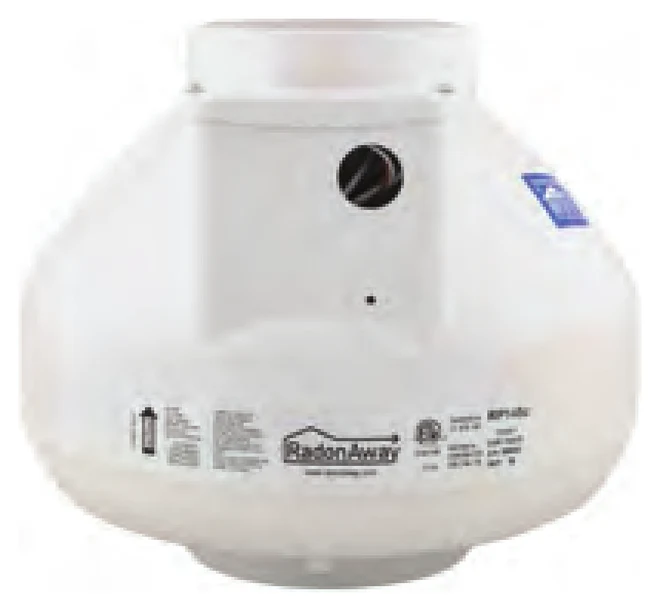
This page
RadonAway RP145c
- What it does
- Moves up to 168 CFM
- Power
- Up to 72 W
- C-NRPP 2024/25
- Not applicable (mitigation fan)
This page: The RP145c is the 4 inch fan in RadonAway's Contractor Series, also called the C Series, under part number 23030-1.
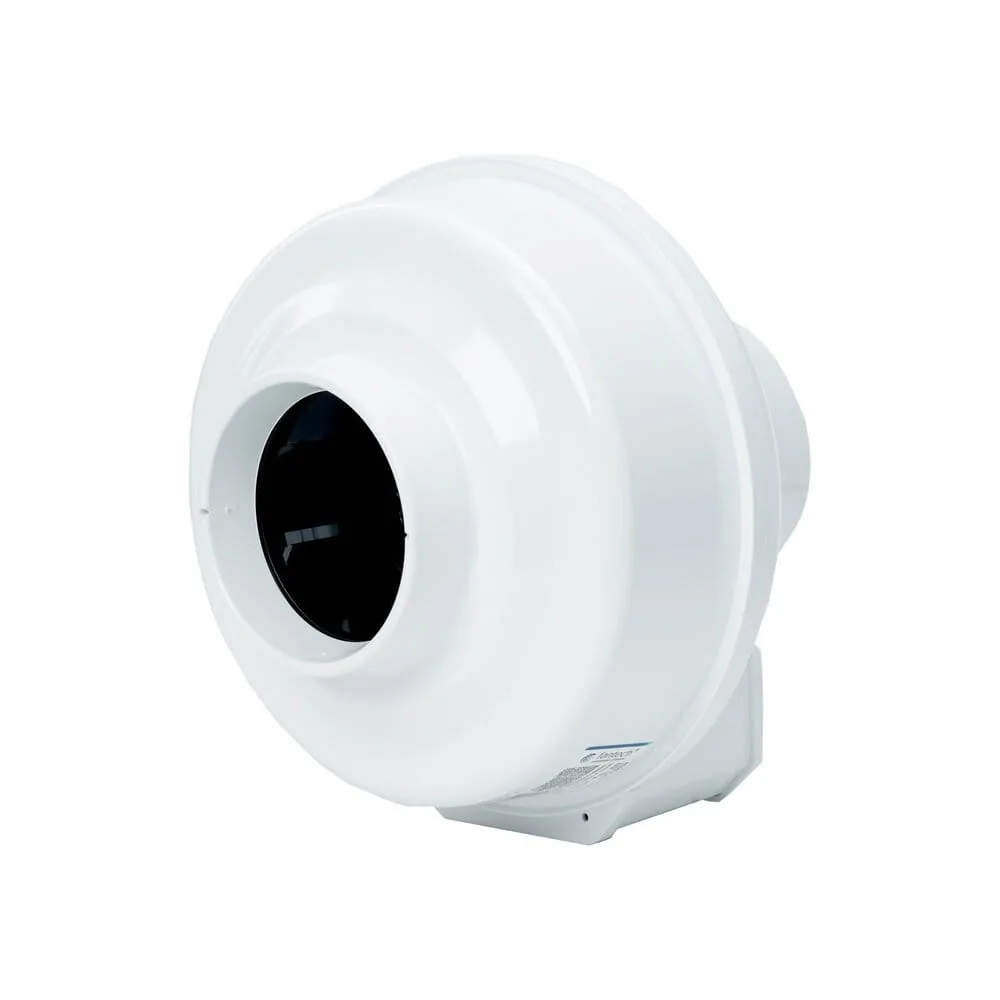
Fantech
- What it does
- Moves up to 174 CFM
- Power
- Up to 59 W
- C-NRPP 2024/25
- Not applicable (mitigation fan)
The difference: Another maker's fan: Fantech's 2025 brochure names the Rn2 as its replacement for RadonAway's RP145, based on pressure capability.
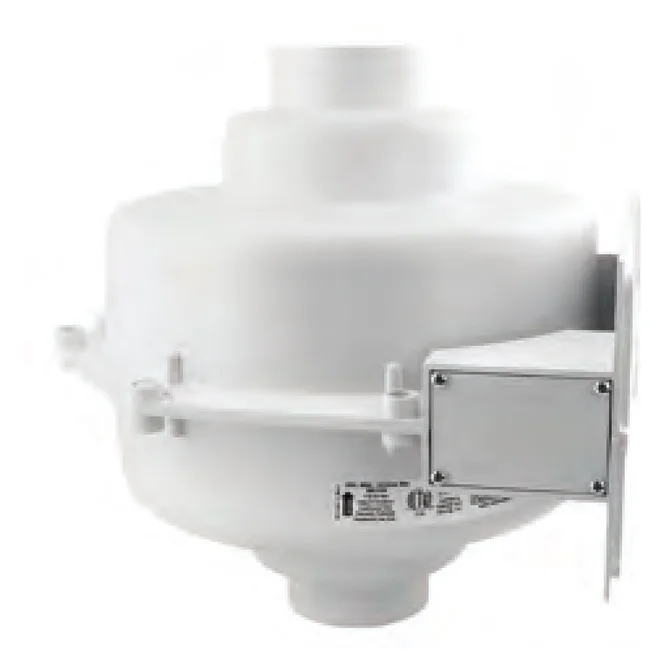
RadonAway
- What it does
- Not stated
- Power
- Up to 146 W
- C-NRPP 2024/25
- Not applicable (mitigation fan)
The difference: RadonAway's 3 inch C Series fan for higher suction, with a recommended maximum operating pressure of 3.8 inches in RadonAway's table.
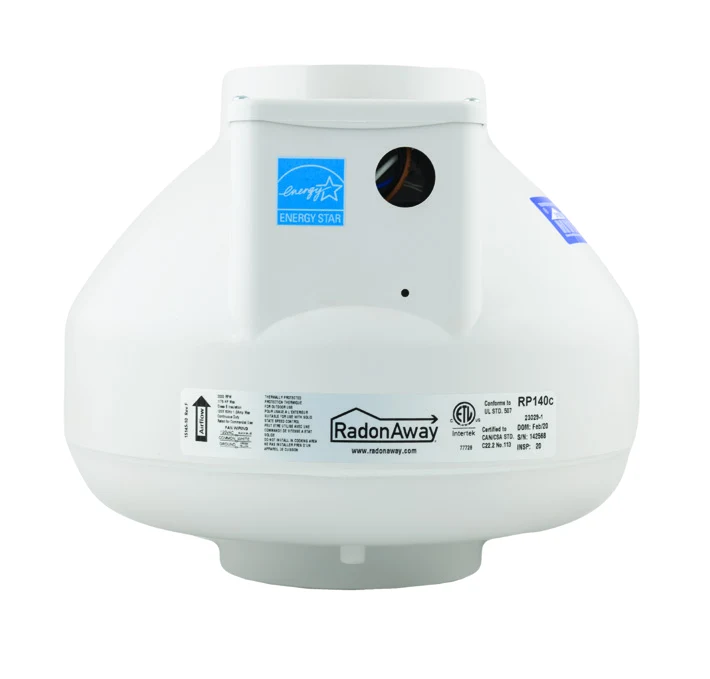
RadonAway
- What it does
- Moves up to 138 CFM
- Power
- Up to 21 W
- C-NRPP 2024/25
- Not applicable (mitigation fan)
The difference: RadonAway's other 4 inch C Series fan, for lower suction: RadonAway lists it at 17 to 21 W with a recommended maximum operating pressure of 0.7 inches.
RadonAway
- What it does
- Moves up to 112 CFM
- Power
- Up to 66 W
- C-NRPP 2024/25
- Not applicable (mitigation fan)
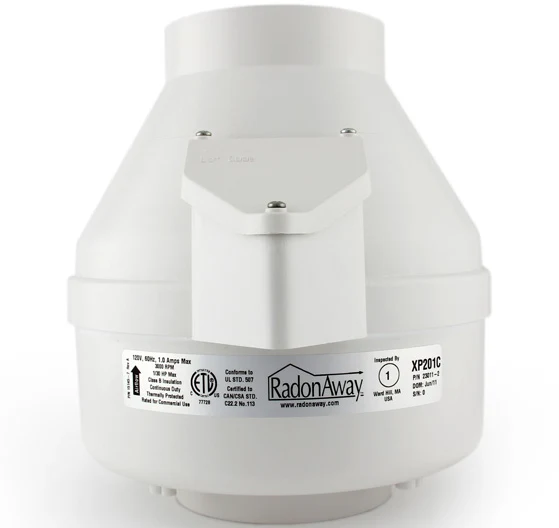
The difference: An older RadonAway 4 inch fan: RadonAway's 2017 sheet lists the XP201c (P/N 23011-1) at the same 1.7 inch recommended maximum operating pressure, with 112 CFM at 0 inches.
Compared with similar products: 1 of 5
More radon fan models10
All radon fan modelsRadon fan

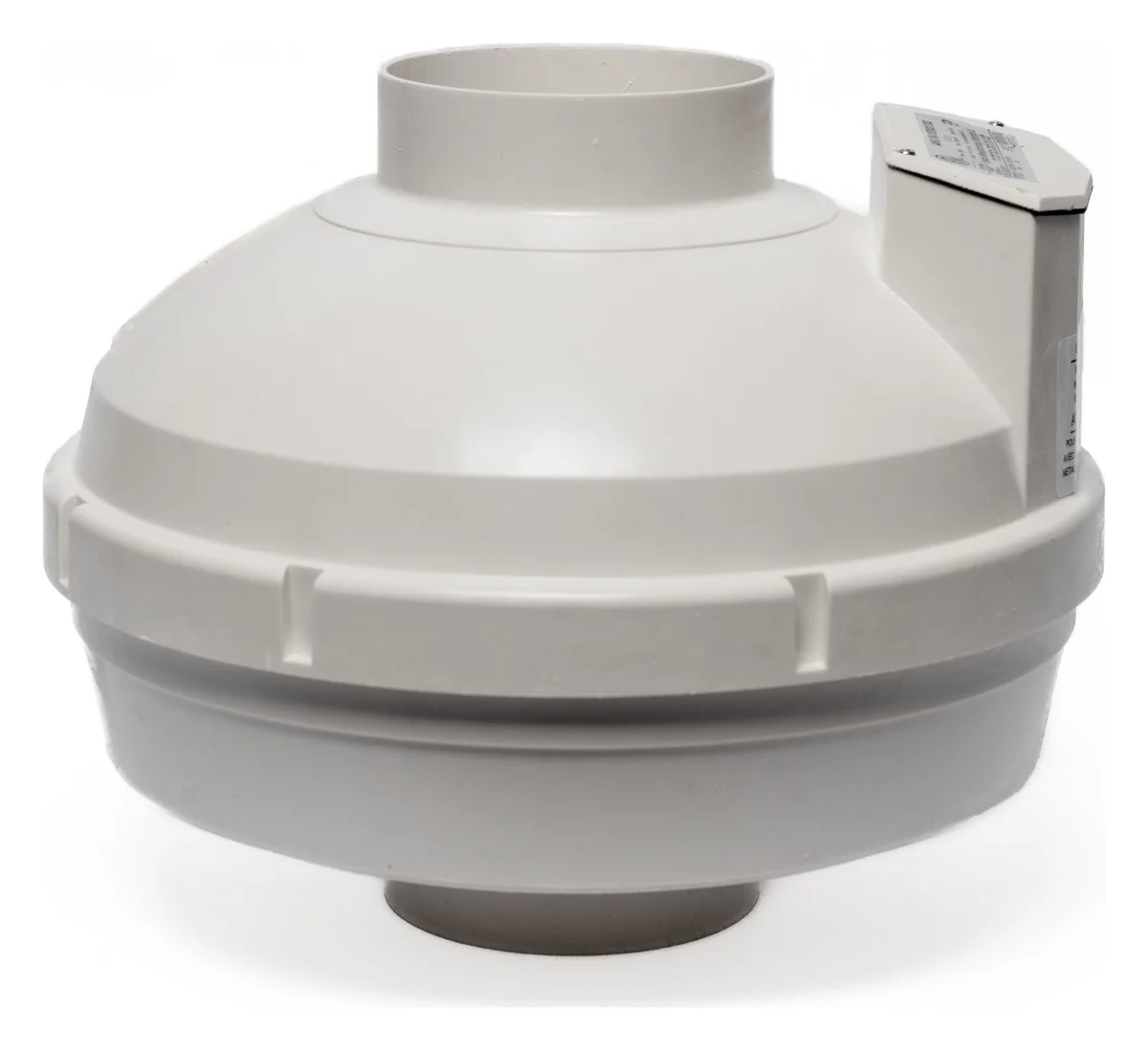
Rn2 inline radon mitigation fan
- 3 or 4 in. schedule 40 PVC
- 59 W
Max airflow: 174 CFM
Max pressure: 2.0 in w.c.
Radon fan

AMG Maverick inline radon mitigation fan
- 4 in. Fernco coupler size
- 66 W
Max airflow: 260 CFM
Max pressure: 2.21 in w.c.
Radon fan

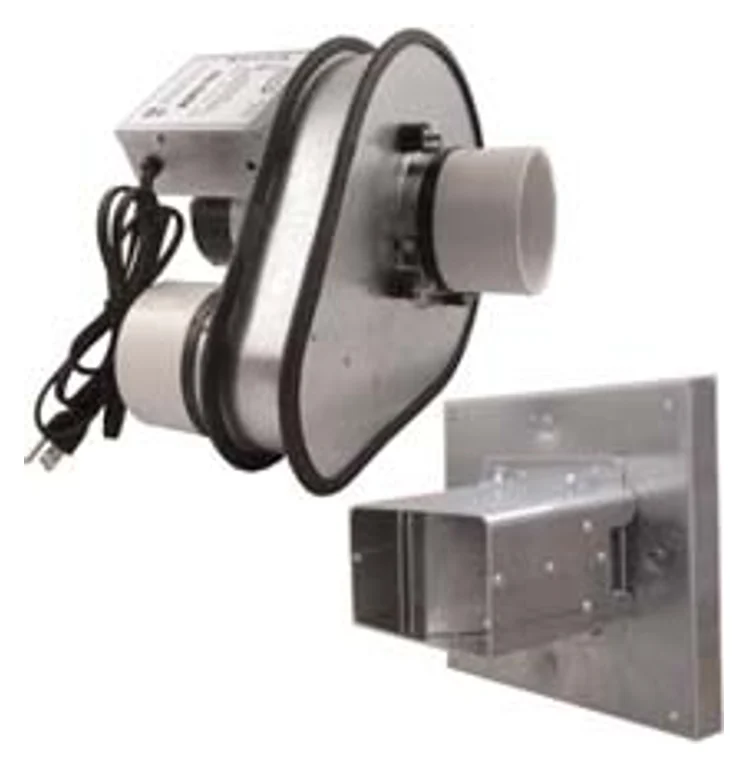
RMS160 side-wall radon mitigation system
- 3 in. schedule 40 PVC
- 50 W
Max airflow: 160 CFM
Max pressure: 2.3 in w.c.
- All radon fan modelsMore radon fan models
More radon fan models: 1 of 10
Questions
Questions people ask
6 questions about the RadonAway RP145c, answered
Asked about the RP145c
How much air does the RP145c move?
It depends on the suction. RadonAway's C Series table lists 168 CFM with no resistance, 150 at 0.2 inches of water column, 123 at 0.5, 84 at 1.0, 44 at 1.5 and 3 at 2.0, with a recommended maximum operating pressure of 1.7 inches.
Is the RP145c the same fan as the RP145 Pro?
No. RadonAway's 2023/2024 catalog lists them separately: the RP145c under part number 23030-1 at 46 to 72 W, and the RP Pro Series RP145 under part number 28461 at 34 to 66 W, with Vapor Tite Sealing Technology among its features. Their airflow rows differ too, so check the part number on the fan you are replacing.
Is the duct 4 inches or 4.5 inches?
Both figures are RadonAway's. Its performance table gives the RP145c a 4 inch fan duct diameter, and its catalog's dimensions table gives a 4.5 inch duct diameter. The instructions complete the piping run with flexible couplings, so check the coupling size against both the fan and your pipe.
Can the RP145c be installed outside?
Yes, by RadonAway's account: its C Series instructions say the fan can be mounted indoors or outdoors, with a UL Listed watertight conduit for outdoor wiring, and not buried underground. The EPA's construction guide adds that the fan belongs outside the home's living space.
What warranty does the RP145c have?
It depends on the document and on who installs it. RadonAway's current C Series instructions give 12 months from purchase or 18 from manufacture, and five years when a professional radon mitigation contractor installs it. Its 2023/2024 catalog says five years with a radon professional and one year otherwise; its 2015 RP instructions said 90 days, or five years with professional installation.
Do I need a professional to install it?
The EPA recommends a qualified radon mitigation contractor, and many states require radon professionals to be licensed, certified or registered. RadonAway says non-professional installation is not intended to take the place of a qualified radon professional, wants the wiring done by a licensed electrician, and ties its longer warranty to professional installation.
What to do next
- See every radon fan we coverEach maker's published pressure, airflow and power, side by side.
- Find a mitigation professionalMost systems are designed and installed by one; some states require a license.
- Understand the fanWhat the fan does in a system, and when one needs replacing.
- Test after it runsA short-term test after installation shows whether the system works.
Updated October 8, 2026