 Fantech
 Rn4EC-4
Inline radon mitigation fan
- Radon fan
- 4 in. schedule 40 PVC
- 174 W
Best for, and skip if
Best for you if
- A mitigator has found the slab needs strong suction: elevated radon with poor sub-slab communication, several suction points or a large footprint, the jobs Fantech names for the Rn 4EC.
- Your system runs 4 inch schedule 40 PVC, which the Rn 4EC-4 and its two 4 inch LDVI couplings are made for.
Skip it if
- Air moves easily under your slab; Fantech's brochure puts good and moderate communication on its Rn 1 and Rn 2, which draw far less power.
- Your system runs 3 inch pipe; Fantech's Rn 4EC-3, item 99922, is the version that ships with 3 inch couplings.
Photos: Fantech
 (opens in a new tab)Check price on Amazon (opens in a new tab)

As an Amazon Associate, Radon411 earns from qualifying purchases.
Amazon and the Amazon logo are trademarks of Amazon.com, Inc. or its affiliates.
See ratings and reviews on Amazon (opens in a new tab)- Pipe size4 in. schedule 40 PVC, through the two 4 in. LDVI couplings in the box (the 3 in. version is the Rn 4EC-3, item 99922)
- Power draw174 W
- Every figure checked against the specifications Fantech publishes
- The maker's own performance table, point by point, unranked
About this item
As Fantech states it
- Motor: EC
- Pipe size: 4 in. schedule 40 PVC, through the two 4 in. LDVI couplings in the box (the 3 in. version is the Rn 4EC-3, item 99922)
- Max static pressure: 4.75 in w.c.
- Max airflow: 330 CFM
- Max power: 174 W
- Power supply: 120 V, single phase, 60 Hz; 174 W input power; 2.8 A input current; 4099 rpm
- Speed control: Built in
- Outdoor use: Rated for outdoor installation
- Warranty: 5-year factory warranty
The Rn 4EC-4 (item 99923) is the highest-pressure fan in Fantech's Rn radon line: an EC-motor inline fan with a speed dial built in, shipped with two LDVI couplings for 4 inch schedule 40 PVC. Fantech's 2025 brochure lists an application range of 0.0 to 4.35 inches of water column, a maximum static pressure of 4.75 inches, a maximum of 174 W and 330 CFM.
What you get
Fantech's manual lists three things in the Rn4EC box: the inline radon fan, two LDVI couplings and the installation, operations and maintenance manual. The brochure says item 99923 ships with 4 inch LDVI couplers and item 99922 with 3 inch ones. That differs from the Rn2EC, whose box in the same manual holds only the fan and the manual.
In the box and running costsHow it works
What it does and how
The suction, the airflow and the housing, then who has checked it
How it works
In our words, from the maker's documents
Every active soil depressurization system depends on one fan running without a break. The EPA's guide describes that fan drawing radon from under the home through the suction pipes, sending it into the outdoor air and keeping a vacuum beneath the slab. If it stops, so does the protection.
Fantech describes each Rn fan by an application pressure range and three maximums. For the Rn 4EC-4 its brochure lists 0.0 to 4.35 inches of water column, a maximum static pressure of 4.75 inches, 174 W and 330 CFM. No other fan in the same table goes past 2.6 inches, the Rn 3's maximum; the Rn 2, for comparison, stops at 2.0 inches. The 3 inch Rn 4EC-3, item 99922, shares the pressure figures but lists 173 W and 216 CFM.
The EC models are where Fantech moved to a different motor. Its brochure says it added models driven by energy-efficient EC motors, and its Rn page says the Rn 2EC and Rn 4EC have a built-in speed controller, so the installer can set the fan to the suction a system needs instead of running it flat out. The manual shows how: a small screwdriver turns a potentiometer knob, counterclockwise to slow the fan. It also says never to add a solid state speed control device to it.
Fantech's brochure is specific about where the Rn 4EC belongs: high suction, high flow jobs, elevated radon levels with poor sub-slab communication, and multiple suction points or a large slab footprint. It adds that the fan is energy efficient when dialed to the flow and suction a job needs. That is the opposite end of the line from the Rn 1, which the same brochure places on low suction, low flow jobs with good communication.
On construction, Fantech's Rn page lists an air-tight housing with zero leakage, a UV-resistant resin housing, UL listing for safety and outdoor use and HVI-certified fan performance. The brochure says Fantech's LDVI couplings are designed to be leak-free with low vibration. Fantech's manual gives the Rn 4EC-4 a 5 7/8 inch spigot on a housing 11 1/2 inches across and 9 1/4 inches high, and couplings that step from 6 inches at the fan to 4 1/2 inches at the pipe.
What the manufacturer says
Fantech's own statements, attributed
- Fantech saysFantech lists the Rn 4EC-4 (item 99923) at an application range of 0.0 to 4.35 in. w.c., a maximum static pressure of 4.75 in. w.c., 174 W maximum power and 330 CFM maximum airflow.
- Fantech saysFantech states the Rn 2EC and Rn 4EC have a built-in speed controller, so the user can adjust the fan to a desired level of suction with low power consumption.
- Fantech saysFantech's brochure claims its Rn 2EC and Rn 4EC can mitigate a home on as little as 5 W and use considerably less energy than alternatives on the market.
- Fantech saysFantech describes the Rn housing as air-tight with zero leakage and UV-resistant, and states the line is UL Listed for safety and outdoor use.
- Fantech saysFantech describes its LDVI couplings, two of which come with the Rn 4EC, as designed to be leak-free with low vibration.
- Fantech saysFantech gives its Rn radon fans a 5-year factory warranty.
These are Fantech's own statements, attributed to it. They are not our findings, and we have not tested this product ourselves.
Independent evidence
Who checks a device like this
C-NRPP's consumer evaluation covers electronic radon monitors, not mitigation fans, so it has no result for Fantech Rn4EC-4. The safety listing and performance certification the maker states are under “What the manufacturer says”, and what shows whether any fan is working in your home is a radon test after it is installed.
Fantech Rn4EC-4
Check price on Amazon (opens in a new tab)Specifications
Specifications
Every figure as the maker states it
The maker's figures
- Type
- Mitigation fan, inline
- Motor
- EC
- Pipe size
- 4 in. schedule 40 PVC, through the two 4 in. LDVI couplings in the box (the 3 in. version is the Rn 4EC-3, item 99922)
- Max static pressure
- 4.75 in w.c.
- Max airflow
- 330 CFM
- Max power
- 174 W
- Power supply
- 120 V, single phase, 60 Hz; 174 W input power; 2.8 A input current; 4099 rpm
- Speed control
- Built in
- Airflow at static pressure
- Not stated by the manufacturer
- Outdoor use
- Rated for outdoor installation
- Warranty
- 5-year factory warranty
What is in the box
Fantech's manual lists three things in the Rn4EC box: the inline radon fan, two LDVI couplings and the installation, operations and maintenance manual. The brochure says item 99923 ships with 4 inch LDVI couplers and item 99922 with 3 inch ones. That differs from the Rn2EC, whose box in the same manual holds only the fan and the manual.
Fantech's Rn page gives a 5-year factory warranty, and the manual points to the full terms, in English, French or Spanish, through a QR code, noting that they include a 5 year warranty. The same manual says incorrect installation voids all product warranties, and gives Fantech's US support line, 800.747.1762.
What it costs to run
This is the fan in Fantech's Rn line that can use the most electricity: its brochure lists a maximum of 174 W, against 59 W for the Rn 2. Run flat out around the clock, as the EPA says a fan must run, that is about 1,524 kWh a year; multiply by your utility's rate per kWh. The dial is what brings it down, and Fantech's brochure claims its EC fans can run a home's system on as little as 5 W, though it does not say on which job.
There is nothing to refill or replace in normal running. The EPA's guide says fans may last five years or more and that maker warranties tend not to exceed five years, which matches Fantech's five. A warning device on the pipe and a radon retest at least every two years are how you find out the fan has stopped doing its job.
Fit and setup
Who it fits, and installation
The fit, then how a system goes in
Who it fits
Good fit if, and look elsewhere if
Good fit if
- A mitigator has found the slab needs strong suction: elevated radon with poor sub-slab communication, several suction points or a large footprint, the jobs Fantech names for the Rn 4EC.
- Your system runs 4 inch schedule 40 PVC, which the Rn 4EC-4 and its two 4 inch LDVI couplings are made for.
- You want the suction set with a dial on the fan rather than by swapping to a bigger or smaller model.
- You are replacing a Fantech FR 200, FR 225 or FR 250, the fans Fantech's brochure cross-references to the Rn 4EC.
Look elsewhere if
- Air moves easily under your slab; Fantech's brochure puts good and moderate communication on its Rn 1 and Rn 2, which draw far less power.
- Your system runs 3 inch pipe; Fantech's Rn 4EC-3, item 99922, is the version that ships with 3 inch couplings.
- You want a listed swap for a RadonAway or Festa fan; Fantech's brochure lists no match from either maker for the Rn 4EC.
- You are designing a first system yourself; Fantech recommends a trained, licensed, certified mitigation professional, and the EPA a qualified contractor.
Installation
5 steps
- Fantech's manual opens with who should do the work: it recommends installation by a trained, licensed, certified mitigation professional, says incorrect installation voids all product warranties, and requires a check that radon levels are safe after installation. The EPA likewise recommends a qualified mitigation contractor and notes that many states license, certify or register radon professionals.
- The manual's mounting rules are short. The fan goes in vertically only, the suction pipe should end at the exterior wall and slope slightly so water drains away from the fan, and the fan must not be connected directly to the building structure. The Rn4EC-4 is designed for 4 inch schedule 40 PVC pipe, joined through the LDVI couplings in its box.
- The pipe run matters more than usual on a fan this strong. Fantech's manual says the ducting from the fan to the outside has a strong effect on airflow, noise and energy use, asks for the shortest, straightest route without smaller ducts than recommended, and warns that fans on existing ducts may not reach their rated airflow. Ducted fans must always vent outdoors, and guards are required where the fan is within reach or within seven feet of a working level.
- Wiring is for a qualified person under all applicable codes, the manual says, with the voltage at the fan checked against the motor's name plate and no power connected until the fan is completely installed. Fantech also sells a pressure field extension diagnostic kit, item 95916, which it says lets a mitigator measure, analyze and select the right fan the first time.
- The EPA's construction guide places the fan and every pressurized part of the vent pipe outside the living space, in a vertical run, so a leak cannot push radon indoors. Its consumer guide asks for a warning device, usually a manometer, where it can be seen or heard, and a radon test within 30 days of installation but no sooner than 24 hours after the fan starts. Fantech's own radon alarm, item 498290 in the US, mounts straight onto 3, 4 or 6 inch PVC pipe.
To find someone to design and install a system, see radon mitigation professionals, and for how a fan fits into one, how a radon fan works.
Compare
Compare with similar items
The same three rows for each, and the one difference that matters
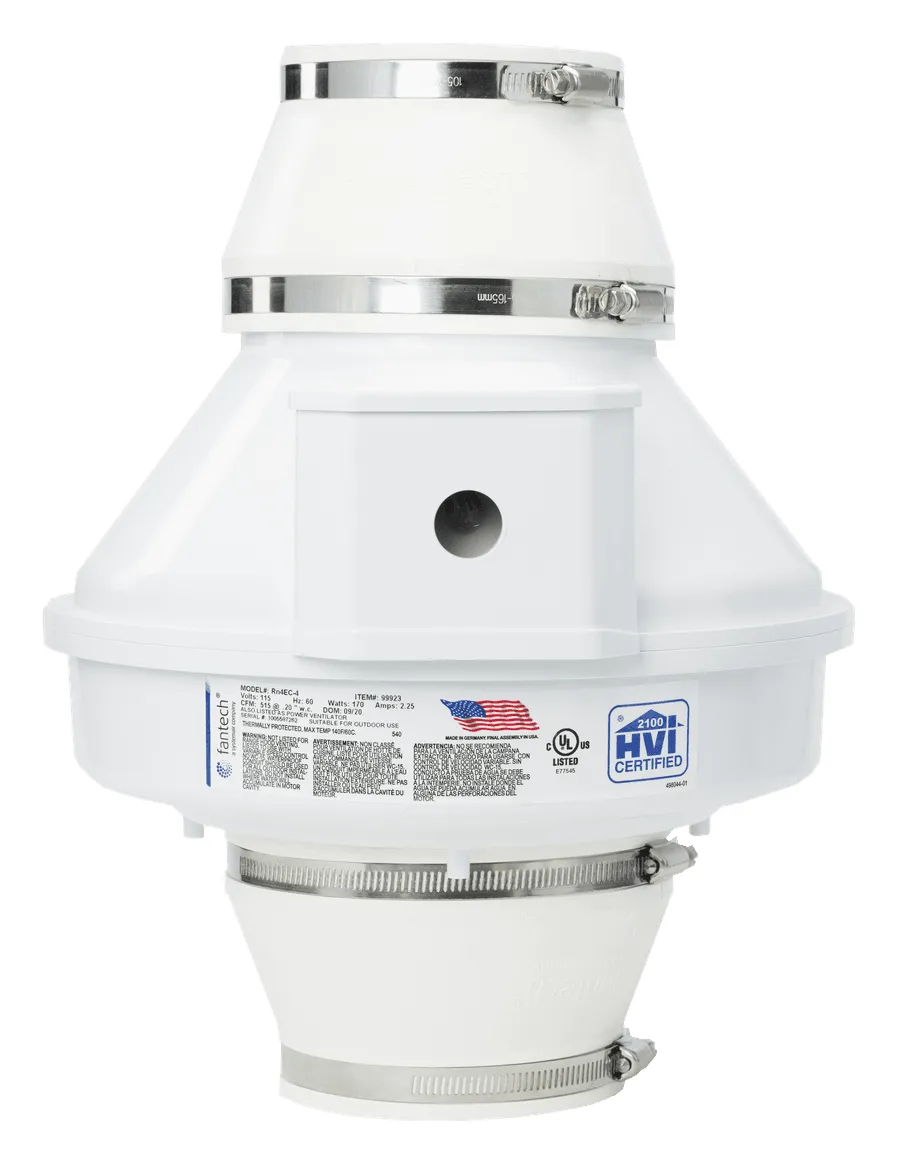
This page
Fantech Rn4EC-4
- What it does
- Moves up to 330 CFM
- Power
- Up to 174 W
- C-NRPP 2024/25
- Not applicable (mitigation fan)
This page: The Rn 4EC-4 (item 99923) is the highest-pressure fan in Fantech's Rn radon line: an EC-motor inline fan with a speed dial built in, shipped with two LDVI couplings for 4 inch schedule 40 PVC.
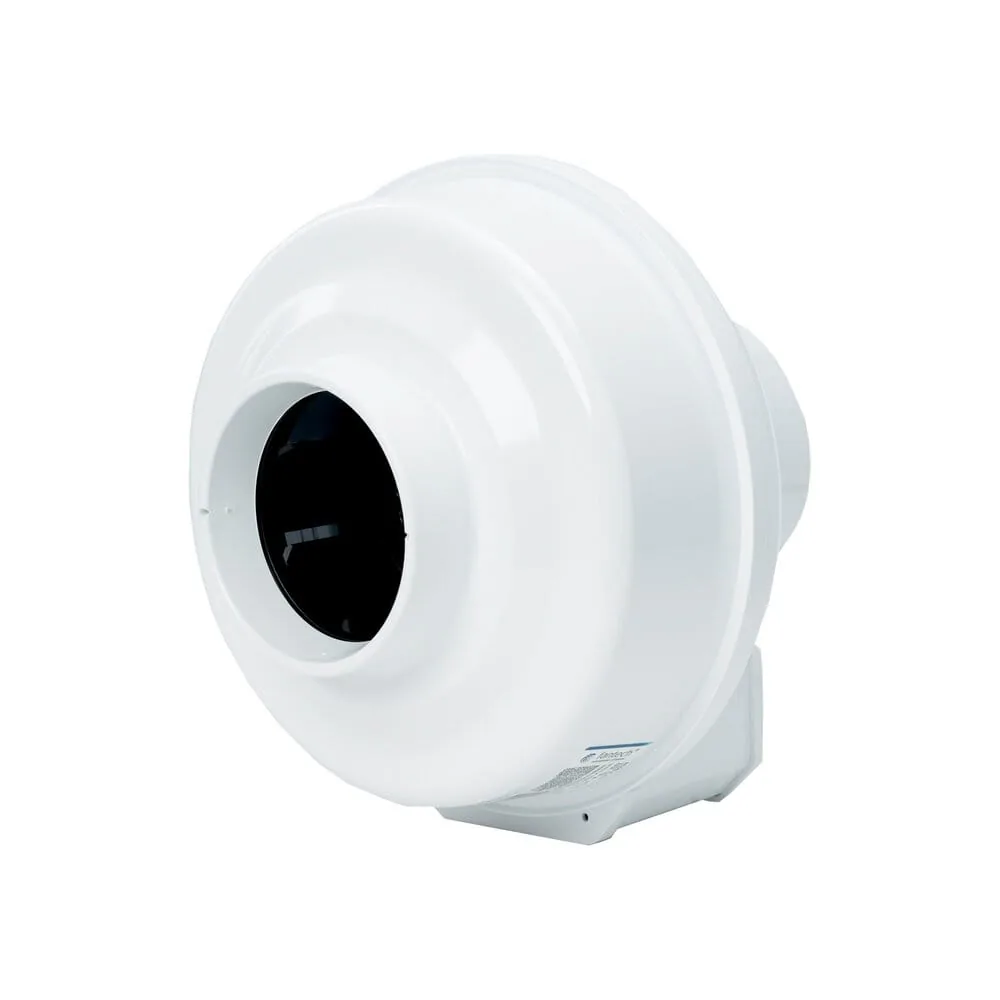
Fantech
- What it does
- Moves up to 174 CFM
- Power
- Up to 59 W
- C-NRPP 2024/25
- Not applicable (mitigation fan)
The difference: Fantech's mid-range fan, with an AC motor and no dial: the 2025 brochure lists the Rn 2 at 0.0 to 1.8 inches, 2.0 inches maximum, 59 W and 174 CFM.
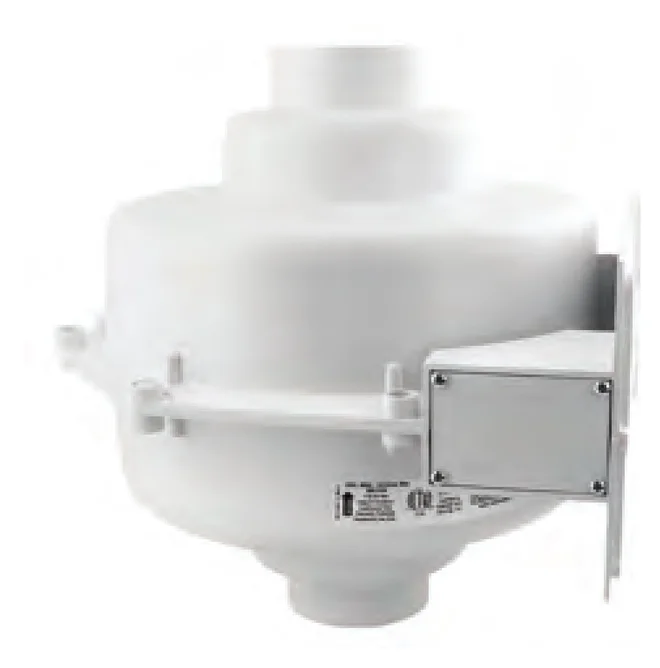
RadonAway
- What it does
- Not stated
- Power
- Up to 146 W
- C-NRPP 2024/25
- Not applicable (mitigation fan)
The difference: RadonAway's higher-suction 3 inch Contractor Series fan, which RadonAway lists at 68 to 146 W with a recommended maximum operating pressure of 3.8 inches.
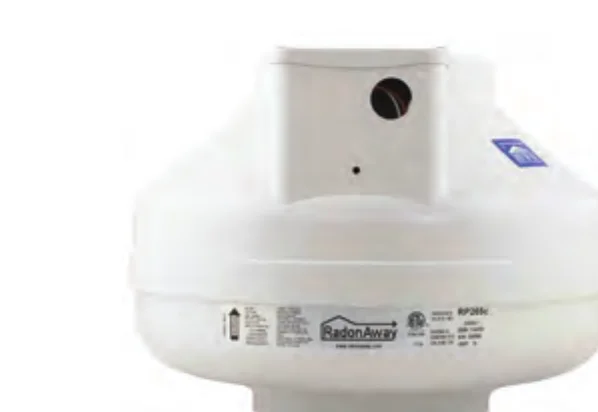
RadonAway
- What it does
- Moves up to 326 CFM
- Power
- Up to 122 W
- C-NRPP 2024/25
- Not applicable (mitigation fan)
The difference: The larger of RadonAway's 6 inch Contractor Series fans, which RadonAway lists at 326 CFM against no resistance and 86 to 122 W, with a recommended maximum operating pressure of 2.2 inches.
Compared with similar products: 1 of 4
More radon fan models15
All radon fan modelsRadon fan
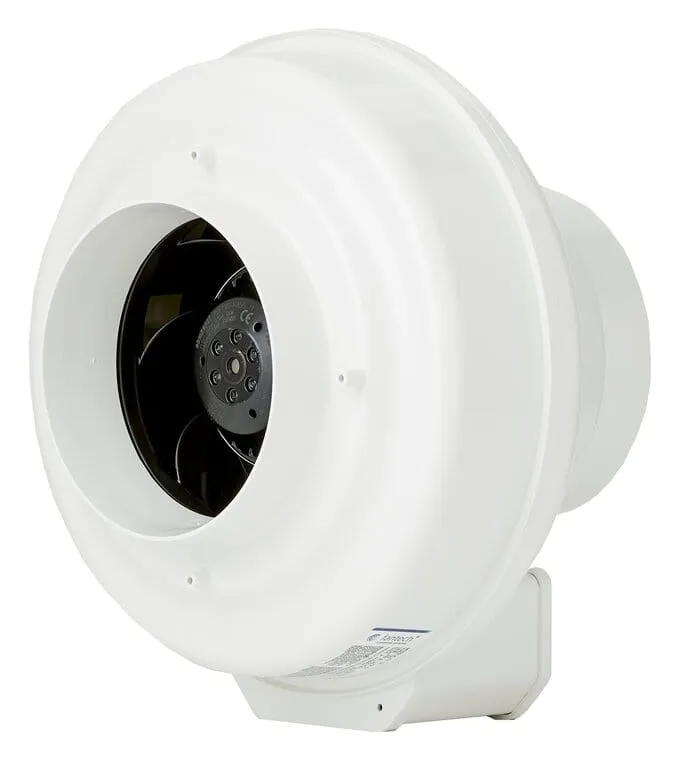
Rn2 inline radon mitigation fan
- 3 or 4 in. schedule 40 PVC
- 59 W
Max airflow: 174 CFM
Max pressure: 2.0 in w.c.
Radon fan
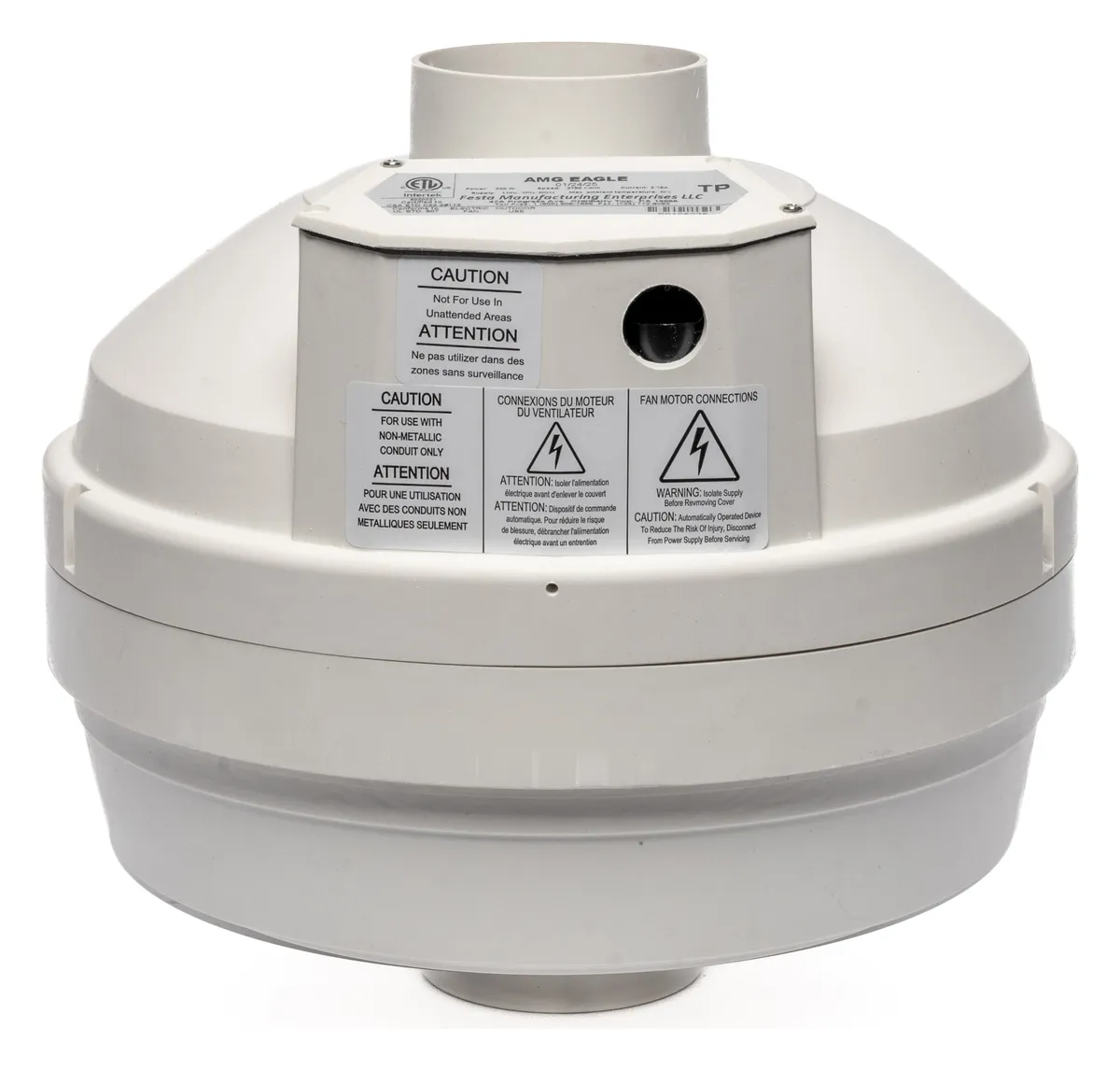
Rn3 inline radon mitigation fan
- 5 7/8 in. fan connection
- 125 W
Max airflow: 337 CFM
Max pressure: 2.6 in w.c.
Radon fan

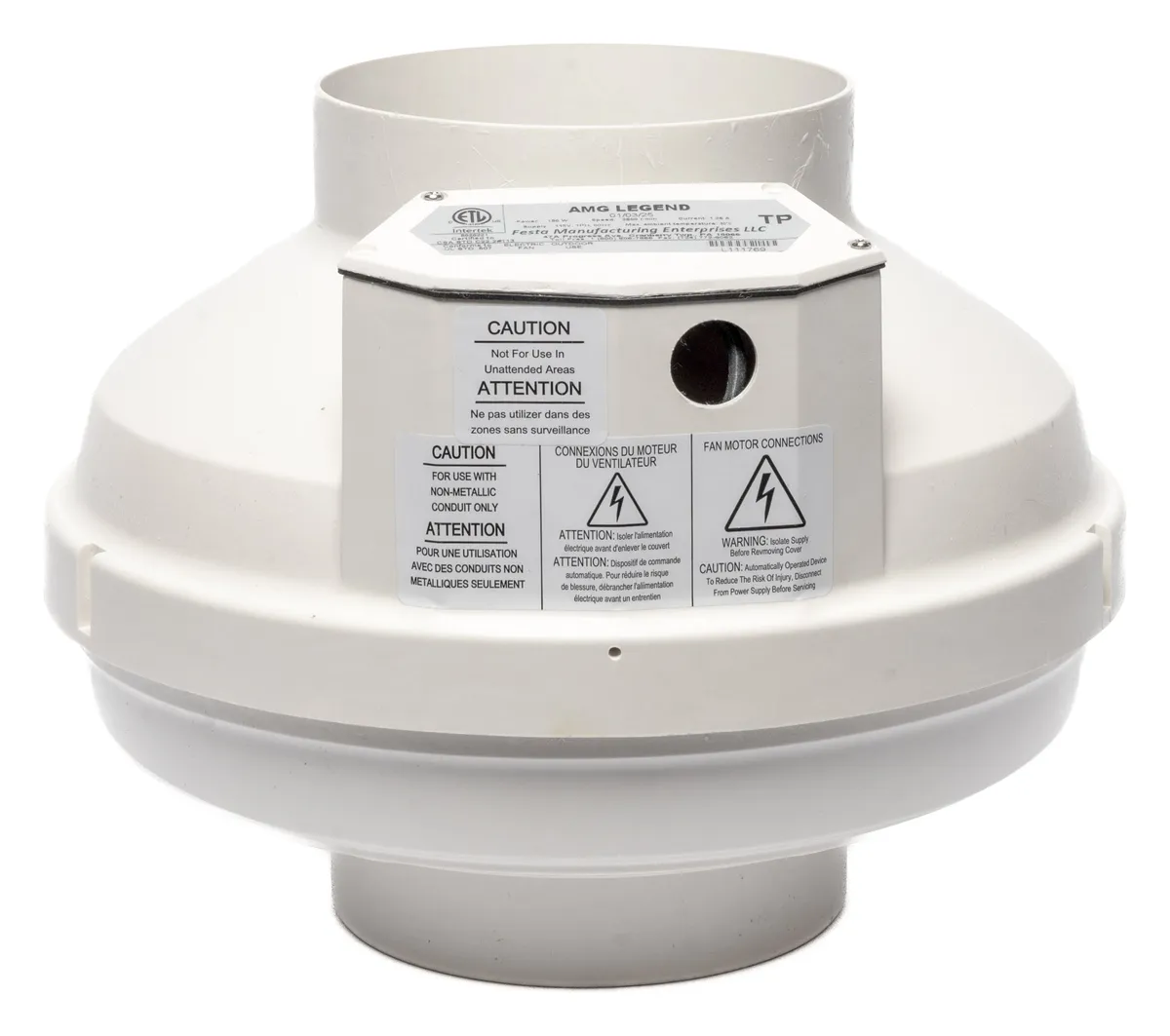
AMG Eagle inline radon mitigation fan
- 3 in. Fernco coupler size
- 310 W
Max airflow: 241 CFM
Max pressure: 4.2 in w.c.
Radon fan
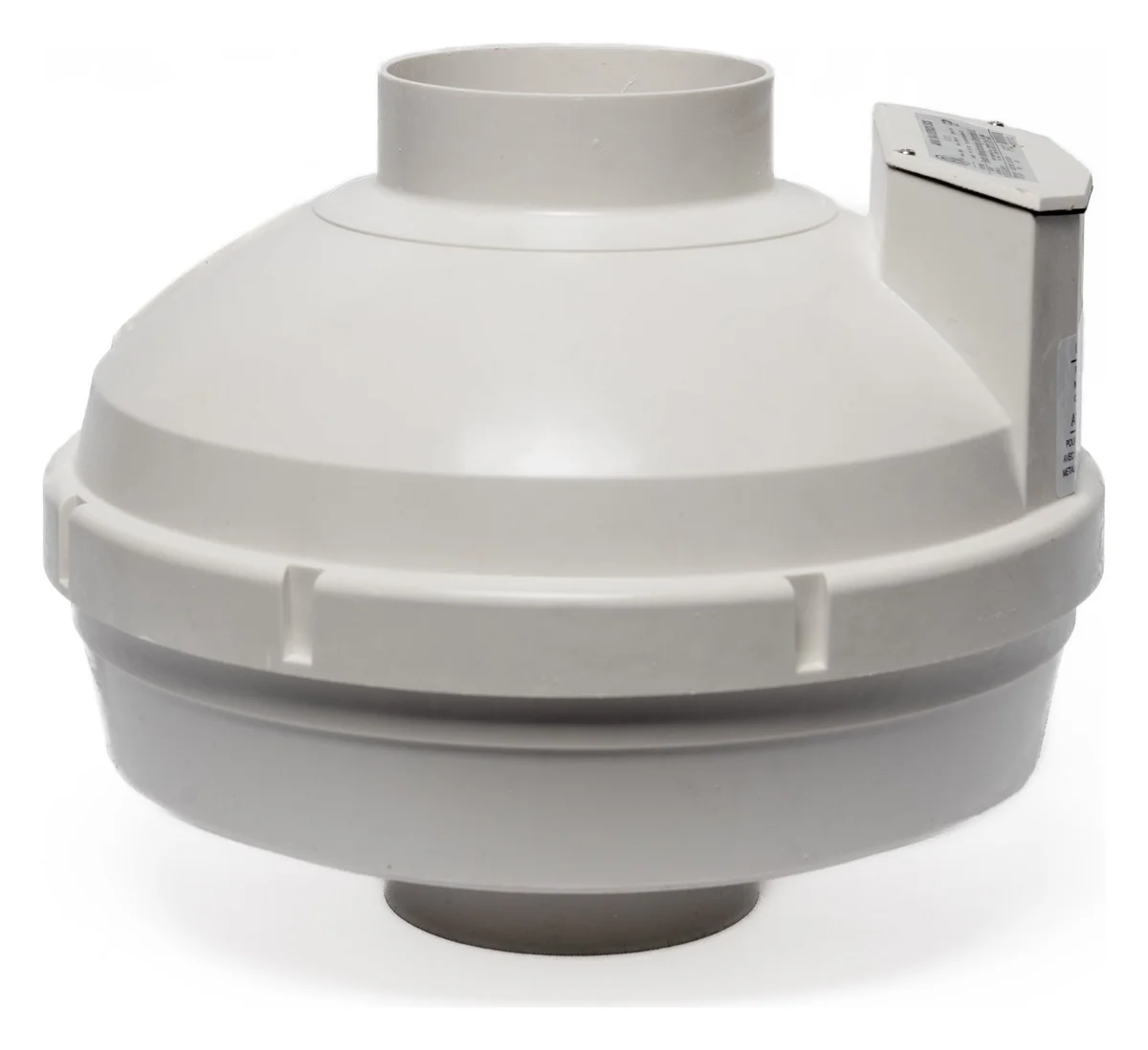
AMG Legend inline radon mitigation fan
- 6 in. Fernco coupler size
- 140 W
Max airflow: 345 CFM
Max pressure: 2.6 in w.c.
Radon fan
AMG Maverick inline radon mitigation fan
- 4 in. Fernco coupler size
- 66 W
Max airflow: 260 CFM
Max pressure: 2.21 in w.c.
Radon fan

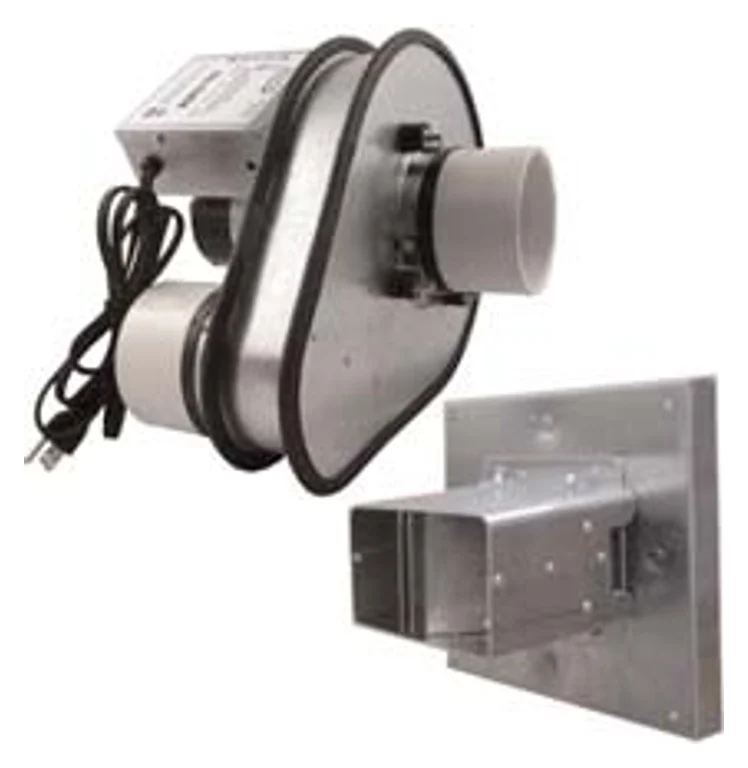
RMS160 side-wall radon mitigation system
- 3 in. schedule 40 PVC
- 50 W
Max airflow: 160 CFM
Max pressure: 2.3 in w.c.
- All radon fan models More radon fan models

More radon fan models: 1 of 15
Questions
Questions people ask
6 questions about the Fantech Rn4EC-4, answered
Asked about the Rn4EC-4
How much suction can the Rn 4EC-4 pull?
Fantech's 2025 brochure lists a maximum static pressure of 4.75 inches of water column and an application range up to 4.35 inches, with a maximum airflow of 330 CFM. The brochure and the manual print those maximums rather than a row of airflow at set pressures, so ask your mitigator how the fan performs at your system's measured suction.
What is the difference between the Rn 4EC-3 and the Rn 4EC-4?
The pipe they serve. Fantech's manual says the Rn4EC-3 is designed for 3 inch and the Rn4EC-4 for 4 inch schedule 40 PVC, on the same housing; their couplings narrow to 3 1/2 and 4 1/2 inches. The brochure lists item 99922 (the -3) at 173 W and 216 CFM and item 99923 (the -4) at 174 W and 330 CFM, with the same pressure figures.
How do I turn the Rn 4EC down?
With its own dial. Fantech's manual says to use a small screwdriver and turn the potentiometer knob counterclockwise to reduce the fan's speed, and warns against using the fan with any solid state speed control device. Fantech's Rn page describes the built-in controller as a way to reach a desired level of suction with low power consumption.
Can the Rn 4EC-4 be installed outside?
Fantech's Rn page says the line is UL Listed for safety and outdoor use and has a UV-resistant resin housing. The EPA's construction guide adds that the fan belongs outside the home's living space, and its consumer guide names unconditioned home and garage spaces, attics among them, and the exterior of the home.
Which fans does the Rn 4EC replace?
Fantech's 2025 brochure cross-references its own FR 200, FR 225 and FR 250 to the Rn 4EC and lists no RadonAway or Festa match, basing its swaps on pressure capability. Festa's 2022 catalog, for its part, sends an installed Fantech RN4 to its AMG Legend Extreme.
Do I need a professional to install it?
Fantech says so: its manual recommends a trained, licensed, certified mitigation professional and warns that incorrect installation voids the warranty. The EPA recommends a qualified mitigation contractor too, and many states require radon professionals to be licensed, certified or registered.
What to do next
- See every radon fan we coverEach maker's published pressure, airflow and power, side by side.
- Find a mitigation professionalMost systems are designed and installed by one; some states require a license.
- Understand the fanWhat the fan does in a system, and when one needs replacing.
- Test after it runsA short-term test after installation shows whether the system works.
Updated November 27, 2026