The full guide to radon fans
This page is a short summary. The radon fan guide covers how the fan works, where it goes, sizing, noise, running cost and what to do when it stops.
Short answer
The fan is the part of a mitigation system that keeps working continuously: it draws soil gas from beneath the foundation through the vent pipe and releases it outdoors, keeping the space under the slab at lower pressure than the indoor air.
Why it runs all the time
Mitigation depends on a constant pressure difference between the soil beneath the home and the indoor air. If the fan stops, that pressure difference goes away and soil gas can migrate back toward the path of least resistance, which may be back into the home. That is why the fan is designed to run continuously, not on a timer or a thermostat-style cycle.
Signs it needs attention
- A U-tube manometer on the pipe (if installed) showing no pressure difference.
- No airflow or sound from the fan when the system was previously audible.
- A radon result that has crept back up on a routine retest.
- Visible ice, damage, or an alarm light on systems with a fan-failure warning device.
A fan that has stopped working is a service call for the mitigation professional who installed the system, not a do-it-yourself repair, since it is wired into a dedicated circuit and sealed into the vent piping.
How the fan is sized
Fan airflow, measured in cubic feet per minute (CFM), is matched to soil permeability, the number of suction points and the area each one needs to depressurize, determined by a pressure field extension test at the specific home rather than picked from a fixed number. See what CFM fan a system needs for how that sizing works.
Fan models and their figures
Each fan we cover has its own page with the figures its maker publishes (pressure, airflow, power and pipe size), and says so where we could read none. They help in reading the fan a mitigator proposes, or the one already in your system. More models, in each maker's own figures, are on radon fan models compared. The EPA recommends that a qualified radon mitigation contractor fix a home, and notes that many states require radon professionals to be licensed, certified or registered; see finding a mitigation professional.
The fans we cover11
All fan models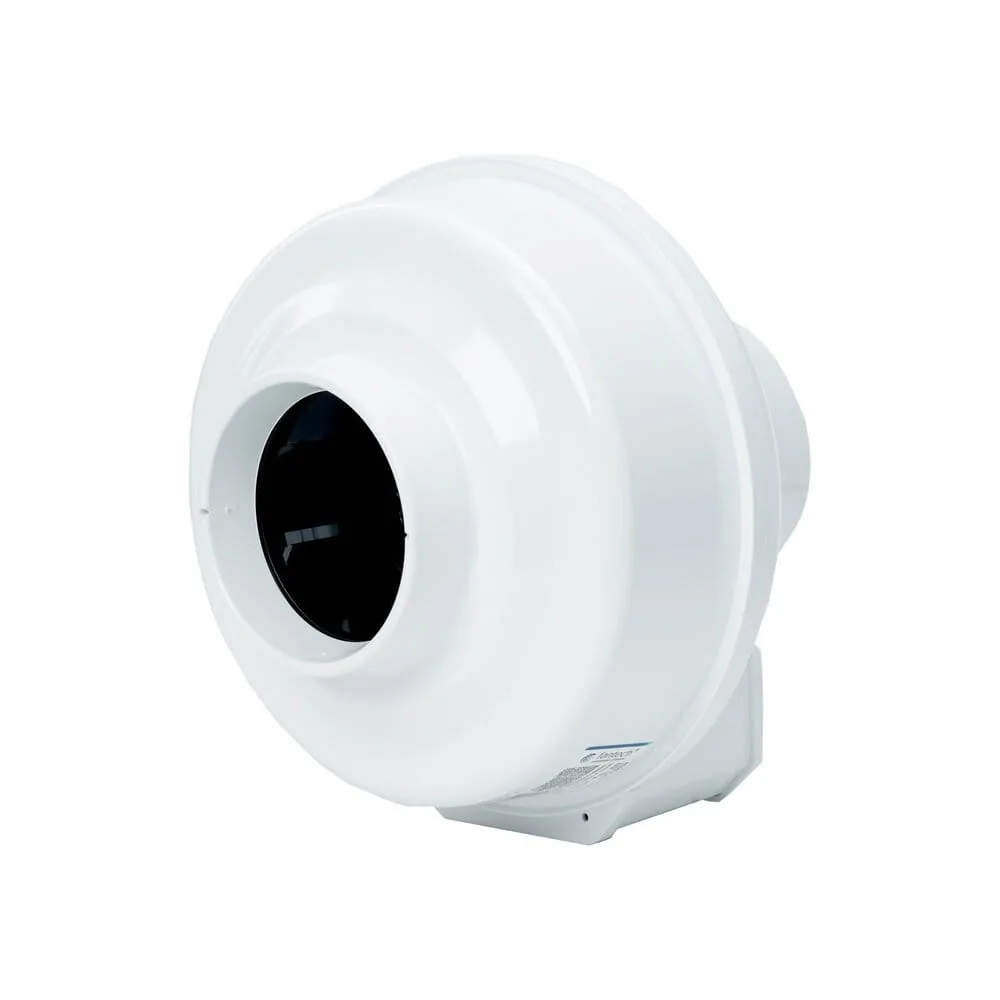
Radon fan

Rn2 inline radon mitigation fan
- 3 or 4 in. schedule 40 PVC
- 59 W
Max airflow: 174 CFM
Max pressure: 2.0 in w.c.
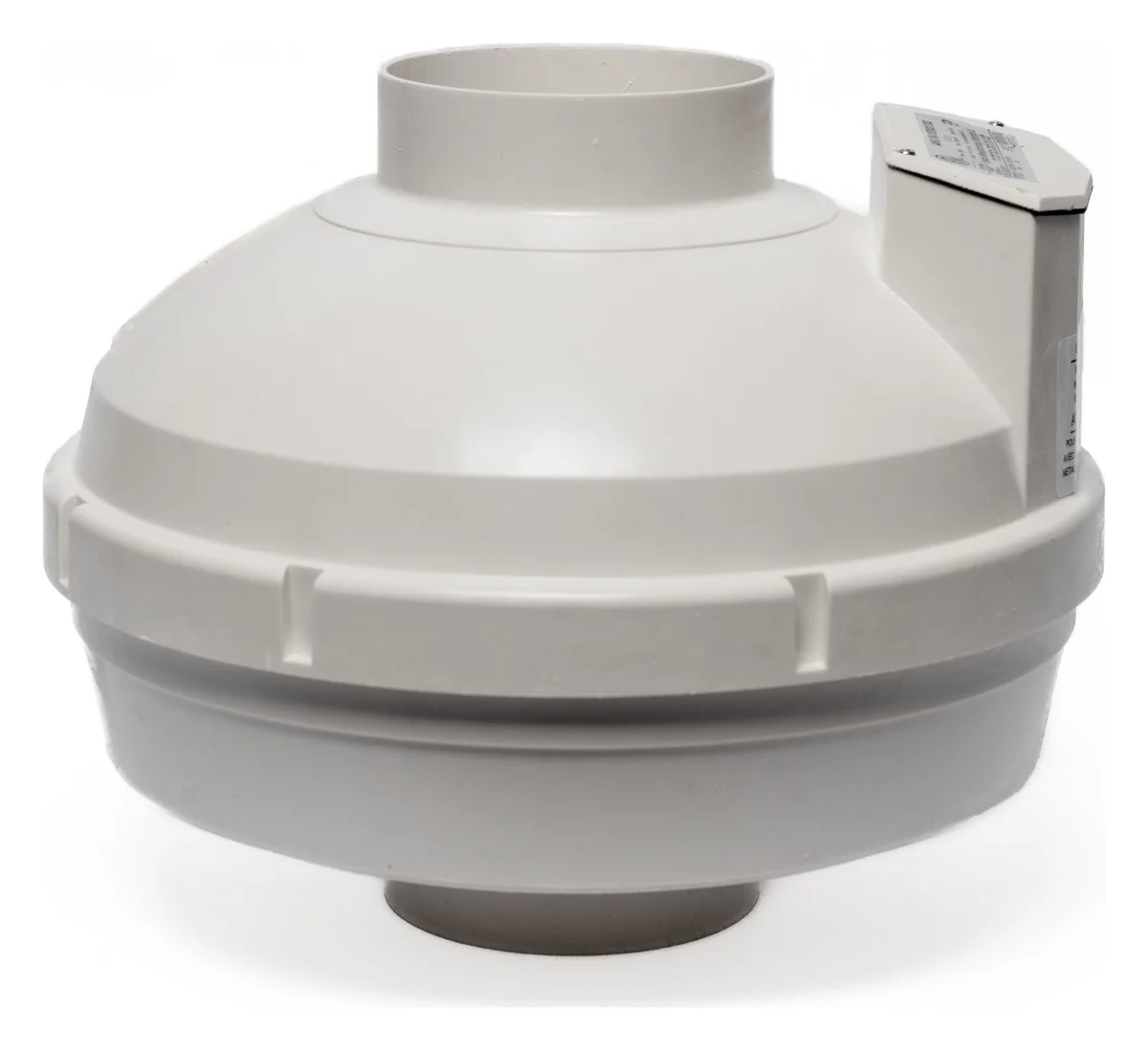
Radon fan

AMG Maverick inline radon mitigation fan
- 4 in. Fernco coupler size
- 66 W
Max airflow: 260 CFM
Max pressure: 2.21 in w.c.
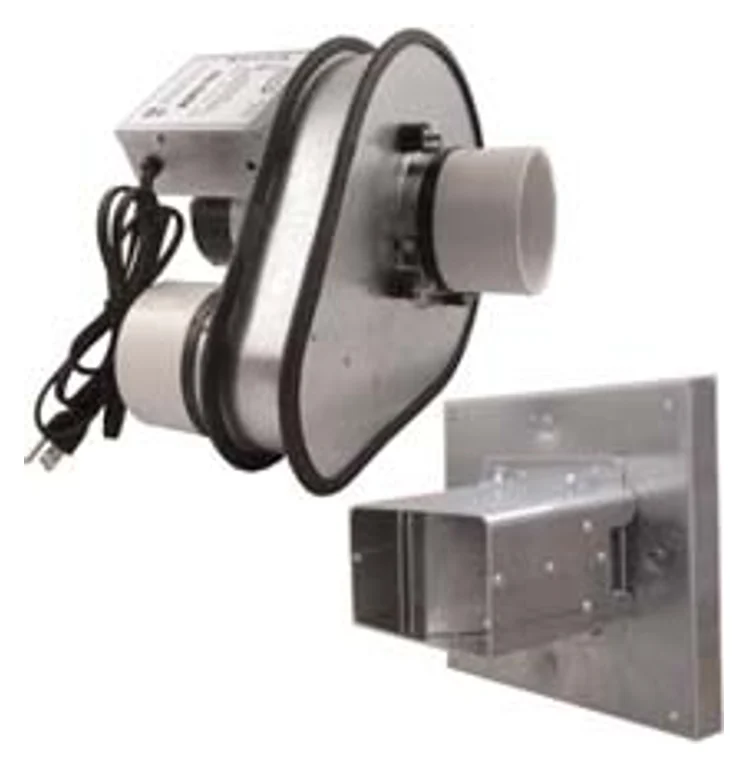
Radon fan

RMS160 side-wall radon mitigation system
- 3 in. schedule 40 PVC
- 50 W
Max airflow: 160 CFM
Max pressure: 2.3 in w.c.
- All fan modelsThe fans we cover
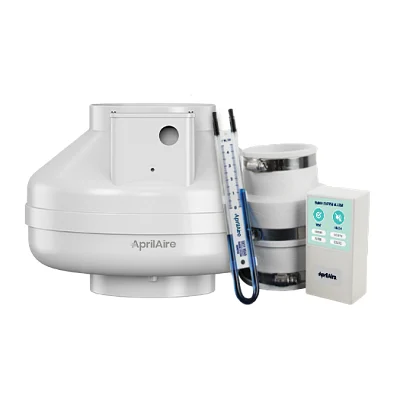
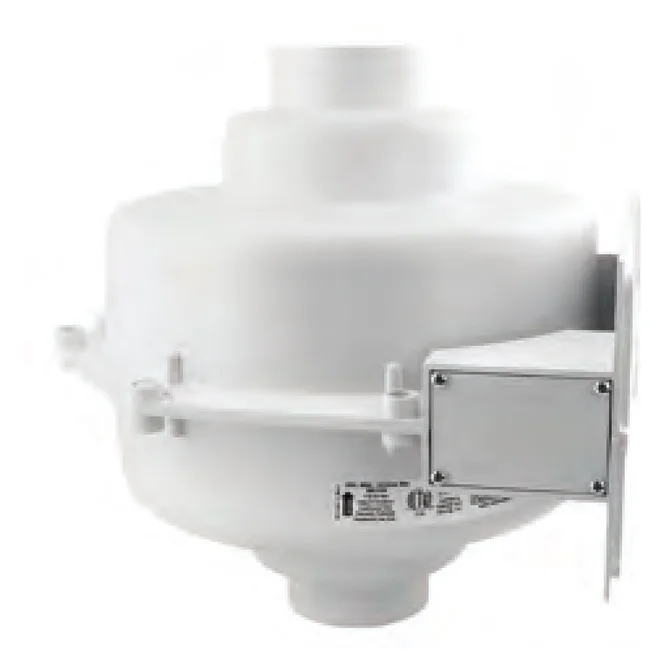

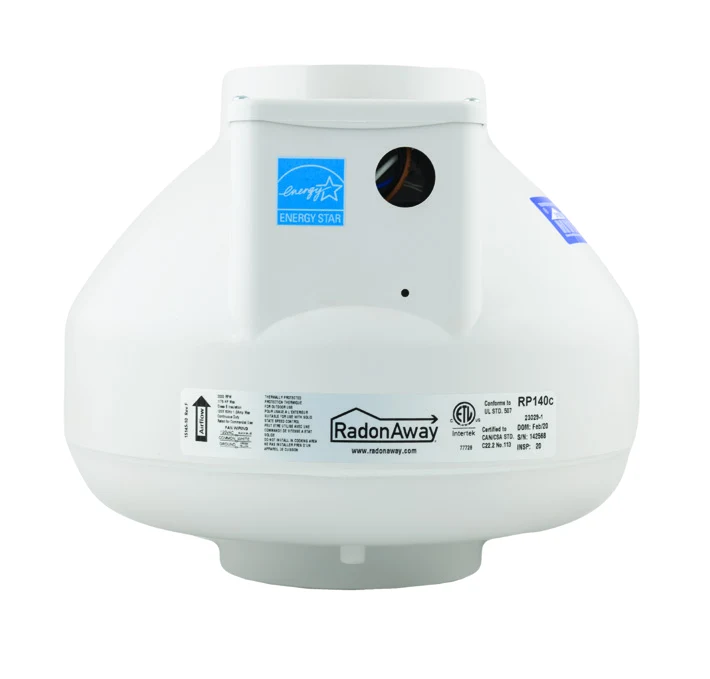
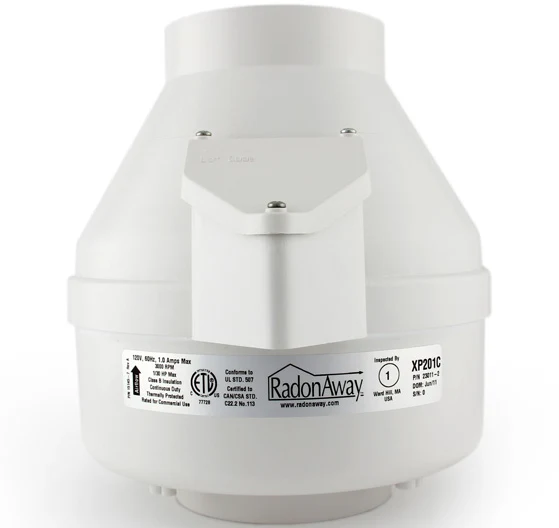
The fans we cover: 1 of 11
As an Amazon Associate, Radon411 earns from qualifying purchases.
Can you turn it off?
The fan is designed to run continuously. Turning it off, even temporarily, removes the pressure difference the system depends on, and the radon level can rise back toward its pre-mitigation reading. See whether you can turn off a radon system before doing so.
Common mistakes
- Turning the fan off to save on the small electricity cost or during a renovation, without realizing the radon level can rise back toward the pre-mitigation reading.
- Ignoring a fan that has stopped running or sounds different than before, rather than treating it as a service call.
- Assuming any fan will do, rather than one sized (by CFM) to the specific home's soil conditions and suction point count.
- Mounting or wiring the fan without a licensed professional, which can create a safety hazard given the fan runs continuously on a dedicated circuit.
Common questions
- What CFM radon fan do I need?
- Enough to keep the soil under your slab at lower pressure than the air in the house. For a typical new home with radon piping, a fan moving 100 cubic feet per minute at one inch of water column should be sufficient, but soil, suction points and foundation decide the right fan for yours.
- Can I turn off my radon system?
- No. A radon fan should never be turned off: it must run continuously for the system to work. The fan draws radon from under the floor and vents it above the roof, and when a system stops venting, radon levels in the building rise. Running it only slightly raises the electric bill.