 RadonAway
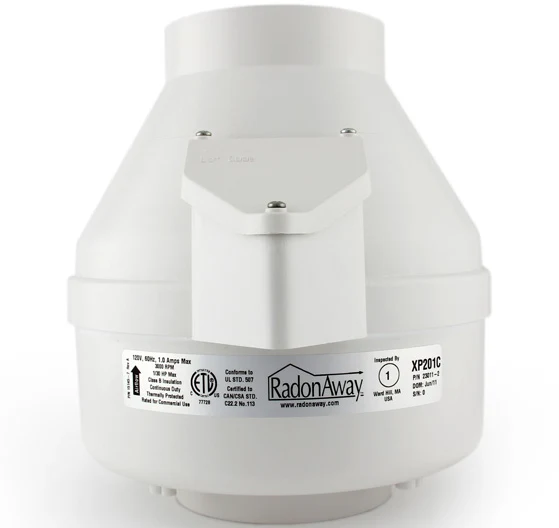
RadonAway XP201c
Inline radon mitigation fan
- Radon fan
- 4 in. fan duct
- 66 W
Photos: RadonAway
 (opens in a new tab)Check price on Amazon (opens in a new tab)
As an Amazon Associate, Radon411 earns from qualifying purchases.
Amazon and the Amazon logo are trademarks of Amazon.com, Inc. or its affiliates.
See ratings and reviews on Amazon (opens in a new tab)- Pipe size4 in. fan duct; 4.5 in. OD inlet and outlet, 4.0 in. PVC Schedule 40 size compatible; recommended ducting 3 or 4 in. Schedule 20/40 PVC
- Power draw66 W
- Every figure checked against the specifications RadonAway publishes
- The maker's own performance table, point by point, unranked
About this item
As RadonAway states it
- Motor: AC
- Pipe size: 4 in. fan duct; 4.5 in. OD inlet and outlet, 4.0 in. PVC Schedule 40 size compatible; recommended ducting 3 or 4 in. Schedule 20/40 PVC
- Max airflow: 112 CFM
- Max power: 66 W
- Power supply: 120 V, 60 Hz AC; 45 to 66 W
- Speed control: None
- Airflow at static pressure: 112 CFM at 0.00 in w.c.; 95 at 0.50; 70 at 1.00; 40 at 1.50
- Outdoor use: Rated for outdoor installation
- Warranty: 12 months from purchase or 18 months from manufacture, whichever is sooner; extended to 60 months from purchase or 66 months from manufacture when installed by a professional radon mitigation contractor (IN096 Rev F; RadonAway's 2017 sheet says 5-year, its IN014 Rev M says 90 days or 5 years with professional installation)
The XP201c, part number 23011-1, is a 4 inch inline radon fan in RadonAway's XP/XR Series. RadonAway's 2017 XP/XR Series sheet lists it at 45 to 66 W, with a recommended maximum operating pressure of 1.7 inches of water column and 112 CFM at 0 inches. RadonAway's current website lists a different fan under the XP201 name, the XP201 Pro Series (P/N 28470), with different figures; this page covers part number 23011-1 as RadonAway documented it.
What you get
RadonAway does not publish a package list for the XP201c; the full box contents are not stated by the maker. Its instructions refer to the wire nuts provided for the electrical connection, and treat the mounting bracket (P/N 25007) and a vent muffler as optional extras. RadonAway says nothing about couplings coming with the fan, so plan on flexible couplings for 4 inch pipe.
In the box and running costsHow it works
What it does and how
The suction, the airflow and the housing, then who has checked it
How it works
In our words, from the maker's documents
A radon fan is the part of an active soil depressurization system that never stops. The EPA's guide describes the vent fan drawing radon gas from below the home through the suction pipes and releasing it to the outdoor air, while creating a negative pressure or vacuum under the slab. The fan has to run continuously for the system to work.
A fan is described by a curve, not one number. Static pressure, in inches of water column, is how hard it pulls against the soil and the pipe; airflow, in cubic feet per minute, is how much air it moves at that pressure. RadonAway's 2017 sheet gives the XP201c's typical airflow as 112 CFM at 0 inches, 95 CFM at 0.5 inches, 70 CFM at 1.0 inch and 40 CFM at 1.5 inches, for a 4 inch fan duct and 45 to 66 W.
RadonAway rates the XP201c by a recommended maximum operating pressure, 1.7 inches of water column on the 2017 sheet, which is the most suction it advises the fan to run against. Its IN014 instructions say to lower that figure by about 4% per 1,000 feet of altitude and by a further 10% in high temperature environments, and to add suction points if a system's measured vacuum is above it.
RadonAway's own documents do not agree on this fan's figures, and a buyer should know which is which. Its installation instructions IN014 Rev M list the XP201 under p/n 23011-1 at 45 to 66 W and 1.7 inches, but with a curve of 150, 110, 74 and 38 CFM at 0, 0.5, 1.0 and 1.5 inches. Its later instructions, IN096 Rev F, list an XP201c with no part number at 38 to 74 W, a 1.6 inch recommended maximum, and 126, 98, 66 and 26 CFM at 0, 0.5, 1.0 and 1.5 inches.
The fan on RadonAway's website today is the XP201 Pro Series, part number 28470: RadonAway lists it at 45 to 66 W, 1.6 inches, and 126, 98, 60 and 26 CFM at the same four pressures, with an Eternalast polycarbonate housing and a five-year limited warranty. That is a different product from part number 23011-1, and none of its figures are used for the XP201c here.
RadonAway's IN014 instructions describe the XP series body as 9.5 inches high by 8.5 inches in diameter and 6 pounds, with a 4.5 inch outside-diameter inlet and outlet that is 4.0 inch PVC Schedule 40 size compatible, a continuous duty, thermally protected motor with Class B insulation at 3000 RPM, and a normal operating temperature range of minus 20 to 120 degrees F. RadonAway says the XP fans run on 120 V, 60 Hz AC.
What the manufacturer says
RadonAway's own statements, attributed
- RadonAway saysRadonAway lists the XP201c (P/N 23011-1) as a 4 inch fan drawing 45 to 66 W, with a recommended maximum operating pressure of 1.7 in. WC and typical airflow of 112, 95, 70 and 40 CFM at 0, 0.5, 1.0 and 1.5 in. WC.
- RadonAway saysRadonAway states the XP/XR Series has a water-hardened, thermally protected motor and seams sealed to inhibit radon leakage, and is ETL Listed for indoor or outdoor use.
- RadonAway saysRadonAway states that all its fans are specifically designed for radon mitigation and that XP/XR Series fans run ultra-quietly and are ideal for most sub-slab radon mitigation systems.
- RadonAway saysRadonAway states the XP/XR Series is made in the USA with U.S. and imported parts.
- RadonAway saysRadonAway states that its XP fans are not suitable for underground burial and must be mounted vertically, plumb and level, with the outlet pointing up.
These are RadonAway's own statements, attributed to it. They are not our findings, and we have not tested this product ourselves.
Independent evidence
Who checks a device like this
C-NRPP's consumer evaluation covers electronic radon monitors, not mitigation fans, so it has no result for RadonAway XP201c. The safety listing and performance certification the maker states are under “What the manufacturer says”, and what shows whether any fan is working in your home is a radon test after it is installed.
Specifications
Specifications
Every figure as the maker states it
The maker's figures
- Type
- Mitigation fan, inline
- Motor
- AC
- Pipe size
- 4 in. fan duct; 4.5 in. OD inlet and outlet, 4.0 in. PVC Schedule 40 size compatible; recommended ducting 3 or 4 in. Schedule 20/40 PVC
- Max static pressure
- Not stated by the manufacturer
- Max airflow
- 112 CFM
- Max power
- 66 W
- Power supply
- 120 V, 60 Hz AC; 45 to 66 W
- Speed control
- None
- Airflow at static pressure
- 112 CFM at 0.00 in w.c.; 95 at 0.50; 70 at 1.00; 40 at 1.50
- Outdoor use
- Rated for outdoor installation
- Warranty
- 12 months from purchase or 18 months from manufacture, whichever is sooner; extended to 60 months from purchase or 66 months from manufacture when installed by a professional radon mitigation contractor (IN096 Rev F; RadonAway's 2017 sheet says 5-year, its IN014 Rev M says 90 days or 5 years with professional installation)
What is in the box
RadonAway does not publish a package list for the XP201c; the full box contents are not stated by the maker. Its instructions refer to the wire nuts provided for the electrical connection, and treat the mounting bracket (P/N 25007) and a vent muffler as optional extras. RadonAway says nothing about couplings coming with the fan, so plan on flexible couplings for 4 inch pipe.
RadonAway has stated three different warranties for this fan over time. The 2017 sheet says all RadonAway inline radon fans are covered by a 5-year warranty. The IN014 instructions give 90 days from purchase, extended to five years or 63 months from manufacture in a professionally designed and installed system. The later IN096 instructions give 12 months from purchase or 18 months from manufacture, extended to 60 months from purchase or 66 months from manufacture when a professional radon mitigation contractor installs the fan. Keep proof of purchase and of professional installation.
What it costs to run
The running cost is electricity, around the clock. RadonAway's 2017 sheet lists the XP201c at 45 to 66 W; at 66 W, a year of continuous running is about 578 kWh, and your utility rate sets what that costs. Its later IN096 instructions give the XP201c a wider 38 to 74 W. There is no filter or other consumable.
Fans wear out. The EPA's guide says fans may last five years or more and that manufacturer warranties tend not to exceed five years. RadonAway's annual checklist asks you to confirm the connections are tight, the fan is secure and vibration free, the manometer reads within the normal range and below the maximum recommended operating pressure, and radon levels are tested to EPA protocol.
Airflow at each pressure
RadonAway's performance table, point by point
| Static pressure | Airflow |
|---|---|
| 0.00 in w.c. | 112 CFM |
| 0.50 in w.c. | 95 CFM |
| 1.00 in w.c. | 70 CFM |
| 1.50 in w.c. | 40 CFM |
Airflow falls as the suction the system needs rises. A mitigator matches the fan to pressure measured under the slab.
Fit and setup
Who it fits, and installation
The fit, then how a system goes in
Who it fits
Good fit if, and look elsewhere if
Good fit if
- You are replacing an XP201c whose label reads part number 23011-1 and want RadonAway's figures for it.
- Your mitigator measured suction within the 1.7 inch recommended maximum RadonAway's 2017 sheet gives.
- The fan will sit outdoors, which RadonAway says the XP series allows with a watertight conduit.
- You want a 4 inch fan that mounts directly on the system pipe with flexible couplings.
Look elsewhere if
- You want the fan RadonAway sells on its own site today; that is the XP201 Pro, P/N 28470.
- Your system needs more than 1.7 inches; RadonAway rates its GP301c and GP501c to 2.3 and 3.8 inches.
- You are designing a first system yourself; the EPA recommends a qualified mitigation contractor.
- You need one set of figures; RadonAway's documents for the XP201c disagree with each other.
Installation
5 steps
- The EPA recommends that a qualified radon mitigation contractor fix a home, and notes that many states require radon professionals to be licensed, certified or registered. RadonAway says its XP fans are intended for use by trained, professional, certified or licensed radon mitigators, and its retail page says non-professional installation is not intended to take the place of a qualified radon professional.
- RadonAway's instructions say to mount the fan vertically with the outlet up, plumb and level, so condensation drains through it, and never where water can collect in the housing. Mounted on the pipe, it should not touch any building surface, to avoid vibration noise; flexible couplings serve as the disconnect for service and isolate vibration. An optional RadonAway mounting bracket, P/N 25007, can hold it instead.
- RadonAway says all wiring must be done by a qualified and licensed electrician, following the National Electrical Code and state and local building codes. Outdoor installations need a UL listed watertight conduit, exterior boxes must be outdoor rated and sealed, and RadonAway says the fan is not intended for rigid metal conduit. It also warns not to leave the fan on the piping without power for more than 48 hours, and to check fuel-burning appliances for backdrafting after installation.
- Where the fan goes matters. The EPA's construction guide says the fan and every positively pressurized part of the vent pipe belong outside habitable space, in a vertical run of the vent pipe, so a leak at the housing or a joint cannot push radon into the home.
- A monitor is part of the system. RadonAway's instructions require a system monitor, such as its manometer (P/N 50017) or an audible alarm, plus a system label, and the EPA's guide says the warning device must be placed where it can be seen or heard easily. The EPA's guide says a post-mitigation test should be done within 30 days of installation, but no sooner than 24 hours after the system is running with the fan on, and suggests retesting at least every two years.
To find someone to design and install a system, see radon mitigation professionals, and for how a fan fits into one, how a radon fan works.
Compare
Compare with similar items
The same three rows for each, and the one difference that matters
This page
RadonAway XP201c
- What it does
- Moves up to 112 CFM
- Power
- Up to 66 W
- C-NRPP 2024/25
- Not applicable (mitigation fan)
This page: The XP201c, part number 23011-1, is a 4 inch inline radon fan in RadonAway's XP/XR Series.
Fantech
- What it does
- Moves up to 174 CFM
- Power
- Up to 59 W
- C-NRPP 2024/25
- Not applicable (mitigation fan)
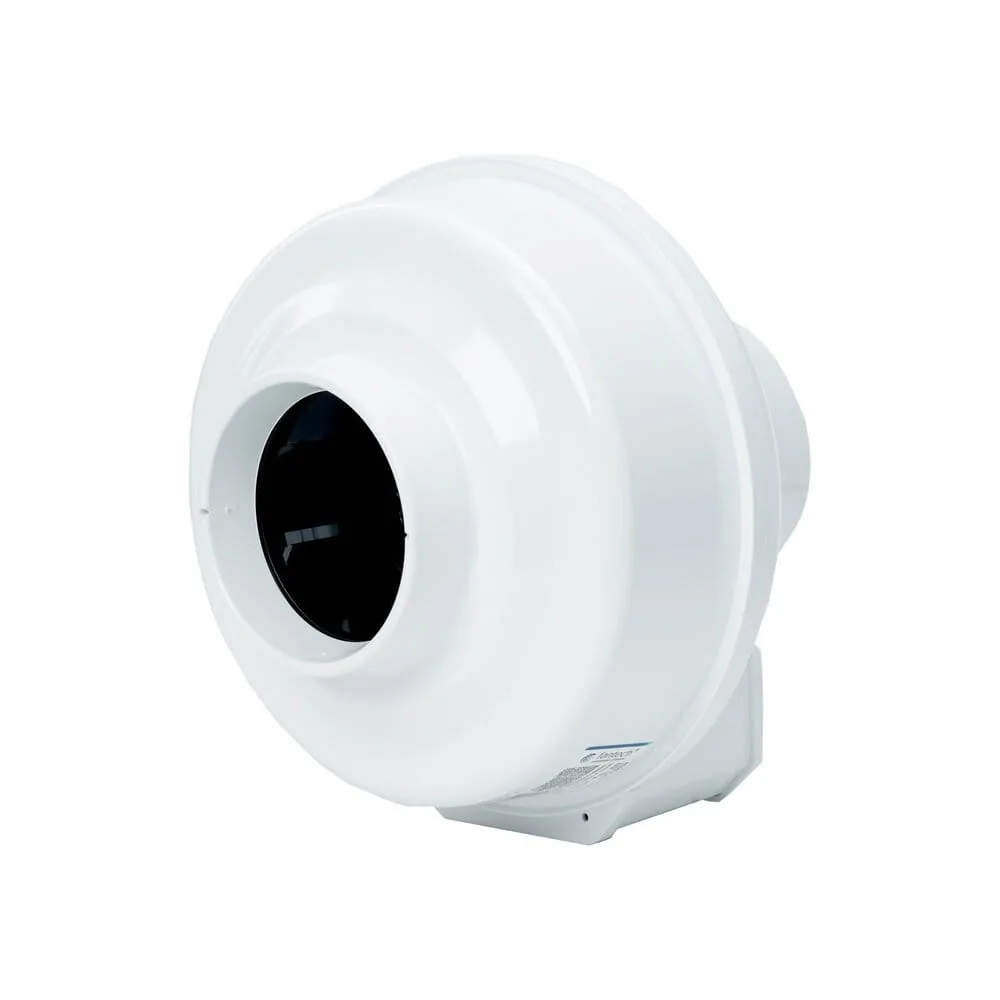
The difference: Another maker's fan: Fantech's 2025 brochure names the Rn2 as its replacement for RadonAway's XP201, based on pressure capability.
Festa
- What it does
- Moves up to 260 CFM
- Power
- Up to 66 W
- C-NRPP 2024/25
- Not applicable (mitigation fan)
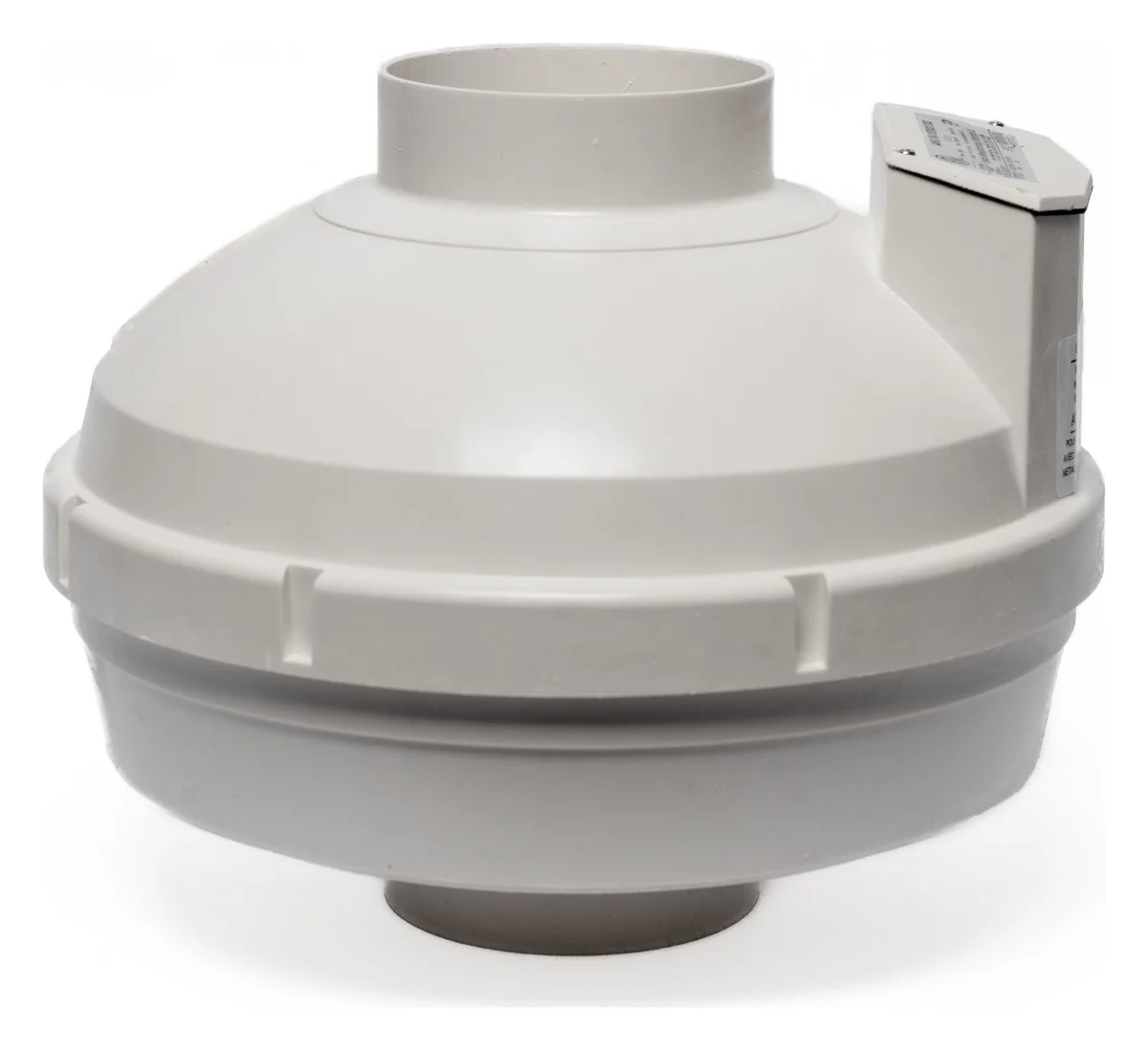
The difference: Another maker's fan: Festa's 2022 catalog replacement guide lists the AMG Maverick or AMG Patriot to replace an installed XP201.
RadonAway
- What it does
- Moves up to 168 CFM
- Power
- Up to 72 W
- C-NRPP 2024/25
- Not applicable (mitigation fan)
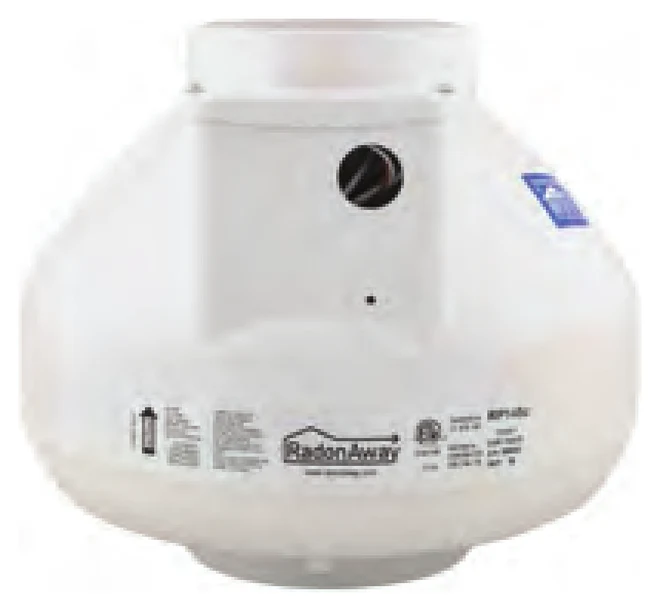
The difference: RadonAway's 4 inch Contractor Series fan: RadonAway lists the RP145c at the same 1.7 inch recommended maximum operating pressure, with 168 CFM at 0 inches.
Compared with similar products: 1 of 4
More radon fan models10
All radon fan modelsRadon fan

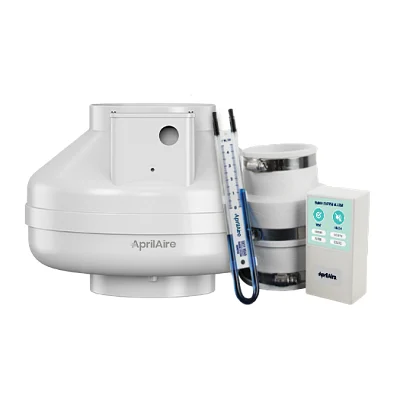
Rn2 inline radon mitigation fan
- 3 or 4 in. schedule 40 PVC
- 59 W
Max airflow: 174 CFM
Max pressure: 2.0 in w.c.
Radon fan

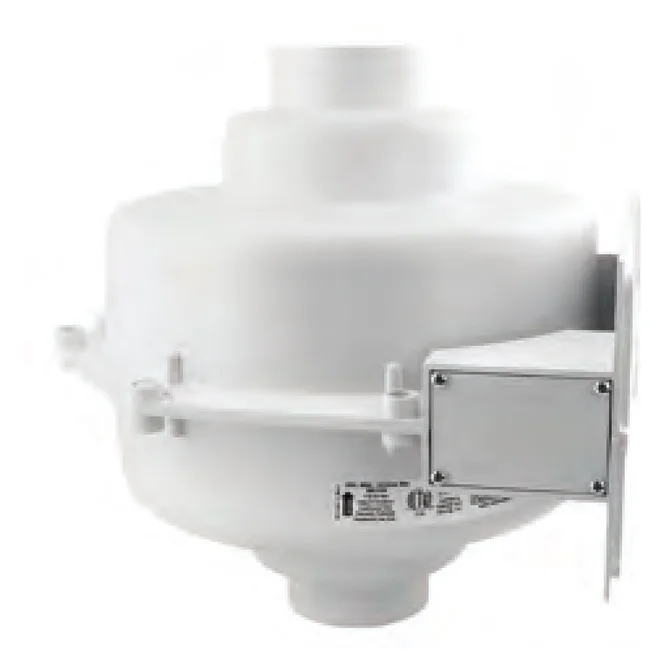
AMG Maverick inline radon mitigation fan
- 4 in. Fernco coupler size
- 66 W
Max airflow: 260 CFM
Max pressure: 2.21 in w.c.
Radon fan

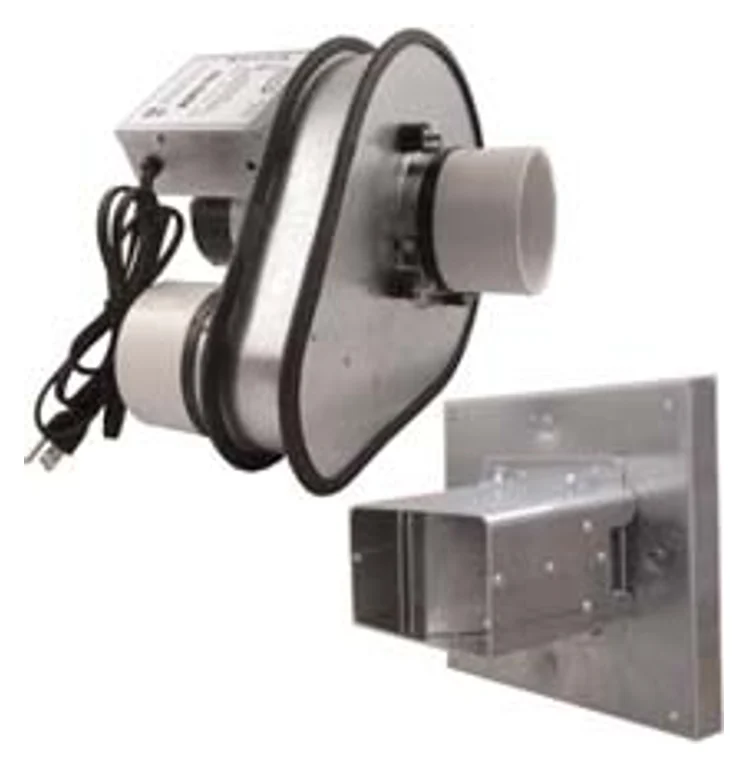
RMS160 side-wall radon mitigation system
- 3 in. schedule 40 PVC
- 50 W
Max airflow: 160 CFM
Max pressure: 2.3 in w.c.
- All radon fan modelsMore radon fan models
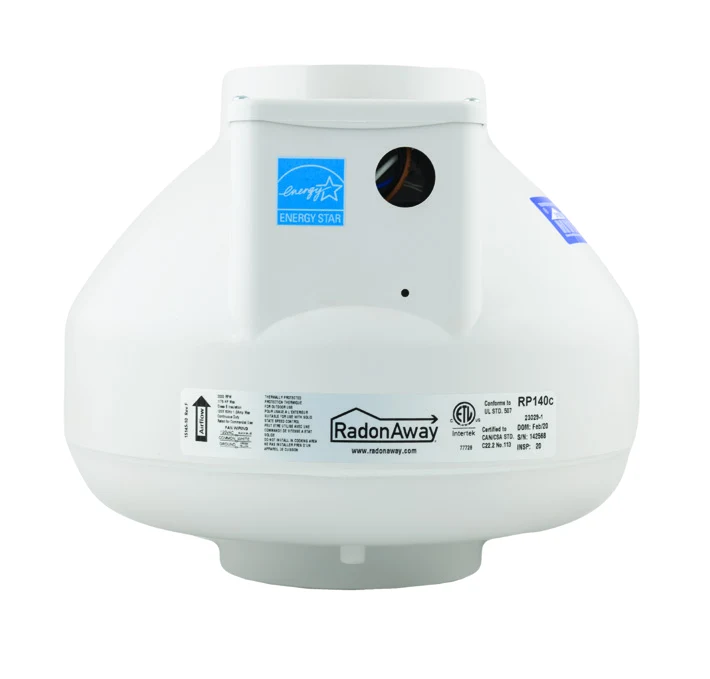
More radon fan models: 1 of 10
Questions
Questions people ask
6 questions about the RadonAway XP201c, answered
Asked about the XP201c
Is the XP201c the same fan as the XP201 Pro?
No. RadonAway's website today lists the XP201 Pro Series under part number 28470, with an Eternalast polycarbonate housing and figures of 126, 98, 60 and 26 CFM at 0, 0.5, 1.0 and 1.5 inches and a 1.6 inch recommended maximum. The XP201c is part number 23011-1, which RadonAway's 2017 sheet lists at 112 CFM at 0 inches and a 1.7 inch recommended maximum. Check the part number on the label or the listing.
How much air does the RadonAway XP201c move?
It depends on the suction, and on which RadonAway document you read. The 2017 sheet, which names part number 23011-1, gives 112 CFM at 0 inches and 70 CFM at 1.0 inch. The later IN096 instructions give an XP201c 126 CFM at 0 inches and 66 CFM at 1.0 inch. RadonAway's IN014 instructions put the typical operating flow of these fans at 25 to 90 CFM.
Can the XP201c be installed outside?
RadonAway says the XP series is ETL Listed for indoor or outdoor use, that outdoor installations need a UL listed watertight conduit, and that the fan is not suitable for underground burial. The EPA's construction guide puts the fan outside the home's living space.
Can I use a speed control with it?
RadonAway says these fans are rated for use with electronic speed controls but that speed controls are generally not recommended. If one is used, it names a Pass and Seymour solid state speed control.
Is it rated for commercial use?
RadonAway's documents differ. The 2017 sheet says the XP/XR Series is rated for commercial and residential use, while the IN014 instructions mark the XP series residential use only, and the IN096 instructions mark the XPc and XR residential only. For a commercial building, ask RadonAway or your mitigator which applies.
Do I need a professional to install it?
The EPA recommends a qualified radon mitigation contractor, and many states require radon professionals to be licensed, certified or registered. RadonAway says these fans are intended for trained, certified or licensed radon mitigators, and both of its instruction sheets tie the five-year warranty to professional installation.
What to do next
- See every radon fan we coverEach maker's published pressure, airflow and power, side by side.
- Find a mitigation professionalMost systems are designed and installed by one; some states require a license.
- Understand the fanWhat the fan does in a system, and when one needs replacing.
- Test after it runsA short-term test after installation shows whether the system works.
Updated October 8, 2026