AprilAire
AprilAire ARNHPF
High-pressure radon fan for tight soil
- Radon fan
- 3 in. fan duct diameter
- 170 W
Best for, and skip if
Best for you if
- A mitigator's diagnostics show moderate to tight soil, the case AprilAire writes the ARNHPF for.
- The system needs suction in the 2 to 4 inch range, where both of AprilAire's published curves still show airflow.
Skip it if
- The slab sits on clean gravel and needs volume more than pull; AprilAire calls its ARN15F the general purpose fan.
- You need one settled set of figures; AprilAire's 2022 sheet and 2026 guide print different curves and ceilings for the ARNHPF.
Photos: AprilAire
 (opens in a new tab)Check price on Amazon (opens in a new tab)

As an Amazon Associate, Radon411 earns from qualifying purchases.
Amazon and the Amazon logo are trademarks of Amazon.com, Inc. or its affiliates.
See ratings and reviews on Amazon (opens in a new tab)- Pipe size3 in. fan duct diameter (specification sheet, All Products Guide) or 3.5 in. (model data); the ARNHPK kit's coupling is a 3x3
- Power draw170 W
- Every figure checked against the specifications AprilAire publishes
- The maker's own performance table, point by point, unranked
About this item
As AprilAire states it
- Pipe size: 3 in. fan duct diameter (specification sheet, All Products Guide) or 3.5 in. (model data); the ARNHPK kit's coupling is a 3x3
- Max power: 170 W
- Power supply: 70 to 170 W (specification sheet, model data, All Products Guide)
- Airflow at static pressure: 119 CFM at 0.20 in w.c.; 115 at 1.00; 108 at 1.50; 99 at 2.00; 84 at 2.50; 74 at 3.00; 63 at 3.50; 53 at 4.00; 41 at 4.50
- Outdoor use: Rated for outdoor installation
- Warranty: 5-year warranty (specification sheet and model data: all AprilAire radon mitigation fans are covered by a 5-year, hassle-free warranty)
The ARNHPF is AprilAire's high-pressure radon fan, built for moderate to tight soils where a high static pressure is needed to keep air moving beneath the slab. AprilAire lists it on a 3 inch duct at 70 to 170 W; its 2022 specification sheet sets a 4.0 inch recommended maximum operating pressure, and its 2026 All Products Guide a 4.8 inch one, with 119 CFM at 0.2 inch.
What you get
AprilAire's store page lists one ARNHPF radon mitigation fan and its installation manual in the box. Couplings and a system monitor are separate unless you buy the kit.
In the box and running costsHow it works
What it does and how
The suction, the airflow and the housing, then who has checked it
How it works
In our words, from the maker's documents
Clay and compacted fill resist airflow, so a fan over them has to pull hard to spread its vacuum. AprilAire's store page describes the ARNHPF as ideal for most moderate to tight soils where a high static pressure is needed to maintain continual air flow beneath the slab, and its ARN25F manual calls it best suited for tight soil conditions, where the ARN15F is for general purpose use and the ARN25F for additional airflow.
AprilAire has published two curves for the fan. The 2022 specification sheet, Form No. 8612, reads 110 CFM at 0.2 inch of water column, 97 at 1.0, 88 at 1.5, 79 at 2.0, 68 at 2.5, 54 at 3.0, 36 at 3.5 and 14 at 4.0. The July 2026 All Products Guide reads 119 at 0.2, 115 at 1.0, 108 at 1.5, 99 at 2.0, 84 at 2.5, 74 at 3.0, 63 at 3.5, 53 at 4.0 and 41 at 4.5. Neither gives airflow at zero resistance.
The ceilings differ with the curves. The 2022 sheet's recommended maximum operating pressure is 4.0 inches; the 2026 guide's fan table gives 4.8, while the same guide's kit table lists the ARNHPK, built on this fan, at 4.0 inches of water column. AprilAire does not explain the difference, and both sets are the maker's own, so the fan's label and AprilAire's current documents are the ones to work from.
Power is listed the same way everywhere: 70 to 170 W in the specification sheet, the model data and the guide. The duct size is not. The sheet's drawing and the guide give a 3 inch fan duct diameter; AprilAire's model data lists a 3.5 inch fan duct diameter. The store page measures the fan at 10.9 inches high by 11.9 inches wide and deep, and the guide gives 11.9 by 10.9 inches.
AprilAire's features list reads differently from the ARN15F's: a patent pending design, a water-hardened thermally-protected motor, technology to inhibit radon and soil gas leakage instead of double snap sealed seams, and ETL listing by Intertek to UL507 and CSA C22.2. The sheet also says the fan is made in the USA with U.S. and imported parts and rated for indoor and outdoor use, commercial or residential.
What the manufacturer says
AprilAire's own statements, attributed
- AprilAire saysAprilAire states the ARNHPF is ideal for most moderate to tight soils where a high static pressure is needed to maintain continual air flow beneath the slab.
- AprilAire saysAprilAire lists the ARNHPF at 70 to 170 W with a 4.0 inch recommended maximum operating pressure on its 2022 specification sheet.
- AprilAire saysAprilAire's All Products Guide lists the ARNHPF at a 4.8 inch recommended maximum operating pressure and 41 CFM at 4.5 inches.
- AprilAire saysAprilAire states all its radon mitigation fans are covered by a 5-year, hassle-free warranty.
- AprilAire saysAprilAire describes the ARNHPF as ETL listed by Intertek to UL507 and CSA C22.2, with technology to inhibit radon and soil gas leakage.
These are AprilAire's own statements, attributed to it. They are not our findings, and we have not tested this product ourselves.
Independent evidence
Who checks a device like this
C-NRPP's consumer evaluation covers electronic radon monitors, not mitigation fans, so it has no result for AprilAire ARNHPF. The safety listing and performance certification the maker states are under “What the manufacturer says”, and what shows whether any fan is working in your home is a radon test after it is installed.
AprilAire ARNHPF
Check price on Amazon (opens in a new tab)Specifications
Specifications
Every figure as the maker states it
The maker's figures
- Type
- Mitigation fan, inline
- Motor
- Not stated by the manufacturer
- Pipe size
- 3 in. fan duct diameter (specification sheet, All Products Guide) or 3.5 in. (model data); the ARNHPK kit's coupling is a 3x3
- Max static pressure
- Not stated by the manufacturer
- Max airflow
- Not stated by the manufacturer
- Max power
- 170 W
- Power supply
- 70 to 170 W (specification sheet, model data, All Products Guide)
- Speed control
- Not stated by the manufacturer
- Airflow at static pressure
- 119 CFM at 0.20 in w.c.; 115 at 1.00; 108 at 1.50; 99 at 2.00; 84 at 2.50; 74 at 3.00; 63 at 3.50; 53 at 4.00; 41 at 4.50
- Outdoor use
- Rated for outdoor installation
- Warranty
- 5-year warranty (specification sheet and model data: all AprilAire radon mitigation fans are covered by a 5-year, hassle-free warranty)
What is in the box
AprilAire's store page lists one ARNHPF radon mitigation fan and its installation manual in the box. Couplings and a system monitor are separate unless you buy the kit.
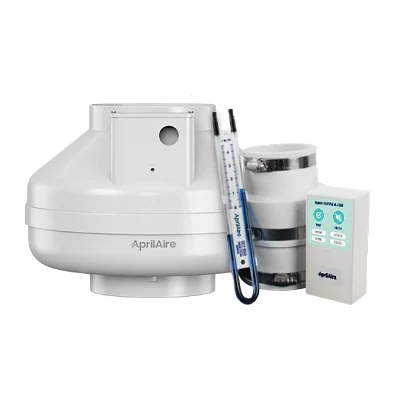
The ARNHPK kit adds them. AprilAire's model data says it includes the ARNHPF fan, an ARNALM Radon System Alarm, an ARN05M manometer and coupling(s), and the specification sheet describes it as including a 3x3 coupling, the manometer and the alarm. AprilAire's alarm sheet says the ARNALM alerts to low system vacuum pressure and does not measure radon levels.
AprilAire's sheet and model data give the ARNHPF a 5-year warranty, and the sheet says all AprilAire radon mitigation fans are covered by a 5-year, hassle-free warranty. AprilAire's fan manuals for its other models tie the full five years to installation by a professional radon mitigation contractor; check the terms printed with your ARNHPF.
What it costs to run
A high-suction fan uses more power than a general purpose one. At AprilAire's 170 W ceiling, continuous running comes to about 1,489 kWh a year (170 x 8,760 / 1,000); at the 70 W floor, about 613 kWh. Where a given system lands between them depends on the suction it works against. The EPA notes that fan systems slightly increase the electric bill.
The EPA says the fan should never be turned off, that fans may last five years or more, that warranties tend not to exceed five years, and that the home should be retested at least every two years.
Airflow at each pressure
AprilAire's performance table, point by point
| Static pressure | Airflow |
|---|---|
| 0.20 in w.c. | 119 CFM |
| 1.00 in w.c. | 115 CFM |
| 1.50 in w.c. | 108 CFM |
| 2.00 in w.c. | 99 CFM |
| 2.50 in w.c. | 84 CFM |
| 3.00 in w.c. | 74 CFM |
| 3.50 in w.c. | 63 CFM |
| 4.00 in w.c. | 53 CFM |
| 4.50 in w.c. | 41 CFM |
Airflow falls as the suction the system needs rises. A mitigator matches the fan to pressure measured under the slab.
Fit and setup
Who it fits, and installation
The fit, then how a system goes in
Who it fits
Good fit if, and look elsewhere if
Good fit if
- A mitigator's diagnostics show moderate to tight soil, the case AprilAire writes the ARNHPF for.
- The system needs suction in the 2 to 4 inch range, where both of AprilAire's published curves still show airflow.
- You want AprilAire's fan, alarm and manometer together; AprilAire sells this fan as the ARNHPK kit.
- The fan will sit outdoors; AprilAire's sheet rates the ARNHPF for indoor and outdoor use.
Look elsewhere if
- The slab sits on clean gravel and needs volume more than pull; AprilAire calls its ARN15F the general purpose fan.
- You need one settled set of figures; AprilAire's 2022 sheet and 2026 guide print different curves and ceilings for the ARNHPF.
- The riser is 4 inch pipe; AprilAire lists the ARNHPF's fan duct at 3 inches (3.5 in its model data).
- You want an installation manual for this model in hand before buying; the one AprilAire lists for it was not among the documents checked for this page.
Installation
5 steps
- The EPA recommends that a qualified radon mitigation contractor fix a home, and notes that many states require radon professionals to be licensed, certified or registered. AprilAire's store page says the ARNHPF is available from its nationwide network of Healthy Air Professionals, and that the pro selects the right size fan for the foundation; it adds that soil type and construction also play into fan selection.
- On tight soil, finding out how far the suction reaches is part of the job. The EPA's consumer guide says a contractor may need to run diagnostic tests early in the installation, for example a vacuum cleaner hose in one small hole and chemical smoke in a second, to see how air moves under the slab, and that whether they are needed depends on details such as the foundation design and the material under the home.
- The EPA's construction guide keeps the fan and every positively pressurized length of vent pipe outside habitable space, ideally in an attic or attached garage, in a vertical run of pipe, so that a leak in the fan housing or a joint cannot push radon into the living space.
- AprilAire's ARN25F manual requires a system monitor, a manometer (ARN05M) or an alarm (ARNALM), to tell the occupants when a fan system malfunctions, with a system label where they will see it. The EPA's consumer guide likewise says a warning device must alert you if an active system stops working properly, and asks for a post-mitigation radon test within 30 days of installation, no sooner than 24 hours after the fan starts.
- Altitude and heat shrink a fan's working range. AprilAire's ARN25F manual bases its maximum operating pressure on sea-level operation, reduced by about 4% per 1,000 feet and by a further 10% in high temperature environments, with more suction points where a system exceeds it. Worked the same way as an illustration, the ARNHPF's 4.0 inch figure becomes about 3.2 inches at 5,000 feet, and its 4.8 inch figure about 3.84; the derating for this model is AprilAire's to state.
To find someone to design and install a system, see radon mitigation professionals, and for how a fan fits into one, how a radon fan works.
Compare
Compare with similar items
The same three rows for each, and the one difference that matters
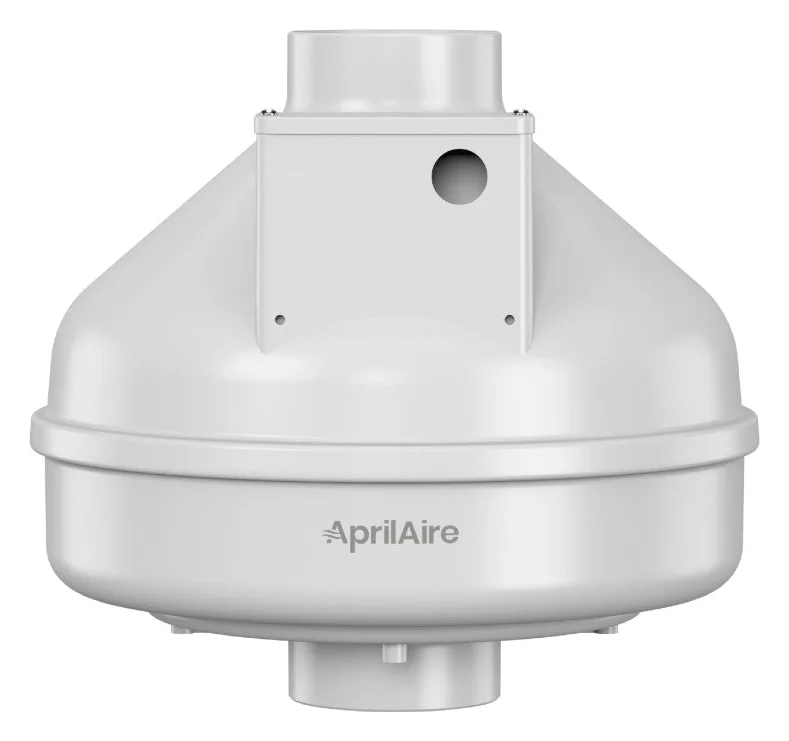
This page
AprilAire ARNHPF
- What it does
- Not stated
- Power
- Up to 170 W
- C-NRPP 2024/25
- Not applicable (mitigation fan)
This page: The ARNHPF is AprilAire's high-pressure radon fan, built for moderate to tight soils where a high static pressure is needed to keep air moving beneath the slab.
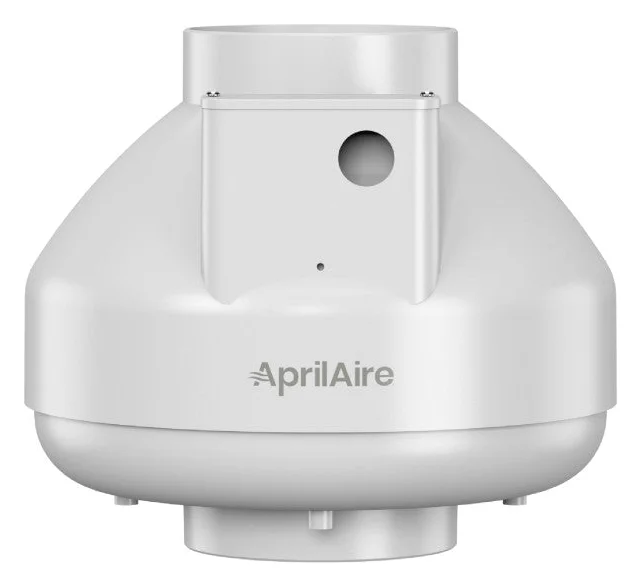
AprilAire
- What it does
- Moves up to 169 CFM
- Power
- Up to 72 W
- C-NRPP 2024/25
- Not applicable (mitigation fan)
The difference: AprilAire's general purpose fan on a 4 inch duct: its specification sheet lists the ARN15F at 41 to 72 W with a 1.7 inch recommended maximum.
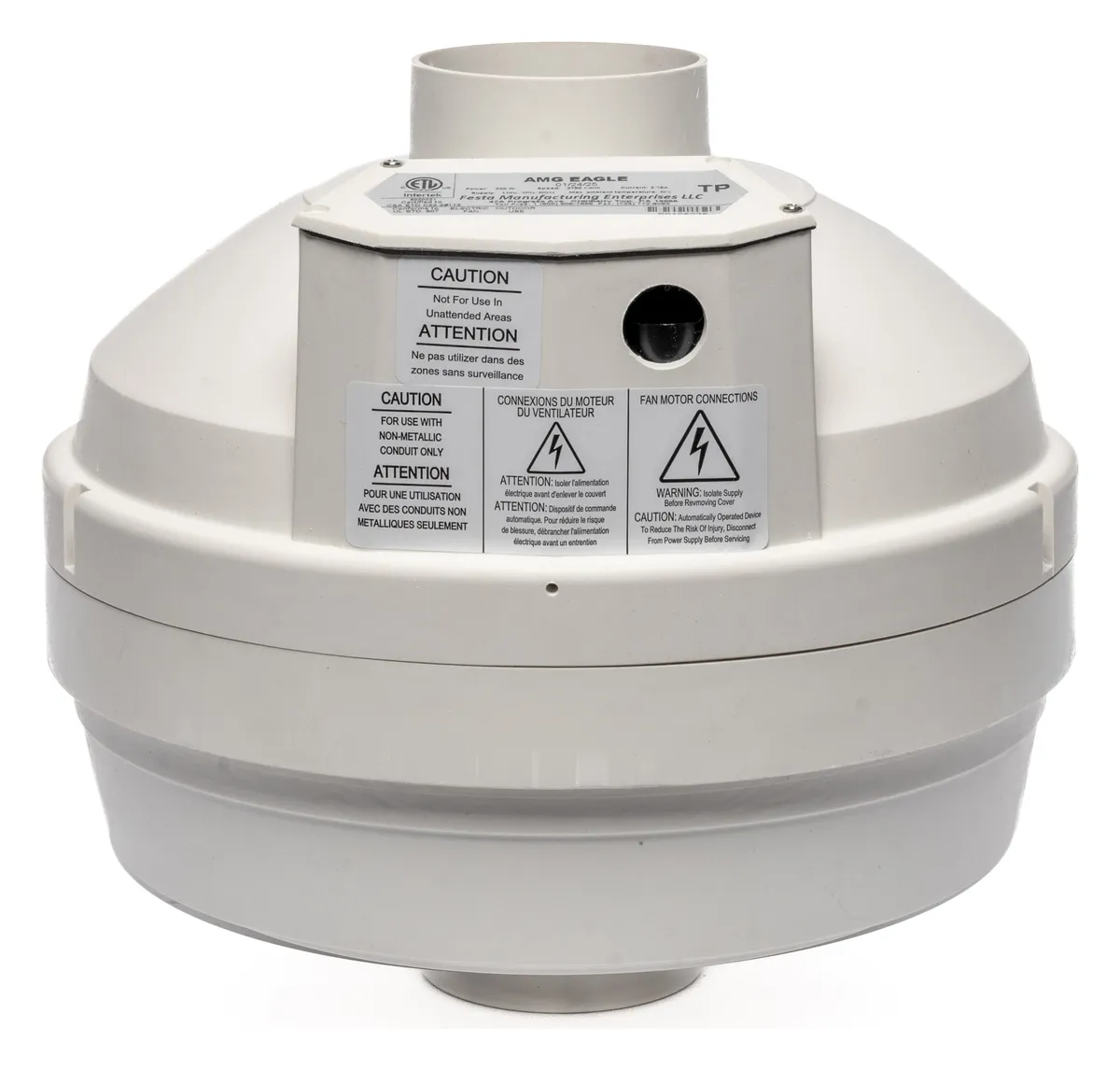
Festa
- What it does
- Moves up to 241 CFM
- Power
- Up to 310 W
- C-NRPP 2024/25
- Not applicable (mitigation fan)
The difference: Festa's 3 inch high-suction AC fan: its 2022 catalog lists the AMG Eagle at 241 CFM, a 4.2 inch maximum and 310 W.
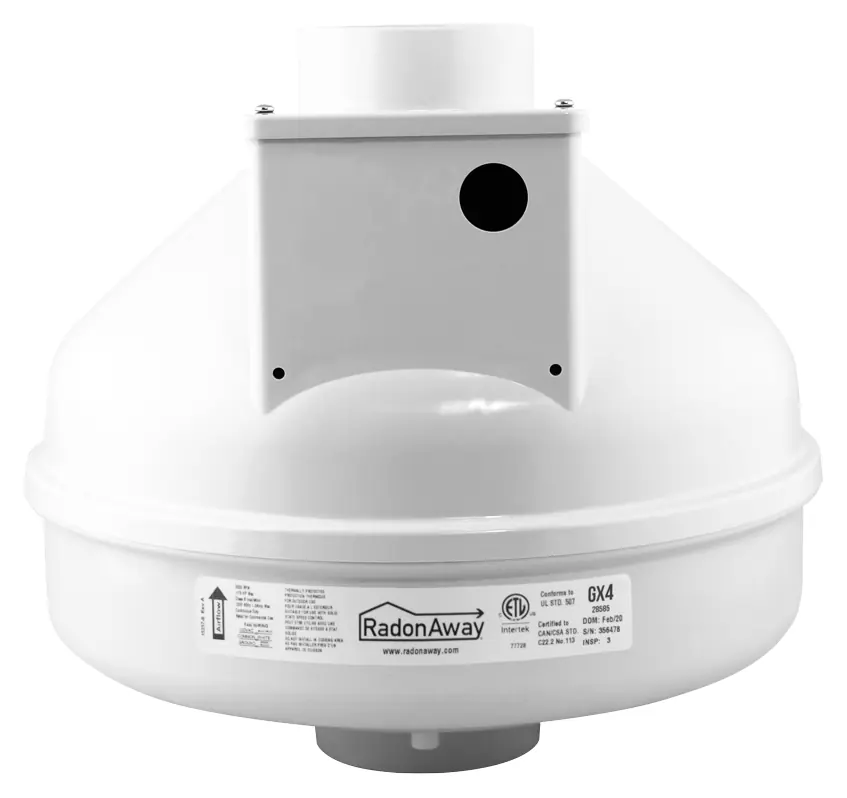
RadonAway
- What it does
- Not stated
- Power
- Up to 158 W
- C-NRPP 2024/25
- Not applicable (mitigation fan)
The difference: A 3 inch high-suction fan from RadonAway: its IN167 instructions list the GX4c at 74 to 158 W with a 4.8 inch recommended maximum and 84, 74, 63, 53 and 41 CFM from 2.5 to 4.5 inches, the figures AprilAire's 2026 guide prints for the ARNHPF at those pressures.
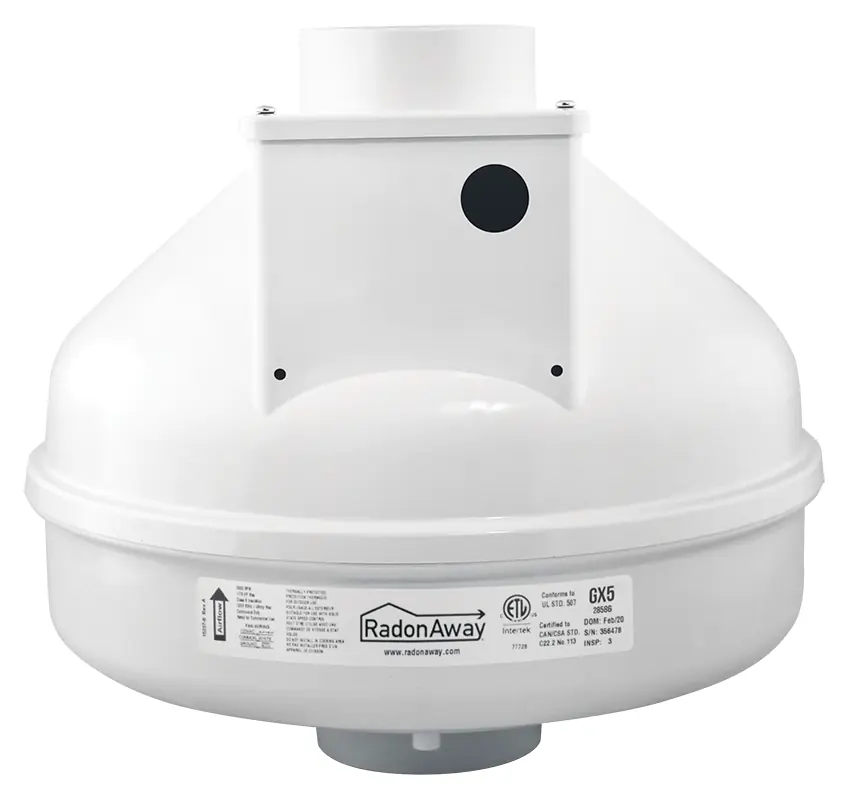
RadonAway
- What it does
- Not stated
- Power
- Up to 180 W
- C-NRPP 2024/25
- Not applicable (mitigation fan)
The difference: RadonAway's strongest 3 inch GX fan: its IN108 instructions rate the GX5 at 75 to 180 W and 5.2 inches, with 31 CFM at 5.0 inches.
Compared with similar products: 1 of 5
More radon fan models6
All radon fan models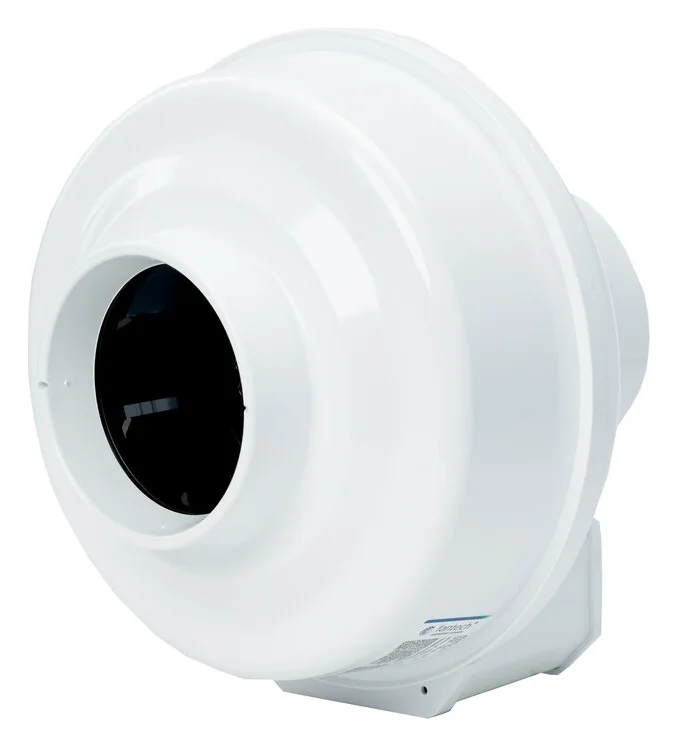
Radon fan

Rn1 low-suction ENERGY STAR radon fan
- 3 or 4 in. schedule 40 PVC
- 20 W
Max airflow: 158 CFM
Max pressure: 0.9 in w.c.
Radon fan
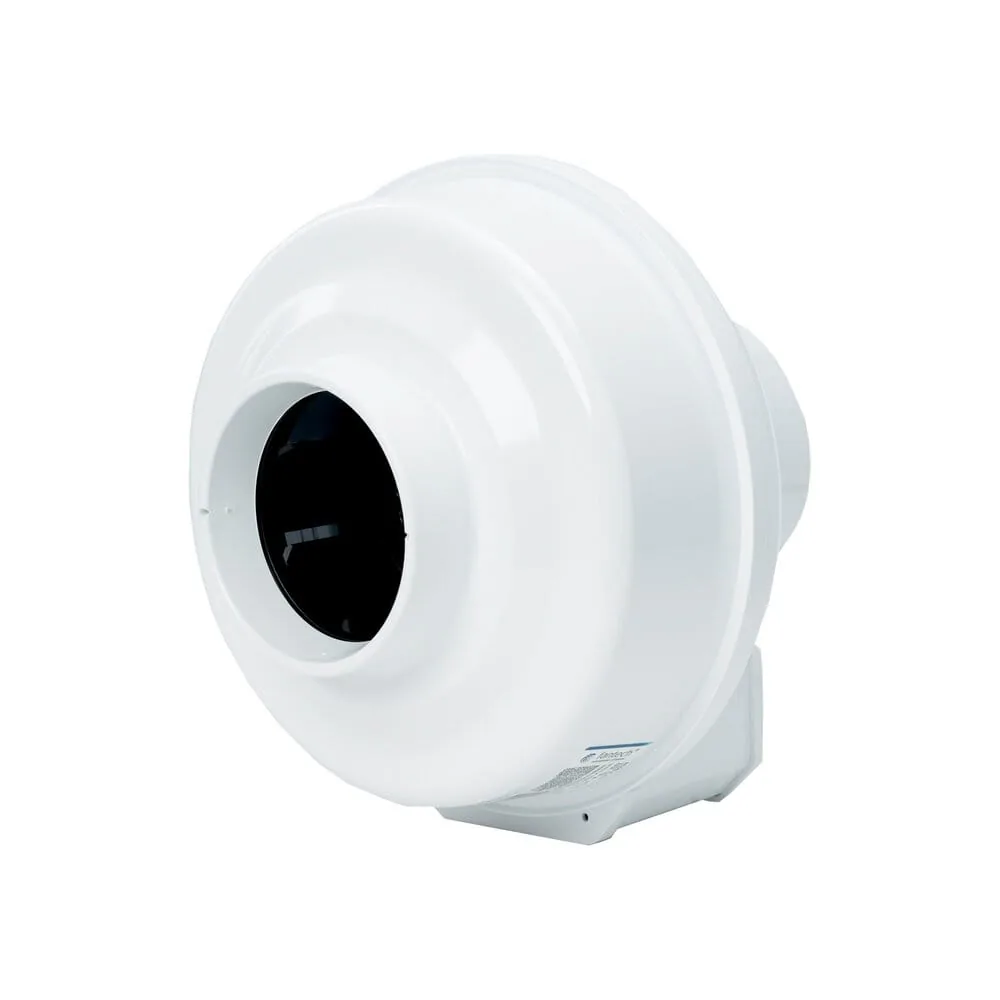
Rn2 inline radon mitigation fan
- 3 or 4 in. schedule 40 PVC
- 59 W
Max airflow: 174 CFM
Max pressure: 2.0 in w.c.
Radon fan

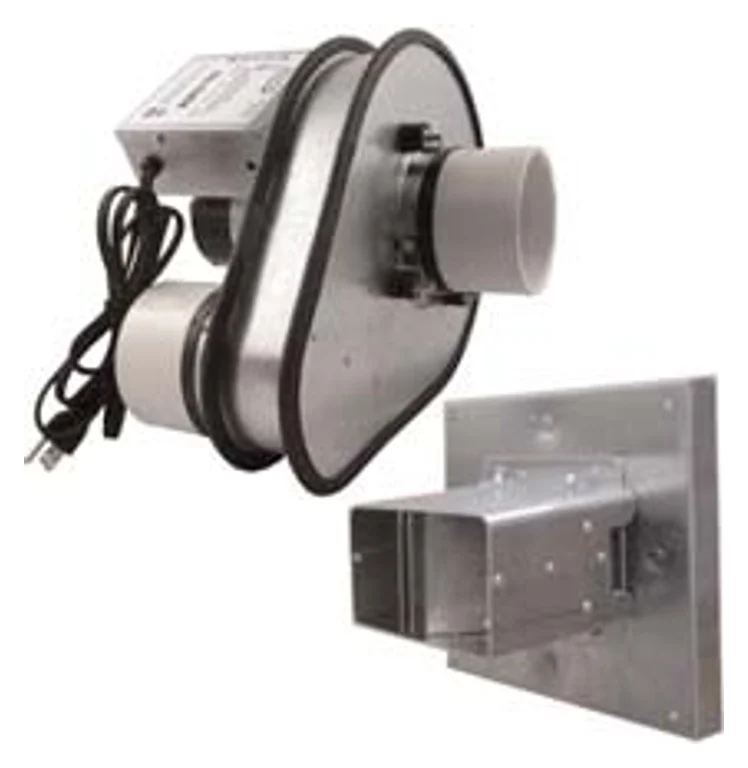
RMS160 side-wall radon mitigation system
- 3 in. schedule 40 PVC
- 50 W
Max airflow: 160 CFM
Max pressure: 2.3 in w.c.
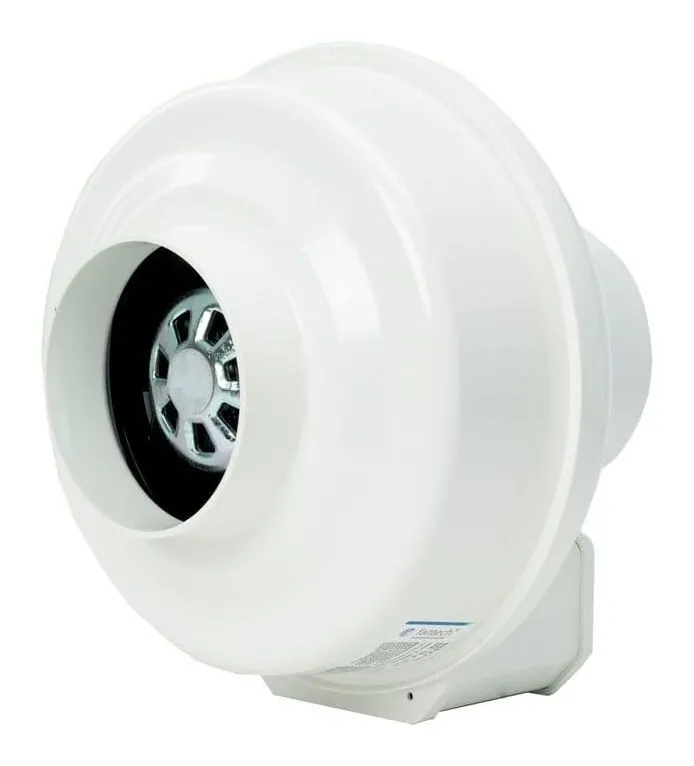
Radon fan
Rn2EC EC inline radon fan with speed dial
- 3 or 4 in. schedule 40 PVC
- 52 W
Max airflow: 173 CFM
Max pressure: 2.0 in w.c.
- All radon fan models More radon fan models
More radon fan models: 1 of 6
Questions
Questions people ask
5 questions about the AprilAire ARNHPF, answered
Asked about the ARNHPF
What is the ARNHPF's maximum operating pressure?
AprilAire has printed two figures: 4.0 inches of water column on its 2022 specification sheet and in its 2026 guide's kit table, and 4.8 inches in the same guide's fan table. Ask AprilAire or your installer which applies to the fan on your system.
How much air does the ARNHPF move?
At 2.0 inches of water column, 79 CFM on the 2022 sheet and 99 CFM in the 2026 guide; at 4.0 inches, 14 and 53 CFM. AprilAire publishes no airflow at zero resistance for this fan.
Is the ARNHPF a 3 inch or a 3.5 inch fan?
AprilAire's specification sheet and All Products Guide give a 3 inch fan duct diameter; its model data says 3.5 inches. The ARNHPK kit's coupling is a 3x3, according to the sheet.
Which AprilAire fan is for clay soil?
The ARNHPF. AprilAire's ARN15F manual says it can be used in tight soil applications, and its store page aims it at moderate to tight soils needing high static pressure.
Can I buy the ARNHPF directly?
AprilAire's own store says the fan is available from its nationwide network of Healthy Air Professionals, who size it for the foundation. The EPA recommends a qualified radon mitigation contractor for the installation either way.
What to do next
- See every radon fan we coverEach maker's published pressure, airflow and power, side by side.
- Find a mitigation professionalMost systems are designed and installed by one; some states require a license.
- Understand the fanWhat the fan does in a system, and when one needs replacing.
- Test after it runsA short-term test after installation shows whether the system works.
Updated November 27, 2026