 Festa
Festa AMG Eagle
Inline radon mitigation fan
- Radon fan
- 3 in. Fernco coupler size
- 310 W
Best for, and skip if
Best for you if
- Your mitigator's diagnostic shows tight, damp ground under the slab, such as clay, where Festa points to its high suction fans.
- Your home or building is in the 500 to 2,000 square foot range Festa names for the Eagle.
Skip it if
- The ground under your slab is gravel and moves air easily; Festa's chart sends that to its primary fans, such as the 4 inch Maverick, which Festa lists at 66 W.
- Your home is larger than about 2,200 square feet over compact ground; Festa's chart lists only the Eagle Extreme and Legend Extreme there.
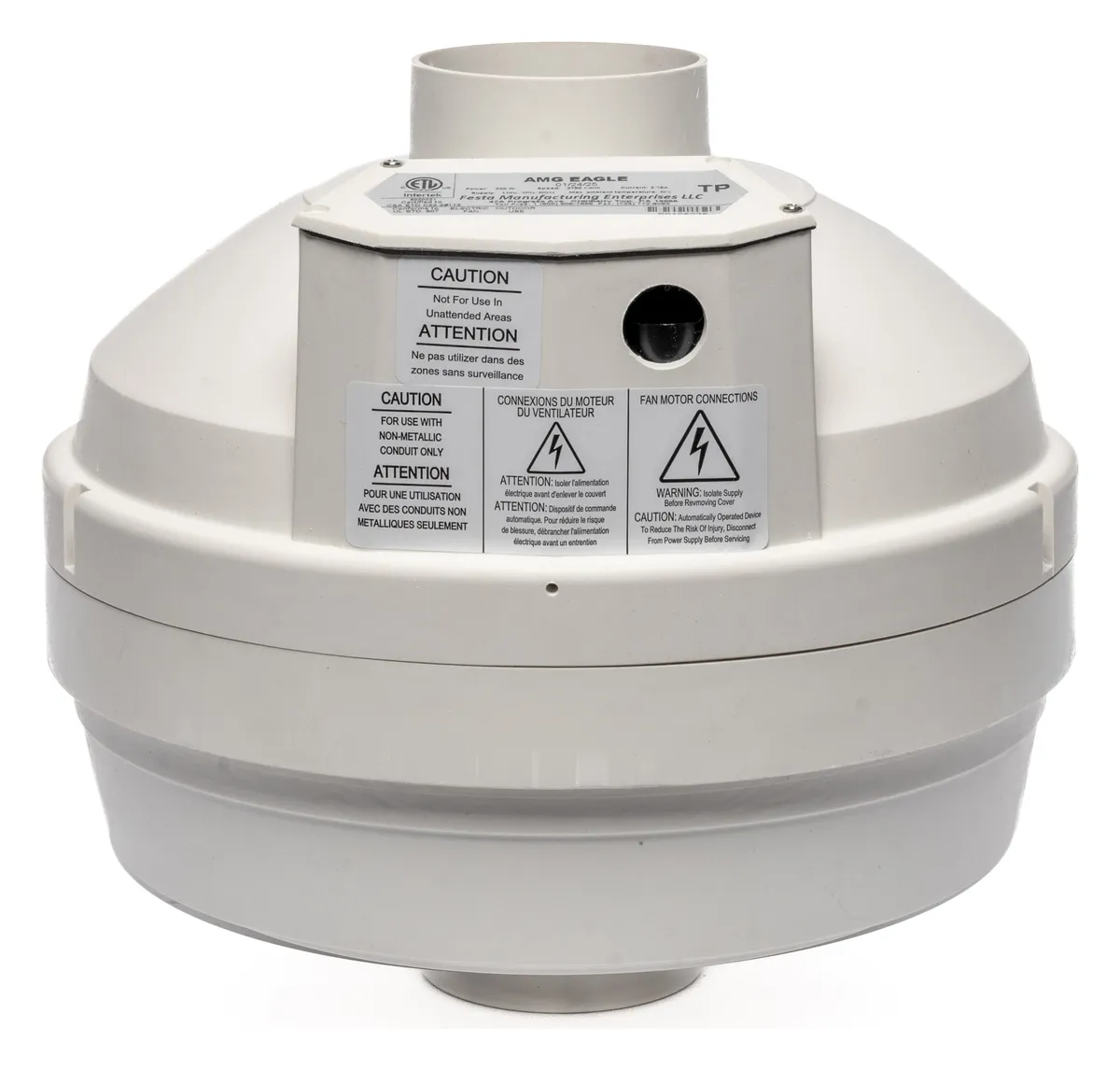
Photos: Festa
 (opens in a new tab)Check price on Amazon (opens in a new tab)

As an Amazon Associate, Radon411 earns from qualifying purchases.
Amazon and the Amazon logo are trademarks of Amazon.com, Inc. or its affiliates.
See ratings and reviews on Amazon (opens in a new tab)- Pipe size3 in. Fernco coupler size (catalog; product page: fits 3 in. Fernco couplers); Festa's catalog lists a 3 x 3 in. Fernco for 3 in. PVC and a 4 x 3 in. Fernco for 4 in. PVC, and its installation kit couplers fit the fan to 3 in. or 4 in. PVC pipe
- Power draw310 W
- Every figure checked against the specifications Festa publishes
- The maker's own performance table, point by point, unranked
About this item
As Festa states it
- Motor: AC
- Pipe size: 3 in. Fernco coupler size (catalog; product page: fits 3 in. Fernco couplers); Festa's catalog lists a 3 x 3 in. Fernco for 3 in. PVC and a 4 x 3 in. Fernco for 4 in. PVC, and its installation kit couplers fit the fan to 3 in. or 4 in. PVC pipe
- Max static pressure: 4.2 in w.c.
- Max airflow: 241 CFM
- Max power: 310 W
- Power supply: 115 V, 60 Hz; 310 W; 2.72 A maximum; 2750 RPM
- Airflow at static pressure: 241 CFM at 0.00 in w.c.; 219 at 0.50; 177 at 1.00; 159 at 1.50; 130 at 2.00; 111 at 2.50; 96 at 2.75; 86 at 3.00; 71 at 3.25; 55 at 3.50; 39 at 3.75; 19 at 4.00
- Outdoor use: Rated for outdoor installation
- Warranty: Hassle Free 5 Year Full Replacement Warranty (Festa's 2022 catalog); Festa's RRNC page states 5 to 7 years across the AMG line, the 7 years for EC models
The AMG Eagle is Festa's high-suction AC inline radon fan for a 3 inch Fernco coupling, sold alone or with Festa's 4 inch or 3 inch installation kit. Festa's 2022 catalog lists it at 241 CFM with no resistance, a maximum pressure of 4.2 inches of water column and 310 W, and Festa recommends it for homes of 500 to 2,000 square feet built over compact, moist ground such as clay.
What you get
Festa sells the Eagle in white, as the fan only or with a 4 inch or a 3 inch installation kit. The kit holds two white Fernco couplers that fit the fan to 3 inch or 4 inch PVC, a green 5.5 inch radon system manometer, a line cord with connector and system labels. For the fan alone, Festa states no package contents beyond the fan; its page says the 3 inch Fernco couplers are sold separately.
In the box and running costsHow it works
What it does and how
The suction, the airflow and the housing, then who has checked it
How it works
In our words, from the maker's documents
In an active soil depressurization system the fan is the only moving part, and it never stops. The EPA's guide describes it pulling radon from below the home through the suction pipes, releasing it to the outdoor air and holding a vacuum under the slab while it does. Switch it off and the system stops working.
Ground decides which fan a house needs. Air moves easily through gravel, so a fan there needs volume more than pull; packed clay resists it, so the fan has to pull hard to spread its vacuum under the whole slab. Festa's own fan selection chart follows the same split: for a home under about 2,200 square feet, it sends compact ground (compressed dirt, sand or clay) to its high suction fans, the Prowler, Eagle, Force, Eagle Extreme and Legend Extreme, and looser ground to its primary fans such as the Maverick. The EPA's guide makes the same point: how well soil suction works depends on how easily air moves in the crushed rock or soil under the slab.
Festa's 2022 catalog gives the Eagle's figures as 115 V, 60 Hz, 310 W, a maximum of 2.72 A, 2750 RPM, a 3 inch Fernco size and a weight of 12.1 lbs. Its airflow row, in cubic feet per minute, falls slowly as the suction rises: 241 at 0 inches, 219 at 0.5, 177 at 1.0, 159 at 1.5, 130 at 2.0, 111 at 2.5 and 86 at 3.0, then 55 at 3.5 and 19 at 4.0, with a maximum of 4.2 inches. Festa's RRNC fan types page repeats the 1.0 inch point, 177 CFM, under its AC fan models.
That row is what sets the Eagle apart from Festa's 4 inch Maverick, which the same catalog lists at 260 CFM with no resistance but with nothing left past 2.21 inches. The Eagle gives up a little free air for pull: at 2.0 inches it still lists 130 CFM. The catalog marks the Eagle as improved and says it now reads up to 4.2 inches, and Festa's product page calls it the powerful problem-solver, for use with multiple suction points or what Festa calls double stacking.
Festa builds the AMG fans the same way across the line. Its catalog says the motors are manufactured and engineered in Germany by EBM-Papst, the compression molded housings are made in Ohio and designed to be air and water tight, silicone and an industrial adhesive lock the two halves together, and assembly is in Pennsylvania, with lever nuts already attached for the wiring. Festa's installation instructions, which name the Eagle, add that the motor has an internal overheat device.
What the manufacturer says
Festa's own statements, attributed
- Festa saysFesta's 2022 catalog lists the AMG Eagle at a maximum flow of 241 CFM, a maximum pressure of 4.2 inches w.g. and 310 W at 115 V, 60 Hz.
- Festa saysFesta recommends the AMG Eagle for homes or structures of 500 to 2,000 square feet built on compact, moist sub-slabs such as clay, and says it can serve multiple suction points.
- Festa saysFesta gives the AMG Eagle an estimated noise range of 65 to 70 dB and says the figure can vary with the system configuration.
- Festa saysFesta states the AMG fans its installation instructions cover, the Eagle among them, can be mounted indoors or outdoors.
- Festa saysFesta states its AMG fan motors are made and engineered in Germany by EBM-Papst and its housings are compression molded in Ohio.
- Festa saysFesta's 2022 catalog advertises a Hassle Free 5 Year Full Replacement Warranty for its AMG fans.
These are Festa's own statements, attributed to it. They are not our findings, and we have not tested this product ourselves.
Independent evidence
Who checks a device like this
C-NRPP's consumer evaluation covers electronic radon monitors, not mitigation fans, so it has no result for Festa AMG Eagle. The safety listing and performance certification the maker states are under “What the manufacturer says”, and what shows whether any fan is working in your home is a radon test after it is installed.
Festa AMG Eagle
Check price on Amazon (opens in a new tab)Specifications
Specifications
Every figure as the maker states it
The maker's figures
- Type
- Mitigation fan, inline
- Motor
- AC
- Pipe size
- 3 in. Fernco coupler size (catalog; product page: fits 3 in. Fernco couplers); Festa's catalog lists a 3 x 3 in. Fernco for 3 in. PVC and a 4 x 3 in. Fernco for 4 in. PVC, and its installation kit couplers fit the fan to 3 in. or 4 in. PVC pipe
- Max static pressure
- 4.2 in w.c.
- Max airflow
- 241 CFM
- Max power
- 310 W
- Power supply
- 115 V, 60 Hz; 310 W; 2.72 A maximum; 2750 RPM
- Speed control
- Not stated by the manufacturer
- Airflow at static pressure
- 241 CFM at 0.00 in w.c.; 219 at 0.50; 177 at 1.00; 159 at 1.50; 130 at 2.00; 111 at 2.50; 96 at 2.75; 86 at 3.00; 71 at 3.25; 55 at 3.50; 39 at 3.75; 19 at 4.00
- Outdoor use
- Rated for outdoor installation
- Warranty
- Hassle Free 5 Year Full Replacement Warranty (Festa's 2022 catalog); Festa's RRNC page states 5 to 7 years across the AMG line, the 7 years for EC models
What is in the box
Festa sells the Eagle in white, as the fan only or with a 4 inch or a 3 inch installation kit. The kit holds two white Fernco couplers that fit the fan to 3 inch or 4 inch PVC, a green 5.5 inch radon system manometer, a line cord with connector and system labels. For the fan alone, Festa states no package contents beyond the fan; its page says the 3 inch Fernco couplers are sold separately.
Festa describes the warranty in two places. Its 2022 catalog promises a Hassle Free 5 Year Full Replacement Warranty: a call to the office starts a claim, Festa brings back a failed fan a year old or less at its own expense, and for an older one it asks only for the terminal box lid. Its RRNC page speaks of a 5 to 7 year no-cost warranty across the AMG line, and its Maverick ECS page ties the 7 years to the EC models; the Eagle is on Festa's list of AC models.
Choosing the fan is the buyer's responsibility, Festa's page says: unused returns carry a 15% restocking fee, and Festa offers a phone line and its fan replacement guide for help. Festa ships by FedEx Ground, with shipping based in Cranberry Township, Pennsylvania.
What it costs to run
Electricity is the cost, and the Eagle draws far more of it than Festa's Maverick, which the same catalog lists at 66 W. Festa's catalog lists the Eagle at 310 W at 115 V; run around the clock, as the EPA says a fan must be, that is about 2,716 kWh in a year at the catalog's figure. Multiply by your utility's rate per kWh for the yearly cost. There is no filter or other part to buy.
Expect to replace a fan eventually. The EPA's guide says fans may last five years or more and that maker warranties tend not to exceed five years. Festa's FAQ says every active system must have a manometer and that equal oil levels mean the fan is not working properly, which is the check to make between radon tests, and the EPA suggests retesting at least every two years.
Airflow at each pressure
Festa's performance table, point by point
| Static pressure | Airflow |
|---|---|
| 0.00 in w.c. | 241 CFM |
| 0.50 in w.c. | 219 CFM |
| 1.00 in w.c. | 177 CFM |
| 1.50 in w.c. | 159 CFM |
| 2.00 in w.c. | 130 CFM |
| 2.50 in w.c. | 111 CFM |
| 2.75 in w.c. | 96 CFM |
| 3.00 in w.c. | 86 CFM |
| 3.25 in w.c. | 71 CFM |
| 3.50 in w.c. | 55 CFM |
| 3.75 in w.c. | 39 CFM |
| 4.00 in w.c. | 19 CFM |
Airflow falls as the suction the system needs rises. A mitigator matches the fan to pressure measured under the slab.
Fit and setup
Who it fits, and installation
The fit, then how a system goes in
Who it fits
Good fit if, and look elsewhere if
Good fit if
- Your mitigator's diagnostic shows tight, damp ground under the slab, such as clay, where Festa points to its high suction fans.
- Your home or building is in the 500 to 2,000 square foot range Festa names for the Eagle.
- You or your mitigator are replacing one of the fans Festa's 2022 replacement guide pairs with the Eagle: RadonAway's GP401, GP501, GX4 or GX5.
- Your system runs 3 inch pipe, or 4 inch pipe through a 4 by 3 inch Fernco, the couplings Festa lists for the Eagle.
Look elsewhere if
- The ground under your slab is gravel and moves air easily; Festa's chart sends that to its primary fans, such as the 4 inch Maverick, which Festa lists at 66 W.
- Your home is larger than about 2,200 square feet over compact ground; Festa's chart lists only the Eagle Extreme and Legend Extreme there.
- The fan will sit where its sound will be noticed; Festa estimates the Eagle at 65 to 70 dB, louder than the 55 to 60 dB it gives for the Maverick.
- You are designing a first system yourself; the EPA recommends a qualified mitigation contractor, and Festa advises a certified and licensed mitigator for fan sizing.
Installation
5 steps
- Sizing a high-suction fan is a mitigator's job. The EPA recommends a qualified radon mitigation contractor and notes that many states license, certify or register radon professionals; Festa's RRNC page strongly advises a certified and licensed radon mitigator for fan sizing and installation, and its instructions leave installation work and electrical wiring to qualified persons under all applicable codes and standards.
- Festa's instructions allow two mounting positions: vertical with the terminal box cover facing up, or horizontal with the terminal box drain hole facing down. The fan can sit on the pipe itself or be fastened to a supporting structure, as long as the pipe cannot slide into the fan's motor and impeller. Rigid pipe meets the fan's spigots through flexible connectors and clips, which ease servicing and isolate vibration, and Festa's catalog lists a 3 by 3 inch Fernco for 3 inch PVC and a 4 by 3 inch Fernco for 4 inch PVC on the Eagle.
- Power must match the rating label inside the terminal box cover; the catalog lists 115 V, 60 Hz. The instructions call for a double pole isolating switch with at least 1/8 inch (3 mm) contact separation and liquid tight flexible conduit to the terminal box, and say not to connect the supply until the fan is completely installed. The fan's impeller is unguarded, so the instructions want it out of reach of people and animals, and guards on short duct runs that end within 60 inches of it.
- The EPA's construction guide puts the fan and every pressurized part of the vent pipe outside the living space, in a vertical run of pipe, so a leak at the housing or a joint cannot push radon indoors. Festa's AC fans page says these fans are usually mounted outside the home, and its Eagle page adds a line, Not For Use In Unattended Areas, that it does not explain; ask Festa what it means for your site.
- Once it runs, Festa's instructions say to check that every duct joint is tight, to read the system vacuum on a manometer and keep it under the maximum recommended operating pressure, and to test radon to EPA protocol. The EPA asks for a warning device, usually a manometer, where it can be seen or heard, and a post-mitigation test within 30 days but no sooner than 24 hours after the fan starts.
To find someone to design and install a system, see radon mitigation professionals, and for how a fan fits into one, how a radon fan works.
Compare
Compare with similar items
The same three rows for each, and the one difference that matters
This page
Festa AMG Eagle
- What it does
- Moves up to 241 CFM
- Power
- Up to 310 W
- C-NRPP 2024/25
- Not applicable (mitigation fan)
This page: The AMG Eagle is Festa's high-suction AC inline radon fan for a 3 inch Fernco coupling, sold alone or with Festa's 4 inch or 3 inch installation kit.
Fantech
- What it does
- Moves up to 174 CFM
- Power
- Up to 59 W
- C-NRPP 2024/25
- Not applicable (mitigation fan)
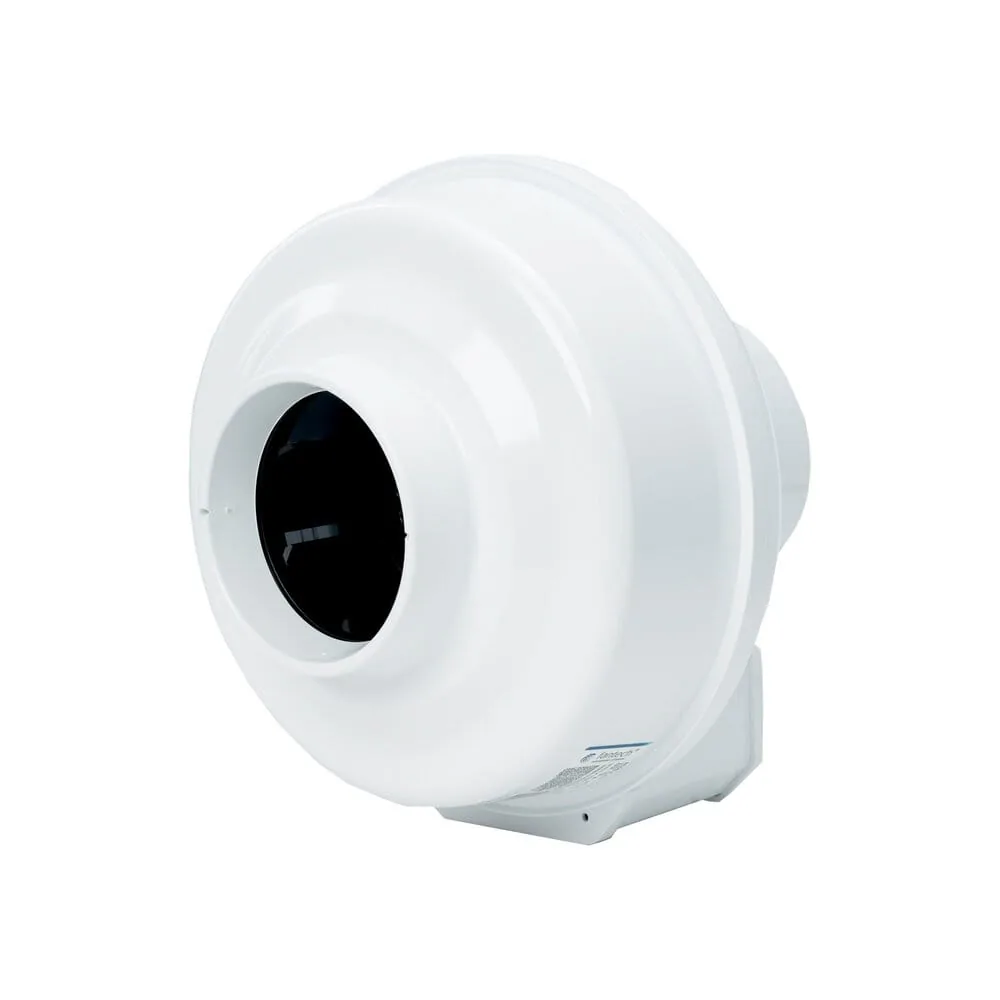
The difference: Another maker's mid-range fan: Fantech's 2025 brochure lists the Rn 2 at a maximum static pressure of 2.0 inches, 59 W and 174 CFM.
Festa
- What it does
- Moves up to 260 CFM
- Power
- Up to 66 W
- C-NRPP 2024/25
- Not applicable (mitigation fan)
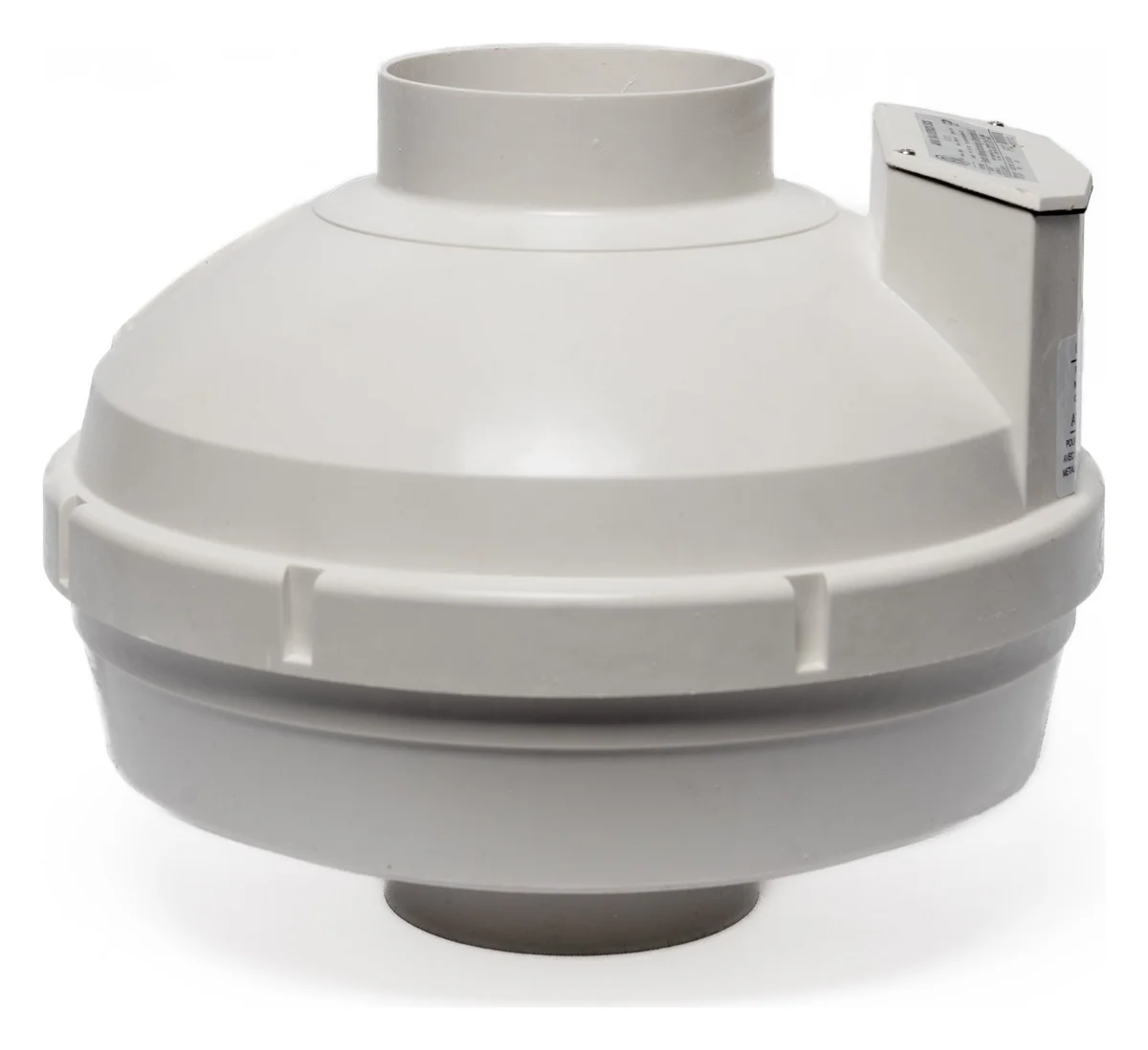
The difference: Festa's 4 inch fan for porous ground: its 2022 catalog lists the Maverick at 260 CFM with no resistance, a maximum pressure of 2.21 inches and 66 W.
RadonAway
- What it does
- Not stated
- Power
- Up to 146 W
- C-NRPP 2024/25
- Not applicable (mitigation fan)
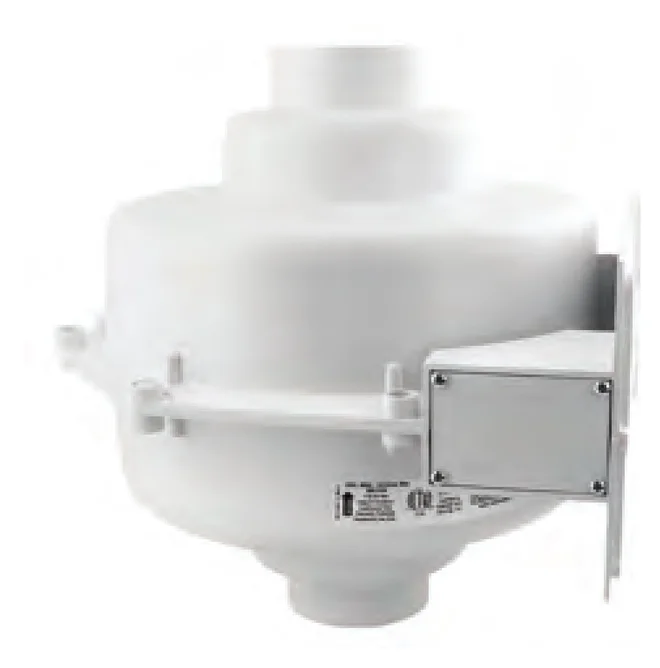
The difference: A fan Festa's 2022 replacement guide swaps for the Eagle: RadonAway lists its 3 inch GP501c at 68 to 146 W, with a recommended maximum operating pressure of 3.8 inches.
Compared with similar products: 1 of 4
More radon fan models15
All radon fan modelsRadon fan

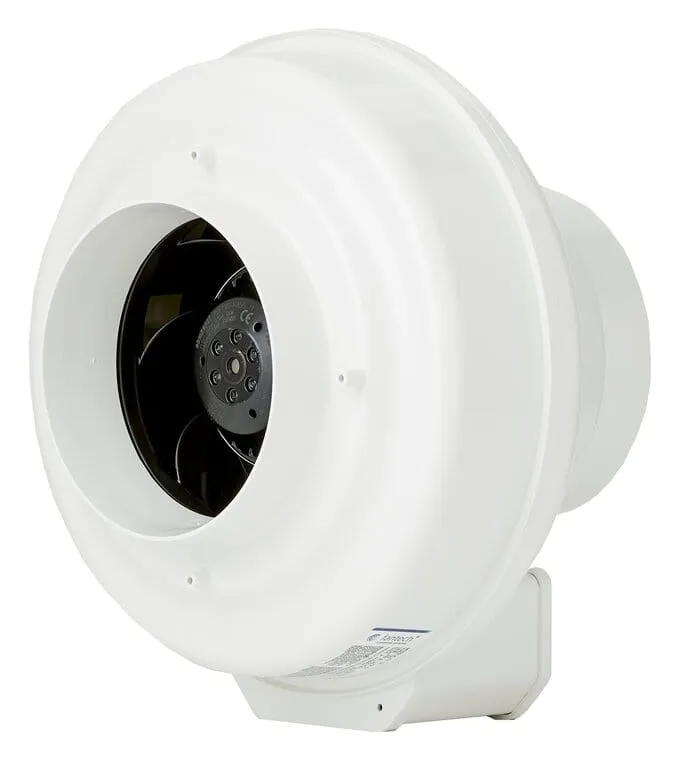
Rn2 inline radon mitigation fan
- 3 or 4 in. schedule 40 PVC
- 59 W
Max airflow: 174 CFM
Max pressure: 2.0 in w.c.
Radon fan
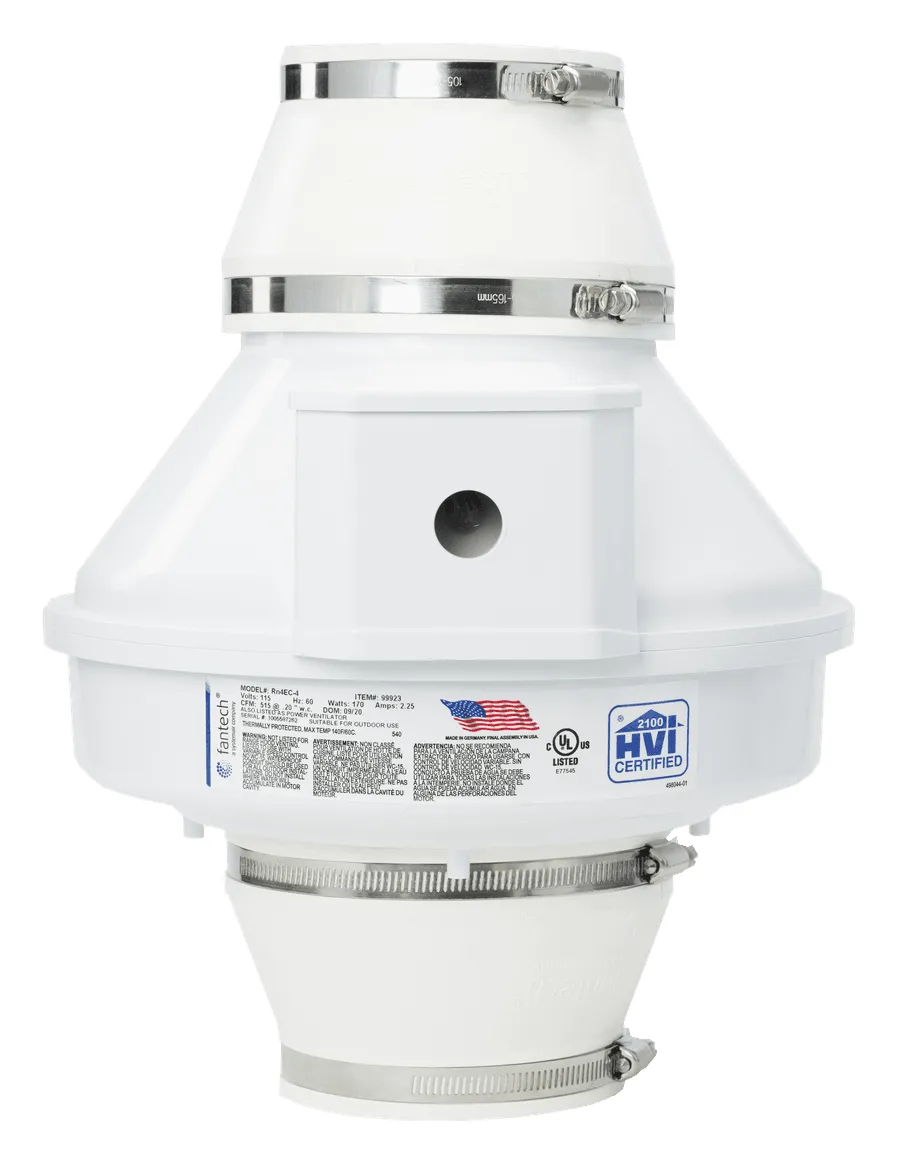
Rn3 inline radon mitigation fan
- 5 7/8 in. fan connection
- 125 W
Max airflow: 337 CFM
Max pressure: 2.6 in w.c.
Radon fan
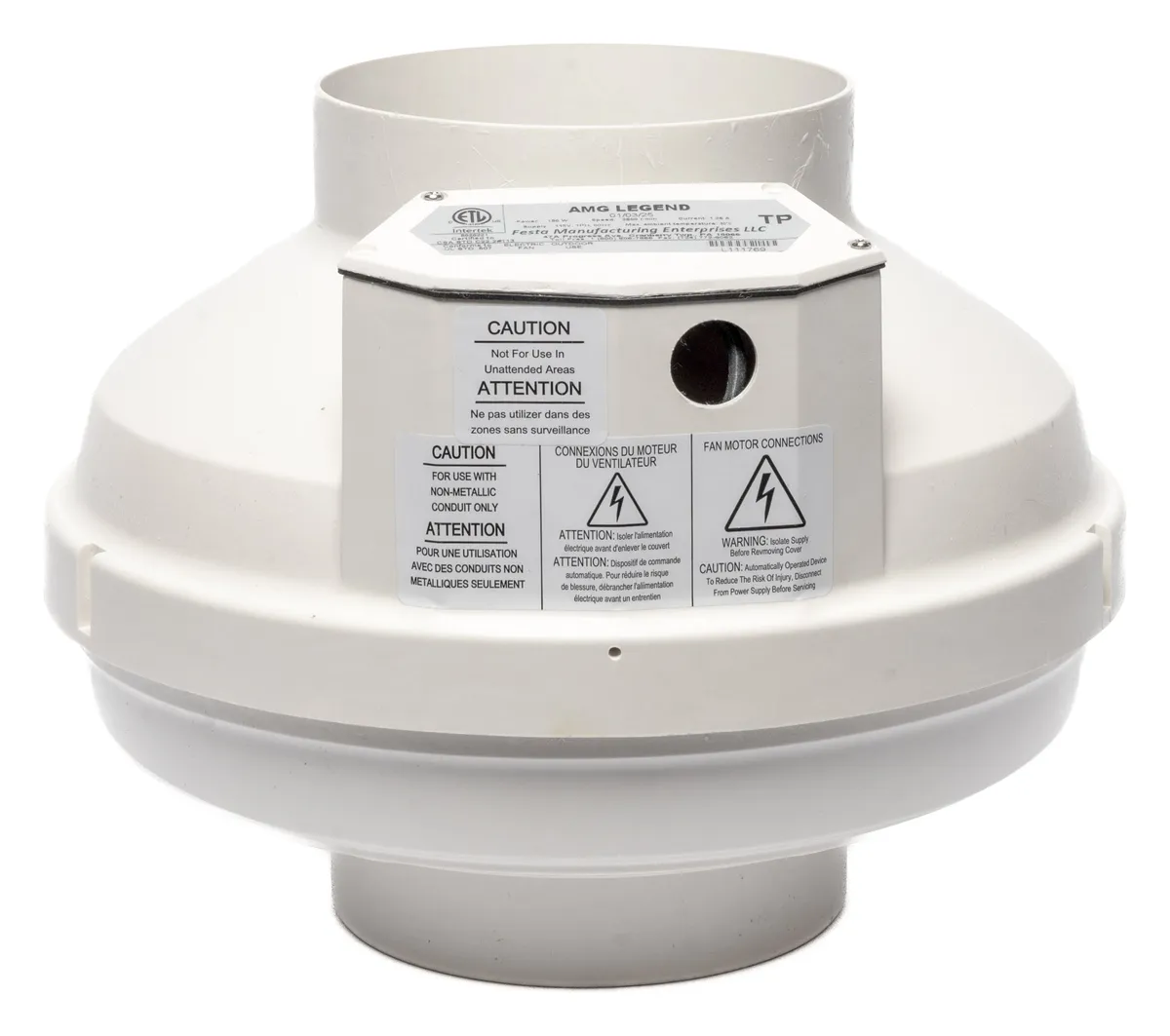
Rn4EC-4 inline radon mitigation fan
- 4 in. schedule 40 PVC
- 174 W
Max airflow: 330 CFM
Max pressure: 4.75 in w.c.
Radon fan
AMG Legend inline radon mitigation fan
- 6 in. Fernco coupler size
- 140 W
Max airflow: 345 CFM
Max pressure: 2.6 in w.c.
Radon fan
AMG Maverick inline radon mitigation fan
- 4 in. Fernco coupler size
- 66 W
Max airflow: 260 CFM
Max pressure: 2.21 in w.c.
Radon fan

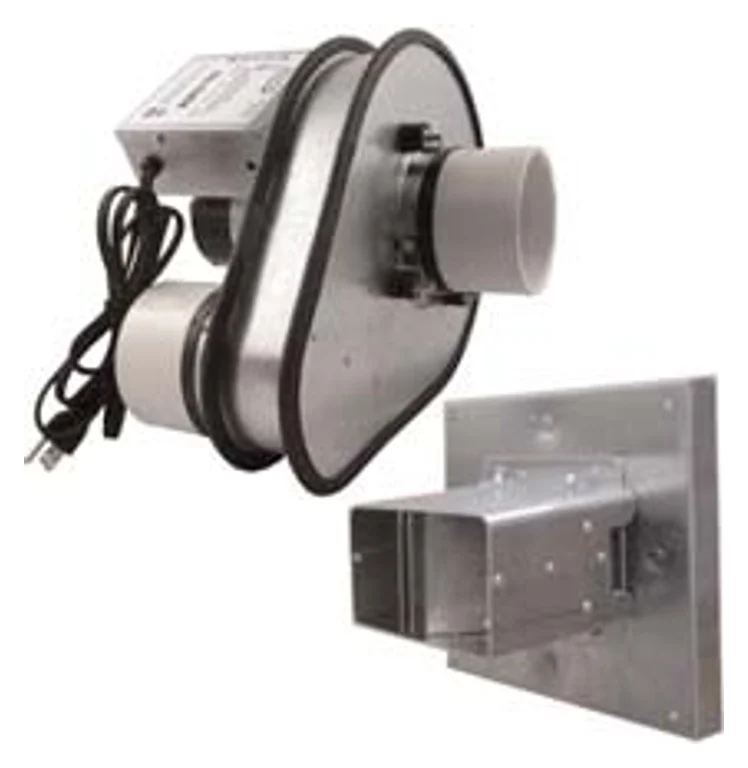
RMS160 side-wall radon mitigation system
- 3 in. schedule 40 PVC
- 50 W
Max airflow: 160 CFM
Max pressure: 2.3 in w.c.
- All radon fan models More radon fan models

More radon fan models: 1 of 15
Questions
Questions people ask
6 questions about the Festa AMG Eagle, answered
Asked about the AMG Eagle
How much air does the AMG Eagle move?
It depends on the suction. Festa's 2022 catalog lists, in CFM: 241 at 0 inches of water column, 219 at 0.5, 177 at 1.0, 159 at 1.5, 130 at 2.0, 111 at 2.5, 96 at 2.75, 86 at 3.0, 71 at 3.25, 55 at 3.5, 39 at 3.75 and 19 at 4.0, with a maximum pressure of 4.2 inches.
Is the AMG Eagle the right fan for a house on clay?
It is the kind of fan Festa names for it: Festa recommends the Eagle for 500 to 2,000 square feet over compact, moist sub-slabs such as clay, and its chart lists it among the high suction fans for compact ground. Which fan a given slab needs is something a mitigator measures, so treat Festa's guidance as a starting point.
How loud is the AMG Eagle?
Festa estimates 65 to 70 dB and says it varies with the system configuration; it does not give a measuring distance. For the Maverick it gives 55 to 60 dB, so the Eagle is the louder of the two by Festa's own figures, which is one more reason to mount it outdoors where its instructions allow.
Which fans does Festa say the Eagle replaces?
Festa's 2022 replacement guide pairs the AMG Eagle with installed GP401, GP501, GX4 and GX5 fans. It sends a Fantech RN4 to the AMG Legend Extreme instead. Festa's page reminds buyers that picking the correct fan is their responsibility and offers a phone line for help.
Can I turn the Eagle down?
Not with an add-on dimmer. Festa's instructions say not to use the AMG fans with solid state speed controllers, except that Canadian users may use KB Electronics' KBMC-13BV, which is not for the Extreme models. Festa sells speed control as separate models, such as its Maverick ECS, and its RRNC page lists the Eagle among its AC models.
Do I need a professional to install it?
For a new system, yes is the usual answer: the EPA recommends a qualified contractor and many states license or certify radon professionals, and Festa advises a certified and licensed mitigator for sizing and installation. A like-for-like swap still means mains wiring, which Festa's instructions leave to a qualified person.
What to do next
- See every radon fan we coverEach maker's published pressure, airflow and power, side by side.
- Find a mitigation professionalMost systems are designed and installed by one; some states require a license.
- Understand the fanWhat the fan does in a system, and when one needs replacing.
- Test after it runsA short-term test after installation shows whether the system works.
Updated November 27, 2026