 Fantech
 Rn1
Low-suction ENERGY STAR radon fan
- Radon fan
- 3 or 4 in. schedule 40 PVC
- 20 W
Best for, and skip if
Best for you if
- A mitigator's diagnostics show good sub-slab communication, such as clean gravel, and the system holds well under 0.8 inch, the top of Fantech's application range.
- Electricity use matters; Fantech's manual lists 19.7 W, against 58.0 W for the Rn2 in the same table.
Skip it if
- The system needs a full inch of suction or more; Fantech lists no Rn1 airflow at 1.00 inch and a maximum of 0.89 to 0.9 inch.
- The slab is tight or the radon level is high; Fantech's brochure points elevated levels and poor communication to its Rn2X and Rn3.
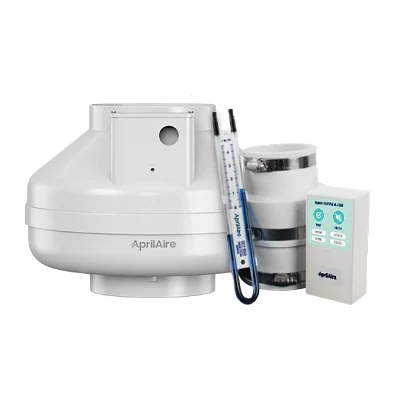
Photos: Fantech
 (opens in a new tab)Check price on Amazon (opens in a new tab)

As an Amazon Associate, Radon411 earns from qualifying purchases.
Amazon and the Amazon logo are trademarks of Amazon.com, Inc. or its affiliates.
See ratings and reviews on Amazon (opens in a new tab)- Pipe size3 or 4 in. schedule 40 PVC, with Fantech LDVI 4x3 or 4x4 couplings (sold separately); ENERGY STAR's record lists a 5.00 in. duct size
- Power draw20 W
- Every figure checked against the specifications Fantech publishes
- The maker's own performance table, point by point, unranked
About this item
As Fantech states it
- Motor: AC
- Pipe size: 3 or 4 in. schedule 40 PVC, with Fantech LDVI 4x3 or 4x4 couplings (sold separately); ENERGY STAR's record lists a 5.00 in. duct size
- Max static pressure: 0.9 in w.c.
- Max airflow: 158 CFM
- Max power: 20 W
- Power supply: 120 V, single phase, 60 Hz; 0.17 A maximum; 19.7 W (manual) or 20 W (sales sheet, brochure); 3100 RPM
- Speed control: None
- Airflow at static pressure: 160 CFM at 0.00 in w.c.; 130 at 0.20; 80 at 0.50
- Outdoor use: Rated for outdoor installation
- Warranty: Five (5) year factory limited warranty
The Rn1 is the smallest fan in Fantech's Rn line, item 89051, built for slabs where air moves easily and little suction is needed. Fantech rates it for 0.0 to 0.8 inch of water column in use, 0.9 inch at most and 20 W, and it is one of the two Rn fans Fantech lists as ENERGY STAR products; ENERGY STAR's own record gives it 130 CFM and 7.3 CFM per watt at the program's test point.
What you get
Fantech's manual lists what the box holds: one Rn inline radon fan and one operation and installation manual. Couplings are not included; the sales sheet lists the LDVI 4x3 and LDVI 4x4 pairs as sold separately, with 4 inch, 3 1/2 inch and 4 1/2 inch dimensions for the 4x3 and 4, 4 1/2 and 4 1/2 inches for the 4x4. The fan itself measures 4 15/32 inches (114 mm) by 10 inches (254 mm), with 1 1/4 inch (32 mm) and 9 1/4 inch (235 mm) dimensions on the same drawing.
In the box and running costsHow it works
What it does and how
The suction, the airflow and the housing, then who has checked it
How it works
In our words, from the maker's documents
How much fan a house needs depends on the ground under the slab. The EPA's guide notes that suction works best when air moves easily in the material beneath, and that often a single suction point is enough. Fantech's sales sheet aims the Rn1 at exactly that case: applications where lower pressure and flow are needed, with good sub slab communication and lower radon levels, which its 2025 brochure sums up as low suction, low flow.
Fantech's manual gives the Rn1's curve in four readings: 160 CFM with no resistance, 130 CFM at 0.20 inch, 80 CFM at 0.50 inch, and no airflow listed at 1.00 inch, with a maximum of 0.89 inch. The sheet and the brochure round that maximum to 0.9 inch and set the application range at 0.0 to 0.8, which the sheet defines as where the fan moves about 20 CFM or more; the maximum is where it runs but creates no air movement. The brochure's maximum airflow is 158 CFM, two less than the manual's, and the sheet files the fan as an inline model in Fantech's low pressure category, RRNC 2.0 fan type RF1.
Power is where the Rn1 differs most from its siblings. The manual lists 0.17 A and 19.7 W at 120 V, single phase, 3100 RPM and 7.30 CFM per watt; the sheet calls 20 W a record low power consumption. For comparison, the same manual gives the Rn2 58.0 W and the Rn3 141.2 W, so the Rn1 draws about a third of the Rn2's power for a curve that stops below one inch.
ENERGY STAR's certified ventilating fans dataset carries the fan as Fantech Rn 1 (89051), UPC 650737890513, an in-line single-port fan with one speed, tested at 130 CFM and 7.3 CFM per watt, available from 2022-08-16 and qualified on 2022-09-16. Its record lists a 5.00 inch duct size, while Fantech's manual and sheet fit the fan to 3 inch or 4 inch PVC pipe through LDVI couplings; the program's figure is its own test entry, not an installation instruction.
The housing is the other half of the design. Fantech's sheet says the Rn1's plastic housing is joined by vibration welding into a fused, single piece whose seam is inherently air tight, so efficiency is not lost and contaminants are not spilled through leaks. The motor is an external rotor type with automatic-reset thermal overload protection, and a large wiring enclosure is built into the housing. Fantech's manual adds that the reinforced polymer construction is double insulated to UL 1097, so no grounding conductor is needed, and that UL found the fans suitable for outdoor use under UL 507.
What the manufacturer says
Fantech's own statements, attributed
- Fantech saysFantech states the Rn1 is specifically designed for applications where lower pressure and flow are needed, with good sub slab communication and lower radon levels.
- Fantech saysFantech calls the Rn1's 20 W a record low power consumption and describes it as an Energy Star fan.
- Fantech saysFantech states the Rn1's vibration-welded seam is inherently air tight, very strong and permanent.
- Fantech saysFantech's manual states the Rn1 and Rn2X are the only ENERGY STAR products in its Rn series.
- Fantech saysFantech's brochure lists the Rn1, item 89051, at an application pressure range of 0.0 to 0.8 inch, a 0.9 inch maximum static pressure, 20 W and 158 CFM.
- Fantech saysFantech's manual states a five year factory limited warranty for the Rn series.
These are Fantech's own statements, attributed to it. They are not our findings, and we have not tested this product ourselves.
Independent evidence
Who checks a device like this
C-NRPP's consumer evaluation covers electronic radon monitors, not mitigation fans, so it has no result for Fantech Rn1. The safety listing and performance certification the maker states are under “What the manufacturer says”, and what shows whether any fan is working in your home is a radon test after it is installed.
Fantech Rn1
Check price on Amazon (opens in a new tab)Specifications
Specifications
Every figure as the maker states it
The maker's figures
- Type
- Mitigation fan, inline
- Motor
- AC
- Pipe size
- 3 or 4 in. schedule 40 PVC, with Fantech LDVI 4x3 or 4x4 couplings (sold separately); ENERGY STAR's record lists a 5.00 in. duct size
- Max static pressure
- 0.9 in w.c.
- Max airflow
- 158 CFM
- Max power
- 20 W
- Power supply
- 120 V, single phase, 60 Hz; 0.17 A maximum; 19.7 W (manual) or 20 W (sales sheet, brochure); 3100 RPM
- Speed control
- None
- Airflow at static pressure
- 160 CFM at 0.00 in w.c.; 130 at 0.20; 80 at 0.50
- Outdoor use
- Rated for outdoor installation
- Warranty
- Five (5) year factory limited warranty
What is in the box
Fantech's manual lists what the box holds: one Rn inline radon fan and one operation and installation manual. Couplings are not included; the sales sheet lists the LDVI 4x3 and LDVI 4x4 pairs as sold separately, with 4 inch, 3 1/2 inch and 4 1/2 inch dimensions for the 4x3 and 4, 4 1/2 and 4 1/2 inches for the 4x4. The fan itself measures 4 15/32 inches (114 mm) by 10 inches (254 mm), with 1 1/4 inch (32 mm) and 9 1/4 inch (235 mm) dimensions on the same drawing.
The manual's five year factory limited warranty covers repair or replacement of any part with a factory defect in workmanship or material. A return needs a Return Materials Authorization number from Fantech and a copy of the bill of sale, and the warranty excludes damage from improper wiring or installation, shipping damage, and incorrect electrical voltage or current.
What it costs to run
At 19.7 W around the clock, Fantech's manual figure, the Rn1 uses about 173 kWh a year (19.7 x 8,760 / 1,000); at the sheet's rounded 20 W it is about 175 kWh. Multiply by your rate per kWh for the cost. The EPA notes that systems with fans slightly increase the electric bill, and the Rn1's draw is close to the floor of the Rn line.
The fan is not meant to be switched off to save power. The EPA says the fan should never be turned off and must run continuously, that fans may last five years or more, that manufacturer warranties tend not to exceed five years, and that the home should be retested at least every two years.
Airflow at each pressure
Fantech's performance table, point by point
| Static pressure | Airflow |
|---|---|
| 0.00 in w.c. | 160 CFM |
| 0.20 in w.c. | 130 CFM |
| 0.50 in w.c. | 80 CFM |
Airflow falls as the suction the system needs rises. A mitigator matches the fan to pressure measured under the slab.
Fit and setup
Who it fits, and installation
The fit, then how a system goes in
Who it fits
Good fit if, and look elsewhere if
Good fit if
- A mitigator's diagnostics show good sub-slab communication, such as clean gravel, and the system holds well under 0.8 inch, the top of Fantech's application range.
- Electricity use matters; Fantech's manual lists 19.7 W, against 58.0 W for the Rn2 in the same table.
- You are replacing an Rn1 or one of the fans Fantech's brochure maps to it, the HP 2133 or FR 100.
- The fan will sit outdoors or in a wet location, which Fantech's sheet allows for the Rn1.
Look elsewhere if
- The system needs a full inch of suction or more; Fantech lists no Rn1 airflow at 1.00 inch and a maximum of 0.89 to 0.9 inch.
- The slab is tight or the radon level is high; Fantech's brochure points elevated levels and poor communication to its Rn2X and Rn3.
- You want to set the speed; Fantech says not to use the Rn fans with any solid state speed control device, and only its EC models have a built-in dial.
- You are planning the system yourself; the EPA recommends a qualified radon mitigation contractor.
Installation
5 steps
- The EPA recommends that a qualified radon mitigation contractor fix a home, and notes that many states require radon professionals to be licensed, certified or registered. Fantech's manual says installation work and electrical wiring must be done by qualified persons to all applicable codes and standards, including fire-rated construction.
- Fantech's manual sets the mechanical rules for the Rn1: 3 inch or 4 inch schedule 40 PVC with the matching LDVI coupling, the suction pipe ending at the exterior wall before the fan goes on, a slight incline so water drains from the fan, vertical orientation only, and no direct connection to the building structure. The sheet's LDVI couplings come in 4x3 and 4x4 pairs, sold separately, molded from a softer, low durometer material for easier fitting and vibration isolation.
- On ducting, Fantech's manual warns that the run to the outside has a strong effect on airflow, noise and energy use: keep it as short and straight as possible, do not use smaller ducts than recommended, and expect a fan on existing ducts to fall short of its rated airflow. That matters more for a fan whose whole range sits under one inch than for a high-suction model, because a long or narrow run eats into a small margin.
- The EPA's construction guide puts the fan in a vertical run of the vent pipe, with the fan and every positively pressurized part of the pipe outside habitable space, ideally in an attic or an attached garage. The consumer guide says a warning device must be installed to alert you if an active system stops working properly, and that a post-mitigation radon test should come within 30 days of installation but no sooner than 24 hours after the fan starts.
- Fantech's manual also cautions that the fan can affect the combustion air that fuel-burning equipment needs, and points to the heating equipment maker's guidelines and NFPA and ASHRAE standards. Before power is connected, the manual asks for the electrical service to be locked off, and for the voltage at the fan to be checked against the motor name plate.
To find someone to design and install a system, see radon mitigation professionals, and for how a fan fits into one, how a radon fan works.
Compare
Compare with similar items
The same three rows for each, and the one difference that matters
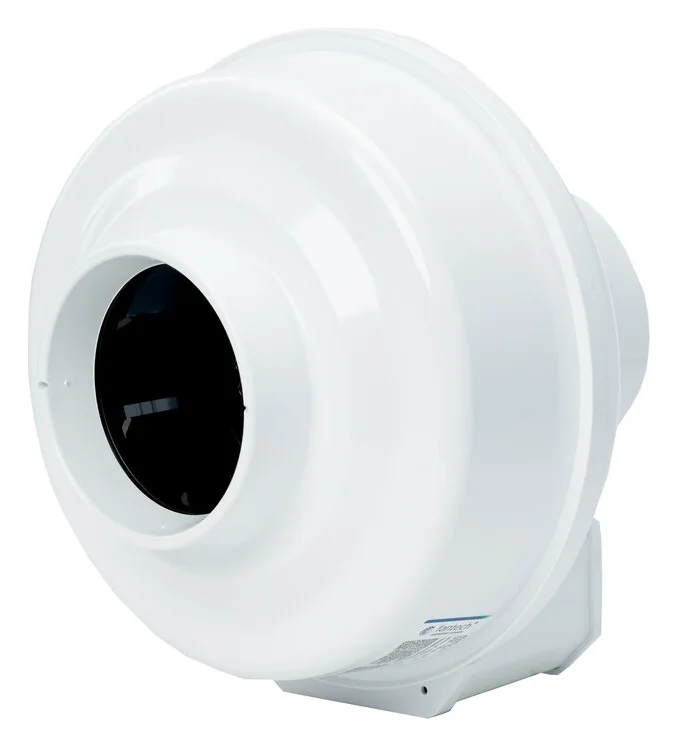
This page
Fantech Rn1
- What it does
- Moves up to 158 CFM
- Power
- Up to 20 W
- C-NRPP 2024/25
- Not applicable (mitigation fan)
This page: The Rn1 is the smallest fan in Fantech's Rn line, item 89051, built for slabs where air moves easily and little suction is needed.
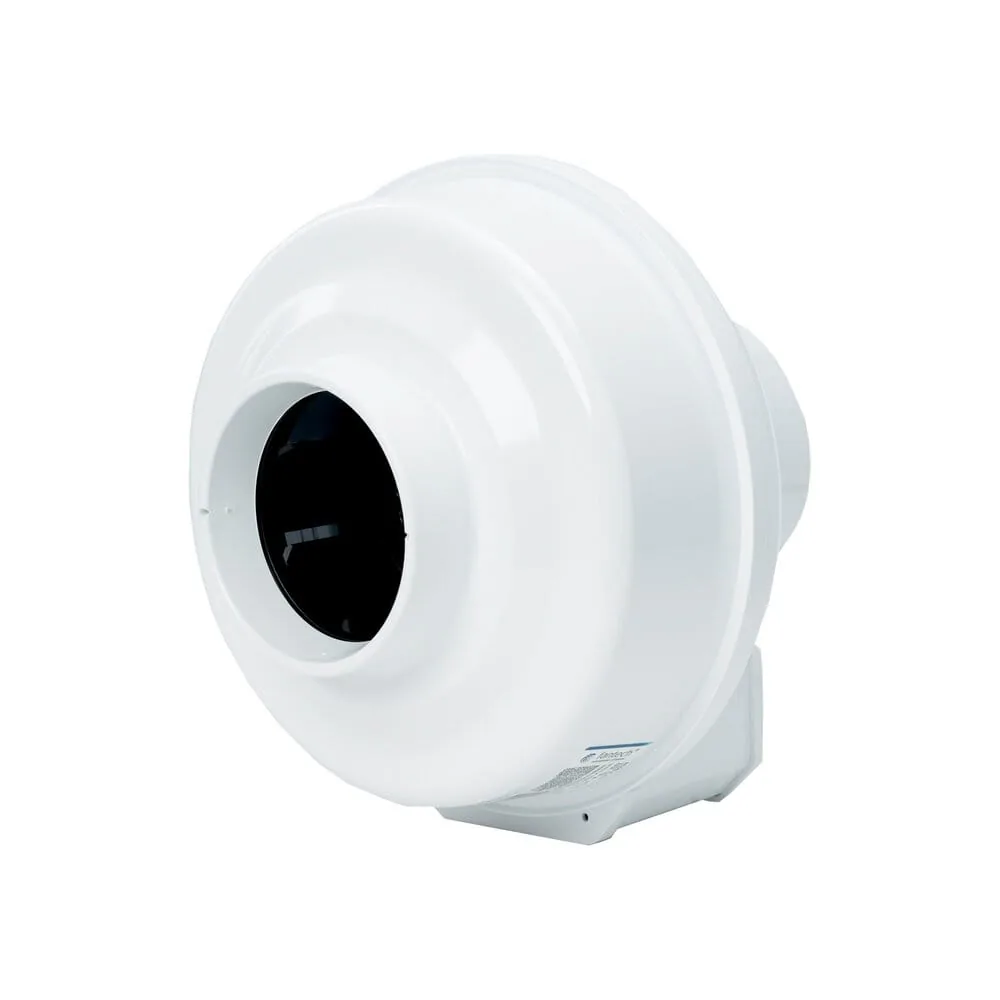
Fantech
- What it does
- Moves up to 174 CFM
- Power
- Up to 59 W
- C-NRPP 2024/25
- Not applicable (mitigation fan)
The difference: Fantech's next step up: its 2025 brochure lists the Rn 2 at 0.0 to 1.8 inches, a 2.0 inch maximum, 59 W and 174 CFM.
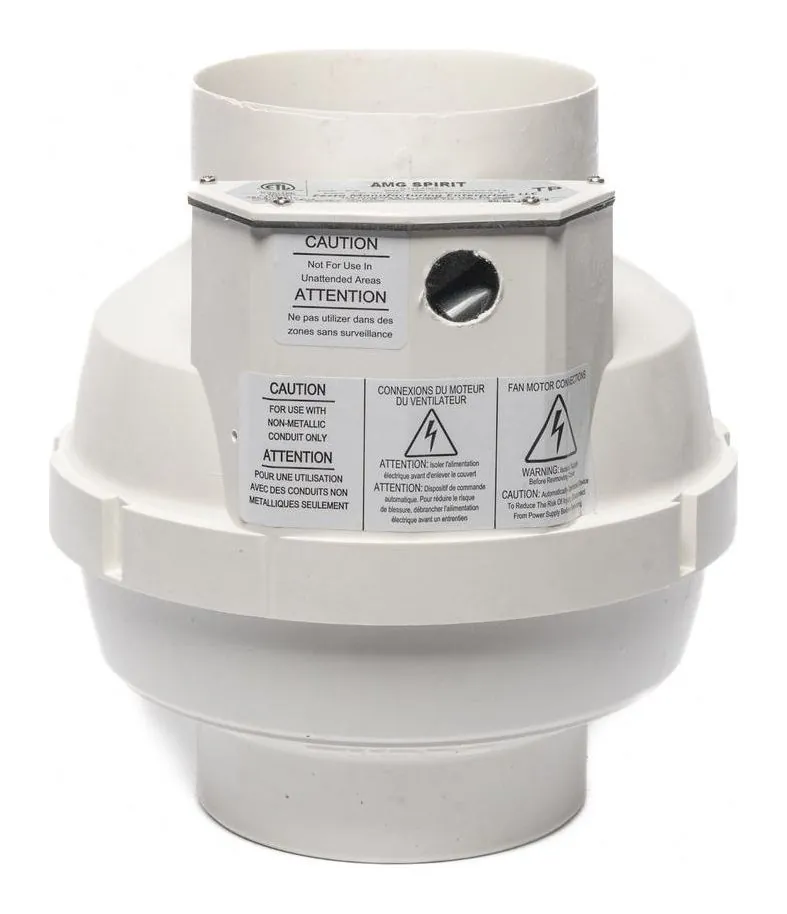
Festa
- What it does
- Moves up to 121 CFM
- Power
- Up to 27 W
- C-NRPP 2024/25
- Not applicable (mitigation fan)
The difference: Festa's low-pressure fan on a 5 inch Fernco: its 2022 catalog lists the AMG Spirit at 121 CFM, a 0.9 inch maximum and 27 W.
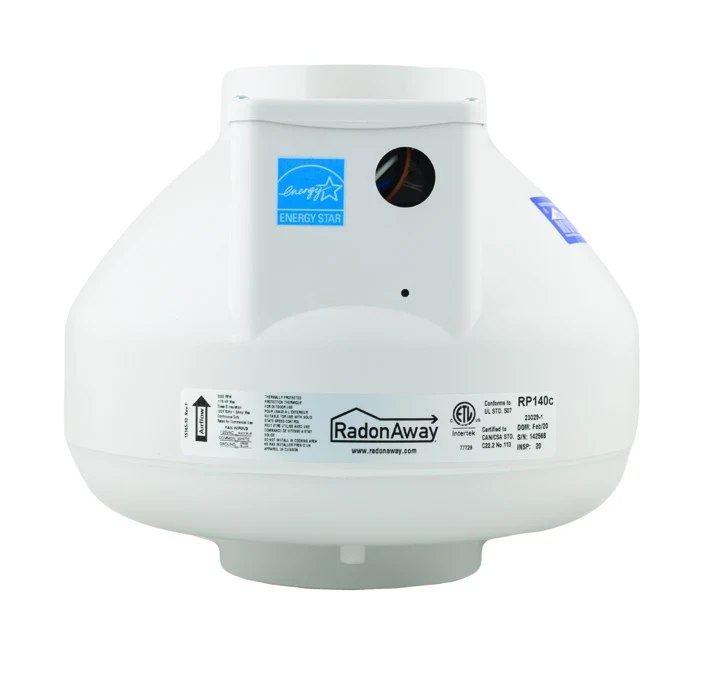
RadonAway
- What it does
- Moves up to 138 CFM
- Power
- Up to 21 W
- C-NRPP 2024/25
- Not applicable (mitigation fan)
The difference: RadonAway's low-suction ENERGY STAR fan: its C Series table lists the RP140c at 17 to 21 W with a 0.7 inch recommended maximum, and ENERGY STAR's record gives 110 CFM at 5.9 CFM per watt.
Compared with similar products: 1 of 4
More radon fan models6
All radon fan models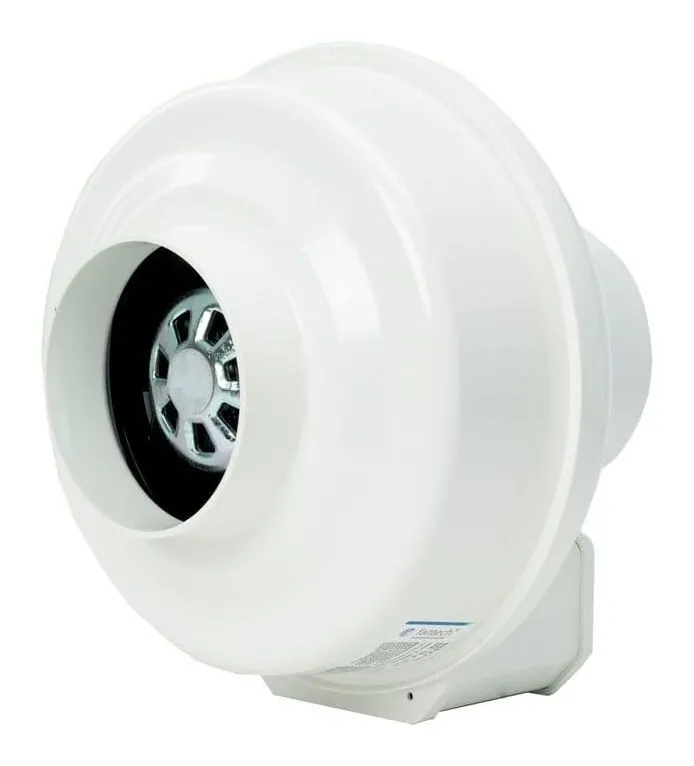
Radon fan
Rn2EC EC inline radon fan with speed dial
- 3 or 4 in. schedule 40 PVC
- 52 W
Max airflow: 173 CFM
Max pressure: 2.0 in w.c.
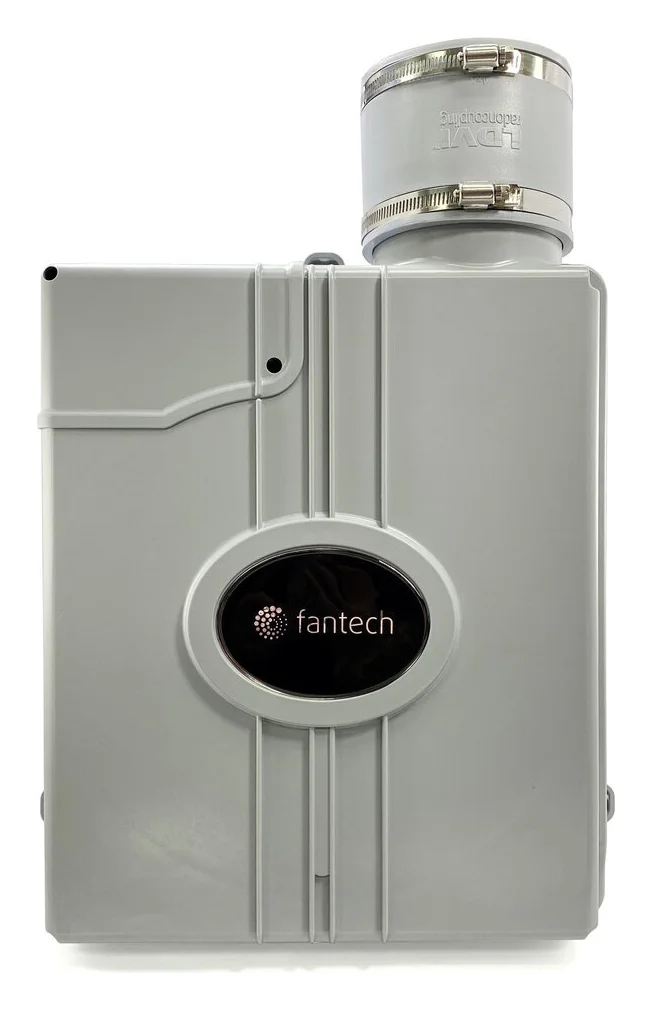
Radon fan
Rn2SL exterior-wall slimline radon fan
- 4 in. schedule 20 or 40 PVC
- 87 W
Max airflow: 159 CFM
Max pressure: 2.1 in w.c.
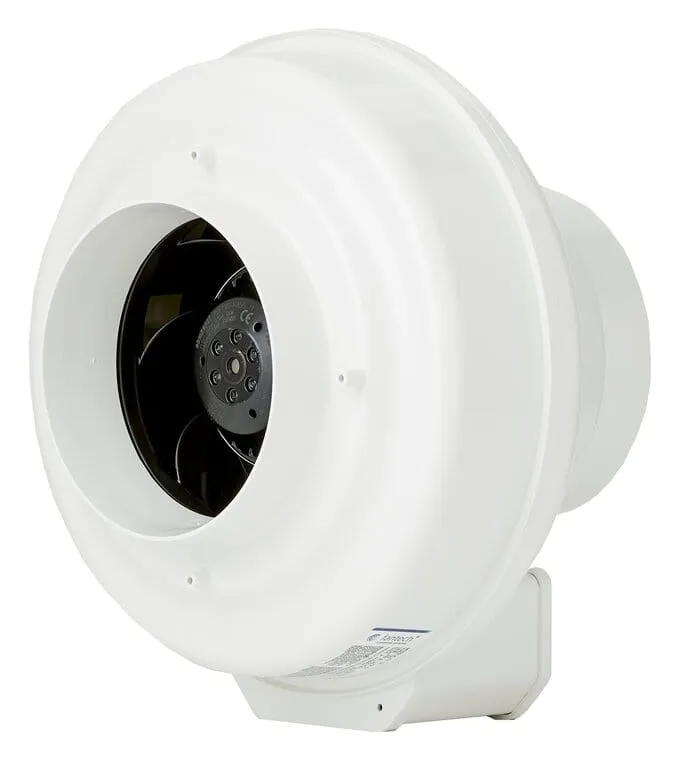
Radon fan
Rn3 inline radon mitigation fan
- 5 7/8 in. fan connection
- 125 W
Max airflow: 337 CFM
Max pressure: 2.6 in w.c.
- All radon fan models More radon fan models
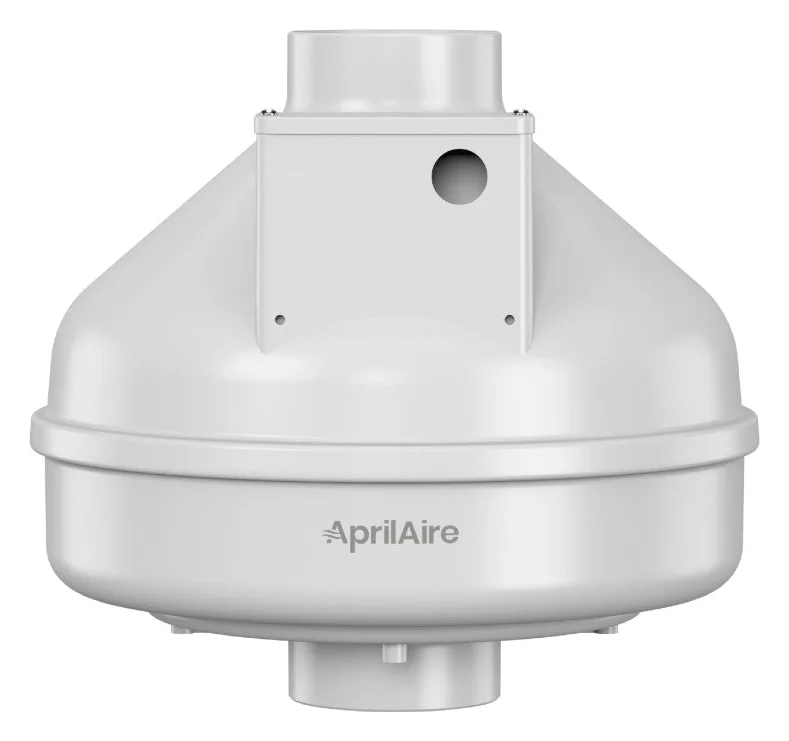
More radon fan models: 1 of 6
Questions
Questions people ask
5 questions about the Fantech Rn1, answered
Asked about the Rn1
Is the Rn1 ENERGY STAR certified?
Yes. ENERGY STAR's certified ventilating fans dataset lists the Fantech Rn 1 (89051), qualified on 2022-09-16, at 130 CFM and 7.3 CFM per watt, and Fantech's manual names the Rn1 and Rn2X as its only ENERGY STAR Rn products. The rating is about energy use at the program's test point, not radon reduction in a given house.
How much suction can the Rn1 pull?
Not much, by design. Fantech's manual gives a maximum of 0.89 inch of water column, and its sheet and brochure round it to 0.9 inch with an application range of 0.0 to 0.8, where the fan still moves about 20 CFM or more.
What pipe does the Rn1 take?
Fantech's manual says 3 inch or 4 inch schedule 40 PVC with the matching LDVI coupling, and the sheet lists LDVI 4x3 and 4x4 pairs, sold separately. ENERGY STAR's record lists a 5.00 inch duct size for its test, which is not Fantech's installation guidance.
Which fans does Fantech say the Rn1 replaces?
Its brochure's cross reference maps the Rn1 to Fantech's HP 2133 and FR 100, RadonAway's RP140 and Festa's Spirit, on pressure capability, and warns that pipe and connection sizes vary and may need transition couplings. Its 2018 sheet adds the older R 100 and F 100 among Fantech's own models.
Can the Rn1 be mounted outdoors?
Fantech's sheet says it can be mounted indoors, outdoors and in wet locations, and its manual says UL found the Rn fans suitable for outdoor use under UL 507. The EPA's guide still keeps the fan outside habitable space, often in an attic or attached garage.
What to do next
- See every radon fan we coverEach maker's published pressure, airflow and power, side by side.
- Find a mitigation professionalMost systems are designed and installed by one; some states require a license.
- Understand the fanWhat the fan does in a system, and when one needs replacing.
- Test after it runsA short-term test after installation shows whether the system works.
Updated November 27, 2026