Dwyer
Dwyer Magnehelic 2005
Dial pressure gauge for a radon system
- System indicator
Best for, and skip if
Best for you if
- You would rather read a pointer on a dial than a fluid column, with no gauge fluid to top up.
- Your system's normal suction sits well inside 0 to 5 inches of water column.
Skip it if
- Your fan pulls more than 5 inches; RadonAway lists 0 to 10 and 0 to 50 inch Magnehelics for its HS series.
- You want a gauge that clamps to a 3 or 4 inch radon pipe; Dwyer's A-610 pipe mounting kit is for 1-1/4 to 2 inch pipe.
Photos: Dwyer
 (opens in a new tab)Check price on Amazon (opens in a new tab)

As an Amazon Associate, Radon411 earns from qualifying purchases.
Amazon and the Amazon logo are trademarks of Amazon.com, Inc. or its affiliates.
See ratings and reviews on Amazon (opens in a new tab)- Every figure checked against the specifications Dwyer publishes
- The maker's own figures and limits, shown the same way for every part, unranked
About this item
As Dwyer states it
- What it reads: Pressure, by a diaphragm, range spring and magnetic helix turning a pointer on a dial; positive, negative (vacuum) or differential; on a radon pipe it shows the fan's suction and does not measure radon
- Range: 0 to 5.0 in. w.c., minor divisions .10; accuracy plus or minus 2% of full scale at 70°F; pressure limits -20 in. Hg to 15 psig; temperature limits 20 to 140°F
- Made of: Die cast aluminum case and bezel with acrylic cover, 4 in. dial face, IP67; 1 lb 2 oz (510 g); 1/8 in. female NPT duplicate high and low pressure taps
- Package: Gauge with two 1/8 in. NPT plugs, two 1/8 in. pipe thread to rubber tubing adapters and three flush mounting adapters with screws; A-610 pipe mounting kit (1-1/4 to 2 in. pipe) optional
The Magnehelic 2005 is Dwyer's Series 2000 dial gauge with a 0 to 5.0 inch water column scale in minor divisions of .10, read from a pointer on a 4 inch dial rather than a column of gauge fluid. Dwyer sells it for fans, filters and ducts at plus or minus 2% of full scale, and RadonAway stocks it on its radon trade store as part 50014. On a radon system it shows the suction the fan pulls; it does not measure radon.
What you get
Dwyer lists the standard accessories with each Series 2000 gauge: two 1/8 inch NPT plugs for the duplicate pressure taps, two 1/8 inch pipe thread to rubber tubing adapters, and three flush mounting adapters with screws. The process connections are 1/8 inch female NPT, duplicate high and low taps, one pair on the side and one on the back. Tubing is not listed, and the A-610 pipe mounting kit is an option.
In the box and running costsHow it works
What it does and how
What it is made of and the job it does in a system, then who has checked it
How it works
In our words, from the maker's documents
A Magnehelic swings a pointer instead of lifting a column of fluid. In Dwyer's description of the movement, a silicone rubber diaphragm takes the pressure, a flat steel range spring reacts to it, and a helix of high magnetic permeability, turning in jeweled bearings, follows the magnetic field to move the pointer across the scale; the motion is damped with high viscosity silicone fluid. Dwyer says the gauge quickly indicates air or noncorrosive gas pressures, either positive, negative (vacuum) or differential, and needs no power. The negative case is the radon one: the fan holds the pipe below atmospheric pressure, and the dial shows by how much.
The 2005 is one of the Series 2000's many ranges: 0 to 5.0 inches of water column, minor divisions .10. Dwyer rates the standard gauge at plus or minus 2% of full scale at 70°F, with a high accuracy option at plus or minus 1%, and lists a die cast aluminum case and bezel with an acrylic cover, a 4 inch dial face, an IP67 enclosure rating, a temperature range of 20 to 140°F and a weight of 1 lb 2 oz. The pressure limits run from -20 inches of mercury to 15 psig, and a rubber relief plug opens at about 25 psig on standard gauges. The photo is Dwyer's own picture of the series from its data sheet, with a 0 to 1.0 inch dial; the 2005 is the same gauge with the 0 to 5.0 inch scale.
Dwyer does not mention radon. Its applications are filter monitoring, air velocity with a Pitot tube, blower vacuum monitoring, fan pressure indication, and duct, room or building pressures. RadonAway, the radon fan maker, lists the Dwyer Magnehelic Differential Pressure Gauge 0-5" WC on its trade store as part 50014 and gives three features: compatible with HS series, accurate within 2%, and easy to read. Its HS Series accessories category, for its high-suction fans, lists the 0 to 10 and 0 to 50 inch Magnehelics.
A needle reads the same job a U-tube does. The EPA's consumer guide lists a liquid gauge, a sound alarm, a light indicator, and a dial, or needle display, gauge among the warning devices for a system. What it cannot show is the same for every gauge: Minnesota's guidance says the monitor on the pipe does not show or measure radon levels; it shows there is suction in the pipe. A steady needle means the fan is pulling, not that radon is low.
What the manufacturer says
Dwyer's own statements, attributed
- Dwyer saysDwyer states the Magnehelic quickly indicates air or noncorrosive gas pressures, either positive, negative (vacuum) or differential.
- Dwyer saysDwyer says the design resists shock, vibration and over-pressures and is weatherproof to IP67.
- Dwyer saysDwyer lists the gauge as needing no power.
- Dwyer saysDwyer states no lubrication or periodic servicing is required.
- Dwyer saysRadonAway describes the 0-5" WC Magnehelic it sells as compatible with its HS series, accurate within 2% and easy to read.
These are Dwyer's own statements, attributed to it. They are not our findings, and we have not tested this product ourselves.
Independent evidence
Who checks a device like this
C-NRPP's consumer evaluation covers electronic radon monitors, not the parts of a mitigation system, so it has no result for Dwyer Magnehelic 2005. The standards and results the maker states are under “What the manufacturer says”, and what shows whether radon in your home is lower is a radon test after the work is done.
Dwyer Magnehelic 2005
Check price on Amazon (opens in a new tab)Specifications
Specifications
Every figure as the maker states it
The maker's figures
- Type
- System indicator, Dial differential pressure gauge, 0 to 5 in. w.c.
- What it reads
- Pressure, by a diaphragm, range spring and magnetic helix turning a pointer on a dial; positive, negative (vacuum) or differential; on a radon pipe it shows the fan's suction and does not measure radon
- Range
- 0 to 5.0 in. w.c., minor divisions .10; accuracy plus or minus 2% of full scale at 70°F; pressure limits -20 in. Hg to 15 psig; temperature limits 20 to 140°F
- Made of
- Die cast aluminum case and bezel with acrylic cover, 4 in. dial face, IP67; 1 lb 2 oz (510 g); 1/8 in. female NPT duplicate high and low pressure taps
- Package
- Gauge with two 1/8 in. NPT plugs, two 1/8 in. pipe thread to rubber tubing adapters and three flush mounting adapters with screws; A-610 pipe mounting kit (1-1/4 to 2 in. pipe) optional
- Warranty
- Not stated by the manufacturer
What is in the box
Dwyer lists the standard accessories with each Series 2000 gauge: two 1/8 inch NPT plugs for the duplicate pressure taps, two 1/8 inch pipe thread to rubber tubing adapters, and three flush mounting adapters with screws. The process connections are 1/8 inch female NPT, duplicate high and low taps, one pair on the side and one on the back. Tubing is not listed, and the A-610 pipe mounting kit is an option.
Dwyer says the Series 2000 is not field serviceable and should be returned if repair is needed, and that attempted field repair may void the warranty. RadonAway's trade store, which sells the 50014, says goods it distributes but does not make may be returned to it within thirty days of sale, and after that go back to their maker under the maker's warranty.
What it costs to run
There is no gauge fluid, battery or power to pay for. Dwyer's maintenance note is short: no lubrication or periodic servicing is required; keep the case and cover clean, and occasionally disconnect the pressure lines to vent both sides of the gauge to atmosphere and re-zero.
If the needle will not move or is sluggish, Dwyer's troubleshooting list starts with a duplicate pressure port not plugged, a diaphragm ruptured by overpressure, and fittings or sensing lines blocked, pinched or leaking. Minnesota says both fan monitors should be checked monthly to make sure the mitigation system is working properly.
The fan behind the reading is the part that wears. The EPA says it should never be turned off, that fans may last for five years or more, and that it is a good idea to retest your home at least every two years to be sure radon levels remain low.
Fit and setup
Who it fits, and installation
The fit, then how it goes on and what the standards ask
Who it fits
Good fit if, and look elsewhere if
Good fit if
- You would rather read a pointer on a dial than a fluid column, with no gauge fluid to top up.
- Your system's normal suction sits well inside 0 to 5 inches of water column.
- The gauge will sit somewhere cold, damp or dusty; Dwyer rates the case weatherproof to IP67.
- Your mitigator stocks RadonAway's parts and names the 0 to 5 inch Magnehelic it sells as 50014.
Look elsewhere if
- Your fan pulls more than 5 inches; RadonAway lists 0 to 10 and 0 to 50 inch Magnehelics for its HS series.
- You want a gauge that clamps to a 3 or 4 inch radon pipe; Dwyer's A-610 pipe mounting kit is for 1-1/4 to 2 inch pipe.
- You want to hear when the fan stops; a gauge has to be looked at, which is why Minnesota also requires an active alarm.
- You want to know your radon level; the gauge shows suction in the pipe, and only a radon test shows radon.
Installation
3 steps
- Dwyer's Bulletin A-27 sets the conditions: a location free from excessive vibration where the ambient temperature will not exceed 140°F (60°C), out of direct sunlight, which discolors the clear cover. Standard gauges are calibrated with the diaphragm vertical and should be used that way for maximum accuracy. Sensing lines may be run any necessary distance; long tubing will not affect accuracy but will increase response time slightly.
- For a vacuum reading, Dwyer's instructions say to connect tubing from the source of vacuum to either of the two low pressure ports, plug the port not used, and vent one or both high pressure ports to atmosphere. The gauge surface mounts with No. 6-32 screws on holes 120 degrees apart on a 4-1/8 inch circle, or flush mounts in a panel. Dwyer recommends 1/4 inch O.D. or larger copper or aluminum tubing for a permanent installation, and rubber or vinyl tubing on the supplied adapters for a temporary one. Zero it with the external zero adjust screw on the cover, with both the high and low taps open to atmosphere.
- The EPA's 1994 Radon Mitigation Standards say mechanical system monitors, such as manometer type pressure gauges, shall be clearly marked to indicate the range or zone of pressure readings that existed when the system was initially activated; on a dial, that is a mark at the starting needle position. The EPA's consumer guide says the warning device must be placed where it can be seen or heard easily, and recommends a qualified radon mitigation contractor for the system.
For how the sealing, the gauge and the fan work together, see radon mitigation systems, and to find someone to design and install one, radon mitigation professionals.
Compare
Compare with similar items
The same three rows for each, and the one difference that matters
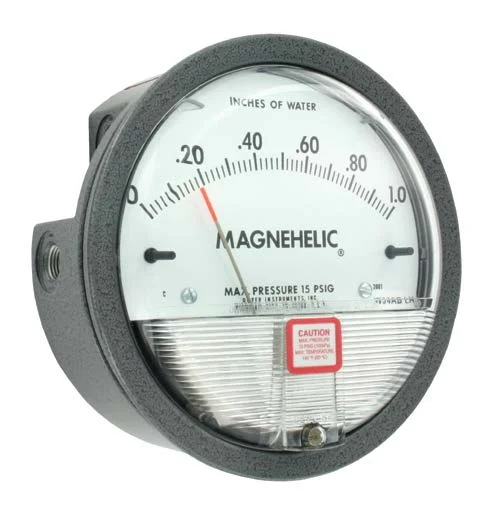
This page
Dwyer Magnehelic 2005
- What it is
- Die cast aluminum case and bezel with acrylic cover, 4 in. dial face, IP67; 1 lb 2 oz (510 g); 1/8 in. female NPT duplicate high and low pressure taps
- Power
- Not stated
- C-NRPP 2024/25
- Not applicable (system part)
This page: The Magnehelic 2005 is Dwyer's Series 2000 dial gauge with a 0 to 5.0 inch water column scale in minor divisions of .10, read from a pointer on a 4 inch dial rather than a column of gauge fluid.
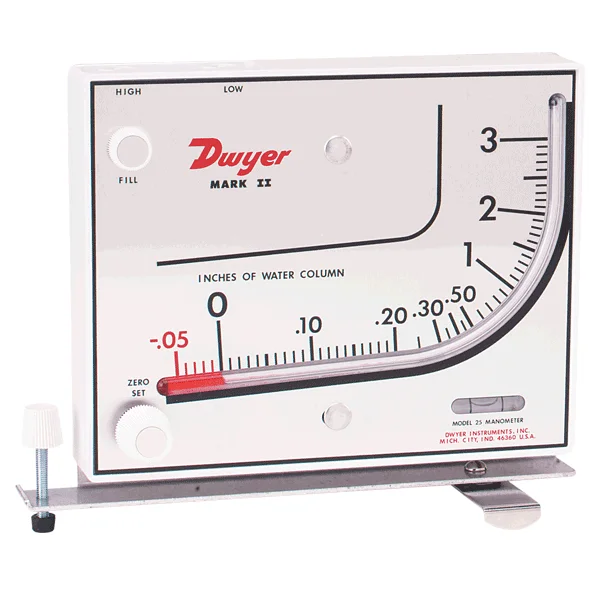
Dwyer
- What it is
- Molded plastic inclined-vertical manometer with zero set knob and level vial; 1.04 lb (472 g)
- Power
- Not stated
- C-NRPP 2024/25
- Not applicable (system part)
The difference: Dwyer's liquid gauge for the job: a curved inclined-vertical tube of red fluid reading 0 to 3 inches of water column, at plus or minus 3% of full scale.
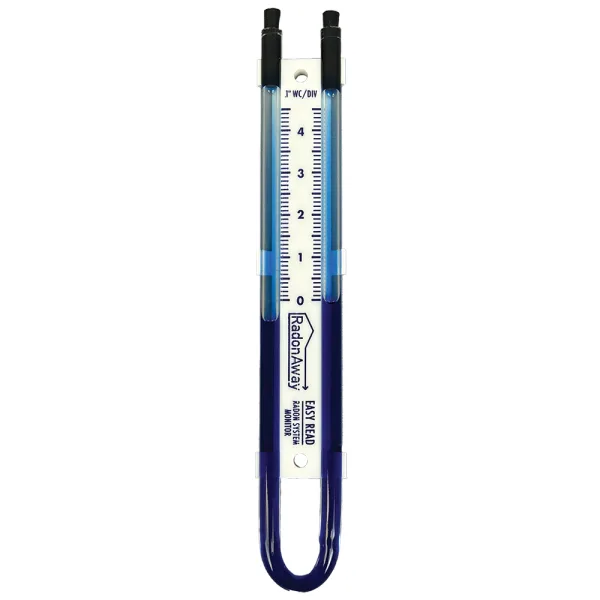
RadonAway
- What it is
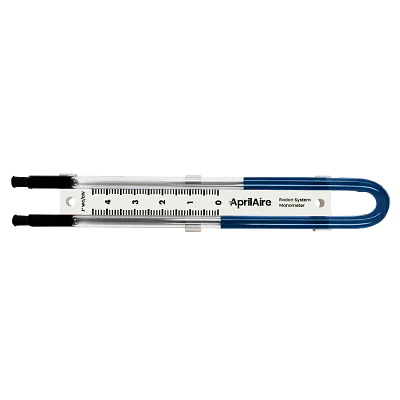
- U-tube manometer with non-toxic fluid, adjustable zero and a molded scale curved to fit the system pipe
- Power
- Not stated
- C-NRPP 2024/25
- Not applicable (system part)
The difference: RadonAway's standard U-tube, read from fluid on a molded scale curved to fit the system pipe: 0-4.5" WC, non-toxic fluid, adjustable zero.
- What it is
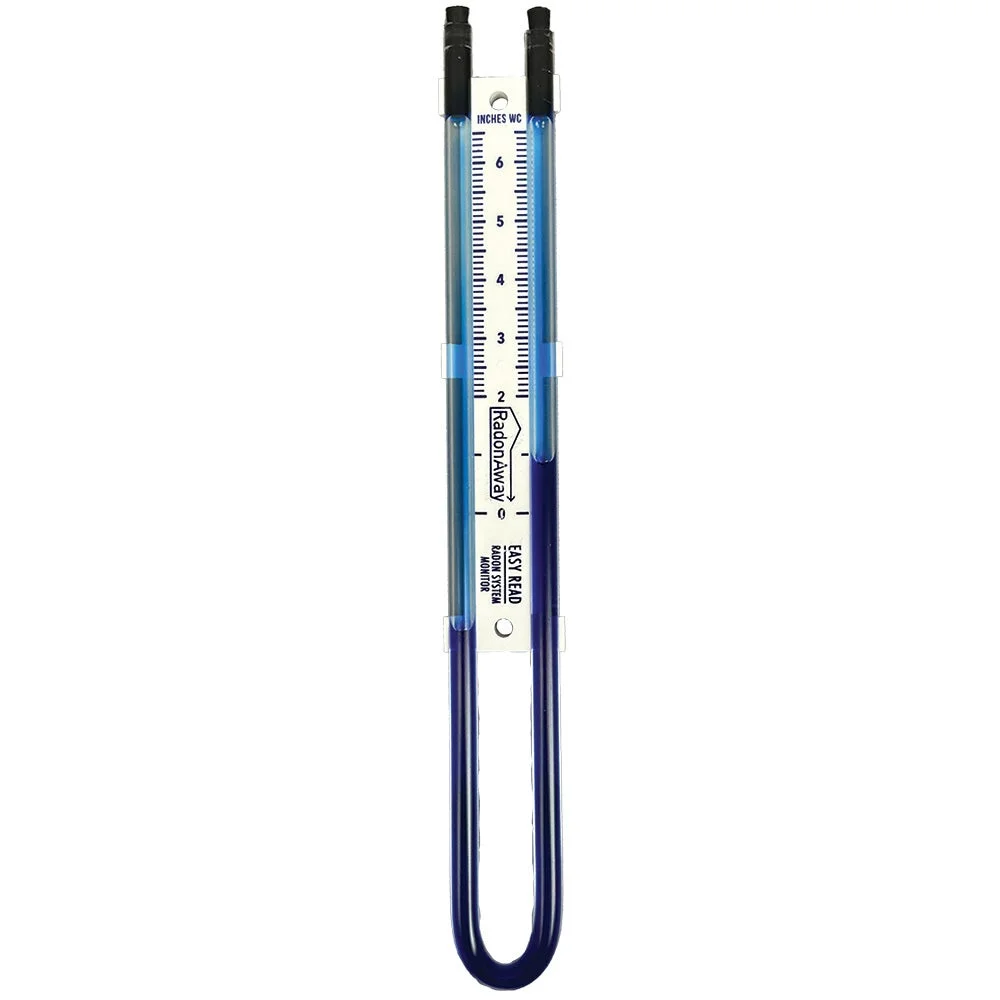
- U-tube manometer with non-toxic fluid, adjustable zero and a molded scale curved to fit the system pipe (catalog features for RadonAway's U-tubes)
- Power
- Not stated
- C-NRPP 2024/25
- Not applicable (system part)
The difference: RadonAway's own U-tube for higher suction: an extended 0 to 6.5 inch scale for its GX4, GX5 and GX5A fans, shipped with tubing and two self-tap screws.
Compared with similar products: 1 of 4
More radon manometers5
All radon manometers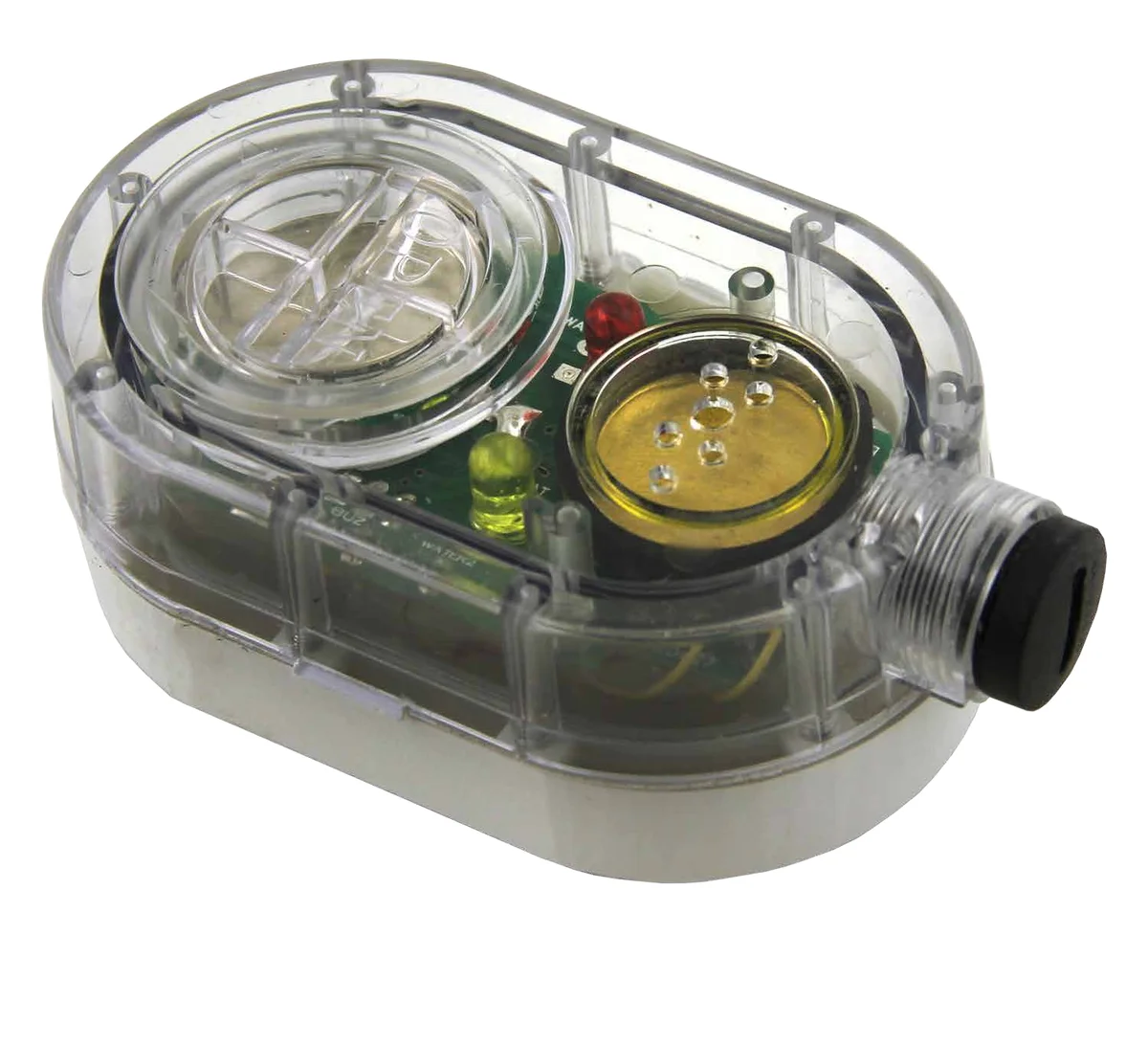
System indicator

Air Flow Alarm battery radon system air flow alarm
- Air Flow Alarm
Made of: Battery air flow alarm
- All radon manometers More radon manometers

More radon manometers: 1 of 5
Questions
Questions people ask
5 questions about the Dwyer Magnehelic 2005, answered
Asked about the Magnehelic 2005
Is a Magnehelic made for radon systems?
Dwyer sells it for fans, blowers, filters, ducts and rooms and does not mention radon. RadonAway, a radon fan maker, stocks the 0 to 5 inch model on its trade store as part 50014, and lists the 0 to 10 and 0 to 50 inch models among its HS Series accessories.
How is it different from a U-tube?
It reads with a pointer on a 4 inch dial instead of fluid in a tube, so there is no gauge fluid to top up, and Dwyer says it needs no power. Both are read by eye, and the EPA lists both a liquid gauge and a dial, or needle display, gauge among the warning devices for a radon system.
Does it measure radon?
No. It measures pressure. Minnesota's guidance says the gauge on a radon pipe shows there is suction in the pipe and does not show or measure radon levels. The EPA says it is a good idea to retest your home at least every two years.
Can it go on the radon pipe itself?
Dwyer's own pipe kit, the A-610, is for 1-1/4 to 2 inch pipe, and the gauge must be used with its diaphragm vertical. So on a 3 or 4 inch radon pipe it goes on a wall or panel nearby, joined to a port in the pipe by tubing, which Dwyer says may run any necessary distance.
The needle reads zero. What now?
Check the gauge first: Dwyer's list starts with an unplugged duplicate port and blocked, pinched or leaking lines. Then the system: Minnesota says to make sure the monitor tubing is connected to the pipe and not kinked, and that power is being supplied to the fan. If it still reads zero, call your installer.
What to do next
- See how a radon system fits togetherThe suction point, the pipe, the fan, the gauge and the sealing, and what each one does.
- Find a mitigation professionalMost systems are designed and installed by one; some states require a license.
- Read a radon manometerWhat even or uneven fluid means, and what the gauge cannot tell you.
- Test after the workA short-term test afterwards shows whether radon in the home is lower.
Updated November 27, 2026