System indicator
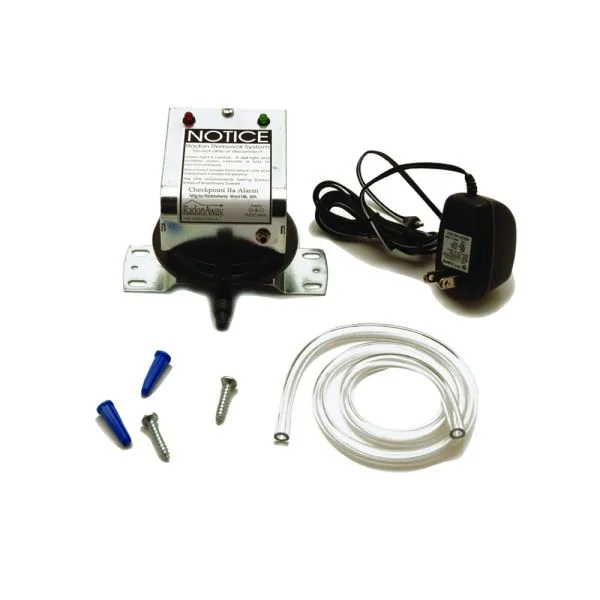
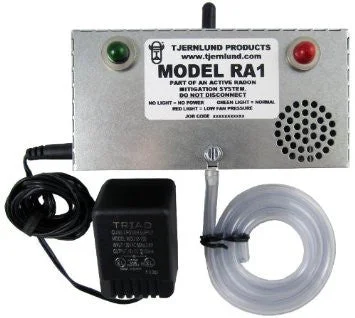
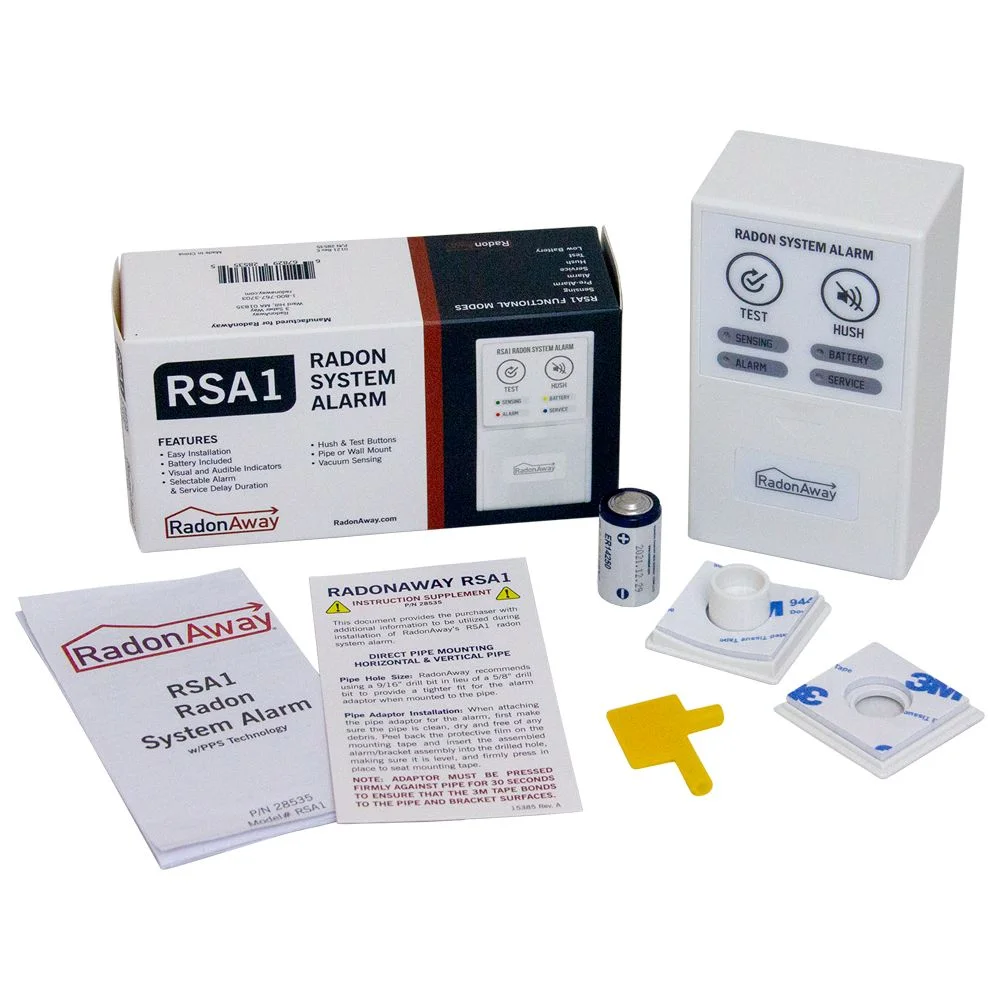
Air Flow Alarm battery radon system air flow alarm
- Air Flow Alarm
Made of: Battery air flow alarm
Dwyer
Inclined-vertical liquid manometer for a radon system
Best for you if
Skip it if
Photos: Dwyer
 (opens in a new tab)Check price on Amazon (opens in a new tab)
As an Amazon Associate, Radon411 earns from qualifying purchases.
Amazon and the Amazon logo are trademarks of Amazon.com, Inc. or its affiliates.
See ratings and reviews on Amazon (opens in a new tab)As Dwyer states it
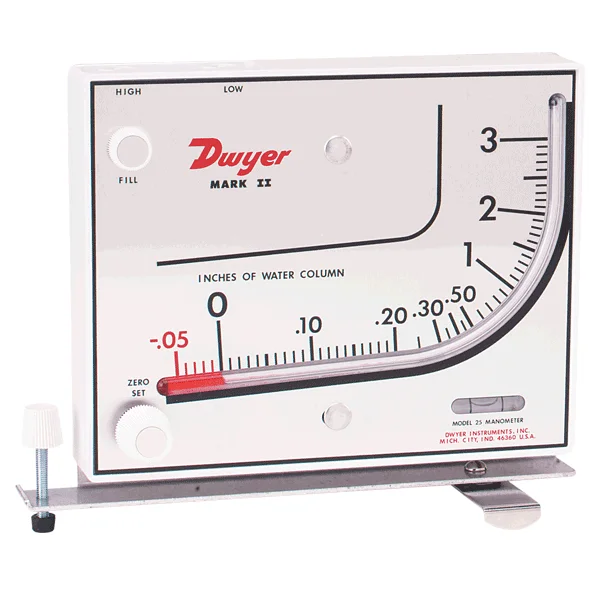
The Mark II Model 25 is Dwyer's molded plastic manometer with a curved inclined-vertical tube of red fluid, reading 0 to 3 inches of water column at plus or minus 3% of full scale. Dwyer sells it as a general purpose gauge, and RadonAway stocks it among the pressure gauges on its radon trade store as part 50005-1. On a radon system it shows the suction the fan pulls in the pipe; it does not measure radon.
Dwyer lists what comes with each Mark II manometer: two tubing connectors for 1/8 inch pipe or sheet metal ducts, two mounting screws, a 1 ounce bottle of indicating fluid, red and green pointer flags and instructions, and with the Model 25, 8 feet of flexible double column plastic tubing. Portable use needs the optional A-612 portable stand, which is not in the box.
In the box and running costsHow it works
What it is made of and the job it does in a system, then who has checked it
In our words, from the maker's documents
A liquid manometer weighs pressure against a column of fluid. Dwyer's Mark II series comes in inclined and inclined-vertical types, and the Model 25 is the inclined-vertical one: its tube runs nearly flat at the bottom of the scale and curves upward, which Dwyer says provides higher ranges with more easily read increments at low readings. Both types, in Dwyer's description, measure pressure above and below atmospheric as well as differential pressure, so the gauge can read the suction a radon fan creates in its pipe.
The Model 25 reads 0 to 3 inches of water column with red fluid of specific gravity .826, the fluid Dwyer specifies for it in Bulletin D-58. Dwyer rates its accuracy at plus or minus 3% of full scale, its temperature limit at 140°F (60°C) and its pressure limit at 10 psi (70 kPa), and gives its weight as 1.04 lb (472 g). Its page for the Mark II air velocity versions adds that moderate overpressures are accommodated by an overflow tank on the Model 25.
Dwyer does not mention radon. Its datasheet lists the Mark II's applications as paint booths, air velocity measurement and air filter gauges, and calls the Model 25 excellent for general purpose work. The radon tie comes from RadonAway, the radon fan maker, which lists the Dwyer Mark II Series 25 on its trade store as part 50005-1, reading 0 to 3 inches of water column, with a molded white styrene-acrylonitrile housing and leak proof O ring seals. RadonAway's pressure gauge category lists it beside its own Easy Read U-tubes, Dwyer Magnehelic dial gauges and red Dwyer gauge oil.
Minnesota's health department explains the job any manometer does on a radon system, in its words for the U-tube kind: a small tube connects to a hole in the radon pipe and the suction from the fan pulls the fluid up. The reading taken at installation is written on a sticker next to the gauge, and fluid that is even, or significantly different from that reading, means the system may not be functioning properly. Minnesota is just as clear on the limit: the monitor does not show or measure radon levels; it shows there is suction in the pipe.
Dwyer's own statements, attributed
These are Dwyer's own statements, attributed to it. They are not our findings, and we have not tested this product ourselves.
Who checks a device like this
C-NRPP's consumer evaluation covers electronic radon monitors, not the parts of a mitigation system, so it has no result for Dwyer Mark II 25. The standards and results the maker states are under “What the manufacturer says”, and what shows whether radon in your home is lower is a radon test after the work is done.
Dwyer Mark II 25
Check price on Amazon (opens in a new tab)Specifications
Every figure as the maker states it
Dwyer lists what comes with each Mark II manometer: two tubing connectors for 1/8 inch pipe or sheet metal ducts, two mounting screws, a 1 ounce bottle of indicating fluid, red and green pointer flags and instructions, and with the Model 25, 8 feet of flexible double column plastic tubing. Portable use needs the optional A-612 portable stand, which is not in the box.
Dwyer's pages read for this one state no warranty term for the Mark II, so this page gives none. RadonAway's trade store, which sells the gauge, says goods it distributes but does not make may be returned to it within thirty days of sale, and after that go back to their maker under the maker's own warranty.
The running cost is fluid and attention. Dwyer's maintenance note: check the fluid level regularly and adjust the zero with the zero adjust knob, with the tubing disconnected and the gauge open to atmosphere first, and clean the case only with mild soap and water. Dwyer sells red gage fluid of specific gravity .826 in a 1 oz dispenser bottle (A-101) and larger sizes, and RadonAway lists red Dwyer gauge oil (68030-1).
Minnesota says both fan monitors should be checked monthly to make sure the mitigation system is working properly. The fan behind the reading is the part that wears: the EPA says it should never be turned off, and that fans may last for five years or more.
The other ongoing cost is testing. The EPA says it is a good idea to retest your home at least every two years to be sure radon levels remain low, since a steady reading only says the fan is pulling.
Fit and setup
The fit, then how it goes on and what the standards ask
Good fit if, and look elsewhere if
Good fit if
Look elsewhere if
3 steps
For how the sealing, the gauge and the fan work together, see radon mitigation systems, and to find someone to design and install one, radon mitigation professionals.
Compare
The same three rows for each, and the one difference that matters
This page
Dwyer Mark II 25
This page: The Mark II Model 25 is Dwyer's molded plastic manometer with a curved inclined-vertical tube of red fluid, reading 0 to 3 inches of water column at plus or minus 3% of full scale.
AprilAire
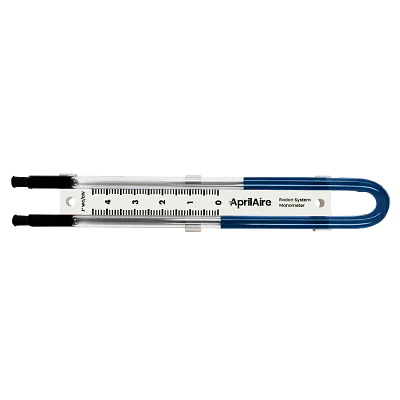
The difference: AprilAire's gauge, which mounts to the outside of the PVC pipe and measures vacuum pressure in real time; AprilAire packs it in its radon mitigation kits.
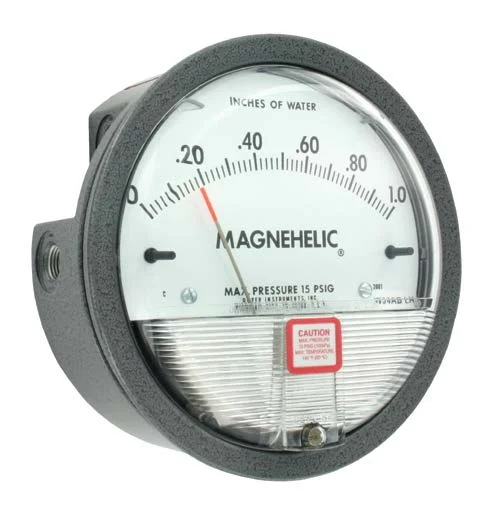
The difference: Dwyer's dial gauge for the same job, with no fluid: a 0 to 5.0 inch scale with minor divisions of .10, at plus or minus 2% of full scale.
RadonAway
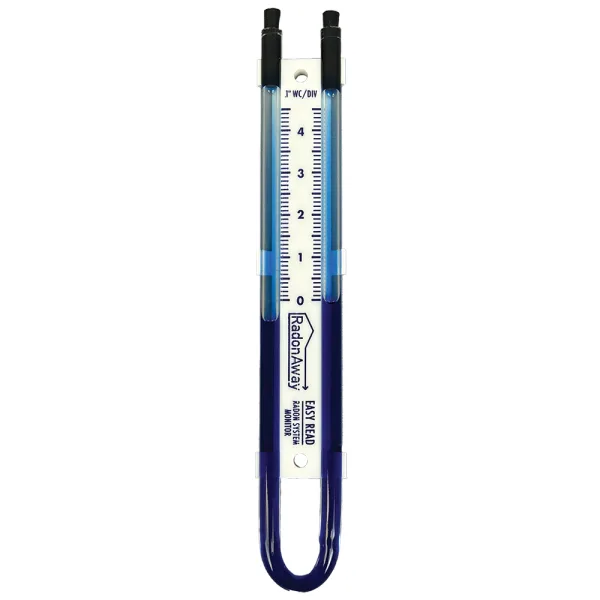
The difference: A true U-tube with a molded scale curved to fit the system pipe, reading 0-4.5" WC with non-toxic fluid and an adjustable zero.
Compared with similar products: 1 of 4
System indicator
Made of: Battery air flow alarm
System indicator
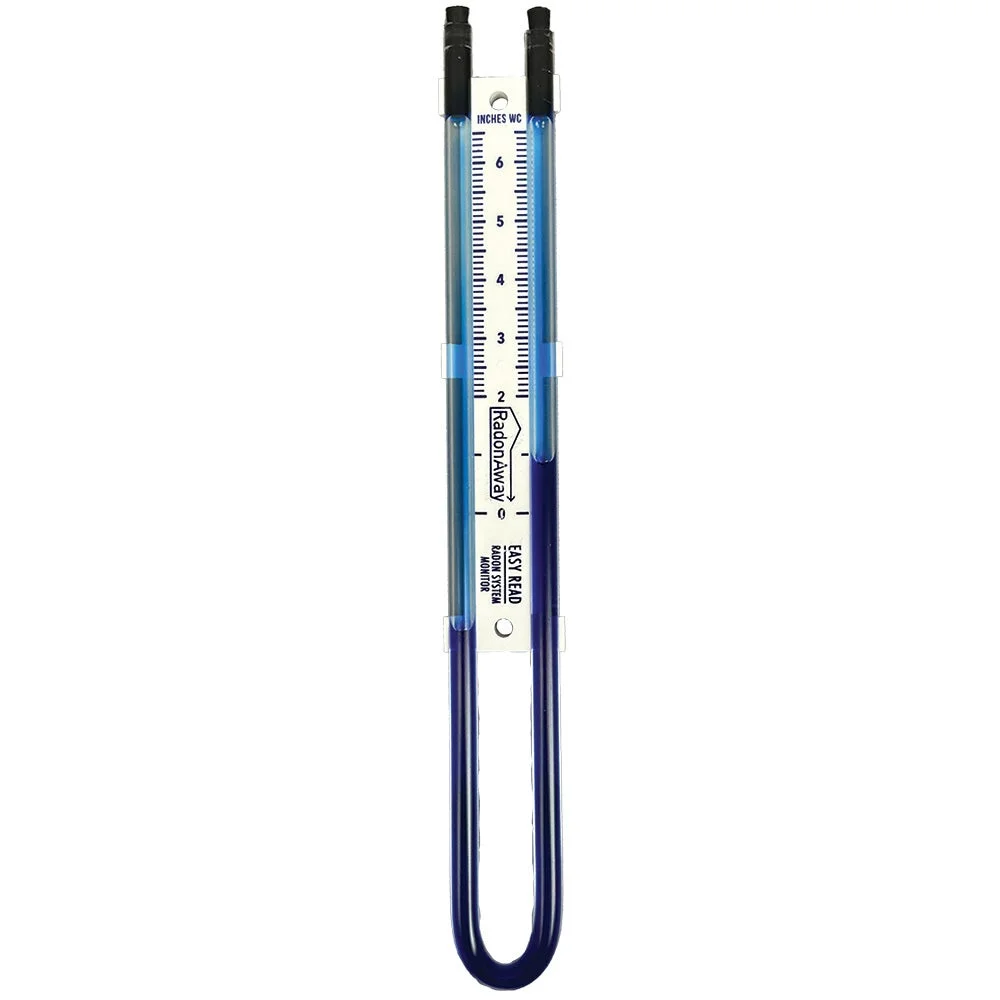
Extended-range U-tube radon system manometer
More radon manometers: 1 of 5
Questions
5 questions about the Dwyer Mark II 25, answered
Dwyer sells it as a general purpose gauge and lists paint booths, air velocity and air filters as its applications. RadonAway, a radon fan maker, stocks it on its trade store as the Dwyer Mark II Series 25 U-Tube Manometer, part 50005-1, among its radon pressure gauges.
Only if your system's normal reading sits well below it. Ask your mitigator for the reading recorded when the system was started; the EPA's standards ask for that range to be marked on the gauge. If the fan pulls more than 3 inches, choose a gauge with a longer scale.
No. It measures pressure. Minnesota's guidance says a manometer on a radon pipe shows there is suction in the pipe and does not show or measure radon levels. The EPA says it is a good idea to retest your home at least every two years.
Red gage fluid of specific gravity .826, which Dwyer says the Model 25 uses. Dwyer's instructions say to check the fluid level regularly and re-zero with the knob, and Dwyer and RadonAway both sell the red fluid in small bottles.
For a U-tube, Minnesota says even fluid, or a reading significantly different from the one at installation, means the system may not be functioning properly. Its first checks: the monitor tubing is connected to the pipe and not kinked, and power is reaching the fan. Then call your installer.
Updated November 27, 2026