 Tjernlund
 RA1
Plug-in radon system fan failure alarm
- System indicator
Best for, and skip if
Best for you if
- Your system sits where nobody inspects it regularly, the remotely located case Tjernlund names.
- There is an outlet near the pipe and you would rather plug in a low voltage supply than change batteries.
Skip it if
- You want to know your radon level; the RA1 reports on the system, and only a radon test shows radon.
- There is no outlet within reach of the pipe; RadonAway's battery RSA1 needs no wiring.
Photos: Tjernlund
 (opens in a new tab)Check price on Amazon (opens in a new tab)

As an Amazon Associate, Radon411 earns from qualifying purchases.
Amazon and the Amazon logo are trademarks of Amazon.com, Inc. or its affiliates.
See ratings and reviews on Amazon (opens in a new tab)- Every figure checked against the specifications Tjernlund publishes
- The maker's own figures and limits, shown the same way for every part, unranked
About this item
As Tjernlund states it
- What it reads: Loss of system pressure or exhaust flow in the radon system, through sensing tubing; alerts to a fan failure or an ice-induced pipe blockage; does not measure radon
- Made of: Fan failure alarm with audible and visual alarms and large bright indicator lights; secondary gauge port for the installer to measure system exhaust pressure; mounts on a wall, a flat surface or PVC piping
- Package: RA1 alarm with a low voltage power supply, sensing tubing and mounting hardware (literature); cord, hardware and tubing (product page)
- Warranty: Tjernlund's policy: the components of its products for one year from the date of installation, against defects in material and workmanship; installation charges and service calls not covered; claims through a Tjernlund distributor
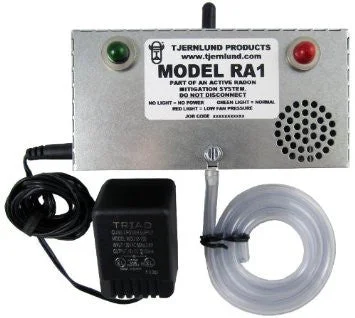
The RA1 is Tjernlund's fan failure alarm for a radon mitigation system. It is joined to the system by sensing tubing, runs from an included low voltage power supply, and mounts on a wall or on the PVC pipe; Tjernlund says audible and visual alarms alert the household when a lack of system pressure is detected, which can mean a failed fan or an ice-induced pipe blockage. It watches the system, not the air: it sounds for a fan problem, never for a radon level.
What you get
Tjernlund's literature lists the box as the alarm with a low voltage power supply, sensing tubing and mounting hardware; its product page and store describe the same set as a cord, hardware and tubing. Neither names a separate manual, a gauge or a sound level, so the page lists only what Tjernlund lists.
In the box and running costsHow it works
What it does and how
What it is made of and the job it does in a system, then who has checked it
How it works
In our words, from the maker's documents
Tjernlund, the White Bear Lake, Minnesota maker of the Radon VAC side wall system, sells the RA1 as the alarm for a sub-slab radon system. Its product page says the alarm alerts the homeowner of a fan failure or other issues, and that audible and visual alarms instantly alert homeowners when a lack of system pressure is detected. Its radon literature names the two faults it has in mind: a radon fan failure, or an ice-induced pipe blockage. Both stop the fan from drawing soil gas out from under the slab, and both leave the house with a system that looks intact but is doing nothing.
Tjernlund's two documents describe the trigger in different words. The product page speaks of a lack of system pressure; the literature says the alarm sounds when loss of exhaust flow is detected. In a working sub-slab system the two go together, since the fan's suction is what moves the exhaust. Tjernlund does not publish the pressure or flow at which the RA1 trips, a sound level, or its dimensions, so this page gives none.
Two details in the literature are particular to this alarm. A secondary gauge port allows the installer to measure actual system exhaust pressure, so the same connection that feeds the alarm can be read with a gauge during commissioning or service. And the large bright indicator lights are easily visible, in Tjernlund's words. Tjernlund says it is compatible with any model fan or subslab depressurization system layout, and its full line literature lists it as compatible with all Active Sub-Slab Depressurization (ASD) systems.
Power comes from the wall, not a battery: Tjernlund lists a low voltage power supply in the box, and its product page and store list a cord. That suits a basement outlet near the pipe and means no cell to replace, but an alarm on a dead outlet stays silent. Minnesota's health department, which requires every radon mitigation system to have two fan monitors, a U-tube manometer and an active notification monitor, asks that the active monitor's power source be checked monthly as well, since it could be plugged in or use batteries.
An active notification monitor, in Minnesota's description, alerts you with a visual light and/or audible noise if the radon mitigation system stops working. That is a different job from a radon alarm, the kind built into some digital monitors, which sounds at a radon reading. The RA1 reports on the fan and the pipe. Minnesota makes the same point about the U-tube beside it: the monitor does not show or measure radon levels; it shows there is suction in the pipe. A quiet RA1 means the system is still pulling, and only a radon test shows what the air in the home holds.
What the manufacturer says
Tjernlund's own statements, attributed
- Tjernlund saysTjernlund states the RA1 alerts the homeowner of a fan failure or other issues.
- Tjernlund saysTjernlund describes it as ideal for remotely located systems that may not be inspected regularly.
- Tjernlund saysTjernlund states that audible and visual alarms instantly alert homeowners when a lack of system pressure is detected.
- Tjernlund saysTjernlund says the RA1 is compatible with any model fan or subslab depressurization system layout.
- Tjernlund saysTjernlund's radon literature states that a secondary gauge port allows the installer to measure actual system exhaust pressure, and that the large bright indicator lights are easily visible.
These are Tjernlund's own statements, attributed to it. They are not our findings, and we have not tested this product ourselves.
Independent evidence
Who checks a device like this
C-NRPP's consumer evaluation covers electronic radon monitors, not the parts of a mitigation system, so it has no result for Tjernlund RA1. The standards and results the maker states are under “What the manufacturer says”, and what shows whether radon in your home is lower is a radon test after the work is done.
Tjernlund RA1
Check price on Amazon (opens in a new tab)Specifications
Specifications
Every figure as the maker states it
The maker's figures
- Type
- System indicator, Plug-in radon system fan failure alarm
- What it reads
- Loss of system pressure or exhaust flow in the radon system, through sensing tubing; alerts to a fan failure or an ice-induced pipe blockage; does not measure radon
- Range
- Not stated by the manufacturer
- Made of
- Fan failure alarm with audible and visual alarms and large bright indicator lights; secondary gauge port for the installer to measure system exhaust pressure; mounts on a wall, a flat surface or PVC piping
- Package
- RA1 alarm with a low voltage power supply, sensing tubing and mounting hardware (literature); cord, hardware and tubing (product page)
- Warranty
- Tjernlund's policy: the components of its products for one year from the date of installation, against defects in material and workmanship; installation charges and service calls not covered; claims through a Tjernlund distributor
What is in the box
Tjernlund's literature lists the box as the alarm with a low voltage power supply, sensing tubing and mounting hardware; its product page and store describe the same set as a cord, hardware and tubing. Neither names a separate manual, a gauge or a sound level, so the page lists only what Tjernlund lists.
Tjernlund's warranty policy covers the components of its products for one year from the date of installation, against defects in material and workmanship; it does not cover installation charges or service calls. A claim goes through a Tjernlund distributor, who returns the faulty part, and Tjernlund issues credit or a free replacement part.
What it costs to run
There is no battery or consumable. The cost of keeping it working is attention: Minnesota says both fan monitors should be checked monthly to make sure the mitigation system is working properly, and the active monitor's power source too. Tjernlund publishes no wattage for the RA1's low voltage supply.
The fan it watches is the part that wears. The EPA says the fan should never be turned off and must run continuously for the system to work correctly, that fans may last for five years or more, and that manufacturer warranties tend not to exceed five years. An alarm is how a household learns that day has come without watching a gauge.
The other ongoing cost is testing. The EPA says it is a good idea to retest your home at least every two years to be sure radon levels remain low. A silent alarm says the fan is pulling, not that radon is low.
Fit and setup
Who it fits, and installation
The fit, then how it goes on and what the standards ask
Who it fits
Good fit if, and look elsewhere if
Good fit if
- Your system sits where nobody inspects it regularly, the remotely located case Tjernlund names.
- There is an outlet near the pipe and you would rather plug in a low voltage supply than change batteries.
- Your winters are cold enough to freeze a pipe, and you want an alert for an ice blockage as well as a failed fan.
- Your mitigator wants a port on the alarm for reading the system's exhaust pressure with a gauge.
Look elsewhere if
- You want to know your radon level; the RA1 reports on the system, and only a radon test shows radon.
- There is no outlet within reach of the pipe; RadonAway's battery RSA1 needs no wiring.
- You want a published trip point to match your system; Tjernlund states none, while RadonAway presets its Checkpoint IIA at .25 inches of water column.
- You want a gauge to read at a glance rather than an alarm; a U-tube manometer shows the suction itself.
Installation
3 steps
- Tjernlund's directions for placement are brief: the RA1 can be wall or pipe mounted, its literature says it mounts to any flat surface or PVC piping, and the box holds sensing tubing and mounting hardware for the connection to the system. The choice between wall and pipe is about being heard and seen. A unit on the pipe in a crawl space or utility room does little good if no one passes it; on a wall in a room the household uses, the lights and sound reach people.
- The EPA's 1994 Radon Mitigation Standards state the rule the placement has to meet: every active system shall include a mechanism to monitor system performance and warn of system failure, and the mechanism shall be simple to read or interpret and be located where it is easily seen or heard by building occupants. The EPA's consumer guide says a warning device must be installed to alert you if an active system stops working properly, and that it must be placed where it can be seen or heard easily.
- An alarm is normally fitted with the system, by the person who designs it. The EPA recommends that you have a qualified radon mitigation contractor fix your home, and many states require radon professionals to be licensed, certified or registered. After any new system or repair, a post-mitigation radon test should be done within 30 days of system installation, but no sooner than 24 hours after the system is in operation.
For how the sealing, the gauge and the fan work together, see radon mitigation systems, and to find someone to design and install one, radon mitigation professionals.
Compare
Compare with similar items
The same three rows for each, and the one difference that matters
This page
Tjernlund RA1
- What it is
- Fan failure alarm with audible and visual alarms and large bright indicator lights; secondary gauge port for the installer to measure system exhaust pressure; mounts on a wall, a flat surface or PVC piping
- Power
- Not stated
- C-NRPP 2024/25
- Not applicable (system part)
This page: The RA1 is Tjernlund's fan failure alarm for a radon mitigation system.
RadonAway
- What it is
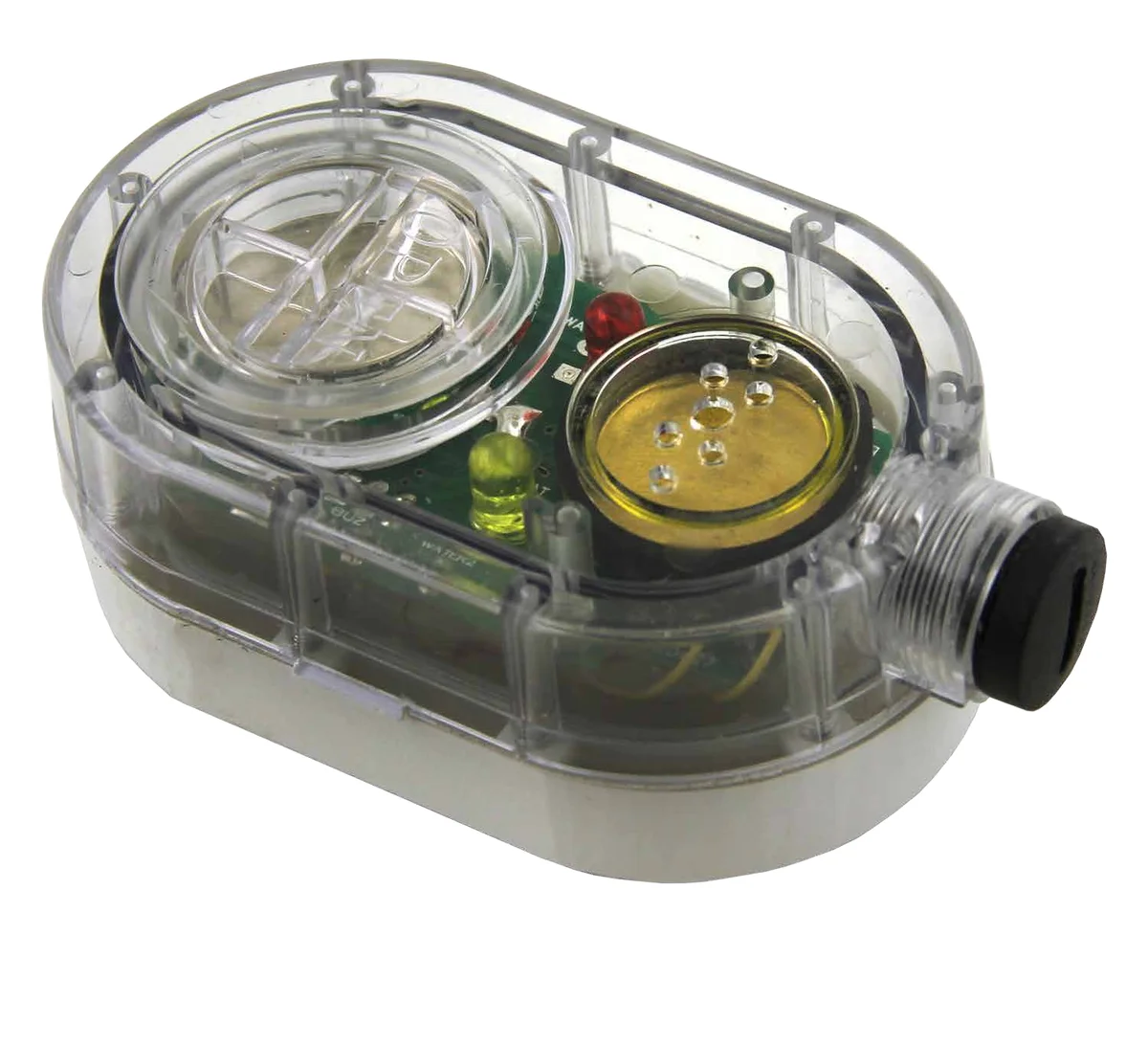
- Battery air flow alarm
- Power
- Not stated
- C-NRPP 2024/25
- Not applicable (system part)
The difference: Senses air flow with a thin, field trimmable vane inside a 3 or 4 inch pipe, down to 10 CFM in a 3 inch pipe and 15 CFM in a 4 inch pipe, rather than through sensing tubing.
RadonAway
- What it is
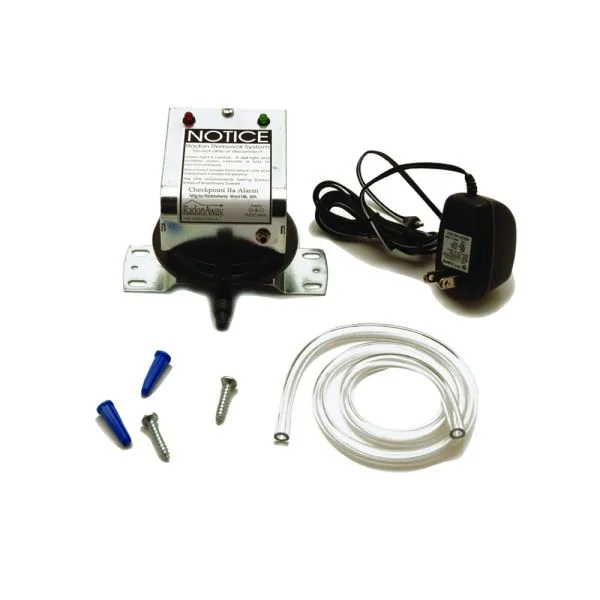
- Fan alarm
- Power
- Not stated
- C-NRPP 2024/25
- Not applicable (system part)
The difference: RadonAway's plug-in alarm, with an AC to DC low voltage transformer like the RA1's supply, and a published trip point: factory preset to activate at .25" WC vacuum pressure.
RadonAway
- What it is
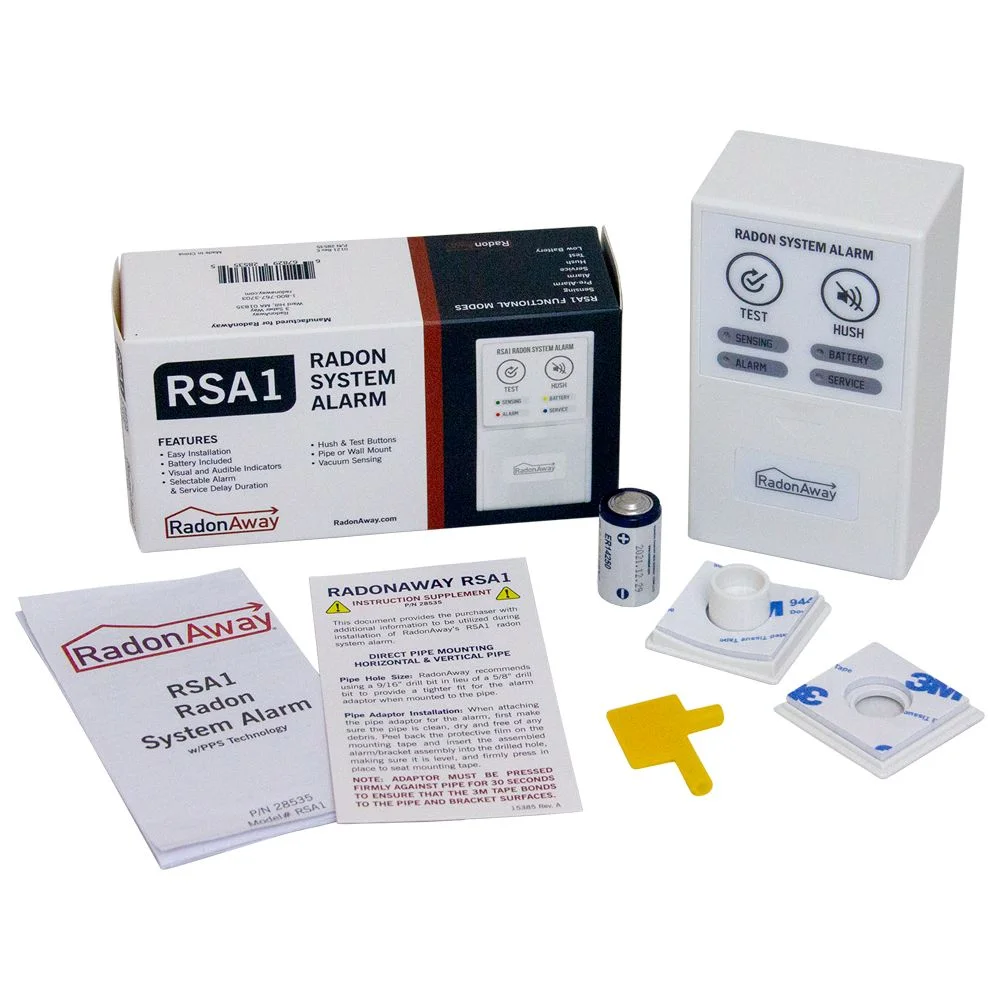
- Battery vacuum alarm
- Power
- Not stated
- C-NRPP 2024/25
- Not applicable (system part)
The difference: A battery alarm instead of a plug-in one: RadonAway lists it as battery operated, with a battery included and a life of 2 to 3 years.
Compared with similar products: 1 of 4
More radon manometers5
All radon manometers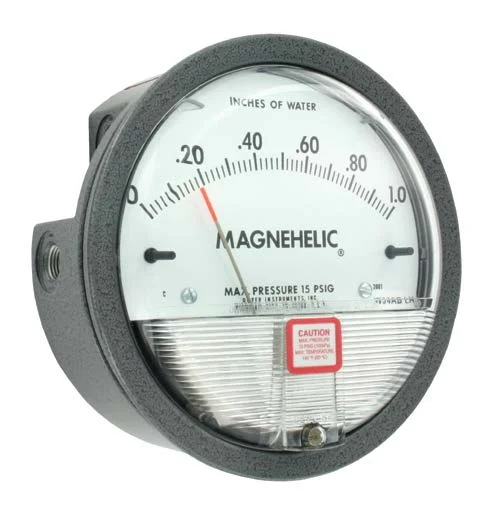
System indicatorDwyer
Magnehelic 2005 dial pressure gauge for a radon system
Dial pressure gauge for a radon system
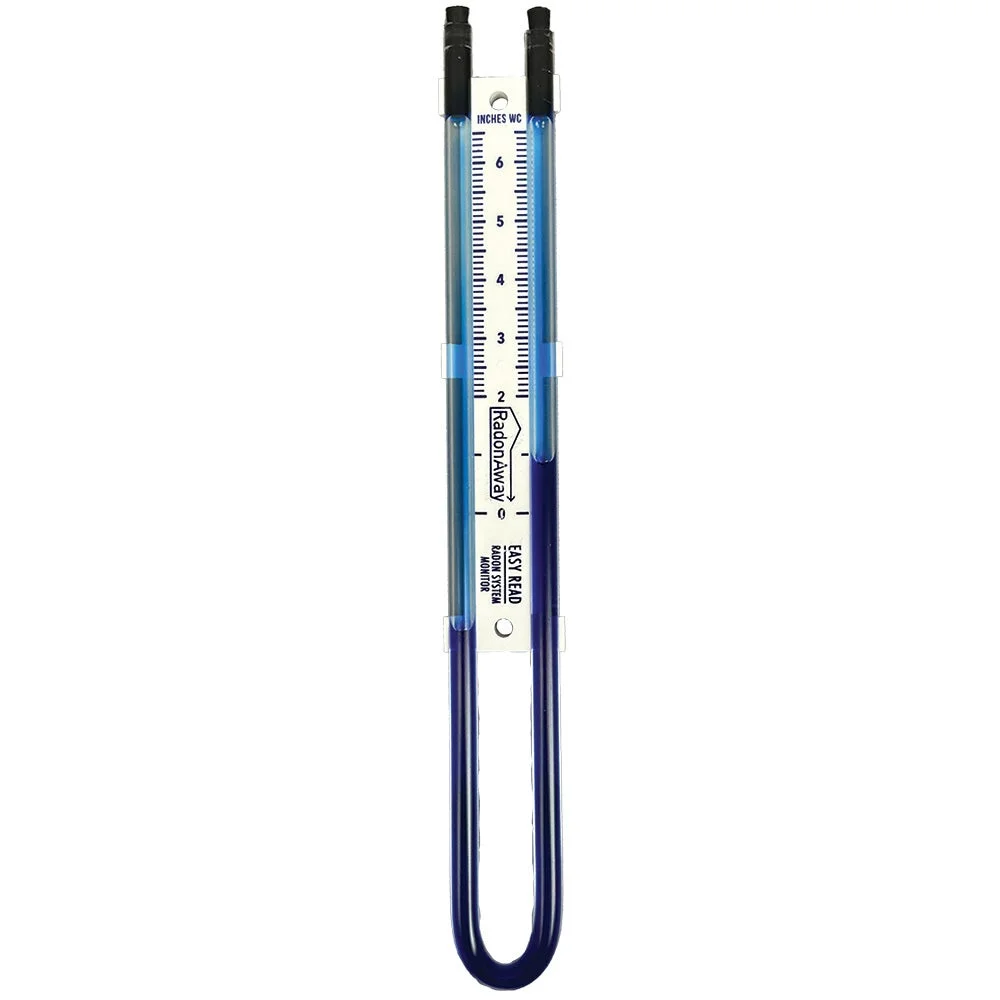
System indicator

Easy Read U-Tube Manometer (50036) extended-range U-tube radon system manometer
Extended-range U-tube radon system manometer
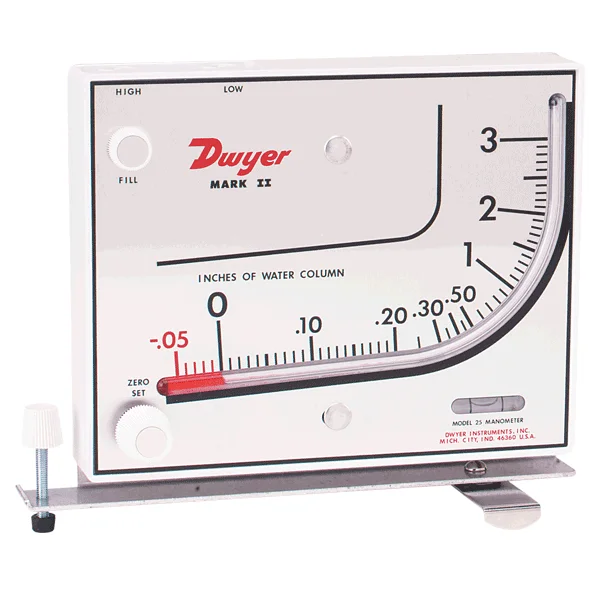
System indicatorDwyer
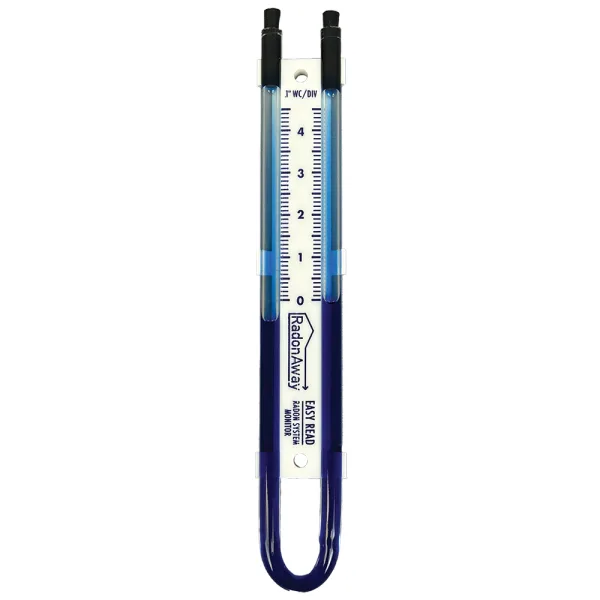
System indicator
Easy Read U-Tube Manometer U-tube radon system manometer
U-tube radon system manometer
- All radon manometers More radon manometers
More radon manometers: 1 of 5
Questions
Questions people ask
5 questions about the Tjernlund RA1, answered
Asked about the RA1
Does the RA1 detect radon?
No. Tjernlund describes it as a fan failure alarm that responds to a lack of system pressure or a loss of exhaust flow. It tells you the system has stopped working; it never measures radon. The EPA says it is a good idea to retest at least every two years, alarm or no alarm.
What sets it off?
Tjernlund names a radon fan failure or an ice-induced pipe blockage. Its product page says the alarm sounds when a lack of system pressure is detected, and its literature says when loss of exhaust flow is detected. Tjernlund does not publish the exact pressure or flow at which it trips.
Why does ice matter?
Minnesota warns that extended periods of cold temperatures can cause a system freeze-up, an accumulation of ice in the pipe that does not allow radon to vent out properly. When that happens, it says, the U-tube fluid will be even and the active monitor should alert you. Tjernlund lists an ice-induced pipe blockage as one of the two faults the RA1 alerts to.
Do I still need a U-tube gauge?
Minnesota requires both on every radon mitigation system: a U-tube manometer and an active notification monitor. The EPA's 1994 standards ask that a manometer type gauge be clearly marked with the range of readings the system had when it was first activated, and the RA1's secondary gauge port is there so an installer can measure the exhaust pressure.
What should I check if it goes off?
Minnesota's checks for a system that seems to have stopped: make sure the monitor tubing is connected to the pipe and not kinked, and that power is being supplied to the fan. In cold weather, think of ice in the pipe. For the repair itself, the EPA recommends a qualified radon mitigation contractor, and a radon test once the fan runs again.
What to do next
- See how a radon system fits togetherThe suction point, the pipe, the fan, the gauge and the sealing, and what each one does.
- Find a mitigation professionalMost systems are designed and installed by one; some states require a license.
- Read a radon manometerWhat even or uneven fluid means, and what the gauge cannot tell you.
- Test after the workA short-term test afterwards shows whether radon in the home is lower.
Updated November 27, 2026