 Fantech
 Rn3
Inline radon mitigation fan
- Radon fan
- 5 7/8 in. fan connection
- 125 W
Best for, and skip if
Best for you if
- A mitigator has found elevated radon with poor sub-slab communication, several suction points or a large slab, the jobs Fantech names for the Rn3.
- You are replacing an Rn3, or a fan Fantech's brochure cross-references to it, such as its own HP 220, FR 150 or FR 160 or RadonAway's RP265.
Skip it if
- Air moves easily under your slab; Fantech's brochure puts good and moderate communication on its Rn 1 and Rn 2, listed at 20 W and 59 W.
- Your system needs more suction than about 2.2 inches; Fantech lists its Rn 4EC with an application range up to 4.35 inches.
Photos: Fantech
 (opens in a new tab)Check price on Amazon (opens in a new tab)

As an Amazon Associate, Radon411 earns from qualifying purchases.
Amazon and the Amazon logo are trademarks of Amazon.com, Inc. or its affiliates.
See ratings and reviews on Amazon (opens in a new tab)- Pipe size5 7/8 in. fan connection; 3 or 4 in. schedule 40 PVC through Fantech's LDVI 6x3 or 6x4 couplings, sold separately
- Power draw125 W
- Every figure checked against the specifications Fantech publishes
- The maker's own performance table, point by point, unranked
About this item
As Fantech states it
- Motor: AC
- Pipe size: 5 7/8 in. fan connection; 3 or 4 in. schedule 40 PVC through Fantech's LDVI 6x3 or 6x4 couplings, sold separately
- Max static pressure: 2.6 in w.c.
- Max airflow: 337 CFM
- Max power: 125 W
- Power supply: 120 V, single phase, 60 Hz; 1.20 A and 141.2 W maximum in the manual's table (the brochure lists 125 W maximum power)
- Speed control: None
- Airflow at static pressure: 370 CFM at 0.00 in w.c.; 340 at 0.20; 280 at 0.50; 180 at 1.00; 120 at 1.50; 50 at 2.00
- Outdoor use: Rated for outdoor installation
- Warranty: Five (5) year factory limited warranty
The Rn3 (item 89053) is a sealed inline radon fan that Fantech's 2017 sales sheet calls The Workhorse and recommends for elevated radon, poor sub-slab communication, multiple suction points or a large slab; among Fantech's Rn fans without a built-in speed dial, it has the highest pressure, power and airflow figures. Fantech's 2025 brochure lists an application range of 0.0 to 2.2 inches of water column, a maximum static pressure of 2.6 inches, a maximum of 125 W and 337 CFM; its manual and sales sheet give other maximums for the same fan.
What you get
Fantech's Rn series manual lists two things in the box: the inline radon fan and the operation and installation manual. The couplings are not among them; the Rn3 sales sheet lists the LDVI 6x3 and 6x4 pairs as sold separately. The sheet gives the fan a 5 7/8 inch spigot on a housing 11 1/2 inches across and 9 1/4 inches high, and couplings that step from 6 inches at the fan to 3 1/2 inches (6x3) or 4 1/2 inches (6x4) at the pipe.
In the box and running costsHow it works
What it does and how
The suction, the airflow and the housing, then who has checked it
How it works
In our words, from the maker's documents
An active soil depressurization system has one moving part, and it has to keep moving. The EPA's guide describes the vent fan drawing radon from below the home through the suction pipes, releasing it to the outdoor air and holding a vacuum beneath the slab at the same time. The fan must run continuously for the system to work.
Fantech sorts its Rn fans by the job. Its 2025 brochure puts the Rn 1 on low suction, low flow work with good sub-slab communication, the Rn 2 on medium suction, low flow work with moderate communication, and the Rn 2X and Rn 3 together on medium suction, medium flow work: elevated radon levels and poor communication, multiple suction points or a large sub-slab footprint. Fantech's Rn page adds that the suction and air range of the Rn 1, Rn 2 and Rn 3 covers the majority of radon mitigation jobs, residential and commercial.
The brochure's table shows where the Rn 3 sits. Leaving aside the two EC fans with a built-in dial, it has the highest figures in every column: an application range of 0.0 to 2.2 inches, a maximum static pressure of 2.6 inches, 125 W and 337 CFM, against 2.1 inches and 87 W for the Rn 2SL, 1.7 inches and 316 CFM for the Rn 2X, and 2.0 inches, 59 W and 174 CFM for the Rn 2.
Fantech's Rn series manual (item 484840, revised 2022-10-12) gives the Rn3's curve as a row of airflow at set pressures: 370 CFM at 0.00 inches, 340 at 0.20, 280 at 0.50, 180 at 1.00, 120 at 1.50 and 50 at 2.00, with a maximum of 2.36 inches. The same row lists 120 V, 1.20 A, 141.2 W, single phase, 2700 RPM and 2.42 CFM per watt. The manual names the Rn1 and Rn2X as the only ENERGY STAR products in the series, so the Rn3 is not one of them.
Fantech's documents do not agree on the maximums. The brochure lists 2.6 inches, 125 W and 337 CFM; the manual 2.36 inches, 141.2 W and 370 CFM at 0.00 inches; and the 2017 sales sheet an application range of 0.0 to 2.2 inches, a maximum pressure of 2.36 inches and a rated power of 141 W. The sales sheet defines its two pressure figures: the application range is where the fan moves about 20 CFM or more, and the maximum is where it runs but moves no air. Fantech does not say which document supersedes the others; the brochure is the newest of the three.
The housing is what keeps soil gas in the pipe. Fantech's sales sheet describes a fully sealed plastic housing whose inlet and outlet halves are joined by vibration welding into one fused piece, with a seam it calls inherently air tight, very strong and permanent, a wiring enclosure built into the housing, and thermal overload protection with automatic reset. Its Rn page lists an air-tight housing with zero leakage, a UV-resistant resin housing, a UL listing for safety and outdoor use and HVI-certified fan performance. There is no dial: Fantech puts its built-in speed controller on the Rn 2EC and Rn 4EC.
What the manufacturer says
Fantech's own statements, attributed
- Fantech saysFantech lists the Rn 3 (item 89053) at an application range of 0.0 to 2.2 in. w.c., a maximum static pressure of 2.6 in. w.c., 125 W maximum power and 337 CFM maximum airflow.
- Fantech saysFantech's 2017 sales sheet states the Rn3 is an excellent choice for systems with elevated radon levels, poor communication, multiple suction points and/or a large sub-slab footprint.
- Fantech saysFantech describes the Rn3's housing as joined by vibration welding into a fused, single piece housing whose seam is inherently air tight.
- Fantech saysFantech states the Rn line has an air-tight, UV-resistant resin housing, is UL Listed for safety and outdoor use and has HVI-certified fan performance.
- Fantech saysFantech states its radon fans are tested and reviewed by Underwriter Laboratories and deemed suitable for outdoor use under UL 507.
- Fantech saysFantech gives the Rn series a five-year factory limited warranty.
These are Fantech's own statements, attributed to it. They are not our findings, and we have not tested this product ourselves.
Independent evidence
Who checks a device like this
C-NRPP's consumer evaluation covers electronic radon monitors, not mitigation fans, so it has no result for Fantech Rn3. The safety listing and performance certification the maker states are under “What the manufacturer says”, and what shows whether any fan is working in your home is a radon test after it is installed.
Fantech Rn3
Check price on Amazon (opens in a new tab)Specifications
Specifications
Every figure as the maker states it
The maker's figures
- Type
- Mitigation fan, inline
- Motor
- AC
- Pipe size
- 5 7/8 in. fan connection; 3 or 4 in. schedule 40 PVC through Fantech's LDVI 6x3 or 6x4 couplings, sold separately
- Max static pressure
- 2.6 in w.c.
- Max airflow
- 337 CFM
- Max power
- 125 W
- Power supply
- 120 V, single phase, 60 Hz; 1.20 A and 141.2 W maximum in the manual's table (the brochure lists 125 W maximum power)
- Speed control
- None
- Airflow at static pressure
- 370 CFM at 0.00 in w.c.; 340 at 0.20; 280 at 0.50; 180 at 1.00; 120 at 1.50; 50 at 2.00
- Outdoor use
- Rated for outdoor installation
- Warranty
- Five (5) year factory limited warranty
What is in the box
Fantech's Rn series manual lists two things in the box: the inline radon fan and the operation and installation manual. The couplings are not among them; the Rn3 sales sheet lists the LDVI 6x3 and 6x4 pairs as sold separately. The sheet gives the fan a 5 7/8 inch spigot on a housing 11 1/2 inches across and 9 1/4 inches high, and couplings that step from 6 inches at the fan to 3 1/2 inches (6x3) or 4 1/2 inches (6x4) at the pipe.
Fantech's manual gives the Rn series a Five (5) Year Factory Limited Warranty, and its Rn page a 5-year factory warranty. A factory return needs a Return Materials Authorization number, from Fantech's US line at 1.800.747.1762, and a copy of the bill of sale. The manual excludes damage from improper wiring or installation and from shipping, and asks the user to keep the bill of sale to show the purchase date.
What it costs to run
The cost of running the Rn3 is electricity, and the fan never stops. Fantech's documents give its power as 125 W (the brochure's maximum) and 141.2 W (the manual's). Run around the clock, as the EPA says a fan must be, that is about 1,095 kWh a year at 125 W and about 1,237 kWh at 141.2 W; your utility's rate per kWh sets the cost. Fantech names no filter or other part to replace.
A fan is a part that wears out. The EPA's guide says fans may last five years or more and that maker warranties tend not to exceed five years, the term Fantech gives the Rn series. The couplings are a one-time purchase at installation. Between radon tests, the warning device on the pipe is how you learn the fan has stopped, and the EPA suggests retesting at least every two years either way.
Airflow at each pressure
Fantech's performance table, point by point
| Static pressure | Airflow |
|---|---|
| 0.00 in w.c. | 370 CFM |
| 0.20 in w.c. | 340 CFM |
| 0.50 in w.c. | 280 CFM |
| 1.00 in w.c. | 180 CFM |
| 1.50 in w.c. | 120 CFM |
| 2.00 in w.c. | 50 CFM |
Airflow falls as the suction the system needs rises. A mitigator matches the fan to pressure measured under the slab.
Fit and setup
Who it fits, and installation
The fit, then how a system goes in
Who it fits
Good fit if, and look elsewhere if
Good fit if
- A mitigator has found elevated radon with poor sub-slab communication, several suction points or a large slab, the jobs Fantech names for the Rn3.
- You are replacing an Rn3, or a fan Fantech's brochure cross-references to it, such as its own HP 220, FR 150 or FR 160 or RadonAway's RP265.
- Your system's measured suction falls inside the 0.0 to 2.2 inch application range Fantech gives the Rn3.
- Your system runs 3 or 4 inch schedule 40 PVC, which the Rn3 joins through Fantech's LDVI 6x3 or 6x4 couplings.
Look elsewhere if
- Air moves easily under your slab; Fantech's brochure puts good and moderate communication on its Rn 1 and Rn 2, listed at 20 W and 59 W.
- Your system needs more suction than about 2.2 inches; Fantech lists its Rn 4EC with an application range up to 4.35 inches.
- You want to set the fan's speed to the job; Fantech puts a built-in speed controller on its Rn 2EC and Rn 4EC, not on the Rn3.
- You are designing a first system yourself; the EPA recommends a qualified mitigation contractor, and Fantech leaves installation and wiring to qualified persons.
Installation
5 steps
- Fan choice and installation are a mitigator's work. The EPA recommends that a qualified radon mitigation contractor fix a home and notes that many states require radon professionals to be licensed, certified or registered. Fantech's Rn series manual says installation work and electrical wiring must be done by qualified persons in line with all applicable codes and standards, and that the fans are for radon mitigation use only.
- Fantech's manual sets out the mounting. Radon fans go in the vertical orientation only; before installation the suction pipe should be terminated at the exterior wall and run on a slight incline so water drains from the fan; and the fan must not be connected directly to the building structure. The Rn1, Rn2, Rn2X and Rn3 are designed for 3 and 4 inch schedule 40 PVC when the appropriate LDVI coupling is used. For the Rn3 those are sold separately, in pairs, as the LDVI 6x3 or LDVI 6x4, and the brochure also lists FRIK installation kits in the same 6x3 and 6x4 sizes, with a coupler ledge that holds the pipe and keeps it from touching the fan.
- The pipe run changes what the fan delivers. Fantech's manual says the ducting from the fan to the outside of the building has a strong effect on airflow, noise and energy use, asks for the shortest, straightest route without smaller ducts than recommended, and warns that fans on existing ducts may not reach their rated airflow. Ducted fans must always be vented outdoors, and guards must be installed when the fan is within reach or within seven feet of a working level.
- On wiring, the manual asks for the voltage at the fan to be checked against the motor name plate and for no power to be connected until the fan is completely installed. Fantech describes its radon fans as double insulated under UL 1097, so no grounding conductor is needed, and it warns against using them with any solid state speed control device.
- The EPA's construction guide puts the fan and every pressurized part of the vent pipe outside habitable space, in a vertical run, so a leak at the housing or a joint cannot push radon indoors. Its consumer guide calls for a warning device, usually a manometer, where it can be seen or heard, and a radon test within 30 days of installation but no sooner than 24 hours after the fan starts, with a retest at least every two years. Fantech's brochure lists its own radon alarm, item 498290 in the US, which mounts directly to 3, 4 or 6 inch PVC pipe.
To find someone to design and install a system, see radon mitigation professionals, and for how a fan fits into one, how a radon fan works.
Compare
Compare with similar items
The same three rows for each, and the one difference that matters
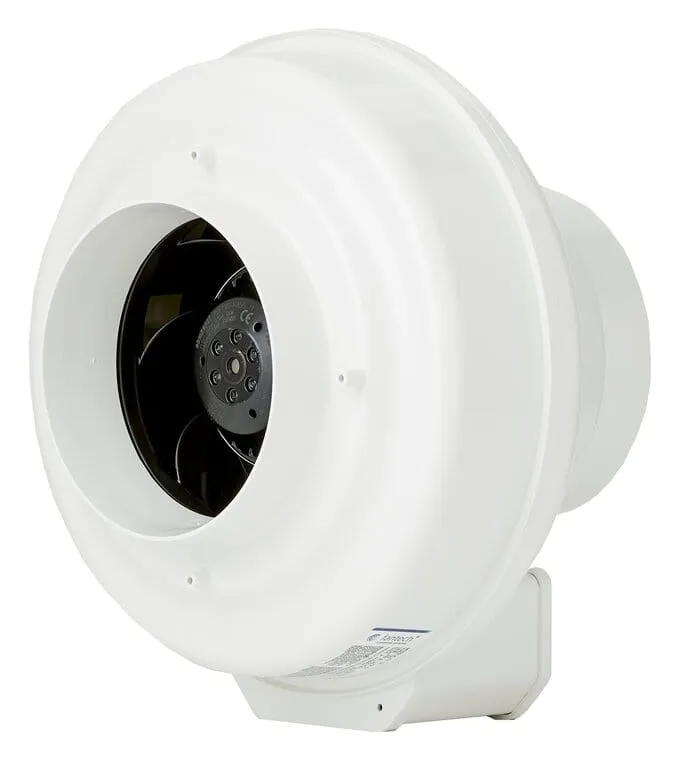
This page
Fantech Rn3
- What it does
- Moves up to 337 CFM
- Power
- Up to 125 W
- C-NRPP 2024/25
- Not applicable (mitigation fan)
This page: The Rn3 (item 89053) is a sealed inline radon fan that Fantech's 2017 sales sheet calls The Workhorse and recommends for elevated radon, poor sub-slab communication, multiple suction points or a large slab; among Fantech's Rn fans without a built-in speed dial, it has the highest pressure, power and airflow figures.
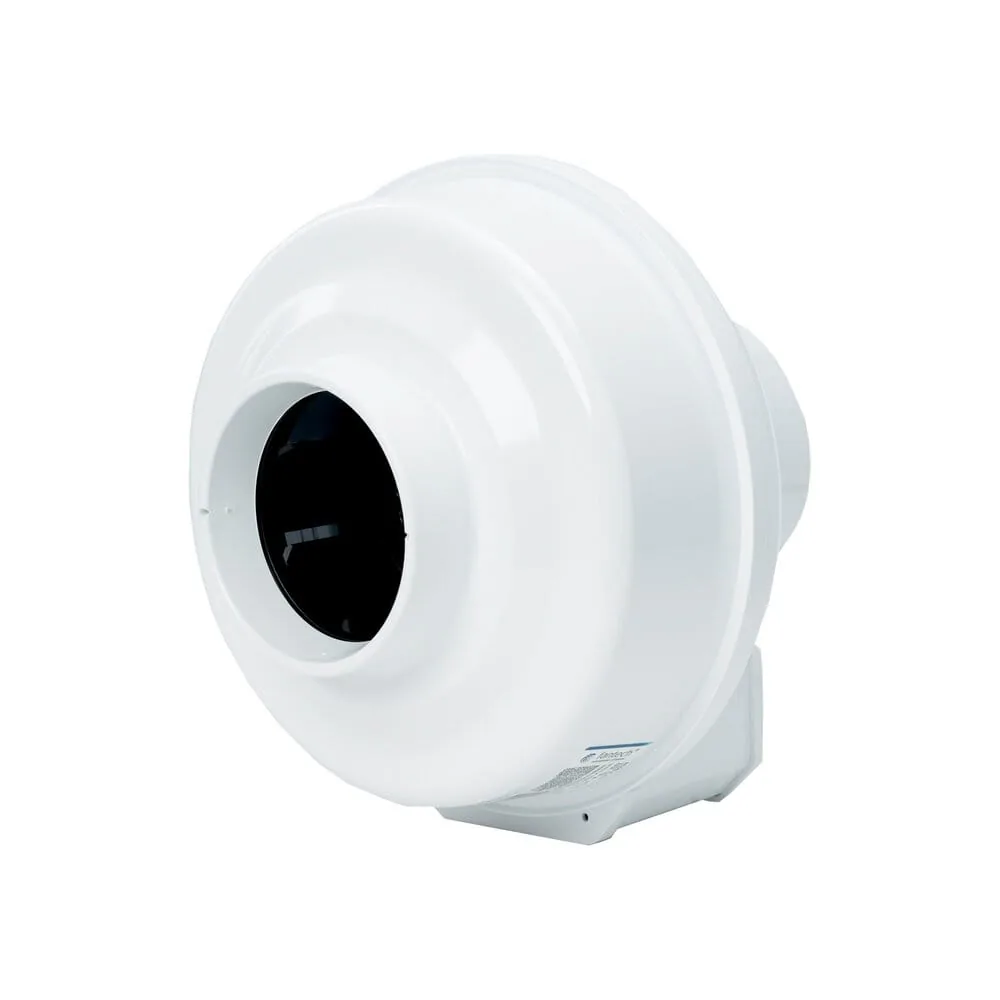
Fantech
- What it does
- Moves up to 174 CFM
- Power
- Up to 59 W
- C-NRPP 2024/25
- Not applicable (mitigation fan)
The difference: Fantech's mid-range fan for moderate sub-slab communication: the 2025 brochure lists the Rn 2 at a maximum static pressure of 2.0 inches, 59 W and 174 CFM.
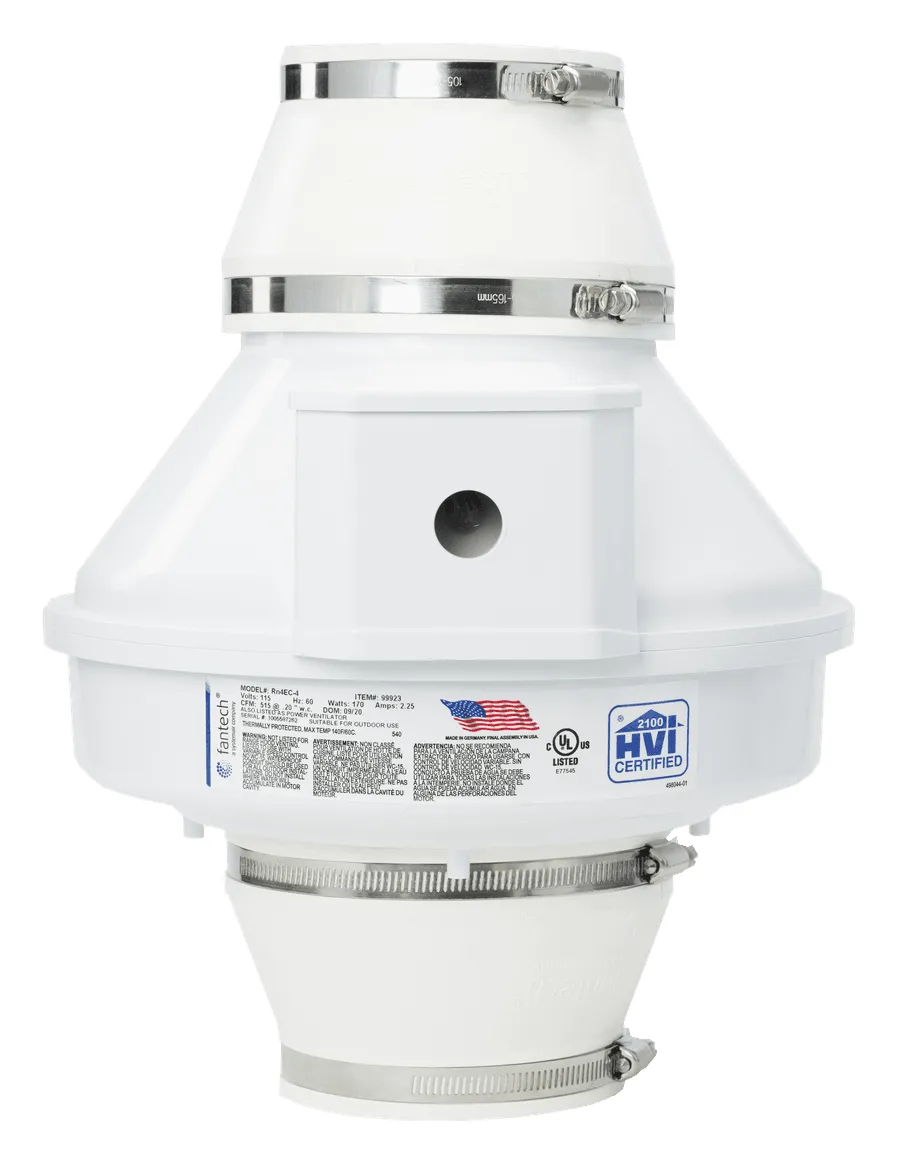
Fantech
- What it does
- Moves up to 330 CFM
- Power
- Up to 174 W
- C-NRPP 2024/25
- Not applicable (mitigation fan)
The difference: Fantech's high-suction EC fan with a built-in dial: the brochure lists item 99923 at an application range up to 4.35 inches, a maximum static pressure of 4.75 inches, 174 W and 330 CFM.
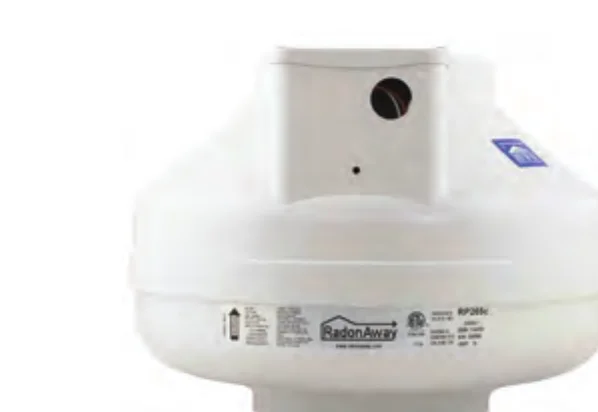
RadonAway
- What it does
- Moves up to 326 CFM
- Power
- Up to 122 W
- C-NRPP 2024/25
- Not applicable (mitigation fan)
The difference: A fan Fantech's brochure cross-references to the Rn 3: RadonAway lists its 6 inch RP265c at 86 to 122 W, a 2.2 inch recommended maximum operating pressure and 326 CFM at 0 inches.
Compared with similar products: 1 of 4
More radon fan models15
All radon fan modelsRadon fan
Rn2 inline radon mitigation fan
- 3 or 4 in. schedule 40 PVC
- 59 W
Max airflow: 174 CFM
Max pressure: 2.0 in w.c.
Radon fan
Rn4EC-4 inline radon mitigation fan
- 4 in. schedule 40 PVC
- 174 W
Max airflow: 330 CFM
Max pressure: 4.75 in w.c.
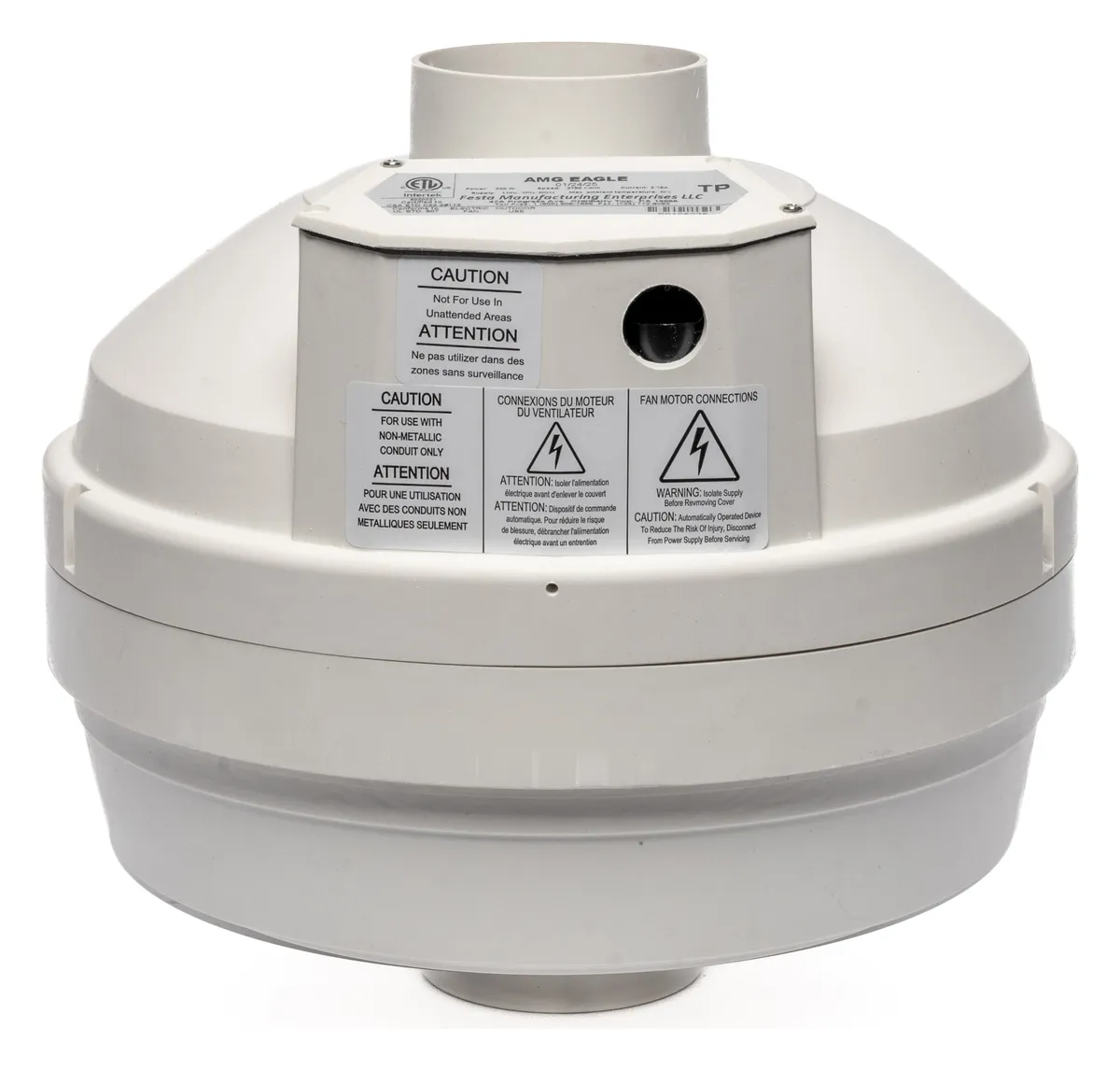
Radon fan

AMG Eagle inline radon mitigation fan
- 3 in. Fernco coupler size
- 310 W
Max airflow: 241 CFM
Max pressure: 4.2 in w.c.
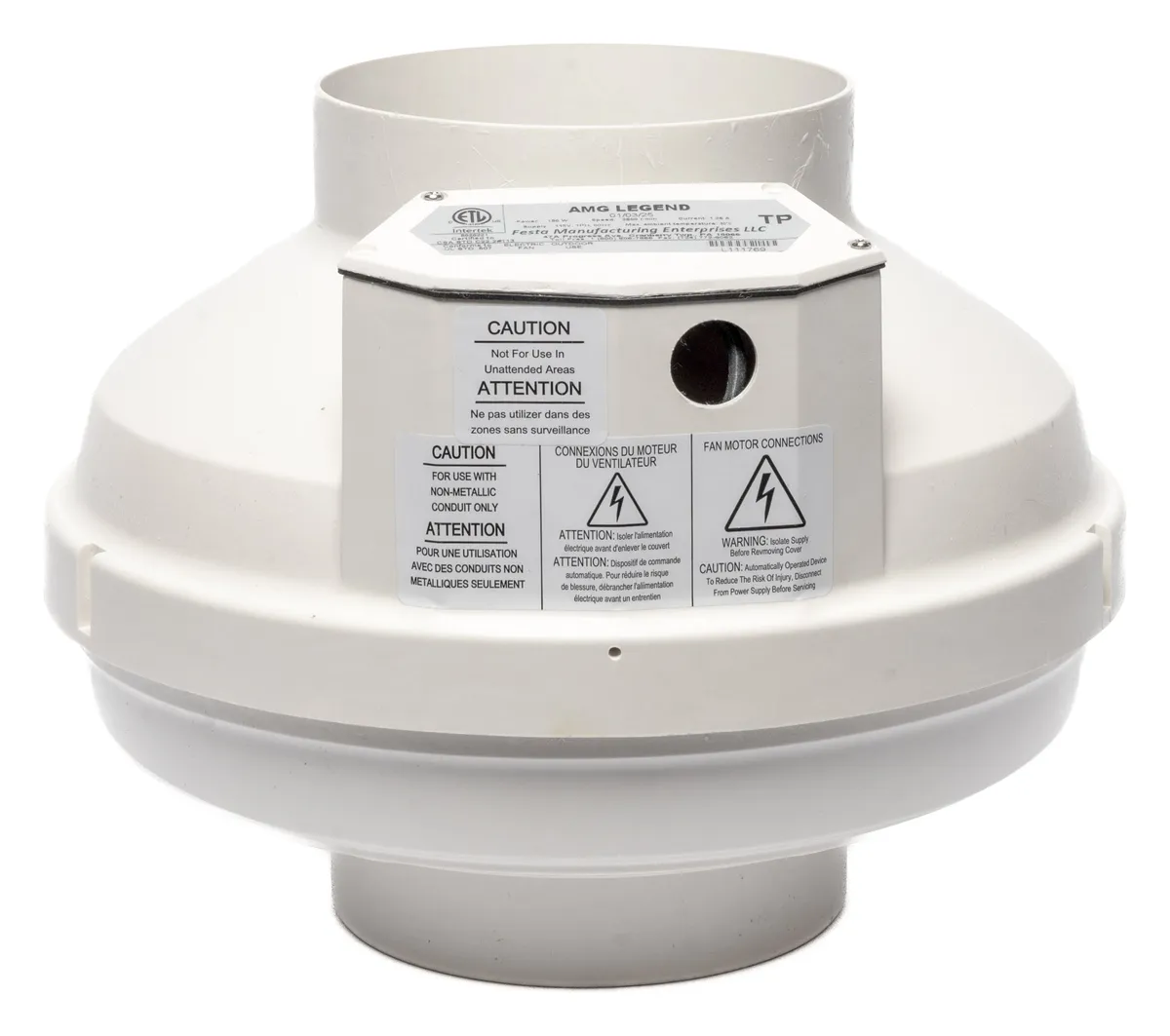
Radon fan
AMG Legend inline radon mitigation fan
- 6 in. Fernco coupler size
- 140 W
Max airflow: 345 CFM
Max pressure: 2.6 in w.c.
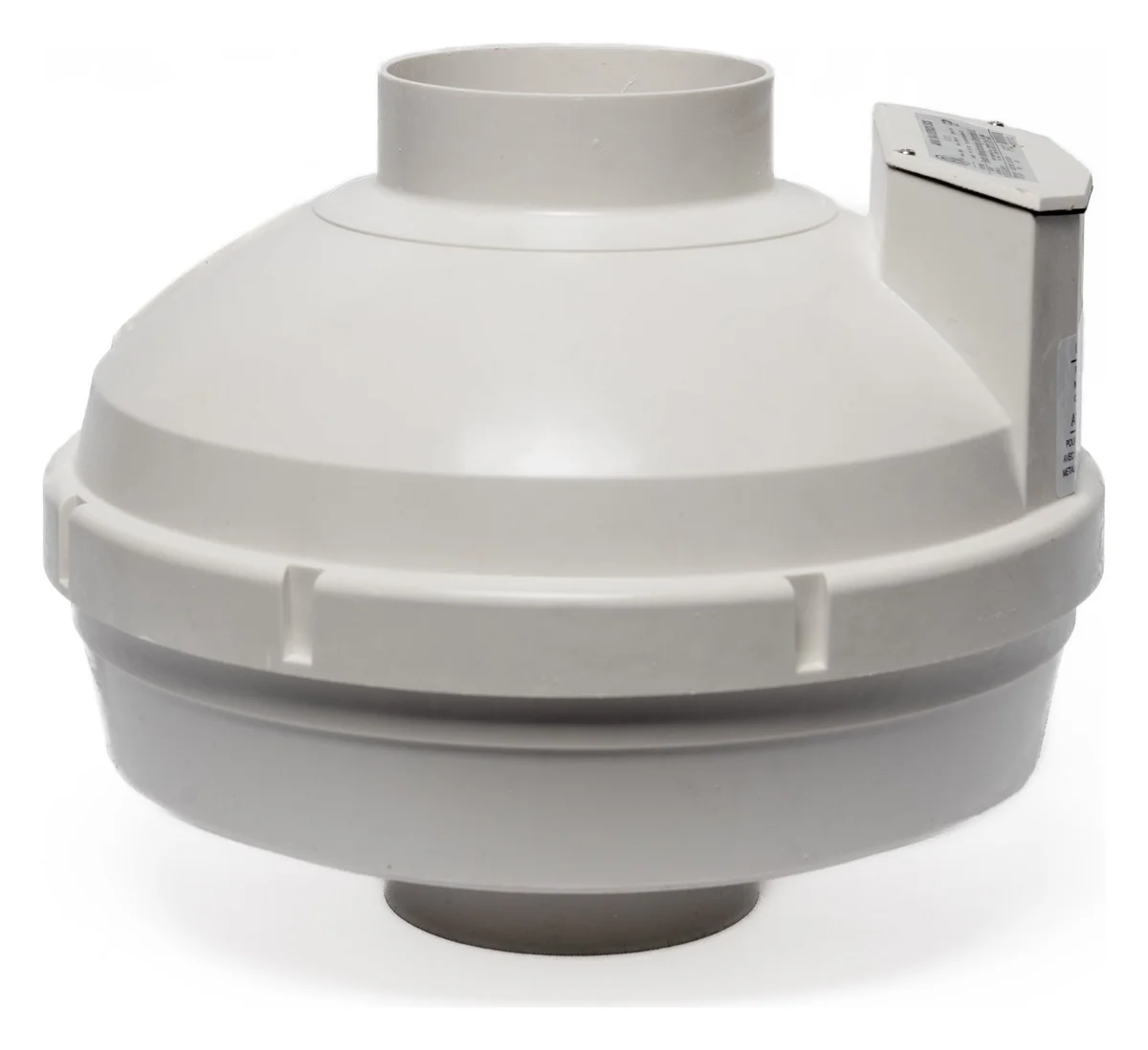
Radon fan
AMG Maverick inline radon mitigation fan
- 4 in. Fernco coupler size
- 66 W
Max airflow: 260 CFM
Max pressure: 2.21 in w.c.
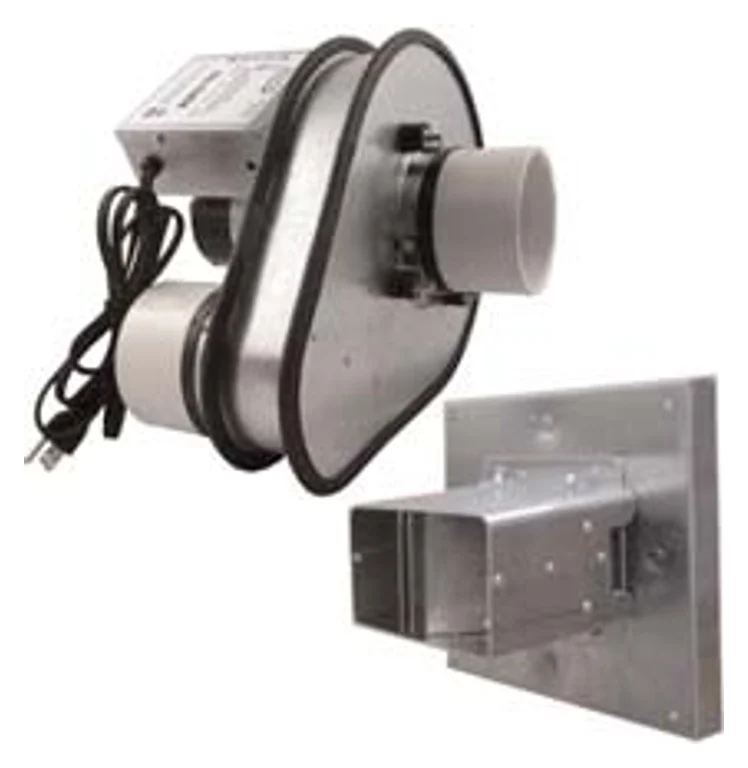
Radon fan

RMS160 side-wall radon mitigation system
- 3 in. schedule 40 PVC
- 50 W
Max airflow: 160 CFM
Max pressure: 2.3 in w.c.
- All radon fan models More radon fan models

More radon fan models: 1 of 15
Questions
Questions people ask
6 questions about the Fantech Rn3, answered
Asked about the Rn3
How much air does the Rn3 move?
It depends on the suction. Fantech's Rn series manual lists 370 CFM at 0.00 inches of water column, 340 at 0.20, 280 at 0.50, 180 at 1.00, 120 at 1.50 and 50 at 2.00, with a maximum of 2.36 inches. Its 2025 brochure gives a maximum airflow of 337 CFM instead. Your mitigator reads the system's suction on the manometer, and that reading is where the curve applies.
Why do Fantech's figures for the Rn3 differ?
They come from three documents of different dates. The 2025 brochure lists a 2.6 inch maximum static pressure and 125 W; the 2022 manual 2.36 inches and 141.2 W; the 2017 sales sheet 2.36 inches and 141 W. Fantech does not explain the difference. For a replacement, go by the label on the installed fan and the system's measured suction, and ask Fantech or your mitigator which figure applies.
What pipe does the Rn3 fit?
The fan's spigot is 5 7/8 inches, so it meets the system pipe through couplings. Fantech's manual says the Rn3 is designed for 3 and 4 inch schedule 40 PVC with the appropriate LDVI coupling, and its sales sheet lists the LDVI 6x3 and 6x4, sold separately as a pair; the brochure lists FRIK installation kits in the same two sizes.
Which fans does the Rn3 replace?
Fantech's 2025 brochure cross-references the Rn 3 to its own HP 220, FR 150 and FR 160, to RadonAway's RP265, RP380 and GP301, and to Festa's Legend and Prowler, by pressure capability, and notes that pipe sizes vary and may need transition couplings. Its 2017 sales sheet adds the older R 160 and F 160. Festa's 2022 catalog, for its part, lists an installed RN3 among the fans its AMG Hawk replaces.
Can I turn the Rn3 down?
No. The Rn3 has no built-in control, and Fantech's manual says not to use its radon fans with any solid state speed control device. Fantech's Rn page puts a built-in speed controller on the Rn 2EC and Rn 4EC, which are the models to look at if you want to set the suction with a dial.
Do I need a professional to install it?
The EPA recommends a qualified radon mitigation contractor, and many states require radon professionals to be licensed, certified or registered. Fantech's manual leaves installation and electrical wiring to qualified persons under all applicable codes, and its warranty excludes damage from improper wiring or installation.
What to do next
- See every radon fan we coverEach maker's published pressure, airflow and power, side by side.
- Find a mitigation professionalMost systems are designed and installed by one; some states require a license.
- Understand the fanWhat the fan does in a system, and when one needs replacing.
- Test after it runsA short-term test after installation shows whether the system works.
Updated November 27, 2026