 RadonAway
 XP151
4 inch low-profile radon fan
- Radon fan
- 4 in. fan duct
- 60 W
Best for, and skip if
Best for you if
- You are replacing an XP151 whose label reads part number 23010-1.
- The sub-slab material is open, and your mitigator measured suction well under 1.3 inches of water column.
Skip it if
- The system needs more than 1.3 to 1.4 inches of suction; RadonAway lists its GP501c to 3.8 inches.
- You want the fan RadonAway sells on its own site now, the XP151 Pro Series, part number 28469.
Photos: RadonAway
 (opens in a new tab)Check price on Amazon (opens in a new tab)

As an Amazon Associate, Radon411 earns from qualifying purchases.
Amazon and the Amazon logo are trademarks of Amazon.com, Inc. or its affiliates.
See ratings and reviews on Amazon (opens in a new tab)- Pipe size4 in. fan duct (2012 sheet); 4.5 in. OD inlet and outlet, 4.0 in. PVC Schedule 40 size compatible; recommended ducting 3 or 4 in. Schedule 20/40 PVC (IN014)
- Power draw60 W
- Every figure checked against the specifications RadonAway publishes
- The maker's own performance table, point by point, unranked
About this item
As RadonAway states it
- Pipe size: 4 in. fan duct (2012 sheet); 4.5 in. OD inlet and outlet, 4.0 in. PVC Schedule 40 size compatible; recommended ducting 3 or 4 in. Schedule 20/40 PVC (IN014)
- Max airflow: 180 CFM
- Max power: 60 W
- Power supply: 120 V, 60 Hz AC; 45 to 60 W (IN014 and the 2012 sheet)
- Airflow at static pressure: 180 CFM at 0.00 in w.c.; 162 at 0.25; 140 at 0.50; 117 at 0.75; 78 at 1.00; 46 at 1.25; 10 at 1.50
- Outdoor use: Rated for outdoor installation
- Warranty: 90 days from purchase; extended to five years from purchase or 63 months from manufacture, whichever is sooner, when installed in a professionally designed and professionally installed active soil depressurization system (IN014 Rev M; RadonAway's 2012 sheet states a 5-year warranty on all its inline radon fans)
The XP151 is the smaller of RadonAway's two 4 inch XP fans, a short, low-profile housing for low-suction systems. Under part number 23010-1, RadonAway's IN014 instructions list it at 45 to 60 W with a maximum recommended operating pressure of 1.3 inches of water column and 180 CFM at 0 inches, while its 2012 XP/XR sheet gives the same part 150 CFM and a 1.4 inch maximum. RadonAway's current XP151 Pro Series is a different part number with its own figures.
What you get
RadonAway does not list the XP151's box contents beyond the wire nuts IN014 says are provided for the electrical connection. The mounting bracket (P/N 25007) and a vent muffler are optional items, and IN014 says the system label comes with the manometer, not the fan.
In the box and running costsHow it works
What it does and how
The suction, the airflow and the housing, then who has checked it
How it works
In our words, from the maker's documents
Where the ground under a slab is loose gravel or a porous fill, soil gas moves easily and a fan does not have to pull hard to lower the pressure beneath the whole floor. RadonAway's 2023/2024 catalog says its XP/XR fans work well with very porous sub-slab or membrane materials, providing lower pressure and average flow, and that they are often chosen for interior installations where their compact size suits tight spaces.
IN014 Rev M lists the XP151 under p/n 23010-1 with a typical curve of 180 CFM at 0 inches of water column, 162 at 0.25, 140 at 0.5, 117 at 0.75, 78 at 1.0, 46 at 1.25 and 10 at 1.5, a maximum recommended operating pressure of 1.3 inches at sea level and 45 to 60 W at 120 V. Most of the flow is gone by 1.25 inches, which is why it suits open soils rather than tight ones.
RadonAway's own documents do not agree on this part. Its XP/XR Series sheet of September 2012, P/N 02003, lists XP151 23010-1 at the same 45 to 60 W but with 150 CFM at 0 inches, 115 at 0.5 and 69 at 1.0, under a 1.4 inch figure headed maximum pressure. A buyer reading a label of 23010-1 is looking at the same fan in both; which curve fits a given unit is a question for RadonAway.
The XP151 RadonAway sells today is the XP151 Pro Series, part number 28469. Its product page lists 53 to 70 W, a 1.4 inch recommended maximum and 167, 127 and 77 CFM at 0, 0.5 and 1.0 inches, with an Eternalast polycarbonate housing, a moisture-resistant J-frame motor and a five-year limited warranty, and marks it suitable under the RRNC 2.0 new-construction standard. RadonAway calls the Pro's performance enhanced; none of its figures are used for the 23010-1 fan here.
For the XP series body, IN014 gives 9.5 inches high by 8.5 inches in diameter and 6 pounds, with a 4.5 inch outside-diameter inlet and outlet that is 4.0 inch PVC Schedule 40 size compatible. The motor is continuous duty at 3000 RPM, thermally protected, with Class B insulation; RadonAway gives a normal operating range of minus 20 to 120 degrees F and a maximum inlet air temperature of 80 degrees F.
The 2012 sheet lists the XP/XR features as low energy consumption, quiet operation, a low-profile design, a water-hardened, thermally protected motor and seams sealed to inhibit radon leakage, ETL Listed for indoor or outdoor use. On who may use it, the sources split: the 2012 sheet says rated for commercial and residential use, while IN014 marks the XP/XR fans residential use only.
What the manufacturer says
RadonAway's own statements, attributed
- RadonAway saysRadonAway lists the XP151, p/n 23010-1, at 45 to 60 W with a 1.3 in. W.C. maximum recommended operating pressure at sea level.
- RadonAway saysRadonAway's 2012 XP/XR sheet gives the XP151 23010-1 as a 4 inch fan with 150 CFM at 0 in. WC and a 1.4 in. maximum pressure.
- RadonAway saysRadonAway states that all its fans are specifically designed for radon mitigation and that XP/XR Series fans are ideal for most sub-slab radon mitigation systems.
- RadonAway saysRadonAway states the XP/XR Series has seams sealed to inhibit radon leakage and is ETL Listed for indoor or outdoor use.
- RadonAway saysRadonAway states its XP/XR fans are often chosen for interior installations where their compact size is preferred in tight spaces.
These are RadonAway's own statements, attributed to it. They are not our findings, and we have not tested this product ourselves.
Independent evidence
Who checks a device like this
C-NRPP's consumer evaluation covers electronic radon monitors, not mitigation fans, so it has no result for RadonAway XP151. The safety listing and performance certification the maker states are under “What the manufacturer says”, and what shows whether any fan is working in your home is a radon test after it is installed.
RadonAway XP151
Check price on Amazon (opens in a new tab)Specifications
Specifications
Every figure as the maker states it
The maker's figures
- Type
- Mitigation fan, inline
- Motor
- Not stated by the manufacturer
- Pipe size
- 4 in. fan duct (2012 sheet); 4.5 in. OD inlet and outlet, 4.0 in. PVC Schedule 40 size compatible; recommended ducting 3 or 4 in. Schedule 20/40 PVC (IN014)
- Max static pressure
- Not stated by the manufacturer
- Max airflow
- 180 CFM
- Max power
- 60 W
- Power supply
- 120 V, 60 Hz AC; 45 to 60 W (IN014 and the 2012 sheet)
- Speed control
- Not stated by the manufacturer
- Airflow at static pressure
- 180 CFM at 0.00 in w.c.; 162 at 0.25; 140 at 0.50; 117 at 0.75; 78 at 1.00; 46 at 1.25; 10 at 1.50
- Outdoor use
- Rated for outdoor installation
- Warranty
- 90 days from purchase; extended to five years from purchase or 63 months from manufacture, whichever is sooner, when installed in a professionally designed and professionally installed active soil depressurization system (IN014 Rev M; RadonAway's 2012 sheet states a 5-year warranty on all its inline radon fans)
What is in the box
RadonAway does not list the XP151's box contents beyond the wire nuts IN014 says are provided for the electrical connection. The mounting bracket (P/N 25007) and a vent muffler are optional items, and IN014 says the system label comes with the manometer, not the fan.
Two RadonAway statements cover the warranty. The 2012 sheet says all RadonAway inline radon fans are covered by a 5-year, hassle-free warranty. IN014 sets the terms: 90 days from purchase, extended to five years from purchase or 63 months from manufacture, whichever is sooner, when the fan goes into a professionally designed and installed active soil depressurization system; proof of purchase and of professional installation may be required.
What it costs to run
At IN014's top figure of 60 W, a year of continuous running is about 526 kWh, and at 45 W about 394 kWh, among the smaller loads for a radon fan; the XP151 Pro's 53 to 70 W would be about 464 to 613 kWh. Your utility rate sets the cost, and the EPA notes that fan systems slightly increase the electric bill.
IN014's yearly checks are tight, leak-free connections, a secure, vibration-free fan and ducting, a manometer reading in its normal range and below the maximum recommended operating pressure, and a radon test to EPA protocol. The EPA's guide says fans may last for five years or more and that manufacturer warranties tend not to exceed five years.
Airflow at each pressure
RadonAway's performance table, point by point
| Static pressure | Airflow |
|---|---|
| 0.00 in w.c. | 180 CFM |
| 0.25 in w.c. | 162 CFM |
| 0.50 in w.c. | 140 CFM |
| 0.75 in w.c. | 117 CFM |
| 1.00 in w.c. | 78 CFM |
| 1.25 in w.c. | 46 CFM |
| 1.50 in w.c. | 10 CFM |
Airflow falls as the suction the system needs rises. A mitigator matches the fan to pressure measured under the slab.
Fit and setup
Who it fits, and installation
The fit, then how a system goes in
Who it fits
Good fit if, and look elsewhere if
Good fit if
- You are replacing an XP151 whose label reads part number 23010-1.
- The sub-slab material is open, and your mitigator measured suction well under 1.3 inches of water column.
- The fan has to fit a tight interior spot; RadonAway gives the XP body as 9.5 by 8.5 inches.
- You want a low steady draw; RadonAway lists 45 to 60 W for this part.
Look elsewhere if
- The system needs more than 1.3 to 1.4 inches of suction; RadonAway lists its GP501c to 3.8 inches.
- You want the fan RadonAway sells on its own site now, the XP151 Pro Series, part number 28469.
- The building is commercial; RadonAway's IN014 marks the XP/XR fans residential use only.
- You are designing a first system yourself; the EPA recommends a qualified radon mitigation contractor.
Installation
6 steps
- The EPA recommends a qualified radon mitigation contractor, and many states require radon professionals to be licensed, certified or registered. IN014 says these fans are intended for use by trained, professional, certified or licensed radon mitigators, and RadonAway's retail page says non-professional installation is not intended to take the place of a qualified radon professional.
- IN014 has the XP151 mounted vertically with the outlet up, plumb and level, on the system piping or on RadonAway's P/N 25007 bracket, with foam or rubber grommets for vibration isolation and flexible couplings as the disconnect. Nothing may let water stand in the housing, and the fan is not suitable for underground burial.
- On an outdoor installation IN014 describes a condensate bypass: a 45 degree Wye fitting at the bottom of the outlet stack, capped and piped back to the inlet or another drain, for cold climates, long outlet runs or wet soil. It warns that Schedule 20 pipe, thin-walled plastic ducting and aluminum downspout normally produce much more condensation than Schedule 40. Typical operating flow for these fans is 25 to 90 CFM, and the pitch table asks for 1/8 to 3/8 inch of rise per foot in 4 inch pipe.
- IN014 calls for a qualified and licensed electrician, the National Electrical Code, a U.L. listed watertight conduit for outdoor installations and sealed, outdoor rated boxes with a weep hole. It rates the fans for electronic speed controls but says they are generally not recommended, and names a Pass & Seymour solid state control if one is used.
- The EPA's construction guide says the most commonly used radon fans are in-line centrifugal fans, that the fan goes in a vertical run of the vent pipe, and that it belongs outside habitable space; it also notes that most contractors find 90 watt in-line fans adequate for most homes.
- IN014 requires a system monitor, such as RadonAway's manometer (P/N 50017) or audible alarm (P/N 28001-2), and a system label placed where the occupants will see it. The EPA's guide says a post-mitigation radon test should be done within 30 days of installation, but no sooner than 24 hours after the fan starts, and that the home should be retested at least every two years.
To find someone to design and install a system, see radon mitigation professionals, and for how a fan fits into one, how a radon fan works.
Compare
Compare with similar items
The same three rows for each, and the one difference that matters
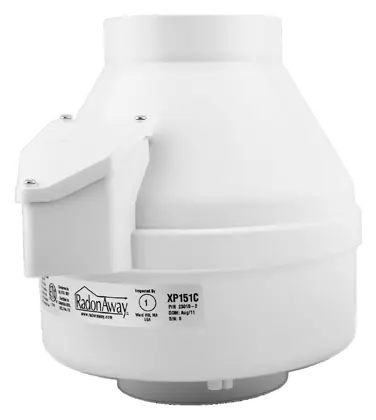
This page
RadonAway XP151
- What it does
- Moves up to 180 CFM
- Power
- Up to 60 W
- C-NRPP 2024/25
- Not applicable (mitigation fan)
This page: The XP151 is the smaller of RadonAway's two 4 inch XP fans, a short, low-profile housing for low-suction systems.
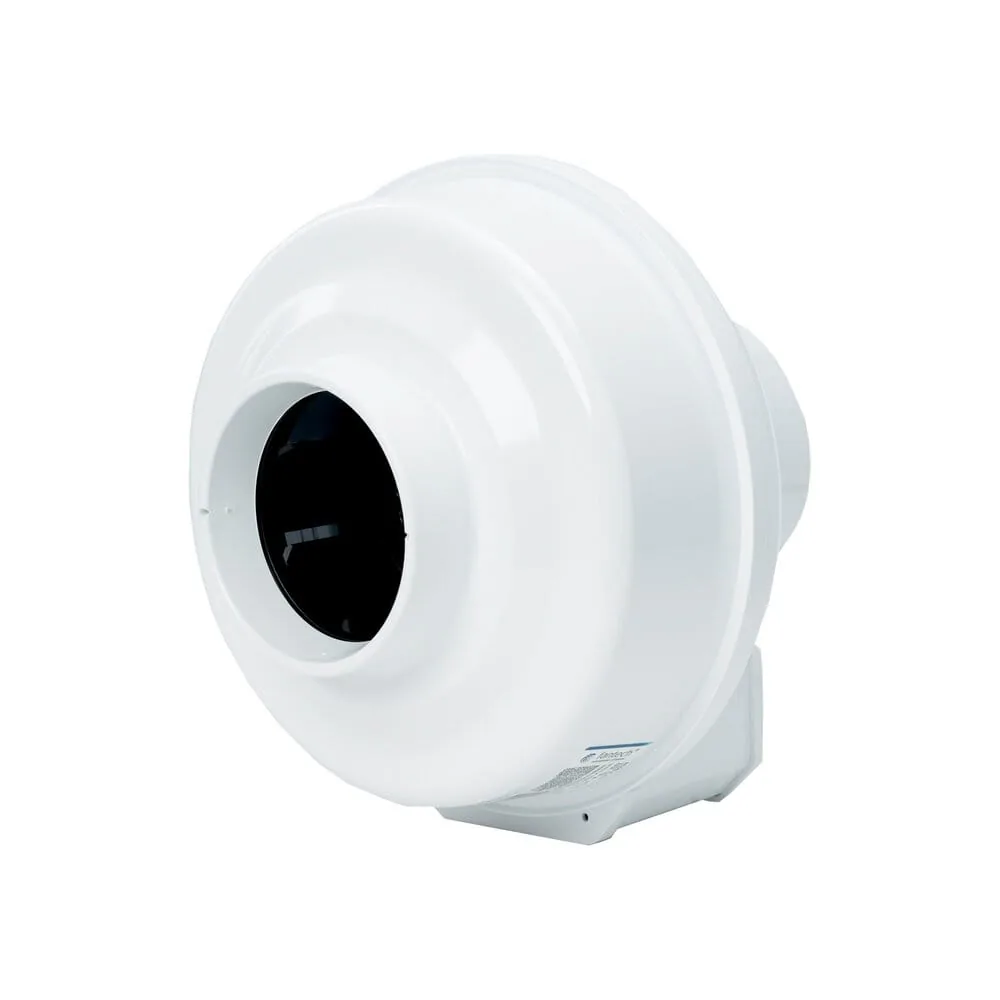
Fantech
- What it does
- Moves up to 174 CFM
- Power
- Up to 59 W
- C-NRPP 2024/25
- Not applicable (mitigation fan)
The difference: Another maker's 4 inch fan: Fantech's 2025 brochure cross-references the XP151 to its Rn 2, which it lists at 2.0 inches maximum static pressure and 174 CFM maximum.
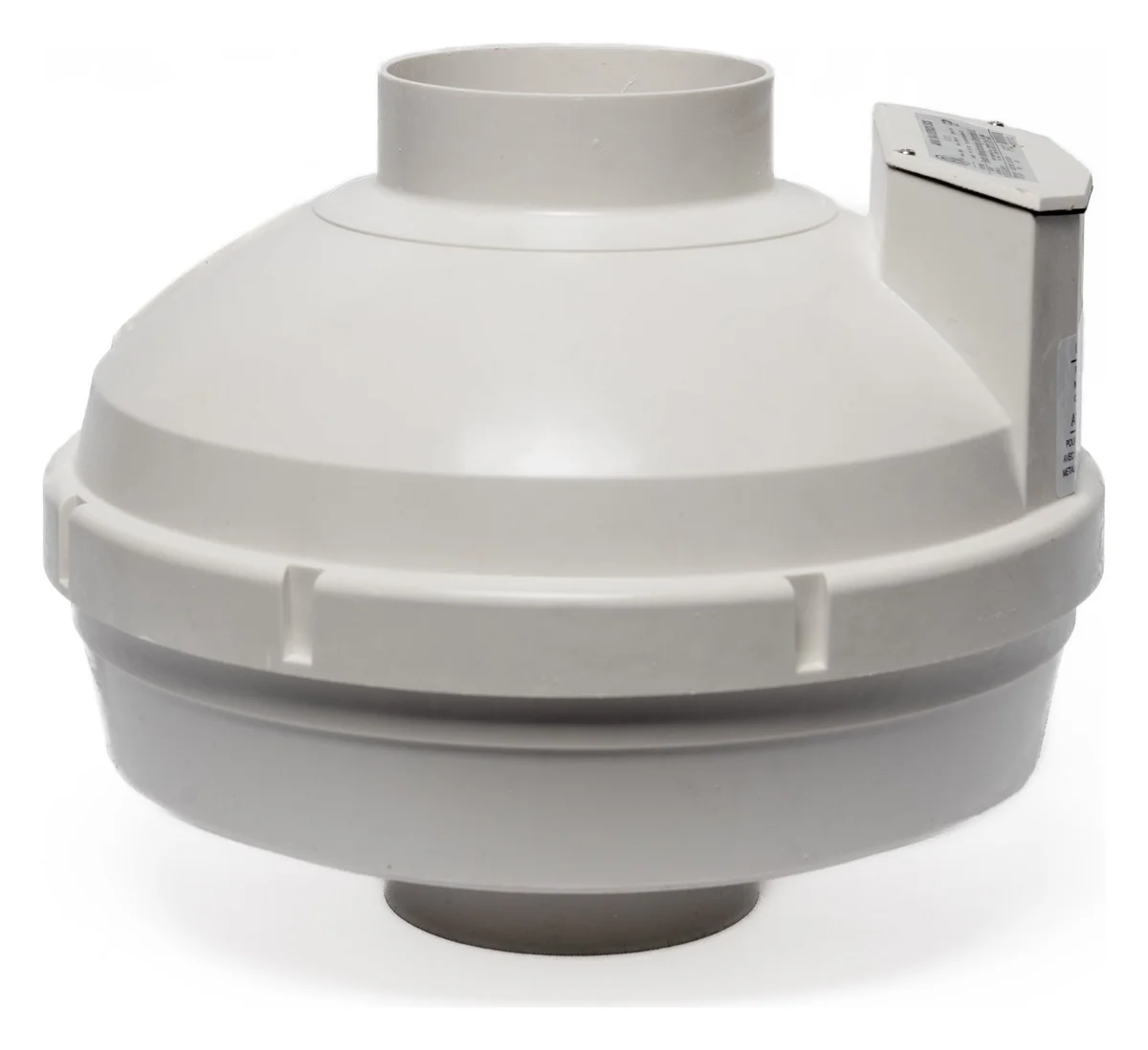
Festa
- What it does
- Moves up to 260 CFM
- Power
- Up to 66 W
- C-NRPP 2024/25
- Not applicable (mitigation fan)
The difference: Festa's 2022 catalog replacement guide groups the XP151 with the fans its AMG Maverick or AMG Patriot replace.
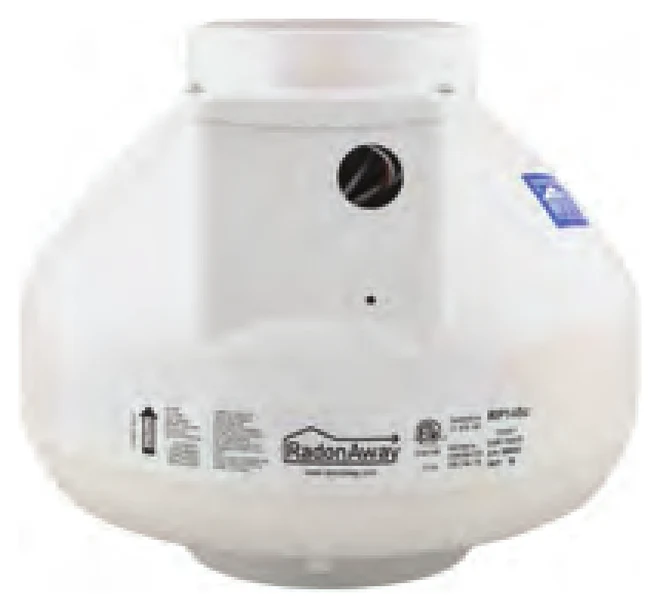
RadonAway
- What it does
- Moves up to 168 CFM
- Power
- Up to 72 W
- C-NRPP 2024/25
- Not applicable (mitigation fan)
The difference: RadonAway's 4 inch Contractor Series fan: its table lists the RP145c at 46 to 72 W with a 1.7 inch recommended maximum and 168 CFM at 0 inches.
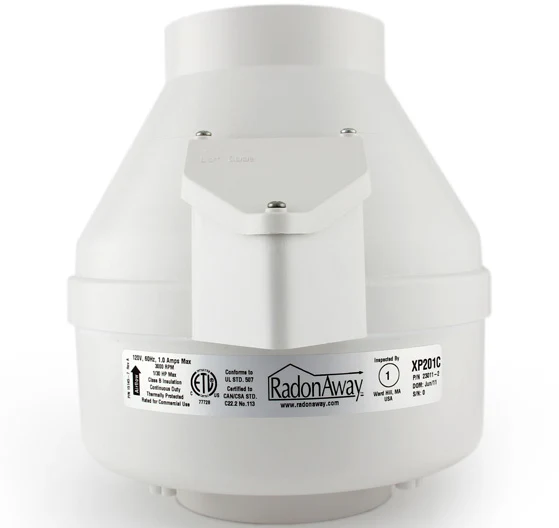
RadonAway
- What it does
- Moves up to 112 CFM
- Power
- Up to 66 W
- C-NRPP 2024/25
- Not applicable (mitigation fan)
The difference: The larger XP fan in the same 4 inch body: RadonAway's 2017 sheet lists the XP201c at 45 to 66 W with a 1.7 inch recommended maximum and 112 CFM at 0 inches.
Compared with similar products: 1 of 5
More radon fan models6
All radon fan models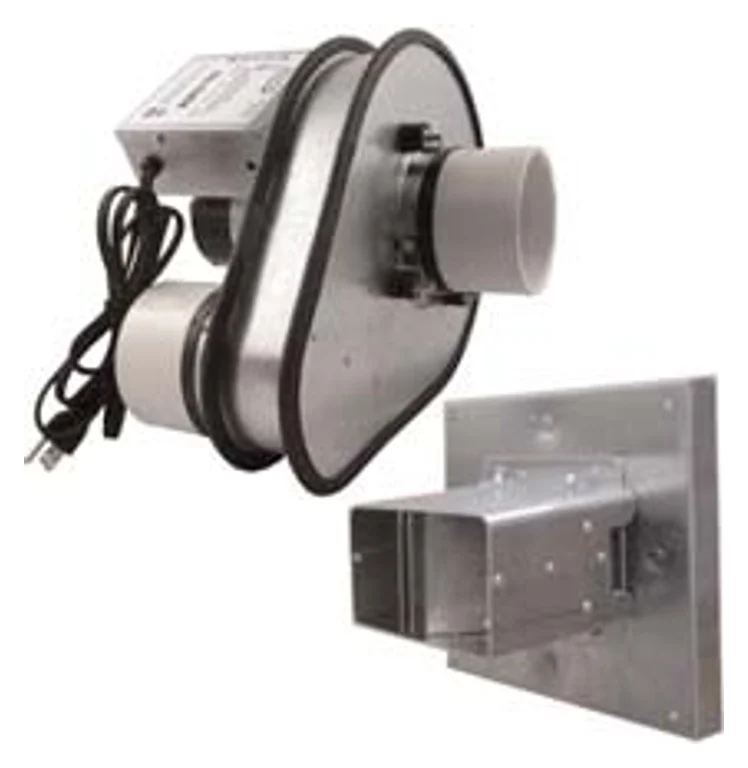
Radon fan

RMS160 side-wall radon mitigation system
- 3 in. schedule 40 PVC
- 50 W
Max airflow: 160 CFM
Max pressure: 2.3 in w.c.
- All radon fan models More radon fan models
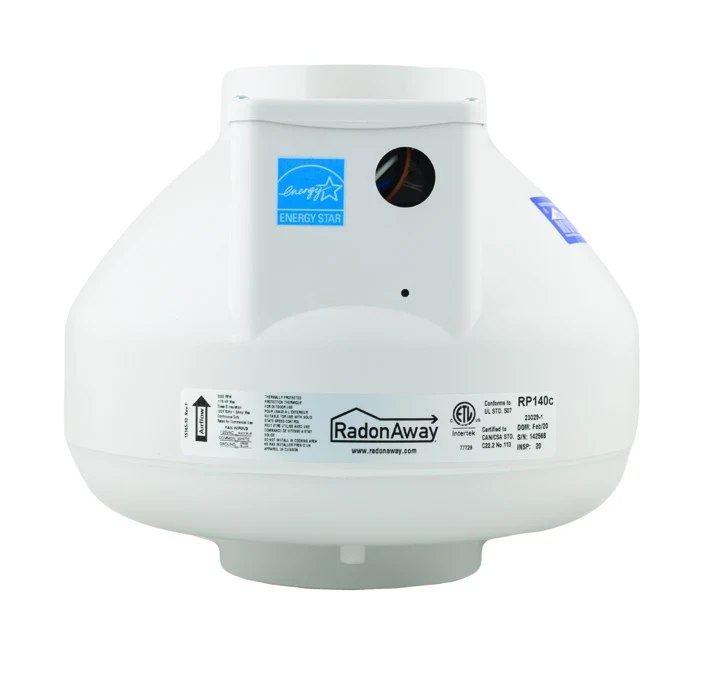
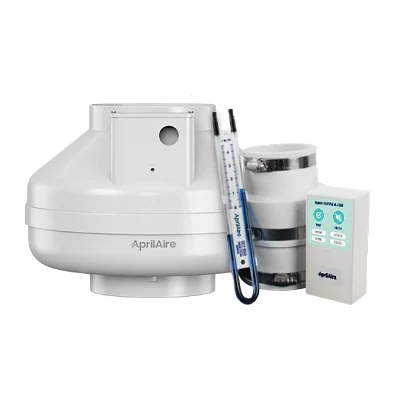
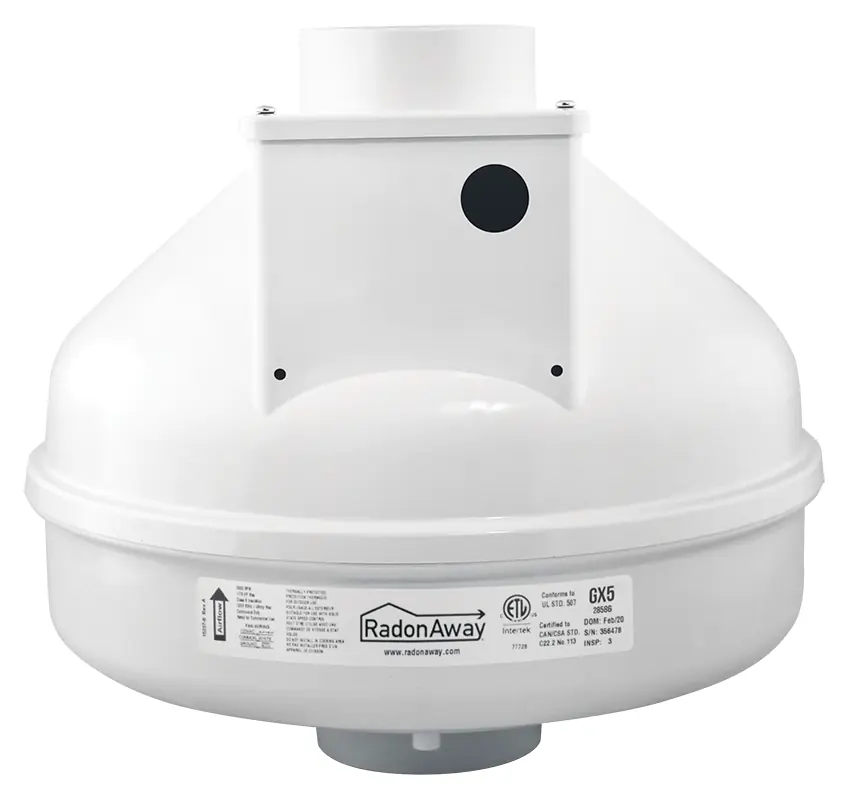
More radon fan models: 1 of 6
Questions
Questions people ask
5 questions about the RadonAway XP151, answered
Asked about the XP151
Is the XP151 on this page the same as the XP151 Pro?
No. This page covers part number 23010-1, the XP151 in RadonAway's IN014 instructions and 2012 sheet. RadonAway's current XP151 Pro Series is part number 28469, listed at 53 to 70 W and 167 CFM at 0 inches, with an Eternalast housing. Check the label or the listing's part number.
How much air does the XP151 move?
It depends on the suction and on which RadonAway document you read. IN014 gives 180 CFM at 0 inches, 140 at 0.5 and 78 at 1.0; the 2012 sheet gives 150, 115 and 69 at the same points.
Is the XP151 rated for commercial buildings?
RadonAway's documents differ: the 2012 XP/XR sheet says rated for commercial and residential use, while IN014 says residential use only. Ask RadonAway or your mitigator before using it on a commercial job.
Can it go outside?
RadonAway says the XP/XR fans are ETL Listed for indoor or outdoor use and need a U.L. listed watertight conduit outdoors. IN014 suggests a condensate bypass on some outdoor installations, and the EPA's construction guide keeps the fan out of habitable space.
Do I need a professional to install it?
The EPA recommends a qualified radon mitigation contractor, and many states require radon professionals to be licensed, certified or registered. IN014 is written for trained, certified or licensed mitigators, asks for a licensed electrician, and ties the five-year warranty to professional installation.
What to do next
- See every radon fan we coverEach maker's published pressure, airflow and power, side by side.
- Find a mitigation professionalMost systems are designed and installed by one; some states require a license.
- Understand the fanWhat the fan does in a system, and when one needs replacing.
- Test after it runsA short-term test after installation shows whether the system works.
Updated November 27, 2026