
MonitorAEGTEST
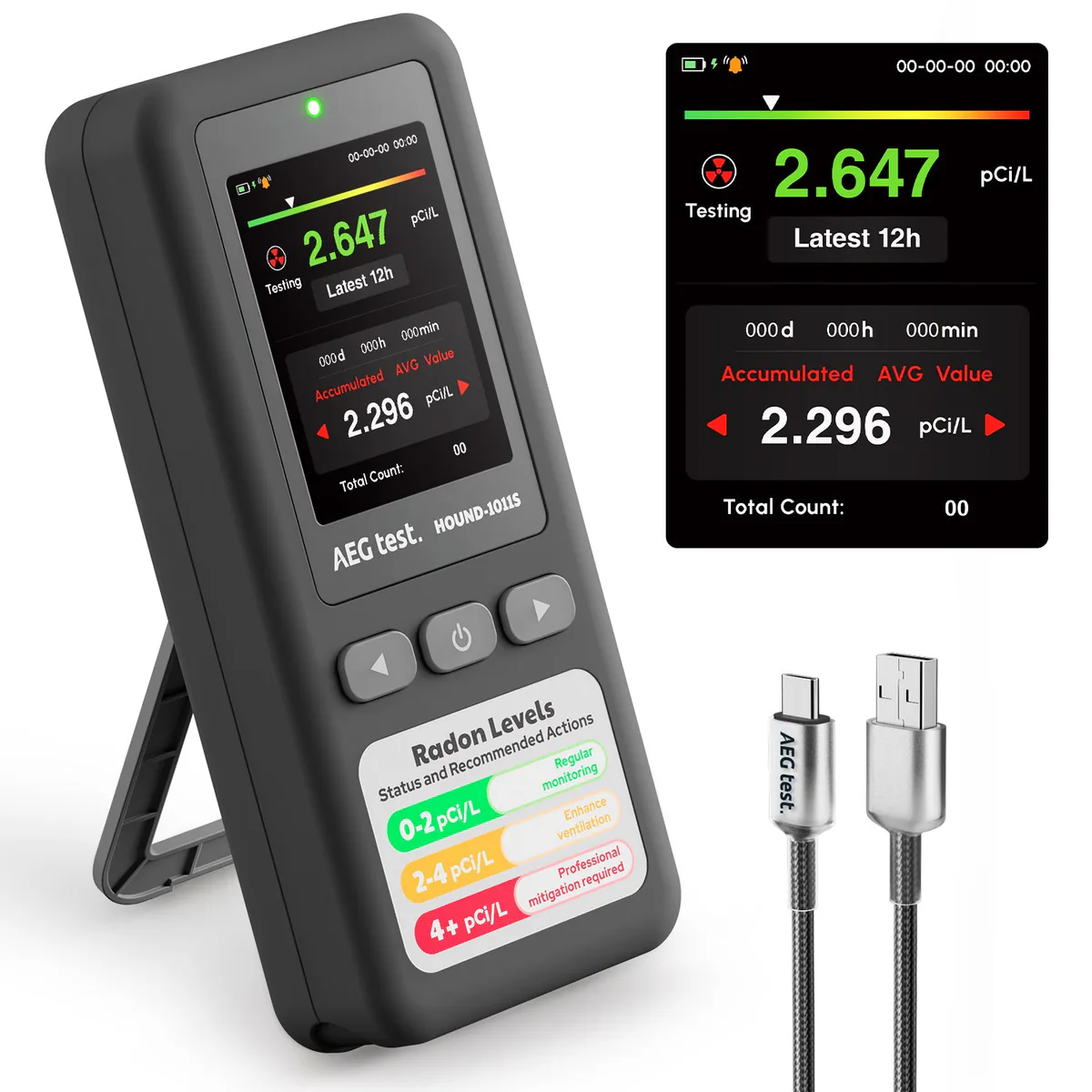
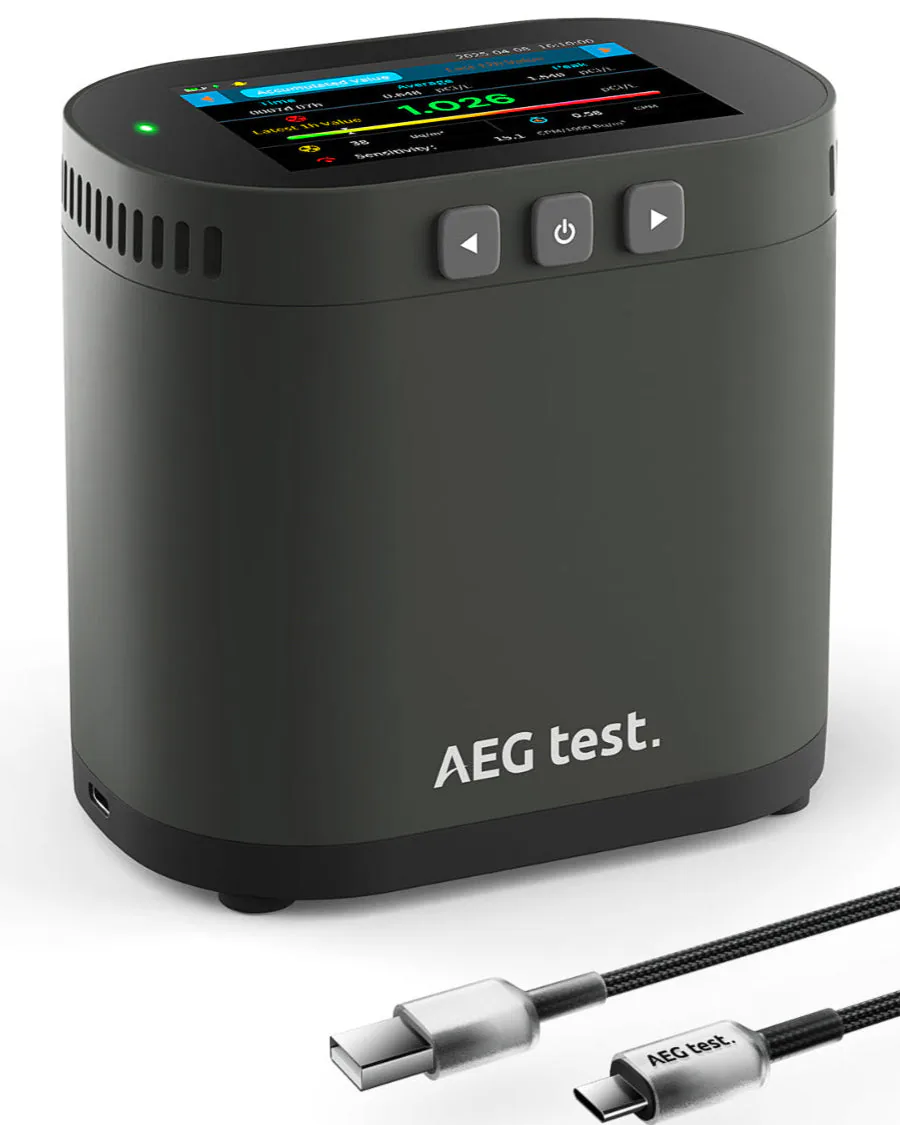
HOUND-1011S rechargeable radon detector with a screen
- C-NRPP 2024/25: Not included
- Battery
- Alarm
- Screen
Method: Semiconductor sensor
First reading: Within 12 hours
AEGTEST
Rechargeable radon detector with a screen
Photos: AEGTEST
 (opens in a new tab)Check price on Amazon (opens in a new tab)
As an Amazon Associate, Radon411 earns from qualifying purchases.
Amazon and the Amazon logo are trademarks of Amazon.com, Inc. or its affiliates.
See ratings and reviews on Amazon (opens in a new tab)As AEGTEST states it
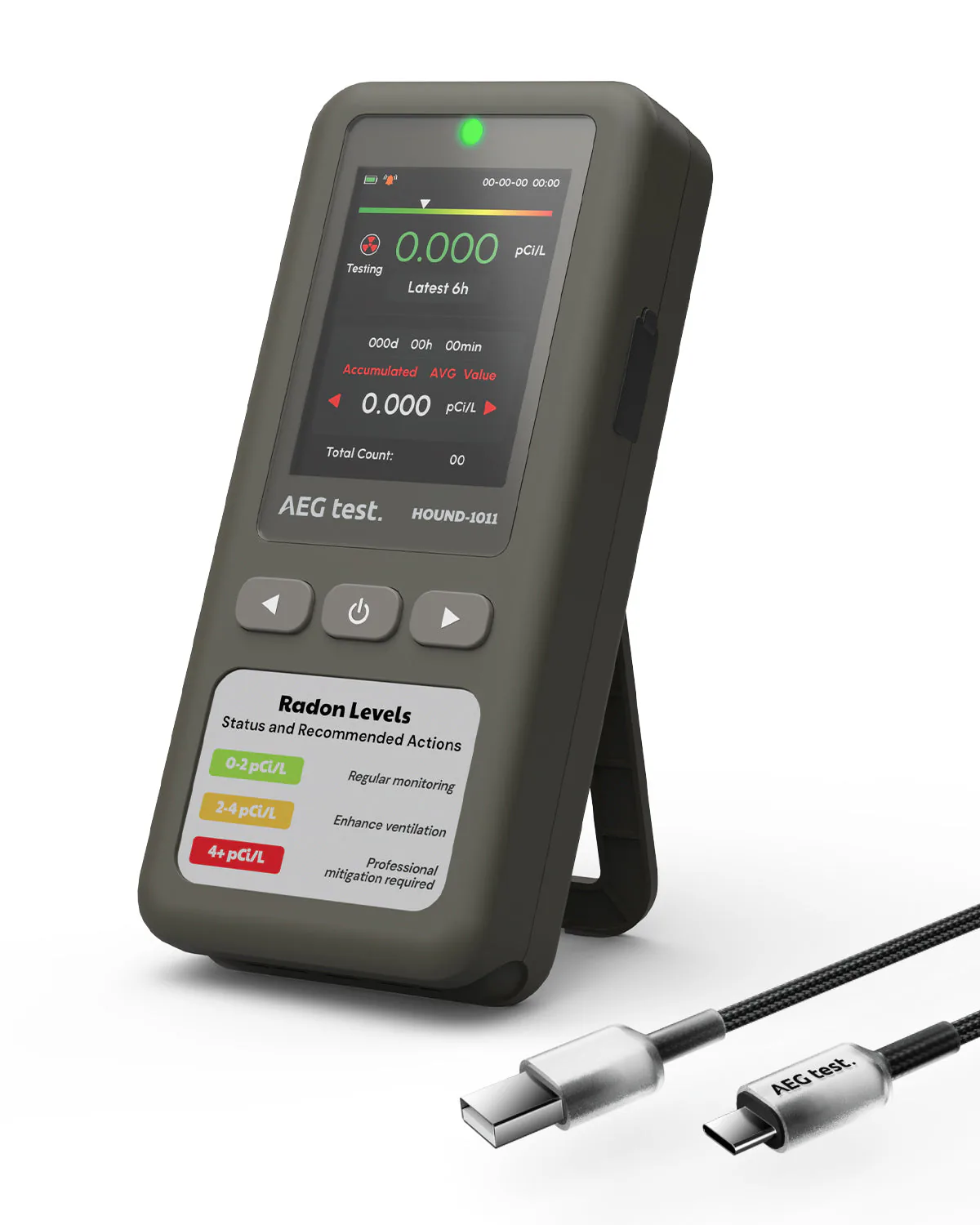
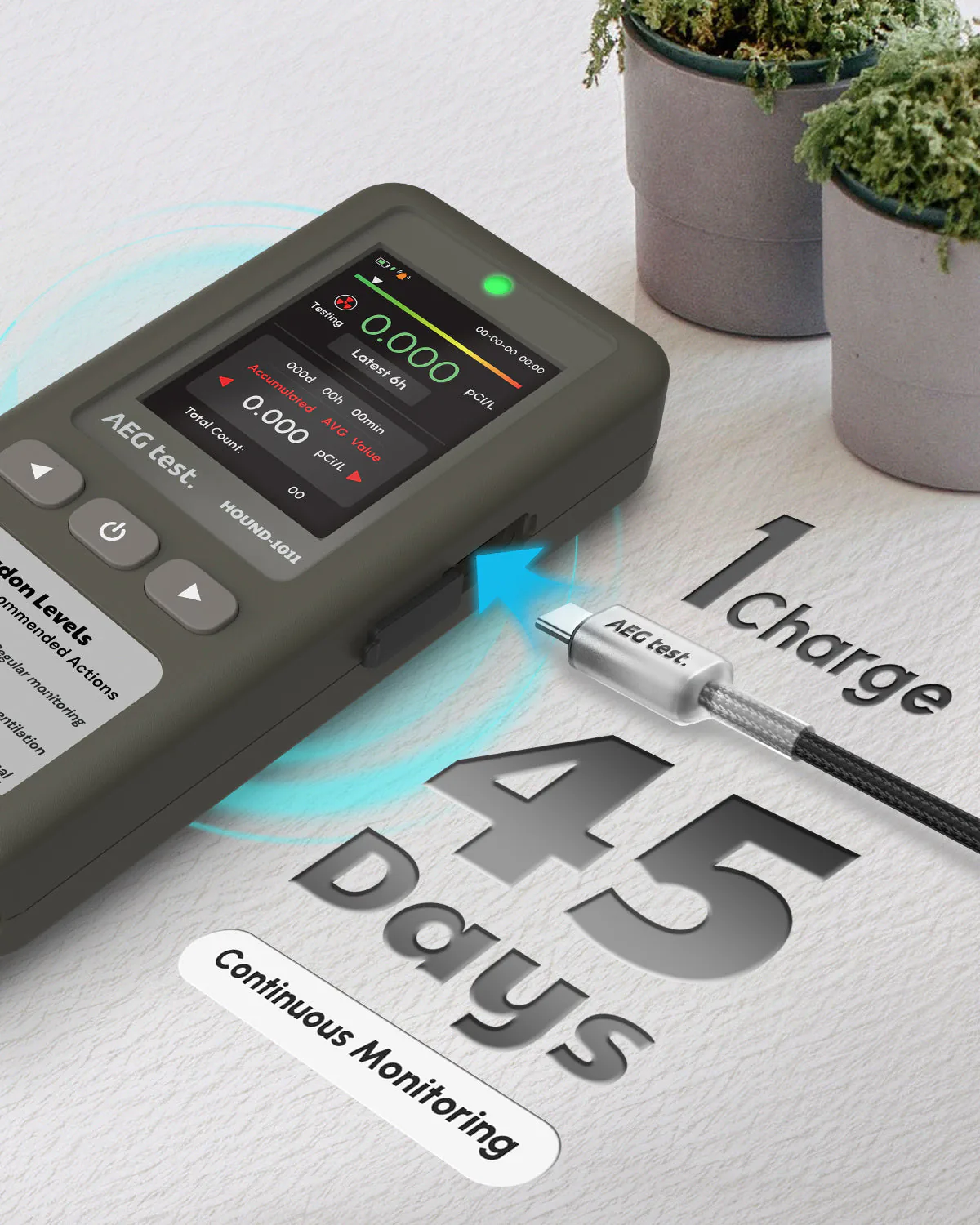
The HOUND-1011 is a compact, portable radon detector from AEGTEST: a semiconductor sensor, a first result within 6 hours and hourly updates after that, an LCD screen with data for the past 6 to 96 hours and a history of up to 504 days, a built-in battery, and an alarm that AEGTEST says can be muted in the Eco menu; its earlier store listed the alarms as audible and visual. AEGTEST publishes no accuracy figure or manual for it, and it was not included in C-NRPP's 2024/25 consumer monitor evaluation.
AEGTEST lists one HOUND-1011, a charging cable, a lanyard and a manual, and says the detector comes with a stand. The manual is in the box only: AEGTEST posts no copy online, and the general help page of its earlier store asked buyers looking for the instruction guide to contact the company.
In the box and running costsHow it works
The sensor, the sampling and the readings, then who has checked it
In our words, from the maker's documents
AEGTEST describes the HOUND-1011 as a compact, portable radon detector for continuous monitoring, built around a high-precision semiconductor sensor. It does not say how air reaches the sensor, so the sampling method is not stated by the maker. AEGTEST's earlier store gave a general account of how its detectors measure: the sensor counts the alpha particles of radon in each sample of air it analyzes, works continuously, and produces a data point every hour that contributes to an average reading.
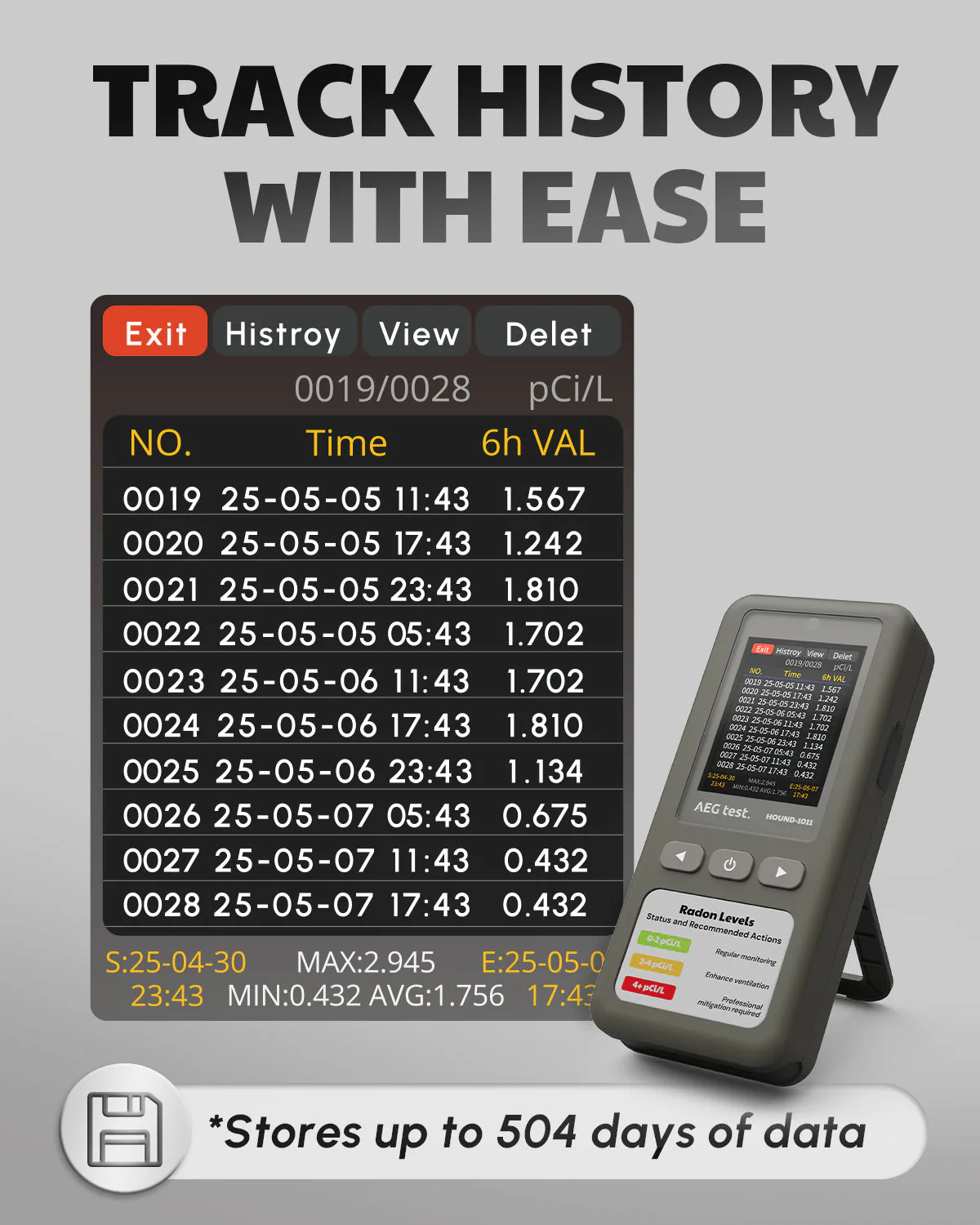
AEGTEST says first results appear within 6 hours, with hourly updates after that, and that testing can be restarted at any time. Its earlier store's page explained that restarting resets the 6-hour measurement and begins a new test, while the past records stay in the DATA menu. The LCD screen shows data for the past 6, 24, 48, 72 and 96 hours, and the stored history reaches back as far as 504 days.
AEGTEST lists a measurement range of 0.09 to 1000 pCi/L, the same on its current and earlier stores, and says the unit switches between pCi/L and Bq/m³. Neither store gives an accuracy figure: the words high-precision and accurate come with no percentage, test level or test period, so accuracy is not stated by the maker.
Power is a built-in battery that AEGTEST says lasts up to 45 days in sleep mode, and the detector supports long-term home use on a Type-C cable; AEGTEST's earlier store listed it as a 2000 mAh lithium battery with Type-C charging. No charging time is given.
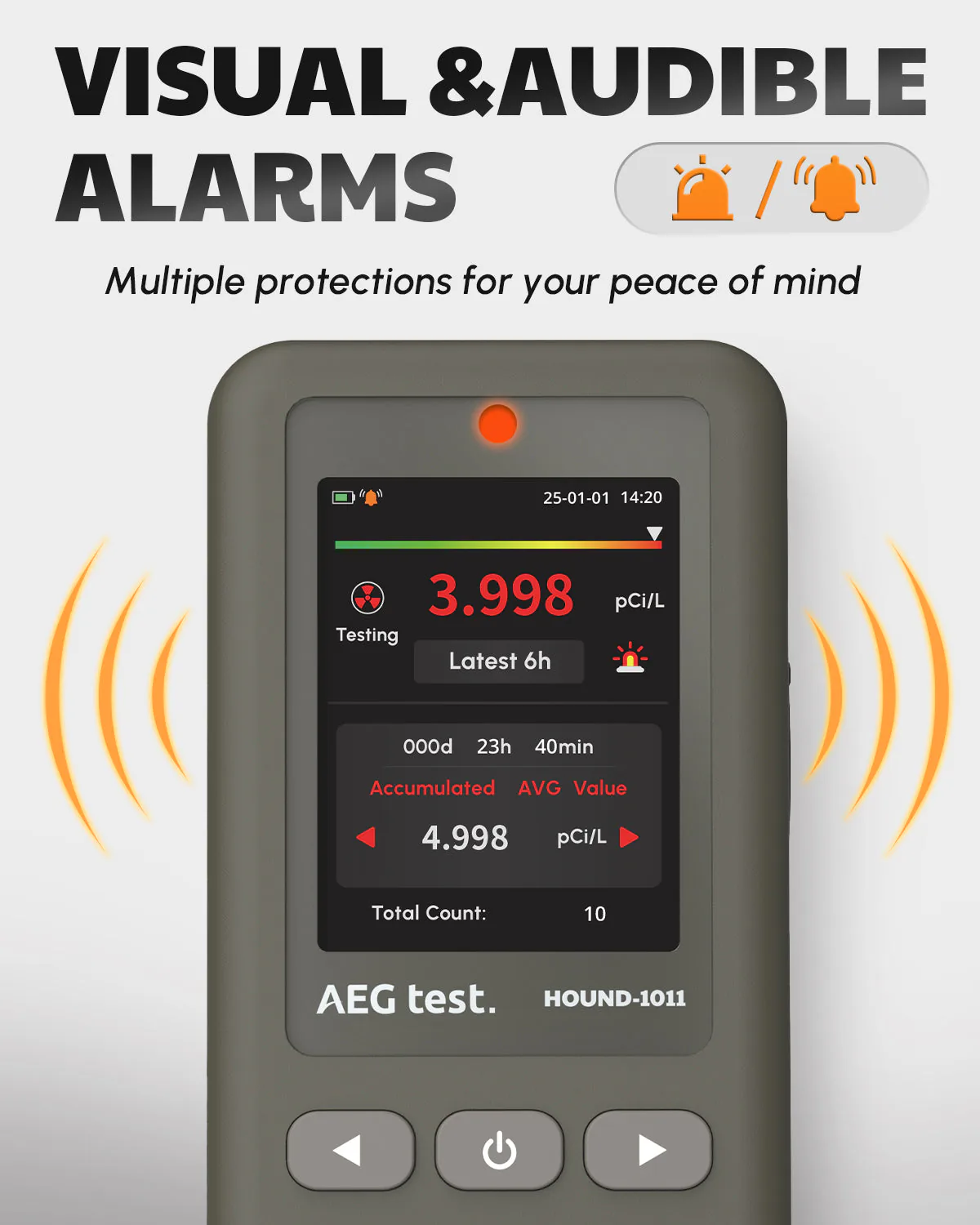
AEGTEST's earlier store said the detector triggers both audible and visual alarms when radon levels exceed the safety threshold, and its current page adds that the alarm can be muted in the Eco menu so it does not disturb your rest. Neither page says what the threshold is or whether you can set it, so the alarm level is not stated by the maker. AEGTEST's description mentions no app, Wi-Fi or Bluetooth.
AEGTEST's own statements, attributed
These are AEGTEST's own statements, attributed to it. They are not our findings, and we have not tested this product ourselves.
C-NRPP 2024/25, recalls and studies
The Canadian National Radon Proficiency Program's 2024/25 comparison of consumer monitors did not include AEGTEST HOUND-1011. That is a fact about which devices took part, not a finding about this one: no result from that program exists for it either way.
C-NRPP is the Canadian National Radon Proficiency Program. Its 2024/25 results were published in May 2025.
Specifications
Every figure as the maker states it
AEGTEST lists one HOUND-1011, a charging cable, a lanyard and a manual, and says the detector comes with a stand. The manual is in the box only: AEGTEST posts no copy online, and the general help page of its earlier store asked buyers looking for the instruction guide to contact the company.
AEGTEST's warranty page, which covers its store as a whole, promises a three-year warranty, described as a 36-month after-sales service with lifetime technical support. It excludes faults caused by unauthorized disassembly, damage from water or strong mechanical force, and normal wear that does not affect function, says AEGTEST is not responsible for loss of use or incidental damages, and points buyers to AEGTEST's support email for warranty help or repair.
There is no lab fee and no battery to buy: the 2000 mAh lithium battery AEGTEST's earlier store listed is recharged over the Type-C cable in the box, and AEGTEST rates it at up to 45 days in sleep mode. AEGTEST mentions no app, subscription or cloud service, and publishes no sensor life, recalibration interval or service schedule for the HOUND-1011.
Fit and setup
The fit, then setup and placement as the guidance asks
Good fit if, and look elsewhere if
Good fit if
Look elsewhere if
4 steps
How C-NRPP says to use any consumer monitor
For where any radon test or monitor should sit in a home, see where to place a radon test.
Compare
The same three rows for each, and the one difference that matters
This page
AEGTEST HOUND-1011
This page: The HOUND-1011 is a compact, portable radon detector from AEGTEST: a semiconductor sensor, a first result within 6 hours and hourly updates after that, an LCD screen with data for the past 6 to 96 hours and a history of up to 504 days, a built-in battery, and an alarm that AEGTEST says can be muted in the Eco menu; its earlier store listed the alarms as audible and visual.
AEGTEST
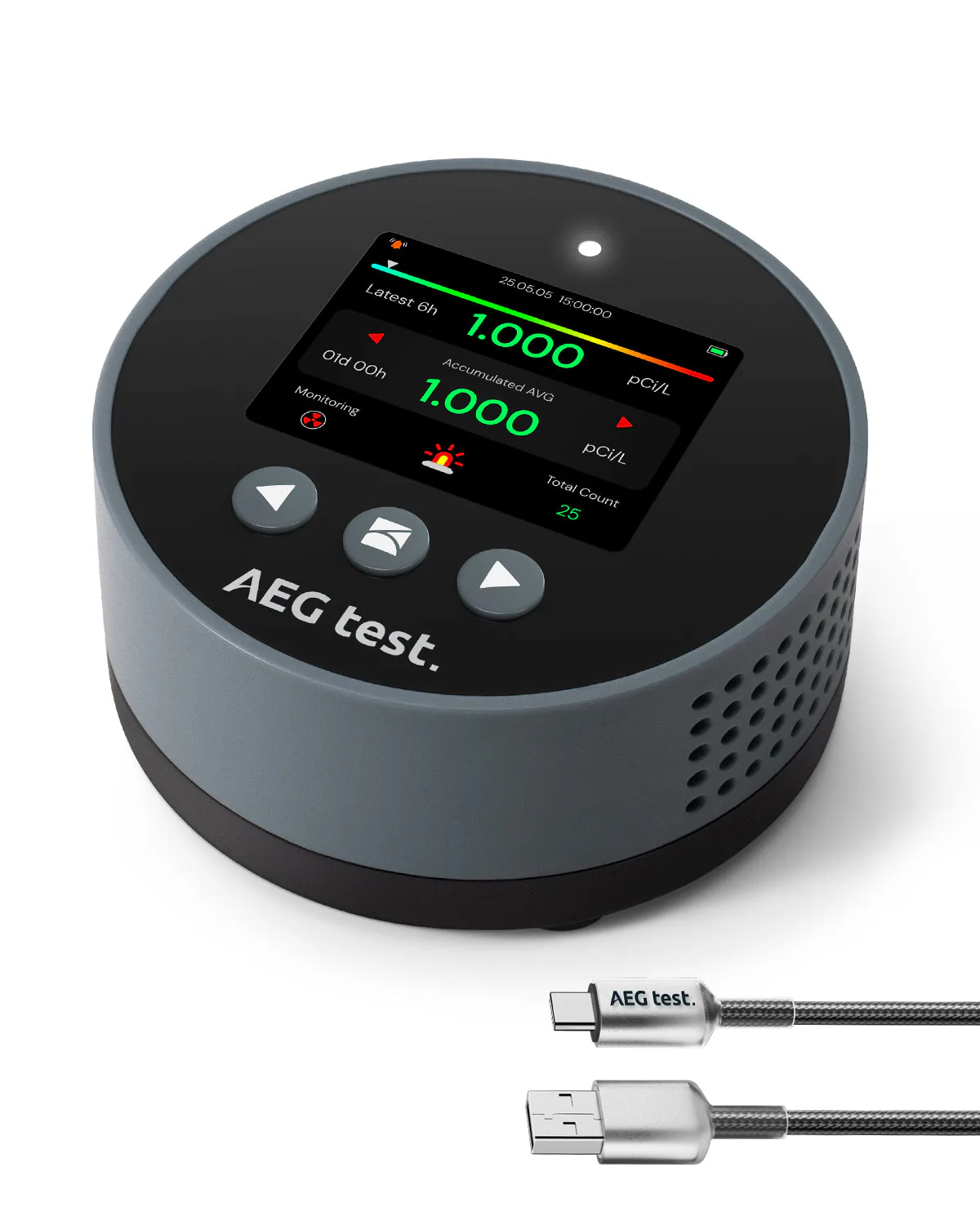
The difference: AEGTEST's HOUND-1011S has the same 0.09 to 1000 pCi/L range, 504-day history and 45-day sleep-mode battery in its store text, but gives its first results within 12 hours instead of 6.
AEGTEST
The difference: AEGTEST's palm-sized HOUND-1085 also uses a semiconductor sensor with a first reading in 6 hours and up to 504 days of history, and adds a triple-vent design and customizable sound alerts.
Forensics Detectors
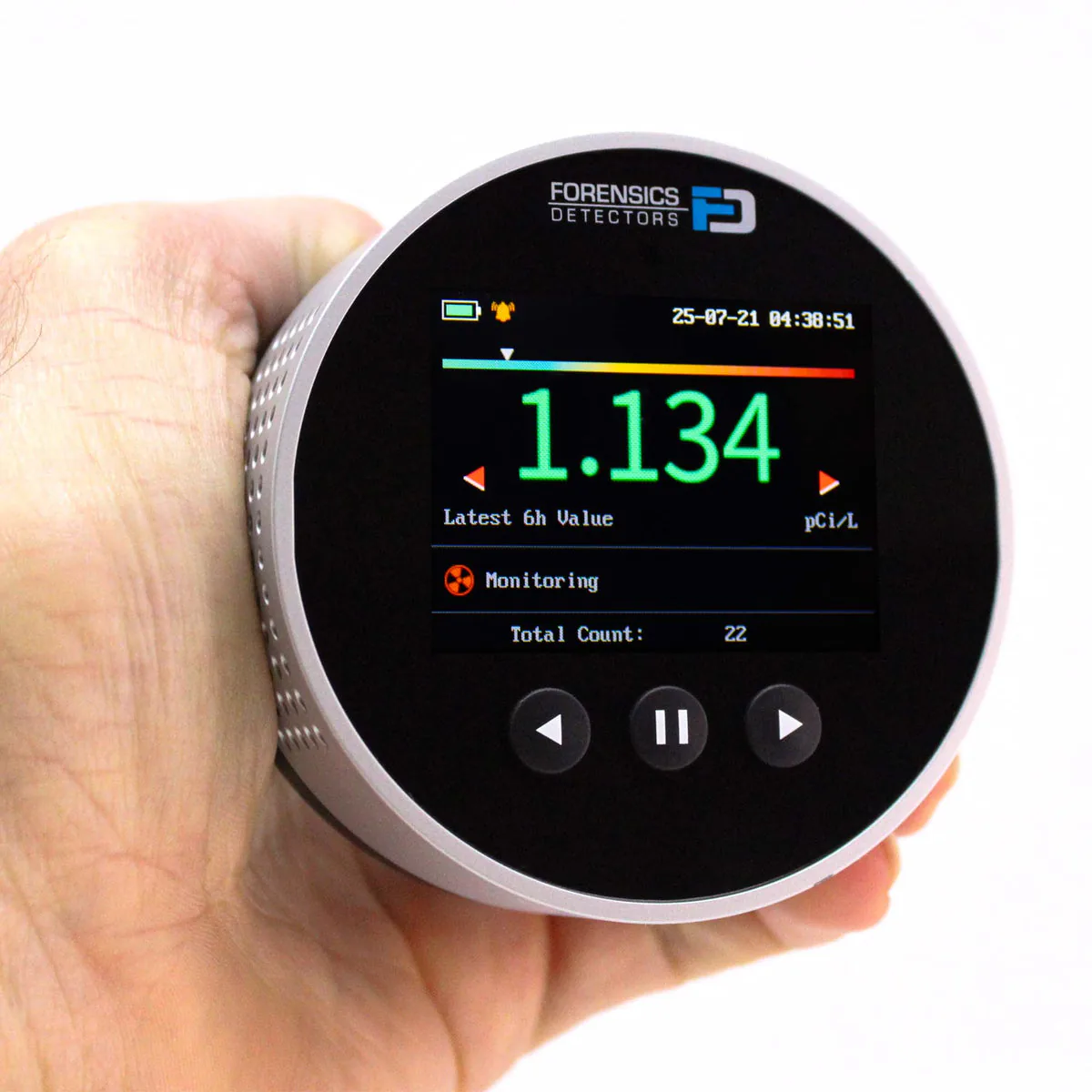
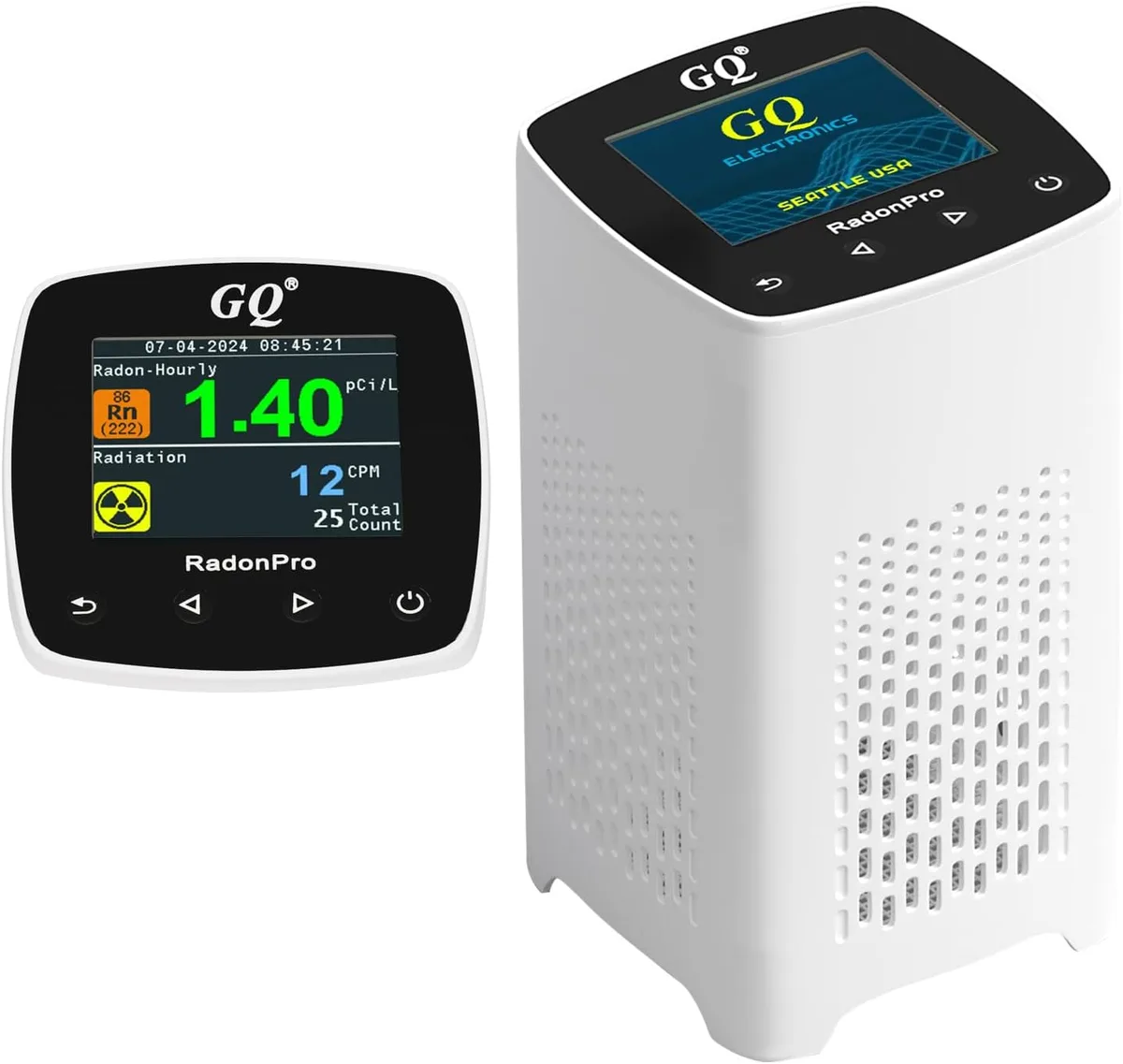
The difference: Another rechargeable semiconductor detector with a 0.09 to 1000 pCi/L range and a first reading after 6 hours; Forensics Detectors publishes a manual with ±15% accuracy, an operating range of 14°F to 122°F and a one-year limited warranty.
Compared with similar products: 1 of 4
MonitorAEGTEST
Method: Semiconductor sensor
First reading: Within 12 hours
MonitorAEGTEST
Method: Semiconductor sensor
First reading: Within 6 hours
MonitorAEGTEST
First reading: Within 1 hour
MonitorAEGTEST
Method: Ion chamber
First reading: Within 10 minutes
Monitor
Method: Semiconductor sensor
Monitor
Method: Semiconductor sensor
First reading: Within 6 hours
Monitor
Method: Alpha spectrometry
Monitor
Method: Alpha spectrometry
Readings: Every 60 minutes
Monitor
Method: Alpha spectrometry
Monitor
Method: Alpha spectrometry
Readings: Every 60 minutes
Monitor
Method: Alpha spectrometry
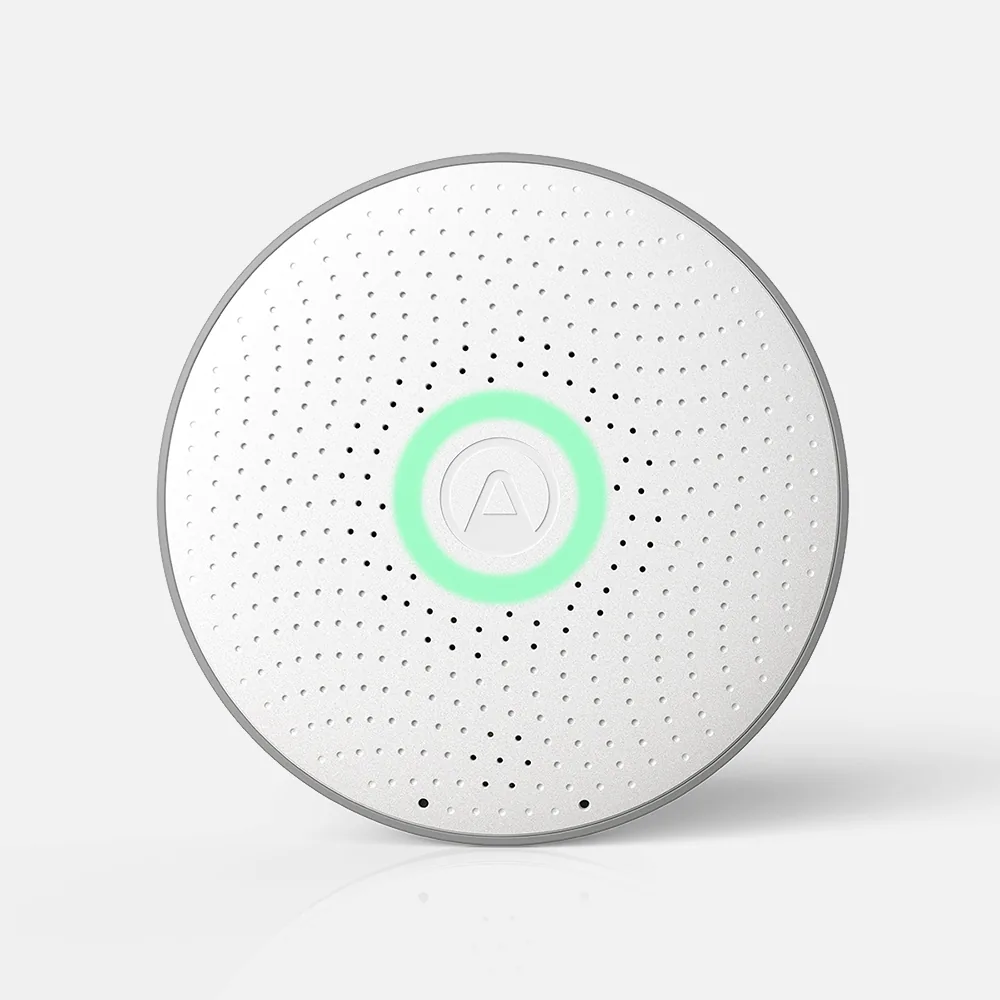
Monitor
Method: Alpha spectrometry
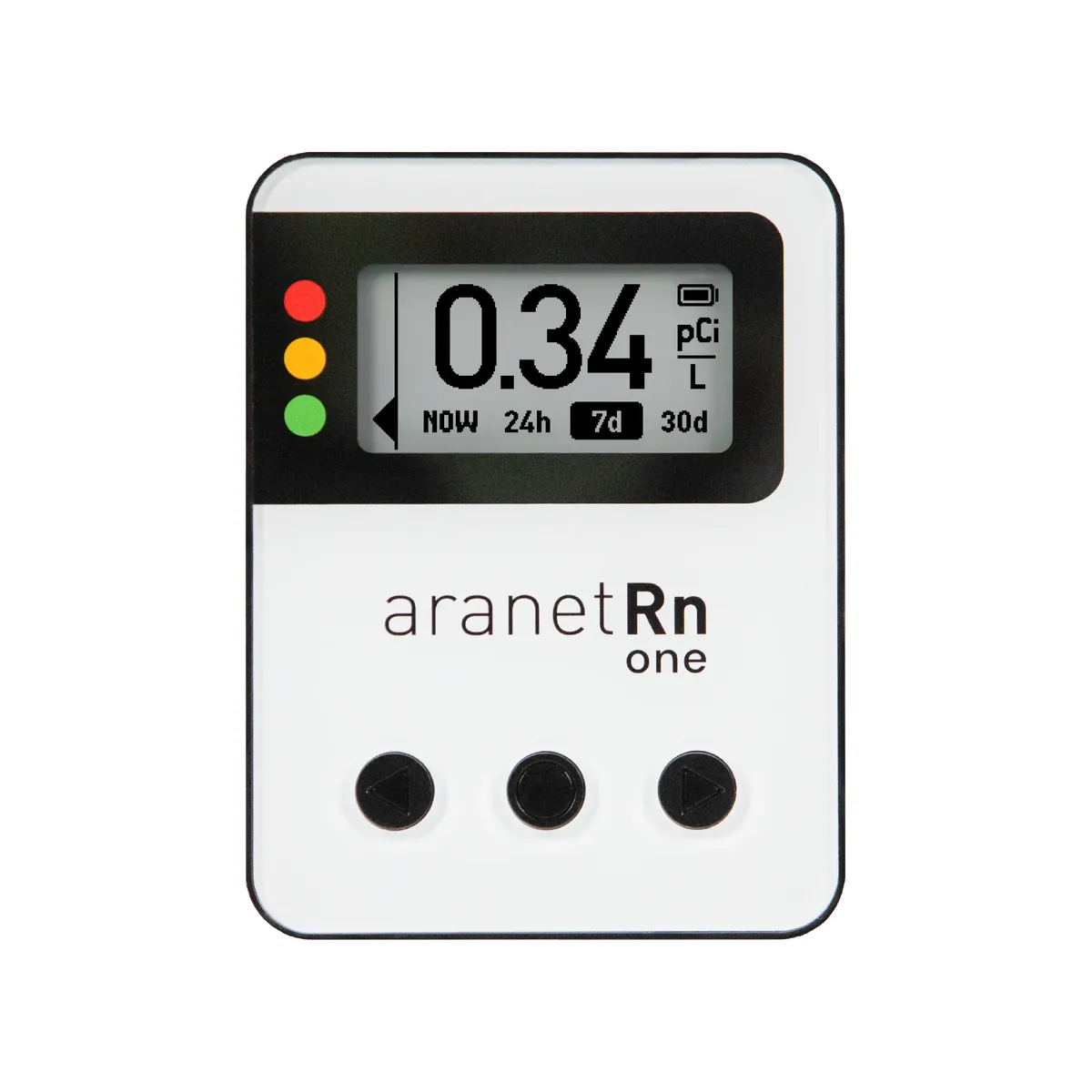
MonitorAranet
Method: Ion chamber
First reading: Within 10 minutes
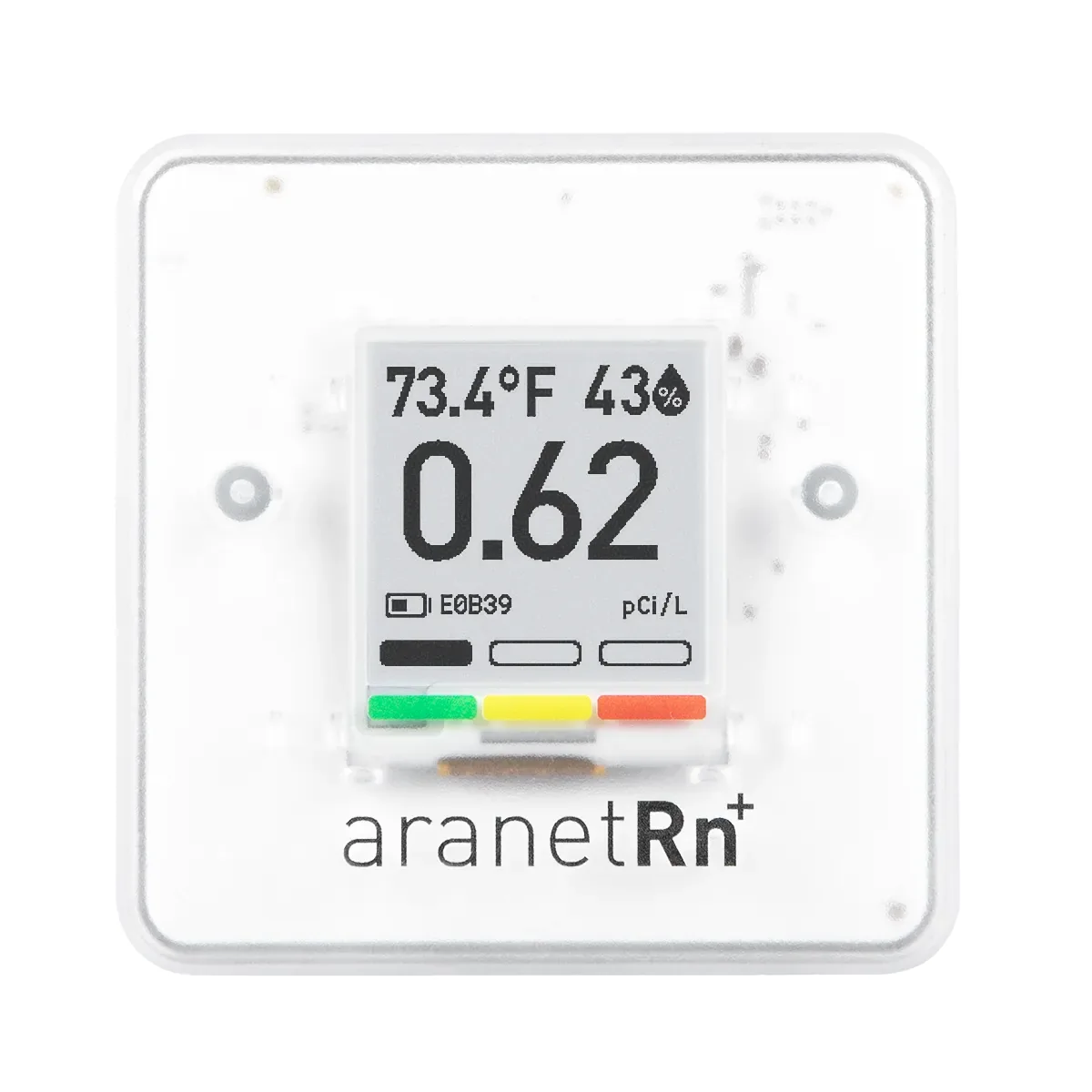
MonitorAranet
Method: Ion chamber
First reading: Within 10 minutes
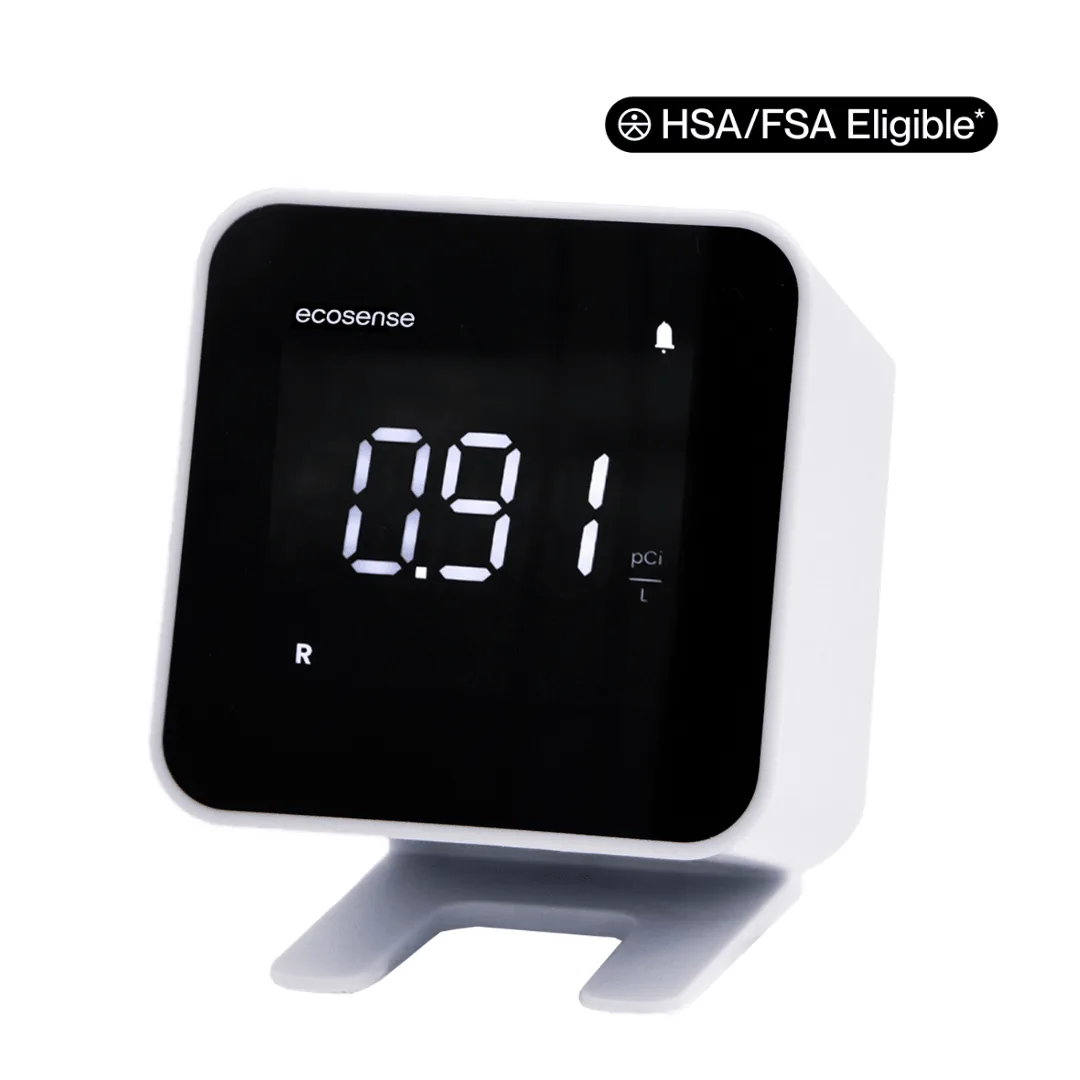
Monitor
Method: Ion chamber
First reading: Within 10 minutes
Monitor
Method: Ion chamber
First reading: Within 10 minutes
Monitor
Method: Ion chamber
First reading: Within 15 minutes
Monitor
Method: Ion chamber
First reading: Within 10 minutes
MonitorForensics Detectors
Method: Semiconductor sensor
First reading: Within 6 hours
Monitor
First reading: Within 5 minutes
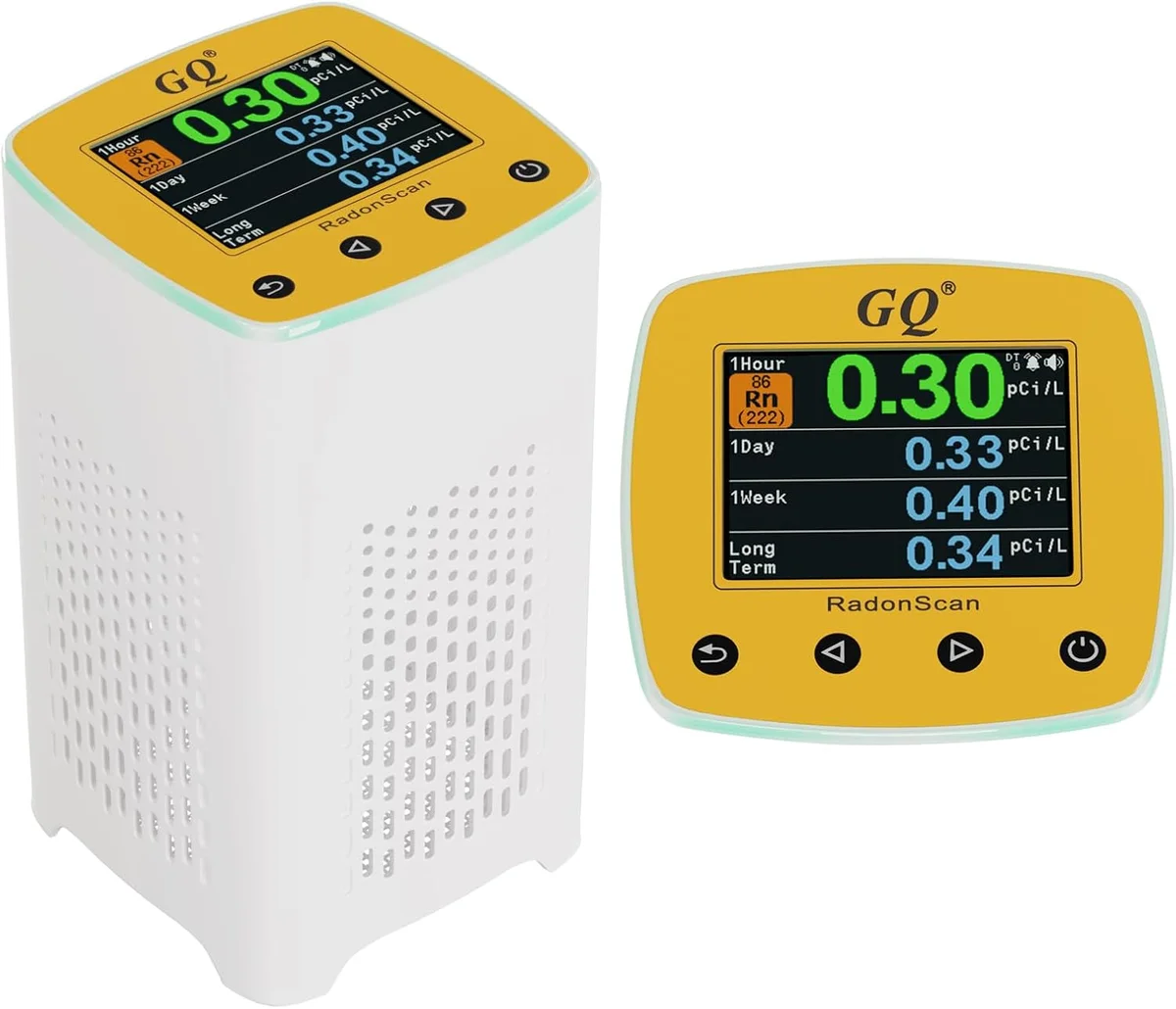
Monitor
First reading: Within 5 minutes
Monitor
First reading: Within 5 minutes
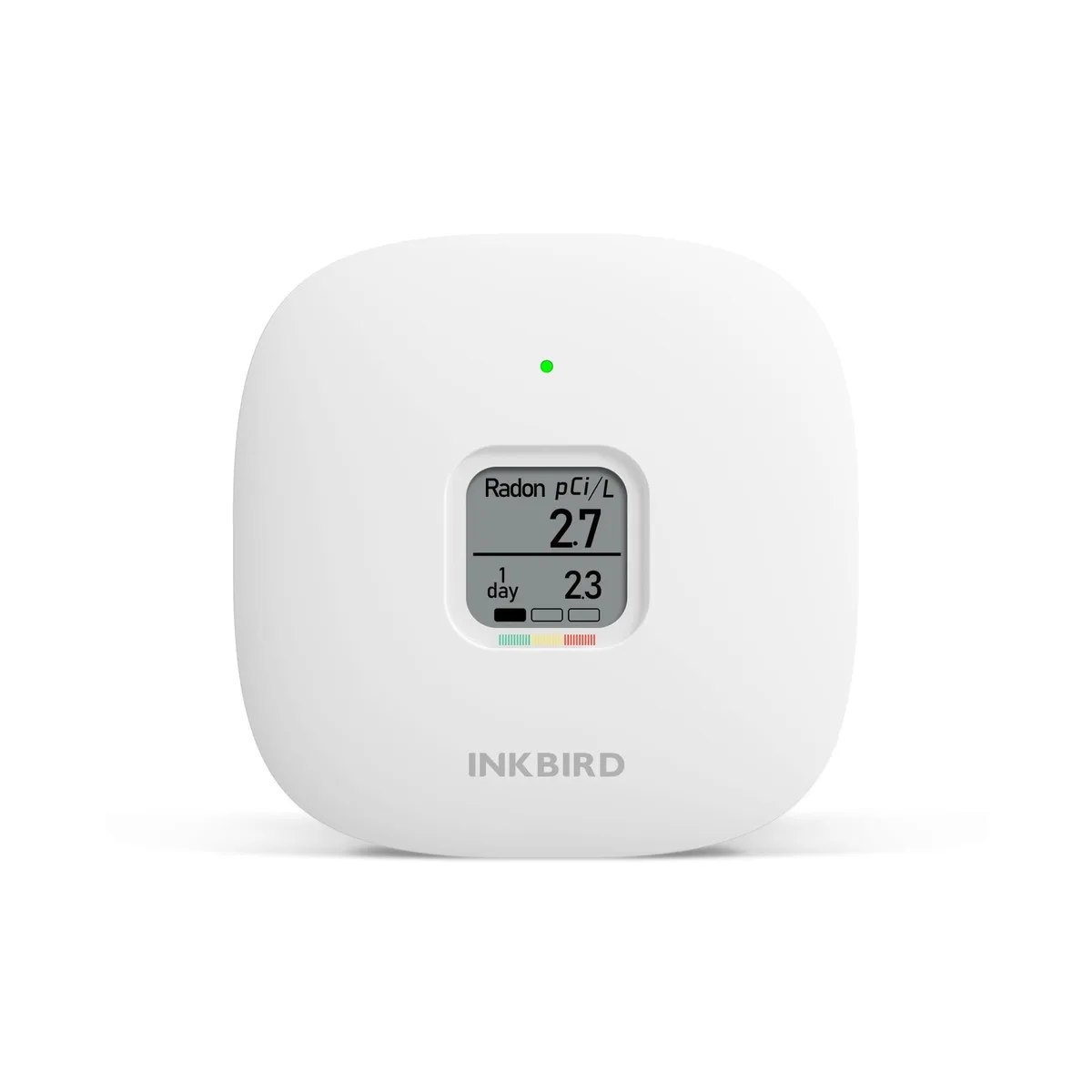
MonitorINKBIRD
First reading: Within 24 hours
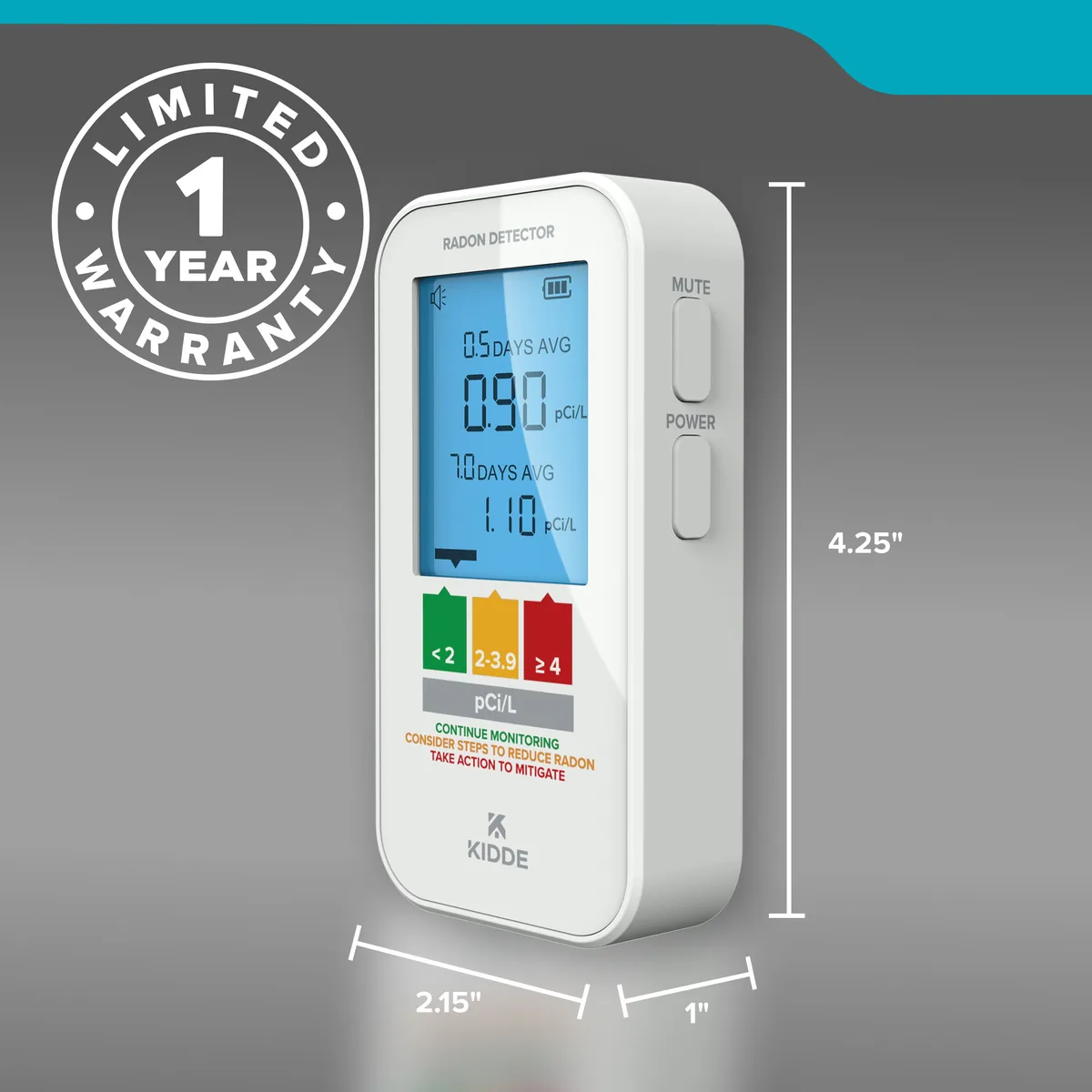
MonitorKidde
Method: Semiconductor sensor
First reading: Within 12 hours
MonitorPYZYCKYH
Method: Semiconductor sensor
First reading: Within 6 hours
MonitorSafetySiren
First reading: Within 48 hours
Monitor
First reading: Within 90 minutes
Monitor
Method: Alpha spectrometry
First reading: Within 24 hours
MonitorX-Sense
Method: Alpha spectrometry
First reading: Within 24 hours
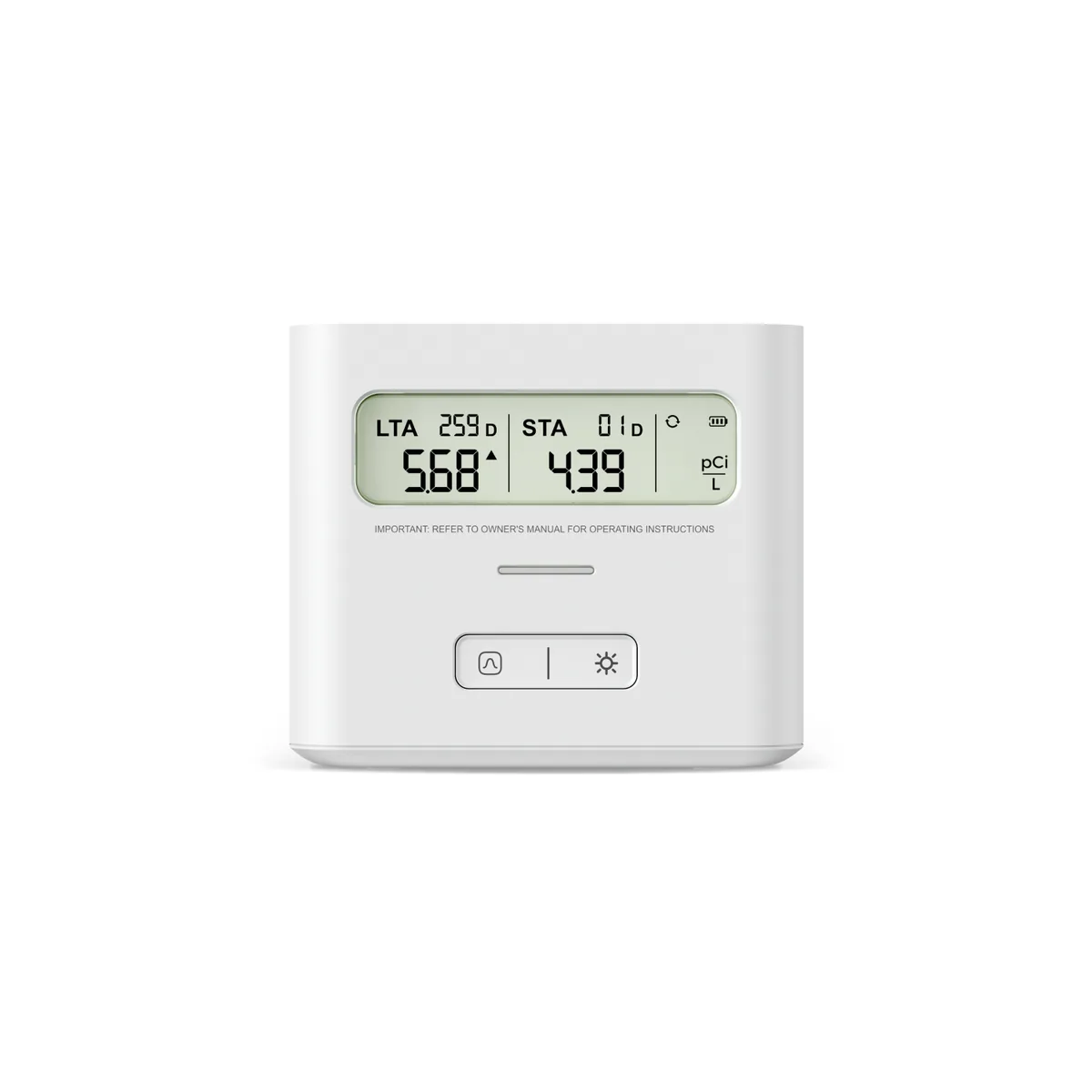
MonitorX-Sense
Method: Alpha spectrometry
First reading: Within 24 hours
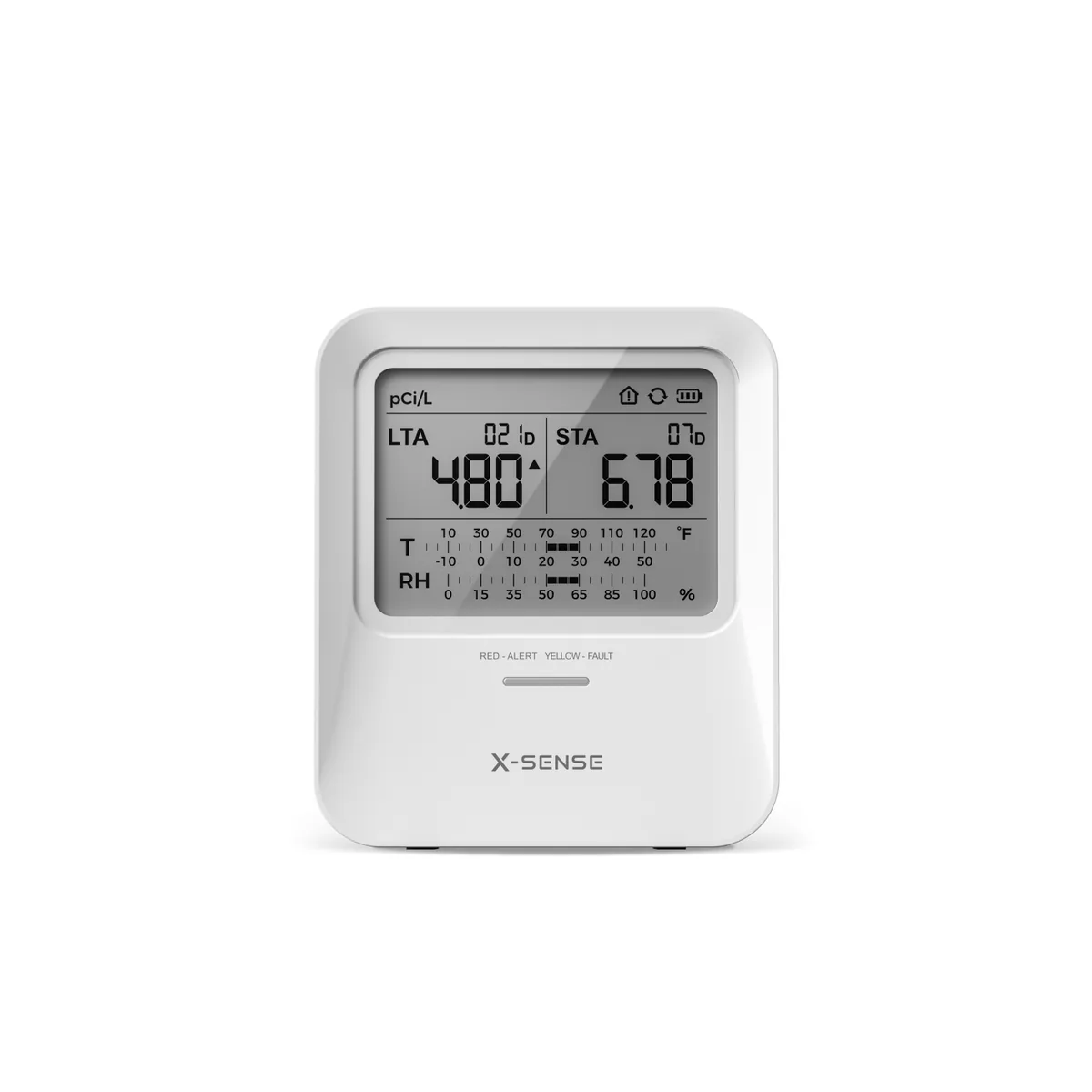
MonitorX-Sense
Method: Alpha spectrometry
First reading: Within 24 hours
More home radon monitors: 1 of 31
Questions
5 questions about the AEGTEST HOUND-1011, answered
AEGTEST, which sells it on its own online store. The store's own record gives Shenzhen, Guangdong, China as its location and prices in US dollars, and lists the United States among the countries it ships to. The AEGTEST trademark is registered in the US to Shenzhen Xunyi Electronic Commerce Co., Ltd., with radon detectors among the goods it covers.
AEGTEST gives no figure on its current store or in the specification table of its earlier store, which lists the battery, the alarm type, the measurement range and the time to first result but no accuracy.
There is no independent result either: the HOUND-1011 was not included in C-NRPP's 2024/25 consumer monitor evaluation. That is not a failed test; it means no independent result exists.
AEGTEST's earlier store answered this in its FAQ: restarting resets the 6-hour measurement and the device begins a new test, while past records stay in the DATA menu. Its current store says first results appear within 6 hours and that testing can be restarted at any time.
AEGTEST says the alarm can be muted in the Eco menu to avoid disturbing your rest.
In AEGTEST's store text the two share the semiconductor sensor, the 0.09 to 1000 pCi/L range, hourly updates, up to 504 days of history and a battery of up to 45 days in sleep mode. The HOUND-1011 gives its first results within 6 hours and shows data for the past 6 to 96 hours; the HOUND-1011S takes up to 12 hours and shows the past 12 to 96 hours.
Updated October 9, 2026