
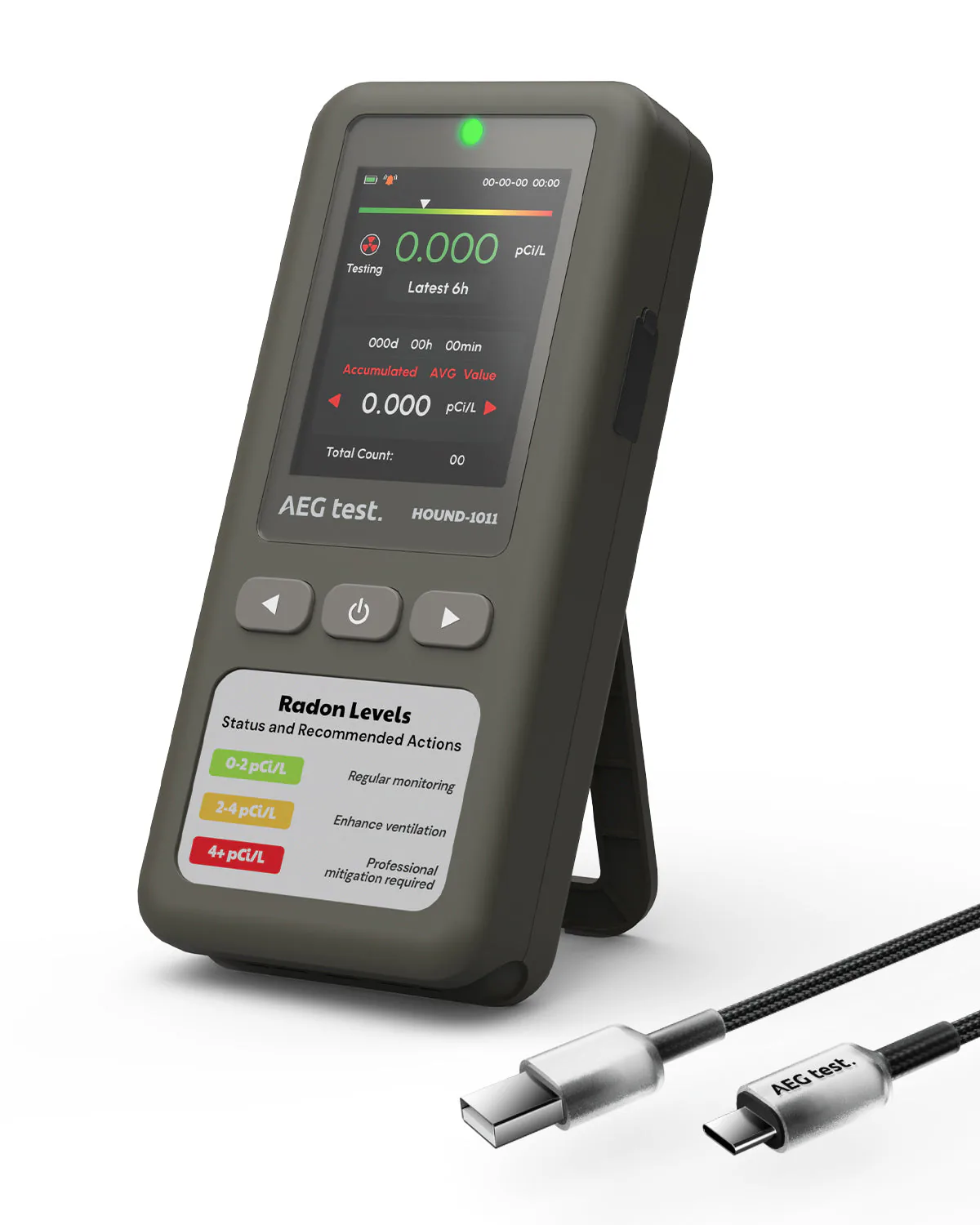
MonitorAEGTEST
HOUND-1011 rechargeable radon detector with a screen
- C-NRPP 2024/25: Not included
- Battery
- Alarm
- Screen
Method: Semiconductor sensor
First reading: Within 6 hours
Aranet
Battery digital radon monitor with an e-ink screen
Best for you if
Skip it if
Photos: Aranet
 (opens in a new tab)Check price on Amazon (opens in a new tab)
As an Amazon Associate, Radon411 earns from qualifying purchases.
Amazon and the Amazon logo are trademarks of Amazon.com, Inc. or its affiliates.
See ratings and reviews on Amazon (opens in a new tab)As Aranet states it
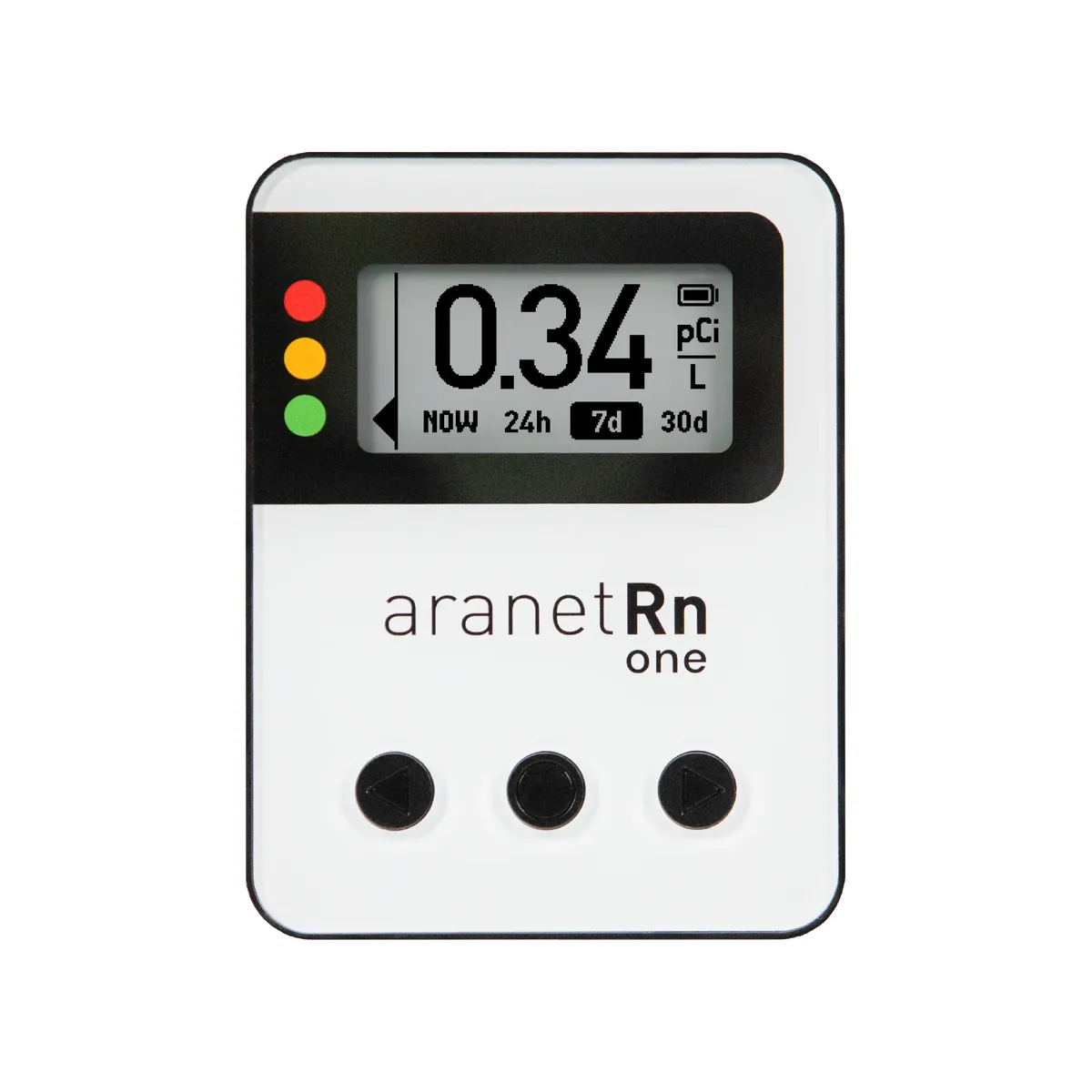
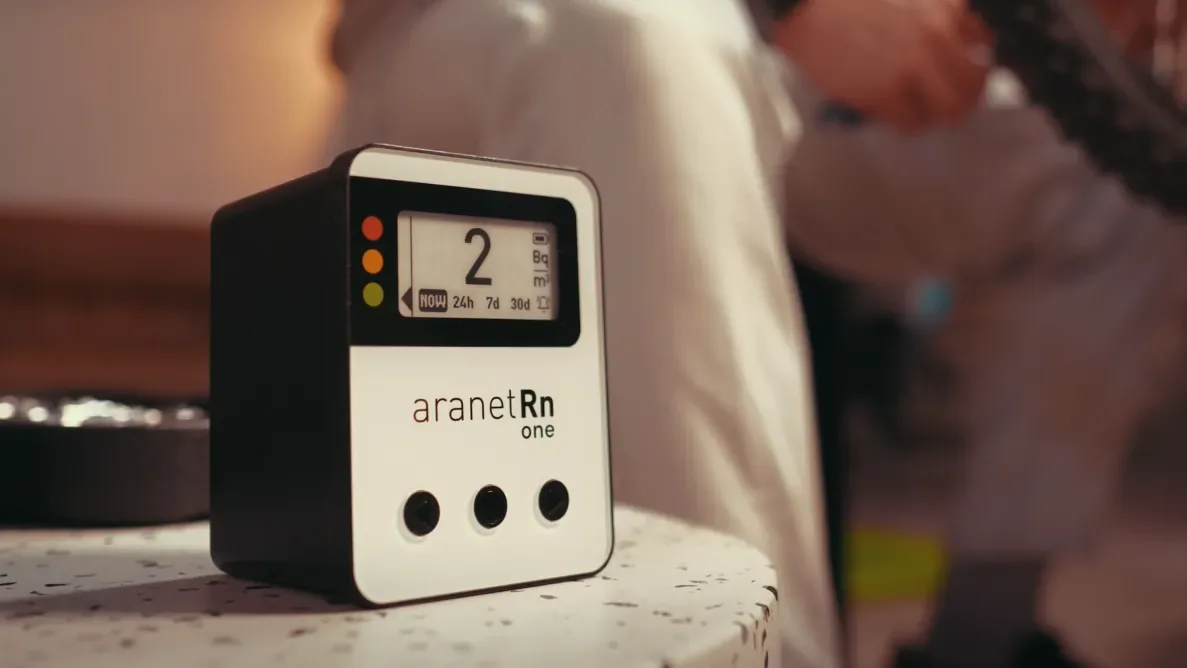
The Aranet Radon One is a battery-powered, radon-only monitor from SAF Tehnika's Aranet line: an ionization chamber that counts alpha decay events, an always-on E-Ink screen, and Bluetooth to the free Aranet Home app, with no Wi-Fi or outlet needed. It was not included in C-NRPP's 2024/25 evaluation.
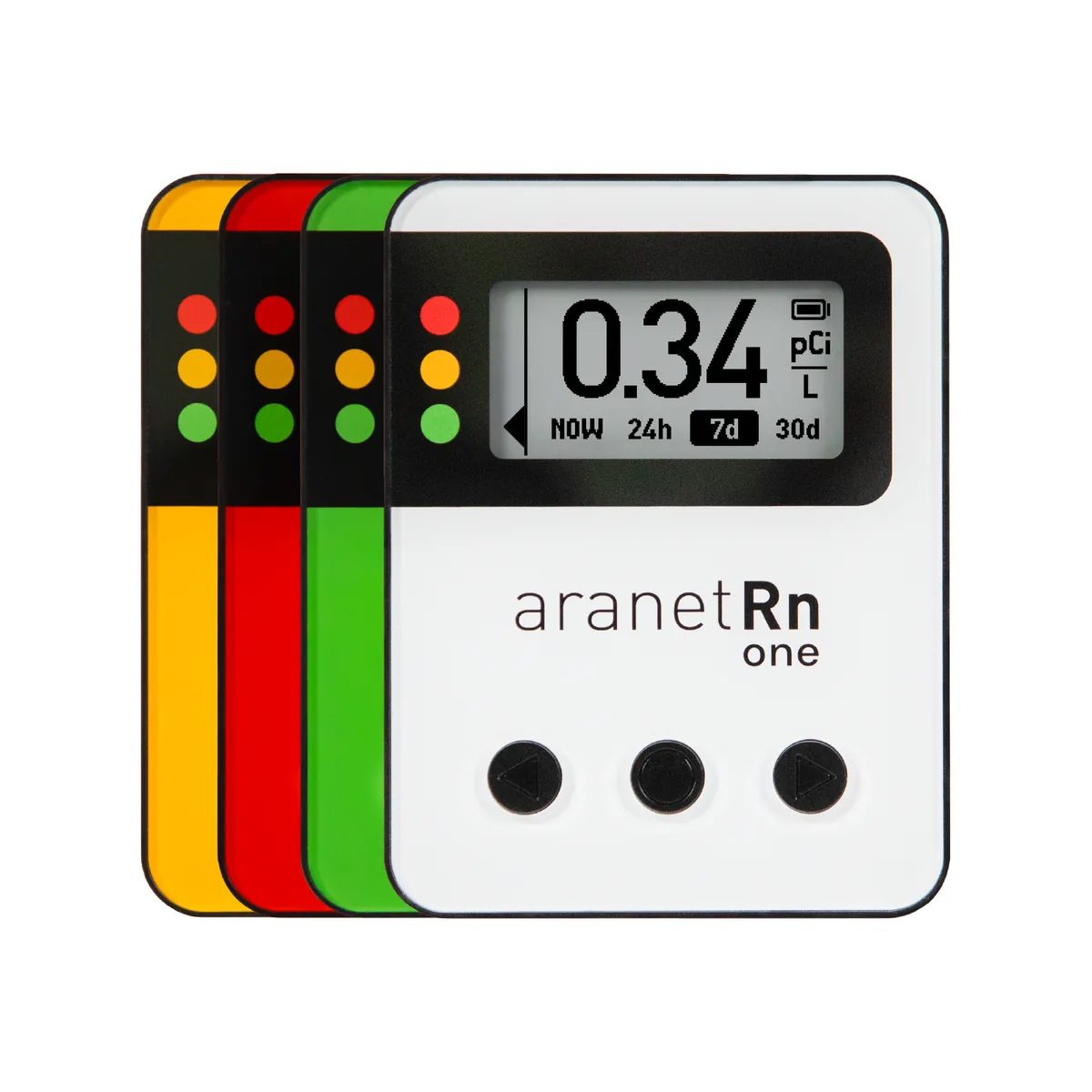
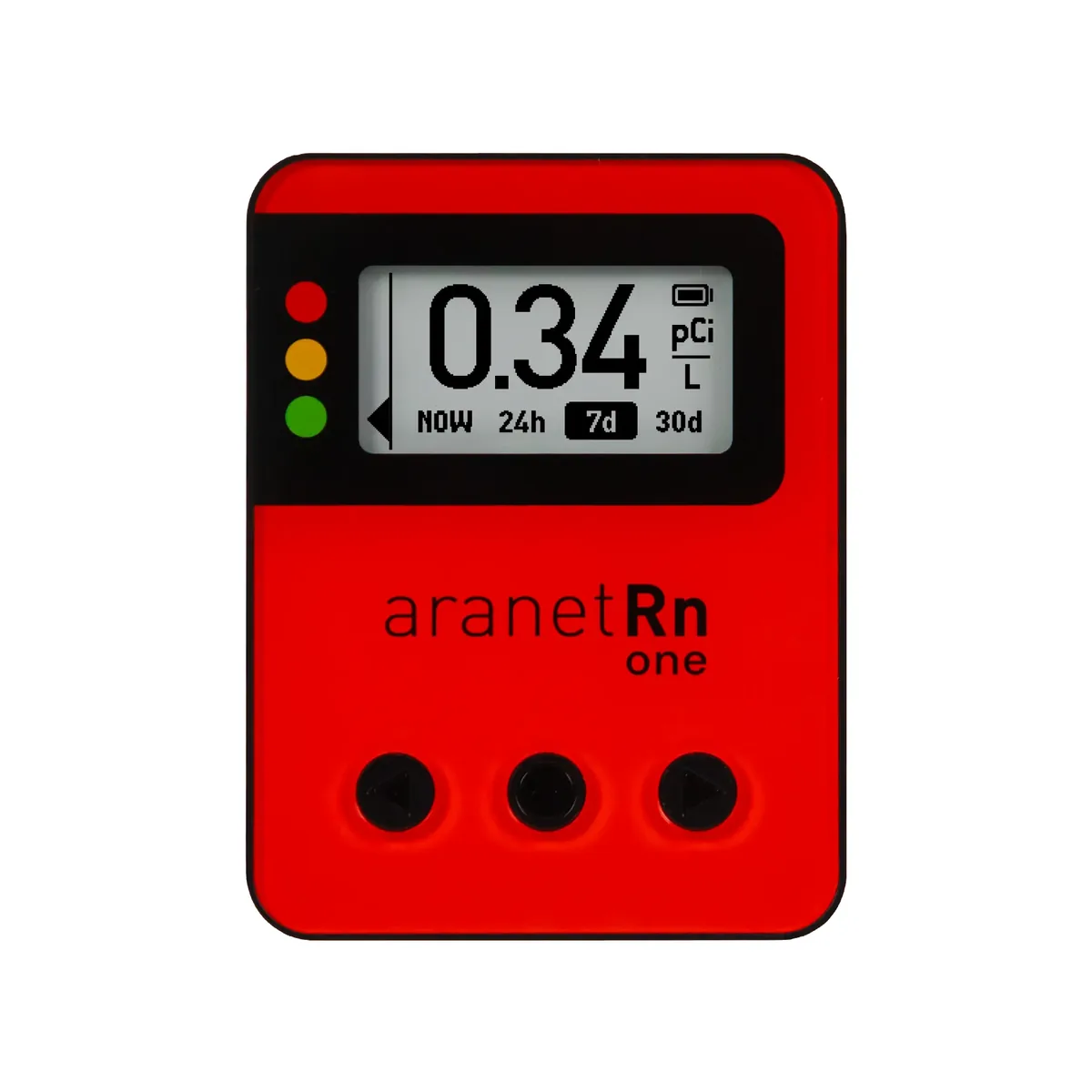
Aranet's datasheet lists two AA alkaline batteries in the package with the monitor. The monitor measures 4.13 by 3.15 by 2.80 inches, weighs 7.8 oz with batteries, has a polycarbonate case rated IP20, and comes with a white, green, yellow or red front panel.
In the box and running costsHow it works
The sensor, the sampling and the readings, then who has checked it
In our words, from the maker's documents
Aranet's datasheet describes the detector as alpha decay event detection using an ionization chamber, filled by air diffusion. There is no pump: air drifts into a 152 cm³ chamber through a spunbound polyester filter that keeps out radon's decay products, and the sensor counts the alpha particles released as radon decays. The datasheet rates its efficiency at 1 count per minute at 2.7 pCi/L.
The same table says plainly what the sensor does not do: it has no radon and thoron discrimination, so it cannot tell radon from thoron, a related gas. Aranet also warns that the device is sensitive to static electricity, and that rubbing it can briefly add false readings of higher radon, so it is worth handling it gently.
A first number appears about 10 minutes after the batteries go in, and Aranet says it takes 1 hour to reach full measurement accuracy. The Back and Forward buttons move the screen between a 10-minute reading and 24-hour, 7-day and 30-day averages. Aranet states its accuracy for those averages; for the current reading, its datasheet says accuracy depends on the radon concentration.
The screen is E-Ink, which holds its image without power and is the main reason for the long battery life. It shows the radon level, the averaging period, the battery level, the units and the buzzer status, with a colored bar for the radon level: green under 2.7 pCi/L, yellow from 2.7 to 8.1 pCi/L and red above 8.1 pCi/L. Those defaults follow World Health Organization reference levels, and Aranet says you can change the thresholds in the app.
Aranet's calibrated range is 0 to 108.10 pCi/L (0 to 4,000 Bq/m³), at a resolution of 0.02 pCi/L. The device can display values up to 214 pCi/L, but Aranet says the listed accuracy is not guaranteed above its calibrated range. Units switch between pCi/L and Bq/m³ in the device settings. The monitor works on its own; Bluetooth to the Aranet Home app adds history, trend charts and alerts, and the device keeps 30 days of history for the app to collect.
The buzzer, which Aranet's default settings list as audio sound alarm notifications, ships switched off; it is switched on or off in the device's own menu or in the Aranet Home app, and an icon on the screen shows when it is on. In the app, Aranet says that with the buzzer on the device beeps each time a measurement is over the radon limit, 300 Bq/m³ (8.1 pCi/L) by default; the warning thresholds can be changed in the app's advanced settings.
Aranet's own statements, attributed
These are Aranet's own statements, attributed to it. They are not our findings, and we have not tested this product ourselves.
C-NRPP 2024/25, recalls and studies
The Canadian National Radon Proficiency Program's 2024/25 comparison of consumer monitors did not include Aranet Radon One. That is a fact about which devices took part, not a finding about this one: no result from that program exists for it either way.
C-NRPP is the Canadian National Radon Proficiency Program. Its 2024/25 results were published in May 2025.
Aranet Radon One
Check price on Amazon (opens in a new tab)Specifications
Every figure as the maker states it
Aranet's datasheet lists two AA alkaline batteries in the package with the monitor. The monitor measures 4.13 by 3.15 by 2.80 inches, weighs 7.8 oz with batteries, has a polycarbonate case rated IP20, and comes with a white, green, yellow or red front panel.
There is no lab fee and the Aranet Home app is free. The ongoing cost is two AA batteries; Aranet says lithium cells last longer than alkaline in its own extrapolation, and that turning Bluetooth on shortens battery life, as does its extended Bluetooth range setting. There is no subscription.
Fit and setup
The fit, then setup and placement as the guidance asks
Good fit if, and look elsewhere if
Good fit if
Look elsewhere if
4 steps
How C-NRPP says to use any consumer monitor
For where any radon test or monitor should sit in a home, see where to place a radon test.
Compare
The same three rows for each, and the one difference that matters
This page
Aranet Radon One
This page: The Aranet Radon One is a battery-powered, radon-only monitor from SAF Tehnika's Aranet line: an ionization chamber that counts alpha decay events, an always-on E-Ink screen, and Bluetooth to the free Aranet Home app, with no Wi-Fi or outlet needed.
Airthings
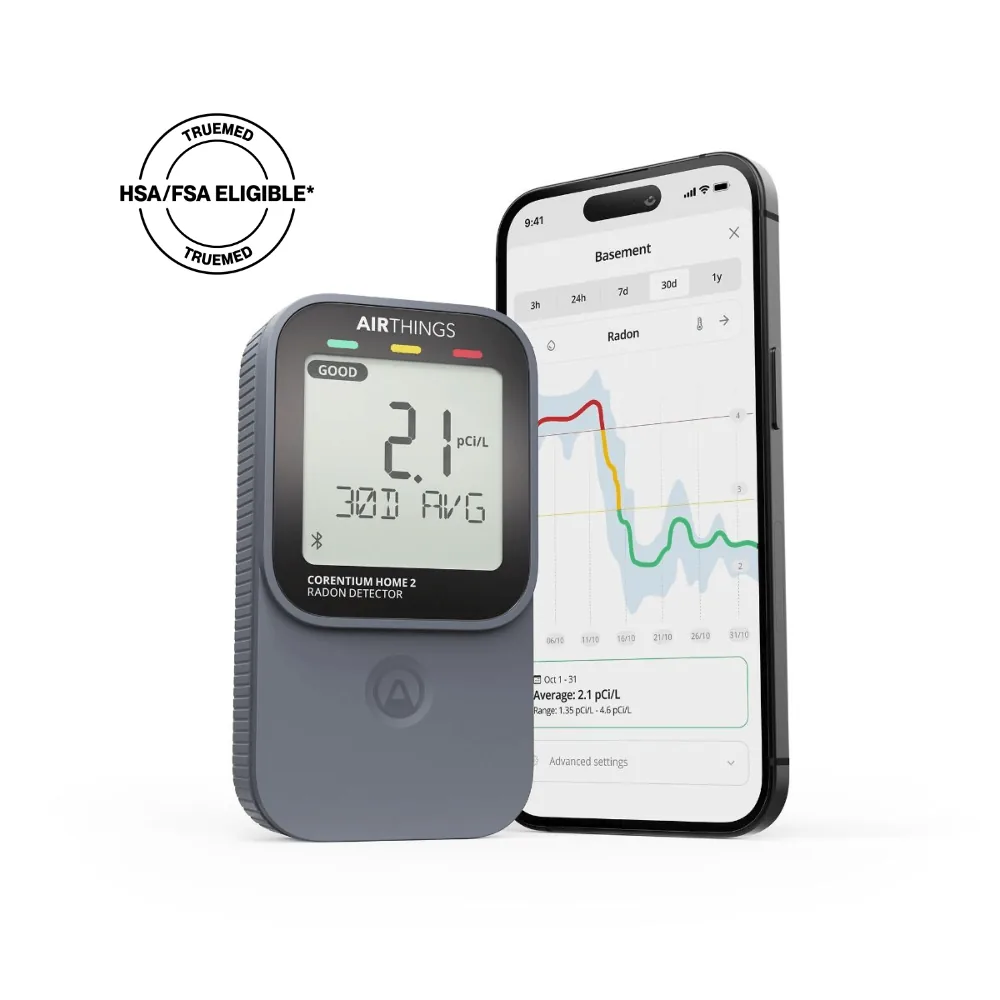
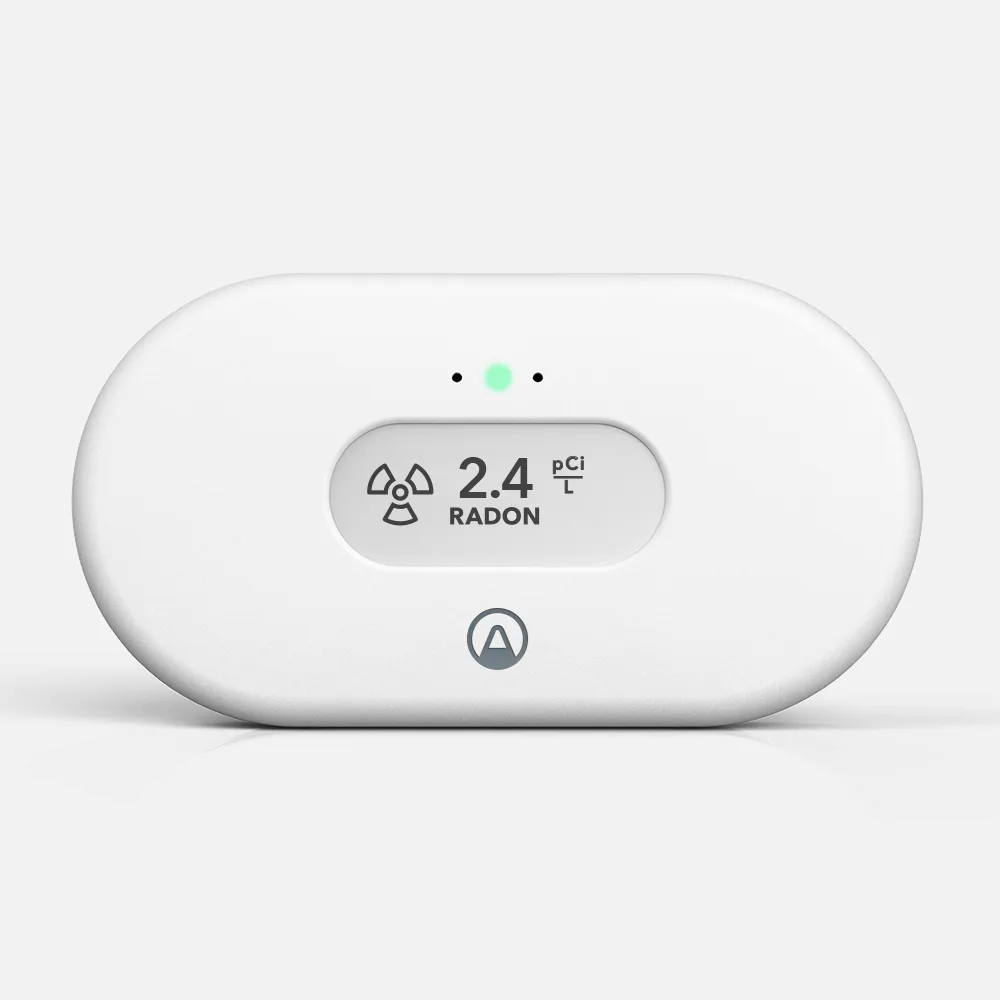
The difference: Also battery-powered with Bluetooth, but counts radon by alpha spectrometry, samples every 60 minutes and adds temperature and humidity.
Aranet
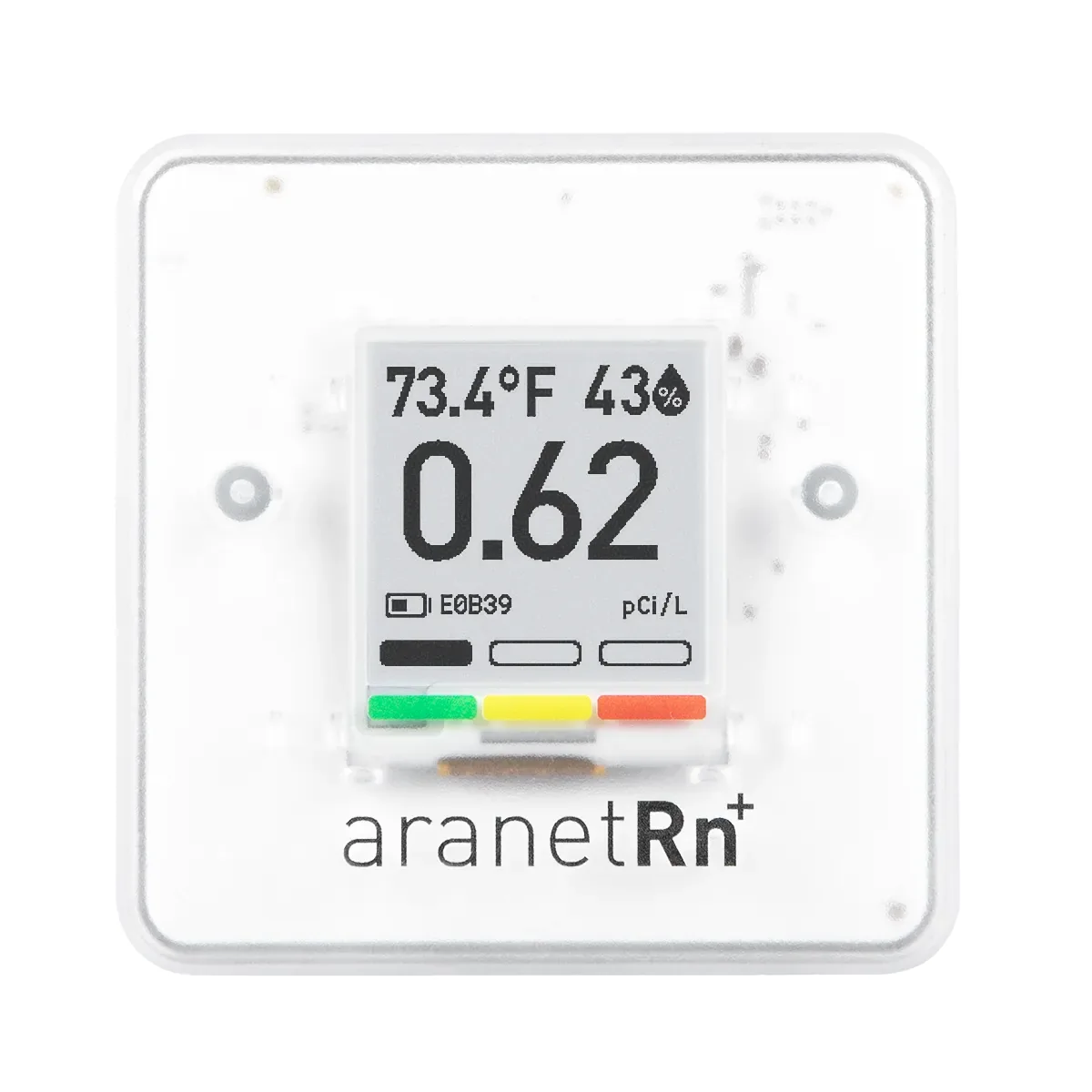
The difference: Aranet's other radon monitor: the same kind of ionization chamber with temperature and humidity added, a stated ±8% for its averages, and approved in C-NRPP's 2024/25 evaluation.
Ecosense
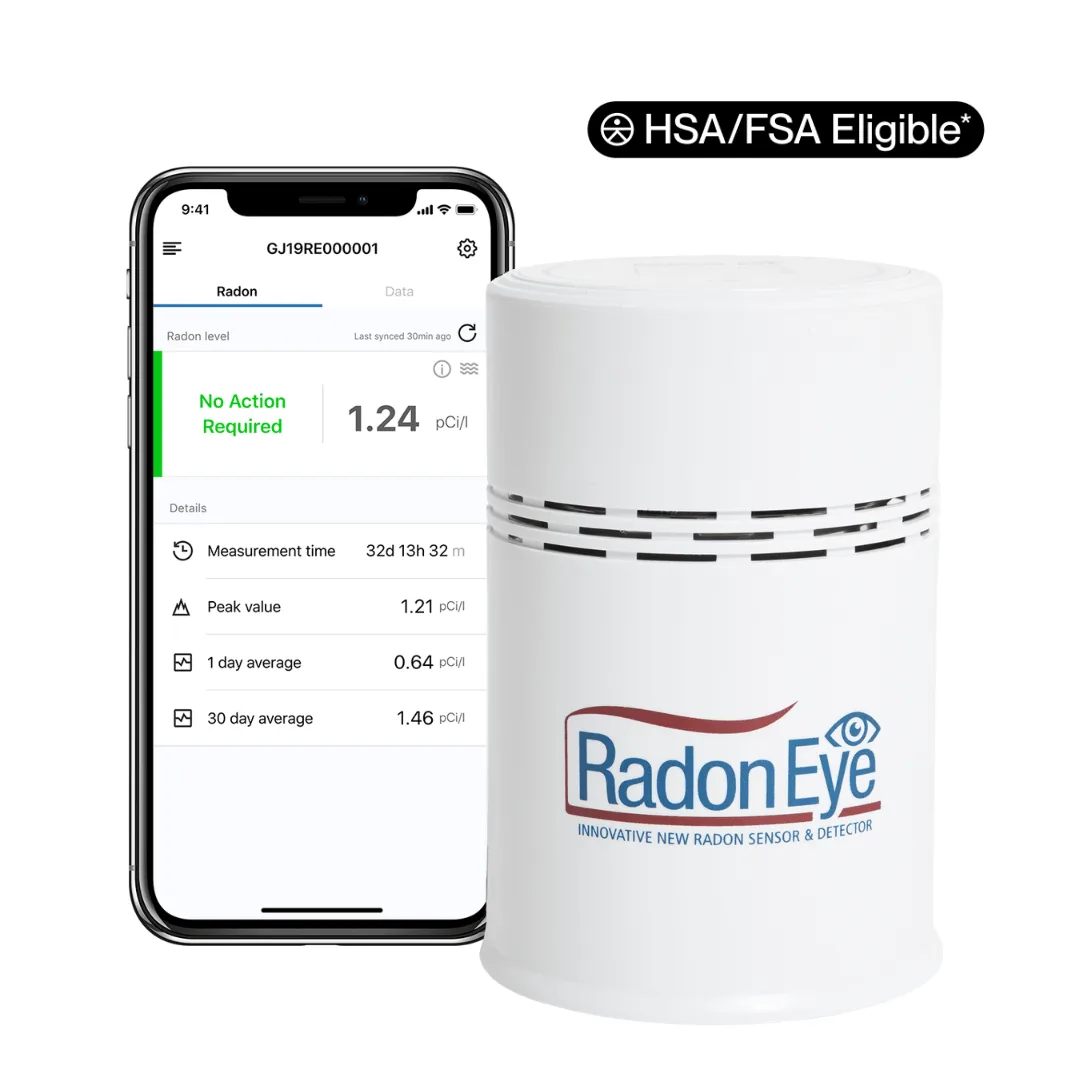
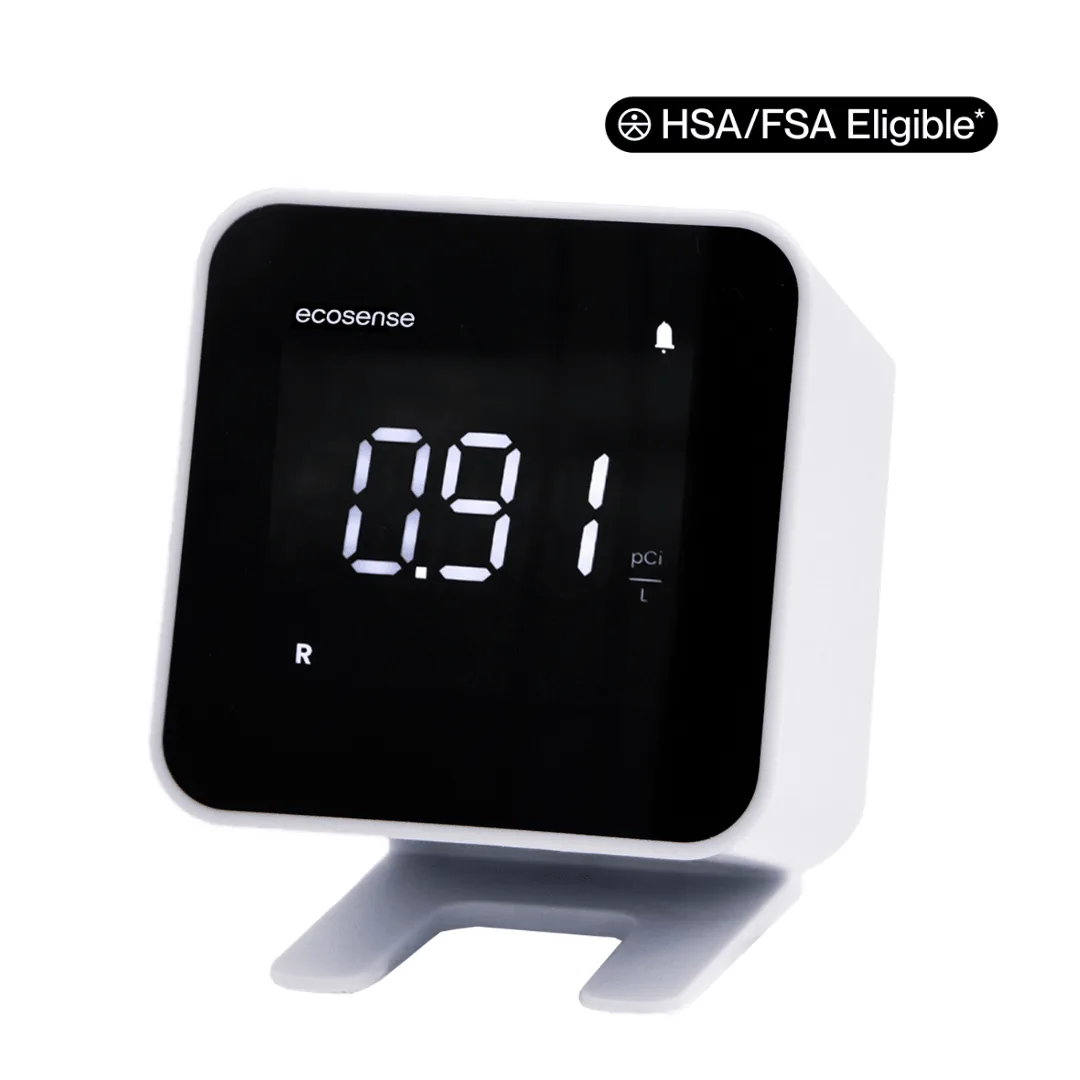
The difference: Plugs into the wall and counts with a pulsed ionization chamber, updating every 10 minutes; approved in C-NRPP's 2024/25 evaluation.
Compared with similar products: 1 of 4
MonitorAEGTEST
Method: Semiconductor sensor
First reading: Within 6 hours
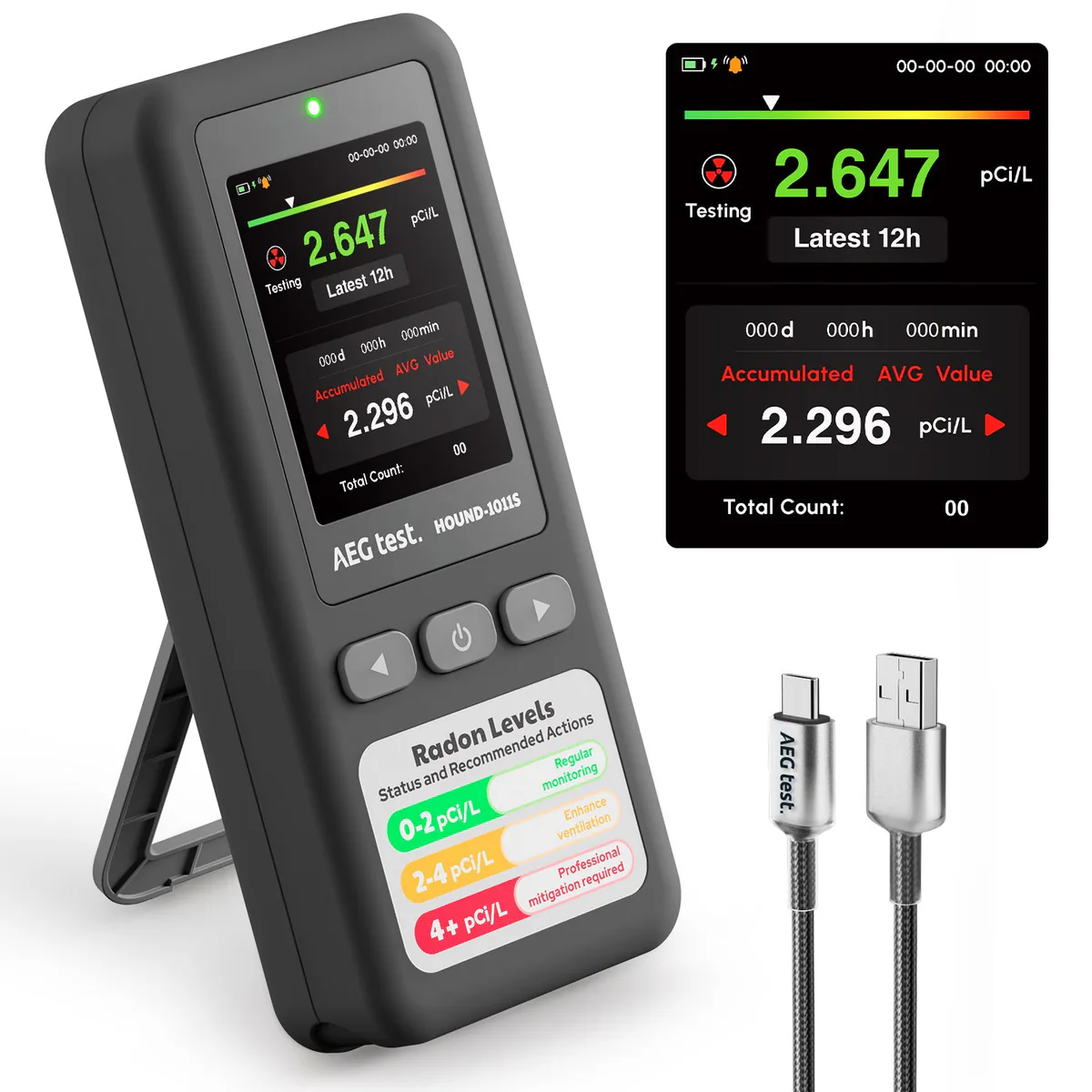
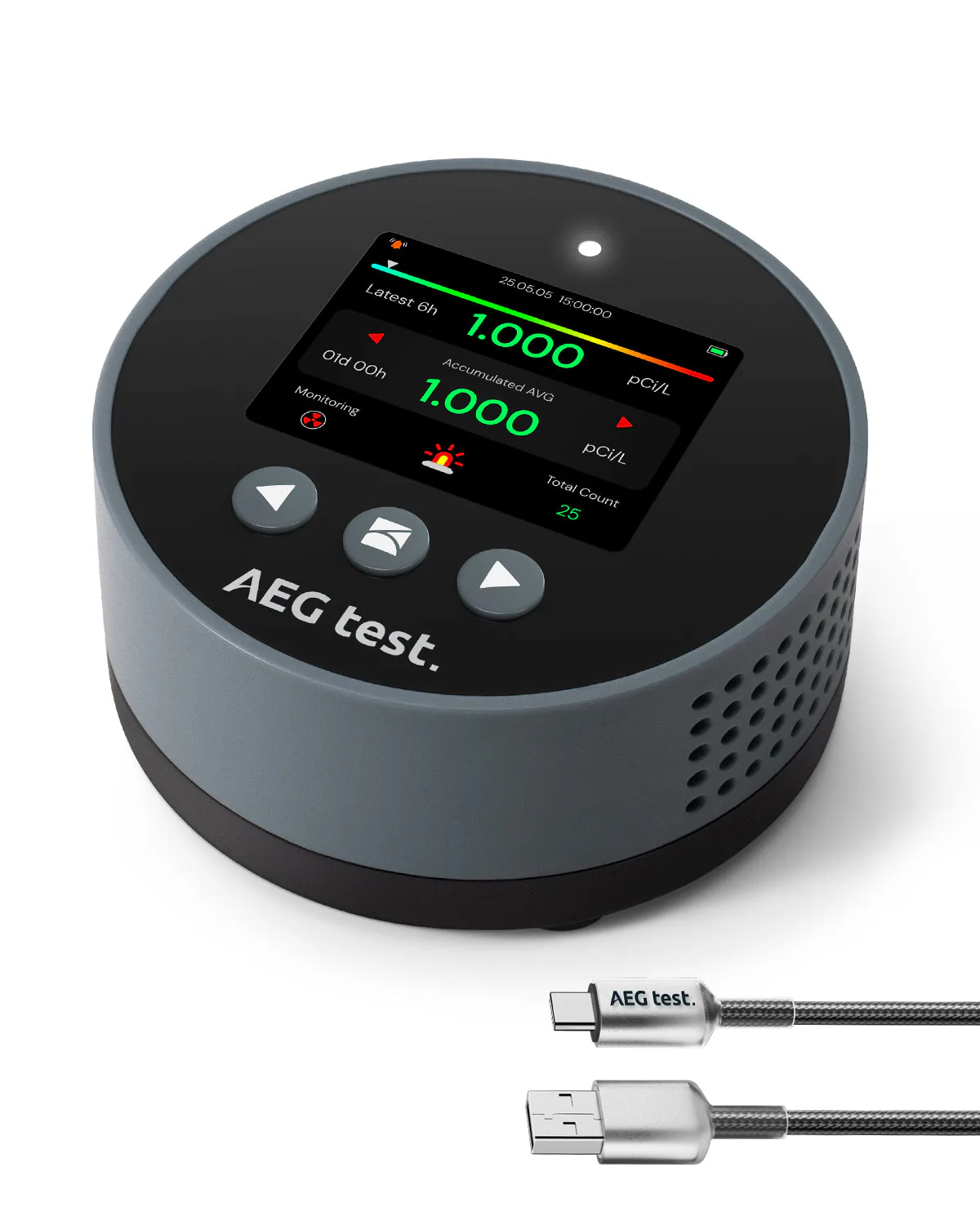
MonitorAEGTEST
Method: Semiconductor sensor
First reading: Within 12 hours
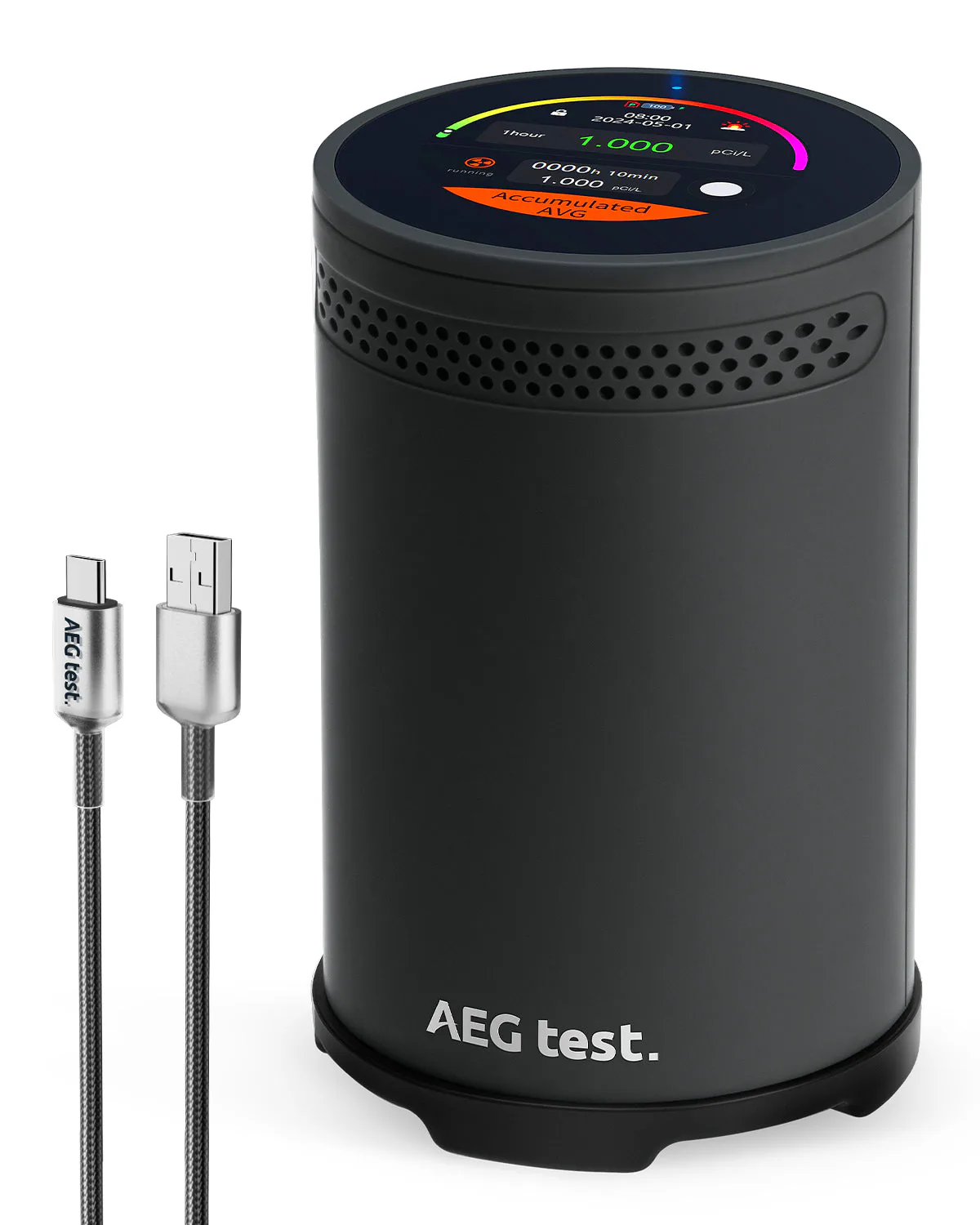
MonitorAEGTEST
Method: Semiconductor sensor
First reading: Within 6 hours
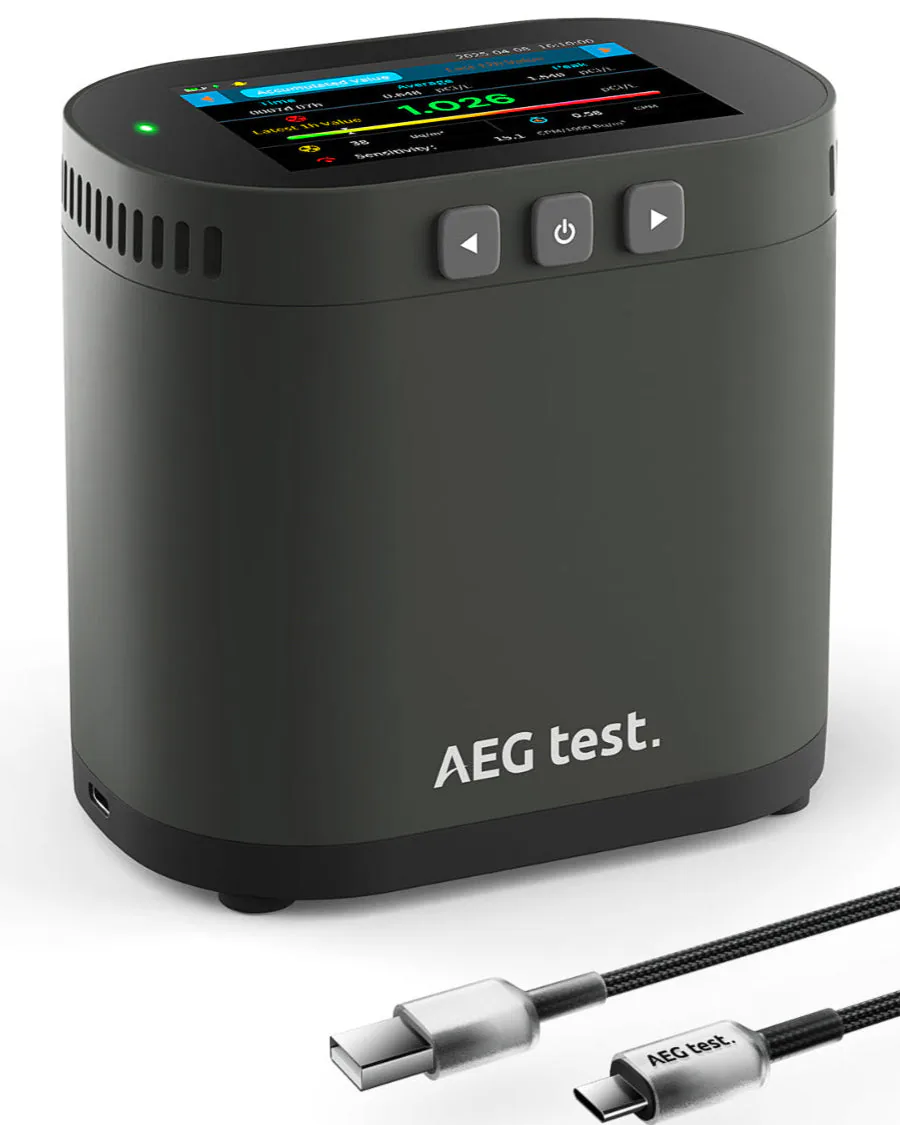
MonitorAEGTEST
First reading: Within 1 hour
MonitorAEGTEST
Method: Ion chamber
First reading: Within 10 minutes
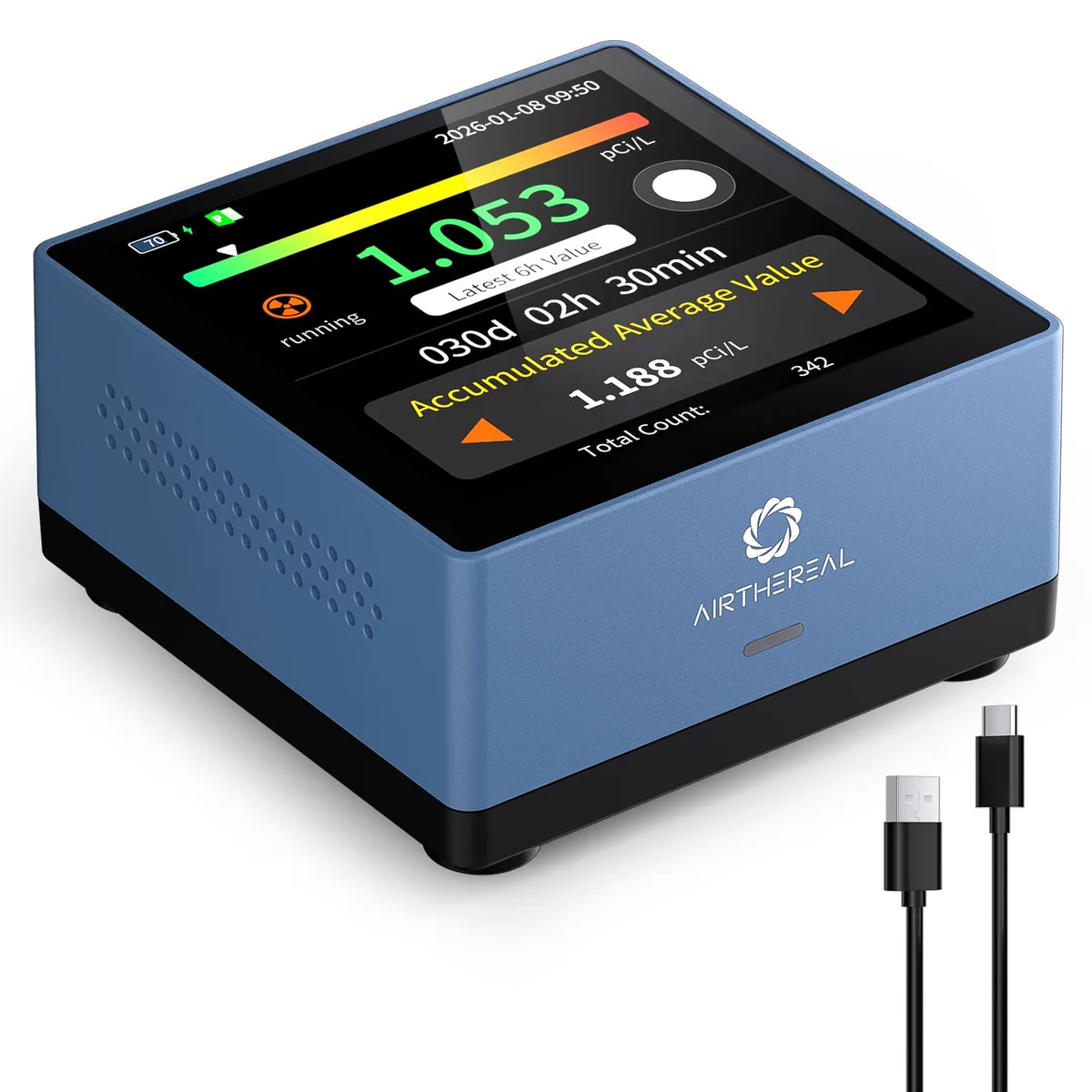
Monitor
Method: Semiconductor sensor
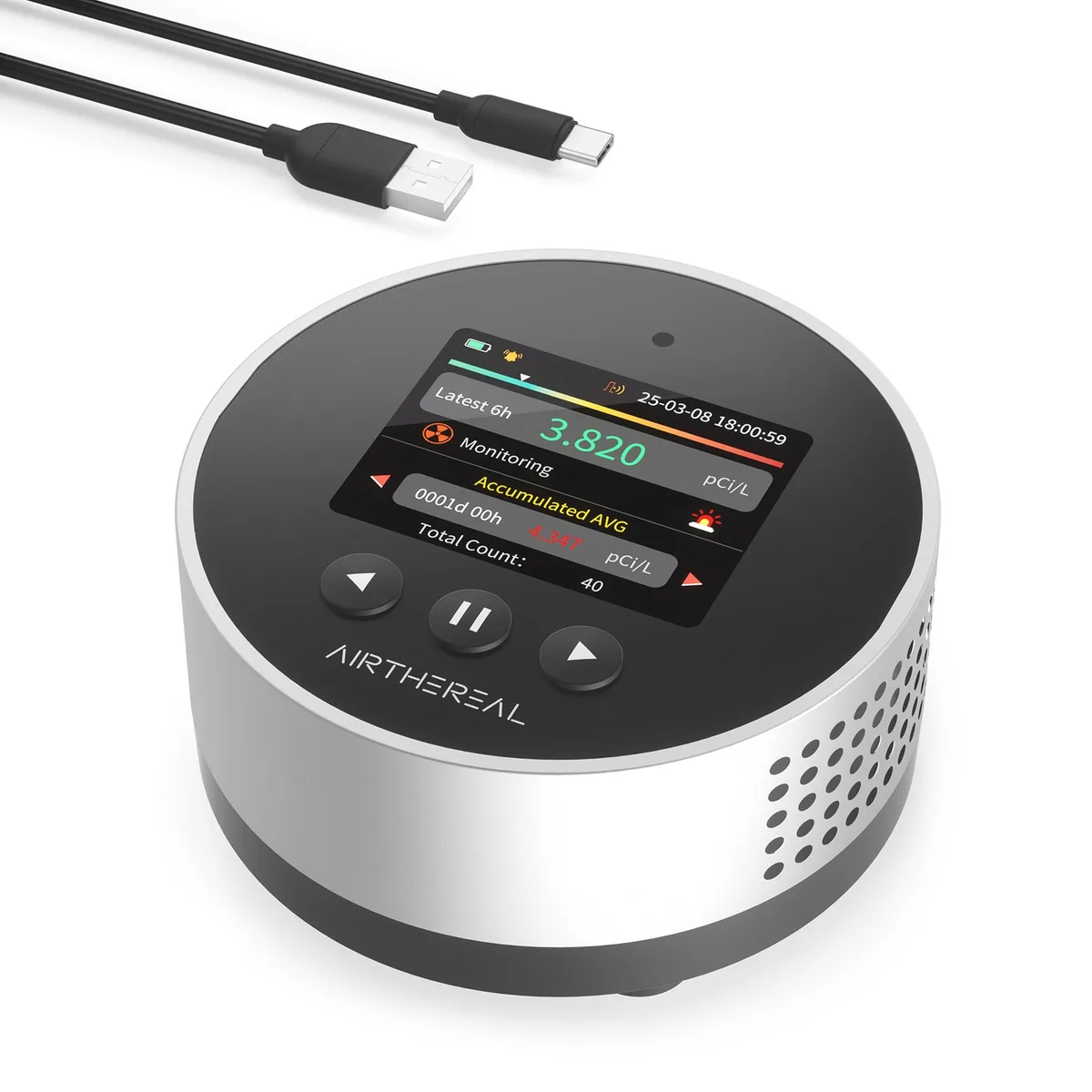
Monitor
Method: Semiconductor sensor
First reading: Within 6 hours
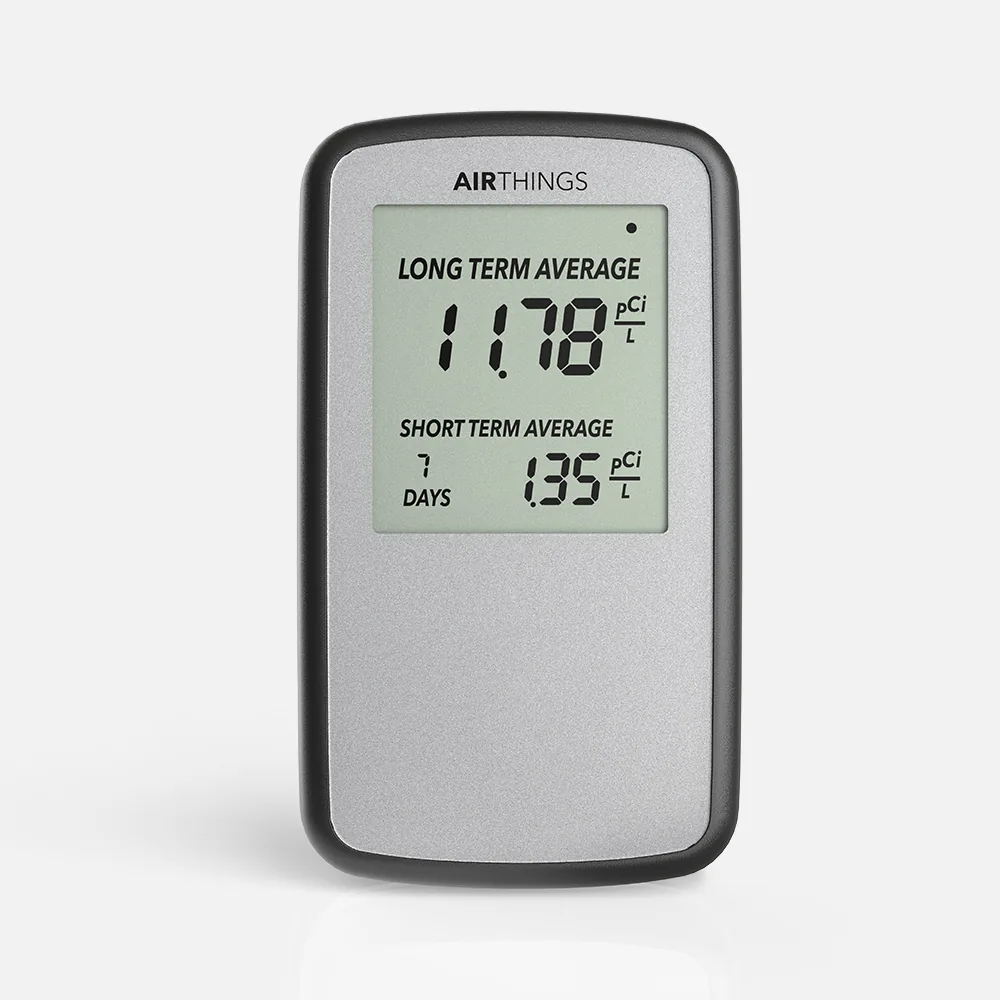
Monitor
Method: Alpha spectrometry
Monitor
Method: Alpha spectrometry
Readings: Every 60 minutes
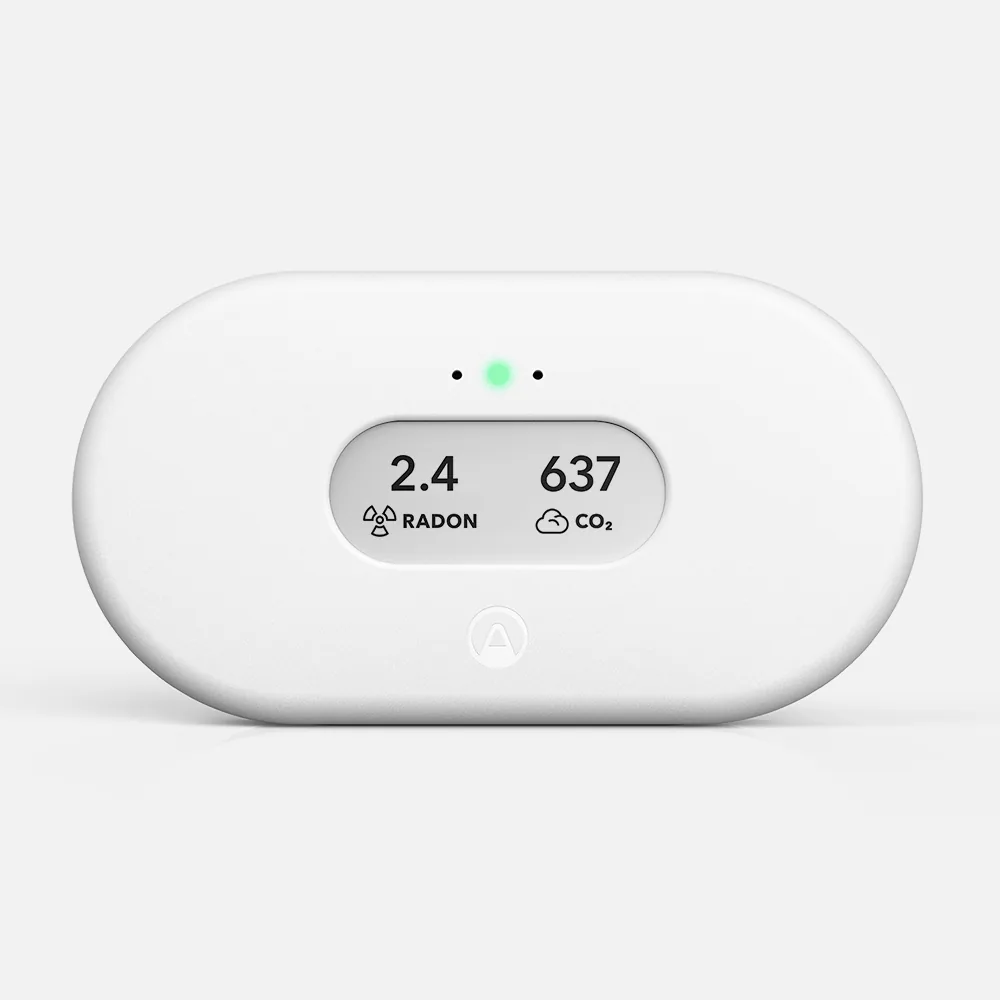
Monitor
Method: Alpha spectrometry
Monitor
Method: Alpha spectrometry
Readings: Every 60 minutes
Monitor
Method: Alpha spectrometry
Monitor
Method: Alpha spectrometry
MonitorAranet
Method: Ion chamber
First reading: Within 10 minutes
Monitor
Method: Ion chamber
First reading: Within 10 minutes
Monitor
Method: Ion chamber
First reading: Within 10 minutes
Monitor
Method: Ion chamber
First reading: Within 15 minutes
Monitor
Method: Ion chamber
First reading: Within 10 minutes
MonitorForensics Detectors
Method: Semiconductor sensor
First reading: Within 6 hours
Monitor
First reading: Within 5 minutes
Monitor
First reading: Within 5 minutes
Monitor
First reading: Within 5 minutes
MonitorINKBIRD
First reading: Within 24 hours
MonitorKidde
Method: Semiconductor sensor
First reading: Within 12 hours
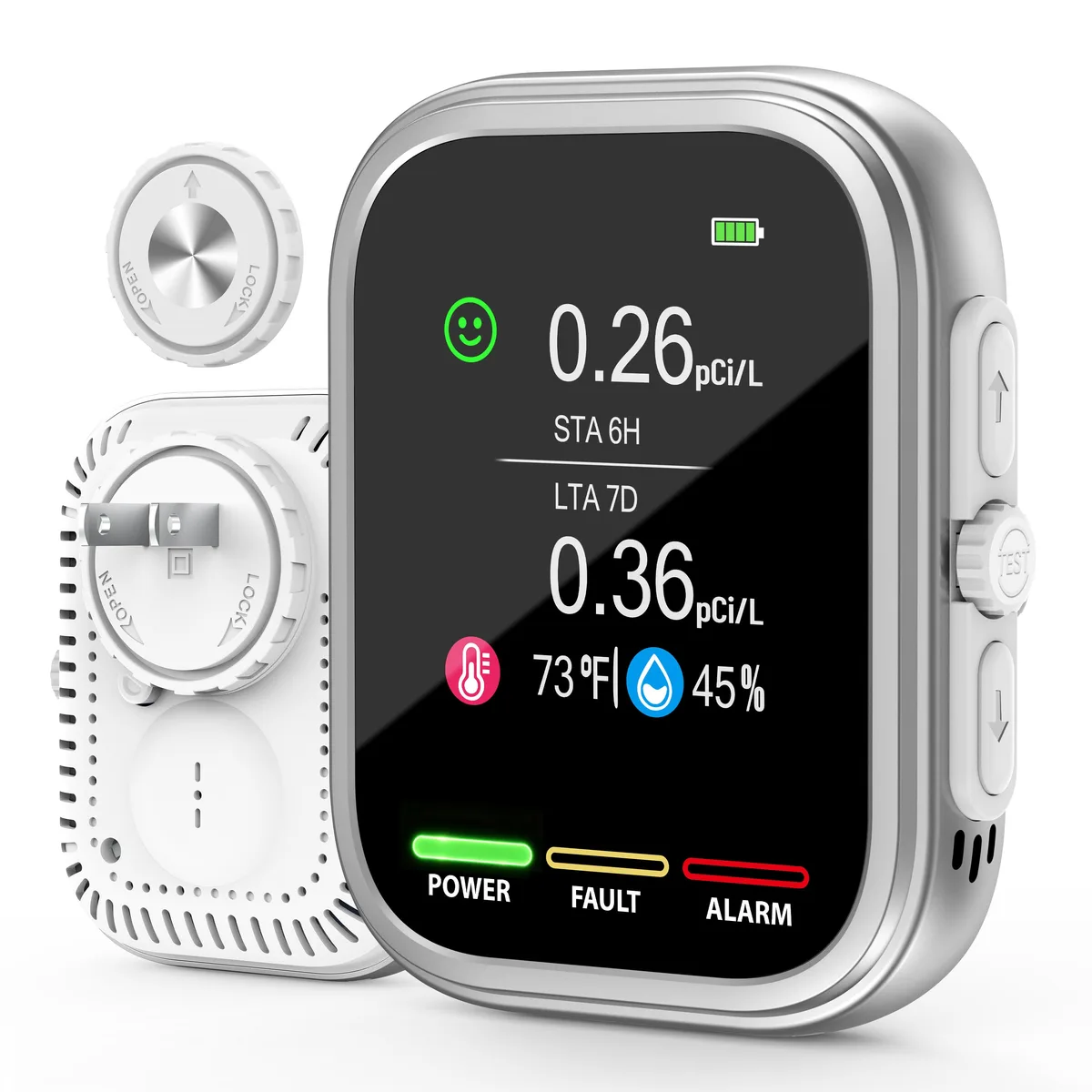
MonitorPYZYCKYH
Method: Semiconductor sensor
First reading: Within 6 hours
MonitorSafetySiren
First reading: Within 48 hours
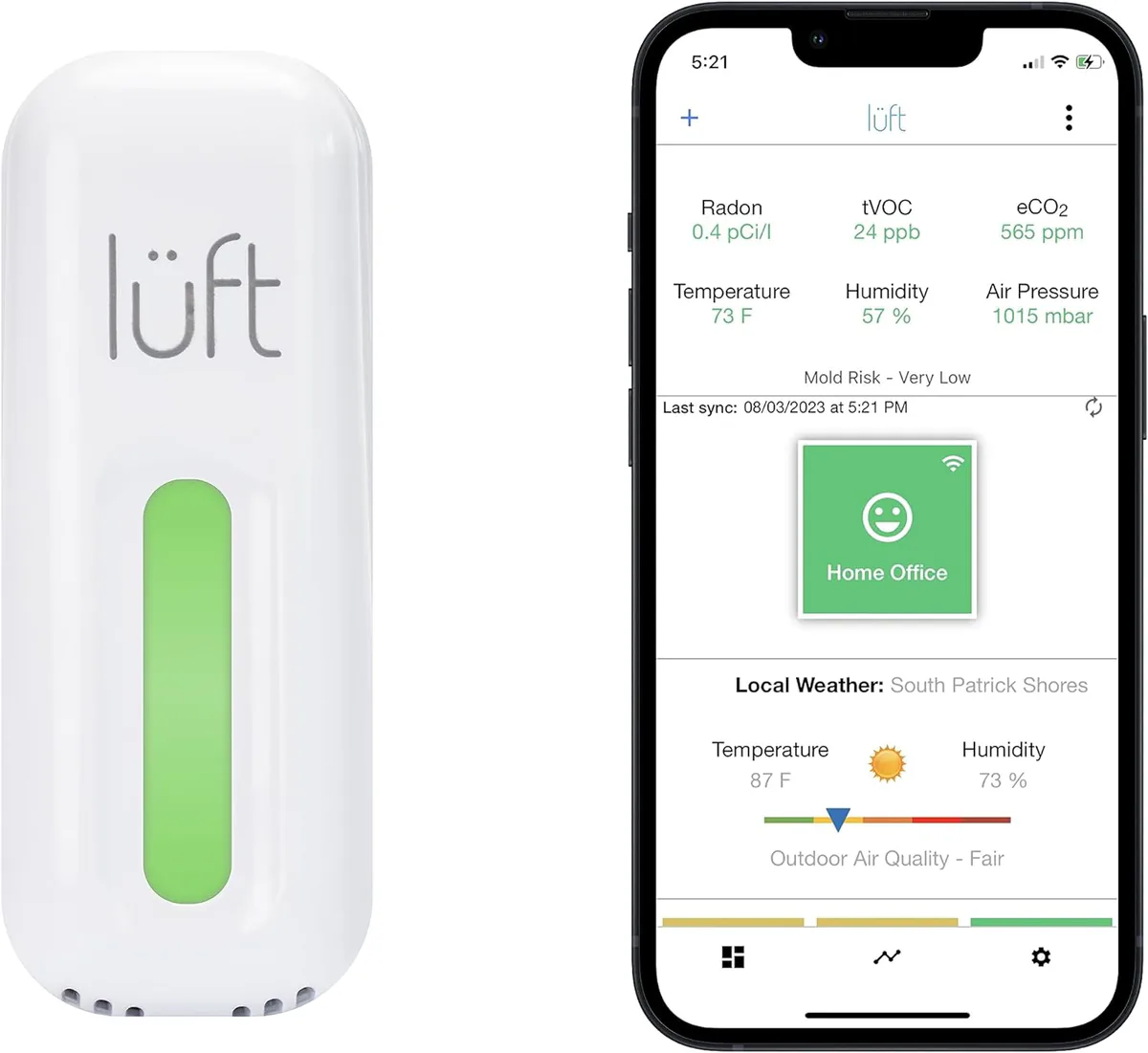
Monitor
First reading: Within 90 minutes
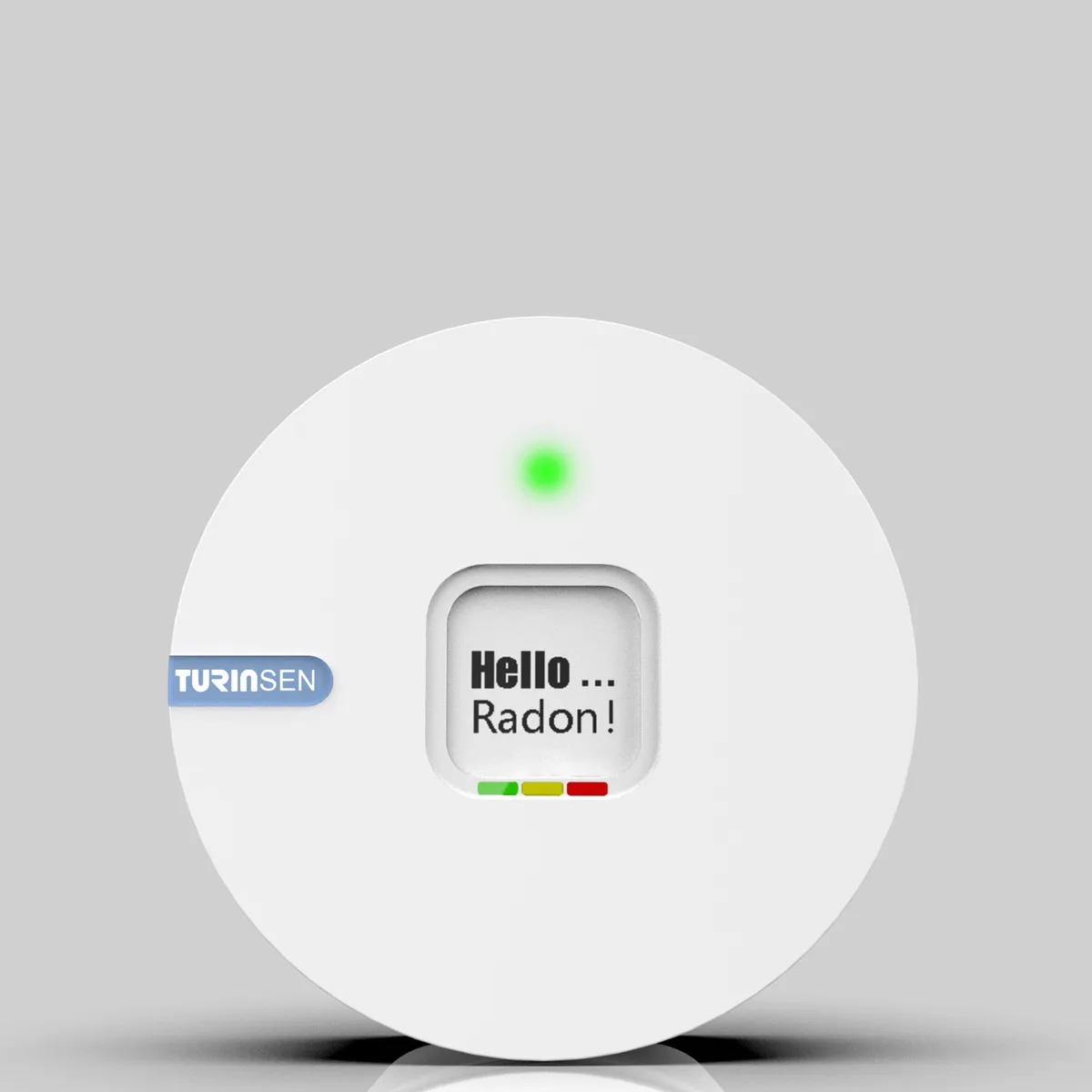
Monitor
Method: Alpha spectrometry
First reading: Within 24 hours
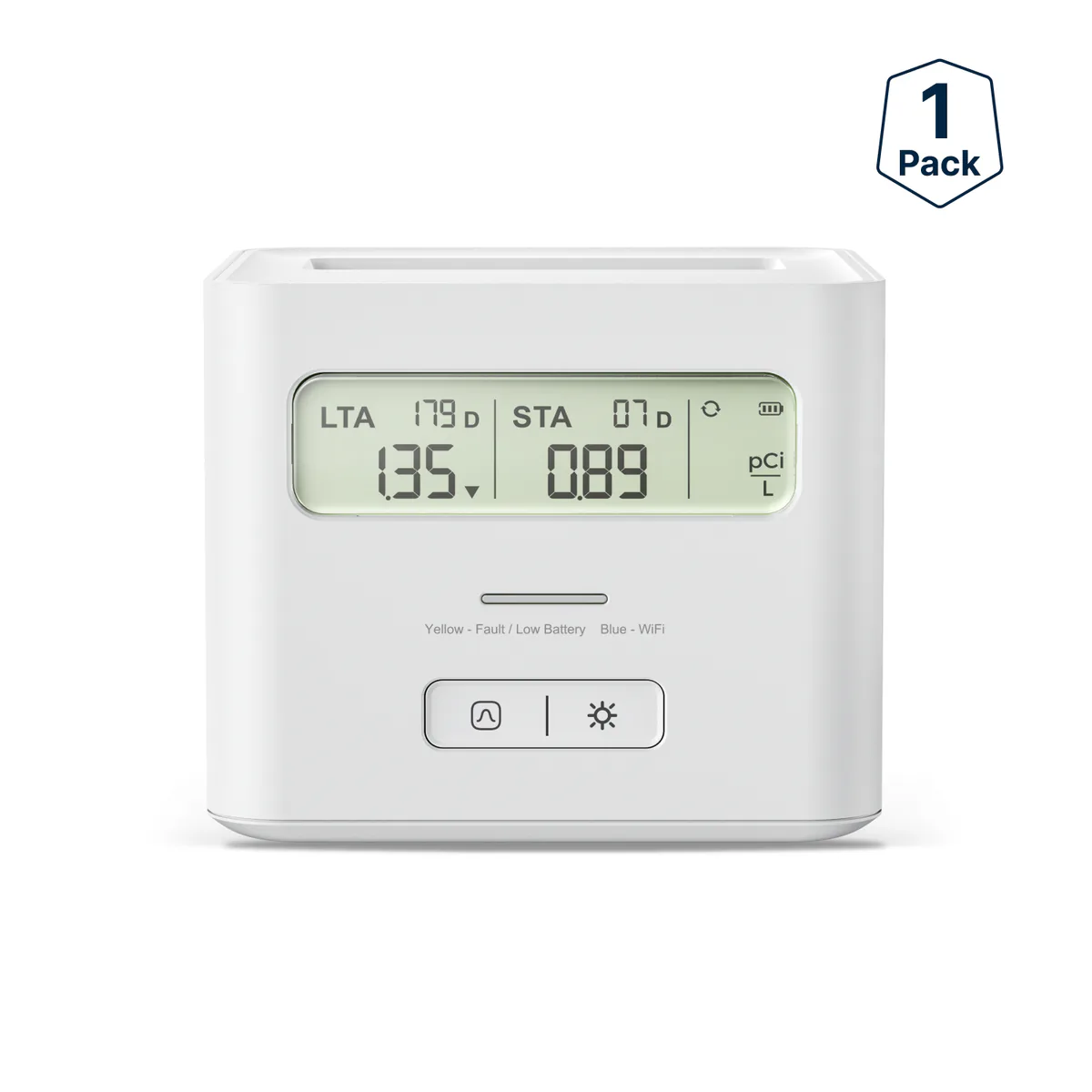
MonitorX-Sense
Method: Alpha spectrometry
First reading: Within 24 hours
MonitorX-Sense
Method: Alpha spectrometry
First reading: Within 24 hours
MonitorX-Sense
Method: Alpha spectrometry
First reading: Within 24 hours
More home radon monitors: 1 of 31
Questions
6 questions about the Aranet Radon One, answered
It was not included in C-NRPP's 2024/25 consumer monitor evaluation, so there is no C-NRPP result for it either way. Aranet's other radon monitor, the Radon Plus, was approved in that evaluation under the name Aranet RN+.
Both use an ionization chamber and an E-Ink screen on two AA batteries. The Radon Plus also measures temperature, humidity and air pressure, and Aranet states ±8% for its averages against ±10% for the Radon One. Only the Radon Plus took part in C-NRPP's 2024/25 evaluation.
Aranet says the first measurement appears after 10 minutes and that full accuracy takes 1 hour. The 24-hour, 7-day and 30-day averages build up as the device runs.
No. Aranet says it measures and displays radon entirely on its own. Bluetooth links it to the Aranet Home app on a phone nearby for history, trend charts and alerts.
Aranet's product page says up to 7 years on two AA batteries. Its datasheet breaks that down by extrapolation: 5.0 years with Bluetooth off and 3.4 years with it on for alkaline cells, and 7.0 and 4.7 years for lithium, and says the figures are descriptive, not a guarantee.
By default, green is under 2.7 pCi/L, yellow is 2.7 to 8.1 pCi/L and red is above 8.1 pCi/L, following World Health Organization reference levels. The EPA's guidance in the United States is to fix a home at 4 pCi/L or more and to consider fixing between 2 and 4 pCi/L, so compare the long-term average with those figures too.
Updated October 8, 2026