
MonitorAEGTEST
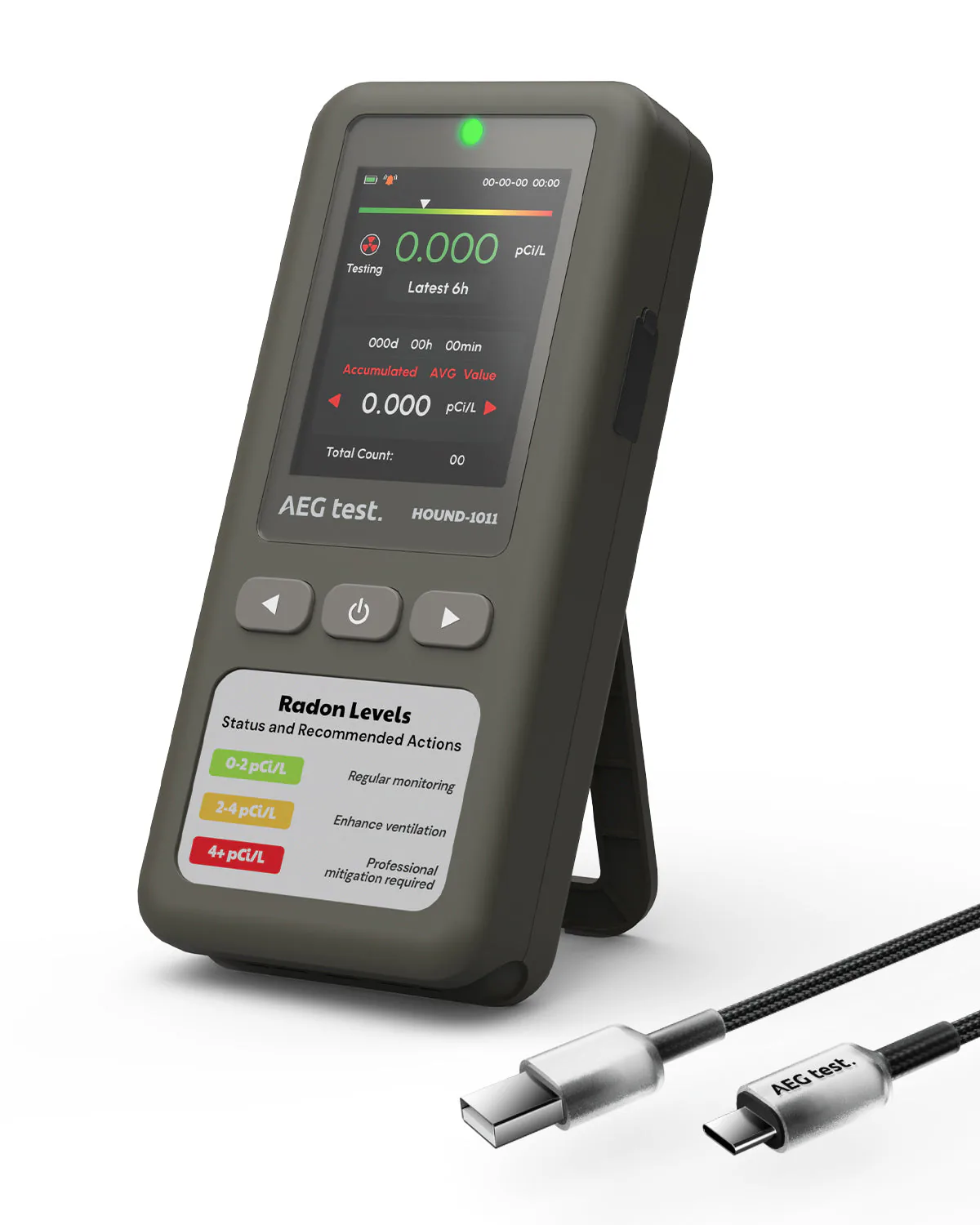
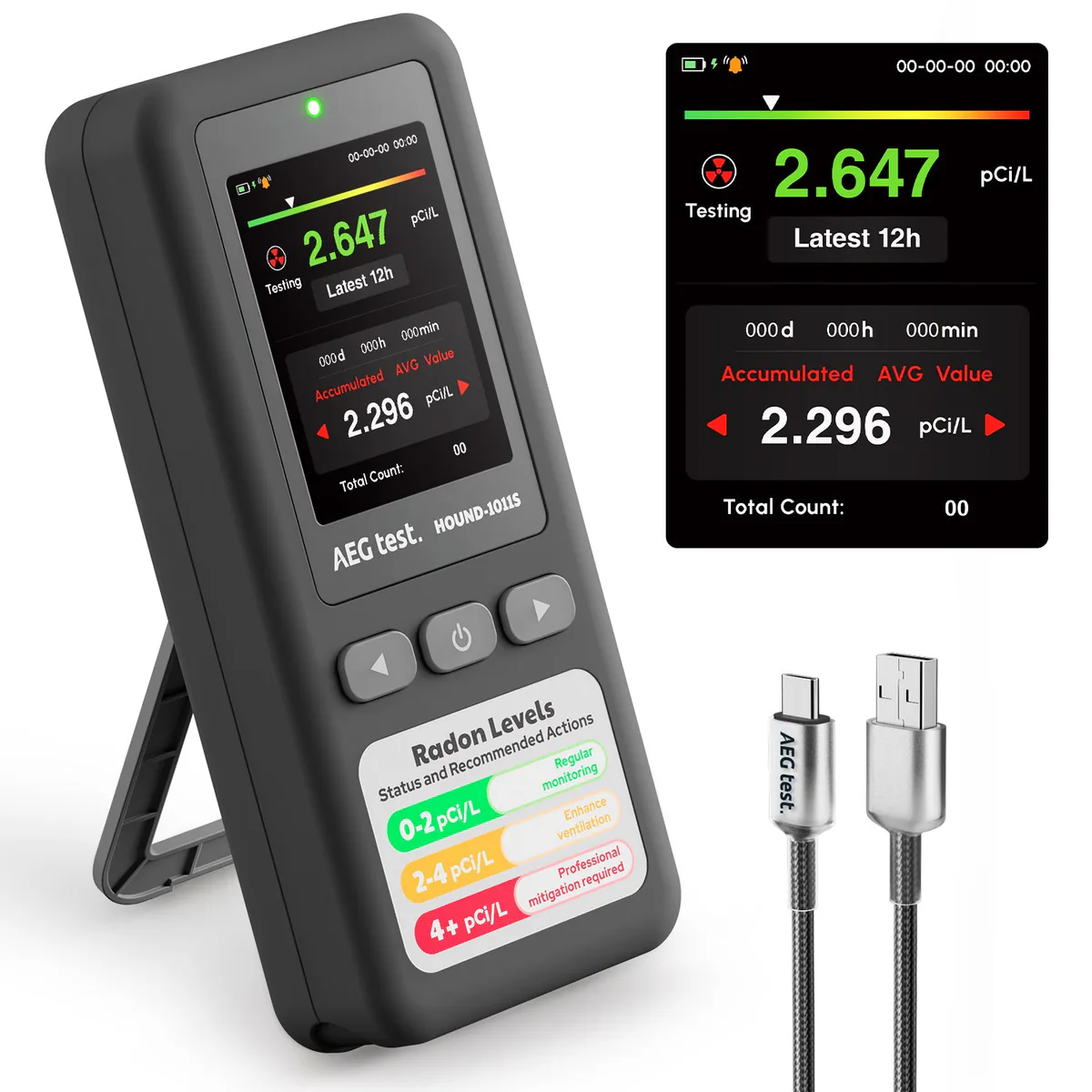
HOUND-1011 rechargeable radon detector with a screen
- C-NRPP 2024/25: Not included
- Battery
- Alarm
- Screen
Method: Semiconductor sensor
First reading: Within 6 hours
 GQ Electronics
USB-powered radon monitor with Wi-Fi
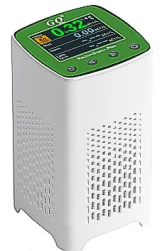
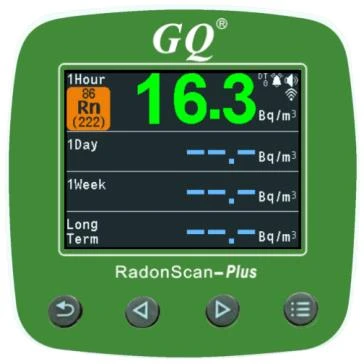
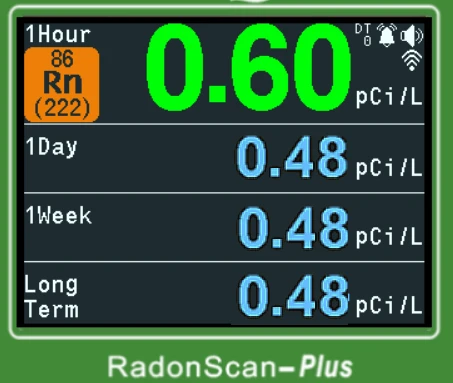
Photos: GQ Electronics
 (opens in a new tab)Check price on Amazon (opens in a new tab)
As an Amazon Associate, Radon411 earns from qualifying purchases.
Amazon and the Amazon logo are trademarks of Amazon.com, Inc. or its affiliates.
See ratings and reviews on Amazon (opens in a new tab)As GQ Electronics states it
The RadonScan-Plus is the Wi-Fi model in GQ Electronics' RadonScan family: a radon monitor with a color LCD that shows 1-hour, 1-day, 1-week and long-term averages, a buzzer and colored LEDs, powered over USB-C with no battery. GQ says it can send its readings over Wi-Fi to GQ's GMCmap website and a phone app. It was not included in C-NRPP's 2024/25 evaluation.
GQ's packing list has four items: the GQ Radon Detector main unit, a Type C USB cable, a Type A USB power adapter and a quick start guide. GQ does not publish the unit's size or weight.
In the box and running costsHow it works
The sensor, the sampling and the readings, then who has checked it
In our words, from the maker's documents
GQ's user guide covers three models together, the RadonScan, RadonScan-Plus and RadonPRO, and its January 2025 revision is described as revised for the RadonScan-Plus. It says the detectors use a high-sensitivity GQ Radon Gas Sensor: as radon passes through the sensor, it triggers an electrical signal that the processor registers. The sensor type and whether air reaches it by diffusion or a pump are not stated by the maker.
The specification table, shared by all three models, lists a range of 0.00 to 100 pCi/L (0.00 to 3700 Bq/m3), radon-222 as the gas registered, an alarm level settable from 0 to 99 pCi/L, a back-lit color LCD dot matrix display and 1 MB of flash memory for data storage. The only performance figure is a reproducibility of indication of 30%; GQ does not state an accuracy against a reference level, and no operating temperature or humidity range appears in the guide or on the store page.
GQ says the first background radon reading appears within about 5 minutes of powering on, and that radon data are collected continuously and passed to the processor every second. Its RadonScan-Plus store page says the unit logs data into internal memory every second. The main screen shows four averages, 1 Hour, 1 Day, 1 Week and Long-Term, and the guide's own advice is that readings vary with time and place, so averaging over a longer period gives the most accurate result. The averages are kept when the unit is turned off until you clear them with Reset Data.
What GQ says sets the Plus apart from the plain RadonScan is Wi-Fi. The guide says the RadonScan Plus and the RadonPro offer Wi-Fi, that the RadonPro and RadonScan-Plus can submit data online, and that you can view real-time data on iOS or Android devices, with free online data storage. To do that you create an account on GQ's site, register a radon detector there to get a user ID and counter ID, enter them in the unit's Server settings (the default website is www.gmcmap.com, and you can enter your own server instead), connect to your network, and run Test Connection, which returns "Successful" when data is sent correctly. A Period setting sets how often data is sent; the guide does not list its values.
The documents disagree on one point. The guide's own section on the GMCmap mobile app names only the RadonPRO model, while its overview and GQ's RadonScan-Plus store page describe a real-time app for the Plus, which the store page says you can download to a cellphone, with Wi-Fi that can be disabled or enabled. The store page also repeats a line about a radiation result in one minute; the guide lists radiation readings and the Geiger counter for the RadonPro only, and the RadonScan-Plus main display shows radon alone.
For alerts, the unit has a buzzer with an adjustable beep volume and front and rear LEDs. The guide lists the LED colors as green for normal readings, yellow for medium and red for high, and lets you choose which reading triggers the radon alarm. Pressing any key silences the beep until the reading drops below the threshold or the unit is powered off.
GQ Electronics's own statements, attributed
These are GQ Electronics's own statements, attributed to it. They are not our findings, and we have not tested this product ourselves.
C-NRPP 2024/25, recalls and studies
The Canadian National Radon Proficiency Program's 2024/25 comparison of consumer monitors did not include GQ Electronics RadonScan-Plus. That is a fact about which devices took part, not a finding about this one: no result from that program exists for it either way.
C-NRPP is the Canadian National Radon Proficiency Program. Its 2024/25 results were published in May 2025.
Specifications
Every figure as the maker states it
GQ's packing list has four items: the GQ Radon Detector main unit, a Type C USB cable, a Type A USB power adapter and a quick start guide. GQ does not publish the unit's size or weight.
A warranty term for the radon detectors is not stated by the maker. GQ's store policy says products are warranted for a specified period listed by type, but the list covers only adaptors, components and installed batteries (21 days) and programmers (365 days), and it voids the warranty for a product that has been tampered with. Its store policies offer a refund within 14 days of receipt, excluding shipping, and the Shopify refund policy asks you to report a defective or damaged item on arrival.
There is no lab fee and no battery: the RadonScan-Plus runs from its USB power adapter, drawing 25 mW to 125 mW according to GQ, and the Type-C port carries both power and data. GQ's guide says the GMCmap site is free to use and gives registered devices free history data storage, and neither the guide nor the store page mentions a subscription.
The guide includes a calibration menu for advanced users or professionals: you can enter up to three known radon levels (it recommends 0, 4 and 25 pCi/L) and let the unit calculate counts per hour, which needs access to a known radon source. A calibration service and a sensor life are not stated by the maker.
Fit and setup
The fit, then setup and placement as the guidance asks
Good fit if, and look elsewhere if
Good fit if
Look elsewhere if
5 steps
How C-NRPP says to use any consumer monitor
For where any radon test or monitor should sit in a home, see where to place a radon test.
Compare
The same three rows for each, and the one difference that matters
This page
GQ Electronics RadonScan-Plus
This page: The RadonScan-Plus is the Wi-Fi model in GQ Electronics' RadonScan family: a radon monitor with a color LCD that shows 1-hour, 1-day, 1-week and long-term averages, a buzzer and colored LEDs, powered over USB-C with no battery.
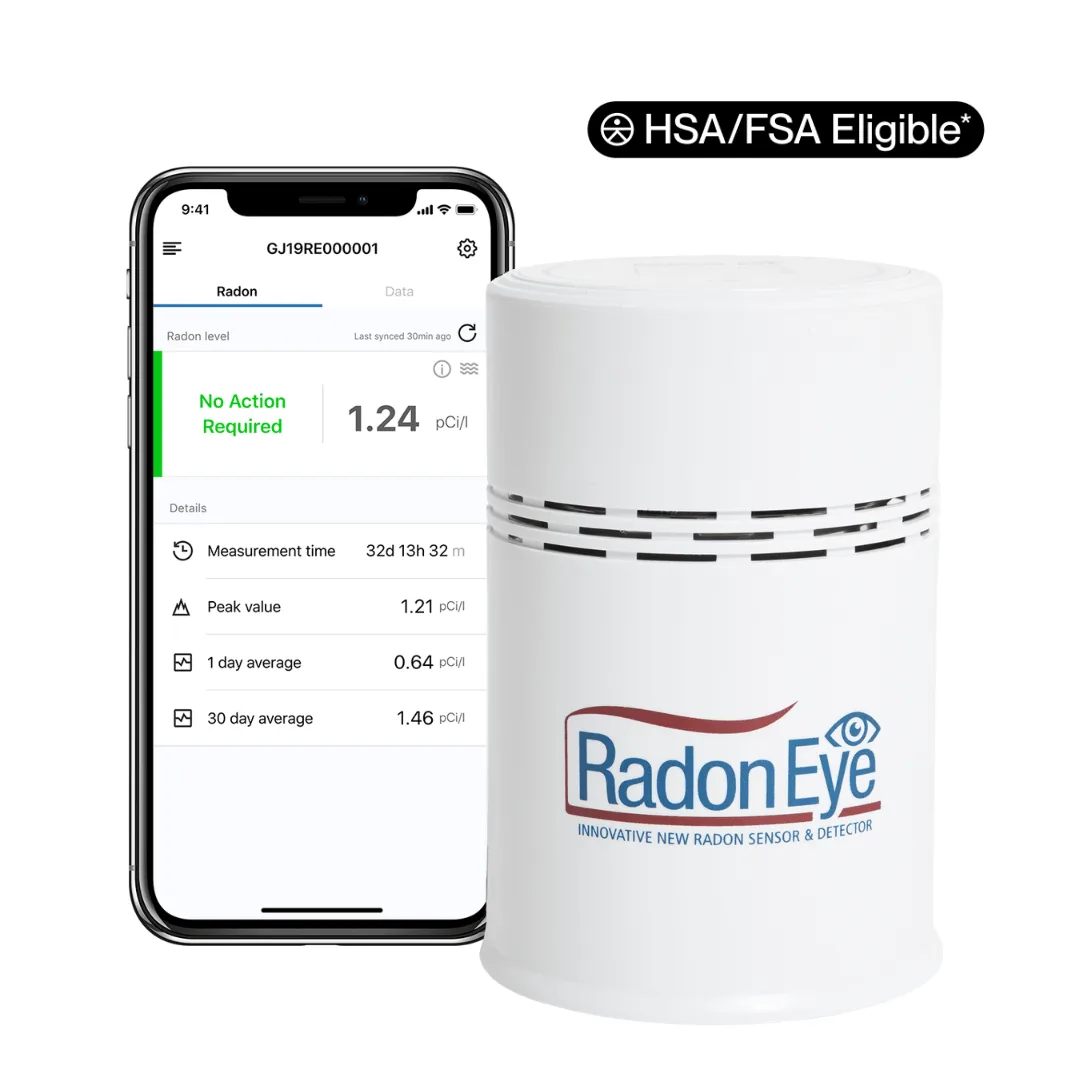
Ecosense
The difference: Plugs into the wall and counts with a pulsed ionization chamber, shows readings on an OLED display and uses Bluetooth to your phone; approved in C-NRPP's 2024/25 evaluation.
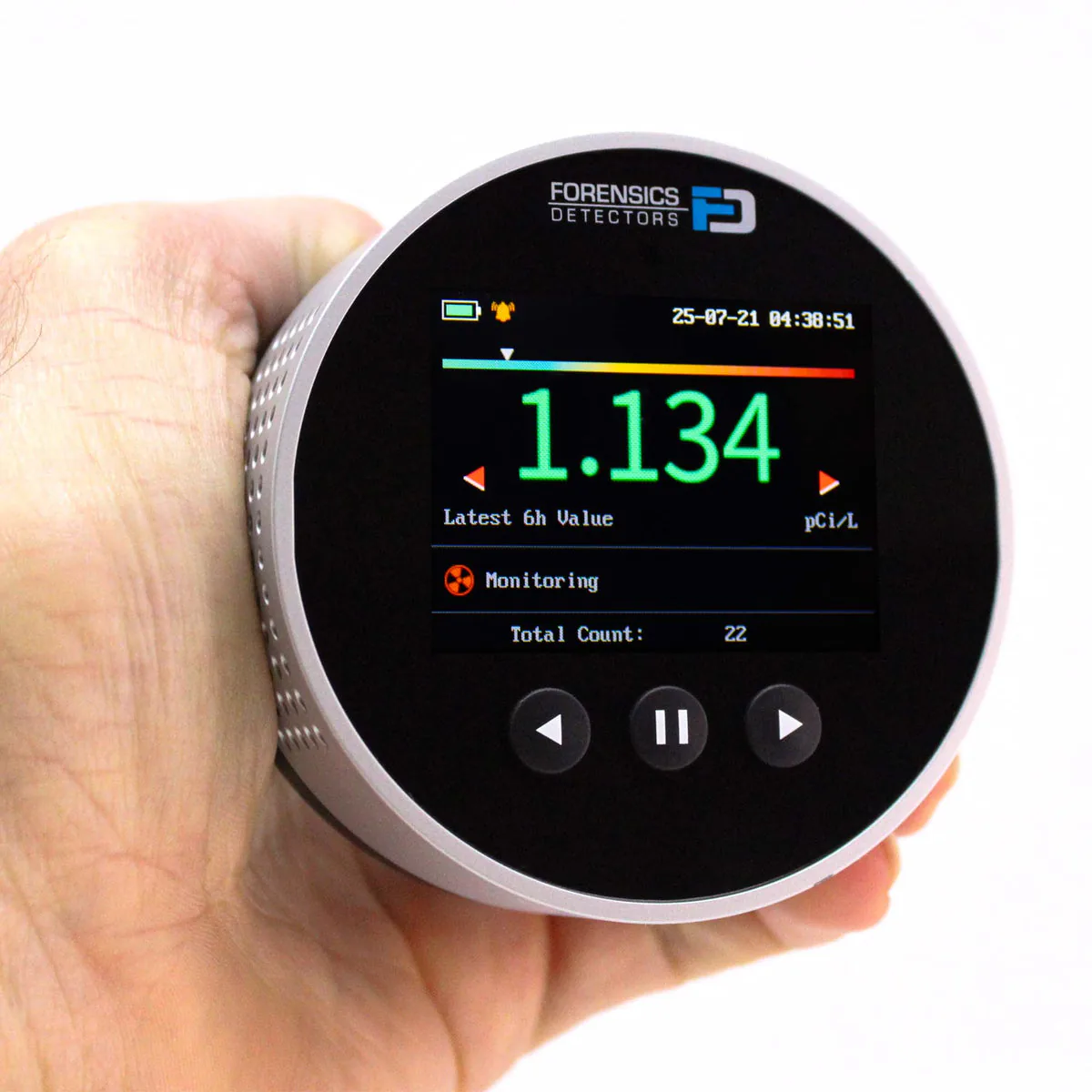
Forensics Detectors
The difference: A detector with a semiconductor sensor fed by natural diffusion and a 2-inch color screen, running on a built-in lithium-ion battery charged over USB-C.
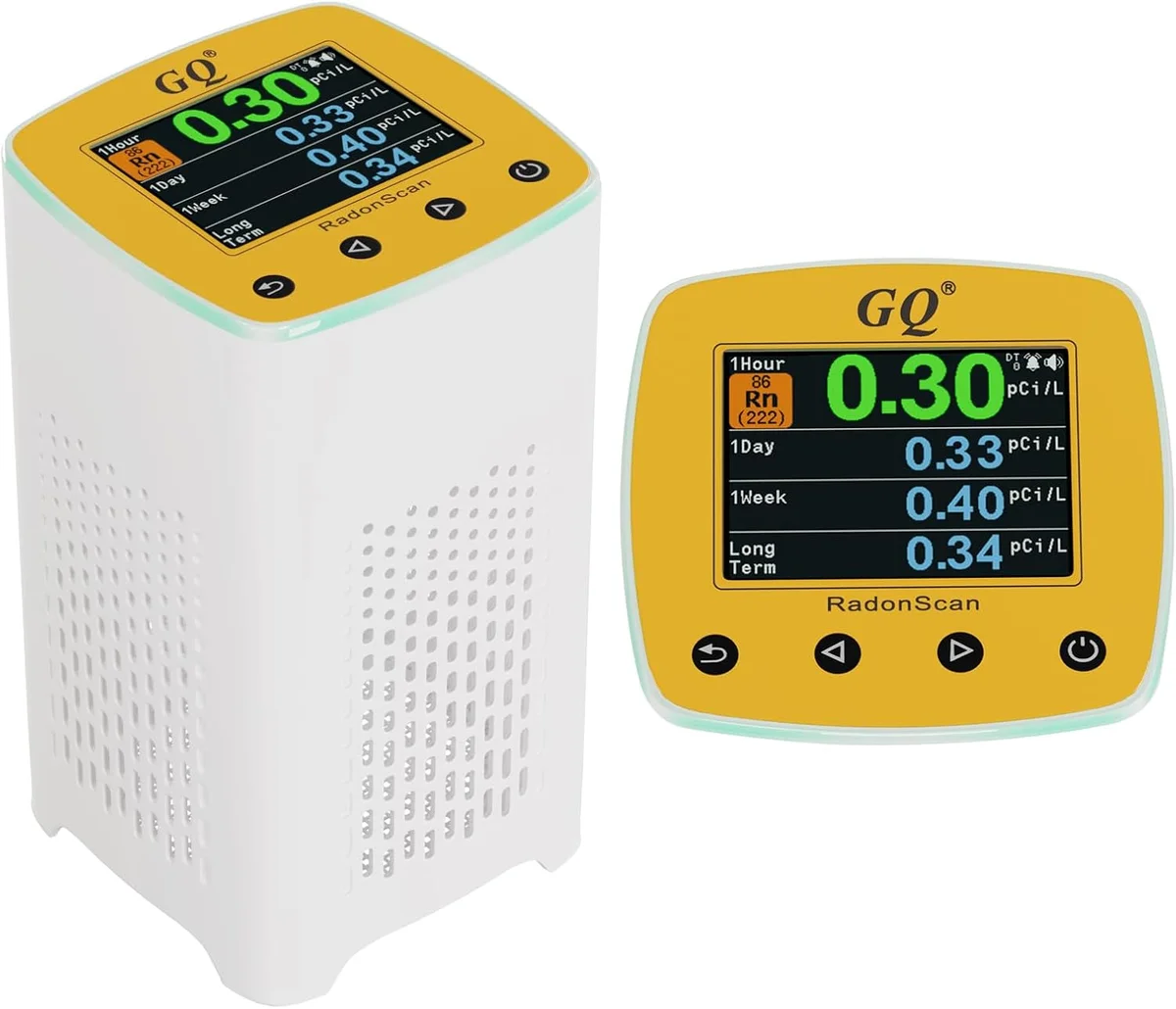
GQ Electronics
The difference: Covered by the same GQ guide, with the same color screen, four radon averages and USB power, but without Wi-Fi: the guide gives Wi-Fi and the server settings to the RadonScan-Plus and RadonPro only.
Compared with similar products: 1 of 4
MonitorAEGTEST
Method: Semiconductor sensor
First reading: Within 6 hours
MonitorAEGTEST
Method: Semiconductor sensor
First reading: Within 12 hours
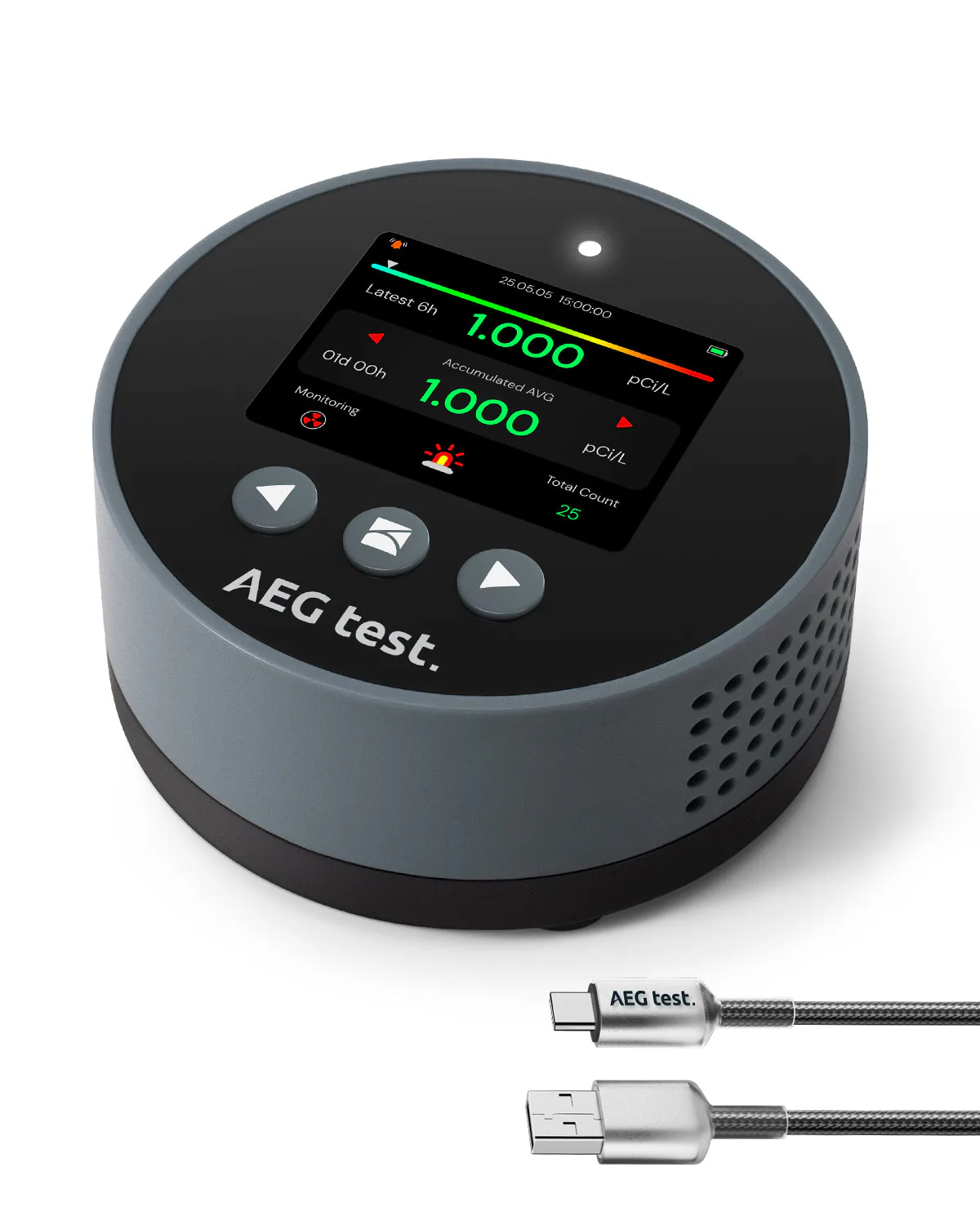
MonitorAEGTEST
Method: Semiconductor sensor
First reading: Within 6 hours
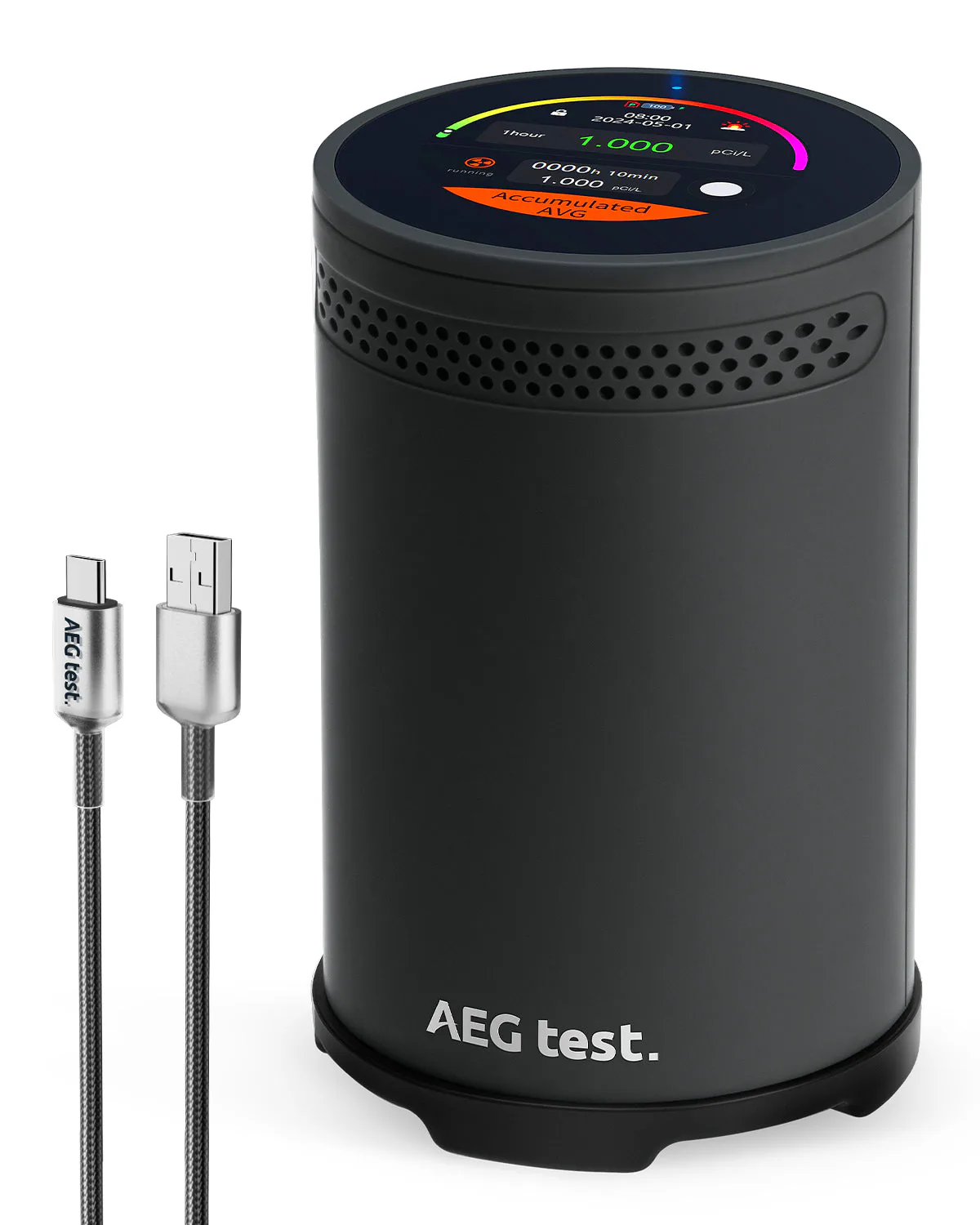
MonitorAEGTEST
First reading: Within 1 hour
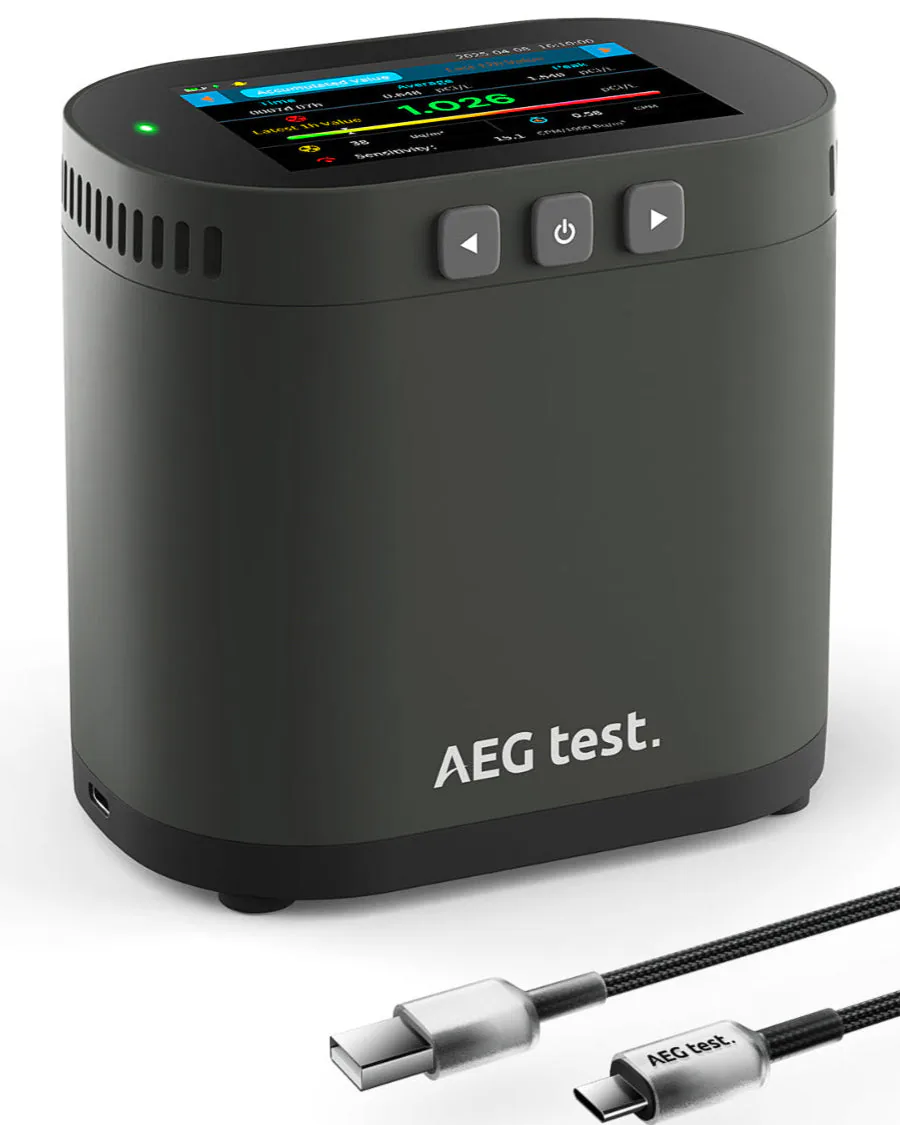
MonitorAEGTEST
Method: Ion chamber
First reading: Within 10 minutes
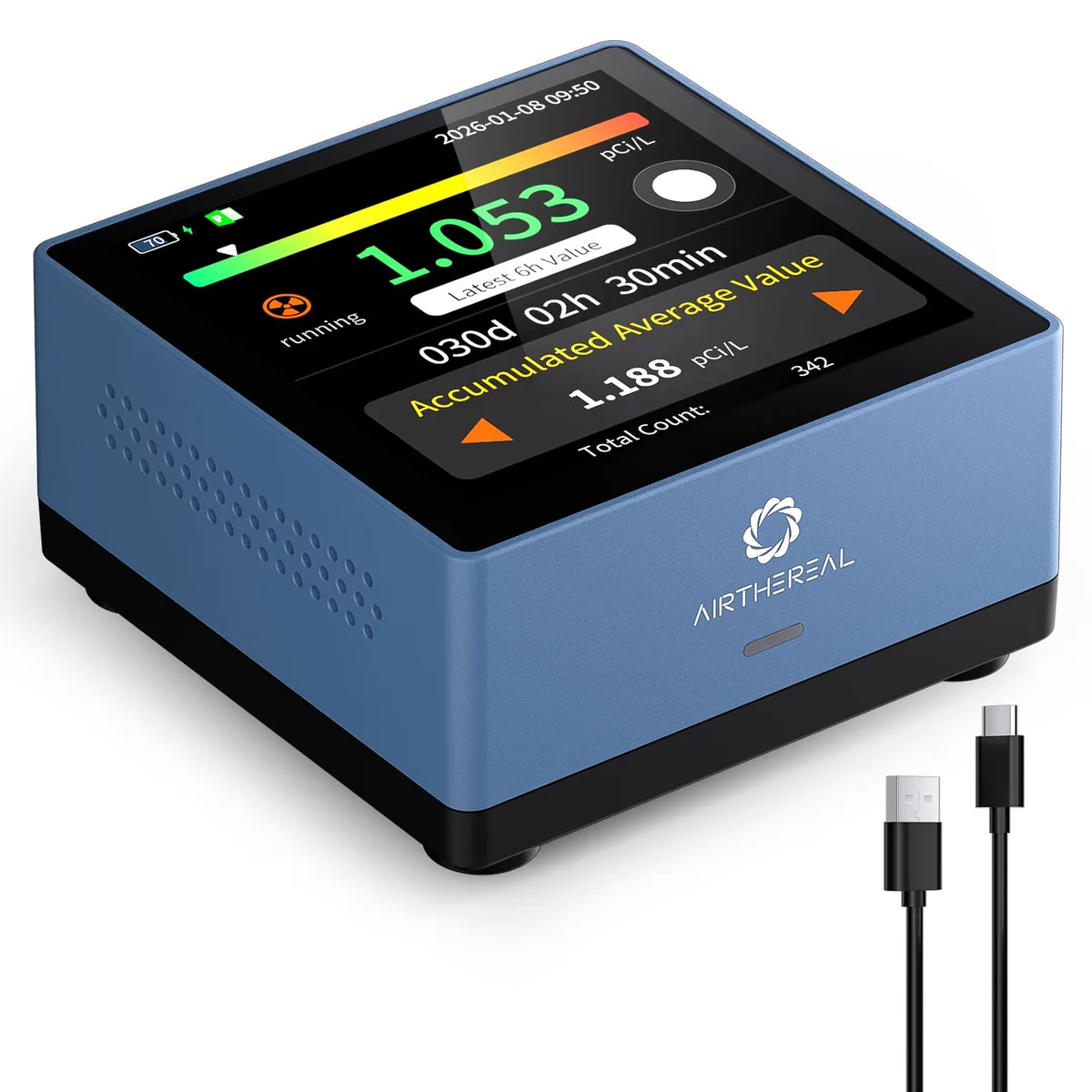
Monitor
Method: Semiconductor sensor
Monitor
Method: Semiconductor sensor
First reading: Within 6 hours
Monitor
Method: Alpha spectrometry
Monitor
Method: Alpha spectrometry
Readings: Every 60 minutes
Monitor
Method: Alpha spectrometry
Monitor
Method: Alpha spectrometry
Readings: Every 60 minutes
Monitor
Method: Alpha spectrometry
Monitor
Method: Alpha spectrometry
MonitorAranet
Method: Ion chamber
First reading: Within 10 minutes
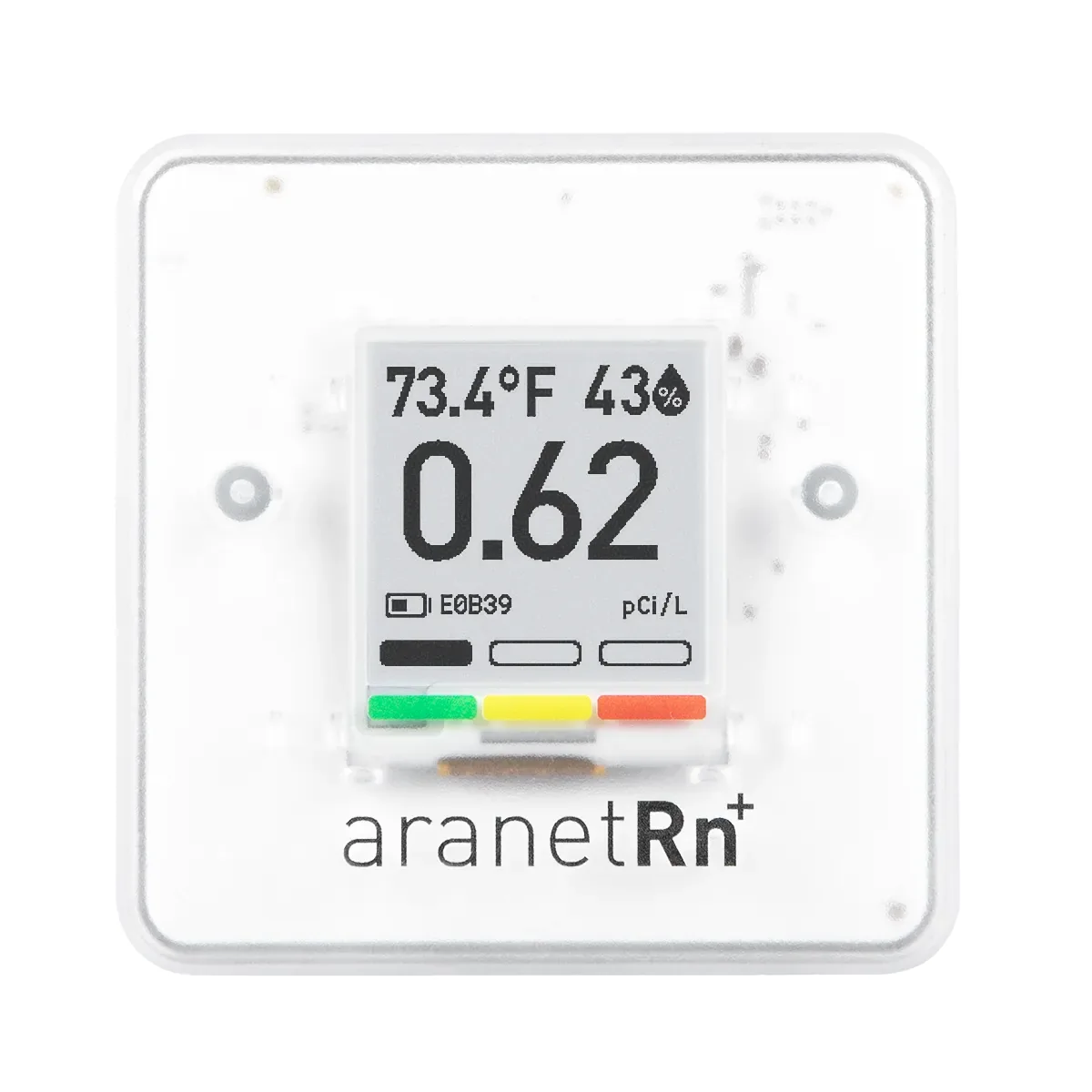
MonitorAranet
Method: Ion chamber
First reading: Within 10 minutes
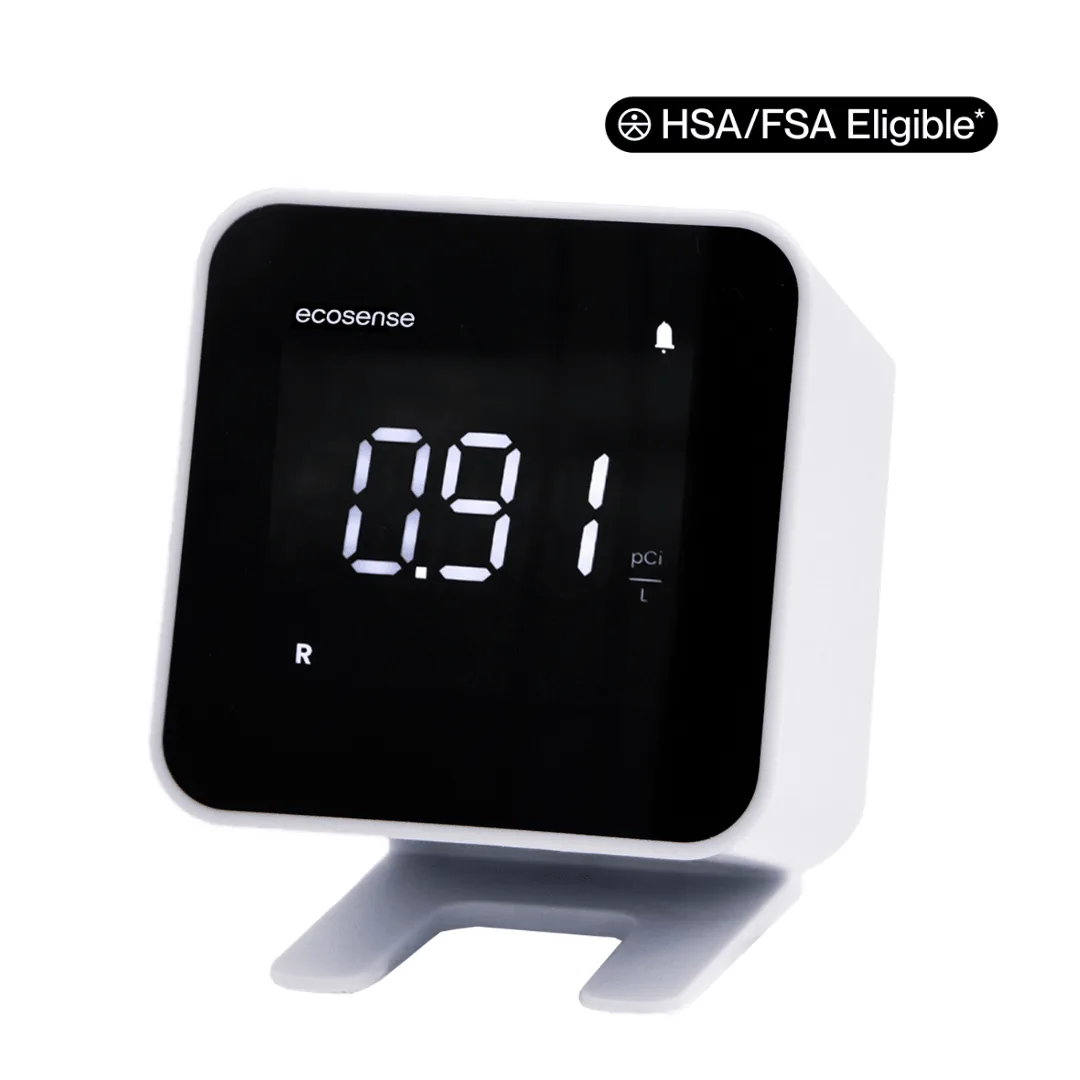
Monitor
Method: Ion chamber
First reading: Within 10 minutes
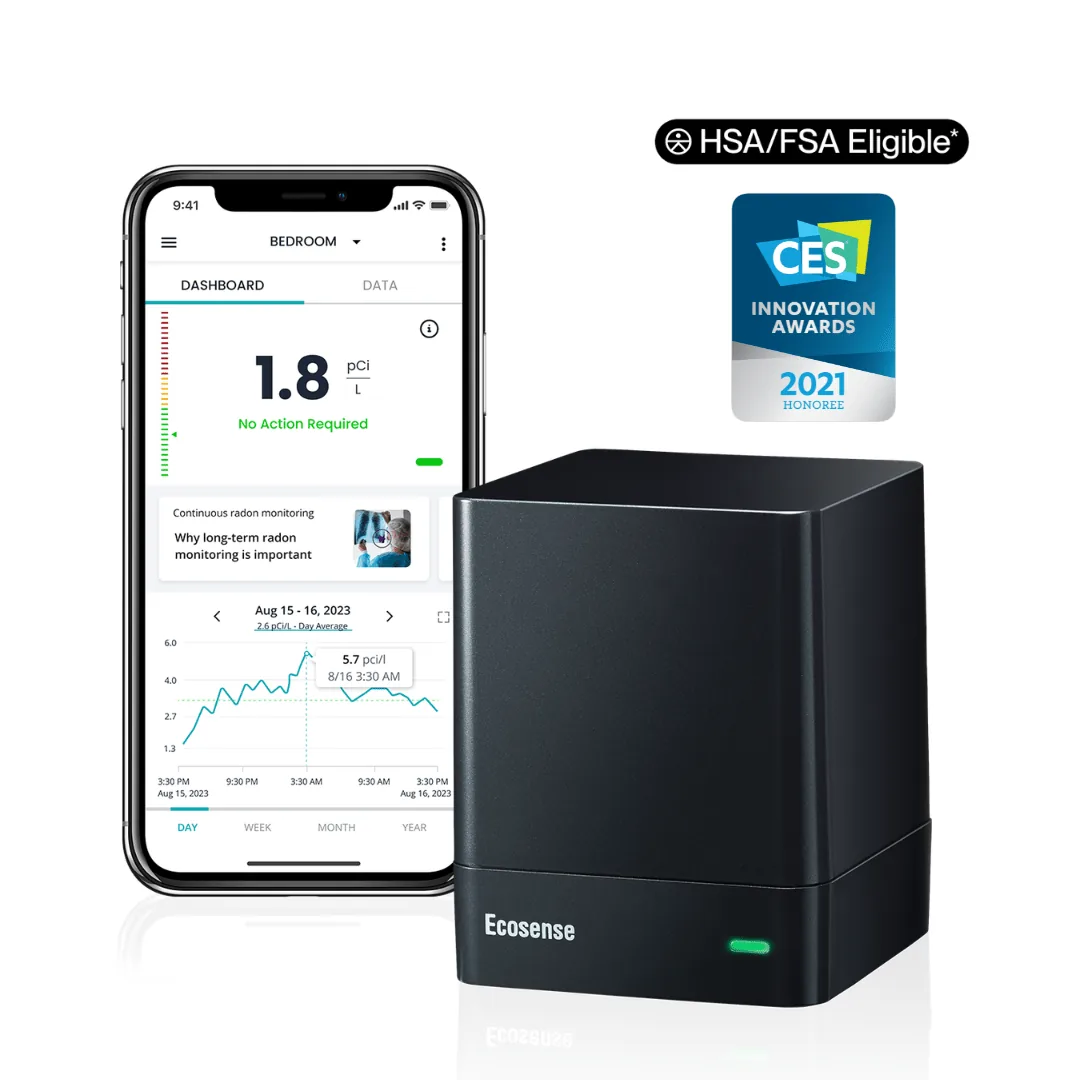
Monitor
Method: Ion chamber
First reading: Within 10 minutes
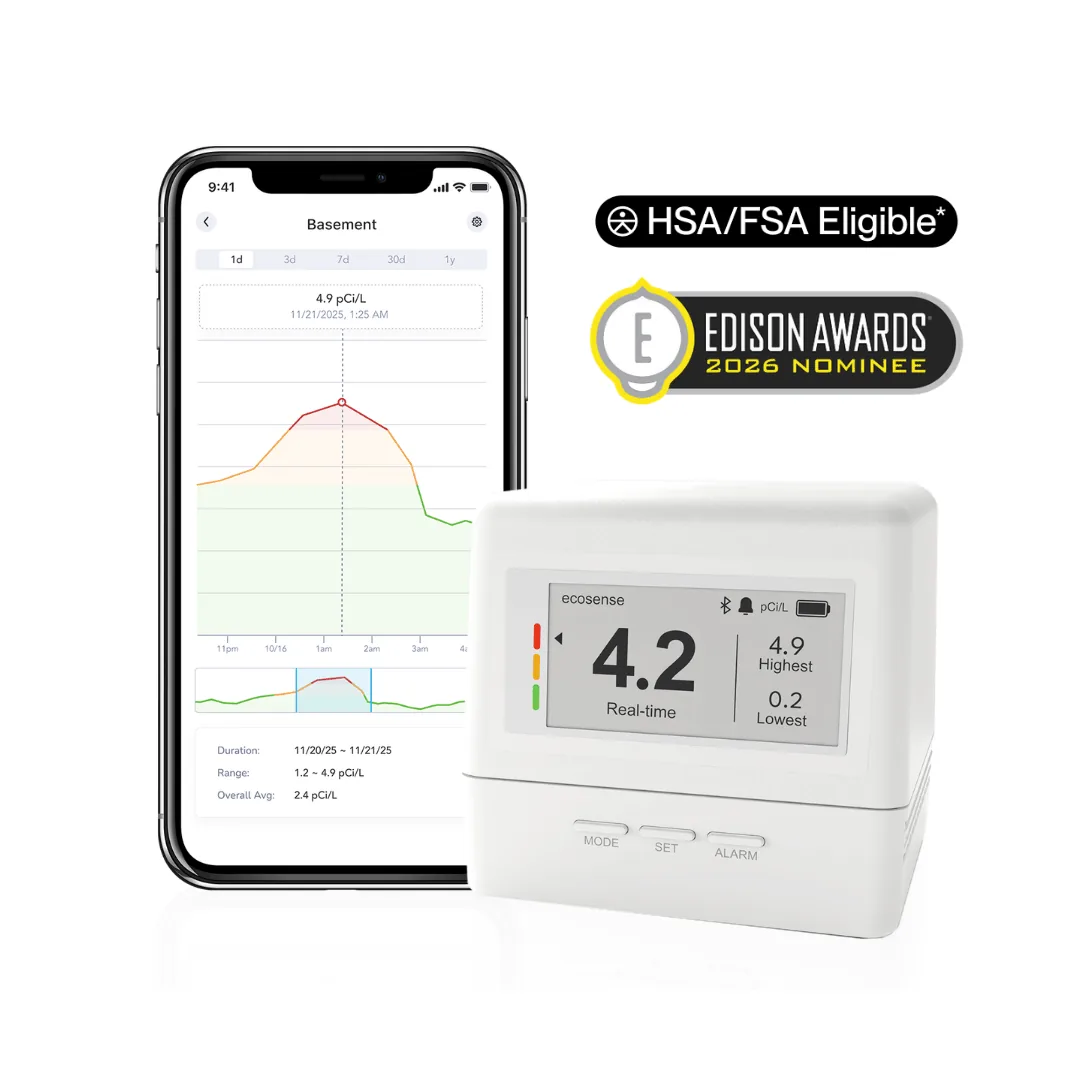
Monitor
Method: Ion chamber
First reading: Within 15 minutes
Monitor
Method: Ion chamber
First reading: Within 10 minutes
MonitorForensics Detectors
Method: Semiconductor sensor
First reading: Within 6 hours
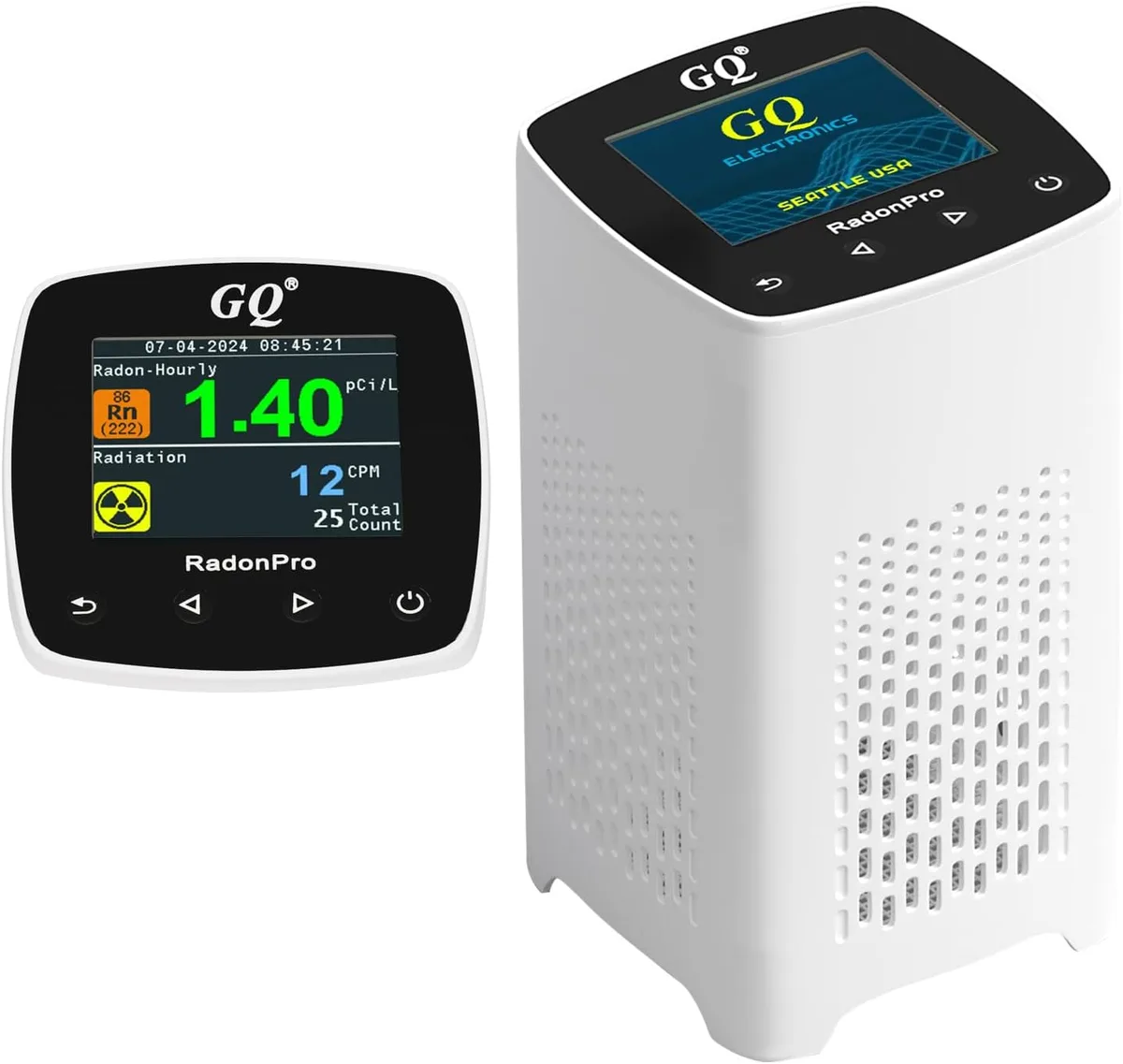
Monitor
First reading: Within 5 minutes
Monitor
First reading: Within 5 minutes
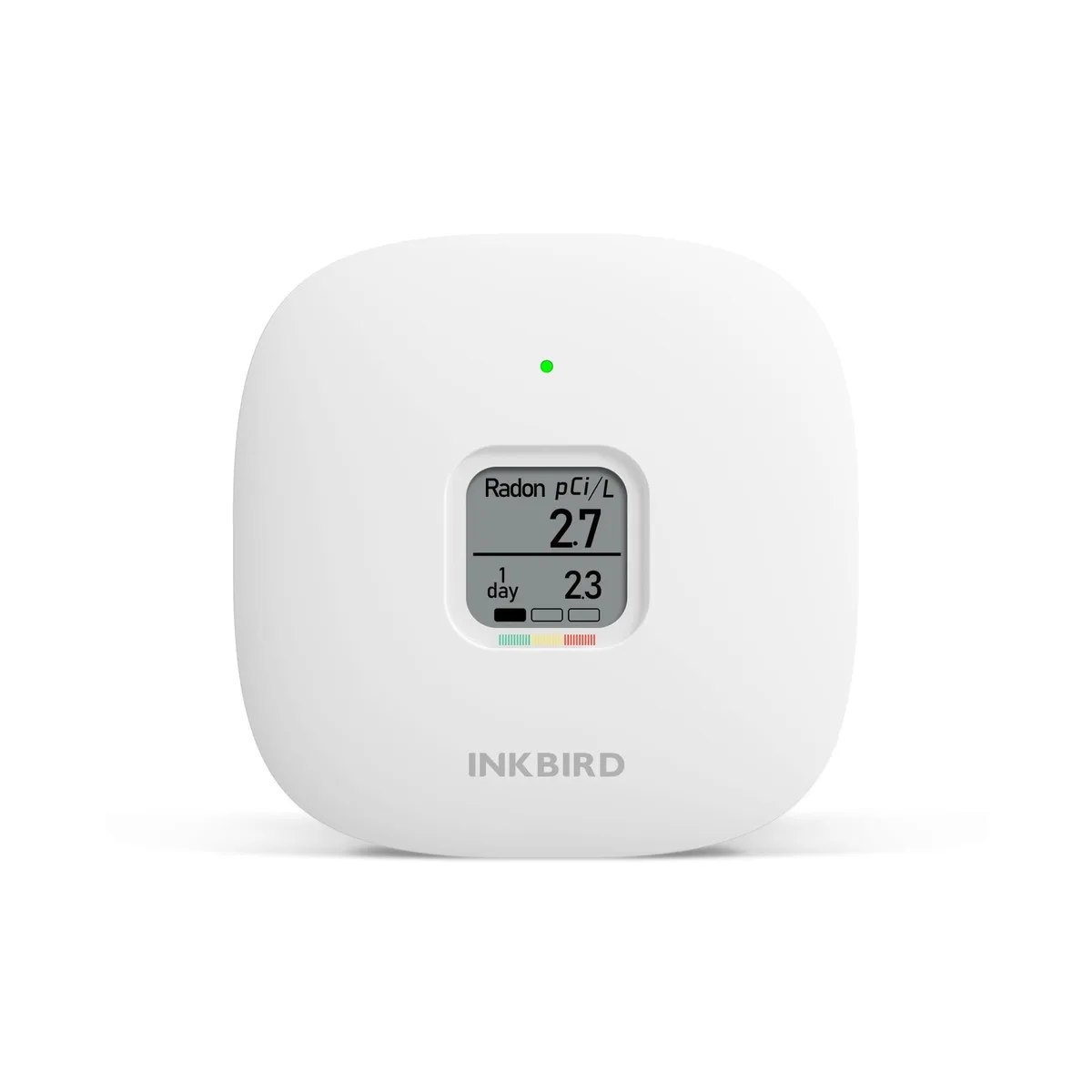
MonitorINKBIRD
First reading: Within 24 hours
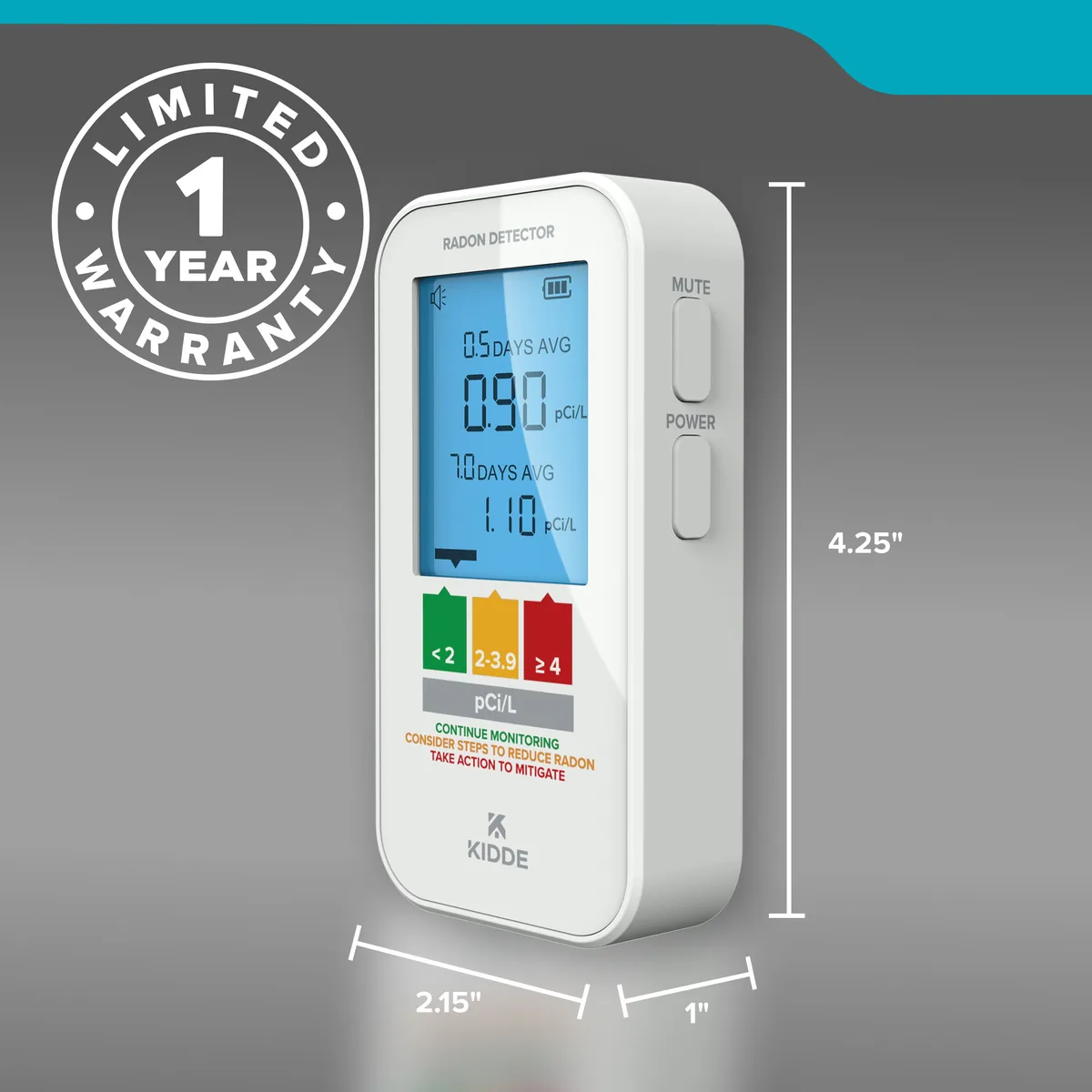
MonitorKidde
Method: Semiconductor sensor
First reading: Within 12 hours
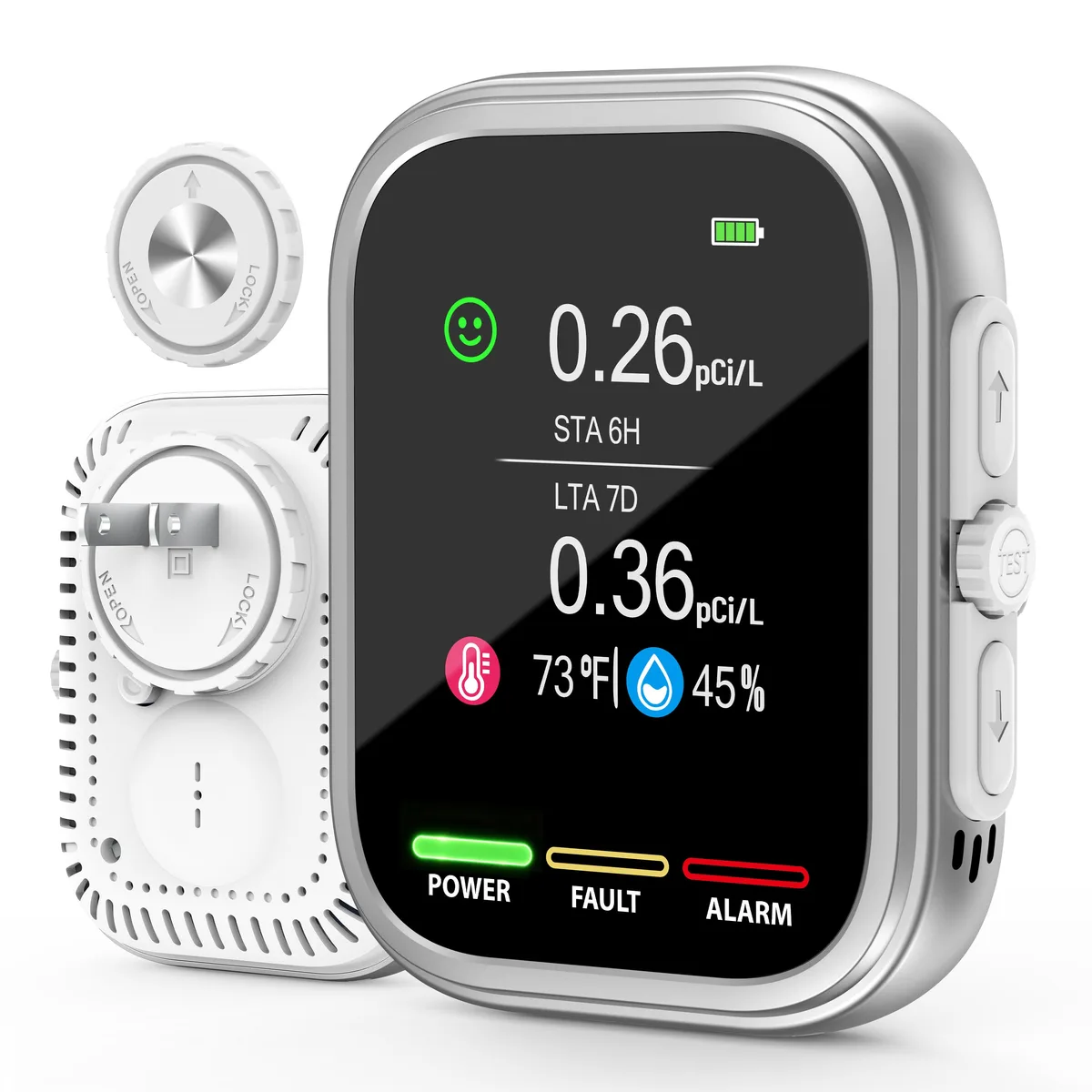
MonitorPYZYCKYH
Method: Semiconductor sensor
First reading: Within 6 hours
MonitorSafetySiren
First reading: Within 48 hours
Monitor
First reading: Within 90 minutes
Monitor
Method: Alpha spectrometry
First reading: Within 24 hours
MonitorX-Sense
Method: Alpha spectrometry
First reading: Within 24 hours
MonitorX-Sense
Method: Alpha spectrometry
First reading: Within 24 hours
MonitorX-Sense
Method: Alpha spectrometry
First reading: Within 24 hours
More home radon monitors: 1 of 31
Questions
5 questions about the GQ Electronics RadonScan-Plus, answered
Wi-Fi and the online account that goes with it. GQ's guide marks the Server settings and the text input screen as RadonScan-Plus and RadonPro only, and says both can submit data online over Wi-Fi to GQ's GMCmap website or your own server. Both RadonScan models show the same four radon averages on a color screen and run on USB power; neither has the RadonPro's Geiger counter.
No. The readings, averages and alarm are on the unit itself, and GQ's store page says the Wi-Fi connection can be disabled or enabled. Wi-Fi is only needed to send data to your online account and view it remotely.
GQ does not give an accuracy figure. Its specification table lists a reproducibility of indication of 30%, which describes how closely repeated readings agree rather than how close they are to the true level. The RadonScan-Plus was not included in C-NRPP's 2024/25 consumer monitor evaluation.
It shows a first reading in about 5 minutes, but GQ's own guide recommends averaging over a longer period for the most accurate result. C-NRPP's advice for any consumer monitor is to test for at least 3 months and decide on the long-term average.
GQ Electronics LLC of Seattle, Washington, which also makes Geiger counters and EMF meters. GQ describes its radon detectors as designed by GQ Electronics LLC in the USA; it does not say where they are made.
Updated October 8, 2026