
MonitorAEGTEST
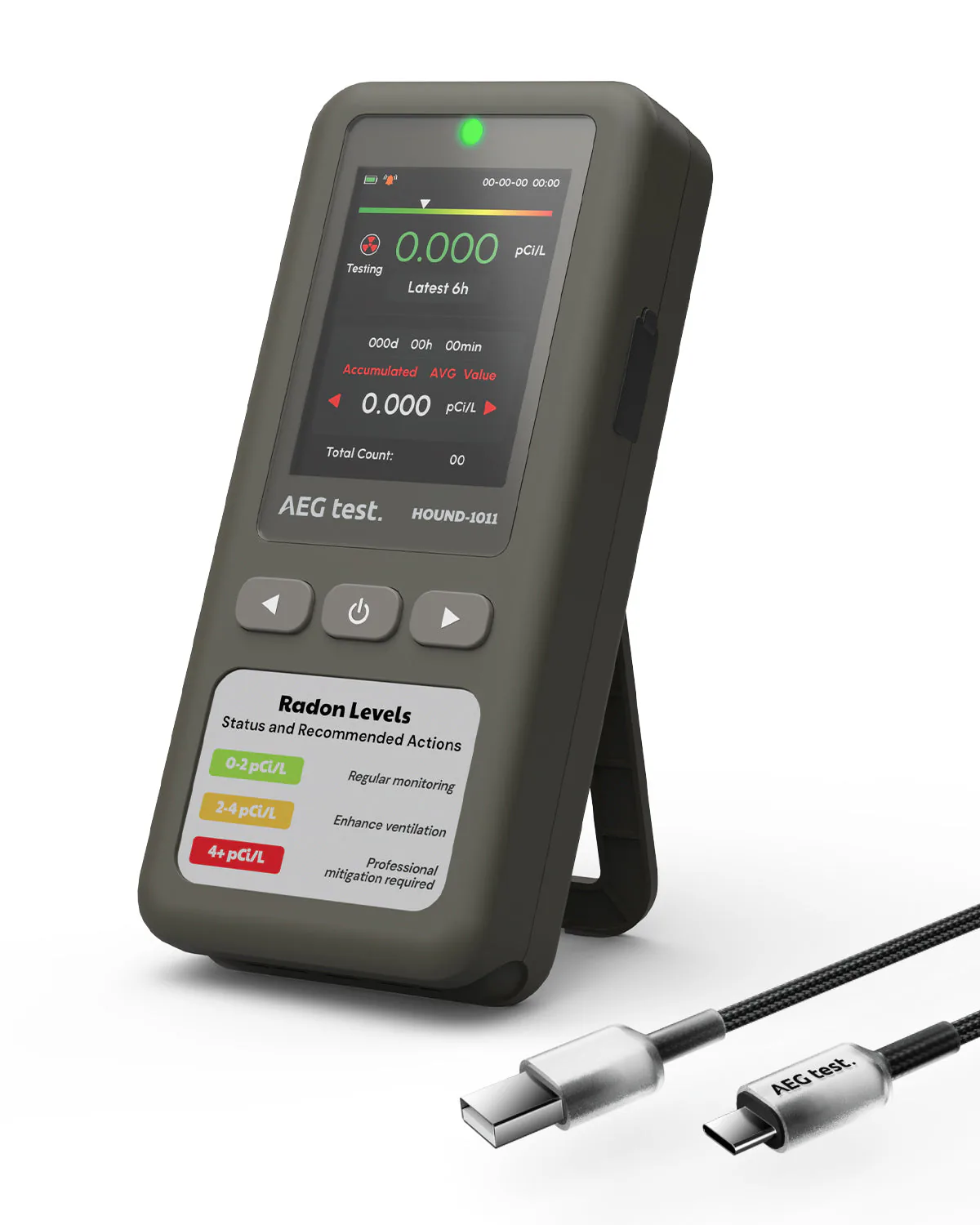
HOUND-1011 rechargeable radon detector with a screen
- C-NRPP 2024/25: Not included
- Battery
- Alarm
- Screen
Method: Semiconductor sensor
First reading: Within 6 hours
 SunRADON
Plug-in radon and indoor air quality monitor
Photos: SunRADON
 (opens in a new tab)Check price on Amazon (opens in a new tab)
As an Amazon Associate, Radon411 earns from qualifying purchases.
Amazon and the Amazon logo are trademarks of Amazon.com, Inc. or its affiliates.
See ratings and reviews on Amazon (opens in a new tab)As SunRADON states it
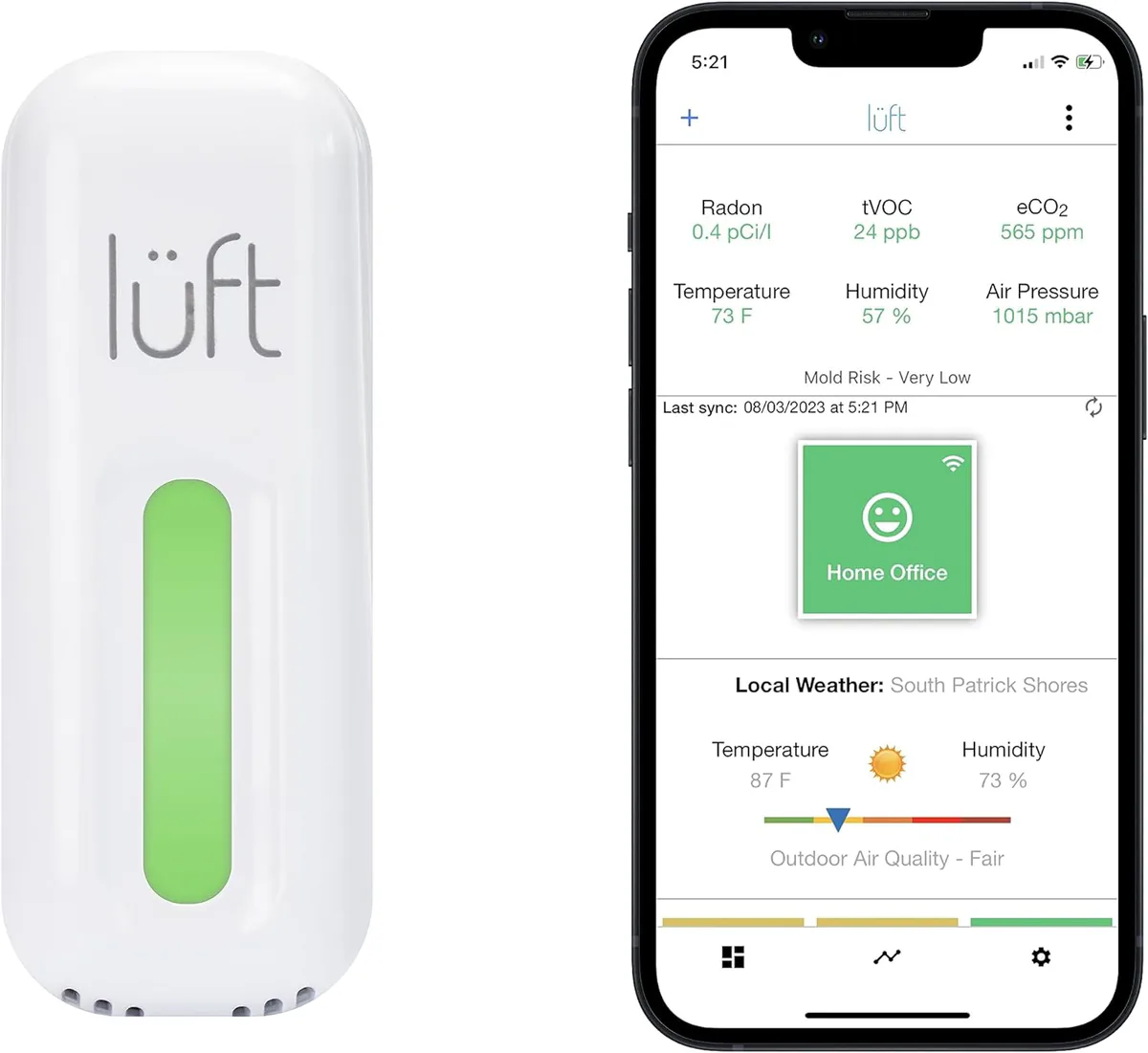
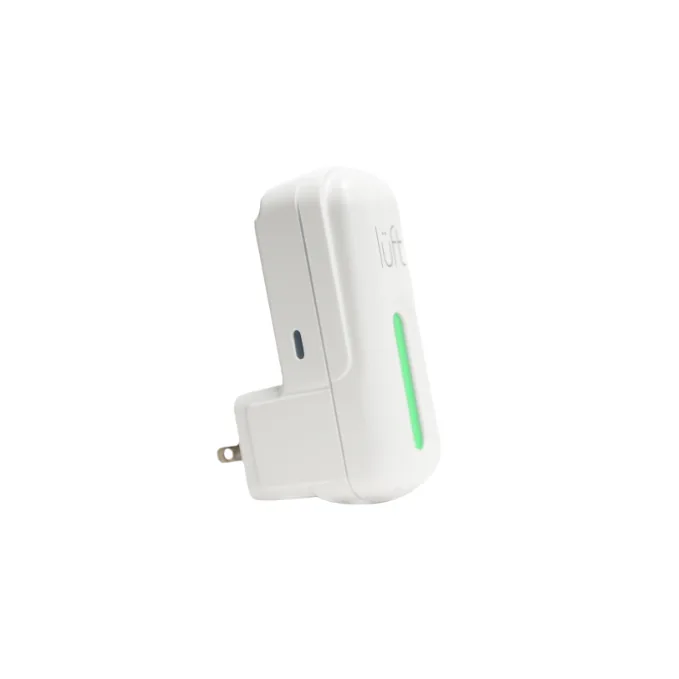
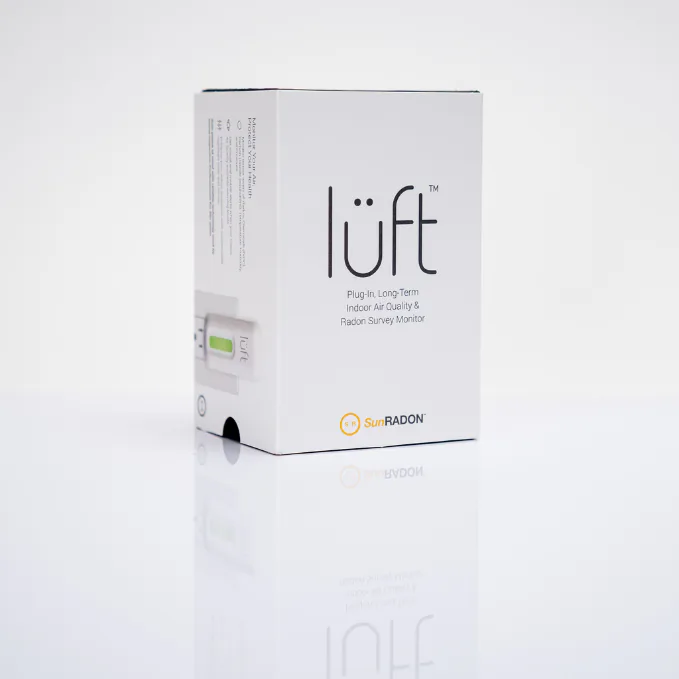
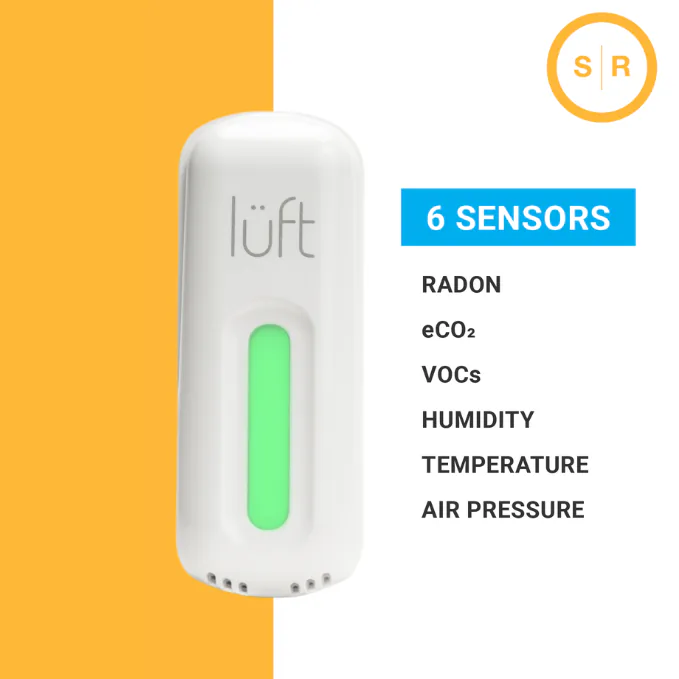
The lüft (Model 1032) is SunRADON's home monitor: a solid-state radon sensor plus sensors for chemicals (VOCs), an equivalent carbon dioxide reading, temperature, humidity and air pressure, in a small body that plugs straight into a wall outlet. It has a colored light on the front instead of a number display, and the readings are in a phone app over Wi-Fi. It was approved in C-NRPP's 2024/25 consumer monitor evaluation, with an A grade in all four test rounds.
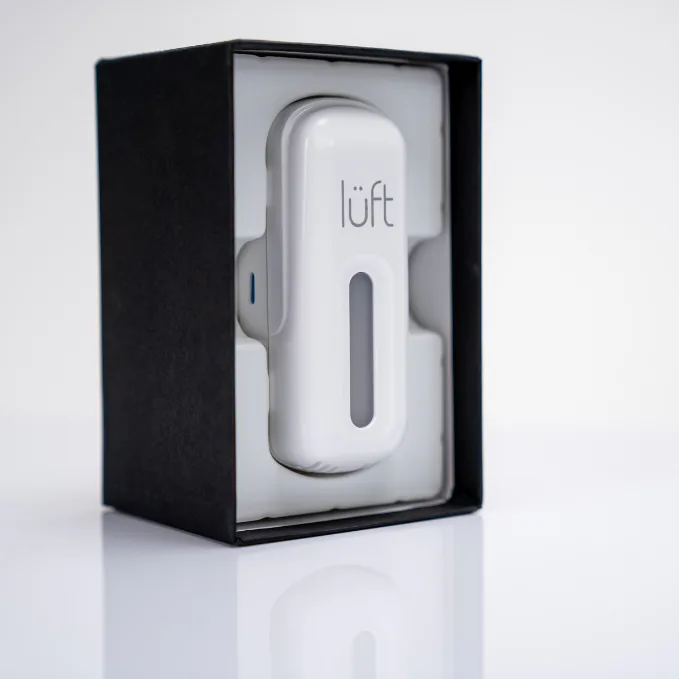
SunRADON does not list the box contents in text on its product page, setup guide or specification sheet, so the contents are not listed by the maker. What its documents do say: the lüft plugs straight into the outlet, with no batteries, no cables or power strip, no wall mount and no separate Wi-Fi hub; the 4-digit Bluetooth ID is on the packaging or the product label; and the app is downloaded from your phone's app store. The monitor measures 111 by 58 by 43 mm without the prongs and weighs 129 g.
In the box and running costsHow it works
The sensor, the sampling and the readings, then who has checked it
In our words, from the maker's documents
SunRADON describes the lüft's radon sensor as solid-state technology that needs no maintenance and does not degrade over time, and says the lüft uses the same radon detection and monitoring technology as its professional radon monitors. Its specification sheet lists the radon sensor as an absolute sensor with a range of 0 to 9999 pCi/L, a resolution of 0.1 pCi/L and an uncertainty of 10% over 7 days at 4 pCi/L. The lüft's own documents do not name the detector beyond solid-state or say how air reaches it, so the sampling method is not stated by the maker.
Once plugged in, the lüft runs a self-test. SunRADON's setup guide says the air-quality readings (eCO2, tVOC, temperature, pressure and humidity) are available after 30 minutes, and the first radon reading after 90 minutes, when all six sensors start reporting hourly. The monitor calibrates itself over its first three hours and keeps optimizing over the next 7 days, and until it stabilizes the front light may show yellow or red. In the app, updated readings are available every six minutes.
SunRADON's documents do not say what period the hourly radon figure averages. C-NRPP's table describes long-term and short-term averages in the app and a color-coded indication of levels on the monitor. The authors of a 2026 study in Sensors, who ran lüft monitors in a school in Utah, describe the readings as logged every hour as an average of the last 24 hours, with the data retrievable remotely through the OneRadon mobile app or cloud dashboard. SunRADON's 2020 setup guide calls its app the Lüft app.
There is no number on the device. The front LED shows green when everything is in good condition, yellow when at least one of the six sensors has reached its warning threshold, red when one has reached its alert threshold, and blue when the nightlight is on. The thresholds, colors, brightness and nightlight times can be changed in the app for each unit. The iOS and Android apps give a dashboard, trend charts and downloadable data and send alerts when levels pass your limits; SunRADON says the data is stored in the cloud, with reports sent to your email if you want them.
The other five sensors are listed on the specification sheet: relative humidity (10 to 95%), temperature (40 to 105°F) and air pressure (80 to 110 kPa) as absolute readings, and total VOCs (0 to 1187 ppb) and equivalent carbon dioxide (eCO2, 400 to 8192 ppm) as relative readings. SunRADON explains that the VOC and eCO2 sensor detects changes rather than absolute levels and self-levels over time, and that eCO2 is derived from the mixed gases rather than read by a carbon dioxide sensor. The app also shows a mold risk indicator, calculated from humidity and temperature on a five-level scale, an overall indoor air quality status, and the outdoor Air Quality Index.
For connections, the specification sheet lists Bluetooth v4.2 BR/EDR and Bluetooth Low Energy, and 2.4 GHz Wi-Fi. After a power cut, SunRADON says the lüft resumes on its own, reconnects to Wi-Fi and keeps its settings and data on the device for up to 4 years; the first hourly reading after the outage can be up to 90 minutes late, though readings on demand are available before then.
SunRADON's own statements, attributed
These are SunRADON's own statements, attributed to it. They are not our findings, and we have not tested this product ourselves.
C-NRPP 2024/25, recalls and studies
Listed by C-NRPP as "SunRadon Luft". Results published May 2025.
C-NRPP grades each round by measurement error: A is 10% or less, B more than 10% and up to 20%, C more than 20% and up to 30%. It recommends devices that average B or better.
C-NRPP's 2023 report listed “SunRadon Luft” as having passed its performance test.
C-NRPP is the Canadian National Radon Proficiency Program. Its 2024/25 results were published in May 2025.
Specifications
Every figure as the maker states it
SunRADON does not list the box contents in text on its product page, setup guide or specification sheet, so the contents are not listed by the maker. What its documents do say: the lüft plugs straight into the outlet, with no batteries, no cables or power strip, no wall mount and no separate Wi-Fi hub; the 4-digit Bluetooth ID is on the packaging or the product label; and the app is downloaded from your phone's app store. The monitor measures 111 by 58 by 43 mm without the prongs and weighs 129 g.
SunRADON's limited warranty covers defects in material and workmanship for 90 days from the date of shipment, for the original purchaser only, when the monitor was bought from SunRADON or an authorized reseller; SunRADON repairs or replaces it at its option. For a monitor bought through Amazon or another authorized third-party reseller, SunRADON says to contact the point of sale for instructions. A returned monitor goes back in its original or equivalent packaging, with shipping prepaid by the owner. The warranty page, revised November 11, 2024, and the 2020 specification sheet give the same 90-day term.
There is no lab fee and no battery to replace: the lüft runs from the wall outlet, rated at 120 VAC, 60 Hz and 70 mA. SunRADON states it needs no calibration and no service, and that the sensor does not degrade over time. The ongoing needs are an outlet where it can stay plugged in and a 2.4 GHz Wi-Fi network for the app. SunRADON's product page, setup guide and specification sheet mention no subscription or app fee.
Readings are kept in SunRADON's cloud, with optional email reports. For commercial or other large buildings, SunRADON offers a fully automated, web-based dashboard to manage several sensors and asks buyers to contact it for a demo; the lüft page gives no price or terms for it.
Fit and setup
The fit, then setup and placement as the guidance asks
Good fit if, and look elsewhere if
Good fit if
Look elsewhere if
5 steps
How C-NRPP says to use any consumer monitor
For where any radon test or monitor should sit in a home, see where to place a radon test.
Compare
The same three rows for each, and the one difference that matters
This page
SunRADON lüft
This page: The lüft (Model 1032) is SunRADON's home monitor: a solid-state radon sensor plus sensors for chemicals (VOCs), an equivalent carbon dioxide reading, temperature, humidity and air pressure, in a small body that plugs straight into a wall outlet.
Airthings
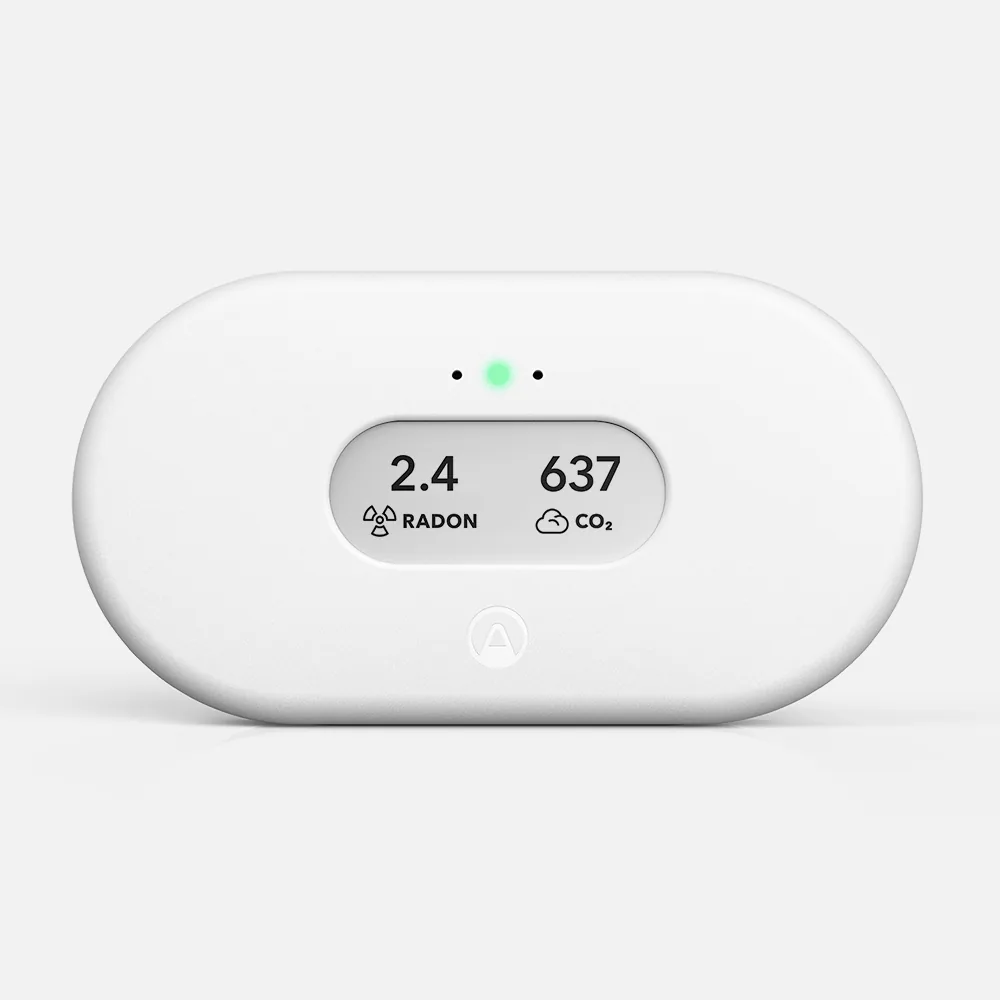
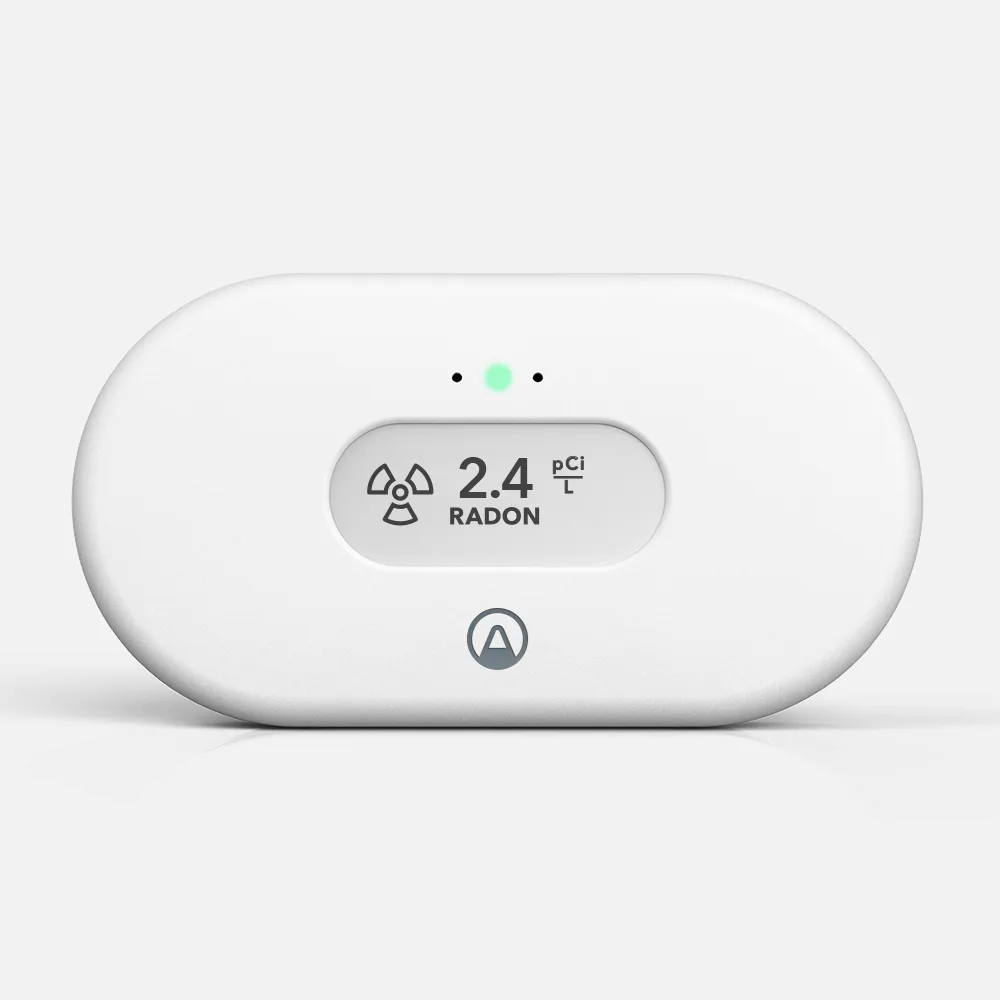
The difference: Another multi-sensor monitor with radon, adding particulate matter (PM2.5) and an NDIR carbon dioxide sensor, with a 2.9-inch e-paper screen, on six AA batteries or USB-C.
Airthings
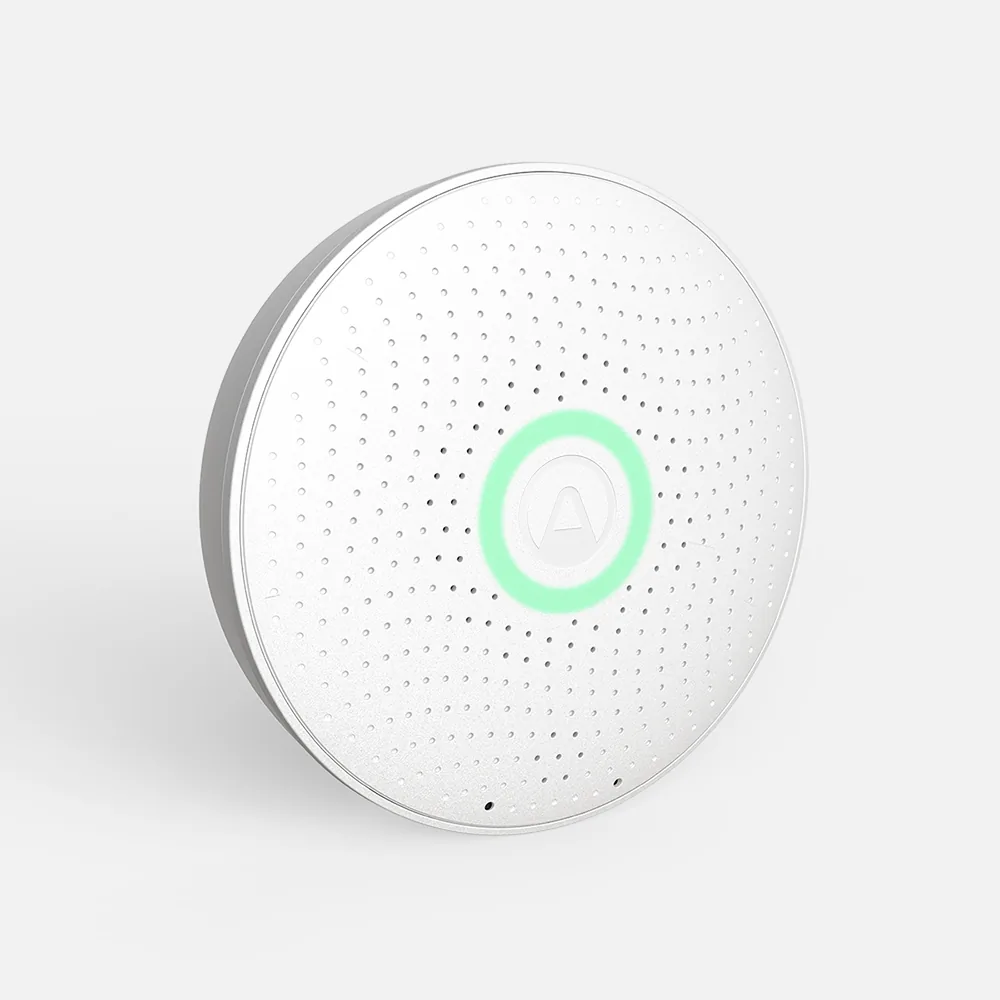
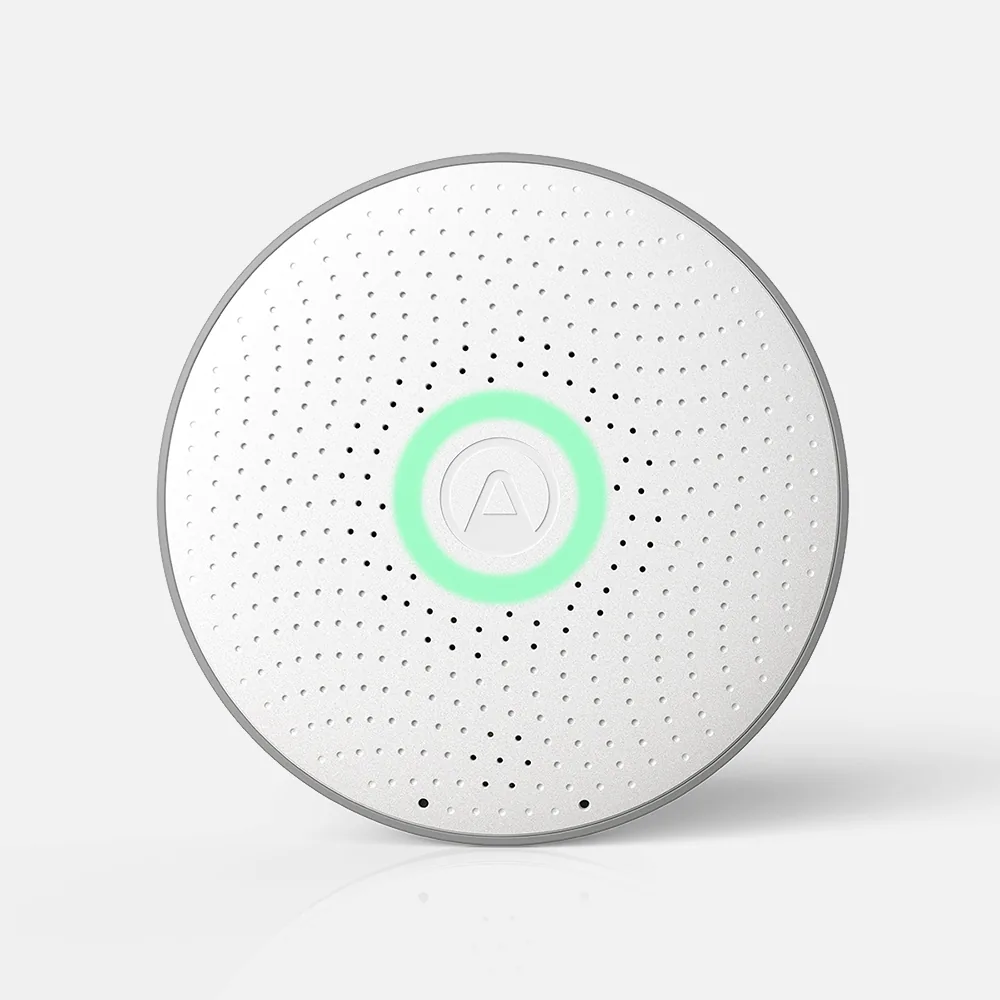
The difference: Also six sensors (radon, CO2, TVOC, temperature, humidity and air pressure), but on two AA batteries, with a colored glow ring, connecting by Bluetooth or an Airthings hub rather than its own Wi-Fi.
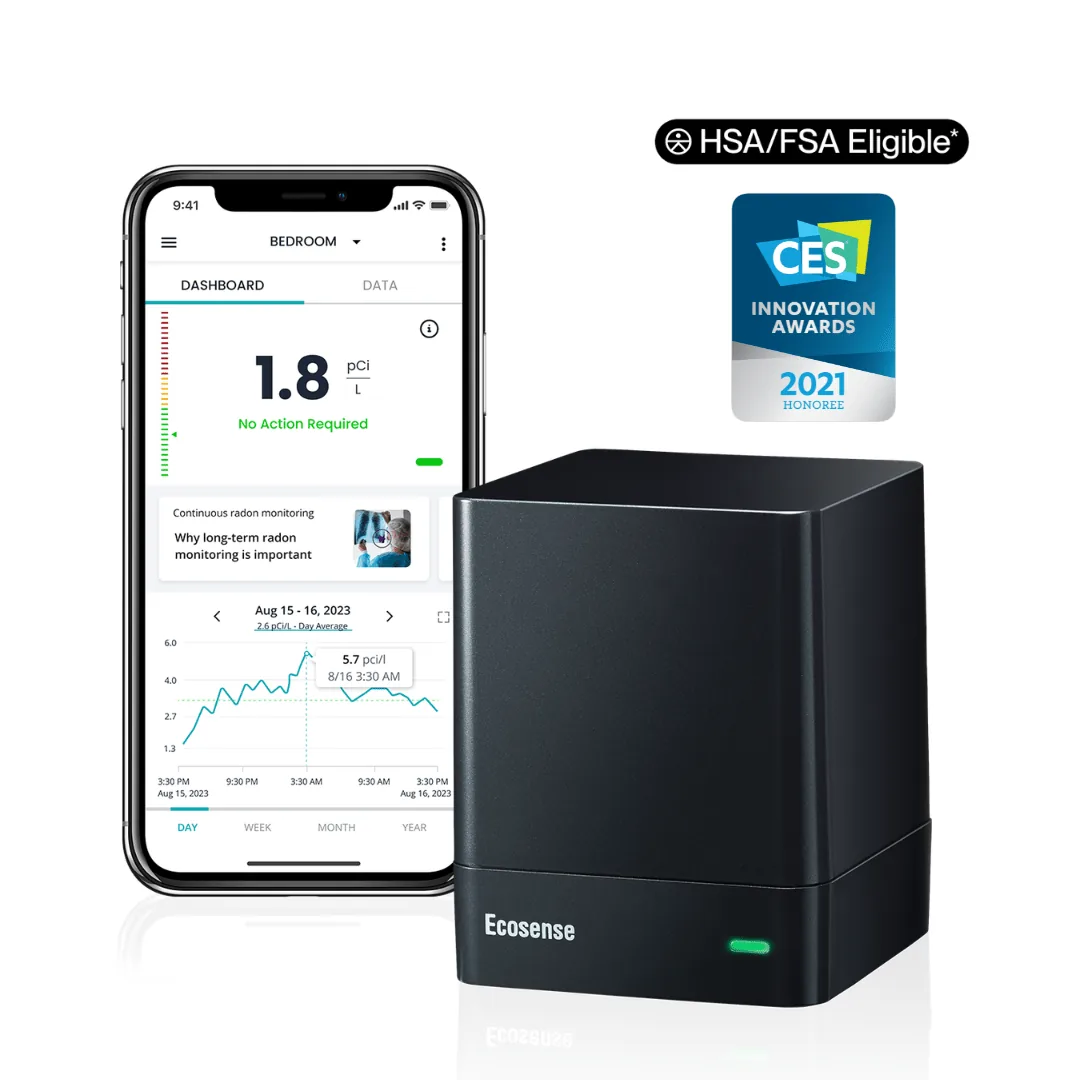
Ecosense
The difference: Also a plug-in Wi-Fi monitor with a three-color light and no number display, but it measures radon only, with a pulsed ionization chamber, and Ecosense states a first reading in 10 minutes.
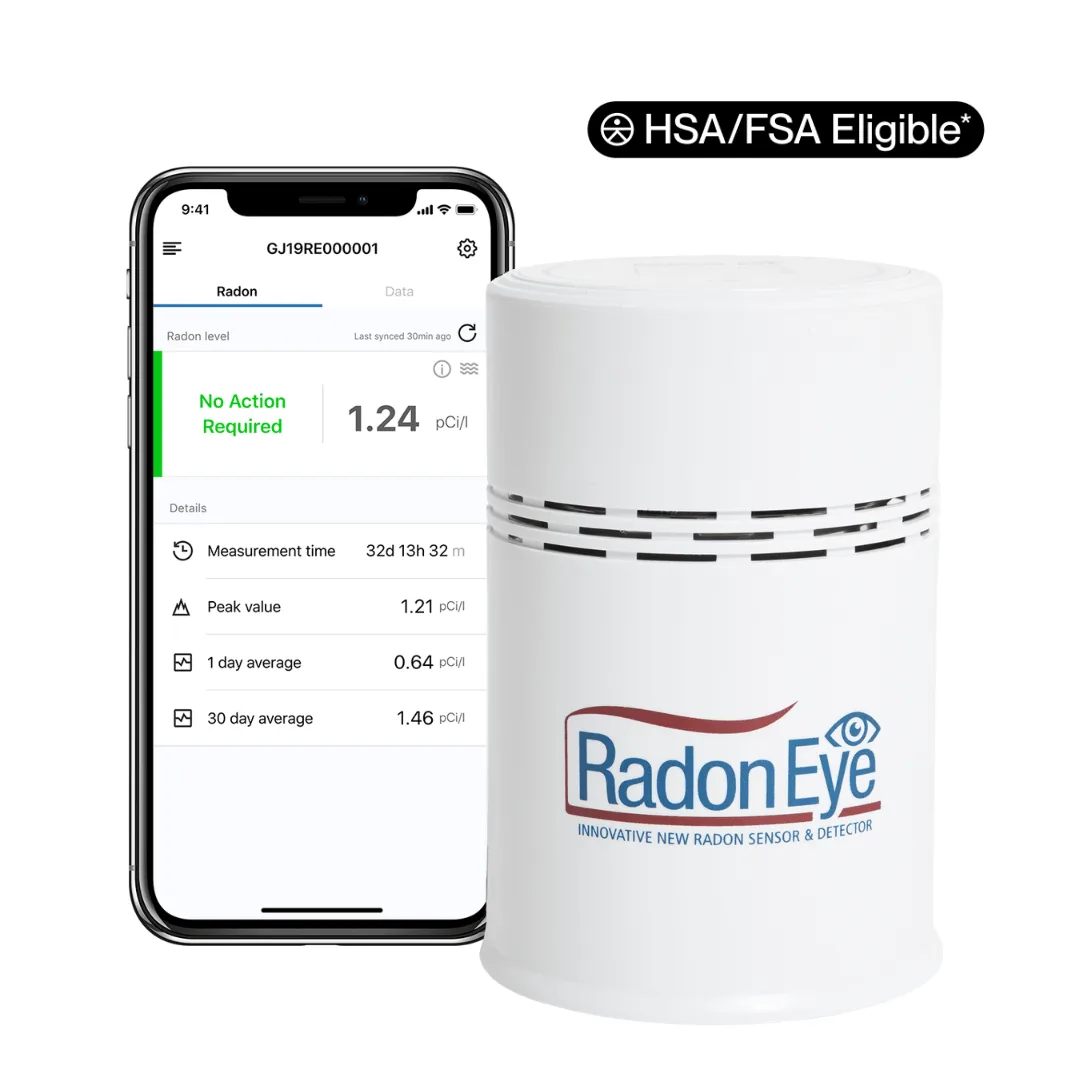
Ecosense
The difference: Radon only, also plug-in and approved in C-NRPP's 2024/25 evaluation, with an OLED number display on the device and Bluetooth to your phone instead of Wi-Fi.
Compared with similar products: 1 of 5
MonitorAEGTEST
Method: Semiconductor sensor
First reading: Within 6 hours
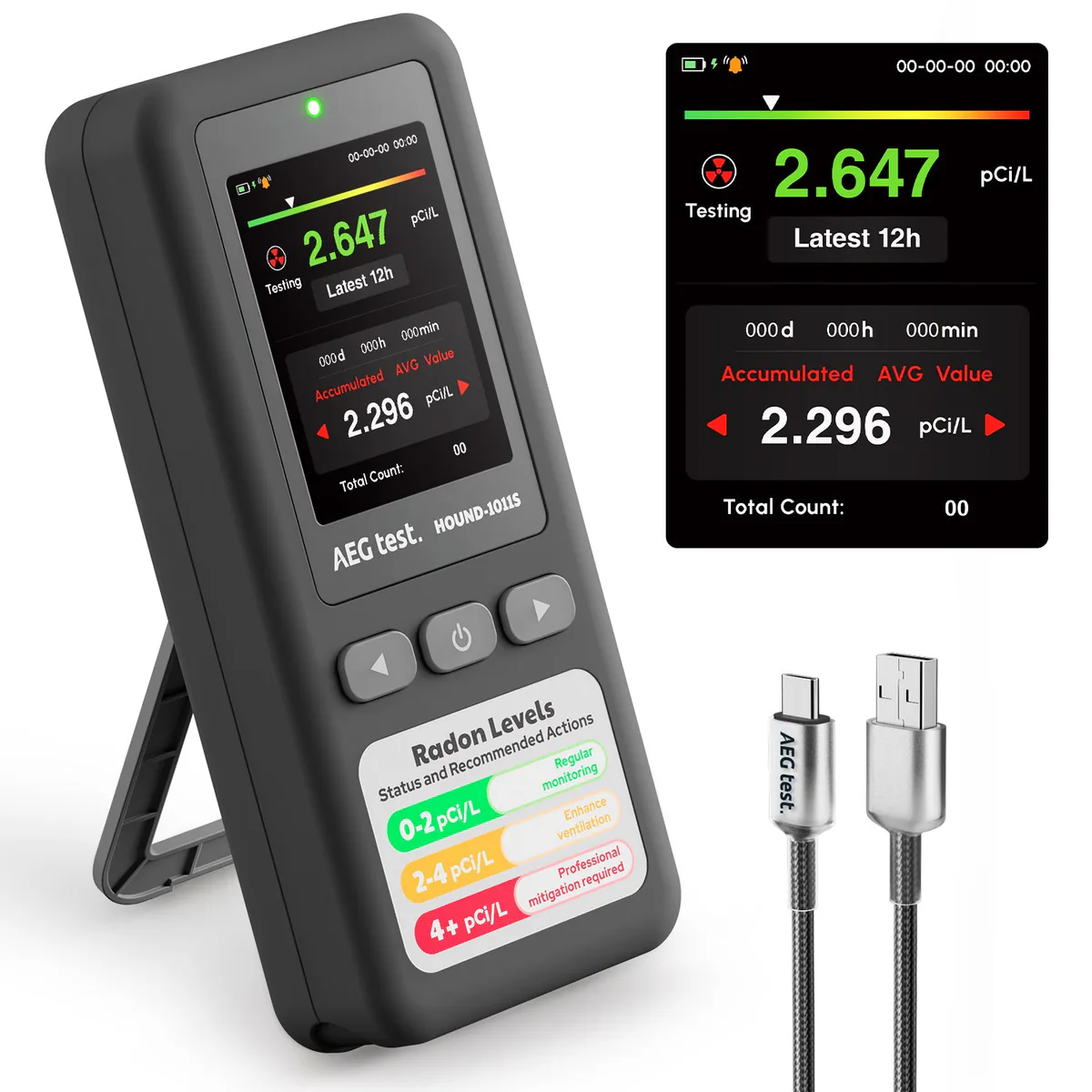
MonitorAEGTEST
Method: Semiconductor sensor
First reading: Within 12 hours
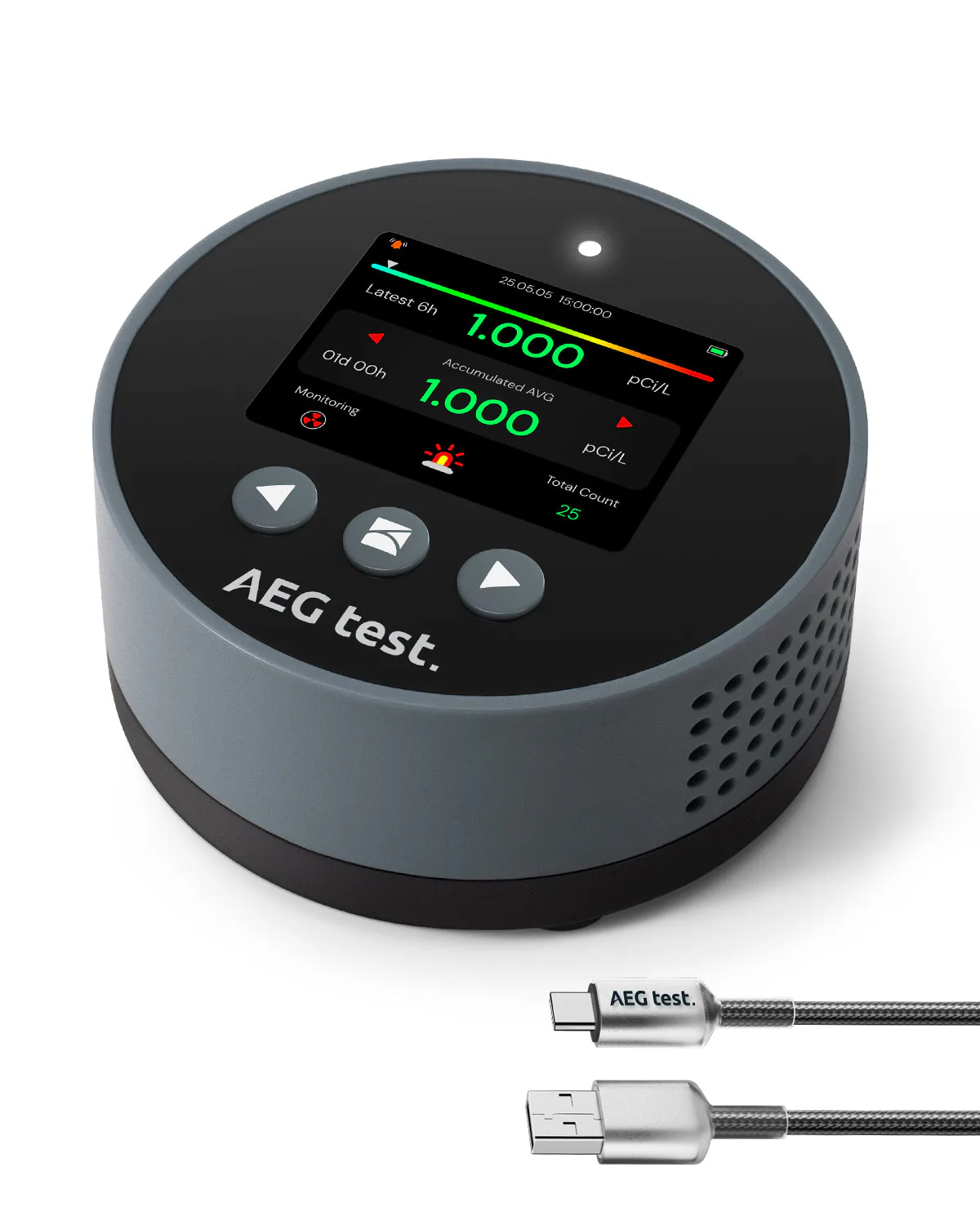
MonitorAEGTEST
Method: Semiconductor sensor
First reading: Within 6 hours
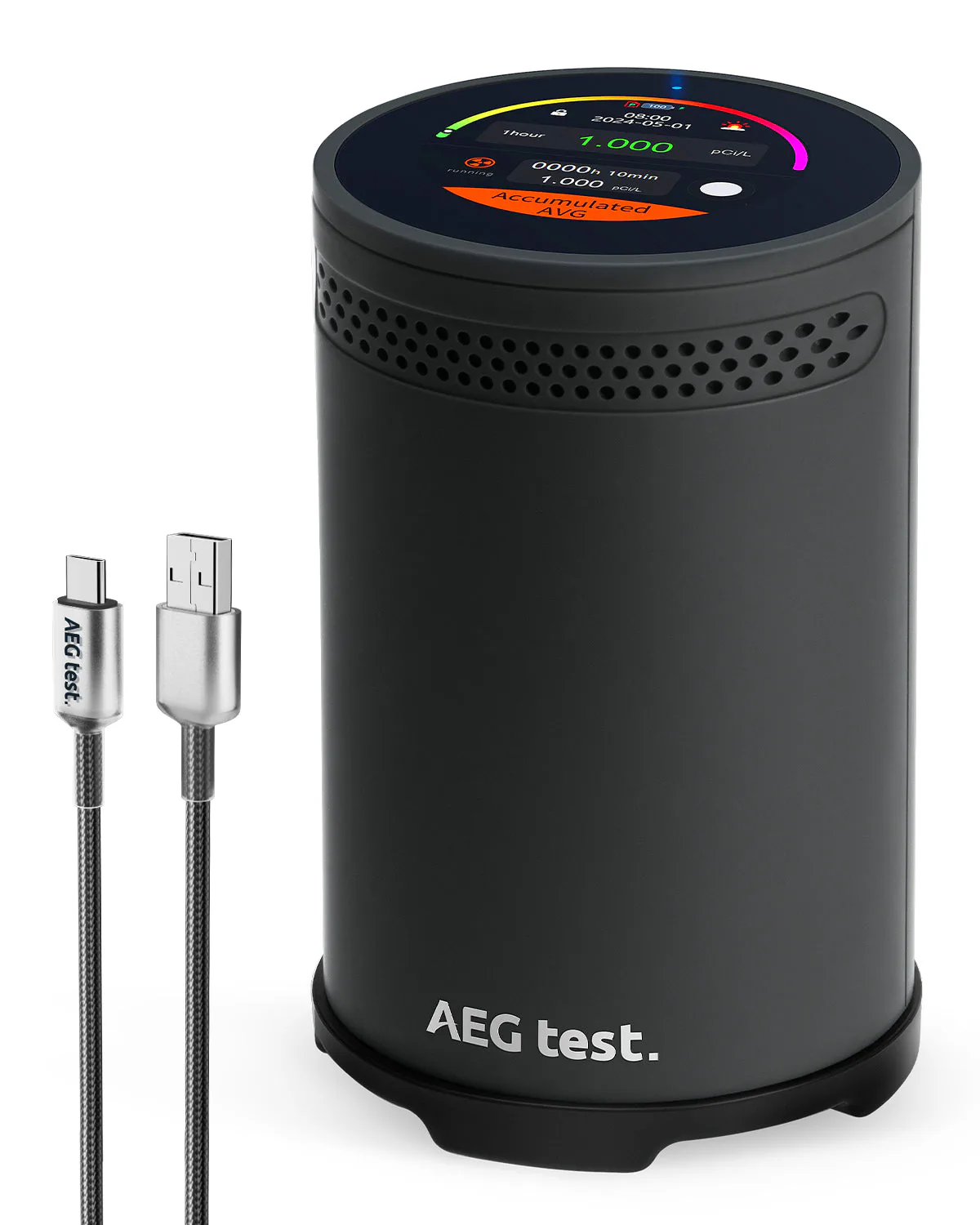
MonitorAEGTEST
First reading: Within 1 hour
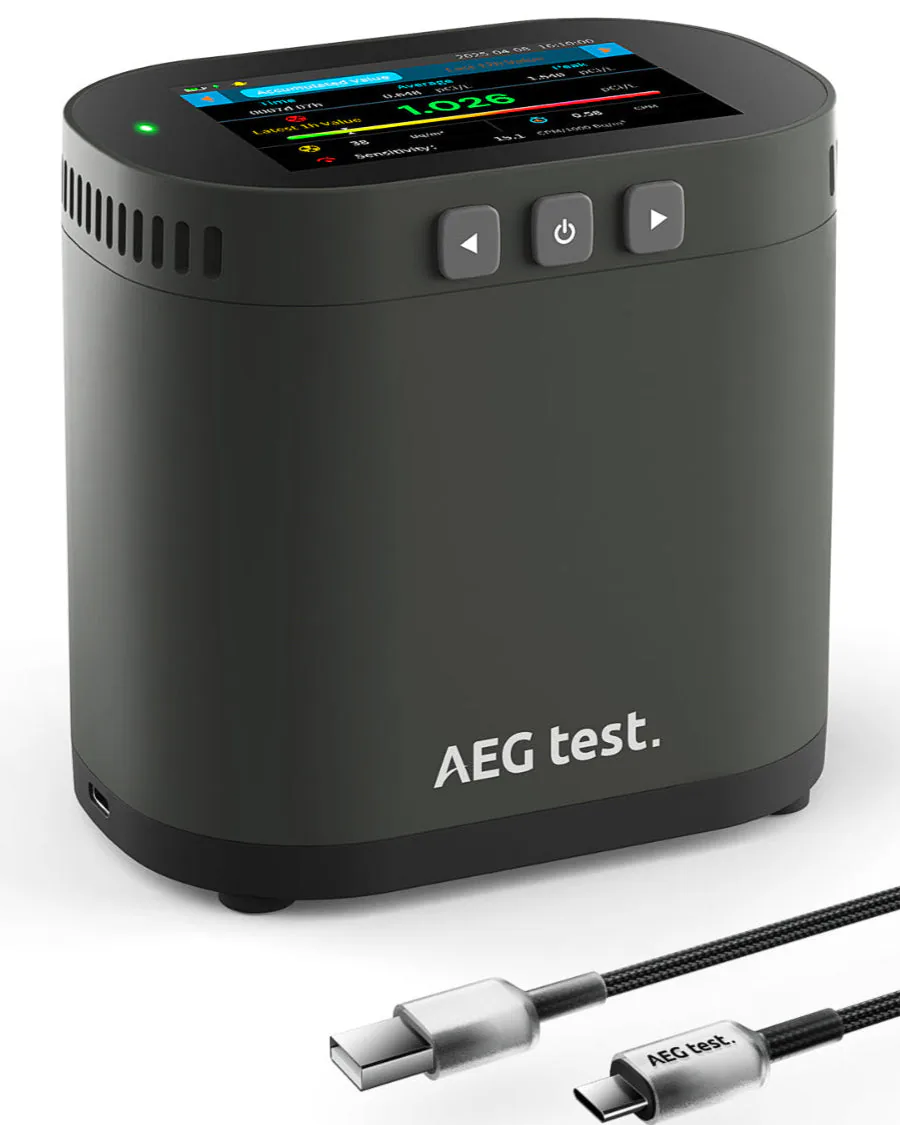
MonitorAEGTEST
Method: Ion chamber
First reading: Within 10 minutes
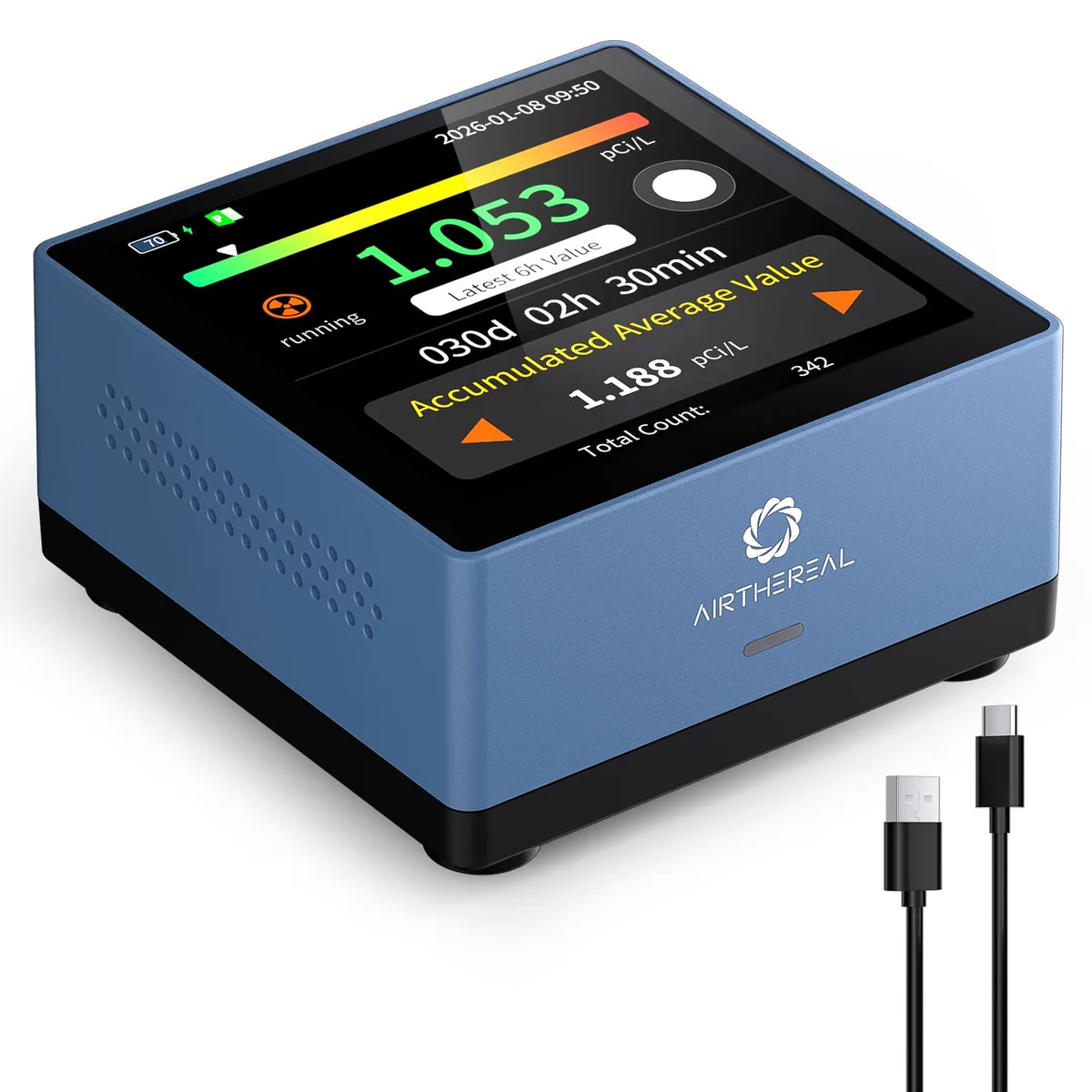
Monitor
Method: Semiconductor sensor
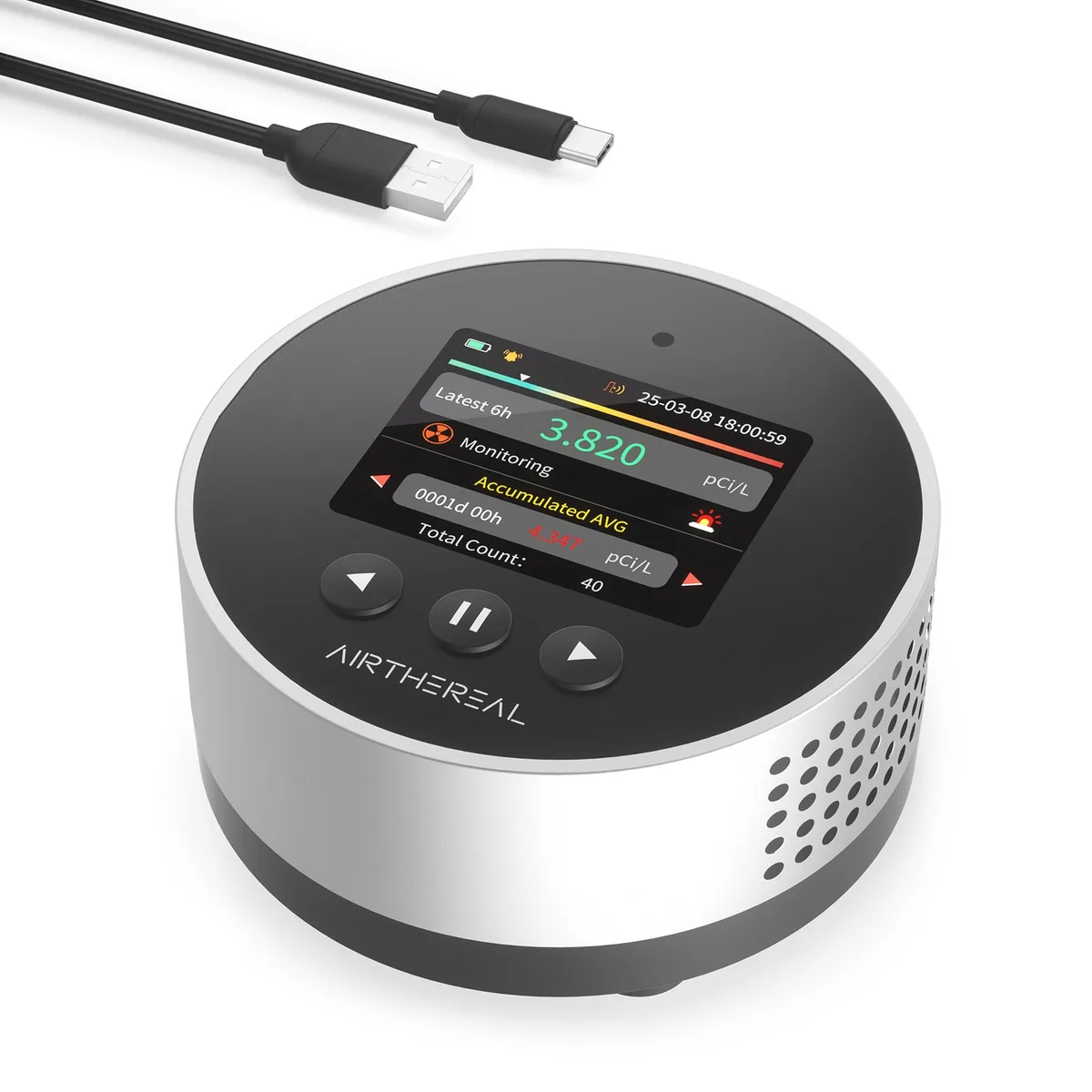
Monitor
Method: Semiconductor sensor
First reading: Within 6 hours
Monitor
Method: Alpha spectrometry
Monitor
Method: Alpha spectrometry
Readings: Every 60 minutes
Monitor
Method: Alpha spectrometry
Monitor
Method: Alpha spectrometry
Readings: Every 60 minutes
Monitor
Method: Alpha spectrometry
Monitor
Method: Alpha spectrometry
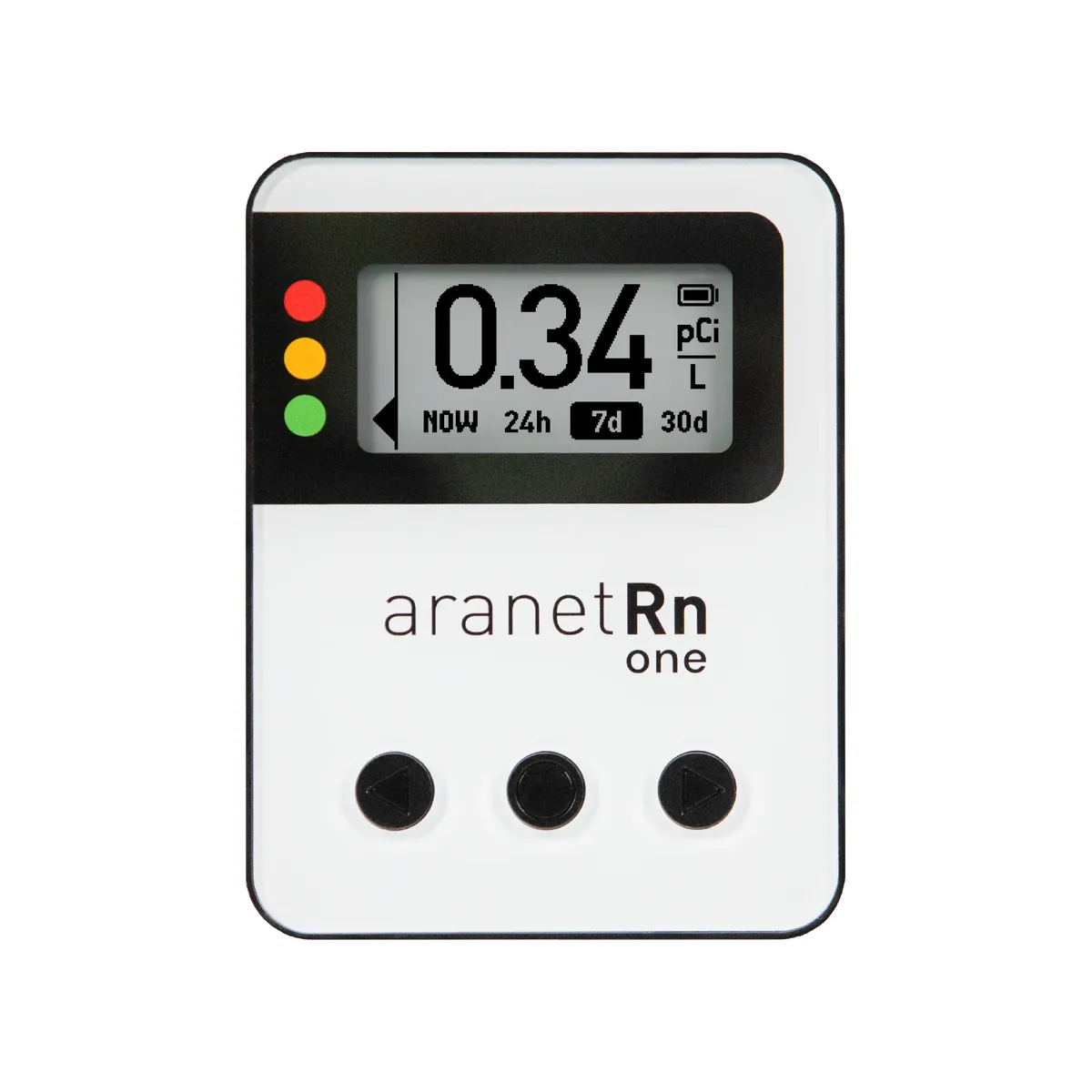
MonitorAranet
Method: Ion chamber
First reading: Within 10 minutes
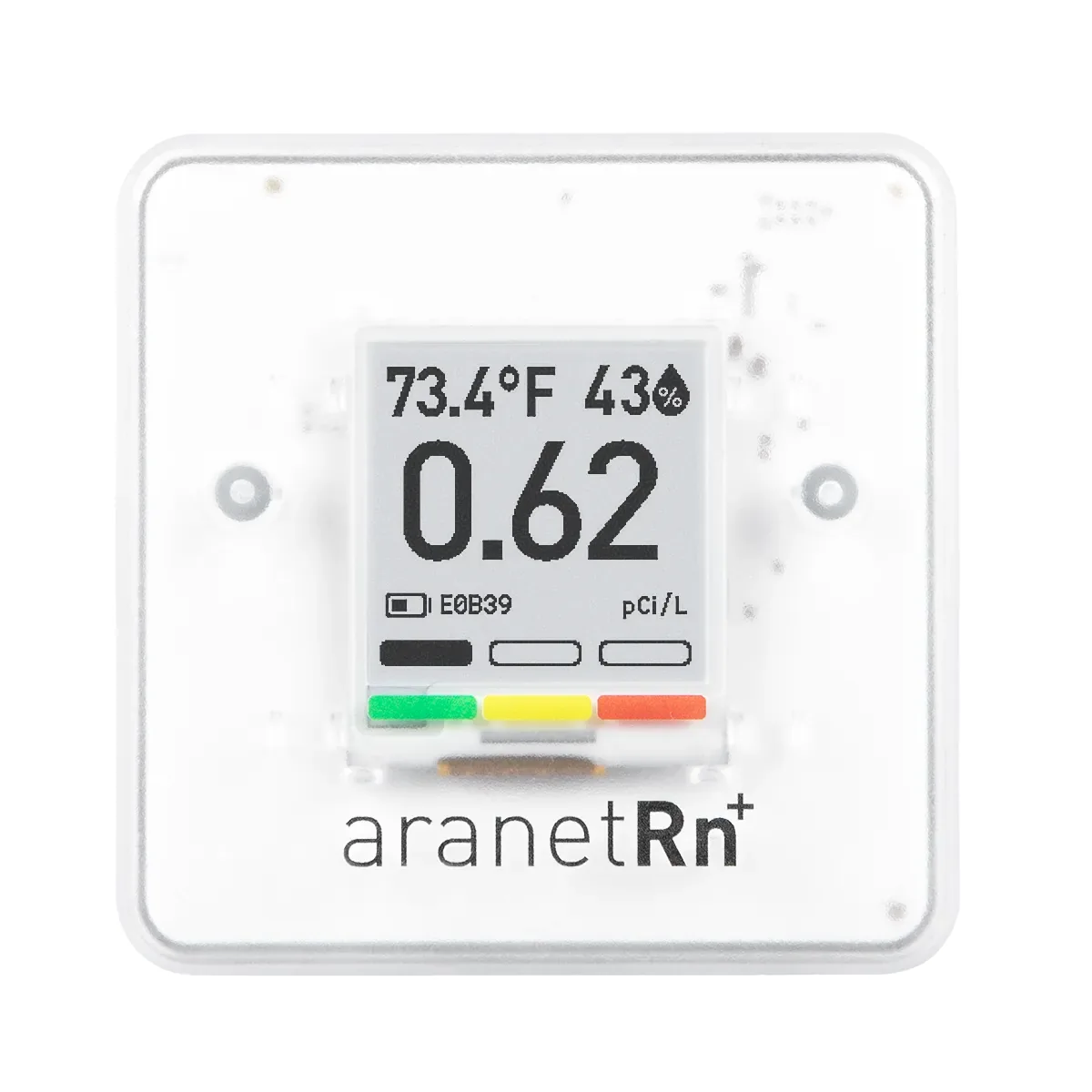
MonitorAranet
Method: Ion chamber
First reading: Within 10 minutes
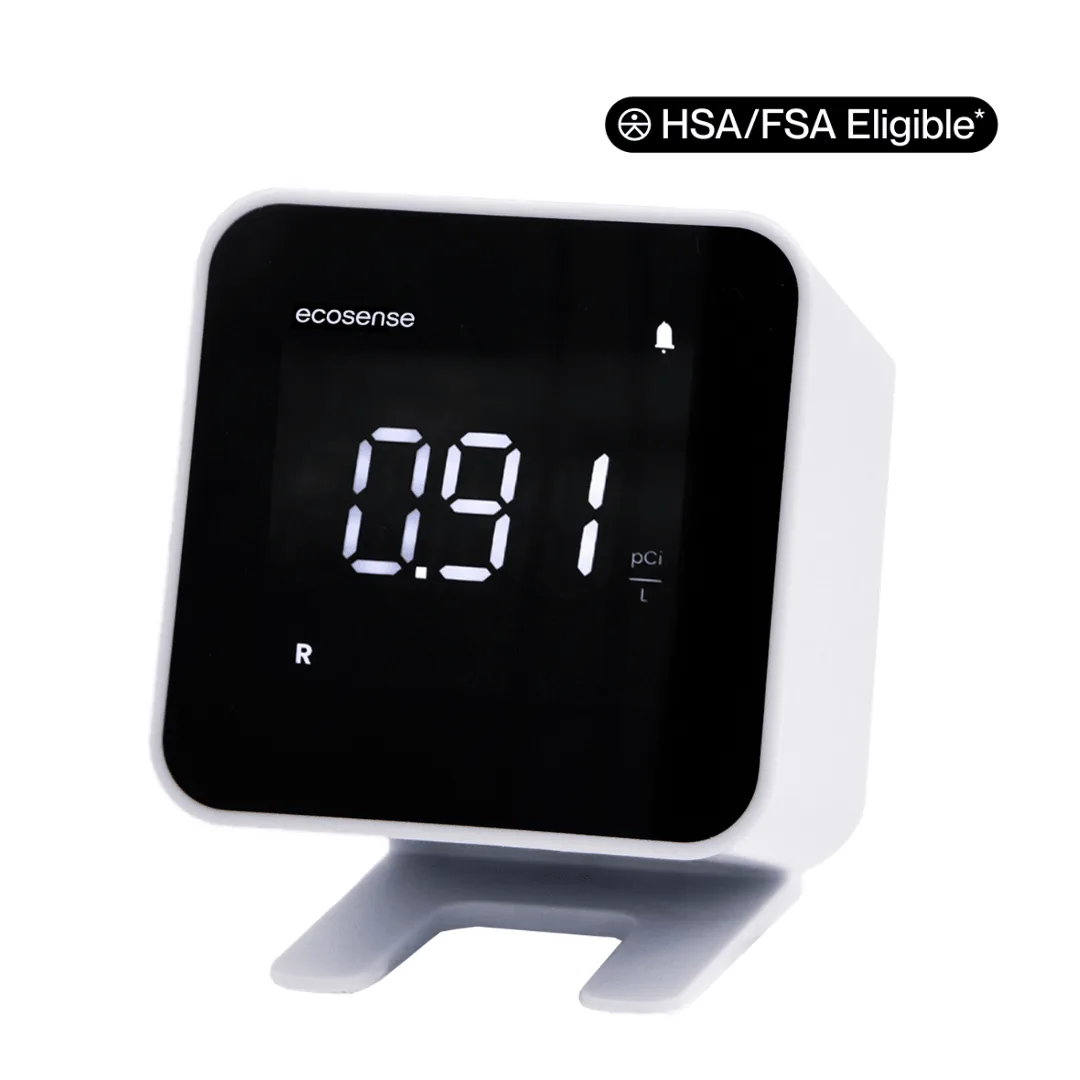
Monitor
Method: Ion chamber
First reading: Within 10 minutes
Monitor
Method: Ion chamber
First reading: Within 10 minutes
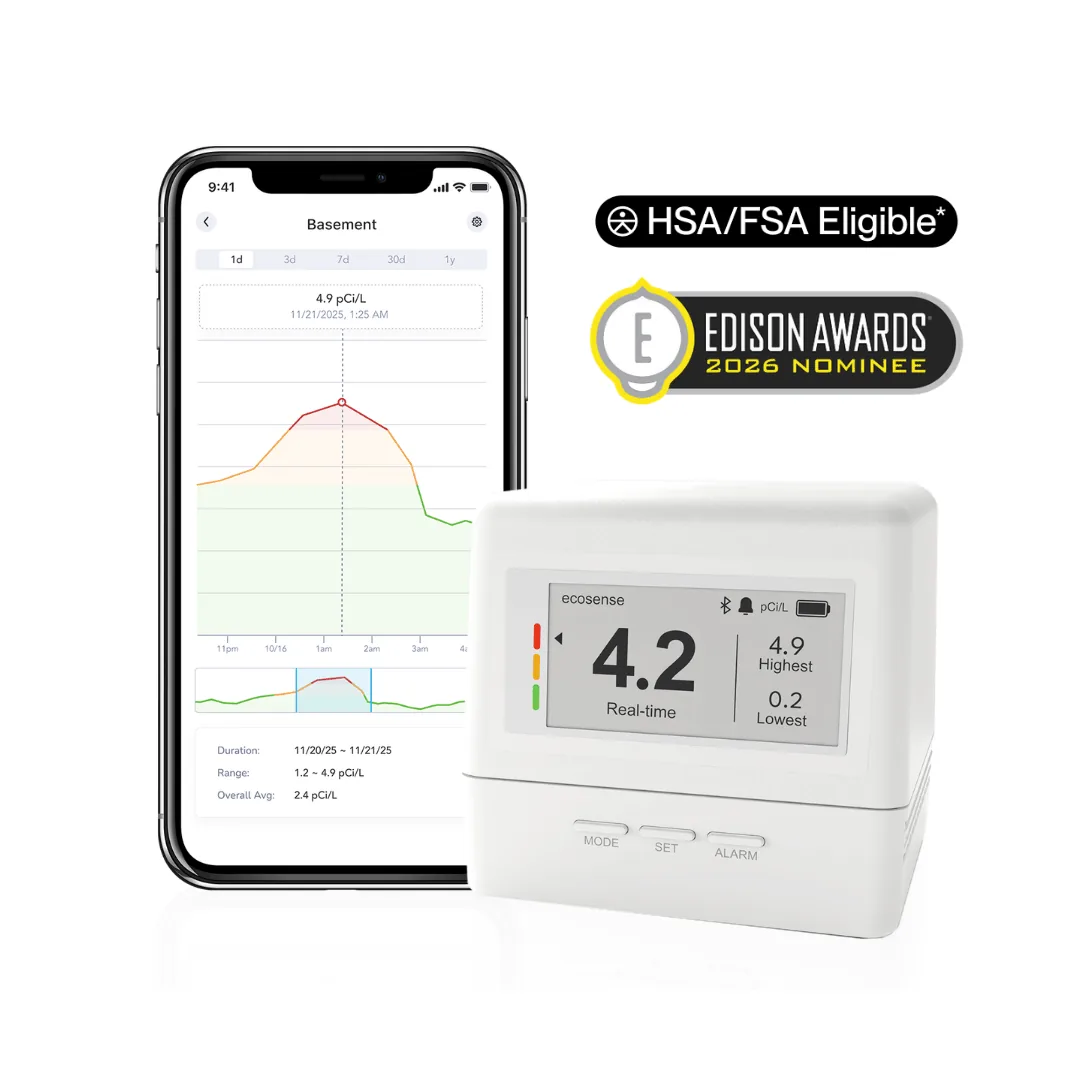
Monitor
Method: Ion chamber
First reading: Within 15 minutes
Monitor
Method: Ion chamber
First reading: Within 10 minutes
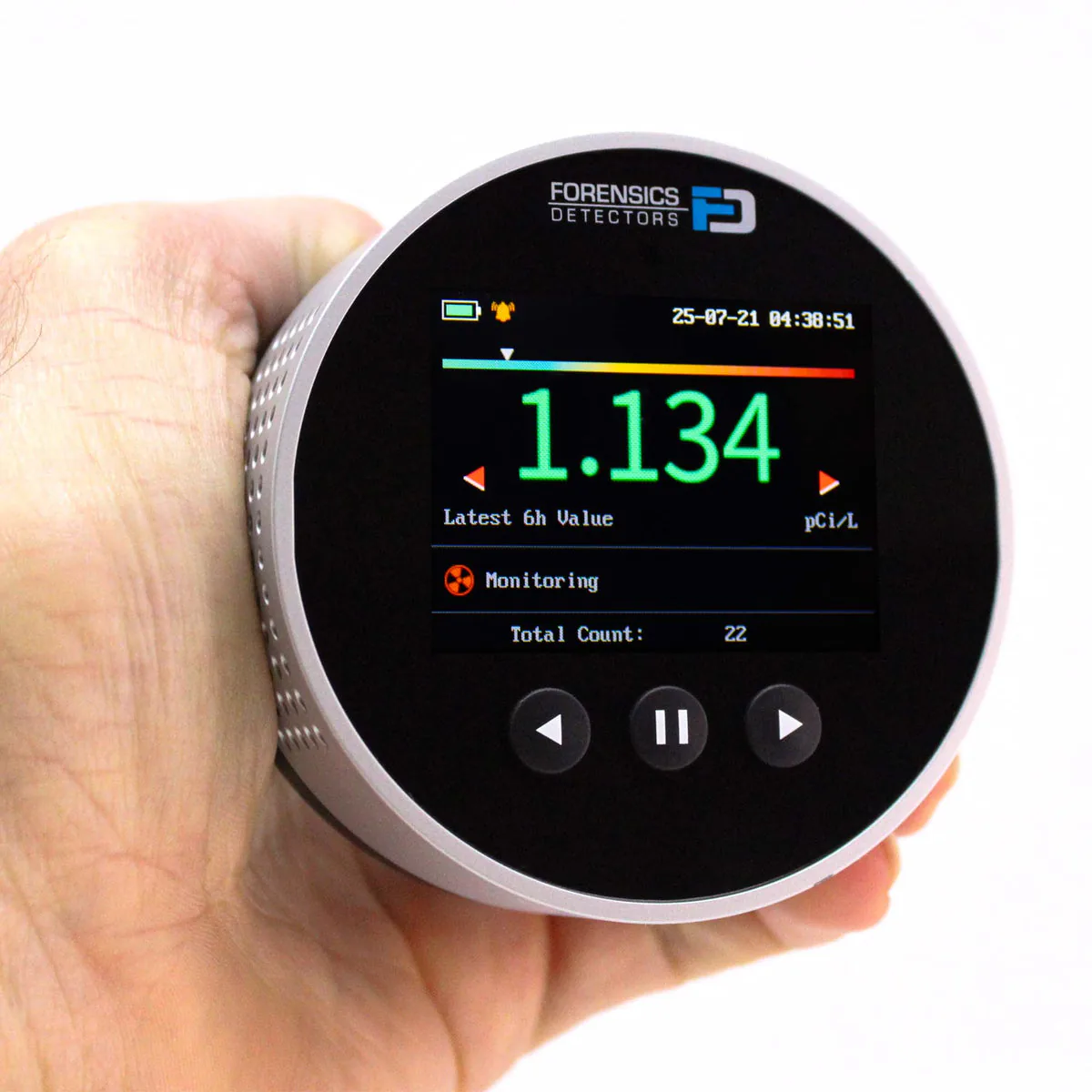
MonitorForensics Detectors
Method: Semiconductor sensor
First reading: Within 6 hours
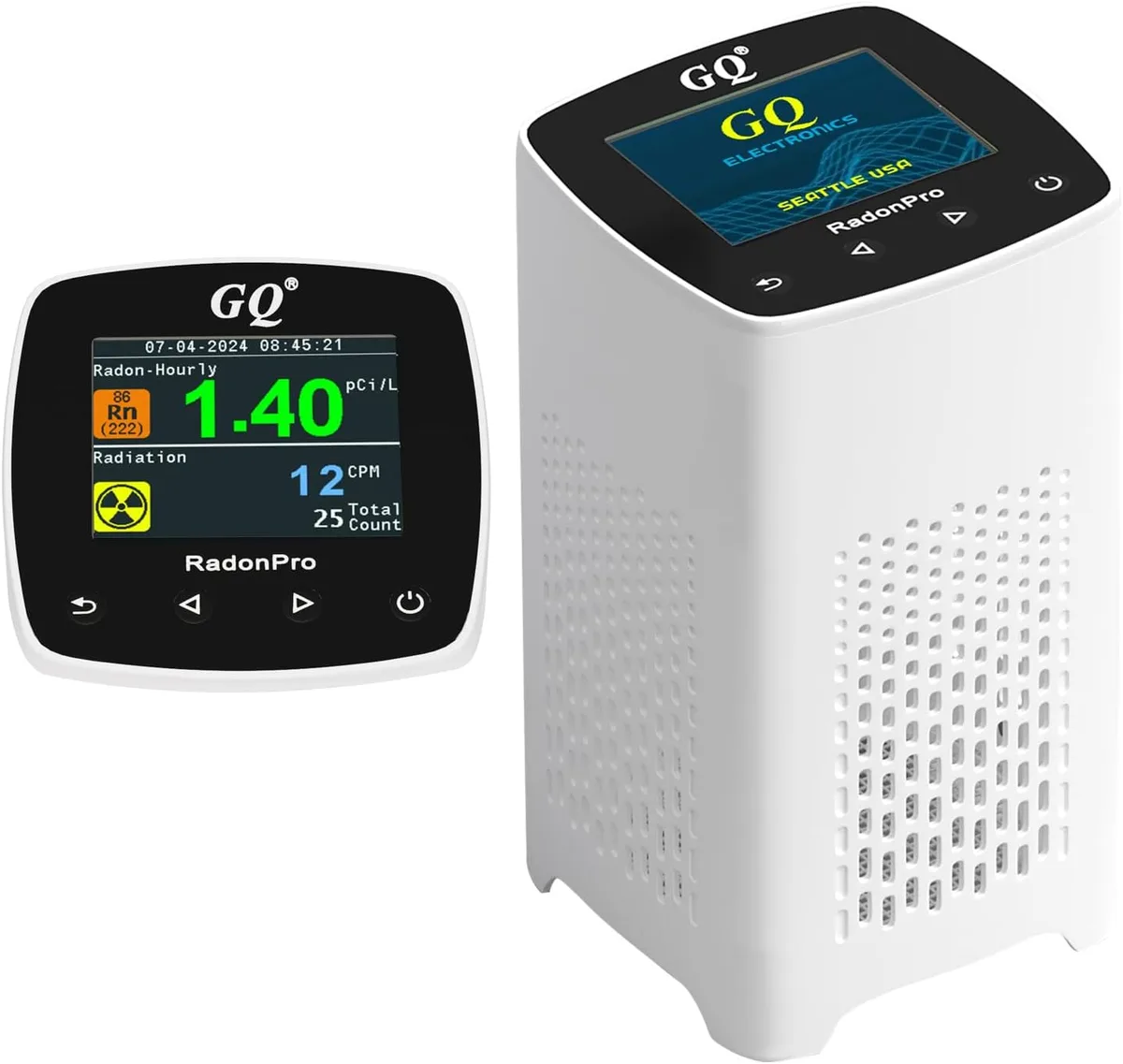
Monitor
First reading: Within 5 minutes
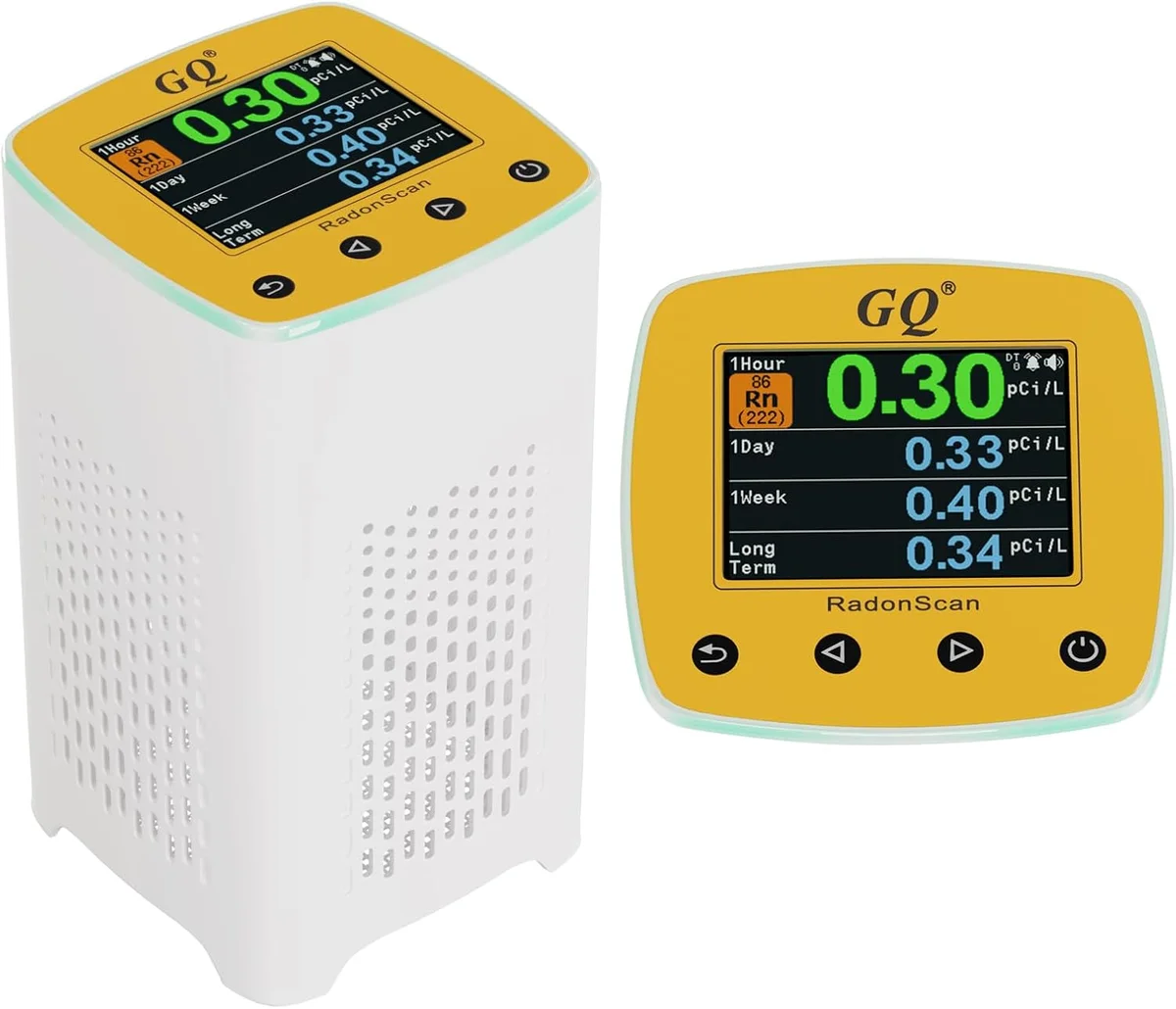
Monitor
First reading: Within 5 minutes
Monitor
First reading: Within 5 minutes
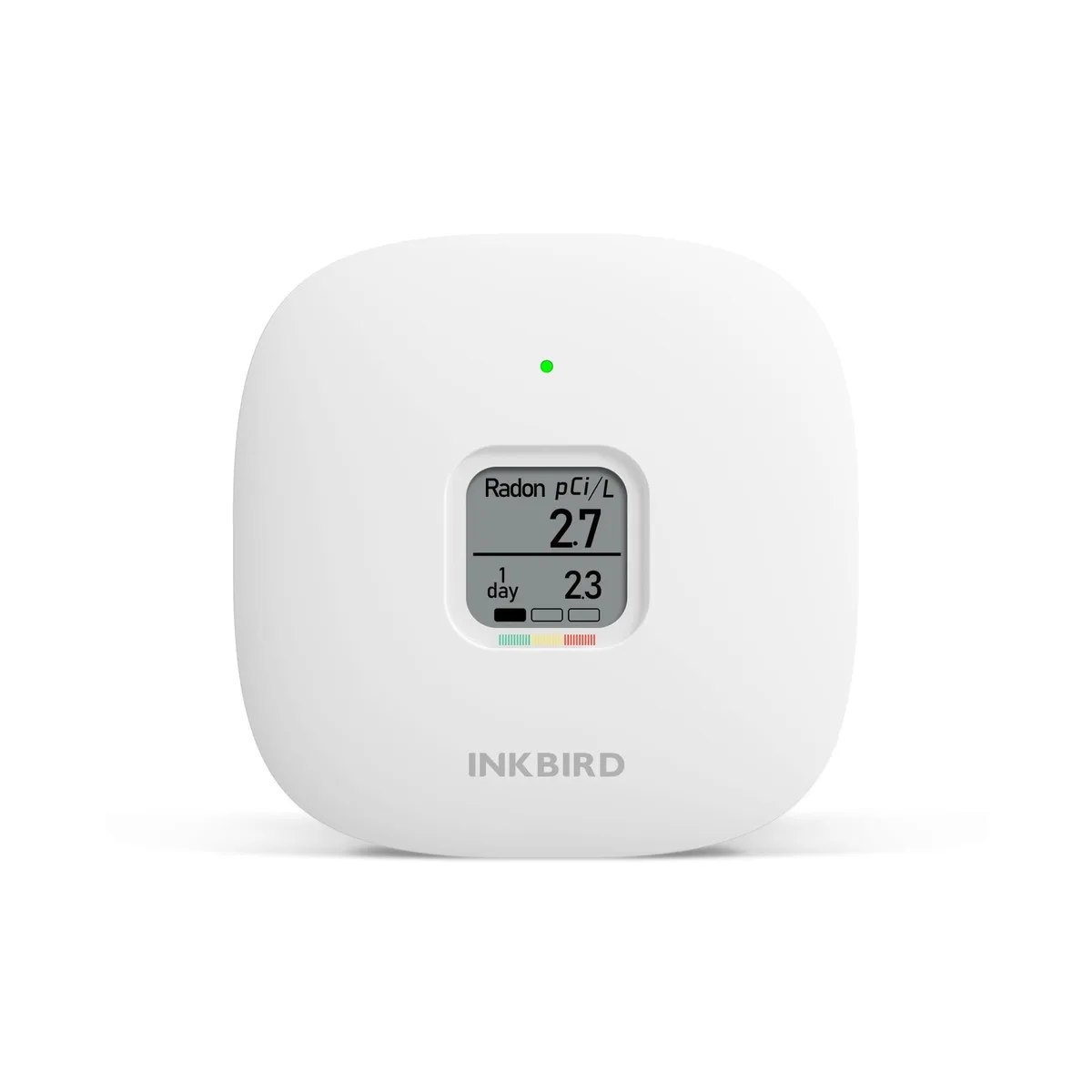
MonitorINKBIRD
First reading: Within 24 hours
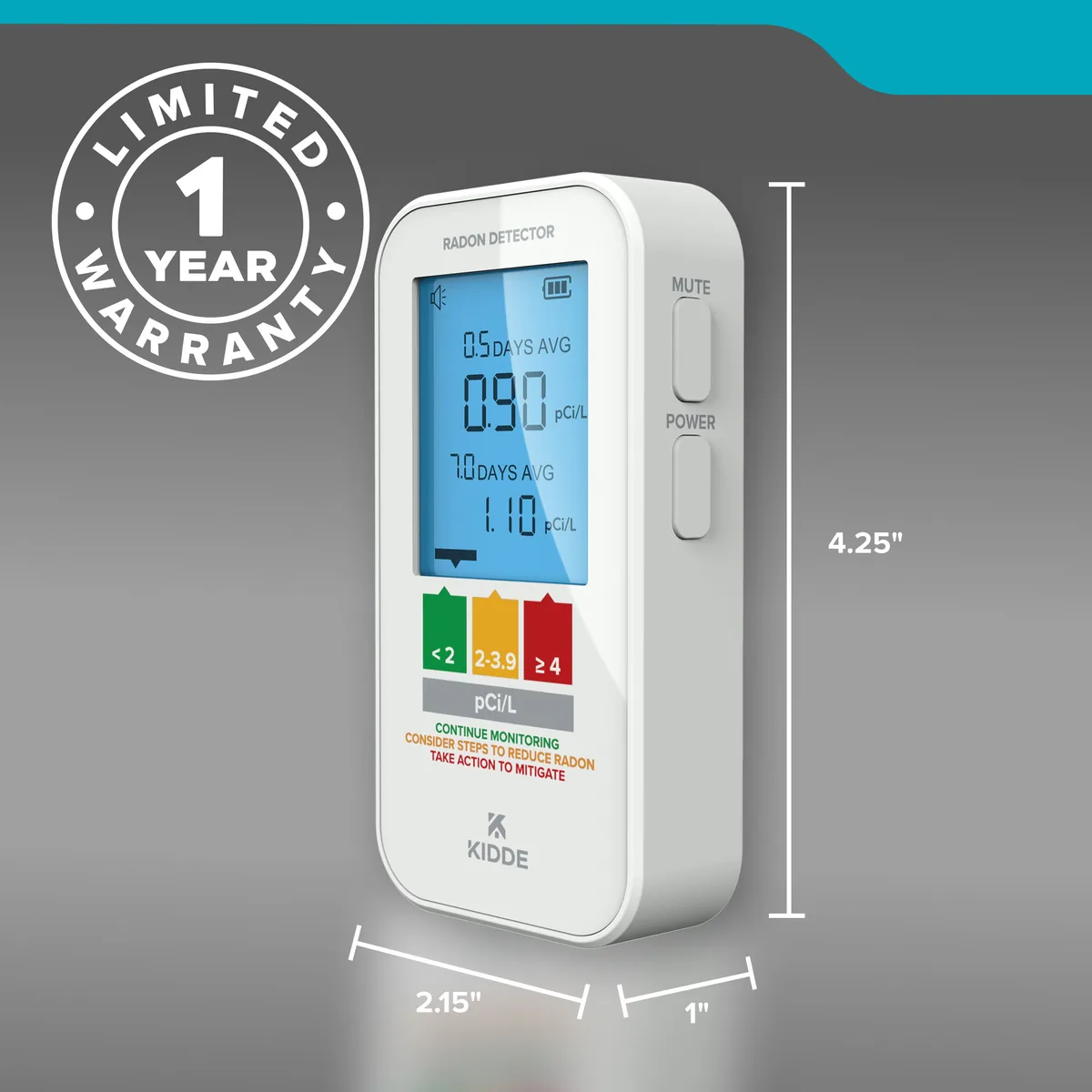
MonitorKidde
Method: Semiconductor sensor
First reading: Within 12 hours
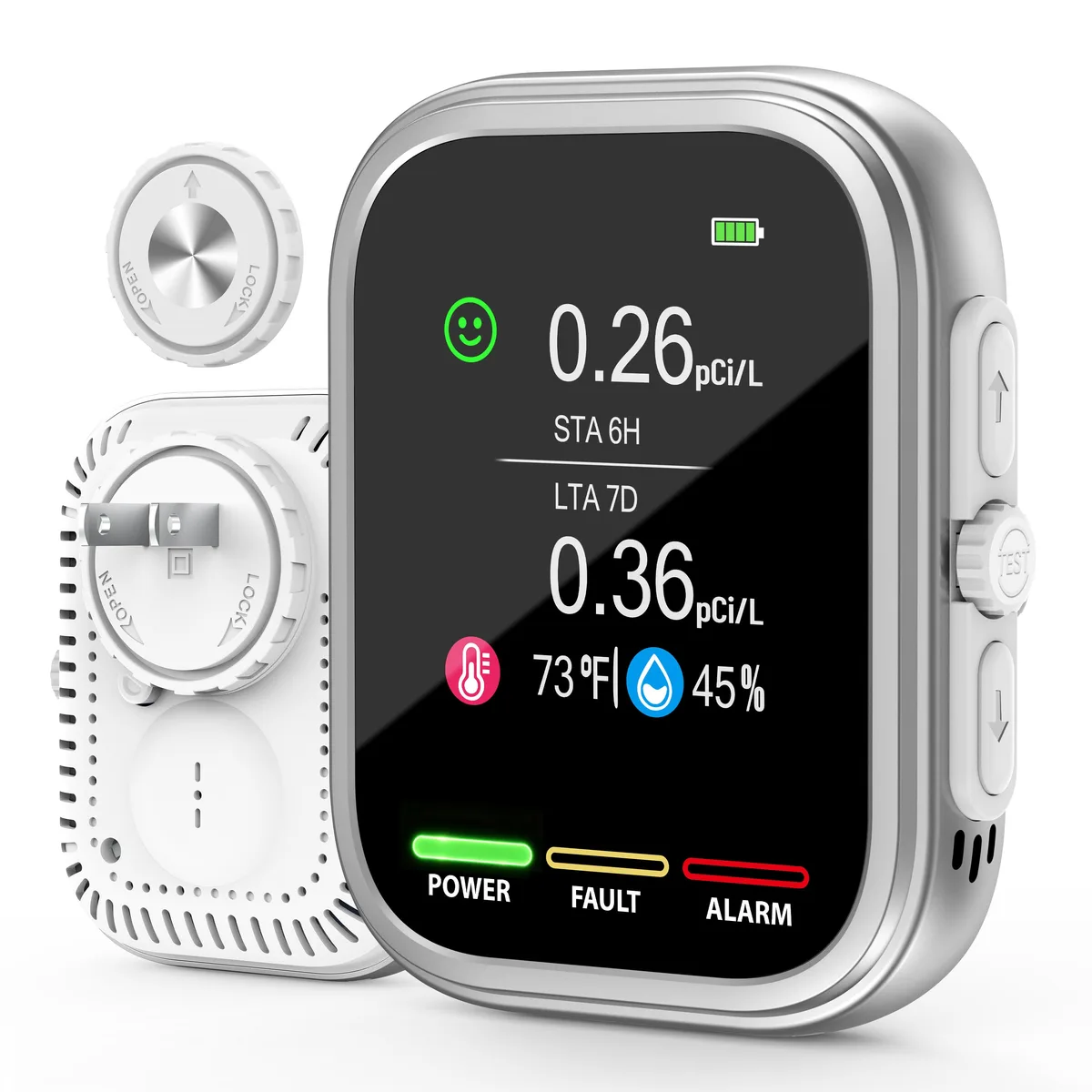
MonitorPYZYCKYH
Method: Semiconductor sensor
First reading: Within 6 hours
MonitorSafetySiren
First reading: Within 48 hours
Monitor
Method: Alpha spectrometry
First reading: Within 24 hours
MonitorX-Sense
Method: Alpha spectrometry
First reading: Within 24 hours
MonitorX-Sense
Method: Alpha spectrometry
First reading: Within 24 hours
MonitorX-Sense
Method: Alpha spectrometry
First reading: Within 24 hours
More home radon monitors: 1 of 31
Questions
6 questions about the SunRADON lüft, answered
No. The front LED shows green, yellow or red for the overall status of all six sensors, and blue as a nightlight; the radon figures, averages and charts are in the app. C-NRPP describes the same split: averages in the app and a color-coded indication of levels on the monitor.
C-NRPP's 2024/25 consumer monitor evaluation approved the SunRadon Luft, with an A in each of four chamber rounds, and C-NRPP's 2023 report also listed it as passing its performance test. C-NRPP tested Canadian-market units; we have not confirmed the US version is identical.
A 2026 study in Sensors placed lüft monitors beside SunRADON's own industrial-grade Model 1028 XP, calibrated annually by the maker, in six rooms of a school in Utah for about 29 weeks in 2024. The mean difference in their 24-hour average radon was -0.05 pCi/L (95% confidence interval -0.24 to 0.14), with a concordance correlation coefficient of 0.92. Against the 1028 XP, the lüft's call on whether radon was at or above 4.0 pCi/L had a sensitivity of 0.81 and a specificity of 0.96. The authors judged the lüft's radon and air pressure averages valid, but not its carbon dioxide, humidity, temperature or VOC averages.
SunRADON's specification sheet gives an uncertainty of 10% after 7 days at 4 pCi/L. C-NRPP lists the maker's stated accuracy as ±10% after 7 days at 200 Bq/m³, a level the 2026 study gives as 5.41 pCi/L. The two documents name the same percentage at different reference levels; neither is a guarantee for a single reading in your home.
Setup uses Bluetooth from your phone, and the app's remote readings and alerts need a 2.4 GHz Wi-Fi network; SunRADON says it works with any 2.4 GHz network, and most dual-band routers offer one. Without power the lüft stops measuring, since it has no battery. When power returns, SunRADON says it reconnects, restores its settings and keeps the data stored on the device for up to 4 years.
They show changes rather than absolute levels. SunRADON explains that one relative sensor handles both, that it self-levels periodically to offset drift, and that eCO2 is a carbon dioxide equivalent derived from the mixed gases, not a reading from a carbon dioxide sensor. Its specification sheet names the VOC groups it detects: alcohols, aldehydes, ketones, organic acids, amines, and aliphatic and aromatic hydrocarbons.
In the 2026 school study, the lüft's carbon dioxide, humidity and VOC averages ran lower than the reference monitor's and its temperature higher, so the air-quality figures are more useful for spotting changes than as exact levels.
SunRADON sells it on its own store, from Melbourne, Florida, and describes it as designed and manufactured in the USA. Its product page says Canadian customers can now order on Amazon Canada, and its warranty tells anyone who bought through Amazon or another authorized third-party reseller to contact the point of sale about a claim. We show an Amazon price only when Amazon's live product data supplies one.
Updated October 8, 2026