
MonitorAEGTEST
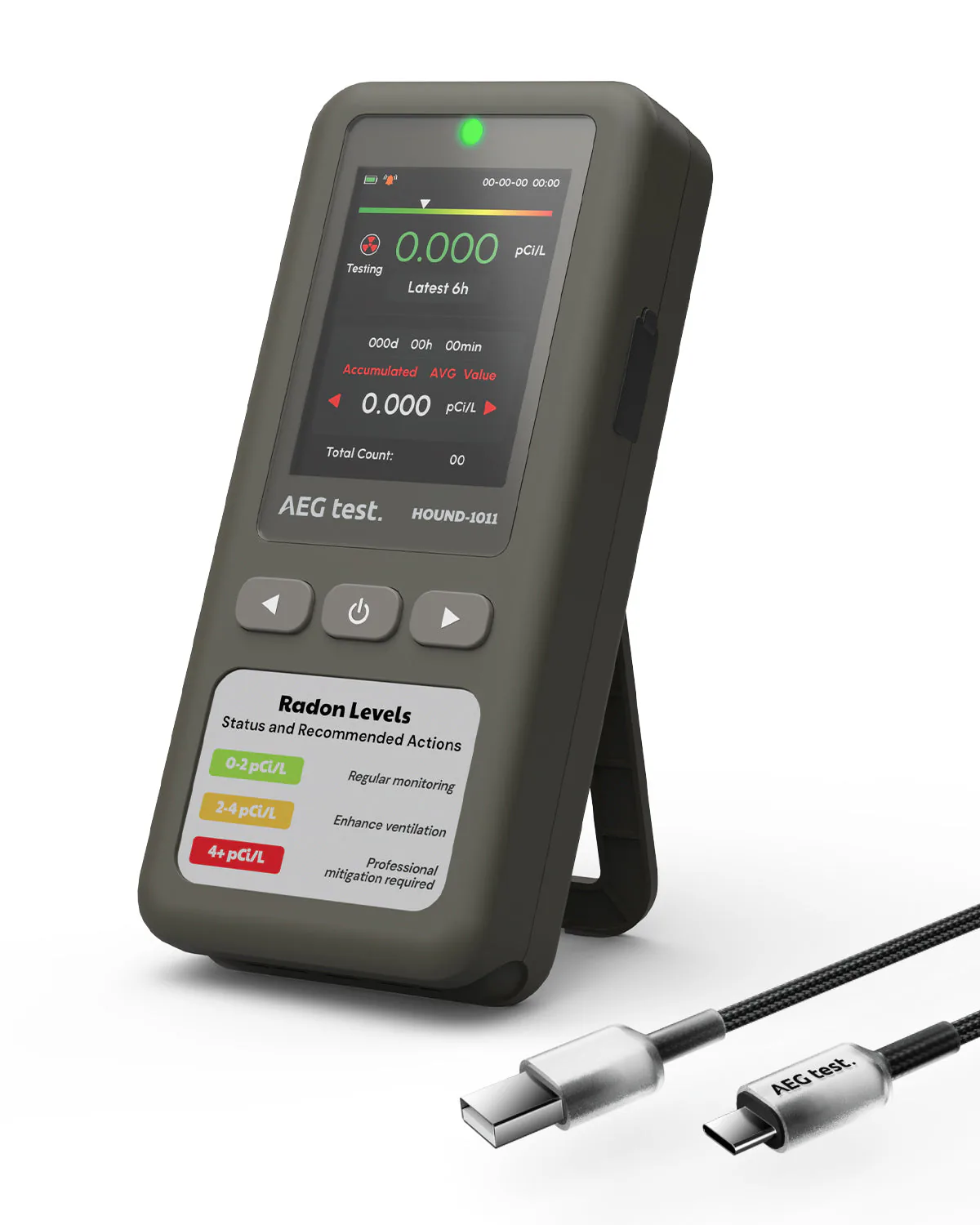
HOUND-1011 rechargeable radon detector with a screen
- C-NRPP 2024/25: Not included
- Battery
- Alarm
- Screen
Method: Semiconductor sensor
First reading: Within 6 hours
 TurinSen
Battery radon monitor with an e-ink screen
Photos: TurinSen
 (opens in a new tab)Check price on Amazon (opens in a new tab)
As an Amazon Associate, Radon411 earns from qualifying purchases.
Amazon and the Amazon logo are trademarks of Amazon.com, Inc. or its affiliates.
See ratings and reviews on Amazon (opens in a new tab)As TurinSen states it
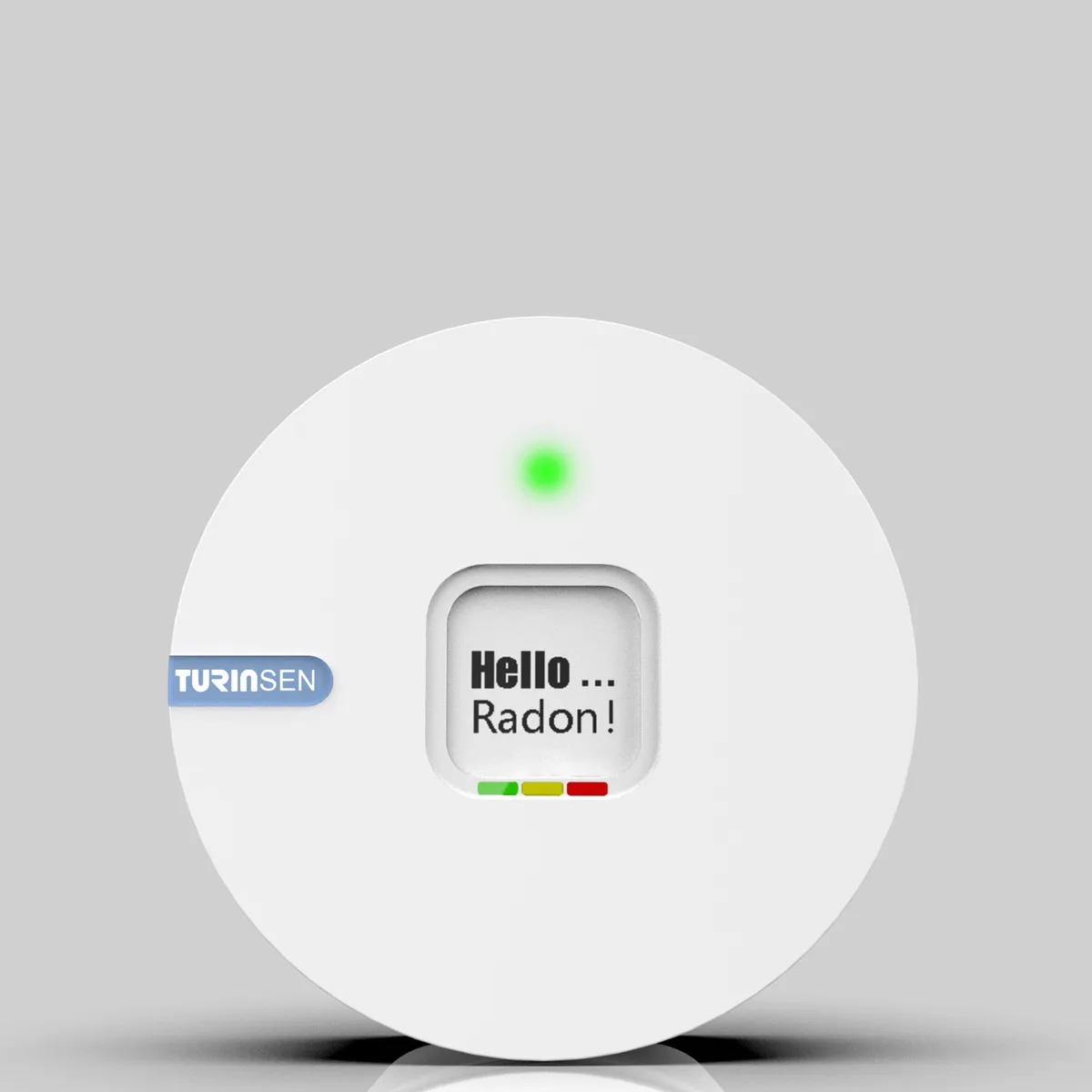
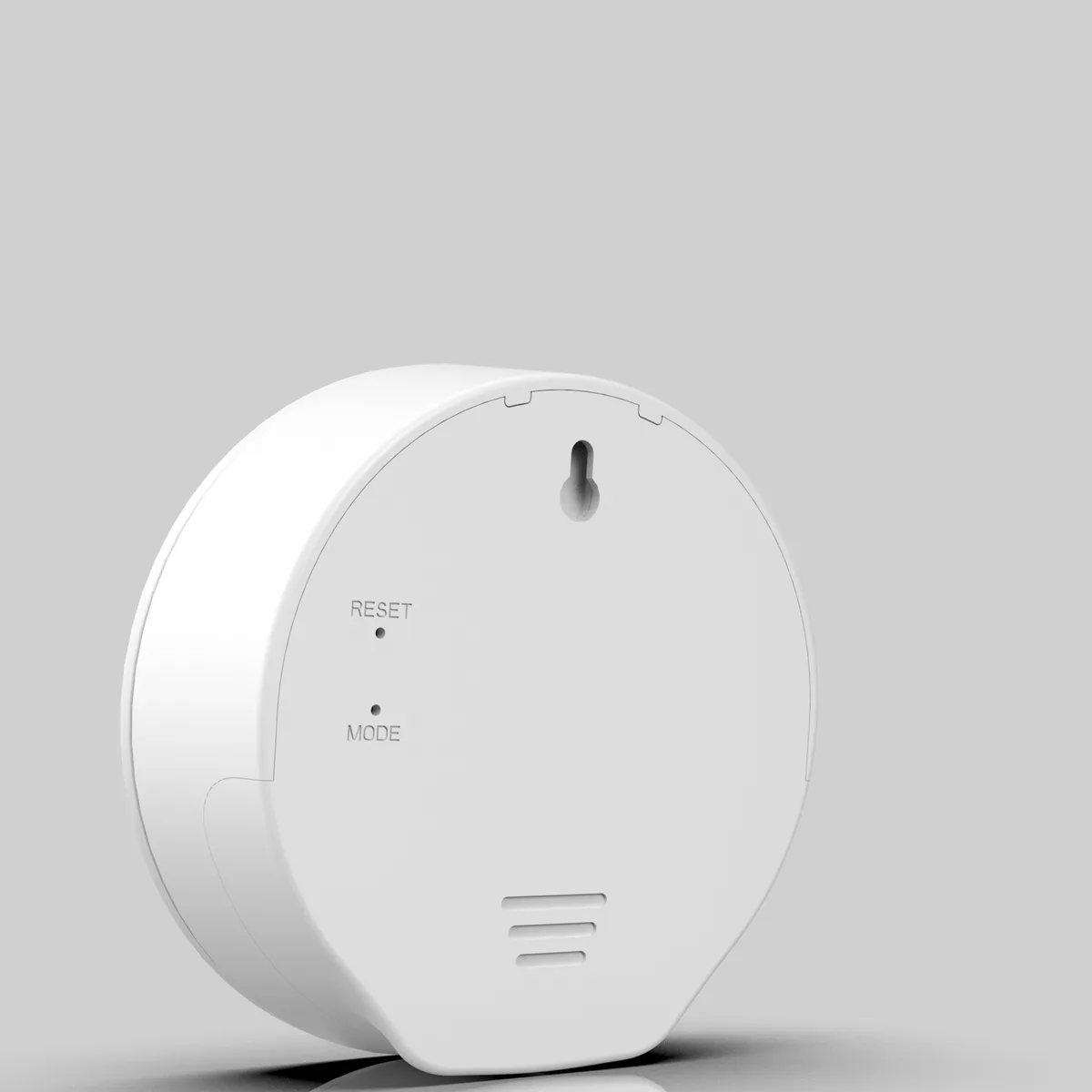
The Hello Radon C, model RN-300C, is a cordless radon monitor from TurinSen, a radon-monitor factory in Shenzhen, China that also builds for other brands: a passive diffusion chamber with an alpha spectrometry sensor, a 1.54-inch e-ink screen, a color-coded light and bar, and three AAA batteries TurinSen rates for 2 years. It was not included in C-NRPP's 2024/25 evaluation, so there is no independent result for it either way.
TurinSen's page says the monitor runs on three AAA alkaline (LR03) batteries but does not list the package contents or a warranty, so both are not stated by the maker. TurinSen's catalogue calls it a factory specialized in designing and manufacturing radon monitors since 2015 and says OEM and ODM orders are welcome, so check the box contents, warranty and support with the seller you buy from.
In the box and running costsHow it works
The sensor, the sampling and the readings, then who has checked it
In our words, from the maker's documents
TurinSen lists the detecting technology as a passive radon diffusion chamber and the sensor as an alpha spectrometry sensor. Passive means room air reaches the chamber on its own, with no fan or pump, and the reading is made inside the monitor, with nothing sent to a laboratory.
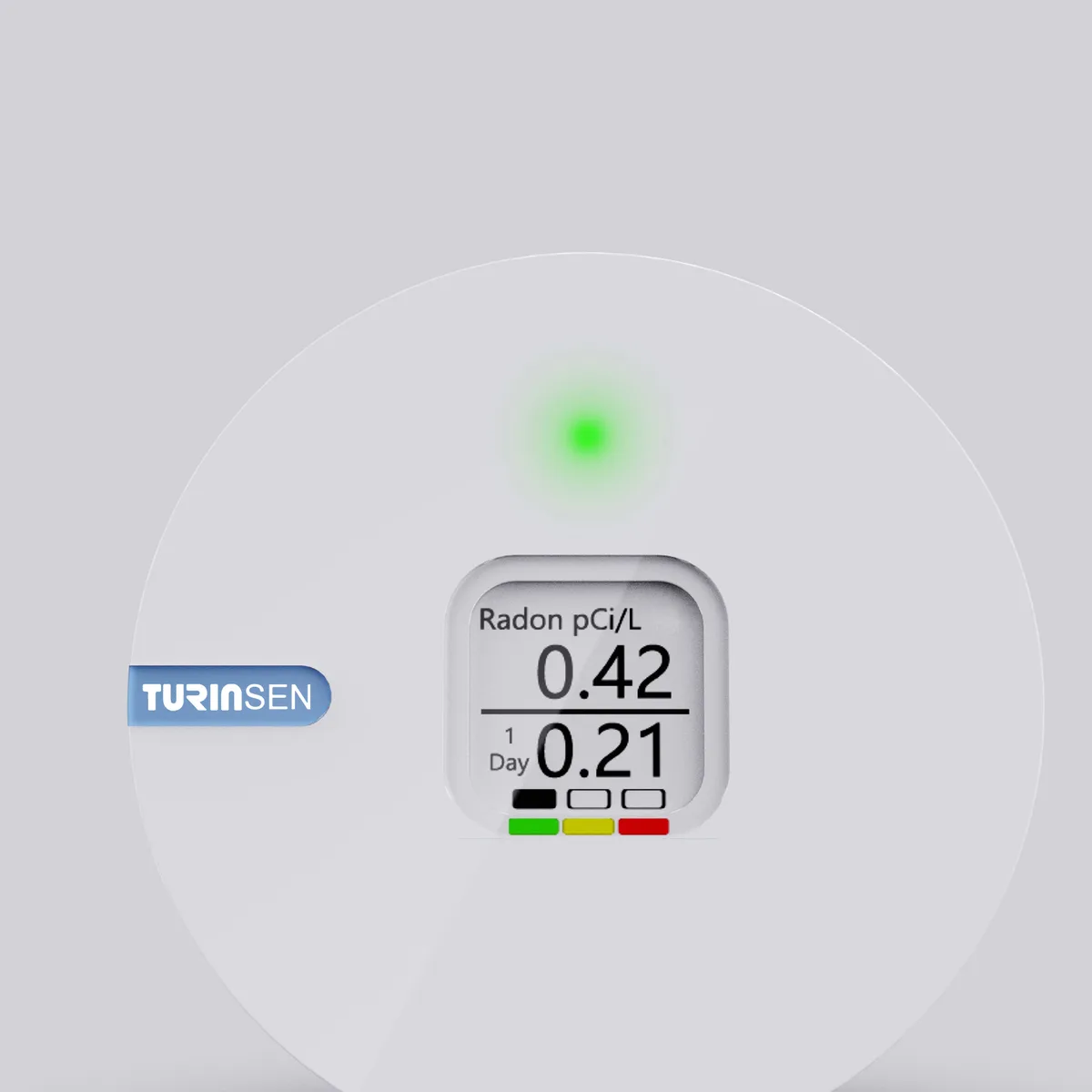
TurinSen says accurate readings are produced after 24 hours of operation. Measurement data is shown on a power-efficient e-ink screen, and the monitor gives visual notifications when the radon concentration becomes unhealthy. TurinSen's page does not give the update interval, which averages the screen shows, or how much history the monitor keeps, so those are not stated by the maker.
The radon level is also shown two other ways: a color-coded bar on the screen, and a color-coded LED that flashes once per minute so the level can be seen from across a room. TurinSen does not give the levels at which the colors change, and it lists no sound alarm, no app and no wireless connection.
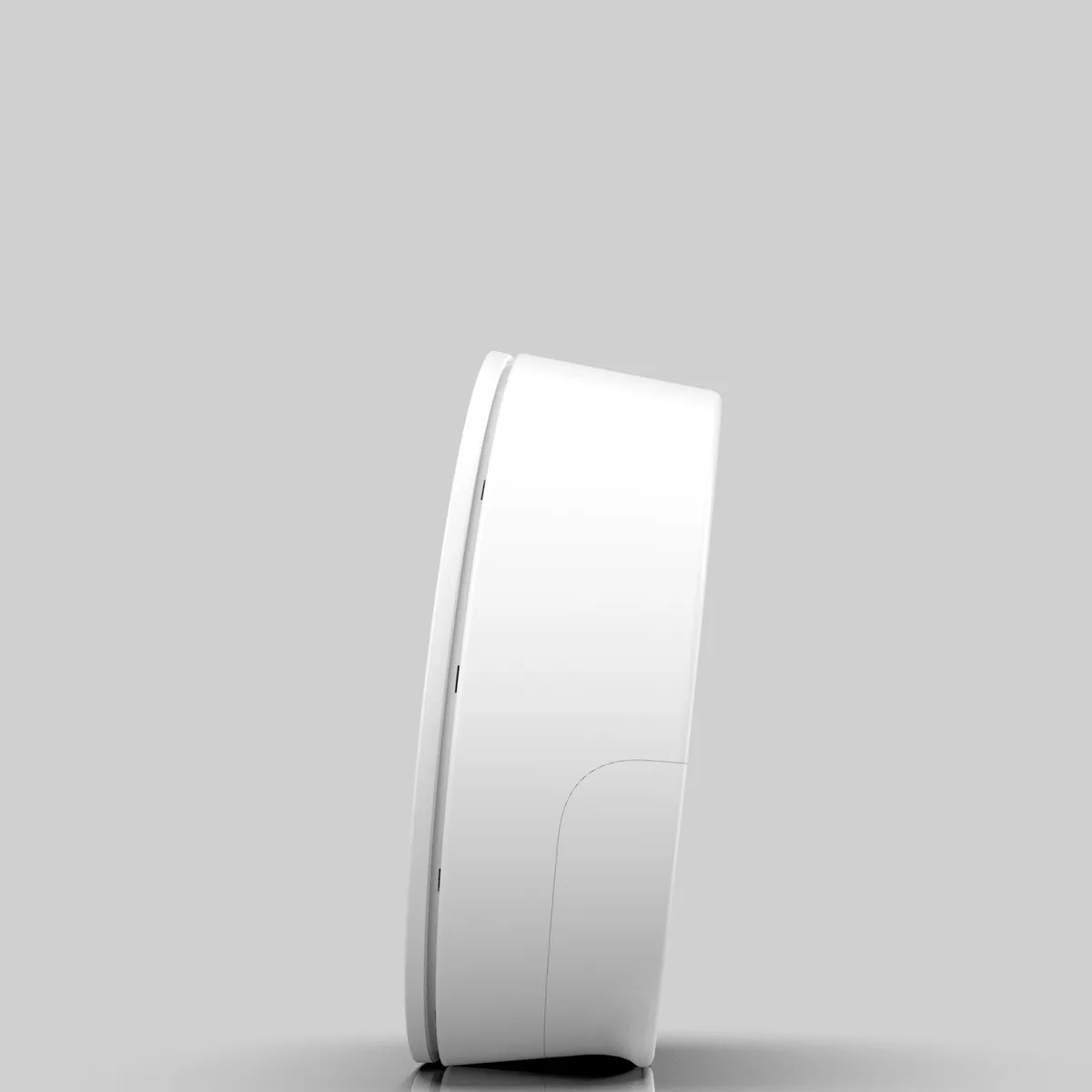
TurinSen publishes a measurement range of 0 to 9999 Bq/m³, or 0 to 500 pCi/L, and an operating range of 0 to 40 °C at relative humidity below 95%. The Hello Radon C measures 100 mm (D) by 33 mm (H) and weighs 157 g with its batteries. The page gives the range in both units but does not say which unit the screen shows or whether it can be switched.
TurinSen lists two Hello Radon models. The Hello Radon C is RN-300C; the Hello Radon S is RN-300S, in a 103 by 103 by 33 mm case, with the same detecting technology, sensor, battery, screen, range and accuracy figures. Both can stand on a surface or hang on a wall.
TurinSen's own statements, attributed
These are TurinSen's own statements, attributed to it. They are not our findings, and we have not tested this product ourselves.
C-NRPP 2024/25, recalls and studies
The Canadian National Radon Proficiency Program's 2024/25 comparison of consumer monitors did not include TurinSen Hello Radon C. That is a fact about which devices took part, not a finding about this one: no result from that program exists for it either way.
C-NRPP is the Canadian National Radon Proficiency Program. Its 2024/25 results were published in May 2025.
Specifications
Every figure as the maker states it
TurinSen's page says the monitor runs on three AAA alkaline (LR03) batteries but does not list the package contents or a warranty, so both are not stated by the maker. TurinSen's catalogue calls it a factory specialized in designing and manufacturing radon monitors since 2015 and says OEM and ODM orders are welcome, so check the box contents, warranty and support with the seller you buy from.
There is no lab fee, subscription or app. The running cost is batteries: three AAA alkaline (LR03) cells, which TurinSen rates for 2 years. TurinSen does not say what happens to the readings when the batteries are changed, so that is not stated by the maker.
TurinSen publishes no calibration service, sensor lifespan or replacement schedule for the Hello Radon C, so those are not stated by the maker either. C-NRPP notes that consumer radon monitors cannot be professionally calibrated; TurinSen says it has its own radon chamber.
Fit and setup
The fit, then setup and placement as the guidance asks
Good fit if, and look elsewhere if
Good fit if
Look elsewhere if
3 steps
How C-NRPP says to use any consumer monitor
For where any radon test or monitor should sit in a home, see where to place a radon test.
Compare
The same three rows for each, and the one difference that matters
This page
TurinSen Hello Radon C
This page: The Hello Radon C, model RN-300C, is a cordless radon monitor from TurinSen, a radon-monitor factory in Shenzhen, China that also builds for other brands: a passive diffusion chamber with an alpha spectrometry sensor, a 1.54-inch e-ink screen, a color-coded light and bar, and three AAA batteries TurinSen rates for 2 years.
Airthings
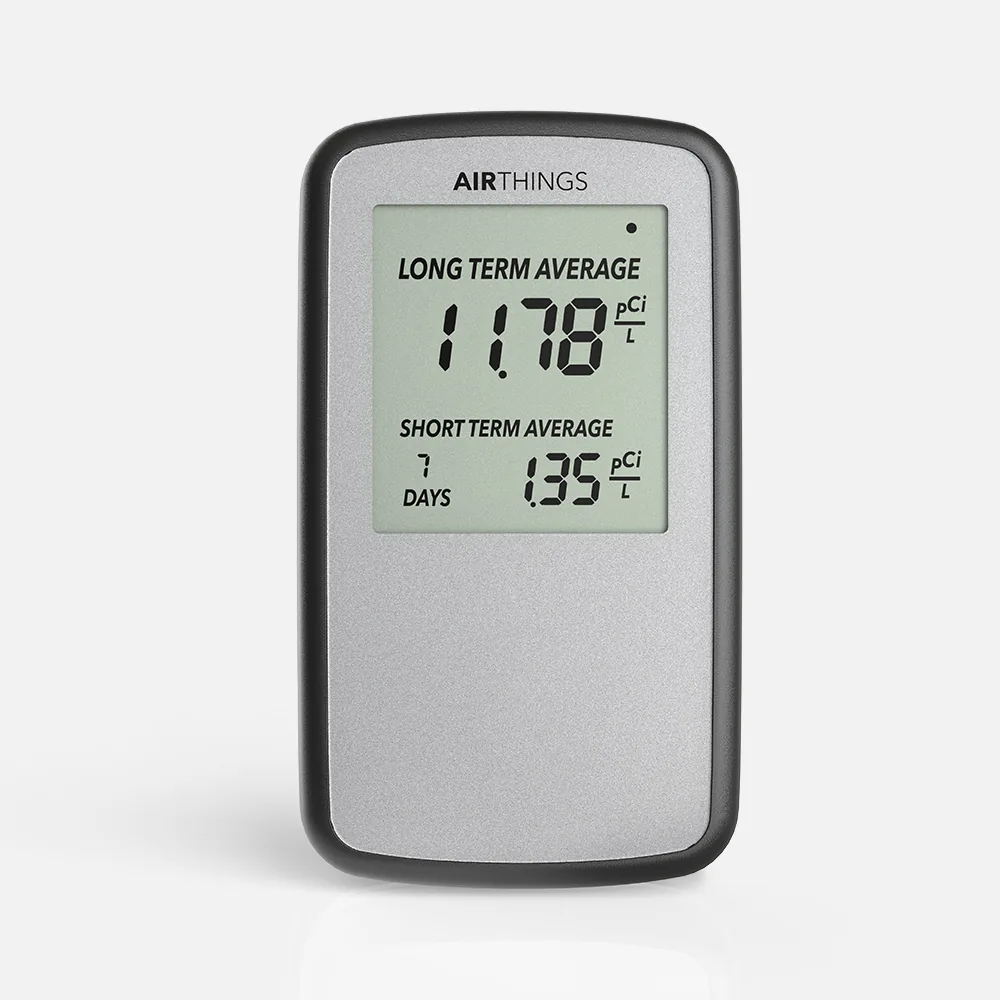
The difference: Also alpha spectrometry on three AAA batteries, with rolling short-term and long-term averages on its own LCD; approved in C-NRPP's 2024/25 evaluation.
Aranet
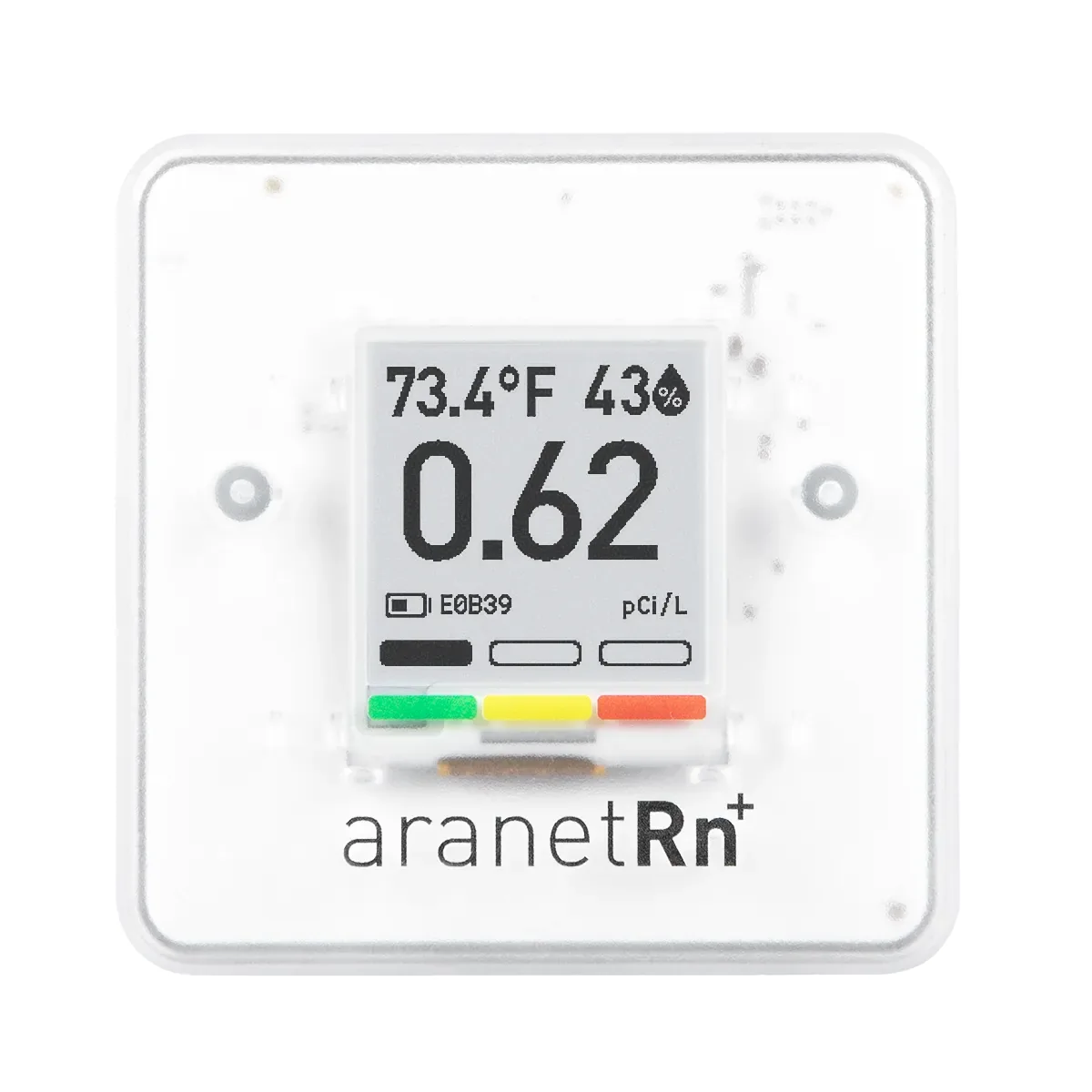
The difference: Also a battery monitor with an e-ink display, but it counts alpha decay events in an ionization chamber, runs on two AA batteries and syncs with the Aranet Home app; approved in C-NRPP's 2024/25 evaluation as the Aranet RN+.
INKBIRD
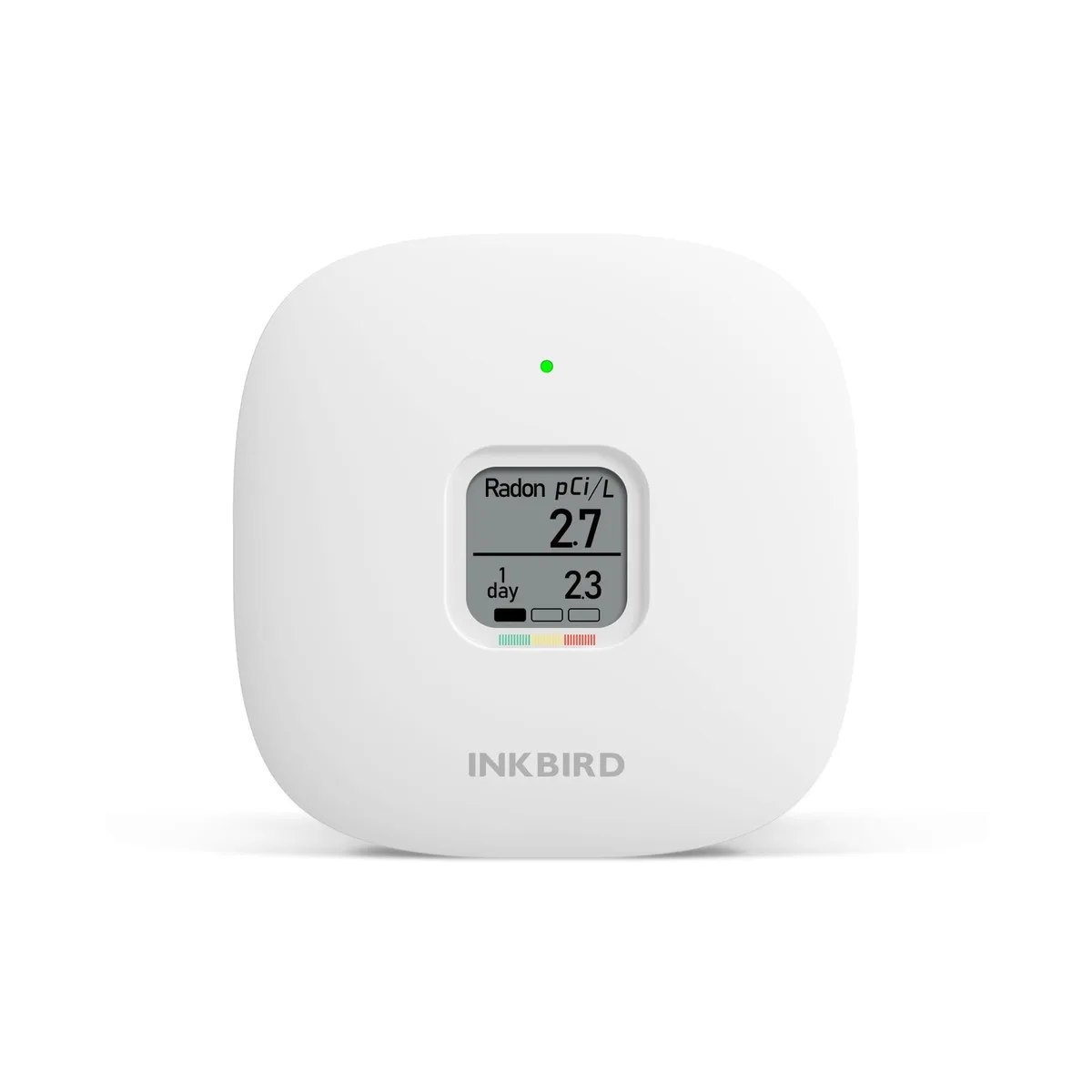
The difference: INKBIRD's manual gives the INK-RD3's manufacture model as RN-300S, TurinSen's model number for the Hello Radon S; INKBIRD publishes a full manual for it, with a first result about 24 hours after power-on, hourly updates and a 1-day and long-term average.
Compared with similar products: 1 of 4
MonitorAEGTEST
Method: Semiconductor sensor
First reading: Within 6 hours
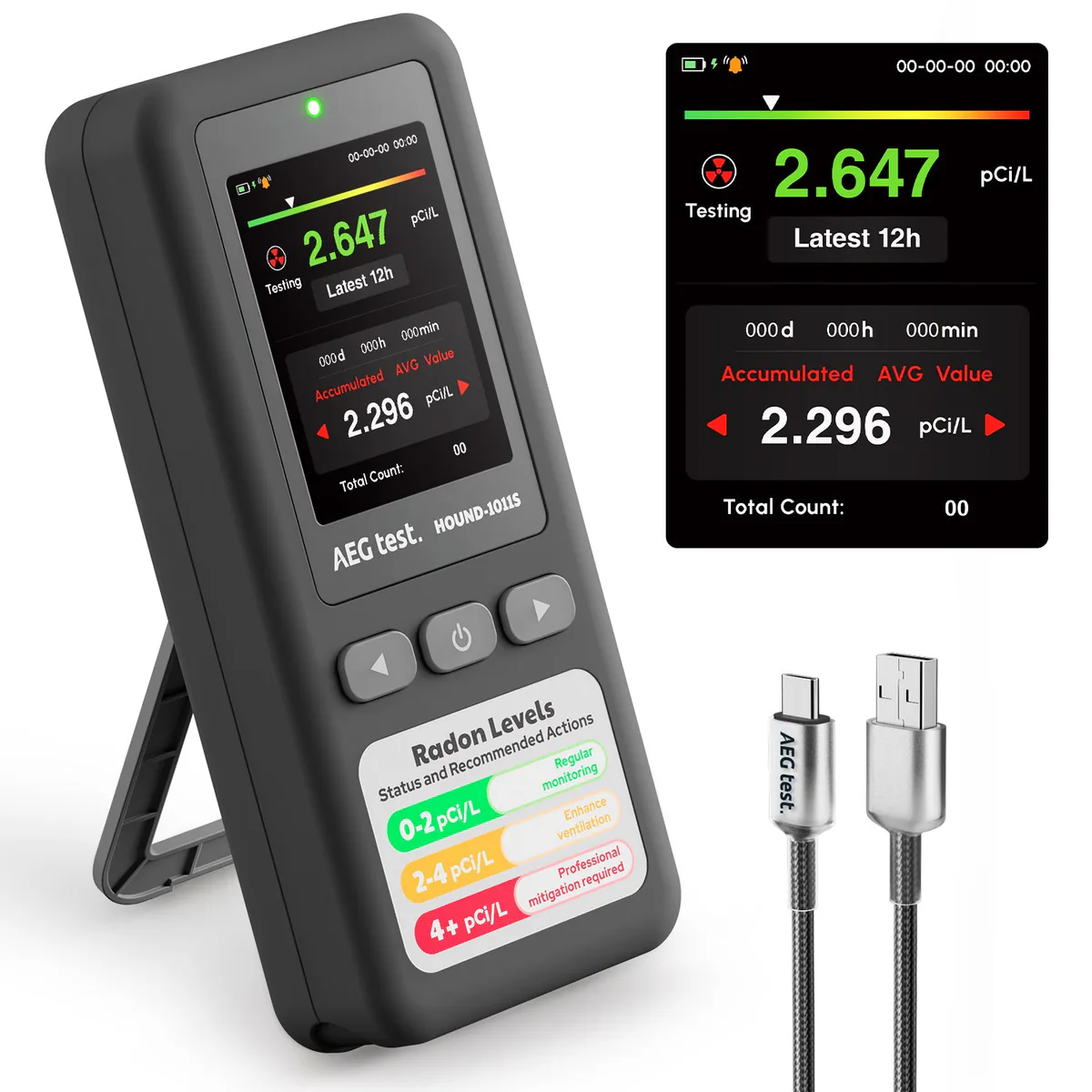
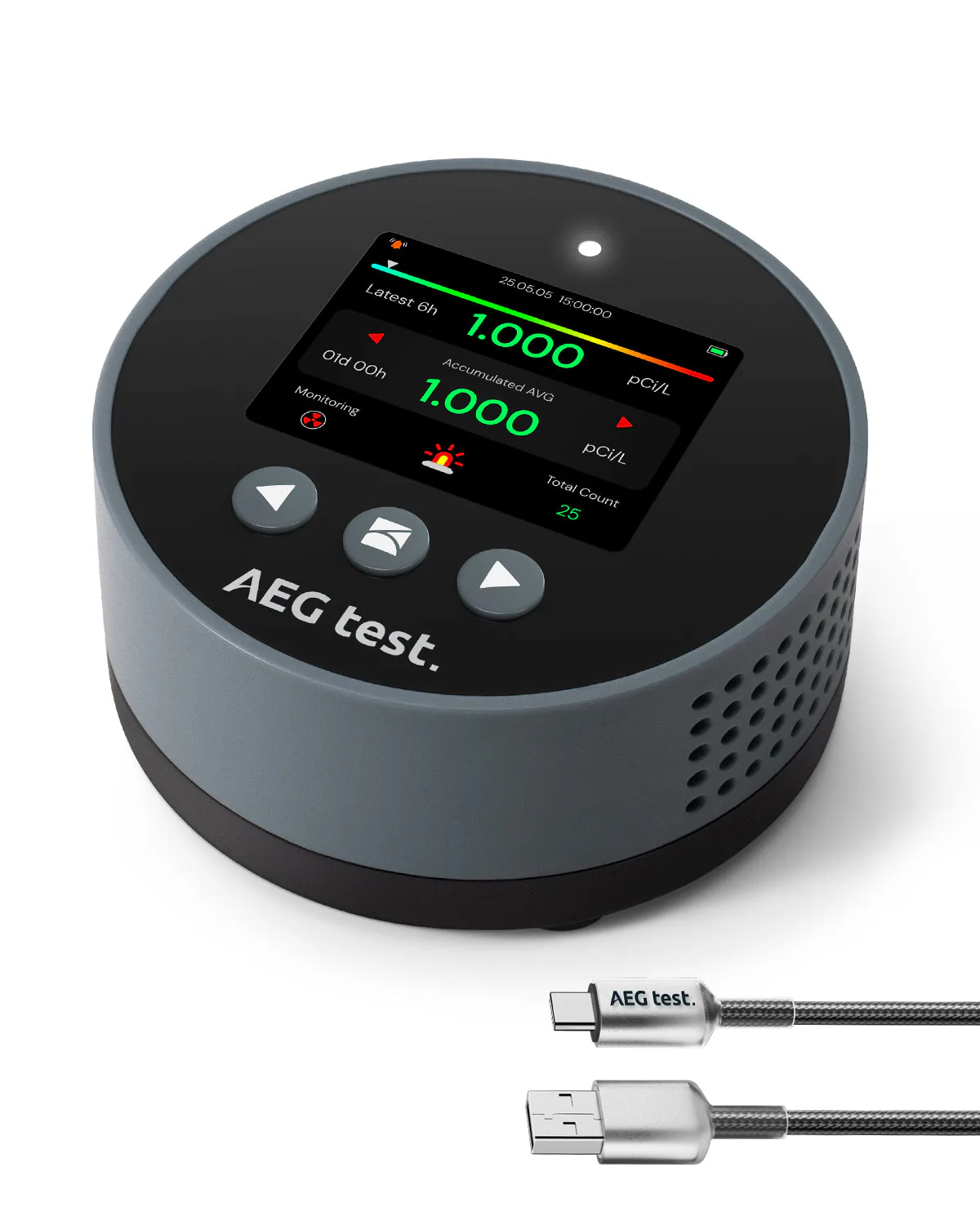
MonitorAEGTEST
Method: Semiconductor sensor
First reading: Within 12 hours
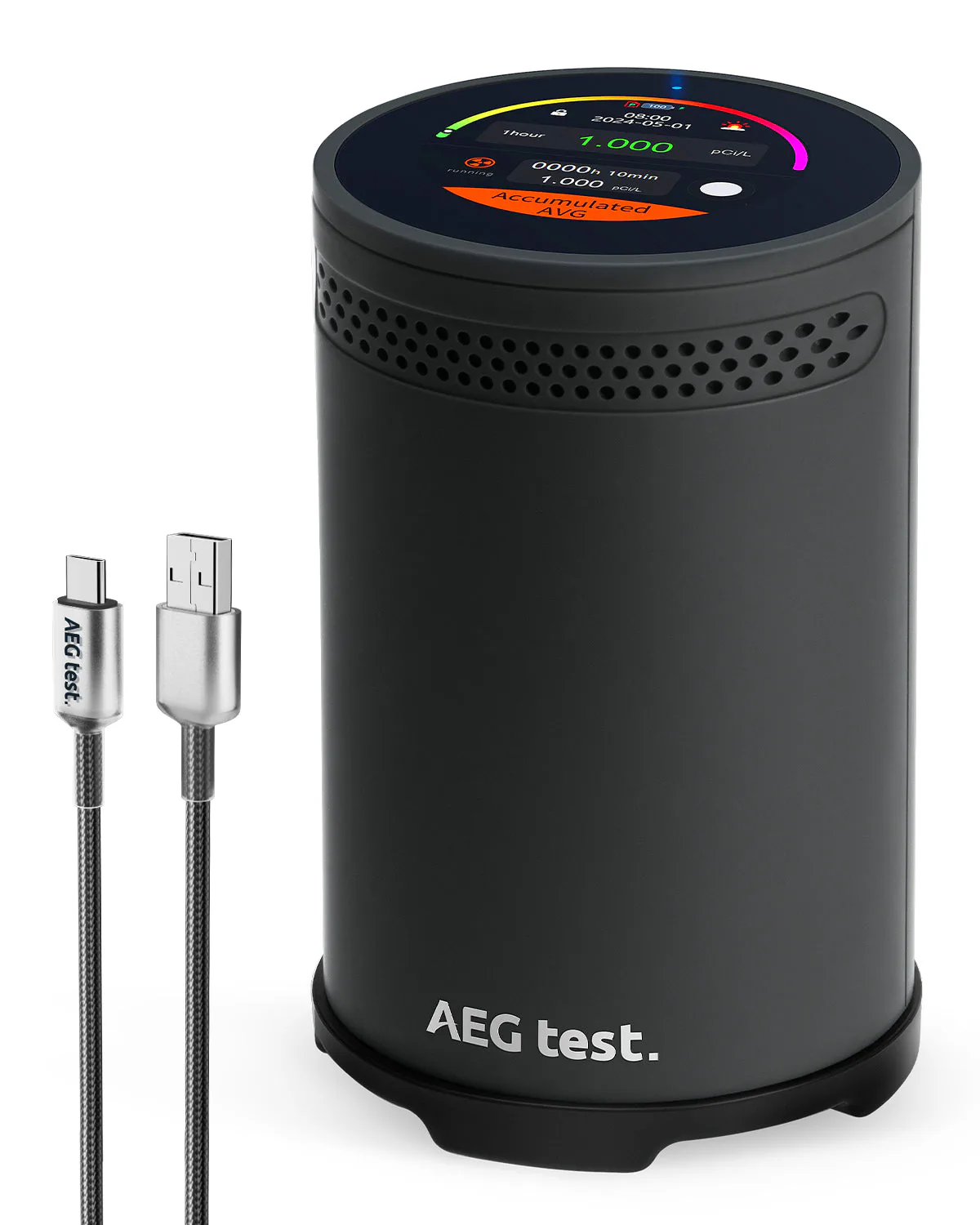
MonitorAEGTEST
Method: Semiconductor sensor
First reading: Within 6 hours
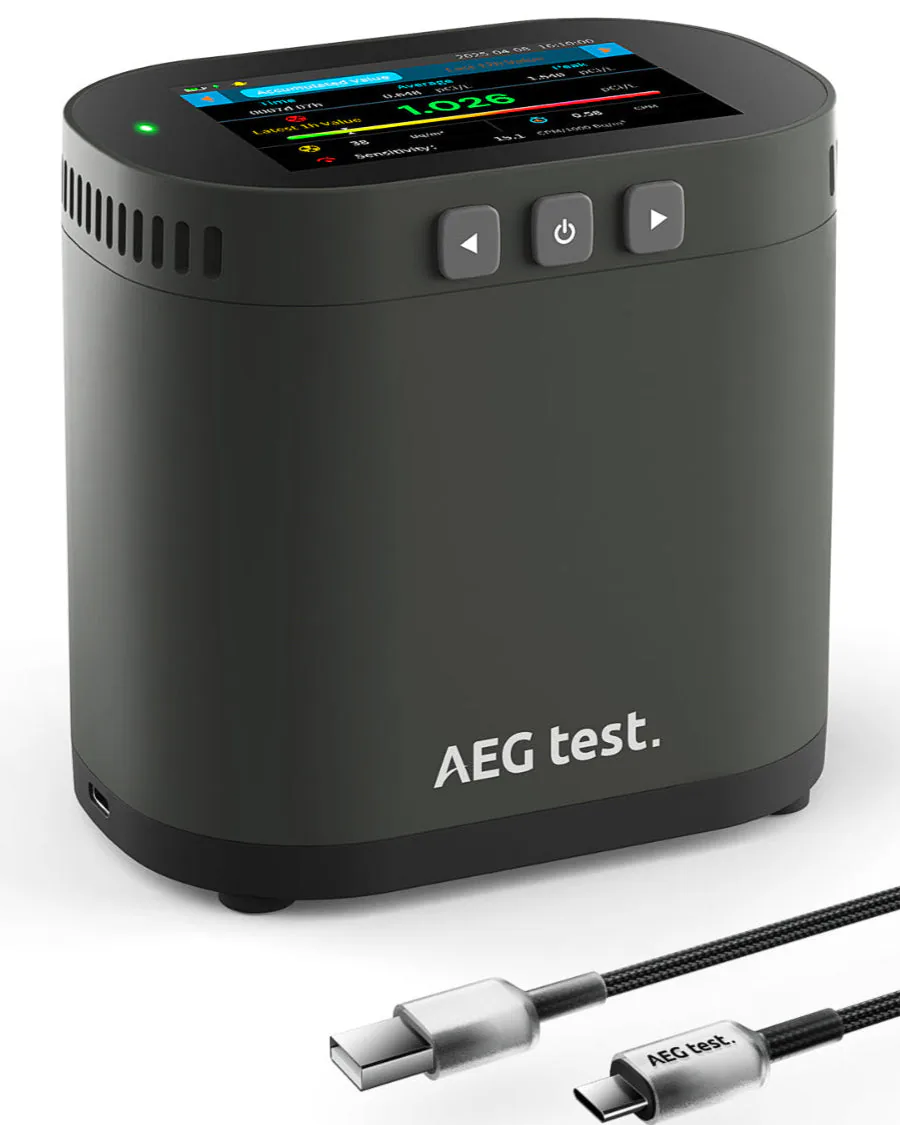
MonitorAEGTEST
First reading: Within 1 hour
MonitorAEGTEST
Method: Ion chamber
First reading: Within 10 minutes
Monitor
Method: Semiconductor sensor
Monitor
Method: Semiconductor sensor
First reading: Within 6 hours
Monitor
Method: Alpha spectrometry
Monitor
Method: Alpha spectrometry
Readings: Every 60 minutes
Monitor
Method: Alpha spectrometry
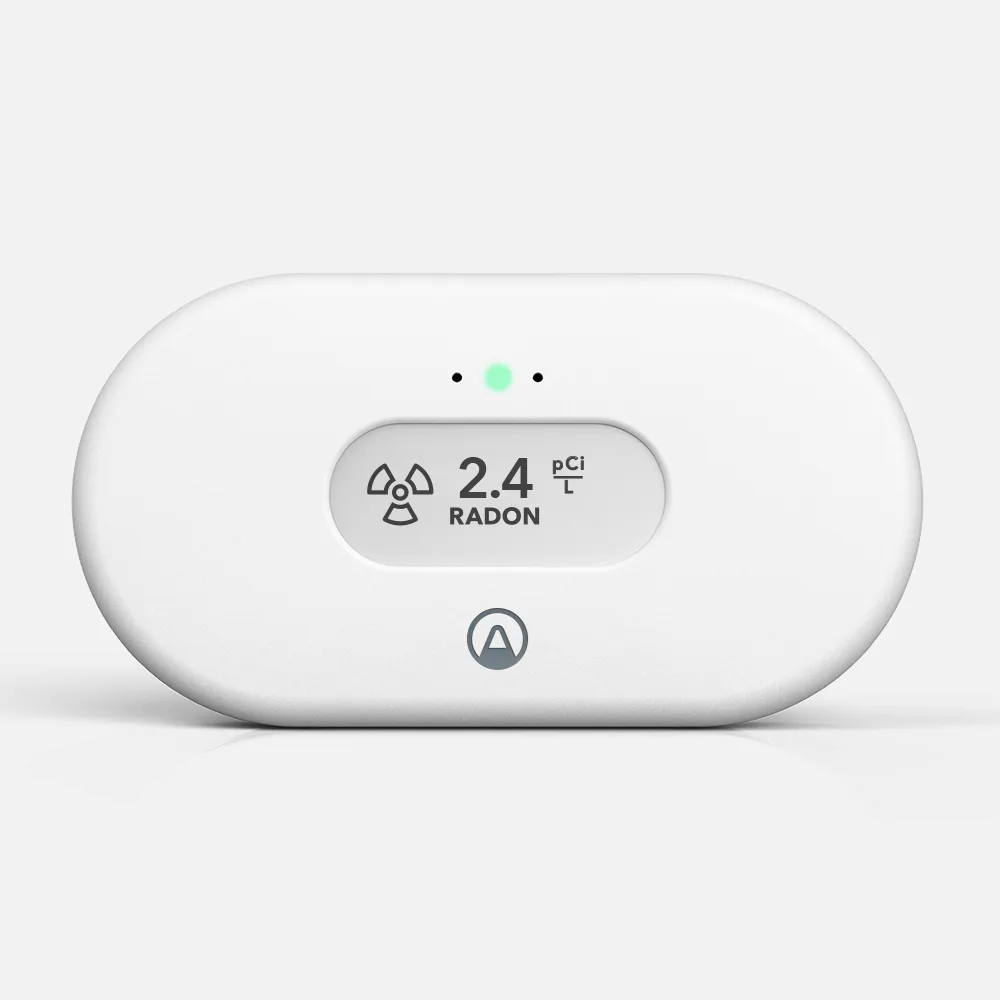
Monitor
Method: Alpha spectrometry
Readings: Every 60 minutes
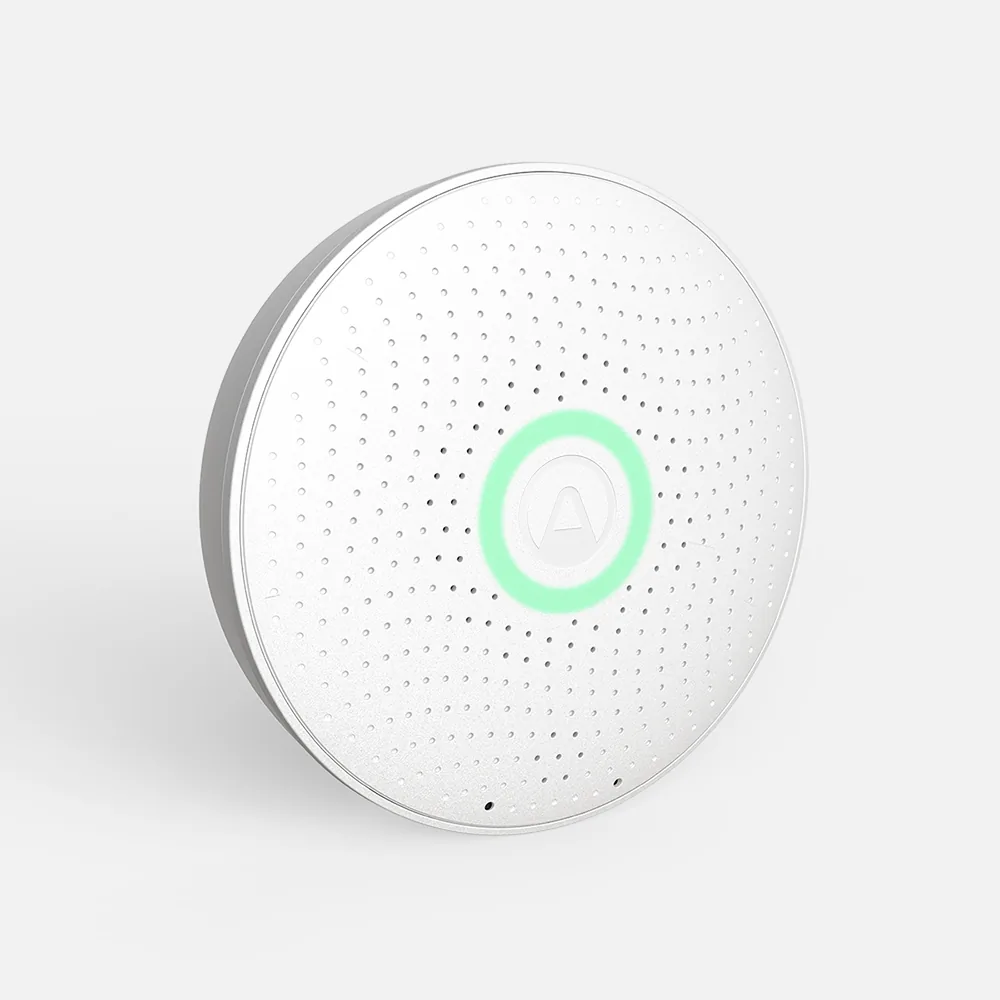
Monitor
Method: Alpha spectrometry
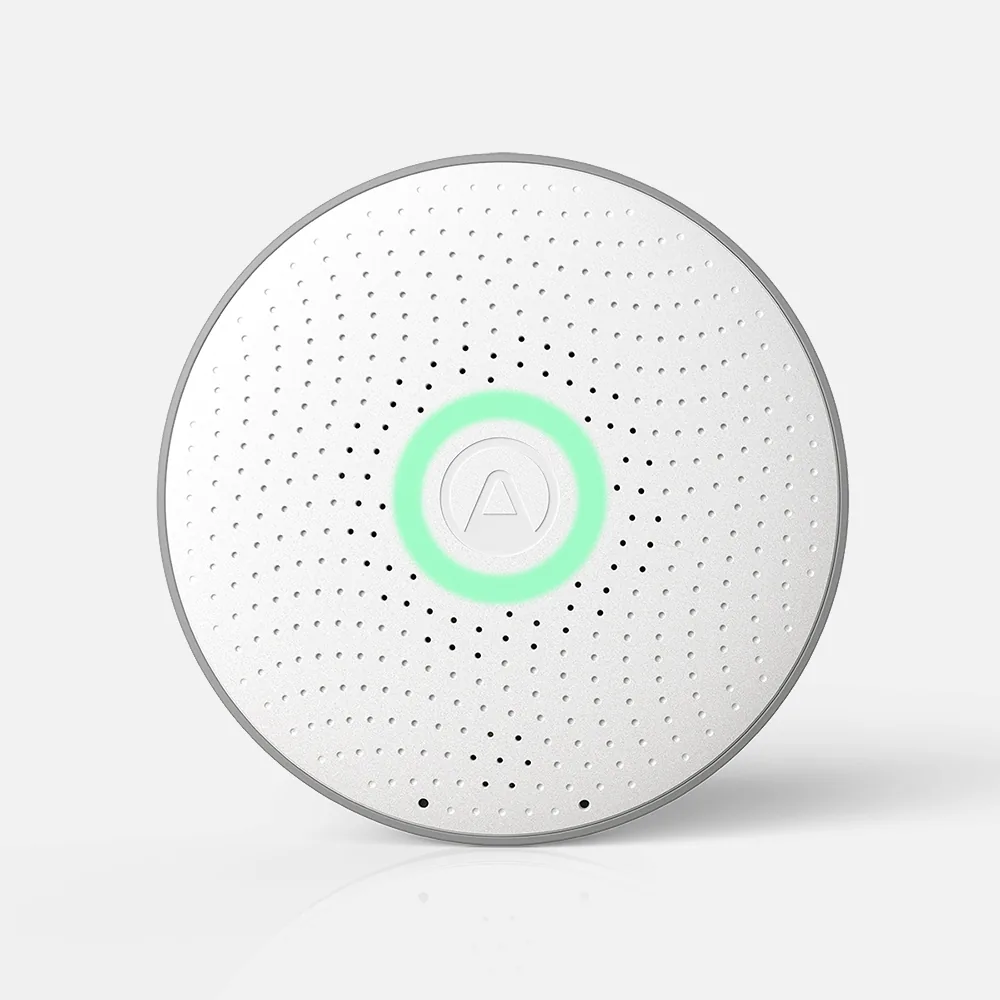
Monitor
Method: Alpha spectrometry
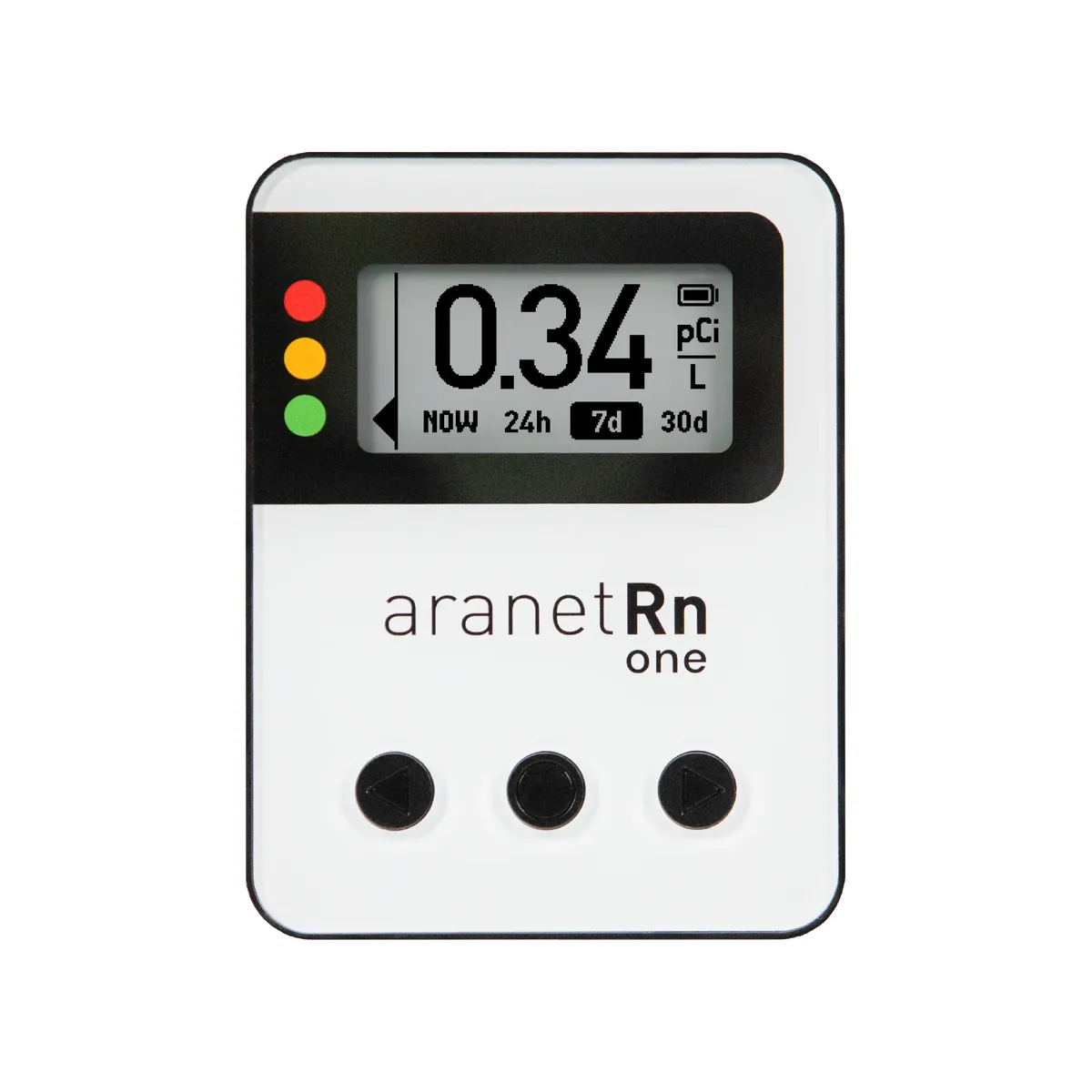
MonitorAranet
Method: Ion chamber
First reading: Within 10 minutes
MonitorAranet
Method: Ion chamber
First reading: Within 10 minutes
Monitor
Method: Ion chamber
First reading: Within 10 minutes
Monitor
Method: Ion chamber
First reading: Within 10 minutes
Monitor
Method: Ion chamber
First reading: Within 15 minutes
Monitor
Method: Ion chamber
First reading: Within 10 minutes
MonitorForensics Detectors
Method: Semiconductor sensor
First reading: Within 6 hours
Monitor
First reading: Within 5 minutes
Monitor
First reading: Within 5 minutes
Monitor
First reading: Within 5 minutes
MonitorINKBIRD
First reading: Within 24 hours
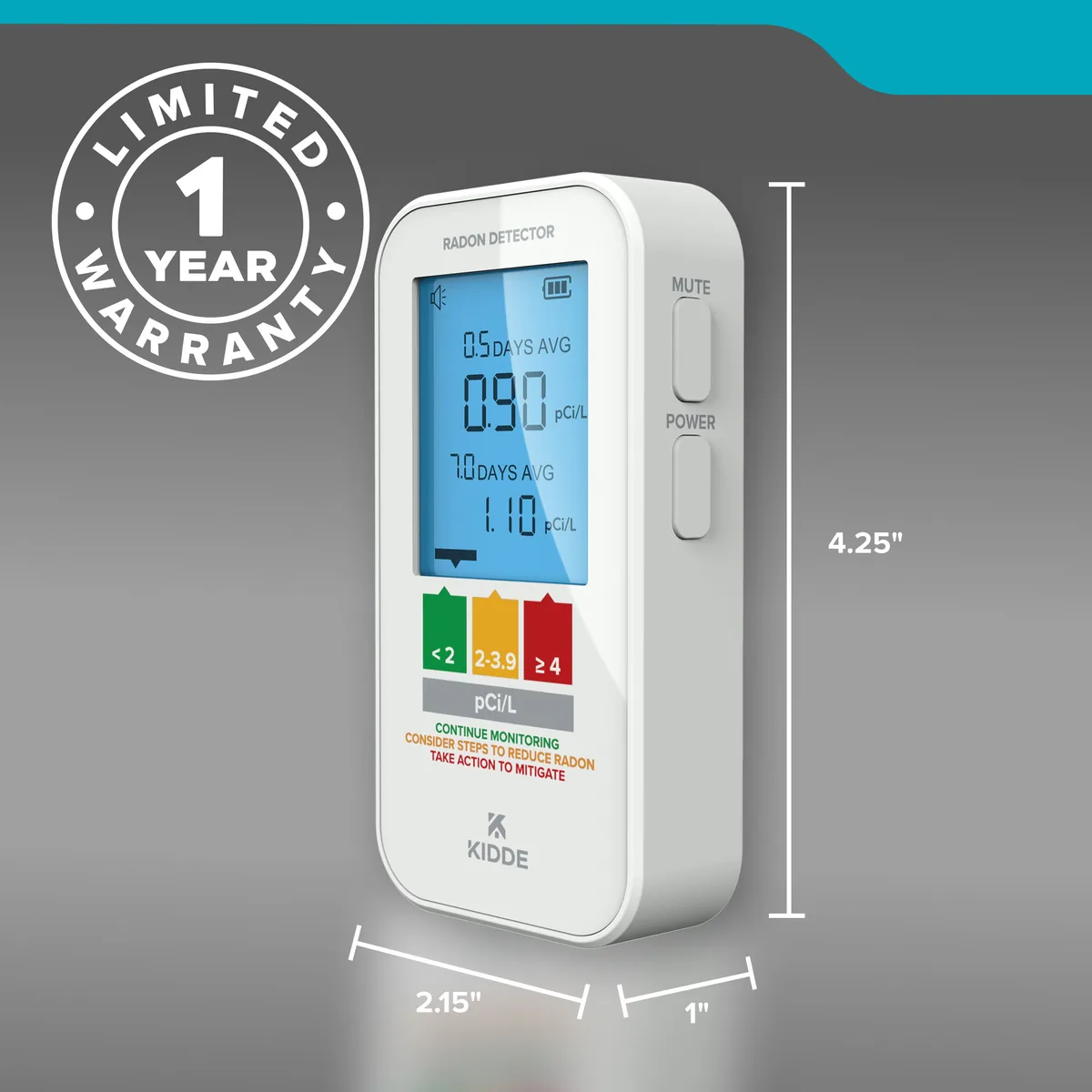
MonitorKidde
Method: Semiconductor sensor
First reading: Within 12 hours
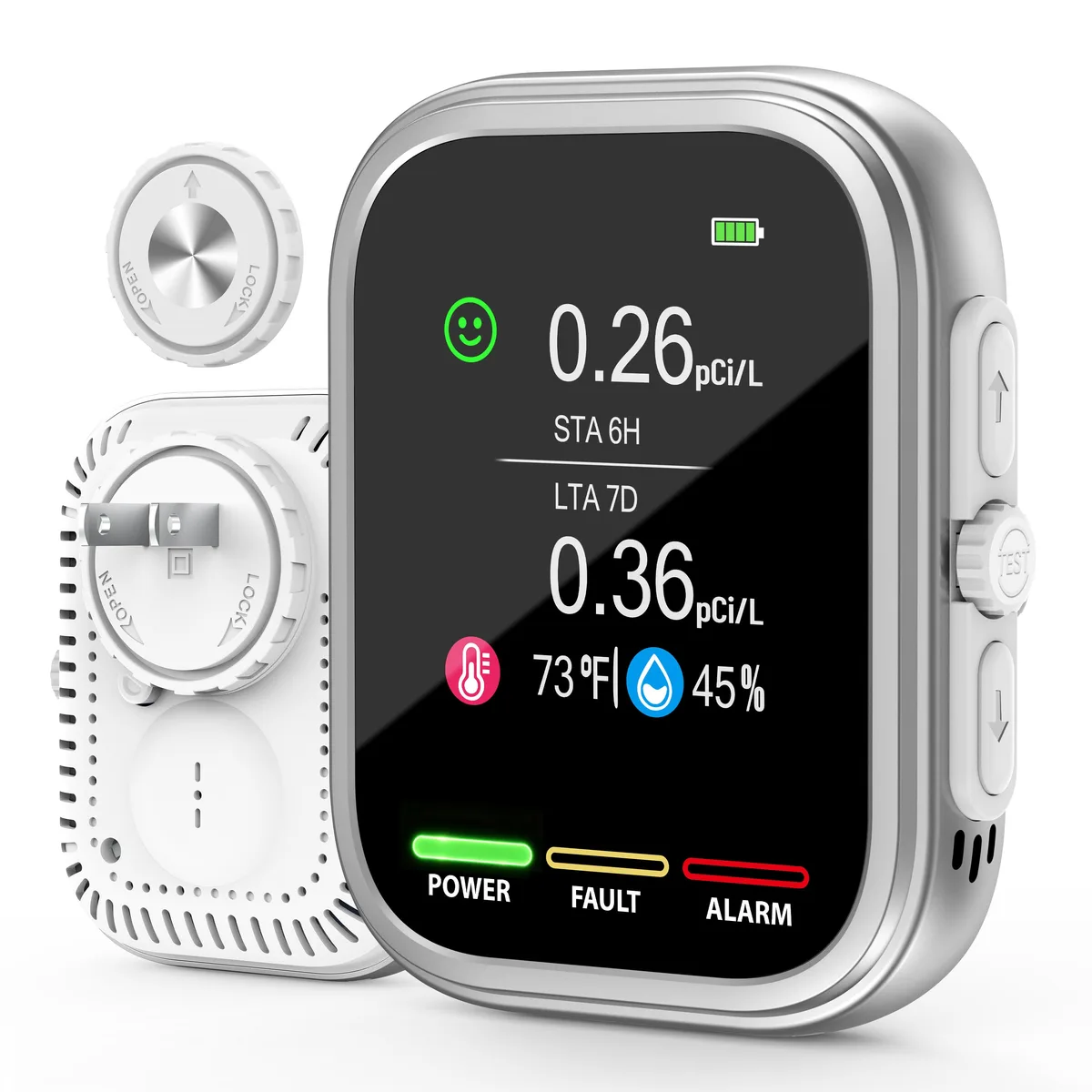
MonitorPYZYCKYH
Method: Semiconductor sensor
First reading: Within 6 hours
MonitorSafetySiren
First reading: Within 48 hours
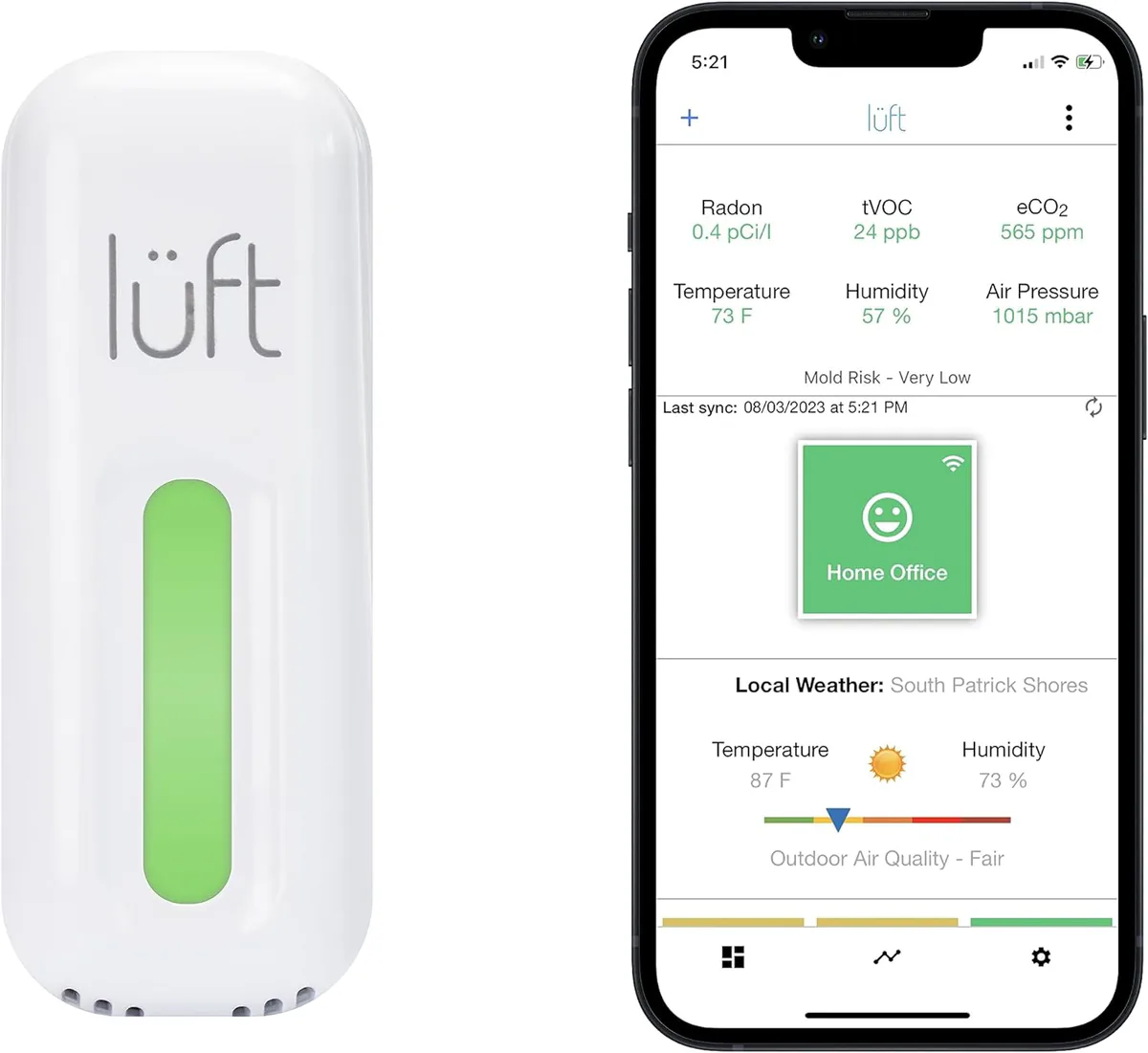
Monitor
First reading: Within 90 minutes
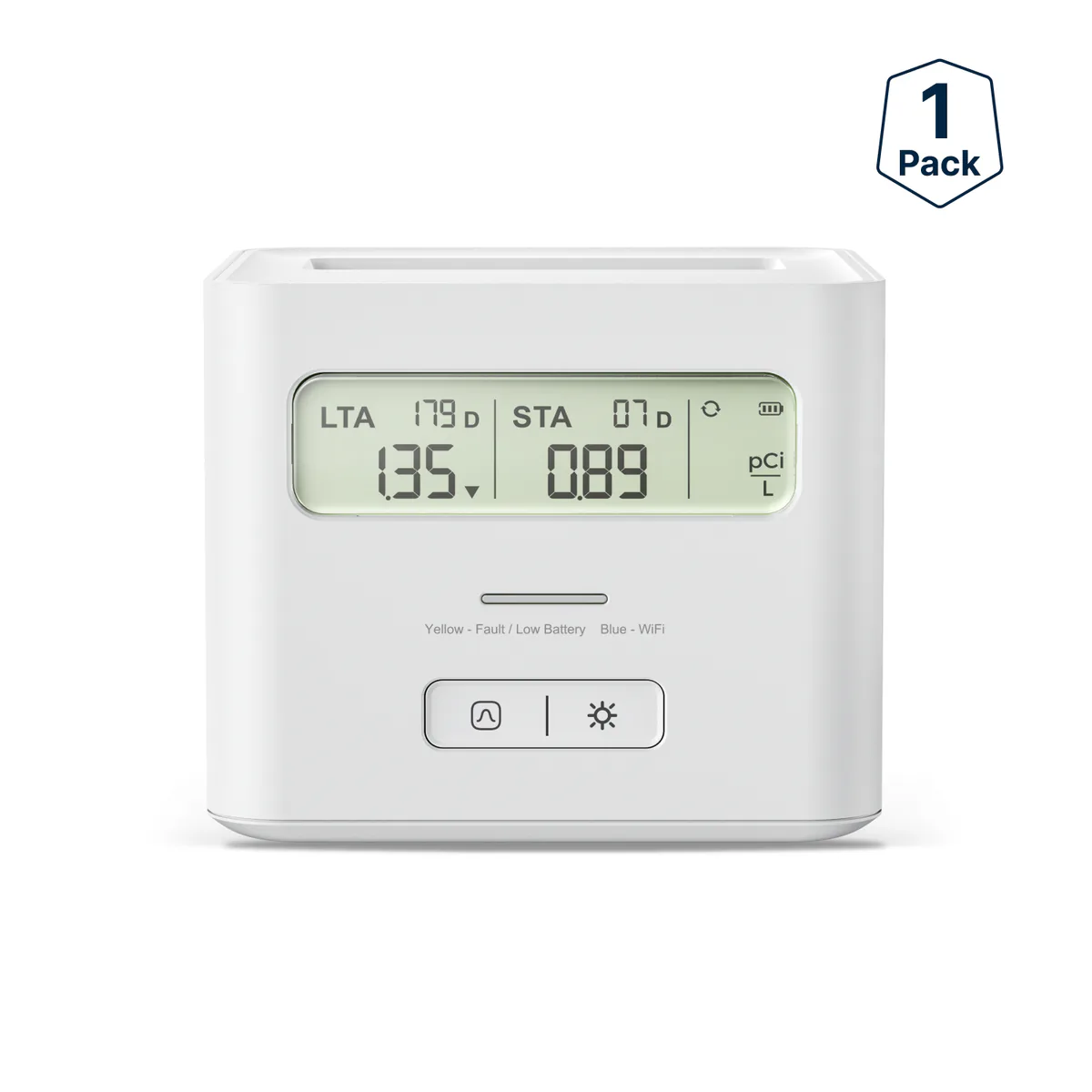
MonitorX-Sense
Method: Alpha spectrometry
First reading: Within 24 hours
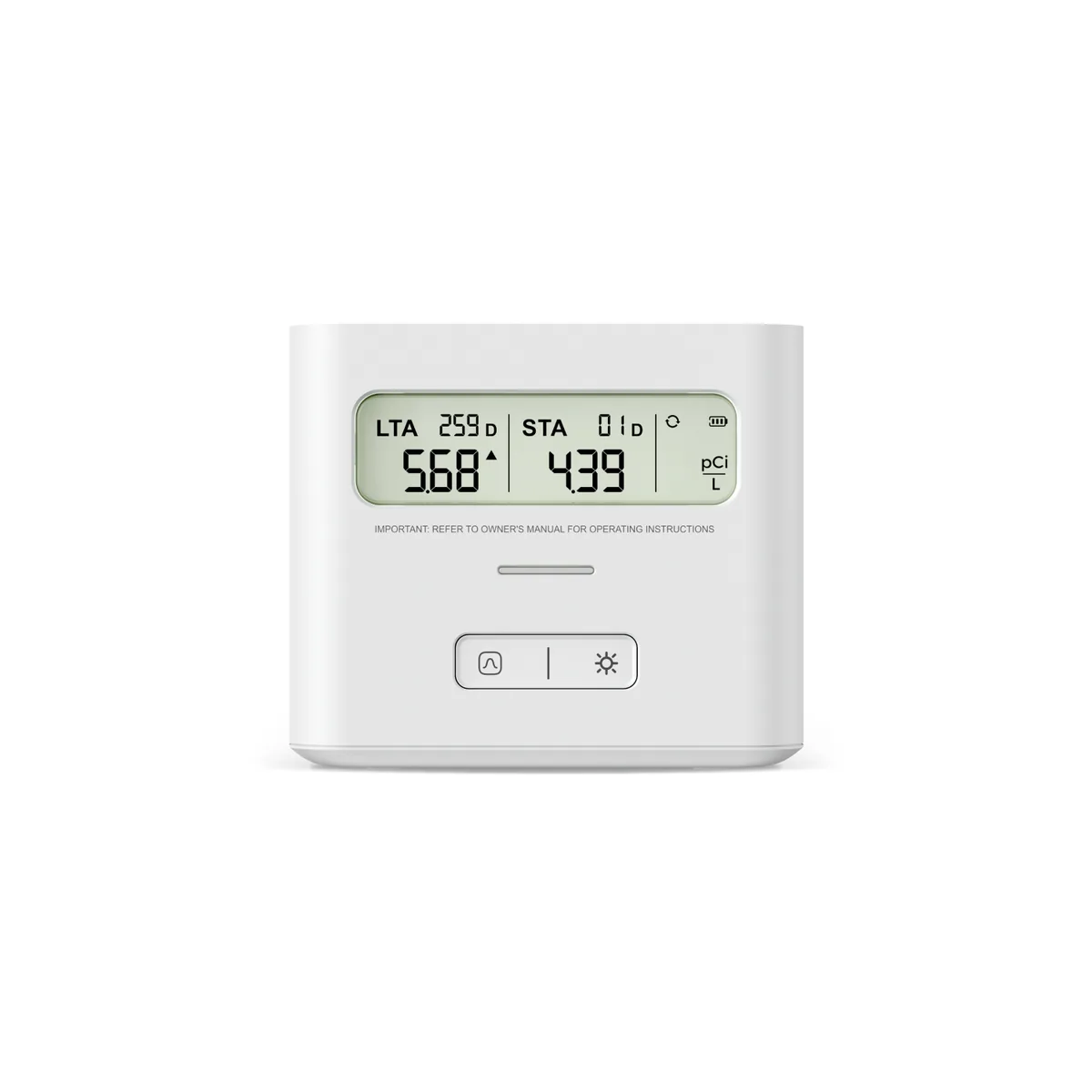
MonitorX-Sense
Method: Alpha spectrometry
First reading: Within 24 hours
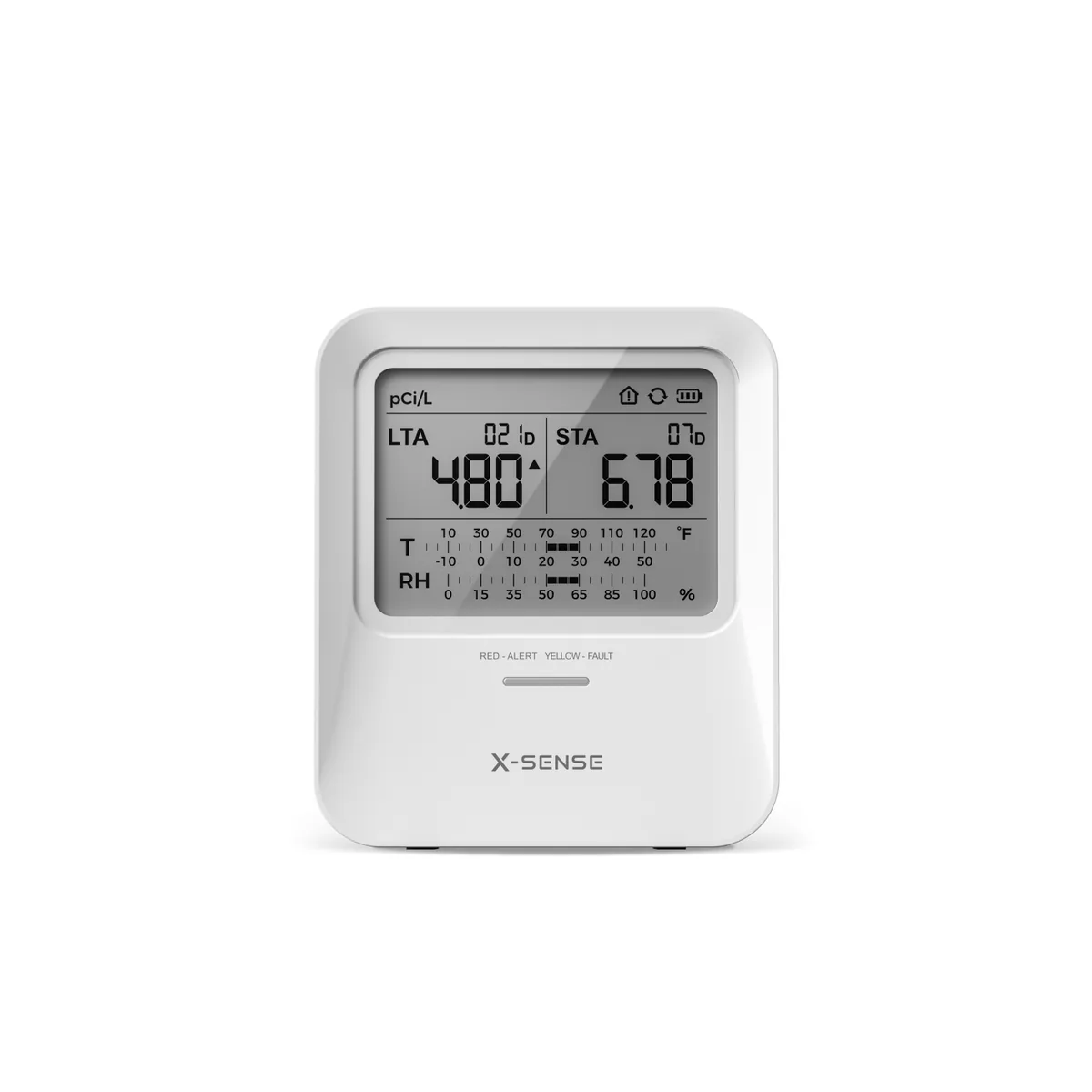
MonitorX-Sense
Method: Alpha spectrometry
First reading: Within 24 hours
More home radon monitors: 1 of 31
Questions
6 questions about the TurinSen Hello Radon C, answered
TurinSen, whose catalogue is published under the company name Shenzhen Turin Sensing Technology Co., Ltd., in Shenzhen, China. TurinSen says it was established in 2015 as a branch company under Aier Technology (Hong Kong), and its catalogue says OEM and ODM orders are welcome. Its model number for the Hello Radon C is RN-300C.
No. It was not included in C-NRPP's 2024/25 evaluation, so there is no C-NRPP result for it either way.
C-NRPP's 2024/25 report does list a LifeBasis monitor, model RN-55, as not approved and marks it recalled by Health Canada. TurinSen's 2025 catalogue uses the type number RN-55 for its own ECO Radon, a battery model with a large LCD screen. The Hello Radon C is a different model, RN-300C, with an e-ink screen.
Not one you can hear, by TurinSen's account. It lists a color-coded LED that flashes once per minute, a color-coded bar on the screen, and visual notifications when the radon concentration becomes unhealthy. With no sound and no app, a high reading is only noticed by someone who looks at the monitor.
TurinSen says accurate readings are produced after 24 hours of operation, and it does not publish how often the screen updates after that. For a decision about fixing a home, C-NRPP's advice for any consumer monitor is to run it for at least 3 months and use the long-term average.
Under 10% after 7 days and under 5% after 2 months, typical, at 200 Bq/m³. TurinSen does not describe the test conditions behind the figure, and no independent program has published a result for the Hello Radon C.
INKBIRD's manual gives the INK-RD3's manufacture model as RN-300S, the model number TurinSen uses for its Hello Radon S. TurinSen lists the Hello Radon C and S with the same detecting technology, sensor, battery, screen, range and accuracy figures; the C is listed at 100 mm (D) by 33 mm (H) and the S at 103 by 103 by 33 mm.
Updated October 9, 2026