
MonitorAEGTEST
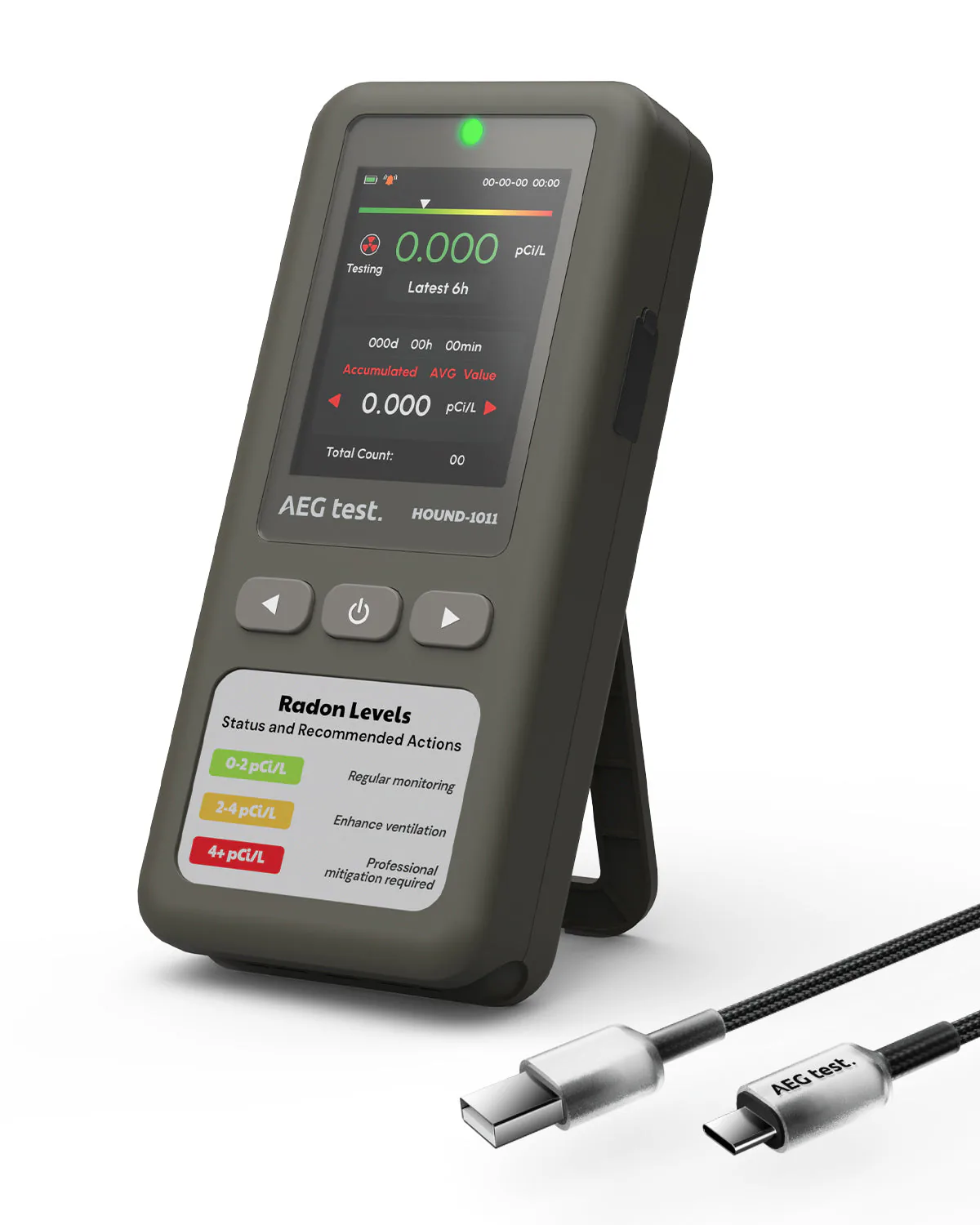
HOUND-1011 rechargeable radon detector with a screen
- C-NRPP 2024/25: Not included
- Battery
- Alarm
- Screen
Method: Semiconductor sensor
First reading: Within 6 hours
 Ecosense
Plug-in digital radon monitor with a display
Best for you if
Skip it if
Photos: Ecosense
 (opens in a new tab)Check price on Amazon (opens in a new tab)
As an Amazon Associate, Radon411 earns from qualifying purchases.
Amazon and the Amazon logo are trademarks of Amazon.com, Inc. or its affiliates.
See ratings and reviews on Amazon (opens in a new tab)As Ecosense states it
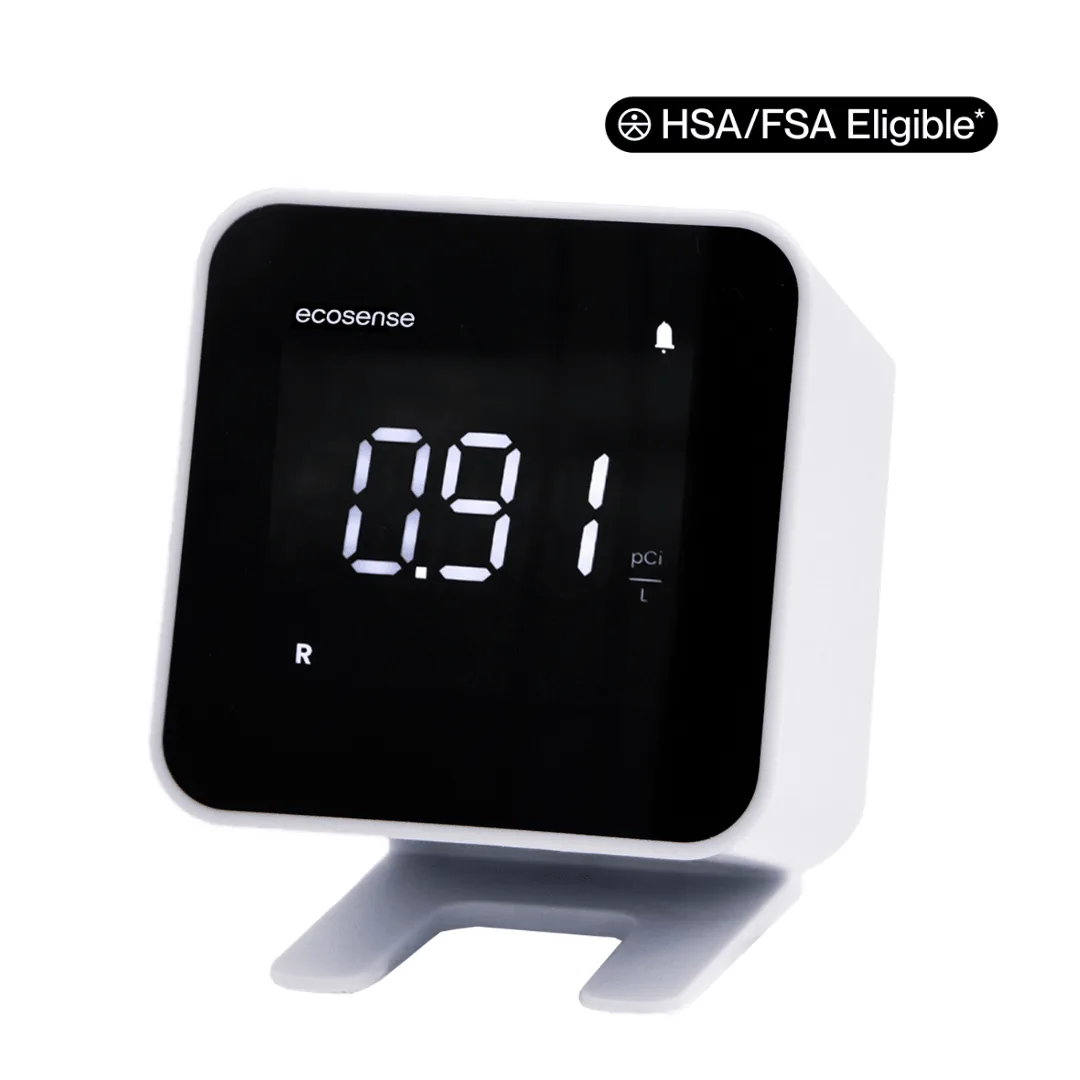
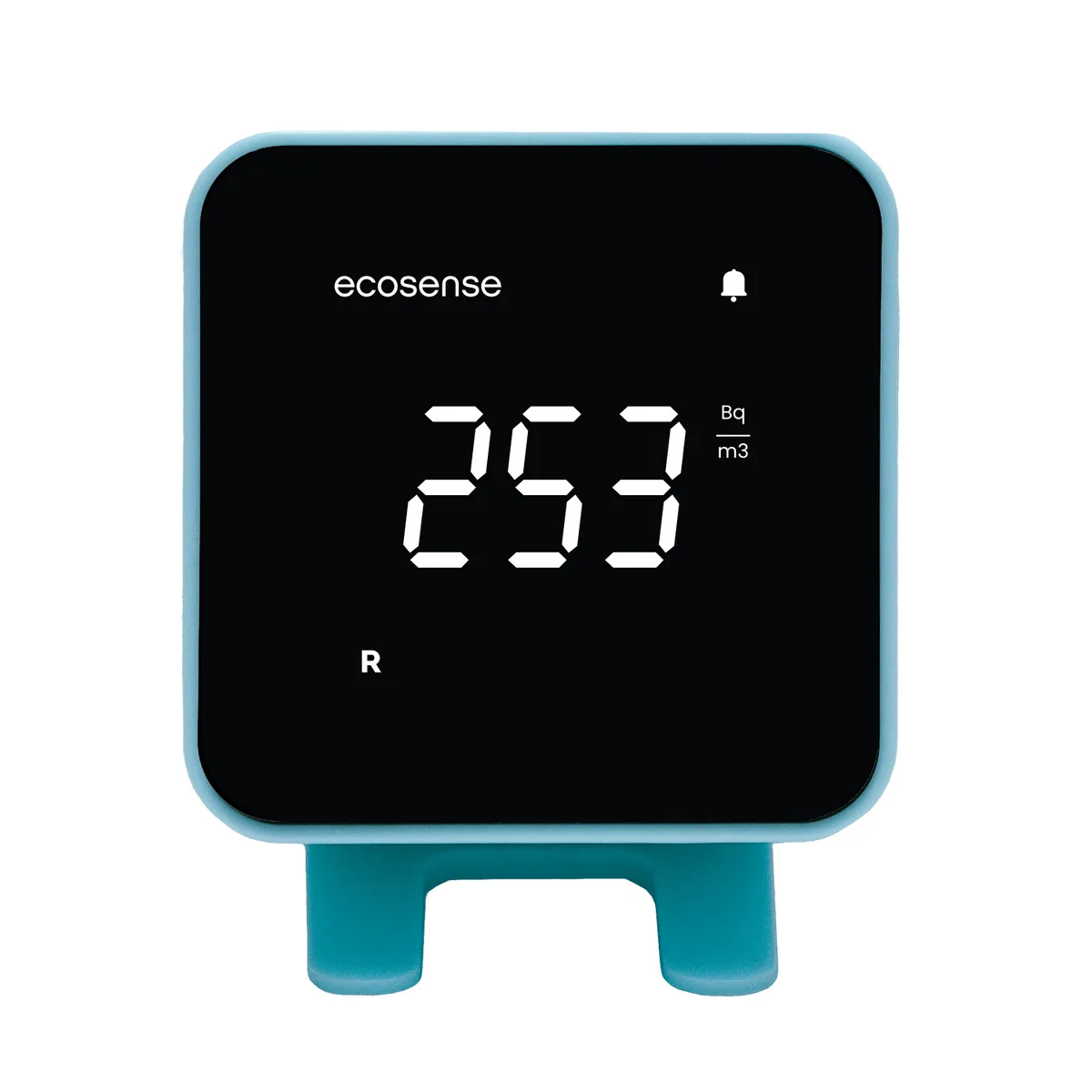
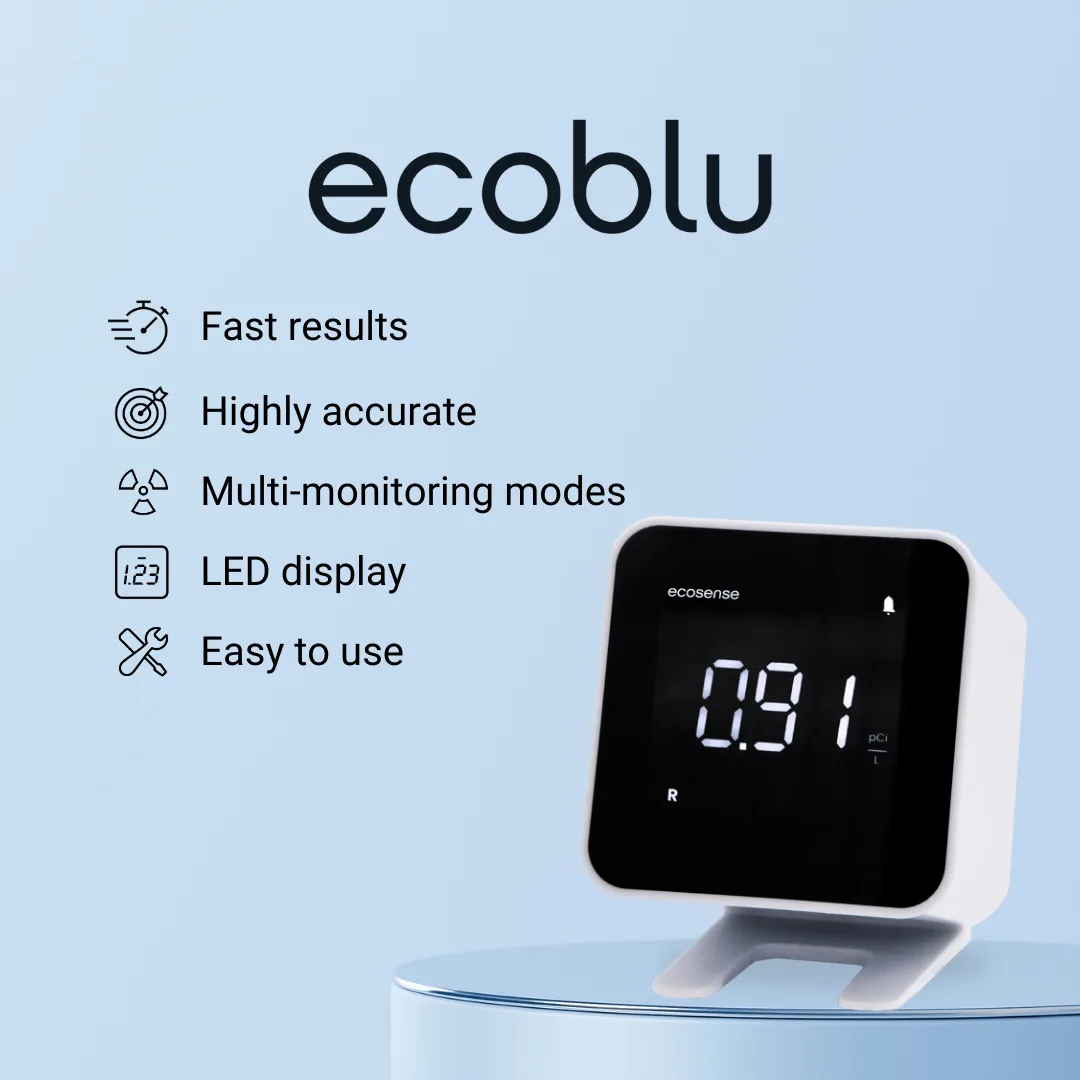
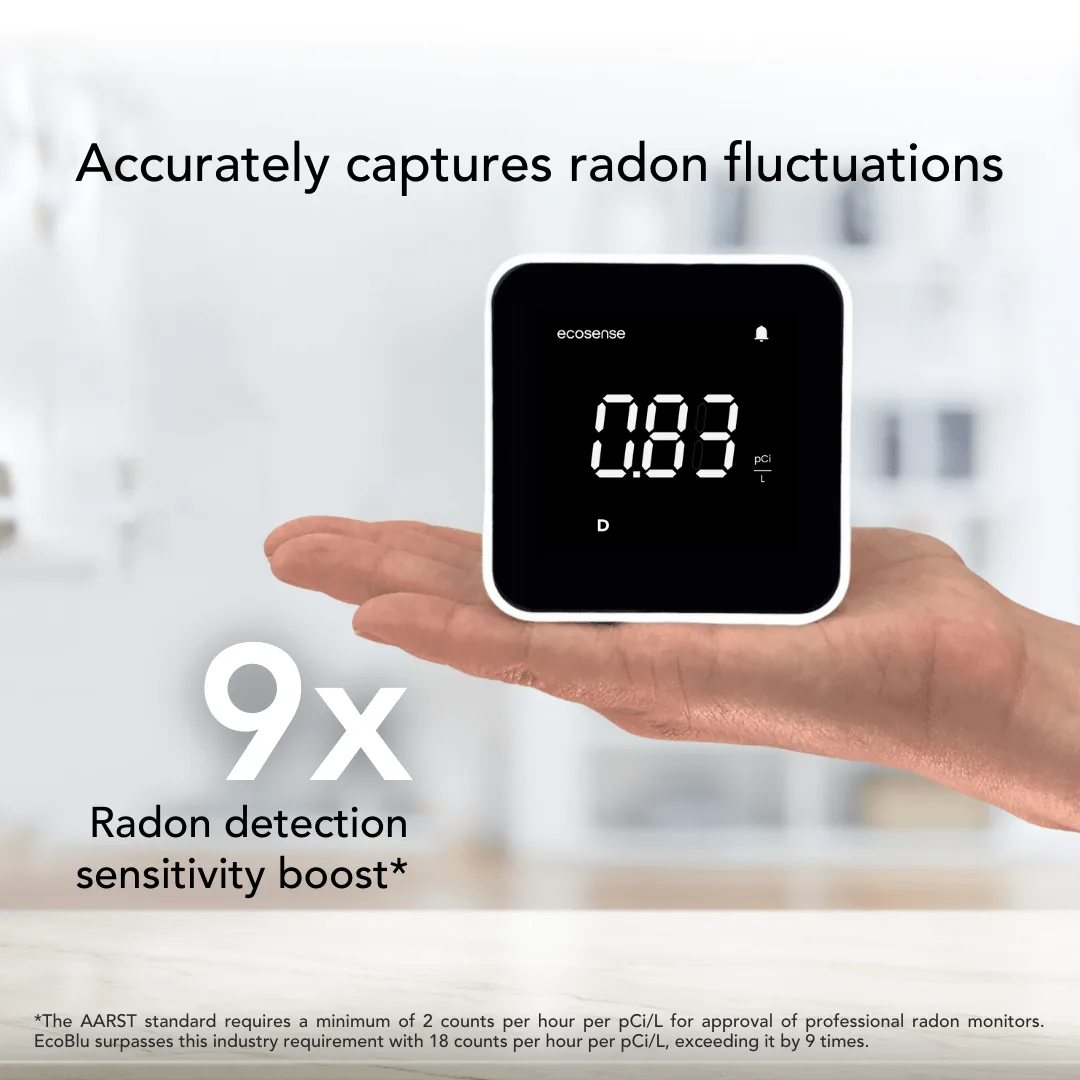
The EcoBlu is Ecosense's simplest radon monitor: a palm-sized plug-in cube with a pulsed ionization chamber and an LED number display, and no app, Wi-Fi, Bluetooth or battery. It was not included in C-NRPP's 2024/25 evaluation; C-NRPP's 2023 report listed it, spelled EcoBlue, as passing its performance test.
The box holds the EcoBlu, a user guide, a power cable and a power adapter, with email support and a 12-month limited warranty. Registering within 30 days adds a one-year extension, for two years in total. The page offers it in white or blue.
In the box and running costsHow it works
The sensor, the sampling and the readings, then who has checked it
In our words, from the maker's documents
The EcoBlu uses the same kind of radon sensor as Ecosense's other home monitors, a pulsed ionization chamber, and measures every 10 minutes. Ecosense rates its counting sensitivity at 18 counts per hour per pCi/L, lower than the 30 it gives for the RadonEye and EcoQube, and describes that figure as exceeding the industry's minimum standard.
Everything happens on the device. The LED display has five monitoring modes, which Ecosense labels R, D, W, M and L: a real-time reading updated every 10 minutes, a 24-hour average, a 7-day average, a 30-day average, and a long-term mode for yearly trends. The brochure describes the results as 1-hour, 1-day, 1-week and 1-month moving averages.
Ecosense publishes the same measurement range as its other home monitors, 0.2 to 99.9 pCi/L or 7 to 3,700 Bq/m³, and an operating range of 32 to 104°F with relative humidity under 80%. An integrated audio alarm can be set to a radon level of your choosing, and a tilted stand holds the display at an angle for reading.
Because there is no app, there is also no exported history: what you see is what the display's averages show. Ecosense's pitch for the EcoBlu is that it needs no smartphone, no Wi-Fi and no battery, so it suits someone who wants a number on the shelf rather than graphs on a phone.
Ecosense's case for a continuous monitor over a single kit is that radon fluctuates from day to day and season to season, so a one-time test with a single result, such as a traditional charcoal kit, can miss changes at night or on rainy days. That is the manufacturer's argument for its own product category. The EPA's answer to the same variation is a follow-up test, long-term where possible, before deciding to fix a home.
Ecosense's own statements, attributed
These are Ecosense's own statements, attributed to it. They are not our findings, and we have not tested this product ourselves.
C-NRPP 2024/25, recalls and studies
The Canadian National Radon Proficiency Program's 2024/25 comparison of consumer monitors did not include Ecosense EcoBlu. That is a fact about which devices took part, not a finding about this one: no result from that program exists for it either way.
C-NRPP's 2023 report listed “Ecosense EcoBlue” as having passed its performance test.
C-NRPP is the Canadian National Radon Proficiency Program. Its 2024/25 results were published in May 2025.
Ecosense EcoBlu
Check price on Amazon (opens in a new tab)Specifications
Every figure as the maker states it
The box holds the EcoBlu, a user guide, a power cable and a power adapter, with email support and a 12-month limited warranty. Registering within 30 days adds a one-year extension, for two years in total. The page offers it in white or blue.
No lab fee, no subscription and no batteries. The only ongoing need is power. Ecosense sells a replacement USB cable and power adapter separately if either is lost.
Fit and setup
The fit, then setup and placement as the guidance asks
Good fit if, and look elsewhere if
Good fit if
Look elsewhere if
3 steps
How C-NRPP says to use any consumer monitor
For where any radon test or monitor should sit in a home, see where to place a radon test.
Compare
The same three rows for each, and the one difference that matters
This page
Ecosense EcoBlu
This page: The EcoBlu is Ecosense's simplest radon monitor: a palm-sized plug-in cube with a pulsed ionization chamber and an LED number display, and no app, Wi-Fi, Bluetooth or battery.
Airthings
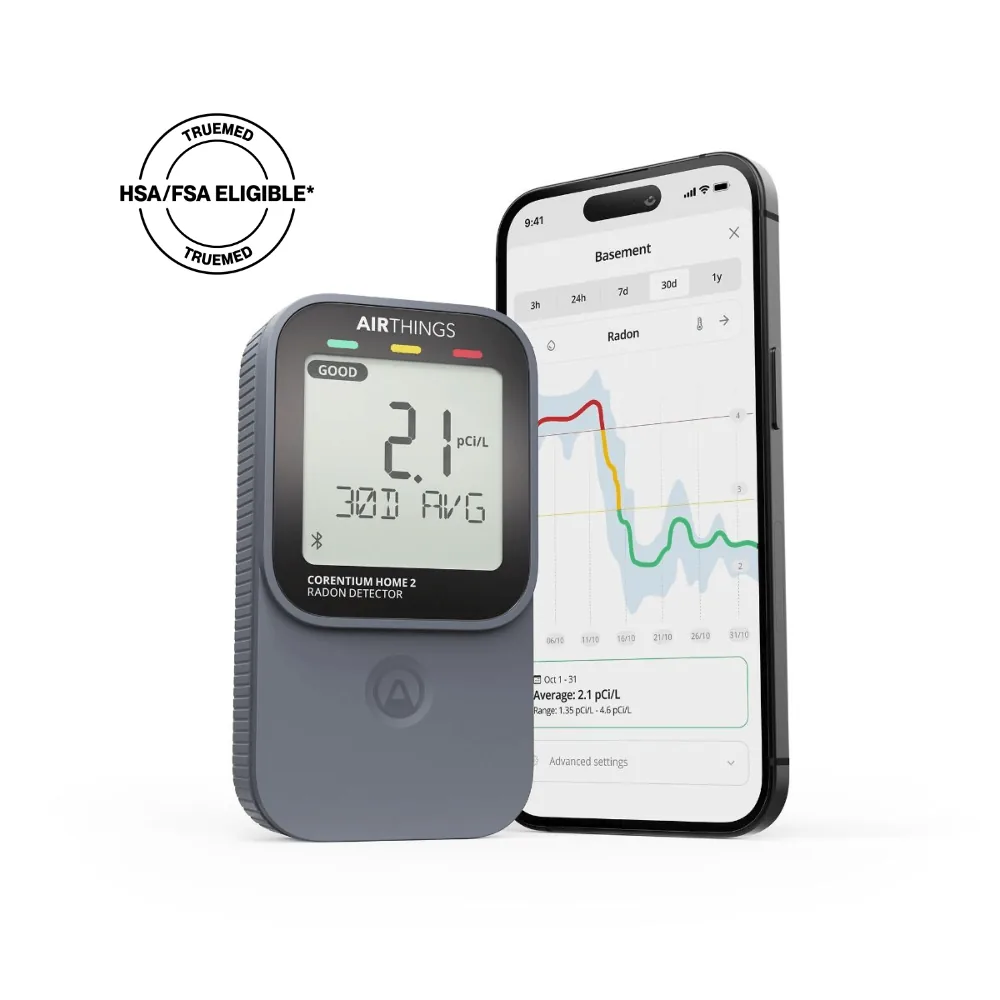
The difference: Battery-powered with an LCD screen of averages and an optional Bluetooth app; also not part of C-NRPP's 2024/25 evaluation.
Ecosense
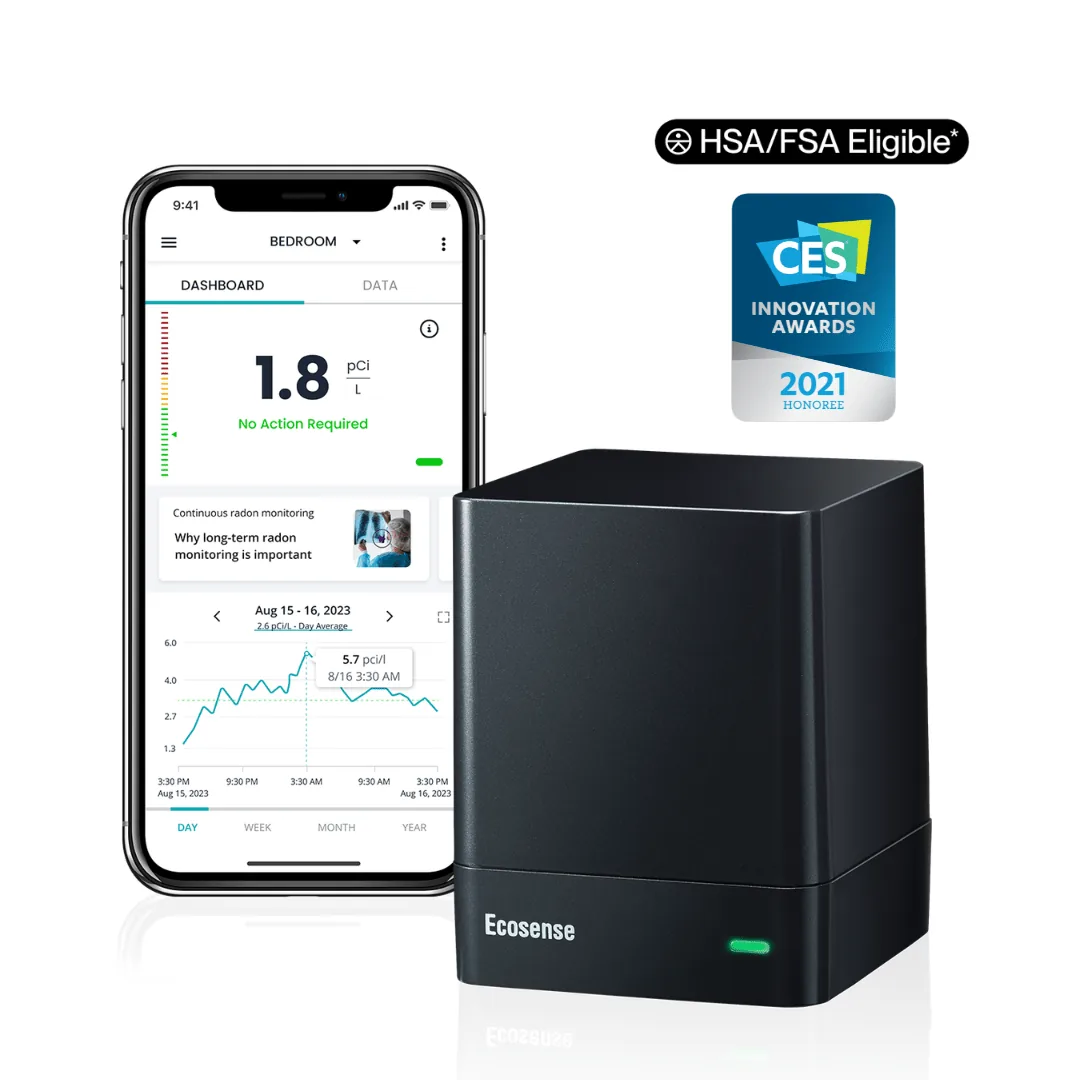
The difference: Same maker; adds Wi-Fi and an app but shows a colored light instead of numbers; approved in C-NRPP's 2024/25 evaluation.
Ecosense
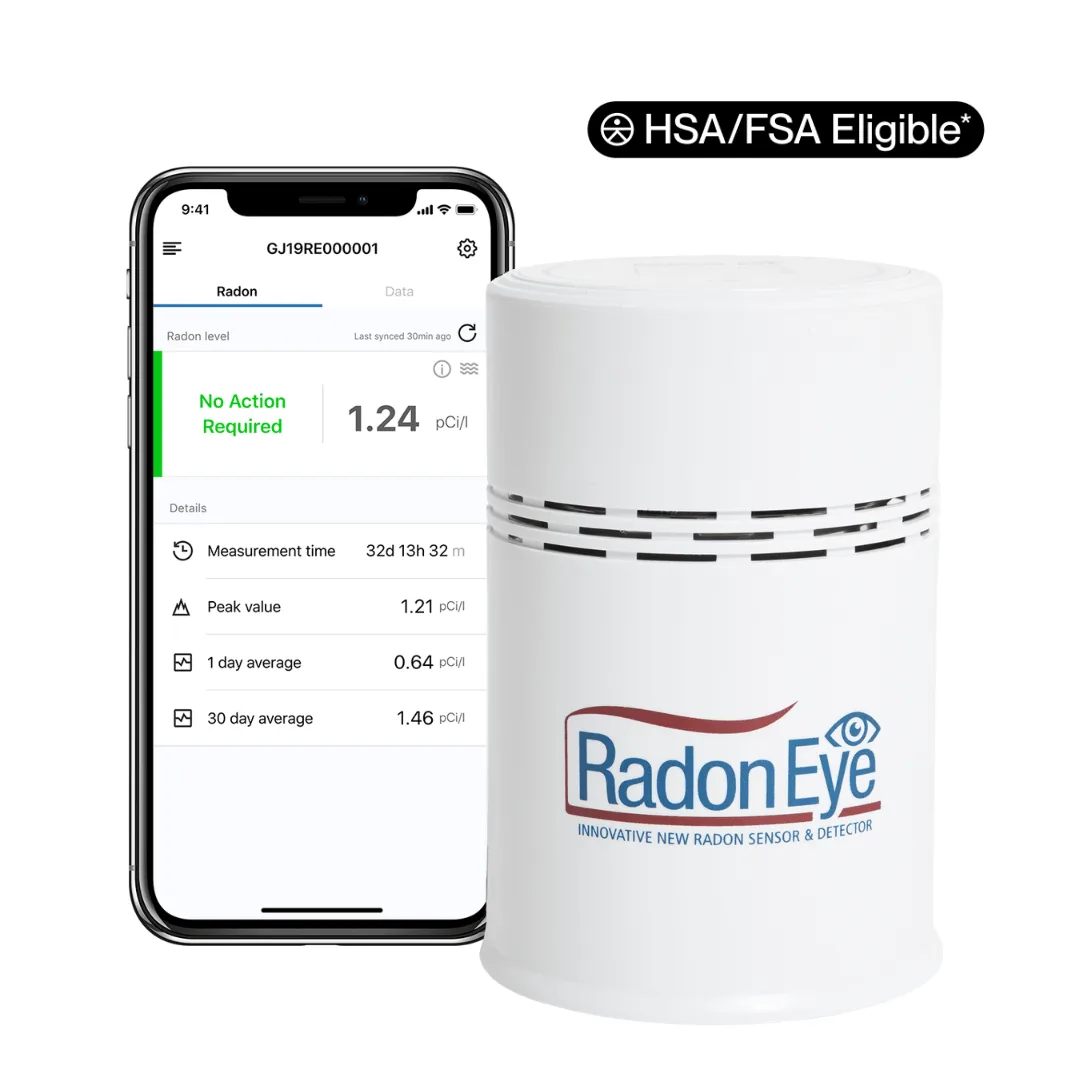
The difference: Same maker and sensor type with a higher stated sensitivity of 30 counts per hour per pCi/L, a Bluetooth app, and approval in C-NRPP's 2024/25 evaluation.
GQ Electronics
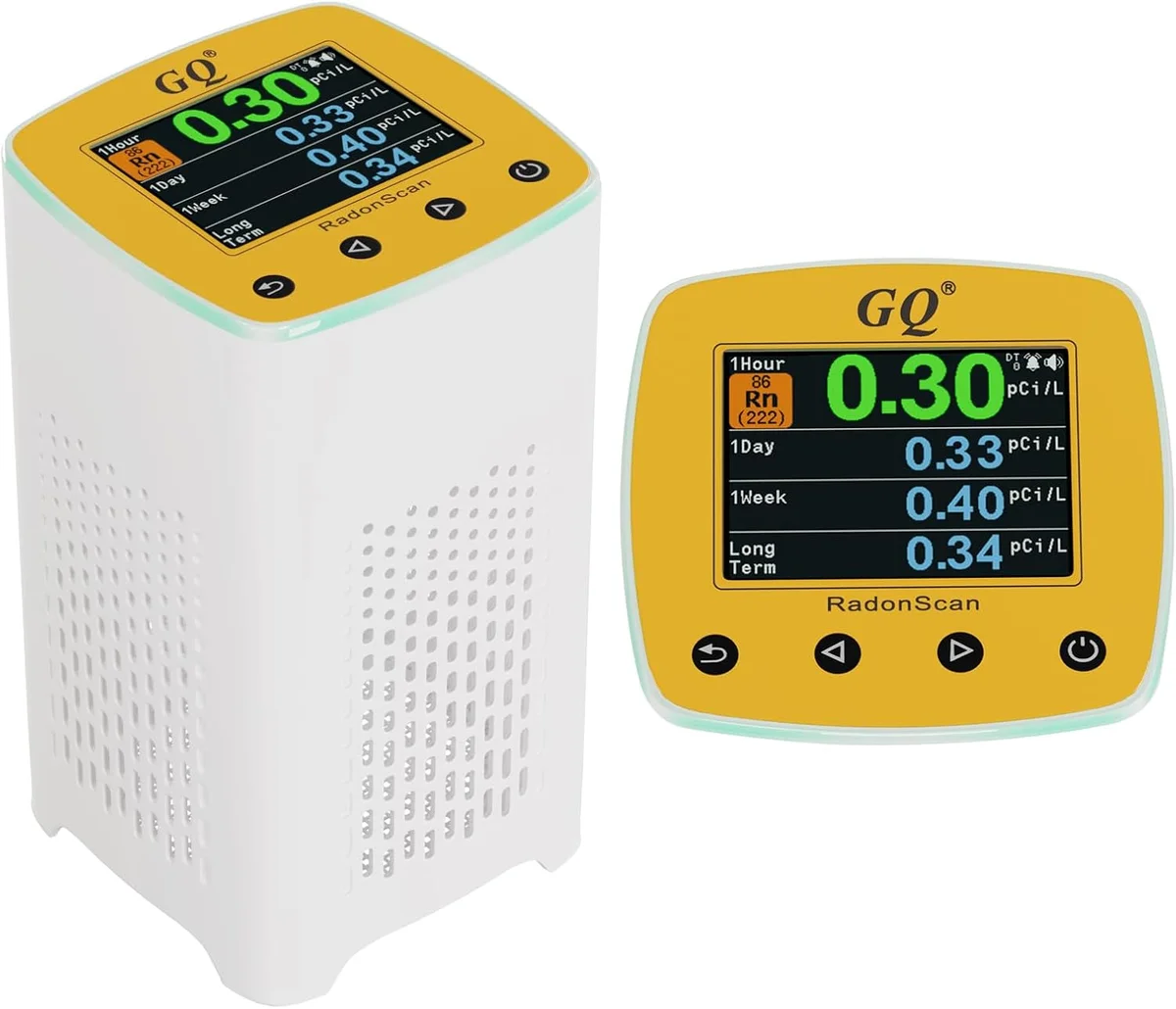
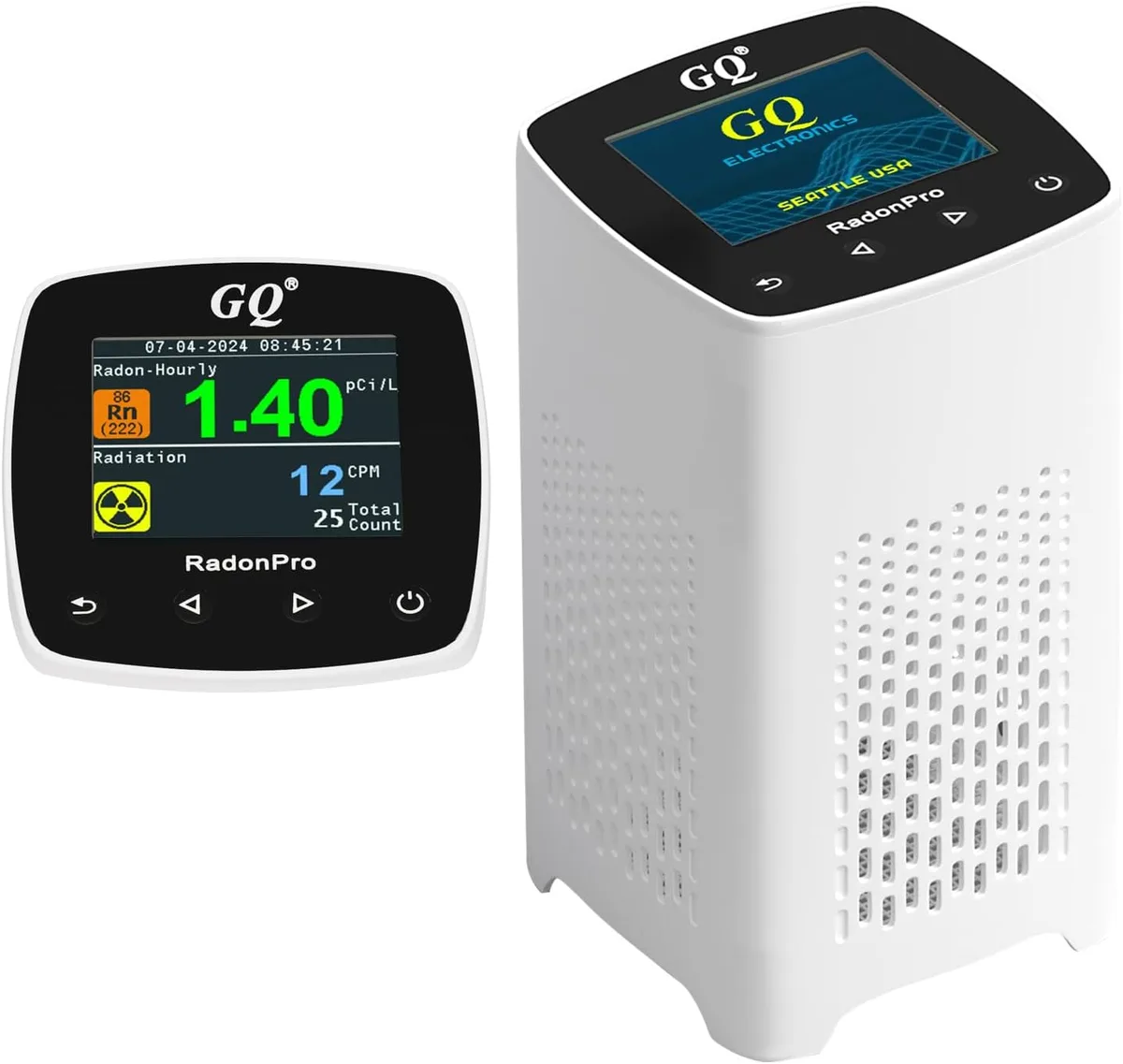
The difference: GQ's RadonScan is a similar idea: a powered monitor with a color screen and an alarm and no app, Wi-Fi or battery, showing 1-hour, 1-day, 1-week and long-term averages; GQ does not name its sensor type and gives "Reproducibility of indication" at 30% instead of an accuracy figure.
Compared with similar products: 1 of 5
MonitorAEGTEST
Method: Semiconductor sensor
First reading: Within 6 hours
MonitorAEGTEST
Method: Semiconductor sensor
First reading: Within 12 hours
MonitorAEGTEST
Method: Semiconductor sensor
First reading: Within 6 hours
MonitorAEGTEST
First reading: Within 1 hour
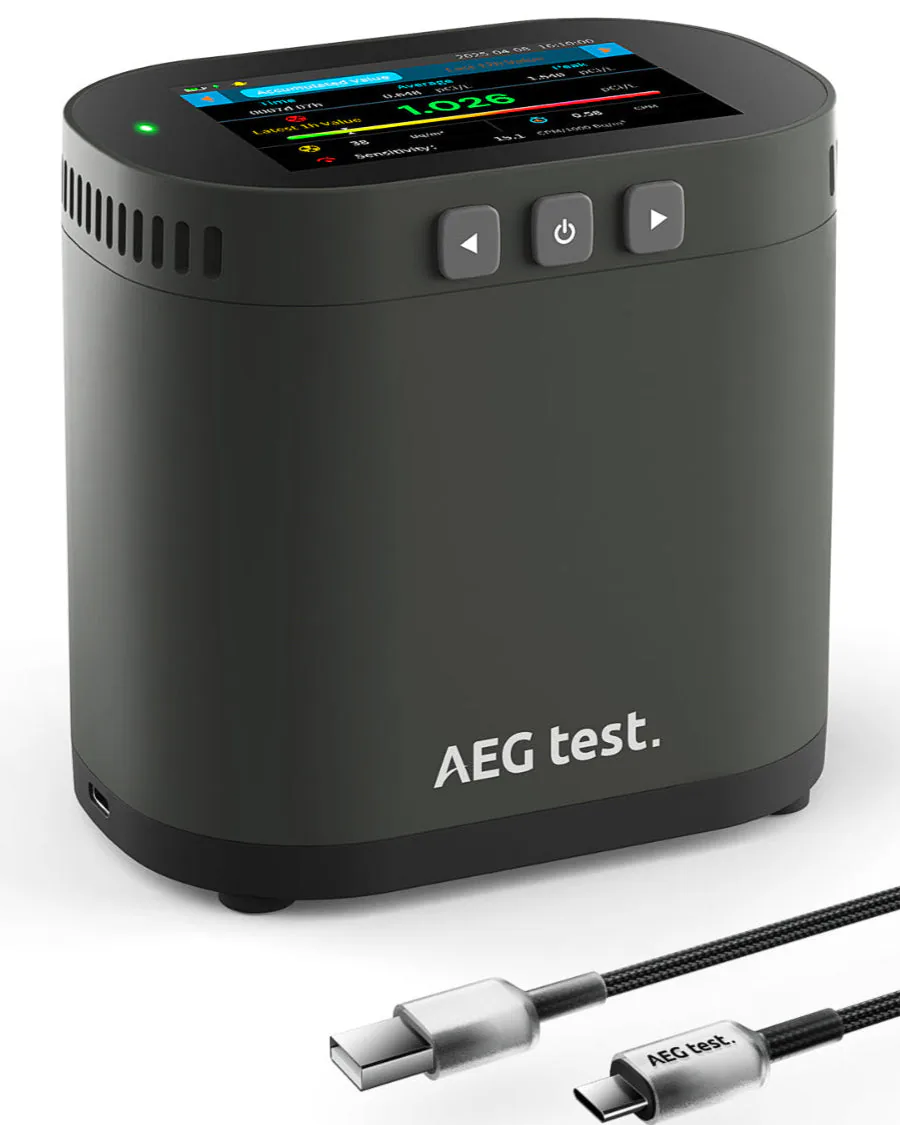
MonitorAEGTEST
Method: Ion chamber
First reading: Within 10 minutes
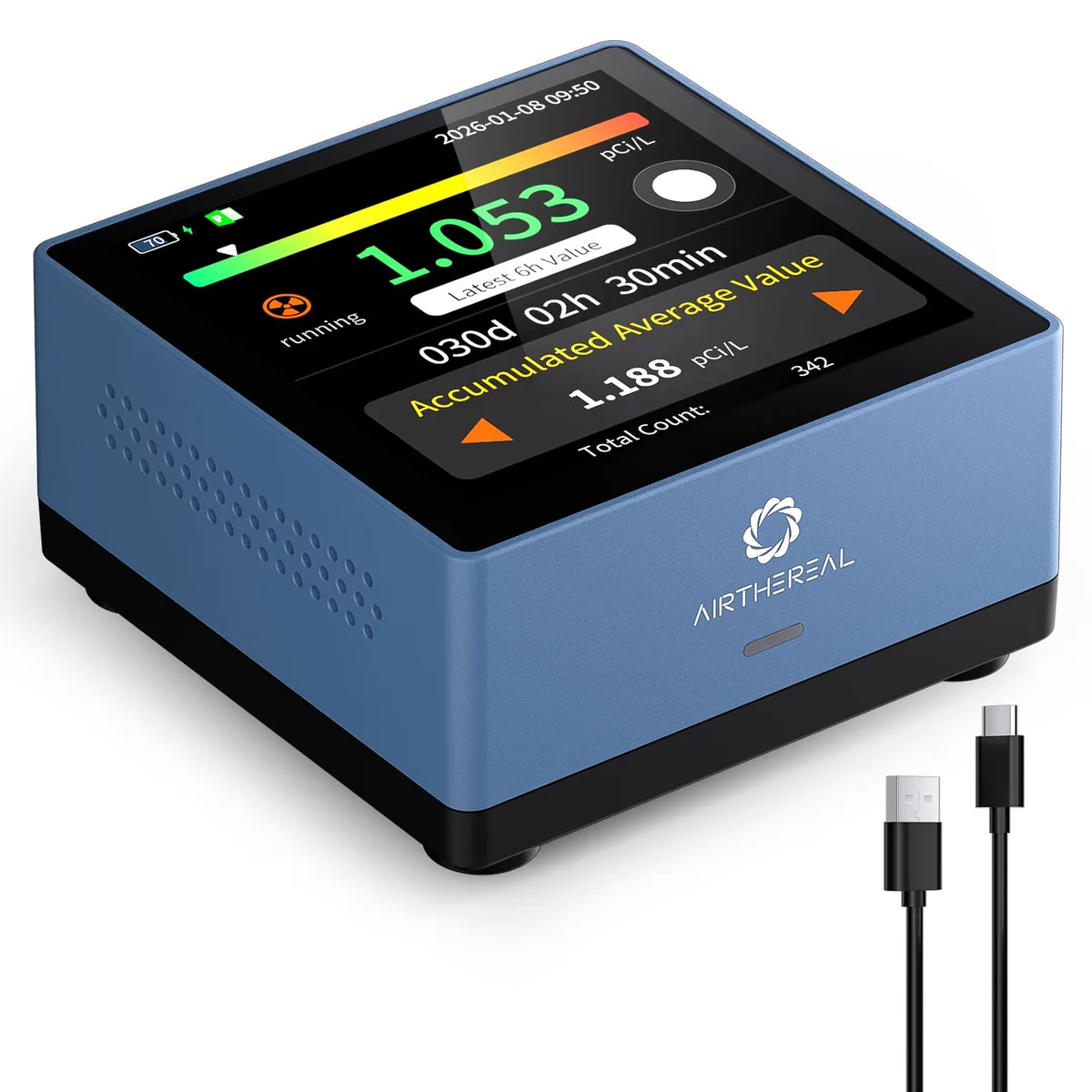
Monitor
Method: Semiconductor sensor
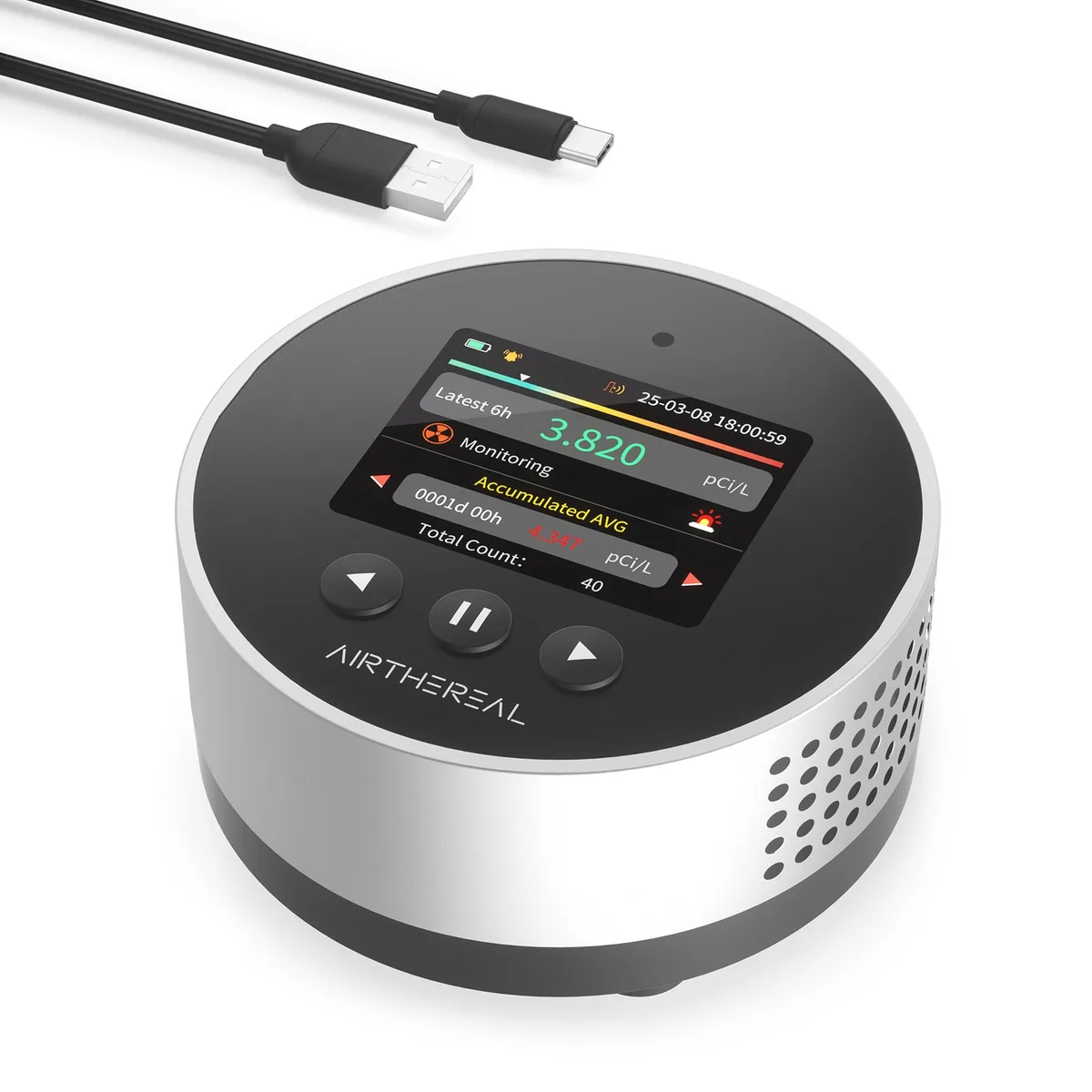
Monitor
Method: Semiconductor sensor
First reading: Within 6 hours
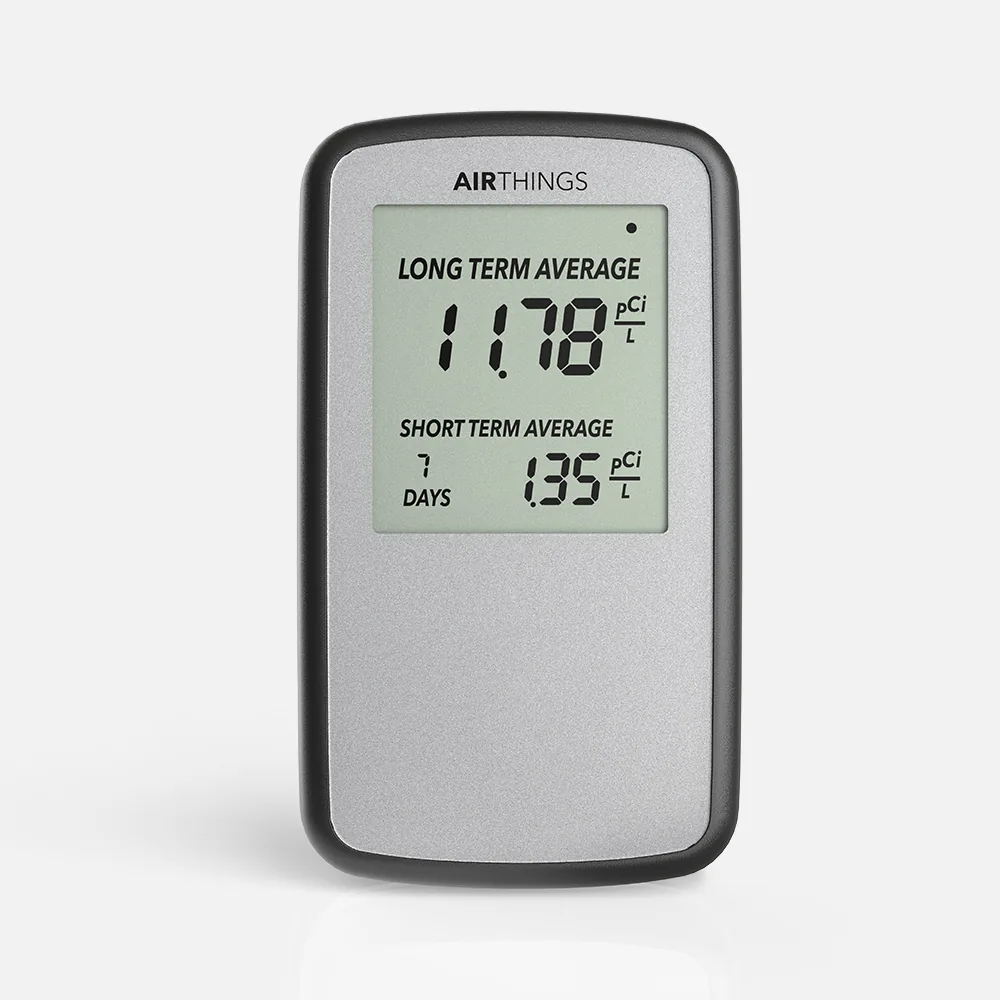
Monitor
Method: Alpha spectrometry
Monitor
Method: Alpha spectrometry
Readings: Every 60 minutes
Monitor
Method: Alpha spectrometry
Monitor
Method: Alpha spectrometry
Readings: Every 60 minutes
Monitor
Method: Alpha spectrometry
Monitor
Method: Alpha spectrometry
MonitorAranet
Method: Ion chamber
First reading: Within 10 minutes
MonitorAranet
Method: Ion chamber
First reading: Within 10 minutes
Monitor
Method: Ion chamber
First reading: Within 10 minutes
Monitor
Method: Ion chamber
First reading: Within 15 minutes
Monitor
Method: Ion chamber
First reading: Within 10 minutes
MonitorForensics Detectors
Method: Semiconductor sensor
First reading: Within 6 hours
Monitor
First reading: Within 5 minutes
Monitor
First reading: Within 5 minutes
Monitor
First reading: Within 5 minutes
MonitorINKBIRD
First reading: Within 24 hours
MonitorKidde
Method: Semiconductor sensor
First reading: Within 12 hours
MonitorPYZYCKYH
Method: Semiconductor sensor
First reading: Within 6 hours
MonitorSafetySiren
First reading: Within 48 hours
Monitor
First reading: Within 90 minutes
Monitor
Method: Alpha spectrometry
First reading: Within 24 hours
MonitorX-Sense
Method: Alpha spectrometry
First reading: Within 24 hours
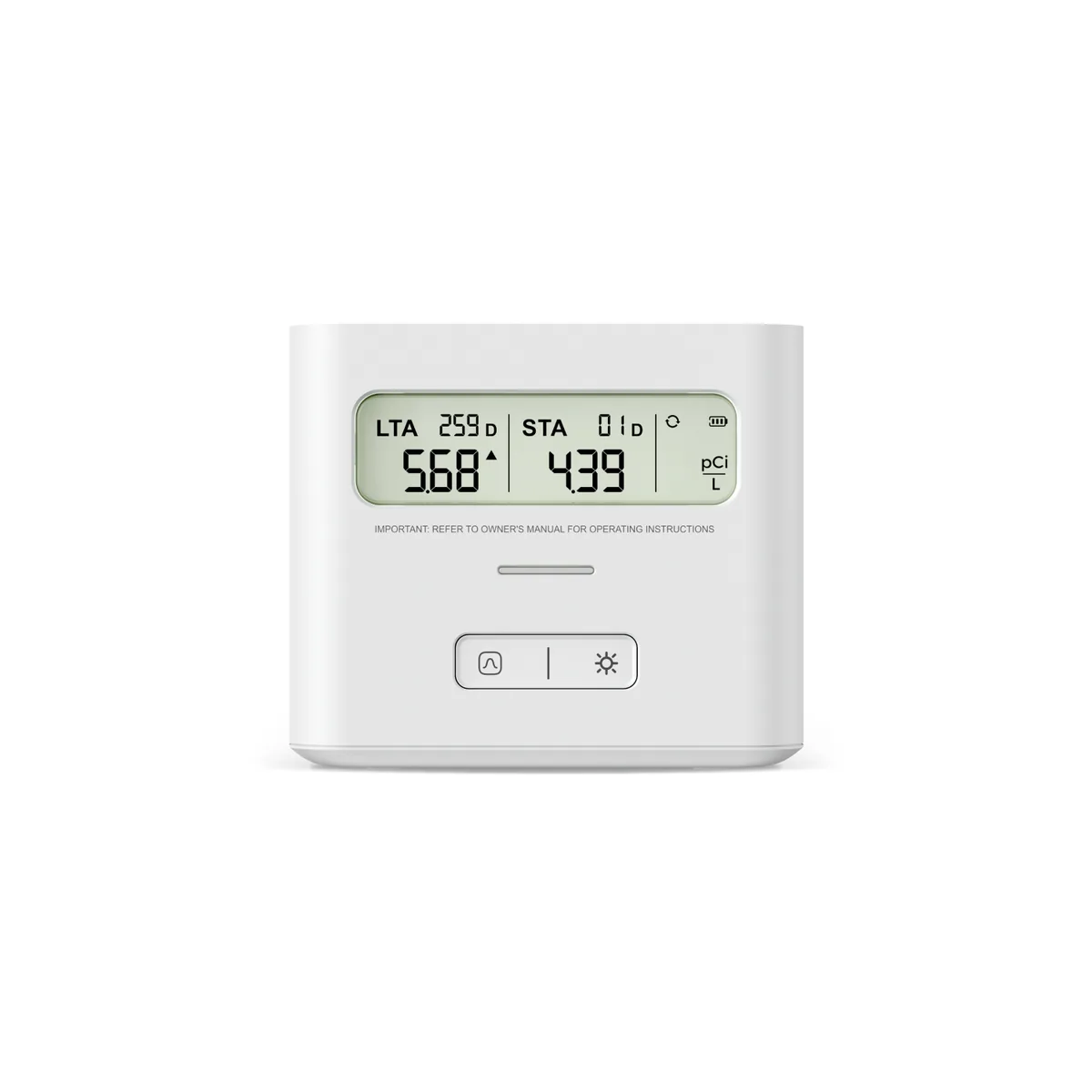
MonitorX-Sense
Method: Alpha spectrometry
First reading: Within 24 hours
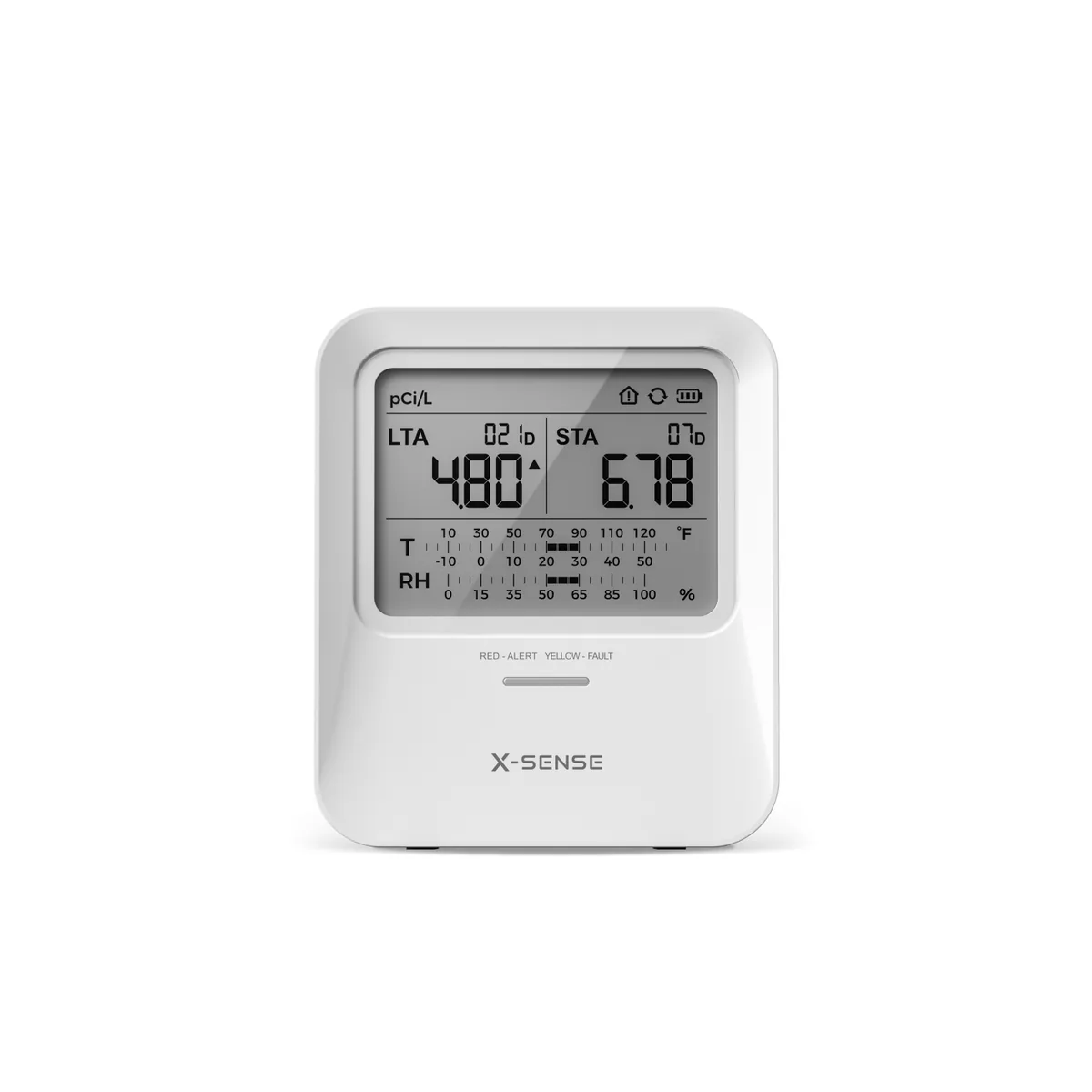
MonitorX-Sense
Method: Alpha spectrometry
First reading: Within 24 hours
More home radon monitors: 1 of 31
Questions
6 questions about the Ecosense EcoBlu, answered
It was not included in C-NRPP's 2024/25 consumer monitor evaluation, so there is no result for it from that round. C-NRPP's 2023 report listed the Ecosense EcoBlue as having passed its performance test.
No. Ecosense describes it as plug-and-play with no smartphone, no Wi-Fi, no Bluetooth and no battery. Every reading and average is on the LED display.
Ecosense defines them as real-time (updated every 10 minutes), daily (a 24-hour average), weekly (a 7-day average), monthly (a 30-day average) and long-term (yearly trends).
Ecosense lists an integrated audio alarm with a visual LED, and its brochure says the alarm is configurable to a radon level you set. Choose the level with the EPA's guidance in mind: the EPA says to fix a home at 4 pCi/L or more and to consider fixing between 2 and 4 pCi/L, based on longer-term results rather than a single spike.
For any consumer monitor, the guidance is to run it for at least three months, preferably in the heating season, and to decide from the long-term average. If you have less than 91 days of monitor data, it recommends following up with a long-term radon test.
Both are Ecosense plug-in monitors with a pulsed ionization chamber and the same published range. Ecosense rates the RadonEye's sensitivity at 30 counts per hour per pCi/L against 18 for the EcoBlu, and states under ±10% at 10 pCi/L for the RadonEye against under ±14% for the EcoBlu. The RadonEye adds a Bluetooth app; the EcoBlu shows its numbers on what Ecosense calls a full-size LED screen, with no app.
Updated October 1, 2026